Advances in Wearable Biosensors for Non-Invasive Biofluid Monitoring



Abstract
1. Introduction
- 1.
- It provides a critical synthesis of recent non-invasive wearable biosensors for biofluid-based disease monitoring.
- 2.
- It compares key sensor performance factors, including sensitivity, limit of detection, stability, selectivity, real-sample validation, and practical limitations.
- 3.
- It discusses major barriers to clinical translation, including calibration drift, sweat-rate variability, biofouling, user-to-user variability, long-term reliability, and lack of standardized validation.
- 4.
- It highlights recent advances in nanomaterials, microfluidic collection systems, wireless communication, self-powered sensing, and AI-assisted interpretation.
- 5.
- It identifies remaining research gaps and future opportunities for clinically reliable, scalable, and user-friendly wearable biosensing systems.
2. Working Principle of Biosensors
2.1. Major Types of Biosensors
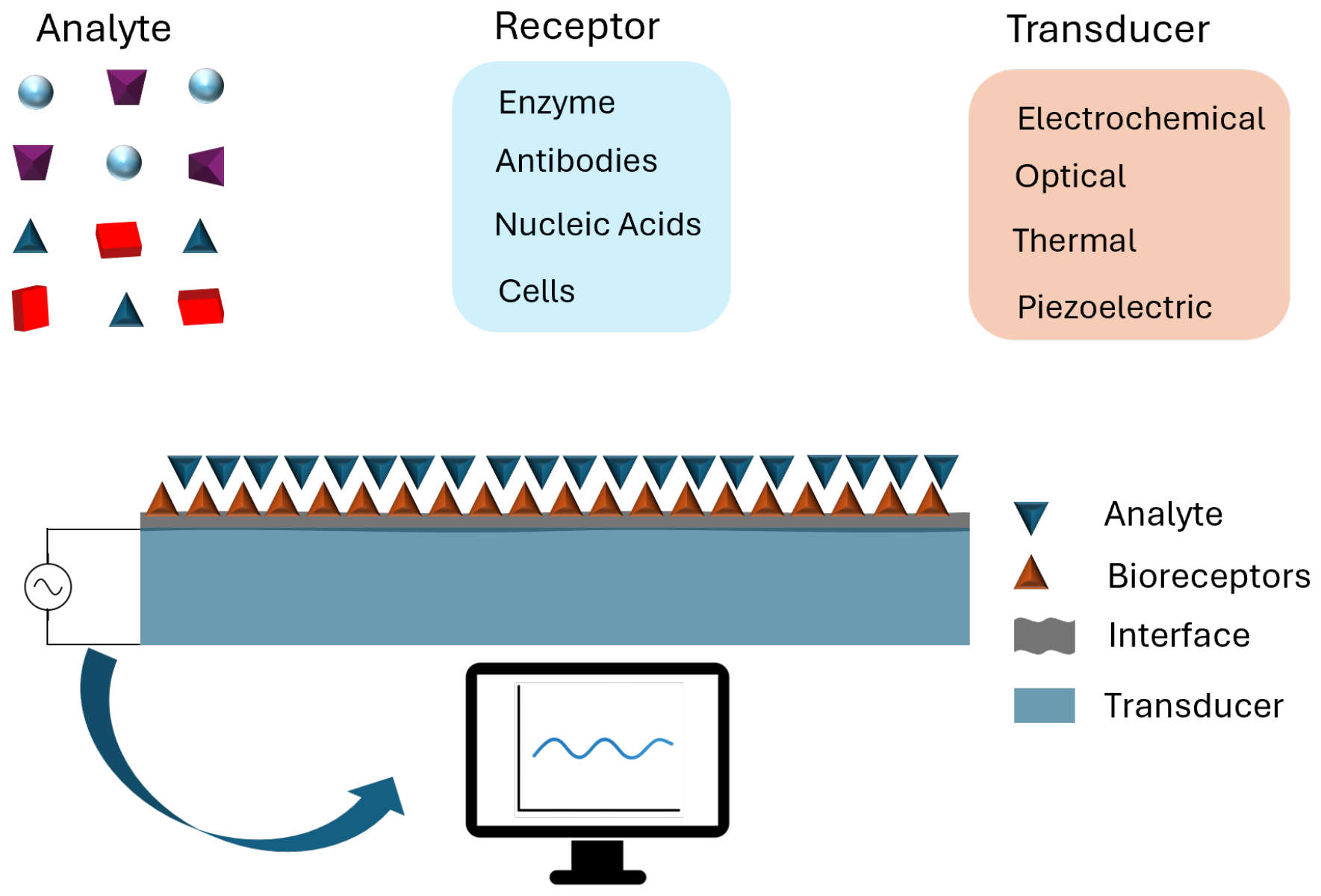
- Electrochemical biosensors measure changes in current, potential, or impedance caused by analyte–bioreceptor interactions. Their low power requirement, high sensitivity, and compatibility with miniaturized electronics make them widely used in wearable and implantable systems [28].
- Optical biosensors detect changes in absorbance, fluorescence, surface plasmon resonance, or other light-based signals. They are useful for label-free and non-invasive sensing, especially when combined with compact imaging or smartphone-based readout systems [29].
- Field-effect transistor biosensors convert biochemical recognition events into changes in channel conductance. Their high electrical sensitivity and miniaturization potential make them attractive for wearable and implantable health monitoring [30].
- Piezoelectric biosensors detect analyte binding through changes in resonant frequency caused by mass loading or surface mechanical changes. They support rapid and label-free detection of biomolecules [31].
- Thermal biosensors measure heat changes generated during biochemical or enzymatic reactions. This approach can provide quantitative detection without optical labels or complex electrochemical mediators [32].
2.2. Biorecognition Elements
2.2.1. Enzyme Cofactors and Redox Mediators
2.2.2. Molecularly Imprinted Polymers
2.3. Signal Transduction Mechanisms
2.4. Data Acquisition and Processing
2.5. Calibration and Standardization Requirements for Wearable Biofluid Biosensors
3. Sweat-Based Biosensors

| Analytes | Detection Methods | Recognition Elements | Preparation Technologies | Related Diseases | Application Area | References |
|---|---|---|---|---|---|---|
| Na+ | OCPT | Na+ ionophore | Screen printing; laser engraving | Hypernatremia; hyponatremia | Outdoor monitoring | [67,68] |
| Cl− | Colorimetry | Silver chloranilate; silver chlorobenzoate | CO2 laser manufacturing; roll-to-roll printing | Cystic fibrosis | Outdoor monitoring | [69,70] |
| K+ | OCPT | K+ ionophore | Screen printing; laser engraving | Hyperkalemia; hypokalemia | Outdoor, family monitoring | [69,70] |
| Glucose | CA | Glucose oxidase | Roll-to-roll printing; laser engraving; screen printing | Diabetes; hypoglycemia | Disease monitoring | [71] |
| Lactate | Colorimetry; CA | Lactate oxidase | Inkjet printing; laser engraving; screen printing | Hypoglycemia; hyperlactatemia | Family monitoring | [70,72] |
| Uric acid | CA | Not available | Laser engraving | Gout; uric acid stones | Family monitoring | [71] |
| Ascorbic acid | DPV | Ascorbic acid oxidase | Laser engraving; screen printing; photolithography and evaporation | Scurvy | Family monitoring | [72,73] |
| L-Dopamine | DPV | Not available | Laser engraving | Parkinson’s disease | Drug monitoring | [74] |
| Tyrosine | DPV; SWV; CV | SilkNCT | Photolithography and electron beam evaporation | Tyrosinemia | Health monitoring | [15] |
| Caffeine | DPV | Multiwalled carbon nanotubes | Laser engraving | Not available | Not available | [71,75] |
| Cortisol | CV | Cortisol antibody | Roll-to-roll printing; screen printing | Depressive disorder | Disease monitoring | [76] |
| Nicotine | Not available | Not available | Photolithography and electron beam evaporation | Nicotine poisoning | Drug monitoring | [77] |
3.1. Sweat Collection Strategies
3.1.1. Passive Collection (Natural Perspiration)
3.1.2. Active Stimulation Methods
3.1.3. Passive Versus Active Sweat Collection
3.1.4. Microfluidic and Absorbent-Based Collection
3.2. Skin–Device Interface and Biofluid Sampling Standardization
4. Application of Wearable Biosensors
4.1. Sweat Based Wearable Sensing
4.2. Tear-Based Biosensors
4.3. Saliva-Based Biosensors
5. Self-Powered Biosensors
5.1. Evaluation of Current Wearable Biofluid Biosensors
5.2. Recent Developments in AI Integration, Advanced Nanomaterials, and Clinically Validated Wearable Biosensors
6. Conclusions
7. Future Directions
- 1.
- Improving Accuracy and Sensitivity: To enhance sensor reliability, future research must focus on minimizing calibration drift and signal degradation. Advances in flexible substrates and nanomaterials will be crucial for maintaining accuracy during prolonged use.
- 2.
- Multi-Analyte Platforms: Developing biosensors capable of simultaneously detecting multiple biomarkers (e.g., glucose, lactate, electrolytes) in biofluids such as sweat and saliva will enable more comprehensive health monitoring. The integration of microfluidics and multiplexed sensing techniques will be central to this progress.
- 3.
- AI Integration for Personalized Monitoring: Machine learning algorithms can be leveraged to analyze complex datasets generated by wearable biosensors. Artificial intelligence (AI) can enable real-time health monitoring, predictive analytics, and personalized interventions, particularly in chronic disease management. AI-driven sensor calibration may further improve data accuracy without manual intervention.
- 4.
- Clinical Validation and Data Standardization: Clinical trials are essential for validating the performance of wearable biosensors in real-world settings. Standardized testing protocols and seamless data integration with electronic health records (EHRs) will be necessary for widespread clinical adoption.
- 5.
- Wearability and Comfort: Long-term wearability remains a challenge, particularly with respect to skin comfort and sensor durability. Advances in materials science, including soft, stretchable electronics and biocompatible hydrogels, will enhance user comfort during extended wear.
- 6.
- Affordability and Accessibility: To maximize global impact, future wearable biosensors must be cost-effective and accessible to diverse populations, particularly in low-resource settings. Collaboration with global health initiatives could facilitate widespread adoption of these technologies.
Author Contributions
Funding
Institutional Review Board Statement
Informed Consent Statement
Data Availability Statement
Acknowledgments
Conflicts of Interest
References
- Palaniappan, L.P.; Allen, N.B.; Almarzooq, Z.I.; Anderson, C.A.; Arora, P.; Avery, C.L.; Baker-Smith, C.M.; Bansal, N.; Currie, M.E.; Earlie, R.S.; et al. 2026 Heart Disease and Stroke Statistics: A Report of US and Global Data From the American Heart Association. Circulation 2026, 153, 1412. [Google Scholar] [CrossRef]
- Genitsaridi, I.; Salpea, P.; Salim, A.; Sajjadi, S.F.; Tomic, D.; James, S.; Thirunavukkarasu, S.; Issaka, A.; Chen, L.; Basit, A.; et al. of the IDF Diabetes Atlas: Global, regional, and national diabetes prevalence estimates for 2024 and projections for 2050. Lancet Diabetes Endocrinol. 2026, 14, 149–156. [Google Scholar] [CrossRef]
- Steinmetz, J.D.; Seeher, K.M.; Schiess, N.; Nichols, E.; Cao, B.; Servili, C.; Cavallera, V.; Cousin, E.; Hagins, H.; Moberg, M.E.; et al. Global, regional, and national burden of disorders affecting the nervous system, 1990–2021: A systematic analysis for the Global Burden of Disease Study 2021. Lancet Neurol. 2024, 23, 344–381. [Google Scholar] [CrossRef]
- Kovesdy, C.P. Epidemiology of chronic kidney disease: An update 2022. Kidney Int. Suppl. 2022, 12, 7–11. [Google Scholar] [CrossRef]
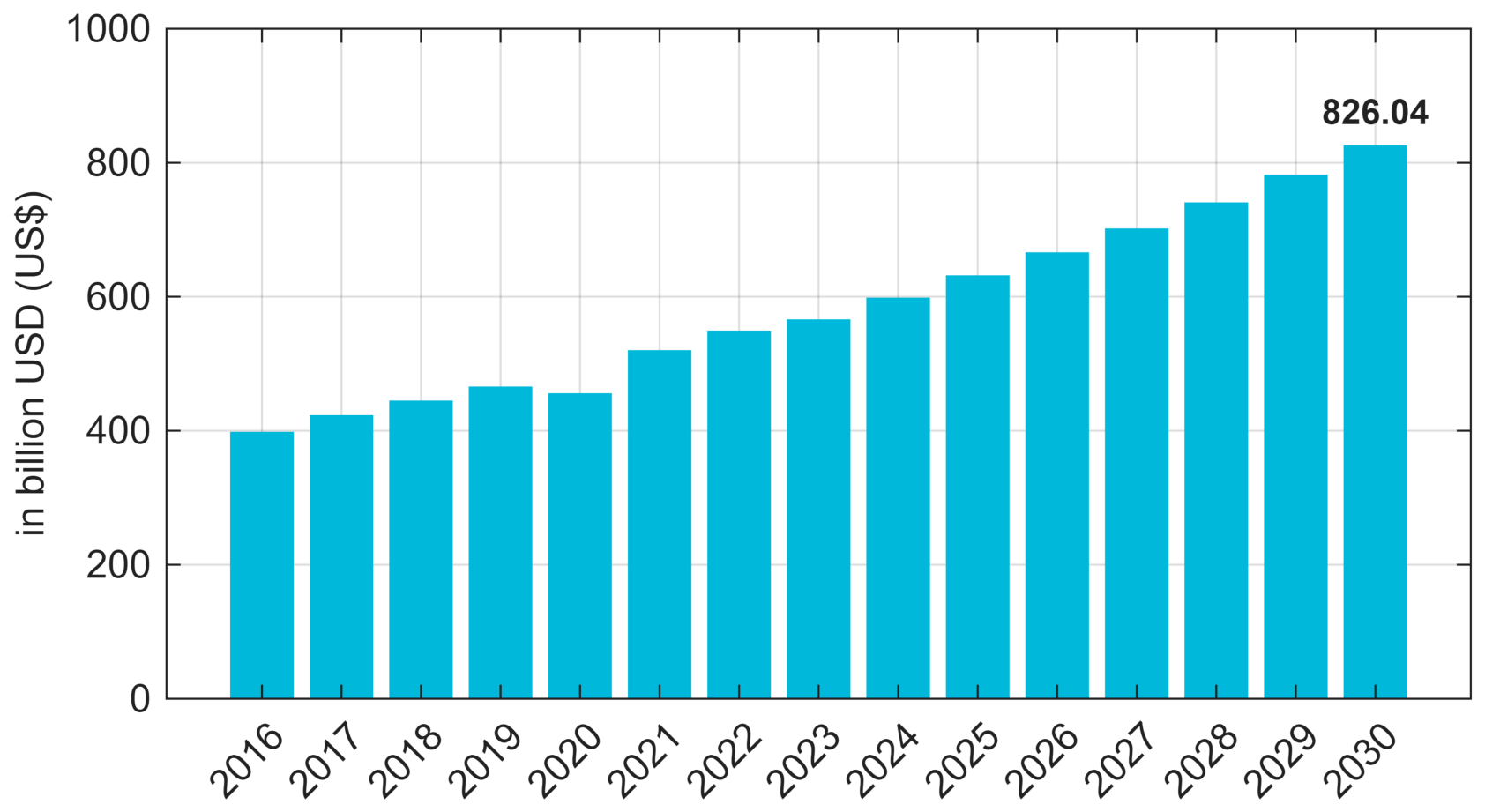
- Statista. Medical Technology—Worldwide | Statista Market Forecast. 2025. Available online: https://www.statista.com/outlook/hmo/medical-technology/worldwide (accessed on 22 October 2025).
- Xu, J.; Fang, Y.; Chen, J. Wearable biosensors for non-invasive sweat diagnostics. Biosensors 2021, 11, 245. [Google Scholar] [CrossRef]
- Patel, S.K.; Surve, J.; Parmar, J.; Ahmed, K.; Bui, F.M.; Al-Zahrani, F.A. Recent advances in biosensors for detection of COVID-19 and other viruses. IEEE Rev. Biomed. Eng. 2022, 16, 22–37. [Google Scholar] [CrossRef] [PubMed]
- Wang, S.; Guan, X.; Sun, S. Microfluidic biosensors: Enabling advanced disease detection. Sensors 2025, 25, 1936. [Google Scholar] [CrossRef] [PubMed]
- Shao, W.; Zeng, Z.; Star, A. Detection of opioids and their metabolites in sweat by carbon nanotube FET sensor array. npj Biosens. 2025, 2, 29. [Google Scholar] [CrossRef]
- Yao, S.; Swetha, P.; Zhu, Y. Nanomaterial-enabled wearable sensors for healthcare. Adv. Healthc. Mater. 2018, 7, 1700889. [Google Scholar] [CrossRef] [PubMed]
- Ma, X.; Guo, G.; Wu, X.; Wu, Q.; Liu, F.; Zhang, H.; Shi, N.; Guan, Y. Advances in integration, wearable applications, and artificial intelligence of biomedical microfluidics systems. Micromachines 2023, 14, 972. [Google Scholar] [CrossRef]
- Asadian, E.; Bahramian, F.; Siavashy, S.; Movahedi, S.; Kecili, R.; Hussain, C.M.; Ghorbani-Bidkorpeh, F. A review on recent advances of AI-integrated microfluidics for analytical and bioanalytical applications. TrAC Trends Anal. Chem. 2024, 181, 118004. [Google Scholar] [CrossRef]
- Torrente-Rodríguez, R.M.; Tu, J.; Yang, Y.; Min, J.; Wang, M.; Song, Y.; Yu, Y.; Xu, C.; Ye, C.; IsHak, W.W.; et al. Investigation of cortisol dynamics in human sweat using a graphene-based wireless mHealth system. Matter 2020, 2, 921–937. [Google Scholar] [CrossRef]
- Geelhoed-Duijvestijn, P.; Vegelyte, D.; Kownacka, A.; Anton, N.; Joosse, M.; Wilson, C. Performance of the prototype NovioSense noninvasive biosensor for tear glucose in type 1 diabetes. J. Diabetes Sci. Technol. 2021, 15, 1320–1325. [Google Scholar] [CrossRef] [PubMed]
- Yang, Y.; Song, Y.; Bo, X.; Min, J.; Pak, O.S.; Zhu, L.; Wang, M.; Tu, J.; Kogan, A.; Zhang, H.; et al. A laser-engraved wearable sensor for sensitive detection of uric acid and tyrosine in sweat. Nat. Biotechnol. 2020, 38, 217–224. [Google Scholar] [CrossRef]
- Heikenfeld, J.; Jajack, A.; Feldman, B.; Granger, S.W.; Gaitonde, S.; Begtrup, G.; Katchman, B.A. Accessing analytes in biofluids for peripheral biochemical monitoring. Nat. Biotechnol. 2019, 37, 407–419. [Google Scholar] [CrossRef]
- Davis, N.; Heikenfeld, J.; Milla, C.; Javey, A. The challenges and promise of sweat sensing. Nat. Biotechnol. 2024, 42, 860–871. [Google Scholar] [CrossRef]
- Song, M.; Bai, H.; Zhang, P.; Zhou, X.; Ying, B. Promising applications of human-derived saliva biomarker testing in clinical diagnostics. Int. J. Oral Sci. 2023, 15, 2. [Google Scholar] [CrossRef]
- Ghaffari, R.; Rogers, J.A.; Ray, T.R. Recent progress, challenges, and opportunities for wearable biochemical sensors for sweat analysis. Sens. Actuators B Chem. 2021, 332, 129447. [Google Scholar] [CrossRef]
- dos Santos, C.C.; Lucena, G.N.; Pinto, G.C.; Júnior, M.J.; Marques, R.F.C. Advances and current challenges in non-invasive wearable sensors and wearable biosensors. Med. Devices Sens. 2021, 4, e10130. [Google Scholar] [CrossRef]
- Wang, K.; Liu, W.; Wu, J.; Li, H.; Peng, H.; Zhang, J.; Ding, K.; Wang, X.; Hou, C.; Zhang, H.; et al. Smart Wearable Sensor Fuels Noninvasive Body Fluid Analysis. ACS Appl. Mater. Interfaces 2025, 17, 13279–13301. [Google Scholar] [CrossRef] [PubMed]
- Arakawa, T.; Tomoto, K.; Nitta, H.; Toma, K.; Takeuchi, S.; Sekita, T.; Minakuchi, S.; Mitsubayashi, K. A wearable cellulose acetate-coated mouthguard biosensor for in vivo salivary glucose measurement. Anal. Chem. 2020, 92, 12201–12207. [Google Scholar] [CrossRef] [PubMed]
- Kim, J.; Imani, S.; de Araujo, W.R.; Warchall, J.; Valdés-Ramírez, G.; Paixão, T.R.; Mercier, P.P.; Wang, J. Wearable salivary uric acid mouthguard biosensor with integrated wireless electronics. Biosens. Bioelectron. 2015, 74, 1061–1068. [Google Scholar] [CrossRef]
- García-Carmona, L.; Martín, A.; Sempionatto, J.R.; Moreto, J.R.; González, M.C.; Wang, J.; Escarpa, A. Pacifier biosensor: Toward noninvasive saliva biomarker monitoring. Anal. Chem. 2019, 91, 13883–13891. [Google Scholar] [CrossRef]
- Sempionatto, J.R.; Nakagawa, T.; Pavinatto, A.; Mensah, S.T.; Imani, S.; Mercier, P.; Wang, J. Eyeglasses based wireless electrolyte and metabolite sensor platform. Lab Chip 2017, 17, 1834–1842. [Google Scholar] [CrossRef] [PubMed]
- Kownacka, A.E.; Vegelyte, D.; Joosse, M.; Anton, N.; Toebes, B.J.; Lauko, J.; Buzzacchera, I.; Lipinska, K.; Wilson, D.A.; Geelhoed-Duijvestijn, N.; et al. Clinical evidence for use of a noninvasive biosensor for tear glucose as an alternative to painful finger-prick for diabetes management utilizing a biopolymer coating. Biomacromolecules 2018, 19, 4504–4511. [Google Scholar] [CrossRef]
- Ge, Z.; Guo, W.; Tao, Y.; Sun, H.; Meng, X.; Cao, L.; Zhang, S.; Liu, W.; Akhtar, M.L.; Li, Y.; et al. Wireless and closed-loop smart dressing for exudate management and on-demand treatment of chronic wounds. Adv. Mater. 2023, 35, 2304005. [Google Scholar] [CrossRef]
- Min, J.; Tu, J.; Xu, C.; Lukas, H.; Shin, S.; Yang, Y.; Solomon, S.A.; Mukasa, D.; Gao, W. Skin-interfaced wearable sweat sensors for precision medicine. Chem. Rev. 2023, 123, 5049–5138. [Google Scholar] [CrossRef]
- Shan, X.; Shi, J.; Wei, Z.; Ning, T.; Huo, Y.; Jiang, S. MOF-architected nanoparticle-on-mirror nanocavity array: Catalysis-plasmonic dual synergy for ultrasensitive enzyme-free cascade SERS glucose sensing. Sens. Actuators B Chem. 2025, 446, 138734. [Google Scholar] [CrossRef]
- Farahmandpour, M.; Kordrostami, Z. Wearable MXene-enhanced organic Bio-FET paper patch for glucose detection in sweat with pH and temperature calibration. Sci. Rep. 2025, 15, 16219. [Google Scholar] [CrossRef] [PubMed]
- Pohanka, M. The piezoelectric biosensors: Principles and applications, a review. Int. J. Electrochem. Sci. 2017, 12, 496–506. [Google Scholar] [CrossRef]
- Nie, C.; Frijns, A.; Zevenbergen, M.; den Toonder, J. An integrated flex-microfluidic-Si chip device towards sweat sensing applications. Sens. Actuators B Chem. 2016, 227, 427–437. [Google Scholar] [CrossRef]
- Ates, H.C.; Nguyen, P.Q.; Gonzalez-Macia, L.; Morales-Narváez, E.; Güder, F.; Collins, J.J.; Dincer, C. End-to-end design of wearable sensors. Nat. Rev. Mater. 2022, 7, 887–907. [Google Scholar] [CrossRef] [PubMed]
- Zhu, Y.; Zhang, J.; Song, J.; Yang, J.; Du, Z.; Zhao, W.; Guo, H.; Wen, C.; Li, Q.; Sui, X.; et al. A multifunctional pro-healing zwitterionic hydrogel for simultaneous optical monitoring of pH and glucose in diabetic wound treatment. Adv. Funct. Mater. 2020, 30, 1905493. [Google Scholar] [CrossRef]
- Bollella, P.; Katz, E. Enzyme-based biosensors: Tackling electron transfer issues. Sensors 2020, 20, 3517. [Google Scholar] [CrossRef]
- Karyakin, A.A.; Karyakina, E.E. Prussian Blue-basedartificial peroxidase’as a transducer for hydrogen peroxide detection. Application to biosensors. Sens. Actuators B Chem. 1999, 57, 268–273. [Google Scholar] [CrossRef]
- Saleem, M.; Yu, H.; Wang, L.; Khalid, H.; Akram, M.; Abbasi, N.M.; Huang, J. Review on synthesis of ferrocene-based redox polymers and derivatives and their application in glucose sensing. Anal. Chim. Acta 2015, 876, 9–25. [Google Scholar] [CrossRef]
- Xiao, X.; Yan, X.; Magner, E.; Ulstrup, J. Polymer coating for improved redox-polymer-mediated enzyme electrodes: A mini-review. Electrochem. Commun. 2021, 124, 106931. [Google Scholar] [CrossRef]
- Li, Y.; Luo, L.; Kong, Y.; Li, Y.; Wang, Q.; Wang, M.; Li, Y.; Davenport, A.; Li, B. Recent advances in molecularly imprinted polymer-based electrochemical sensors. Biosens. Bioelectron. 2024, 249, 116018. [Google Scholar] [CrossRef]
- Ramanavicius, S.; Jagminas, A.; Ramanavicius, A. Advances in molecularly imprinted polymers based affinity sensors. Polymers 2021, 13, 974. [Google Scholar] [CrossRef]
- Wang, M.; Yang, Y.; Min, J.; Song, Y.; Tu, J.; Mukasa, D.; Ye, C.; Xu, C.; Heflin, N.; McCune, J.S.; et al. A wearable electrochemical biosensor for the monitoring of metabolites and nutrients. Nat. Biomed. Eng. 2022, 6, 1225–1235. [Google Scholar] [CrossRef] [PubMed]
- Bandodkar, A.J.; Jeerapan, I.; Wang, J. Wearable chemical sensors: Present challenges and future prospects. ACS Sens. 2016, 1, 464–482. [Google Scholar] [CrossRef]
- Fakhr, M.H.; Carrasco, I.L.; Belyaev, D.; Kang, J.; Shin, Y.; Yeo, J.S.; Koh, W.G.; Ham, J.; Michaelis, A.; Opitz, J.; et al. Recent advances in wearable electrochemical biosensors towards technological and material aspects. Biosens. Bioelectron. X 2024, 19, 100503. [Google Scholar] [CrossRef]
- Duan, H.; Peng, S.; He, S.; Tang, S.Y.; Goda, K.; Wang, C.H.; Li, M. Wearable electrochemical biosensors for advanced healthcare monitoring. Adv. Sci. 2025, 12, 2411433. [Google Scholar] [CrossRef]
- Wang, M.; Zheng, J.; Zhang, G.; Lu, S.; Zhou, J. Wearable Electrochemical Glucose Sensors for Fluid Monitoring: Advances and Challenges in Non-Invasive and Minimally Invasive Technologies. Biosensors 2025, 15, 309. [Google Scholar] [CrossRef] [PubMed]
- Chen, Y.; He, Z.; Wu, Y.; Bai, X.; Li, Y.; Yang, W.; Liu, Y.; Li, R.W. A Wearable Molecularly Imprinted Electrochemical Sensor for Cortisol Stable Monitoring in Sweat. Biosensors 2025, 15, 194. [Google Scholar] [CrossRef]
- Saeidi, M.; Chenani, H.; Orouji, M.; Adel Rastkhiz, M.; Bolghanabadi, N.; Vakili, S.; Mohamadnia, Z.; Hatamie, A.; Simchi, A. Electrochemical wearable biosensors and bioelectronic devices based on hydrogels: Mechanical properties and electrochemical behavior. Biosensors 2023, 13, 823. [Google Scholar] [CrossRef] [PubMed]
- Kaur, B.; Kumar, S.; Kaushik, B.K. Novel wearable optical sensors for vital health monitoring systems—A review. Biosensors 2023, 13, 181. [Google Scholar] [CrossRef]
- Jarnda, K.V.; Dai, H.; Ali, A.; Bestman, P.L.; Trafialek, J.; Roberts-Jarnda, G.P.; Anaman, R.; Kamara, M.G.; Wu, P.; Ding, P. A review on optical biosensors for monitoring of uric acid and blood glucose using portable POCT devices: Status, challenges, and future horizons. Biosensors 2025, 15, 222. [Google Scholar] [CrossRef] [PubMed]
- Chen, C.; Wang, J. Optical biosensors: An exhaustive and comprehensive review. Analyst 2020, 145, 1605–1628. [Google Scholar] [CrossRef]
- Mosbach, K. Thermal biosensors. Biosens. Bioelectron. 1991, 6, 179–182. [Google Scholar] [CrossRef]
- Khorshid, M.; Sichani, S.B.; Cornelis, P.; Wackers, G.; Wagner, P. The hot-wire concept: Towards a one-element thermal biosensor platform. Biosens. Bioelectron. 2021, 179, 113043. [Google Scholar] [CrossRef] [PubMed]
- Katey, B.; Voiculescu, I.; Penkova, A.N.; Untaroiu, A. A review of biosensors and their applications. ASME Open J. Eng. 2023, 2, 020201. [Google Scholar] [CrossRef]
- Narita, F.; Wang, Z.; Kurita, H.; Li, Z.; Shi, Y.; Jia, Y.; Soutis, C. A review of piezoelectric and magnetostrictive biosensor materials for detection of COVID-19 and other viruses. Adv. Mater. 2021, 33, 2005448. [Google Scholar] [CrossRef]
- Huang, S.; Gao, Y.; Hu, Y.; Shen, F.; Jin, Z.; Cho, Y. Recent development of piezoelectric biosensors for physiological signal detection and machine learning assisted cardiovascular disease diagnosis. RSC Adv. 2023, 13, 29174–29194. [Google Scholar] [CrossRef]
- Zhang, C.C.; Liu, M.Y.; Han, S.Y.; Sedaghat, A.; Zhang, K.; Wang, H. Wearable Sensors and Devices: Enhancing Human Life. In Current Developments in Biosensors and Emerging Smart Technologies; IntechOpen Limited: London, UK, 2025. [Google Scholar]
- Pirovano, P.; Dorrian, M.; Shinde, A.; Donohoe, A.; Brady, A.J.; Moyna, N.M.; Wallace, G.; Diamond, D.; McCaul, M. A wearable sensor for the detection of sodium and potassium in human sweat during exercise. Talanta 2020, 219, 121145. [Google Scholar] [CrossRef]
- Bandodkar, A.J.; Jeang, W.J.; Ghaffari, R.; Rogers, J.A. Wearable sensors for biochemical sweat analysis. Annu. Rev. Anal. Chem. 2019, 12, 1–22. [Google Scholar] [CrossRef]
- Forlenza, G.P.; Kushner, T.; Messer, L.H.; Wadwa, R.P.; Sankaranarayanan, S. Factory-calibrated continuous glucose monitoring: How and why it works, and the dangers of reuse beyond approved duration of wear. Diabetes Technol. Ther. 2019, 21, 222–229. [Google Scholar] [CrossRef]
- Spinelli, J.C.; Suleski, B.J.; Wright, D.E.; Grow, J.L.; Fagans, G.R.; Buckley, M.J.; Yang, D.S.; Yang, K.; Beil, S.M.; Wallace, J.C.; et al. Wearable microfluidic biosensors with haptic feedback for continuous monitoring of hydration biomarkers in workers. npj Digit. Med. 2025, 8, 76. [Google Scholar] [CrossRef]
- Brothers, M.C.; DeBrosse, M.; Grigsby, C.C.; Naik, R.R.; Hussain, S.M.; Heikenfeld, J.; Kim, S.S. Achievements and challenges for real-time sensing of analytes in sweat within wearable platforms. Accounts Chem. Res. 2019, 52, 297–306. [Google Scholar] [CrossRef]
- Park, H.; Park, W.; Lee, C.H. Electrochemically active materials and wearable biosensors for the in situ analysis of body fluids for human healthcare. NPG Asia Mater. 2021, 13, 23. [Google Scholar] [CrossRef]
- Childs, A.; Mayol, B.; Lasalde-Ramírez, J.A.; Song, Y.; Sempionatto, J.R.; Gao, W. Diving into sweat: Advances, challenges, and future directions in wearable sweat sensing. ACS Nano 2024, 18, 24605–24616. [Google Scholar] [CrossRef] [PubMed]
- Pérez, D.; Orozco, J. Wearable electrochemical biosensors to measure biomarkers with complex blood-to-sweat partition such as proteins and hormones. Microchim. Acta 2022, 189, 127. [Google Scholar] [CrossRef] [PubMed]
- Yuan, X.; Li, C.; Yin, X.; Yang, Y.; Ji, B.; Niu, Y.; Ren, L. Epidermal wearable biosensors for monitoring biomarkers of chronic disease in sweat. Biosensors 2023, 13, 313. [Google Scholar] [CrossRef]
- Zhao, J.; Nyein, H.Y.Y.; Hou, L.; Lin, Y.; Bariya, M.; Ahn, C.H.; Ji, W.; Fan, Z.; Javey, A. A wearable nutrition tracker. Adv. Mater. 2021, 33, 2006444. [Google Scholar] [CrossRef]
- Alizadeh, A.; Burns, A.; Lenigk, R.; Gettings, R.; Ashe, J.; Porter, A.; McCaul, M.; Barrett, R.; Diamond, D.; White, P.; et al. A wearable patch for continuous monitoring of sweat electrolytes during exertion. Lab Chip 2018, 18, 2632–2641. [Google Scholar] [CrossRef]
- He, W.; Wang, C.; Wang, H.; Jian, M.; Lu, W.; Liang, X.; Zhang, X.; Yang, F.; Zhang, Y. Integrated textile sensor patch for real-time and multiplex sweat analysis. Sci. Adv. 2019, 5, eaax0649. [Google Scholar] [CrossRef]
- Reeder, J.T.; Choi, J.; Xue, Y.; Gutruf, P.; Hanson, J.; Liu, M.; Ray, T.; Bandodkar, A.J.; Avila, R.; Xia, W.; et al. Waterproof, electronics-enabled, epidermal microfluidic devices for sweat collection, biomarker analysis, and thermography in aquatic settings. Sci. Adv. 2019, 5, eaau6356. [Google Scholar] [CrossRef]
- Baker, L.B.; Model, J.B.; Barnes, K.A.; Anderson, M.L.; Lee, S.P.; Lee, K.A.; Brown, S.D.; Reimel, A.J.; Roberts, T.J.; Nuccio, R.P.; et al. Skin-interfaced microfluidic system with personalized sweating rate and sweat chloride analytics for sports science applications. Sci. Adv. 2020, 6, eabe3929. [Google Scholar] [CrossRef]
- Sempionatto, J.R.; Lin, M.; Yin, L.; De la Paz, E.; Pei, K.; Sonsa-Ard, T.; de Loyola Silva, A.N.; Khorshed, A.A.; Zhang, F.; Tostado, N.; et al. An epidermal patch for the simultaneous monitoring of haemodynamic and metabolic biomarkers. Nat. Biomed. Eng. 2021, 5, 737–748. [Google Scholar] [CrossRef]
- Zhang, Z.; Azizi, M.; Lee, M.; Davidowsky, P.; Lawrence, P.; Abbaspourrad, A. A versatile, cost-effective, and flexible wearable biosensor for in situ and ex situ sweat analysis, and personalized nutrition assessment. Lab Chip 2019, 19, 3448–3460. [Google Scholar] [CrossRef] [PubMed]
- Sempionatto, J.R.; Khorshed, A.A.; Ahmed, A.; De Loyola e Silva, A.N.; Barfidokht, A.; Yin, L.; Goud, K.Y.; Mohamed, M.A.; Bailey, E.; May, J.; et al. Epidermal enzymatic biosensors for sweat vitamin C: Toward personalized nutrition. ACS Sens. 2020, 5, 1804–1813. [Google Scholar] [CrossRef]
- Tai, L.C.; Liaw, T.S.; Lin, Y.; Nyein, H.Y.; Bariya, M.; Ji, W.; Hettick, M.; Zhao, C.; Zhao, J.; Hou, L.; et al. Wearable sweat band for noninvasive levodopa monitoring. Nano Lett. 2019, 19, 6346–6351. [Google Scholar] [CrossRef]
- Tai, L.C.; Gao, W.; Chao, M.; Bariya, M.; Ngo, Q.P.; Shahpar, Z.; Nyein, H.Y.; Park, H.; Sun, J.; Jung, Y.; et al. Methylxanthine drug monitoring with wearable sweat sensors. Adv. Mater. 2018, 30, 1707442. [Google Scholar] [CrossRef] [PubMed]
- Lee, H.B.; Meeseepong, M.; Trung, T.Q.; Kim, B.Y.; Lee, N.E. A wearable lab-on-a-patch platform with stretchable nanostructured biosensor for non-invasive immunodetection of biomarker in sweat. Biosens. Bioelectron. 2020, 156, 112133. [Google Scholar] [CrossRef]
- Wang, Y.; Zhao, C.; Wang, J.; Luo, X.; Xie, L.; Zhan, S.; Kim, J.; Wang, X.; Liu, X.; Ying, Y. Wearable plasmonic-metasurface sensor for noninvasive and universal molecular fingerprint detection on biointerfaces. Sci. Adv. 2021, 7, eabe4553. [Google Scholar] [CrossRef]
- Bariya, M.; Nyein, H.Y.Y.; Javey, A. Wearable sweat sensors. Nat. Electron. 2018, 1, 160–171. [Google Scholar] [CrossRef]
- Sonner, Z.; Wilder, E.; Heikenfeld, J.; Kasting, G.; Beyette, F.; Swaile, D.; Sherman, F.; Joyce, J.; Hagen, J.; Kelley-Loughnane, N.; et al. The microfluidics of the eccrine sweat gland, including biomarker partitioning, transport, and biosensing implications. Biomicrofluidics 2015, 9, 031301. [Google Scholar] [CrossRef]
- Chen, S.; Qiao, Z.; Niu, Y.; Yeo, J.C.; Liu, Y.; Qi, J.; Fan, S.; Liu, X.; Lee, J.Y.; Lim, C.T. Wearable flexible microfluidic sensing technologies. Nat. Rev. Bioeng. 2023, 1, 950–971. [Google Scholar] [CrossRef]
- Yin, Y.; Tan, Z.; Zhu, W.; Pu, Z.; Yu, H.; Wang, R.; Li, D. A wearable microfluidic system for efficient sweat collection and real-time detection. Talanta 2024, 274, 125967. [Google Scholar] [CrossRef] [PubMed]
- Gao, W.; Emaminejad, S.; Nyein, H.Y.Y.; Challa, S.; Chen, K.; Peck, A.; Fahad, H.M.; Ota, H.; Shiraki, H.; Kiriya, D.; et al. Fully integrated wearable sensor arrays for multiplexed in situ perspiration analysis. Nature 2016, 529, 509–514. [Google Scholar] [CrossRef]
- Emaminejad, S.; Gao, W.; Wu, E.; Davies, Z.A.; Yin Yin Nyein, H.; Challa, S.; Ryan, S.P.; Fahad, H.M.; Chen, K.; Shahpar, Z.; et al. Autonomous sweat extraction and analysis applied to cystic fibrosis and glucose monitoring using a fully integrated wearable platform. Proc. Natl. Acad. Sci. USA 2017, 114, 4625–4630. [Google Scholar] [CrossRef]
- Moore, K.; Grégoire, S.; Eilstein, J.; Delgado-Charro, M.B.; Guy, R.H. Reverse iontophoresis: Noninvasive assessment of topical drug bioavailability. Mol. Pharm. 2023, 21, 234–244. [Google Scholar] [CrossRef]
- Bandodkar, A.J.; Jia, W.; Yardımcı, C.; Wang, X.; Ramirez, J.; Wang, J. Tattoo-based noninvasive glucose monitoring: A proof-of-concept study. Anal. Chem. 2015, 87, 394–398. [Google Scholar] [CrossRef]
- Vairo, D.; Bruzzese, L.; Marlinge, M.; Fuster, L.; Adjriou, N.; Kipson, N.; Brunet, P.; Cautela, J.; Jammes, Y.; Mottola, G.; et al. Towards addressing the body electrolyte environment via sweat analysis: Pilocarpine iontophoresis supports assessment of plasma potassium concentration. Sci. Rep. 2017, 7, 11801. [Google Scholar] [CrossRef]
- Baker, L.B.; Wolfe, A.S. Physiological mechanisms determining eccrine sweat composition. Eur. J. Appl. Physiol. 2020, 120, 719–752. [Google Scholar] [CrossRef] [PubMed]
- Liu, C.; Xu, T.; Wang, D.; Zhang, X. The role of sampling in wearable sweat sensors. Talanta 2020, 212, 120801. [Google Scholar] [CrossRef]
- Parker, K.K.; Rogers, J.A. Ultrathin conformal devices for precise and continuous thermal characterization of human skin. Nat. Nanotechnol. 2016, 11, 788–794. [Google Scholar]
- Kim, J.; de Avila, B.E.; Liu, Z.; Wang, J.; Rogers, J.A. Epidermal microfluidic systems for sweat-based diagnostics. Adv. Mater. 2019, 31, 1900325. [Google Scholar]
- Mao, P.; Li, H.; Yu, Z. A review of skin-wearable sensors for non-invasive health monitoring applications. Sensors 2023, 23, 3673. [Google Scholar] [CrossRef] [PubMed]
- Nyein, H.Y.Y.; Tai, L.C.; Ngo, Q.P.; Chao, M.; Zhang, G.B.; Gao, W.; Bariya, M.; Bullock, J.; Kim, H.; Fahad, H.M.; et al. A wearable microfluidic sensing patch for dynamic sweat secretion analysis. ACS Sens. 2018, 3, 944–952. [Google Scholar] [CrossRef]
- Nyein, H.Y.Y.; Bariya, M.; Tran, B.; Ahn, C.H.; Brown, B.J.; Ji, W.; Davis, N.; Javey, A. A wearable patch for continuous analysis of thermoregulatory sweat at rest. Nat. Commun. 2021, 12, 1823. [Google Scholar] [CrossRef]
- Malon, R.S.; Sadir, S.; Balakrishnan, M.; Córcoles, E.P. Saliva-based biosensors: Noninvasive monitoring tool for clinical diagnostics. BioMed Res. Int. 2014, 2014, 962903. [Google Scholar] [CrossRef]
- Tseng, R.C.; Chen, C.C.; Hsu, S.M.; Chuang, H.S. Contact-lens biosensors. Sensors 2018, 18, 2651. [Google Scholar] [CrossRef]
- Seo, H.; Chung, W.G.; Kwon, Y.W.; Kim, S.; Hong, Y.M.; Park, W.; Kim, E.; Lee, J.; Lee, S.; Kim, M.; et al. Smart contact lenses as wearable ophthalmic devices for disease monitoring and health management. Chem. Rev. 2023, 123, 11488–11558. [Google Scholar] [CrossRef] [PubMed]
- Rajan, A.; Vishnu, J.; Shankar, B. Tear-based ocular wearable biosensors for human health monitoring. Biosensors 2024, 14, 483. [Google Scholar] [CrossRef]
- Shin, S.; Liu, R.; Yang, Y.; Lasalde-Ramírez, J.A.; Kim, G.; Won, C.; Min, J.; Wang, C.; Fan, K.; Han, H.; et al. A bioinspired microfluidic wearable sensor for multiday sweat sampling, transport, and metabolic analysis. Sci. Adv. 2025, 11, eadw9024. [Google Scholar] [CrossRef] [PubMed]
- Zheng, R.; Zhang, S.; Yu, W.; Mei, Y.; Zhan, Q.; Lin, Z.; Xue, B.; Fan, J.; Liu, B.; Zhao, Y.D.; et al. A Laser-Engraved Wearable Patch Aptasensor Based on Tetrahedral DNA Nanostructures for In Situ Detection of Cortisol in Sweat. Anal. Chem. 2026, 98, 4538–4547. [Google Scholar] [CrossRef]
- Boakye, A.; Bushira, F.A.; Houston, L.S.; Zhong, G.; Chen, L.; Zou, F.; Xu, T.; Zhang, X. Wearable Au@Cu-MOF Carbon Nanofiber Biosensor for Monitoring Nutrients and Metabolites. ACS Appl. Mater. Interfaces 2025, 17, 48123–48133. [Google Scholar] [CrossRef] [PubMed]
- Kim, J.; Kim, M.; Lee, M.S.; Kim, K.; Ji, S.; Kim, Y.T.; Park, J.; Na, K.; Bae, K.H.; Kyun Kim, H.; et al. Wearable smart sensor systems integrated on soft contact lenses for wireless ocular diagnostics. Nat. Commun. 2017, 8, 14997. [Google Scholar] [CrossRef]
- Dennyson Savariraj, A.; Salih, A.; Alam, F.; Elsherif, M.; AlQattan, B.; Khan, A.A.; Yetisen, A.K.; Butt, H. Ophthalmic sensors and drug delivery. ACS Sens. 2021, 6, 2046–2076. [Google Scholar] [CrossRef]
- Park, J.; Kim, J.; Kim, S.Y.; Cheong, W.H.; Jang, J.; Park, Y.G.; Na, K.; Kim, Y.T.; Heo, J.H.; Lee, C.Y.; et al. Soft, smart contact lenses with integrations of wireless circuits, glucose sensors, and displays. Sci. Adv. 2018, 4, eaap9841. [Google Scholar] [CrossRef] [PubMed]
- Elsherif, M.; Hassan, M.U.; Yetisen, A.K.; Butt, H. Wearable contact lens biosensors for continuous glucose monitoring using smartphones. ACS Nano 2018, 12, 5452–5462. [Google Scholar] [CrossRef]
- Wang, Z.; Dong, Y.; Sui, X.; Shao, X.; Li, K.; Zhang, H.; Xu, Z.; Zhang, D. An artificial intelligence-assisted microfluidic colorimetric wearable sensor system for monitoring of key tear biomarkers. npj Flex. Electron. 2024, 8, 35. [Google Scholar] [CrossRef]
- Clark, K.M.; Ray, T.R. Recent advances in skin-interfaced wearable sweat sensors: Opportunities for equitable personalized medicine and global health diagnostics. ACS Sens. 2023, 8, 3606–3622. [Google Scholar] [CrossRef]
- Humphrey, S.P.; Williamson, R.T. A review of saliva: Normal composition, flow, and function. J. Prosthet. Dent. 2001, 85, 162–169. [Google Scholar] [CrossRef]
- Timpel, J.; Klinghammer, S.; Riemenschneider, L.; Ibarlucea, B.; Cuniberti, G.; Hannig, C.; Sterzenbach, T. Sensors for in situ monitoring of oral and dental health parameters in saliva. Clin. Oral Investig. 2023, 27, 5719–5736. [Google Scholar] [CrossRef] [PubMed]
- Arakawa, T.; Kuroki, Y.; Nitta, H.; Chouhan, R.S.; Toma, K.; Sawada, S.; Takeuchi, S.; Sekita, T.; Akiyoshi, K.; Mitsubayashi, K. Mouthguard biosensor with telemetry for monitoring of saliva glucose: A novel cavitas sensor. Biosens. Bioelectron. 2016, 84, 106–111. [Google Scholar] [CrossRef]
- Tseng, K.H.; Wang, S.; Reeder, J.T.; Ryu, J.; Yu, X.; Yang, Q.; Gutruf, P.; McAlpine, M.C.; Rogers, J.A. Functional, multipurpose epidermal electronics for sweat analysis. Sci. Adv. 2018, 4, eaat8066. [Google Scholar]
- Lee, Y.; Howe, C.; Mishra, S.; Lee, D.S.; Mahmood, M.; Piper, M.; Kim, Y.; Tieu, K.; Byun, H.S.; Coffey, J.P.; et al. Wireless, intraoral hybrid electronics for real-time quantification of sodium intake toward hypertension management. Proc. Natl. Acad. Sci. USA 2018, 115, 5377–5382. [Google Scholar] [CrossRef] [PubMed]
- Tan, P.; Zou, Y.; Fan, Y.; Li, Z. Self-powered wearable electronics. Wearable Technol. 2020, 1, e5. [Google Scholar] [CrossRef]
- He, T.; Zhang, X.; Li, R.; Wang, Z.L. Wearable biofuel cells for self-powered biosensing systems. Adv. Sci. 2021, 8, 2100774. [Google Scholar]
- Song, Y.; Min, J.; Yu, Y.; Wang, H.; Yang, Y.; Zhang, H.; Gao, W. Wireless battery-free wearable sweat sensor powered by human motion. Sci. Adv. 2020, 6, eaay9842. [Google Scholar] [CrossRef]
- Zhao, J.; Lin, Y.; Wu, J.; Nyein, H.Y.Y.; Bariya, M.; Tai, L.C.; Chao, M.; Ji, W.; Zhang, G.; Fan, Z.; et al. A fully integrated and self-powered smartwatch for continuous sweat glucose monitoring. ACS Sens. 2019, 4, 1925–1933. [Google Scholar] [CrossRef] [PubMed]
- Yu, Y.; Nassar, J.; Xu, C.; Min, J.; Yang, Y.; Dai, A.; Doshi, R.; Huang, A.; Song, Y.; Gehlhar, R.; et al. Biofuel-powered soft electronic skin with multiplexed and wireless sensing for human-machine interfaces. Sci. Robot. 2020, 5, eaaz7946. [Google Scholar] [CrossRef]
- Jeerapan, I.; Sempionatto, J.R.; Pavinatto, A.; You, J.M.; Wang, J. Stretchable biofuel cells as wearable textile-based self-powered sensors. J. Mater. Chem. A 2016, 4, 18342–18353. [Google Scholar] [CrossRef]
- Song, Y.; Mukasa, D.; Zhang, H.; Gao, W. Self-powered wearable biosensors. Accounts Mater. Res. 2021, 2, 184–197. [Google Scholar] [CrossRef]
- Singh, A.; Sharma, A.; Arya, S. Human sweat-based wearable glucose sensor on cotton fabric for real-time monitoring. J. Anal. Sci. Technol. 2022, 13, 11. [Google Scholar] [CrossRef]
- Currano, L.J.; Sage, F.C.; Hagedon, M.; Hamilton, L.; Patrone, J.; Gerasopoulos, K. Wearable sensor system for detection of lactate in sweat. Sci. Rep. 2018, 8, 15890. [Google Scholar] [CrossRef]
- Heikenfeld, J.; Jajack, A.; Rogers, J.; Gutruf, P.; Tian, L.; Pan, T.; Li, R.; Khine, M.; Kim, J.; Wang, J. Wearable sensors: Modalities, challenges, and prospects. Lab Chip 2018, 18, 217–248. [Google Scholar] [CrossRef]
- Zhang, Y.; Hu, Y.; Jiang, N.; Yetisen, A.K. Wearable artificial intelligence biosensor networks. Biosens. Bioelectron. 2023, 219, 114825. [Google Scholar] [CrossRef]




| Biofluid | Biomarker | Detection Method/Platform | Key Numerical Performance | Main Limitation | Ref. |
|---|---|---|---|---|---|
| Sweat | Glucose | Cotton/polypyrrole/Cu/ Cu–Mn fabric sensor; DPV electrochemical sensing | LOD: 125 M; LOQ: 378 M; range: 50–400 M; = 0.983; validated in human sweat | Needs stronger blood–sweat correlation and continuous diabetes-monitoring validation | [119] |
| Sweat | Lactate | Lactate oxidase-functionalized organic electrochemical transistor | Detectable response down to 11 nM; tested from 0.01 to 9.8 mM; sensitivity up to 1.9 mA/mM; response time about 5–10 min; device lifetime about 40 min | Saturates above about 1 mM; limited lifetime restricts long-term exercise monitoring | [120] |
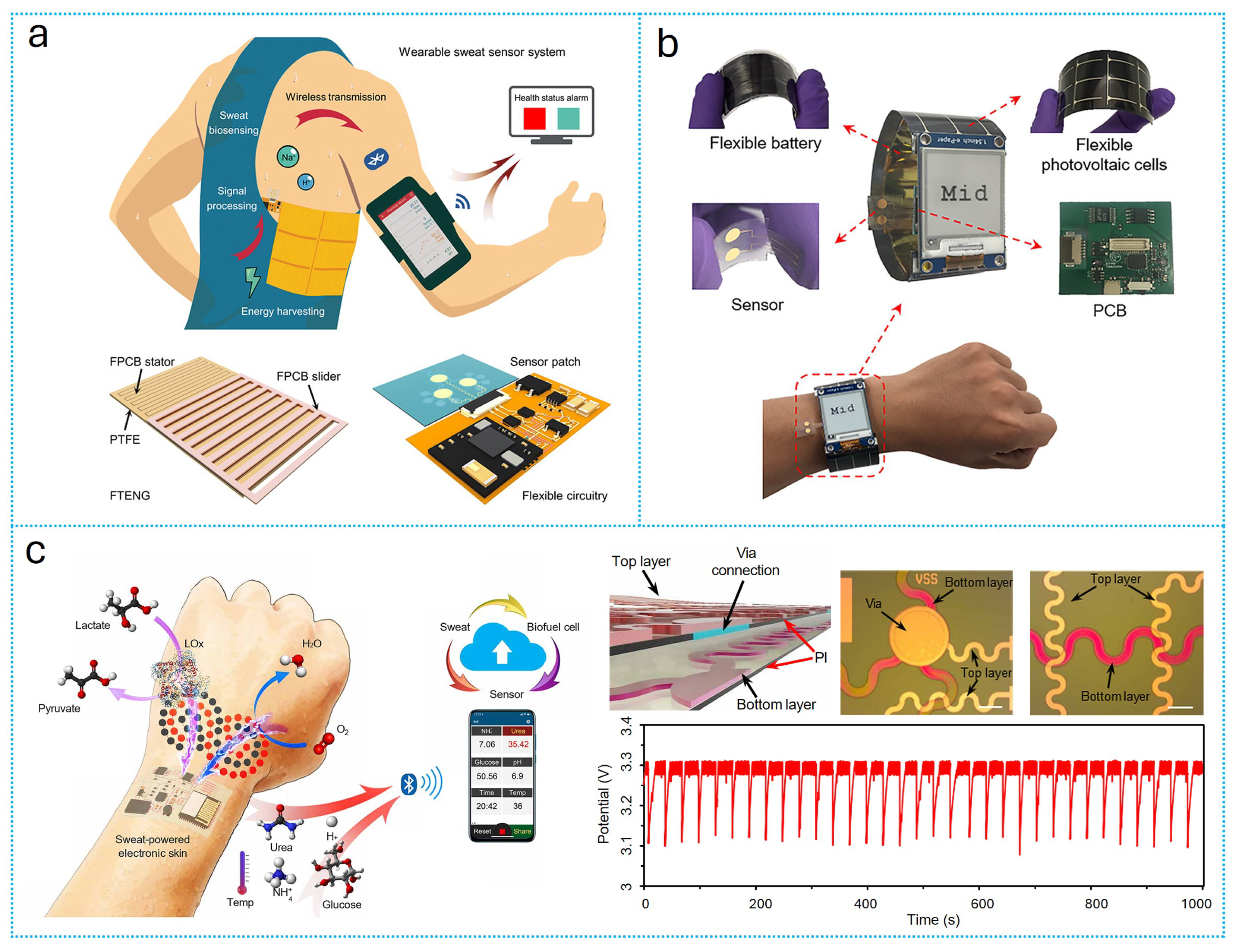
| Sweat | Glucose, lactate, Na+, K+ | Fully integrated multiplexed electrochemical patch | Glucose sensitivity: 2.35 nA/M; lactate sensitivity: 220 nA/mM; Na+ sensitivity: 64.2 mV/decade; K+ sensitivity: 61.3 mV/decade; Na+ range: 10–160 mM; K+ range: 1–32 mM | Requires careful calibration because sweat rate, temperature, and exercise intensity affect signal output | [82] |
| Sweat | Na+, K+ | Solid-contact ion-selective electrodes using PEDOT or POT | Na+ sensitivity: 52.4–56.4 mV/decade; K+ sensitivity: 45.7–54.3 mV/decade; on-body exercise trials up to 90 min | Calibration drift, sweat-rate dependence, and cross-subject variability remain important challenges | [57] |
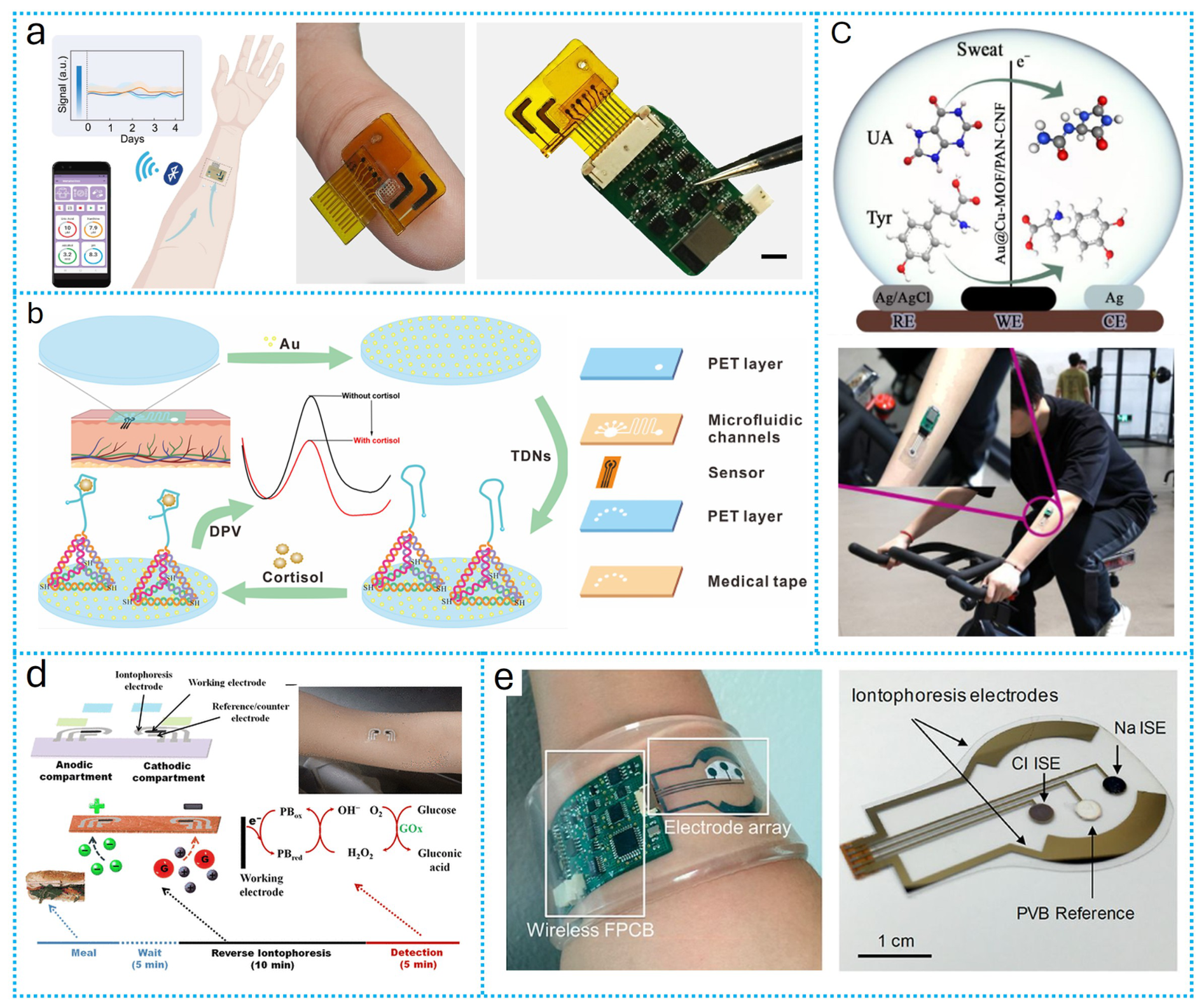
| Sweat | Uric acid/ tyrosine | Laser-engraved graphene electrochemical sensor with microfluidic sweat sampling | UA LOD: 0.74 M; Tyr LOD: 3.6 M; UA sensitivity: 3.50 mA per M per cm2; Tyr sensitivity: 0.61 mA per M per cm2 | Clinical sample size remains limited; diagnostic thresholds require larger cohort validation | [15] |
| Sweat | Cortisol | Graphene-based wireless immunosensor/aptamer-type sweat cortisol platform | Reported low-level cortisol detection with wireless sweat monitoring; some platforms report pg/mL-level detection and validation against reference assays | Hormone sensing is affected by low analyte abundance, nonspecific adsorption, sweat-rate variation, and calibration against blood or saliva cortisol | [13,99] |
| Sweat | pH and Na+ | Battery-free TENG-powered sweat sensor system | Maximum TENG power: 0.94 mW; power density: 416 mW per m2; pH sensitivity: 56.28 mV/decade; Na+ sensitivity: 58.63 mV/decade; Na+ response time about 2 min | Measurement frequency depends on body-motion intensity and regularity | [114] |
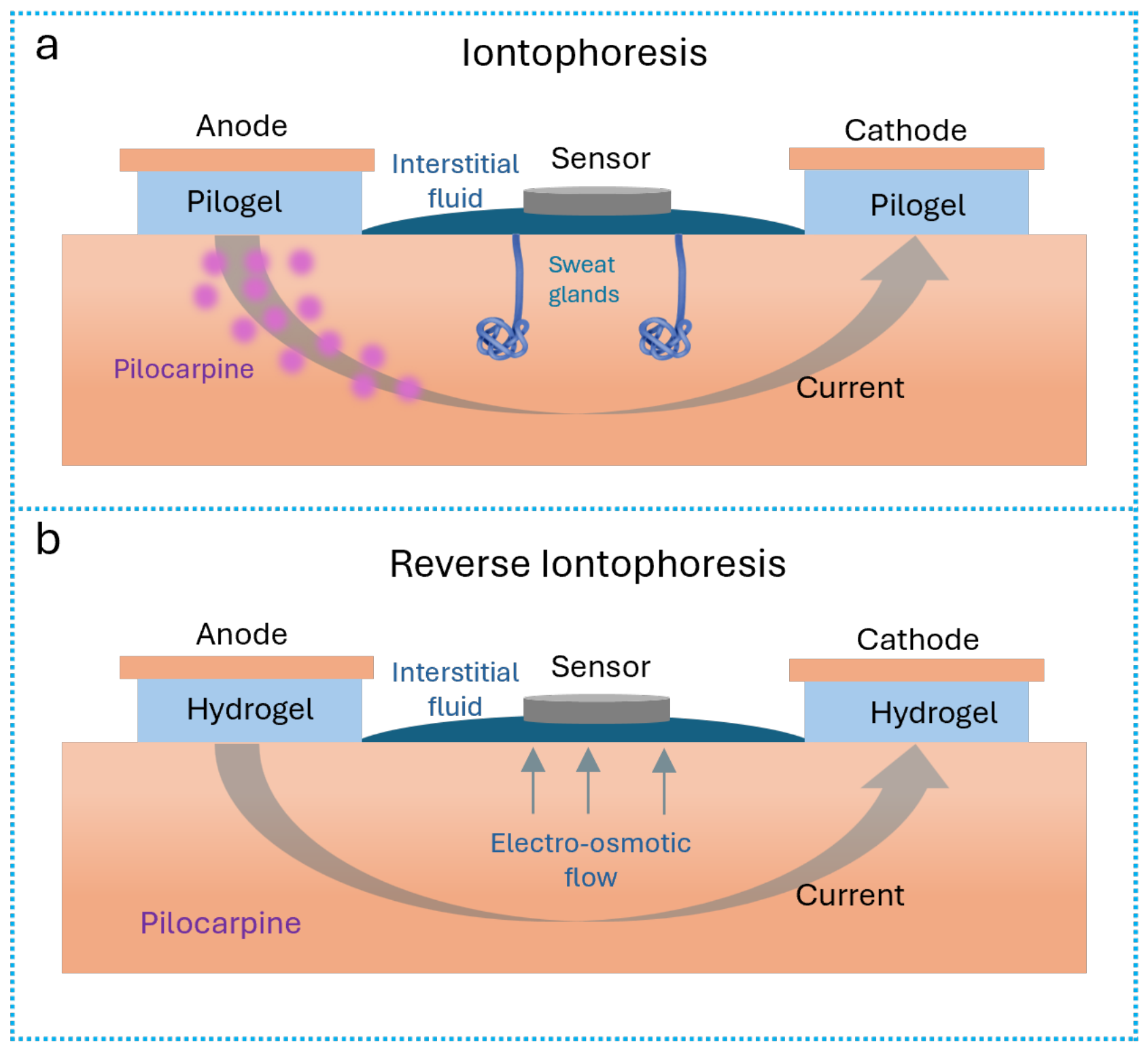
| Sweat | Na+, Cl−, glucose | Autonomous iontophoretic sweat extraction wristband | Na+ sensitivity: 63.2 mV/decade; Cl− sensitivity: 55.1 mV/decade; NaCl range: 10–160 mM; glucose sensitivity: 2.1 nA/M; glucose range: 0–100 M | Repeated stimulation may cause discomfort; pilocarpine response and local sweat composition vary between users | [83] |
| Sweat | Glucose | Self-powered smartwatch sweat glucose sensor | Circuit current resolution: 6 nA; approximately equivalent to 2 M glucose; charged to 6.0 V within 1 h under outdoor sunlight; operating duration up to 8 h | Sweat glucose still requires stronger correlation with blood glucose before clinical use | [115] |
| Sweat | Amino acids/ vitamins | Regenerable graphene electrodes with molecularly imprinted polymers | Multiplexed monitoring of amino acids, vitamins, metabolites, and lipids; repeated in situ regeneration demonstrated during rest and exercise testing | Complex device design; analyte-specific calibration and large-scale clinical validation are still needed | [41] |
| Saliva | Uric acid | Wearable mouthguard biosensor with integrated wireless electronics | Designed for real-time salivary uric acid monitoring; covers healthy and hyperuricemia-relevant salivary uric acid ranges | Diet, oral contamination, salivary flow rate, and oral hygiene can affect readings | [23] |
| Saliva | Glucose | Mouthguard glucose biosensor with telemetry system | Artificial saliva detection range: 5–1000 M/L; stable wireless monitoring for more than 5 h in a phantom jaw model | Human validation and reliable saliva–blood glucose calibration remain necessary | [109] |
| Saliva | Na+ | Stretchable intraoral wireless sodium sensor | Continuous sodium-intake tracking demonstrated in human subjects with wireless oral telemetry | Diet, saliva dilution, oral movement, and comfort can affect long-term monitoring | [111] |
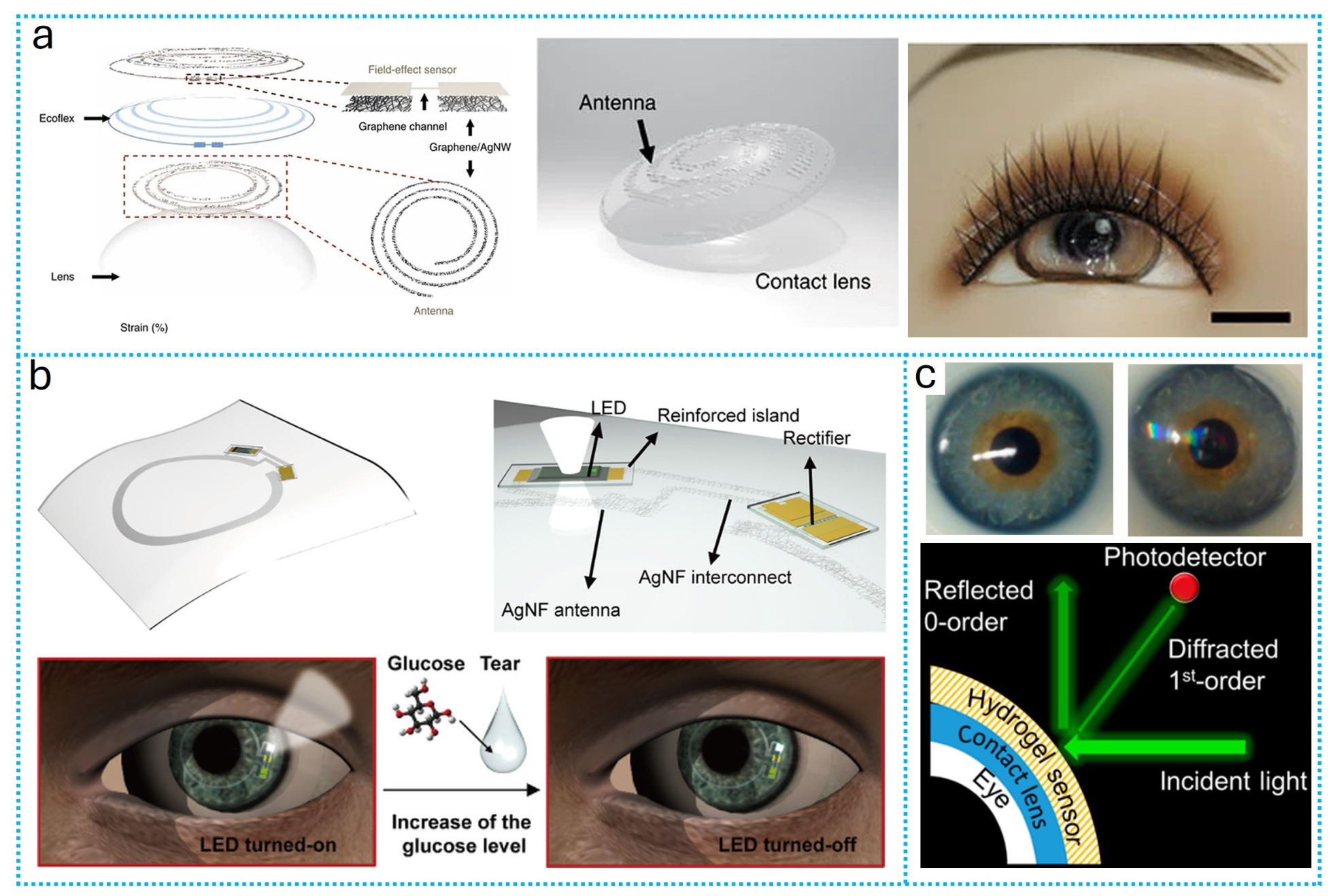
| Tear | Glucose and intraocular pressure | Transparent graphene–AgNW smart contact lens | Optical transparency more than 91 percent; stretchability about 25 percent; demonstrated rabbit tear glucose monitoring and bovine-eye pressure testing | Human tear glucose correlation and long-term comfort require further validation | [101] |
| Tear | Glucose | Battery-free soft smart contact lens with wireless power and LED display | Wireless real-time visualization of tear glucose response demonstrated in rabbit model | Needs human validation and improved calibration for daily glucose variability | [103] |
| Tear | Glucose | Photonic hydrogel sensor attached to commercial contact lens | Sensitivity: 12 nm/mM; saturation time less than 30 min; smartphone-based optical readout | Optical response can be affected by lighting, alignment, tear volume, and evaporation | [104] |
| Tear | Glucose | NovioSense conjunctival fornix sensor | Clinical diabetic trial reported MARD about 16.7 percent and MedARD about 13.3 percent; high Clarke error-grid agreement reported | Accuracy still needs improvement before replacing conventional glucose monitoring | [14] |
Disclaimer/Publisher’s Note: The statements, opinions and data contained in all publications are solely those of the individual author(s) and contributor(s) and not of MDPI and/or the editor(s). MDPI and/or the editor(s) disclaim responsibility for any injury to people or property resulting from any ideas, methods, instructions or products referred to in the content. |
© 2026 by the authors. Licensee MDPI, Basel, Switzerland. This article is an open access article distributed under the terms and conditions of the Creative Commons Attribution (CC BY) license.
Share and Cite
Mondal, R.; Saikia, M.J. Advances in Wearable Biosensors for Non-Invasive Biofluid Monitoring. Biosensors 2026, 16, 336. https://doi.org/10.3390/bios16060336
Mondal R, Saikia MJ. Advances in Wearable Biosensors for Non-Invasive Biofluid Monitoring. Biosensors. 2026; 16(6):336. https://doi.org/10.3390/bios16060336
Chicago/Turabian StyleMondal, Rajib, and Manob Jyoti Saikia. 2026. "Advances in Wearable Biosensors for Non-Invasive Biofluid Monitoring" Biosensors 16, no. 6: 336. https://doi.org/10.3390/bios16060336
APA StyleMondal, R., & Saikia, M. J. (2026). Advances in Wearable Biosensors for Non-Invasive Biofluid Monitoring. Biosensors, 16(6), 336. https://doi.org/10.3390/bios16060336