Creating Semiconducting Polymer Dots with Enhanced Performance Through a Simple Mixed Antisolvent Approach



Abstract
1. Introduction
2. Experimental Section
2.1. Materials
2.2. Synthesis of PFBT-R Polymer
2.3. Preparation of Pdots
2.3.1. Preparation of Pdots Using Pure Di-Water Antisolvent
2.3.2. Preparation of Pdots Using Mixed Antisolvent
2.3.3. Preparation of DSPE-ICG Doped Pdots
2.4. Apparatus for Pdot Characterization
2.5. Cell Culture
2.6. Cell Viability
2.7. Cell Imaging
2.8. Bioconjugation of Functionalized Pdots with Streptavidin
2.9. Subcellular Immunofluorescent Labeling and Imaging
3. Results and Discussion
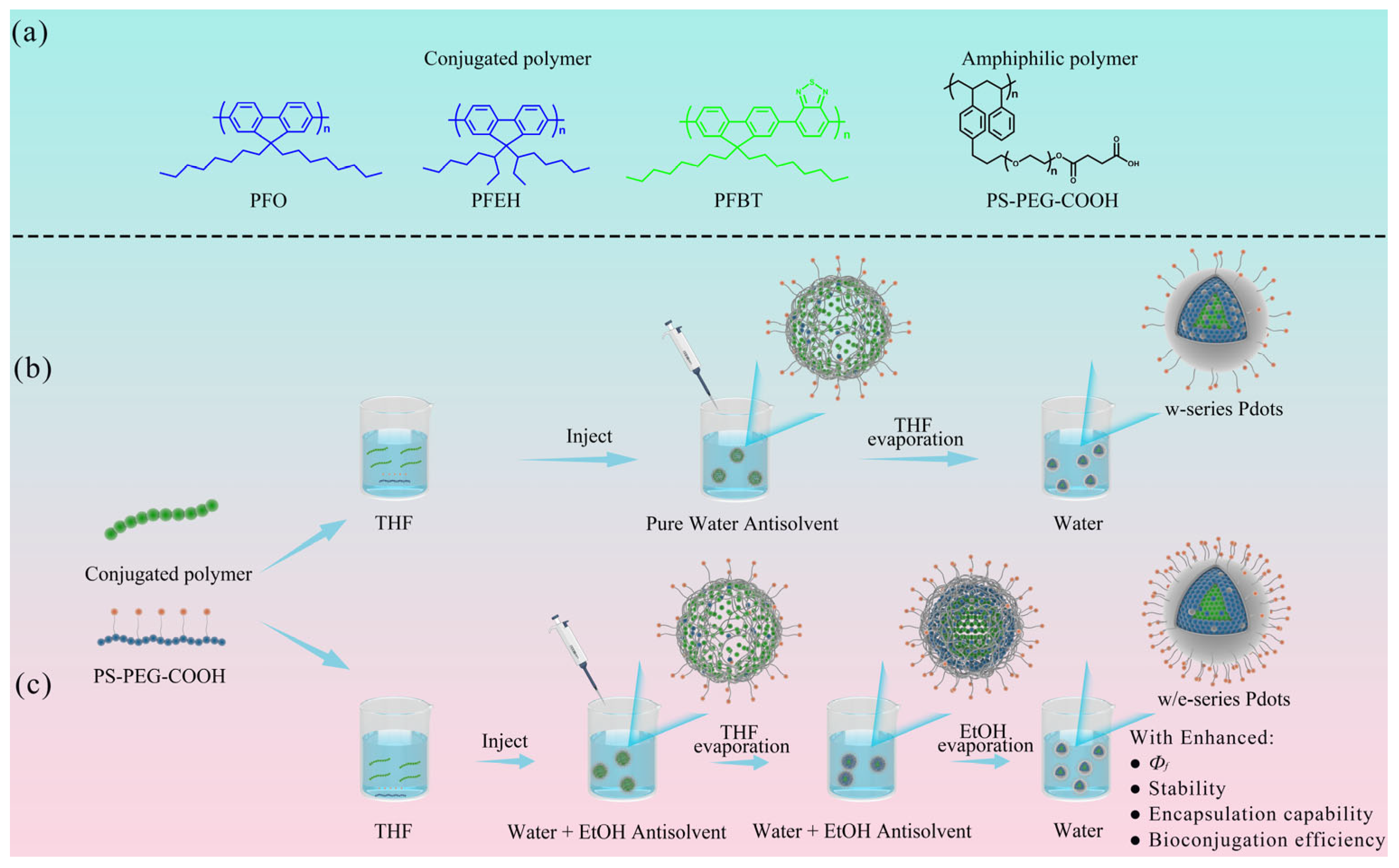
3.1. Illustration of Semiconducting Pdots Prepared by Different Antisolvents
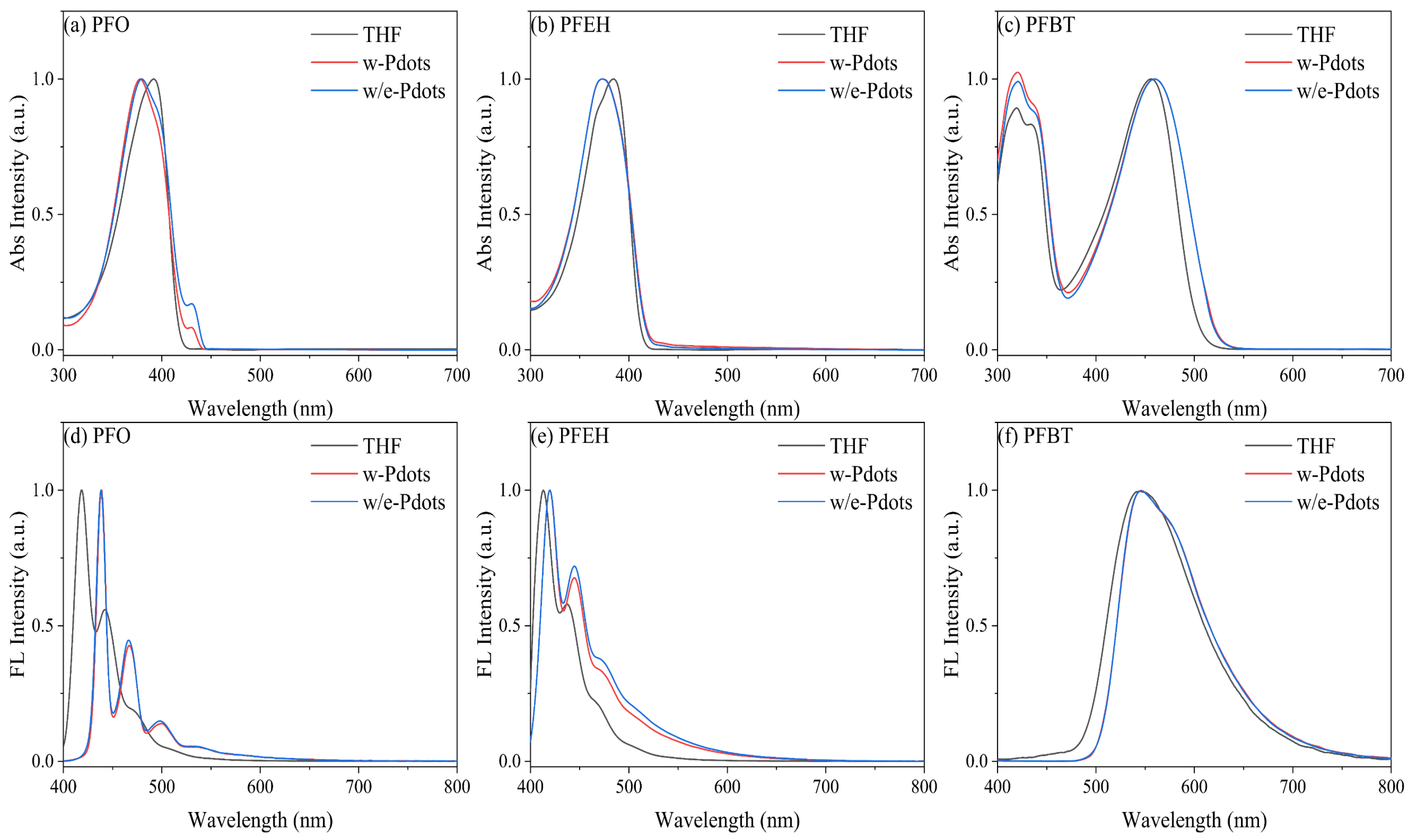
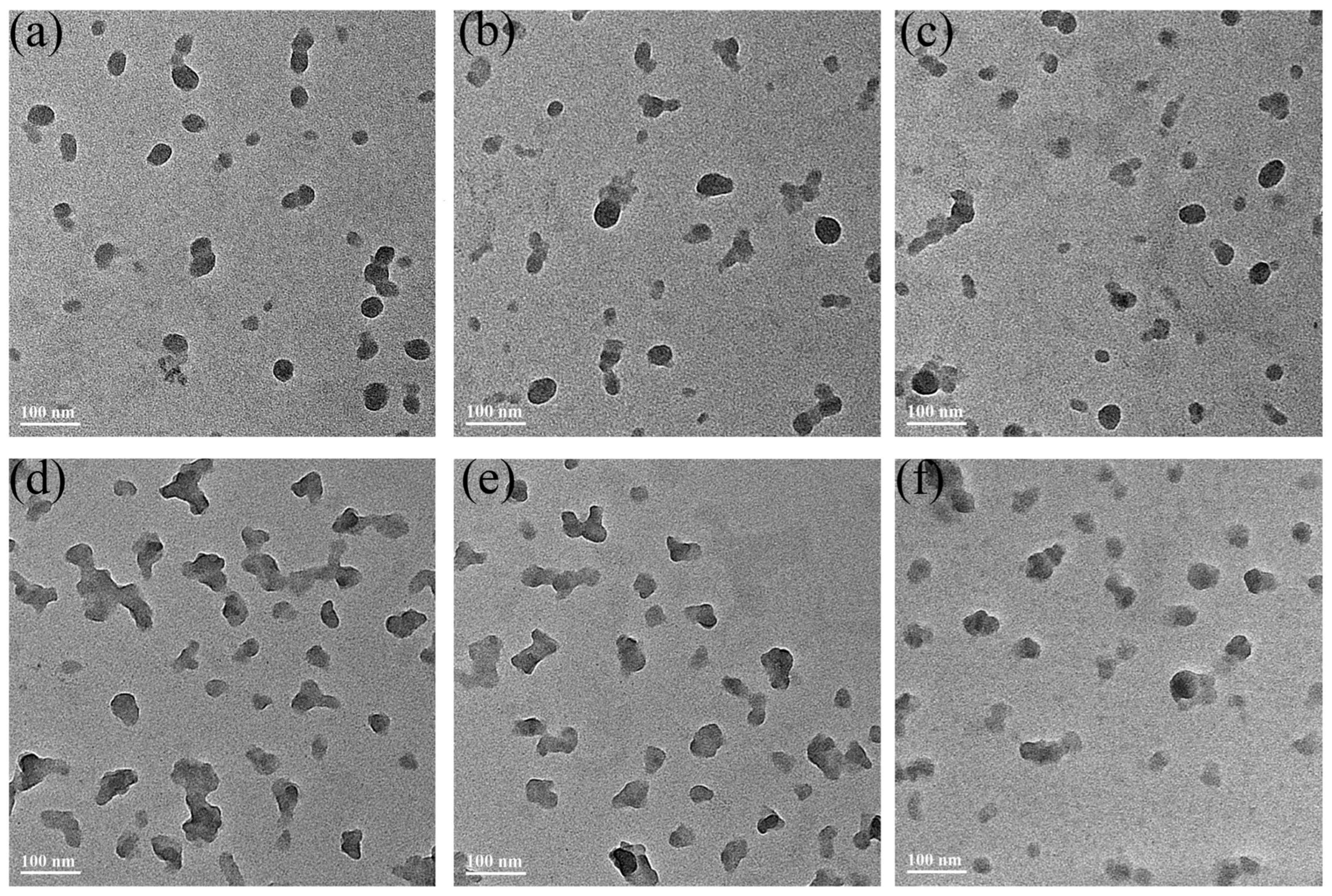
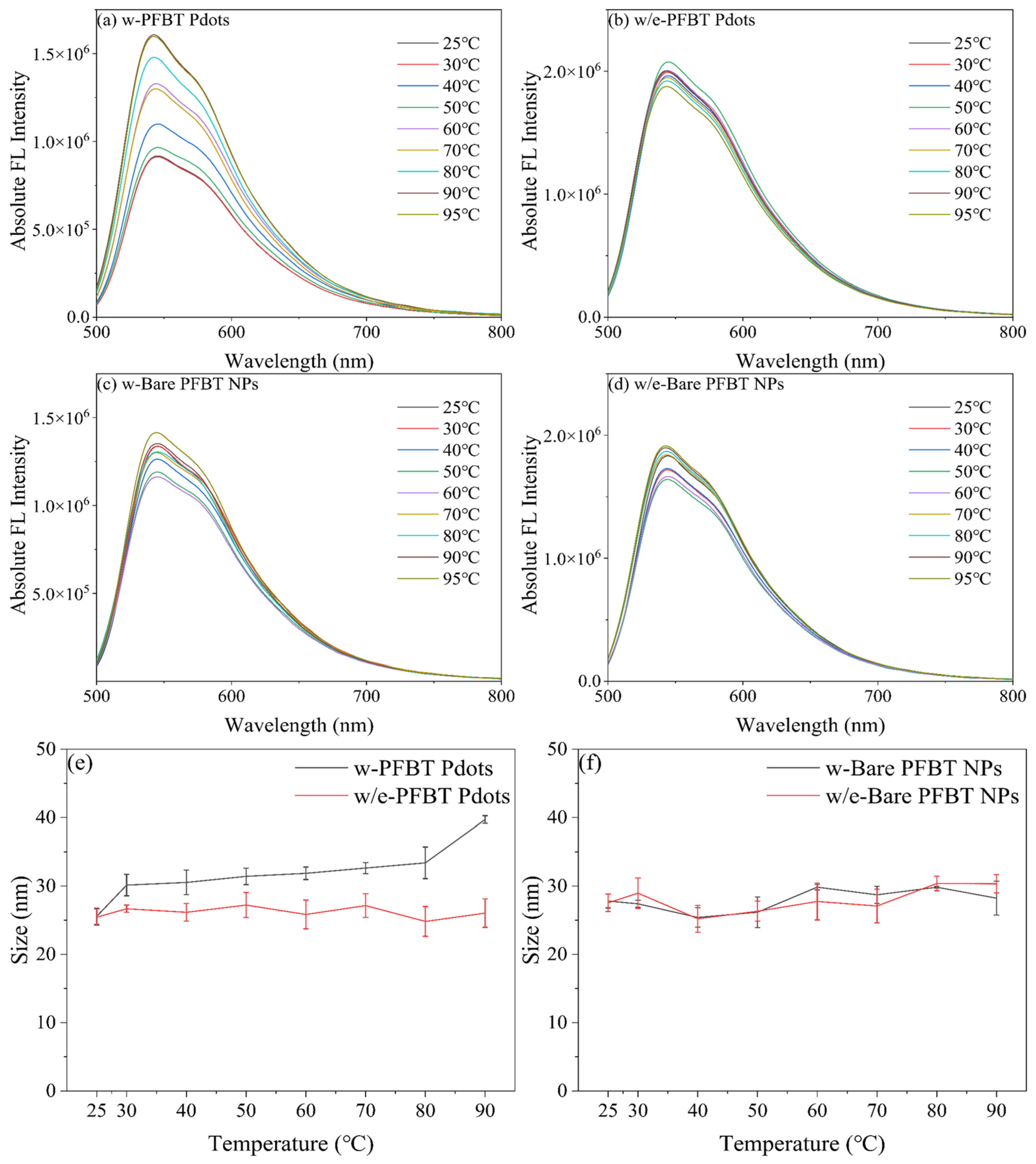
3.2. Characterization of Semiconducting Pdots
3.3. Encapsulation Capability of Semiconducting Pdots
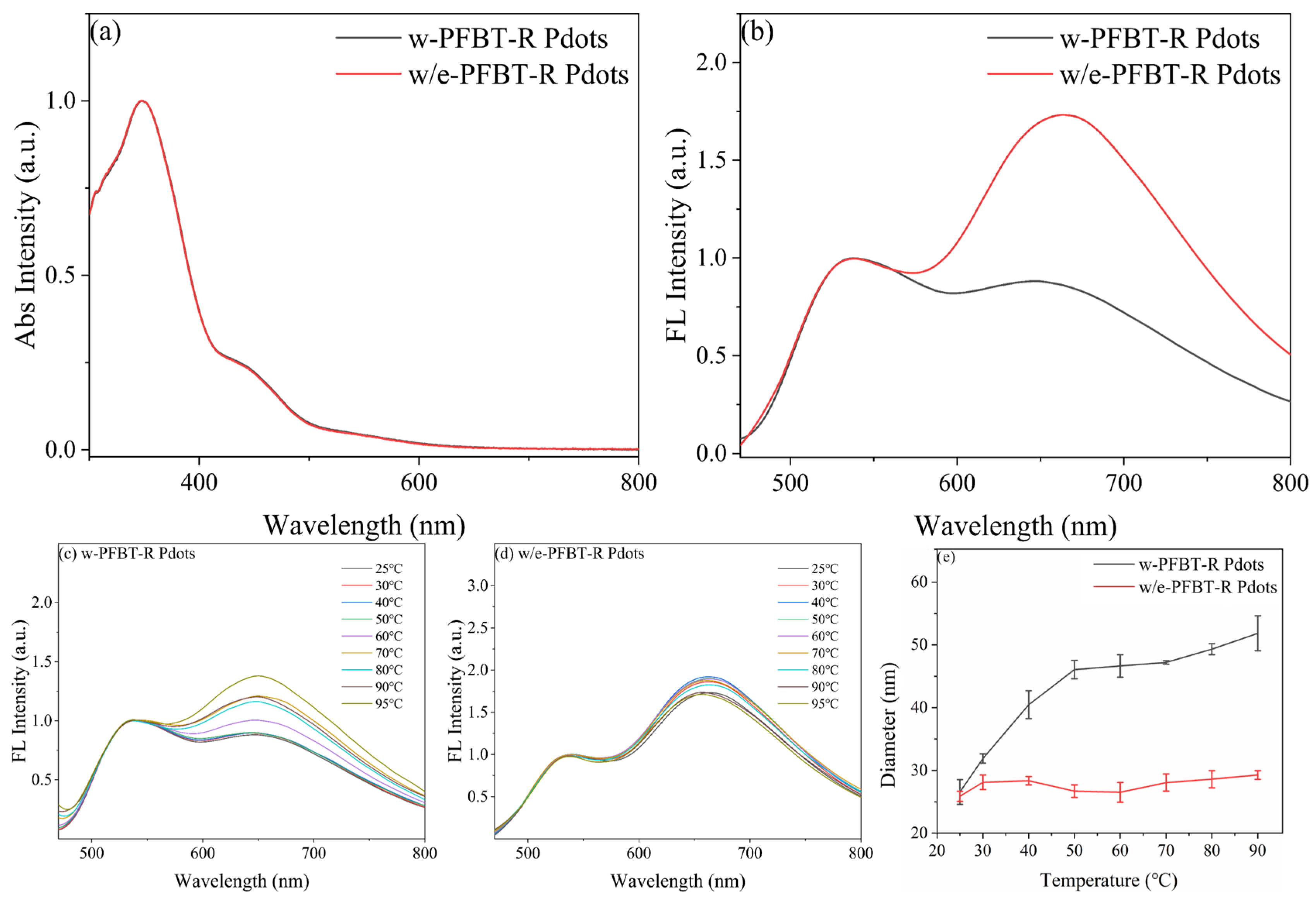
3.4. Förster Energy Transfer in a D-A Type Pdot System
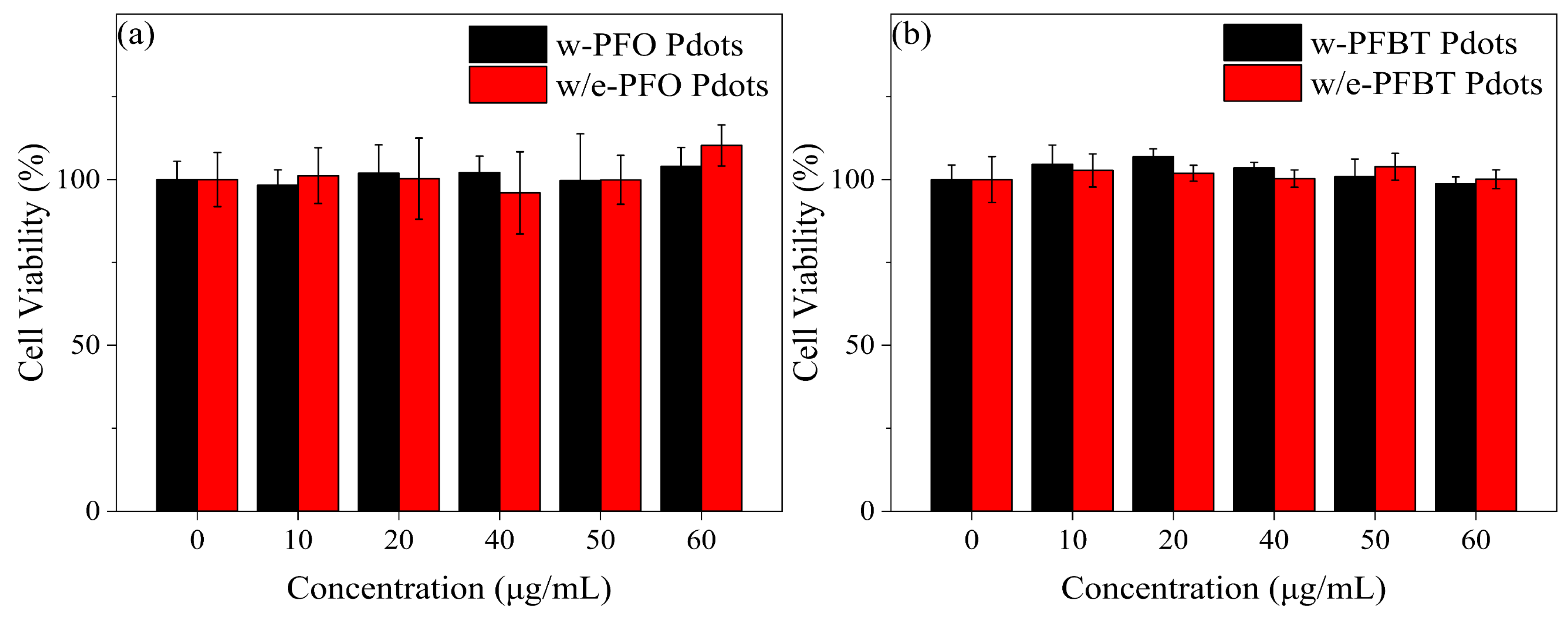
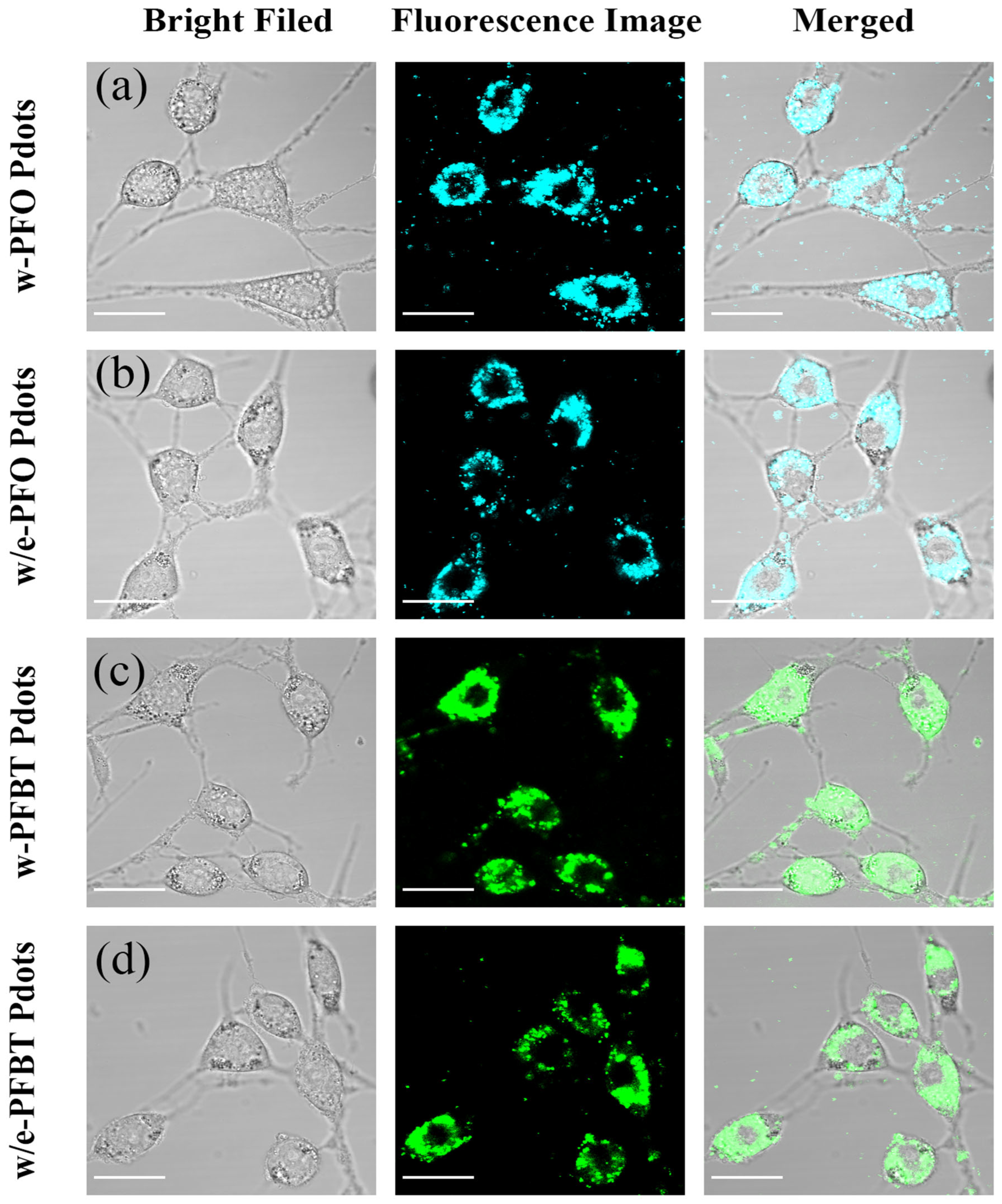
3.5. Cytotoxicity and Living Cell Fluorescence Imaging
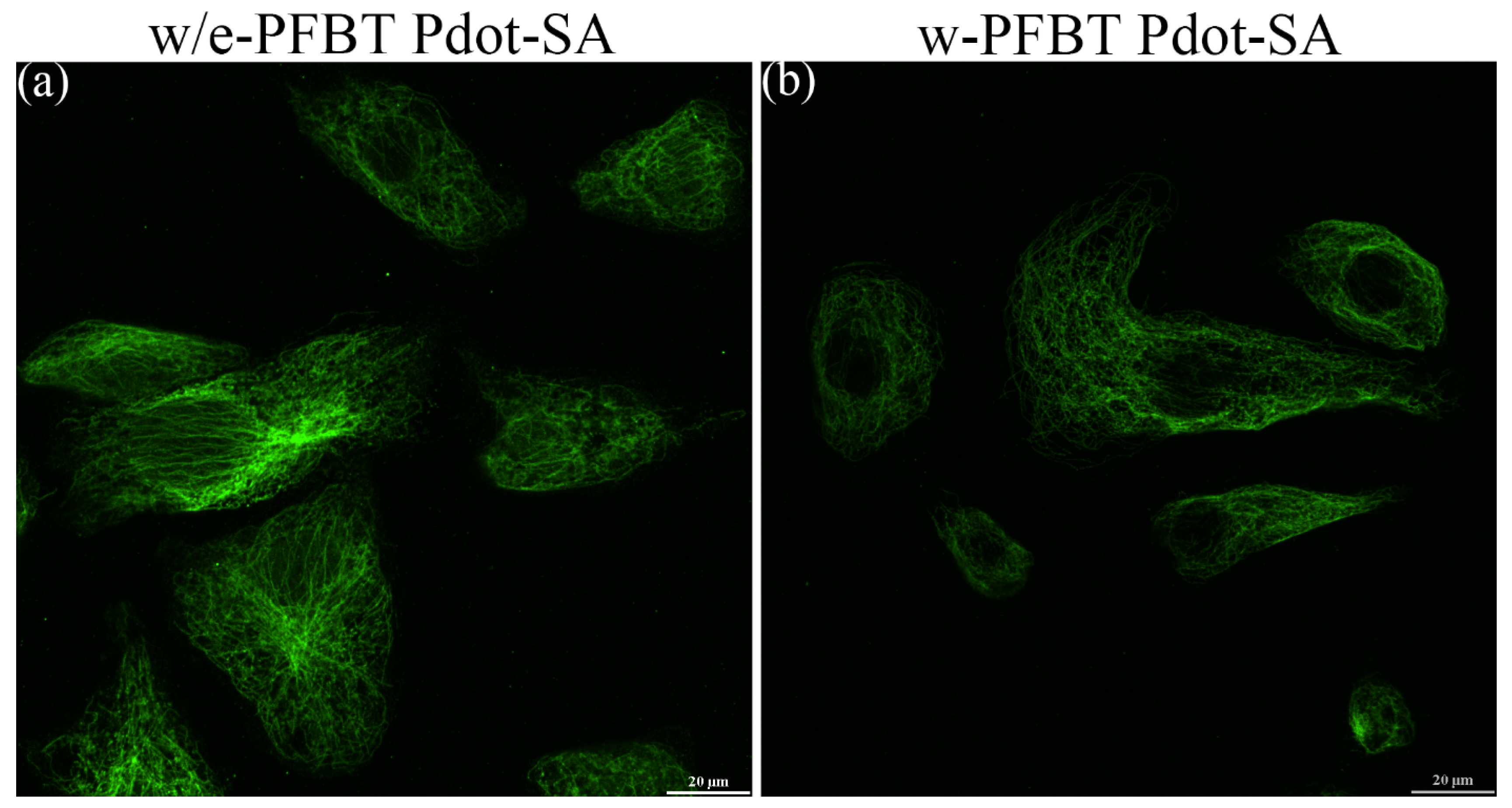
3.6. Intracellular Cytoskeleton Immunofluorescent Labeling and Imaging
4. Conclusions
Supplementary Materials
Author Contributions
Funding
Institutional Review Board Statement
Informed Consent Statement
Data Availability Statement
Acknowledgments
Conflicts of Interest
References
- Li, J.C.; Rao, J.H.; Pu, K.Y. Recent progress on semiconducting polymer nanoparticles for molecular imaging and cancer phototherapy. Biomaterials 2018, 155, 217–235. [Google Scholar] [CrossRef] [Scilit]
- Xu, Y.; Deng, R.; Liu, X.; Zhou, Y. CRISPR/Cas12a-triggered electrochemiluminescence biosensor to ultrasensitive detect herpes simplex virus via self-enhanced near-infrared selenium-based polymer dots. Biosens. Bioelectron. 2025, 286, 117697. [Google Scholar] [CrossRef] [Scilit]
- Li, T.Y.; Wu, M.Q.; Wei, Q.D.; Xu, D.S.; He, X.H.; Wang, J.S.; Wu, J.; Chen, L. Conjugated Polymer Nanoparticles for Tumor Theranostics. Biomacromolecules 2023, 24, 1943–1979. [Google Scholar] [CrossRef] [Scilit] [PubMed]
- Maeda, Y.; Nakamura, N.; Ohta, S. DNA-Mediated, On-Membrane Sequential Assembly of Conjugated Polymer Nanoparticles for Sensitive Detection of Cell Surface Markers. Adv. Funct. Mater. 2024, 34, 2315160. [Google Scholar] [CrossRef] [Scilit]
- Rosenkrans, Z.T.; Hsu, J.C.; Aluicio-Sarduy, E.; Barnhart, T.E.; Engle, J.W.; Cai, W.B. Amplification of Cerenkov Luminescence Using Semiconducting Polymers for Cancer Theranostics. Adv. Funct. Mater. 2023, 33, 10. [Google Scholar] [CrossRef] [Scilit]
- Fan, Z.; Chen, X.; Kong, R.; Lu, Y.; Ma, R.; Wu, J.W.; Fan, L.J. Strongly fluorescent conjugated polymer nanoparticles in aqueous colloidal solution for universal, efficient and effective development of sebaceous and blood fingerprints. J. Colloid. Interf. Sci. 2023, 642, 658–668. [Google Scholar] [CrossRef] [Scilit]
- Yu, N.; Zhao, L.; Cheng, D.; Ding, M.; Lyu, Y.; Zhao, J.; Li, J. Radioactive organic semiconducting polymer nanoparticles for multimodal cancer theranostics. J. Colloid. Interf. Sci. 2022, 619, 219–228. [Google Scholar] [CrossRef] [Scilit] [PubMed]
- Zhang, T.F.; Han, C.; Wei, C.Y.; Wang, X.; Jia, Z.; Meng, H.; Li, Z. Ratiometric fluorescence probe using semiconducting polymer nanoparticles and carbon dots for predicting anti-cancer efficiency. Chin. Chem. Lett. 2026, 37, 111566. [Google Scholar] [CrossRef] [Scilit]
- Luppi, B.T.; Primrose, W.L.; Hudson, Z.M. Polymer Dots with Delayed Fluorescence and Tunable Cellular Uptake for Photodynamic Therapy and Time-Gated Imaging. Angew. Chem. Int. Ed. 2024, 63, e202400712. [Google Scholar] [CrossRef] [Scilit]
- Shi, Z.; Zhang, X.; Sun, J.; Gao, F. NIR-II Polymer Dots for Real-Time Navigating Hepatic Resection and Hepatic Ischemia-Reperfusion Injury. ACS Appl. Bio Mater. 2026, 9, 1781–1789. [Google Scholar] [CrossRef] [Scilit]
- Jia, D.H.; Hua, Y.H.; Wu, T.T.; Ren, X.; Gao, X.; Yan, L.; Wei, Q. Facile preparation of iridium-based AIE polymer dots for sensitive electrochemiluminescence immunoassay of CD44 protein. Anal. Chim. Acta 2025, 1341, 34363990. [Google Scholar] [CrossRef] [Scilit]
- Jin, Y.; Zhao, Y.; Zhu, H.; He, S.; Gao, H.; Xu, L.; Yang, Z. Aggregation-induced electrochemiluminescence aptasensor for ultrasensitive detection of acetamiprid based on polymer dots as emitters. Biosens. Bioelectron. 2026, 291, 118031. [Google Scholar] [CrossRef] [Scilit]
- Cheng, Y.; Xu, W.; Bai, X.; Zhou, J.; Cheng, Y.; Chen, L.; Cao, X.; Wang, J. Sensitive detection of protein by using the single-molecule immunoassays based on semiconducting polymer dots. Sensor. Actuat. B-Chem. 2026, 453, 139479. [Google Scholar] [CrossRef] [Scilit]
- Wei, Q.D.; Xu, D.S.; Li, T.Y.; He, X.H.; Wang, J.S.; Zhao, Y.; Chen, L. Recent Advances of NIR-II Emissive Semiconducting Polymer Dots for In Vivo Tumor Fluorescence Imaging and Theranostics. Biosensors 2022, 12, 1126. [Google Scholar] [CrossRef] [Scilit] [PubMed]
- Wu, C.F.; Chiu, D.T. Highly Fluorescent Semiconducting Polymer Dots for Biology and Medicine. Angew. Chem. Int. Ed. 2013, 52, 3086–3109. [Google Scholar] [CrossRef] [Scilit] [PubMed]
- Chen, L.; Chen, D.D.; Jiang, Y.F.; Zhang, J.C.; Yu, J.B.; DuFort, C.C.; Hingorani, S.R.; Zhang, X.J.; Wu, C.F.; Chiu, D.T. A BODIPY-Based Donor/Donor–Acceptor System: Towards Highly Efficient Long-Wavelength-Excitable Near-IR Polymer Dots with Narrow and Strong Absorption Features. Angew. Chem. Int. Ed. 2019, 58, 7008–7012. [Google Scholar] [CrossRef] [Scilit]
- Alifu, N.; Zebibula, A.; Zhang, H.Q.; Ni, H.W.; Zhu, L.; Xi, W.; Wang, Y.L.; Zhang, X.L.; Wu, C.F.; Qian, J. NIR-IIb excitable bright polymer dots with deep-red emission for in vivo through-skull three-photon fluorescence bioimaging. Nano Res. 2020, 13, 2632–2640. [Google Scholar] [CrossRef] [Scilit]
- Sun, Q.; Chen, W.; Wang, M.; Zheng, P.; Gao, M.; Song, F.; Li, C.A. “Chase and Block” Strategy for Enhanced Cancer Therapy with Hypoxia-Promoted Photodynamic Therapy and Autophagy Inhibition Based on Upconversion Nanocomposites. Adv. Healthc. Mater. 2023, 12, 2301087. [Google Scholar] [CrossRef] [Scilit]
- Guo, W.N.; Chen, M.J.; Yang, Y.X.; Zheng, P.; Gao, M.; Song, F.; Li, C.A. Biocompatibility and Biological Effects of Surface-Modified Conjugated Polymer Nanoparticles. Molecules 2023, 28, 2034. [Google Scholar] [CrossRef] [Scilit]
- Zhang, Z.; Fang, X.F.; Liu, Z.H.; Liu, H.C.; Chen, D.D.; He, S.Q.; Zheng, J.; Yang, B.; Qin, W.P.; Zhang, X.J.; et al. Semiconducting Polymer Dots with Dual-Enhanced NIR-IIa Fluorescence for Through-Skull Mouse-Brain Imaging. Angew. Chem. Int. Ed. 2020, 59, 3691–3698. [Google Scholar] [CrossRef] [Scilit]
- Sun, K.; Liu, S.Y.; Liu, J.; Ding, Z.Y.; Jiang, Y.F.; Zhang, J.C.; Chen, H.B.; Yu, J.B.; Wu, C.F.; Chiu, D.T. Improving the Accuracy of Pdot-Based Continuous Glucose Monitoring by Using External Ratiometric Calibration. Anal. Chem. 2021, 93, 2359–2366. [Google Scholar] [CrossRef] [Scilit]
- Kim, J.; Lee, T.S. Emission Tuning with Size-Controllable Polymer Dots from a Single Conjugated Polymer. Small 2018, 14, 1702758. [Google Scholar] [CrossRef] [Scilit]
- Wang, Y.X.; Feng, L.H.; Wang, S. Conjugated Polymer Nanoparticles for Imaging, Cell Activity Regulation, and Therapy. Adv. Funct. Mater. 2019, 29, 1806818. [Google Scholar] [CrossRef] [Scilit]
- Wu, L.; Wu, I.C.; DuFort, C.C.; Carlson, M.A.; Wu, X.; Chen, L.; Kuo, C.T.; Qin, Y.L.; Yu, J.B.; Hingorani, S.R.; et al. Photostable Ratiometric Pdot Probe for In Vitro and In Vivo Imaging of Hypochlorous Acid. J. Am. Chem. Soc. 2017, 139, 6911–6918. [Google Scholar] [CrossRef] [Scilit] [PubMed]
- Hou, L.; Hu, X.; Pang, W.; Cao, R.; Wang, S.; Wang, W.; Liu, X.; Tang, Y. Fluorescence homogenous analysis based on AgNPs quenching carbon dots and polymer dots for simultaneous detection of glyphosate and thiamethoxam in food. Sens. Actuators B Chem. 2025, 443, 138209. [Google Scholar] [CrossRef] [Scilit]
- Wang, L.; Fernandez-Teran, R.; Zhang, L.; Fernandes, D.L.; Tian, L.; Chen, H.; Tian, H.N. Organic Polymer Dots as Photocatalysts for Visible Light-Driven Hydrogen Generation. Angew. Chem. Int. Ed. 2016, 55, 12306–12310. [Google Scholar] [CrossRef] [Scilit]
- Zhen, X.; Xie, C.; Jiang, Y.Y.; Ai, X.Z.; Xing, B.G.; Pu, K.Y. Semiconducting Photothermal Nanoagonist for Remote-Controlled Specific Cancer Therapy. Nano Lett. 2018, 18, 1498–1505. [Google Scholar] [CrossRef] [Scilit]
- Pu, K.Y.; Chattopadhyay, N.; Rao, J.H. Recent advances of semiconducting polymer nanoparticles in in vivo molecular imaging. J. Control. Release 2016, 240, 312–322. [Google Scholar] [CrossRef] [Scilit] [PubMed]
- Liu, H.Y.; Wu, P.J.; Kuo, S.Y.; Chen, C.P.; Chang, E.H.; Wu, C.Y.; Chan, Y.H. Quinoxaline-Based Polymer Dots with Ultrabright Red to Near-Infrared Fluorescence for In Vivo Biological Imaging. J. Am. Chem. Soc. 2015, 137, 10420–10429. [Google Scholar] [CrossRef] [Scilit] [PubMed]
- Zhang, X.J.; Yu, J.B.; Wu, C.F.; Jin, Y.H.; Rang, Y.; Ye, F.M.; Chiu, D.T. Importance of Having Low-Density Functional Groups for Generating High-Performance Semiconducting Polymer Dots. ACS Nano 2012, 6, 5429–5439. [Google Scholar] [CrossRef] [Scilit]
- Rong, Y.; Yu, J.B.; Zhang, X.J.; Sun, W.; Ye, F.M.; Wu, I.C.; Zhang, Y.; Hayden, S.; Zhang, Y.; Wu, C.F.; et al. Yellow Fluorescent Semiconducting Polymer Dots with High Brightness, Small Size, and Narrow Emission for Biological Applications. ACS Macro Lett. 2014, 3, 1051–1054. [Google Scholar] [CrossRef] [Scilit]
- Zhang, J.C.; Yu, J.B.; Jiang, Y.F.; Chiu, D.T. Ultrabright Pdots with a Large Absorbance Cross Section and High Quantum Yield. ACS Appl. Mater. Interfaces 2022, 14, 13631–13637. [Google Scholar] [CrossRef] [Scilit]
- Yang, H.; Yan, Z.; Liu, X.; Liu, W.; Lin, P.; Xue, H.; Wu, Y.; Jiang, Y.; Fan, Q.; Wang, J.; et al. Single-chain ultrasmall fluorescent polymer dots enable nanometre-resolution cellular imaging and single protein tracking. Nat. Photon. 2025, 19, 1336–1344. [Google Scholar] [CrossRef] [Scilit]
- Yang, G.Z.; Liu, Y.; Jin, S.; Hui, Y.; Wang, X.; Xu, L.T.; Chen, D.; Weitz, D.; Zhao, C.X. Phase separation-induced nanoprecipitation for making polymer nanoparticles with high drug loading. Aggregate 2023, 4, e314. [Google Scholar] [CrossRef] [Scilit]
- Chen, L.; Zhang, B.H.; Cheng, Y.X.; Xie, Z.Y.; Wang, L.X.; Jing, X.B.; Wang, F.S. Pure and Saturated Red Electroluminescent Polyfluorenes with Dopant/Host System and PLED Efficiency/Color Purity Trade-Offs. Adv. Funct. Mater. 2010, 20, 3143–3153. [Google Scholar] [CrossRef] [Scilit]
- Wu, C.F.; McNeill, J. Swelling-controlled polymer phase and fluorescence properties of polyfluorene nanoparticles. Langmuir 2008, 24, 5855–5861. [Google Scholar] [CrossRef] [Scilit]
- Chen, S.H.; Su, A.C.; Su, C.H.; Chen, S.A. Phase behavior of poly(9,9-di-n-hexyl-2,7-fluorene). J. Phys. Chem. B 2006, 110, 4007–4013. [Google Scholar] [CrossRef] [Scilit]
- Zheng, Z.J.; Yim, K.H.; Saifullah, M.S.; Welland, M.E.; Friend, R.H.; Kim, J.S.; Huck, W.T.S. Uniaxial alignment of liquid-crystalline conjugated polymers by nanoconfinement. Nano Lett. 2007, 7, 987–992. [Google Scholar] [CrossRef] [Scilit]
- Li, Y.Q.; Lu, S.T.; Zhang, Y.F.; Li, J.R.; Xiong, L.Q. High-Resolution Imaging of the Ocular Vasculature of Conjunctivitis in Mice Using Highly Bright Polymer Dots. Adv. Healthc. Mater. 2022, 11, 2200978. [Google Scholar] [CrossRef] [Scilit] [PubMed]
- Holmes, A.; Pan, J.W.; Wang, L.; Franco, L.; Bicudo, R.R.; Albinsson, B.; Araujo, C.M.; Zhu, W.G.; Wang, D.B.; Nguyen, T.Q.; et al. Highly Efficient Platinum-Free Photocatalytic Hydrogen Evolution From Low-cost Conjugated Polymer Nanoparticles. Adv. Mater. 2025, 37, 2507702. [Google Scholar] [CrossRef] [Scilit]
- Wu, Y.Z.; Zhu, W.H. Organic sensitizers from D-pi-A to D-A-π-A: Effect of the internal electron-withdrawing units on molecular absorption, energy levels and photovoltaic performances. Chem. Soc. Rev. 2013, 42, 2039–2058. [Google Scholar] [CrossRef] [Scilit]
- Klaerner, G.; Miller, R.D. Polyfluorene Derivatives: Effective Conjugation Lengths from Well-Defined Oligomers. Macromolecules 1998, 31, 2007–2009. [Google Scholar] [CrossRef] [Scilit]
- Wang, Q.L.; Qu, Y.; Tian, H.K.; Geng, Y.H.; Wang, F.S. Iterative Binomial Synthesis of Monodisperse Polyfluorenes up to 64-mers and Their Chain-Length-Dependent Properties. Macromolecules 2011, 44, 1256–1260. [Google Scholar] [CrossRef] [Scilit]
- Eggimann, H.J.; Le Roux, F.; Herz, L.M. How beta-Phase Content Moderates Chain Conjugation and Energy Transfer in Polyfluorene Films. J. Phys. Chem. Lett. 2019, 10, 1729–1736. [Google Scholar] [CrossRef] [Scilit]
- Yu, M.N.; Soleimaninejad, H.; Lin, J.Y.; Zuo, Z.Y.; Liu, B.; Bo, Y.F.; Bai, L.B.; Han, Y.M.; Smith, T.A.; Xu, M.; et al. Photophysical and Fluorescence Anisotropic Behavior of Polyfluorene beta-Conformation Films. J. Phys. Chem. Lett. 2018, 9, 364–372. [Google Scholar] [CrossRef] [Scilit] [PubMed]
- Liu, J.; Wang, Q.L.; Liu, C.F.; Tian, H.K.; Geng, Y.H.; Yan, D.H. Morphology of melt-crystallized beta-phase crystals of monodisperse poly(9,9-dioctylfluorene). Polymer 2015, 64, 46–50. [Google Scholar] [CrossRef] [Scilit]
- Layek, S.; Ghosh, M.; Reddy, K.S.; Senapati, S.; Maiti, P.; Sinha, S. Optical Studies of Poly(9,9-di-(2-ethylhexyl)-9H-fluorene-2,7-vinylene) and its Nanocomposites. J. Appl. Spectrosco. 2015, 82, 868–874. [Google Scholar] [CrossRef] [Scilit]
- Thiem, H.; Jandke, M.; Hanft, D.; Strohriegl, P. Synthesis and orientation of fluorene-containing reactive mesogens. Macromol. Chem. Phys. 2006, 207, 370–381. [Google Scholar] [CrossRef] [Scilit]
- Grell, M.; Knoll, W.; Lupo, D.; Meisel, A.; Miteva, T.; Neher, D.; Nothofer, H.G.; Scherf, U.; Yasuda, A. Blue polarized electroluminescence from a liquid crystalline polyfluorene. Adv. Mater. 1999, 11, 671. [Google Scholar] [CrossRef] [Scilit]
- Donley, C.; Zaumseil, J.; Andreasen, J.W.; Nielsen, M.M.; Sirringhaus, H.; Friend, R.H.; Kim, J.S. Effects of Packing Structure on the Optoelectronic and Charge Transport Properties in Poly(9,9-di-n-octylfluorene-alt-benzothiadiazole). J. Am. Chem. Soc. 2005, 127, 12890–12899. [Google Scholar] [CrossRef] [Scilit]
- Milad, R.; Shi, J.; Aguirre, A.; Cardone, A.; Milián-Medina, B.; Farinola, G.M.; Abderrabba, M.; Gierschner, J. Effective conjugation in conjugated polymers with strongly twisted backbones: A case study on fluorinated MEHPPV. J. Mater. Chem. C 2016, 4, 6900–6906. [Google Scholar] [CrossRef] [Scilit]
- Chen, J.W.; Kuo, Y.Y.; Wang, C.R.; Chao, C.Y. The formation of supramolecular liquid-crystal gels for enhancing the electro-optical properties of twisted nematic liquid crystals. Org. Electron. 2015, 27, 24–28. [Google Scholar] [CrossRef] [Scilit]
- Liu, X.Q.; Zhang, K.; Gao, J.F.; Chen, Y.Z.; Tung, C.H.; Wu, L.Z. Monochromophore-Based Phosphorescence and Fluorescence from Pure Organic Assemblies for Ratiometric Hypoxia Detection. Angew. Chem. Int. Ed. 2020, 59, 23456–23460. [Google Scholar] [CrossRef] [Scilit]
- Guo, W.J.; Ma, S.X.; Wang, H.; Qiao, L.; Chen, L.; Hong, C.Y.; Liu, B.; Zheng, X.Y.; Peng, H.Q. Unveiling size-fluorescence correlation of organic nanoparticles and its use in nanoparticle size determination. Aggregate 2024, 5, 6. [Google Scholar]
- Xie, C.; Zhen, X.; Lei, Q.; Ni, R.; Pu, K.Y. Self-Assembly of Semiconducting Polymer Amphiphiles for In Vivo Photoacoustic Imaging. Adv. Funct. Mater. 2017, 27, 1605397. [Google Scholar] [CrossRef] [Scilit]
- Yin, C.; Zhen, X.; Zhao, H.; Tang, Y.; Ji, Y.; Lyu, Y.; Fan, Q.; Huang, W.; Pu, K.Y. Amphiphilic Semiconducting Oligomer for Near-Infrared Photoacoustic and Fluorescence Imaging. ACS Appl. Mater. Interfaces 2017, 9, 12332–12339. [Google Scholar] [CrossRef] [Scilit]
- Lei, Y.; Wang, Y.; Hill, S.K.; Cheng, Z.; Song, Q.; Perrier, S. Supra-Fluorophores: Ultrabright Fluorescent Supramolecular Assemblies Derived from Conventional Fluorophores in Water. Adv. Mater. 2024, 36, 2401346. [Google Scholar] [CrossRef] [Scilit]
- Tapani, E.; Taavitsainen, M.; Lindros, K.; Vehmas, T.; Lehtonen, E. Toxicity of ethanol in low concentrations: Experimental evaluation in cell culture. Acta Radiol. 1996, 37, 923–926. [Google Scholar] [CrossRef] [Scilit]
- Wang, F.F.; Qu, L.Q.; Ren, F.Q.; Baghdasaryan, A.; Jiang, Y.Y.; Hsu, R.; Liang, P.; Li, J.C.; Zhu, G.Z.; Ma, Z.R.; et al. High-precision tumor resection down to few-cell level guided by NIR-IIb molecular fluorescence imaging. Proc. Natl. Acad. Sci. USA 2022, 119, e2123111119. [Google Scholar] [CrossRef] [Scilit] [PubMed]
- Wu, M.Q.; Wei, Q.D.; Xian, C.H.; Dai, C.L.; He, X.H.; Wu, C.F.; Sun, G.M.; Chen, L. Highly efficient and non-doped red conjugated polymer dot for photostable cell imaging. Chin. Chem. Lett. 2023, 34, 107867. [Google Scholar] [CrossRef] [Scilit]


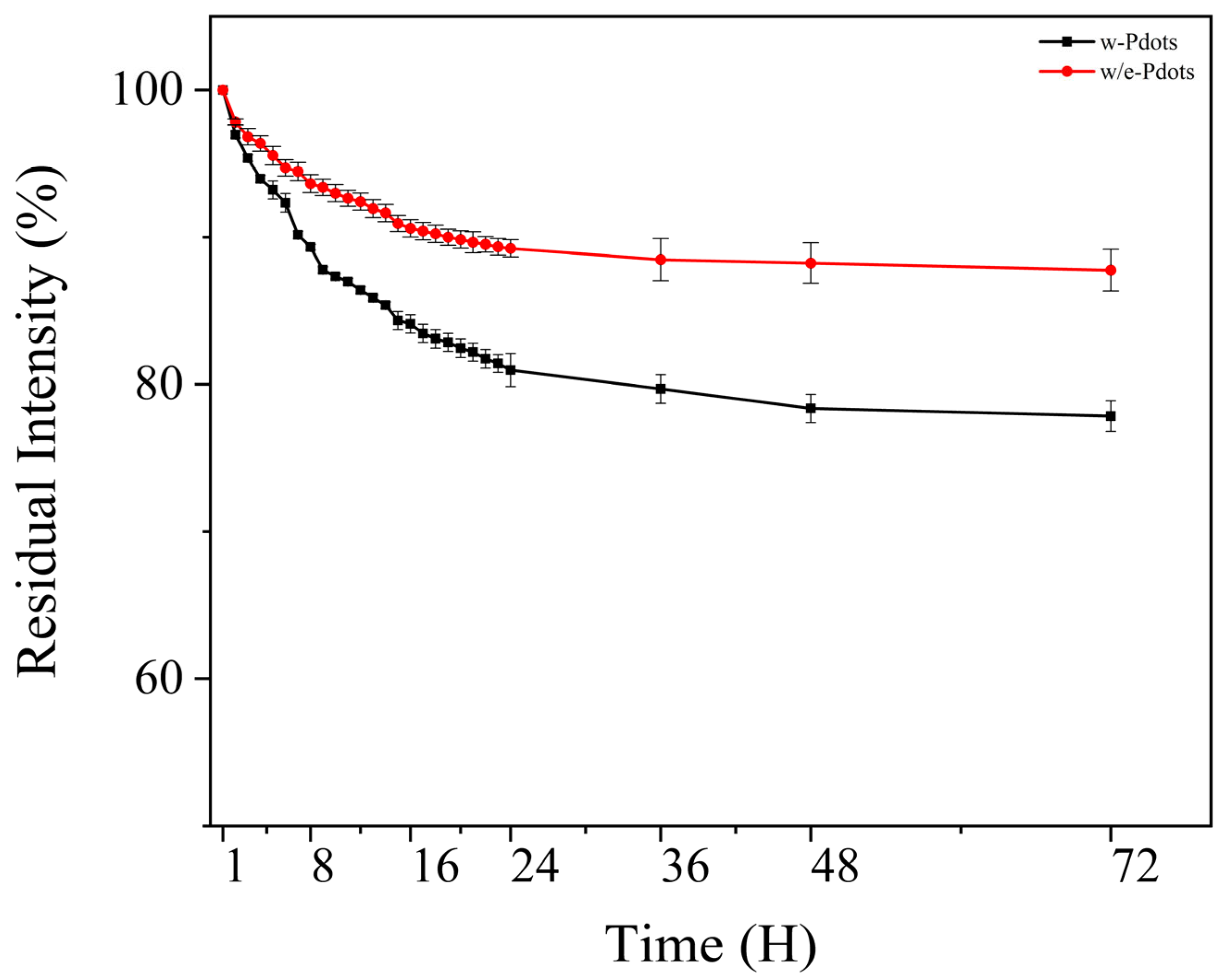
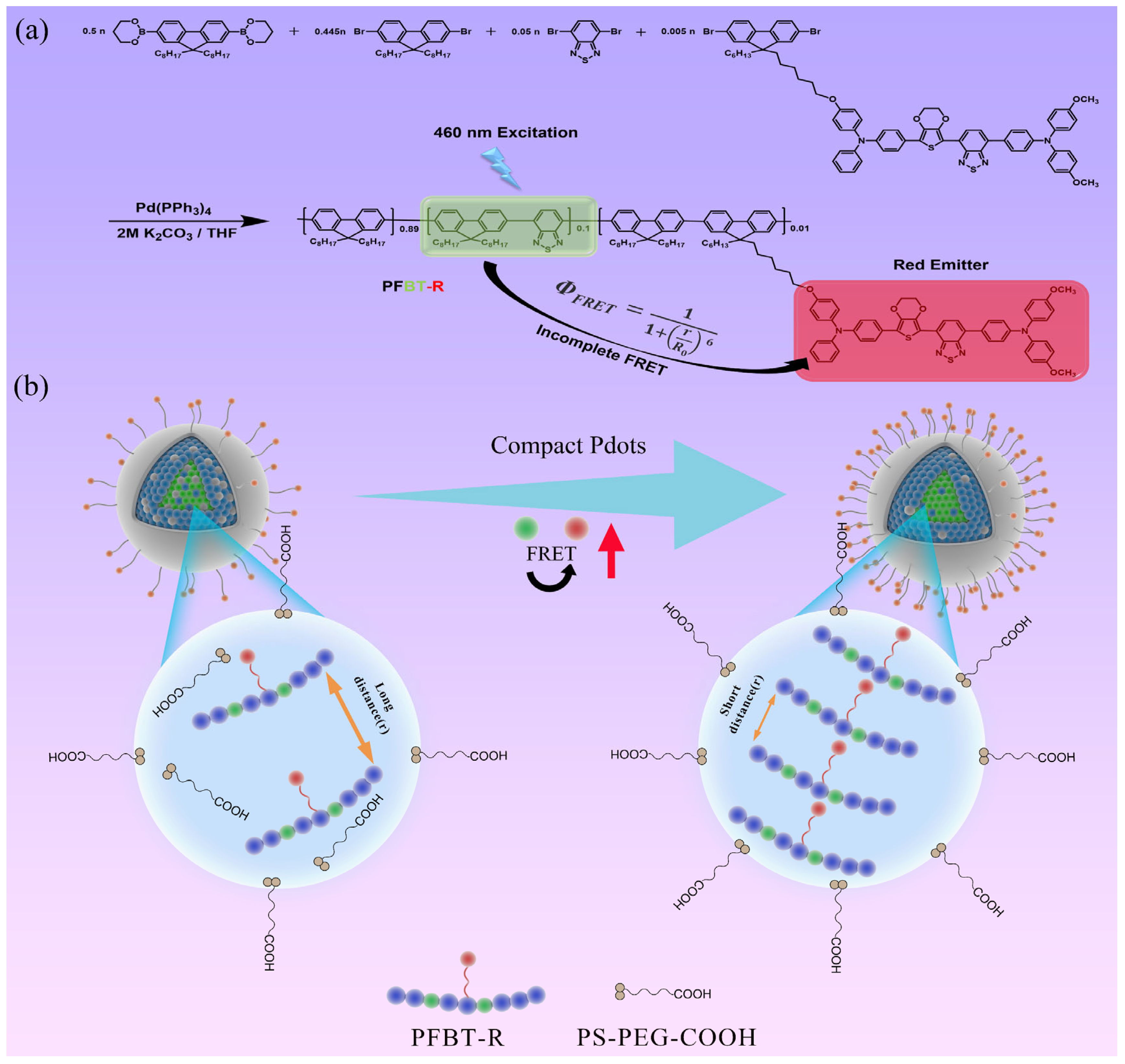



| Pdots | Antisolvent | λabs [a] (nm) | λem [a] (nm) | Φf [b] (%) | R [c] (nm) | ζ (mV) |
|---|---|---|---|---|---|---|
| PFO | Water | 378 | 438 | 28.7 ± 3.4 | 26.0 ± 1.9 | −22.1 ± 0.8 |
| Water/EtOH | 380 | 439 | 65.1 ± 2.2 | 25.3 ± 2.0 | −23.3 ± 1.0 | |
| PFEH | Water | 374 | 420 | 34.2 ± 1.8 | 28.1 ± 0.6 | −21.0 ± 0.5 |
| Water/EtOH | 374 | 420 | 41.6 ± 3.0 | 25.8 ± 0.8 | −22.9 ± 1.9 | |
| PFBT | Water | 457 | 545 | 25.3 ± 3.0 | 23.5 ± 0.9 | −21.1 ± 0.5 |
| Water/EtOH | 457 | 545 | 33.9 ± 5.6 | 23.3 ± 0.8 | −22.3 ± 4.6 |
| w-PFBT | w-PFBT-SA | Δ Value [a] | w/e-PFBT | w/e-PFBT-SA | Δ Value [a] | |
|---|---|---|---|---|---|---|
| R (nm) | 26.5 ± 1.5 | 32.9 ± 2.2 | 6.4 | 25.3 ± 0.9 | 34.4 ± 2.0 | 9.1 |
| ζ (mV) | −21.1 ± 0.5 | −15.4 ± 1.5 | 5.7 | −23.3 ± 0.8 | −15.2 ± 0.6 | 8.1 |
Disclaimer/Publisher’s Note: The statements, opinions and data contained in all publications are solely those of the individual author(s) and contributor(s) and not of MDPI and/or the editor(s). MDPI and/or the editor(s) disclaim responsibility for any injury to people or property resulting from any ideas, methods, instructions or products referred to in the content. |
© 2026 by the authors. Licensee MDPI, Basel, Switzerland. This article is an open access article distributed under the terms and conditions of the Creative Commons Attribution (CC BY) license.
Share and Cite
Xu, D.; He, X.; Zhao, Y.; Wang, J.; Chen, L. Creating Semiconducting Polymer Dots with Enhanced Performance Through a Simple Mixed Antisolvent Approach. Biosensors 2026, 16, 308. https://doi.org/10.3390/bios16060308
Xu D, He X, Zhao Y, Wang J, Chen L. Creating Semiconducting Polymer Dots with Enhanced Performance Through a Simple Mixed Antisolvent Approach. Biosensors. 2026; 16(6):308. https://doi.org/10.3390/bios16060308
Chicago/Turabian StyleXu, Dingshi, Xuehan He, Yi Zhao, Jiasi Wang, and Lei Chen. 2026. "Creating Semiconducting Polymer Dots with Enhanced Performance Through a Simple Mixed Antisolvent Approach" Biosensors 16, no. 6: 308. https://doi.org/10.3390/bios16060308
APA StyleXu, D., He, X., Zhao, Y., Wang, J., & Chen, L. (2026). Creating Semiconducting Polymer Dots with Enhanced Performance Through a Simple Mixed Antisolvent Approach. Biosensors, 16(6), 308. https://doi.org/10.3390/bios16060308