Article

Efficient On-Chip Separation and Labeling of Extracellular Vesicles from Whole Blood


1
Department of Biomedical Engineering, Southern University of Science and Technology, Shenzhen 518055, China
2
School of Biomedical Engineering, Shenzhen University of Advanced Technology, Shenzhen 518107, China
3
Laboratory of Biomedical Microsystems and Nano Devices, Center for Bionic Sensing and Intelligence, Institute of Biomedical and Health Engineering, Shenzhen Institutes of Advanced Technology, Chinese Academy of Sciences, Shenzhen 518055, China
4
Department of Biochemistry, SUSTech Homeostatic Medicine Institute, School of Medicine, Southern University of Science and Technology, Shenzhen 518055, China
*
Authors to whom correspondence should be addressed.
Biosensors 2026, 16(4), 220; https://doi.org/10.3390/bios16040220
Submission received: 6 March 2026 / Revised: 28 March 2026 / Accepted: 8 April 2026 / Published: 14 April 2026

Abstract

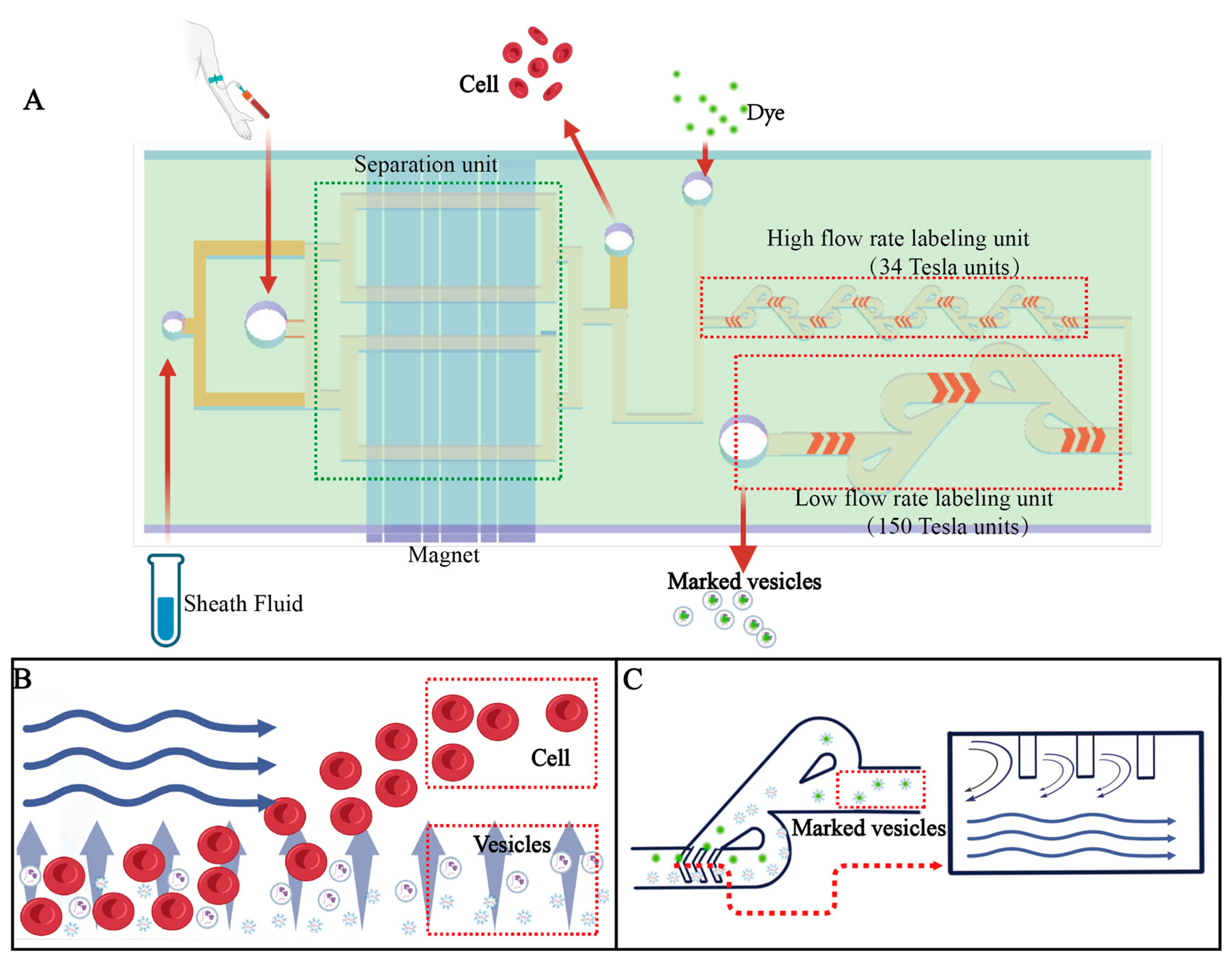
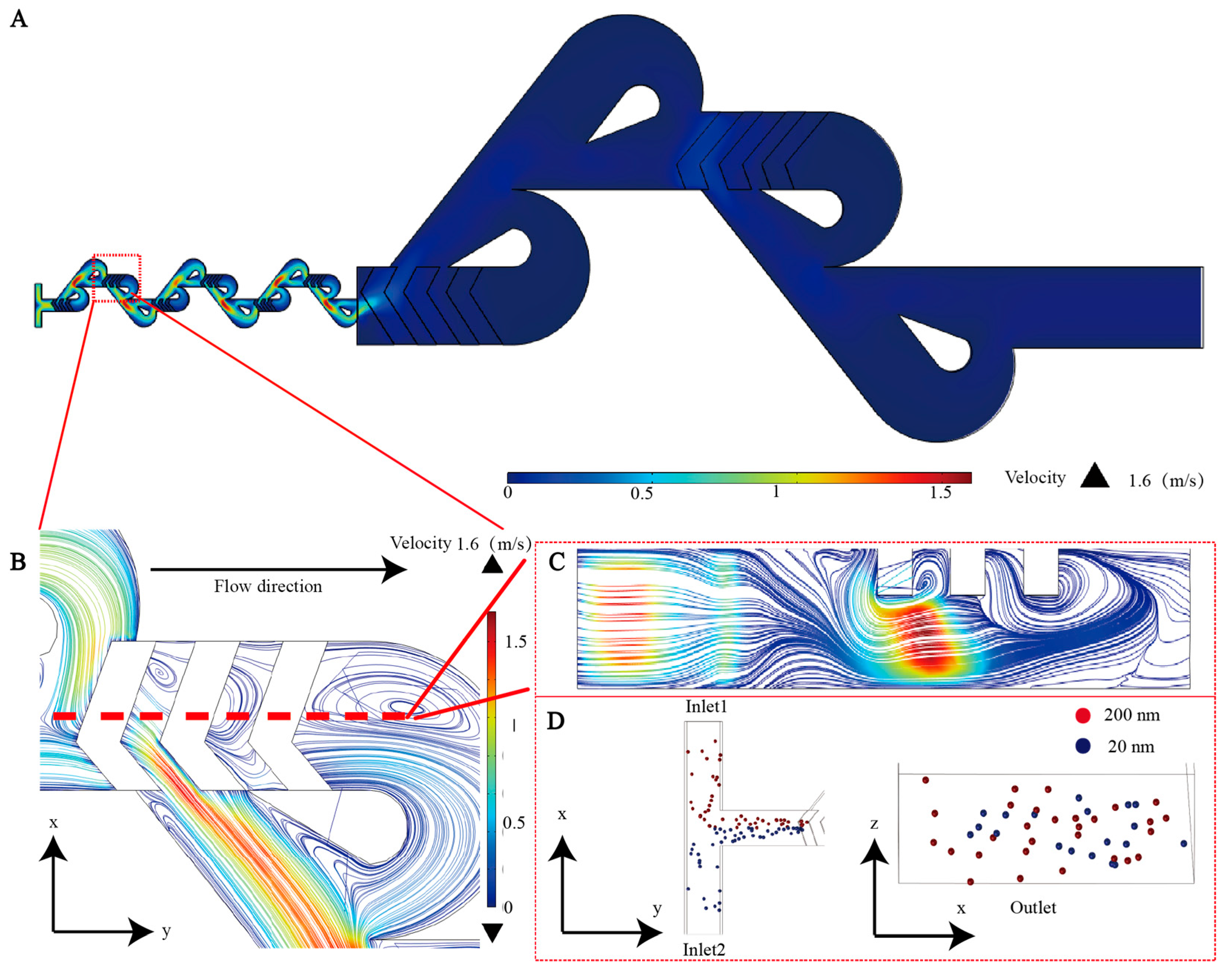
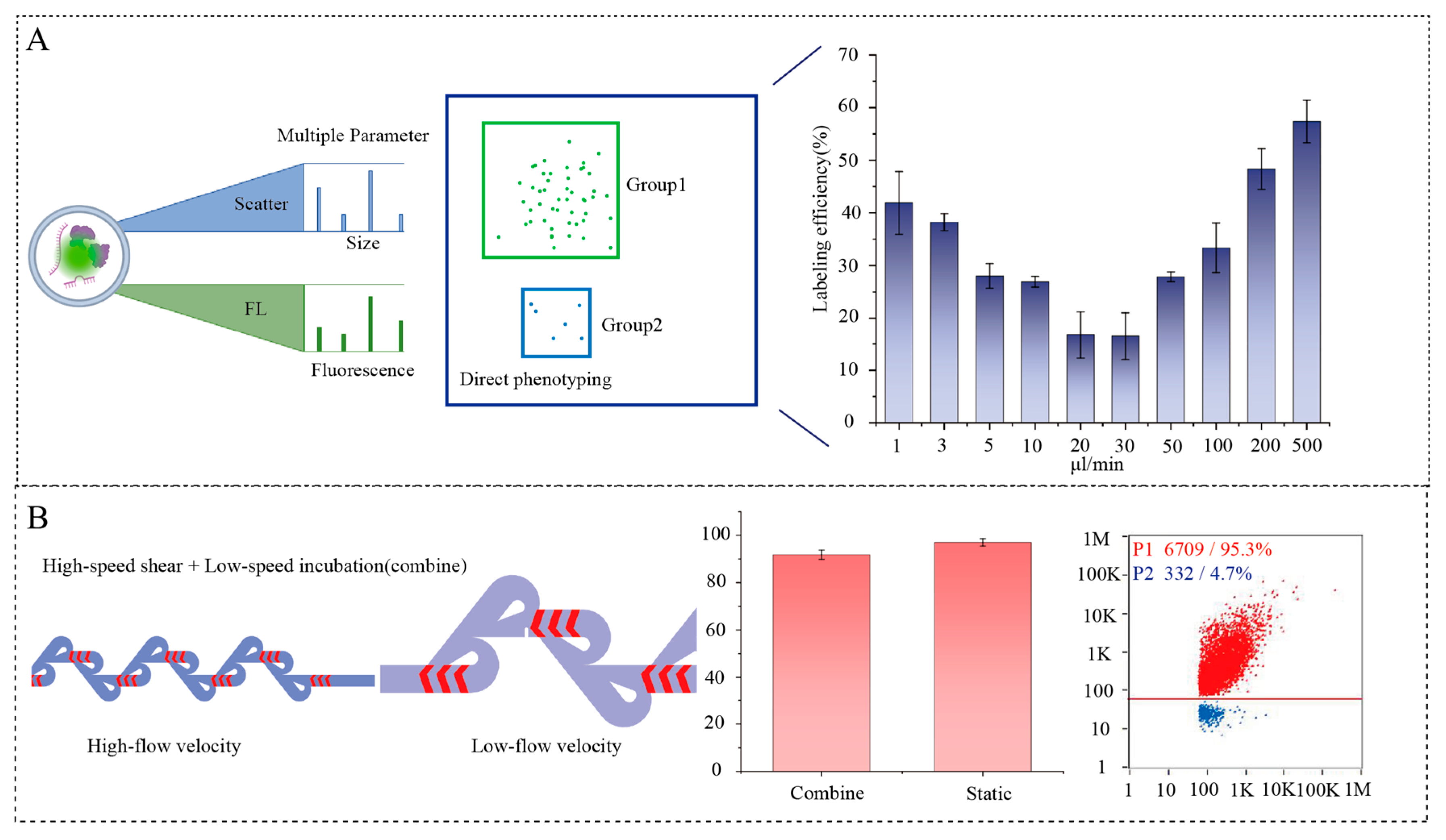
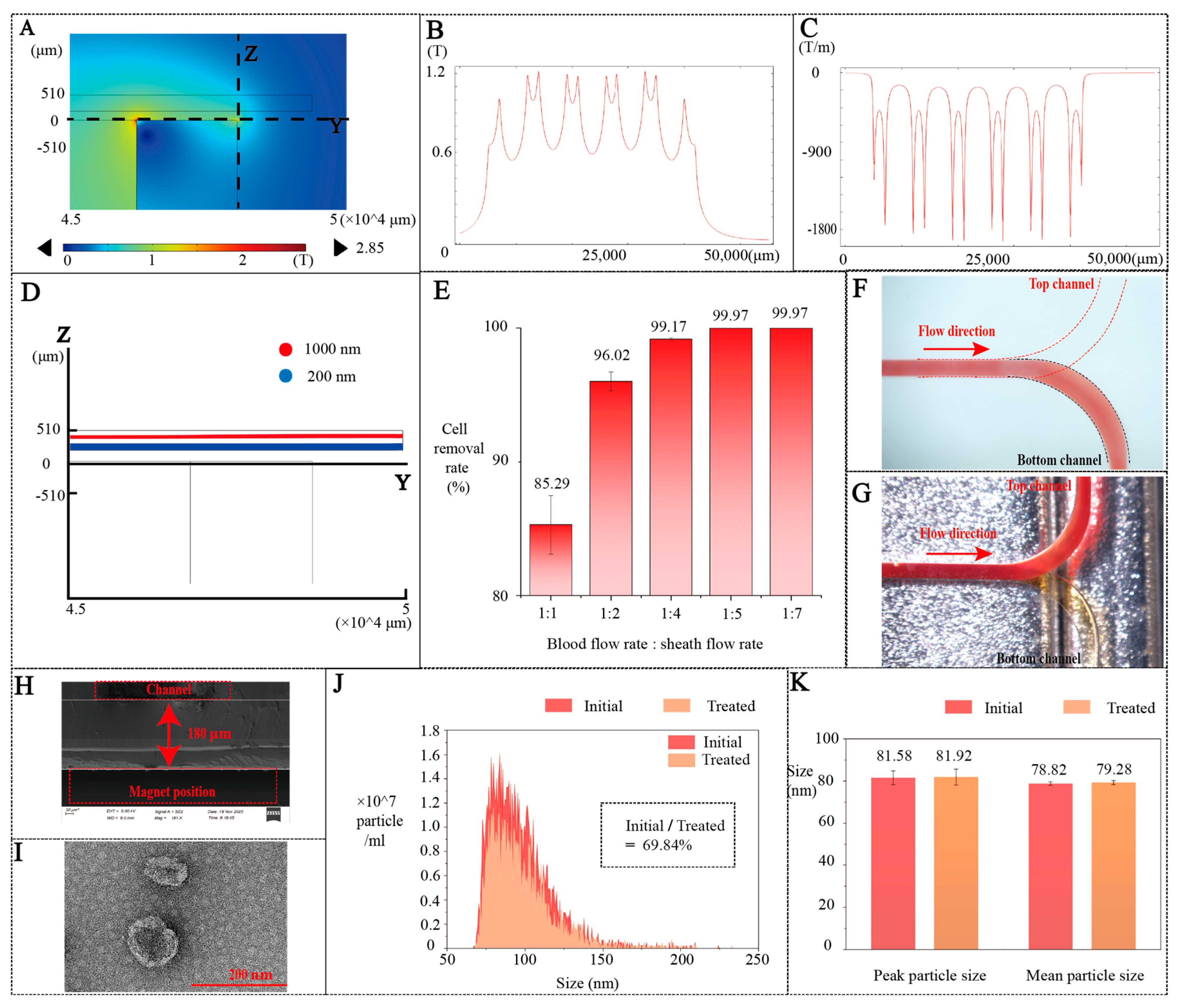
The development of high-throughput technologies for the separation and labeling of extracellular vesicles (EVs) from whole blood is critical for downstream EV detection and analysis. However, conventional EV separation and labeling workflows are typically labor-intensive and inefficient, requiring multiple sequential processing steps. Here, we present a microfluidic platform that integrates negative magnetophoresis-based separation with mixing-enhanced on-chip labeling. The chip adopts a vertical flow channel architecture in combination with a Halbach-array magnetic field configuration, thereby overcoming the throughput limitations inherent to traditional horizontal microchannels. Parallel channels can be freely arranged above on the magnetic array to achieve ultra-high throughput processing, achieving a cell removal efficiency of 99.97% at a blood-to-sheath flow ratio of 1:5. Furthermore, by incorporating a narrow-wide channel design synergized with a herringbone–Tesla micromixer structure, the platform achieves a labeling efficiency of 91.8% within 2 min, approaching the performance of conventional 20 min incubation. This system offers both high-throughput and integration capabilities, providing a powerful technical platform for EV-related life science research.
Keywords: extracellular vesicles; negative magnetophoresis; high-throughput separation; tesla micromixer; on-chip labeling extracellular vesicles; negative magnetophoresis; high-throughput separation; tesla micromixer; on-chip labeling