Point-of-Care Electrochemical Diagnostic Developments for Multidrug-Resistant Bacteria: Role of Aptamers and Nanomaterials



Abstract
1. Introduction
2. Recent Developments
2.1. Diagnostic Targets and Translation Trends in EBs
2.2. Nanomaterials-Driven EBs
2.3. Aptamer Engineering and Integration (EBs)
2.4. POC Platforms, Mass Production, and Smart Data-Connectivity
2.5. Novel Multimodal POC Strategies
3. Limitations, Knowledge Gaps, and Considerations
3.1. Limitations
3.1.1. Biological Complexity of Clinical Samples
3.1.2. Aptamer Stability in POC Settings
3.1.3. Reproducibility of Nanomaterial Synthesis
3.1.4. Multiplexing and Sensitivity-Preparation Trade-Offs
3.1.5. Regulatory and Clinical Translation Barriers
3.1.6. Standardization and Manufacturing Scalability
3.2. Knowledge Gaps
3.2.1. Long-Term Stability and Shelf-Life Data
3.2.2. Mechanistic Understanding of Aptamer–Bacteria Interactions
3.2.3. Standardization of Performance Metrics
3.2.4. Clinical Validation and Antimicrobial Susceptibility Testing (AST) Integration
3.3. Considerations
3.3.1. Design for Resource-Limited Settings
3.3.2. Surface Chemistry Optimization
3.3.3. Multiplexed and Syndromic Testing Approaches
3.3.4. Scalability, Sustainable Manufacturing, and Environmental Impact
4. Conclusive Remarks and Future Outlook
- Uniform and analytical validation procedures: Standardizing analytical parameters (LOD, specificity within matrices designated), inter-lab reproducibility exercises, and relevant endpoints that guide therapy decisions. Recent reviews recommend harmonized standards to make regulatory processes more streamlined [7,8,74].
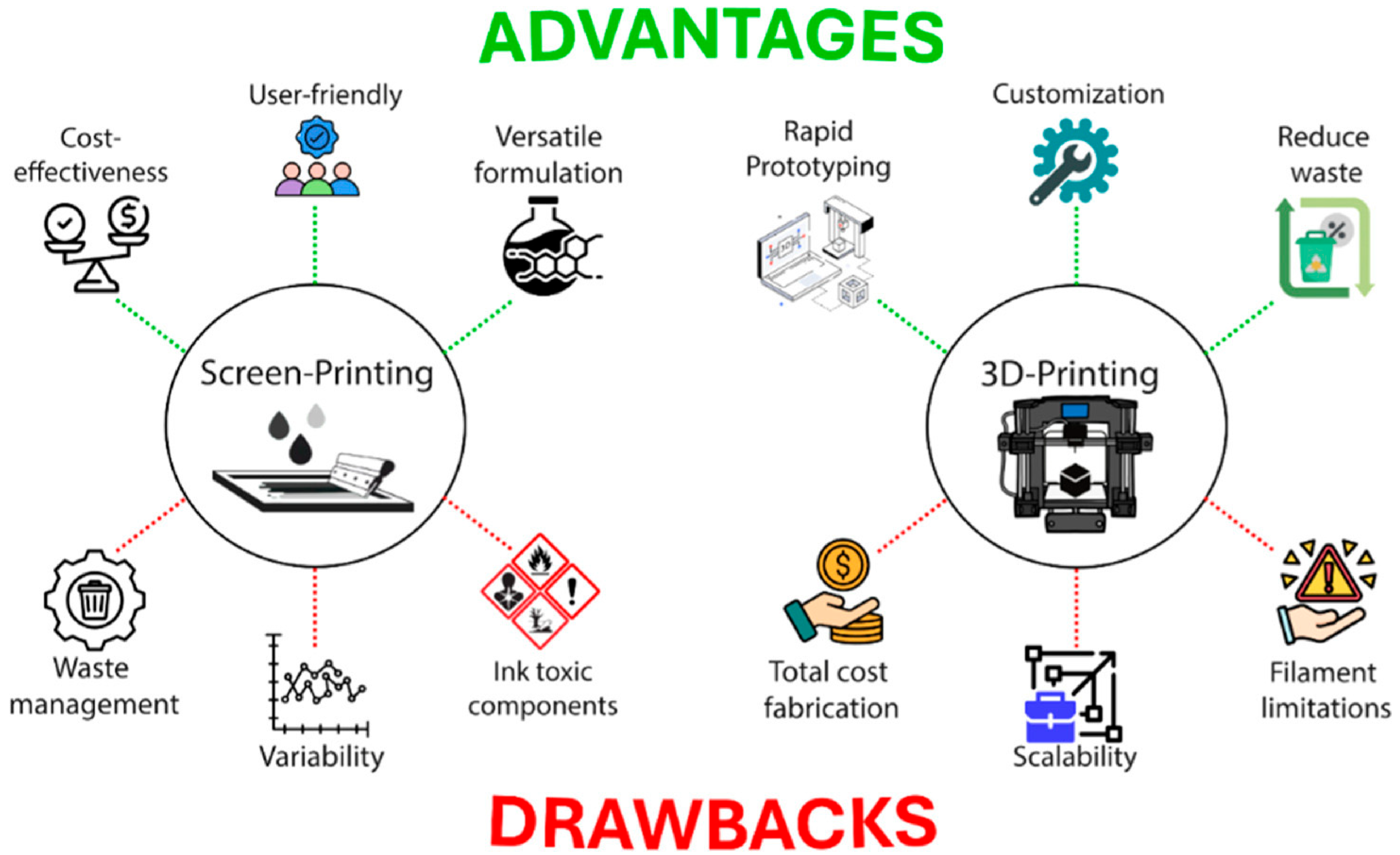
- Manufacturing and cost engineering: The transition from nanofabrication in the bench to scalable technologies (screen-printing, roll-to-roll nanocoating) in a bid to minimize cost per test would improve reproducibility. Industry and multidisciplinary collaborations will be essential to achieve these aspects [40,79].
- Early clinician–regulator engagement: Collaborations with clinicians and regulators to develop validation standards and cohorts acceptable to regulators and funders could prove effective. Robust and rigorous testing and field trials in low-resource and decentralized settings are particularly important for equitable accessibility [63,70,80].
Author Contributions
Funding
Institutional Review Board Statement
Informed Consent Statement
Data Availability Statement
Conflicts of Interest
Abbreviations
| AI | Artificial Intelligence |
| AMR | Antimicrobial Resistance |
| AuNPs | Gold Nanoparticles |
| CDC | Centers for Disease Control and Prevention |
| CNTs | Carbon Nanotubes |
| EBs | Electrochemical Biosensors |
| EHRs | Electronic Health Records |
| GCE | Glassy Carbon Electrode |
| GFETs | Graphene-Based Field-Effect Transistors |
| HAIs | Healthcare-Associated Infections |
| ICUs | Intensive Care Units |
| IoMT | Internet of Medical Things |
| IoT | Internet of Things |
| LODs | Limits of Detection |
| LPS | Lipopolysaccharides |
| MB | Methylene Blue |
| MDR | Multidrug-Resistant |
| MEMS | Microelectromechanical Systems |
| ML | Machine Learning |
| MOFs | Metal–Organic Frameworks |
| MRSA | Methicillin-resistant Staphylococcus aureus |
| MWCNTs | Multi-Walled Carbon Nanotubes |
| POC | Point-of-Care |
| SDGs | Sustainable Development Goals |
| SELEX | Systematic Evolution of Ligands by Exponential Enrichment |
| SPCE | Screen-Printed Carbon Electrode |
| SPR | Surface Plasmon Resonance |
| Td | DNA Tetrahedron |
| WHO | World Health Organization |
References
- Available online: https://www.cdc.gov/global-health/index.html (accessed on 18 December 2025).
- Available online: https://www.who.int/publications/i/item/9789240110496 (accessed on 18 December 2025).
- Tang, K.W.K.; Millar, B.C.; Moore, J.E. Antimicrobial resistance (AMR). Br. J. Biomed. Sci. 2023, 80, 11387. [Google Scholar] [CrossRef] [Scilit]
- Kariuki, S. Global burden of antimicrobial resistance and forecasts to 2050. Lancet 2024, 404, 1172–1173. [Google Scholar] [CrossRef] [Scilit] [PubMed]
- Naghavi, M.; Vollset, S.E.; Ikuta, K.S.; Swetschinski, L.R.; Gray, A.P.; Wool, E.E.; Aguilar, G.R.; Mestrovic, T.; Smith, G.; Han, C.; et al. Global burden of bacterial antimicrobial resistance 1990–2021: A systematic analysis with forecasts to 2050. Lancet 2024, 404, 1199–1226. [Google Scholar] [CrossRef] [Scilit]
- Ravi, K.; Singh, B. ESKAPE: Navigating the global battlefield for antimicrobial resistance and defense in hospitals. Bacteria 2024, 3, 76–98. [Google Scholar] [CrossRef] [Scilit]
- Reszetnik, G.; Hammond, K.; Mahshid, S.; AbdElFatah, T.; Nguyen, D.; Corsini, R.; Caya, C.; Papenburg, J.; Cheng, M.P.; Yansouni, C.P. Next-generation rapid phenotypic antimicrobial susceptibility testing. Nat. Commun. 2024, 15, 9719. [Google Scholar] [CrossRef] [Scilit] [PubMed]
- Elbehiry, A.; Marzouk, E.; Abalkhail, A.; Abdelsalam, M.H.; Mostafa, M.E.A.; Alasiri, M.; Ibrahem, M.; Ellethy, A.T.; Almuzaini, A.; Aljarallah, S.N.; et al. Detection of antimicrobial resistance via state-of-the-art technologies versus conventional methods. Front. Microbiol. 2025, 16, 1549044. [Google Scholar] [CrossRef] [Scilit]
- Wu, X.; Tan, G.; Sun, C.; Wang, Y.; Yang, J.; Wu, C.; Hu, C.; Yu, F. Targeted next-generation sequencing—A promising approach in the diagnosis of Mycobacterium tuberculosis and drug resistance. Infection 2025, 53, 967–979. [Google Scholar] [CrossRef] [Scilit] [PubMed]
- Kulkarni, A.S.; Khandelwal, S.; Thakre, Y.; Rangole, J.; Kulkarni, M.B.; Bhaiyya, M. A Review on 3D-Printed Miniaturized Devices for Point-of-Care-Testing Applications. Biosensors 2025, 15, 340. [Google Scholar] [CrossRef] [Scilit]
- Tan, L.L.; Mohamad, N.S. Electrochemical Aptamer-Based Biosensors for Sepsis Diagnosis: Recent Advances, Challenges, and Future Perspectives (2020–2025). Biosensors 2025, 15, 402. [Google Scholar] [CrossRef] [Scilit]
- GeGen, S.; Meng, G.; Aodeng, G.; Ga, L.; Ai, J.; Ao, D. Advances in Aptamer-Based Electrochemical Biosensors for Disease Diagnosis: Integration of DNA and Nanomaterials. Nanoscale Horiz. 2025, 10, 2668–2687. [Google Scholar] [CrossRef] [Scilit]
- Ansari, M.A.; Verma, D.; Hamizan, M.-A.; Das Mukherjee, M.; Mohd-Naim, N.F.; Ahmed, M.U. Trends in Aptasensing and the Enhancement of Diagnostic Efficiency and Accuracy. ACS Synth. Biol. 2025, 14, 21–40. [Google Scholar] [CrossRef] [Scilit]
- Zhou, Y.; Wang, Q.; Xiang, T.; Chen, X. Recent advances in electrochemical biosensors for bacterial detection. Nano TransMed 2025, 4, 100078. [Google Scholar] [CrossRef] [Scilit]
- Docherty, N.; Macdonald, D.; Gordon, A.; Dobrea, A.; Mani, V.; Fu, Y.; Pang, S.; Jimenez, M.; Corrigan, D.K. Maximising the translation potential of electrochemical biosensors. Chem. Commun. 2025, 61, 13359–13377. [Google Scholar] [CrossRef] [Scilit] [PubMed]
- Khan, M.U.; Rahman, M.; Zahan, N.; Masud, M.K.; Sarker, S.; Haque, H. Electrochemical biosensing for antibiotic-resistant bacteria: Advances, challenges, and future directions. Micromachines 2025, 16, 986. [Google Scholar] [CrossRef] [Scilit]
- Fatah, S.A.; Omer, K.M. Aptamer-modified MOFs (Aptamer@MOF) for efficient detection of bacterial pathogens: A Review. ACS Appl. Mater. Interfaces 2025, 17, 11578–11594. [Google Scholar] [CrossRef] [Scilit]
- Pham, T.-T.D.; Phan, L.M.T.; Park, J.; Cho, S. Electrochemical aptasensor for pathogenic bacteria detection. J. Electrochem. Soc. 2022, 169, 087501. [Google Scholar] [CrossRef] [Scilit]
- Lei, Z.; Ismail, N.I. Nanomaterials-Based Electrochemical Aptasensors for Rapid Detection of Pathogens and By-Products. Molecules 2026, 31, 664. [Google Scholar] [CrossRef] [Scilit]
- Khoshroo, A.; Mavaei, M.; Rostami, M.; Valinezhad-Saghezi, B.; Fattahi, A. Recent advances in electrochemical strategies for bacteria detection. BioImpacts 2022, 12, 567. [Google Scholar] [CrossRef] [Scilit]
- Pourakbari, R.; Shadjou, N.; Yousefi, H.; Isildak, I.; Yousefi, M.; Rashidi, M.-R.; Khalilzadeh, B. Recent progress in nanomaterial-based electrochemical biosensors for pathogenic bacteria. Microchim. Acta 2019, 186, 820. [Google Scholar] [CrossRef] [Scilit] [PubMed]
- Gaudin, V. Contribution of nanomaterials to the development of electrochemical aptasensors for the detection of antimicrobial residues in food products. Chemosensors 2021, 9, 69. [Google Scholar] [CrossRef] [Scilit]
- Hernandez, F.J.; Ozalp, V.C. Graphene and other nanomaterial-based electrochemical aptasensors. Biosensors 2012, 2, 1–14. [Google Scholar] [CrossRef] [Scilit]
- Wang, Z.; Yu, J.; Gui, R.; Jin, H.; Xia, Y. Carbon nanomaterials-based electrochemical aptasensors. Biosens. Bioelectron. 2016, 79, 136–149. [Google Scholar] [CrossRef] [Scilit]
- Kurup, C.P.; Mohd-Naim, N.F.; Ahmed, M.U. Recent trends in nanomaterial-based signal amplification in electrochemical aptasensors. Crit. Rev. Biotechnol. 2022, 42, 794–812. [Google Scholar] [CrossRef] [Scilit]
- Qazi, R.A.; Aman, N.; Ullah, N.; Jamila, N.; Bibi, N. Recent advancement for enhanced e. Coli detection in electrochemical biosensors. Microchem. J. 2024, 196, 109673. [Google Scholar] [CrossRef] [Scilit]
- Gambhir, R.P.; Kundale, S.; Shaikh, S.B.; Vedpathak, A.S.; Kamat, R.K.; Dongale, T.D.; Mishra, Y.K.; Bulakhe, R.N.; Kim, J.M.; Tiwari, A.P. Development of a glycine-modified iron oxide nanoparticle-electrochemical biosensor for specific detection of Klebsiella pneumoniae DNA. J. Mater. Chem. B 2025, 13, 8195–8207. [Google Scholar] [CrossRef] [Scilit]
- Zhang, H.; Gao, H.; Ren, X.; Que, L.; Gu, X.; Rong, S.; Ma, H.; Ruan, J.; Miao, M.; Qi, X.; et al. Dual-mode biosensor with multiple signal amplification strategy for detection of Pseudomonas aeruginosa. Sens. Actuators B Chem. 2024, 410, 135737. [Google Scholar] [CrossRef] [Scilit]
- Wang, H.; Hussain, W.; Yang, X.; Chen, Y.; Hu, T.; Chen, W.; Wang, S. Bacteriophages combined with hybridized nanoflower-based electrochemical biosensor for the specific and rapid detection of live Acinetobacter baumannii in real samples. Microchim. Acta 2025, 192, 700. [Google Scholar] [CrossRef] [Scilit]
- Guo, Y.; Li, C.; Guo, W.; Zhang, X.; Wang, L.; Zhang, W.; Zou, X.; Sun, Z. Advanced electrochemical biosensing toward Staphylococcus aureus based on the RPA-CRISPR/Cas12a system and conductive nanocomposite. J. Agric. Food Chem. 2024, 72, 22918–22925. [Google Scholar] [CrossRef] [Scilit] [PubMed]
- Kao, K.; Alocilja, E.C. A Review of the diagnostic approaches for the detection of antimicrobial resistance, including the role of biosensors in detecting carbapenem resistance genes. Genes 2025, 16, 794. [Google Scholar] [CrossRef] [Scilit] [PubMed]
- Mahfouz, A.R.; Nada, H.G.; Magar, H.S.; ElBaghdady, K.Z.; Hassan, R.Y. Nano-biosensors for rapid detection of antibiotic resistance genes blaCTX-M in Escherichia coli and blaKPC in Klebsiella pneumoniae. Int. J. Biol. Macromol. 2025, 310, 143216. [Google Scholar] [CrossRef] [Scilit] [PubMed]
- An, Y.; Fang, X.; Cheng, J.; Yang, S.; Chen, Z.; Tong, Y. Research progress of metal–organic framework nanozymes in bacterial sensing, detection, and treatment. RSC Med. Chem. 2024, 15, 380–398. [Google Scholar] [CrossRef] [Scilit]
- Campuzano, S.; Pedrero, M.; Yáñez-Sedeño, P.; Pingarrón, J.M. Antifouling (bio)materials for electrochemical (bio)sensing. Int. J. Mol. Sci. 2019, 20, 423. [Google Scholar] [CrossRef] [Scilit]
- Wong, K.-Y.; Wong, M.-S.; Lee, J.H.; Liu, J. From cell-SELEX to tissue-SELEX for targeted drug delivery and aptamer nanomedicine. Adv. Drug Deliv. Rev. 2025, 224, 115646. [Google Scholar] [CrossRef] [Scilit] [PubMed]
- Didarian, R.; Ozbek, H.K.; Ozalp, V.C.; Erel, O.; Yildirim-Tirgil, N. Enhanced SELEX platforms for aptamer selection with improved characteristics: A review. Mol. Biotechnol. 2025, 67, 2962–2977. [Google Scholar] [CrossRef] [Scilit] [PubMed]
- Legen, T.; Mayer, G. Robotic-Assisted Capture-Systematic Evolution of Ligands by Exponential Enrichment of RNA Aptamers Binding to Small Molecules. ChemBioChem 2025, 26, e202500264. [Google Scholar] [CrossRef] [Scilit] [PubMed]
- Chen, F.; Yang, F.; Gao, L.; Hu, Y.; Xue, Y.; Zhou, J.; Kang, J.; Wang, W. Screening of the specific aptamer of human CD20 extracellular protein expressed in Escherichia coli by systematic evolution of ligands by exponential enrichment. Chin. J. Biotechnol. 2025, 41, 1467–1477. [Google Scholar] [CrossRef] [Scilit]
- Ye, Z.; Chen, H.; Weinans, H.; van der Wal, B.; Rios, J.L. Novel aptamer strategies in combating bacterial infections: From diagnostics to therapeutics. Pharmaceutics 2024, 16, 1140. [Google Scholar] [CrossRef] [Scilit]
- Novakovic, Z.; Khalife, M.; Costache, V.; Camacho, M.J.; Cardoso, S.; Martins, V.; Gadjanski, I.; Radovic, M.; Vidic, J. Rapid Detection and identification of vancomycin-sensitive bacteria using an electrochemical apta-sensor. ACS Omega 2024, 9, 2841–2849. [Google Scholar] [CrossRef] [Scilit]
- Abedi, R.; Raoof, J.B.; Mohseni, M.; Hashkavayi, A.B. Sandwich-type electrochemical aptasensor for highly sensitive and selective detection of Pseudomonas aeruginosa bacteria using a dual signal amplification strategy. Bioelectrochemistry 2023, 150, 108332. [Google Scholar] [CrossRef] [Scilit]
- Qaanei, M.; Taheri, R.A.; Eskandari, K. Electrochemical aptasensor for Escherichia coli O157:H7 bacteria detection using a nanocomposite of reduced graphene oxide, gold nanoparticles and polyvinyl alcohol. Anal. Methods 2021, 13, 3101–3109. [Google Scholar] [CrossRef] [Scilit]
- Morsalpour, H.; Zare, H.R.; Shekari, Z.; Mirbagheri-Firousabad, M. Development of a highly sensitive and selective electrochemical aptasensor for the detection of Staphylococcus aureus in various samples. Microchem. J. 2024, 207, 111940. [Google Scholar] [CrossRef] [Scilit]
- Chen, X.-F.; Zhao, X.; Yang, Z. Aptasensors for the detection of infectious pathogens: Design strategies and point-of-care testing. Microchim. Acta 2022, 189, 443. [Google Scholar] [CrossRef] [Scilit] [PubMed]
- Nogueira, C.; Sousa, J.; Afonso, R.; Santos, D.; Rodrigues, P.; Albuquerque, L.; Faustino, A.; Abalde-Cela, S.; Freitas, P.; Cardoso, S.; et al. Combining droplet microfluidics and magnetoresistive sensors for the rapid and quantitative detection of Klebsiella pneumoniae in urinary tract infections. Sens. Actuators B Chem. 2024, 404, 135175. [Google Scholar] [CrossRef] [Scilit]
- Kalligosfyri, P.M.; Miglione, A.; Cinti, S. Screen-printing and 3D-printing technologies in electrochemical (bio)sensors: Opportunities, advantages and limitations. ECS Sens. Plus 2025, 4, 010601. [Google Scholar] [CrossRef] [Scilit]
- Mandal, N.; Pramanick, B.; Bhattacharyya, T.K.; Singh, B. Advancing Point-of-Care Healthcare Diagnostics to Tackle Future Outbreaks and Pandemics: Nanotechnology-Driven Developments and Impact on Rapid Pathogen Detection. Environ. Health 2025, 3, 1423–1428. [Google Scholar] [CrossRef] [Scilit]
- Parihar, A.; Yadav, S.; Sadique, M.A.; Ranjan, P.; Kumar, N.; Singhal, A.; Khare, V.; Khan, R.; Natarajan, S.; Srivastava, A.K. Internet-of-medical-things integrated point-of-care biosensing devices for infectious diseases: Toward better preparedness for futuristic pandemics. Bioeng. Transl. Med. 2023, 8, e10481. [Google Scholar] [CrossRef] [Scilit]
- Yammouri, G.; Lahcen, A.A. AI-reinforced wearable sensors and intelligent point-of-care tests. J. Pers. Med. 2024, 14, 1088. [Google Scholar] [CrossRef] [Scilit]
- Nashruddin, S.N.A.B.M.; Salleh, F.H.M.; Yunus, R.M.; Zaman, H.B. Artificial intelligence−powered electrochemical sensor: Recent advances, challenges, and prospects. Heliyon 2024, 10, e37964. [Google Scholar] [CrossRef] [Scilit]
- Pious, N.; Das, S.; Chakravorty, A.; Mini, A.A.; Raghavan, V. Gatifloxacin detection in the nanoscale: A review exploring current biosensing technologies and future opportunities. RSC Adv. 2025, 15, 33018–33045. [Google Scholar] [CrossRef] [Scilit] [PubMed]
- Shin, J.; Kim, S.R.; Xie, Z.; Jin, Y.-S.; Wang, Y.-C. A CRISPR/Cas12a-based system for sensitive detection of antimicrobial-resistant genes in carbapenem-resistant enterobacterales. Biosensors 2024, 14, 194. [Google Scholar] [CrossRef] [Scilit] [PubMed]
- Shang, M.; Guo, J.; Guo, J. Point-of-care testing of infectious diseases: Recent advances. Sens. Diagn. 2023, 2, 1123–1144. [Google Scholar] [CrossRef] [Scilit]
- Han, D.; Yu, F.; Zhang, D.; Hu, J.; Zhang, X.; Xiang, D.; Lou, B.; Chen, Y.; Zheng, S. Molecular rapid diagnostic testing for bloodstream infections: Nanopore targeted sequencing with pathogen-specific primers. J. Infect. 2024, 88, 106166. [Google Scholar] [CrossRef] [Scilit]
- Saxena, S.; Punjabi, K.; Ahamad, N.; Singh, S.; Bendale, P.; Banerjee, R. Nanotechnology approaches for rapid detection and theranostics of antimicrobial resistant bacterial infections. ACS Biomater. Sci. Eng. 2022, 8, 2232–2257. [Google Scholar] [CrossRef] [Scilit]
- Acierno, C.; Nevola, R.; Barletta, F.; Rinaldi, L.; Sasso, F.C.; Adinolfi, L.E.; Caturano, A. Multidrug-Resistant Infections and Metabolic Syndrome: An Overlooked Bidirectional Relationship. Biomedicines 2025, 13, 1343. [Google Scholar] [CrossRef] [Scilit] [PubMed]
- Jandoubi, B.; Akhloufi, M.A. Multimodal artificial intelligence in medical diagnostics. Information 2025, 16, 591. [Google Scholar] [CrossRef] [Scilit]
- Taha, B.A.; Ahmed, N.M.; Talreja, R.K.; Haider, A.J.; Al Mashhadany, Y.; Al-Jubouri, Q.; Huddin, A.B.; Mokhtar, M.H.H.; Rustagi, S.; Kaushik, A.; et al. Synergizing nanomaterials and artificial intelligence in advanced optical biosensors for precision antimicrobial resistance diagnosis. ACS Synth. Biol. 2024, 13, 1600–1620. [Google Scholar] [CrossRef] [Scilit] [PubMed]
- Agarwalla, S.; Singh, S.K.; Duraiswamy, S. Microbiosensors: Advancing diagnosis and prognosis through MEMS. Biomicrofluidics 2025, 19, 041504. [Google Scholar] [CrossRef] [Scilit]
- Kardjadj, M.; Chang, T.W.; Chavez, R.; Derrick, D.; Spangler, F.L.; Priestly, I.P.; Park, L.Y.; Huard, T.K. The Clinical Validity and Utility of PCR Compared to Conventional Culture and Sensitivity Testing for the Management of Complicated Urinary Tract Infections in Adults: A Secondary (Ad Hoc) Analysis of Pathogen Detection, Resistance Profiles, and Impact on Clinical Outcomes. Microorganisms 2025, 13, 949. [Google Scholar] [CrossRef] [Scilit]
- Grabowska, I.; Hepel, M.; Kurzątkowska-Adaszyńska, K. Advances in design strategies of multiplex electrochemical aptasensors. Sensors 2022, 22, 161. [Google Scholar] [CrossRef] [Scilit]
- Alves, E.; Gurupadayya, B.M.; Prabhakaran, P. Next-Generation Miniaturized Separation Platforms: Converging Detection, Automation, and Sustainable Design for Intelligent Analytical Science. Crit. Rev. Anal. Chem. 2025, 1–50. [Google Scholar] [CrossRef] [Scilit]
- Martí-Noguera, J.J. The 5P Model as a Governance Framework. In Governing Digital Mental Health: Introducing the 5P Model and the Digital Behavioral Health Expert; Springer Nature: Cham, Switzerland, 2025; pp. 47–79. [Google Scholar] [CrossRef] [Scilit]
- Pedersen, T.; Gurevich, L.; Magnusson, N.E. Aspects of electrochemical biosensors using affinity assays. Biosensors 2025, 15, 166. [Google Scholar] [CrossRef] [Scilit]
- Li, X.; Liu, S.; Huang, X.; Yao, C.; Chen, J.; Gao, L.; Zhou, C.; Wu, Y.; Liu, J.; Li, M.; et al. Aptamers-based wearable electrochemical sensors for continuous monitoring of biomarkers in vivo. Microsyst. Nanoeng. 2025, 11, 241. [Google Scholar] [CrossRef] [Scilit]
- Sati, A.; Mali, S.N.; Samdani, N.; Annadurai, S.; Dongre, R.; Satpute, N.; Ranade, T.N.; Pratap, A.P. From past to present: Gold nanoparticles (AuNPs) in daily life─ synthesis mechanisms, influencing factors, characterization, toxicity, and emerging applications in biomedicine, nanoelectronics, and materials science. ACS Omega 2025, 10, 33999–34087. [Google Scholar] [CrossRef] [Scilit] [PubMed]
- Zhang, W.; He, B.; Liang, J.; Lu, Z.; Li, P.; Ding, Z.; Zhang, W.; Mei, H.; Wu, T.; Fan, Q. Defect-Functionality Competition Governing Reactive Oxygen Chemistry in Graphene Oxide. Carbon 2026, 252, 121342. [Google Scholar] [CrossRef] [Scilit]
- Sinha, S.; Upadhyay, L.S.B. Understanding antimicrobial resistance (AMR) mechanisms and advancements in AMR diagnostics. Diagn. Microbiol. Infect. Dis. 2025, 113, 116949. [Google Scholar] [CrossRef] [Scilit] [PubMed]
- Mallick, T.; Joshi, R.K.; Mishra, R. Nanoparticle-based biosensors for pathogen detection: Current updates and future prospects. BioNanoScience 2025, 15, 523. [Google Scholar] [CrossRef] [Scilit]
- Baluta, S.; Suresh, V.; Chmielowska, M.; Smeesters, L.; Cabaj, J. Improving Clinical Diagnostics and Patient Care through Artificial Intelligence and Biosensor Technologies. ACS Omega 2026, 11, 82–99. [Google Scholar] [CrossRef] [Scilit]
- Batet, D.; Gabriel, G. Green electrochemical point-of-care devices: Transient materials and sustainable fabrication methods. ChemSusChem 2025, 18, e202401101. [Google Scholar] [CrossRef] [Scilit]
- Fasogbon, I.V.; Ondari, E.N.; Tusubira, D.; Rangasamy, L.; Venkatesan, J.; Musyoka, A.M.; Aja, P.M. Recent focus in non-SELEX-computational approach for de novo aptamer design: A mini review. Anal. Biochem. 2025, 699, 115756. [Google Scholar] [CrossRef] [Scilit]
- Peymen, A.; Van der Snickt, T.; Valverde, A.; Ailliet, S.; Zwaenepoel, K.; Mestdagh, P.; De Wael, K. Potential Adoption Of Electrochemical Biosensors for Cancer DNA Biomarker Detection in Liquid Biopsies: A Systematic Review. Talanta 2026, 304, 129488. [Google Scholar] [CrossRef] [Scilit]
- Patnaik, A.; Kayal, T.; Basu, S. Polymicrobial Infections: A Comprehensive Review on Current Context, Diagnostic Bottlenecks and Future Directions. Acta Microbiol. Hell. 2025, 70, 39. [Google Scholar] [CrossRef] [Scilit]
- Abubakar, M.U.; Abdullahi, S.H.; Xiong, M.; He, B. Label-free phenotypic antimicrobial susceptibility testing on microfluidic platforms: A review of advances and translation. Microchim. Acta 2025, 192, 808. [Google Scholar] [CrossRef] [Scilit]
- Pillay, T.S.; Rampul, A.; Subramoney, E.L.; van Deventer, B.S.; van Niekerk, C.; Gwiliza, S. The double-edged role of point-of-care testing in modern medicine. Clin. Chim. Acta 2025, 582, 120770. [Google Scholar] [CrossRef] [Scilit] [PubMed]
- Zhang, Y.; Hu, F.; Zhou, R.; Yang, T.; Cai, P.; Picchetti, P.; Huang, X.; Li, Z.; Zhai, X.; Zhang, R.; et al. Enhancing Selectivity in Affinity Biosensors through Biorecognition-Driven Suppression of Nonspecific Binding. ACS Sens. 2026, 11, 853–884. [Google Scholar] [CrossRef] [Scilit]
- Alatawi, A.D.; Hetta, H.F.; Ali, M.A.S.; Ramadan, Y.N.; Alaqyli, A.B.; Alansari, W.K.; Aldhaheri, N.H.; Bin Selim, T.A.; Merdad, S.A.; Alharbi, M.O.; et al. Diagnostic innovations to combat antibiotic resistance in critical care: Tools for targeted therapy and stewardship. Diagnostics 2025, 15, 2244. [Google Scholar] [CrossRef] [Scilit] [PubMed]
- Numan, A.; Li, L.; AlFaify, S.; Ahmad, M.S.; Krishnan, S.; Khalid, M. Progress in Contactless 3D Printing and 2D Material Integration for Next-Generation Electrochemical Sensing Applications. EcoMat 2025, 7, e70031. [Google Scholar] [CrossRef] [Scilit]
- Dabare, S.; Rajapaksha, S.; Munaweera, I. Lifecycle analysis of nanotechnology-enhanced soft materials in the circular economy. Mol. Syst. Des. Eng. 2025, 10, 799–816. [Google Scholar] [CrossRef] [Scilit]
- Ono, S.; Takahashi, Y. Biosensor. U.S. Patent US20090087867A1, 27 September 2007. Available online: https://patents.google.com/patent/US20090087867A1/en?oq=US20090087867A1 (accessed on 16 March 2026).
- Sinha, S.K.; Evan Terezia Sapi, E.T. Bionanosensor Detection Device. WO Patent WO2010039941A9, 1 October 2010. Available online: https://patents.google.com/patent/WO2010039941A9/en?oq=WO2010039941A9 (accessed on 16 March 2026).
- Shachar, Y.; Wu, W.; Chen, T.; Farkas, L.; Jordan, B.; Luboff, P.; Chan, H.; Zimmerman, K. Method and Apparatus for Forming of an Automated Sampling Device for the Detection of Salmonella Enterica Utilizing an Electrochemical Aptamer Biosensor. WO Patent WO2011133694A2, 20 April 2011. Available online: https://patents.google.com/patent/WO2011133694A2/en?oq=WO2011133694A2 (accessed on 16 March 2026).
- Mozioglu, E.; Gokmen, O.; Akgoz, M.; Kocagoz, T.; Tamerler, C. DNA Aptamers to Diagnose Mycobacterium Tuberculosis Bacteria and Treat Tuberculosis Disease, Specific for M. tuberculosis Bacteria. WO Patent WO2014166558A1, 16 October 2014. Available online: https://patents.google.com/patent/WO2014166558A1/en?oq=WO2014166558A1 (accessed on 16 March 2026).
- Lin, Q.; Wang, X.; Yang, J.; Wang, C. Microfluidic Aptasensor Including a Graphene Nanosensor. WO Patent WO2016112079A1, 6 January 2016. Available online: https://patents.google.com/patent/WO2016112079A1/en?oq=WO2016112079A1 (accessed on 16 March 2026).
- Bhansali, S.; Mallari, A.V. Label-Free Electrochemical Biosensor. U.S. Patent US10309921B2, 4 June 2019. Available online: https://patents.google.com/patent/US10309921B2/en?oq=US10309921B2 (accessed on 16 March 2026).
- Kumar Sharma, T.; Sivaswami Tyagi, J.; Dhiman, A.; Das, R. A Novel Aptamer and an Electrochemical Biosensor for the Rapid Detection and Diagnosis of Tuberculous Meningitis. WO Patent WO2020100159A1, 22 May 2020. Available online: https://patents.google.com/patent/WO2020100159A1/en?oq=WO2020100159A1 (accessed on 16 March 2026).
- Zhang, Y.; Alshehri, A. Ultrasensitive Electrochemical Biosensors. U.S. Patent US11782011B2, 28 April 2021. Available online: https://patents.google.com/patent/US11782011B2/en?oq=US11782011B2 (accessed on 16 March 2026).
- Canfora, L.; Manfredini, A.; Malusa, E.; Mocali, S. Aptamer for the Detection of the Microorganism Bacillus subtilis. EP Patent EP4365292A1, 3 December 2022. Available online: https://patents.google.com/patent/EP4365292A1/en?oq=EP4365292A1 (accessed on 16 March 2026).
- Heikenfeld, J.; Friedel, M. Electrochemical Aptamer Sensors with Signal Amplification via Multiple Redox Tags. WO Patent WO2023137010A3, 10 January 2023. Available online: https://patents.google.com/patent/WO2023137010A3/en?q=(electrochemical+aptamer+sensor+for+bacteria+detection)&oq=electrochemical+aptamer+sensor+for+bacteria+detection&peid=64cd251b9a908%3A125d%3Af9cc26b5 (accessed on 11 March 2026).
- Xiao, Y.; Alkhamis, O. Compositions and Methods Related to Aptamers and Aptamer-Based Sensors. WO Patent WO2025122621A1, 4 November 2024. Available online: https://patents.google.com/patent/WO2025122621A1/en?oq=WO2025122621A1 (accessed on 16 March 2026).
- Mete Ayl, N.A.; Ersan, T.; El, F.A. Method for Developing Nanofiber-Based Biosensors for the Detection of Pathogeneic Microorganisms. TR Patent TR2025011523A1, 14 August 2025. Available online: https://patents.google.com/patent/TR2025011523A1/en?q=(electrochemical+aptamer+sensor+for+bacteria+detection)&oq=electrochemical+aptamer+sensor+for+bacteria+detection&page=3&peid=64cd25c49ee00%3A159d%3A4867d889 (accessed on 11 March 2026).
- Patolsky, F.; Filanovsky, B.; Krivitsky, V.; Avidor, Y. Systems and Methods for Detecting a Pathogenic Organism. U.S. Patent US12517126B2, 6 January 2026. Available online: https://patents.google.com/patent/US12517126B2/en?oq=US12517126B2 (accessed on 16 March 2026).
- Kumar Ban, D.; Lal, R.; Glinskii, G.; Bandaru, P.R.; Srivastava, S.; John, S.; Bodily, T.; Ganapati, A.K. Methods and Devices for Detecting a Pathogen and Its Molecular Components. U.S. Patent US20260009789A1, 8 January 2026. Available online: https://patents.google.com/patent/US20260009789A1/en?oq=US20260009789A1 (accessed on 16 March 2026).



| Patent Landscape (2007–2026) | ||||
|---|---|---|---|---|
| Patent Number | Year | Title | Description | Ref. |
| US20090087867A1 | 2007 | Biosensor | The invention provides a biosensor comprising a microbe-binding aptamer(s) in the Substrate recognition element. It is possible to obtain a stabilized biosensor wherein the detection sensitivity for the target microbe (Streptococcus mutans) is not impaired, depending on the storage condition or measuring sample. | [81] |
| WO2010039941A9 | 2010 | Bionanosensor detection device | The device comprises a bio-nanosensor element comprising ssDNA primed nanotubes, either single-walled or multi-walled. The method comprises contacting the bio-nanosensor element with a test solution potentially containing DNA of interest. DNA of interest that hybridizes to the ssDNA results in a measurable change in the electrical properties of the bio-nanosensor. Correlations between the results provided by the device and the presence of disease states can result in rapid diagnosis of diseases such as Lyme disease or foodborne infections such as salmonellosis. | [82] |
| WO2011133694A2 | 2011 | Method and apparatus for forming an automated sampling device for the detection of Salmonella enterica utilizing an electrochemical aptamer biosensor | An aptamer-based solid-state electrochemical biosensor for label-free detection of Salmonella enterica serovars utilizing immobilized aptamers. The device is realized by forming a matrix array of parallel capacitors, thus allowing the realization of low-cost, portable, fully integrated devices. Protein-aptamer binding modulates the threshold voltage of a circuit, changing the impedance (capacitance) of the circuit. | [83] |
| WO2014166558A1 | 2014 | DNA aptamers to diagnose Mycobacterium tuberculosis bacteria and treat tuberculosis disease, specific for M. tuberculosis bacteria | The present invention relates to the rapid diagnosis of M. tuberculosis and the treatment of tuberculosis using DNA aptamers. | [84] |
| WO2016112079A1 | 2016 | Microfluidic aptasensor including a graphene nanosensor | Graphene nanosensors for monitoring a target analyte utilizing anti-target analyte aptamers can include a single conductance sensor on a substrate platform, where the graphene sensor can be functionalized with aptamers for binding the target analyte, or alternatively, a nanosensor can include microbeads functionalized with aptamers which can allow for selective enrichment and isocratic elution of the target analyte, where the concentration of the enriched target analyte can be measured on a graphene surface functionalized with a target analyte of interest. | [85] |
| US10309921B2 | 2019 | Label-free electrochemical biosensor | The current invention pertains to electrochemical biosensors. The electrochemical biosensor of the current invention comprises the following: (a) A sensing electrode having attached to its surface a binding agent capable of specifically binding to the analyte to form a binding agent–analyte complex, and wherein the binding of the analyte to the binding agent alters the electron transfer properties at the sensing electrode surface, thereby providing a change in the electrochemical response at the sensing electrode surface proportional to the number of binding agent–analyte complexes; (b) A test equipment capable of measuring the electrochemical response at the sensing electrode surface. The binding agent can be a binding protein, an antibody, or an aptamer, and the analyte can be a biomolecule. Accordingly, the current invention provides a method of detecting the presence or assessing the likelihood of development of a disease associated with an abnormal level of a biomolecule in a subject. | [86] |
| WO2020100159A1 | 2020 | A novel aptamer and an electrochemical biosensor for the rapid detection and diagnosis of tuberculous meningitis | The invention provides a novel HspX-specific aptamer, an electrochemical biosensor based on an HspX-specific aptamer for rapid and sensitive diagnosis of Tuberculosis meningitis, and methods of detecting Tuberculous meningitis. | [87] |
| US11782011B2 | 2021 | Ultrasensitive electrochemical biosensors | An electrochemical biosensor includes a working electrode modified with a redox polymer and an amine-terminated capture aptamer specific for a particular detection target. The binding sequence of the capture aptamer is also complementary to part of a second ssDNA, which is labeled with HRP (horseradish peroxidase). The capture aptamer will form dsDNA with the HRP-labeled ssDNA and bring HRP into electrical contact with the redox polymer and the electrode. | [88] |
| EP4365292A1 | 2022 | Aptamer for the detection of the microorganism Bacillus subtilis | The present invention relates to an aptamer, i.e., a single-stranded DNA or RNA sequence, for the detection of the microorganism Bacillus subtilis. | [89] |
| WO2023137010A3 | 2023 | Electrochemical aptamer sensors with signal amplification via multiple redox tags | A device for detecting the presence of, or measuring the concentration or amount of, at least one analyte in a sample fluid is disclosed. The device includes at least one electrode, a sample fluid, and a plurality of affinity-based probes capable of binding to the analyte, wherein the affinity-based probes each carry a plurality of redox tags. | [90] |
| WO2025122621A1 | 2024 | Compositions and methods related to aptamers and aptamer-based sensors | The present disclosure provides compositions and methods related to aptamers and aptamer-based sensors. | [91] |
| TR2025011523A1 | 2025 | Method for developing nanofiber-based biosensors for the detection of pathogenic microorganisms | The invention relates to a biosensor system and production method for the rapid and sensitive detection of pathogenic microorganisms, which can be used in areas such as food safety, environmental monitoring, and medical diagnosis. | [92] |
| US12517126B2 | 2026 | Systems and methods for detecting a pathogenic organism | A method of detecting the presence, amount, and/or type of a pathogenic organism in a substrate is provided. The method is effected by contacting a sample suspected of containing the pathogenic organism or a portion thereof with an electrode, thereafter contacting the electrode with an aptamer that selectively binds to said pathogenic organism; thereafter contacting the electrode with an agent that participates in an electrochemically detectable reaction, and thereafter performing the electrochemical reaction while using the electrode. | [93] |
| US20260009789A1 | 2026 | Methods and devices for detecting a pathogen and its molecular components | An example system for improving detection of a pathogen includes a biosensor device comprising a detection chip and at least one probe that specifically recognizes a pathogen, where the detection chip comprises a graphene field-effect transistor (FET) chip and the probe, which comprises an aptamer, specifically binds to a DNA, RNA, or protein associated with the pathogen. | [94] |
Disclaimer/Publisher’s Note: The statements, opinions and data contained in all publications are solely those of the individual author(s) and contributor(s) and not of MDPI and/or the editor(s). MDPI and/or the editor(s) disclaim responsibility for any injury to people or property resulting from any ideas, methods, instructions or products referred to in the content. |
© 2026 by the authors. Licensee MDPI, Basel, Switzerland. This article is an open access article distributed under the terms and conditions of the Creative Commons Attribution (CC BY) license.
Share and Cite
Ravi, K.; Singh, B. Point-of-Care Electrochemical Diagnostic Developments for Multidrug-Resistant Bacteria: Role of Aptamers and Nanomaterials. Biosensors 2026, 16, 186. https://doi.org/10.3390/bios16040186
Ravi K, Singh B. Point-of-Care Electrochemical Diagnostic Developments for Multidrug-Resistant Bacteria: Role of Aptamers and Nanomaterials. Biosensors. 2026; 16(4):186. https://doi.org/10.3390/bios16040186
Chicago/Turabian StyleRavi, Kamna, and Baljit Singh. 2026. "Point-of-Care Electrochemical Diagnostic Developments for Multidrug-Resistant Bacteria: Role of Aptamers and Nanomaterials" Biosensors 16, no. 4: 186. https://doi.org/10.3390/bios16040186
APA StyleRavi, K., & Singh, B. (2026). Point-of-Care Electrochemical Diagnostic Developments for Multidrug-Resistant Bacteria: Role of Aptamers and Nanomaterials. Biosensors, 16(4), 186. https://doi.org/10.3390/bios16040186