Progress in Machine Learning-Assisted Biosensors for Alzheimer’s Disease

Abstract
1. Introduction
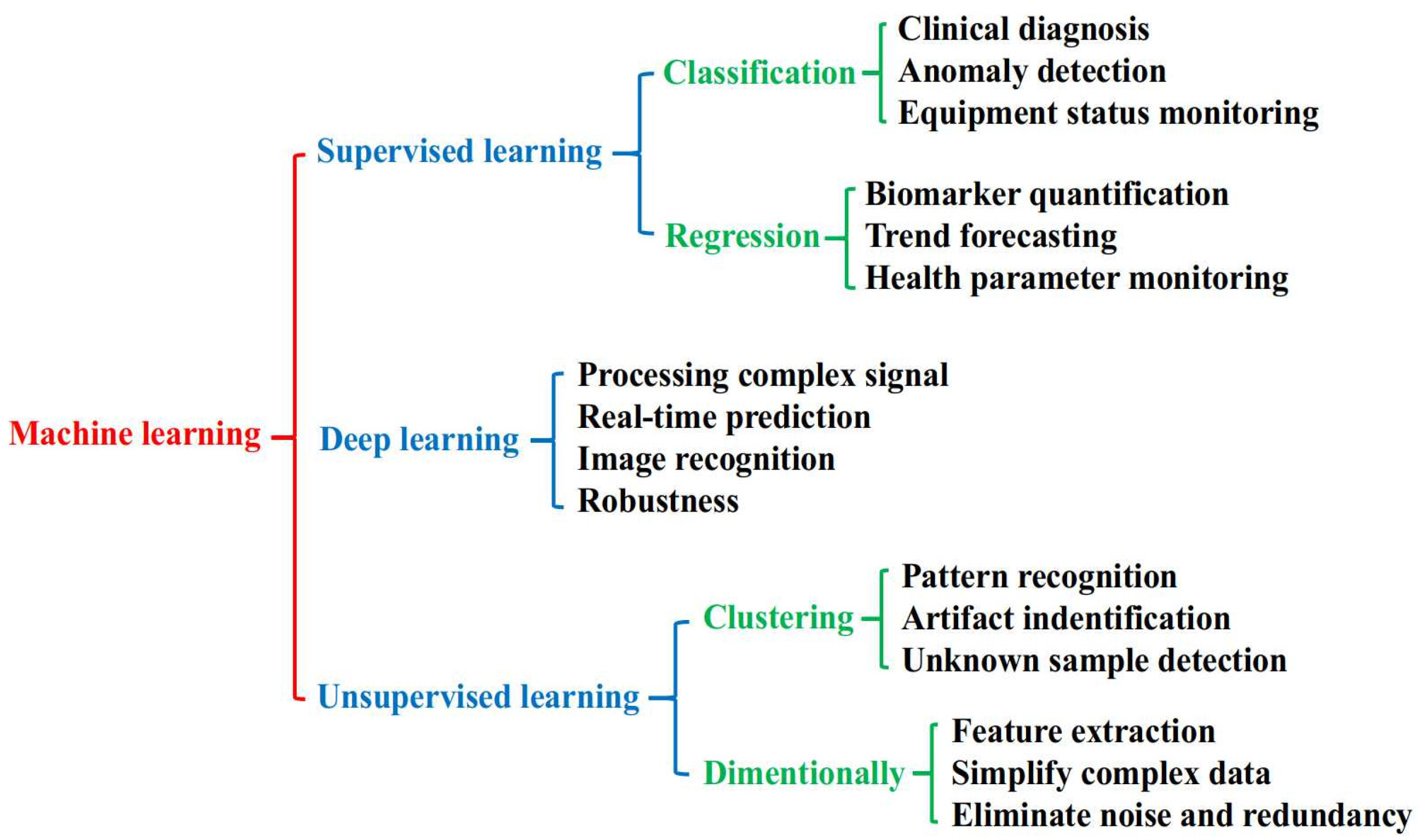
2. Machine Learning Algorithms
2.1. Supervised Learning
2.2. Deep Learning
2.3. Other Algorithms
3. Machine Learning-Assisted Biosensors for AD
3.1. Electrochemical Biosensors

| Biosensor | Biomarker | Performance | Algorithm | Dataset/Validation | Ref. |
|---|---|---|---|---|---|
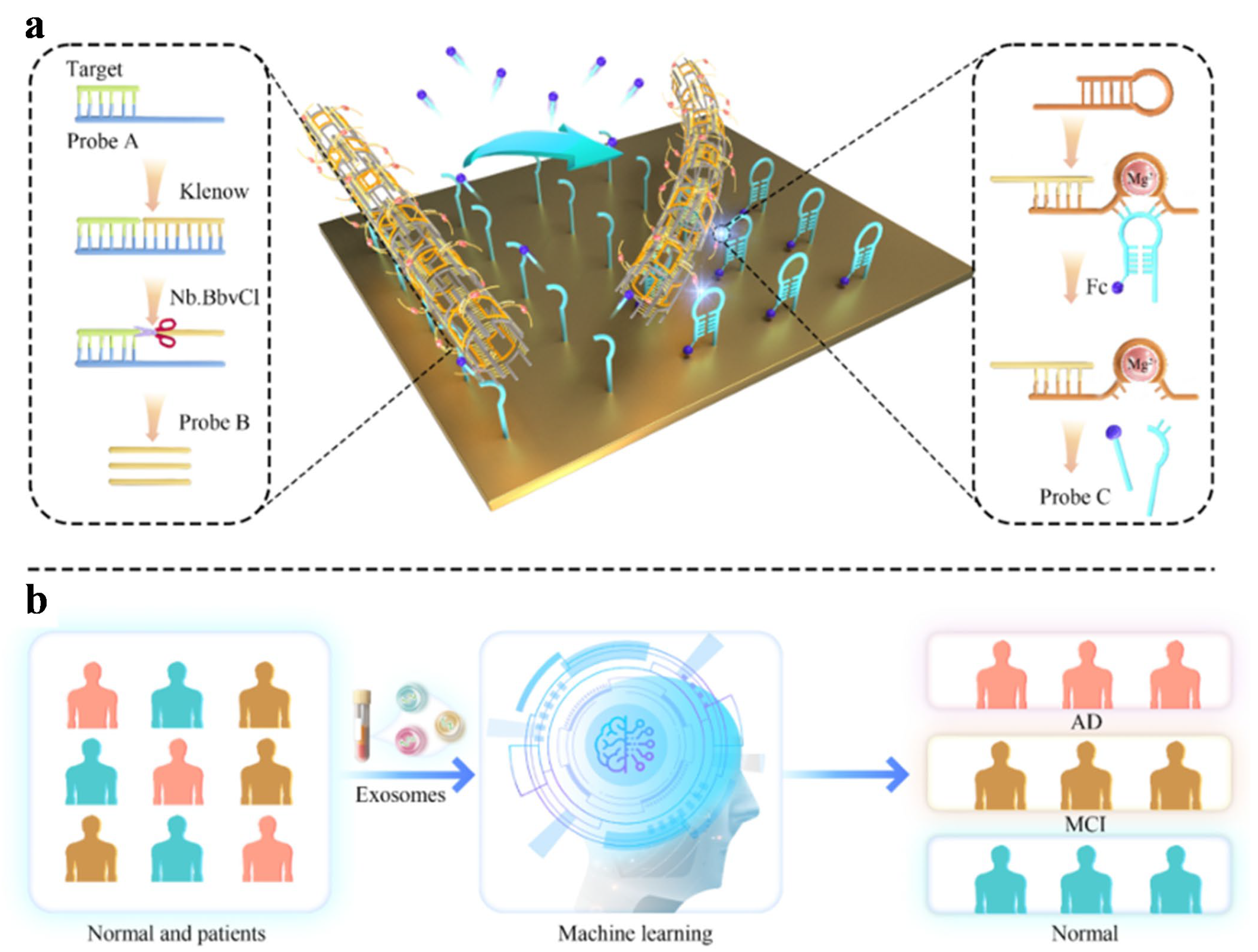
| SWV | miRNA-193b | 5.7 fM LOD 87.5% precision 94.7% accuracy | LDA | 19 clinical samples leave-one-out cross-validation | [62] |
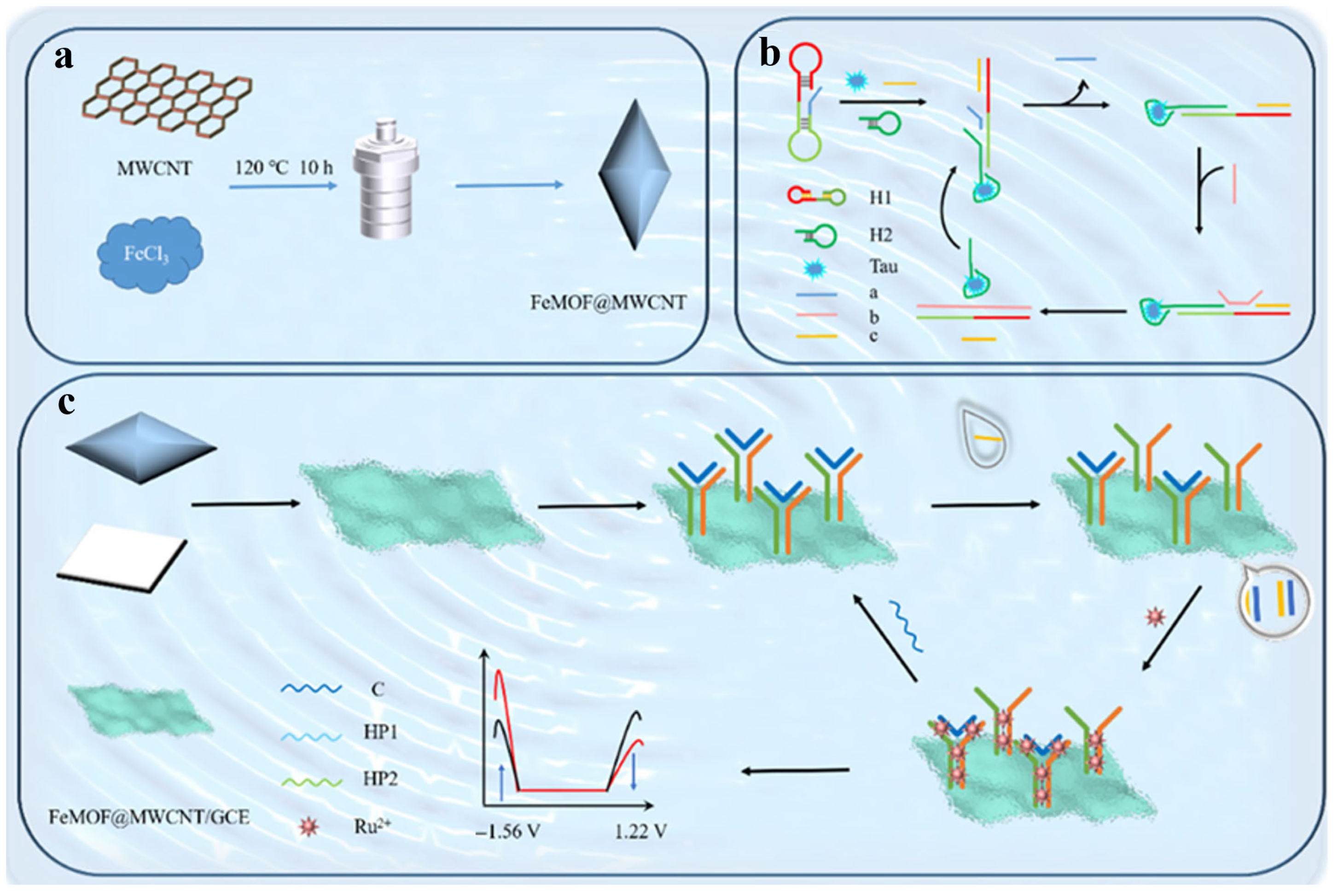
| ECL | t-tau | 3.38 fg/mL LOD 80% specificity 90% sensitivity | PLS-DA | 20 serum samples | [63] |
| DPV | p-tau181 | 980 fg/mL LOD 100% accuracy | RF | undiluted plasma and serum | [64] |
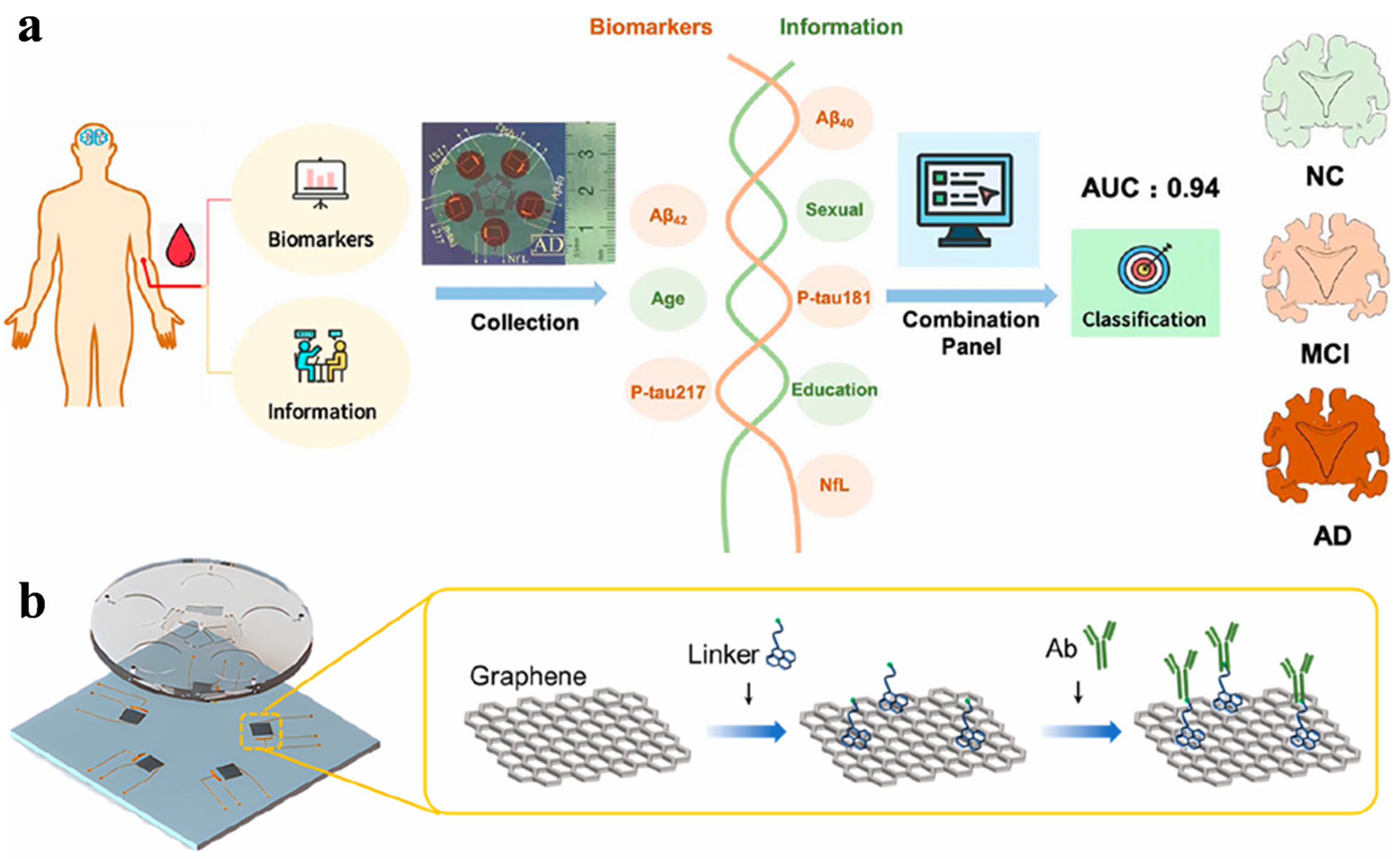
| gFET | Aβ40, Aβ42, p-tau181, p-tau217, NFL | 0.66 fg/mL LOD 85% accuracy | RF | 66 clinical samples 5-fold cross-validation | [68] |
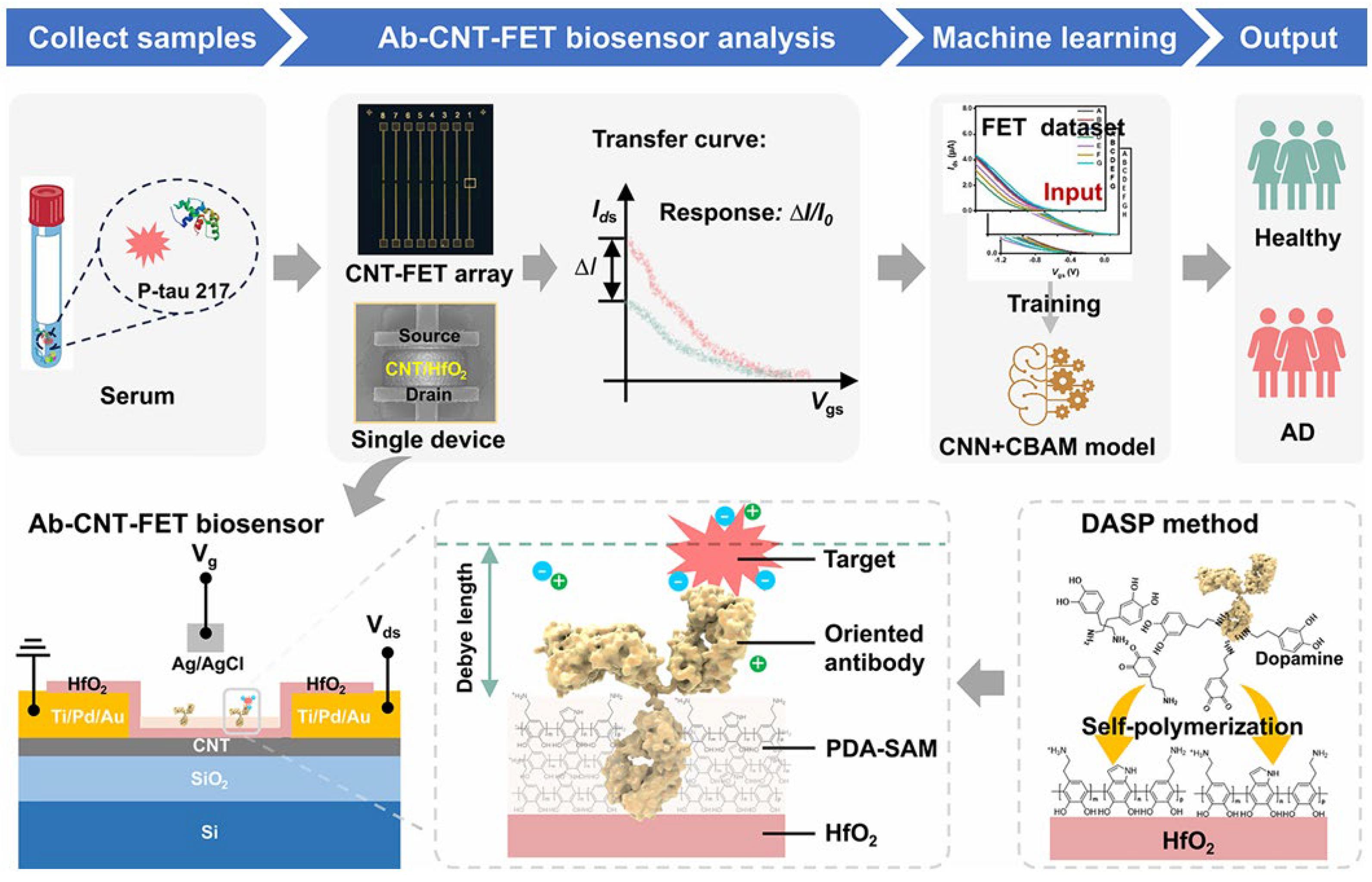
| FET | p-tau217 | 0.3 fg/mL LOD 100% accuracy | CNN | 25 clinical samples 85% training and 15% test | [69] |
3.2. Optical Biosensors
| Biosensor | Biomarker | Performance | Algorithm | Dataset/Validation | Ref. |
|---|---|---|---|---|---|
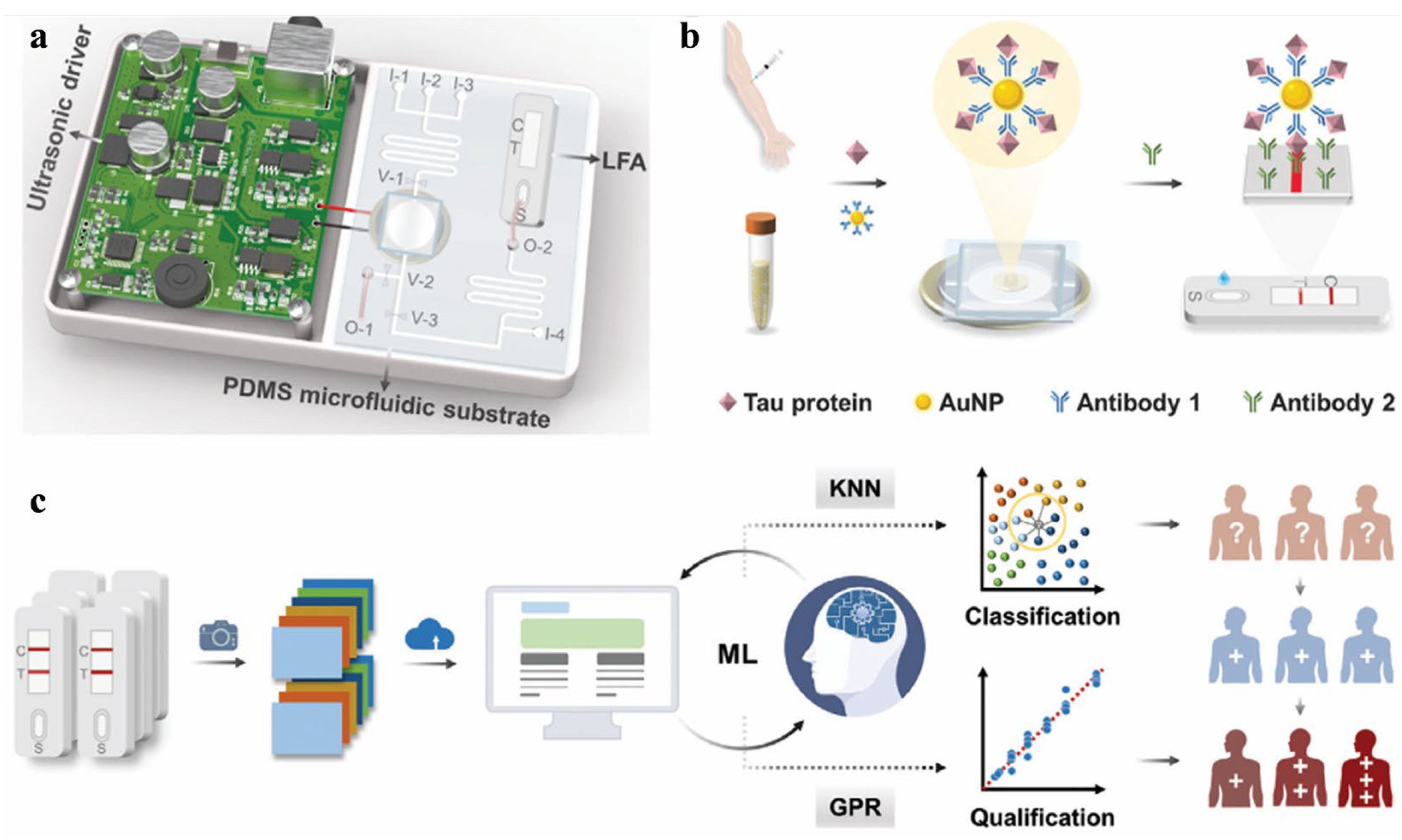
| LFA | t-tau | 10.3 pg/mL LOD 99.99% accuracy | KNN, GPR | 6 clinical samples 5-fold cross-validation | [73] |
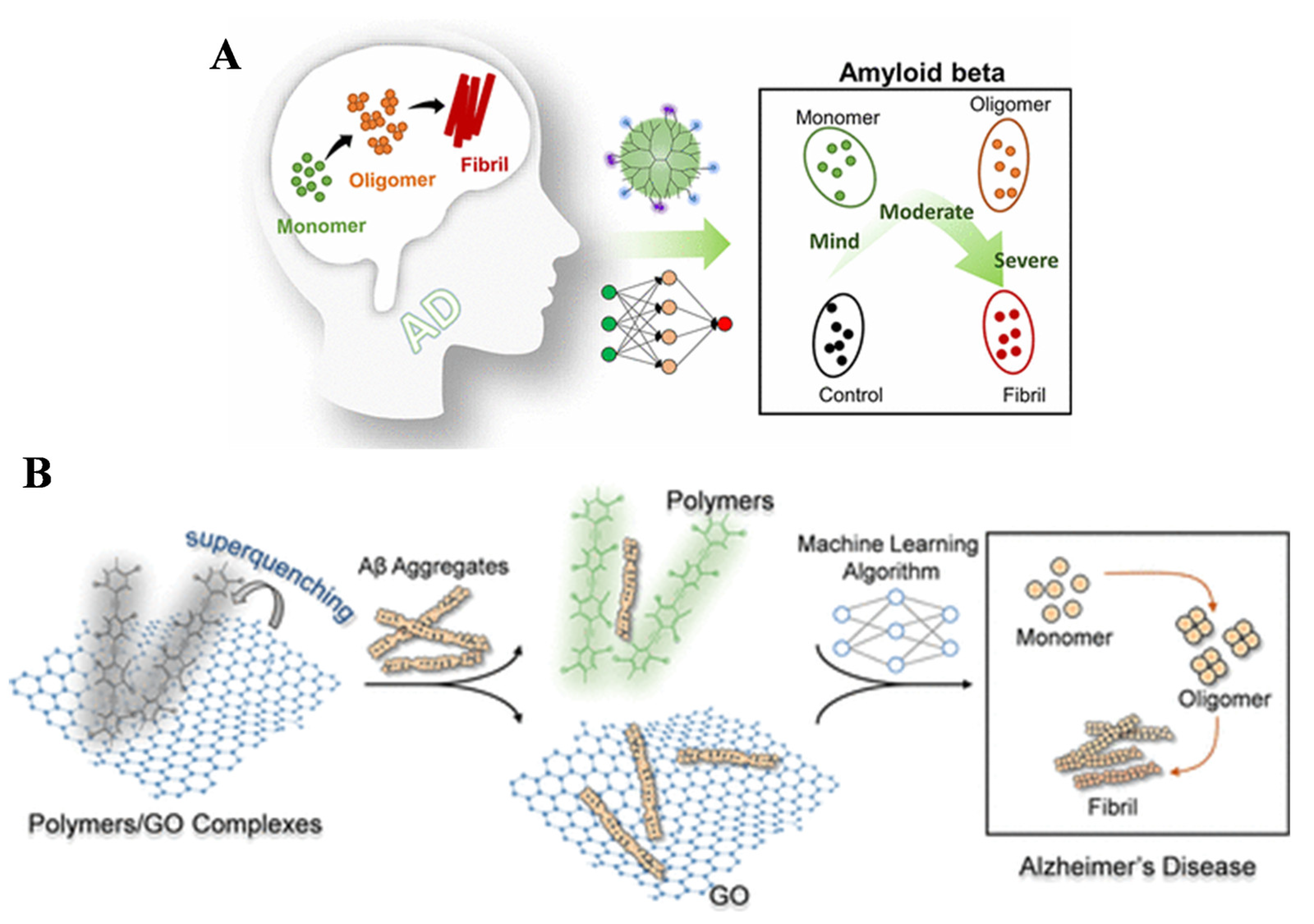
| Fluorescence | Aβ40/Aβ42 aggregates | 0.5 μM LOD 100% accuracy | LDA | 44 unknown samples leave-one-out cross-validation | [76] |
| Fluorescence | Aβ40/Aβ42 aggregates | 5 μM LOD 100% accuracy | LDA | 20 unknown samples leave-one-out cross-validation | [77] |
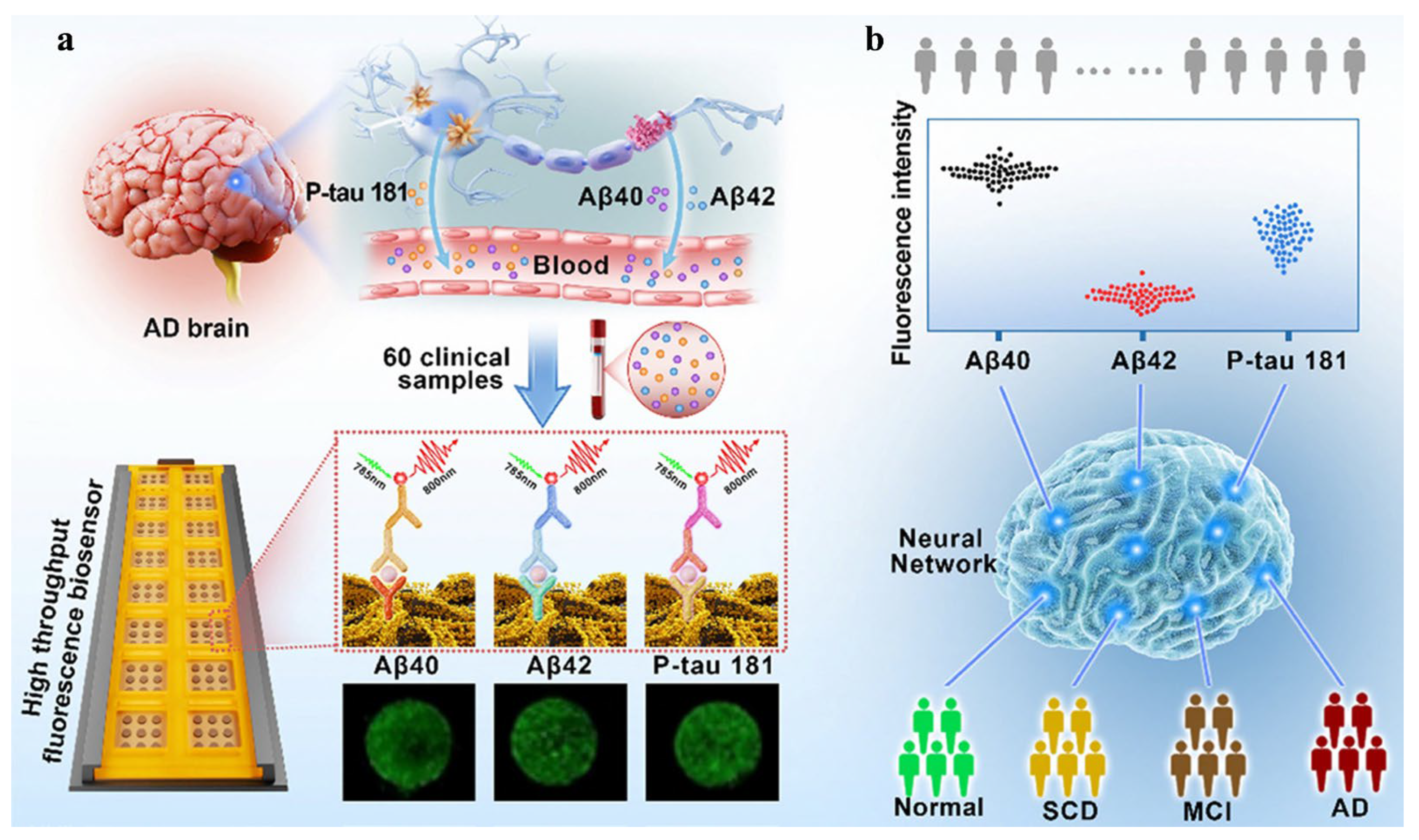
| Fluorescence | Aβ40, Aβ42, p-tau181 | 0.43 pg/mL, 0.68 pg/mL, 0.71 pg/mL LOD 91% accuracy | ANN | 60 clinical samples 85% training and 15% test | [78] |
| SERS | Aβ oligomers | 85% accuracy | t-SNE | 20 AD and 11 ONC CSF samples 5-fold cross-validation | [83] |
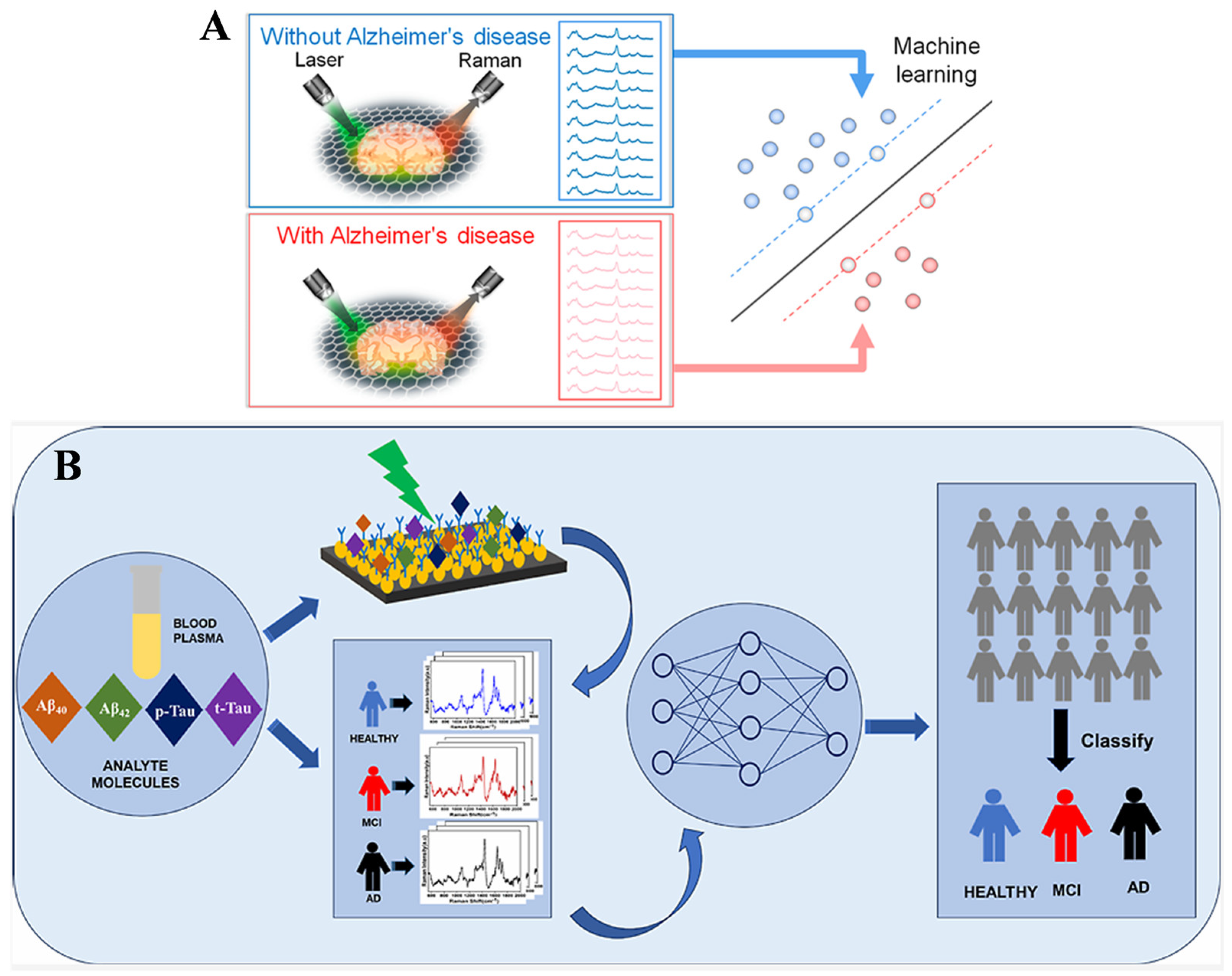
| SERS | Aβ and Tau proteins | 98% accuracy | SVM | mice brain slices 5-fold cross-validation | [84] |
| SERS | Aβ40, Aβ42, p-tau, t-tau | 13.64 aM (Aβ42) and 28.6 aM (p-tau) LOD high accuracy | MLP, RBF, SVM, and LDA | 60 clinical samples 70% training and 30% test | [85] |
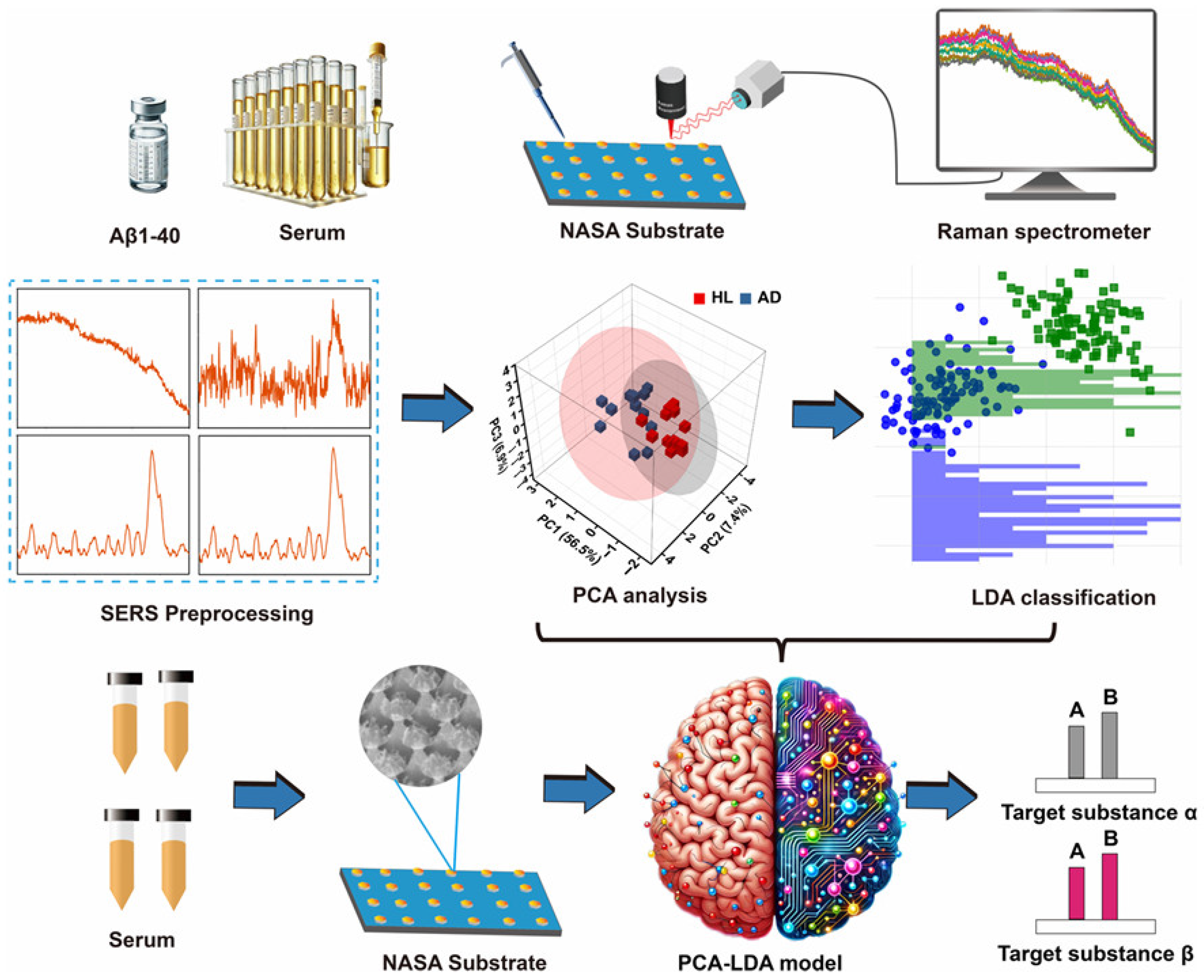
| SERS | Aβ40 | 95.8% accuracy | PCA-LDA | AD and healthy rats 5-fold cross-validation | [86] |
| SERS | R6G | 41.87 fM LOD 95% accuracy | PCA-WRKNN | mice serums leave-one-out cross-validation | [87] |
| SERS | Aβ42 | 87.5% accuracy | ANN | 20 clinical samples 5-fold cross-validation | [88] |
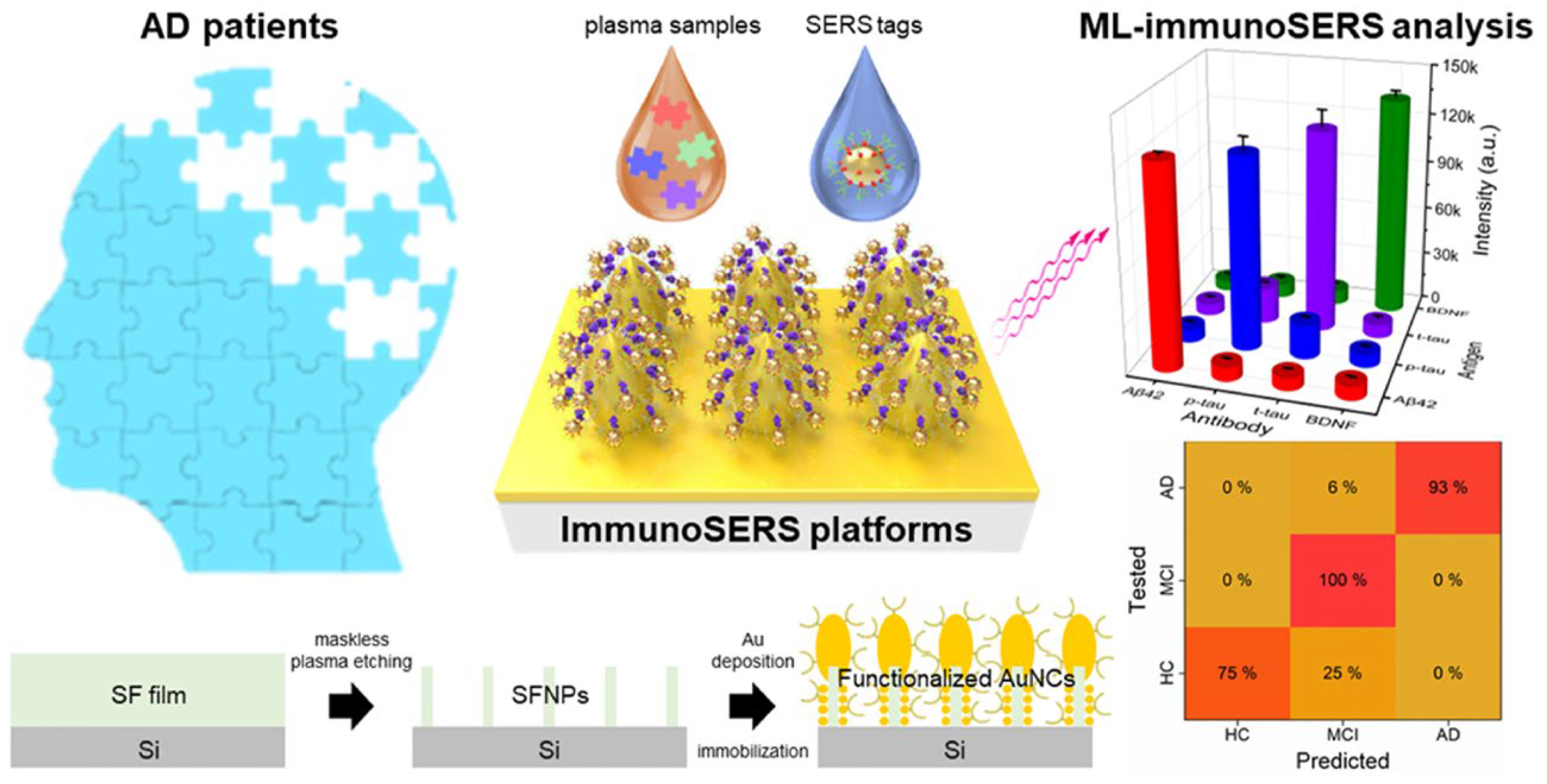
| SERS | Aβ42, t-tau, p-tau, BDNF | 35.8 aM LOD 94% accuracy | KNN | 66 clinical samples 5-fold cross-validation | [89] |
| SERS | Aβ42, t-tau, and p-tau | 92% accuracy | CNN | 15 unknown CSF samples leave-one-out cross-validation | [97] |
4. Challenges and Future Perspectives
Author Contributions
Funding
Institutional Review Board Statement
Informed Consent Statement
Data Availability Statement
Conflicts of Interest
References
- Nandi, A.; Counts, N.; Chen, S.; Seligman, B.; Tortorice, D.; Vigo, D.; Bloom, D.E. Global and regional projections of the economic burden of Alzheimer’s disease and related dementias from 2019 to 2050: A value of statistical life approach. eClinicalMedicine 2022, 51, 101580. [Google Scholar] [CrossRef]
- Abdullah, S.A.; Najm, L.; Ladouceur, L.; Ebrahimi, F.; Shakeri, A.; Al-Jabouri, N.; Didar, T.F.; Dellinger, K. Functional nanomaterials for the diagnosis of Alzheimer’s disease: Recent progress and future perspectives. Adv. Funct. Mater. 2023, 33, 2302673. [Google Scholar] [CrossRef]
- Aarsland, D.; Sunde, A.L.; Tovar-Rios, D.A.; Leuzy, A.; Fladby, T.; Zetterberg, H.; Blennow, K.; Tan, K.; Santis, G.D.; Yakoub, Y.; et al. Prevalence of Alzheimer’s disease pathology in the community. Nature 2026, 650, 182–186. [Google Scholar] [CrossRef]
- Arghavani, P.; Daneshgar, H.; Sojdeh, S.; Edrisi, M.; Moosavi-Movahedi, A.A.; Rabiee, N. Porous materials for early diagnosis of neurodegenerative diseases. Adv. Healthc. Mater. 2025, 14, e2404685. [Google Scholar] [CrossRef]
- AlMansoori, M.E.; Jemimah, S.; Abuhantash, F.; AlShehhi, A. Predicting early Alzheimer’s with blood biomarkers and clinical features. Sci. Rep. 2024, 14, 6039. [Google Scholar] [CrossRef]
- Sarma, M.; Chatterjee, S. Etiology of late-onset Alzheimer’s disease, biomarker efficacy, and the role of machine learning in stage diagnosis. Diagnostics 2024, 14, 2640. [Google Scholar] [CrossRef] [PubMed]
- Bhaiyya, M.; Panigrahi, D.; Rewatkar, P.; Haick, H. Role of machine learning assisted biosensors in point-of-care testing for clinical decisions. ACS Sens. 2024, 9, 4495−4519. [Google Scholar] [CrossRef]
- Cui, F.; Yue, Y.; Zhang, Y.; Zhang, Z.; Zhou, H.S. Advancing biosensors with machine learning. ACS Sens. 2020, 5, 3346−3364. [Google Scholar] [CrossRef] [PubMed]
- Puthongkham, P.; Suea-Ngam, A.; Wirojsaengthong, S. Machine learning and chemometrics for electrochemical sensors: Moving forward to the future of analytical chemistry. Analyst 2021, 146, 6351. [Google Scholar] [CrossRef]
- Fabrizio, C.; Termine, A.; Caltagirone, C.; Sancesario, G. Artificial intelligence for Alzheimer’s disease: Promise or challenge? Diagnostics 2021, 11, 1473. [Google Scholar] [CrossRef] [PubMed]
- Singh, S.G.; Das, D.; Barman, U.; Saikia, M.J. Early Alzheimer’s disease detection: A review of machine learning techniques for forecasting transition from mild cognitive impairment. Diagnostics 2024, 14, 1759. [Google Scholar] [CrossRef]
- Chamakuri, R.; Janapana, H. A systematic review on recent methods on deep learning for automatic detection of Alzheimer’s disease. Med. Nov. Technol. Devices 2025, 25, 100343. [Google Scholar] [CrossRef]
- Givian, H.; Calbimonte, J.-P. A review on machine learning approaches for diagnosis of Alzheimer’s disease and mild cognitive impairment based on brain MRI. IEEE Access 2024, 12, 109912–109929. [Google Scholar] [CrossRef]
- Zhao, Z.; Chuah, J.H.; Lai, K.W.; Chow, C.-O.; Gochoo, M.; Dhanalakshmi, S.; Wang, N.; Bao, W.; Wu, X. Conventional machine learning and deep learning in Alzheimer’s disease diagnosis using neuroimaging: A review. Front. Comput. Neurosci. 2023, 17, 1038636. [Google Scholar] [CrossRef]
- Saif, F.H.; Al-Andoli, M.N.; Bejuri, W.M.Y.W. Explainable AI for Alzheimer detection: A Review of current methods and applications. Appl. Sci. 2024, 14, 10121. [Google Scholar] [CrossRef]
- Tanveer, M.; Richhariya, B.; Khan, R.U.; Rashid, A.H.; Khanna, P.; Prasad, M.; Lin, C.T. Machine learning techniques for the diagnosis of Alzheimer’s disease: A review. ACM Trans. Multimed. Comput. Commun. Appl. 2020, 16, 30. [Google Scholar] [CrossRef]
- Grueso, S.; Viejo-Sobera, R. Machine learning methods for predicting progression from mild cognitive impairment to Alzheimer’s disease dementia: A systematic review. Alzheimer’s Res. Ther. 2021, 13, 162. [Google Scholar] [CrossRef] [PubMed]
- Menagadevi, M.; Devaraj, S.; Madian, N.; Thiyagarajan, D. Machine and deep learning approaches for alzheimer disease detection using magnetic resonance images: An updated review. Measurement 2024, 226, 114100. [Google Scholar] [CrossRef]
- Rezaei, S.; Asadirad, F.; Parsa, F.; Motamedi, A.; Samimi, H.; Kamran, M.; Ghannadikhosh, P.; Hosseinzadeh, S.A.; Arabi, H. Future of Alzheimer’s detection: Advancing diagnostic accuracy through the integration of qEEG and artificial intelligence. NeuroImage 2025, 317, 121373. [Google Scholar] [CrossRef]
- Christodoulou, R.C.; Woodward, A.; Pitsillos, R.; Ibrahim, R.; Georgiou, M.F. Artificial intelligence in Alzheimer’s disease diagnosis and prognosis using PET-MRI: A narrative review of high-impact literature post-tauvid approval. J. Clin. Med. 2025, 14, 5913. [Google Scholar] [CrossRef]
- Frizzell, T.O.; Glashutter, M.; Hajra, S.G.; Liu, C.C.; D’Arcy, R.C.N.; Zeng, A.; Song, X. Artificial intelligence in brain MRI analysis of Alzheimer’s disease over the past 12 years: A systematic review. Ageing Res. Rev. 2022, 77, 101614. [Google Scholar] [CrossRef]
- Shi, Q.; Hou, J.; Peng, X.; Xu, Z.; Wang, Y.; Cao, D. Magnetic resonance imaging analysis for Alzheimer’s disease diagnosis using artificial intelligence: Methods, challenges, and opportunities. Ageing Res. Rev. 2026, 113, 102943. [Google Scholar] [CrossRef]
- Aberathne, I.; Kulasiri, D.; Samarasinghe, S. Detection of Alzheimer’s disease onset using MRI and PET neuroimaging: Longitudinal data analysis and machine learning. Neural Regen. Res. 2023, 18, 2134–2140. [Google Scholar] [CrossRef]
- Aviles, M.; Sánchez-Reyes, L.M.; Rodríguez-Reséndiz, J. Machine and deep learning trends in EEG-based detection and diagnosis of Alzheimer’s disease: A systematic review. Eng 2024, 5, 1464–1484. [Google Scholar] [CrossRef]
- Ashton, N.J.; Hye, A.; Rajkumar, A.P.; Leuzy, A.; Snowden, S.; Suárez-Calvet, M.; Joie, R.L.; Hortobágyi, T.; Rabinovici, G.D.; Höglund, K.; et al. An update on blood-based biomarkers for non-Alzheimer neurodegenerative disorders. Nat. Rev. Neurol. 2020, 16, 265–284. [Google Scholar] [CrossRef] [PubMed]
- Lin, C.-H.; Chiu, S.-I.; Chen, T.-F.; Jang, J.-S.R.; Chiu, M.-J. Classifications of neurodegenerative disorders using a multiplex blood biomarkers-based machine learning model. Int. J. Mol. Sci. 2020, 21, 6914. [Google Scholar] [CrossRef] [PubMed]
- Nakamura, A.; Kaneko, N.; Villemagne, V.L.; Kato, T.; Doecke, J.; Doré, V.; Fowler, C.; Li, Q.-X.; Martins, R.; Rowe, C.; et al. High performance plasma amyloid-β biomarkers for Alzheimer’s disease. Nature 2018, 554, 249–254. [Google Scholar] [CrossRef]
- Beheshti, I.; Albensi, B.C.; Freitas, A.; Ghafourian, T. Advancements and challenges in using AI for biomarker detection in early Alzheimer’s disease. Drug Discov. Today 2025, 30, 104415. [Google Scholar] [CrossRef]
- Chang, C.-H.; Lin, C.-H.; Lane, H.-Y. Machine learning and novel biomarkers for the diagnosis of Alzheimer’s disease. Int. J. Mol. Sci. 2021, 22, 2761. [Google Scholar] [CrossRef]
- Benjamin, S.R.; Lima, F.D.; Nunes, P.I.G.; Dutra, R.F.; Andrade, G.M.D.; Oriá, R.B. Advanced biosensing technologies: Leading innovations in Alzheimer’s disease diagnosis. Chemosensors 2025, 13, 220. [Google Scholar] [CrossRef]
- McIntire, L.B. Prognostic power? Do the plasma biomarkers, neurofilament light and phospho-Tau 181, improve prediction of progression to Alzheimer’s disease using a machine learning approach in the ADNI cohort? J. Alzheimer’s Dis. 2024, 99, 883–885. [Google Scholar] [CrossRef]
- Ganguly, A.; Babu, S.S.; Ghosh, S.; Velyutham, R.; Kapusetti, G. Advances and future trends in the detection of beta-amyloid: A comprehensive review. Med. Eng. Phys. 2025, 135, 104269. [Google Scholar] [CrossRef]
- Kim, K. Recent advances in photoelectrochemical sensing of Alzheimer’s biomarkers. BioChip J. 2023, 17, 218–229. [Google Scholar] [CrossRef]
- Mobeda, A.; Hasanzadeh, M. Biosensing: The best alternative for conventional methods in detection of Alzheimer’s disease biomarkers. Int. J. Biol. Macromol. 2020, 161, 59–71. [Google Scholar] [CrossRef]
- Phan, L.M.T.; Hoang, T.X.; Vo, T.A.T.; Pham, H.L.; Le, H.T.N.; Chinnadayyala, S.R.; Kim, J.Y.; Lee, S.-M.; Cho, W.W.; Kim, Y.H.; et al. Nanomaterial-based optical and electrochemical biosensors for amyloid beta and Tau: Potential for early diagnosis of Alzheimer’s disease. Expert Rev. Mol. Diagn. 2021, 21, 175–193. [Google Scholar] [CrossRef]
- Xia, N.; Chang, Y.; Hao, Y. Recent progress in electrochemical detection of beta-amyloid peptides and their aggregates. Int. J. Electrochem. Sci. 2017, 12, 6255–6265. [Google Scholar] [CrossRef]
- Sharma, A.; Angnes, L.; Sattarahmady, N.; Negahdary, M.; Heli, H. Electrochemical immunosensors developed for amyloid-beta and Tau proteins, leading biomarkers of Alzheimer’s disease. Biosensors 2023, 13, 742. [Google Scholar] [CrossRef]
- Şak, B.; Sousa, H.B.A.; Prior, J.A.V. Carbon nanomaterial-based electrochemical biosensors for Alzheimer’s disease biomarkers: Progress, challenges, and future perspectives. Biosensors 2025, 15, 684. [Google Scholar] [CrossRef] [PubMed]
- Yin, C.; Qin, D.; Tang, X.; Feng, Q.; Zeng, J.; Wu, A.; Wang, Z.; Mi, J.; Liang, Y. Next-generation biosensor technologies for Alzheimer’s disease: Innovations in diagnosis, monitoring, and treatment. Ageing Res. Rev. 2026, 114, 102954. [Google Scholar] [CrossRef] [PubMed]
- Shukla, A.; Tiwari, R.; Tiwari, S. Review on Alzheimer disease detection methods: Automatic pipelines and machine learning techniques. Sci 2023, 5, 13. [Google Scholar] [CrossRef]
- Wang, H.; Li, J.; Tu, W.; Wang, Z.; Zhang, Y.; Chang, L.; Wu, Y.; Zhang, X. Identification of blood biomarkers related to energy metabolism and construction of diagnostic prediction model based on three independent Alzheimer’s disease cohorts. J. Alzheimer’s Dis. 2024, 100, 1261–1287. [Google Scholar] [CrossRef] [PubMed]
- Binson, V.A.; Thomas, S.; Subramoniam, M.; Arun, J.; Naveen, S.; Madhu, S. A review of machine learning algorithms for biomedical applications. Ann. Biomed. Eng. 2024, 52, 1159–1183. [Google Scholar] [CrossRef]
- Janiesch, C.; Zschech, P.; Heinrich, K. Machine learning and deep learning. Electron. Mark. 2021, 31, 685–695. [Google Scholar] [CrossRef]
- Chin, W.J.; Lim, W.Y.; Goh, C.-H.; Khor, S.M.; Ramakrishnan, N.; Chee, P.S. Advancement of machine learning algorithms in biosensors. Clin. Chim. Acta 2026, 579, 120677. [Google Scholar] [CrossRef] [PubMed]
- Wang, Z.; Ranasinghe, J.C.; Chan, D.C.Y.; Gomm, A.; Tanzi, R.E.; Zhang, C.; Zhang, N.; Huang, S. Machine learning-enhanced hyperspectral Raman imaging for label-free molecular atlas of Alzheimer’s brain. ACS Appl. Mater. Interfaces 2026, 18, 977−988. [Google Scholar] [CrossRef]
- Comber, A.; Harris, P. Geographically weighted elastic net logistic regression. J. Geogr. Syst. 2018, 20, 317–341. [Google Scholar] [CrossRef]
- Aljanaahi, A.; Hakeem, M.K.; Aljanaahi, A.; Shah, I.L. A review of analytical and chemometric strategies for forensic classification of homemade explosives. Anal. Sci. Adv. 2025, 6, e70010. [Google Scholar] [CrossRef]
- Song, Y.; Zhang, M.; Jiang, X.; Zhang, F.; Ju, C.; Huang, S.; Lau, A.P.T.; Wang, D. SRS-Net: A universal framework for solving stimulated Raman scattering in nonlinear fiber-optic systems by physics-informed deep learning. Commun. Eng. 2024, 3, 109. [Google Scholar] [CrossRef]
- Nocera, A.; Senigagliesi, L.; Raimondi, M.; Ciattaglia, G.; Gambi, E. Machine learning in RADAR-based physiological signals sensing: A scoping review of the models, datasets, and metrics. IEEE Access 2024, 12, 156082–156117. [Google Scholar] [CrossRef]
- Verma, N.; Qu, X.; Trozzi, F.; Zoltowski, B.; Elsaied, M.; Karki, N.; Larson, E.C.; Kraka, E. SSnet: A deep learning approach for protein-ligand interaction prediction. Int. J. Mol. Sci. 2021, 22, 1392. [Google Scholar] [CrossRef]
- Pavlou, E.; Kourkoumelis, N. PyFasma: An open-source, modular Python package for preprocessing and multivariate analysis of Raman spectroscopy data. Analyst 2025, 150, 3112–3122. [Google Scholar] [CrossRef] [PubMed]
- Georgiev, D.; Pedersen, S.V.; Xie, R.; Fernández-Galiana, A.L.; Stevens, M.M.; Barahona, M. RamanSPy: An open-source python package for integrative Raman spectroscopy data analysis. Anal. Chem. 2024, 96, 8492−8500. [Google Scholar] [CrossRef] [PubMed]
- Usama, M.; Qadir, J.; Raza, A.; Arif, H.; Yau, K.L.A.; Elkhatib, Y.; Hussain, A.; Al-Fuqaha, A. Unsupervised machine learning for networking: Techniques, applications and research challenges. IEEE Access 2019, 7, 65579–65615. [Google Scholar] [CrossRef]
- Biedebach, L.; Ferreira-Santos, D.; Stefanos, M.-A.; Arnardóttir, E.S.; Islind, A.S. Unsupervised machine learning in sleep research: A scoping review. Sleep 2025, 48, zsaf189. [Google Scholar] [CrossRef]
- Li, A.; Yang, H.; Zhao, C.; Yu, W.; Liu, T.; Luo, B. Application of machine learning to improve the accuracy of electrochemical sensors: A review. TrAC Trends Anal. Chem. 2025, 193, 118469. [Google Scholar] [CrossRef]
- Sinha, K.; Uddin, Z.; Kawsar, H.I.; Islam, S.; Deen, M.J.; Howlader, M.M.R. Analyzing chronic disease biomarkers using electrochemical sensors and artificial neural networks. TrAC Trends Anal. Chem. 2023, 158, 116861. [Google Scholar] [CrossRef]
- Lei, Q.; Li, D.; Zou, Y.; Yan, J.; Cheng, J.; Guo, J. Advances and challenges in the application of artificial intelligence to medical biosensing technology: A review. TrAC Trends Anal. Chem. 2026, 195, 118592. [Google Scholar] [CrossRef]
- Bae, M.; Kim, N.; Cho, E.; Lee, T.; Lee, J.-H. Recent advances in electrochemical biosensors for neurodegenerative disease biomarkers. Biosensors 2025, 15, 151. [Google Scholar] [CrossRef]
- Kang, M.; Kim, D.; Kim, J.; Kim, N.; Lee, S. Strategies to enrich electrochemical sensing data with analytical relevance for machine learning applications: A focused review. Sensors 2024, 24, 3855. [Google Scholar] [CrossRef]
- Bocan, A.; Moakhar, R.S.; del Real Mata, C.; Petkun, M.; De Iure-Grimmel, T.; Yedire, S.G.; Shieh, H.; Jahromi, A.K.; Mahshid, S.S.; Mahshid, S. Machine-learning-aided advanced electrochemical biosensors. Adv. Mater. 2025, 37, 2417520. [Google Scholar] [CrossRef]
- Tideman, P.; Karlsson, L.; Strandberg, O. Primary care detection of Alzheimer’s disease using a self-administered digital cognitive test and blood biomarkers. Nat. Med. 2025, 31, 4131–4139. [Google Scholar] [CrossRef] [PubMed]
- Cheng, T.; Yu, J.; Sun, J.; Zhou, H.; Xu, Z.; Hao, G.; Jiao, J. High-velocity DNA nanoharvester-enabled ultrasensitive analysis: Decoding extracellular vesicles miRNA Assisted by machine learning for grading of Alzheimer’s disease. Chem. Eng. J. 2025, 526, 171406. [Google Scholar] [CrossRef]
- Yuan, W.; Tao, Q.; Chen, X.; Liu, T.; Wang, J.; Wang, X. Using machine learning to design a FeMOF bidirectional regulator for electrochemiluminescence sensing of Tau protein. ACS Appl. Mater. Interfaces 2025, 17, 8924–8936. [Google Scholar] [CrossRef] [PubMed]
- Deshpande, S.; Arjun, A.M.; Liu, G.; Pawlak, K.; Sharma, S. Redox-active polyphenol red molecularly imprinted polymers on porous gold electrodes for ultrasensitive, AI-assisted detection of Alzheimer’s biomarkers in undiluted biofluids. Adv. Healthc. Mater. 2025, 14, e03155. [Google Scholar] [CrossRef]
- Zhang, L.; Wang, D.; Dai, Y.; Wang, X.; Cao, Y.; Liu, W.; Tao, Z. Machine learning reveals a multipredictor nomogram for diagnosing the Alzheimer’s disease based on chemiluminescence immunoassay for total Tau in plasma. Front. Aging Neurosci. 2022, 14, 863673. [Google Scholar] [CrossRef]
- Le, P.G.; Choi, S.H.; Cho, S. Alzheimer’s disease biomarker detection using field effect transistor-based biosensor. Biosensors 2023, 13, 987. [Google Scholar] [CrossRef]
- Gil, B.; Keshavarz, M.; Wales, D.; Darzi, A.; Yeatman, E. Orthogonal surface-enhanced Raman scattering/field-effect transistor detection of breast and colorectal cancer-derived exosomes using graphene as a tag-free diagnostic template. Adv. NanoBiomed Res. 2023, 3, 2300055. [Google Scholar] [CrossRef]
- Wang, S.; Deng, R.; Chen, Z.; Huang, L.; Song, Y.; Yuan, D.; Li, Y.; Liu, H.; Yang, F.; Fan, B.; et al. High-performance plasma biomarker panel for Alzheimer’s disease screening using a femtomolar-level label-free biosensing system. ACS Nano 2023, 18, 2117–2130. [Google Scholar] [CrossRef]
- Gong, X.; Li, C.; Zhou, Z.; Yu, R.; Chen, Y.; Tong, J.; Liu, Y.; Qing, T.; Wu, Z.; Liu, T.; et al. Dopamine self-polymerization-assisted oriented antibody immobilization on a transistor for Alzheimer’s disease diagnosis. Anal. Chem. 2026, 98, 1033−1043. [Google Scholar] [CrossRef]
- Dun, Y.; Chang, L.; Zhang, S.; Wang, Y.; He, X.; Zhang, G.-J.; Zhou, J. Label-free plasmonic biosensors for neurodegenerative disease diagnosis: Progress and perspectives. TrAC Trends Anal. Chem. 2026, 194, 118488. [Google Scholar] [CrossRef]
- Subburaj, S.; Liu, C.; Xu, T. Emerging trends in AI-integrated optical biosensors for point-of-care diagnostics: Current status and future prospects. Chem. Commun. 2025, 61, 18464. [Google Scholar] [CrossRef]
- Parakh, A.; Awate, A.; Tulaskar, D.P.; Barman, S.M.; Kulkarni, M.B.; Kadu, R.K.; Bhaiyya, M. Artificial intelligence and machine learning for colorimetric detections: Techniques, applications, and future prospects. Trends Environ. Anal. Chem. 2025, 48, e00280. [Google Scholar] [CrossRef]
- Wang, S.; Zhu, Y.; Zhou, Z.; Luo, Y.; Huang, Y.; Liu, Y.; Xu, T. Integrated ultrasound-enrichment and machine learning in colorimetric lateral flow assay for accurate and sensitive clinical Alzheimer’s biomarker diagnosis. Adv. Sci. 2024, 11, 2406196. [Google Scholar] [CrossRef]
- Wang, J.; Shao, X.; Wang, C.; Wu, S.; Bai, M.; Zhang, P.; Tang, S.; Zhang, N.; Wang, X.; Yang, Z.; et al. Small-molecule fluorescence probes for biomarkers of Alzheimer’s disease. Biosens. Bioelectron. 2025, 287, 117722. [Google Scholar] [CrossRef] [PubMed]
- Wang, J.; Zhang, J.; Qu, X.; Liu, B.; Song, N.; Liu, Y.; Wang, W.; Ding, M.; Wang, L.; Zhang, J.; et al. Amplification-free detection of Porphyromonas gingivalis with no-PAM CRISPR-Cas12a using a smartphone-based platform. Chem. Eng. J. 2025, 510, 161578. [Google Scholar] [CrossRef]
- Xu, L.; Wang, H.; Xu, Y.; Cui, W.; Ni, W.; Chen, M.; Huang, H.; Stewart, C.; Li, L.; Li, F.; et al. Machine learning-assisted sensor array based on poly(amidoamine) (PAMAM) dendrimers for diagnosing Alzheimer’s disease. ACS Sens. 2022, 7, 1315–1322. [Google Scholar] [CrossRef]
- Wang, H.; Chen, M.; Sun, Y.; Xu, L.; Li, F.; Han, J. Machine learning-assisted pattern recognition of amyloid beta aggregates with fluorescent conjugated polymers and graphite oxide electrostatic complexes. Anal. Chem. 2022, 94, 2757–2763. [Google Scholar] [CrossRef] [PubMed]
- Liu, Y.; Zhou, Z.; Liu, X.; Zeng, J.; Liu, Q.; Xu, T. An AI-assisted multiplex fluorescence sensing platform for grading diagnosis of Alzheimer’s disease. J. Mater. Chem. B 2025, 13, 14315–14325. [Google Scholar] [CrossRef]
- Ranasinghe, J.C.; Wang, Z.; Huang, S. Unveiling brain disorders using liquid biopsy and Raman spectroscopy. Nanoscale 2024, 16, 11879–11913. [Google Scholar] [CrossRef]
- Cennamo, G.; Montorio, D.; Morra, V.B.; Criscuolo, C.; Lanzillo, R.; Salvatore, E.; Camerlingo, C.; Lisitskiy, M.; Delfino, I.; Portaccio, M.; et al. Surface-enhanced Raman spectroscopy of tears: Toward a diagnostic tool for neurodegenerative disease identification. J. Biomed. Opt. 2020, 25, 087002. [Google Scholar] [CrossRef]
- Horta-Velázquez, A.; Arce, F.; Rodríguez-Sevilla, E.; Morales-Narváez, E. Toward smart diagnostics via artificial intelligence-assisted surface-enhanced Raman spectroscopy. TrAC Trends Anal. Chem. 2023, 169, 117378. [Google Scholar] [CrossRef]
- Elsheikh, S.; Coles, N.P.; Achadu, O.J.; Filippou, P.S.; Khundakar, A.A. Advancing brain research through surface-enhanced Raman spectroscopy (SERS): Current applications and future prospects. Biosensors 2024, 14, 33. [Google Scholar] [CrossRef]
- D’Andrea, C.; Cazzaniga, F.A.; Bistaffa, E.; Barucci, A.; de Angelis, M.; Banchelli, M.; Farnesi, E.; Polykretis, P.; Marzi, C.; Indaco, A.; et al. Impact of seed amplification assay and surface-enhanced Raman spectroscopy combined approach on the clinical diagnosis of Alzheimer’s disease. Transl. Neurodegener. 2023, 12, 35. [Google Scholar] [CrossRef]
- Wang, Z.; Ye, J.; Zhang, K.; Ding, L.; Granzier-Nakajima, T.; Ranasinghe, J.C.; Xue, Y.; Sharma, S.; Biase, I.; Terrones, M.; et al. Rapid biomarker screening of Alzheimer’s disease by interpretable machine learning and graphene-assisted Raman spectroscopy. ACS Nano 2022, 16, 6426–6436. [Google Scholar] [CrossRef] [PubMed]
- Resmi, A.N.; Nazeer, S.S.; Dhushyandhun, M.E.; Paul, W.; Chacko, B.P.; Menon, R.N.; Jayasree, R.S. Ultrasensitive detection of blood-based Alzheimer’s disease biomarkers: A comprehensive SERS-immunoassay platform enhanced by machine learning. ACS Chem. Neurosci. 2024, 15, 4390–4401. [Google Scholar] [CrossRef] [PubMed]
- Lu, H.; Yang, R.; Cao, D.; Du, S.; Liu, M. Approach for label-free and high-accuracy identification of Alzheimer’s disease combining machine learning and SERS technology. ACS Appl. Nano Mater. 2024, 7, 28757–28766. [Google Scholar] [CrossRef]
- Li, W.; Chen, G.; Chen, M.; Shen, K.; Wu, C.; Shen, W.; Zhang, F. PCA-WRKNN-assisted label-free SERS serum analysis platform enabling non-invasive diagnosis of Alzheimer’s disease. Spectrochim. Acta Part A Mol. Biomol. Spectrosc. 2023, 302, 123088. [Google Scholar] [CrossRef]
- Kim, M.; Huh, S.; Park, H.J.; Cho, S.H.; Lee, M.-Y.; Jo, S.; Jung, Y.S. Surface-functionalized SERS platform for deep learning-assisted diagnosis of Alzheimer’s disease. Biosens. Bioelectron. 2024, 251, 116128. [Google Scholar] [CrossRef]
- Lee, S.H.; Kim, S.; Lee, J.U.; Baek, S.J.; Hyun, S.; Jung, S.; Yang, J.-Y.; Mun, C.; Lee, S.; Lee, C.-N.; et al. Machine learning-assisted high-performance immunoSERS platform using silk fibroin as a natural etching mask for early diagnosis of Alzheimer’s disease. Biosens. Bioelectron. 2026, 294, 118222. [Google Scholar] [CrossRef]
- Lochocki, B.; Boon, B.D.C.; Verheul, S.R.; Zada, L.; Hoozemans, J.J.M.; Ariese, F.; de Boer, J.F. Multimodal, label-free fluorescence and Raman imaging of amyloid deposits in snap-frozen Alzheimer’s disease human brain tissue. Commun. Biol. 2021, 4, 474. [Google Scholar] [CrossRef]
- Ji, M.; Arbel, M.; Zhang, L.; Freudiger, C.W.; Hou, S.S.; Lin, D.; Yang, X.; Bacskai, B.J.; Xie, X.S. Label-free imaging of amyloid plaques in Alzheimer’s disease with stimulated Raman scattering microscopy. Sci. Adv. 2018, 4, eaat7715. [Google Scholar] [CrossRef] [PubMed]
- Chirco, A.; Meacci, E.; Margheri, G. A tutorial review on surface plasmon resonance biosensors: Applications in biomedicine. ACS Bio Med Chem Au 2025, 5, 922–946. [Google Scholar] [CrossRef] [PubMed]
- Alavian, F.; Aliabadi, A.; Huang, H. Advances in fiber optic biosensing technologies for detection of neurological biomarkers: A narrative review. Int. J. Opt. 2025, 2025, 8472886. [Google Scholar] [CrossRef]
- Stuart, D.D.; Zant, W.V.; Valiulis, S.; Malinick, A.S.; Hanson, V.; Cheng, Q. Trends in surface plasmon resonance biosensing: Materials, methods, and machine learning. Anal. Bioanal. Chem. 2024, 416, 5221–5232. [Google Scholar] [CrossRef] [PubMed]
- Hu, C.; Guan, M.; Mi, F.; Zhang, S.; Geng, P. Multimodal SERS biosensing platforms: Emerging opportunities for ultrasensitive biomarker detection and intelligent diagnostics. ACS Sens. 2026, 40. [Google Scholar] [CrossRef]
- Ma, X.; Ge, Y.; Xia, N. Overview of the design and application of dual-signal immunoassays. Molecules 2024, 29, 4551. [Google Scholar] [CrossRef]
- Yu, X.; Srivastava, S.; Huang, S.; Hayden, E.; Teplow, D.; Xie, Y.-H. The feasibility of early Alzheimer’s disease diagnosis using a neural network hybrid platform. Biosensors 2022, 12, 753. [Google Scholar] [CrossRef]
- Petch, J.; Di, S.; Nelson, W. Opening the black box: The promise and limitations of explainable machine learning in cardiology. Can. J. Cardiol. 2022, 38, 204–213. [Google Scholar] [CrossRef]
- Meng, J.; Xing, R. Inside the “black box”: Embedding clinical knowledge in data-driven machine learning for heart disease diagnosis. Cardiovasc. Digit. Health J. 2022, 3, 276–288. [Google Scholar] [CrossRef]





Disclaimer/Publisher’s Note: The statements, opinions and data contained in all publications are solely those of the individual author(s) and contributor(s) and not of MDPI and/or the editor(s). MDPI and/or the editor(s) disclaim responsibility for any injury to people or property resulting from any ideas, methods, instructions or products referred to in the content. |
© 2026 by the authors. Licensee MDPI, Basel, Switzerland. This article is an open access article distributed under the terms and conditions of the Creative Commons Attribution (CC BY) license.
Share and Cite
Feng, Y.; Chen, C. Progress in Machine Learning-Assisted Biosensors for Alzheimer’s Disease. Biosensors 2026, 16, 161. https://doi.org/10.3390/bios16030161
Feng Y, Chen C. Progress in Machine Learning-Assisted Biosensors for Alzheimer’s Disease. Biosensors. 2026; 16(3):161. https://doi.org/10.3390/bios16030161
Chicago/Turabian StyleFeng, Yan, and Changdong Chen. 2026. "Progress in Machine Learning-Assisted Biosensors for Alzheimer’s Disease" Biosensors 16, no. 3: 161. https://doi.org/10.3390/bios16030161
APA StyleFeng, Y., & Chen, C. (2026). Progress in Machine Learning-Assisted Biosensors for Alzheimer’s Disease. Biosensors, 16(3), 161. https://doi.org/10.3390/bios16030161