Review

AI-Empowered Electrochemical Sensors for Biomedical Applications: Technological Advances and Future Challenges

State Key Laboratory of Digital Medical Engineering, School of Biological Science and Medical Engineering, Southeast University, Nanjing 210096, China
*
Authors to whom correspondence should be addressed.
Biosensors 2025, 15(8), 487; https://doi.org/10.3390/bios15080487
Submission received: 26 June 2025 / Revised: 18 July 2025 / Accepted: 22 July 2025 / Published: 28 July 2025

Abstract

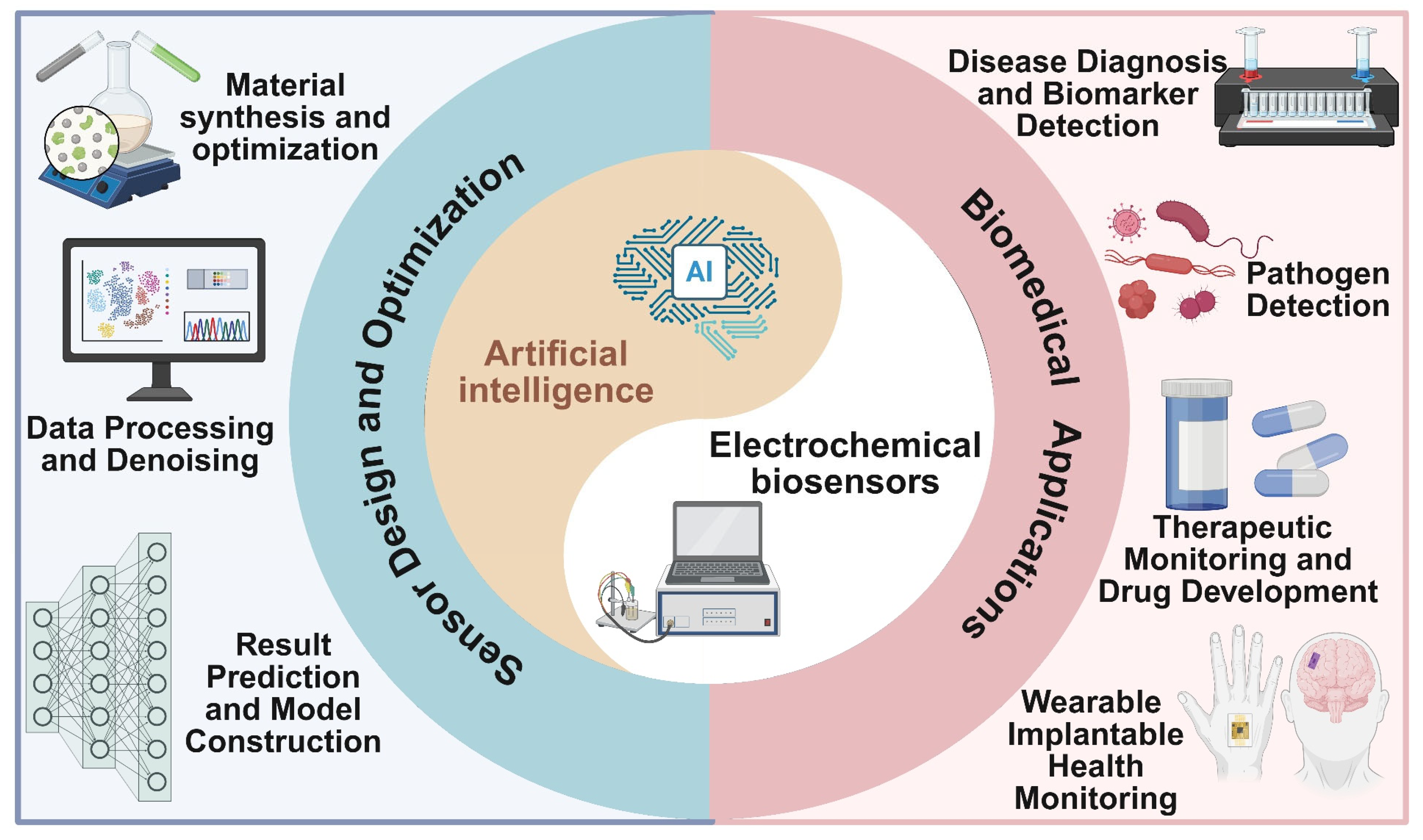
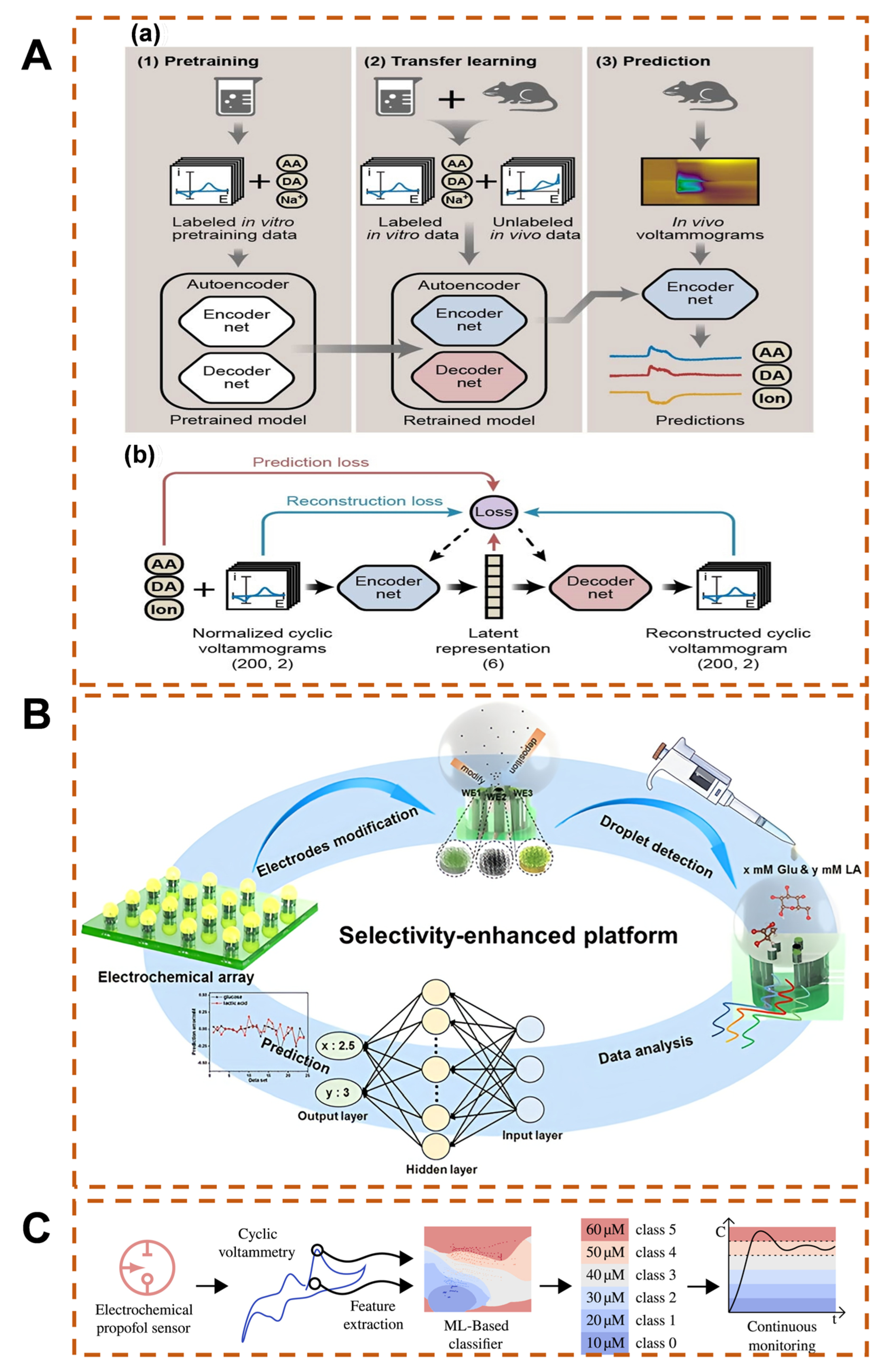
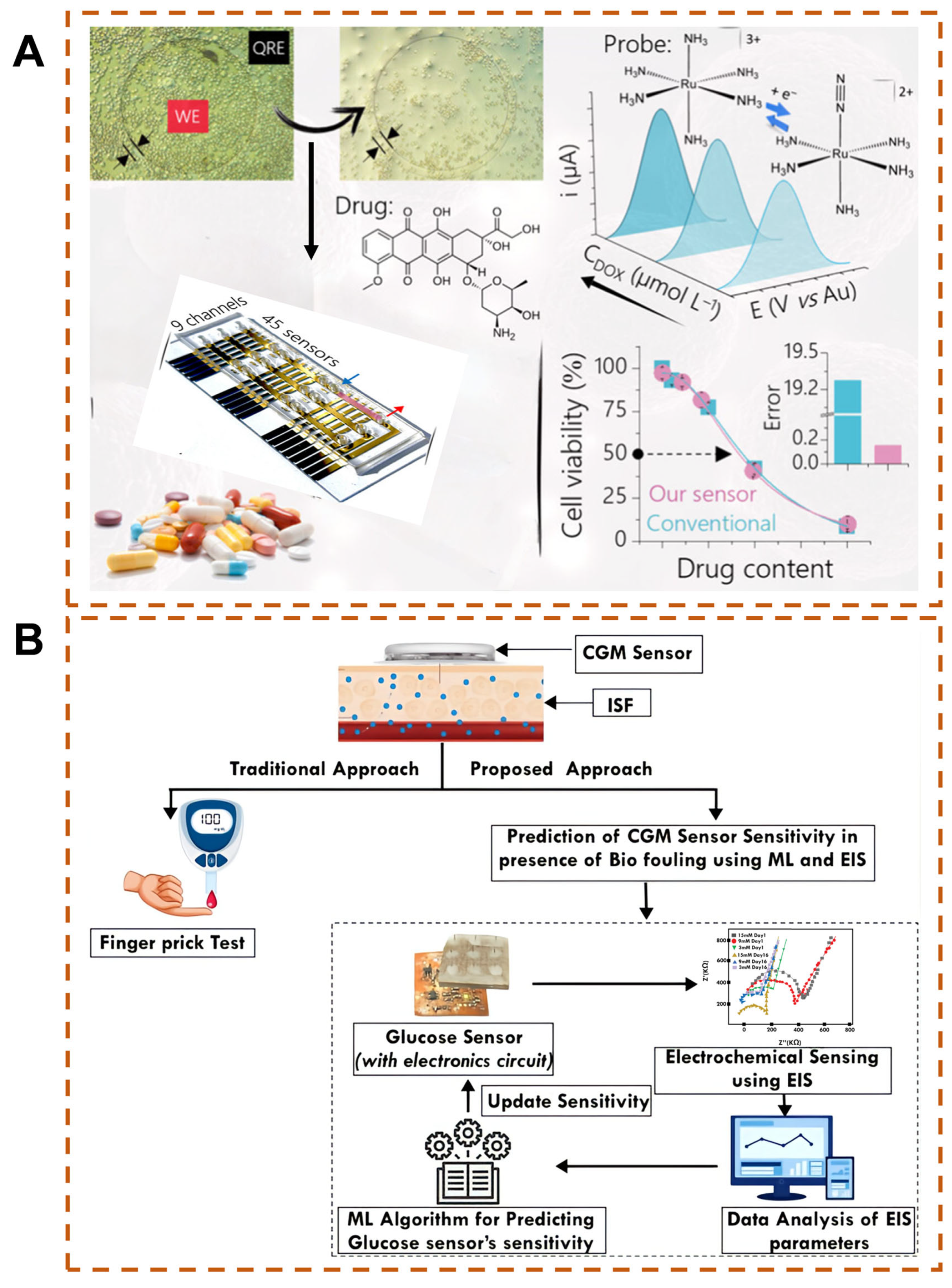
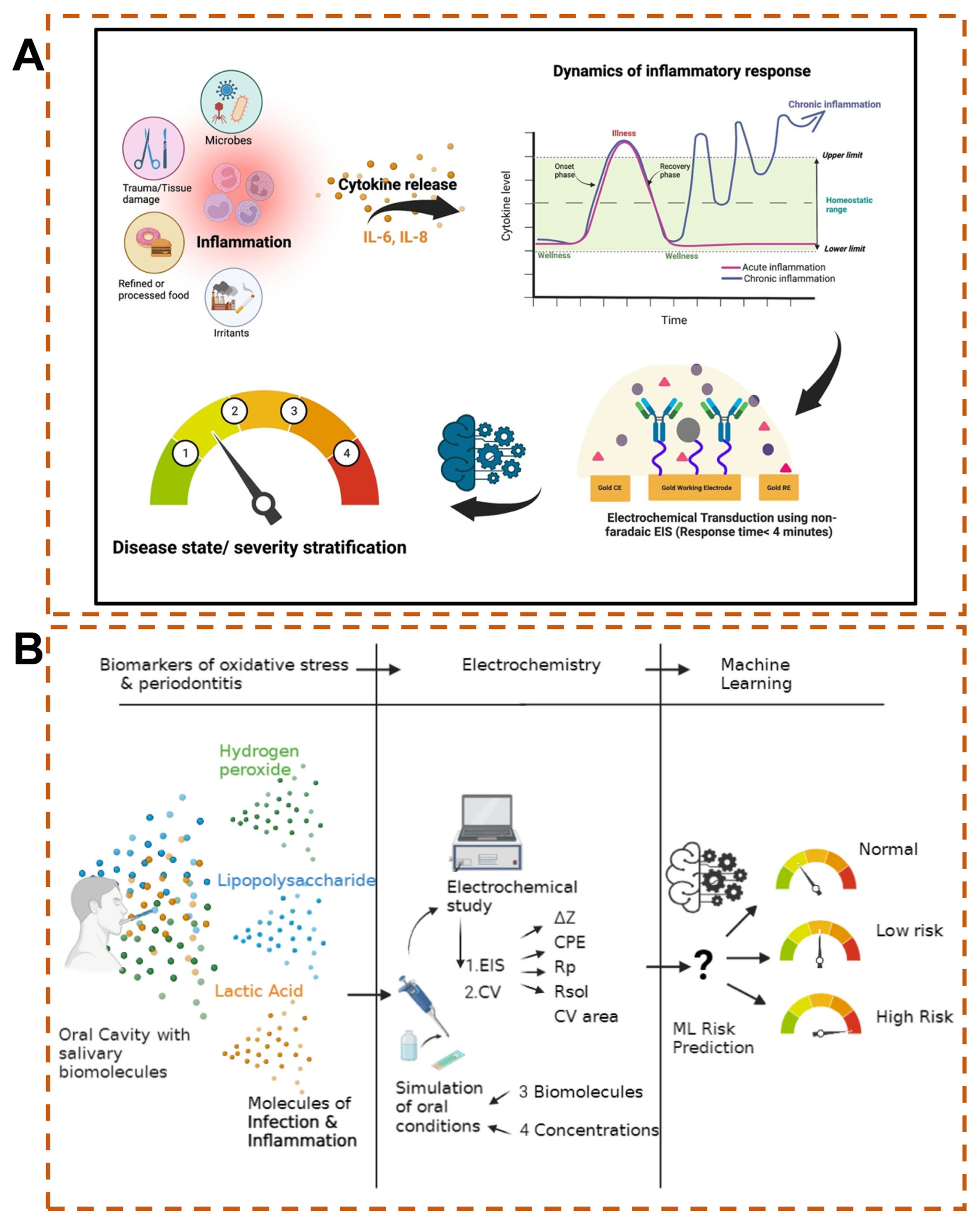
Biomarkers play a pivotal role in disease diagnosis, therapeutic efficacy evaluation, prognostic assessment, and drug screening. However, the trace concentrations of these markers in complex physiological environments pose significant challenges to efficient detection. It is necessary to avoid interference from non-specific signals, which may lead to misjudgment of other substances as biomarkers and affect the accuracy of detection results. With the rapid advancements in electrochemical technologies and artificial intelligence (AI) algorithms, intelligent electrochemical biosensors have emerged as a promising approach for biomedical detection, offering speed, specificity, high sensitivity, and accuracy. This review focuses on elaborating the latest applications of AI-empowered electrochemical biosensors in the biomedical field, including disease diagnosis, treatment monitoring, drug development, and wearable devices. AI algorithms can further improve the accuracy, sensitivity, and repeatability of electrochemical sensors through the screening and performance prediction of sensor materials, as well as the feature extraction and noise reduction suppression of sensing signals. Even in complex physiological microenvironments, they can effectively address common issues such as electrode fouling, poor signal-to-noise ratio, chemical interference, and matrix effects. This work may provide novel insights for the development of next-generation intelligent biosensors for precision medicine.
Keywords: artificial intelligence (AI); electrochemical biosensors; disease diagnosis; drug development; precision medicine artificial intelligence (AI); electrochemical biosensors; disease diagnosis; drug development; precision medicine