Article

Non-Invasive Electroretinogram Recording with Simultaneous Optogenetics to Dissect Retinal Ganglion Cells Electrophysiological Dynamics


1
Department of Biomedical Engineering, University of Massachusetts, Amherst, MA 01003, USA
2
Institute for Applied Life Sciences, University of Massachusetts, Amherst, MA 01003, USA
3
Neuroscience and Behavior Graduate Program, University of Massachusetts, Amherst, MA 01003, USA
*
Authors to whom correspondence should be addressed.
Biosensors 2023, 13(1), 42; https://doi.org/10.3390/bios13010042
Submission received: 29 November 2022 / Revised: 17 December 2022 / Accepted: 26 December 2022 / Published: 28 December 2022
(This article belongs to the Special Issue Biosensors and Neuroscience)

Abstract

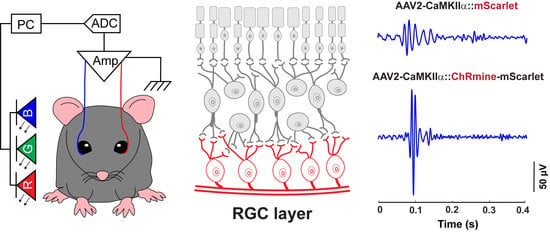
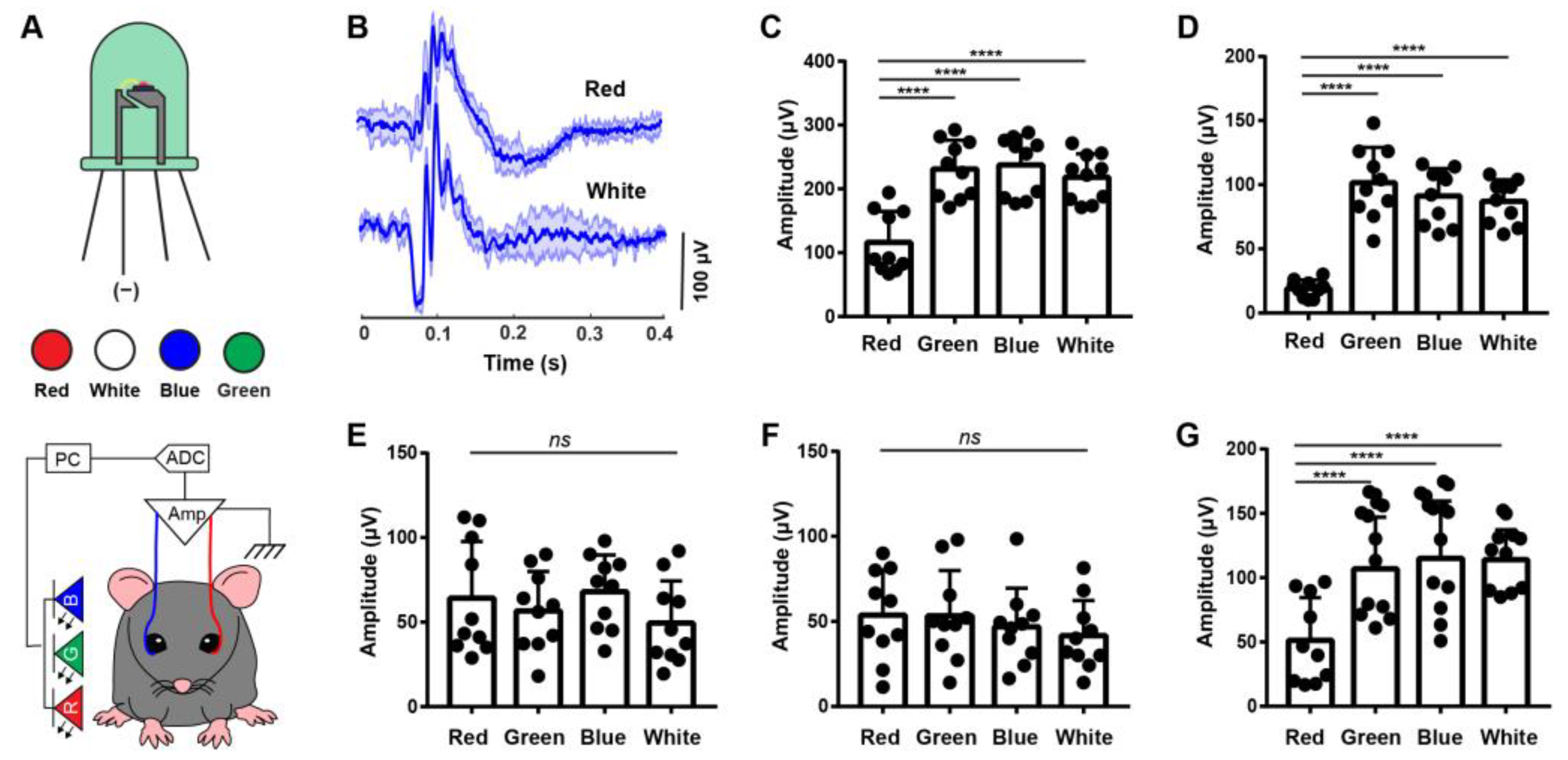
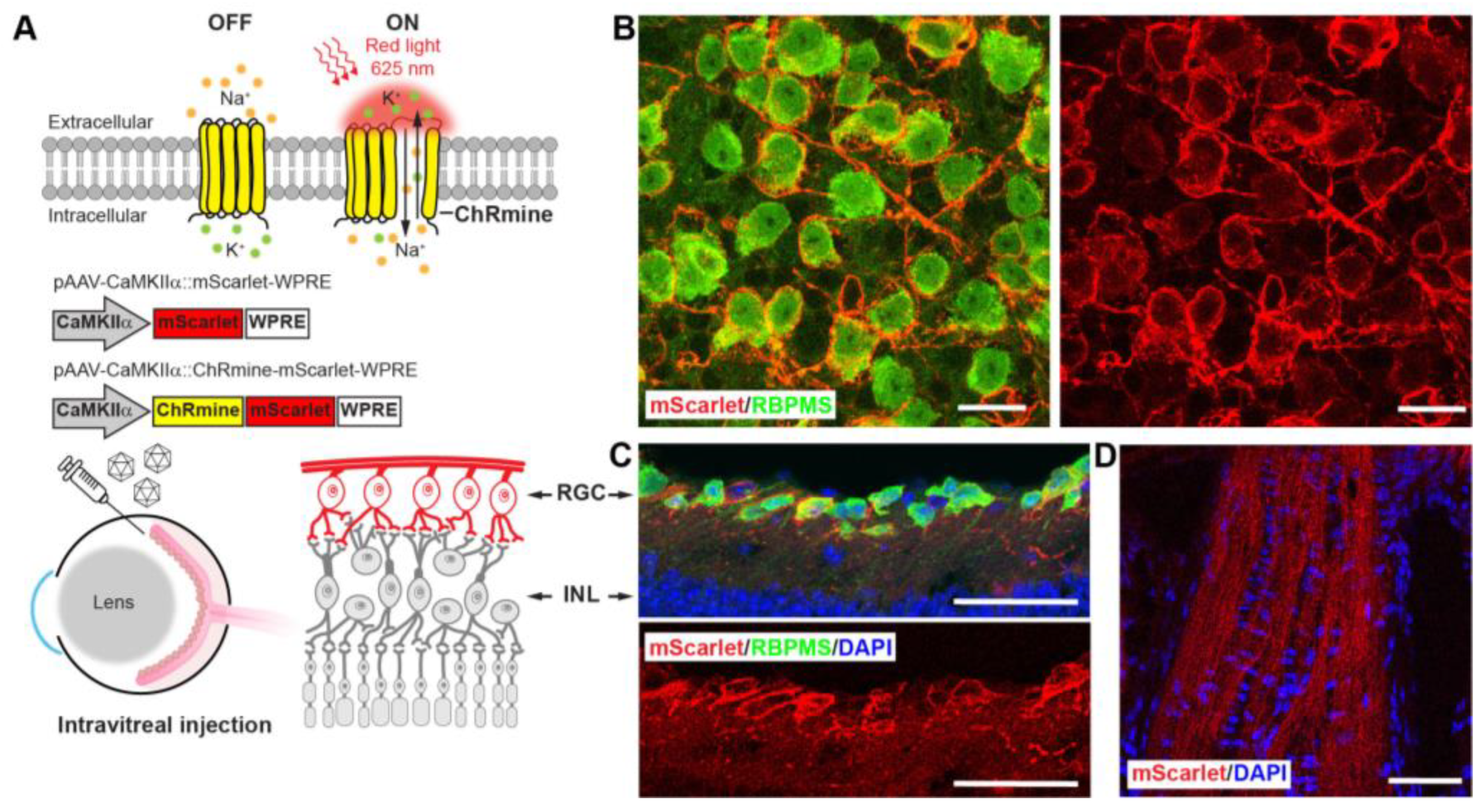
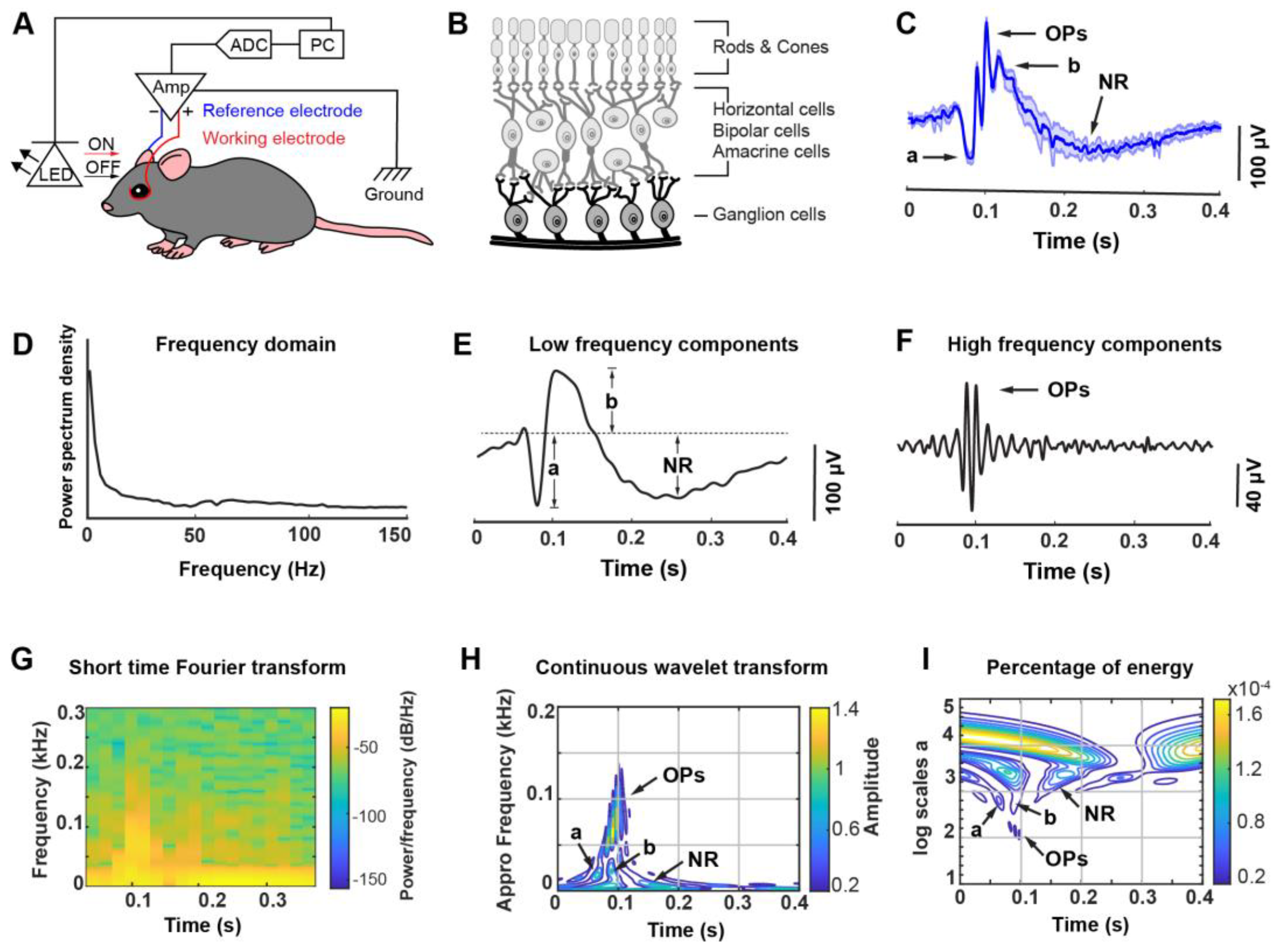
Electroretinography (ERG) is a non-invasive electrophysiological recording technique that detects the electrical signaling of neuronal cells in the visual system. In conventional ERG recordings, the signals are considered a collective electrical response from various neuronal cell populations, including rods, cones, bipolar cells, and retinal ganglion cells (RGCs). However, due to the limited ability to control electrophysiological responses from different types of cells, the detailed information underlying ERG signals has not been analyzed and interpreted. Linking the features of ERG signals to the specific neuronal response will advance the understanding of neuronal electrophysiological dynamics and provide more evidence to elucidate pathological mechanisms, such as RGC loss during the progression of glaucoma. Herein, we developed an advanced ERG recording system integrated with a programmable, non-invasive optogenetic stimulation method in mice. In this system, we applied an automatic and unbiased ERG data analysis approach to differentiate a, b wave, negative response, and oscillatory potentials. To differentiate the electrophysiological response of RGCs in ERG recordings, we sensitized mouse RGCs with red-light opsin, ChRmine, through adeno-associated virus (AAV) intravitreal injection. Features of RGC dynamics under red-light stimulation were identified in the ERG readout. This non-invasive ERG recording system, associated with the programmable optogenetics stimulation method, provides a new methodology to dissect neural dynamics under variable physiological and pathological conditions in vivo. With the merits of non-invasiveness, improved sensitivity, and specificity, we envision this system can be further applied for early-stage detection of RGC degeneration and functional progression in neural degenerative diseases, such as glaucoma.
Keywords: non-invasive recording; biosensors; neural electrophysiology; neurodegeneration; optogenetics; electroretinogram non-invasive recording; biosensors; neural electrophysiology; neurodegeneration; optogenetics; electroretinogram
Graphical Abstract