Nanomaterials Driving Technological Advancements in Enhanced Oil Recovery from Low-Permeability Tight Oil Reservoirs: Opportunities and Challenges

Abstract
1. Introduction
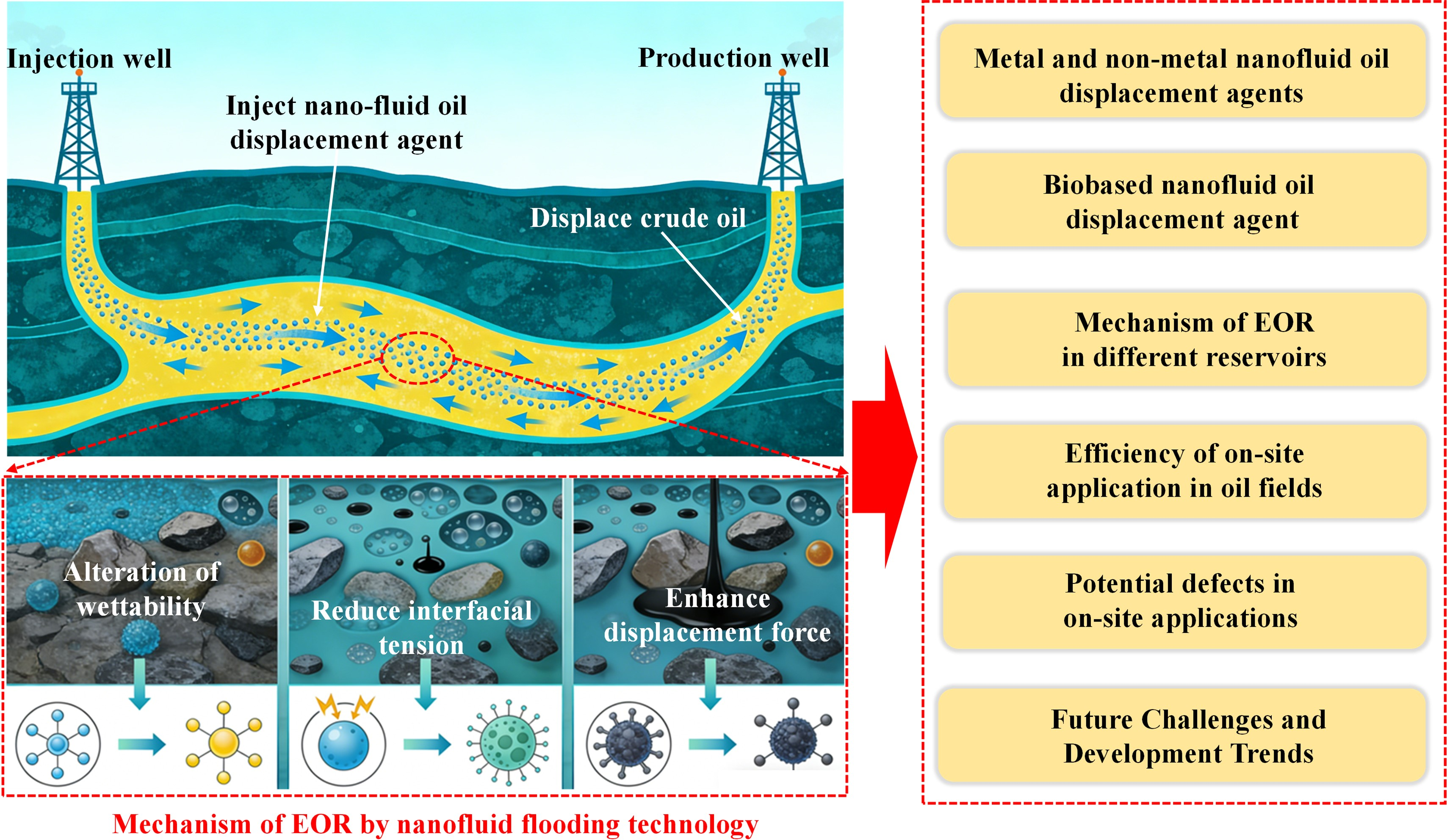
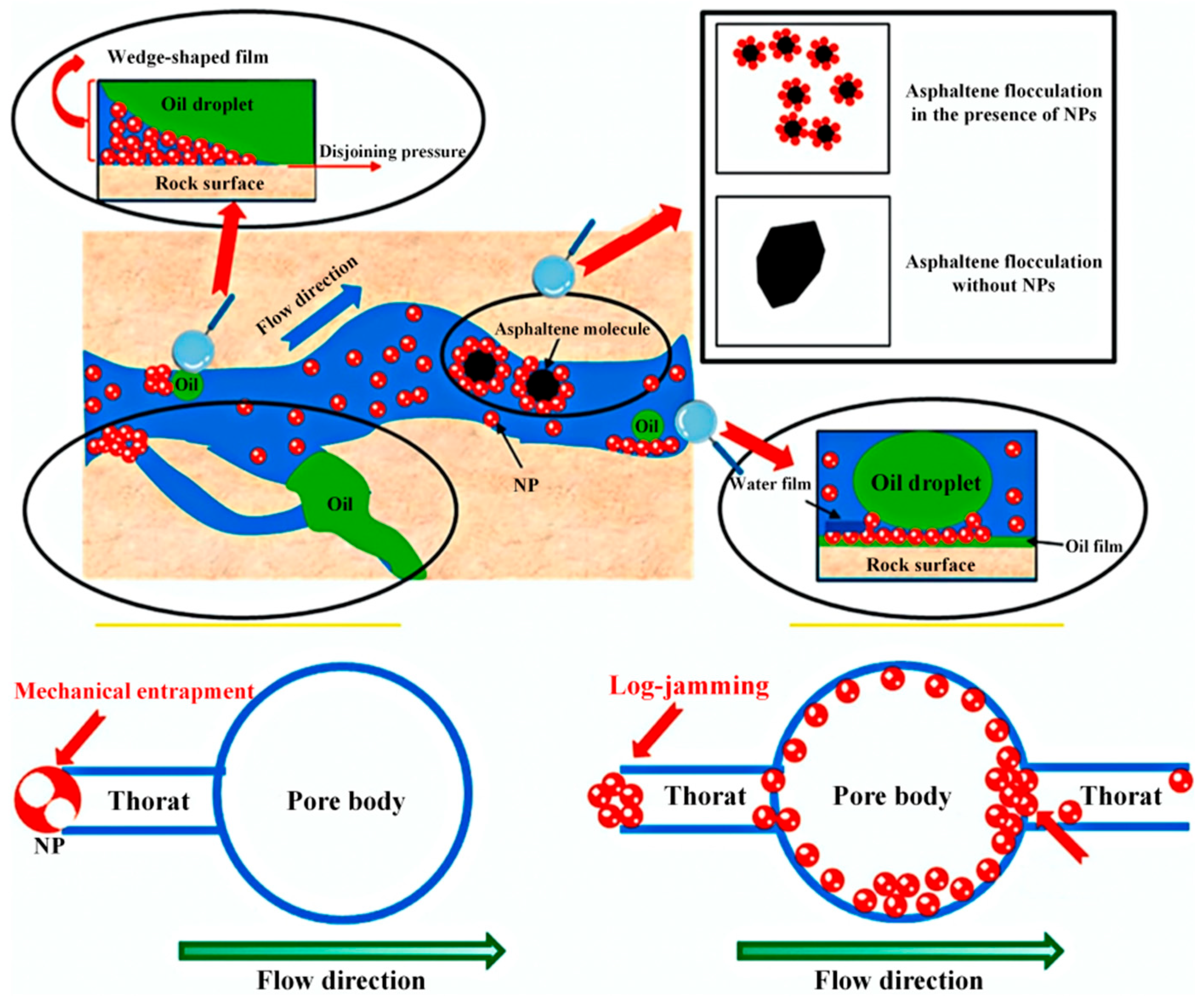
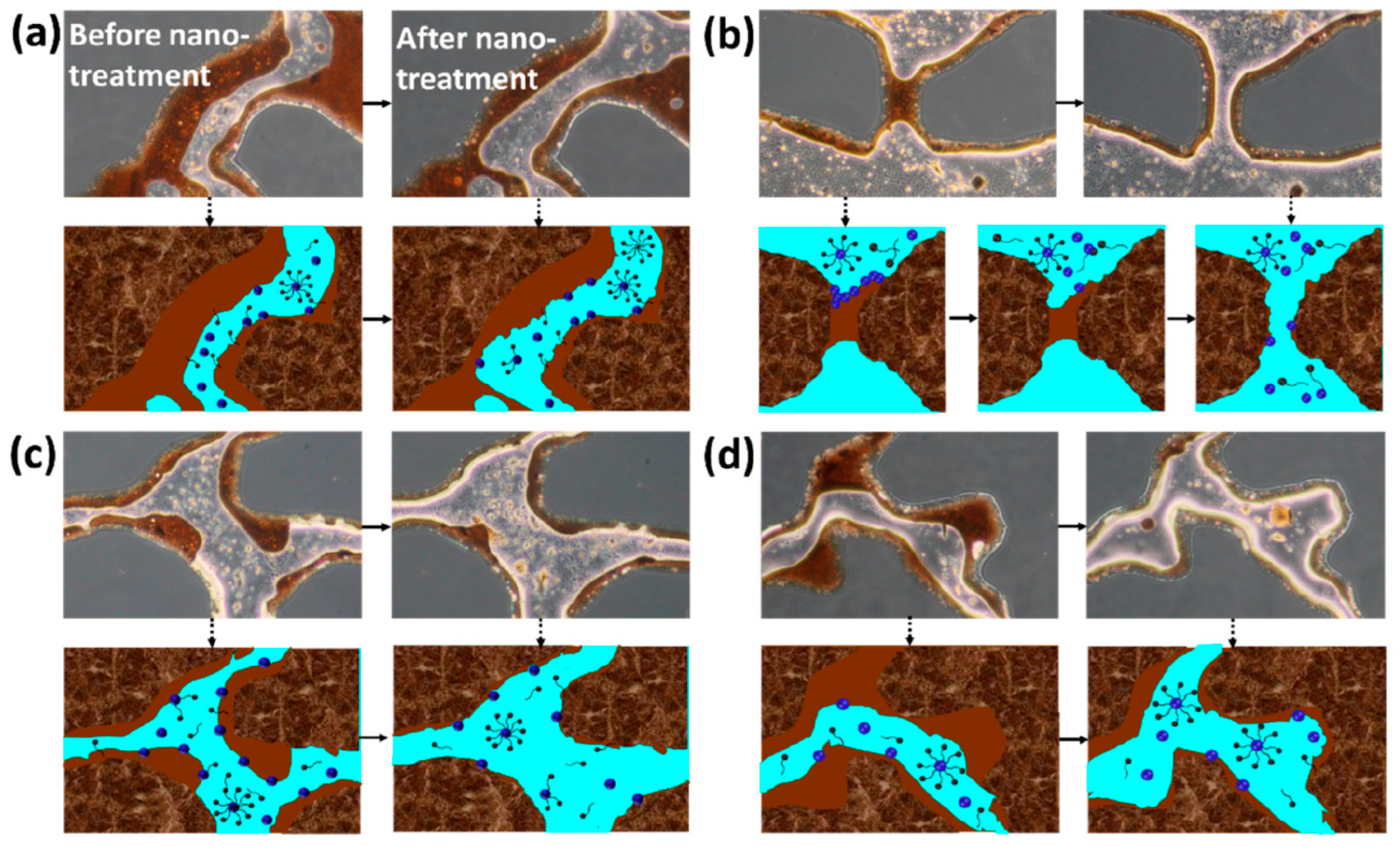
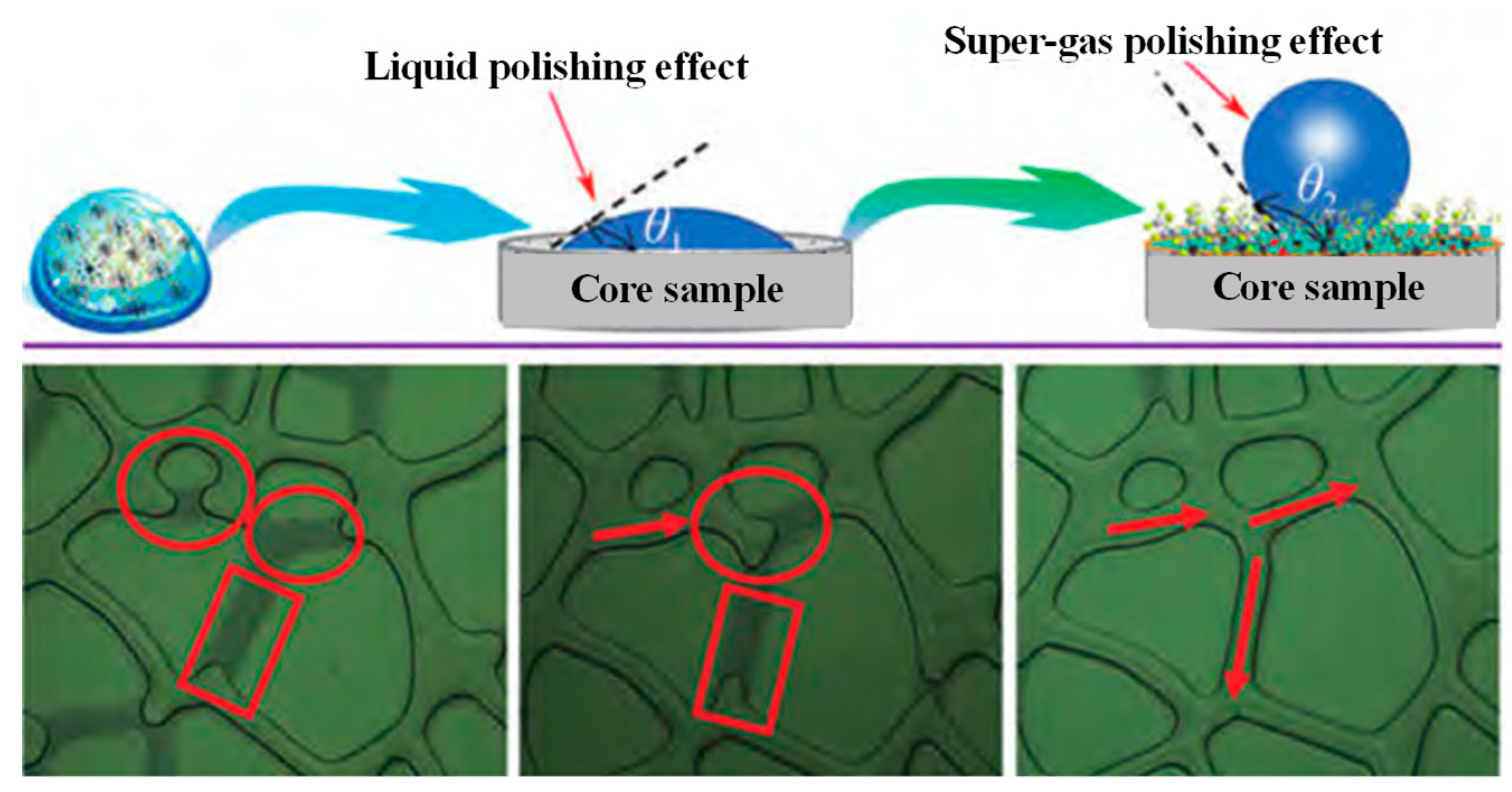
2. EOR Mechanism of Nanomaterials for Oil Displacement Technology
2.1. Nanoscale-Size Effect and Permeability Enhancement Ability
2.2. Wettability Reversal Capacity
2.3. Interface Regulation and Mobility Control Capability

| Mechanism Types | Mechanisms for EOR | Types of Nanoparticle Materials |
|---|---|---|
| Macroscopic oil displacement mechanism | Change reservoir wettability | SiO2, Al2O3, TiO2, Fe2O4, and carbon nanotubes |
| Reduce the interfacial tension between oil and water | SiO2, Al2O3, TiO2, and MgO | |
| Improve the ratio of oil to water flow | Fe2O4, carbon nanotubes, and graphene SiO2, Al2O3, CuO, TiO2, and ZnO | |
| Reduce asphaltene precipitation | Nanoparticle polymer microspheres, carbon nanofibers, carbon nanotubes, SiO2, TiO2, and Fe2O4 | |
| Microscopic oil film displacement mechanism | Separation pressure | SiO2 |
| Density difference | Modified SiO2 |
2.4. Structural Disjoining Pressure
3. Advancements in the Development of Nanomaterial-Based Oil Recovery Systems
3.1. Nano-SiO2-Based Oil Displacement Agent
3.2. Metal Oxide Nanoparticle-Based Oil Displacement Agent
3.2.1. Nano-TiO2-Based Oil Displacement Agent
3.2.2. Nano-Fe3O4-Based Oil Displacement Agent
3.2.3. Nano-Al2O3-Based Oil Displacement Agent
3.3. Functionalized Carbon Materials-Based Oil Displacement Agent
3.3.1. Nanofiber-Based Oil Displacement Agent
3.3.2. Carbon Nanotubes-Based Oil Displacement Agent
3.3.3. Graphene Oxide-Based Oil Displacement Agent
| Types | Nanomaterials | Average Particle Size (nm) | Morphology of Nanomaterials | Advantages of EOR |
|---|---|---|---|---|
| Nano-SiO2 | SiO2 | 10–15 | Sphere | Small particle size, large specific surface area, and high hydrophilicity |
| Metal oxide nanoparticles | Al2O3 | 40 | — | High surface activity, increasing the oil flow rate ratio, and reducing the viscosity of crude oil |
| TiO2 | 50–70 | Sphere | Surface area large and the wettability of the surface changes from oil-wet to water-wet | |
| Fe3O4/Fe2O3 | 20–40 | Approximately spherical | Superparamagnetic, small particle size and easily separable | |
| Nanoparticle polymer microspheres | Separation pressure | 40–500 | Sphere | Strong viscoelasticity, good thermal stability, excellent salt resistance, and good swelling performance |
| Carbon nanomaterials | Carbon nanofibers | — | Rod-shaped fibers | High shear resistance |
| Carbon nanotubes | — | Tubular fibers | Strong corrosion resistance and suitable for high-temperature and high-pressure oil reservoirs | |
| Graphene oxide | — | Sheet-like fibers | Reduces the interfacial tension between oil and water and alters the wettability of the reservoir |
3.4. Bio-Based Nano Oil Displacement Agent
3.5. Reservoir Microbial In Situ Self-Assembled Silica Nanoparticles for Nanofluid Flooding Technology
- (i)
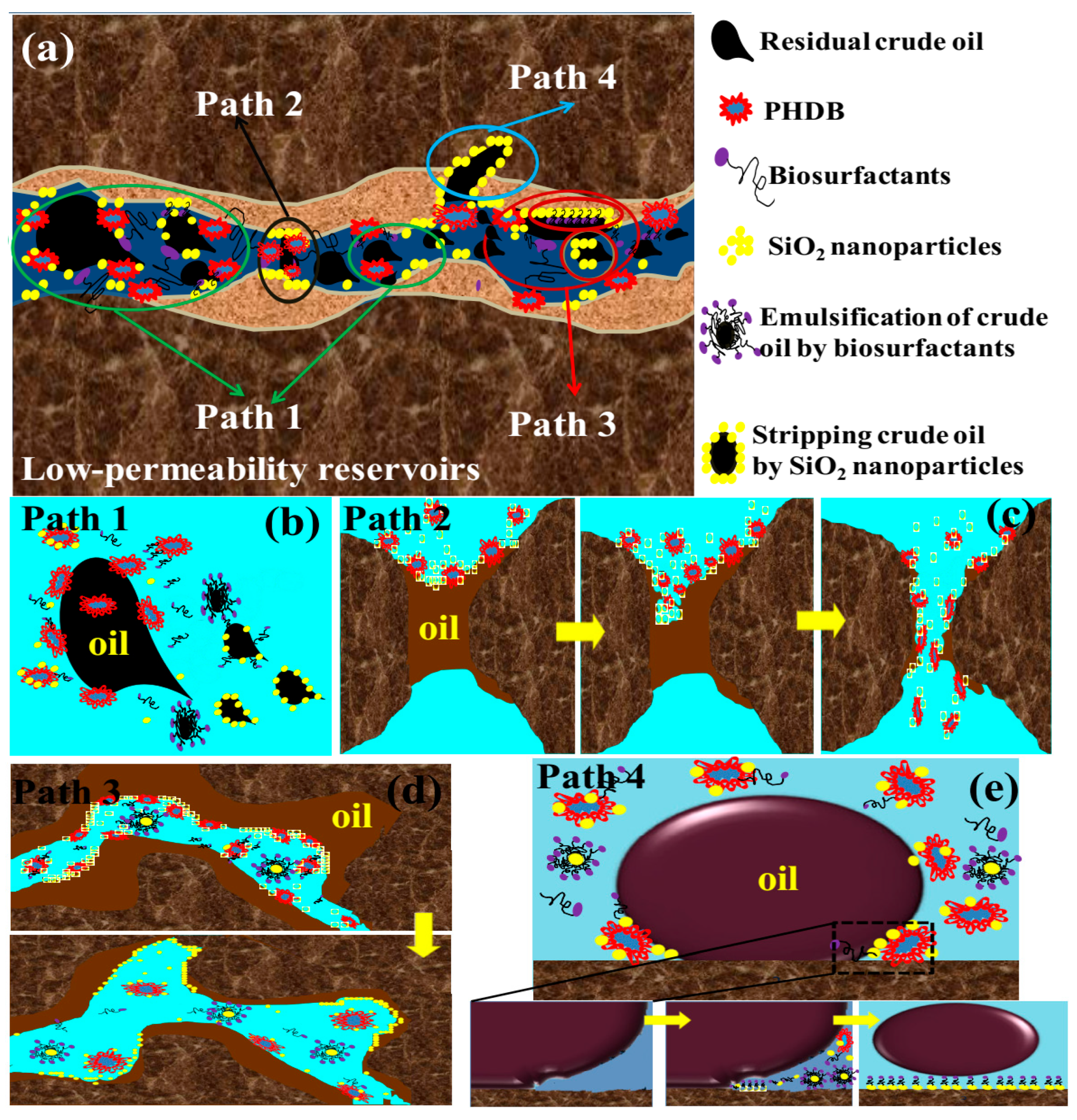
- Self-assembly principle of silica nanoparticles formed by reservoir microorganisms for nanofluid formation. The in situ self-assembly of silica nanoparticles by reservoir microorganisms is a complex biological-geochemical process, which is closely related to the metabolic activities of microorganisms, the composition of reservoir fluids, and the physical and chemical properties of reservoir rocks. The core principle is that indigenous microorganisms in the reservoir (mainly including Bacillus cereus, Shewanella putrefaciens, and anaerobic methanotrophic consortia) can secrete specific biomacromolecules (such as extracellular polysaccharides, proteins, and lipids) through their own metabolic activities under suitable reservoir conditions (temperature 40–80 °C, pressure 10–50 MPa, salinity 1000–20,000 ppm), which act as templates and stabilizers to induce the in situ precipitation and self-assembly of dissolved silica in reservoir formation water into stable silica nanoparticles and further form a uniform and stable nanofluid system with reservoir fluids.
- (ii)
- Synergistic oil displacement mechanism of nanofluids formed by reservoir microorganisms and silica nanoparticles. The nanofluid formed by the in situ self-assembly of reservoir microorganisms and silica nanoparticles exerts a synergistic EOR effect through the combined action of microorganisms, silica nanoparticles, and their metabolic products, which is significantly different from the single EOR mechanism of traditional MEOR or nanofluid flooding. The synergistic EOR mechanism mainly includes four aspects: wettability reversal, interface tension reduction, structural disjoining pressure enhancement, and pore throat plugging and profile control, which complement each other and jointly improve the oil recovery efficiency of low-permeability and tight oil reservoirs.
- (iii)
- Application prospects and deficiencies of the technology. The technology of forming nanofluids through in situ self-assembly of silica nanoparticles by reservoir microorganisms is a novel EOR technology that combines the advantages of MEOR and nanofluid flooding. Its unique self-assembly principle realizes the in situ synthesis and stable dispersion of silica nanoparticles, avoiding the defects of traditional artificially synthesized nanoparticles. The synergistic EOR mechanism of microorganisms and silica nanoparticles (wettability reversal, interface tension reduction, structural disjoining pressure enhancement, and pore throat plugging and profile control) can effectively improve the oil recovery efficiency of low-permeability and tight oil reservoirs. The technology has broad application prospects in terms of adaptability, environmental friendliness, and economic feasibility and has important theoretical and practical significance for the efficient development of low-permeability and tight oil resources. However, the technology still has many deficiencies, such as an unclear self-assembly mechanism under complex reservoir conditions, poor controllability of nanofluid properties, insufficient long-term stability research, and unclear environmental impact. In the future, it is necessary to strengthen the research on the self-assembly mechanism of silica nanoparticles by reservoir microorganisms under complex reservoir conditions, develop effective methods to regulate the properties of nanofluids, carry out long-term field tests to evaluate the long-term stability and effectiveness of the technology, and systematically evaluate the environmental impact of the technology, so as to promote the industrial application of the technology and provide new technical support for the efficient and green development of global oil resources.
3.6. Application of Different Reservoir Characteristics
4. Efficiency of On-Site Application in Oilfields
4.1. Typical Application Case of Oilfields in China
4.2. Application Case of Oilfields Abroad
4.3. Potential Defects in On-Site Applications
5. Future Challenges and Development Trends in Nanotechnology-EOR
5.1. Reservoir Compatibility in Complex Oilfield Systems
5.2. Environmental Safety
5.3. Cost Optimization
5.4. Significance of This Study
5.5. Prospects
- (i)
- The stability and underlying mechanisms of nanomaterials remain insufficiently understood. Most current studies are conducted under controlled laboratory conditions, whereas actual reservoir environments are far more complex. There remains a critical knowledge gap regarding the migration, distribution, and interfacial behavior of nanomaterials in porous media. Moreover, existing research tends to emphasize single mechanistic effects, with limited systematic investigation into the synergistic interactions among multiple mechanisms. Future efforts should integrate advanced analytical techniques, such as interfacial tension measurements, zeta potential analysis, and in situ microscopic imaging, to systematically characterize the impact of various nanomaterials on oil–water interfacial properties. Coupled with molecular dynamics simulations, these approaches can enable the rational design and microscale analysis of structure–property relationships, thereby deepening the understanding of nanomaterial action mechanisms and facilitating predictive modeling of their subsurface behavior [25].
- (ii)
- Nanomaterials must withstand harsh reservoir conditions. Low-permeability and tight reservoirs often feature extreme environments characterized by elevated temperatures, high salinity, wide pH fluctuations, and strong shear forces. These conditions demand that nanomaterials maintain excellent dispersibility and functional integrity under dynamic operational stresses, avoiding aggregation or deactivation. To enhance environmental adaptability, surface functionalization strategies can be employed, such as introducing steric hindrance groups or ion stabilizers, to improve salt tolerance, thermal stability, and shear resistance. Furthermore, compatibility assessments between nanomaterials and conventional chemical agents (e.g., polymers, surfactants) should be conducted to develop composite systems capable of ensuring long-term stability and sustained performance in reservoir settings.
- (iii)
- High production costs hinder the large-scale deployment of nanomaterials. Current synthesis and modification processes are often intricate and rely on expensive raw materials, limiting industrial scalability. It is therefore imperative to advance key preparation technologies, enhance production efficiency, and ensure consistent product quality to promote the engineering-scale application of low-cost, high-performance nano-EOR agents. Concurrently, alternative strategies based on economic viability and sustainability should be explored, including the evaluation of naturally occurring minerals (e.g., bentonite, kaolin) or industrial by-products (e.g., fly ash, steel slag micropowder) as sources of functional nanocomponents for EOR applications. Such approaches not only reduce material costs but also support resource recycling and circular economy principles, achieving dual objectives of cost reduction and environmental sustainability [58].
6. Conclusions
Author Contributions
Funding
Data Availability Statement
Acknowledgments
Conflicts of Interest
References
- Cui, K.; Zhang, Z.; Zhang, Z.; Sun, S.S.; Li, H.L.; Fu, P.C. Stimulation of indigenous microbes by optimizing the water cut in low permeability reservoirs for green and enhanced oil recovery. Sci. Rep. 2019, 9, 15772–15784. [Google Scholar] [CrossRef] [Scilit]
- Kang, W.; Zhou, B.; Issakhov, M.; Gabdullin, M. Advances in enhanced oil recovery technologies for low permeability reservoirs. Pet. Sci. 2022, 4, 1622–1640. [Google Scholar] [CrossRef] [Scilit]
- Li, N.Y.; Zhu, S.J.; Li, Y.; Zhao, J.R.; Long, B.; Chen, F.; Wang, E.Z.; Feng, W.T.; Hu, Y.N.; Wang, S.B.; et al. Fracturing-flooding technology for low permeability reservoirs: A review. Petroleum 2024, 2, 202–215. [Google Scholar] [CrossRef] [Scilit]
- Zheng, H.X.; Shi, Y.M.; Tian, Y.; Yan, X.L.; Yang, L.; Chen, J.Y.; Tian, X.; Bi, W.Y. Application of multiscale technology to oil and gas field development: A review of the state of the art in chemical modification of rock wettability. J. Pet. Sci. Eng. 2026, 257, 214239. [Google Scholar] [CrossRef] [Scilit]
- Cuo, J.C.; Ma, L.; Lu, C. Progress and development directions of fracturing flooding technology for tight reservoirs in China. Acta Pet. Sin. 2022, 43, 1788–1797. [Google Scholar]
- Hu, W.R.; Wei, Y.; Bao, J.W. Development of theories and technologies for low-permeability oil and gas reservoir development in China. Pet. Explor. Dev. 2018, 45, 646–656. [Google Scholar] [CrossRef] [Scilit]
- Sikiru, S.; Yusuf, J.Y.; Soleimani, H.; Kumar, N.; Rehman, Z.; Bonnia, N. Enhanced oil recovery in sandstone reservoirs: A review of mechanistic advances and hydrocarbon predictive techniques. Energy Eng. 2025, 122, 3917–3960. [Google Scholar]
- Saravanan, A.; Kumar, P.S.; Vardhan, K.H.; Jeevanantham, S.; Karishma, S.B.; Yaashikaa, P.R.; Vellaichamy, P. A review on a systematic approach for microbial enhanced oil recovery technologies: Opportunities and challenges. J. Clean. Prod. 2020, 258, 120777. [Google Scholar] [CrossRef] [Scilit]
- Jiang, D.L.; Chen, H.; Xing, J.P.; Shang, L.; Wang, Q.H.; Sun, Y.C.; Zhao, Y.; Cui, J.; Duncan, I. A novel method of quantitative evaluation and comprehensive classification of low permeability-tight oil reservoirs: A case study of Jidong Oilfield, China. Pet. Sci. 2022, 19, 1527–1541. [Google Scholar] [CrossRef] [Scilit]
- Yuan, B.; Zhao, M.; Meng, S.; Zhang, W.; Zheng, H. Intelligent identification and real-time warning method of diverse complex events in horizontal well fracturing. Pet. Explor. Dev. 2023, 50, 1487–1496. [Google Scholar] [CrossRef] [Scilit]
- Yuan, S.Y.; Han, H.S.; Wang, H.Z.; Luo, J.H.; Wang, Q.; Lei, Z.D.; Xi, C.F.; Li, J.S. Research progress and potential of new enhanced oil recovery methods in oilfield development. Pet. Explor. Dev. 2024, 51, 963–980. [Google Scholar] [CrossRef] [Scilit]
- Badlyuk, A.A.; Martyushev, D.A.; Davoodi, S.; Novikov, V.A.; Iqbal, S.M.; Zhang, T.; Kazemzadeh, Y. Impact of hysteresis of relative phase permeabilities in 3D modeling of cyclic waterflooding in a carbonate reservoir. Energy Geosci. 2025, 1, 100478. [Google Scholar] [CrossRef] [Scilit]
- Sun, H.Q.; Cai, X.Y.; Hu, D.G.; Lu, Z.Y.; Zhao, P.R.; Zheng, A.W.; Li, J.Q.; Wang, H.T. Theory, technology and practice of shale gas three-dimensional development: A case study of fuling shale gas field in Sichuan Basin, SW China. Pet. Explor. Dev. 2023, 50, 651–664. [Google Scholar] [CrossRef] [Scilit]
- Li, Y.B.; Wang, Z.Q.; Hu, Z.M.; Xu, B.Q.; Li, Y.L.; Pu, W.F.; Zhao, J.Z. A review of in situ upgrading technology for heavy crude oil. Petroleum 2021, 7, 117–122. [Google Scholar] [CrossRef] [Scilit]
- Liu, J.; Pan, R.S.; Zhang, P.; Ricky, Z.X.; Xu, X.G. Nanotechnology-engineered fluids for CO2-enhanced oil recovery (EOR): Mechanisms, advances, and challenges. Sep. Purif. Technol. 2026, 394, 137447. [Google Scholar] [CrossRef] [Scilit]
- Ahmadi, Y.; Mohammadi, M.; Sedighi, M. Introduction to chemical enhanced oil recovery. In Chemical Methods; Elsevier: Amsterdam, The Netherlands, 2022; Volume 2, pp. 1–32. [Google Scholar]
- Ragab, A.; Mansour, E.M. Enhanced oil recovery: Chemical flooding. Geophys. Ocean Waves Stud. 2021, 51, 51–53. [Google Scholar]
- Massarweh, O.; Abushaikha, A.S. A review of recent developments in CO2 mobility control in enhanced oil recovery. Petroleum 2022, 8, 291–317. [Google Scholar] [CrossRef] [Scilit]
- Kumar, N.; Sampaio, M.A.; Ojha, K.; Hoteit, H.; Mandal, A. Fundamental aspects, mechanisms and emerging possibilities of CO2 miscible flooding in enhanced oil recovery: A review. Fuel 2022, 330, 125633. [Google Scholar] [CrossRef] [Scilit]
- Cui, K.; Li, H.L.; Cheng, P.; Jiang, W.X.; Guo, K. New technique for enhancing residual oil recovery from low permeability reservoirs: The cooperation of petroleum hydrocarbon-degrading bacteria and SiO2 nanoparticles. Microorganisms 2022, 10, 2014. [Google Scholar] [CrossRef] [Scilit]
- He, Y.H.; Xue, T.; Li, Z.; Bai, X.H.; Fan, J.M.; Zhang, X.Z. Development technologies for Triassic Chang 7 shale oil in Ordos Basin: A case study of Qingcheng Oilfield, NW China. Pet. Explor. Dev. 2023, 50, 1426–1444. [Google Scholar] [CrossRef] [Scilit]
- Wu, H.R.; Luo, Y.L.; Li, G.L.; Yuan, Y.J.; Chang, J.W.; Kang, N.; Hou, J.R. Enhanced oil recovery using amphiphilic nanomaterials with tailored functionalities: A review. J. Mol. Liq. 2025, 425, 127190. [Google Scholar] [CrossRef] [Scilit]
- Zhang, Z.H.; Peng, B.; Cheng, K.; Zhang, Y.P.; Liu, J.D.; Yang, X.C.; Zhang, H.F. Modified SiO2 nanoparticles for enhanced oil recovery: A comprehensive review and perspectives. Geoenergy Sci. Eng. 2025, 253, 213973. [Google Scholar] [CrossRef] [Scilit]
- Zhao, M.W.; Liu, K.W.; Meng, X.J.; Ma, Z.F.; Dai, C.L. Review on principles, influence and applications of nanomaterials in enhancing oil recovery. Fuel 2024, 371, 131985. [Google Scholar] [CrossRef] [Scilit]
- Li, G. Progress of Main Technologies for enhanced oil recovery in tertiary oil recovery of domestic oilfields. Oilfield Chem. 2023, 40, 168–174. [Google Scholar]
- Song, H. Application analysis and research of different materials in imbibition oil displacement. Petrochem. Technol. 2025, 32, 13–15. [Google Scholar]
- Davoodi, S.; Al-Shargabi, M.; Wood, D.A.; Rukavishnikov, V.S.; Minaev, K.M. Experimental and field applications of nanotechnology for enhanced oil recovery purposes: A review. Fuel 2022, 324, 124669. [Google Scholar] [CrossRef] [Scilit]
- Sircar, A.; Rayavarapu, K.; Bist, N.; Yadav, K.; Singh, S. Applications of nanoparticles in enhanced oil recovery. Pet. Res. 2022, 7, 77–90. [Google Scholar] [CrossRef] [Scilit]
- Chakraborty, S.; Panigrahi, P.K. Stability of nanofluid: A review. Appl. Therm. Eng. 2020, 174, 115259. [Google Scholar] [CrossRef] [Scilit]
- Najeebullah, L.; Tarek, G.; Abdalla, E.K.; Abdalla, A.M.; Shams, K.; Ali, C.T.; Saima, Q.; Tushar, S. Impact of nanoparticles stability on rheology, interfacial tension, and wettability in chemical enhanced oil recovery: A critical parametric review. J. Pet. Sci. Eng. 2022, 212, 110199. [Google Scholar] [CrossRef] [Scilit]
- Hou, J.; Du, J.; Sui, H.; Sun, L. A review on the application of nanofluids in enhanced oil recovery. Front. Chem. Sci. Eng. 2022, 16, 1165–1197. [Google Scholar] [CrossRef] [Scilit]
- Tong, Q.L.; Fan, Z.Z.; Liu, Q.W.; Qiao, S.Y.; Cai, L.; Fu, Y.F.; Zhang, X.S.; Sun, A. Research progress in nanofluid-enhanced oil recovery technology and mechanism. Molecules 2023, 28, 7478. [Google Scholar] [CrossRef] [Scilit]
- Alnarabiji, M.S.; Husein, M.M. Application of bare nanoparticle-based nanofluids in enhanced oil recovery. Fuel 2020, 267, 117262. [Google Scholar] [CrossRef] [Scilit]
- Yakasai, F.; Jaafar, M.Z.; Bandyopadhyay, S.; Agi, A. Current developments and future outlook in nanofluid flooding: A comprehensive review of various parameters influencing oil recovery mechanisms. J. Ind. Eng. Chem. 2021, 93, 138–162. [Google Scholar] [CrossRef] [Scilit]
- Zhang, B.; Rane, K.; Piri, M.; Goual, L. Impact of surface roughness, surface charge, and temperature on sandstone wettability alteration by nanoparticles. Pet. Sci. 2023, 20, 2852–2863. [Google Scholar] [CrossRef] [Scilit]
- Augustine, A.; Zaidi, J.M.; Abdul, M.Z.; Aishah, S.A.N.; Akhmal, S.M.; Faruk, Y.; Abbas, A.Z.M.; Nurfaiz, M.F.A.; Afeez, G.; Lawal, S.; et al. Dynamic modelling of reservoir fines retention by mesoporous silica nanofluid to improve oil recovery during low salinity water flooding of a consolidated sandstone. J. Pet. Sci. Eng. 2023, 231, 212328. [Google Scholar]
- Khoramian, R.; Kharrat, R.; Golshokooh, S. The development of novel nanofluid for enhanced oil recovery application. Fuel 2022, 311, 122558. [Google Scholar] [CrossRef] [Scilit]
- Nwidee, L.N.; Barifcani, A.; Sarmadivaleh, M.; Iglauer, S. Nanofluids as novel alternative smart fluids for reservoir wettability alteration. Nov. Nanomater. Synth. Appl. 2018, 56, 327–357. [Google Scholar]
- Hendraningrat, L.; Li, S.; Torsæter, O. Effect of some parameters influencing enhanced oil recovery process using silica nanoparticles: An experimental investigation. In Proceedings of the SPE Reservoir Characterisation and Simulation Conference and Exhibition, Abu Dhabi, United Arab Emirates, 16–18 September 2013; p. SPE-165955-MS. [Google Scholar]
- Nowrouzi, I.; Manshad, A.K.; Mohammadi, A.H. Effects of TiO2, MgO and γ-Al2O3 nano-particles on wettability alteration and oil production under carbonated nano-fluid imbibition in carbonate oil reservoirs. Fuel 2020, 259, 116110. [Google Scholar] [CrossRef] [Scilit]
- Shi, Y.; Wang, X.; Mohanty, K. Effect of a nanoparticle on wettability alteration and wettability retainment of carbonate reservoirs. J. Pet. Sci. Eng. 2022, 215, 110684. [Google Scholar] [CrossRef] [Scilit]
- Seetharaman, G.R.; Devakumar, N.P.; Sangwai, J.S. Silica nanofluids in low salinity water for wettability alteration of the mineral surface and the effect of surface roughness. Energy Fuels 2024, 38, 2830–2843. [Google Scholar] [CrossRef] [Scilit]
- Pang, S.; Zhao, L.; An, Y. Advanced developments in nanotechnology and nanomaterials for the oil and gas industry: A review. J. Pet. Sci. Eng. 2024, 238, 212872. [Google Scholar] [CrossRef] [Scilit]
- Xiong, Z.Z.; Liu, F.H.; He, J.Y.; Xie, T.; Jiang, G.j. Research progress of two-dimensional nanofluids for enhancing oil recovery. J. Ind. Eng. Chem. 2025, 144, 142–157. [Google Scholar] [CrossRef] [Scilit]
- Jafarbeigi, E.; Martyushev, D.A. Performance evaluation of a novel multifunctional synthetic smart nanofluid for oil recovery and asphaltene stability. J. Mol. Liq. 2025, 438, 128707. [Google Scholar] [CrossRef] [Scilit]
- Fang, P.W.; Liu, Z.K.; Yang, Z.M.; Zhang, Q.; Yu, H.W.; Mao, S.; Cao, M.W. Preparation and performance evaluation of amphiphilic Janus SiO2 nanofluids for enhanced oil recovery in low-permeability reservoirs. Results Eng. 2025, 28, 107436. [Google Scholar] [CrossRef] [Scilit]
- Salem, K.G.; Tantawy, M.A.; Gawish, A.A.; Salem, A.M.; Gomaa, S.; El-hoshoudy, A.N. Key aspects of polymeric nanofluids as a new enhanced oil recovery approach: A comprehensive review. Fuel 2024, 368, 131515. [Google Scholar] [CrossRef] [Scilit]
- Zhang, Y.W.; Xue, L.L.; Yang, H.N.; Wang, H.P.; Yang, C.H. Research progress of nanomaterials in enhancing oil recovery. Fine Petrochem. Ind. Prog. 2025, 26, 17–23. [Google Scholar]
- Zhu, D.Y.; Guo, S.; Lu, J.M.; Yang, Y.L.; Zhang, T.; Zhang, L.; Gao, Y.Q.; Tan, H.G.; Cheng, H.B.; Li, H.Y. Influence of injection parameters of black nanosheets on enhancing oil recovery performance in low-permeability reservoirs. Energy Fuels 2025, 39, 6241–6250. [Google Scholar] [CrossRef] [Scilit]
- Wang, D.; Luo, Y.J.; Lai, R.Q.; Cui, K.; Li, H.L.; Zhang, Z.Z.; Zhang, Y.; Shi, R.J. New technique for enhancing oil recovery from low-permeability reservoirs: The synergy of silica nanoparticles and biosurfactant. Energy Fuels 2021, 35, 318–328. [Google Scholar] [CrossRef] [Scilit]
- Tang, W.Y.; Zou, C.J.; Liang, H.; Da, C.; Zhang, Z.G. The comparison of interface properties on crude oil-water and rheological behavior of four polymeric nanofluids (nano-SiO2, nano-CaO, GO and CNT) in carbonates for enhanced oil recovery. J. Pet. Sci. Eng. 2022, 214, 110458. [Google Scholar] [CrossRef] [Scilit]
- Wang, D.; Sun, S.; Sha, T.; Liu, T.J.; Dong, H.H.; Cui, K.; Li, H.L.; Gong, Y.J.; Hou, J.R.; Zhang, Z.Z.; et al. Synergistic Effect of Silica Nanoparticles and Rhamnolipid on Wettability Alteration of Low Permeability Sandstone Rocks. Energy Fuels 2018, 32, 8098–8107. [Google Scholar] [CrossRef] [Scilit]
- Mohammed, H.N.; Yuan, Q.; Nowakowski, D.J. Characterisation and application of charcoal-based nanofluids in enhanced oil recovery (EOR). J. Mol. Liq. 2025, 438, 128690. [Google Scholar] [CrossRef] [Scilit]
- Saha, R.; Phukan, R. Enhanced oil recovery using chemical and nanoparticles for heavy oil sandstone reservoirs: Chemical vs nanofluid flooding. J. Mol. Liq. 2025, 431, 127707. [Google Scholar] [CrossRef] [Scilit]
- Gazem, A.; Patel, H.; Sreenivasan, H.; Sahu, C.; Krishna, S. Combined effect of silica nanoparticles and binary surfactants in enhancing oil recovery: An experimental investigation. Colloids Surf. A 2024, 702, 134980. [Google Scholar] [CrossRef] [Scilit]
- Chandio, T.A.; Manan, M.A.; Memon, K.R.; Abbas, G.; Abbasi, G.R. Enhanced oil recovery by hydrophilic silica nanofluid: Experimental evaluation of the impact of parameters and mechanisms on recovery potential. Energies 2021, 14, 5767. [Google Scholar] [CrossRef] [Scilit]
- Wang, D.; Sun, S.; Cui, K.; Li, H.L.; Gong, Y.J.; Hou, J.R.; Zhang, Z.Z. Wettability alteration in low-permeability sandstone reservoirs by “SiO2-Rhamnolipid” nanofluid. Energy Fuels 2019, 33, 12170–12181. [Google Scholar] [CrossRef] [Scilit]
- Sun, H. Development and thinking of chemical flooding technology for enhanced oil recovery in high-temperature and high-salinity reservoirs. Pet. Sci. Technol. 2021, 40, 1–7. [Google Scholar]
- Li, J.X.; Yu, M.; Qin, S.T.; Zhang, X.J.; Wei, Q.Q.; Chen, M.; Yang, K.R. Nanomaterials in petroleum engineering: Progress, current applications and emerging challenges. Alex. Eng. J. 2025, 124, 214–230. [Google Scholar] [CrossRef] [Scilit]
- Guo, B.M.; Zhao, J.; Shen, J.W.; Xu, T.P.; Bao, W.H.; Pan, J.H. Research progress and development trend of nanometer oil displacement agents for enhanced oil recovery in oilfields. Shandong Chem. Ind. 2025, 54, 82–84. [Google Scholar]
- Jia, H.; Wei, X.; Wang, Q.X.; Wang, Y.B.; Wen, S.J.; Fan, S.N.; Wang, Q.; Wang, Z.; Liu, D.X.; Huang, P. Effect of modification degrees on the interfacial properties and EOR efficiency of amphiphilic Janus graphene oxide. Pet. Sci. 2023, 20, 1217–1224. [Google Scholar] [CrossRef] [Scilit]
- Luo, D.; Wang, F.; Zhu, J.Y.; Cao, F.; Liu, Y.; Liu, X.G.; Willson, R.C.; Yang, Z.Z.; Chu, C.W.; Ren, Z.F. Nanofluid of graphene based amphiphilic Janus nanosheets for tertiary or enhanced oil recovery: High performance at low concentration. Proc. Natl. Acad. Sci. USA 2016, 113, 7711–7716. [Google Scholar] [CrossRef] [Scilit]
- Shirazi, M.; Kord, S.; Tamsilian, Y. Novel smart water-based titania nanofluid for enhanced oil recovery. J. Mol. Liq. 2019, 296, 112064. [Google Scholar] [CrossRef] [Scilit]
- Li, J.H.; Fan, H.M.; Wei, Z.Y.; Cheng, S.Y. Research progress and prospect of nanomaterials in low-permeability oil reservoirs. Chem. Ind. Eng. Prog. 2025, 44, 1485–1495. [Google Scholar]
- Ngouangna, E.N.; Jaafar, M.Z.; Norddin, M.; Agi, A.; Yakasai, F.; Oseh, J.O.; Mamah, S.C.; Yahya, M.N.; AlAni, M. Effect of salinity on hydroxyapatite nanoparticles flooding in enhanced oil recovery: A mechanistic study. ACS Omega 2023, 8, 17819–17833. [Google Scholar] [CrossRef] [Scilit]
- Jafarbeigi, E.; Kamari, E.; Hosseini, S.H.; Olazar, M. Enhanced residual oil mobilization in carbonate reservoirs using novel superhydrophilic SiO2-TiO2 nanoparticles with Tween 80 and Carbomer 940, A synergistic approach. Fuel Process. Technol. 2025, 277, 108309. [Google Scholar] [CrossRef] [Scilit]
- Tangparitkul, S.; Akamine, T.; Harbottle, D.; Srisuriyachai, F.; Yu, K. Discrepancy in oil displacement mechanisms at equivalent interfacial tensions: Differentiating contributions from surfactant and nanoparticles on interfacial activities. J. Mol. Liq. 2024, 414, 126304. [Google Scholar] [CrossRef] [Scilit]
- Bai, Y.; Chen, Y.J.; Wu, L.F.; Luo, P.Y.; Zhang, X.; Yang, Z.; Chen, X. Research progress on nanoparticle-enhanced surfactant-based fracturing fluids: A comprehensive review. Chem. Eng. Res. Des. 2025, 220, 29–48. [Google Scholar] [CrossRef] [Scilit]
- Ding, X.H.; Zhou, D.; Wu, K.; Li, S.; He, Y.; Yu, B.; Chen, L. Performance evaluation and application of nanoemulsion imbibition oil displacement agent. Oilfield Chem. 2022, 39, 651–657. [Google Scholar]
- Ivanova, A.A.; Phan, C.; Barifcani, A.; Iglauer, S.; Cheremisin, A.N. Effect of nanoparticles on viscosity and interfacial tension of aqueous surfactant solutions at high salinity and high temperature. J. Surfactants Deterg. 2020, 23, 327–338. [Google Scholar] [CrossRef] [Scilit]
- Tang, S.F.; Sun, Z.G.; Dong, Y.W.; Zhu, Y.W.; Hu, H.; Wang, R.; Liao, H.Y.; Dai, Q.Q. Preparation of amphiphilic Janus-SiO2 nanoparticles and evaluation of the oil displacement effect. ACS Omega 2024, 9, 5838–5845. [Google Scholar] [CrossRef] [Scilit]
- Dadi, N.R.; Maurya, N.K. Keys to enhancing efficiency in nanoparticle-based foam EOR: Experimental insights into different types of surfactant-nanoparticle interactions. J. Mol. Liq. 2025, 422, 126927. [Google Scholar] [CrossRef] [Scilit]
- Wu, P.; Nikolov, A.D.; Wasan, D.T. Nanofluid structural forces alter solid wetting, enhancing oil recovery. Colloids Interfaces 2022, 6, 33. [Google Scholar] [CrossRef] [Scilit]
- Wasan, D.; Nikolov, A.; Kondiparty, K. The wetting and spreading of nanofluids on solids: Role of the structural disjoining pressure. Curr. Opin. Colloid Interface. Sci. 2011, 16, 344–349. [Google Scholar] [CrossRef] [Scilit]
- Li, Y.Y.; Dai, C.L.; Zhou, H.D.; Wang, X.K.; Lv, W.J.; Wu, Y.N.; Zhao, M.W. A novel nanofluid based on fluorescent carbon nanoparticles for enhanced oil recovery. Ind. Eng. Chem. Res. 2017, 56, 12464–12470. [Google Scholar] [CrossRef] [Scilit]
- Afekare, D.; Garno, J.; Rao, D. Enhancing oil recovery using silica nanoparticles: Nanoscale wettability alteration effects and implications for shale oil recovery. J. Pet. Sci. Eng. 2021, 203, 108897. [Google Scholar] [CrossRef] [Scilit]
- Lim, S.; Wasan, D. Structural disjoining pressure induced solid particle removal from solid substrates using nanofluids. J. Colloid Interface Sci. 2017, 500, 96–104. [Google Scholar] [CrossRef] [Scilit]
- Franco, C.A.; Franco, C.A.; Salinas, L.M.; Alzate, L.G.; Molina, D.; Rendón, G.J.; Obregón, C.C.; Lopera, S.H.; Medina, O.E.; Cortés, F.B. First field application of functionalized nanoparticles-based nanofluids in thermal enhanced oil recovery: From laboratory experiments to cyclic steam stimulation process. Fuel 2025, 382, 133736. [Google Scholar] [CrossRef] [Scilit]
- Sun, L.D.; Zhu, R.K.; Zhang, T.S.; Cai, Y.; Feng, Z.H.; Bai, B.; Jiang, H.; Wang, B. Advances and trends of non-marine shale sedimentology: A case study from Gulong Shale of Daqing Oilfield, Songliao Basin, NE China. Pet. Explor. Dev. 2024, 51, 1367–1385. [Google Scholar] [CrossRef] [Scilit]
- Guo, J.C.; Tao, L.; Hu, K.J.; Deng, X.A.; Chen, C.; Li, M.; Zhao, Z.H. Experiment on aqueous imbibition law in shale reservoirs. Acta Pet. Sin. 2022, 43, 1295–1304. [Google Scholar]
- Sarmad, A.A.; Muhammad, A.; Mobarak, A.; Hamed, A.; Khaksar, M.A.; Azim, A.; Stefan, L.; Alireza, K. Synergistic effect of nanoparticles and polymers on the rheological properties of injection fluids: Implications for enhanced oil recovery. Energy Fuels 2021, 35, 6125–6135. [Google Scholar] [CrossRef] [Scilit]
- Akash, T.; Verma, V.; Ali, M.; Mandal, A.; Pal, N. Characterization and optimization of anionic surfactant-polyethylene glycol-alumina based nanofluids for enhanced oil recovery application. J. Mol. Liq. 2025, 421, 126924. [Google Scholar] [CrossRef] [Scilit]
- Yadav, M.K.; Sharma, T.; Biswas, K.G.; Vishal, V. Experimental investigations on synthesis, rheological characterization, and application potential of TiO2-PAM nanofluids for light paraffinic crude oil. Mater. Sci. Eng. B 2026, 323, 118773. [Google Scholar] [CrossRef] [Scilit]
- Roustaei, A.; Saffarzadeh, S.; Mohammadi, M. An evaluation of modified silica nanoparticles’ efficiency in enhancing oil recovery of light and intermediate oil reservoirs. Egypt. J. Pet. 2013, 22, 427–433. [Google Scholar] [CrossRef] [Scilit]
- Hendraningrat, L.; Torsæter, O. Metal oxide-based nanoparticles: Revealing their potential to enhance oil recovery in different wettability systems. Appl. Nanosci. 2015, 5, 181–199. [Google Scholar] [CrossRef] [Scilit]
- Shang, D.; Hou, J.; Cheng, T. Oil displacement performance and injection parameter optimization of SiO2 nanofluid in low-permeability oil reservoirs. Oilfield Chem. 2021, 38, 137–142. [Google Scholar]
- Zhao, X.L.; Cao, Y.; Pan, Y.; Yang, Z. Progress on the application of nanomaterial expansion in oil displacement. Appl. Sci. 2025, 15, 6484. [Google Scholar] [CrossRef] [Scilit]
- Almahfood, M.; Bai, B. The synergistic effects of nanoparticle-surfactant nanofluids in EOR applications. J. Pet. Sci. Eng. 2018, 171, 196–210. [Google Scholar] [CrossRef] [Scilit]
- Shi, F.; Wu, J.C.; Zhao, B.; Zhao, Y.; She, Y.L. Structural characterization and oil displacement performance of janus micro-nano capsules. J. Chin. Ceram. Soc. 2019, 47, 1677–1682. [Google Scholar]
- He, L.P.; Cai, W.F.; Liu, W.D.; Lin, L.; Cong, S.N.; Zhao, H.L. Microstructural analysis of heavy oil and the effect of asphaltene on heavy oil viscosity. World Pet. Ind. 2025, 32, 74–81. [Google Scholar]
- Li, Z.Y. Insights into enhanced oil recovery by coupling branched-preformed particle gel and viscosity reducer flooding in ordinary heavy oil reservoir. Geofluids 2023, 1, 1–12. [Google Scholar] [CrossRef] [Scilit]
- Zhang, Y.R.; Ma, Y.S.; Ju, B.S.; Li, L.Y. Research on the mechanism of nanoparticle materials in oil displacement and its application. J. Phys. Conf. Ser. 2024, 2834, 12143. [Google Scholar] [CrossRef] [Scilit]
- Fan, J.C.; Yu, H.; Chen, J.; Li, X.Z.; Wang, F.C.; Wu, H.A. Research progress of micro-nano mechanical problems in unconventional oil and gas exploitation. J. Univ. Sci. Technol. China 2017, 47, 142–154. [Google Scholar]
- Wu, Y.N.; Yan, X.; Tang, L.S.; Huang, Y.P.; Cao, M.J.; Dai, Y.J.; He, L.; Yang, L.P. Nano-SiO2 swelling oil displacement agent for enhanced oil recovery. J. Shenzhen Univ. 2021, 38, 613–620. [Google Scholar] [CrossRef] [Scilit]
- Lu, X.; Zheng, Y.; Zhang, G.; You, F. Novel polyethylene glycol-based cationic Gemini surfactants for enhancing oil displacement efficiency of silica nanoparticles fluids. J. Ind. Eng. Chem. 2025, 151, 692–699. [Google Scholar] [CrossRef] [Scilit]
- Wen, S.J.; Jia, H.; Kou, Z.H.; Xu, R.T.; Sun, R.; Wang, Z.; Wang, Q.; Wei, Z.W.; Xu, L.; Huang, P. Investigation on the amphiphobic silica nanoparticles emulsion delivery system for enhancing oil recovery in low-permeability reservoirs. Colloids Surf. A 2026, 728, 138617. [Google Scholar] [CrossRef] [Scilit]
- Gazem, A.; Krishna, S. Synergistic enhancement of oil recovery: Integrating anionic-nonionic surfactant mixtures, SiO2 nanoparticles, and polymer solutions for optimized crude oil extraction. Petroleum 2025, 11, 102–112. [Google Scholar] [CrossRef] [Scilit]
- Ehtesabi, H.; Ahadian, M.M.; Taghikhani, V.; Ghazanfari, M.H. Enhanced heavy oil recovery in sandstone cores using TiO2 nanofluids. Energy Fuel 2014, 28, 423–430. [Google Scholar] [CrossRef] [Scilit]
- Pu, W.; Wang, Y.; Tian, K.; Ye, M.; Chen, Q. Preparation of amphiphilic Janus TiO2 nanofluids with co-dispersant for enhanced oil recovery in water flooding reservoirs. J. Dispers. Sci. Technol. 2024, 26, 1–16. [Google Scholar]
- Zargar, G.; Arabpour, T.; Manshad, A.K.; Ali, J.A.; Sajadi, S.M.; Keshavarz, A.; Mohammadi, A.H. Experimental investigation of the effect of green TiO2/Quartz nanocomposite on interfacial tension reduction, wettability alteration, and oil recovery improvement. Fuel 2020, 263, 116599. [Google Scholar] [CrossRef] [Scilit]
- Li, Z.W.; Pu, D.; Xiong, Y.C.; Wu, D.Y.; Jin, C.; Guo, Y.J. Research progress of nanomaterials for oil displacement in enhancing oil recovery. Chem. Ind. Eng. Prog. 2023, 43, 5035–5048. [Google Scholar]
- Sukarman; Kristiawan, B.; Budiana, E.P.; Khoirudin; Abdulah, A. Multi-technique characterization of TiO2 nanoparticles: Crystallite size, microstrain, and phase analysis for nanomaterial applications-a review. Hybrid Adv. 2025, 11, 100523. [Google Scholar] [CrossRef] [Scilit]
- Keykhosravi, A.; Vanani, M.B. TiO2 nanoparticle-induced xanthan gum polymer for EOR: Assessing the underlying mechanisms in oil-wet carbonates. J. Pet. Sci. Eng. 2021, 204, 108756. [Google Scholar] [CrossRef] [Scilit]
- Cui, X.; Gong, P.; Wang, C.J.; Zhang, Y.B.; Zhang, W.Q.; Zhang, Z.C.; Zhou, Z.G.; Chen, X.G.; Feng, Y.W.; Xu, L.D. Enhanced lubrication mechanism and performance of Fe3O4/graphene nanolubricant under magnetic field. Chin. J. Mech. Eng. 2026, 39, 100034. [Google Scholar] [CrossRef] [Scilit]
- Ali, J.A.; Kolo, K.; Manshad, A.K.; Stephen, K.D. Emerging applications of TiO2/SiO2/poly(acrylamide) nanocomposites within the engineered water EOR in carbonate reservoirs. J. Mol. Liq. 2021, 322, 114943. [Google Scholar] [CrossRef] [Scilit]
- Zahedany, F.A.; Sabbaghi, S.; Saboori, R.; Rasouli, K. Investigation of the synergistic effect of TiO2 nanofluid and biomaterials derived from three bacteria in various culture media: Implications for enhanced oil recovery. Chem. Eng. Res. Des. 2022, 186, 50–63. [Google Scholar] [CrossRef] [Scilit]
- Cheraghian, G.; Hendraningrat, L. A review on applications of nanotechnology in the enhanced oil recovery part A: Effects of nanoparticles on interfacial tension. Int. Nano Lett. 2016, 6, 129–138. [Google Scholar] [CrossRef] [Scilit]
- Paryoto, S.; Romdoni, Y.; Kurnia, I.; Muraza, O.; Khalil, M. Synergy of surfactant mixtures and Fe3O4 nanoparticles for Enhanced oil recovery (EOR). Inorg. Chem. Commun. 2023, 155, 111125. [Google Scholar] [CrossRef] [Scilit]
- Liu, Q.; Zhang, Y.S.; Zhao, X.S.; Ye, H.; Luo, D. Enhanced oil recovery by foam flooding using foam stabilized with modified Fe3O4 nanoparticles. J. Pet. Sci. Eng. 2022, 209, 109850. [Google Scholar] [CrossRef] [Scilit]
- Khashay, M.; Ganat, T.; Esmaeilnezhad, E. Application of ferrofluids for enhanced oil recovery: Impact on heavy and light oils in heterogeneous and homogeneous micromodels. Results Eng. 2025, 26, 105380. [Google Scholar] [CrossRef] [Scilit]
- Rezvani, H.; Riazi, M.; Tabaei, M.; Kazemzadeh, Y.; Sharifi, M. Experimental investigation of interfacial properties in the EOR mechanisms by the novel synthesized Fe3O4@Chitosan nanocomposites. Colloids Surf. A 2018, 544, 15–27. [Google Scholar] [CrossRef] [Scilit]
- Fu, C.; Huang, K.; Chen, H.; Huang, B.; Zhang, W. From fundamental mechanisms to applications and challenges of nanofluid flooding in enhanced oil recovery: A review. Fuel 2026, 396, 135317. [Google Scholar] [CrossRef] [Scilit]
- Divandari, H.; Hemmati-Sarapardeh, A.; Schaffie, M.; Ranjbar, M. Integrating synthesized citric acid-coated magnetite nanoparticles with magnetic fields for enhanced oil recovery: Experimental study and mechanistic understanding. J. Pet. Sci. Eng. 2019, 174, 425–436. [Google Scholar] [CrossRef] [Scilit]
- Lee, J.; Babadagli, T. Mitigating greenhouse gas intensity through new generation techniques during heavy oil recovery. J. Clean. Prod. 2021, 286, 124980. [Google Scholar] [CrossRef] [Scilit]
- Hussein, S.N.C.M.; Mohamed, B.J.; Khalil, M.; Amir, Z.; Azizi, A. Surface modification of superparamagnetic nanoparticles for enhanced oil recovery: A review. J. Mol. Liq. 2024, 397, 124146. [Google Scholar] [CrossRef] [Scilit]
- Zhang, H.L.; Li, D.K.; Huang, J.X.; Guo, Z.J.; Liu, W.M. Advance in structural classifcation and stability study of superamphiphobic surfaces. J. Bionic. Eng. 2023, 20, 366–389. [Google Scholar] [CrossRef] [Scilit]
- Akram, A.; Eva, R.; Ana, S. Nanoparticles in chemical EOR: A peview on flooding tests. Nanomaterials 2022, 12, 4142. [Google Scholar]
- Wu, Y.N.; Tang, L.S.; Cao, M.J.; Li, L.; Liu, K.; Kong, D.M.; Zhao, Q.S.; Jin, X.; Liu, H.; Dai, C.L. Facile and controllable synthesis of amino-modified carbon dots for efficient oil displacement. Nano Res. 2022, 16, 6048–6056. [Google Scholar] [CrossRef] [Scilit]
- Wu, Y.N.; Tang, L.S.; Liu, D.Y.; Kong, D.M.; Kai, L.; Cao, M.J.; Zhao, Q.S. In-situ synthesis of high thermal stability and salt resistance carbon dots for injection pressure reduction and enhanced oil recovery. Nano Res. 2022, 16, 12058–12065. [Google Scholar] [CrossRef] [Scilit]
- Zhao, M.; Song, X.; Lv, W.; Wu, Y.; Dai, C. The preparation and spontaneous imbibition of carbon-based nanofluid for enhanced oil recovery in tight reservoirs. J. Mol. Liq. 2020, 313, 113564. [Google Scholar] [CrossRef] [Scilit]
- Zhao, M.W.; Song, X.G.; Zhou, D.; Lv, W.J.; Dai, C.L.; Yang, Q.R.; Li, Y.; Zhang, B.H.; Zhao, Y.R.; Wu, Y.N. Study on the reducing injection pressure regulation of hydrophobic carbon nanoparticles. Langmuir 2020, 36, 3989–3996. [Google Scholar] [CrossRef] [Scilit]
- Baragau, I.A.; Lu, Z.; Power, N.P.; Morgan, D.J.; Bowen, J.; Diaz, P.; Kellici, S. Continuous hydrothermal flow synthesis of S-functionalised carbon quantum dots for enhanced oil recovery. Chem. Eng. J. 2021, 405, 126631. [Google Scholar] [CrossRef] [Scilit]
- Rajapakshe, P.; Jayasinghe, R.; Nilmini, R.; Karunaratne, V.; Wijesena, R.; Priyadarshana, G. Unveiling the sustainable sources, extraction methods and emerging applications of cellulosic nanofibers in food packaging industry: A review. Next Mater. 2026, 10, 101492. [Google Scholar] [CrossRef] [Scilit]
- Grishkewich, N.; Mohammed, N.; Tang, J.; Tam, K.C. Recent advances in the application of cellulose nanocrystals. Curr. Opin. Colloid Interface Sci. 2017, 29, 32–45. [Google Scholar] [CrossRef] [Scilit]
- Hu, J.W.; Zou, Y.D.; Deng, Y.; Li, H.J.; Xu, H.; Wang, D.; Wu, L.M.; Deng, Y.H.; Li, G.S. Recent advances in non-ionic surfactant templated synthesis of porous metal oxide semiconductors for gas sensing applications. Prog. Mater. Sci. 2025, 150, 101409. [Google Scholar] [CrossRef] [Scilit]
- Li, J.W.; Zhu, Q.Y.; Yang, Z.C.; Miao, Y.N.; Sun, Q.C.; Peng, Y.; Li, Y.; Zou, Y.C.; Zhang, H. A novel strategy for preparing pullulan electrospun short nanofiber aerogel-templated oleogels with regulatability, compressibility and multi-functionality via rapid oil adsorption. Carbohydr. Polym. 2026, 5, 124897. [Google Scholar] [CrossRef] [Scilit]
- He, X.; Li, Y.; Yang, Q. Research on the influence mechanism of nanoparticle surface modification on oil displacement efficiency in low-permeability reservoirs. Petrochem. Technol. 2025, 32, 289–291. [Google Scholar]
- Zhang, G.Q.; Zheng, Y.C.; Liu, X.J.; Li, Z.Y.; Zhao, H.Y.; Zeng, L.C.; Lan, L.F. Innovative extended cationic surfactants for enhanced oil recovery in low-permeability reservoirs: Performance and application insights. J. Environ. Chem. Eng. 2026, 3, 122543. [Google Scholar] [CrossRef] [Scilit]
- Khoramian, R.; Issakhov, M.; Pourafshary, P.; Gabdullin, M.; Sharipova, A. Surface modification of nanoparticles for enhanced applicability of nanofluids in harsh reservoir conditions: A comprehensive review for improved oil recovery. Adv. Colloid Interface Sci. 2024, 333, 103296. [Google Scholar] [CrossRef] [Scilit]
- Liang, C.H.; Liu, X.Y.; Jia, Y.Y.; Jiang, H.; Xu, H. Mechanistic study of the effects of surfactants and asphaltenes on the action of emulsions with different water contents: Based on dissipative particle dynamics. Energy Fuels 2024, 38, 7758–7772. [Google Scholar] [CrossRef] [Scilit]
- Wu, X.L.; Hou, Z.W.; Wang, H.F.; Li, B. Research status and development direction of chemical flooding systems in Daqing oilfield. Pet. Geol. Oilfield Dev. Daqing 2024, 43, 137–144. [Google Scholar]
- Vasconcelos, C.K.B.D.; Lopes, R.C.F.G.; Medeiros, F.S.; Viana, M.M.; Caliman, V.; Silva, G.G. Rheological and structural properties of nanofluids based on hydrolyzed polyacrylamide and aminated carbon nanotubes for enhanced oil recovery. Polymer 2024, 307, 127325. [Google Scholar] [CrossRef] [Scilit]
- Uoda, M.K.; Hussein, H.Q.; Jalil, R.R. Experimental investigation of combined carbon nanoparticles (CNPs), ionic liquid (I.L), and low salinity water to enhance oil recovery (EOR) at Iraq’s southern oil fields. J. Mol. Liq. 2023, 391, 123322. [Google Scholar] [CrossRef] [Scilit]
- Dadi, N.R.; Maurya, N.K.; Gupta, P. Advancing foam EOR: A comprehensive examination of key parameters and mechanisms from surfactants to nanoparticles. J. Mol. Liq. 2024, 415, 126177. [Google Scholar] [CrossRef] [Scilit]
- Lim, S.S.S.; Elochukwu, H.; Nandong, J.; Hamid, M.A. A review on the mechanisms of low salinity water/surfactant/nanoparticles and the potential synergistic application for C-EOR. Pet. Res. 2023, 8, 324–337. [Google Scholar]
- Chen, C.; Wang, S.; Kadhum, M.J.; Harwell, J.H.; Shiau, B.-J. Using carbonaceous nanoparticles as surfactant carrier in enhanced oil recovery: A laboratory study. Fuel 2018, 222, 561–568. [Google Scholar] [CrossRef] [Scilit]
- Alnarabiji, M.S.; Yahya, N.; Shafie, A.; Solemani, H.; Chandran, K.; Hamid, S.B.A.; Azizi, A. The influence of hydrophobic multiwall carbon nanotubes concentration on enhanced oil recovery. Procedia Eng. 2016, 148, 1137–1140. [Google Scholar] [CrossRef] [Scilit]
- AfzaliTabar, M.; Alaei, M.; Bazmi, M.; Khojasteh, R.R.; Koolivand-Salooki, M.; Motiee, F.; Rashidi, A.M. Facile and economical preparation method of nanoporous graphene/silica nanohybrid and evaluation of its Pickering emulsion properties for chemical enhanced oil recovery (C-EOR). Fuel 2017, 206, 453–466. [Google Scholar] [CrossRef] [Scilit]
- Li, Q.; Chen, S.J.; Chen, B.; Wang, C.S.; Zhang, J.H.; Zhang, Q.; Wu, X.Y. Modified graphene oxide nanosheets for enhanced oil recovery in offshore oilfield B. Oilfield Chem. 2021, 38, 671–676. [Google Scholar]
- Li, J.M.; Zhao, G.; Sun, N.; Liang, L.H.; Yang, N.; Dai, C.L. Construction and evaluation of a graphite oxide nanoparticle-reinforced polymer flooding system for enhanced oil recovery. J. Mol. Liq. 2022, 367, 128635. [Google Scholar] [CrossRef] [Scilit]
- Cao, J.; Wang, J.; Wang, X.J.; Zhang, J.; Liu, K.; Wang, Y.X.; Zhen, W.K.; Chen, Y.P. Preparation and characterization of modified amphiphilic nano-silica for enhanced oil recovery. Colloids Surf. A 2022, 633, 127864. [Google Scholar] [CrossRef] [Scilit]
- Rahimi, A.; Abedi, S.; Baneh, S.S.; Alireza, R.; Mehdi, R. Evaluation of a novel nanoclay-surfactant-stabilized CO2 foam for EOR applications. Arab. J. Sci. Eng. 2023, 48, 16669–16679. [Google Scholar] [CrossRef] [Scilit]
- Wang, B.; Deng, S.Y.; Zeng, H.; Lai, F.P.; Feng, Q.; Li, X.N.; She, Y.H.; Zhang, F. Synthesis of biopolymer nanocomposites and experimental investigation on enhanced oil recovery. Petrol. Sci. 2026, 23, 496–513. [Google Scholar] [CrossRef] [Scilit]
- Fan, J.M.; Chang, R.; He, Y.A.; Wang, Z.H.; Zhang, X.T.; Wang, B.; Cheng, L.B.; Xu, K.; Wu, A.M.; Liu, H.; et al. A multi-scale capillary-core-reservoir approach to determining cluster spacing for volume fracturing: A case study of Chang 7 shale oil of Triassic Yanchang Formation, Ordos Basin, China. Pet. Explor. Dev. 2026, 53, 191–204. [Google Scholar] [CrossRef] [Scilit]
- Yang, H.; Li, S.; Liu, X. Characteristics and resource prospects of tight oil in Ordos Basin, China. Pet. Res. 2016, 1, 27–38. [Google Scholar] [CrossRef] [Scilit]
- Ding, B.; Xiong, C.M.; Geng, X.F.; Guan, B.S.; Pan, J.J.; Xu, J.G.; Dong, J.F.; Zhang, C.M. Characteristics and EOR mechanisms of nanofluids permeation flooding for tight oil. Pet. Explor. Dev. 2020, 47, 810–819. [Google Scholar] [CrossRef] [Scilit]
- Liu, L.; Zhao, M.J.; Pi, Y.F.; Fan, X.Y.; Cheng, G.Y.; Jiang, L.X. Experimental study on enhanced oil recovery of the heterogeneous system after polymer flooding. Processes 2023, 11, 2865. [Google Scholar] [CrossRef] [Scilit]
- Zhao, Y.; Jiang, S.J.; Duan, J.J.; Yao, Z.J.; Li, J.; Zhao, Y.P. Research and application of super nano strong oil displacement agent in ultra-low permeability reservoirs—A case study of the pilot area of Zhidan oilfield in Yanchang oil region. Unconv. Oil Gas 2019, 6, 68–72. [Google Scholar]
- Li, H.; Li, X.; Zheng, J.; Xu, G.R.; Jia, Y.K.; Zhang, Y.X. Research and application of nano oil displacement technology in Penglai 19-3 oilfield. Petrochem. Ind. Appl. 2020, 39, 4–8. [Google Scholar] [CrossRef] [Scilit]
- Tian, M.; Wang, T.; Xu, G.R.; Jia, Y.K. Research and application of nano dispersion oil displacement technology in Bohai Q oilfield. Unconv. Oil Gas 2020, 7, 77–81. [Google Scholar]
- Onyemachi, J.C.; Onwukwe, S.I.; Duru, U.I.; Chikwe, A.O.; Uwaezuoke, N. Enhancing oil recovery through nanofluids flooding with Irvingia gabonensis in the Niger Delta. J. Petrol. Explor. Prod. Technol. 2020, 10, 2885–2894. [Google Scholar] [CrossRef] [Scilit]
- Cao, X.; Liu, Y.; Cao, W. Matching relationship between viscoelastic particle oil displacement agents and reservoir pore throats in heterogeneous composite flooding. Acta. Pet. Sin. 2022, 43, 262–269. [Google Scholar]
- Qin, D. Development Trend of PED Technology. Petrochem. Technol. 2020, 27, 299–300. [Google Scholar]
- Wei, B.; Zheng, N.Y.; Xue, Y.; Hou, J.; Liu, Y.S.; Guo, Z.X.; Qin, X.W.; Du, Q.J. Study on multi-scale oil displacement mechanism polymer/nanoparticle composite flooding. Front. Chem. 2025, 131, 5416–5422. [Google Scholar] [CrossRef] [Scilit]
- Rodriguez, S.J.; Mora, A.; Creaser, R.A.; Vesga, J.N.; Sánchez, N.; Caballero, V. Re-Os geochronological evidence for oil generation during the early Oligocene in the South Llanos basin of Colombia: Insights into the Understanding of giant heavy oil accumulations in northwestern South America. Mar. Pet. Geol. 2025, 178, 107401. [Google Scholar] [CrossRef] [Scilit]
- Liu, Z.X.; Liang, Y.; Wang, Q.; Guo, Y.G.; Gao, M.; Wang, Z.B.; Liu, W.L. Status and progress of worldwide EOR field applications. J. Pet. Sci. Eng. 2020, 193, 107449. [Google Scholar] [CrossRef] [Scilit]
- Birkle, P.; Zayer, A.J. Provenance of oilfield brines and vertical connectivity of middle to upper jurassic sequence in eastern Saudi Arabia. Appl. Geochem. 2026, 197, 106673. [Google Scholar] [CrossRef] [Scilit]
- Deng, Z.Y.; Li, Z.W.; Li, P.; Wu, W.C.; Xiong, L.W.; Zhang, Z.H.; Yang, Y.X.; Cheng, Y.Y. Flooding performance and optimization of injection parameters of nanosized oil displacement agents in extra-low-permeability reservoirs. ACS Omega 2024, 9, 19043–19050. [Google Scholar] [CrossRef] [Scilit] [PubMed]
- Luo, P.; Luo, W.; Li, S. Effectiveness of miscible and immiscible gas flooding in recovering tight oil from Bakken reservoirs in Saskatchewan, Canada. Fuel 2017, 208, 626–636. [Google Scholar] [CrossRef] [Scilit]
- Kumasaka, J.; Kaito, Y.; Goto, A.; Ito, D.; Kitagawa, H.; Nogami, T.; Murakami, S. First nanoparticle-based EOR project in Japan: Field pilot test. In Proceedings of the SPE Improved Oil Recovery Conference, Tulsa, OK, USA, 22–25 April 2024; p. D021S04R02. [Google Scholar]
- Lu, T.; Du, L.P.; Peng, D.L.; Li, Z.M. Adsorption characteristics of SiO2 nanoparticles in ultra-low permeability sandstone. Oilfield Chem. 2022, 39, 76–81. [Google Scholar]
- Cheraghian, G.; Hendraningrat, L. A review on applications of nanotechnology in the enhanced oil recovery part B: Effects of nanoparticles on flooding. Int. Nano Lett. 2016, 6, 1–10. [Google Scholar] [CrossRef] [Scilit]
- Li, D.X.; Bai, Y.; Wang, C.; Su, N.; Wu, L.F.; Gu, D.; Zhai, Y.F.; Luo, P.Y. Graphene nanomaterials in oil and gas industry: Current status and future perspectives. Renew. Sustain. Energy Rev. 2026, 226, 116342. [Google Scholar] [CrossRef] [Scilit]
- Arora, N.; Manchanda, H.; Gupta, M. Recent advances in green synthesis, characterization and emerging applications of nanoparticles and derived nanofluids. Renew. Sustain. Energy Rev. 2026, 226, 116354. [Google Scholar] [CrossRef] [Scilit]
- Borhani, A.J.; Ghazi, F.; Akbari, A.; Ranjbar, A.; Kazemzadeh, Y. A comprehensive review of advanced polymer gel technologies in enhanced oil recovery and water production control. Ore Energy Resour. Geol. 2025, 19, 100109. [Google Scholar] [CrossRef] [Scilit]
- Liang, T.; Wang, H.; Yang, C. Mechanisms and effects of amphiphilic lamellar nanofluid for enhanced oil recovery in low permeability reservoirs. J. Mol. Liq. 2024, 397, 124043. [Google Scholar] [CrossRef] [Scilit]
- Jing, Y.; Raffa, P.; Pablo, D. Nano-technologically boosted CO2-EOR techniques: A review of theoretical, experimental, and field aspects. Chem. Eng. J. 2025, 526, 171134. [Google Scholar] [CrossRef] [Scilit]
- Du, G.S.; Zhao, L.L.; Li, S.C.; Huang, J.; Fang, S.S.; Han, S.W.; Li, J.Y.; Du, Y.B.; Ming, J.X.; Zhang, T.S.; et al. Interlayer engineering of lattice dynamics and elastic constants of 2D layered nanomaterials under pressure. Nat. Commun. 2025, 16, 4901. [Google Scholar] [CrossRef] [Scilit] [PubMed]
- Ousseini, O.S.; Peng, B.; Miao, Z.; Cheng, K.; Li, J.W.; Altaf, M.F.; Ramatou, I.I.; Salim, M.Z.; Yang, X.Z.; Zhang, H.F.; et al. Rheological and displacement performance of modified nano-SiO2 grafted polymeric system for enhanced oil recovery. J. Pet. Sci. Eng. 2026, 257, 214213. [Google Scholar]
- Singh, R.; Mahto, V.; Vuthaluru, H. Development of a novel fly ash-polyacrylamide nanocomposite gel system for improved recovery of oil from heterogeneous reservoir. J. Pet. Sci. Eng. 2018, 165, 325–331. [Google Scholar] [CrossRef] [Scilit]
- Marwa, E. Unveiling the revolutionary role of nanoparticles in the oil and gas field: Unleashing new avenues for enhanced efficiency and productivity. Heliyon 2024, 10, e33957. [Google Scholar] [CrossRef] [Scilit]
- Liang, T.; Hou, J.R.; Qu, M.; Xi, J.X.; Raj, I. Application of nanomaterial for enhanced oil recovery. Pet. Sci. 2022, 19, 882–899. [Google Scholar] [CrossRef] [Scilit]
- Liu, Y.L.; Zhang, Z.Z.; Sun, C.; Yu, Y.H. Research progress of nanoscale oil displacement technology. Appl. Chem. Ind. 2023, 52, 157–160. [Google Scholar]


| Base Fluid | Nanoparticle | IFT | Wettability | Rock | EOR (%) | Ref. |
|---|---|---|---|---|---|---|
| NaCl solution | Al2O3 and SiO2 nanoparticles | Basically consistent with brine | Al2O3: 121.3–76.5° SiO2: 135.8–85.6° | Berea sandstone Porosity: 21.6% Permeability: 135 mD | NA | [35] |
| Low-salinity water | Mesoporous SiO2 | 25.2–8.064 mN/m | 127.4–20.7° | Montmorillonite | 22–23% | [36] |
| NaCl solution | SiO2 + Graphene oxide nanoparticles | 34.5–25.5 mN/m | 159.6–66.4° | Carbonate rocks | 15.50% | [37] |
| NaCl solution | ZrO2 + NiO nanoparticles | NA | 88–48° | Carbonate rocks | NA | [38] |
| NaCl solution | SiO2 nanoparticles | NA | 54–22° | Sandstone Porosity: 13–15% Permeability: 5–20 mD | 10% | [39] |
| NaCl solution | TiO2, MgO, and Al2O3 nanoparticles | NA | TiO2: 136.73–37.18° MgO: 136.73–56.79° Al2O3: 136.73–49.21° | Carbonate rocks | TiO2: 30% MgO: 18% Al2O3: 25% | [40] |
| HCl and NaCl solution | Modified SiO2 nanoparticles | 28–27.8 mN/m | NA | Carbonate rocks | 40% | [41] |
| NaOH solution | SiO2 nanoparticles | NA | 75–27° | Quartz | NA | [42] |
| Material Type | Main Components | Main Performance Characteristics | EOR |
|---|---|---|---|
| Hybrid biopolymer-nanoparticle systems | Natural polymers (such as guar gum, xanthan gum) + nanoparticles (SiO2, Al2O3, TiO2) | Improve viscosity retention, enhance temperature and salt resistance, change rock wettability, and reduce oil–water interfacial tension | Adding 0.1 wt% SiO2 to the wt% gum arabic solution increased the recovery rate by an additional 14.4% |
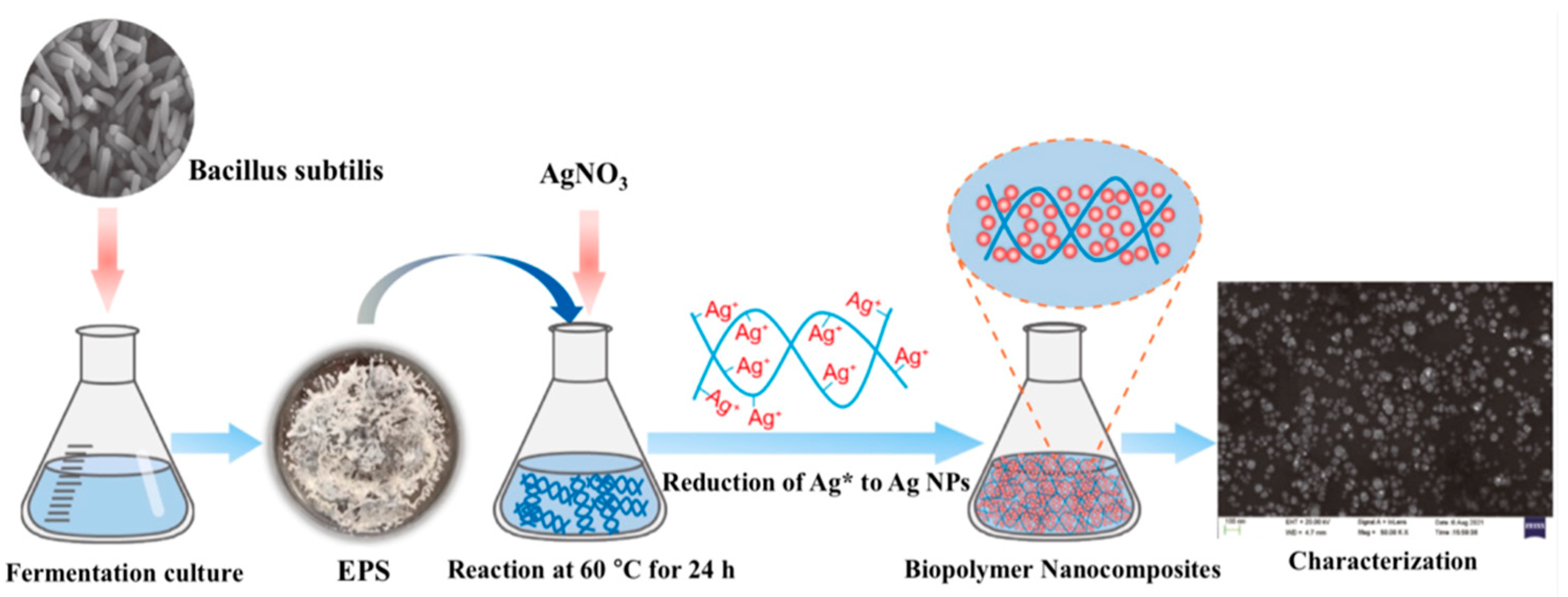
| Microbial synthesis of nanocomposites | Synthesis of extracellular polysaccharides (metabolic products of Bacillus subtilis) and silver nanoparticles (E-Ag NPs) | The nanoparticles have high dispersion stability (with a Zeta potential reaching −43.4 mV) and can effectively reduce the interfacial tension and alter the wettability. | The spontaneous imbibition recovery rate reached 54.32%, and the core displacement recovery rate increased by 16.33%. |
| Biomass-based carbon nanomaterials | Surface-modified nanocellulose (12–25 wt%) | High specific surface area, adjustable surface chemistry, improved wettability, and stable viscosity. | Recovery rate of graphene-polymer nanocomposite materials is approximately 10% higher than that of pure polymer flooding |
| Biologically modified carbon nanomaterials | Biomass-derived carbon dots, carbon nanotubes, graphene. and their derivatives | Outstanding temperature resistance (150 °C), salt resistance (mineralization degree 118,913 mg/L), and a unique “simultaneous displacement” mechanism. | The fluid flow diversion rate in the low-permeability zone has increased by 10% |
| Plant-derived nanocomposites | Combination of plant extracts (such as eucalyptus and walnut shells) with nanofluids (such as xanthan gum/magnetite/SiO2) | Effectively reduce interfacial tension and contact angle | Recovery rate can reach 60–64%, superior to the 46% of the basic nanofluid. |
| Reservoir Type | Technical Adaptability | EOR Mechanisms | Application |
|---|---|---|---|
| Conventional sandstone | Medium and high water-cut oil reservoirs | Change the wettability of rocks, reduce the interfacial tension between oil and water, and strip the oil film in the pores. | Well Pu63-Slant672 of the Seventh Oil Production Plant of Daqing Oilfield (Nanometer Scissors Technology) |
| Low permeability | Inability to inject; inability to drive in reservoirs | Nanometer-scale advantages, penetrating micro-pore throats and being lipophilic and hydrophobic | The ultra-low permeability oil reservoir in the Bai Ma Central Area of Changqing Oilfield; “Nanometer Water Flooding” of China National Petroleum Corporation (Xinjiang, Changqing, etc.) |
| Carbonate rock | Fractured type best, followed by fracture-cavity type, and limited increase. | Nanoemulsion: reducing interfacial tension, emulsification; nanospheres: temporarily plugging high-permeability channels, fluid flow diversion | The fracture-cavity reservoirs in Tahe Oilfield (Nanometer Black Card Technology) |
| Heavy oil reservoir | Significantly reduce viscosity, improve fluidity, and achieve “cold production” | Emulsification for viscosity reduction (viscosity reduction rate up to 90%); removal of asphaltene and resin deposits | NA |
| Fractured reservoir | Coordinated regulation of fractures and matrix | Fracture flow regulation and matrix enhanced injection | Oil reservoirs in the Ordos Basin |
| Cavity-type reservoir | Applicable and with good well group connectivity | Emulsification and wetting reversal; complex oil reservoirs | The weathering crust-dark river composite well group in Tahe Oilfield |
| Research Direction | Main Research Achievements | Key Technical Indicators | Advantages Compared with Traditional Technologies | Ref. |
|---|---|---|---|---|
| Janus-structured nanomaterials | Synthesis and oil displacement application of Janus SiO2 nanoparticles | Interfacial tension reduced to 0.067 mN/m; oil recovery increased by 25.41% | Significantly higher oil displacement efficiency than unmodified nanoparticles; excellent dispersion stability | [61] |
| Two-dimensional nanosheet materials | Field test of ODA-MoS2 nanosheet nanofluid | Concentration of 0.005 wt%; crude oil production increased; water cut decreased | High oil displacement efficiency achieved at low concentration, reducing costs | [166] |
| Bio-based nanocomposites | Microbial coupling silica nanocomposites | Zeta potential of −43.4 mV; spontaneous imbibition oil recovery of 54.32% | Green and biodegradable; excellent dispersion stability | [167] |
| Deepening of oil-displacement mechanism | Quantitative study on structural disjoining pressure (SDP) of nanosheets | SDP of 50 kPa generated by 0.005 wt% nanosheets | Solves the problem of high concentration requirement for traditional nanoparticles | [168] |
| Industrial application | Field test of modified SiO2 composite system | Oil recovery increased by 16.33%; cost reduced by 20% | Significantly improved economic feasibility; suitable for low-permeability reservoirs | [169] |
| Cost optimization | Preparation of nanocomposites from fly ash | Production cost reduced by 40% | Utilizes industrial by-products; green, environmentally friendly, and low-cost | [170] |
Disclaimer/Publisher’s Note: The statements, opinions and data contained in all publications are solely those of the individual author(s) and contributor(s) and not of MDPI and/or the editor(s). MDPI and/or the editor(s) disclaim responsibility for any injury to people or property resulting from any ideas, methods, instructions or products referred to in the content. |
© 2026 by the authors. Licensee MDPI, Basel, Switzerland. This article is an open access article distributed under the terms and conditions of the Creative Commons Attribution (CC BY) license.
Share and Cite
Wang, C.; Jin, G.; Wang, W.; Zhao, C.; Wang, S.; Zhao, Y.; Ni, J. Nanomaterials Driving Technological Advancements in Enhanced Oil Recovery from Low-Permeability Tight Oil Reservoirs: Opportunities and Challenges. Nanomaterials 2026, 16, 464. https://doi.org/10.3390/nano16080464
Wang C, Jin G, Wang W, Zhao C, Wang S, Zhao Y, Ni J. Nanomaterials Driving Technological Advancements in Enhanced Oil Recovery from Low-Permeability Tight Oil Reservoirs: Opportunities and Challenges. Nanomaterials. 2026; 16(8):464. https://doi.org/10.3390/nano16080464
Chicago/Turabian StyleWang, Chengjun, Ge Jin, Weibo Wang, Chao Zhao, Shuo Wang, Yong Zhao, and Jun Ni. 2026. "Nanomaterials Driving Technological Advancements in Enhanced Oil Recovery from Low-Permeability Tight Oil Reservoirs: Opportunities and Challenges" Nanomaterials 16, no. 8: 464. https://doi.org/10.3390/nano16080464
APA StyleWang, C., Jin, G., Wang, W., Zhao, C., Wang, S., Zhao, Y., & Ni, J. (2026). Nanomaterials Driving Technological Advancements in Enhanced Oil Recovery from Low-Permeability Tight Oil Reservoirs: Opportunities and Challenges. Nanomaterials, 16(8), 464. https://doi.org/10.3390/nano16080464