Review

Green-Synthesized Nanomaterials for Catalytic Reduction of para-Nitrophenol and Methylene Blue: Recent Advances and Perspectives

1
Centre of Research Impact and Outcome, Chitkara University, Rajpura 140417, Punjab, India
2
Bahra Research Innovation & Knowledge Cluster, Rayat Bahra University, Greater Mohali 140103, Punjab, India
3
Institut Européen des Membranes (IEM), UMR-5635, University of Montpellier, ENSCM, CNRS, Place Eugène Bataillon, CEDEX 5, 34095 Montpellier, France
*
Author to whom correspondence should be addressed.
Nanomaterials 2026, 16(6), 362; https://doi.org/10.3390/nano16060362
Submission received: 1 February 2026 / Revised: 4 March 2026 / Accepted: 10 March 2026 / Published: 16 March 2026

Abstract

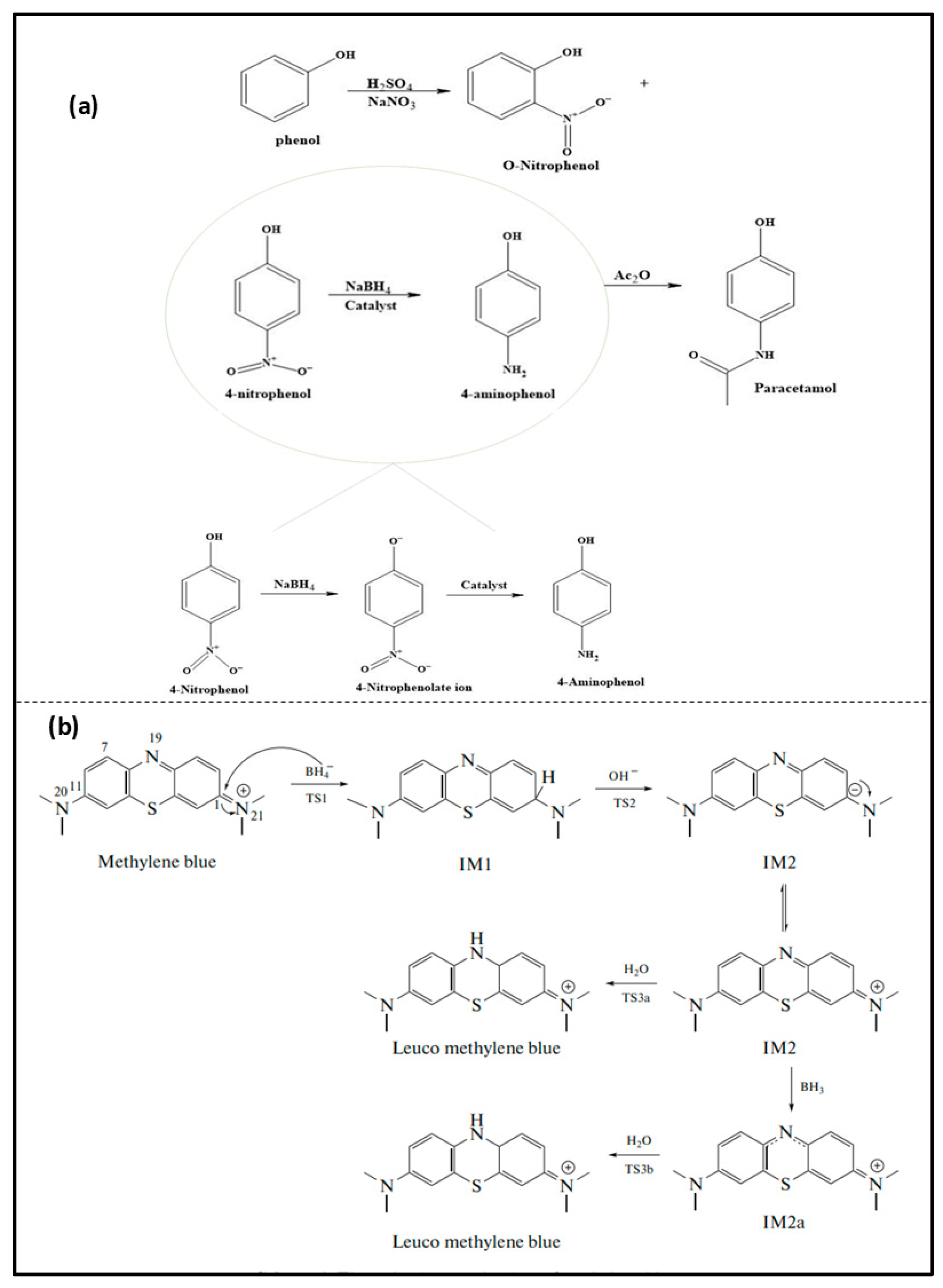
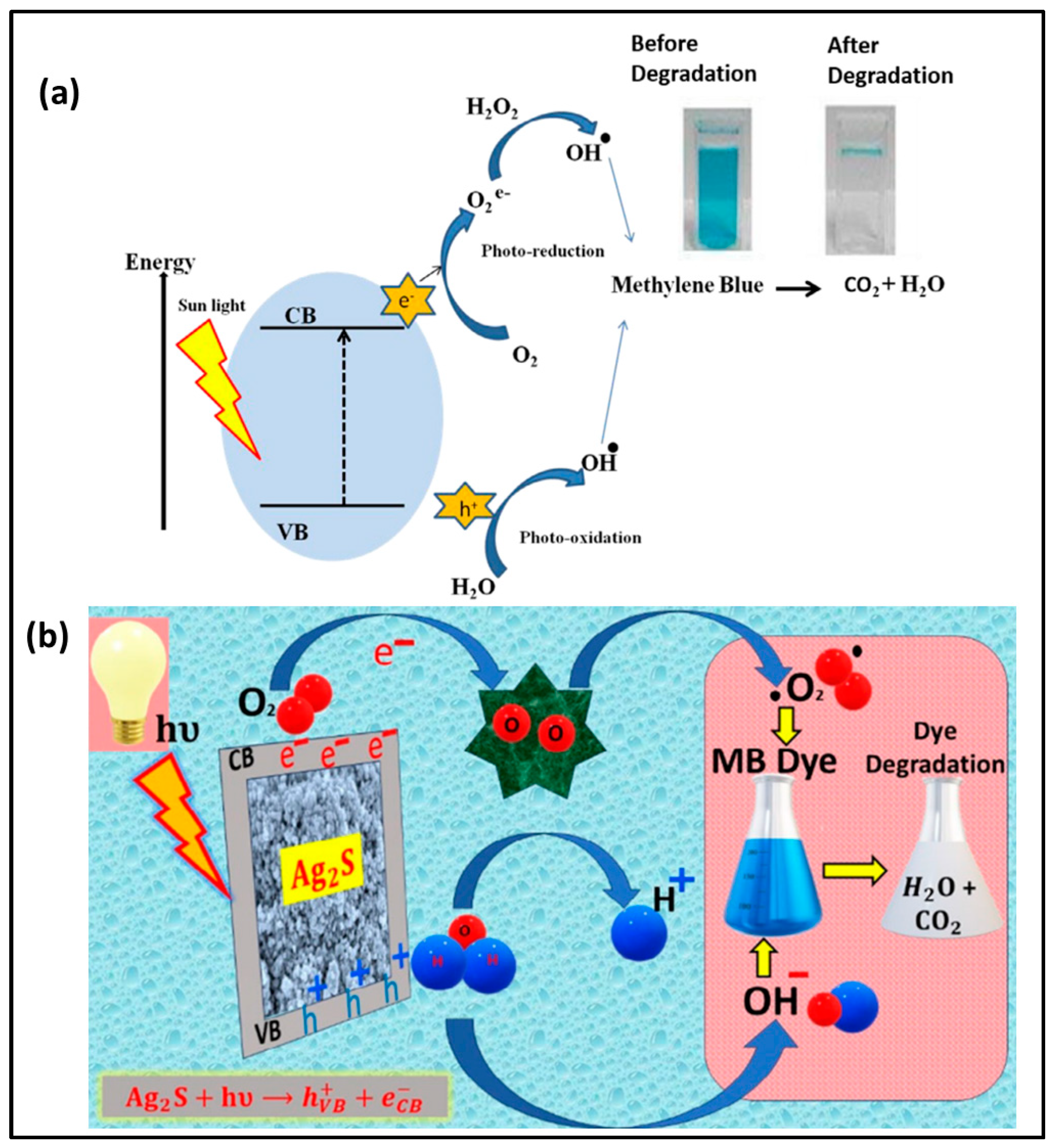
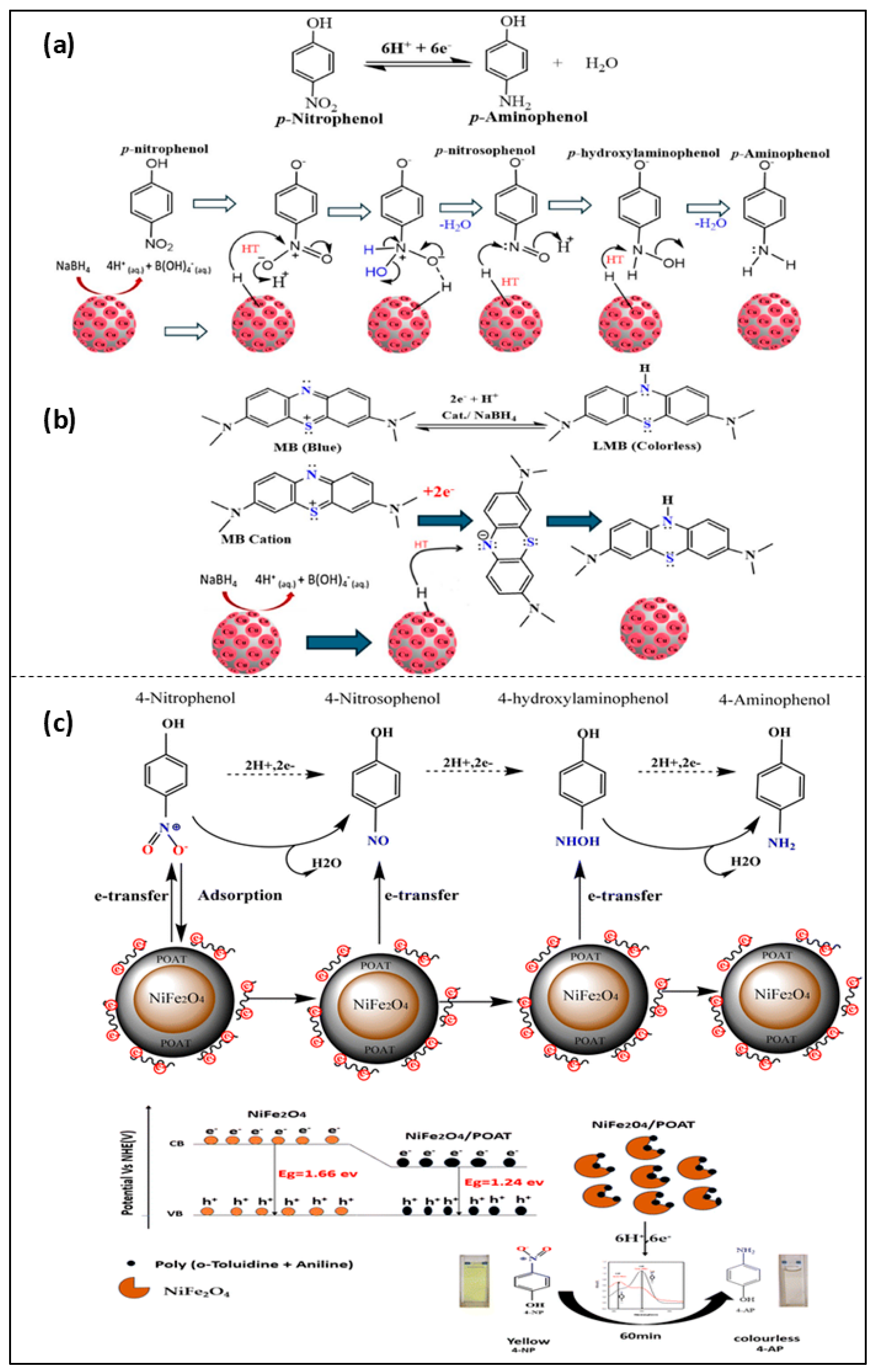
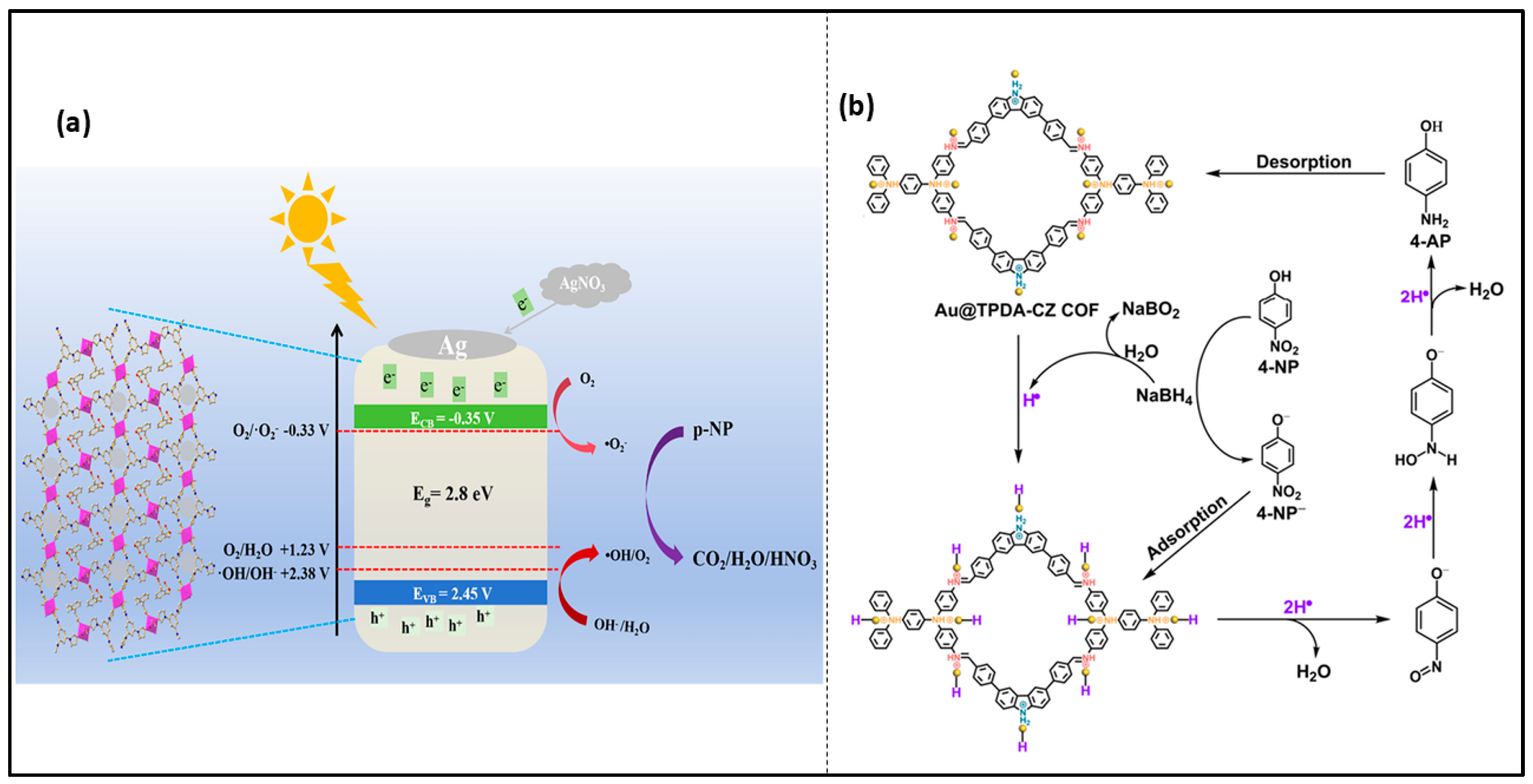
Nitrophenol (NP) and methylene blue (MB) are considered among the most hazardous organic contaminants frequently released from pharmaceutical, textile, and paper industries, posing significant risks to both human health and the environment. The conventional treatment involves adsorption, oxidation, biological, filtration, and other photochemical degradation methods, which often suffer from low efficiency, limited reusability, and the production of secondary toxic by-products. In this context, the nanomaterials (NMs) mediated catalytic reduction of MB into leucomethylene blue and p-NP into p-aminophenol (p-AP) has emerged as a promising approach, due to its high efficiency and effectiveness. This review emphasizes the green synthesis of NMs for catalytic applications, which align with the principles of the circular economy and the Sustainable Development Goals (SDGs). This thorough review systematically examines the mechanistic understanding of the reduction of both p-NP and MB via different green synthesized NMs and evaluating their catalytic efficiencies. Furthermore, a detailed discussion of the reduction of pollutants (p-NP and MB) is provided, along with their mechanistic insights. In addition, this paper also provides a comparative table highlighting the effects of using different precursors, experimental conditions on the conversion catalytic efficiency and reusability potency. Thus, this work provides the insights into recent research on the catalytic reduction of p-NP and MB into valuable products, highlighting the significance of green synthesized nanocatalysts for effective wastewater treatment.
Keywords: catalyst; green synthesis; methylene blue; nanomaterials; nitrophenol; SDGs catalyst; green synthesis; methylene blue; nanomaterials; nitrophenol; SDGs