Article

Flow Stability of Nanofluid Thin Films on Non-Uniformly Heated Porous Slopes

1
School of Mathematical Science, Inner Mongolia University, Hohhot 010021, China
2
Inner Mongolia Key Laboratory of Mathematical Modeling and Scientific Computing, Hohhot 010021, China
*
Authors to whom correspondence should be addressed.
Nanomaterials 2026, 16(4), 247; https://doi.org/10.3390/nano16040247
Submission received: 17 January 2026 / Revised: 5 February 2026 / Accepted: 8 February 2026 / Published: 13 February 2026
(This article belongs to the Special Issue Thermal Challenges in Renewable Energy: Nanofluidic Solutions)

Abstract

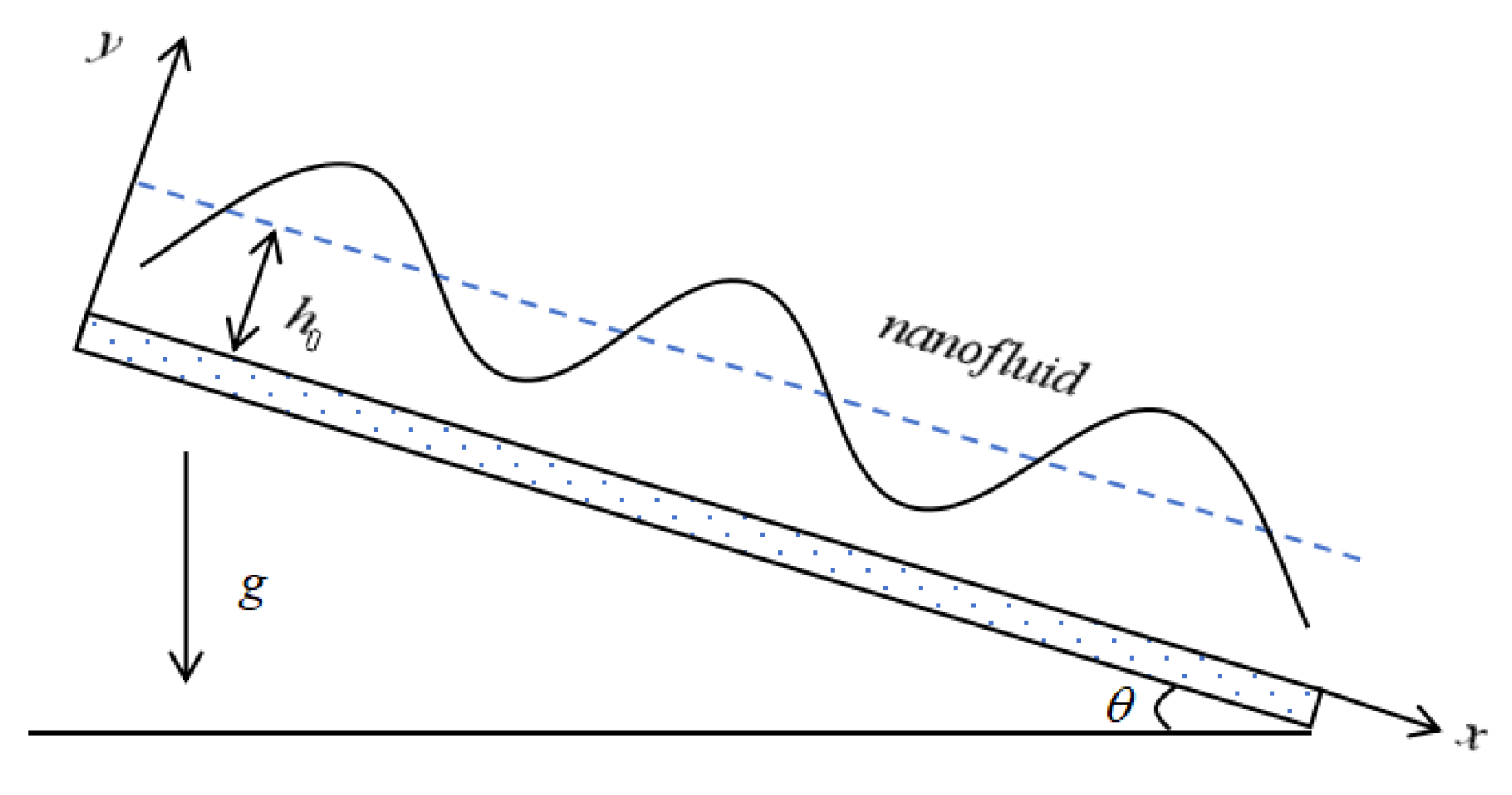
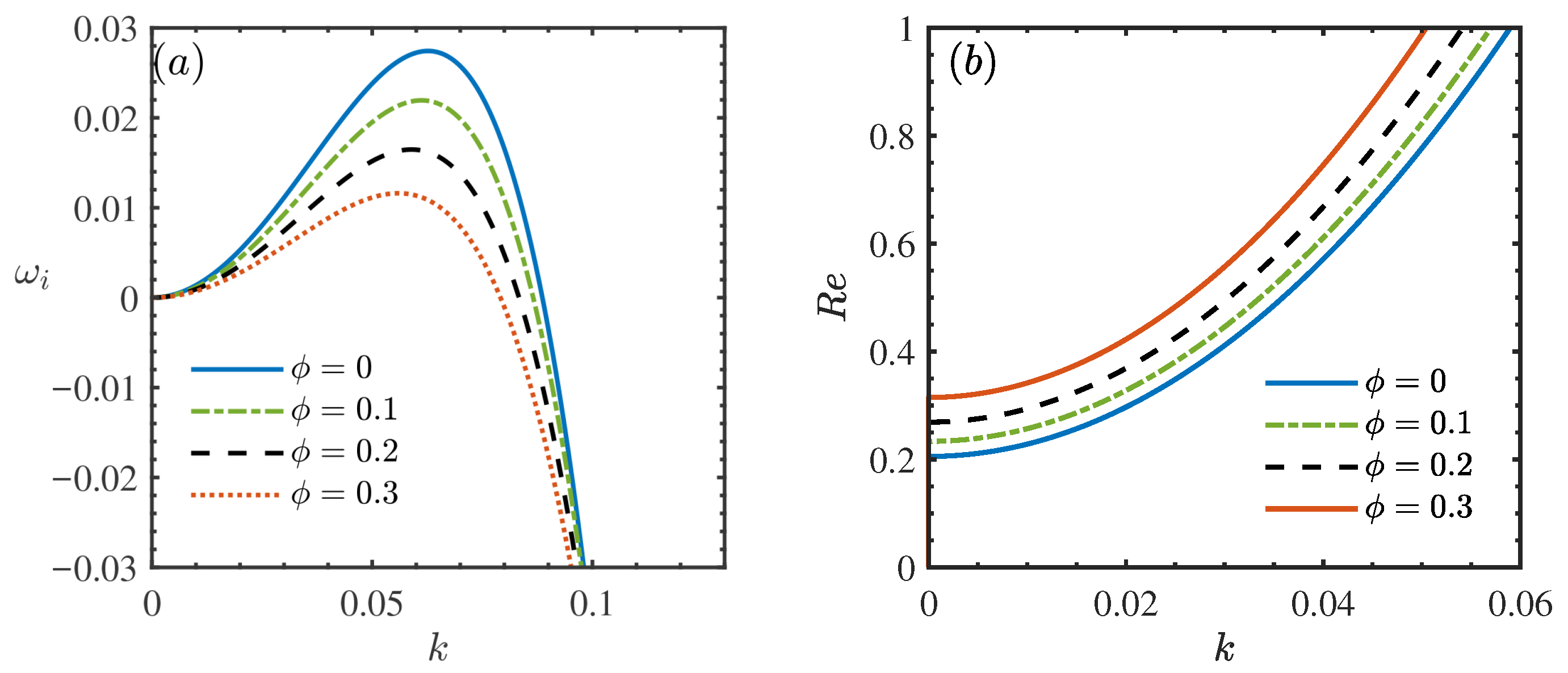
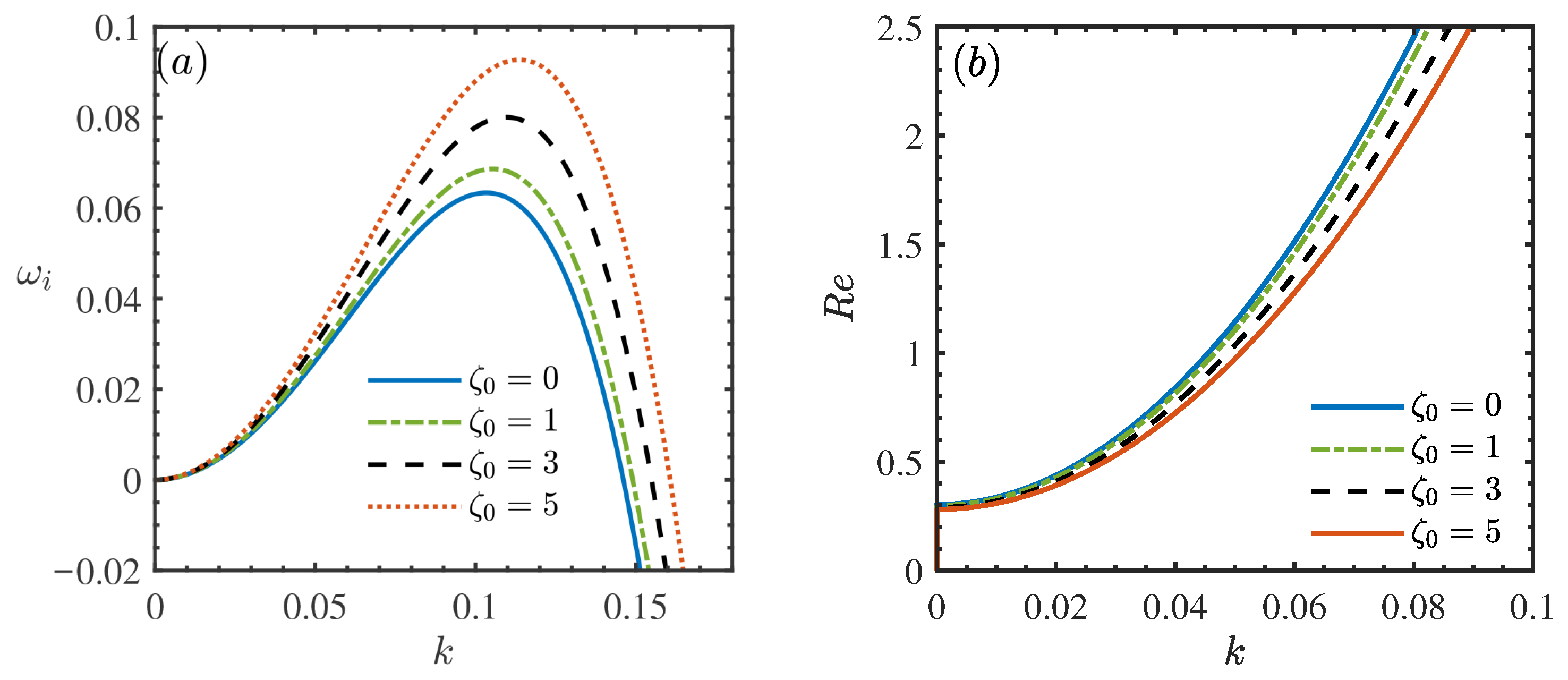
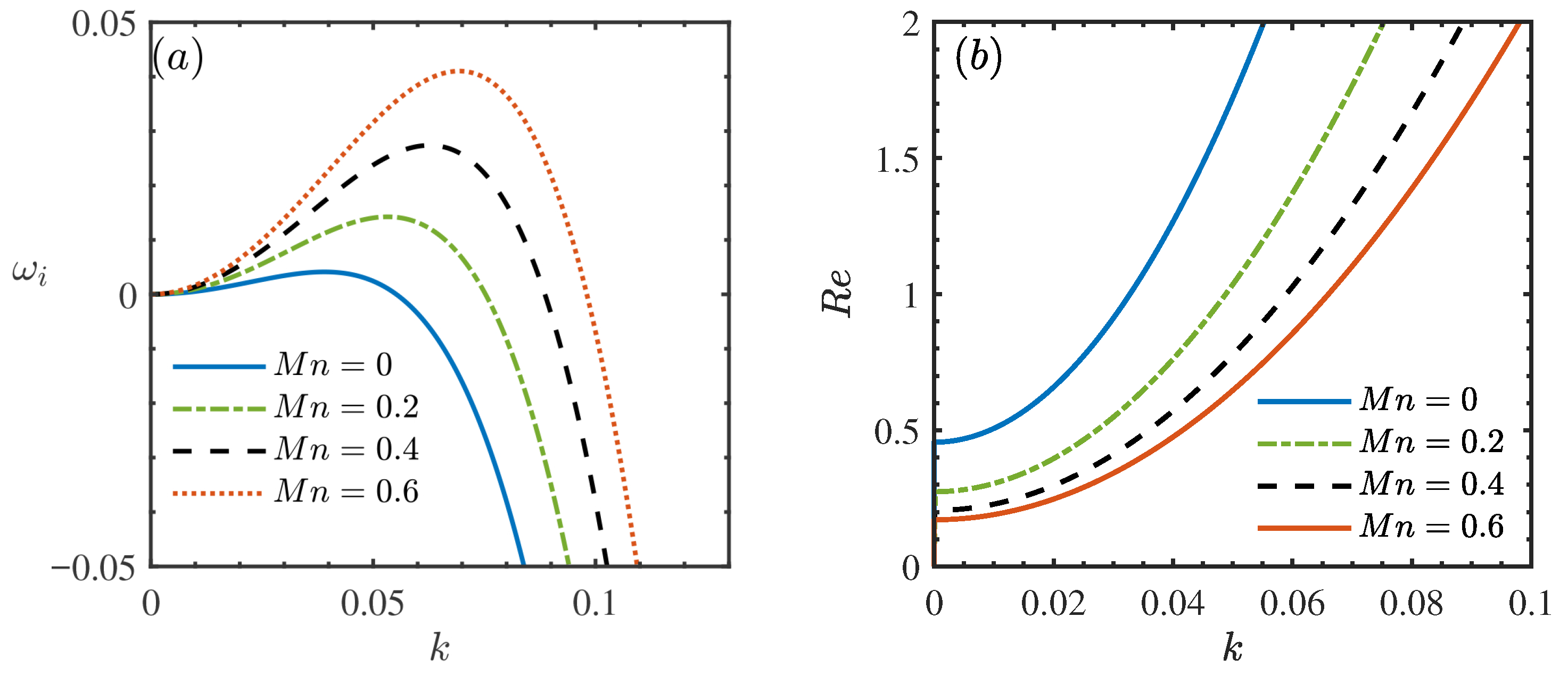
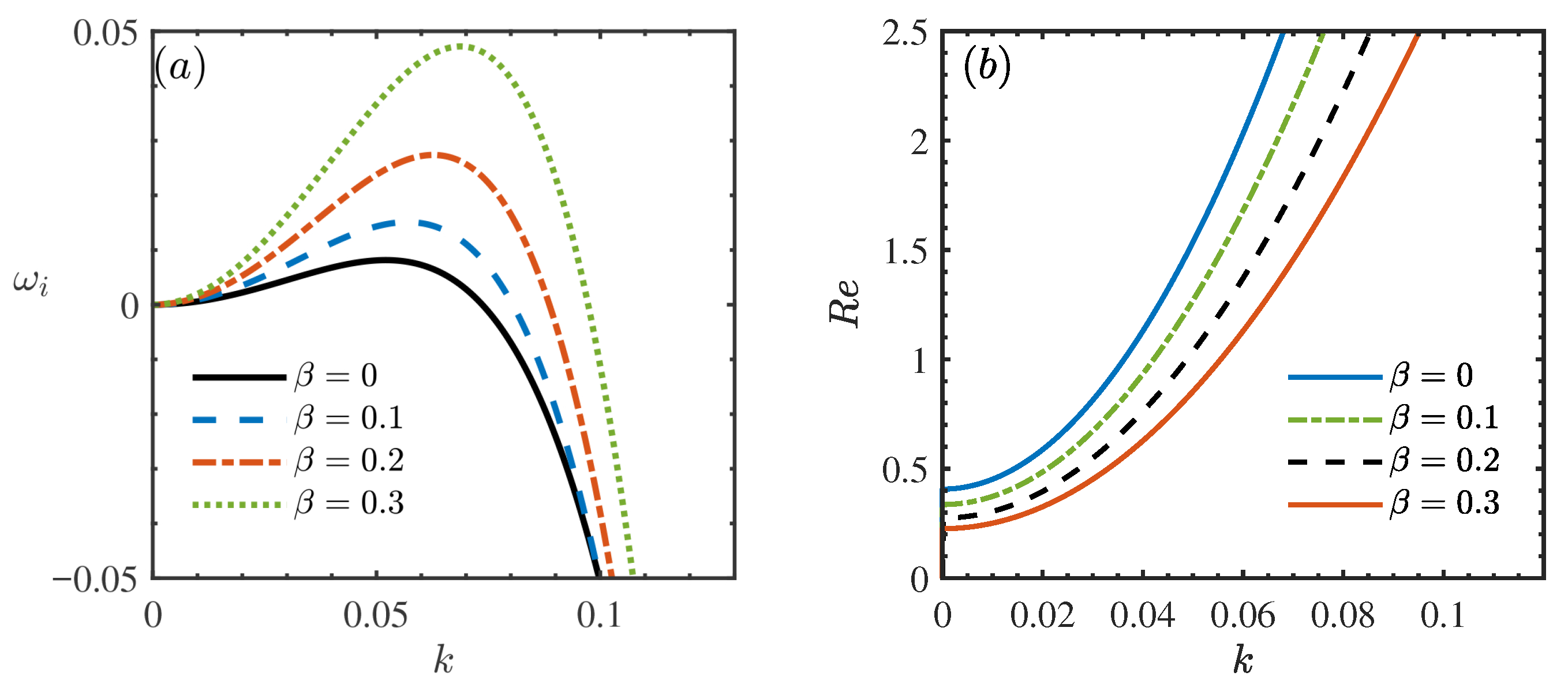
Thin liquid film flows of nanofluids over porous surfaces are central to applications ranging from microfluidic thermal management to precision coating technologies. This study investigates the hydrodynamic and thermal stability of a nanofluid flowing down a non-uniformly heated inclined porous plane subject to the Beavers-Joseph slip boundary condition. Using the long-wave approximation, a nonlinear evolution equation governing the film thickness is derived. The stability characteristics are systematically analyzed via linear stability theory, weakly nonlinear analysis, and fast Fourier transform (FFT) numerical simulations. Quantitative results indicate that the porous medium permeability, density difference, and Marangoni number act as destabilizing factors; specifically, increasing the porous parameter β (from 0 to 0.3), the density ratio ζ0 (from 0 to 5), and the Marangoni number Mn (from 0 to 0.3) significantly reduces the critical Reynolds number and accelerates the onset of interfacial instabilities. In contrast, increasing the nanoparticle volume fraction ϕ from 0 to 0.3 exerts a dominant stabilizing effect by elevating the critical Reynolds number and shrinking the unstable wavenumber domain. Furthermore, nonlinear simulations confirm that higher nanoparticle concentrations effectively suppress the saturation amplitude of disturbances, promoting the eventual stabilization of the liquid film.
Keywords: nanofluid; thin liquid film; porous medium; Beavers-Joseph slip; hydrodynamic stability nanofluid; thin liquid film; porous medium; Beavers-Joseph slip; hydrodynamic stability