Assembly of Multilevel Nanoconstructs with Negatively Charged Lipid Envelope and Features of Its Interaction with Protein Corona


Abstract
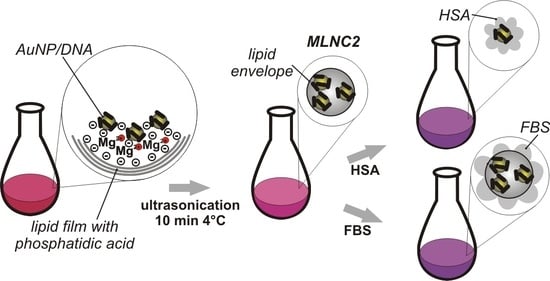
1. Introduction
2. Materials and Methods
2.1. Chemicals
2.2. Oligonucletide Synthesis
2.3. Preparation of Core Nanoparticles
2.4. Preparation of a Lipid Film
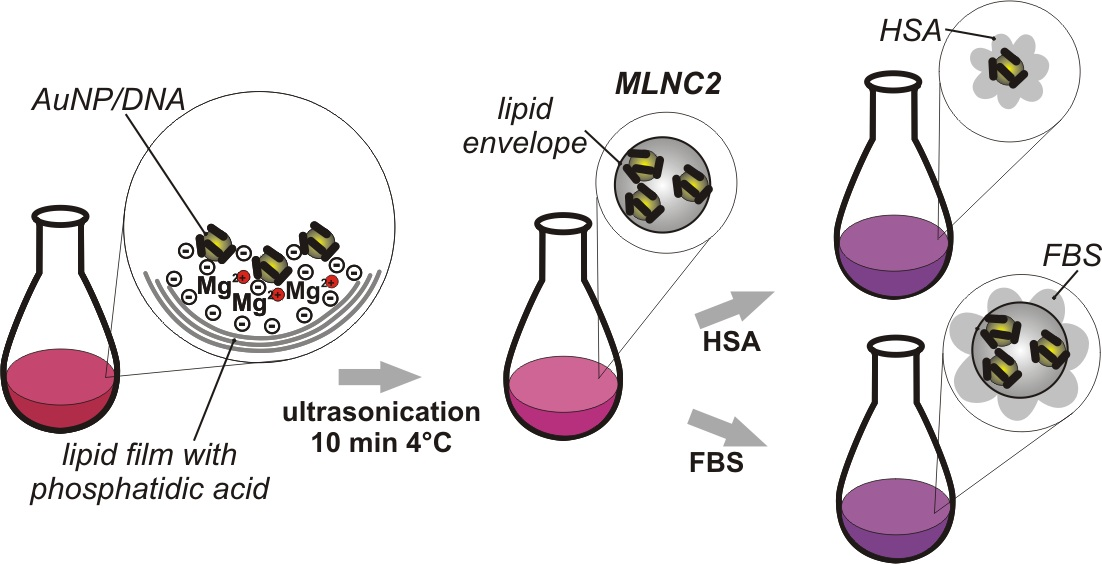
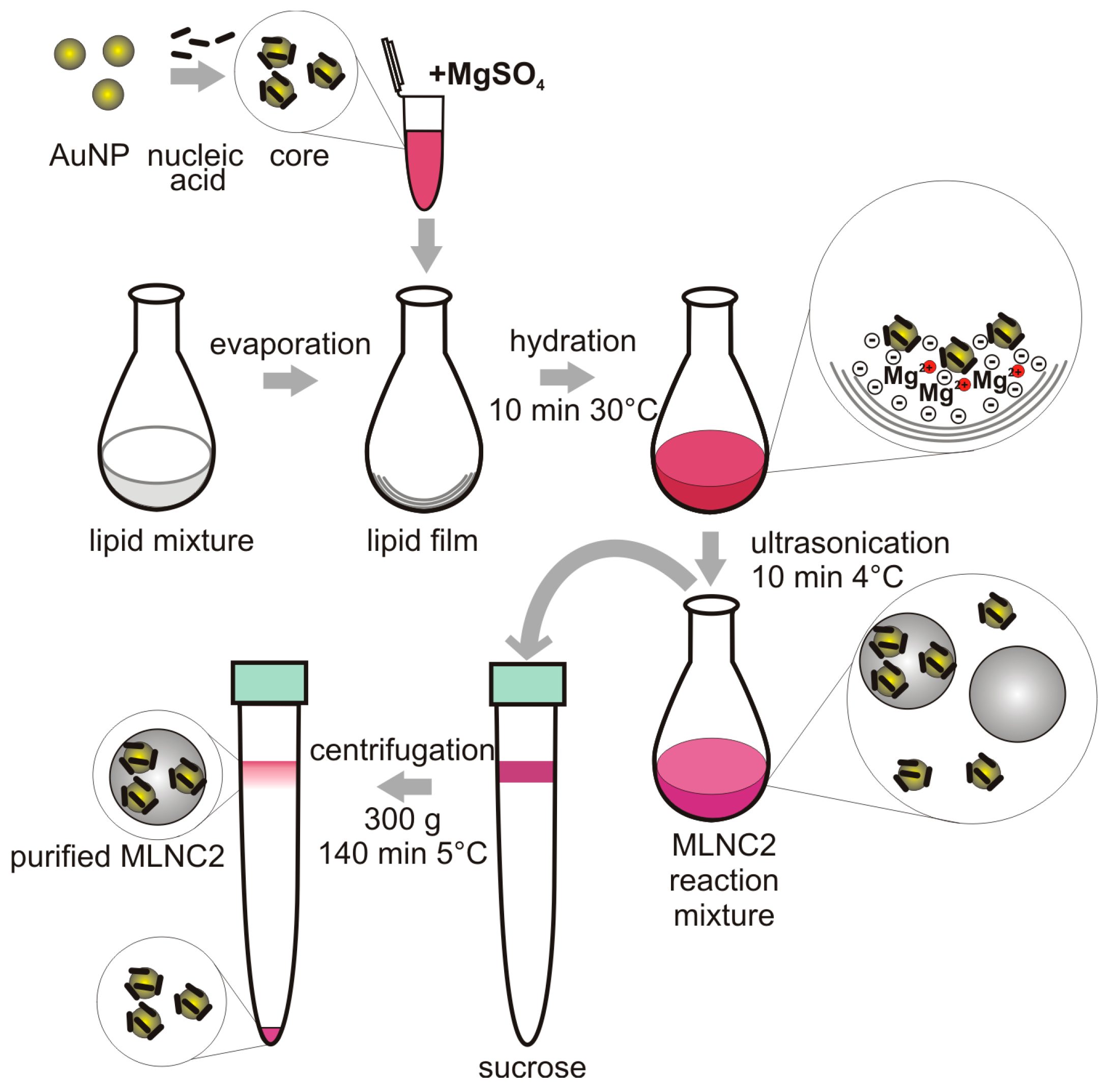
2.5. Assembly of the MLNC-2
2.6. Modification of FBS with PACL
2.7. Incubation of the MLNC-2 with Human Serum Albumin or with Native or Modified Serum
2.8. Purification of the MLNC-2 or MLNC-2-Bearing Protein Corona
2.9. Gel Electrophoresis
2.10. Examination of the Structure and Quality of the MLNC-2 Samples
2.10.1. DLS
2.10.2. TEM
3. Results and Discussion
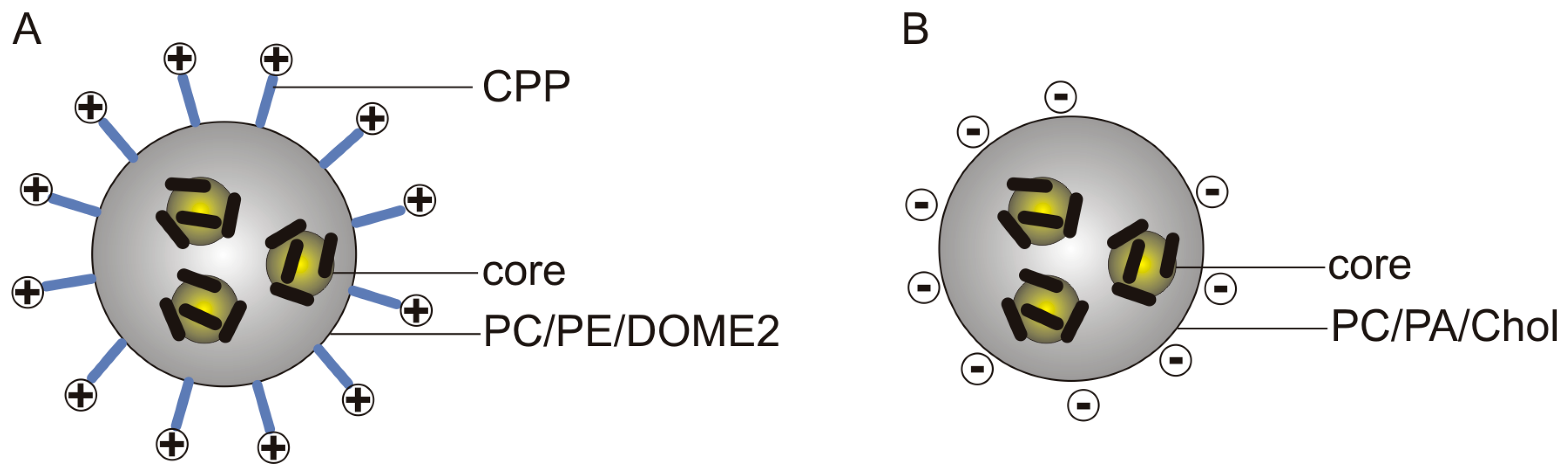
3.1. Justification for the Selection of Components for Obtaining MLNC-2
3.2. Choice of Lipid Composition
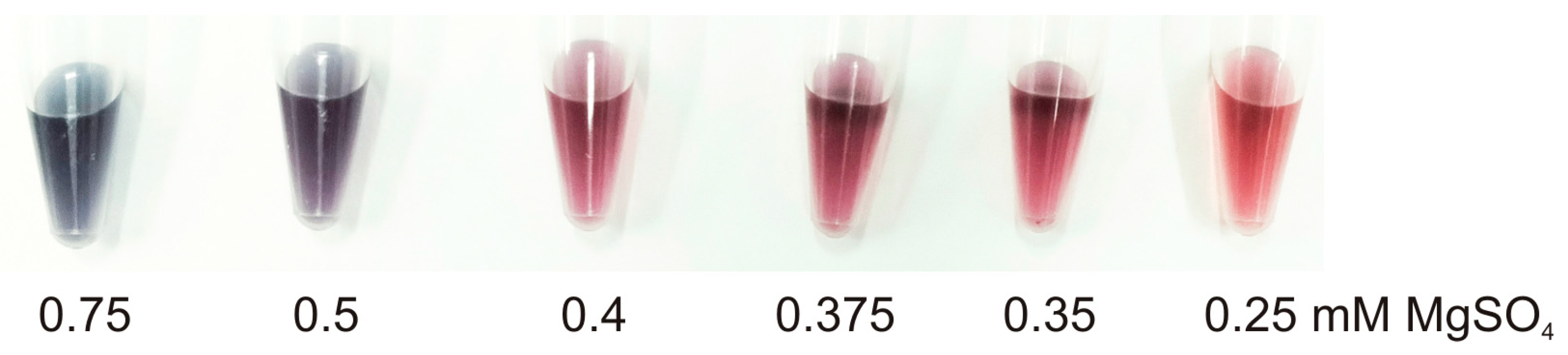
3.3. Selection of Magnesium Ion Concentration for Optimal Assembly of MLNC-2
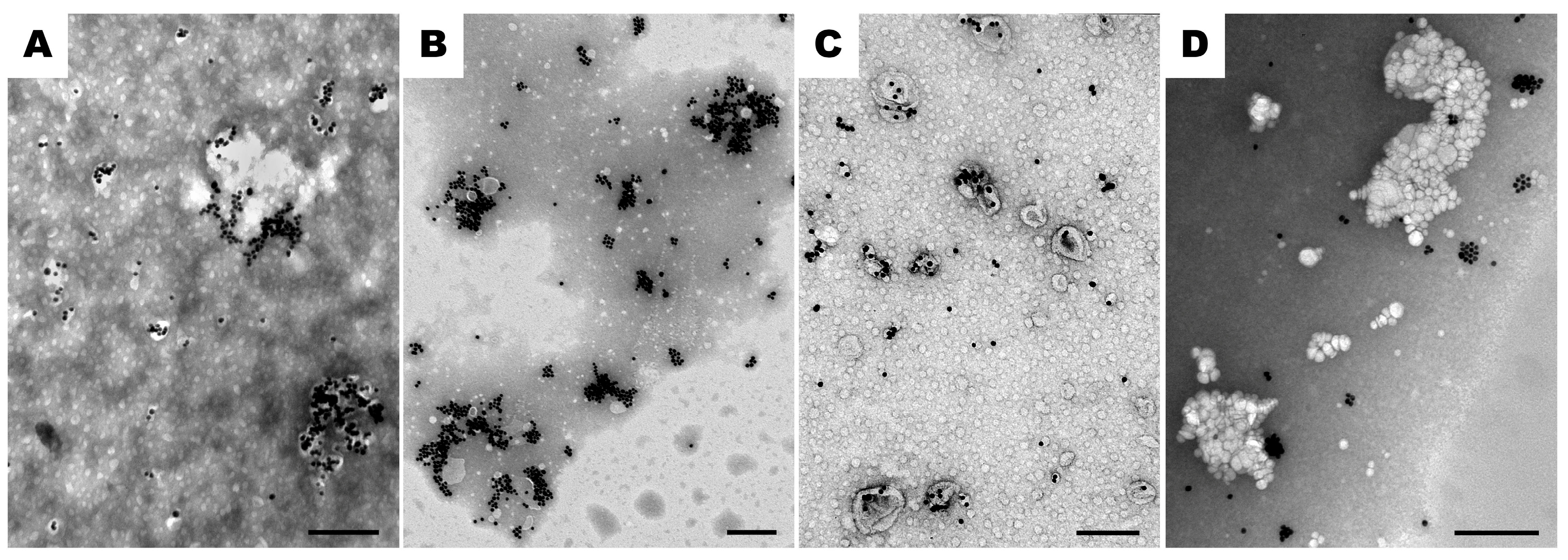
3.4. MLNC-2 Assembly Optimization
3.5. Purification of MLNC-2
3.6. Interaction of MLNC-2 with Human Albumin
3.7. MLNC-2 Interaction with Fetal Bovine Serum
4. Conclusions
Supplementary Materials
Author Contributions
Funding
Data Availability Statement
Conflicts of Interest
References
- Winkeljann, B.; Lapuhs, P.; Alonso, M.J.; Kimna, C. A multiscale approach to lipid nanoparticle engineering from molecular structure to in vivo performance. J. Control. Release 2026, 394, 114911. [Google Scholar] [CrossRef]
- Wang, R.; Wang, H.; Li, T.; Zi, G.; Yang, Z.; Xu, Y.; Peng, B. A rapid and reliable strategy for identification of LNP and protein corona in vitro and in vivo. Int. J. Pharm. X 2026, 11, 100519. [Google Scholar] [CrossRef] [PubMed]
- Xu, W.; Zhu, S.; Sun, Z.; Ye, J.; Chu, H. Self-assembled nanoplatforms for cancer immunotherapy: Principles, progress and perspectives. Acta Pharm. Sin. B 2026, 16, 2196–2231. [Google Scholar] [CrossRef]
- Shadab, A.; Haider, M.F.; Abohassan, M. Liposome-Based Drug Delivery Systems: Mechanisms, Preparation Strategies, Clinical Status, and Therapeutic Applications. AAPS PharmSciTech 2026, 27, 190. [Google Scholar] [CrossRef]
- Mehta, M.; Bui, T.A.; Yang, X.; Aksoy, Y.; Goldys, E.M.; Deng, W. Lipid-Based Nanoparticles for Drug/Gene Delivery: An Overview of the Production Techniques and Difficulties Encountered in Their Industrial Development. ACS Mater. Au 2023, 3, 600–619. [Google Scholar] [CrossRef]
- Chu, R.; Wang, Y.; Kong, J.; Pan, T.; Yang, Y.; He, J. Lipid Nanoparticles as the Drug Carrier for Targeted Therapy of Hepatic Disorders. J. Mater. Chem. B 2024, 12, 4759–4784. [Google Scholar] [CrossRef]
- Arabestani, M.R.; Bigham, A.; Kamarehei, F.; Dini, M.; Gorjikhah, F.; Shariati, A.; Hosseini, S.M. Solid Lipid Nanoparticles and Their Application in the Treatment of Bacterial Infectious Diseases. Biomed. Pharmacother. 2024, 174, 116433. [Google Scholar] [CrossRef]
- Zhang, C.; Ma, Y.; Zhang, J.; Kuo, J.C.-T.; Zhang, Z.; Xie, H.; Zhu, J.; Liu, T. Modification of Lipid-Based Nanoparticles: An Efficient Delivery System for Nucleic Acid-Based Immunotherapy. Molecules 2022, 27, 1943. [Google Scholar] [CrossRef] [PubMed]
- Li, Y.; Ye, Z.; Yang, H.; Xu, Q. Tailoring Combinatorial Lipid Nanoparticles for Intracellular Delivery of Nucleic Acids, Proteins, and Drugs. Acta Pharm. Sin. B 2022, 12, 2624–2639. [Google Scholar] [CrossRef] [PubMed]
- Charbgoo, F.; Nejabat, M.; Abnous, K.; Soltani, F.; Taghdisi, S.M.; Alibolandi, M.; Thomas Shier, W.; Steele, T.W.J.; Ramezani, M. Gold nanoparticle should understand protein corona for being a clinical nanomaterial. J. Control. Release 2018, 272, 39–53. [Google Scholar] [CrossRef]
- Zhao, Y.; Liu, C.; Zhang, X.; Gu, T.; Wang, Y.; Zuo, T.; Liu, S.; Xu, X.; Meng, H. Mechanistic and Strategic Insights into How Lipid Nanoparticles Interact with Membrane-Based Biological Barriers. ACS Nano 2026, 20, 8971–9006. [Google Scholar] [CrossRef] [PubMed]
- Canchola, A.; Li, K.; Chen, K.; Ukbamichael, A.; Wang, X.; Chou, W.C. Advancing nanomedicine with machine learning: Predicting protein corona and nano-bio interactions. Nanomedicine 2026, 21, 1301–1317. [Google Scholar] [CrossRef]
- Abo Qoura, L.; Kostyushev, D.; Parodi, A.; Boyarintsev, D.I.; Chulanov, V.; Pokrovsky, V.S. Nanoparticle-Host Interactions: The Impact of Physiological and Pathological Factors on Biodistribution, Immune Processes, and Translational Challenges. Cell. Mol. Bioeng. 2026, 19, 1–27. [Google Scholar] [CrossRef]
- Navid Talemi, M.; Ramezani Farani, M.; Alipour Eskandani, N.; Mirzaee, D.; Alipourfard, I.; Huh, Y.S. Programmable lipid nanoparticles for RNA therapeutics: Design principles and clinical translation. Mater. Today Bio 2026, 37, 102774. [Google Scholar] [CrossRef]
- García-Álvarez, R.; Vallet-Regí, M. Hard and Soft Protein Corona of Nanomaterials: Analysis and Relevance. Nanomaterials 2021, 11, 888. [Google Scholar] [CrossRef] [PubMed]
- Lee, Y.K.; Choi, E.J.; Webster, T.J.; Kim, S.H.; Khang, D. Effect of the protein corona on nanoparticles for modulating cytotoxicity and immunotoxicity. Int. J. Nanomed. 2014, 10, 97–113. [Google Scholar] [CrossRef]
- Liu, N.; Tang, M.; Ding, J. The interaction between nanoparticles-protein corona complex and cells and its toxic effect on cells. Chemosphere 2020, 245, 125624. [Google Scholar] [CrossRef]
- Fleischer, C.C.; Payne, C.K. Nanoparticle-cell interactions: Molecular structure of the protein corona and cellular outcomes. Acc. Chem. Res. 2014, 47, 2651–2659. [Google Scholar] [CrossRef] [PubMed]
- Gatti, L.; Chirizzi, C.; Rotta, G.; Milesi, P.; Sancho-Albero, M.; Sebastián, V.; Mondino, A.; Santamaría, J.; Metrangolo, P.; Chaabane, L.; et al. Pivotal role of the protein corona in the cell uptake of fluorinated nanoparticles with increased sensitivity for 19F-MR imaging. Nanoscale Adv. 2023, 5, 3749–3760. [Google Scholar] [CrossRef] [PubMed]
- Mohammad-Beigi, H.; Hayashi, Y.; Zeuthen, C.M.; Eskandari, H.; Scavenius, C.; Juul-Madsen, K.; Vorup-Jensen, T.; Enghild, J.J.; Sutherland, D.S. Mapping and identification of soft corona proteins at nanoparticles and their impact on cellular association. Nat. Commun. 2020, 11, 4535. [Google Scholar] [CrossRef]
- Morbidelli, M.; Papini, E.; Tavano, R. Essential protocols for decoding the composition and the functional effects of the nanoparticle protein corona. Front. Nanotechnol. 2024, 6, 1500567. [Google Scholar] [CrossRef]
- Epanchintseva, A.V.; Baranova, S.V.; Poletaeva, J.E.; Tupitsyna, A.V.; Ryabchikova, E.I.; Dovydenko, I.S. The Photomodification Method Allows for Determining the Composition of the Full and Soft Protein Corona on the Lipid Surface of Composite Nanoparticles. Nanomaterials 2024, 14, 1976. [Google Scholar] [CrossRef]
- Poletaeva, J.; Dovydenko, I.; Epanchintseva, A.; Korchagina, K.; Pyshnyi, D.; Apartsin, E.; Ryabchikova, E.; Pyshnaya, I. Non-Covalent Associates of siRNAs and AuNPs Enveloped with Lipid Layer and Doped with Amphiphilic Peptide for Efficient siRNA Delivery. Int. J. Mol. Sci. 2018, 19, 2096. [Google Scholar] [CrossRef]
- Epanchintseva, A.V.; Poletaeva, J.E.; Bakhno, I.A.; Belov, V.V.; Grigor’eva, A.E.; Baranova, S.V.; Ryabchikova, E.I.; Dovydenko, I.S. Fixation and Visualization of Full Protein Corona on Lipid Surface of Composite Nanoconstruction. Nanomaterials 2023, 13, 3094. [Google Scholar] [CrossRef]
- Poletaeva, J.E.; Chelobanov, B.P.; Epanchintseva, A.V.; Tupitsyna, A.V.; Dovydenko, I.S.; Ryabchikova, E.I. Internalization of Lipid-Coated Gold Nanocomposites and Gold Nanoparticles by Mouse SC-1 Fibroblasts in Monolayer and Spheroids. Nanomaterials 2025, 15, 1419. [Google Scholar] [CrossRef]
- Epanchintseva, A.V.; Poletaeva, J.E.; Dovydenko, I.S.; Chelobanov, B.P.; Pyshnyi, D.V.; Ryabchikova, E.I.; Pyshnaya, I.A. A Lipid-Coated Nanoconstruct Composed of Gold Nanoparticles Noncovalently Coated with Small Interfering RNA: Preparation, Purification and Characterization. Nanomaterials 2021, 11, 2775. [Google Scholar] [CrossRef]
- Ellington, A.; Pollard, J.D. Synthesis and Purification of Oligonucleotides. Curr. Protoc. Mol. Biol. 1998, 42, 2.11.1–2.11.25. [Google Scholar] [CrossRef]
- Frens, G. Controlled Nucleation for the Regulation of the Particle Size in Monodisperse Gold Suspensions. Nat. Phys. Sci. 1973, 241, 20–22. [Google Scholar] [CrossRef]
- Liu, X.; Atwater, M.; Wang, J.; Huo, Q. Extinction coefficient of gold nanoparticles with different sizes and different capping ligands. Colloids Surf. B Biointerfaces 2007, 58, 3–7. [Google Scholar] [CrossRef] [PubMed]
- Amaya-González, S.; López-López, L.; Miranda-Castro, R.; de-los-Santos-Álvarez, N.; Miranda-Ordieres, A.J.; Lobo-Castañón, M.J. Affinity of Aptamers Binding 33-Mer Gliadin Peptide and Gluten Proteins: Influence of Immobilization and Labeling Tags. Anal. Chim. Acta 2015, 873, 63–70. [Google Scholar] [CrossRef]
- Epanchintseva, A.V.; Gorbunova, E.A.; Ryabchikova, E.I.; Pyshnaya, I.A.; Pyshnyi, D.V. Effect of Fluorescent Labels on DNA Affinity for Gold Nanoparticles. Nanomaterials 2021, 11, 1178. [Google Scholar] [CrossRef] [PubMed]
- Epanchintseva, A.V.; Baranova, S.V.; Poletaeva, J.E.; Bakhno, I.A.; Ryabchikova, E.I.; Dovydenko, I.S. Study of Hard Protein Corona on Lipid Surface of Composite Nanoconstruction. Nanomaterials 2024, 14, 1767. [Google Scholar] [CrossRef] [PubMed]
- Park, S.J. Protein-Nanoparticle Interaction: Corona Formation and Conformational Changes in Proteins on Nanoparticles. Int. J. Nanomed. 2020, 15, 5783–5802. [Google Scholar] [CrossRef] [PubMed]





| Lipid Composition PC/PA/Cholesterol, mol% | ζ-Potential ± SD, mV |
|---|---|
| 80/10/10 | −12.0 ± 4.9 |
| 70/20/10 | −37.8 ± 7.2 |
| 50/40/10 | −33.2 ± 9.5 |
| 40/50/10 | −39.4 ± 8.9 |
Disclaimer/Publisher’s Note: The statements, opinions and data contained in all publications are solely those of the individual author(s) and contributor(s) and not of MDPI and/or the editor(s). MDPI and/or the editor(s) disclaim responsibility for any injury to people or property resulting from any ideas, methods, instructions or products referred to in the content. |
© 2026 by the authors. Licensee MDPI, Basel, Switzerland. This article is an open access article distributed under the terms and conditions of the Creative Commons Attribution (CC BY) license.
Share and Cite
Dovydenko, I.S.; Epanchintseva, A.V.; Poletaeva, J.E.; Ryabchikova, E.I. Assembly of Multilevel Nanoconstructs with Negatively Charged Lipid Envelope and Features of Its Interaction with Protein Corona. Nanomaterials 2026, 16, 743. https://doi.org/10.3390/nano16120743
Dovydenko IS, Epanchintseva AV, Poletaeva JE, Ryabchikova EI. Assembly of Multilevel Nanoconstructs with Negatively Charged Lipid Envelope and Features of Its Interaction with Protein Corona. Nanomaterials. 2026; 16(12):743. https://doi.org/10.3390/nano16120743
Chicago/Turabian StyleDovydenko, Ilya S., Anna V. Epanchintseva, Julia E. Poletaeva, and Elena I. Ryabchikova. 2026. "Assembly of Multilevel Nanoconstructs with Negatively Charged Lipid Envelope and Features of Its Interaction with Protein Corona" Nanomaterials 16, no. 12: 743. https://doi.org/10.3390/nano16120743
APA StyleDovydenko, I. S., Epanchintseva, A. V., Poletaeva, J. E., & Ryabchikova, E. I. (2026). Assembly of Multilevel Nanoconstructs with Negatively Charged Lipid Envelope and Features of Its Interaction with Protein Corona. Nanomaterials, 16(12), 743. https://doi.org/10.3390/nano16120743