Article

Processing-Enhanced β-Phase Formation in BaTiO3/PVDF Composite Fibers with High Electroactive Phase Content

1
School of Textile Science and Engineering, Tiangong University, Tianjin 300387, China
2
College of Textiles and Clothing, Qingdao University, Qingdao 266071, China
3
Department of General Medicine, Saveetha Medical College and Hospital, Saveetha Institute of Medical and Technical Sciences, Chennai 602105, Tamil Nadu, India
4
Department of Textile Engineering, Chemistry and Science, Wilson College of Textiles, North Carolina State University, Raleigh, NC 27606, USA
*
Authors to whom correspondence should be addressed.
Nanomaterials 2026, 16(11), 664; https://doi.org/10.3390/nano16110664
Submission received: 20 April 2026 / Revised: 14 May 2026 / Accepted: 18 May 2026 / Published: 25 May 2026
(This article belongs to the Section Nanocomposite Materials)

Abstract

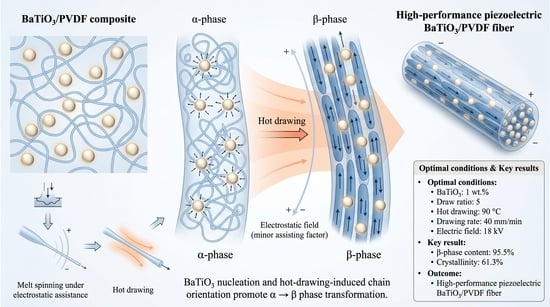
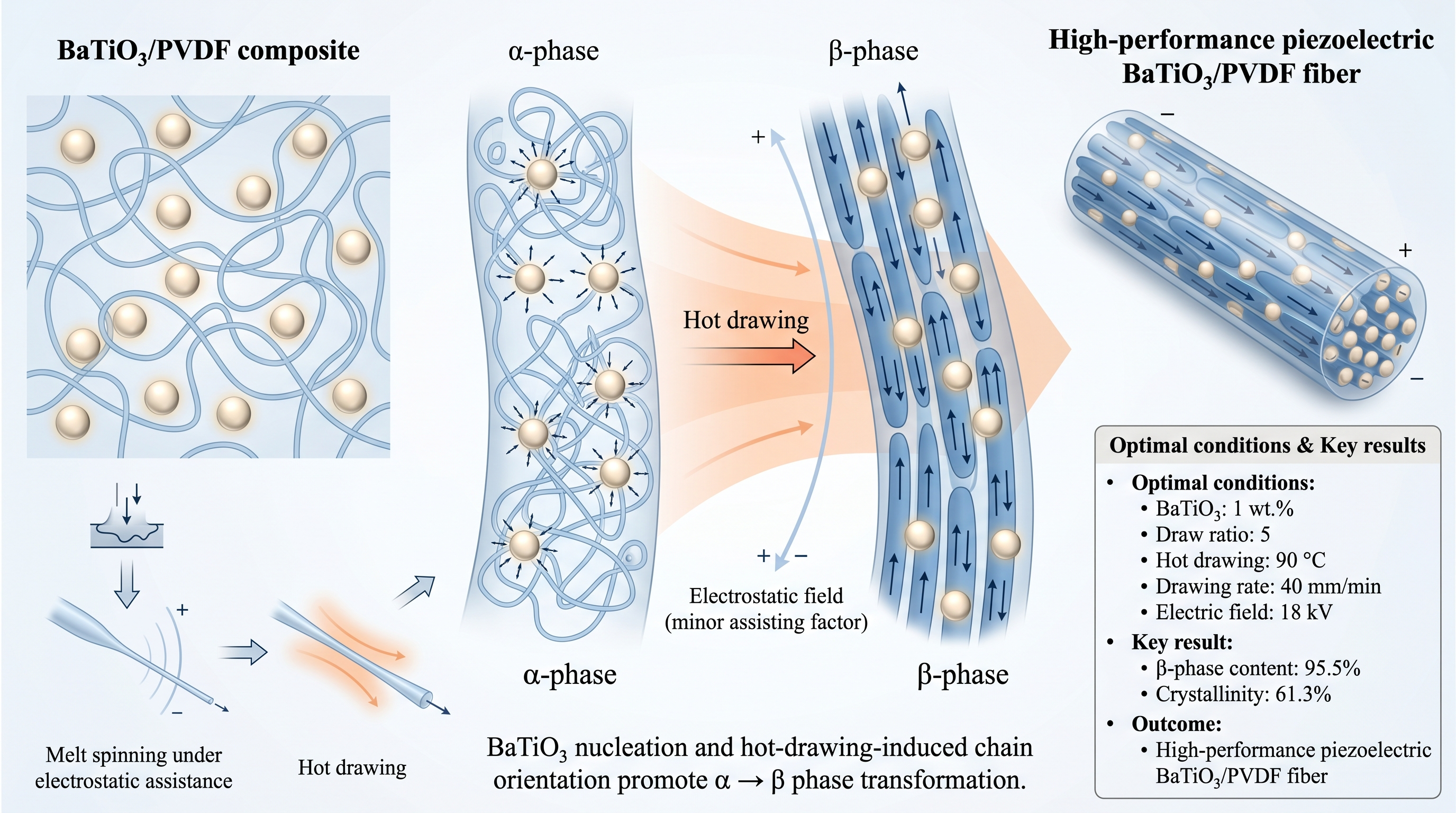
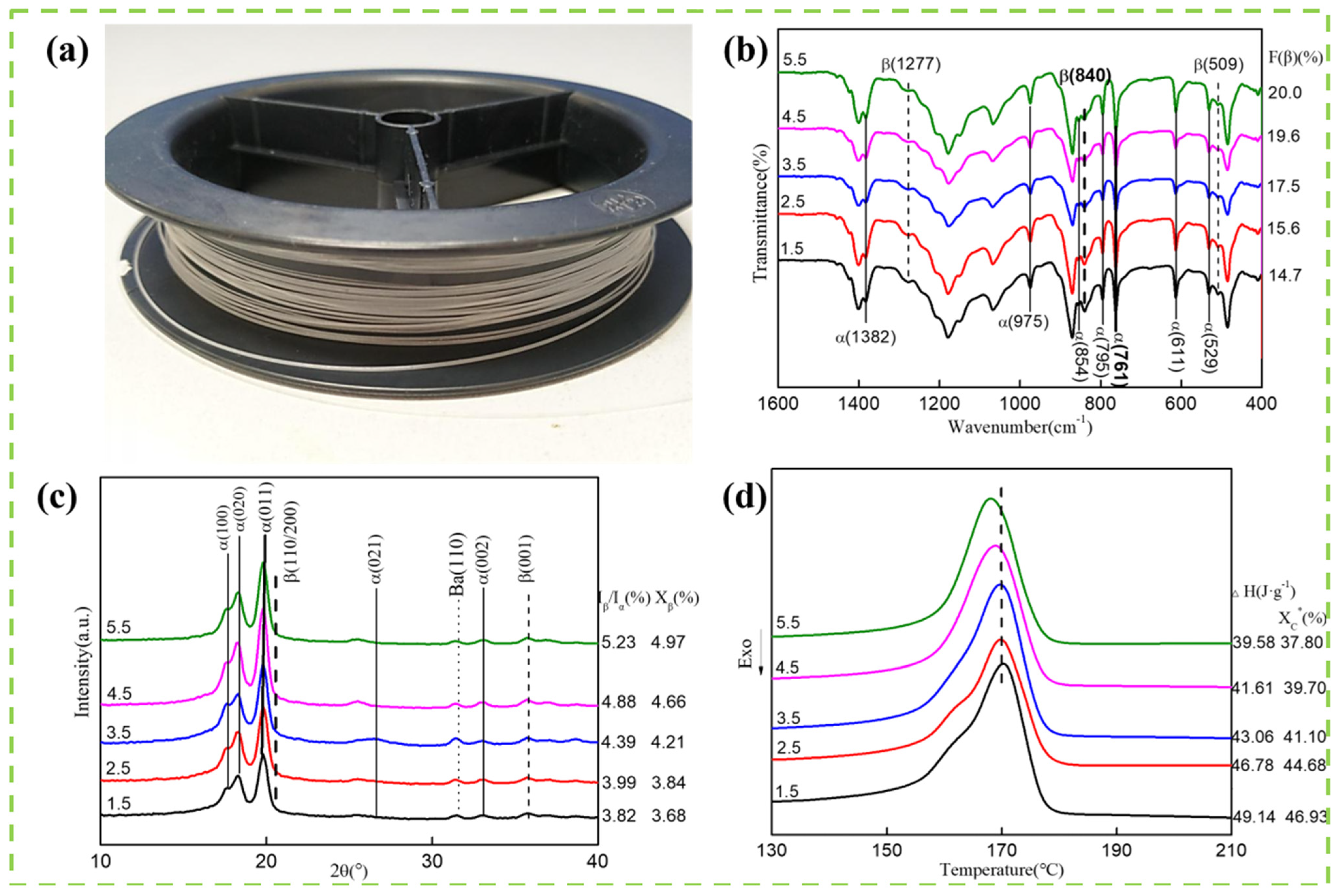
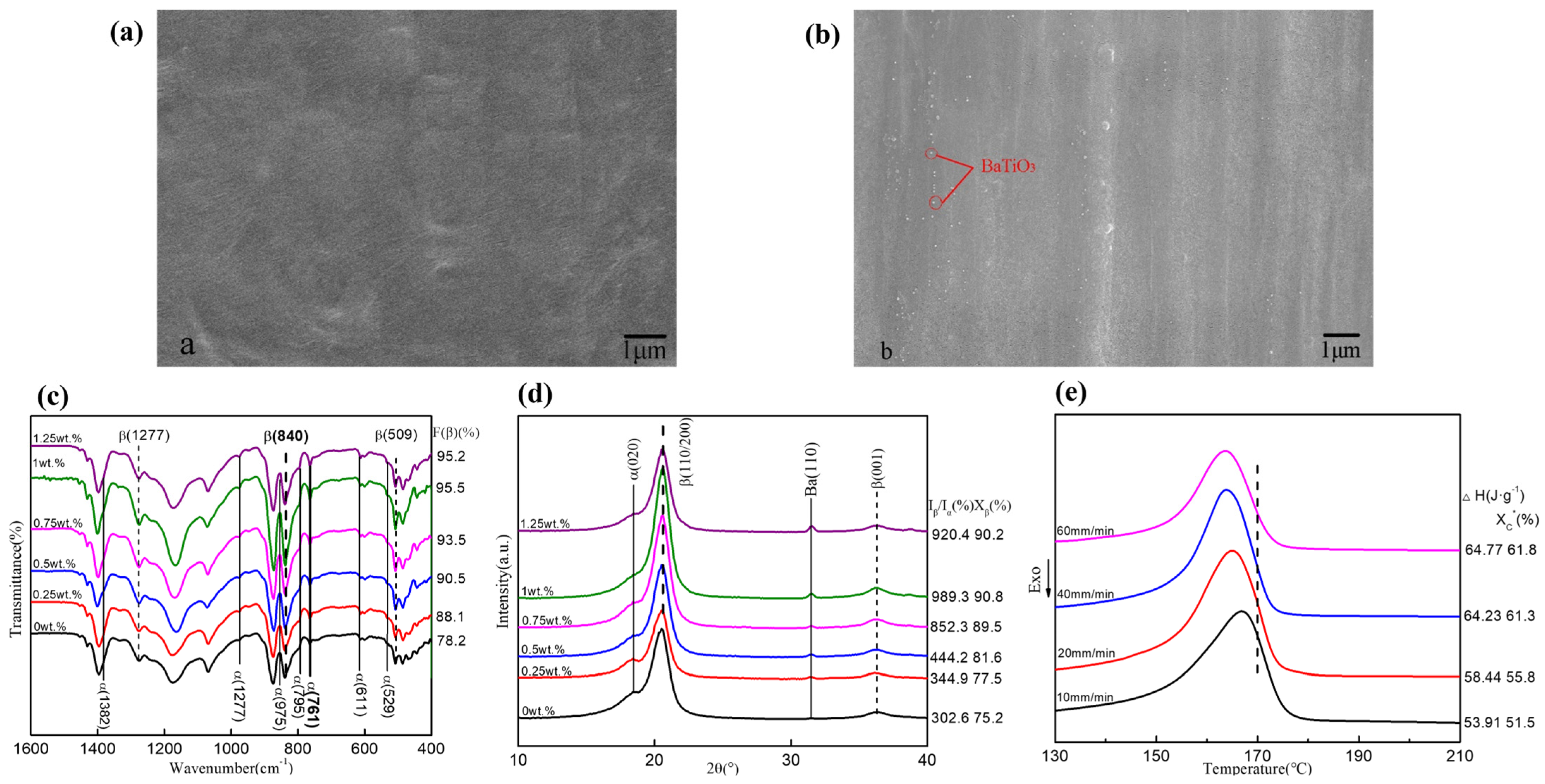
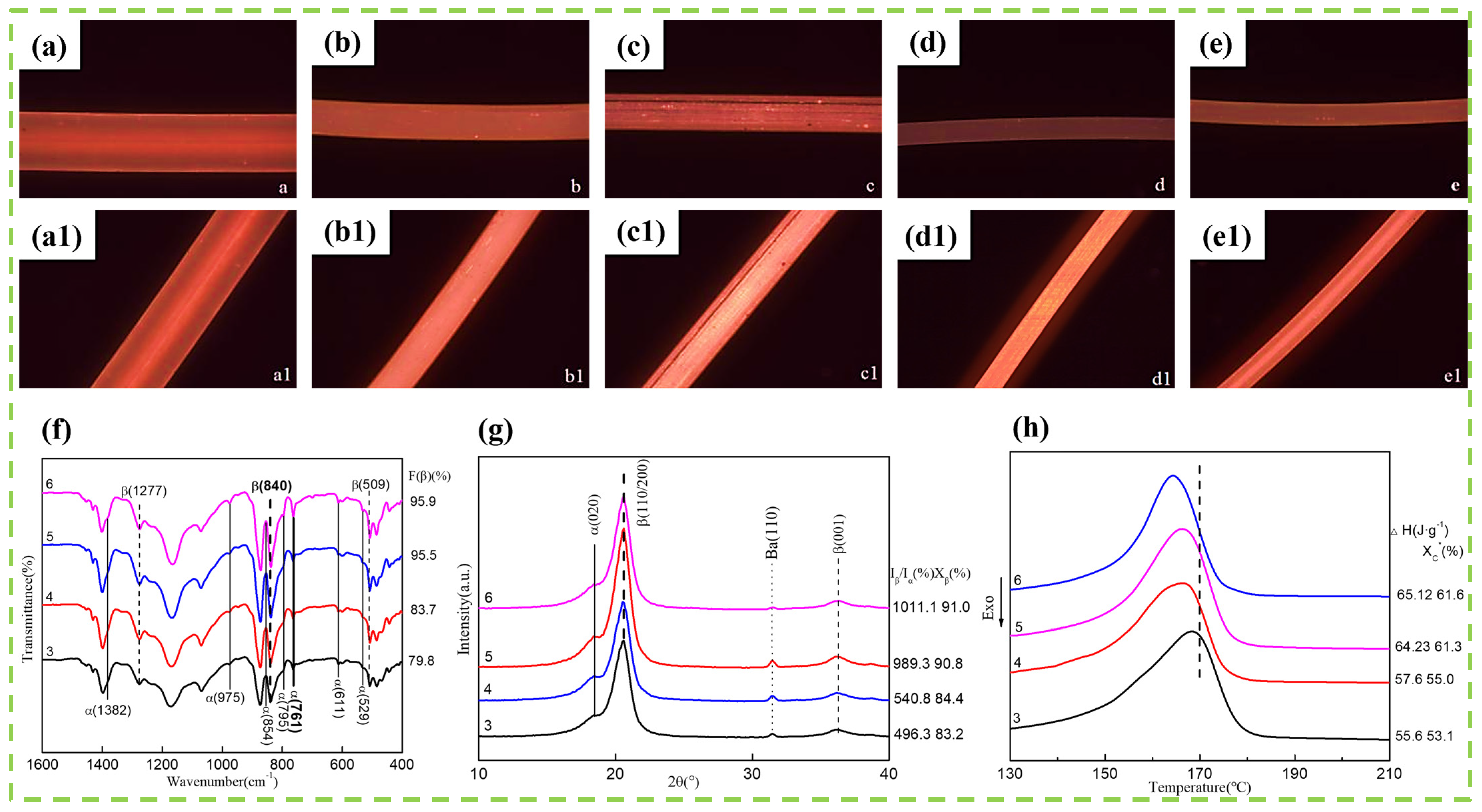
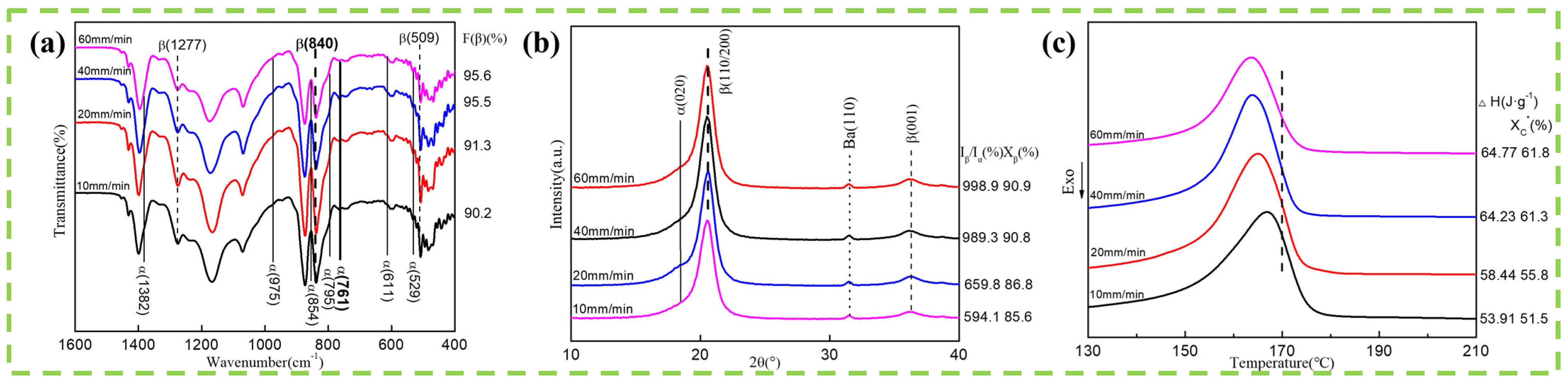
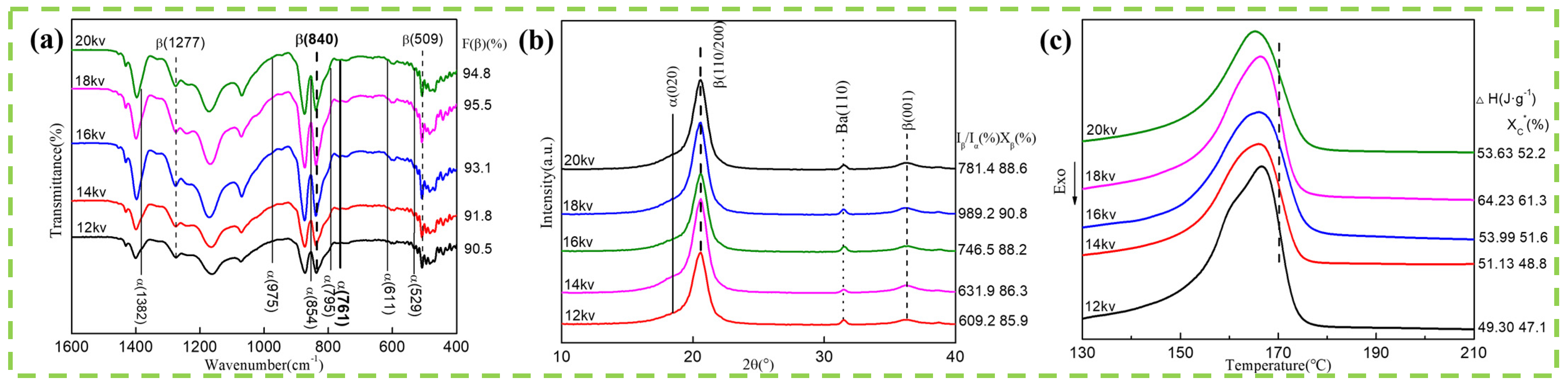
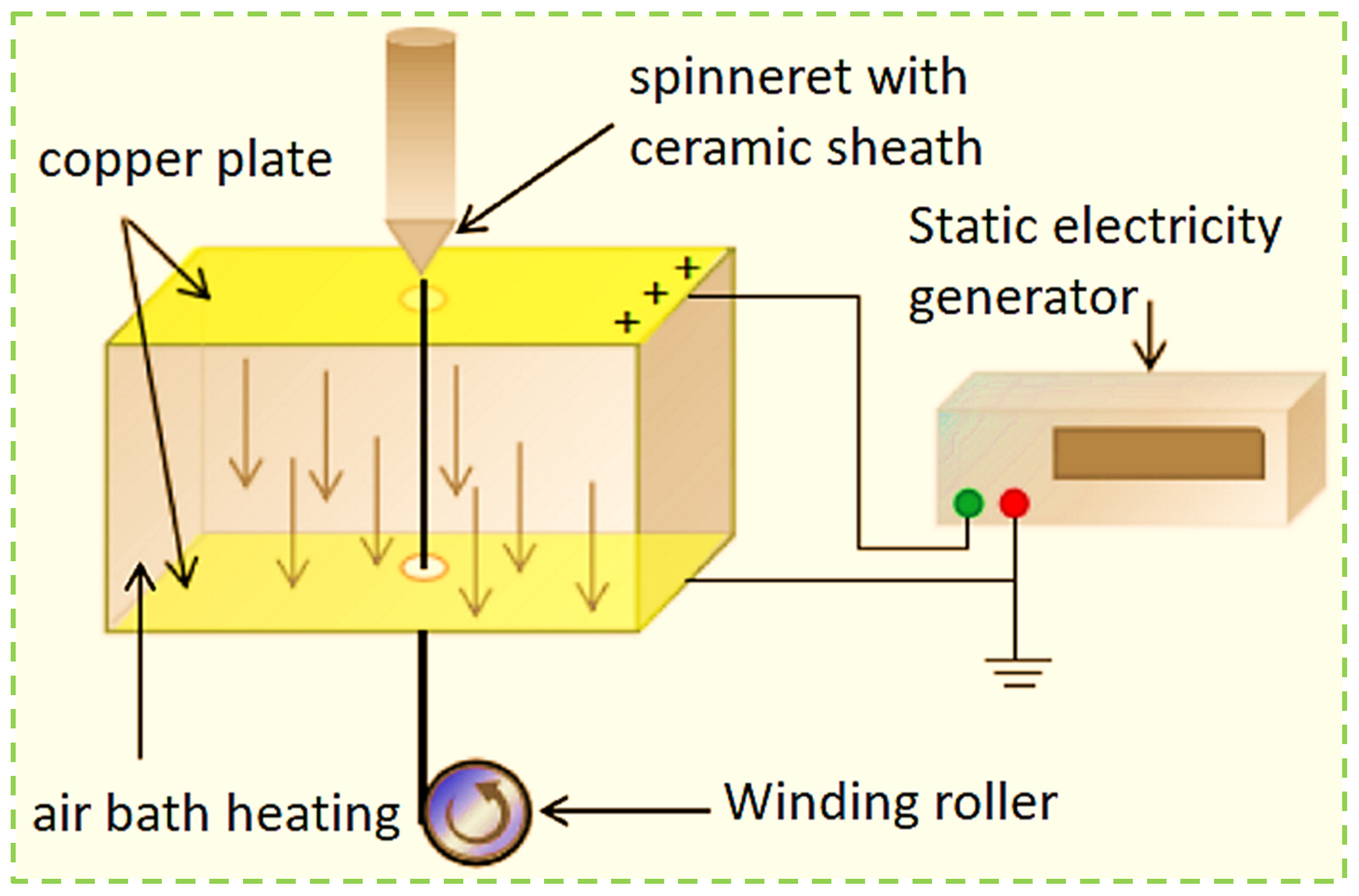
Flexible piezoelectric fibers are promising materials for next-generation wearable and flexible electronic devices due to their lightweight structure, mechanical flexibility, and electromechanical response. In this study, BaTiO3/PVDF composite fibers were prepared by melt spinning under an electrostatic field, followed by thermal drawing to enhance the electroactive phase content. The effects of BaTiO3 loading, draw ratio, thermal stretching ratio, stretching rate, and electric field strength on the crystalline structure of the fibers were systematically investigated. Fourier transform infrared spectroscopy, X-ray diffraction, differential scanning calorimetry, and electron microscopy were used to evaluate phase evolution, crystallinity, and filler distribution. The results showed that the processing conditions significantly influenced the transformation of PVDF from the α-phase to the electroactive β-phase. The optimized fibers were obtained at 1 wt.% BaTiO3, a thermal stretching ratio of 5, a stretching rate of 40 mm/min, and an electric field strength of 18 kV, resulting in a crystallinity of 61.3% and a β-phase content of 95.5%. The enhanced structural characteristics indicate the strong potential of the developed composite fibers for flexible electroactive applications, though direct electromechanical characterization is required for device integration.
Keywords: barium titanate; nanoparticles; polyvinylidene fluoride; piezoelectric material; melt spinning; composite fiber barium titanate; nanoparticles; polyvinylidene fluoride; piezoelectric material; melt spinning; composite fiber
Graphical Abstract