This is an early access version, the complete PDF, HTML, and XML versions will be available soon.
Article

Magnetically Controlled Two-Dimensional Charge Transport in Repulsive Nanostructured Potentials

Department of Physics, Prairie View A&M University, Prairie View, TX 77446, USA
*
Author to whom correspondence should be addressed.
Nanomaterials 2026, 16(11), 661; https://doi.org/10.3390/nano16110661 (registering DOI)
Submission received: 27 April 2026 / Revised: 17 May 2026 / Accepted: 21 May 2026 / Published: 24 May 2026
(This article belongs to the Special Issue Applications and Theoretical Studies of Low-Dimensional Nanomaterials)

Abstract

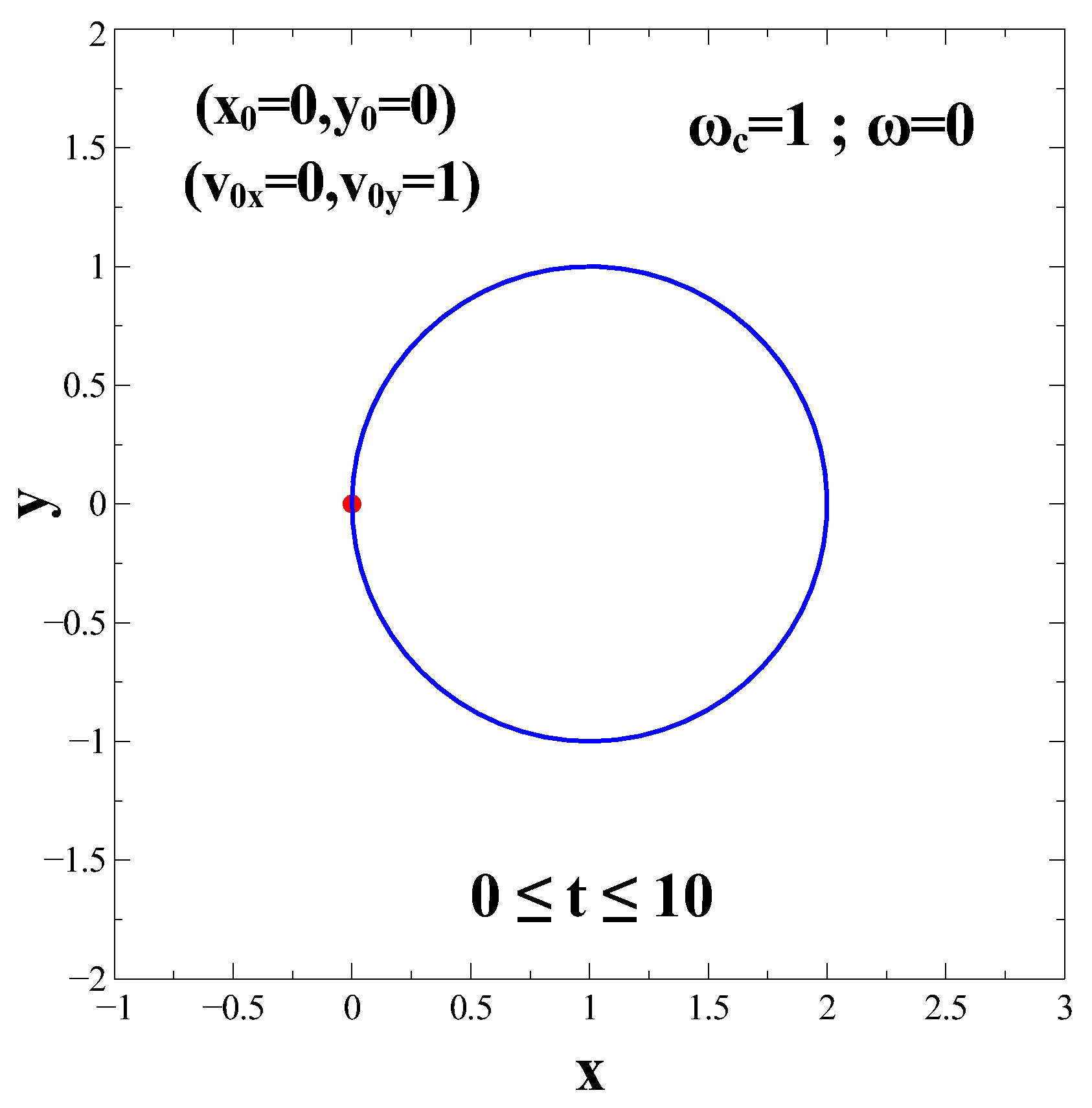
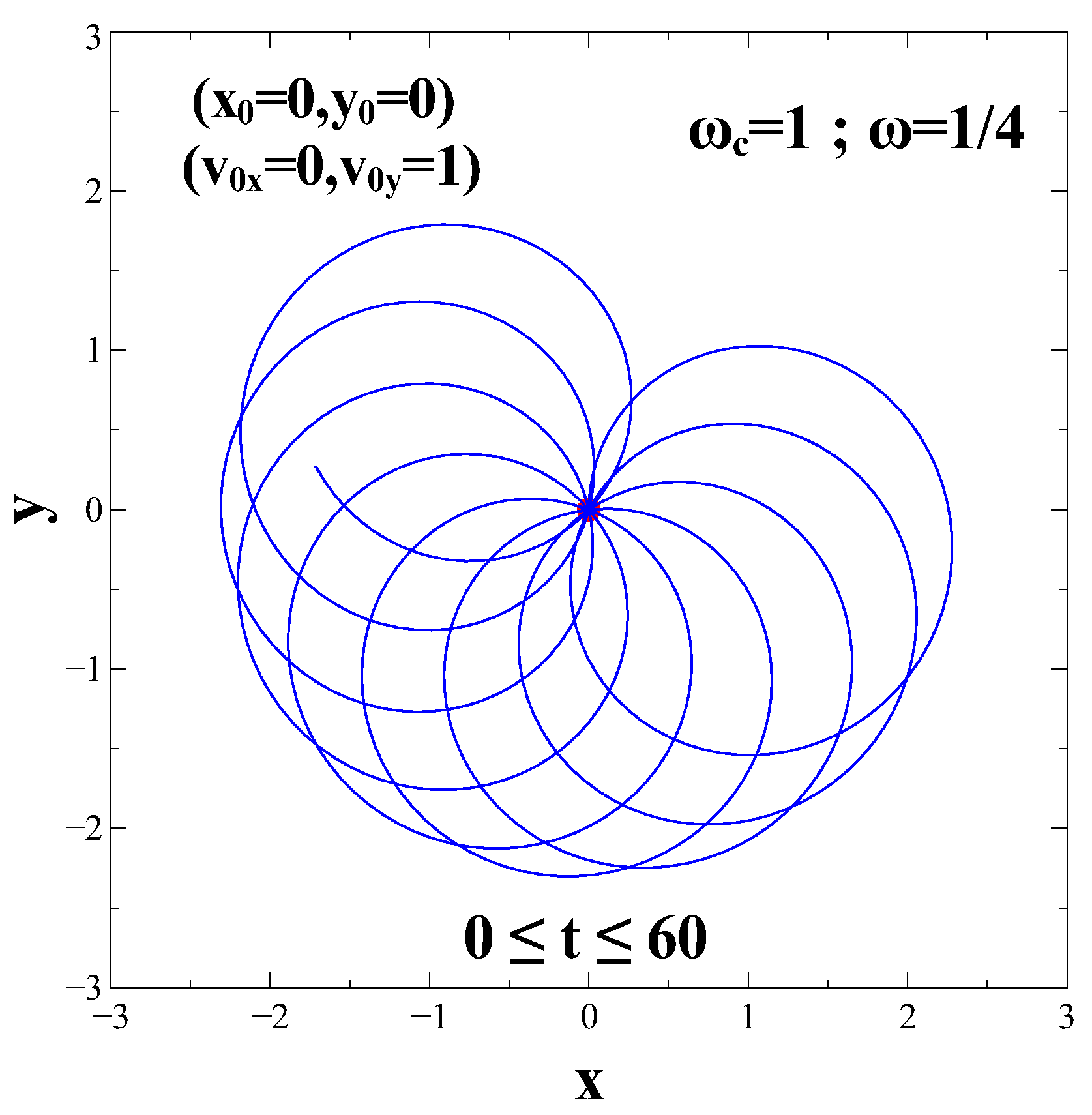
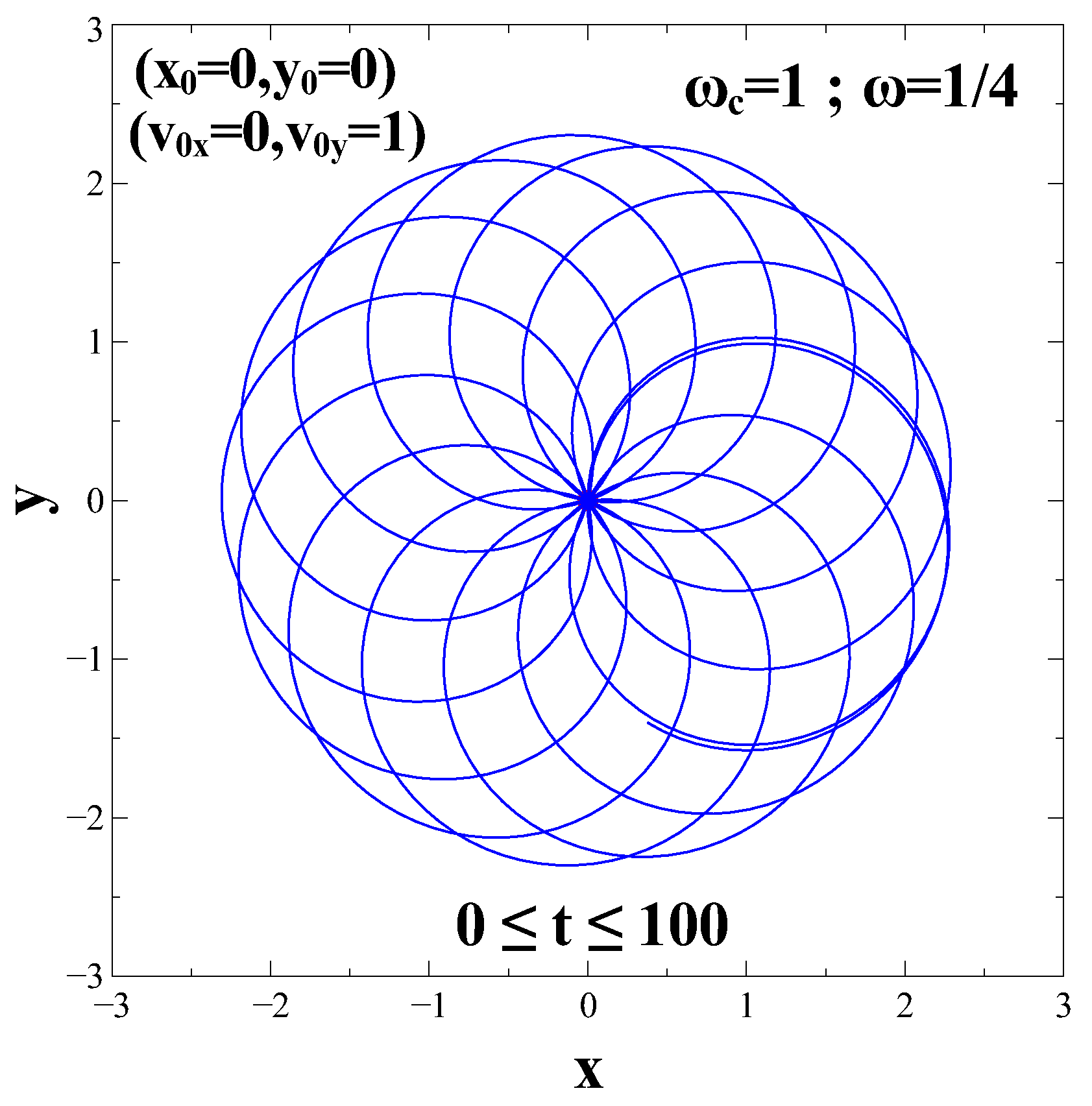
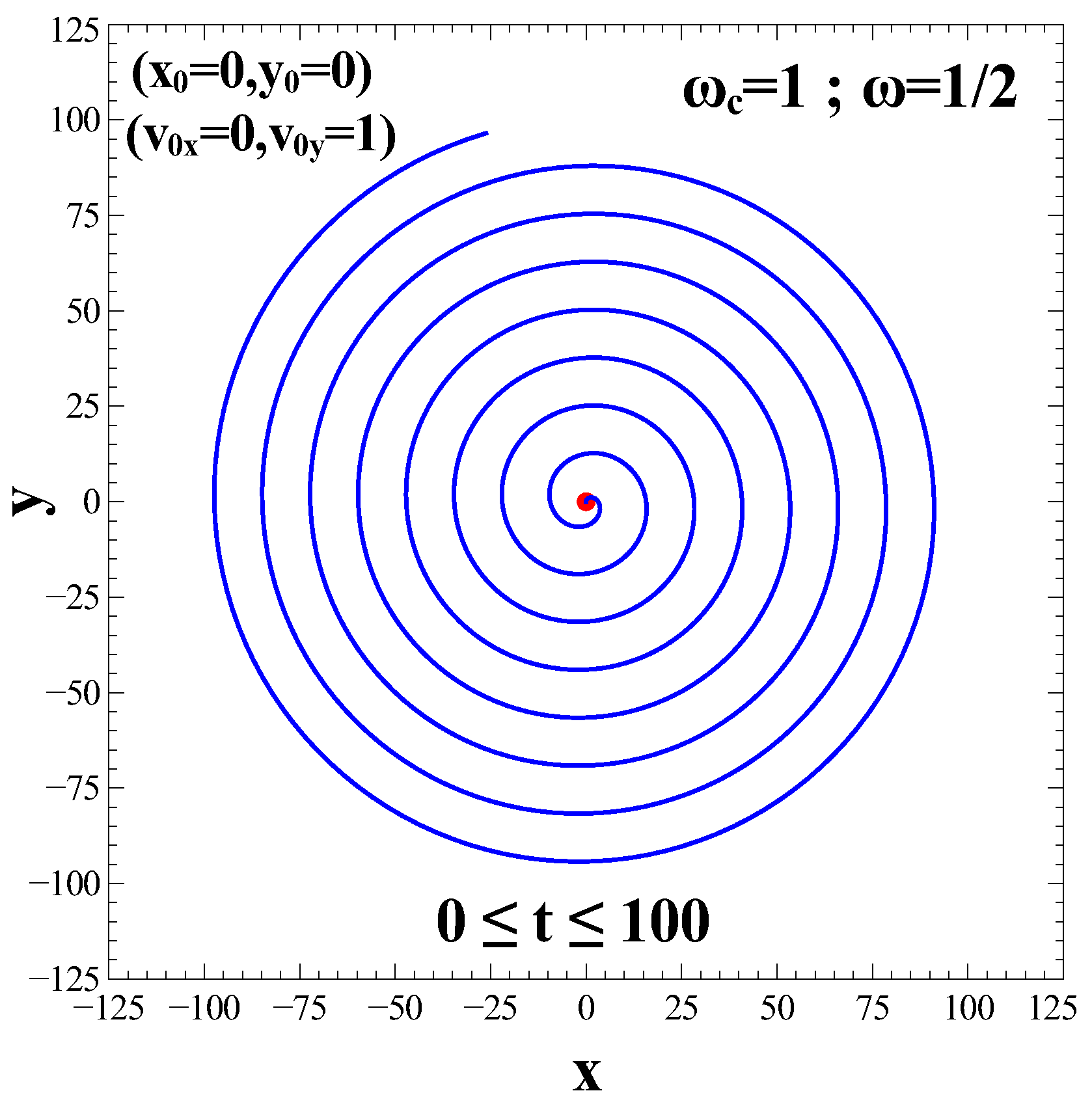
We study the planar dynamics of a charged particle subjected to a radially repulsive inverted harmonic potential and a perpendicular uniform magnetic field, a configuration that is relevant to nanoscale-charged transport and confinement in low-dimensional systems. The competition between the destabilizing central repulsion and magnetic field-induced rotational motion gives rise to rich trajectory behavior, including spiraling, unbounded escape, and parameter-dependent quasi-confined motion. The governing coupled differential equations of motion are solved analytically. The resulting trajectories are classified as functions of system parameters. The proposed framework provides insight into charge carrier dynamics in nanostructured environments such as quantum wells, 2D materials, and plasma-like nanosystems, where effective repulsive potentials may arise from external gating or collective interactions. In addition, the model offers a classical analogue for interpreting features associated with magnetic confinement in non-equilibrium or unstable regimes. These results contribute to the theoretical foundation for designing and controlling charged particle motion in emerging nanomaterials and devices.
Keywords: charge transport; nanostructured potential; magnetic confinement; cyclotron motion; nanomaterials and devices charge transport; nanostructured potential; magnetic confinement; cyclotron motion; nanomaterials and devices