Poly(3-hydroxybutyrate)-Based Biomimetic Materials Encapsulated with Amide Derivatives of Chlorin-e6 for Advanced Photodynamic Therapy

 ,
,  ,
,  , , , , , , and
Abstract
1. Introduction
2. Materials and Methods
2.1. Materials
2.1.1. Polymer
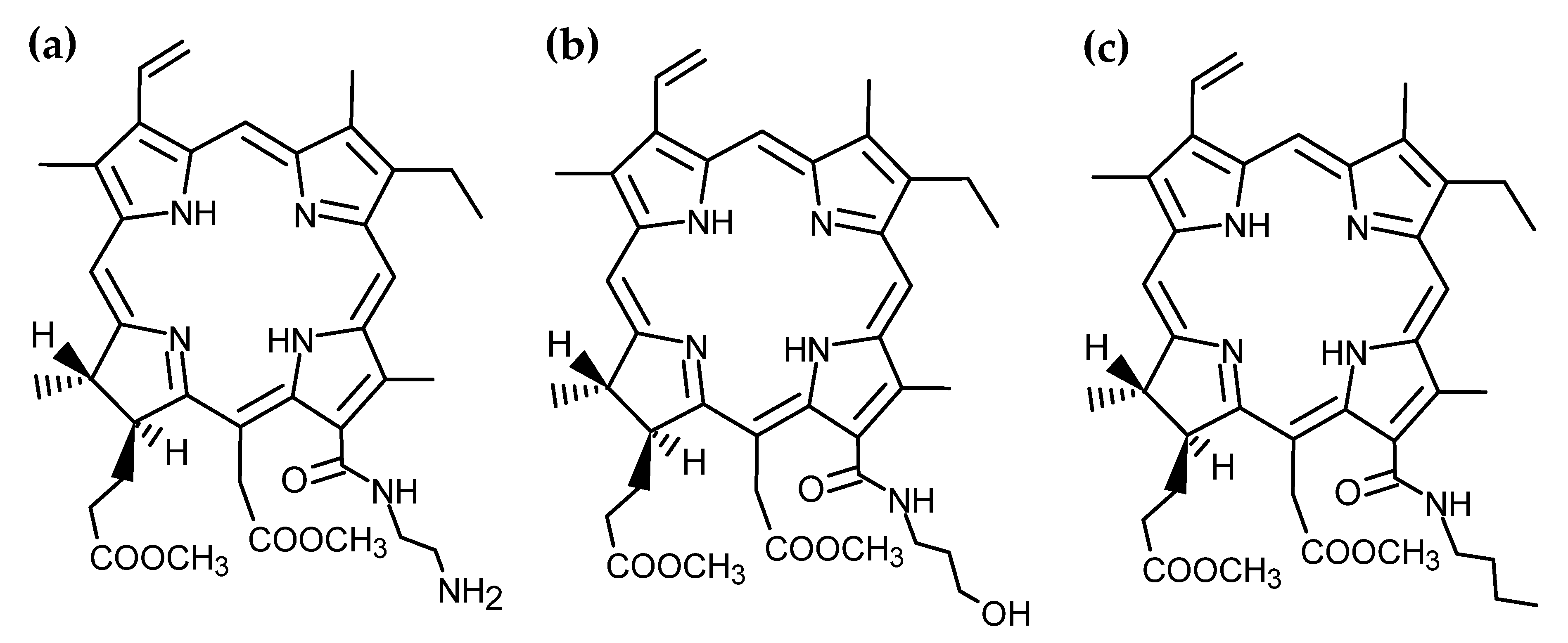
2.1.2. Photosensitizers
2.1.3. Reagents
2.2. Electrospinning
2.3. Methods
2.3.1. Characterization of PHB-CpD Matrices
2.3.2. Photochemical Assay of CpDs and PHB-CpD Matrices
2.3.3. Biological Assay of PHB-CpD Matrices
2.3.4. Antimicrobial Assay of CpDs and PHB-CpD Matrices
2.3.5. Statistics and Data Analysis
3. Results and Discussion
3.1. Electrospinning of PHB-CpD Matrices
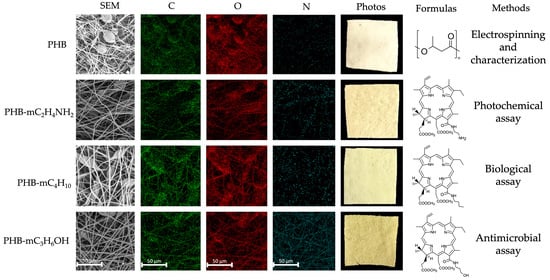
3.2. Characterization of Electrospun PHB-CpD Matrices
3.3. Thermal Properties of PHB-CpD Matrices
3.4. FTIR of CpDs and PHB-CpD Matrices
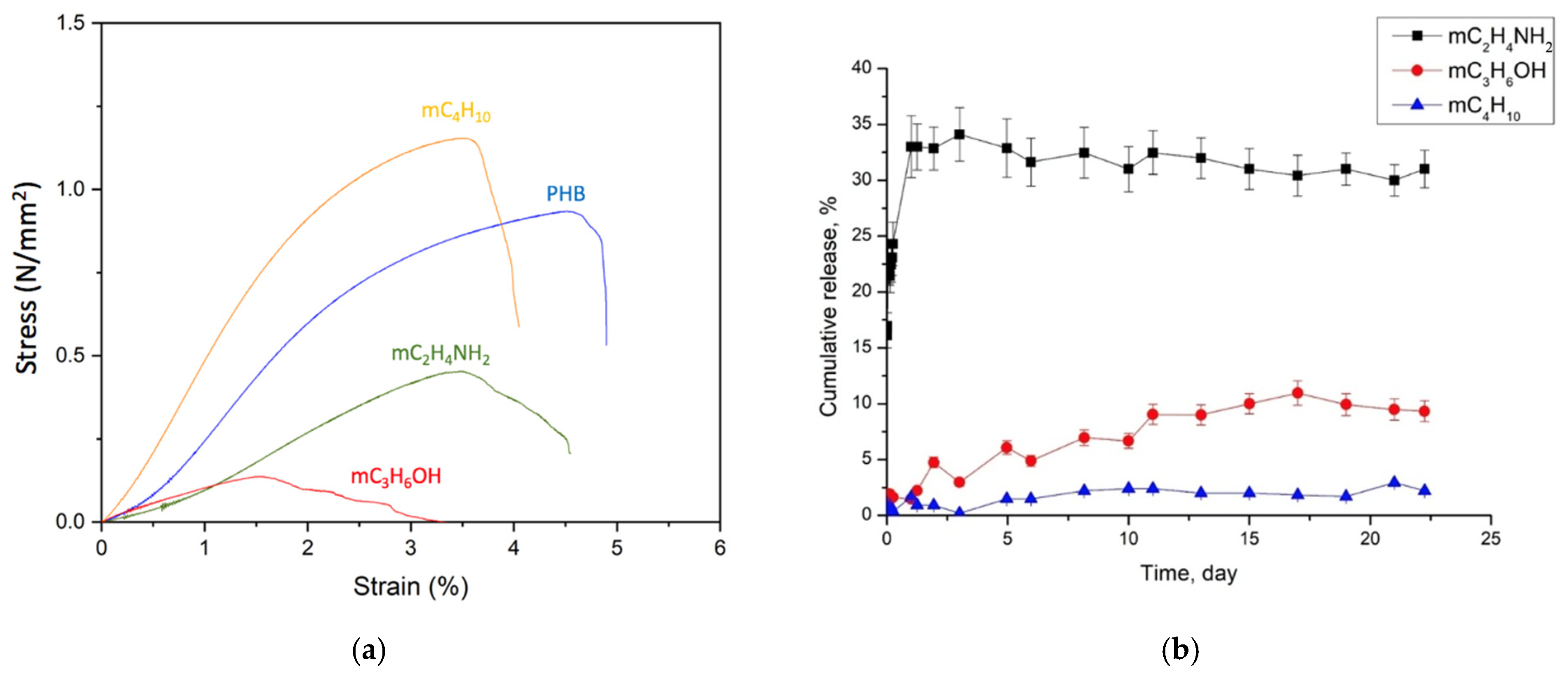
3.5. Mechanical Properties of PHB-CpD Matrices
3.6. Release of CpDs from PHB-CpD Matrices
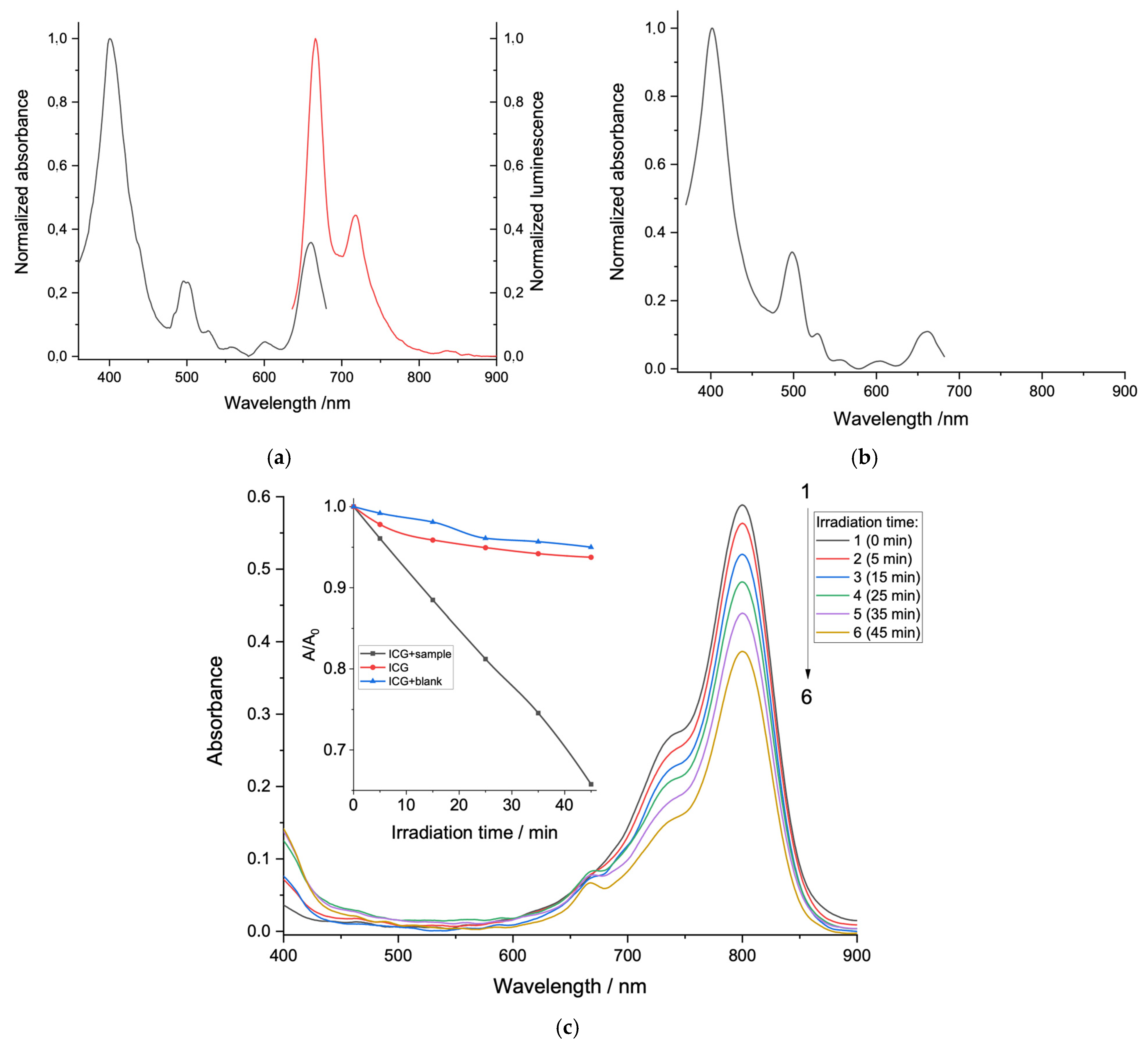
3.7. Luminescence Spectroscopy of PHB-CpD Matrices
3.8. Singlet Oxygen Generation
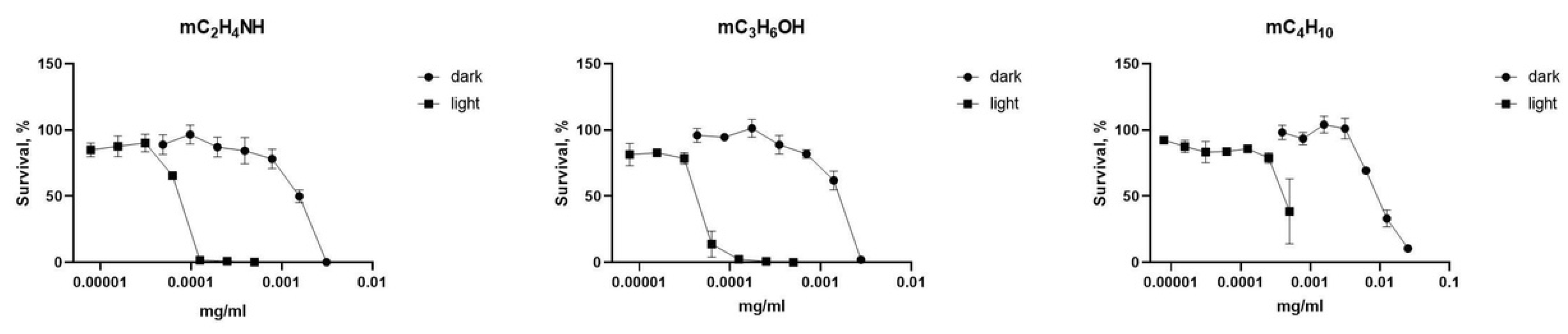
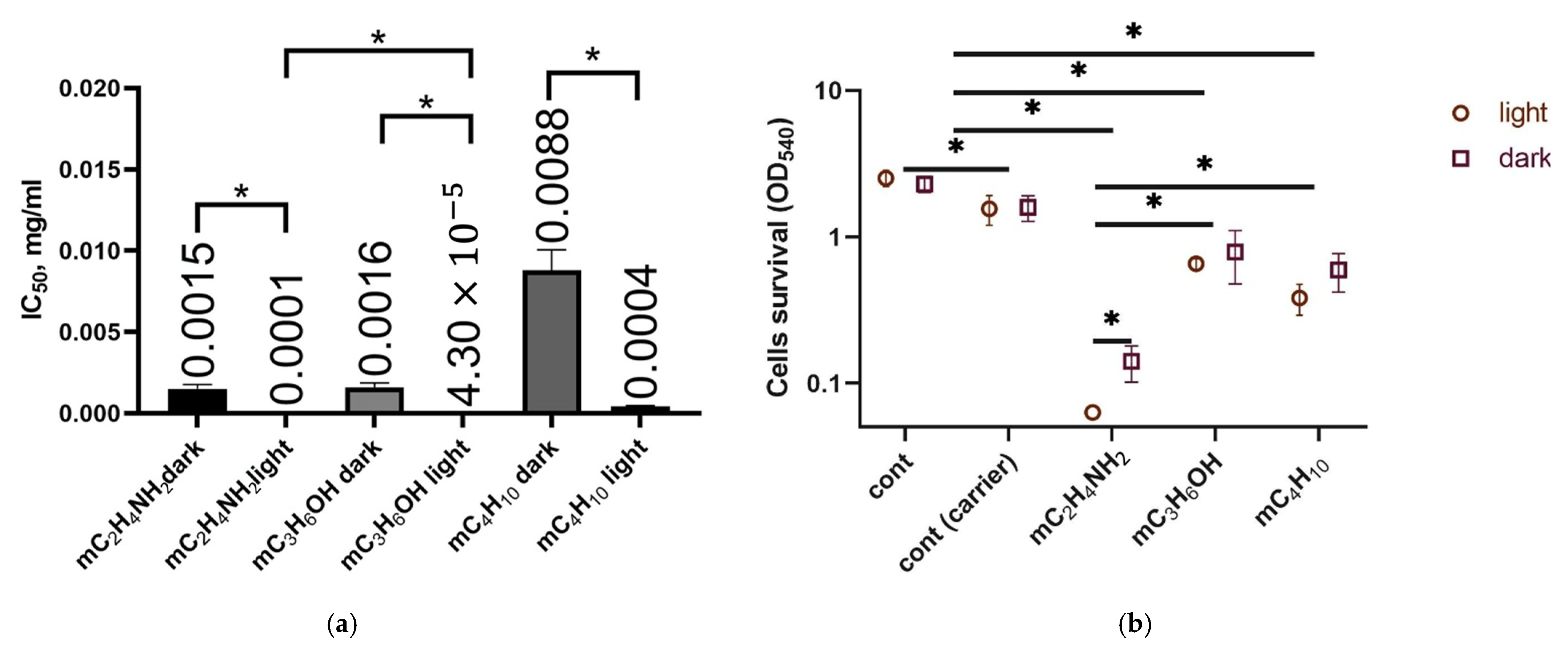
3.9. Cytotoxic Activity of CpDs
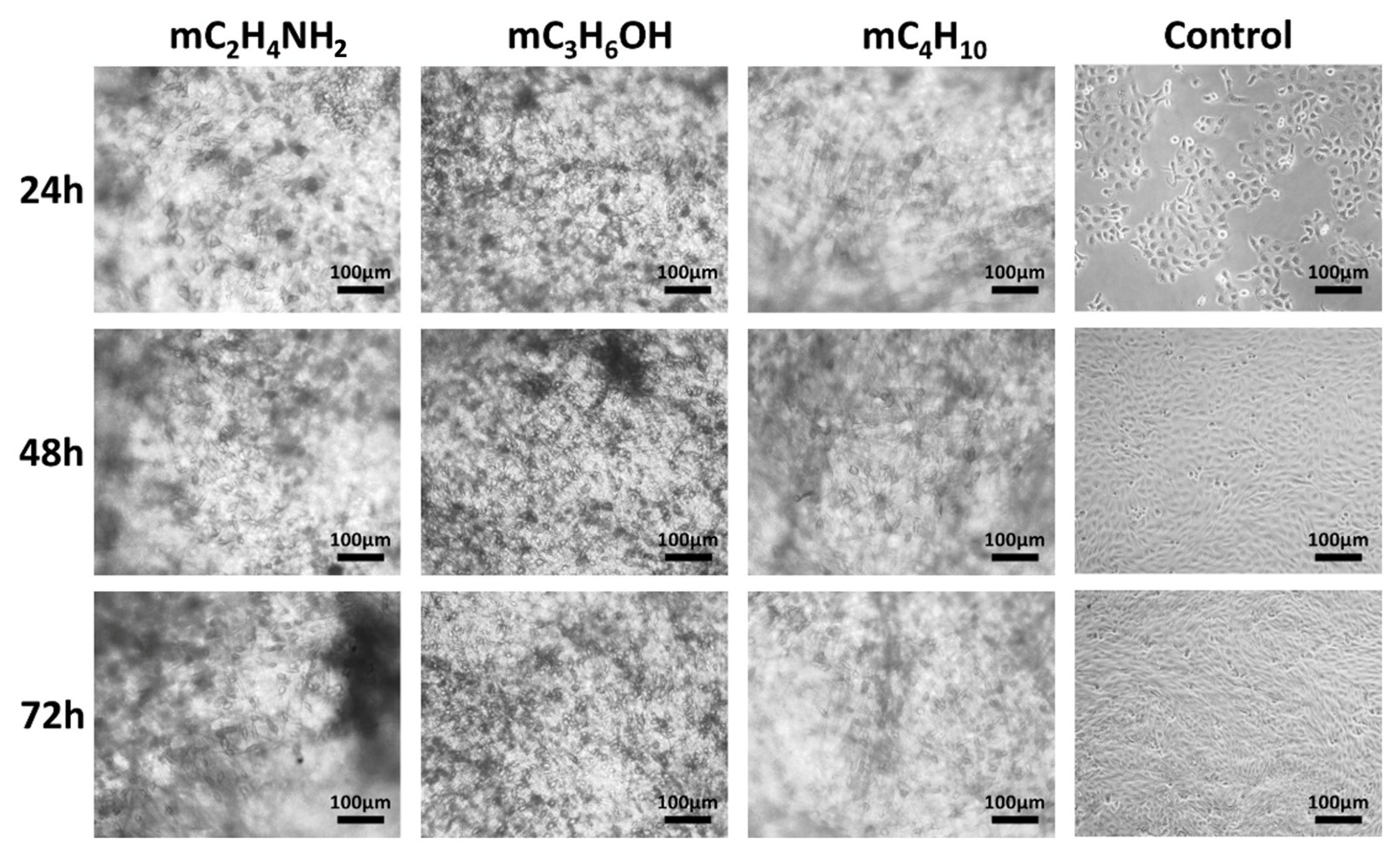
3.10. Cytotoxic Activity of PHB-CpD Matrices
3.11. Antimicrobial Test
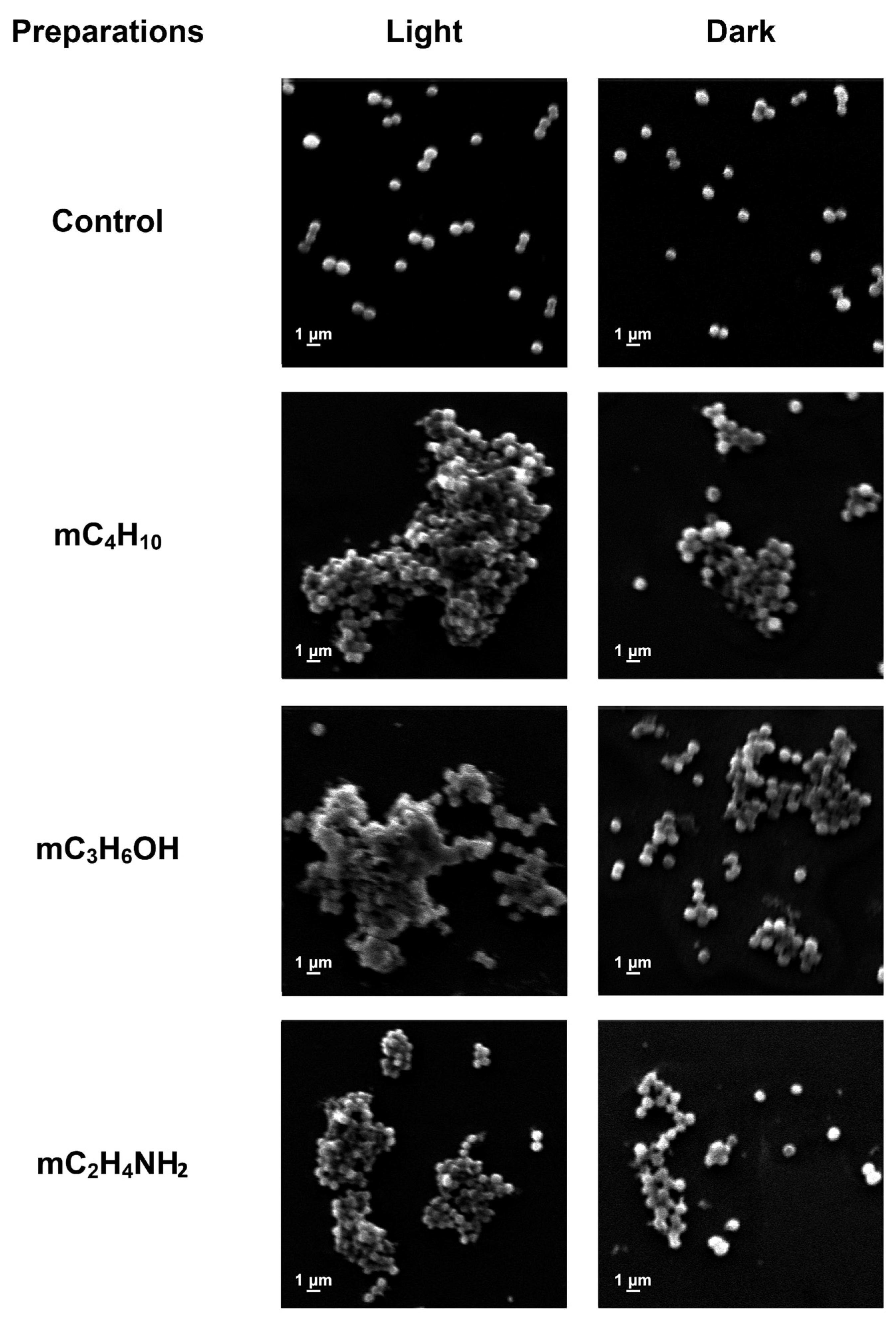
3.12. Bacterial Cell SEM Results
4. Conclusions
Author Contributions
Funding
Data Availability Statement
Acknowledgments
Conflicts of Interest
References
- Abdel-Kader, M.H. Photodynamic Therapy: From Theory to Application; Springer-Verlag: Berlin/Heidelberg, Germany, 2014. [Google Scholar]
- Sato, Y.; Takahashi, S.; Toshiyasu, T.; Tsuji, H.; Hanai, N.; Homma, A. Squamous Cell Carcinoma of the Eyelid. Jpn. J. Clin. Oncol. 2024, 54, 4–12. [Google Scholar] [CrossRef] [PubMed]
- Agostinis, P.; Berg, K.; Cengel, K.A.; Foster, T.H.; Girotti, A.W.; Gollnick, S.O.; Hahn, S.M.; Hamblin, M.R.; Juzeniene, A.; Kessel, D.; et al. Photodynamic Therapy of Cancer: An Update. CA Cancer J. Clin. 2011, 61, 250–281. [Google Scholar] [CrossRef] [PubMed]
- Thunshelle, C.; Yin, R.; Chen, Q.; Hamblin, M.R. Current Advances in 5-Aminolevulinic Acid Mediated Photodynamic Therapy. Curr. Dermatol. Rep. 2016, 5, 179–190. [Google Scholar] [CrossRef]
- Chin, W.W.L.; Heng, P.W.S.; Thong, P.S.P.; Bhuvaneswari, R.; Hirt, W.; Kuenzel, S.; Soo, K.C.; Olivo, M. Improved Formulation of Photosensitizer Chlorin E6 Polyvinylpyrrolidone for Fluorescence Diagnostic Imaging and Photodynamic Therapy of Human Cancer. Eur. J. Pharm. Biopharm. 2008, 69, 1083–1093. [Google Scholar] [CrossRef]
- do Amaral, S.R.; Aires-Fernandes, M.; Haddad, F.F.; Gini, A.L.R.; Scarim, C.B.; Primo, F.L. Ex Vivo Biosafety and Efficacy Assessment of Advanced Chlorin E6 Nanoemulsions as a Drug Delivery System for Photodynamic Antitumoral Application. Molecules 2025, 30, 544. [Google Scholar] [CrossRef]
- Fernandez, J.M.; Bilgin, M.D.; Grossweiner, L.I. Singlet Oxygen Generation by Photodynamic Agents. J. Photochem. Photobiol. B 1997, 37, 131–140. [Google Scholar] [CrossRef]
- Tegos, G.P.; Anbe, M.; Yang, C.; Demidova, T.N.; Satti, M.; Mroz, P.; Janjua, S.; Gad, F.; Hamblin, M.R. Protease-Stable Polycationic Photosensitizer Conjugates between Polyethyleneimine and Chlorin(E6) for Broad-Spectrum Antimicrobial Photoinactivation. Antimicrob. Agents Chemother. 2006, 50, 1402–1410. [Google Scholar] [CrossRef]
- Liu, W.; Ma, X.; Jin, Y.; Zhang, J.; Li, Y.; Tang, Y.; Song, Y.; Wang, S. Chlorin E6-Biotin Conjugates for Tumor-Targeting Photodynamic Therapy. Molecules 2021, 26, 7342. [Google Scholar] [CrossRef]
- Isaac-Lam, M.F.; Hammonds, D.M. Biotinylated Chlorin and Its Zinc and Indium Complexes: Synthesis and in Vitro Biological Evaluation for Photodynamic Therapy. Pharmaceuticals 2017, 10, 41. [Google Scholar] [CrossRef] [PubMed]
- Huang, L.; Zhiyentayev, T.; Xuan, Y.; Azhibek, D.; Kharkwal, G.B.; Hamblin, M.R. Photodynamic Inactivation of Bacteria Using Polyethylenimine-Chlorin(E6) Conjugates: Effect of Polymer Molecular Weight, Substitution Ratio of Chlorin(E6) and PH. Lasers Surg. Med. 2011, 43, 313–323. [Google Scholar] [CrossRef]
- Li, W.T.; Tsao, H.W.; Chen, Y.Y.; Cheng, S.W.; Hsu, Y.C. A Study on the Photodynamic Properties of Chlorophyll Derivatives Using Human Hepatocellular Carcinoma Cells. Photochem. Photobiol. Sci. 2007, 6, 1341–1348. [Google Scholar] [CrossRef]
- Dabrowski, J.M.; Arnaut, L.G.; Pereira, M.M.; Urbańska, K.; Stochel, G. Improved Biodistribution, Pharmacokinetics and Photodynamic Efficacy Using a New Photostable Sulfonamide Bacteriochlorin. Med. Chem. Comm. 2012, 3, 502–505. [Google Scholar] [CrossRef]
- Sokol, M.B.; Beganovskaya, V.A.; Mollaeva, M.R.; Yabbarov, N.G.; Chirkina, M.V.; Belykh, D.V.; Startseva, O.M.; Egorov, A.E.; Kostyukov, A.A.; Kuzmin, V.A.; et al. Pharmaceutical Approach to Develop Novel Photosensitizer Nanoformulation: An Example of Design and Characterization Rationale of Chlorophyll α Derivative. Pharmaceutics 2024, 16, 126. [Google Scholar] [CrossRef]
- Sheng, Y.; Ren, Q.; Tao, C.; Wen, M.; Qu, P.; Yu, N.; Li, M.; Chen, Z.; Xie, X. Construction of PEGylated Chlorin E6@CuS-Pt Theranostic Nanoplatforms for Nanozymes-Enhanced Photodynamic-Photothermal Therapy. J. Colloid Interface Sci. 2023, 645, 122–132. [Google Scholar] [CrossRef]
- Gradova, M.A.; Gradov, O.V.; Lobanov, A.V.; Bychkova, A.V.; Nikolskaya, E.D.; Yabbarov, N.G.; Mollaeva, M.R.; Egorov, A.E.; Kostyukov, A.A.; Kuzmin, V.A.; et al. Characterization of a Novel Amphiphilic Cationic Chlorin Photosensitizer for Photodynamic Applications. Int. J. Mol. Sci. 2023, 24, 345. [Google Scholar] [CrossRef]
- Gavrina, A.I.; Shirmanova, M.V.; Aksenova, N.A.; Yuzhakova, D.V.; Snopova, L.B.; Solovieva, A.B.; Timashev, P.S.; Dudenkova, V.V.; Zagaynova, E.V. Photodynamic Therapy of Mouse Tumor Model Using Chlorin E6- Polyvinyl Alcohol Complex. J. Photochem. Photobiol. B 2018, 178, 614–622. [Google Scholar] [CrossRef] [PubMed]
- Bortnevskaya, Y.S.; Shiryaev, N.A.; Zakharov, N.S.; Kitoroage, O.O.; Gradova, M.A.; Karpechenko, N.Y.; Novikov, A.S.; Nikolskaya, E.D.; Mollaeva, M.R.; Yabbarov, N.G.; et al. Synthesis and Biological Properties of EGFR-Targeted Photosensitizer Based on Cationic Porphyrin. Pharmaceutics 2023, 15, 1284. [Google Scholar] [CrossRef]
- Yang, H.; Shang, Z.; Shi, Q.; Gao, J.; Wang, X.; Hu, F. Combination of PEG-b-PAA Carrier and Efficient Cationic Photosensitizers for Photodynamic Therapy. Chem. Asian J. 2023, 18, e202300212. [Google Scholar] [CrossRef] [PubMed]
- Paul, M.; Itoo, A.M.; Ghosh, B.; Biswas, S. Hypoxia Alleviating Platinum(IV)/Chlorin E6-Based Combination Chemotherapeutic-Photodynamic Nanomedicine for Oropharyngeal Carcinoma. J. Photochem. Photobiol. B 2023, 238, 112627. [Google Scholar] [CrossRef]
- Fan, D.; Wang, S.; Huang, R.; Liu, X.; He, H.; Zhang, G. Light-Assisted “Nano-Neutrophils” with High Drug Loading for Targeted Cancer Therapy. Int. J. Nanomed. 2023, 18, 6487–6502. [Google Scholar] [CrossRef] [PubMed]
- Cui, M.; Tang, D.; Wang, B.; Zhang, H.; Liang, G.; Xiao, H. Bioorthogonal Guided Activation of CGAS-STING by AIE Photosensitizer Nanoparticles for Targeted Tumor Therapy and Imaging. Adv. Mater. 2023, 35, 2305668. [Google Scholar] [CrossRef]
- Comincini, S.; Manai, F.; Sorrenti, M.; Perteghella, S.; D’Amato, C.; Miele, D.; Catenacci, L.; Bonferoni, M.C. Development of Berberine-Loaded Nanoparticles for Astrocytoma Cells Administration and Photodynamic Therapy Stimulation. Pharmaceutics 2023, 15, 1078. [Google Scholar] [CrossRef]
- Buddhiraju, H.S.; Balaraman, J.; Dehariya, D.; Pebam, M.; Eswar, K.; Rengan, A.K. PLGA Nanoparticle Loaded with Antioxidants and Photosensitizer for ROS Shock Mediated Phototherapy of Triple Negative Breast Cancer. Biomed. Mater. 2023, 18, 065002. [Google Scholar] [CrossRef] [PubMed]
- Ding, Y.F.; Li, S.; Liang, L.; Huang, Q.; Yuwen, L.; Yang, W.; Wang, R.; Wang, L.H. Highly Biocompatible Chlorin E6-Loaded Chitosan Nanoparticles for Improved Photodynamic Cancer Therapy. ACS Appl. Mater. Interfaces 2018, 10, 9980–9987. [Google Scholar] [CrossRef] [PubMed]
- Kostryukova, L.V.; Prozorovskiy, V.N.; Medvedeva, N.V.; Ipatova, O.M. Comparison of a New Nanoform of the Photosensitizer Chlorin E6, Based on Plant Phospholipids, with Its Free Form. FEBS Open Bio 2018, 8, 201–210. [Google Scholar] [CrossRef]
- Kumari, P.; Jain, S.; Ghosh, B.; Zorin, V.; Biswas, S. Polylactide-Based Block Copolymeric Micelles Loaded with Chlorin E6 for Photodynamic Therapy: In Vitro Evaluation in Monolayer and 3D Spheroid Models. Mol. Pharm. 2017, 14, 3789–3800. [Google Scholar] [CrossRef] [PubMed]
- Ding, F.; Li, H.J.; Wang, J.X.; Tao, W.; Zhu, Y.H.; Yu, Y.; Yang, X.Z. Chlorin E6-Encapsulated Polyphosphoester Based Nanocarriers with Viscous Flow Core for Effective Treatment of Pancreatic Cancer. ACS Appl. Mater. Interfaces 2015, 7, 18856–18865. [Google Scholar] [CrossRef]
- Kałas, W.; Wysokińska, E.; Przybyło, M.; Langner, M.; Ulatowska-Jarża, A.; Biały, D.; Wawrzyńska, M.; Zioło, E.; Gil, W.; Trzeciak, A.M.; et al. Photoactive Liposomal Formulation of PVP-Conjugated Chlorin E6 for Photodynamic Reduction of Atherosclerotic Plaque. Int. J. Mol. Sci. 2019, 20, 3852. [Google Scholar] [CrossRef]
- Peng, P.C.; Hong, R.L.; Tsai, T.; Chen, C.T. Co-Encapsulation of Chlorin E6 and Chemotherapeutic Drugs in a Pegylated Liposome Enhance the Efficacy of Tumor Treatment: Pharmacokinetics and Therapeutic Efficacy. Pharmaceutics 2019, 11, 617. [Google Scholar] [CrossRef]
- Zhang, D.; Wu, M.; Zeng, Y.; Wu, L.; Wang, Q.; Han, X.; Liu, X.; Liu, J. Chlorin E6 Conjugated Poly(Dopamine) Nanospheres as PDT/PTT Dual-Modal Therapeutic Agents for Enhanced Cancer Therapy. ACS Appl. Mater. Interfaces 2015, 7, 8176–8187. [Google Scholar] [CrossRef]
- Ryu, J.H.; Jeong, Y.-I.; Kim, H.Y.; Son, G.M.; Lee, H.L.; Chung, C.-W.; Chu, C.W.; Kang, D.H. Enhanced Photosensing and Photodynamic Treatment of Colon Cancer Cells Using Methoxy Poly(Ethylene Glycol)-Conjugated Chlorin E6. J. Nanosci. Nanotechnol. 2017, 18. [Google Scholar] [CrossRef] [PubMed]
- Lee, S.J.; Koo, H.; Jeong, H.; Huh, M.S.; Choi, Y.; Jeong, S.Y.; Byun, Y.; Choi, K.; Kim, K.; Kwon, I.C. Comparative Study of Photosensitizer Loaded and Conjugated Glycol Chitosan Nanoparticles for Cancer Therapy. J. Control. Release 2011, 152, 21–29. [Google Scholar] [CrossRef]
- Son, J.; Yi, G.; Kwak, M.H.; Yang, S.M.; Park, J.M.; Lee, B.I.; Choi, M.G.; Koo, H. Gelatin-Chlorin E6 Conjugate for in Vivo Photodynamic Therapy. J. Nanobiotechnol. 2019, 17, 50. [Google Scholar] [CrossRef] [PubMed]
- Lee, S.R.; Kim, Y.J. Hydrophilic Chlorin E6-Poly(Amidoamine) Dendrimer Nanoconjugates for Enhanced Photodynamic Therapy. Nanomaterials 2018, 8, 445. [Google Scholar] [CrossRef]
- Michalak, M.; Szymczyk, J.; Pawska, A.; Wysocki, M.; Janiak, D.; Ziental, D.; Ptaszek, M.; Güzel, E.; Sobotta, L. Chlorin Activity Enhancers for Photodynamic Therapy. Molecules 2025, 30, 2810. [Google Scholar] [CrossRef]
- Karuppusamy, S.; Hyejin, K.; Kang, H.W. Nanoengineered Chlorin E6 Conjugated with Hydrogel for Photodynamic Therapy on Cancer. Colloids Surf. B Biointerfaces 2019, 181, 778–788. [Google Scholar] [CrossRef]
- Zhang, Y.; Zhu, C.; Zhang, Z.; Zhao, J.; Yuan, Y.; Wang, S. Oxidation Triggered Formation of Polydopamine-Modified Carboxymethyl Cellulose Hydrogel for Anti-Recurrence of Tumor. Colloids Surf. B Biointerfaces 2021, 207, 112025. [Google Scholar] [CrossRef]
- Wani, S.U.D.; Zargar, M.I.; Masoodi, M.H.; Alshehri, S.; Alam, P.; Ghoneim, M.M.; Alshlowi, A.; Shivakumar, H.G.; Ali, M.; Shakeel, F. Silk Fibroin as an Efficient Biomaterial for Drug Delivery, Gene Therapy, and Wound Healing. Int. J. Mol. Sci. 2022, 23, 14421. [Google Scholar] [CrossRef]
- Tyubaeva, P.M.; Varyan, I.A.; Mazitov, A.B.; Krivandin, A.V.; Bolshakova, A.V.; Martirosyan, L.Y.; Motyakin, M.V.; Romanov, R.R.; Nikolskaya, E.D.; Yabbarov, N.G.; et al. Electrospun Poly(3-Hydroxybutyrate) Fibers Containing Pheophorbide Derivatives: Structural, Photophysical, and Photodynamic Properties for Anticancer Applications. Colloids Surf. B Biointerfaces 2025, 256, 115061. [Google Scholar] [CrossRef]
- Silva, R.R.A.; Marques, C.S.; Arruda, T.R.; Teixeira, S.C.; de Oliveira, T.V. Biodegradation of Polymers: Stages, Measurement, Standards and Prospects. Macromol 2023, 3, 371–399. [Google Scholar] [CrossRef]
- Muhammadi; Shabina; Afzal, M.; Hameed, S. Bacterial Polyhydroxyalkanoates-Eco-Friendly next Generation Plastic: Production, Biocompatibility, Biodegradation, Physical Properties and Applications. Green Chem. Lett. Rev. 2015, 8, 56–77. [Google Scholar] [CrossRef]
- Li, W.J.; Laurencin, C.T.; Caterson, E.J.; Tuan, R.S.; Ko, F.K. Electrospun Nanofibrous Structure: A Novel Scaffold for Tissue Engineering. J. Biomed. Mater. Res. 2002, 60, 613–621. [Google Scholar] [CrossRef] [PubMed]
- Thakur, V.K.; Thakur, M.K. (Eds.) The Main Characteristics, Properties, Improvements, and Market Data of Polyhydroxyalkanoates. In Handbook of Sustainable Polymers; Jenny Stanford Publishing: Singapore, 2016. [Google Scholar]
- Zhou, Y.; Li, Y.; Li, D.; Yin, Y.; Zhou, F.L. Electrospun PHB/Chitosan Composite Fibrous Membrane and Its Degradation Behaviours in Different PH Conditions. J. Funct. Biomater. 2022, 13, 58. [Google Scholar] [CrossRef] [PubMed]
- Slepička, P.; Malá, Z.; Rimpelová, S.; Švorčík, V. Antibacterial Properties of Modified Biodegradable PHB Non-Woven Fabric. Mater. Sci. Eng. C 2016, 65, 364–368. [Google Scholar] [CrossRef] [PubMed]
- Pardo-Figuerez, M.; Teno, J.; Lafraya, A.; Prieto, C.; Lagaron, J.M. Development of an Electrospun Patch Platform Technology for the Delivery of Carvedilol in the Oral Mucosa. Nanomaterials 2022, 12, 438. [Google Scholar] [CrossRef]
- Mohammadalipour, M.; Asadolahi, M.; Mohammadalipour, Z.; Behzad, T.; Karbasi, S. Plasma Surface Modification of Electrospun Polyhydroxybutyrate (PHB) Nanofibers to Investigate Their Performance in Bone Tissue Engineering. Int. J. Biol. Macromol. 2023, 230, 85–121. [Google Scholar] [CrossRef]
- Ding, Y.; Li, W.; Schubert, D.W.; Boccaccini, A.R.; Roether, J.A.; Santos, H.A. An Organic-Inorganic Hybrid Scaffold with Honeycomb-like Structures Enabled by One-Step Self-Assembly-Driven Electrospinning. Mater. Sci. Eng. C 2021, 124, 112079. [Google Scholar] [CrossRef]
- Montazeri, M.; Karbasi, S.; Foroughi, M.R.; Monshi, A.; Ebrahimi-Kahrizsangi, R. Evaluation of Mechanical Property and Bioactivity of Nano-Bioglass 45S5 Scaffold Coated with Poly-3-Hydroxybutyrate. J. Mater. Sci. Mater. Med. 2015, 26, 62. [Google Scholar] [CrossRef]
- Tehrani, A.H.; Zadhoush, A.; Karbasi, S.; Khorasani, S.N. Experimental Investigation of the Governing Parameters in the Electrospinning of Poly(3-Hydroxybutyrate) Scaffolds: Structural Characteristics of the Pores. J. Appl. Polym. Sci. 2010, 118, 2682–2689. [Google Scholar] [CrossRef]
- Mohammadalipour, M.; Karbasi, S.; Behzad, T.; Mohammadalipour, Z.; Zamani, M. Effect of Cellulose Nanofibers on Polyhydroxybutyrate Electrospun Scaffold for Bone Tissue Engineering Applications. Int. J. Biol. Macromol. 2022, 220, 1402–1414. [Google Scholar] [CrossRef]
- Wojtczak, M.; Galeski, A.; Pracella, M. Inhibited Crystallization of Polyhydroxybutyrate by Blending with Aliphatic-Aromatic Copolyester. Eur. Polym. J. 2018, 103, 133–144. [Google Scholar] [CrossRef]
- Heidarkhan Tehrani, A.; Zadhoush, A.; Karbasi, S.; Sadeghi-Aliabadi, H. Scaffold Percolative Efficiency: In Vitro Evaluation of the Structural Criterion for Electrospun Mats. J. Mater. Sci. Mater. Med. 2010, 21, 2989–2998. [Google Scholar] [CrossRef]
- Ré, M.I.; Rodrigues, M.F.A.; Silva, E.S.; Castro, I.M.; Simioni, A.R.; Pelisson, M.M.M.; Beltrame, M.; Tedesco, A.C. New PHB/PHPE Microspheres Obtained from Burkholderia Cepacia as Biodegradable Drug Delivery Systems for Photodynamic Therapy. Minerva Biotecnol. 2006, 18, 3. [Google Scholar]
- Hong, E.J.; Choi, D.G.; Shim, M.S. Targeted and Effective Photodynamic Therapy for Cancer Using Functionalized Nanomaterials. Acta Pharm. Sin. B 2016, 6, 297–307. [Google Scholar] [CrossRef]
- Rybkin, A.Y.; Belik, A.Y.; Goryachev, N.S.; Mikhaylov, P.A.; Kraevaya, O.A.; Filatova, N.V.; Parkhomenko, I.I.; Peregudov, A.S.; Terent’ev, A.A.; Larkina, E.A.; et al. Self-assembling nanostructures of water-soluble fullerene [60]–chlorin e6 dyads: Synthesis, photophysical properties, and photodynamic activity. Dye. Pigment. 2020, 180, 108411. [Google Scholar] [CrossRef]
- Gushchina, O.I.; Grishina, M.Y.; Larkina, E.A.; Lebedeva, V.S.; Mironov, A.F. Synthesis of Hydroxyl Derivatives of Chlorin e6. Macroheterocycles 2017, 10, 81–83. [Google Scholar] [CrossRef]
- Gushchina, O.I.; Larkina, E.A.; Nikolskaya, T.A.; Mironov, A.F. Synthesis of amide derivatives of chlorin e6 and investigation of their biological activity. J. Photochem. Photobiol. B Biol. 2015, 153, 76–81. [Google Scholar] [CrossRef]
- Tyubaeva, P.M.; Varyan, I.A.; Nikolskaya, E.D.; Yabbarov, N.G.; Chirkina, M.V.; Sokol, M.B.; Mollaeva, M.R.; Yurina, L.V.; Vasilyeva, A.D.; Rosenfeld, M.A.; et al. Electrospinning of Biomimetic Materials with Fibrinogen for Effective Early-Stage Wound Healing. Int. J. Biol. Macromol. 2024, 260, 129514. [Google Scholar] [CrossRef]
- Tyubaeva, P.M.; Varyan, I.A.; Krivandin, A.V.; Shatalova, O.V.; Olkhov, A.A.; Popov, A.A.; Xu, H.; Arzhakova, O.V. Structure and Performance of All-Green Electrospun PHB-Based Membrane Fibrous Biomaterials Modified with Hemin. Membranes 2023, 13, 478. [Google Scholar] [CrossRef]
- Hantel, M.M.; Armstrong, M.J.; DaRosa, F.; l’Abee, R. Characterization of Tortuosity in Polyetherimide Membranes Based on Gurley and Electrochemical Impedance Spectroscopy. J. Electrochem. Soc. 2017, 164, A334–A339. [Google Scholar] [CrossRef]
- Tyubaeva, P.M.; Olkhov, A.A.; Podmasteriev, V.V. Physical and Mechanical Properties of Nonwoven Materials for Medical Purposes Based on Polyhydroxybutyrate. J. Phys. Conf. Ser. 2018, 1129, 012034. [Google Scholar] [CrossRef]
- Pradhan, S.; Dikshit, P.K.; Moholkar, V.S. Production, Ultrasonic Extraction, and Characterization of Poly (3-Hydroxybutyrate) (PHB) Using Bacillus megaterium and Cupriavidus necator. Polym. Adv. Technol. 2018, 29, 2392–2400. [Google Scholar] [CrossRef]
- Sindhu, R.; Ammu, B.; Binod, P.; Deepthi, S.K.; Ramachandran, K.B.; Soccol, C.R.; Pandey, A. Production and Characterization of Poly-3-Hydroxybutyrate from Crude Glycerol by Bacillus Sphaericus NII 0838 and Improving Its Thermal Properties by Blending with Other Polymers. Braz. Arch. Biol. Technol. 2011, 54, 783–794. [Google Scholar] [CrossRef]
- McCreery, R.L. Calibration and Validation. In Raman Spectroscopy for Chemical Analysis; John Wiley & Sons, Inc.: Hoboken, NJ, USA, 2000. [Google Scholar]
- Zhang, M.; Chen, J.; Mao, X.; He, Y.; Li, R.; Wang, M.; Wang, Y.; He, L.; Yuan, M.; Feng, X.; et al. Fluorescent Nonwoven Fabric with Synergistic Dual Fluorescence Emission for Visible and Selective Ammonia Gas Detection. Radiat. Phys. Chem. 2022, 201, 110453. [Google Scholar] [CrossRef]
- Kumar, P.; Nagarajan, A.; Uchil, P.D. Analysis of Cell Viability by the MTT Assay. Cold Spring Harb. Protoc. 2018, 2018, pdb-prot095505. [Google Scholar] [CrossRef]
- Peng, Q.; Moan, J.; Nesland, J.M. Correlation of Subcellular and Intratumoral Photosensitizer Localization with Ultrastructural Features after Photodynamic Therapy. Ultrastruct. Pathol. 1996, 20, 109–129. [Google Scholar] [CrossRef]
- Pavani, C.; Uchoa, A.F.; Oliveira, C.S.; Iamamoto, Y.; Baptista, M.S. Effect of Zinc Insertion and Hydrophobicity on the Membrane Interactions and PDT Activity of Porphyrin Photosensitizers. Photochem. Photobiol. Sci. 2009, 8, 233–240. [Google Scholar] [CrossRef]
- Kumar, A.; Schweizer, H.P. Bacterial Resistance to Antibiotics: Active Efflux and Reduced Uptake. Adv. Drug Deliv. Rev. 2005, 57, 1486–1513. [Google Scholar] [CrossRef]
- Galstyan, A.; Strokov, K. Influence of Photosensitizer Concentration and Polymer Composition on Photoinduced Antimicrobial Activity of PVA- and PVA-Chitosan-Based Electrospun Nanomaterials Cross-Linked with Tailor-Made Silicon(IV) Phthalocyanine. Photochem. Photobiol. Sci. 2022, 21, 1387–1398. [Google Scholar] [CrossRef]
- Tyubaeva, P.M.; Gasparyan, K.G.; Fedotov, A.Y.; Lobzhanidze, P.V.; Baranov, O.V.; Egorov, A.A.; Sirotinkin, V.P.; Komlev, V.S.; Olkhov, A.A. Development of Nonwoven Fibrous Materials Based on Poly-3-Hydroxybutyrate with a High Content of α-Tricalcium Phosphate. Polymers 2023, 15, 3167. [Google Scholar] [CrossRef]
- Tyubaeva, P.M.; Gasparyan, K.G.; Romanov, R.R.; Kolesnikov, E.A.; Martirosyan, L.Y.; Larkina, E.A.; Tyubaev, M.A. Biomimetic Materials Based on Poly-3-Hydroxybutyrate and Chlorophyll Derivatives. Polymers 2024, 16, 101. [Google Scholar] [CrossRef] [PubMed]
- Bonartseva, G.A.; Myshkina, V.L.; Nikolaeva, D.A.; Rebrov, A.V.; Gerasin, V.A.; Makhina, T.K. The Biodegradation of Poly-β-Hydroxybutyrate (PHB) by a Model Soil Community: The Effect of Cultivation Conditions on the Degradation Rate and the Physicochemical Characteristics of PHB. Mikrobiologiya 2002, 71, 221–226. [Google Scholar] [CrossRef]
- Ol’khov, A.A.; Karpova, S.G.; Iordanskii, A.L.; Staroverova, O.V.; Rogovina, S.Z.; Berlin, A.A. Effect of Rolling on the Structure of Fibrous Materials Based on Poly(3-Hydroxybutyrate) and Obtained by Electrospinning. Fibre Chem. 2015, 46, 317–324. [Google Scholar] [CrossRef]
- Thanh, N.H.; Olekhnovich, R.; Sitnikova, V.; Kremleva, A.; Snetkov, P.; Uspenskaya, M. PHB/PEG Nanofiber Mat Obtained by Electrospinning and Their Performances. Technologies 2023, 11, 48. [Google Scholar] [CrossRef]
- Sadat-Shojai, M. Electrospun Polyhydroxybutyrate/Hydroxyapatite Nanohybrids: Microstructure and Bone Cell Response. J. Mater. Sci. Technol. 2016, 32, 1013–1020. [Google Scholar] [CrossRef]
- Vanheusden, C.; Vanminsel, J.; Reddy, N.; Samyn, P.; D’Haen, J.; Peeters, R.; Ethirajan, A.; Buntinx, M. Fabrication of Poly(3-Hydroxybutyrate-Co-3-Hydroxyhexanoate) Fibers Using Centrifugal Fiber Spinning: Structure, Properties and Application Potential. Polymers 2023, 15, 1181. [Google Scholar] [CrossRef]
- Brunetti, L.; Degli Esposti, M.; Morselli, D.; Boccaccini, A.R.; Fabbri, P.; Liverani, L. Poly(Hydroxyalkanoate)s Meet Benign Solvents for Electrospinning. Mater. Lett. 2020, 278, 128389. [Google Scholar] [CrossRef]
- Arrieta, M.P.; López, J.; López, D.; Kenny, J.M.; Peponi, L. Development of Flexible Materials Based on Plasticized Electrospun PLA-PHB Blends: Structural, Thermal, Mechanical and Disintegration Properties. Eur. Polym. J. 2015, 73, 433–446. [Google Scholar] [CrossRef]
- Olkhov, A.A.; Karpova, S.G.; Bychkova, A.V.; Vetcher, A.A.; Iordanskii, A.L. Electrospinning of Fiber Matrices from Polyhydroxybutyrate for the Controlled Release Drug Delivery Systems. In Electrospinning—Material Technology of the Future; IntechOpen: London, UK, 2022. [Google Scholar]
- Golecki, H.M.I.; Yuan, H.; Glavin, C.; Potter, B.; Badrossamay, M.R.; Goss, J.A.; Phillips, M.D.; Parker, K.K. Effect of Solvent Evaporation on Fiber Morphology in Rotary Jet Spinning. Langmuir 2014, 30, 13369–13374. [Google Scholar] [CrossRef] [PubMed]
- Olkhov, A.A.; Tyubaeva, P.M.; Zernova, Y.N.; Markin, V.S.; Kosenko, R.; Filatova, A.G.; Gasparyan, K.G.; Iordanskii, A.L. The Influence of Technological Factors and Polar Molecules on the Structure of Fibrillar Matrices Based on Ultrafine Poly-3-Hydroxybutyrate Fibers Obtained via Electrospinning. Technologies 2023, 11, 118. [Google Scholar] [CrossRef]
- Belcher, J.D.; Beckman, J.D.; Balla, G.; Balla, J.; Vercellotti, G. Heme Degradation and Vascular Injury. Antioxid. Redox Signal. 2010, 12, 233–248. [Google Scholar] [CrossRef]
- Yeo, J.C.C.; Muiruri, J.K.; Thitsartarn, W.; Li, Z.; He, C. Recent Advances in the Development of Biodegradable PHB-Based Toughening Materials: Approaches, Advantages and Applications. Mater. Sci. Eng. C 2018, 92, 1092–1116. [Google Scholar] [CrossRef] [PubMed]
- Di Lorenzo, M.L.; Gazzano, M.; Righetti, M.C. The Role of the Rigid Amorphous Fraction on Cold Crystallization of Poly(3-Hydroxybutyrate). Macromolecules 2012, 45, 5684–5691. [Google Scholar] [CrossRef]
- Goebel, L.; Bonten, C. Crystallization Behavior of Polyhydroxybutyrate (PHB). AIP Conf. Proc. 2016, 1779, 060002. [Google Scholar] [CrossRef]
- Gladkova, O.L.; Parkhats, M.V.; Gorbachova, A.N.; Terekhov, S.N. FTIR Spectra and Normal-Mode Analysis of Chlorin E6 and Its Degradation-Induced Impurities. Spectrochim. Acta A Mol. Biomol. Spectrosc. 2010, 76, 388–394. [Google Scholar] [CrossRef]
- Orville-Thomas, W.J.O.-T. Vibrational Spectra of Polyatomic Molecules. J. Mol. Struct. 1975, 26, 136–137. [Google Scholar] [CrossRef]
- Furukawa, T.; Sato, H.; Murakami, R.; Zhang, J.; Noda, I.; Ochiai, S.; Ozaki, Y. Raman Microspectroscopy Study of Structure, Dispersibility, and Crystallinity of Poly(Hydroxybutyrate)/Poly(l-Lactic Acid) Blends. Polymer 2006, 47, 3132–3140. [Google Scholar] [CrossRef]
- Zykova, A.; Morokov, E.; Tyubaeva, P. Influence of Processing Methods on the Mechanical Behavior of Poly-3-Hydroxybutyrate Nonwoven Scaffolds. Macromol. Symp. 2022, 404, 2100322. [Google Scholar] [CrossRef]
- Dott, C.; Tyagi, C.; Tomar, L.K.; Choonara, Y.E.; Kumar, P.; Du Toit, L.C.; Pillay, V. A Mucoadhesive Electrospun Nanofibrous Matrix for Rapid Oramucosal Drug Delivery. J. Nanomater. 2013, 2013, 924947. [Google Scholar] [CrossRef]
- Vilchez, A.; Acevedo, F.; Cea, M.; Seeger, M.; Navia, R. Development and Thermochemical Characterization of an Antioxidant Material Based on Polyhydroxybutyrate Electrospun Microfibers. Int. J. Biol. Macromol. 2021, 183, 772–780. [Google Scholar] [CrossRef]
- Paul, S.; Heng, P.W.S.; Chan, L.W. Optimization in Solvent Selection for Chlorin E6 in Photodynamic Therapy. J. Fluoresc. 2013, 23, 283–291. [Google Scholar] [CrossRef] [PubMed]
- Carr, J.A.; Franke, D.; Caram, J.R.; Perkinson, C.F.; Saif, M.; Askoxylakis, V.; Datta, M.; Fukumura, D.; Jain, R.K.; Bawendi, M.G.; et al. Shortwave Infrared Fluorescence Imaging with the Clinically Approved Near-Infrared Dye Indocyanine Green. Proc. Natl. Acad. Sci. USA 2018, 115, 4465–4470. [Google Scholar] [CrossRef]
- Gunduz, H.; Kolemen, S.; Akkaya, E.U. Singlet Oxygen Probes: Diversity in Signal Generation Mechanisms Yields a Larger Color Palette. Coord. Chem. Rev. 2021, 429, 213641. [Google Scholar] [CrossRef]
- Engel, E.; Schraml, R.; Maisch, T.; Kobuch, K.; Konig, B.; Szeimies, R.M.; Hillenkamp, J.; Baümler, W.; Vasold, R. Light-Induced Decomposition of Indocyanine Green. Invest. Ophthalmol. Vis. Sci. 2008, 49, 1777–1783. [Google Scholar] [CrossRef]
- Mollaeva, M.R.; Nikolskaya, E.; Beganovskaya, V.; Sokol, M.; Chirkina, M.; Obydennyi, S.; Belykh, D.; Startseva, O.; Mollaev, M.D.; Yabbarov, N. Oxidative Damage Induced by Phototoxic Pheophorbide a 17-Diethylene Glycol Ester Encapsulated in Plga Nanoparticles. Antioxidants 2021, 10, 1985. [Google Scholar] [CrossRef] [PubMed]
- Dodda, J.M.; Remiš, T.; Rotimi, S.; Yeh, Y.C. Progress in the Drug Encapsulation of Poly(Lactic-Co-Glycolic Acid) and Folate-Decorated Poly(Ethylene Glycol)-Poly(Lactic-Co-Glycolic Acid) Conjugates for Selective Cancer Treatment. J. Mater. Chem. B 2022, 10, 4127–4141. [Google Scholar] [CrossRef]
- Ahn, M.Y.; Yoon, H.E.; Kwon, S.M.; Lee, J.; Min, S.K.; Kim, Y.C.; Ahn, S.G.; Yoon, J.H. Synthesized Pheophorbide A-Mediated Photodynamic Therapy Induced Apoptosis and Autophagy in Human Oral Squamous Carcinoma Cells. J. Oral Pathol. Med. 2013, 42, 17–25. [Google Scholar] [CrossRef]
- Krueger, A.; Zaugg, J.; Lachner, N.; Bialasiewicz, S.; Lin, L.L.; Gabizon, S.; Sobarun, P.; Morrison, M.; Peter Soyer, H.; Hugenholtz, P.; et al. Changes in the Skin Microbiome Associated with Squamous Cell Carcinoma in Transplant Recipients. ISME Commun. 2022, 2, 13. [Google Scholar] [CrossRef]
- Krueger, A.; Zaugg, J.; Chisholm, S.; Linedale, R.; Lachner, N.; Teoh, S.M.; Tuong, Z.K.; Lukowski, S.W.; Morrison, M.; Soyer, H.P.; et al. Secreted Toxins from Staphylococcus Aureus Strains Isolated from Keratinocyte Skin Cancers Mediate Pro-Tumorigenic Inflammatory Responses in the Skin. Front. Microbiol. 2022, 12, 789042. [Google Scholar] [CrossRef]
- Duman, N.; Oraloğlu, G.; Ece, D.; Caner, A. Staphylococcus Aureus as a Signature Species of Skin Microbiome in Actinic Keratosis and Squamous Cell Carcinoma: A Narrative Review. Dermatol. Sin. 2025, 43, 100–106. [Google Scholar] [CrossRef]
- Bromfield, J.I.; Hugenholtz, P.; Frazer, I.H.; Khosrotehrani, K.; Chandra, J. Targeting Staphylococcus Aureus Dominated Skin Dysbiosis in Actinic Keratosis to Prevent the Onset of Cutaneous Squamous Cell Carcinoma: Outlook for Future Therapies? Front. Oncol. 2023, 13, 1091379. [Google Scholar] [CrossRef] [PubMed]
- Odunitan, T.T.; Apanisile, B.T.; Akinboade, M.W.; Abdulazeez, W.O.; Oyaronbi, A.O.; Ajayi, T.M.; Oyekola, S.A.; Ibrahim, N.O.; Nafiu, T.; Afolabi, H.O.; et al. Microbial Mysteries: Staphylococcus Aureus and the Enigma of Carcinogenesis. Microb. Pathog. 2024, 194, 106831. [Google Scholar] [CrossRef]
- Sharaf, M.H.; El-Sherbiny, G.M.; Moghannem, S.A.; Abdelmonem, M.; Elsehemy, I.A.; Metwaly, A.M.; Kalaba, M.H. New Combination Approaches to Combat Methicillin-Resistant Staphylococcus Aureus (MRSA). Sci. Rep. 2021, 11, 4240. [Google Scholar] [CrossRef]
- Kumar, S.; Mahato, R.P.; Ch, S.; Kumbham, S. Current Strategies against Multidrug-Resistant Staphylococcus Aureus and Advances toward Future Therapy. Microbe 2025, 6, 100281. [Google Scholar] [CrossRef]
- Michalik, M.; Podbielska-Kubera, A.; Dmowska-Koroblewska, A. Antibiotic Resistance of Staphylococcus Aureus Strains—Searching for New Antimicrobial Agents—Review. Pharmaceuticals 2025, 18, 81. [Google Scholar] [CrossRef]
- Ziental, D.; Błaszkiewicz, P.; Długaszewska, J.; Güzel, E.; Dudkowiak, A.; Sobotta, L. Modified Gold Nanoparticles Modulated Fluorescence and Singlet Oxygen Generation of Pheophorbide a as an Effective Platform for Photodynamic Therapy against Staphylococcus Aureus. Eur. J. Inorg. Chem. 2024, 27, e202300668. [Google Scholar] [CrossRef]
- Chan, B.C.L.; Dharmaratne, P.; Wang, B.; Lau, K.M.; Lee, C.C.; Cheung, D.W.S.; Chan, J.Y.W.; Yue, G.G.L.; Lau, C.B.S.; Wong, C.K.; et al. Hypericin and Pheophorbide a Mediated Photodynamic Therapy Fighting Mrsa Wound Infections: A Translational Study from in Vitro to in Vivo. Pharmaceutics 2021, 13, 1399. [Google Scholar] [CrossRef]
- Kraatz, M.; Whitehead, T.R.; Cotta, M.A.; Berhow, M.A.; Rasmussen, M.A. Effects of Chlorophyll-Derived Efflux Pump Inhibitor Pheophorbide a and Pyropheophorbide a on Growth and Macrolide Antibiotic Resistance of Indicator and Anaerobic Swine Manure Bacteria. Int. J. Antibiot. 2014, 2014, 185068. [Google Scholar] [CrossRef]
- DuBois, D.B.; Rivera, I.; Liu, Q.; Yu, B.; Singewald, K.; Millhauser, G.L.; Saltikov, C.; Chen, S. Photocatalytic Generation of Singlet Oxygen by Graphitic Carbon Nitride for Antibacterial Applications. Materials 2024, 17, 3787. [Google Scholar] [CrossRef] [PubMed]
- Nie, X.; Wu, S.; Mensah, A.; Wang, Q.; Huang, F.; Wei, Q. FRET as a Novel Strategy to Enhance the Singlet Oxygen Generation of Porphyrinic MOF Decorated Self-Disinfecting Fabrics. Chem. Eng. J. 2020, 395, 125012. [Google Scholar] [CrossRef]
- Mensah, A.; Yajun, C.; Asinyo, B.K.; Howard, E.K.; Huang, J.; Narh, C.; Wei, Q. Singlet Oxygen (1O2) Induced Photodynamic Inactivation of Bacterials with Bioactive Icariin/Beta-Cyclodextrin/Bacterial Cellulose. Polym. Test. 2022, 112, 107600. [Google Scholar] [CrossRef]



| Type of Carrier | Polymers | Advantages | Disadvantages | References |
|---|---|---|---|---|
| Polymeric Micelles | Chitosan Phospholipids Poly(ethylene glycol)-poly(d,l-lactide) | High loading of PS; Possibility of stimuli-responsive drug release | Fast degradation and possibility of early burst release; Rapid clearance from the body | [25,26,27] |
| Polymeric lyposomes | Poly(ethylene glycol) Polyphosphoester Polyvinylpyrrolidone | Effective encapsulation and improved pharmacokinetics of photosensitizers | Limited physicochemical stability under physiological conditions | [28,29,30] |
| Conjugated Polymer Nanoparticles | Poly(dopamine) Poly(amidoamine) Poly(ethylene glycol) Chitosan Gelatin | High absorption cross-section; Excellent photostability; High ROS generation | Laborious synthesis; High production cost; Rapid clearance from the body; Uncontrolled degradation rate in the body | [31,32,33,34,35] |
| Hydrogels and Nanoemulsions | Gellan Gum Alginate Carboxymethyl Cellulose | Localized, high-precision delivery; Biocompatibility | Poor deep tumor penetration; Limited effectiveness in certain applications | [36,37,38] |
| Porous Polymers | Cellulose Silk Fibroin Polyhydroxybutyrate | Photostability; High biocompatibility; High ROS generation | Aggregation; Slow biodegradation | [39,40] |
| Sample | Voltage, kV | Electrical Conductivity, µS/cm | Viscosity, Pa s | Average Diameter, µm |
|---|---|---|---|---|
| PHB | 18 | 10 | 1.0 | 3.5 |
| PHB-mC4H10 | 16 | 14 | 1.2 | 2.6 |
| PHB-mC3H6OH | 16 | 14 | 1.2 | 2.1 |
| PHB-mC2H4NH2 | 16 | 14 | 1.2 | 2.2 |
| 1 Heating | 2 Heating | |||||
|---|---|---|---|---|---|---|
| Sample | Melting Temperature, °C | Melting Enthalpy, J/g | Crystallinity Degree, % | Melting Temperature, °C | Melting Enthalpy, J/g | Crystallinity Degree, % |
| PHB | 174 | 93 | 64 | 170 | 84 | 58 |
| PHB-mC4H10 | 176 | 80 | 54 | 174 | 79 | 54 |
| PHB-mC3H6OH | 175 | 77 | 53 | 172 | 76 | 52 |
| PHB-mC2H4NH2 | 176 | 82 | 56 | 174 | 79 | 54 |
| Sample | Tensile Strength, N/mm2 (±S.D., n = 10) | Elongation at Break, % (±S.D., n = 10) | Young’s Modulus, MPa (±S.D., n = 10) |
|---|---|---|---|
| PHB | 0.90 ± 0.02 | 4.9 ± 0.2 | 38 ± 10 |
| PHB-mC4H10 | 1.20 ± 0.03 * | 3.9 ± 0.2 ** | 698 ± 30 * |
| PHB-mC3H6OH | 0.10 ± 0.02 ** | 2.0 ± 0.2 ** | 74 ± 4 ** |
| PHB-mC2H4NH2 | 0.50 ± 0.02 ** | 4.0 ± 0.3 ** | 254 ± 26 * |
| Inhibition Zone Diameter (IZD), mm | ||||||
|---|---|---|---|---|---|---|
| Irradiation | No Irradiation | |||||
| Samples | 104 CFU/mL | 105 CFU/mL | 106 CFU/mL | 104 CFU/mL | 105 CFU/mL | 106 CFU/mL |
| PHB | 0 | 0 | 0 | 0 | 0 | 0 |
| mC4H10 | 30 ± 2 | 26 ± 2 | 24 ± 1 | 25 ± 2 | 0 | 0 |
| PHB-mC4H10 | 24 ± 2 | 21 ± 1 | 20 ± 2 | 19 ± 1 | 0 | 0 |
| mC3H6OH | 39 ± 3 | 22 ± 2 | 17 ± 1 | 31 ± 2 | 16 ± 1 | 0 |
| PHB-mC3H6OH | 28 ± 2 | 0 | 0 | 24 ± 2 | 0 | 0 |
| mC2H4NH2 | 31 ± 3 | 28 ± 2 | 22 ± 1 | 24 ± 1 | 0 | 0 |
| PHB-mC2H4NH2 | 28 ± 2 | 25 ± 3 | 20 ± 2 | 21 ± 1 | 0 | 0 |
Disclaimer/Publisher’s Note: The statements, opinions and data contained in all publications are solely those of the individual author(s) and contributor(s) and not of MDPI and/or the editor(s). MDPI and/or the editor(s) disclaim responsibility for any injury to people or property resulting from any ideas, methods, instructions or products referred to in the content. |
© 2026 by the authors. Licensee MDPI, Basel, Switzerland. This article is an open access article distributed under the terms and conditions of the Creative Commons Attribution (CC BY) license.
Share and Cite
Tyubaeva, P.M.; Varyan, I.A.; Romanov, R.R.; Yabbarov, N.G.; Sokol, M.B.; Mollaeva, M.R.; Chirkina, M.V.; Khaydarov, B.B.; Kolesnikov, E.A.; Egorov, A.E.; et al. Poly(3-hydroxybutyrate)-Based Biomimetic Materials Encapsulated with Amide Derivatives of Chlorin-e6 for Advanced Photodynamic Therapy. Nanomaterials 2026, 16, 658. https://doi.org/10.3390/nano16110658
Tyubaeva PM, Varyan IA, Romanov RR, Yabbarov NG, Sokol MB, Mollaeva MR, Chirkina MV, Khaydarov BB, Kolesnikov EA, Egorov AE, et al. Poly(3-hydroxybutyrate)-Based Biomimetic Materials Encapsulated with Amide Derivatives of Chlorin-e6 for Advanced Photodynamic Therapy. Nanomaterials. 2026; 16(11):658. https://doi.org/10.3390/nano16110658
Chicago/Turabian StyleTyubaeva, Polina M., Ivetta A. Varyan, Roman R. Romanov, Nikita G. Yabbarov, Maria B. Sokol, Maria R. Mollaeva, Margarita V. Chirkina, Bekzod B. Khaydarov, Evgeny A. Kolesnikov, Anton E. Egorov, and et al. 2026. "Poly(3-hydroxybutyrate)-Based Biomimetic Materials Encapsulated with Amide Derivatives of Chlorin-e6 for Advanced Photodynamic Therapy" Nanomaterials 16, no. 11: 658. https://doi.org/10.3390/nano16110658
APA StyleTyubaeva, P. M., Varyan, I. A., Romanov, R. R., Yabbarov, N. G., Sokol, M. B., Mollaeva, M. R., Chirkina, M. V., Khaydarov, B. B., Kolesnikov, E. A., Egorov, A. E., Kostyukov, A. A., Kuzmin, V. A., Gruznova, O. A., Gruznov, D. V., Shuteeva, E. N., Larkina, E. A., & Nikolskaya, E. D. (2026). Poly(3-hydroxybutyrate)-Based Biomimetic Materials Encapsulated with Amide Derivatives of Chlorin-e6 for Advanced Photodynamic Therapy. Nanomaterials, 16(11), 658. https://doi.org/10.3390/nano16110658