Article

Study of Thermal Effects in Fused-Tapered Pure Passive Fibers and Signal Combiners

School of Physics and Optoelectronic Engineering, Beijing University of Technology, Beijing 100124, China
*
Author to whom correspondence should be addressed.
Nanomaterials 2025, 15(1), 62; https://doi.org/10.3390/nano15010062
Submission received: 29 November 2024 / Revised: 28 December 2024 / Accepted: 31 December 2024 / Published: 2 January 2025
(This article belongs to the Special Issue Advanced Nanomaterials for Photonics, Plasmonics and Metasurfaces)

Abstract

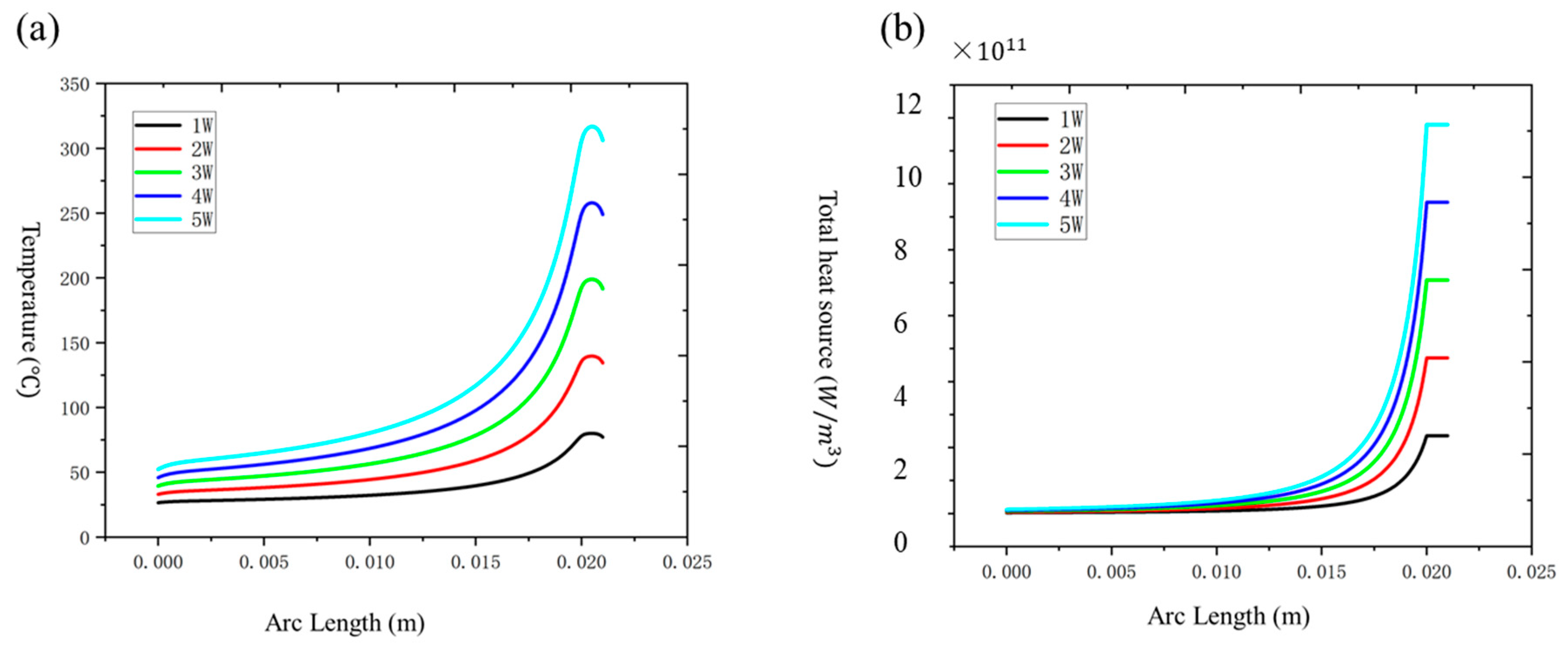
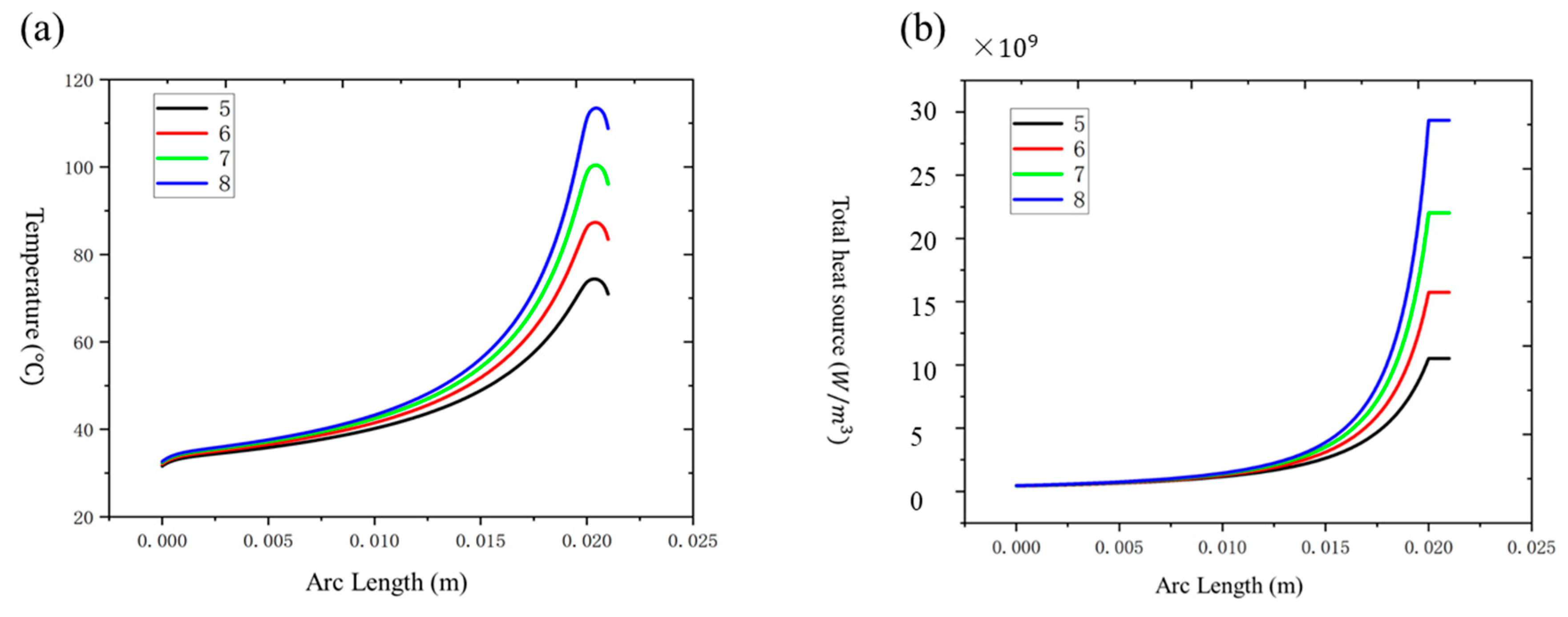
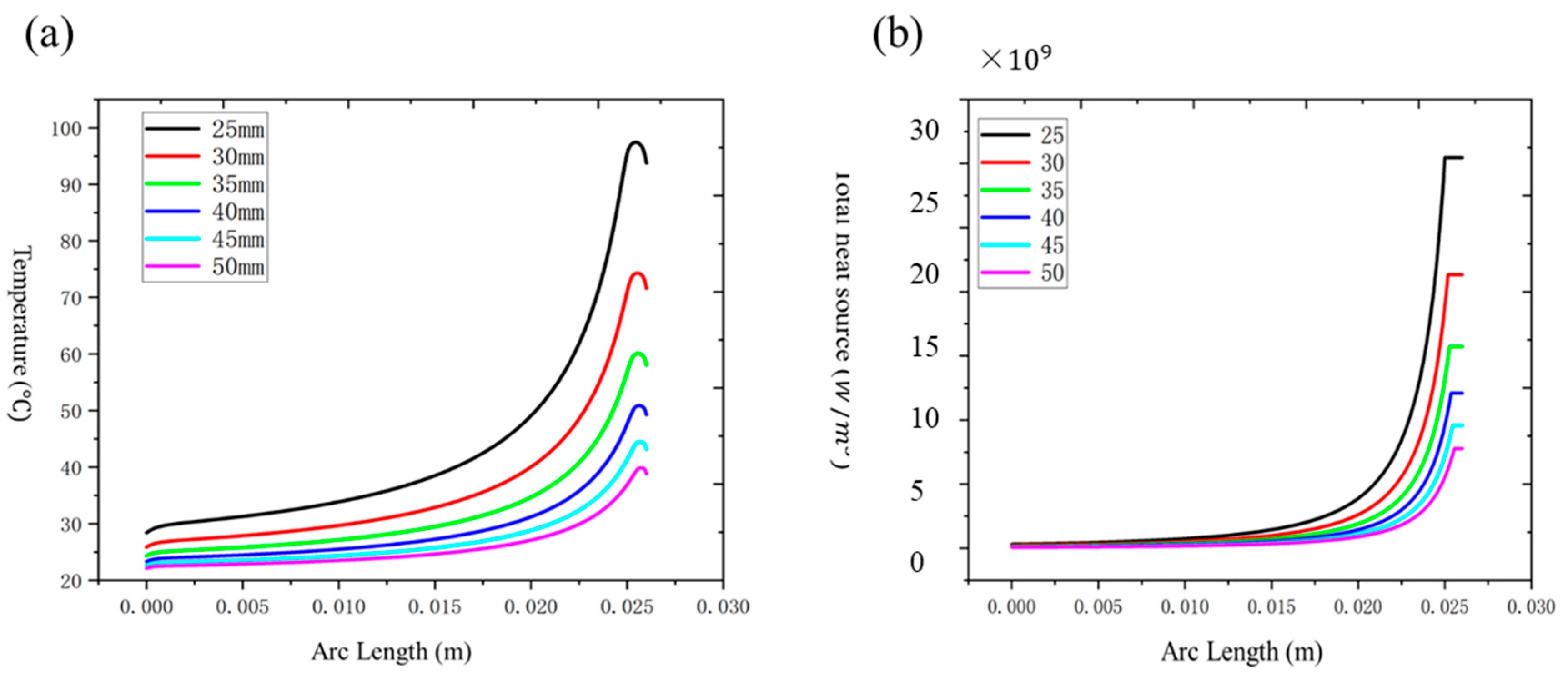
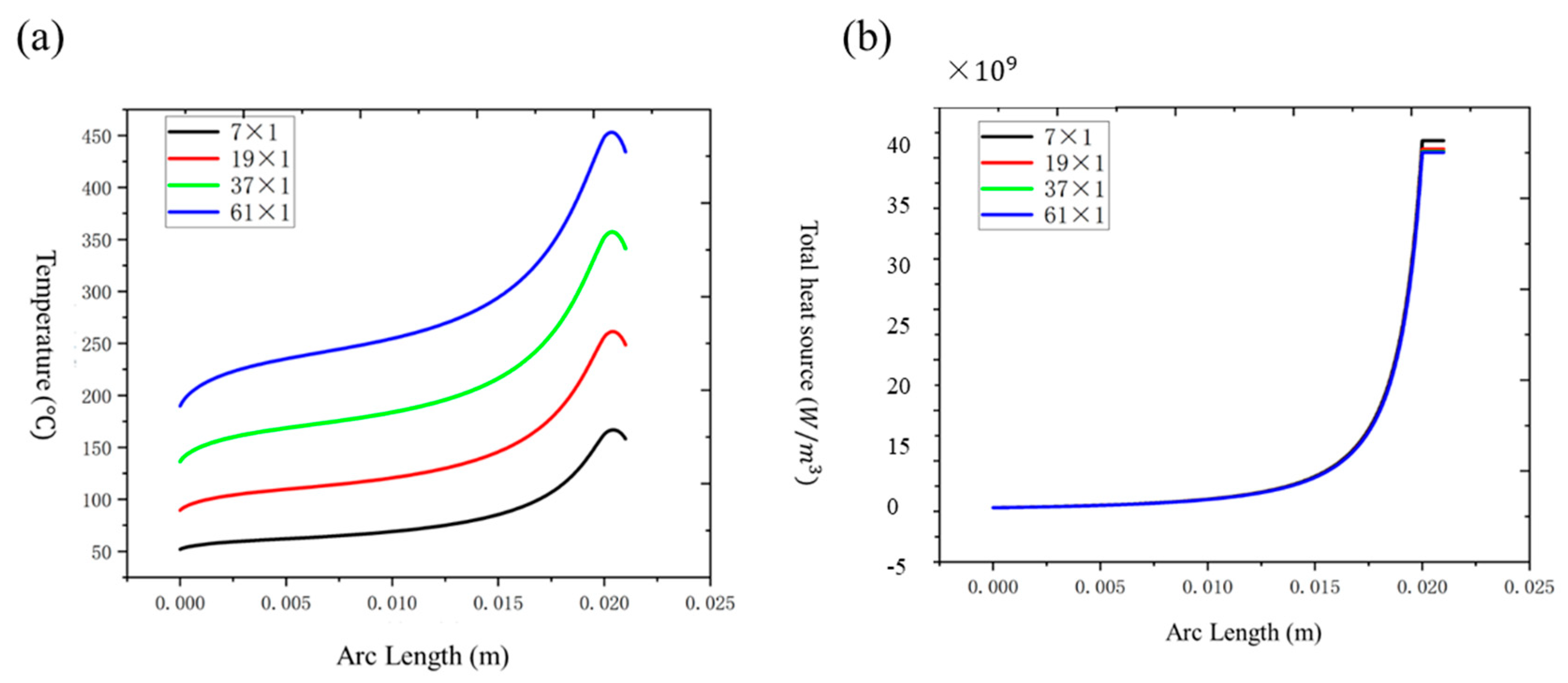
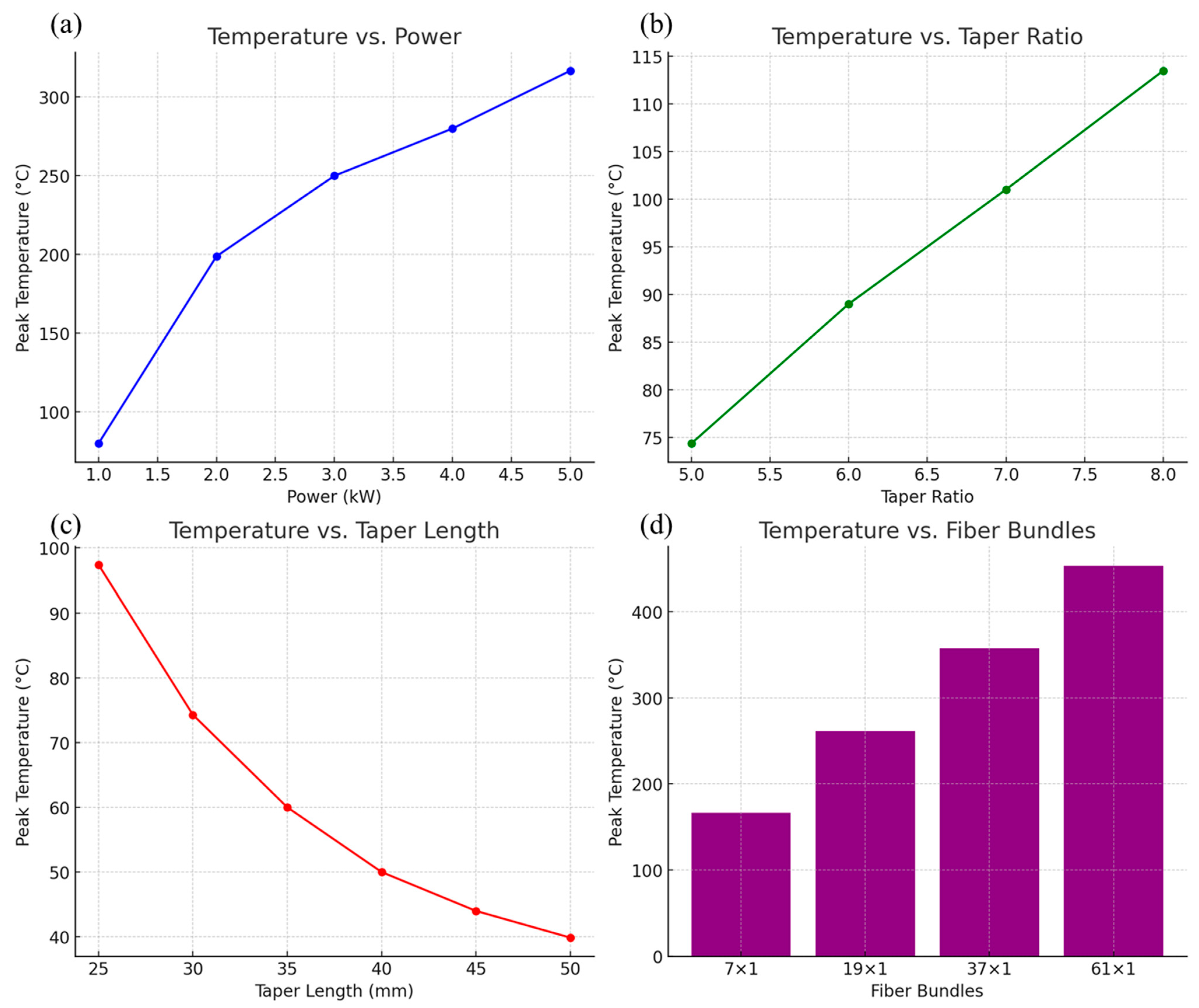
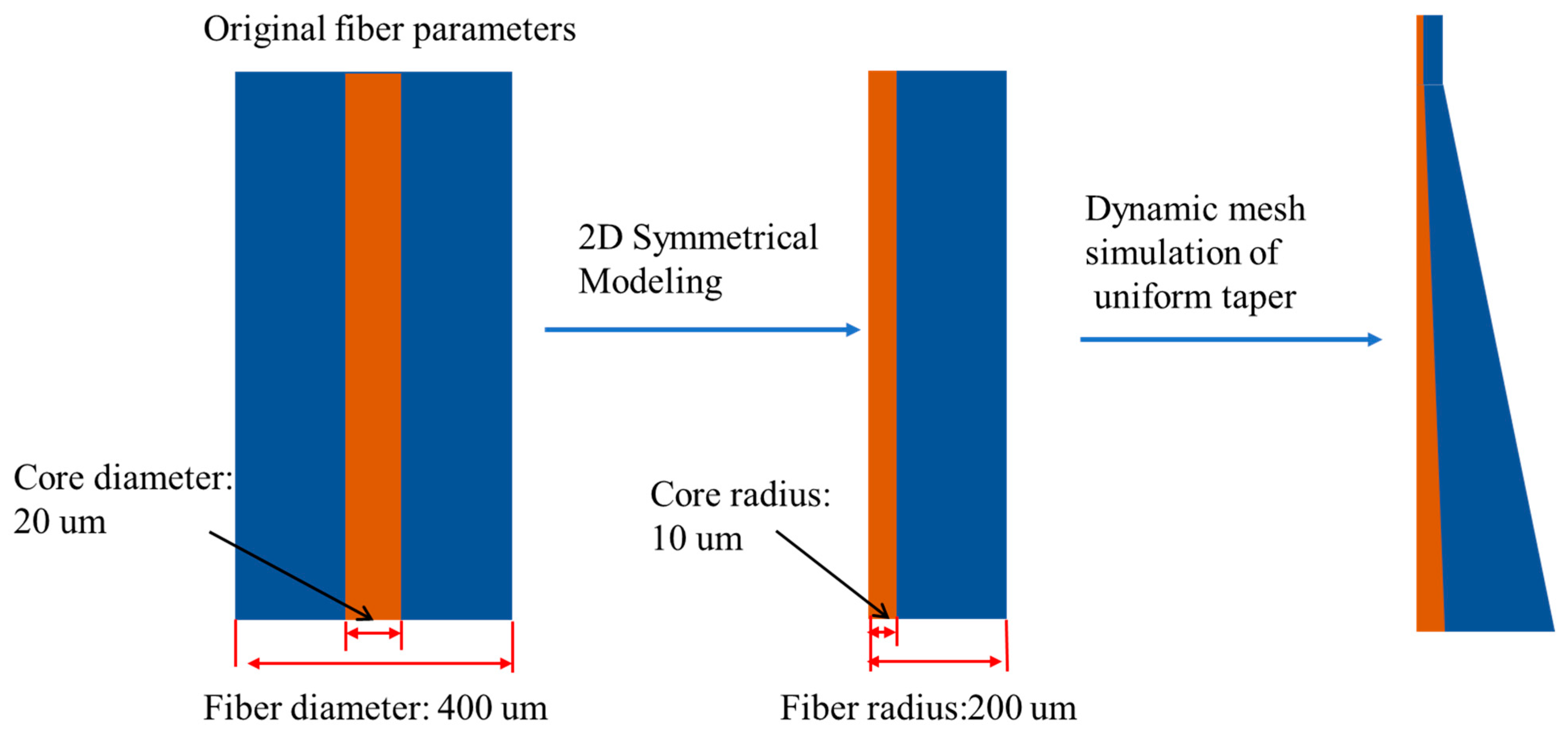
This paper investigates the thermal effects in fused-tapered passive optical fibers under near-infrared absorption. The thermal effect is primarily caused by impurities, such as OH-, which absorb incident light and generate heat. Using the finite element method, the volume changes during fiber tapering were simulated, influencing power density and thermal distribution. The heat conduction equation and ray optics were employed to analyze the thermal distribution in tapered fibers and signal combiners. Results show that at 5 kW power, the temperature peak for a single fiber reaches 316.73 °C, while for bundled fibers, the temperature rises significantly as the bundle configuration increases from 7 × 1 to 61 × 1, peaking at 453.09 °C—an increase of 171.6%. Variations in tapering ratio and length also notably affect the thermal behavior. Increasing the tapering ratio from 5 to 8 results in a 52.5% temperature rise, while doubling the taper length from 25 mm to 50 mm reduces the temperature peak by 59.1%. These findings offer important insights for the design and optimization of high-power optical fiber combiners and their heat dissipation structures.
Keywords: thermal effects; fused-tapered; high-power fiber laser; optical fiber combiner; thermal management thermal effects; fused-tapered; high-power fiber laser; optical fiber combiner; thermal management