Article

Pool Boiling Heat Transfer Characteristics of SiO2 and BN Nanoparticles Dispersed Mono and Hybrid Nanofluids

IDMEC, Instituto Superior Técnico, University of Lisbon, 1049-001 Lisbon, Portugal
*
Author to whom correspondence should be addressed.
Nanomaterials 2023, 13(19), 2625; https://doi.org/10.3390/nano13192625
Submission received: 26 August 2023 / Revised: 15 September 2023 / Accepted: 21 September 2023 / Published: 23 September 2023
(This article belongs to the Topic Thermal Energy Transfer and Storage)

Abstract

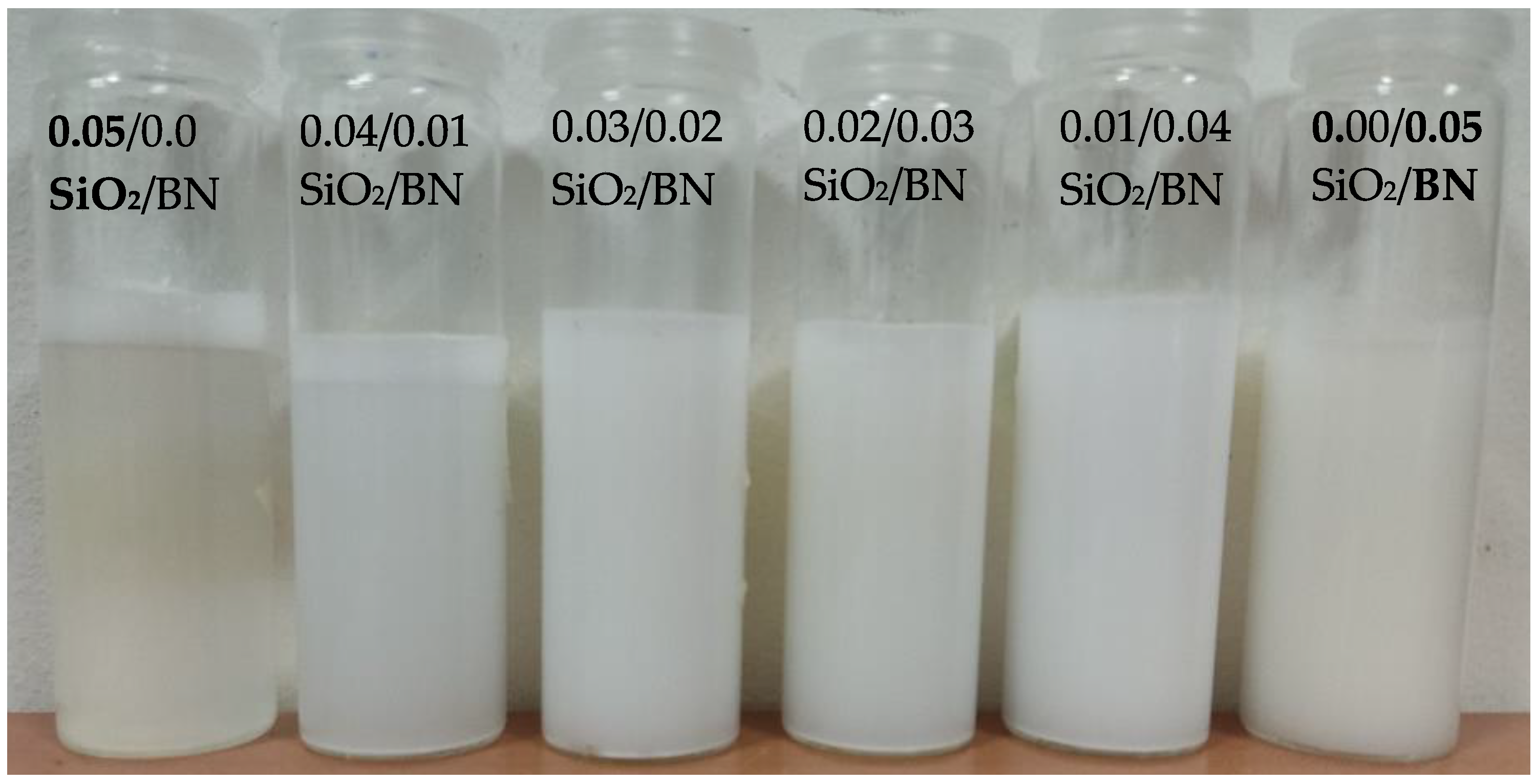
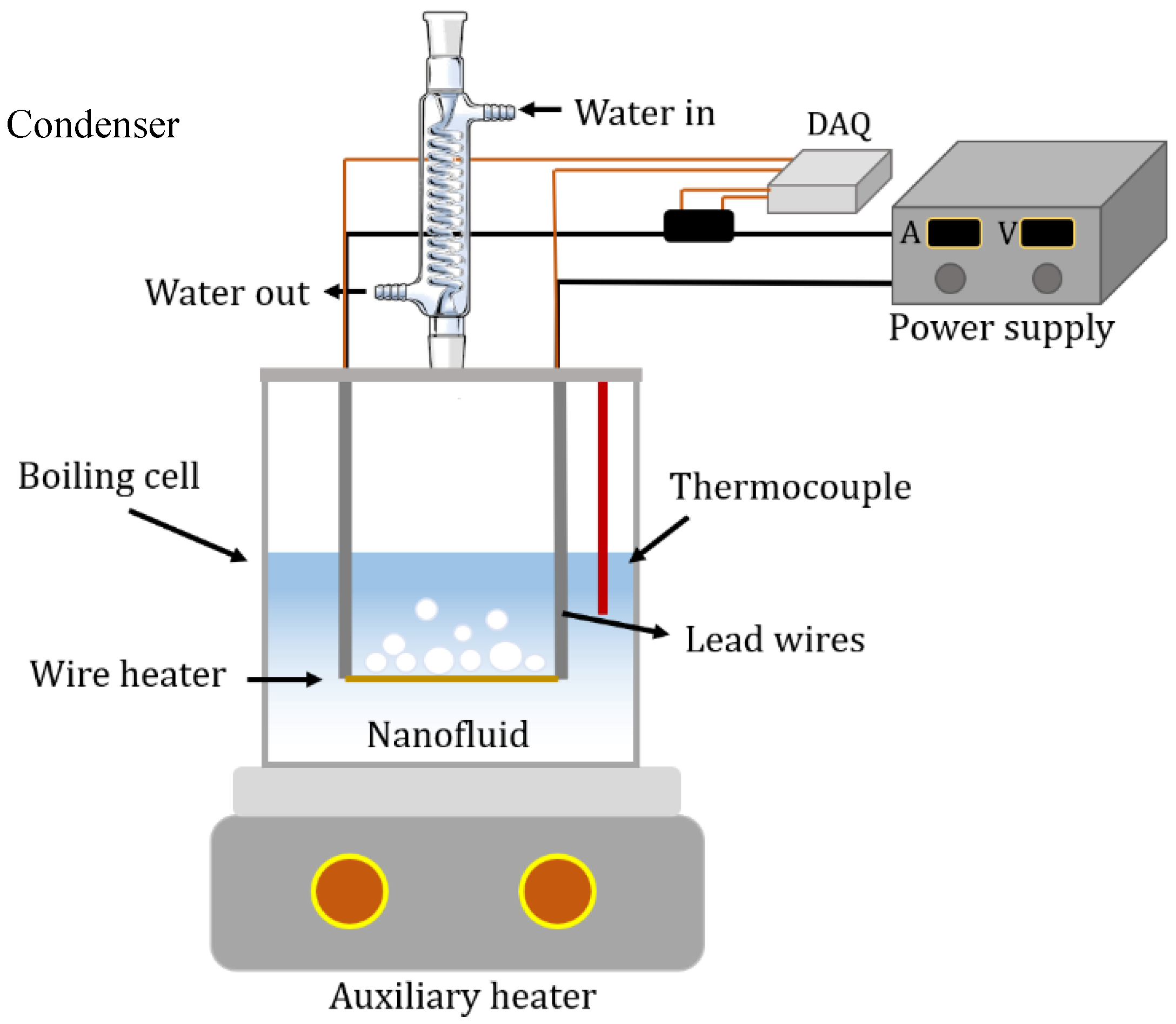
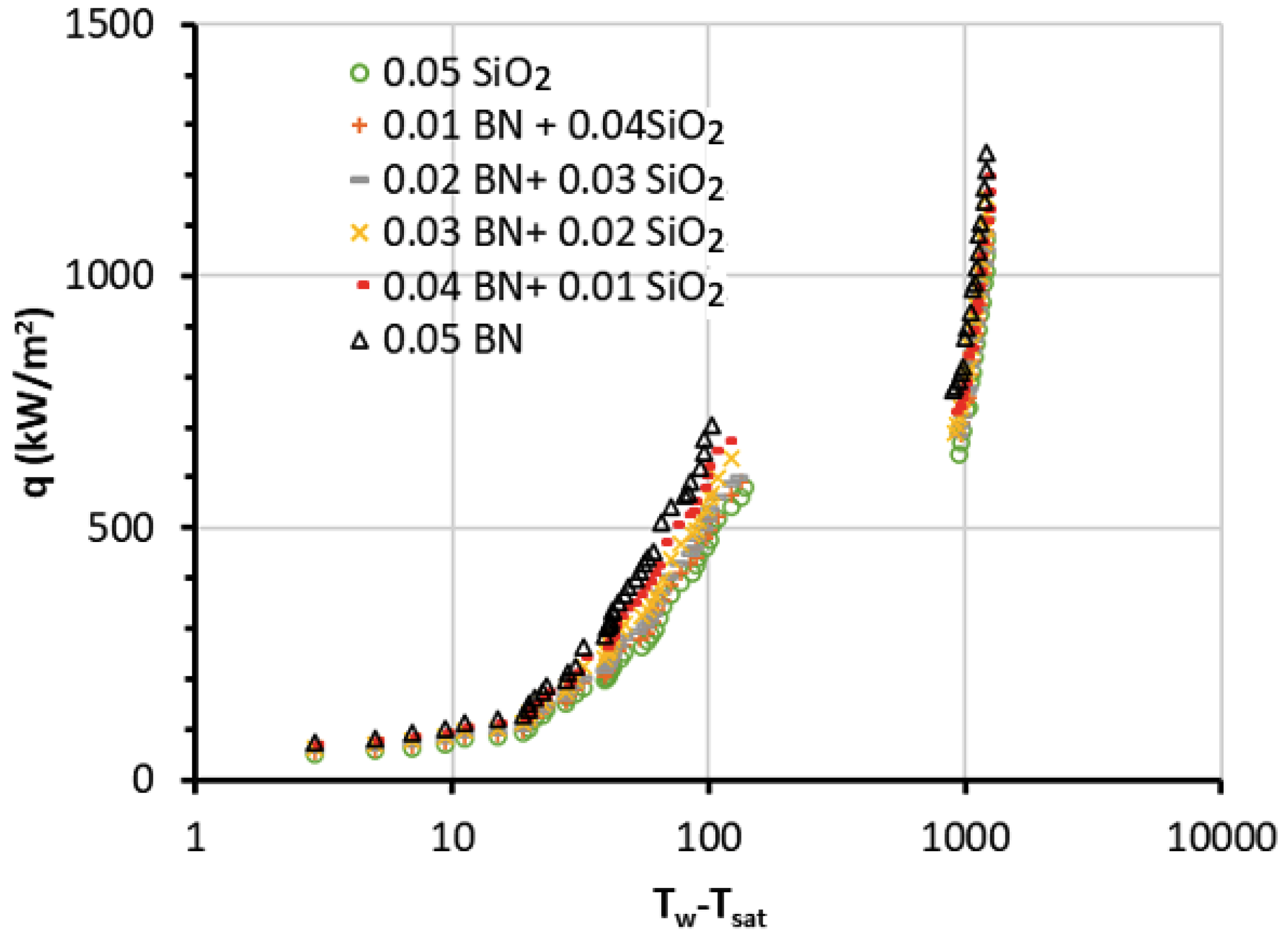
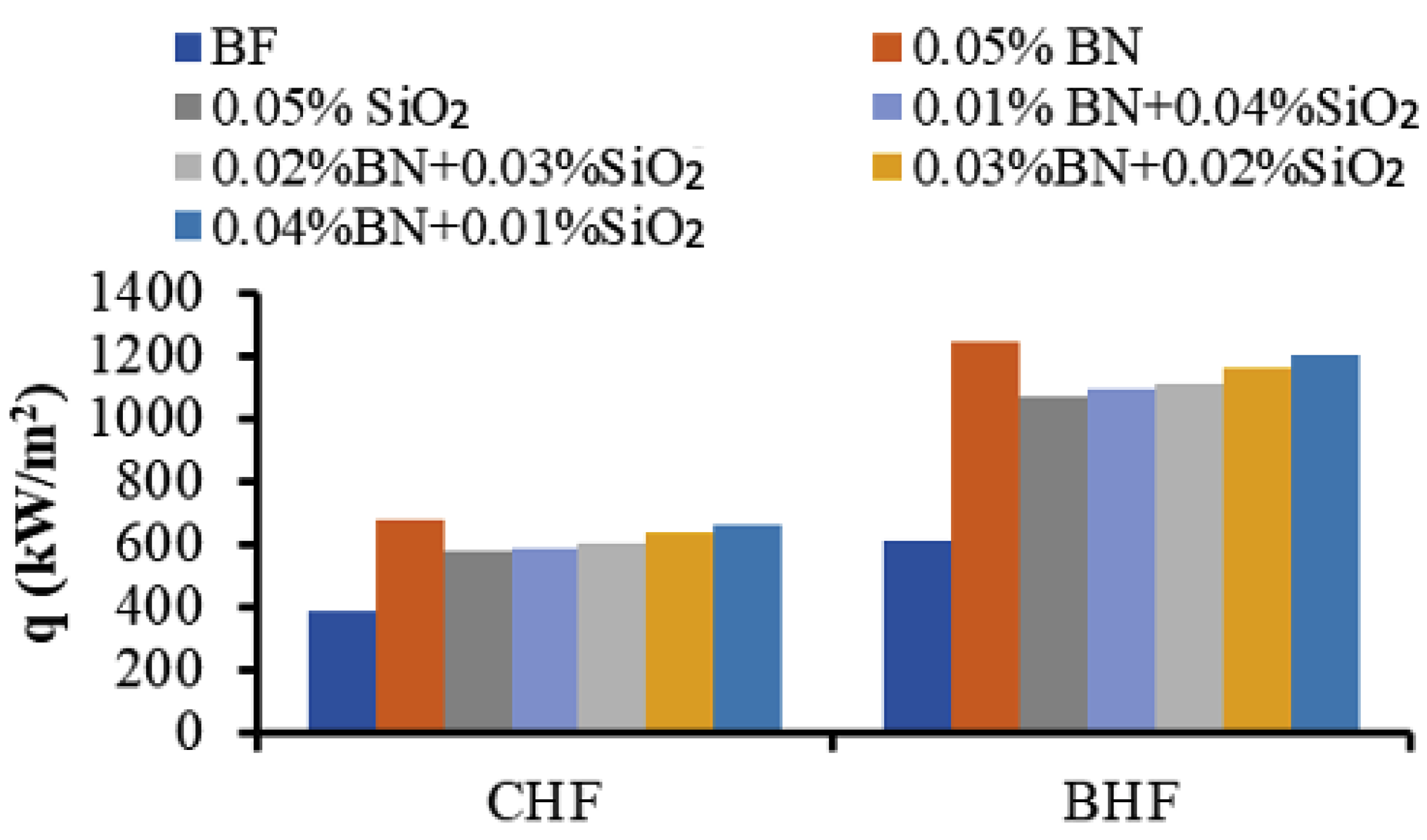
This study reports an experimental investigation of pool boiling (PB) heat transfer performance of hybrid (two types of particles) and mono (single-particle) nanofluids consisting of Boron nitride (BN) and Silicon dioxide (SiO2) nanoparticles (NPs). While hybrid nanofluids (HNFs) were prepared in a total particle concentration of 0.05 vol.% with four different percentages of these two types of NPs (are 0.01/0.04, 0.02/ 0.03, 0.03/0.02, and 0.04/0.01 (BN vol.%/SiO2 vol.%)), two mono nanofluids (MNFs) of BN and SiO2 nanoparticles were prepared at the same total concentration of 0.05 vol.% for each NP type. Both nanofluids (NFs) were prepared in the base fluid (BF), which is the mixture of 15 vol.% of ethylene glycol (EG) and 85 vol.% of distilled water (DW). Then, the boiling heat transfer performance of these MNFs and HNFs was assessed by experimentation in a pool boiling test rig. The obtained results demonstrated good improvements in critical heat flux (CHF) and burnout heat flux (BHF) of both types of NFs. The CHF increased by up to 80% for BN-based MNF and up to 69% for HNF at 0.04 vol.% BN, which is the maximum percentage of BN into HNF, while the lowest improvement in CHF was 48% for the SiO2-based MNF compared to the BF. Similarly, the BHF was found to increase with the increasing in the loading of BN nanoparticles and a maximum enhancement of BHF of 103% for BN-based MNF was observed. These HNFs and MNFs exhibited significantly improved pool boiling heat transfer performance compared to this BF, and it became lower by increasing the percentage of SiO2 NPs in the HNFs.
Keywords: pool boiling; boron nitride; silica; critical heat flux; burnout heat flux; hybrid nanofluids pool boiling; boron nitride; silica; critical heat flux; burnout heat flux; hybrid nanofluids