Article

Construction of CoP2-Mo4P3/NF Heterogeneous Interfacial Electrocatalyst for Boosting Water Splitting

1
The State Key Laboratory of High Performance Ceramics and Superfine Microstructures, Shanghai Institute of Ceramics, Chinese Academy of Sciences, Shanghai 200050, China
2
Beijing Advanced Innovation Center for Materials Genome Engineering, Collaborative Innovation Center of Steel Technology, University of Science and Technology Beijing, Beijing 100083, China
3
Shanghai Motor Vehicle Inspection Certification & Tech Innovation Center Co., Ltd., Shanghai 201805, China
4
School of Chemistry and Materials Science, Hangzhou Institute for Advanced Study, University of Chinese Academy of Sciences, Hangzhou 310021, China
*
Authors to whom correspondence should be addressed.
Nanomaterials 2023, 13(1), 74; https://doi.org/10.3390/nano13010074
Submission received: 3 December 2022 / Revised: 20 December 2022 / Accepted: 22 December 2022 / Published: 23 December 2022
(This article belongs to the Special Issue Nanostructure-Based Energy Electrocatalysis)

Abstract

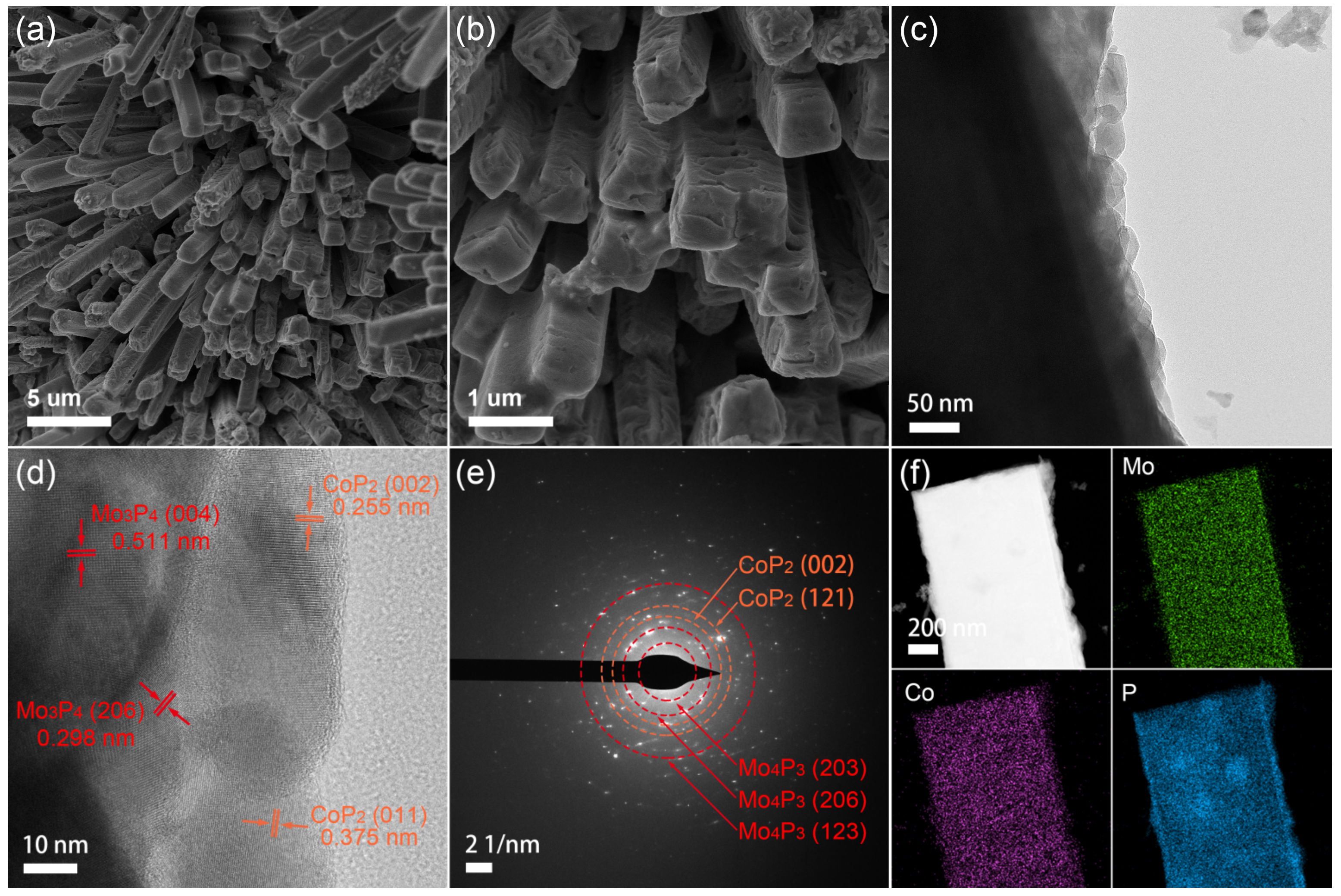
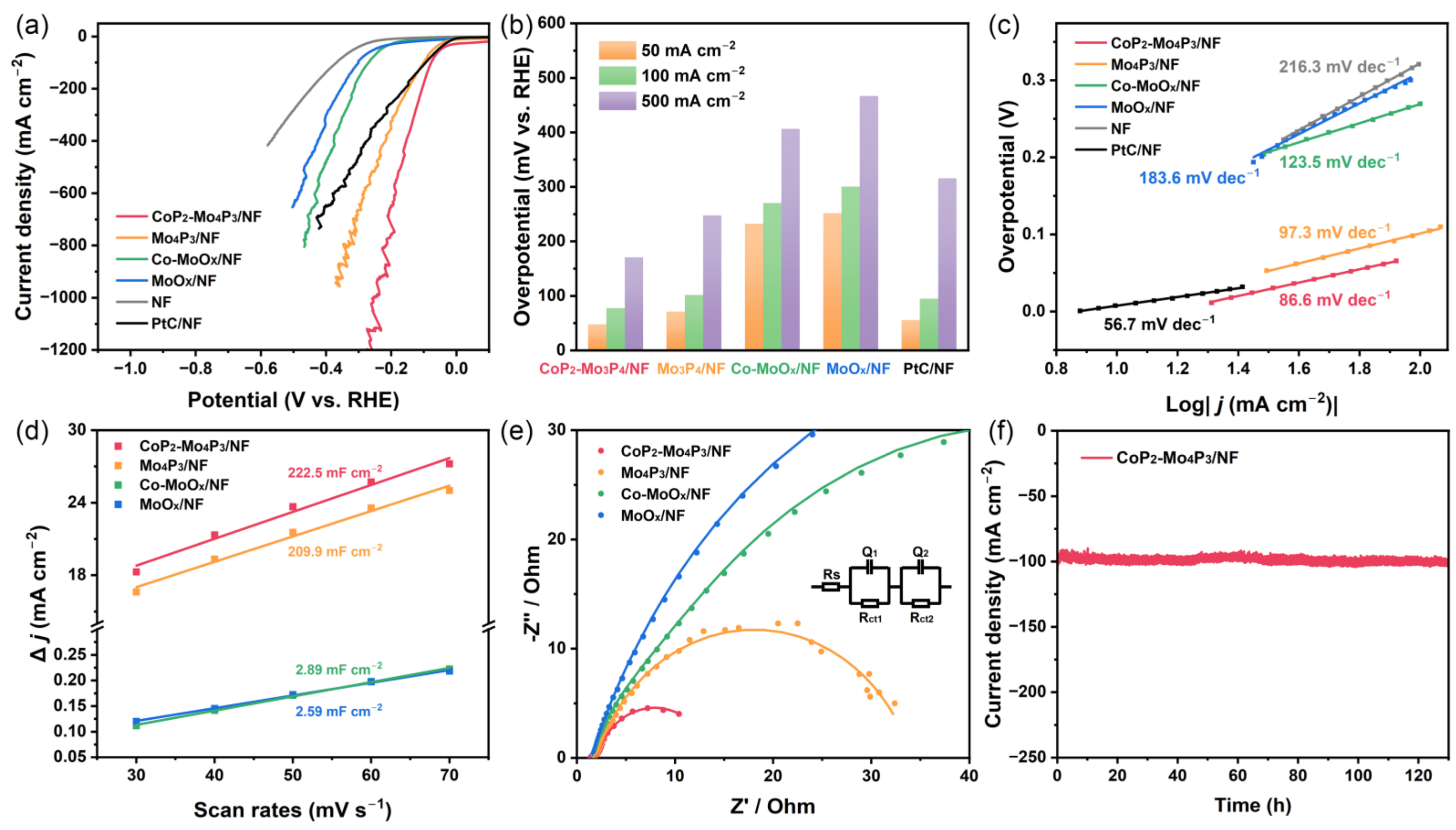
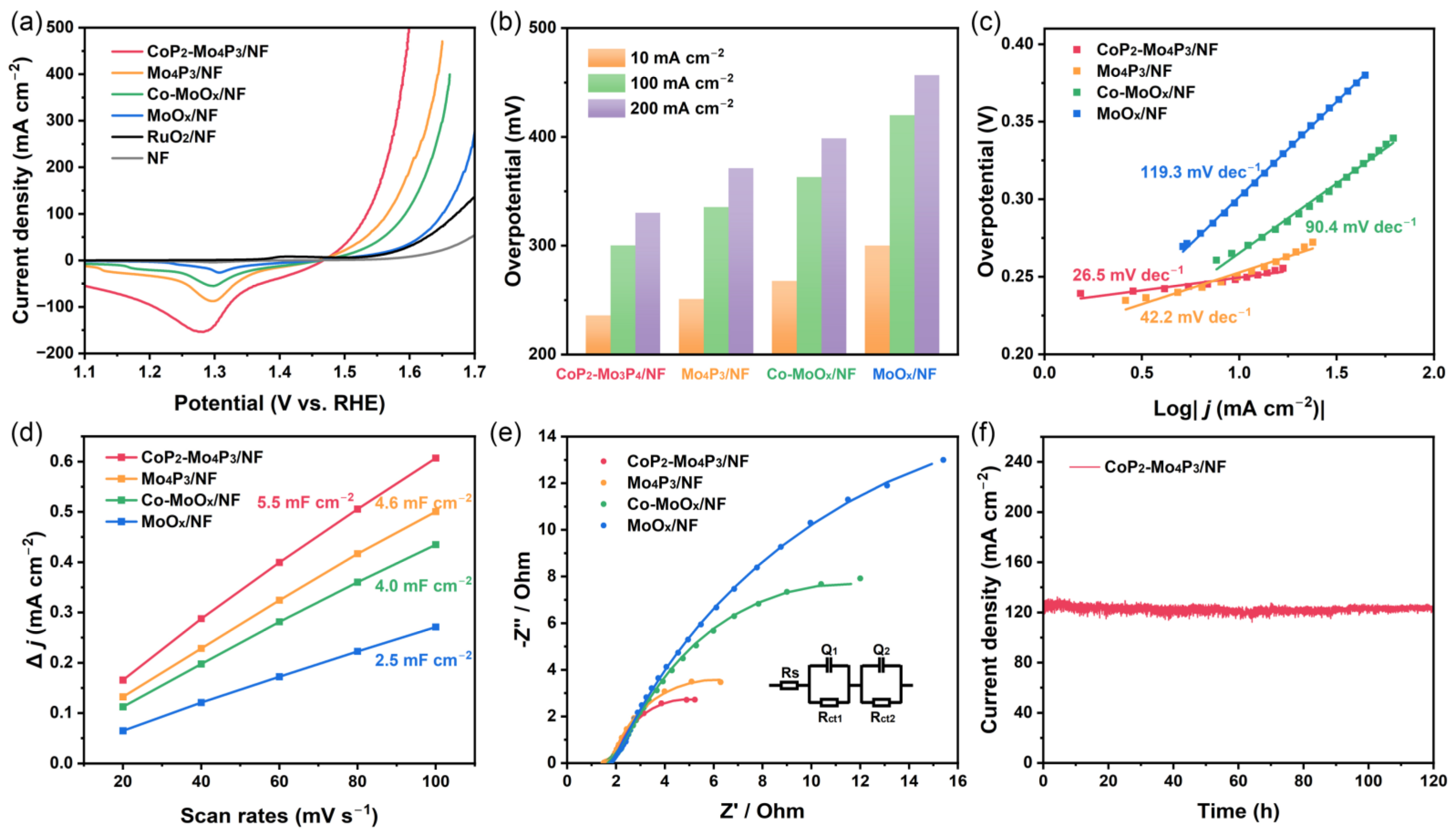
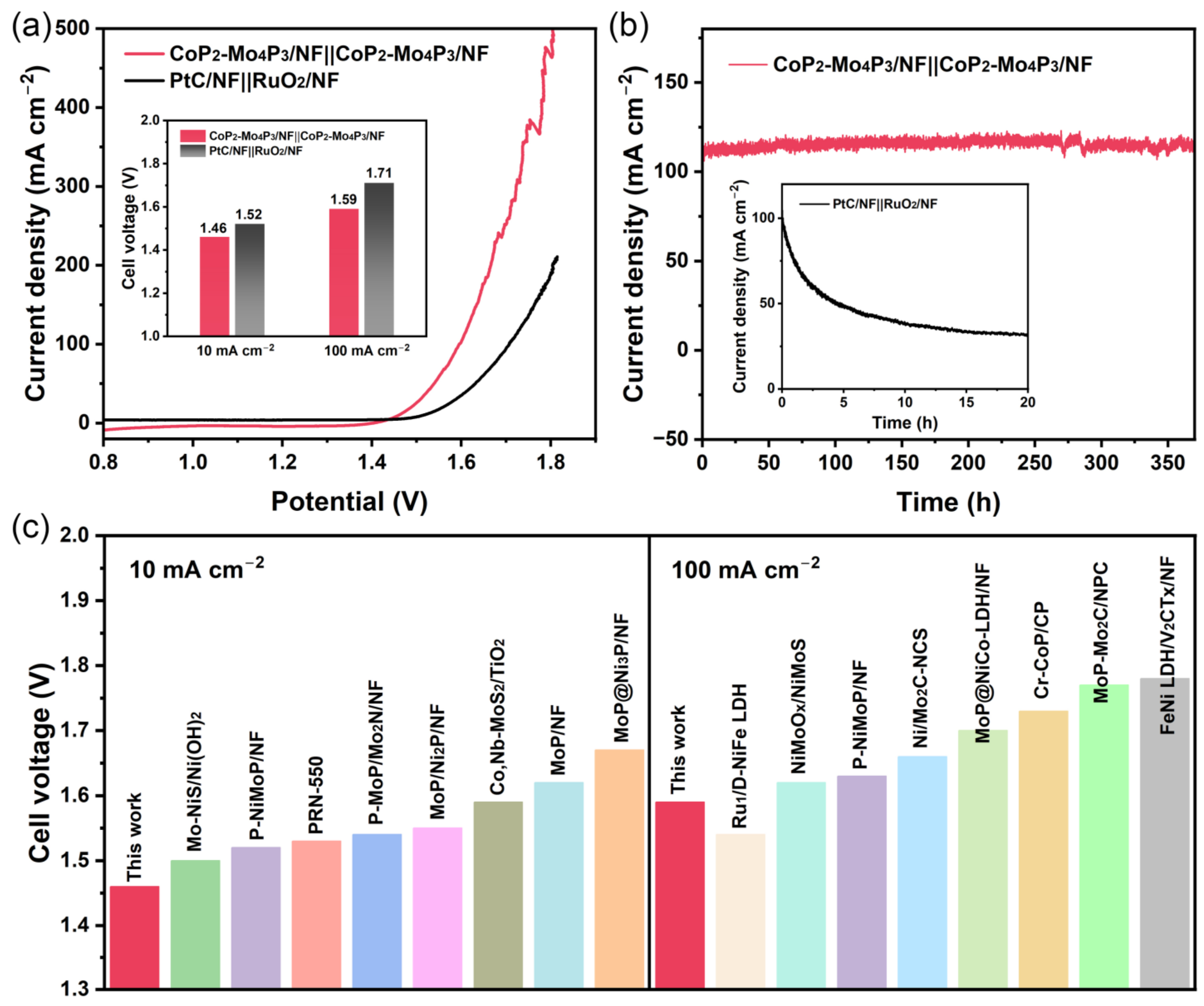
Developing highly efficient, cost effective and durable bifunctional electrocatalyst remains a key challenge for overall water splitting. Herein, a bifunctional catalyst CoP2-Mo4P3/NF with rich heterointerfaces was successfully prepared by a two-step hydrothermal-phosphorylation method. The synergistic interaction between CoP2 and Mo4P3 heterogeneous interfaces can optimize the electronic structure of active sites, leading to the weak adsorption of H on the Mo sites and the increased redox activity of the Co site, resultantly improving the HER/OER bifunctional catalytic activity. The synthesized CoP2-Mo4P3/NF catalyst exhibits excellent electrocatalytic activity in 1.0 M KOH with low overpotentials of 77.6 and 300.3 at 100 mA cm−2 for HER and OER, respectively. Additionally, the assembled CoP2-Mo4P3/NF||CoP2-Mo4P3/NF electrolyzer delivers a current density of 100 mA cm−2 at a cell voltage of 1.59 V and remains stable for at least 370 h at 110 mA cm−2, indicating the potential application prospective in water splitting.
Keywords: heterogeneous interface; transition metal phosphide; bifunctional electrocatalyst; overall water splitting heterogeneous interface; transition metal phosphide; bifunctional electrocatalyst; overall water splitting