Review

Incorporation of Nanomaterials in Glass Ionomer Cements—Recent Developments and Future Perspectives: A Narrative Review


by
Radu Claudiu Fierascu
1,2
1
National Institute for Research & Development in Chemistry and Petrochemistry—ICECHIM Bucharest, 202 Spl. Independentei, 060021 Bucharest, Romania
2
Faculty of Chemical Engineering and Biotechnologies, University “Politehnica” of Bucharest, Bucharest, 313 Splaiul Independentei Str., 060042 Bucharest, Romania
Nanomaterials 2022, 12(21), 3827; https://doi.org/10.3390/nano12213827
Submission received: 30 September 2022 / Revised: 19 October 2022 / Accepted: 26 October 2022 / Published: 29 October 2022
(This article belongs to the Special Issue Next-Generation Nanomaterials: Preparation and Applications)

Abstract

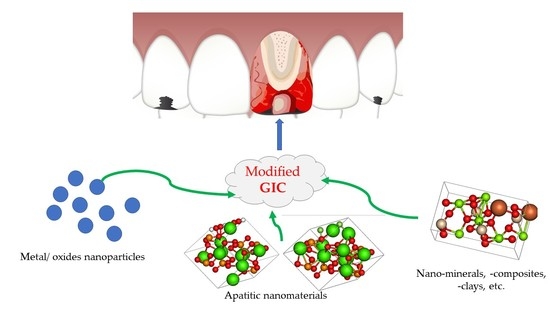
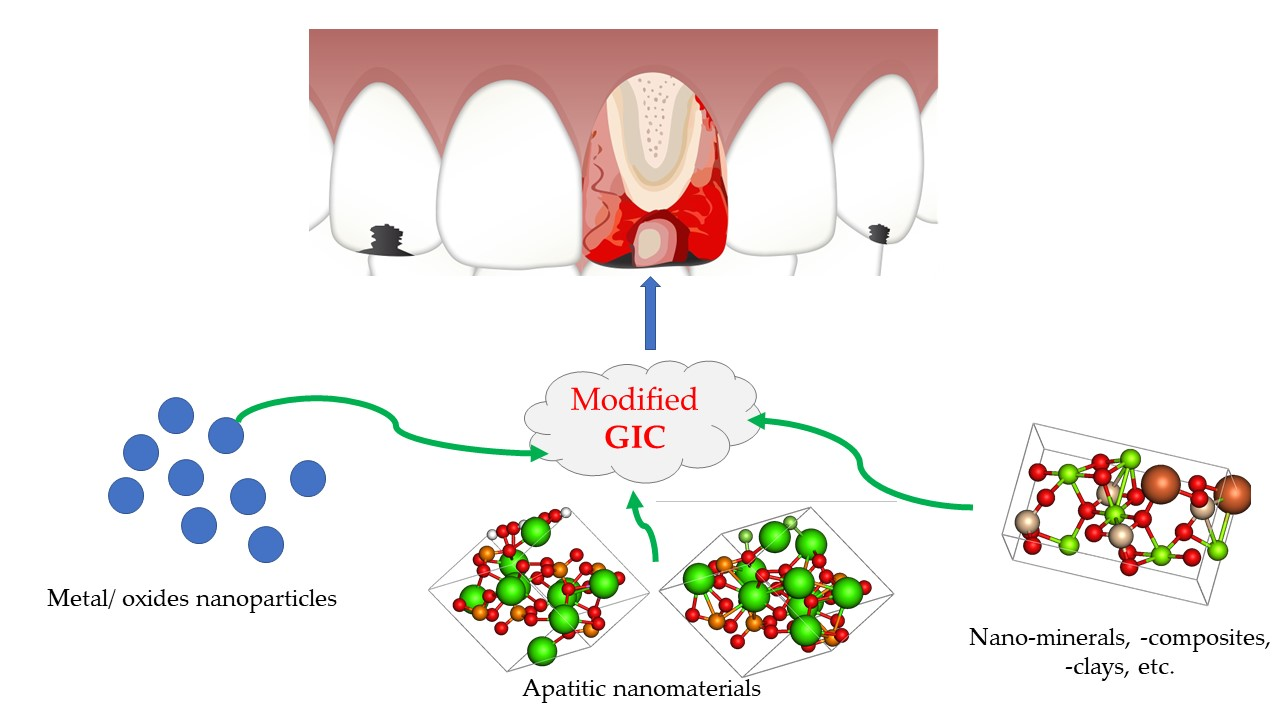
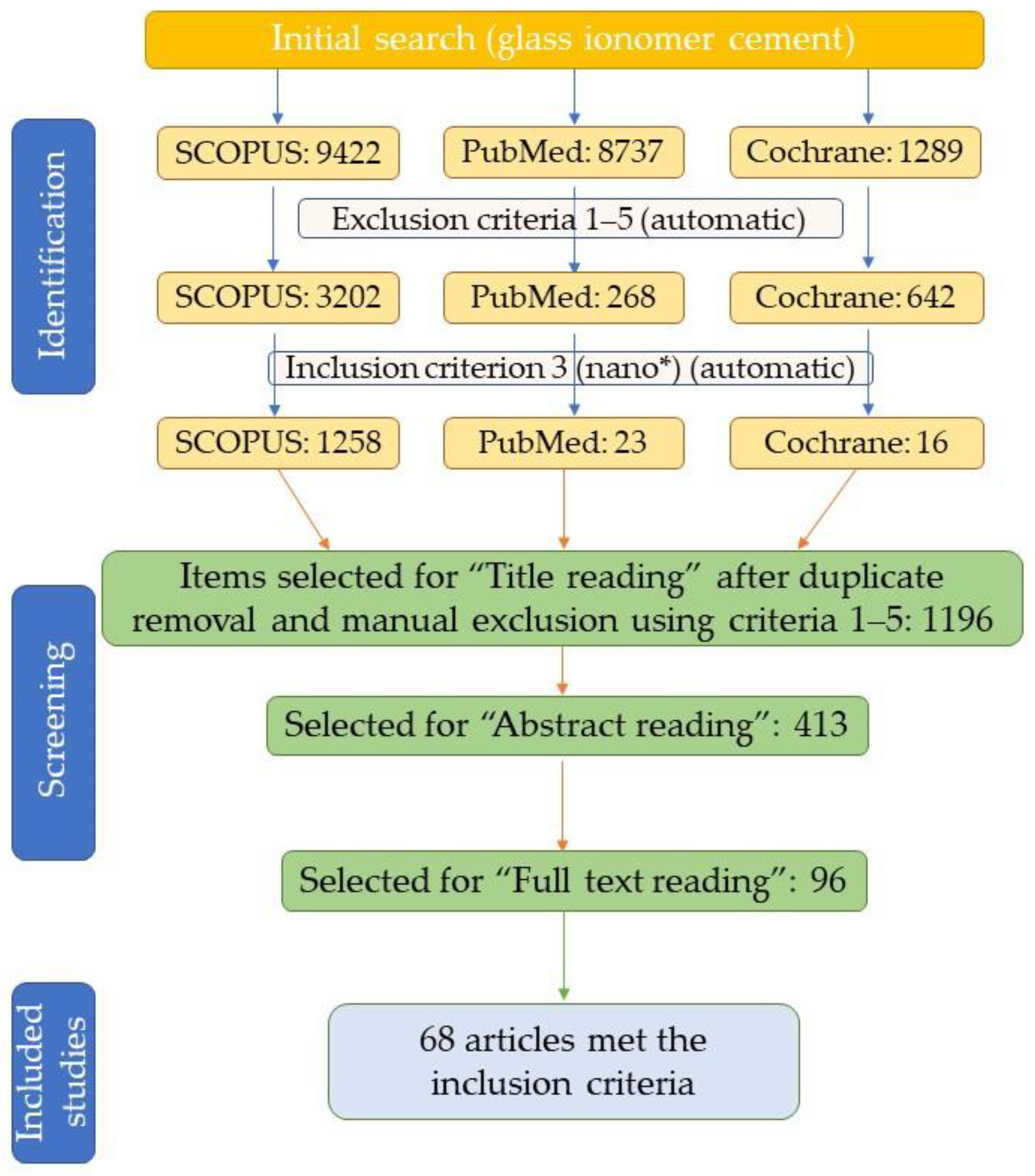
Glass ionomer cements (GICs), restorative materials with commercial availability spanning over five decades, are widely applied due to their advantages (including bio-compatibility, fluoride release, or excellent bonding properties). However, GICs have shortcomings. Among the disadvantages limiting the application of GICs, the poor mechanical properties are the most significant. In order to enhance the mechanical or antimicrobial properties of these materials, the addition of nanomaterials represents a viable approach. The present paper aims to review the literature on the application of different types of nanomaterials for the enhancement of GICs’ mechanical and antimicrobial properties, which could lead to several clinical benefits, including better physical properties and the prevention of tooth decay. After applying the described methodology, representative articles published in the time period 2011-present were selected and included in the final review, covering the modification of GICs with metallic nanoparticles (Cu, Ag), metallic and metalloid oxide nanoparticles (TiO2, ZnO, MgO, Al2O3, ZrO2, SiO2), apatitic nanomaterials, and other nanomaterials or multi-component nanocomposites.
Keywords: glass ionomer cements; dental caries; periodontal diseases; nanoparticles; apatite; nanostructures glass ionomer cements; dental caries; periodontal diseases; nanoparticles; apatite; nanostructures
Graphical Abstract