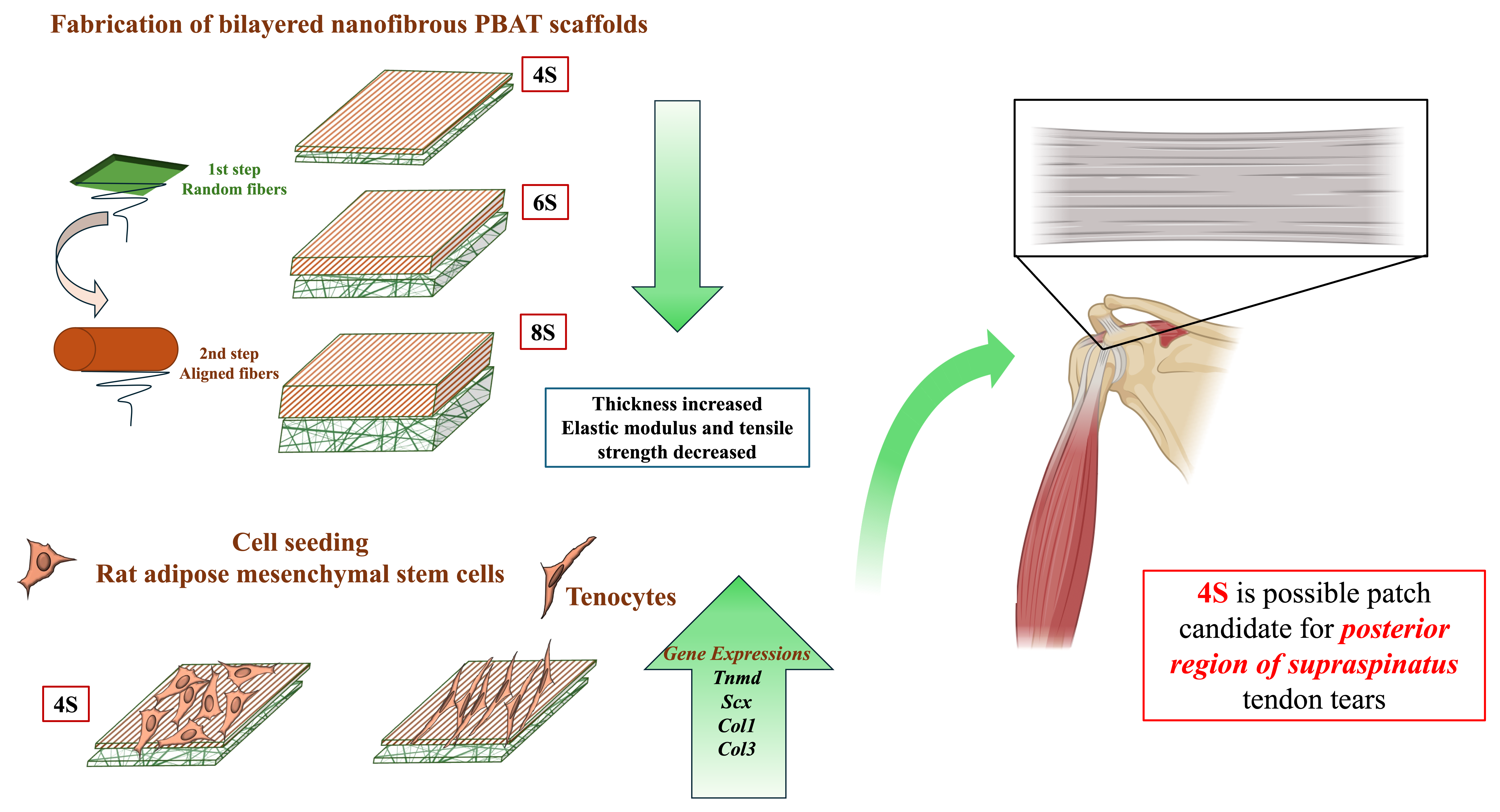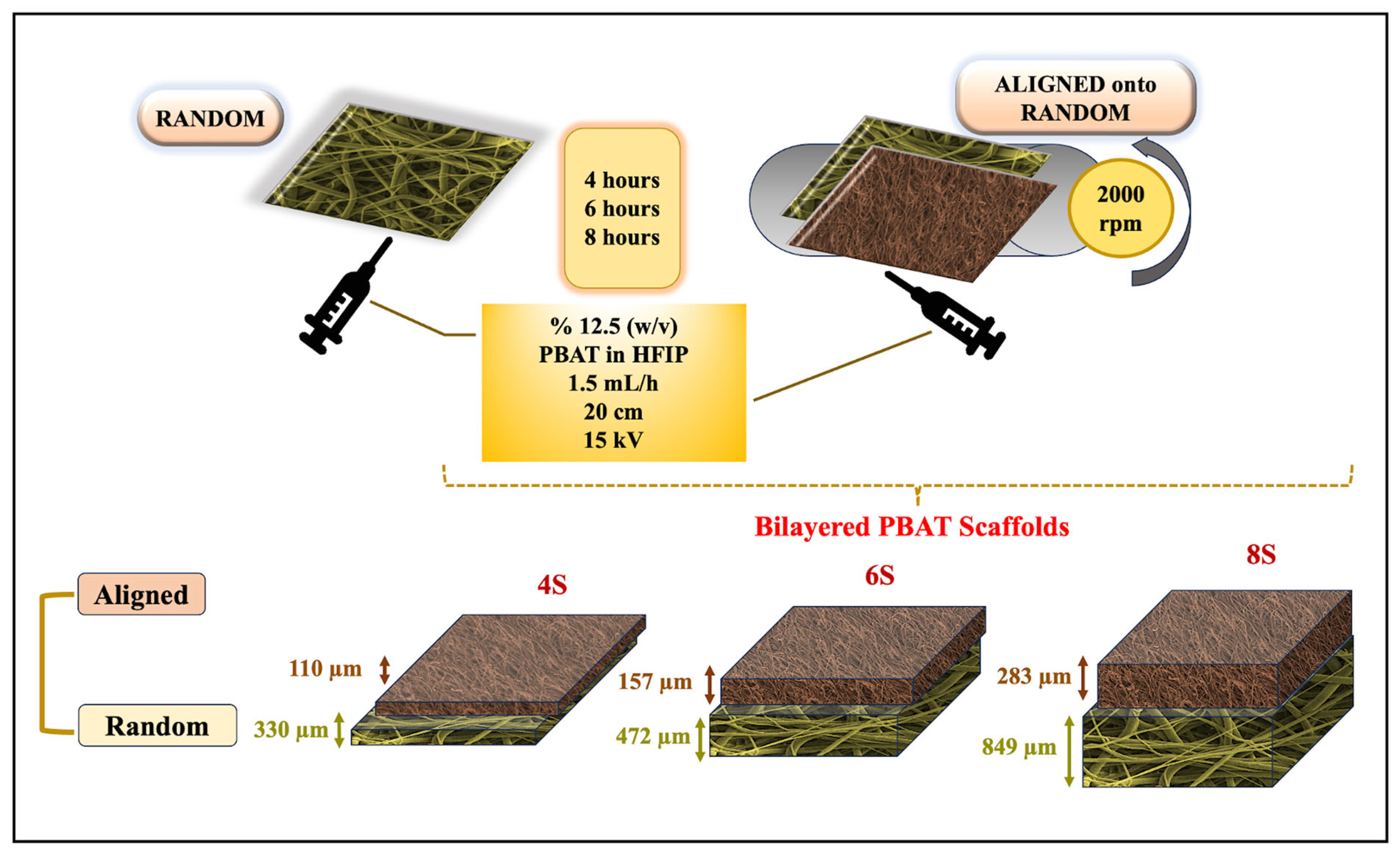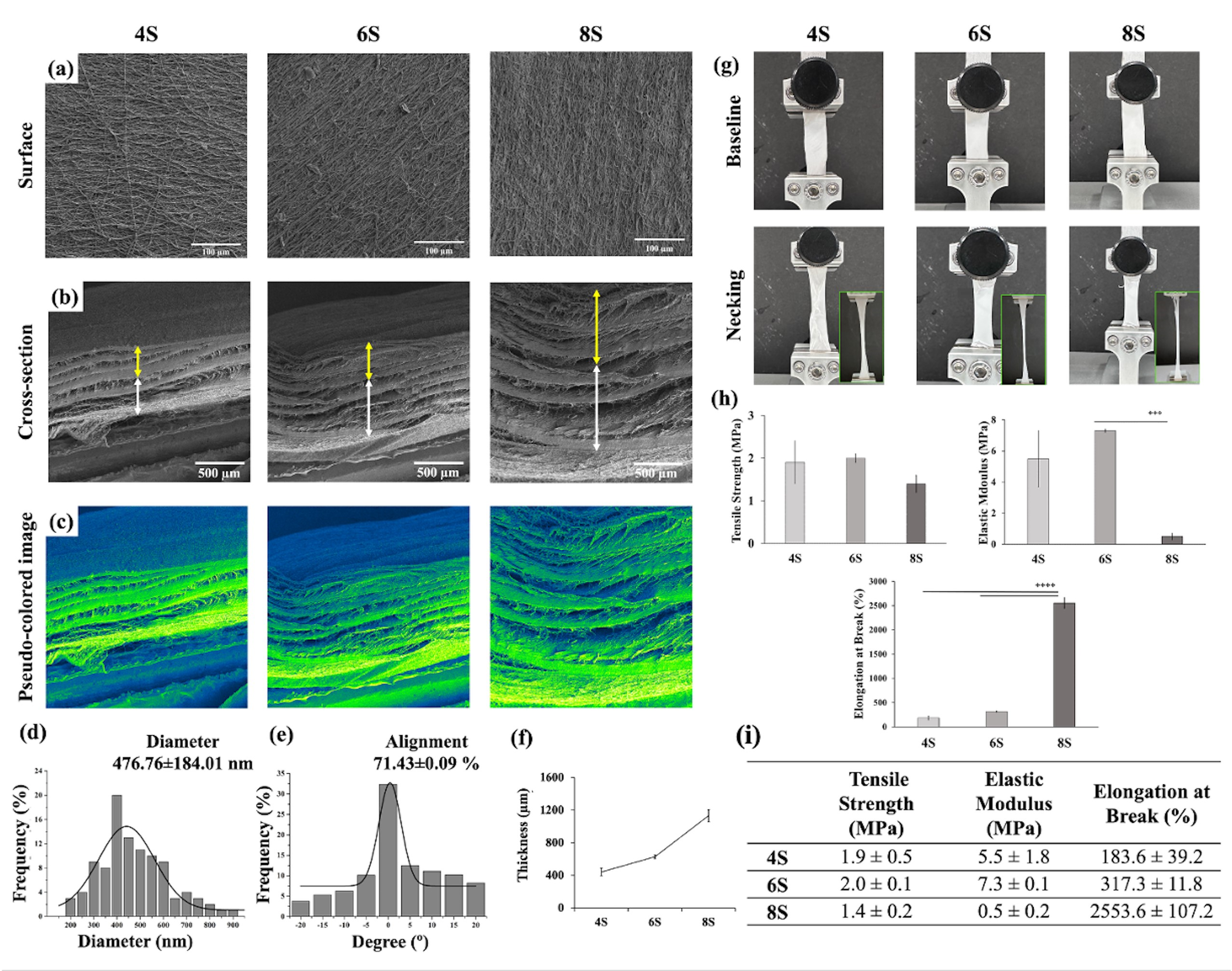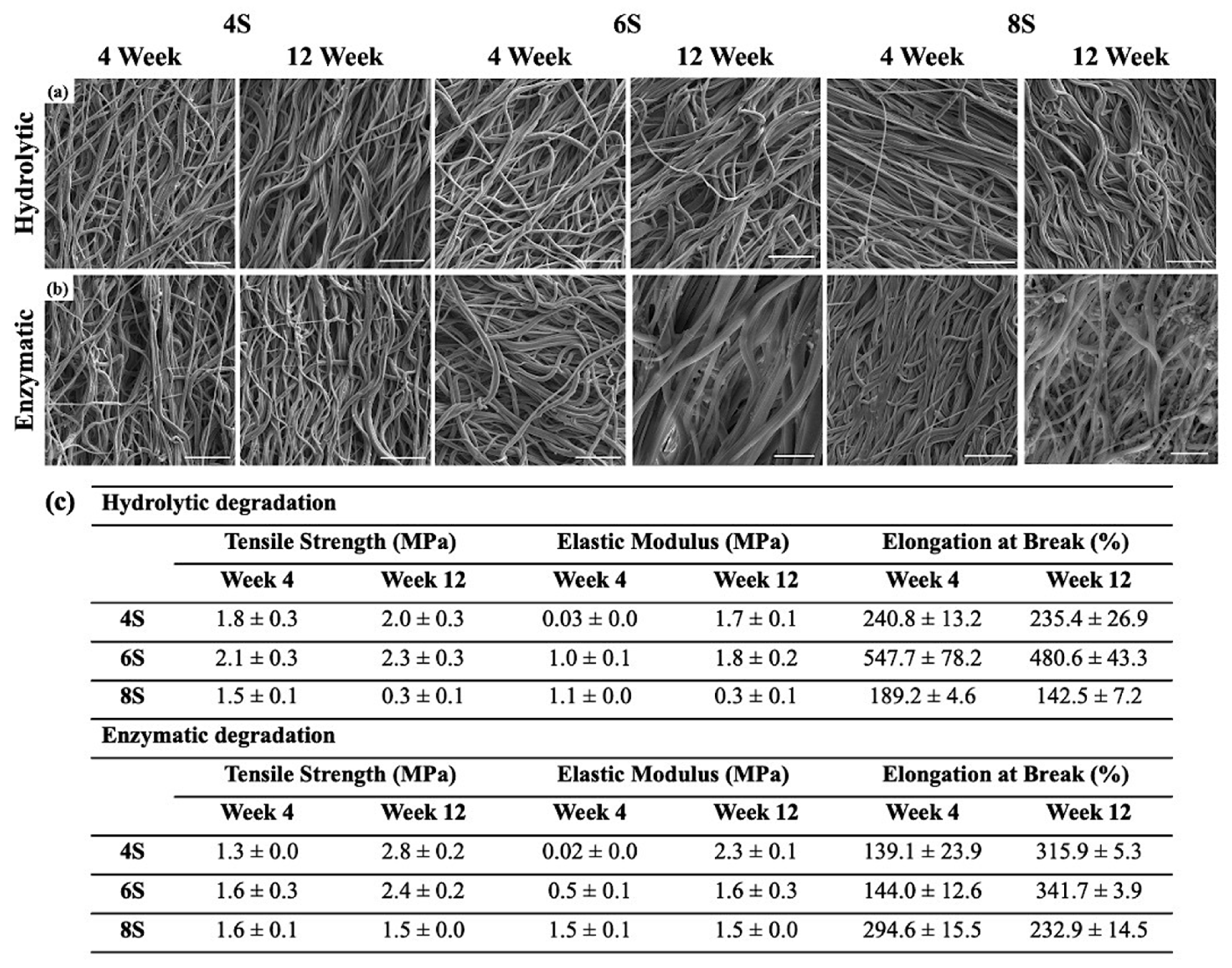

Thickness-Tunable Bilayer PBAT Nanofibrous Scaffolds for Enhancing r-AdMSCs’ Tenogenic Commitment in Supraspinatus Tendon Regeneration



Abstract
1. Introduction
2. Materials and Methods
2.1. Materials
2.2. Fabrication and Characterization of Bilayer PBAT Nanofibrous Scaffolds
2.3. Cell Culture Studies
2.3.1. Cell Viability and Proliferation Assays
2.3.2. Cytoskeleton/Nucleus Staining
2.3.3. Reverse Transcription Quantitative Polymerase Chain Reaction (RT-qPCR) Analysis
2.3.4. Immunohistochemical Staining
2.3.5. Post-Culture Mechanical Characterization
2.4. Statistical Analysis
3. Results and Discussion
3.1. Fabrication and Characterization of Samples

3.2. Biodegradation of the Samples

3.3. Cell Culture Results
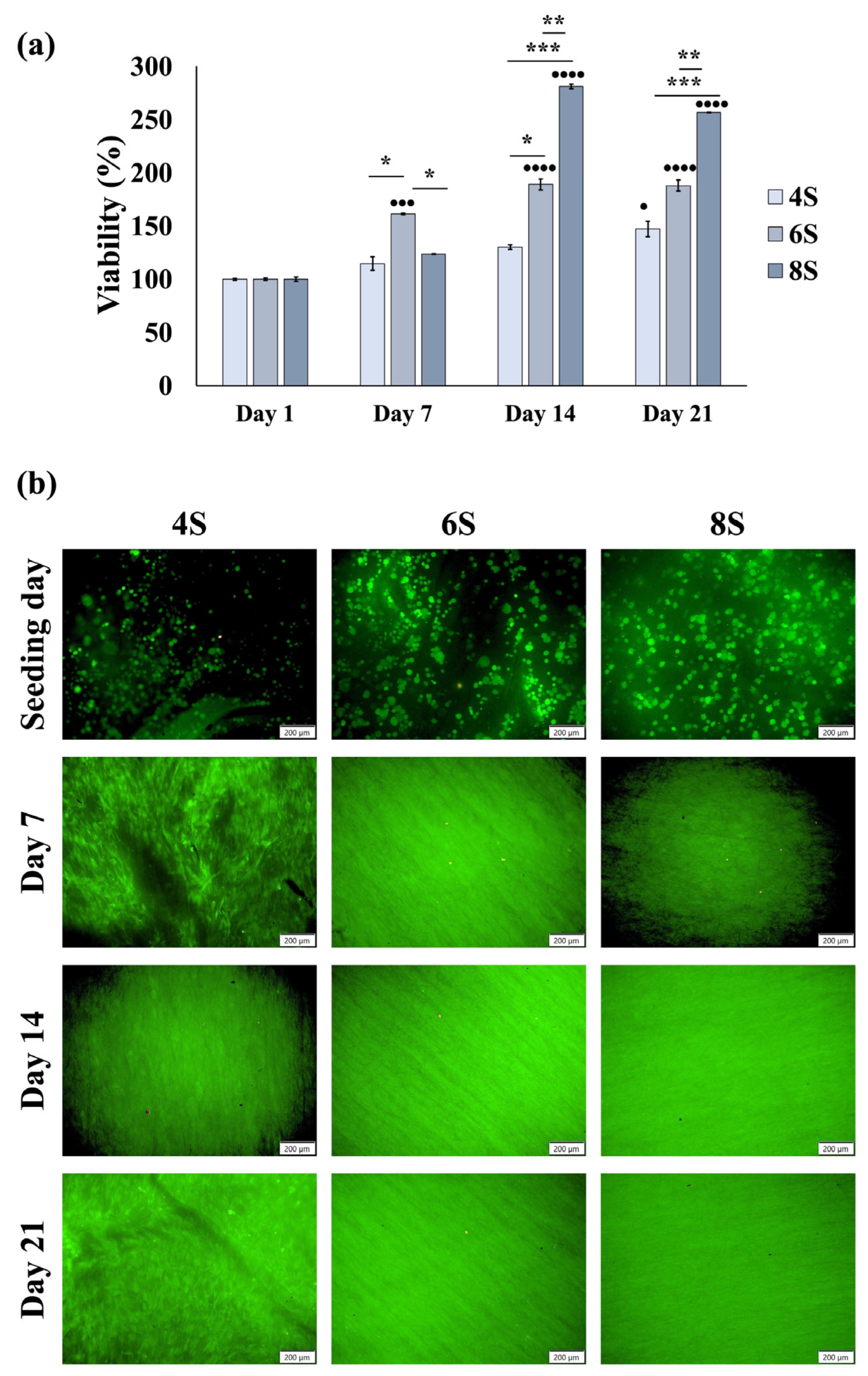
3.3.1. Determination of Cell Viability

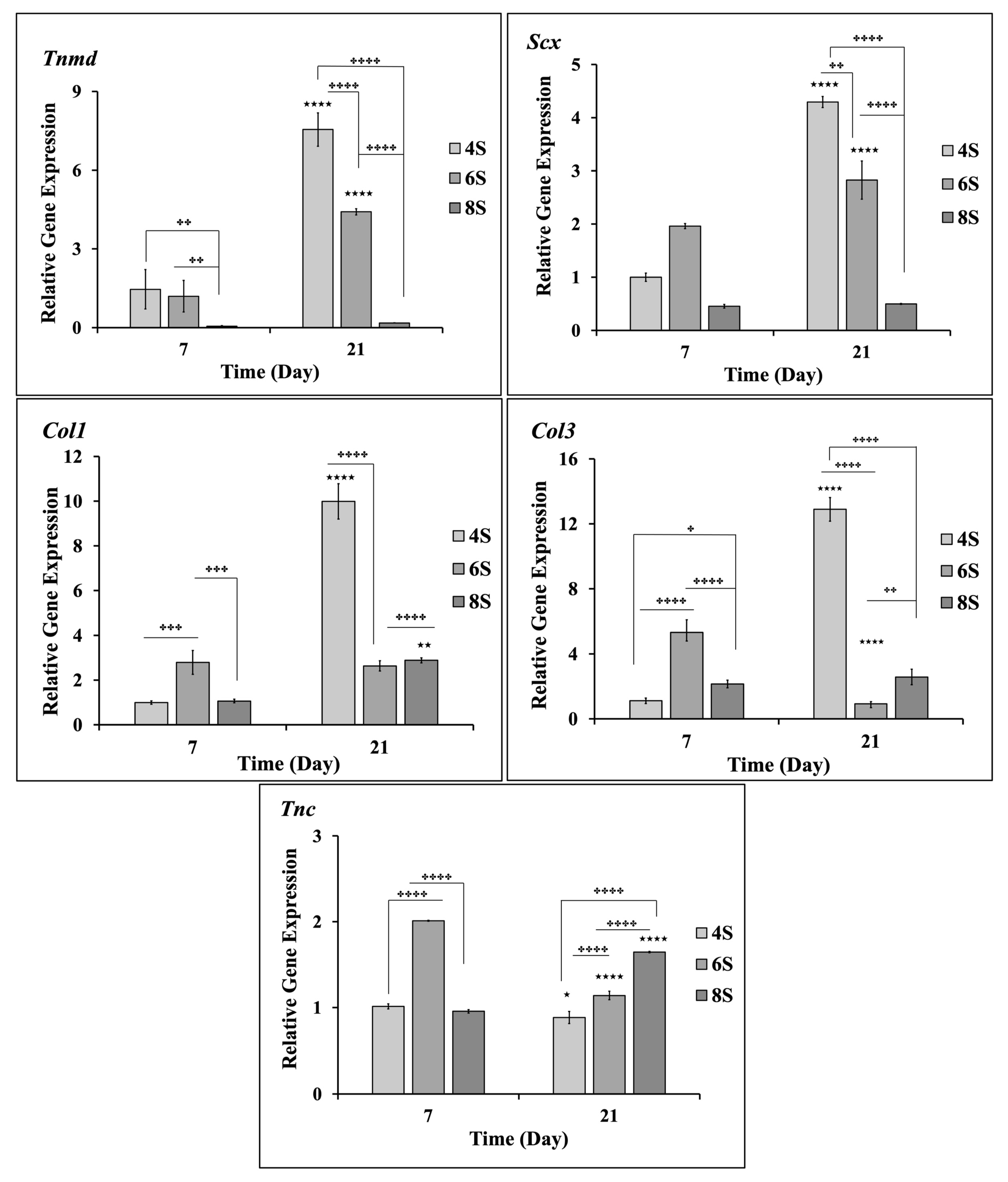
3.3.2. RT-qPCR Analysis
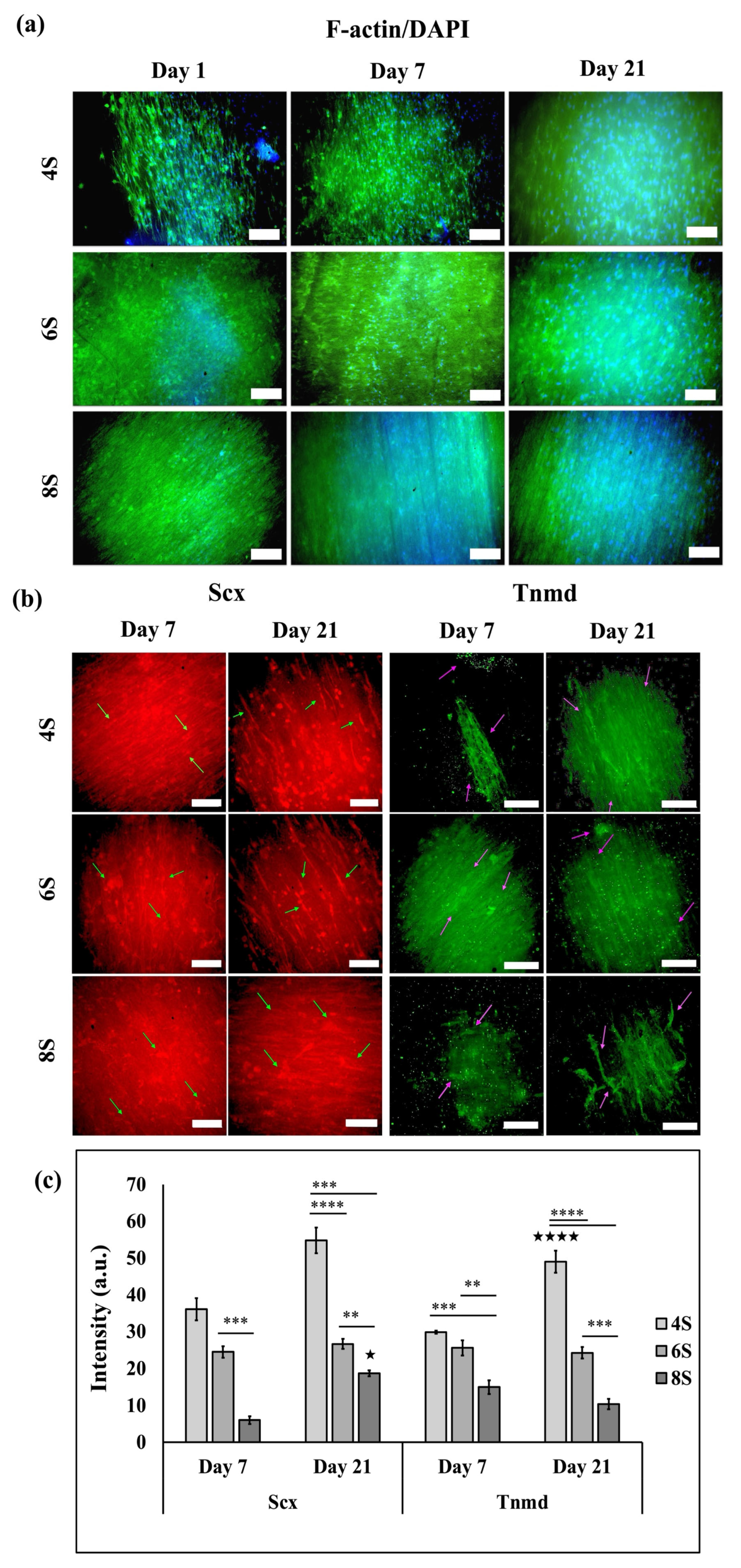
3.3.3. Immunofluorescence Analysis of Cell Morphology and Tenogenic Markers

3.3.4. Results of Post-Culture Tensile Tests

| Cell-Free | ||||||
| Tensile Strength (MPa) | Elongation at Break (%) | Elastic Modulus (MPa) | ||||
| Day 7 | Day 21 | Day 7 | Day 21 | Day 7 | Day 21 | |
| 4S | 1.6 ± 0.4 | 1.2 ± 0.1 | 109.4 ± 7.9 | 169.7 ± 30.5 | 5.7 ± 2.2 | 10.2 ± 0.8 |
| 6S | 0.3 ± 0.1 | 2.1 ± 0.2 | 77.4 ± 6.3 | 129.4 ± 18.0 | 7.0 ± 2.2 | 9.3 ± 0.7 |
| 8S | 1.2 ± 0.3 | 4.4 ± 0.9 | 89.5 ± 3.8 | 238.2 ± 48.3 | 10.7 ± 1.3 | 5.4 ± 1.4 |
| Cell-laden | ||||||
| Tensile Strength (MPa) | Elongation at Break (%) | Elastic Modulus (MPa) | ||||
| Day 7 | Day 21 | Day 7 | Day 21 | Day 7 | Day 21 | |
| 4S | 1.0 ± 0.1 | 2.1 ± 1.4 | 160.8 ± 18.3 | 236.8 ± 5.5 | 6.6 ± 1.0 | 3.4 ± 0.4 |
| 6S | 0.3 ± 0.1 | 1.9 ± 1.2 | 170.4 ± 15.2 | 122.9 ± 15.7 | 1.3 ± 0.2 | 2.2 ± 0.4 |
| 8S | 1.2 ± 0.1 | 3.6 ± 1.7 | 191.5 ± 13.9 | 447.3 ± 50.7 | 9.9 ± 2.2 | 2.8 ± 0.2 |
4. Conclusions
Supplementary Materials
Author Contributions
Funding
Institutional Review Board Statement
Informed Consent Statement
Data Availability Statement
Acknowledgments
Conflicts of Interest
References
- Longo, U.G.; Mazzola, A.; Magrì, F.; Catapano, S.; De Salvatore, S.; Carotti, S.; Denaro, V. Histological, Radiological and Clinical Analysis of the Supraspinatus Tendon and Muscle in Rotator Cuff Tears. BMC Musculoskelet. Disord. 2023, 24, 127. [Google Scholar] [CrossRef] [PubMed]
- Seitz, A.L.; McClure, P.W.; Finucane, S.; Boardman, N.D., III; Michener, L.A. Mechanisms of Rotator Cuff Tendinopathy: Intrinsic, Extrinsic, or Both? Clin. Biomech. 2011, 26, 1–12. [Google Scholar] [CrossRef] [PubMed]
- Louati, H.; Uhthoff, H.K.; Culliton, K.; Laneuville, O.; Lapner, P.; Trudel, G. Supraspinatus tendon repair using anchors: A biomechanical evaluation in the rabbit. J. Orthop. Surg. Res. 2018, 13, 64. [Google Scholar] [CrossRef] [PubMed]
- Gates, J.J.; Gilliland, J.; McGarry, M.H.; Park, M.C.; Acevedo, D.; Fitzpatrick, M.J.; Lee, T.Q. Influence of Distinct Anatomic Subregions of the Supraspinatus on Humeral Rotation. J. Orthop. Res. 2010, 28, 12–17. [Google Scholar] [CrossRef] [PubMed]
- Alexander, R.M. Tendon Elasticity and Muscle Function. Comp. Biochem. Physiol. Part A Mol. Integr. Physiol. 2002, 133, 1001–1011. [Google Scholar] [CrossRef] [PubMed]
- Matsuhashi, T.; Hooke, A.W.; Zhao, K.D.; Goto, A.; Sperling, J.W.; Steinmann, S.P.; An, K.N. Tensile Properties of a Morphologically Split Supraspinatus Tendon. Clin. Anat. 2014, 27, 702–706. [Google Scholar] [CrossRef] [PubMed]
- Aurora, A.; McCarron, J.A.; van den Bogert, A.J.; Gatica, J.E.; Iannotti, J.P.; Derwin, K.A. The Biomechanical Role of Scaffolds in Augmented Rotator Cuff Tendon Repairs. J. Shoulder Elb. Surg. 2012, 21, 1064–1071. [Google Scholar] [CrossRef] [PubMed]
- Derwin, K.A.; Badylak, S.F.; Steinmann, S.P.; Iannotti, J.P. Extracellular Matrix Scaffold Devices for Rotator Cuff Repair. J. Shoulder Elb. Surg. 2010, 19, 467–476. [Google Scholar] [CrossRef] [PubMed]
- Randelli, P.; Randelli, F.; Ragone, V.; Menon, A.; D’Ambrosi, R.; Cucchi, D.; Cabitza, P.; Banfi, G. Regenerative Medicine in Rotator Cuff Injuries. BioMed Res. Int. 2014, 129515. [Google Scholar] [CrossRef] [PubMed]
- Ning, C.; Li, P.; Gao, C.; Fu, L.; Liao, Z.; Tian, G.; Yin, H.; Li, M.; Sui, X.; Yuan, Z.; et al. Recent Advances in Tendon Tissue Engineering Strategy. Front. Bioeng. Biotechnol. 2023, 11, 1115312. [Google Scholar] [CrossRef] [PubMed]
- Silva, M.; Ferreira, F.N.; Alves, N.M.; Paiva, M.C. Biodegradable Polymer Nanocomposites for Ligament/Tendon Tissue Engineering. J. Nanobiotechnol. 2020, 18, 23. [Google Scholar] [CrossRef] [PubMed]
- Wu, Y.; Han, Y.; Wong, Y.S.; Fuh, J.Y.H. Fibre-Based Scaffolding Techniques for Tendon Tissue Engineering. J. Tissue Eng. Regen. Med. 2018, 12, 1798–1821. [Google Scholar] [CrossRef] [PubMed]
- Fu, L.; Feng, Q.; Chen, Y.; Fu, J.; Zhou, X.; He, C. Nanofibers for Immunoregulation in Biomedical Applications. Adv. Fiber Mater. 2022, 4, 1334–1356. [Google Scholar] [CrossRef]
- Orr, S.B.; Chainani, A.; Hippensteel, K.J.; Kishan, A.; Gilchrist, C.; Garrigues, N.W.; Ruch, D.S.; Guilak, F.; Little, D. Aligned Multilayered Electrospun Scaffolds for Rotator Cuff Tendon Tissue Engineering. Acta Biomater. 2015, 24, 117–126. [Google Scholar] [CrossRef] [PubMed]
- Tonndorf, R.; Aibibu, D.; Cherif, C. Isotropic and anisotropic scaffolds for tissue engineering: Collagen, conventional, and textile fabrication technologies and properties. Int. J. Mol. Sci. 2021, 22, 9561. [Google Scholar] [CrossRef] [PubMed]
- Bye, F.J.; Bissoli, J.; Black, L.; Bullock, A.J.; Puwanun, S.; Moharamzadeh, K.; Gwendolen, C.R.; Ryan, A.J.; MacNeil, S. Development of bilayer and trilayer nanofibrous/microfibrous scaffolds for regenerative medicine. Biomater. Sci. 2013, 1, 942–951. [Google Scholar] [CrossRef] [PubMed]
- Takahashi, H.; Okano, T. Cell sheet-based tissue engineering for organizing anisotropic tissue constructs produced using microfabricated thermoresponsive substrates. Adv. Healthc. Mater. 2015, 4, 2388–2407. [Google Scholar] [CrossRef] [PubMed]
- Zhao, T.; Qi, Y.; Xiao, S.; Ran, J.; Wang, J.; Ghamor-Amegavi, E.P.; Zhou, X.; Li, H.; He, T.; Gou, Z.; et al. Integration of Mesenchymal Stem Cell Sheet and bFGF-Loaded Fibrin Gel in Knitted PLGA Scaffolds Favorable for Tendon Repair. J. Mater. Chem. B 2019, 7, 2201–2211. [Google Scholar] [CrossRef] [PubMed]
- Saveh-Shemshaki, N.; Nair, L.S.; Laurencin, C.T. Nanofiber-Based Matrices for Rotator Cuff Regenerative Engineering. Acta Biomater. 2019, 94, 64–81. [Google Scholar] [CrossRef] [PubMed]
- Wang, Z.; Lee, W.J.; Koh, B.T.H.; Hong, M.; Wang, W.; Lim, P.N.; Feng, J.; Park, L.S.; Kim, M.; Thian, E.S. Functional Regeneration of Tendons Using Scaffolds with Physical Anisotropy Engineered via Microarchitectural Manipulation. Sci. Adv. 2018, 4, eaat4537. [Google Scholar] [CrossRef] [PubMed]
- Arslan, A.; Çakmak, S.; Cengiz, A.; Gümüşderelioğlu, M. Poly(butylene adipate-co-terephthalate) Scaffolds: Processing, Structural Characteristics and Cellular Responses. J. Biomater. Sci. Polym. Ed. 2016, 27, 1841–1859. [Google Scholar] [CrossRef] [PubMed]
- Das, A.; K N, C.; Salins, S.S.; Shetty, R.; Shetty, S. Poly(butylene adipate-co-terephthalate)(PBAT) in biomedical applications: A comprehensive review of material properties, fabrication methods, and biofunctional potential. Mat. Res. Exp. 2025, 12, 062002. [Google Scholar] [CrossRef]
- Arslan, A.; Çakmak, S.; Gümüşderelioğlu, M. Enhanced Osteogenic Activity with Boron-Doped Nanohydroxyapatite-Loaded Poly(butylene adipate-co-terephthalate) Fibrous 3D Matrix. Artif. Cells Nanomed. Biotechnol. 2018, 46, 790–799. [Google Scholar] [CrossRef] [PubMed]
- Gültan, T.; Gümüşderelioğlu, M. Membrane supported poly(butylene adipate-co-terephthalate) nanofibrous matrices as cardiac patch: Effect of basement membrane for the fiber deposition and cellular behavior. Colloids Surf. A Physicochem. Eng. Asp. 2022, 654, 129977. [Google Scholar] [CrossRef]
- Tokak, E.K.; Altındal, D.Ç.; Akdere, Ö.E.; Gümüşderelioğlu, M. In Vitro Effectiveness of Poly-β-alanine Reinforced Poly(3-hydroxybutyrate) Fibrous Scaffolds for Skeletal Muscle Regeneration. Mater. Sci. Eng. C 2021, 131, 112528. [Google Scholar] [CrossRef] [PubMed]
- Akdere, Ö.E.; Shikhaliyeva, İ.; Gümüşderelioğlu, M. Boron-Mediated 2D and 3D Cultures of Adipose-Derived Mesenchymal Stem Cells. Cytotechnology 2019, 71, 611–622. [Google Scholar] [CrossRef] [PubMed]
- Mosmann, T. Rapid Colorimetric Assay for Cellular Growth and Survival: Application to Proliferation and Cytotoxicity Assays. J. Immunol. Methods 1983, 65, 55–63. [Google Scholar] [CrossRef] [PubMed]
- Podgórski, R.; Wojasiński, M.; Ciach, T. Nanofibrous Materials Affect the Reaction of Cytotoxicity Assays. Sci. Rep. 2022, 12, 9047. [Google Scholar] [CrossRef] [PubMed]
- Sarıkaya, B.; Gümüşderelioğlu, M. Aligned Silk Fibroin/Poly(3-hydroxybutyrate) Nanofibrous Scaffolds Seeded with Adipose-Derived Stem Cells for Tendon Tissue Engineering. Int. J. Biol. Macromol. 2021, 193, 276–286. [Google Scholar] [CrossRef] [PubMed]
- Wu, S.; Peng, H.; Li, X.; Streubel, P.N.; Liu, Y.; Duan, B. Effect of Scaffold Morphology and Cell Co-Culture on Tenogenic Differentiation of HADMSC on Centrifugal Melt Electrospun Poly(L-lactic acid) Fibrous Meshes. Biofabrication 2017, 9, 044106. [Google Scholar] [CrossRef] [PubMed]
- Bouchet, M.; Ajji, A.; Lerouge, S. Determination of the Adhesion between Electrospun Mats through Peel Tests. Fibers Polym. 2021, 22, 1266–1273. [Google Scholar] [CrossRef]
- Ker, R.F. Mechanics of Tendon, from an Engineering Perspective. Int. J. Fatigue 2007, 29, 1001–1009. [Google Scholar] [CrossRef]
- Taele, P.; Masango, T.; Msomi, V. The Relationship between the Thickness and Flexural Strength of Unidirectional Carbon Fiber Reinforced Polymers Manufactured through VARI. Mater. Today Proc. 2022, 56, 2096–2103. [Google Scholar] [CrossRef]
- Cao, Y.; Lai, S.; Wu, W.; Sang, L.; Lin, Y.; Liu, T.; Liang, C.; Liu, W.; Zhao, Y. Design and Mechanical Evaluation of Additively Manufactured Graded TPMS Lattices with Biodegradable Polymer Composites. J. Mater. Res. Technol. 2023, 23, 2868–2880. [Google Scholar] [CrossRef]
- de Barros, R.R.; de Souza Balbinot, G.; Vassoler, J.M.; Soares, R.M.D. Effect of Angular Variation and In Vitro Degradation on Mechanical Properties of PBAT 3D Scaffolds. J. Appl. Polym. Sci. 2024, 141, e55454. [Google Scholar] [CrossRef]
- De Hoe, G.X.; Zumstein, M.T.; Getzinger, G.J.; Rüegsegger, I.; Kohler, H.-P.E.; Maurer-Jones, M.A.; Sander, M.; Hillmyer, M.A.; McNeill, K. Photochemical Transformation of Poly(butylene adipate-co-terephthalate) and Its Effects on Enzymatic Hydrolyzability. Environ. Sci. Technol. 2019, 53, 2472–2481. [Google Scholar] [CrossRef] [PubMed]
- Fan, L.; Ma, J.; Liu, W.; Shang, C.; Xie, Y.; Zhou, X.; Zhang, M.; Hou, J.; Feng, Y. A study on the performance, structure, composition, and release behavior changes of polybutylene adipate terephthalic acid (PBAT) film during food contact. J. Haz. Mat. 2024, 472, 134603. [Google Scholar] [CrossRef] [PubMed]
- Wolkowski-Tyl, R.; Chin, T.Y.; Heck, H.D.A. Chemical urolithiasis. III. Pharmacokinetics and transplacental transport of terephthalic acid in Fischer-344 rats. Drug Met. Disp. 1982, 10, 486–490. [Google Scholar] [CrossRef]
- Zhang, J.; Zhu, J.; Hua, Z.; Liu, G.M. Specific Ion Effects on the Enzymatic Degradation of Polyester Films. Chin. J. Polym. Sci. 2023, 41, 476–482. [Google Scholar] [CrossRef]
- Dias, J.R.; Sousa, A.; Augusto, A.; Bártolo, P.J.; Granja, P.L. Electrospun Polycaprolactone (PCL) Degradation: An In Vitro and In Vivo Study. Polymers 2022, 14, 3397. [Google Scholar] [CrossRef] [PubMed]
- Lui, P.P.Y. Stem Cell Technology for Tendon Regeneration: Current Status, Challenges, and Future Research Directions. Stem Cells Cloning 2015, 8, 163–174. [Google Scholar] [CrossRef] [PubMed]
- Tu, T.; Shen, Y.; Wang, X.; Zhang, W.; Zhou, G.; Zhang, Y.; Liu, W. Tendon ECM-Modified Bioactive Electrospun Fibers Promote MSC Tenogenic Differentiation and Tendon Regeneration. Appl. Mater. Today 2020, 18, 100495. [Google Scholar] [CrossRef]
- Long, Q.; Liu, C.; Zheng, H.; Wang, M.; Liu, H.; Liu, Y.; Cao, Z.; Sun, Y.; Mo, Q.; Backman, L.J.; et al. Enhancing Tendon Regeneration: Investigating the Impact of Topography on the Secretome of Adipose-Derived Stem Cells. Adv. Sci. 2025, 12, 2417447. [Google Scholar] [CrossRef] [PubMed]
- Ruijtenberg, S.; van den Heuvel, S. Coordinating cell proliferation and differentiation: Antagonism between cell cycle regulators and cell type-specific gene expression. Cell Cycle 2016, 15, 196–212. [Google Scholar] [CrossRef] [PubMed]
- Gumucio, J.P.; Schonk, M.M.; Kharaz, Y.A.; Comerford, E.; Mendias, C.L. Scleraxis Is Required for the Growth of Adult Tendons in Response to Mechanical Loading. JCI Insight 2020, 5, e138295. [Google Scholar] [CrossRef] [PubMed]
- Shukunami, C.; Yoshimoto, Y.; Takimoto, A.; Yamashita, H.; Hiraki, Y. Molecular Characterization and Function of Tenomodulin, a Marker of Tendons and Ligaments That Integrate Musculoskeletal Components. Jpn. Dent. Sci. Rev. 2016, 52, 84–92. [Google Scholar] [CrossRef] [PubMed]
- Citro, V.; Clerici, M.; Boccaccini, A.R.; Della Porta, G.; Maffulli, N.; Forsyth, N.R. Tendon Tissue Engineering: An Overview of Biologics to Promote Tendon Healing and Repair. J. Tissue Eng. 2023, 14, 20417314231196275. [Google Scholar] [CrossRef] [PubMed]
- Sheng, R.; Liu, J.; Zhang, W.; Luo, Y.; Chen, Z.; Chi, J.; Mo, Q.; Wang, M.; Sun, Y.; Liu, C.; et al. Material Stiffness in Cooperation with Macrophage Paracrine Signals Determines the Tenogenic Differentiation of Mesenchymal Stem Cells. Adv. Sci. 2023, 10, 2206814. [Google Scholar] [CrossRef] [PubMed]
- Schwartz, M.A.; DeSimone, D.W. Cell Adhesion Receptors in Mechanotransduction. Curr. Opin. Cell Biol. 2008, 20, 551–556. [Google Scholar] [CrossRef] [PubMed]
- Shukunami, C.; Takimoto, A.; Nishizaki, Y.; Yoshimoto, Y.; Tanaka, S.; Miura, S.; Watanabe, H.; Sakuma, T.; Yamamoto, T.; Kondoh, G.; et al. Scleraxis Is a Transcriptional Activator That Regulates the Expression of Tenomodulin, a Marker of Mature Tenocytes and Ligamentocytes. Sci. Rep. 2018, 8, 3155. [Google Scholar] [CrossRef] [PubMed]
- Guo, T.; Zhong, F.; Wen, F.; Liu, P.; San Thian, E.; Nie, H.; Li, D.; Zhang, R.; Ma, C.; Lin, N.; et al. Engineering of Tenogenic Patch Scaffold with Fibrous Microtopography and Reinforcement via Uniaxial Cold-Drawing. Mater. Des. 2022, 217, 110609. [Google Scholar] [CrossRef]
- Liu, H.; Xu, J.; Lan, Y.; Lim, H.W.; Jiang, R. The Scleraxis Transcription Factor Directly Regulates Multiple Distinct Molecular and Cellular Processes during Early Tendon Cell Differentiation. Front. Cell Dev. Biol. 2021, 9, 654397. [Google Scholar] [CrossRef] [PubMed]
- Nakamichi, R.; Asahara, H. The Role of Mechanotransduction in Tendon. J. Bone Miner. Res. 2024, 39, 814–820. [Google Scholar] [CrossRef] [PubMed]
- Riley, G.P.; Harrall, R.L.; Cawston, T.E.; Hazleman, B.L.; Mackie, E.J. Tenascin-C and Human Tendon Degeneration. Am. J. Pathol. 1996, 149, 933–943. [Google Scholar] [PubMed]
- Mohindra, R.; Mohindra, R.; Agrawal, D.K.; Thankam, F.G. Bioactive Extracellular Matrix Fragments in Tendon Repair. Cell Tissue Res. 2022, 390, 131–140. [Google Scholar] [CrossRef] [PubMed]
- Chen, S.; Wang, J.; Chen, Y.; Mo, X.; Fan, C. Tenogenic Adipose-Derived Stem Cell Sheets with Nanoyarn Scaffolds for Tendon Regeneration. Mater. Sci. Eng. C 2021, 119, 111506. [Google Scholar] [CrossRef] [PubMed]
- Nourissat, G.; Berenbaum, F.; Duprez, D. Tendon Injury: From Biology to Tendon Repair. Nat. Rev. Rheumatol. 2015, 11, 223–233. [Google Scholar] [CrossRef] [PubMed]
- Haramshahi, S.M.A.; Bonakdar, S.; Moghtadaei, M.; Kamguyan, K.; Thormann, E.; Tanbakooei, S.; Simorgh, S.; Brouki-Milan, P.; Amini, N.; Latifi, N.A.; et al. Tenocyte-Imprinted Substrate: A Topography-Based Inducer for Tenogenic Differentiation in Adipose Tissue-Derived Mesenchymal Stem Cells. Biomed. Mater. 2020, 15, 035014. [Google Scholar] [CrossRef] [PubMed]
- Nair, R.P.; Joseph, J.; Harikrishnan, V.S.; Krishnan, V.K.; Krishnan, L. Contribution of Fibroblasts to the Mechanical Stability of In Vitro Engineered Dermal-Like Tissue through Extracellular Matrix Deposition. BioResearch 2014, 3, 217–225. [Google Scholar] [CrossRef] [PubMed]


Disclaimer/Publisher’s Note: The statements, opinions and data contained in all publications are solely those of the individual author(s) and contributor(s) and not of MDPI and/or the editor(s). MDPI and/or the editor(s) disclaim responsibility for any injury to people or property resulting from any ideas, methods, instructions or products referred to in the content. |
© 2026 by the authors. Licensee MDPI, Basel, Switzerland. This article is an open access article distributed under the terms and conditions of the Creative Commons Attribution (CC BY) license.
Share and Cite
Akbulut, S.O.; Konuk Tokak, E.; Gültan, T.; Gümüşderelioğlu, M. Thickness-Tunable Bilayer PBAT Nanofibrous Scaffolds for Enhancing r-AdMSCs’ Tenogenic Commitment in Supraspinatus Tendon Regeneration. J. Funct. Biomater. 2026, 17, 310. https://doi.org/10.3390/jfb17070310
Akbulut SO, Konuk Tokak E, Gültan T, Gümüşderelioğlu M. Thickness-Tunable Bilayer PBAT Nanofibrous Scaffolds for Enhancing r-AdMSCs’ Tenogenic Commitment in Supraspinatus Tendon Regeneration. Journal of Functional Biomaterials. 2026; 17(7):310. https://doi.org/10.3390/jfb17070310
Chicago/Turabian StyleAkbulut, Serdar Onat, Elvan Konuk Tokak, Tuğçe Gültan, and Menemşe Gümüşderelioğlu. 2026. "Thickness-Tunable Bilayer PBAT Nanofibrous Scaffolds for Enhancing r-AdMSCs’ Tenogenic Commitment in Supraspinatus Tendon Regeneration" Journal of Functional Biomaterials 17, no. 7: 310. https://doi.org/10.3390/jfb17070310
APA StyleAkbulut, S. O., Konuk Tokak, E., Gültan, T., & Gümüşderelioğlu, M. (2026). Thickness-Tunable Bilayer PBAT Nanofibrous Scaffolds for Enhancing r-AdMSCs’ Tenogenic Commitment in Supraspinatus Tendon Regeneration. Journal of Functional Biomaterials, 17(7), 310. https://doi.org/10.3390/jfb17070310