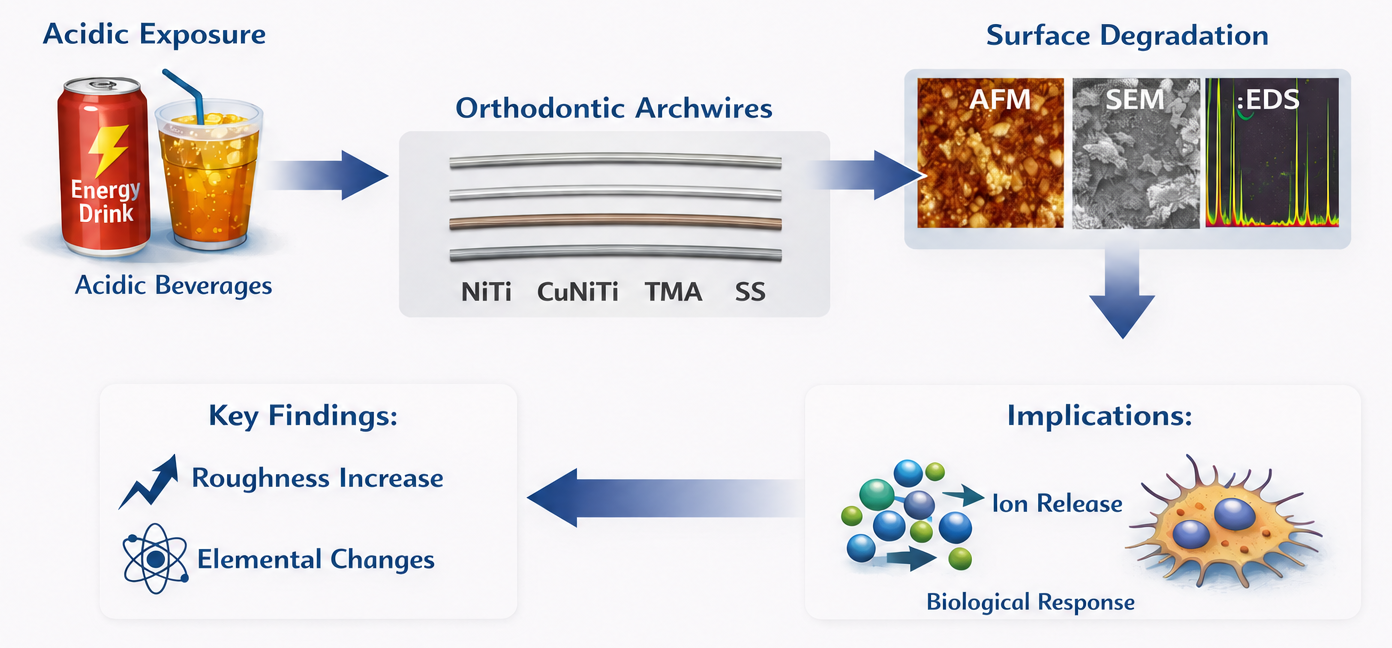

Acid-Induced Surface Degradation of Metallic Biomaterials: Alloy-Dependent Behavior and Implications for Surface Functionality
 , ,
, ,  and
and
Abstract
1. Introduction
2. Materials and Methods
2.1. Sample Preparation and Experimental Design
Rationale for the 30-Min Immersion Protocol
2.2. Measurement of pH
2.3. Analysis of Surface Roughness and Morphology Using Atomic Force Microscopy (AFM)
2.4. Surface Morphology and Elemental Composition Analysis by SEM–EDS
2.5. Statistical Analysis
3. Results
3.1. pH Characterization of Energy Drinks
3.2. Surface Roughness and Morphology by AFM
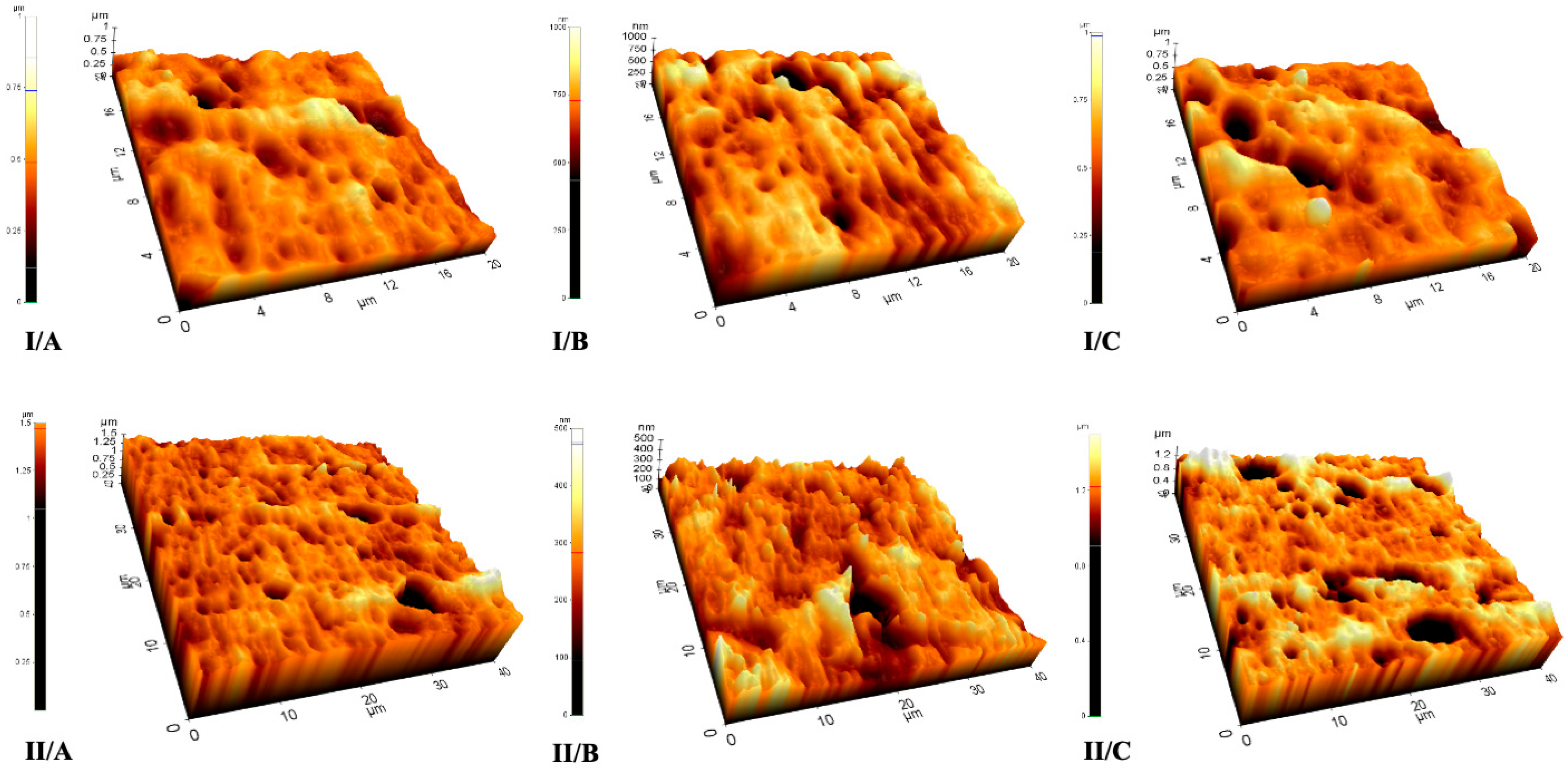
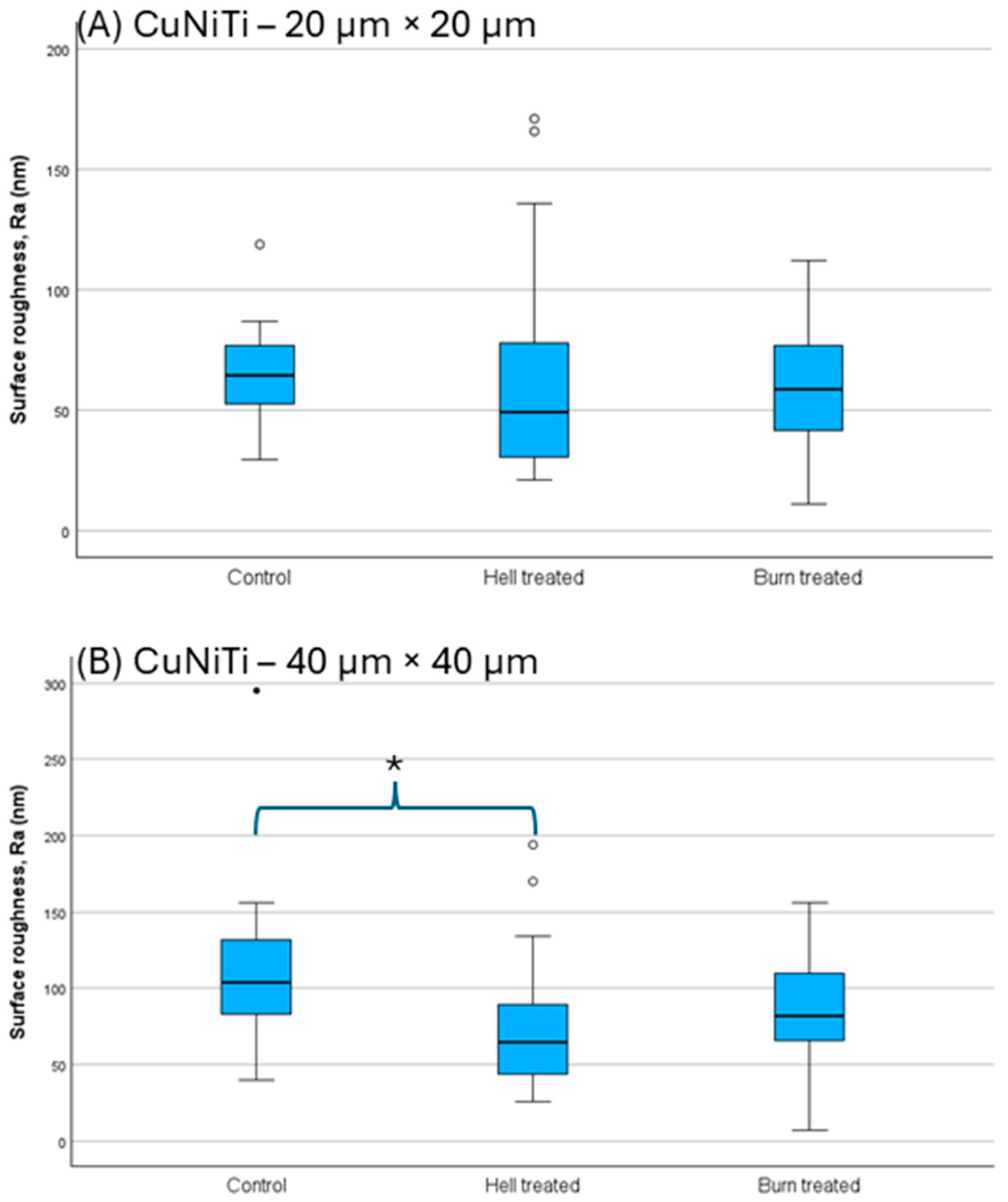
3.2.1. CuNiTi Archwires
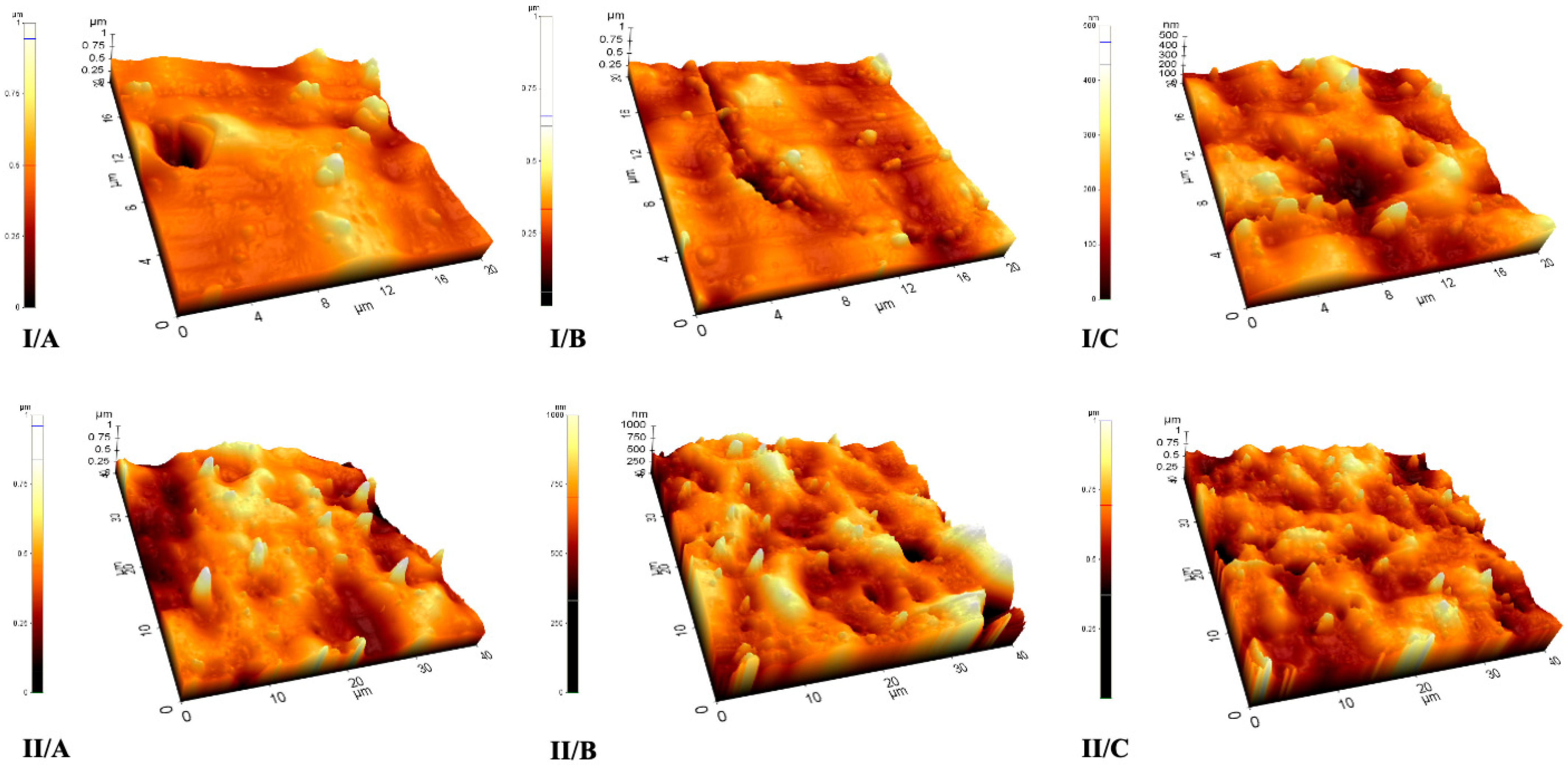
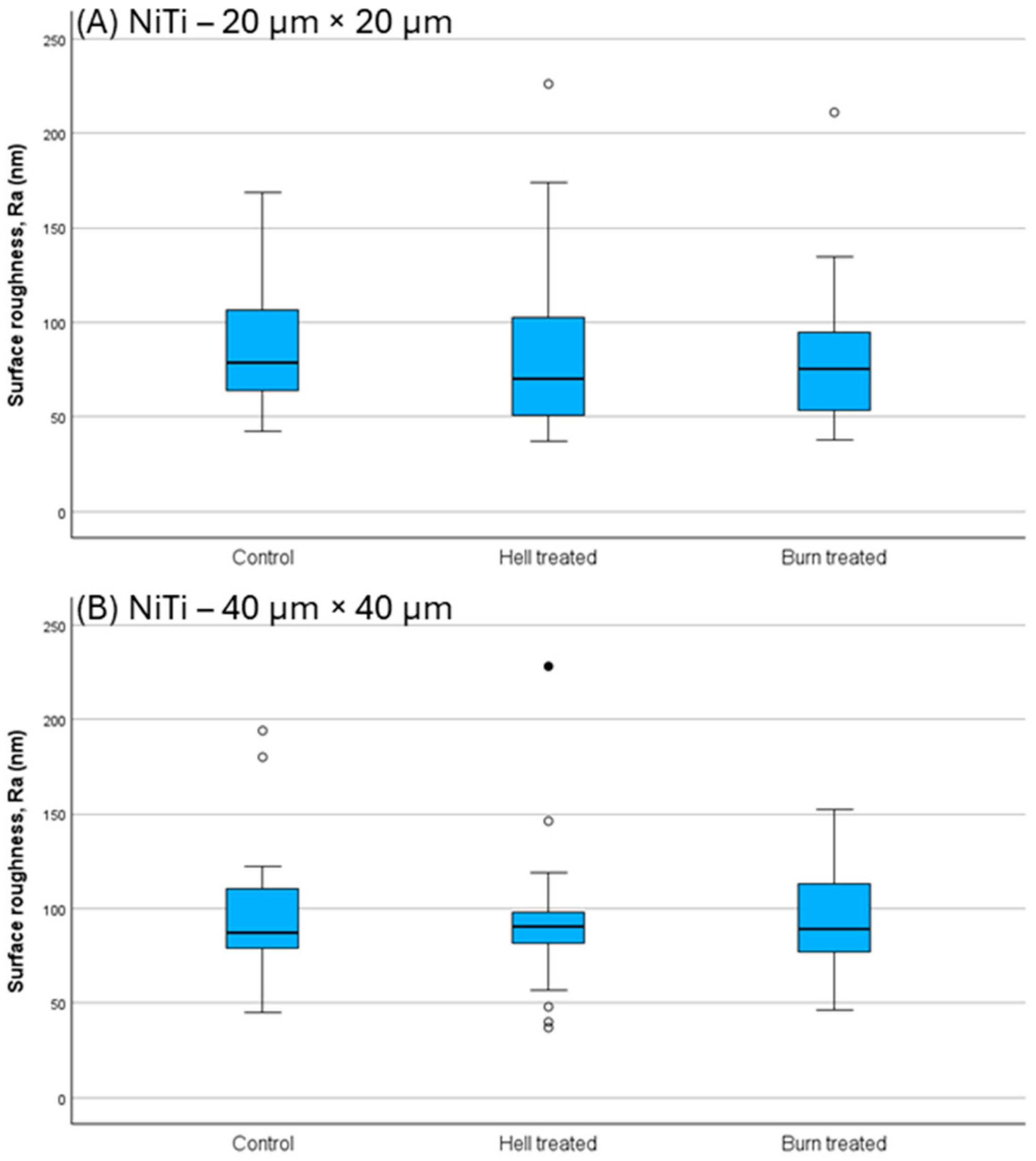
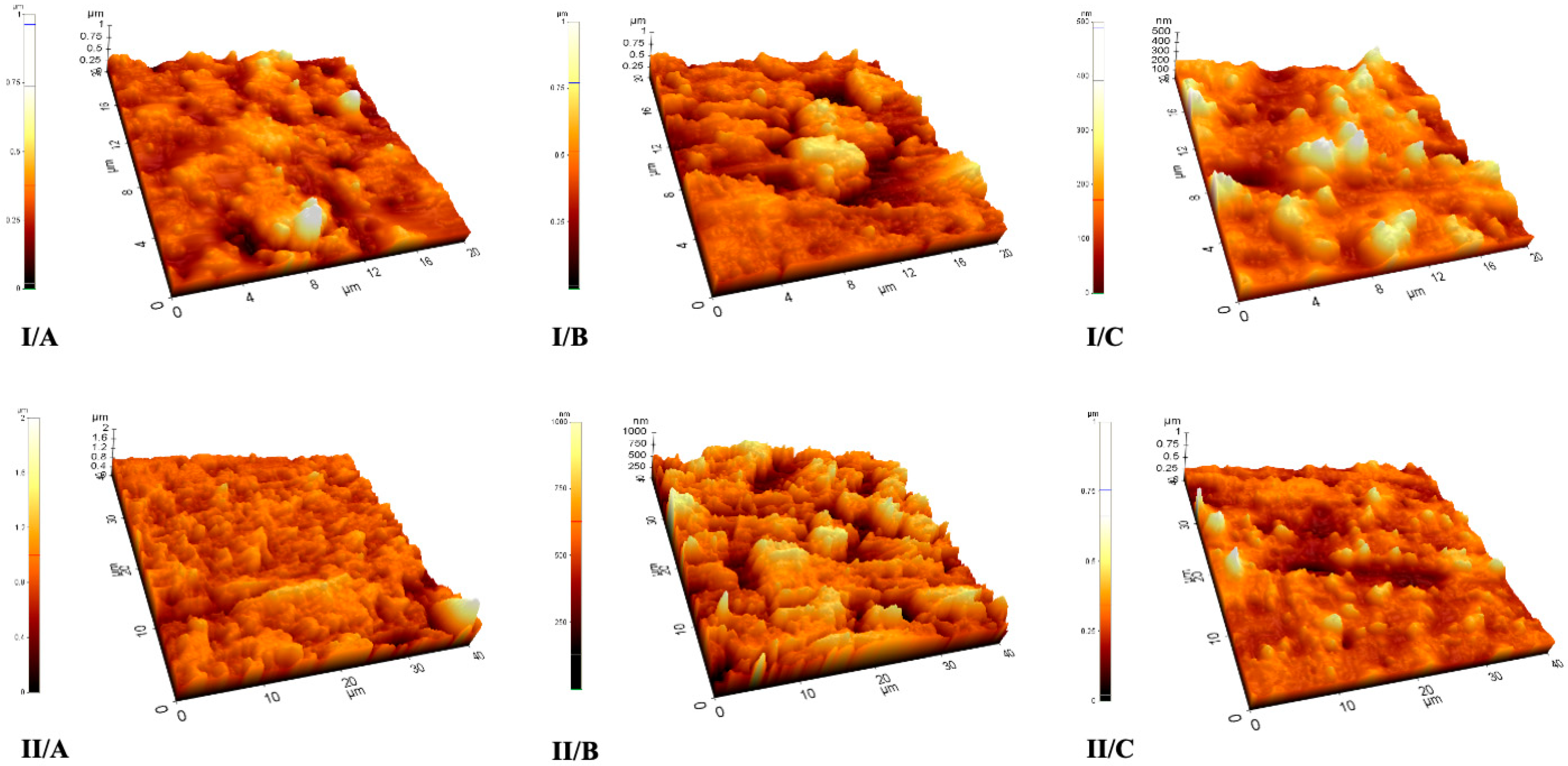
3.2.2. NiTi Archwires
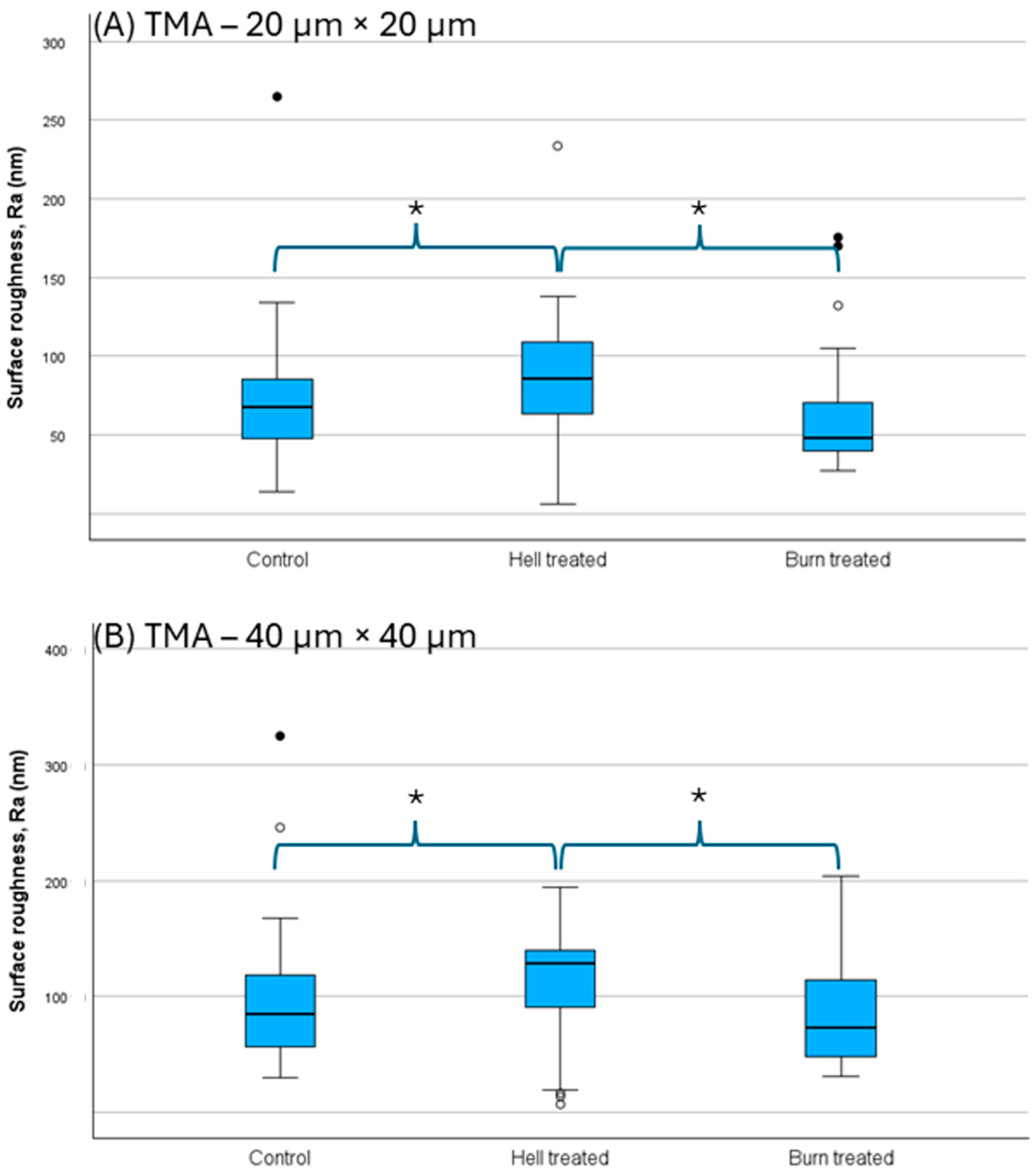
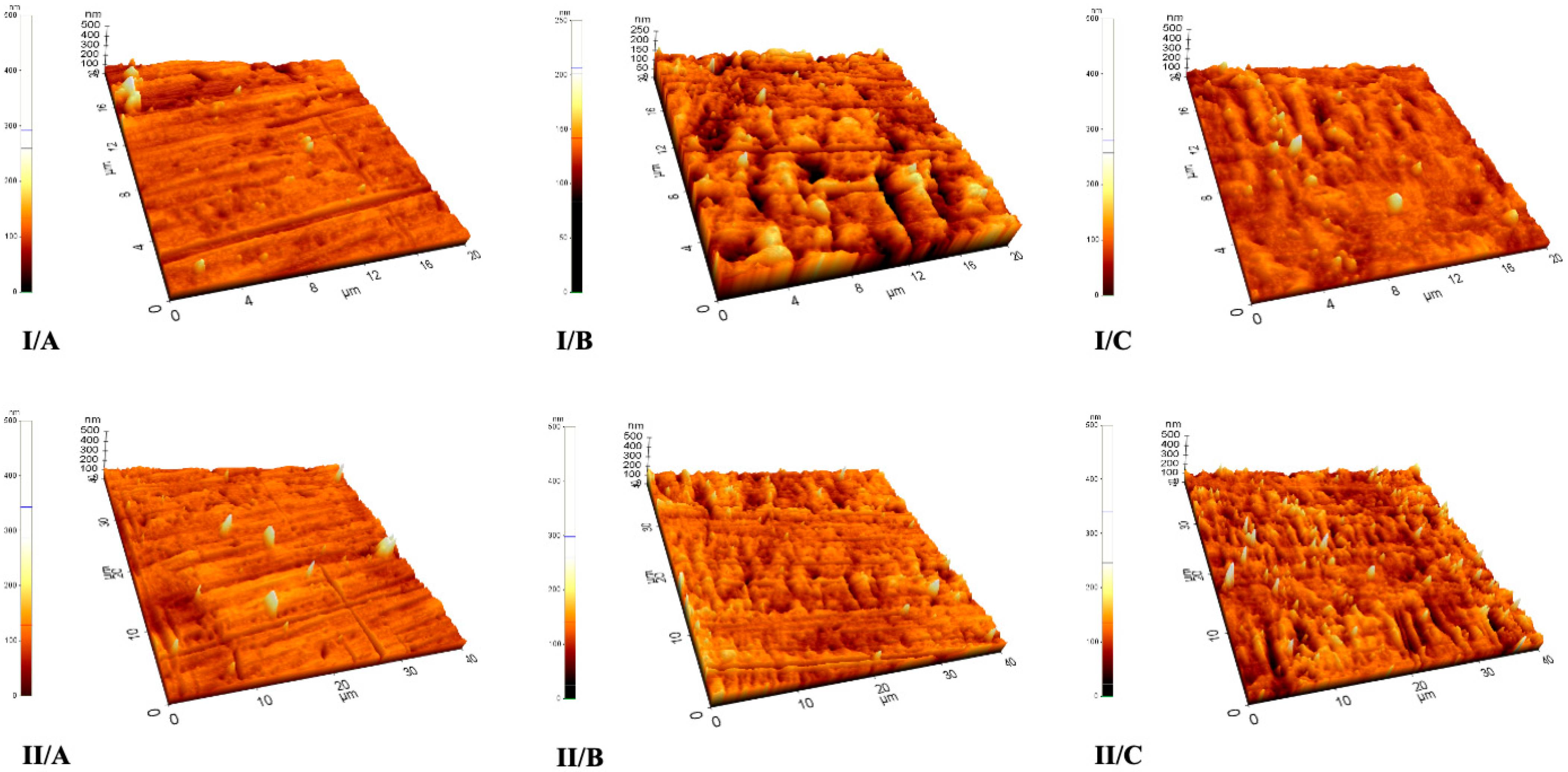
3.2.3. TMA Archwires
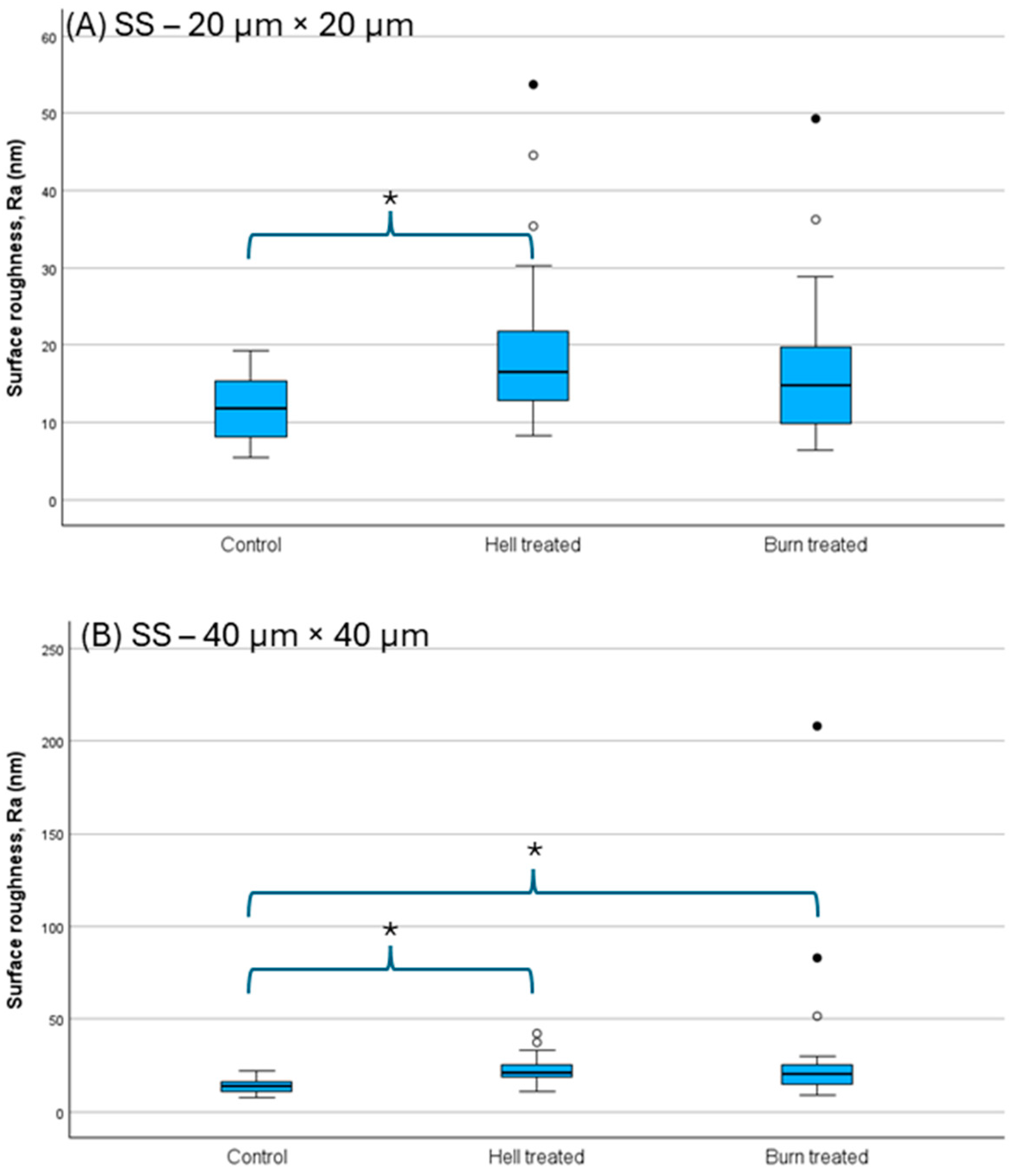
3.2.4. SS Archwires
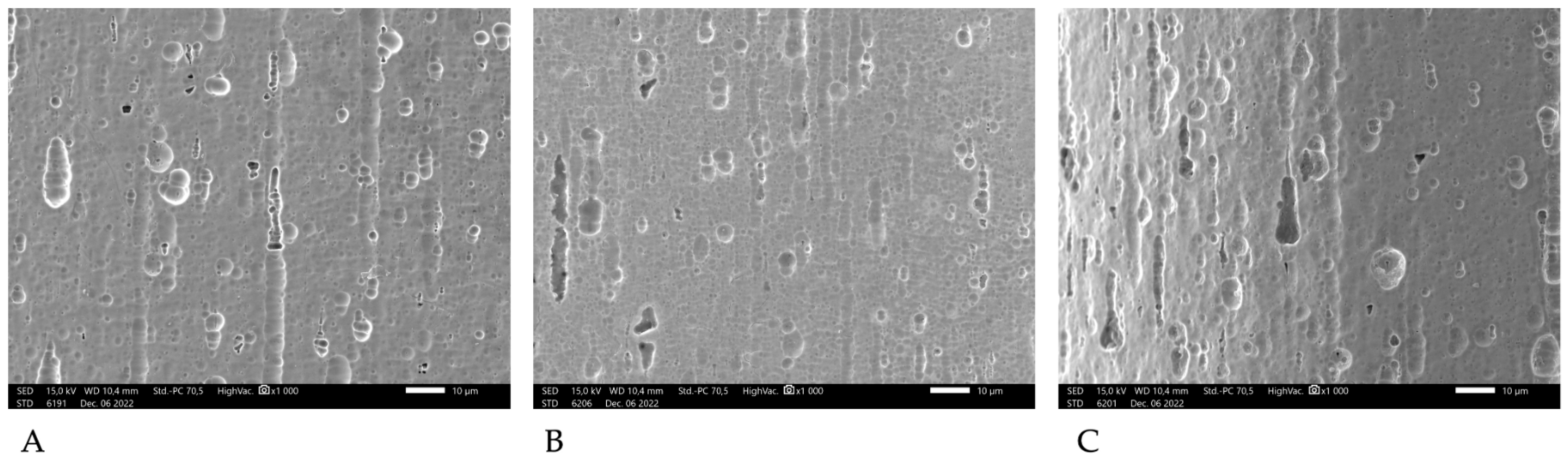
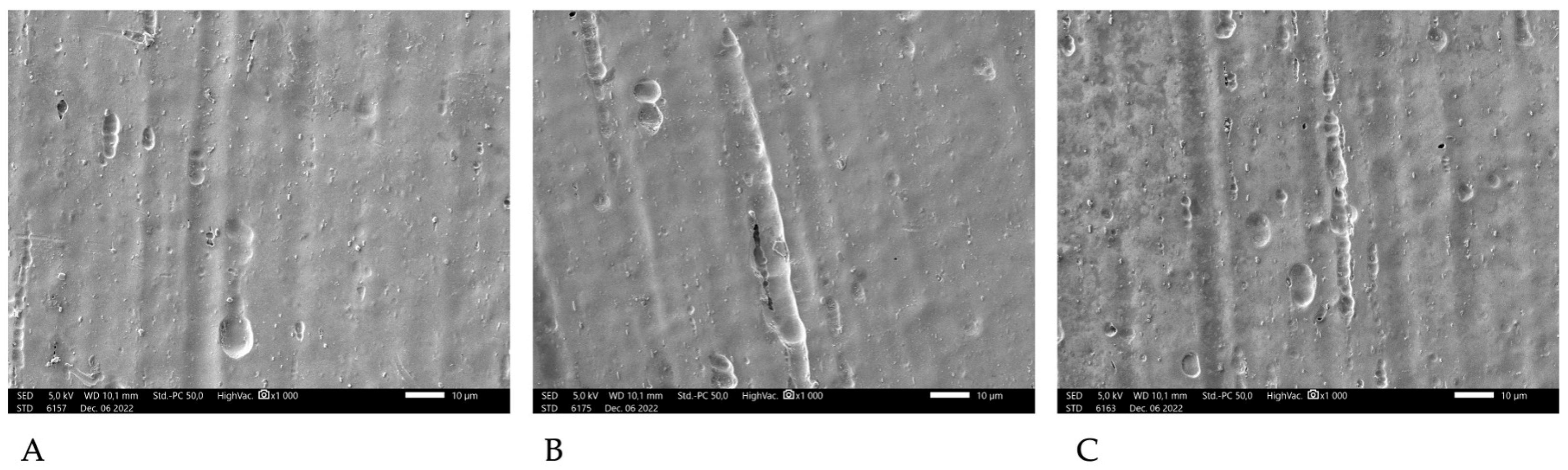
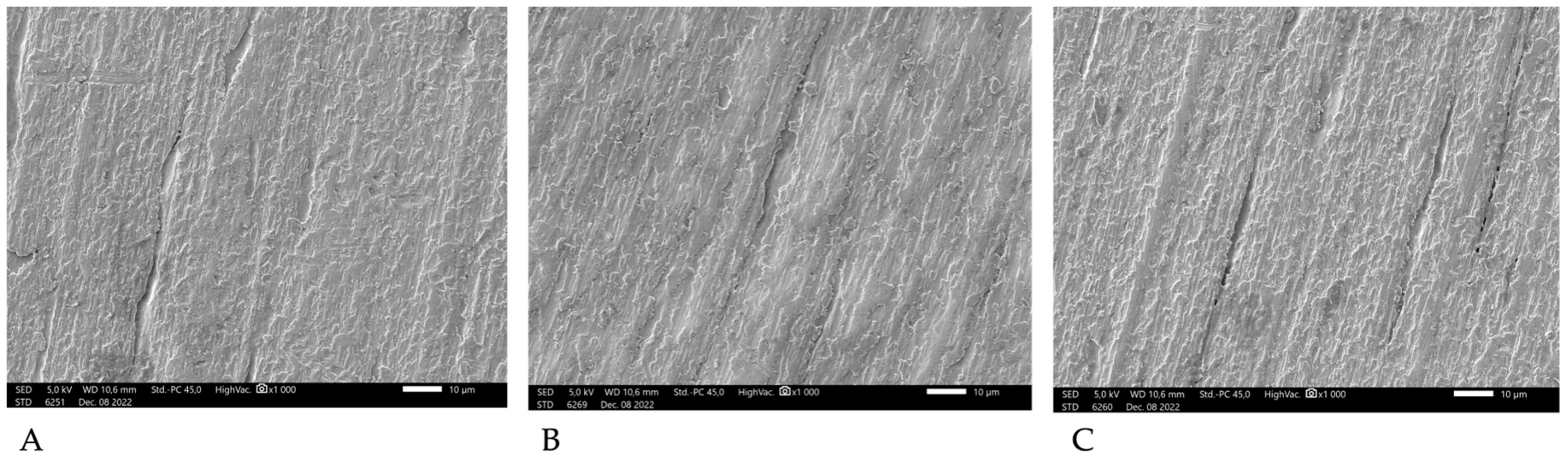
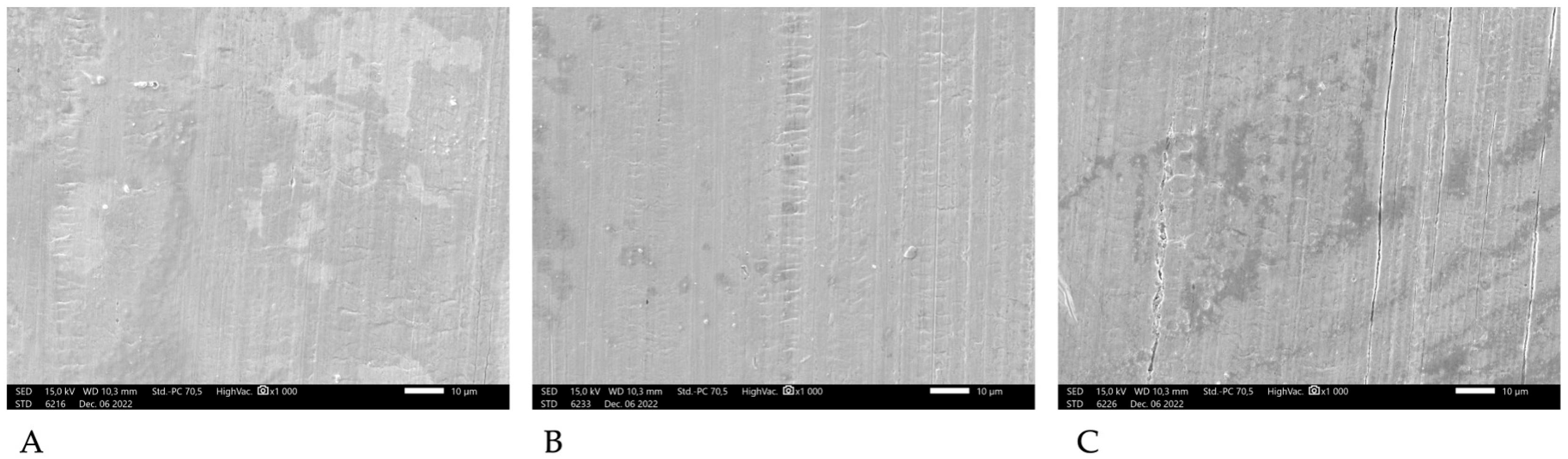
3.3. Surface Morphology Analysis by SEM
3.4. Surface Elemental Composition Analysis by EDS
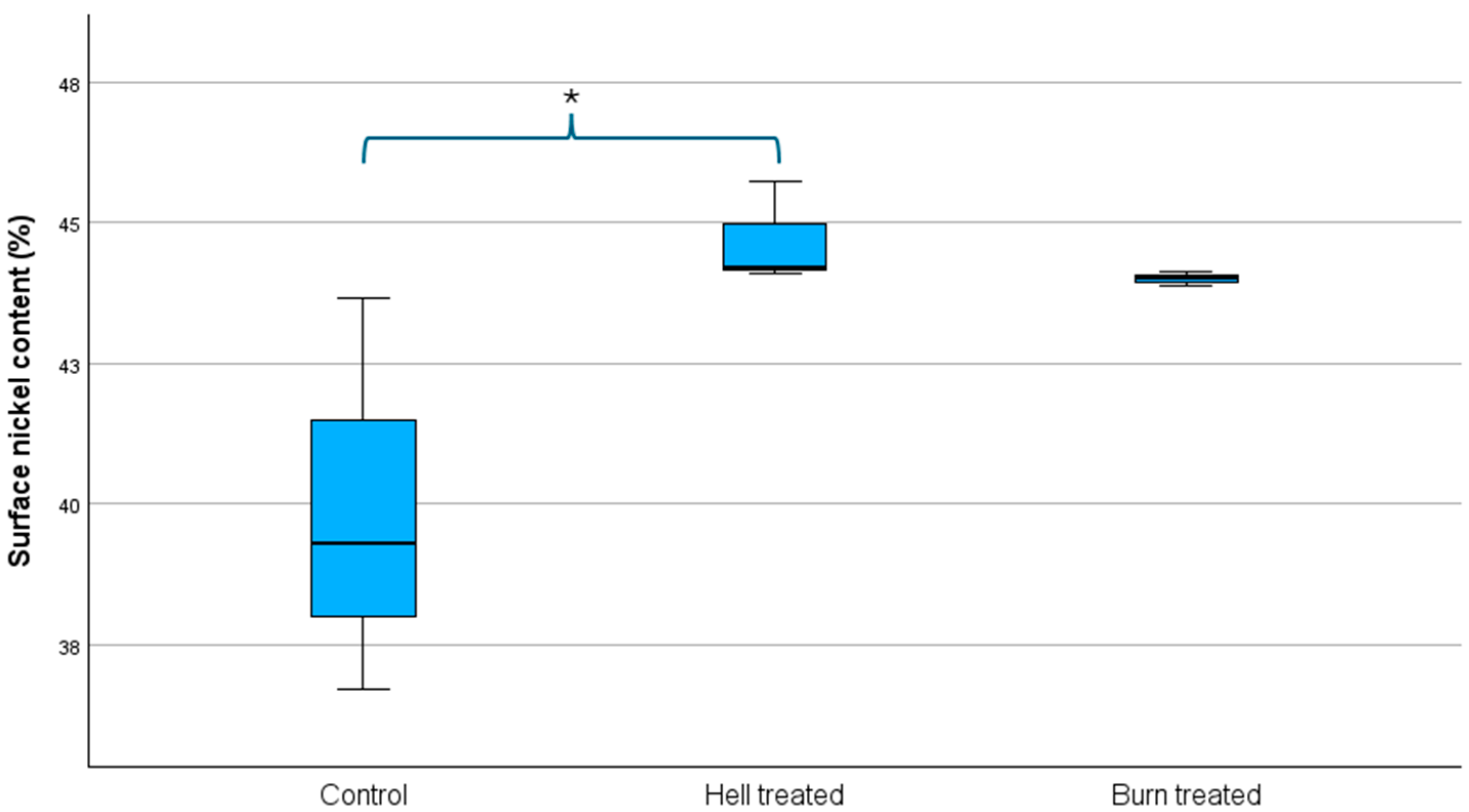
3.4.1. CuNiTi Archwires
3.4.2. NiTi Archwires
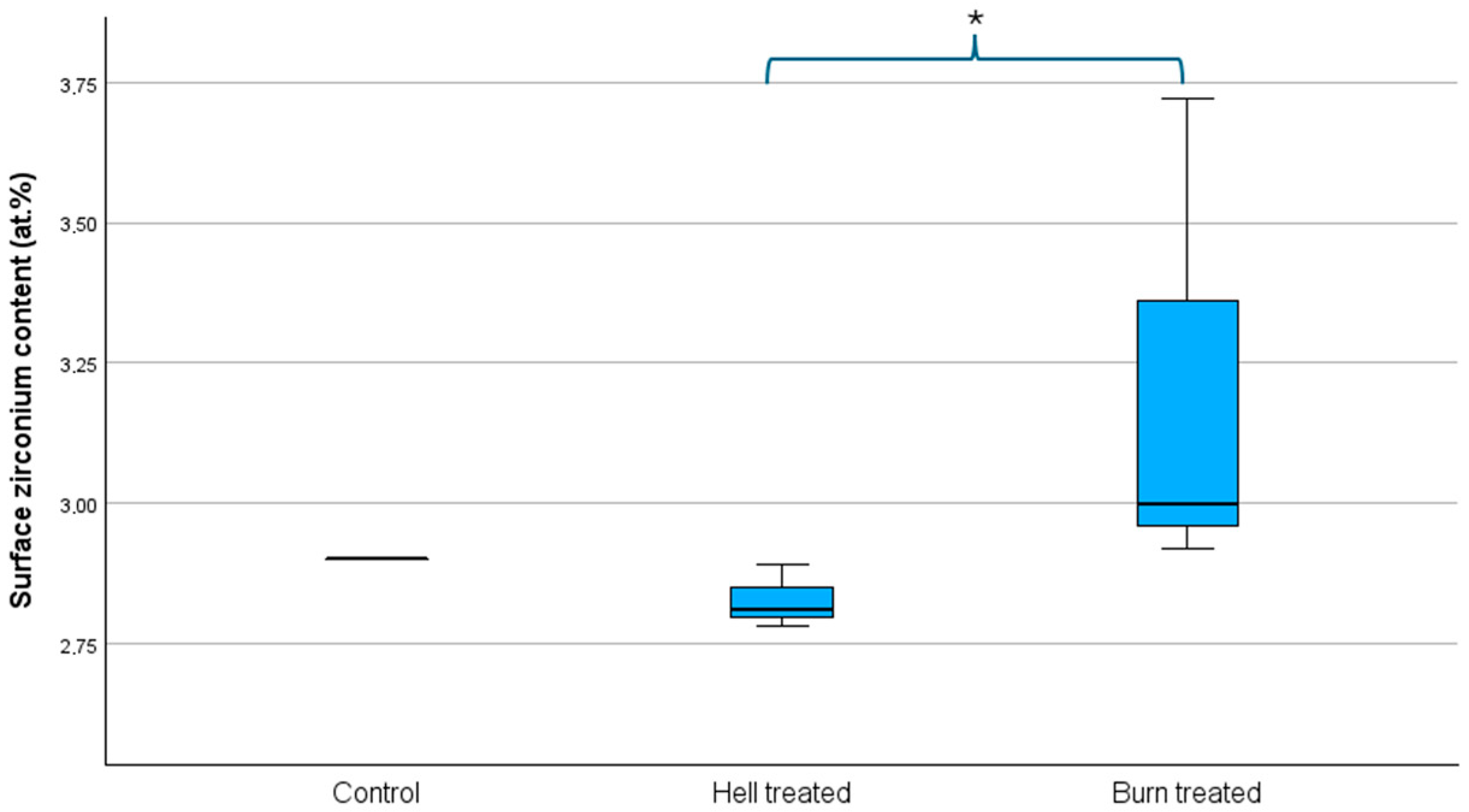
3.4.3. TMA Archwires
3.4.4. SS Archwires
4. Discussion
5. Conclusions
Author Contributions
Funding
Institutional Review Board Statement
Informed Consent Statement
Data Availability Statement
Acknowledgments
Conflicts of Interest
References
- Clapp, O.; Morgan, M.Z.; Fairchild, R.M. The Top Five Selling UK Energy Drinks: Implications for Dental and General Health. Br. Dent. J. 2019, 226, 493–497. [Google Scholar] [CrossRef]
- Silva, J.G.; Martins, J.P.; de Sousa, E.B.; Fernandes, N.L.; Meira, I.A.; Sampaio, F.C.; de Oliveira, A.F.; Pereira, A.M. Influence of Energy Drinks on Enamel Erosion: In Vitro Study Using Different Assessment Techniques. J. Clin. Exp. Dent. 2021, 13, e123–e130. [Google Scholar] [CrossRef] [PubMed]
- Ballard, S.L.; Wellborn-Kim, J.J.; Clauson, K.A. Effects of Commercial Energy Drink Consumption on Athletic Performance and Body Composition. Phys. Sportsmed. 2010, 38, 107–117. [Google Scholar] [CrossRef]
- Tomanic, M.; Paunovic, K.; Lackovic, M.; Djurdjevic, K.; Nestorovic, M.; Jakovljevic, A.; Markovic, M. Energy Drinks and Sleep among Adolescents. Nutrients 2022, 14, 3813. [Google Scholar] [CrossRef]
- Mandilaras, G.; Li, P.; Dalla-Pozza, R.; Haas, N.A.; Oberhoffer, F.S. Energy Drinks and Their Acute Effects on Heart Rhythm and Electrocardiographic Time Intervals in Healthy Children and Teenagers: A Randomized Trial. Cells 2022, 11, 498. [Google Scholar] [CrossRef]
- Marriott, B.P.; Hunt, K.J.; Malek, A.M.; Newman, J.C. Trends in Intake of Energy and Total Sugar from Sugar-Sweetened Beverages in the United States among Children and Adults, NHANES 2003–2016. Nutrients 2019, 11, 2004. [Google Scholar] [CrossRef]
- Nadeem, I.M.; Shanmugaraj, A.; Sakha, S.; Horner, N.S.; Ayeni, O.R.; Khan, M. Energy Drinks and Their Adverse Health Effects. Sports Health 2021, 13, 265–277. [Google Scholar] [CrossRef]
- Nowak, D.; Gośliński, M.; Nowatkowska, K. The Effect of Energy Drinks on Blood Pressure, Heart Rate, and Electrocardiographic Parameters: A Systematic Review. Int. J. Environ. Res. Public Health 2018, 15, 544. [Google Scholar] [CrossRef] [PubMed]
- Melbye, E.L.; Naess, L.; Berge, A.B.; Bull, V.H. Consumption of Acidic Drinks, Knowledge and Concern about Dental Erosive Wear in Norwegian High School Students. Acta Odontol. Scand. 2020, 78, 565–572. [Google Scholar] [CrossRef] [PubMed]
- Kolarovszki, B.; Sándor, A.; Szabó, P.; Kopniczky, J.; Frank, D.; Nagy, Á.; Turzó, K. Energy Drinks Alter the Surface Morphology and Roughness of Composites, Fissure Sealants and Titanium: An In Vitro Study. Heliyon 2022, 8, e10764. [Google Scholar] [CrossRef]
- Yazkan, B. Surface Degradation Evaluation of Different Self-Adhesive Restorative Materials after Prolonged Energy Drinks Exposure. J. Esthet. Restor. Dent. 2020, 32, 707–714. [Google Scholar] [CrossRef]
- Vaidya, R.; Kumar, P.; Pathak, K.; Punia, S.K.; Choudhary, A.; Patnana, A.K. Comparative Evaluation of the Influence of Different Sports/Energy Drinks and Alcoholic Beverages on the Surface Roughness of Three Different Flowable Esthetic Restorative Materials: An In Vitro Analysis. J. Int. Soc. Prev. Community Dent. 2020, 10, 564–570. [Google Scholar] [CrossRef]
- Tanthanuch, S.; Kukiattrakoon, B.; Thongsroi, T.; Saesaw, P.; Pongpaiboon, N.; Saewong, S. In Vitro Surface and Color Changes of Tooth-Colored Restorative Materials after Sport and Energy Drink Cyclic Immersions. BMC Oral Health 2022, 22, 578. [Google Scholar] [CrossRef]
- Huang, H.H. Corrosion Resistance of Stressed NiTi and Stainless Steel Orthodontic Wires in Acid Artificial Saliva. J. Biomed. Mater. Res. A 2003, 66A, 829–839. [Google Scholar] [CrossRef]
- Mikulewicz, M.; Wołowiec, P.; Loster, B.W.; Chojnacka, K. Do Soft Drinks Affect Metal Ions Release from Orthodontic Appliances? J. Trace Elem. Med. Biol. 2015, 31, 74–77. [Google Scholar] [CrossRef]
- Shahabi, M.; Jahanbin, A.; Esmaily, H.; Sharifi, H.; Salari, S. Comparison of Some Dietary Habits on Corrosion Behavior of Stainless Steel Brackets: An In Vitro Study. J. Clin. Pediatr. Dent. 2011, 35, 405–410. [Google Scholar] [CrossRef]
- Hanawa, T. Titanium-Tissue Interface Reaction and Its Control with Surface Treatment. Front. Bioeng. Biotechnol. 2019, 7, 00170. [Google Scholar] [CrossRef]
- Bocchetta, P.; Chen, L.-Y.; Tardelli, J.D.C.; Reis, A.C.; Almeraya-Calderón, F.; Leo, P. Passive Layers and Corrosion Resistance of Biomedical Ti-6Al-4V and β-Ti Alloys. Coatings 2021, 11, 487. [Google Scholar] [CrossRef]
- Prestat, M.; Thierry, D. Corrosion of Titanium under Simulated Inflammation Conditions: Clinical Context and In Vitro Investigations. Acta Biomater. 2021, 136, 72–87. [Google Scholar] [CrossRef]
- Addison, O.; Davenport, A.J.; Newport, R.J.; Kalra, S.; Monir, M.; Mosselmans, J.F.W.; Proops, D.; Martin, R.A. Do ‘Passive’ Medical Titanium Surfaces Deteriorate in Service in the Absence of Wear? J. R. Soc. Interface 2012, 9, 3161–3164. [Google Scholar] [CrossRef]
- Kotsakis, G.A.; Xie, L.; Siddiqui, D.A.; Daubert, D.; Graham, D.J.; Gil, F.J. Dynamic Assessment of Titanium Surface Oxides Following Mechanical Damage Reveals Only Partial Passivation under Inflammatory Conditions. npj Mater. Degrad. 2024, 8, 98. [Google Scholar] [CrossRef]
- Fróis, A.; Santos, A.C.; Louro, C.S. Corrosion of Fixed Orthodontic Appliances: Causes, Concerns, and Mitigation Strategies. Metals 2023, 13, 1955. [Google Scholar] [CrossRef]
- Lautenschlager, E.P.; Monaghan, P. Titanium and Titanium Alloys as Dental Materials. Int. Dent. J. 1993, 43, 245–253. [Google Scholar]
- Ratner, B.D.; Hoffman, A.S.; Schoen, F.J.; Lemons, J.E. (Eds.) Biomaterials Science: An Introduction to Materials in Medicine; Academic Press: San Diego, CA, USA, 1996; pp. 243–267. [Google Scholar]
- Kusy, R.P.; Whitley, J.Q.; Gurgel, J.A. Comparisons of Surface Roughnesses and Sliding Resistances of Six Titanium-Based or TMA-Type Archwires. Am. J. Orthod. Dentofac. Orthop. 2004, 126, 589–603. [Google Scholar] [CrossRef]
- Choi, S.; Hwang, E.-Y.; Park, H.-K.; Park, Y.-G. Correlation between Frictional Force and Surface Roughness of Orthodontic Archwires. Scanning 2015, 37, 399–405. [Google Scholar] [CrossRef]
- Incerti Parenti, S.; Guicciardi, S.; Melandri, C.; Sprio, S.; Lafratta, E.; Tampieri, A.; Alessandri Bonetti, G. Effect of Soft Drinks on the Physical and Chemical Features of Nickel-Titanium-Based Orthodontic Wires. Acta Odontol. Scand. 2012, 70, 49–55. [Google Scholar] [CrossRef]
- Ganidis, C.; Nikolaidis, A.K.; Gogos, C.; Koulaouzidou, E.A. Determination of Metal Ions Release from Orthodontic Archwires in Artificial Saliva Using Inductively Coupled Plasma-Optical Emission Spectrometer (ICP-OES). Main Group Chem. 2023, 22, 201–212. [Google Scholar] [CrossRef]
- Kovač, V.; Poljšak, B.; Bergant, M.; Ščančar, J.; Mezeg, U.; Primožič, J. Differences in Metal Ions Released from Orthodontic Appliances in an In Vitro and In Vivo Setting. Coatings 2022, 12, 190. [Google Scholar] [CrossRef]
- Stoyanova-Ivanova, A.; Georgiev, V.; Martins, J.N.R. Nickel Ion Release in Nickel-Containing Orthodontics Archwires: A Narrative Review of In Vitro and In Vivo Studies. Dent. J. 2025, 13, 206. [Google Scholar] [CrossRef]
- Souza, J.C.M.; Sordi, M.B.; Kanazawa, M.; Ravindran, S.; Henriques, B.; Silva, F.S.; Aparicio, C.; Cooper, L.F. Nano-Scale Modification of Titanium Implant Surfaces to Enhance Osseointegration. Acta Biomater. 2020, 94, 112–131. [Google Scholar] [CrossRef]
- Asserghine, A.; Chai, F.; Roche, V.; Filotás, D.; Nagy, L.; Souto, R.M.; Nagy, G. Do Titanium Biomaterials Get Immediately and Entirely Protected by Their Passive Oxide Layer? npj Mater. Degrad. 2022, 6, 77. [Google Scholar] [CrossRef]



| Time (Minutes) | 0 | 5 | 10 | 15 | 20 | 25 | 30 | Mean pH ± SE |
|---|---|---|---|---|---|---|---|---|
| Hell | 3.61 | 3.62 | 3.62 | 3.53 | 3.59 | 3.57 | 3.59 | 3.59 ± 0.01 |
| Burn | 2.85 | 2.85 | 2.84 | 2.76 | 2.83 | 2.82 | 2.74 | 2.81 ± 0.02 |
| Element | Control Median (IQR) | Hell Treated Median (IQR) | Burn Treated Median (IQR) | p-Value |
|---|---|---|---|---|
| Ni | 39.31 (38.02–41.48) | 44.20 (44.14–44.97) | 44.01 (43.95–44.08) | 0.039 |
| Ti | 45.79 (44.51–48.79) | 51.35 (51.26–52.81) | 51.29 (51.26–51.32) | 0.491 |
| Cu | 4.15 (3.99–13.33) | 4.60 (4.56–4.64) | 4.76 (4.64–4.79) | 0.236 |
| O | 10.74 (5.37–13.33) | n.a. | n.a. | n.a. |
| Al | 0.00 (0.00–0.17) | n.a. | n.a. | n.a. |
| Element | Control Median (IQR) | Hell Treated Median (IQR) | Burn Treated Median (IQR) | p-Value |
|---|---|---|---|---|
| O | 16.04 (8.02–17.08) | 0.00 (0.00–9.53) | n.a. | 0.817 |
| Al | 0.51 (0.44–0.57) | 0.00 (0.00–0.20) | 0.00 (0.00–0.18) | 0.141 |
| Ti | 43.05 (42.33–46.99) | 50.81 (45.99–51.05) | 50.56 (50.52–50.73) | 0.875 |
| Ni | 40.54 (40.22–44.49) | 48.72 (44.06–48.96) | 48.90 (48.85–49.17) | 0.148 |
| Element | Control Median (IQR) | Hell Treated Median (IQR) | Burn Treated Median (IQR) | p-Value |
|---|---|---|---|---|
| O | 26.06 (25.64–26.12) | 26.49 (25.25–28.58) | 22.40 (21.37–23.43) | 0.061 |
| Ti | 64.26 (64.22–64.58) | 64.07 (62.18–65.13) | 68.26 (67.41–77.67) | 0.061 |
| Zr | 2.90 (2.90–2.90) | 2.81 (2.79–2.85) | 3.00 (2.96–3.36) | 0.024 |
| Mo | 5.15 (5.13–5.17) | 4.94 (4.79–5.16) | 5.36 (5.12–6.14) | 0.670 |
| Sn | 1.65 (1.61–1.74) | 1.62 (1.61–1.65) | 2.29 (2.02–3.32) | 0.113 |
| Element | Control Median (IQR) | Hell Treated Median (IQR) | Burn Treated Median (IQR) | p-Value |
|---|---|---|---|---|
| Si | 1.34 (1.32–1.38) | 1.33 (1.32–1.40) | 1.44 (1.39–1.46) | 0.494 |
| Cr | 20.38 (20.34–20.60) | 20.41 (20.25–20.42) | 20.37 (20.32–20.49) | 0.875 |
| Mn | 1.12 (1.09–1.20) | 1.25 (1.23–1.32) | 1.23 (1.22–1.36) | 0.432 |
| Fe | 68.66 (68.62–68.74) | 69.03 (68.88–69.04) | 68.74 (68.57–68.83) | 0.288 |
| Ni | 8.07 (8.06–8.09) | 7.98 (7.91–8.00) | 8.05 (8.04–8.08) | 0.051 |
| Al | 0.30 (0.15–0.35) | 0.00 (0.00–0.25) | 0.00 (0.00–0.19) | 0.808 |
Disclaimer/Publisher’s Note: The statements, opinions and data contained in all publications are solely those of the individual author(s) and contributor(s) and not of MDPI and/or the editor(s). MDPI and/or the editor(s) disclaim responsibility for any injury to people or property resulting from any ideas, methods, instructions or products referred to in the content. |
© 2026 by the authors. Licensee MDPI, Basel, Switzerland. This article is an open access article distributed under the terms and conditions of the Creative Commons Attribution (CC BY) license.
Share and Cite
Niklai, R.; Szabó, P.; Kopniczky, J.; Dergez, T.; Kolarovszki, B.; Kada, O.; Nagy, Á.; Turzó, K.; Frank, D. Acid-Induced Surface Degradation of Metallic Biomaterials: Alloy-Dependent Behavior and Implications for Surface Functionality. J. Funct. Biomater. 2026, 17, 268. https://doi.org/10.3390/jfb17060268
Niklai R, Szabó P, Kopniczky J, Dergez T, Kolarovszki B, Kada O, Nagy Á, Turzó K, Frank D. Acid-Induced Surface Degradation of Metallic Biomaterials: Alloy-Dependent Behavior and Implications for Surface Functionality. Journal of Functional Biomaterials. 2026; 17(6):268. https://doi.org/10.3390/jfb17060268
Chicago/Turabian StyleNiklai, Réka, Péter Szabó, Judit Kopniczky, Tímea Dergez, Béla Kolarovszki, Orsolya Kada, Ákos Nagy, Kinga Turzó, and Dorottya Frank. 2026. "Acid-Induced Surface Degradation of Metallic Biomaterials: Alloy-Dependent Behavior and Implications for Surface Functionality" Journal of Functional Biomaterials 17, no. 6: 268. https://doi.org/10.3390/jfb17060268
APA StyleNiklai, R., Szabó, P., Kopniczky, J., Dergez, T., Kolarovszki, B., Kada, O., Nagy, Á., Turzó, K., & Frank, D. (2026). Acid-Induced Surface Degradation of Metallic Biomaterials: Alloy-Dependent Behavior and Implications for Surface Functionality. Journal of Functional Biomaterials, 17(6), 268. https://doi.org/10.3390/jfb17060268