

Development and Ex Vivo Evaluation of a Thermoreversible Silver Nanoparticle-Loaded Gel as a Biocompatible Intracanal Medicament

 ,
,  ,
,  and
and 
Abstract
1. Introduction
2. Materials and Methods
2.1. Bacterial Culture and OD600 Measurement
2.2. Minimum Inhibitory Concentration (MIC) and Minimum Bactericidal Concentration (MBC)
2.3. Preparation and Characterization of Thermoreversible AgNPs-P-gel
- TSB group: Tryptic soy broth (TSB; BD Life Sciences, East Rutherford, NJ, USA) only (negative control).
- Water-P-gel group: Pluronic matrix dissolved in sterile double-distilled water.
- AgNPs-20/50/100-P-gel groups: Pluronic matrix dissolved in 20, 50, or 100 ppm AgNP dispersions, respectively.
- 2% CHX group: 2% chlorhexidine gluconate (CHX; C9394, Sigma—Aldrich, Burlington, MA, USA) (positive control).
2.4. Determination of Gelation Temperature
2.5. Flowability Analysis
2.6. Bacterial Growth Curve
2.7. Bovine Tooth Preparation
2.8. Biofilm Model Using Bovine Teeth
2.8.1. Biofilm Cultivation and Standardization
2.8.2. Placement of Intracanal Medicament
- TSB group: treated with TSB.
- Water-P-gel group: treated with water-based gel (400 μg F127 and 150 μg F68 dissolved in 2000 μL sterile double-distilled water).
- AgNPs-50-P-gel group: treated with 20 μg/mL AgNPs-Pluronic gel (400 μg F127 and 150 μg F68 dissolved in 2000 μL 50 ppm AgNPs solution).
- AgNPs-50-P-gel group: treated with 50 μg/mL AgNPs-Pluronic gel (400 μg F127 and 150 μg F68 dissolved in 2000 μL 50 ppm AgNPs solution).
- AgNPs-100-P-gel group: treated with 100 μg/mL AgNPs-Pluronic gel (400 μg F127 and 150 μg F68 dissolved in 2000 μL 100 ppm AgNPs solution).
- Ca(OH)2 group: treated with Ca(OH)2 paste.
- 2% CHX: treated with 2% CHX.
2.8.3. Immature Biofilm Model (24 h Treatment, n = 30)
2.8.4. Mature Biofilm Model (7-Day Treatment, n = 30)
2.9. Bacterial Quantification
2.10. Scanning Electron Microscopy (SEM) Analysis
- Untreated Group: The teeth were left completely untreated, without bacterial inoculation or medicament placement, confirming the process of sterilization as well as the smear layer removal.
- Non-Medicated Group (biofilm only): After biofilm maturation, no medicament was applied, allowing observation of the biofilm morphology.
- PBS Group: Following biofilm maturation, the teeth were immersed in PBS.
- AgNPs-100-P-gel Group: Following biofilm maturation, the teeth were immersed in 100 μg/mL AgNPs-Pluronic gel.
- 2% CHX Group: Following biofilm maturation, the teeth were immersed in 2% CHX.
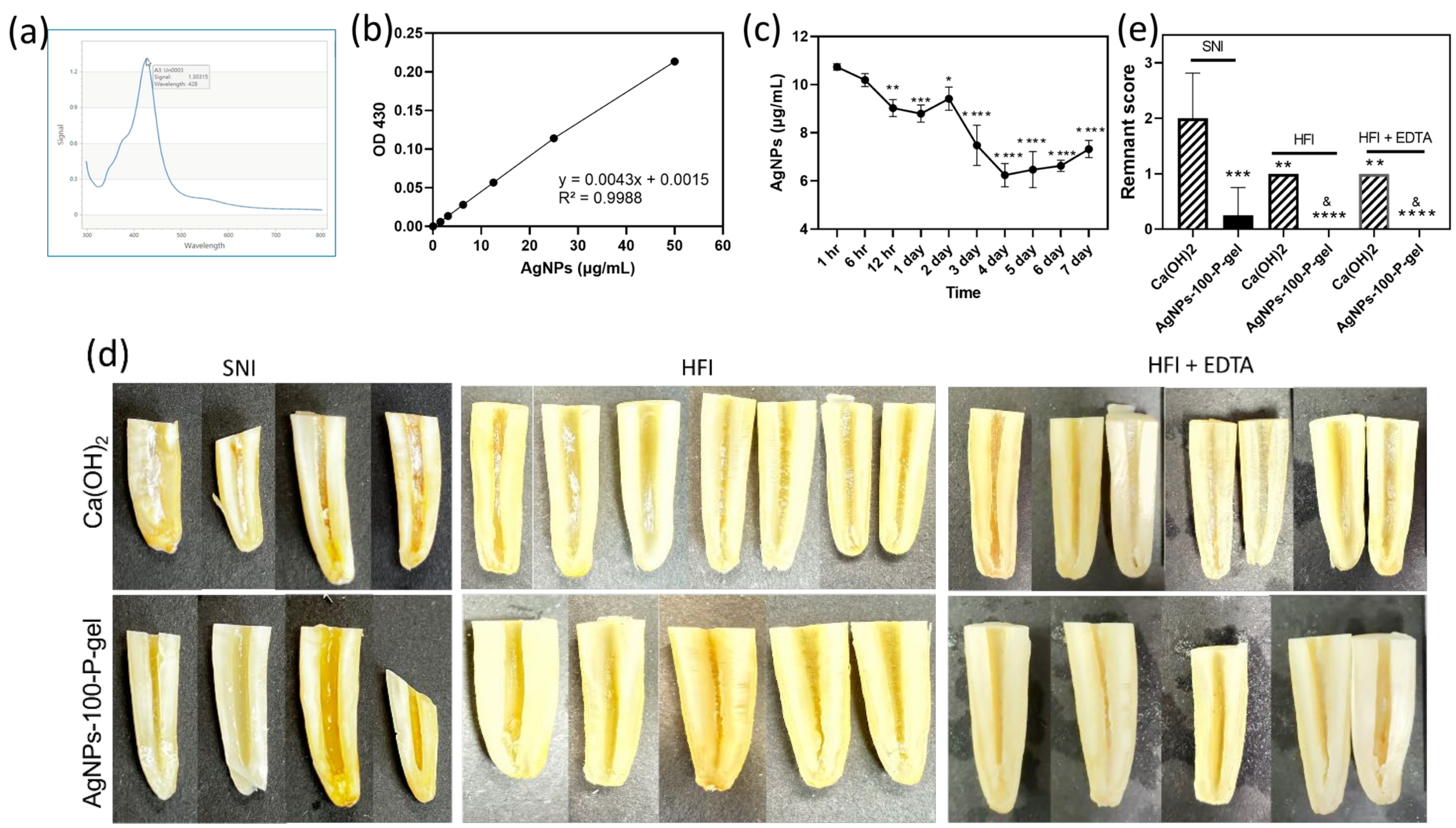
2.11. AgNP Release from AgNPs-100-P-Gel
2.12. Cell Culture
2.13. Cell Viability
2.14. Pro-Inflammatory Cytokine Gene Expression
2.15. Removal Efficacy
2.16. Standard Needle Irrigation (SNI)
2.17. Hand File Irrigation (HFI)
2.18. Statistical Analysis
3. Results
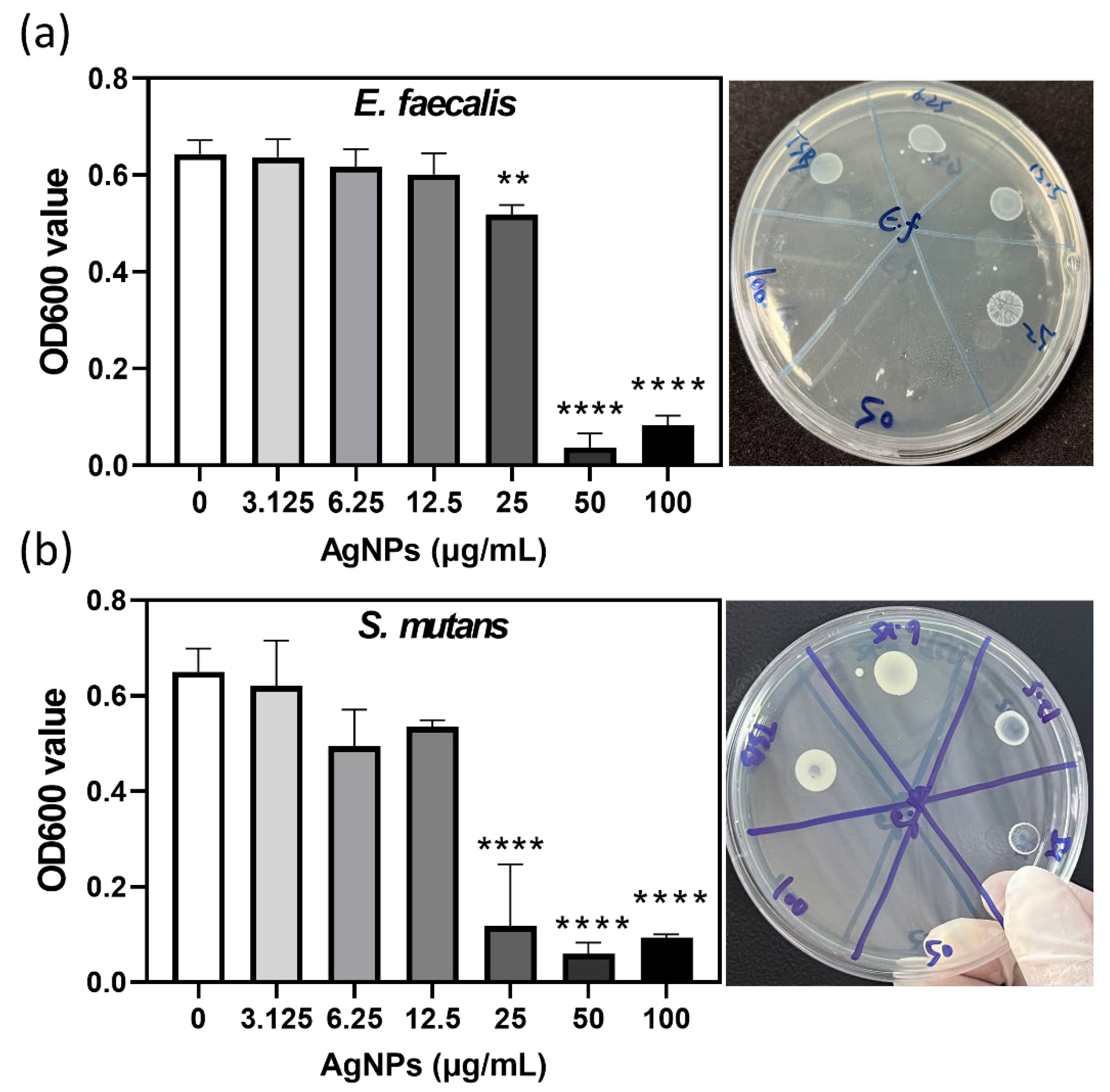
3.1. MIC and MBC of AgNPs Against E. faecalis and S. mutans
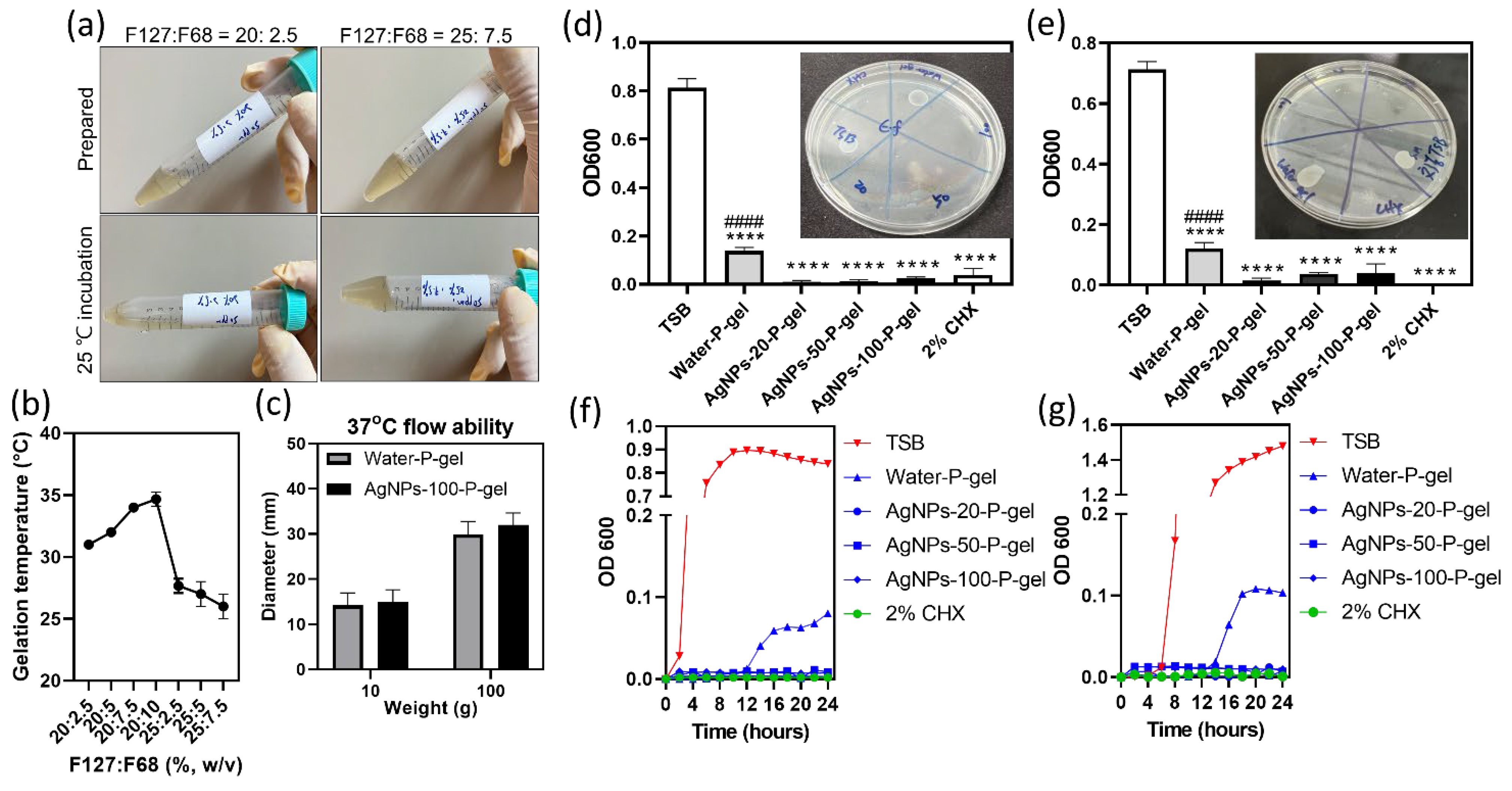
3.2. Gelation Temperature and Bacterial Growth in AgNPs-P-Gel
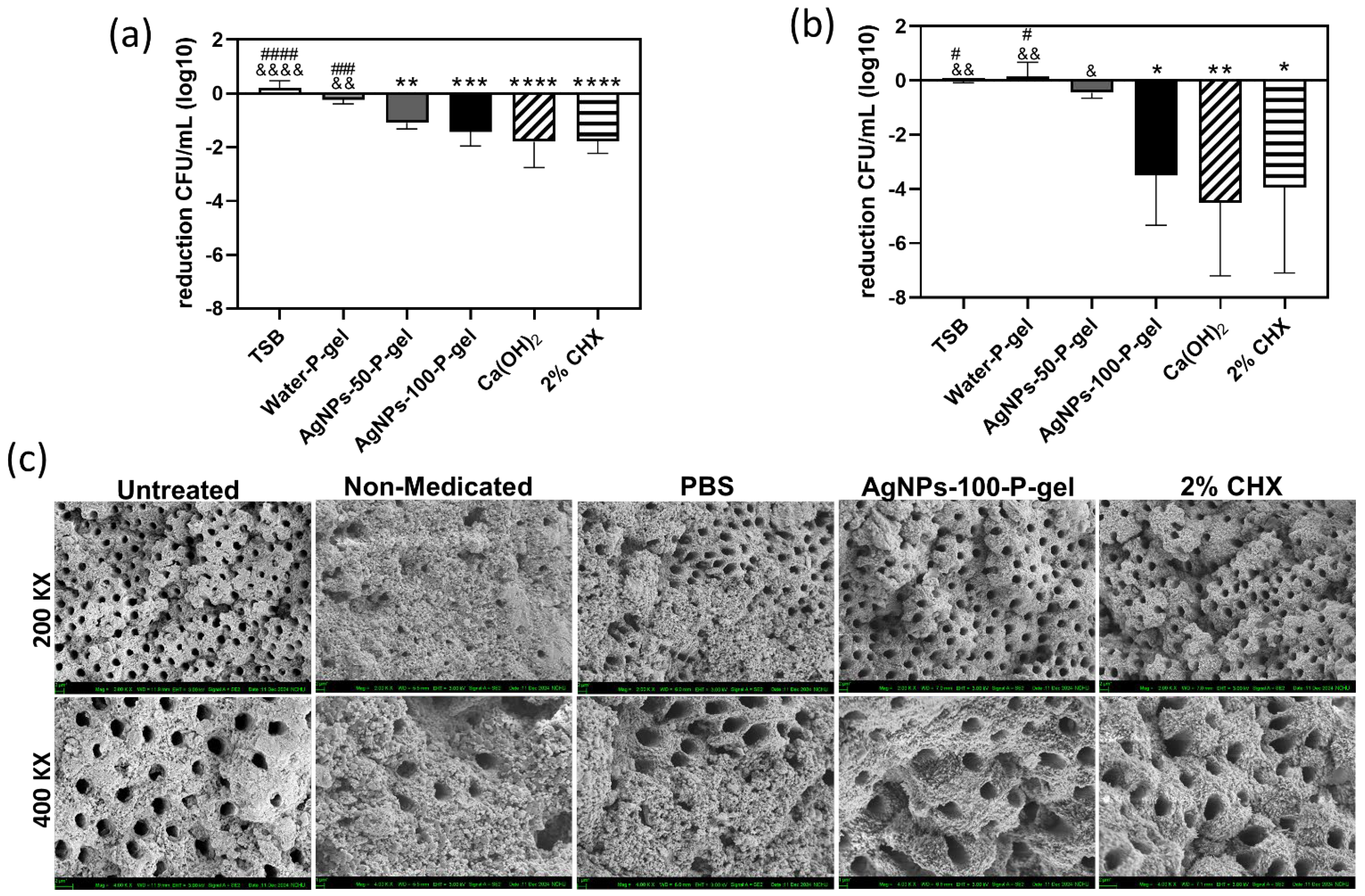
3.3. Antibacterial Effects of AgNPs-P-Gels Against Immature and Mature E. faecalis Biofilms in Bovine Teeth
3.4. SEM Observations of Biofilm Removal on Root Canal Dentin
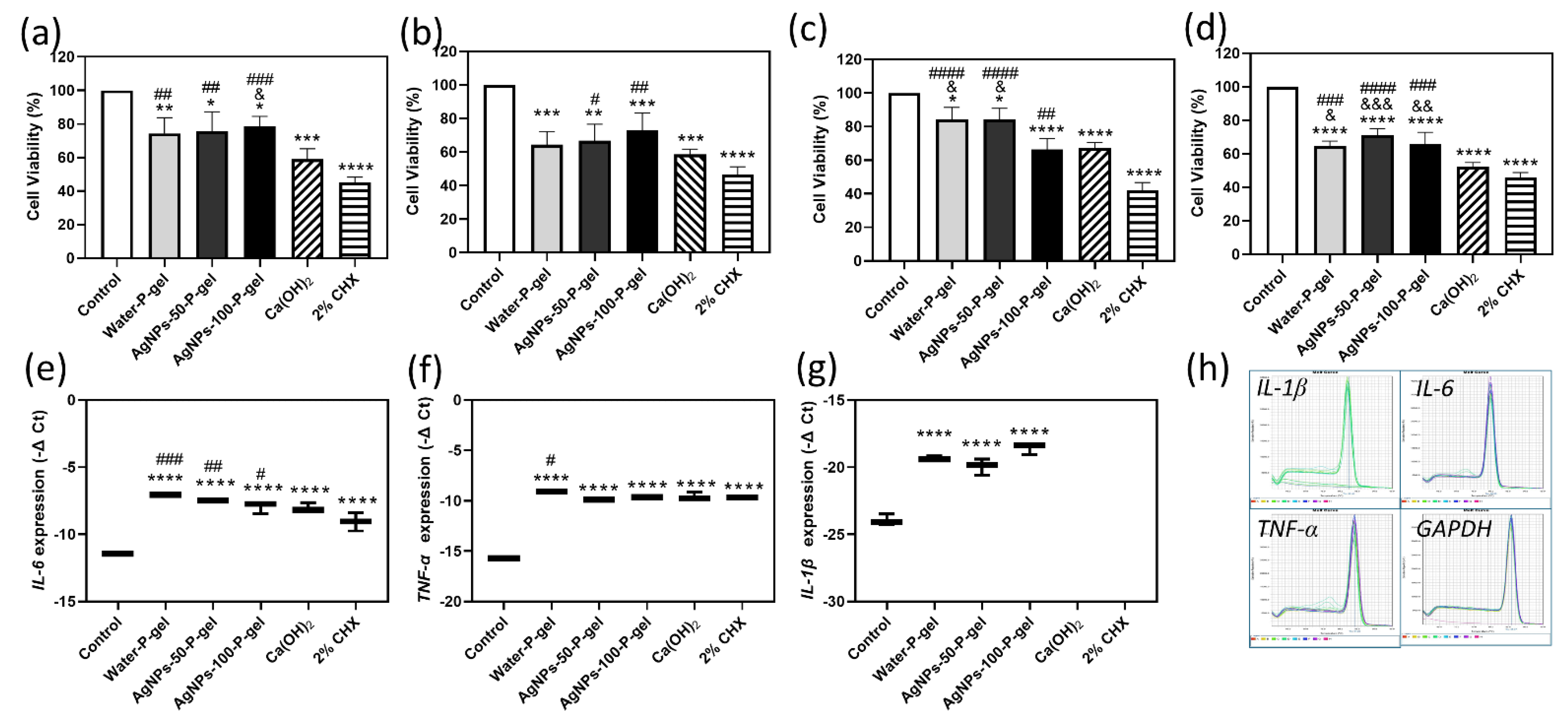
3.5. Cell Viability of AgNPs-P-Gel
3.6. Pro-inflammatory Cytokine Gene Expression
3.7. AgNP Release of AgNPs-P-Gel
3.8. Residual Medicament Assessment in Root Canals
4. Discussion
5. Conclusions
Author Contributions
Funding
Institutional Review Board Statement
Data Availability Statement
Acknowledgments
Conflicts of Interest
Abbreviations
| AgNPs-P-gel | thermoreversible silver nanoparticle (AgNP)-loaded Pluronic gel |
| MIC | minimum inhibitory concentration |
| MBC | minimum bactericidal concentration |
| SEM | scanning electron microscope |
| CHX | chlorhexidine |
| IL-6 | interleukin-6 |
| IL-1β | interleukin-1β |
| TNF-α | tumor necrosis factor-α |
| GAPDH | glyceraldehyde 3-phosphate dehydrogenase |
| SNI | standard needle irrigation |
| HFI | hand file irrigation |
References
- Love, R.M. Enterococcus faecalis—A mechanism for its role in endodontic failure. Int. Endod. J. 2001, 34, 399–405. [Google Scholar] [CrossRef]
- Zehnder, M. Root canal irrigants. J. Endod. 2006, 32, 389–398. [Google Scholar] [CrossRef]
- Chong, B.S.; Pitt Ford, T.R. The role of intracanal medication in root canal treatment. Int. Endod. J. 1992, 25, 97–106. [Google Scholar] [CrossRef] [PubMed]
- Tennert, C.; Fuhrmann, M.; Wittmer, A.; Karygianni, L.; Altenburger, M.J.; Pelz, K.; Hellwig, E.; Al-Ahmad, A. New Bacterial Composition in Primary and Persistent/Secondary Endodontic Infections with Respect to Clinical and Radiographic Findings. J. Endod. 2014, 40, 670–677. [Google Scholar] [CrossRef] [PubMed]
- Rôças, I.N.; Siqueira, J.F.; Santos, K.R.N. Association of Enterococcus faecalis with Different Forms of Periradicular Diseases. J. Endod. 2004, 30, 315–320. [Google Scholar] [CrossRef]
- Peciuliene, V.; Balciuniene, I.; Eriksen, H.M.; Haapasalo, M. Isolation of Enterococcus faecalis in Previously Root-Filled Canals in a Lithuanian Population. J. Endod. 2000, 26, 593–595. [Google Scholar] [CrossRef]
- Pinheiro, E.T.; Gomes, B.P.F.A.; Drucker, D.B.; Zaia, A.A.; Ferraz, C.C.R.; Souza-Filho, F.J. Antimicrobial susceptibility of Enterococcus faecalis isolated from canals of root filled teeth with periapical lesions. Int. Endod. J. 2004, 37, 756–763. [Google Scholar] [CrossRef]
- Sedgley, C.; Nagel, A.; Dahlén, G.; Reit, C.; Molander, A. Real-time quantitative polymerase chain reaction and culture analyses of Enterococcus faecalis in root canals. J. Endod. 2006, 32, 173–177. [Google Scholar] [CrossRef]
- Stuart, C.H.; Schwartz, S.A.; Beeson, T.J.; Owatz, C.B. Enterococcus faecalis: Its role in root canal treatment failure and current concepts in retreatment. J. Endod. 2006, 32, 93–98. [Google Scholar] [CrossRef]
- Figdor, D.; Davies, J.K.; Sundqvist, G. Starvation survival, growth and recovery of Enterococcus faecalis in human serum. Oral Microbiol. Immunol. 2003, 18, 234–239. [Google Scholar] [CrossRef] [PubMed]
- Distel, J.W.; Hatton, J.F.; Gillespie, M.J. Biofilm formation in medicated root canals. J. Endod. 2002, 28, 689–693. [Google Scholar] [CrossRef]
- Gaeta, C.; Marruganti, C.; Ali, I.A.A.; Fabbro, A.; Pinzauti, D.; Santoro, F.; Neelakantan, P.; Pozzi, G.; Grandini, S. The presence of Enterococcus faecalis in saliva as a risk factor for endodontic infection. Front. Cell Infect. Microbiol. 2023, 13, 1061645. [Google Scholar] [CrossRef]
- Barbosa-Ribeiro, M.; Gomes, B.; Arruda-Vasconcelos, R.; Monteiro, I.A.; Costa, M.J.F.; Sette-de-Souza, P.H. Antibiotic Resistance Profile of Clinical Strains of Enterococci from Secondary/Persistent Endodontic Infections: What do We Know? A Systematic Review of Clinical Studies. J. Endod. 2024, 50, 299–309. [Google Scholar] [CrossRef] [PubMed]
- Krzyściak, W.; Jurczak, A.; Kościelniak, D.; Bystrowska, B.; Skalniak, A. The virulence of Streptococcus mutans and the ability to form biofilms. Eur. J. Clin. Microbiol. Infect. Dis. 2014, 33, 499–515. [Google Scholar] [CrossRef] [PubMed]
- Loesche, W.J. Role of Streptococcus mutans in human dental decay. Microbiol. Rev. 1986, 50, 353–380. [Google Scholar] [CrossRef] [PubMed]
- Takahashi, N.; Nyvad, B. The role of bacteria in the caries process: Ecological perspectives. J. Dent. Res. 2011, 90, 294–303. [Google Scholar] [CrossRef] [PubMed]
- Lemos, J.A.; Palmer, S.R.; Zeng, L.; Wen, Z.T.; Kajfasz, J.K.; Freires, I.A.; Abranches, J.; Brady, L.J. The Biology of Streptococcus mutans. Microbiol. Spectr. 2019, 7, 7. [Google Scholar] [CrossRef]
- Lima, A.R.; Herrera, D.R.; Francisco, P.A.; Pereira, A.C.; Lemos, J.; Abranches, J.; Gomes, B. Detection of Streptococcus mutans in symptomatic and asymptomatic infected root canals. Clin. Oral Investig. 2021, 25, 3535–3542. [Google Scholar] [CrossRef]
- Beltes, P.G.; Pissiotis, E.; Koulaouzidou, E.; Kortsaris, A.H. In vitro release of hydroxyl ions from six types of calcium hydroxide nonsetting pastes. J. Endod. 1997, 23, 413–415. [Google Scholar] [CrossRef]
- Doran, M.G.; Radtke, P.K. A review of endodontic medicaments. Gen. Dent. 1998, 46, 484–488. [Google Scholar]
- Haapasalo, M.; Orstavik, D. In vitro infection and disinfection of dentinal tubules. J. Dent. Res. 1987, 66, 1375–1379. [Google Scholar] [CrossRef] [PubMed]
- Lin, Y.H.; Mickel, A.K.; Chogle, S. Effectiveness of selected materials against Enterococcus faecalis: Part 3. The antibacterial effect of calcium hydroxide and chlorhexidine on Enterococcus faecalis. J. Endod. 2003, 29, 565–566. [Google Scholar] [CrossRef]
- McHugh, C.P.; Zhang, P.; Michalek, S.; Eleazer, P.D. pH required to kill Enterococcus faecalis in vitro. J. Endod. 2004, 30, 218–219. [Google Scholar] [CrossRef]
- Law, A.; Messer, H. An evidence-based analysis of the antibacterial effectiveness of intracanal medicaments. J. Endod. 2004, 30, 689–694. [Google Scholar] [CrossRef]
- Calt, S.; Serper, A. Dentinal tubule penetration of root canal sealers after root canal dressing with calcium hydroxide. J. Endod. 1999, 25, 431–433. [Google Scholar] [CrossRef]
- Kwon, W.; Kim, I.H.; Kang, C.M.; Kim, B.; Shin, Y.; Song, J.S. Comparative study of pulpal responses to ProRoot MTA, Vitapex, and Metapex in canine teeth. J. Dent. Sci. 2021, 16, 1274–1280. [Google Scholar] [CrossRef]
- Sinha, N.; Patil, S.; Dodwad, P.K.; Patil, A.C.; Singh, B. Evaluation of antimicrobial efficacy of calcium hydroxide paste, chlorhexidine gel, and a combination of both as intracanal medicament: An in vivo comparative study. J. Conserv. Dent. 2013, 16, 65–70. [Google Scholar] [CrossRef]
- Sy, K.; Chevalier, C.; Maton, M.; Mokbel, I.; Mahieux, S.; Houcke, I.; Neut, C.; Grosgogeat, B.; Deveaux, E.; Gritsch, K.; et al. Therapeutic Potential of Chlorhexidine-Loaded Calcium Hydroxide-Based Intracanal Medications in Endo-Periodontal Lesions: An Ex Vivo and In Vitro Study. Antibiotics 2023, 12, 1416. [Google Scholar] [CrossRef]
- Pereira, M.S.; Faria, G.; Bezerra da Silva, L.A.; Tanomaru-Filho, M.; Kuga, M.C.; Rossi, M.A. Response of mice connective tissue to intracanal dressings containing chlorhexidine. Microsc. Res. Tech. 2012, 75, 1653–1658. [Google Scholar] [CrossRef] [PubMed]
- Fedorowicz, Z.; Sequeira, P. Efficacy of sodium hypochlorite and chlorhexidine against Enterococcus faecalis--a systematic review. J. Appl. Oral. Sci. 2008, 16, 6. [Google Scholar] [CrossRef] [PubMed]
- Barbin, L.E.; Saquy, P.C.; Guedes, D.F.; Sousa-Neto, M.D.; Estrela, C.; Pecora, J.D. Determination of para-chloroaniline and reactive oxygen species in chlorhexidine and chlorhexidine associated with calcium hydroxide. J. Endod. 2008, 34, 1508–1514. [Google Scholar] [CrossRef]
- Thomas, J.E.; Sem, D.S. An in vitro spectroscopic analysis to determine whether para-chloroaniline is produced from mixing sodium hypochlorite and chlorhexidine. J. Endod. 2010, 36, 315–317. [Google Scholar] [CrossRef]
- Baras, B.H.; Sun, J.; Melo, M.A.S.; Tay, F.R.; Oates, T.W.; Zhang, K.; Weir, M.D.; Xu, H.H.K. Novel root canal sealer with dimethylaminohexadecyl methacrylate, nano-silver and nano-calcium phosphate to kill bacteria inside root dentin and increase dentin hardness. Dent. Mater. 2019, 35, 1479–1489. [Google Scholar] [CrossRef]
- Nayyar, P.; Sethi, A.; Thakur, D.; Khullar, S.; Gayati, S.; Adarsh, K. Antibacterial Effect of Silver Nanoparticle Gel as an Intracanal Medicament in Combination with Other Medicaments against Enterococcus faecalis: An In vitro Study. J. Pharm. Bioallied Sci. 2021, 13, S408–S411. [Google Scholar] [CrossRef]
- Samuel, U.; Guggenbichler, J.P. Prevention of catheter-related infections: The potential of a new nano-silver impregnated catheter. Int. J. Antimicrob. Agents 2004, 23, 75–78. [Google Scholar] [CrossRef]
- Xie, N. Synthesis and antibacterial effects of silver nanoparticles (AgNPs) against multi-drug resistant bacteria. Biomed. Mater. Eng. 2024, 35, 451–463. [Google Scholar] [CrossRef]
- Tang, S.; Zheng, J. Antibacterial Activity of Silver Nanoparticles: Structural Effects. Adv. Heal. Mater. 2018, 7, e1701503. [Google Scholar] [CrossRef] [PubMed]
- Adeyemi, O.S.; Shittu, E.O.; Akpor, O.B.; Rotimi, D.; Batiha, G.E. Silver nanoparticles restrict microbial growth by promoting oxidative stress and DNA damage. EXCLI J. 2020, 19, 492–500. [Google Scholar] [PubMed]
- Bi, X.; Bai, Q.; Liang, M.; Yang, D.; Li, S.; Wang, L.; Liu, J.; Yu, W.W.; Sui, N.; Zhu, Z. Silver Peroxide Nanoparticles for Combined Antibacterial Sonodynamic and Photothermal Therapy. Small 2022, 18, e2104160. [Google Scholar] [CrossRef] [PubMed]
- Melo, M.A.; Guedes, S.F.; Xu, H.H.; Rodrigues, L.K. Nanotechnology-based restorative materials for dental caries management. Trends Biotechnol. 2013, 31, 459–467. [Google Scholar] [CrossRef]
- Shrestha, A.; Kishen, A. Antibacterial Nanoparticles in Endodontics: A Review. J. Endod. 2016, 42, 1417–1426. [Google Scholar] [CrossRef]
- Bapat, R.A.; Chaubal, T.V.; Joshi, C.P.; Bapat, P.R.; Choudhury, H.; Pandey, M.; Gorain, B.; Kesharwani, P. An overview of application of silver nanoparticles for biomaterials in dentistry. Mater. Sci. Eng. C Mater. Biol. Appl. 2017, 91, 881–898. [Google Scholar] [CrossRef]
- Yin, I.X.; Zhang, J.; Zhao, I.S.; Mei, M.L.; Li, Q.; Chu, C.H. The Antibacterial Mechanism of Silver Nanoparticles and Its Application in Dentistry. Int. J. Nanomed. 2020, 15, 2555–2562. [Google Scholar] [CrossRef]
- Salata, O. Applications of nanoparticles in biology and medicine. J. Nanobiotechnology 2004, 2, 3. [Google Scholar] [CrossRef]
- Al Khateb, K.; Ozhmukhametova, E.K.; Mussin, M.N.; Seilkhanov, S.K.; Rakhypbekov, T.K.; Lau, W.M.; Khutoryanskiy, V.V. In situ gelling systems based on Pluronic F127/Pluronic F68 formulations for ocular drug delivery. Int. J. Pharm. 2016, 502, 70–79. [Google Scholar] [CrossRef] [PubMed]
- Khaliq, N.U.; Lee, J.; Kim, S.; Sung, D.; Kim, H. Pluronic F-68 and F-127 Based Nanomedicines for Advancing Combination Cancer Therapy. Pharmaceutics 2023, 15, 2102. [Google Scholar] [CrossRef]
- Lupu, A.; Gradinaru, L.M.; Rusu, D.; Bercea, M. Self-Healing of Pluronic® F127 Hydrogels in the Presence of Various Polysaccharides. Gels 2023, 9, 719. [Google Scholar] [CrossRef] [PubMed]
- Aka-Any-Grah, A.; Bouchemal, K.; Koffi, A.; Agnely, F.; Zhang, M.; Djabourov, M.; Ponchel, G. Formulation of mucoadhesive vaginal hydrogels insensitive to dilution with vaginal fluids. Eur. J. Pharm. Biopharm. 2010, 76, 296–303. [Google Scholar] [CrossRef]
- Liu, T.; Aman, A.; Ainiwaer, M.; Ding, L.; Zhang, F.; Hu, Q.; Song, Y.; Ni, Y.; Tang, X. Evaluation of the anti-biofilm effect of poloxamer-based thermoreversible gel of silver nanoparticles as a potential medication for root canal therapy. Sci. Rep. 2021, 11, 12577. [Google Scholar] [CrossRef]
- Shih, Y.H.; Yu, C.C.; Chang, K.C.; Tseng, Y.H.; Li, P.J.; Hsia, S.M.; Chiu, K.C.; Shieh, T.M. Synergistic Effect of Combination of a Temoporfin-Based Photodynamic Therapy with Potassium Iodide or Antibacterial Agents on Oral Disease Pathogens In Vitro. Pharmaceuticals 2022, 15, 488. [Google Scholar] [CrossRef] [PubMed]
- Chang, K.C.; Chiu, K.C.; Chen, W.C.; Lan, W.C.; Chen, C.Y.; Hsia, S.M.; Wang, T.H.; Tu, H.F.; Shih, Y.H.; Shieh, T.M. Effects of Temoporfin-Based Photodynamic Therapy on the In Vitro Antibacterial Activity and Biocompatibility of Gelatin-Hyaluronic Acid Cross-Linked Hydrogel Membranes. Pharmaceutics 2022, 14, 2314. [Google Scholar] [CrossRef]
- Seneviratne, C.J.; Yip, J.W.Y.; Chang, J.W.W.; Zhang, C.F.; Samaranayake, L.P. Effect of culture media and nutrients on biofilm growth kinetics of laboratory and clinical strains of Enterococcus faecalis. Arch. Oral Biol. 2013, 58, 1327–1334. [Google Scholar] [CrossRef]
- Abdou, S.A.; Mohamed, A.I. Evaluation of antibacterial effect of silver nanoparticles paste with and without curcumin as intracanal medication. Bull. Natl. Res. Cent. 2022, 46, 36. [Google Scholar] [CrossRef]
- Shamma, B.M.; Kurdi, S.A.; Rajab, A.; Arrag, E.A. Evaluation of antibacterial effects of different intracanal medicaments on Enterococcus faecalis in primary teeth: An in vitro study. Clin. Exp. Dent. Res. 2023, 9, 341–348. [Google Scholar] [CrossRef] [PubMed]
- Afkhami, F.; Pourhashemi, S.J.; Sadegh, M.; Salehi, Y.; Fard, M.J. Antibiofilm efficacy of silver nanoparticles as a vehicle for calcium hydroxide medicament against Enterococcus faecalis. J. Dent. 2015, 43, 1573–1579. [Google Scholar] [CrossRef]
- Asadi-Samani, M.; Rafieian-Kopaei, M.; Lorigooini, Z.; Shirzad, H. A screening of growth inhibitory activity of Iranian medicinal plants on prostate cancer cell lines. BioMedicine 2018, 8, 8. [Google Scholar] [CrossRef]
- Pham Trong, L.C.; Djabourov, M.; Ponton, A. Mechanisms of micellization and rheology of PEO–PPO–PEO triblock copolymers with various architectures. J. Colloid. Interface Sci. 2008, 328, 278–287. [Google Scholar] [CrossRef]
- Shih, Y.H.; Lin, D.J.; Chang, K.W.; Hsia, S.M.; Ko, S.Y.; Lee, S.Y.; Hsue, S.S.; Wang, T.H.; Chen, Y.L.; Shieh, T.M. Evaluation physical characteristics and comparison antimicrobial and anti-inflammation potentials of dental root canal sealers containing hinokitiol in vitro. PLoS ONE 2014, 9, e94941. [Google Scholar] [CrossRef]
- National Committee for Clinical Laboratory Standards; Barry, A.L. Methods for Determining Bactericidal Activity of Antimicrobial Agents: Approved Guideline; National Committee for Clinical Laboratory Standards: Wayne, PA, USA, 1999; Volume 19. [Google Scholar]
- Tirnaksiz, F.; Robinson, J.R. Rheological, mucoadhesive and release properties of pluronic F-127 gel and pluronic F-127/polycarbophil mixed gel systems. Die Pharm.-Int. J. Pharm. Sci. 2005, 60, 518–523. [Google Scholar]
- Rai, M.; Yadav, A.; Gade, A. Silver nanoparticles as a new generation of antimicrobials. Biotechnol. Adv. 2009, 27, 76–83. [Google Scholar] [CrossRef] [PubMed]
- Donlan, R.M. Biofilms: Microbial life on surfaces. Emerg. Infect. Dis. 2002, 8, 881–890. [Google Scholar] [CrossRef]
- Mistry, K.S.; Sanghvi, Z.; Parmar, G.; Shah, S. The antimicrobial activity of Azadirachta indica, Mimusops elengi, Tinospora cardifolia, Ocimum sanctum and 2% chlorhexidine gluconate on common endodontic pathogens: An in vitro study. Eur. J. Dent. 2014, 8, 172–177. [Google Scholar] [CrossRef]
- Sieminska, A.; Kot, K.; Marek, E.; Chamarczuk, A.; Kaczala, M.; Raslawska-Socha, J.; Schuster, L.; Dammaschke, T.; Szyszka-Sommerfeld, L.; Lipski, M. In Vitro Evaluation of Antimicrobial Effects of Endodontic Irrigants Containing Disodium Edetate and Chlorhexidine Gluconate, Octenidine Dihydrochloride, and Benzalkonium Bromide Against Intracanal Enterococcus faecalis. J. Clin. Med. 2025, 14, 7100. [Google Scholar] [CrossRef] [PubMed]
- Abdullah, S.-N.; Zaki, W.N.F.W.A.; Mansor, S.M.Q.S.; Al-Kadhim, A.H.A.; Abd Ghafar, S.A.; Hanafiah, R.M. Antibacterial activity of calcium hydroxide and zinc oxide combined with several solutions against Enterococcus faecalis growth. Eur. J. Gen. Dent. 2025, 14, 20–26. [Google Scholar] [CrossRef]
- Awawdeh, L.; AL-Beitawi, M.; Hammad, M. Effectiveness of propolis and calcium hydroxide as a short-term intracanal medicament against Enterococcus faecalis: A laboratory study. Aust. Endod. J. 2009, 35, 52–58. [Google Scholar] [CrossRef]
- Kranz, S.; Guellmar, A.; Braeutigam, F.; Tonndorf-Martini, S.; Heyder, M.; Reise, M.; Sigusch, B. Antibacterial Effect of Endodontic Disinfections on Enterococcus faecalis in Dental Root Canals-An In-Vitro Model Study. Materials 2021, 14, 2427. [Google Scholar] [CrossRef]
- Okamoto, M.; Naito, K.; Duncan, H.F.; Kinomoto, Y.; Kuriki, N.; Miura, J.; Mizuhira, M.; Suzuki, M.; Hayashi, M. Microstructural Evaluation of the Mineralized Apical Barrier Induced by a Calcium Hydroxide Paste Containing Iodoform: A Case Report. J. Endod. 2024, 50, 243–251. [Google Scholar] [CrossRef]
- Sigusch, B.W.; Kranz, S.; Klein, S.; Volpel, A.; Harazim, S.; Sanchez, S.; Watts, D.C.; Jandt, K.D.; Schmidt, O.G.; Guellmar, A. Colonization of Enterococcus faecalis in a new SiO/SiO2-microtube in vitro model system as a function of tubule diameter. Dent. Mater. 2014, 30, 661–668. [Google Scholar] [CrossRef] [PubMed]
- Ginjupalli, K.; Shaw, T.; Tellapragada, C.; Alla, R.; Gupta, L.; Perampalli, N.U. Does the size matter? Evaluation of effect of incorporation of silver nanoparticles of varying particle size on the antimicrobial activity and properties of irreversible hydrocolloid impression material. Dent. Mater. 2018, 34, e158–e165. [Google Scholar] [CrossRef]
- Kobos, L.; Alqahtani, S.; Xia, L.; Coltellino, V.; Kishman, R.; McIlrath, D.; Perez-Torres, C.; Shannahan, J. Comparison of silver nanoparticle-induced inflammatory responses between healthy and metabolic syndrome mouse models. J. Toxicol. Environ. Health A 2020, 83, 249–268. [Google Scholar] [CrossRef]
- Siczek, K.; Zatorski, H.; Chmielowiec-Korzeniowska, A.; Pulit-Prociak, J.; Smiech, M.; Kordek, R.; Tymczyna, L.; Banach, M.; Fichna, J. Synthesis and evaluation of anti-inflammatory properties of silver nanoparticle suspensions in experimental colitis in mice. Chem. Biol. Drug Des. 2017, 89, 538–547. [Google Scholar] [CrossRef]
- Binanzan, N.; Alsalleeh, F. Cytokine expression and anti-microbial effectiveness of different calcium hydroxide dilutions: An In Vitro study. Indian. J. Dent. Res. 2022, 33, 69–74. [Google Scholar] [CrossRef] [PubMed]
- Stavroullakis, A.T.; Goncalves, L.L.; Levesque, C.M.; Kishen, A.; Prakki, A. Interaction of epigallocatechin-gallate and chlorhexidine with Streptococcus mutans stimulated odontoblast-like cells: Cytotoxicity, Interleukin-1beta and co-species proteomic analyses. Arch. Oral Biol. 2021, 131, 105268. [Google Scholar] [CrossRef] [PubMed]
- Tay, W.H.; Chong, K.K.; Kline, K.A. Polymicrobial-Host Interactions during Infection. J. Mol. Biol. 2016, 428, 3355–3371. [Google Scholar] [CrossRef]
- Yassen, G.H.; Platt, J.A.; Hara, A.T. Bovine teeth as substitute for human teeth in dental research: A review of literature. J. Oral Sci. 2011, 53, 273–282. [Google Scholar] [CrossRef] [PubMed]



| Genes | Forward Primer | Reverse Primer |
|---|---|---|
| GAPDH | TATGTCGTGGAGTCTACTGGT | GAGTTGTCATATTTCTCGTGG |
| IL-1β | TGGACCTTCCAGGATGAGGACA | GTTCATCTCGGAGCCTGTAGTG |
| TNF-α | GGTGCCTATGTCTCAGCCTCTT | GCCATAGAACTGATGAGAGGGAG |
| IL-6 | TGTACTCCAGGTAGCTATGG | GTTCTCTGGGAAATCGTGGA |
Disclaimer/Publisher’s Note: The statements, opinions and data contained in all publications are solely those of the individual author(s) and contributor(s) and not of MDPI and/or the editor(s). MDPI and/or the editor(s) disclaim responsibility for any injury to people or property resulting from any ideas, methods, instructions or products referred to in the content. |
© 2026 by the authors. Licensee MDPI, Basel, Switzerland. This article is an open access article distributed under the terms and conditions of the Creative Commons Attribution (CC BY) license.
Share and Cite
Hsia, S.-M.; Tu, M.-G.; Yang, W.-H.; Wang, T.-H.; Shih, Y.-H.; Shieh, T.-M. Development and Ex Vivo Evaluation of a Thermoreversible Silver Nanoparticle-Loaded Gel as a Biocompatible Intracanal Medicament. J. Funct. Biomater. 2026, 17, 180. https://doi.org/10.3390/jfb17040180
Hsia S-M, Tu M-G, Yang W-H, Wang T-H, Shih Y-H, Shieh T-M. Development and Ex Vivo Evaluation of a Thermoreversible Silver Nanoparticle-Loaded Gel as a Biocompatible Intracanal Medicament. Journal of Functional Biomaterials. 2026; 17(4):180. https://doi.org/10.3390/jfb17040180
Chicago/Turabian StyleHsia, Shih-Min, Ming-Gene Tu, Wen-Hao Yang, Tong-Hong Wang, Yin-Hwa Shih, and Tzong-Ming Shieh. 2026. "Development and Ex Vivo Evaluation of a Thermoreversible Silver Nanoparticle-Loaded Gel as a Biocompatible Intracanal Medicament" Journal of Functional Biomaterials 17, no. 4: 180. https://doi.org/10.3390/jfb17040180
APA StyleHsia, S.-M., Tu, M.-G., Yang, W.-H., Wang, T.-H., Shih, Y.-H., & Shieh, T.-M. (2026). Development and Ex Vivo Evaluation of a Thermoreversible Silver Nanoparticle-Loaded Gel as a Biocompatible Intracanal Medicament. Journal of Functional Biomaterials, 17(4), 180. https://doi.org/10.3390/jfb17040180