1. Introduction
Liver transplantation is a life-saving intervention and remains the gold standard curative therapy for patients with end-stage liver disease, including decompensated fibrosis and cirrhosis. Despite its clinical success, transplantation is severely limited by the global shortage of donor organs, with less than 10% of the demand being met, leading to prolonged waiting lists and high mortality among patients awaiting treatment [
1]. Tissue engineering may offer alternative solutions to cover the donor organ gap by creating artificial tissues.
Tissue engineering, a leading field within regenerative medicine, seeks to combine scaffolds, cells, and bioactive molecules to generate functional tissues capable of restoring, maintaining, or enhancing damaged organs [
2]. Within this context, whole-organ bioengineering has emerged as a particularly promising strategy, aiming to develop fully functional, clinically relevant, and implantable organs. This approach typically employs native organs from xenogeneic sources, in which cellular components are removed through decellularization while preserving the essential structural, mechanical, and biochemical characteristics of the original tissue. Such preserved extracellular matrices (ECM) provide a biologically and mechanically supportive framework for subsequent recellularization, ultimately enabling the reconstruction of complex organ architecture and function [
3,
4,
5].
Although considerable progress has been made in liver tissue engineering, bioengineered livers are not yet ready for clinical transplantation due to remaining biological and translational challenges. Among them, re-establishing vascular patency represents a major challenge as thrombosis and perfusion failure frequently compromise the graft viability [
6,
7]. The successful endothelialization of the decellularized liver scaffold (DLS) is critical for re-establishing vascular function, providing an antithrombogenic surface, regulating permeability, and supporting physiological blood flow following implantation [
8,
9]. Nevertheless, achieving complete and stable endothelial coverage throughout the complex vascular network of the liver has proven difficult, even with repeated seeding and perfusion strategies. In this context, robust endothelial cells (ECs) attachment to the scaffold surface is a critical prerequisite, as it determines subsequent cell proliferation, migration, and the establishment of a stable, functional endothelial lining.
Over the years, numerous functional molecules and capture ligands have been investigated for ECs attachment, like ECs-related growth factors, peptides, antibodies, aptamers, oligosaccharides, proteins, and magnetic molecules [
10,
11,
12,
13,
14,
15]. However, many of these are structurally unstable, lack specificity for ECs, or provide only passive capture without actively promoting endothelial functions. Among them, the ECM-derived integrin αvβ3-binding RGD peptide has been widely applied to enhance ECs’ adhesion. Despite its ability to enhance cell adhesion, RGD lacks specificity for ECs [
16,
17] and can also recruit platelets [
18,
19,
20,
21] and inflammatory cells [
21,
22] increasing the risk of thrombosis and inflammation, thereby hindering clinical translation. These drawbacks highlight the critical need for alternative ligands with higher ECs specificity and functional activity, while preventing platelet and inflammatory cell accumulation.
LXW7, an integrin αvβ3 ligand, possessed strong, stable, and specific ECs capturing function, supporting targeted adhesion, proliferation, and angiogenesis [
17,
21]. LXW7 possessed the highest binding specificity to endothelial progenitor cells (EPCs)/ECs. ECs bound to an LXW7-treated culture surface exhibited enhanced biological functions such as proliferation, due to increased phosphorylation of VEGF receptor 2 (VEGF-R2) and activation of mitogen-activated protein kinase (MAPK) ERK1/2 [
17,
23]. Unlike the conventional αvβ3-binding RGD peptide, which binds substantially to platelets and increases thrombosis risk. LXW7 demonstrates markedly weaker platelet interaction, significantly higher affinity for EPCs and ECs, and no detectable binding to inflammatory monocytes [
17]. Beyond its superior specificity and functionality, LXW7 also possesses enhanced structural and proteolytic stability, owing to its cyclic structure and incorporation of four unnatural D-amino acids, making it particularly suitable for in vivo applications [
21]. These unique characteristics render LXW7 a highly promising ligand to facilitate EPCs/ECs attachment, function, and vascular integration in engineered tissue constructs. The balance of cell–matrix interactions, mediated by adhesion molecule signaling, is fundamental for achieving stable endothelialization. Previous approaches, including anti-endothelial antibodies [
24], heparin-based modification [
25,
26] and REDV peptides [
27] have been employed to enhance vascularization in DLS. Although these strategies improved ECs’ adhesion, proliferation, and thromboresistance to varying degrees, achieving complete and durable endothelial coverage across the entire vascular network remains a major challenge.
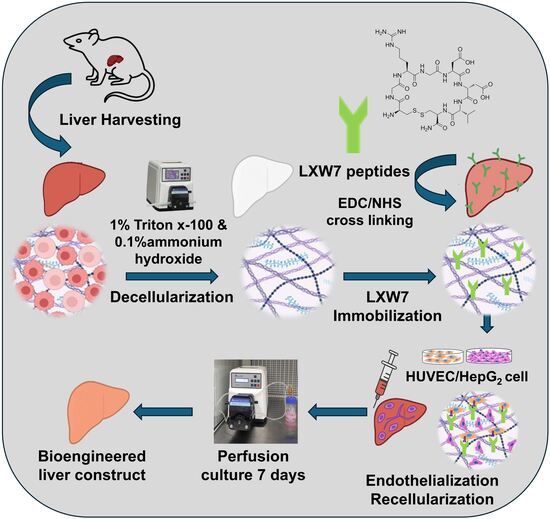
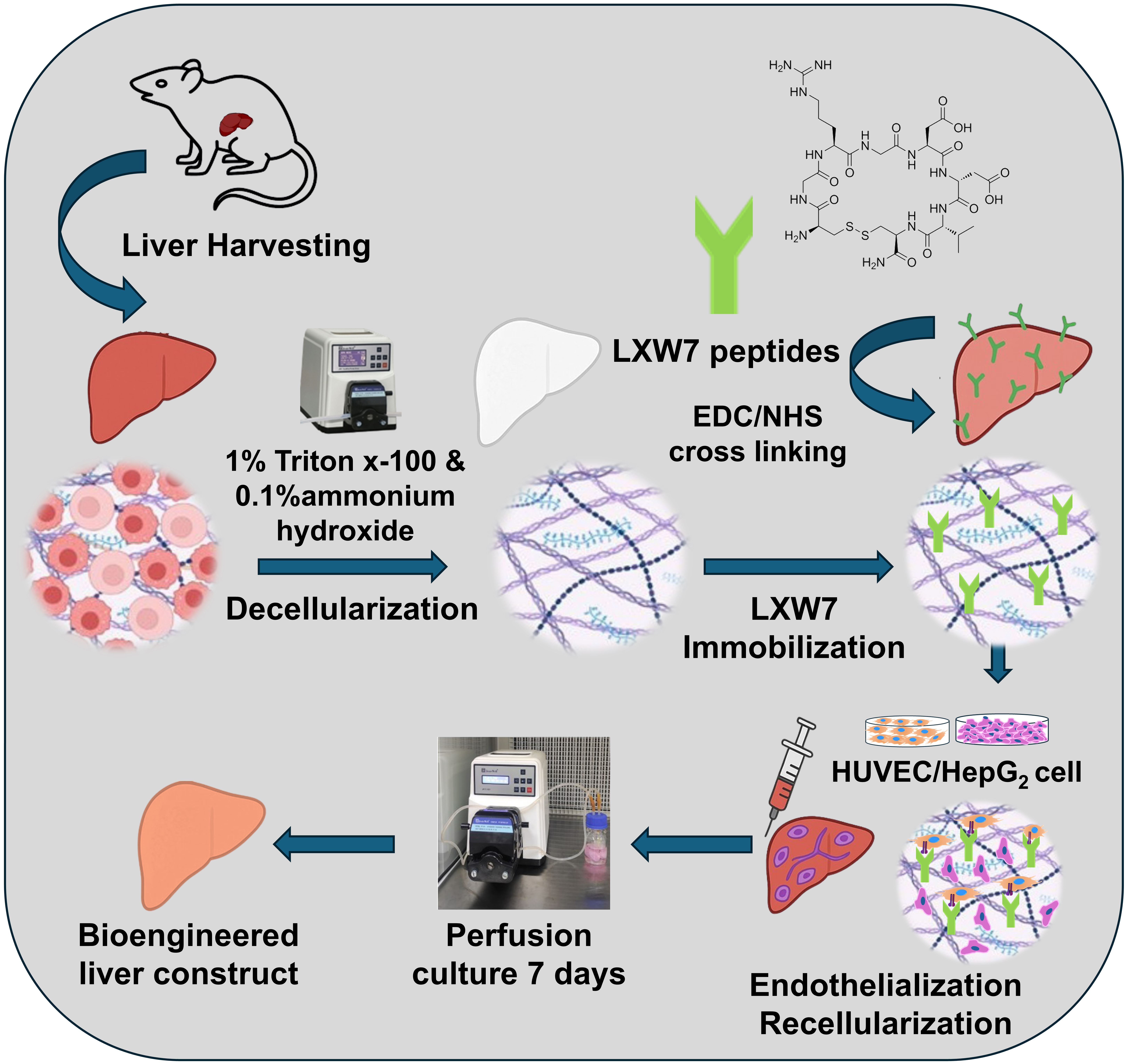
In this study, LXW7 was covalently conjugated to the DLS via EDC/NHS-mediated carbodiimide coupling, resulting in amide bond formation to enable selective binding to αvβ3-integrin on human umbilical vein endothelial cells (HUVECs), thereby promoting EC attachment while minimizing platelet adhesion. This dual functionality supports efficient re-endothelialization and simultaneously improves hemocompatibility. By leveraging LXW7 unique ECs specificity, functional stability, and anti-thrombogenic profile, this strategy addresses a critical limitation in liver tissue engineering by enabling the establishment of functional vascularization. Consequently, it advances the development of clinically translatable bioengineered liver constructs.
2. Materials and Methods
2.1. Cell Culture
HUVECs (C-12200) were obtained from Promo Cell (Heidelberg, Germany) and cultured according to the manufacturer’s instructions. Cells were thawed and maintained in Endothelial Cell Growth Medium-2 (EGM-2, C-22011, Promo Cell) supplemented with the Endothelial Cell Growth Medium-2 Supplement Mix (C-39216, Promo Cell), and cells from passages 4–5 were used for experiments. Hepatocellular carcinoma (HepG2) cells were purchased from ATCC (Manassas, VA, USA) and grown in high-glucose Dulbecco’s modified Eagle medium (DMEM; Welgene, Gyeongsan, Republic of Korea) supplemented with 10% fetal bovine serum (FBS, Hyclone, Logan, UT, USA) and 1% antibiotic-antimycotic (ABAM, Welgene, Gyeongsan, Republic of Korea). Cells were sub-cultured and maintained at 37 °C in a humidified incubator with 5% CO2, and cell passages 17–19 were used for experiments.
2.2. In Vitro Cell Attachment Assay
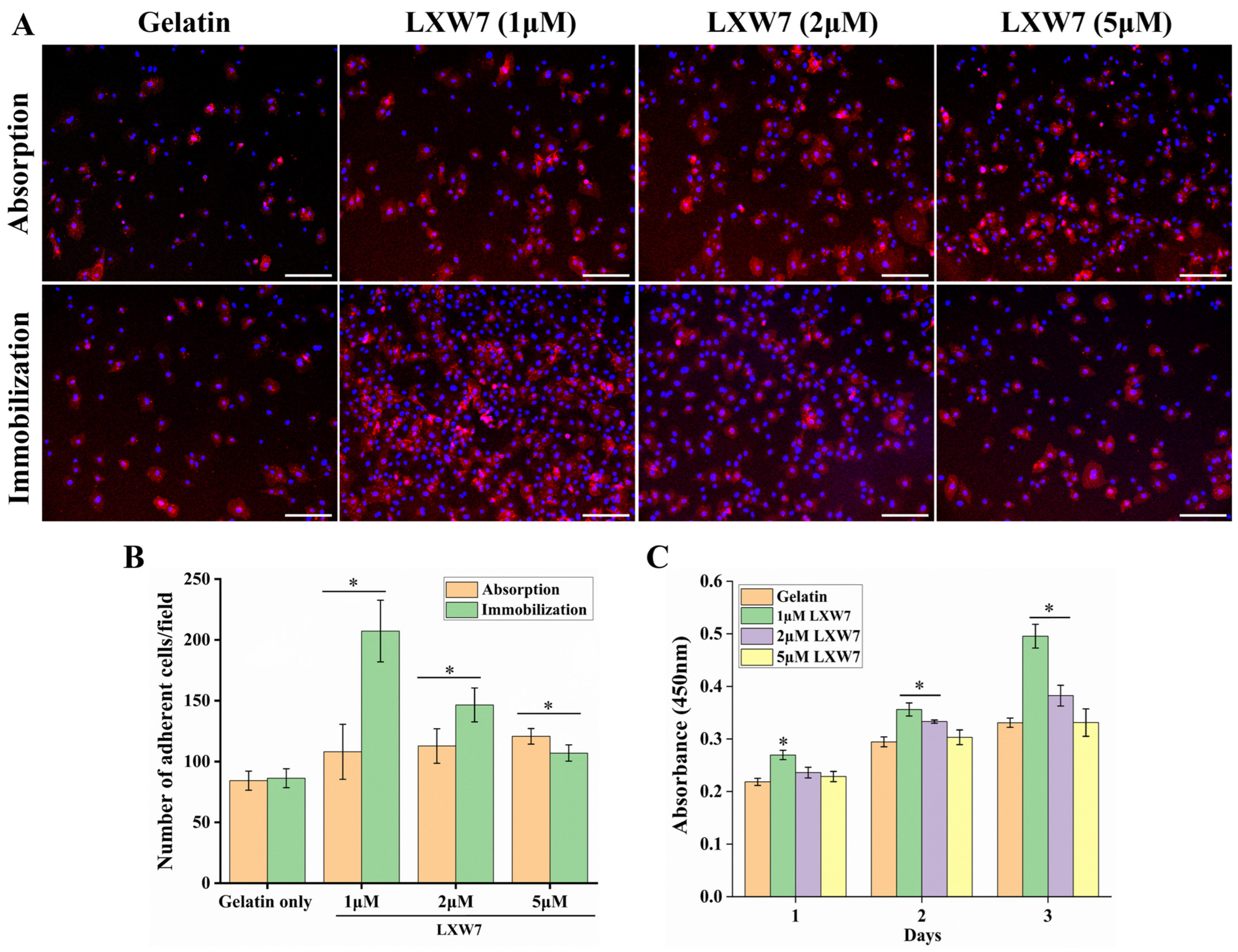
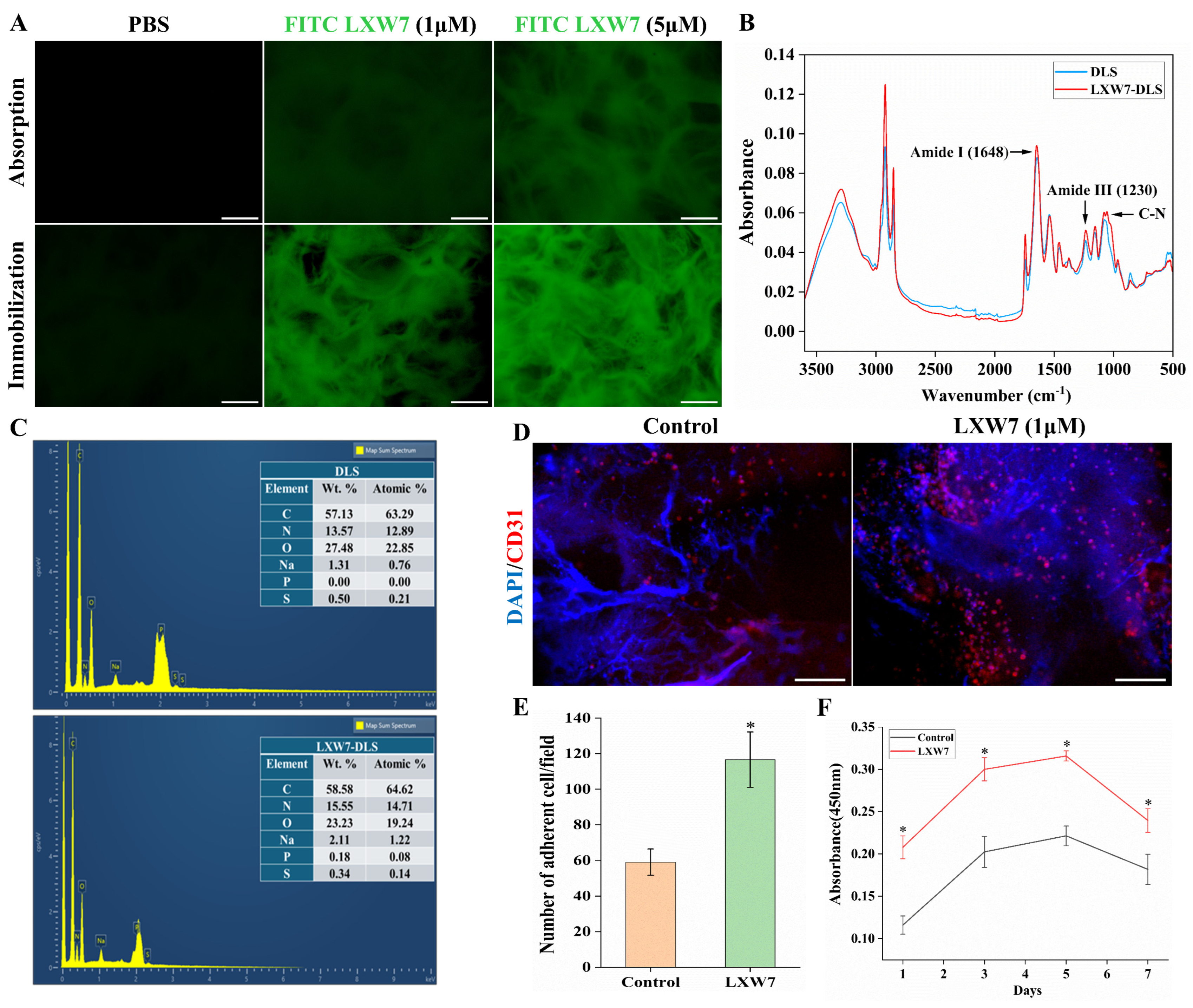
The LXW7 (sequence: CGRGDDDVDVCK(FITC)-NH2) was custom synthesized by Peptron Co., Ltd. (Daejeon, Republic of Korea). To evaluate HUVECs attachment, FITC-labeled LXW7 at different concentrations of 1, 2, and 5 μM was either directly applied onto a gelatin-coated plate and incubated for 2 h (adsorption method) or covalently conjugated to gelatin by EDC/NHS coupling chemistry (immobilization method). For immobilization, 1% gelatin-coated wells were treated with a solution containing 0.05 M 1-Ethyl-3-(3-dimethylaminopropyl) carbodiimide hydrochloride (EDC; Sigma-Aldrich, St. Louis, MO, USA) and 0.06 M N-hydroxy succinimide (NHS; Sigma-Aldrich, St. Louis, MO, USA) in 0.05 M MES buffer (pH 5.6) for 30 min at room temperature. Subsequently, 1, 2, or 5 μM of LXW7 peptide dissolved in phosphate-buffered saline (PBS) was applied to the EDC/NHS-coupled gelatin plate and incubated for 2 h at room temperature. Unreacted peptide was removed by washing with PBS. HUVECs (2 × 10⁵) were seeded onto 24-well plates coated with either LXW7 modified gelatin or unmodified gelatin (negative control). After 2 h, the culture medium was removed to eliminate non-adherent cells. Wells were washed with PBS, fixed in 4% paraformaldehyde (PFA) for 10 min, and stained with 0.1% crystal violet (Sigma-Aldrich) and CD31/DAPI (4′,6-diamidino-2-phenylindole) for nuclear visualization. Cell attachment and spreading were examined under an Optinity KCS3-50SS microscope (Korea Labtech, Seongnam, Republic of Korea). Quantitative analysis of DAPI-positive adherent cells per field at 20× magnification was performed using the ImageJ 1.54d. To ensure consistency and reduce bias, all images were processed using the same threshold settings and analysis parameters. HUVECs’ proliferation and viability on different LXW7 concentrations were assessed on days 1, 2, and 3 using a cell counting kit-8 (CCK-8) (Sigma-Aldrich, MO, USA). To further evaluate the capacity of LXW7 immobilized DLS to support HUVECs attachment, 10 mm slices of DLS were prepared using a biopsy punch (Acuderm® Inc., FL, USA). DLS samples were conjugated with FITC-labeled LXW7 via EDC/NHS-mediated carbodiimide coupling, resulting in amide bond formation, while DLS without any treatment served as negative controls. After the PBS washing, 500 μL of a suspension containing 5 × 10⁴ HUVECs was seeded onto the scaffold surface. Following 2 h of incubation, adherent cells were evaluated by immunofluorescence (IF) staining. DLS slices were washed with PBS, fixed in 4% PFA for 10 min, and stained with CD31/DAPI. Adherent cells were quantified by counting DAPI-positive cells per field at 20× magnification using the ImageJ software. CCK-8 assay was performed for cell viability and proliferation analysis.
2.3. Rat Liver Procurement and Decellularization
Decellularization of rat livers was performed using our previously established protocol with minor modifications [
28,
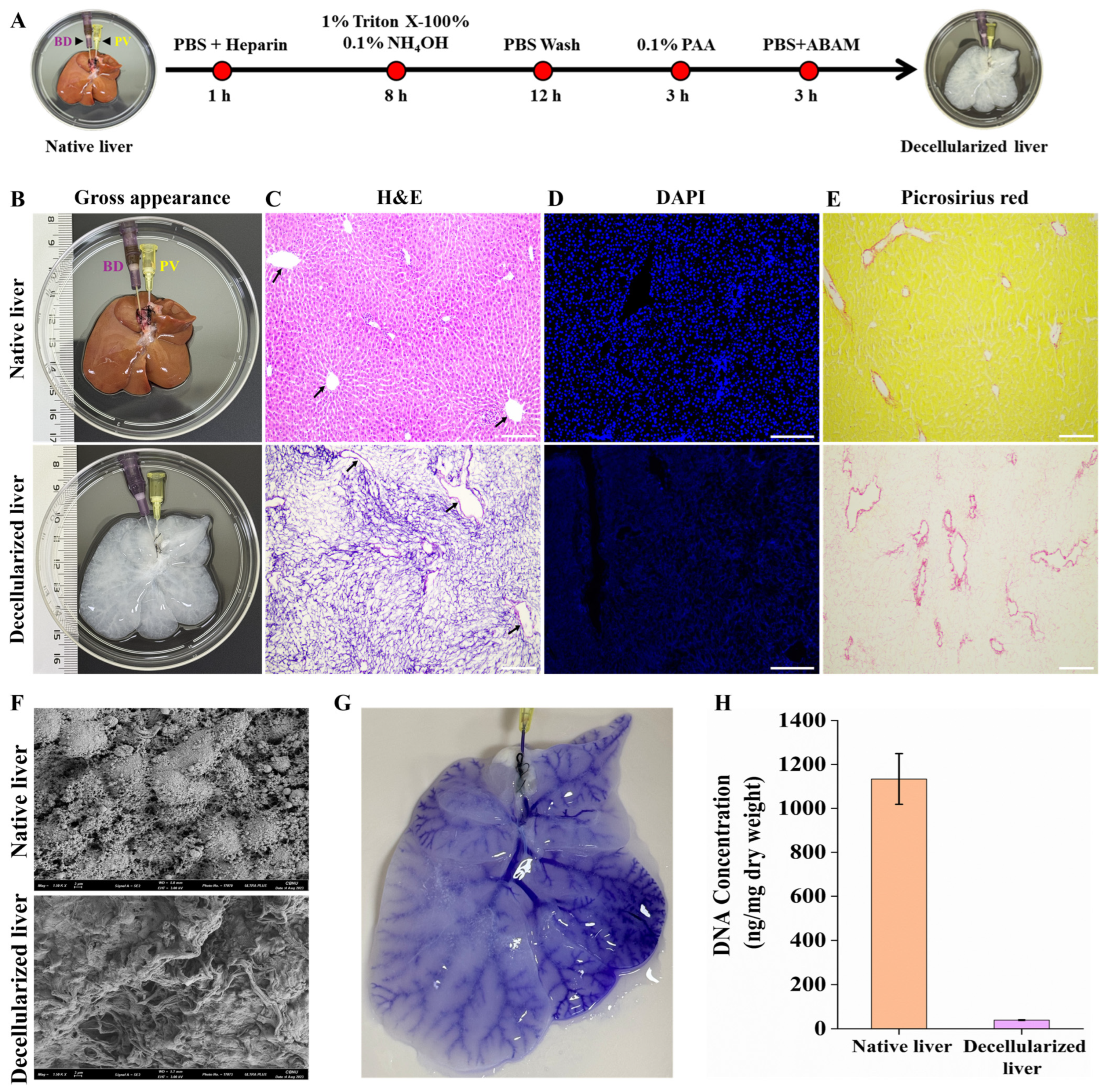
29]. Prior to the experiment, all animals were given a seven-day acclimation period in the laboratory and housed at 25 °C under a controlled 12 h light-dark cycle. Livers were harvested from 10-week-old female Sprague Dawley rats (250–300 g). Rats were deeply anesthetized by intraperitoneal (IP) injection of Alfaxan (30 mg/kg) and Domitor (0.5 mg/kg), after which a U-shaped incision was made to expose the liver. The PV was cannulated with a 24-G catheter and the bile duct with a 26-G catheter, and the liver was perfused with 60 mL of heparinized PBS (10 IU/mL) to ensure complete removal of blood. The abdominal aorta and superior vena cava were transected prior to liver separation, resulting in euthanasia. Following dissection, the livers were perfused with heparinized PBS for 60 min at 2 mL/min using a peristaltic pump (JWTE 600, JenieWell, Seoul, Republic of Korea). Decellularization was performed with perfusing 1% Triton X-100 and 0.1% ammonium hydroxide (Samchun Chemical, Seoul, Republic of Korea) at 3 mL/min for 8 h. The scaffolds were subsequently washed with PBS for 12 h, sterilized with 0.1% peracetic acid, and stored in PBS supplemented with antibiotics at 4 °C until use. All animal experiments were approved by the Institutional Animal Care and Use Committee of Chungbuk National University (CBNUA-24-0091-01).
2.4. Characterization of Decellularized Liver Scaffold
Histological analysis was conducted on native and decellularized livers to evaluate cellular removal and ECM retention. Samples were fixed in 10% neutral-buffered formalin, processed for paraffin embedding, and sectioned at a thickness of 5 µm. The sections were subsequently deparaffinized and stained with hematoxylin and eosin (H and E) and with DAPI, to confirm the complete elimination of nuclear material. For ultrastructural evaluation, samples were fixed overnight in 2.5% glutaraldehyde, post-fixed in osmium tetroxide, dehydrated in graded ethanol, sputter-coated with gold palladium, and examined by scanning electron microscopy (SEM; Gemini 560, Oberkochen, Germany). Quantitative analysis of DNA content in native and decellularized rat livers (n = 5) was performed using the G-spin™ Total DNA Extraction Kit (Intron Biotechnology, Gyeonggi, Republic of Korea), following the manufacturer’s protocol. Preservation of key ECM components of DLS was evaluated by immunohistochemistry (IHC) for collagen type IV, laminin, and fibronectin on paraffin-embedded sections. Additionally, the vascular network of the DLS was assessed by perfusion with 0.1% crystal violet through PV to visualize vascular patency.
2.5. Immobilization and Characterization of LXW7 Modified DLS
LXW7 peptides were covalently conjugated to DLS using EDC/NHS-mediated carbodiimide coupling. Briefly, a 50 mL solution containing 0.05 M EDC and 0.06 M NHS in 0.05 M MES buffer (pH 5.6) was perfused through the portal vein (PV) and incubated for 30 min at room temperature. Subsequently, 50 mL of PBS containing 1 μM LXW7 peptide was perfused into the scaffold and incubated for 4 h at room temperature. Scaffolds were then washed with 30 mL of PBS to remove unbound peptides. The FITC-labeled LXW7 immobilized scaffolds were characterized by direct fluorescence microscopy (Korea LabTech, KI-3000, Gyeonggi, Republic of Korea), Fourier-transform infrared spectroscopy (FTIR; Agilent Cary620, Santa Clara, CA, USA), and Energy-dispersive X-ray spectroscopy (EDS; JEOL JXA-IHP200F, Peabody, MA, USA) to confirm peptide conjugation and scaffold modification. Antiplatelet properties of the LXW7 immobilized surface were assessed by the Platelet Attachment Assay (
Supplementary Method S1).
2.6. Recellularization of DLS
2.6.1. Re-Endothelialization of DLS with HUVECs
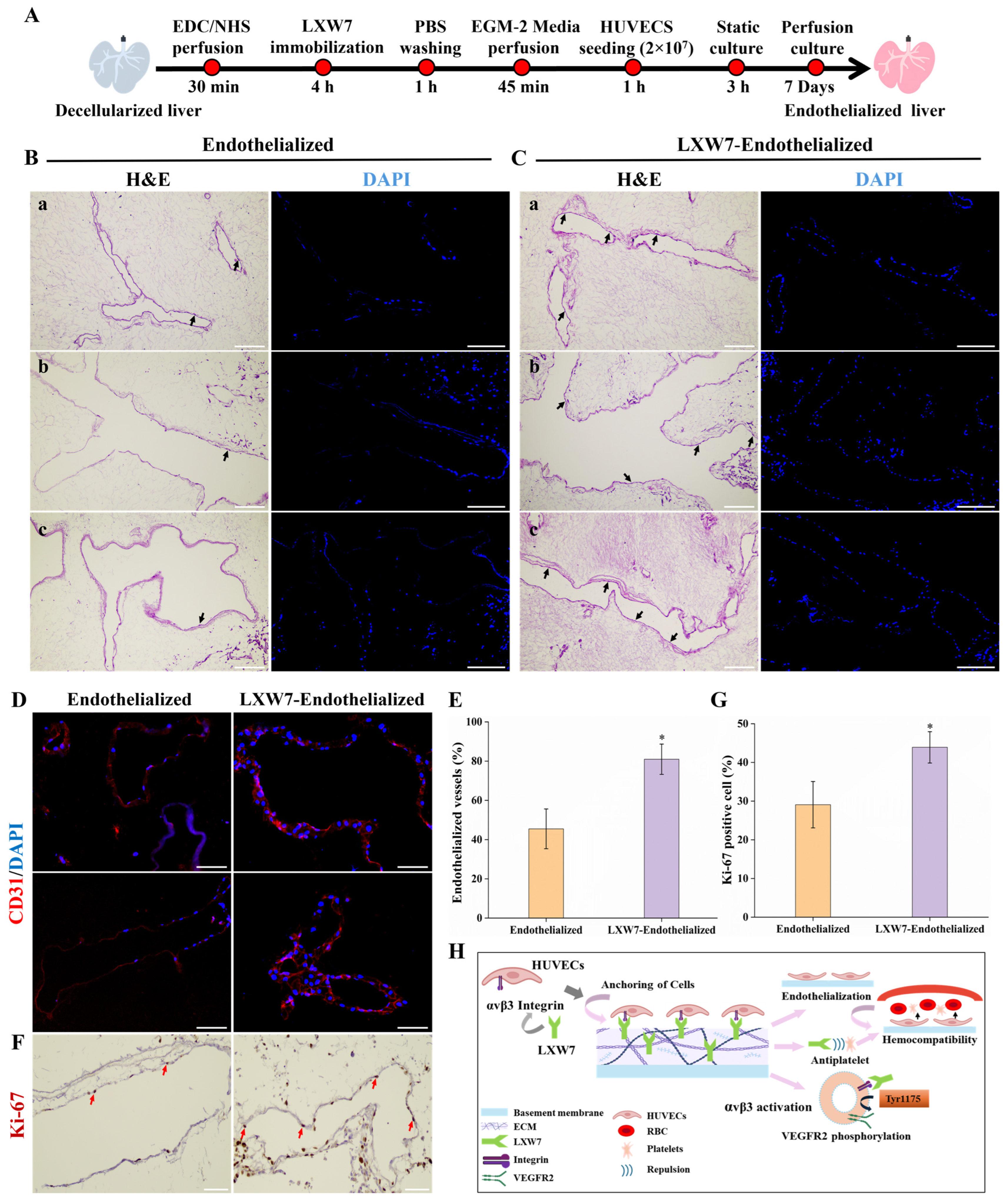
Re-endothelialization of DLS and LXW7 modified liver scaffolds (n = 3 scaffolds/group) was performed using HUVECs. Initially, both DLSs were perfused with EGM-2 medium for 45 min to stabilize the ECM. A total of 2 × 10⁷ cells were introduced via the PV in four consecutive infusions, each delivering 5 × 10⁶ cells/mL at 10 min intervals. Following seeding, the constructs were maintained under static conditions for 3 h to facilitate initial cell attachment. Thereafter, the scaffolds were transferred to a perfusion bioreactor and cultured for 7 days under standard conditions (37 °C, 5% CO2) with continuous medium flow at 2 mL/min. Culture medium was replaced daily, and perfusate was collected and stored at −80 °C for subsequent biochemical analyses. At the end of the 7-day culture period, the re-endothelialized scaffolds were collected for both histological examination and quantitative analyses. Quantitative analyses were performed to assess endothelial coverage by counting three different microscopic fields per slide from five different lobes, for cellular distribution, and the functional status of the reseeded constructs. CD31 immunostaining was performed to confirm endothelial identity and to verify vascular lining formation within the scaffold. Nitric oxide (NO) secretion was quantified using the NO Plus Detection Kit (Intron Biotechnology, Gyeonggi, Republic of Korea) in accordance with the manufacturer’s recommended protocol.
2.6.2. Recellularization of DLS with HepG2 and HUVECs Cell
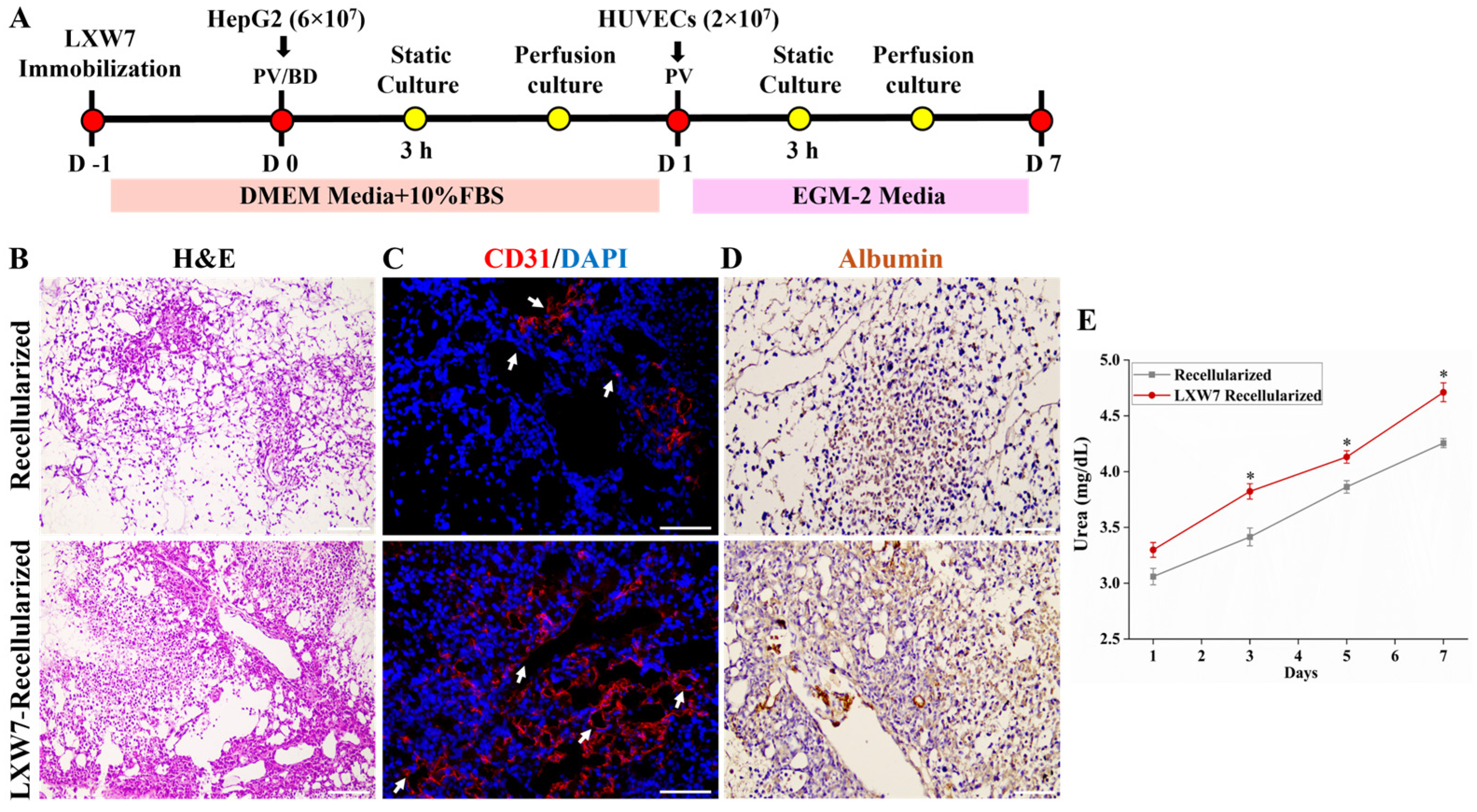
Both LXW7 modified and unmodified DLS (n = 3 scaffolds) were repopulated with hepatocytes, followed by HUVECs. HepG2 cells are used as a source for primary hepatocytes due to their ready availability, stable hepatic phenotype, and partial preservation of genotypic and phenotypic characteristics of normal liver cells. For hepatocyte seeding, a total of 6 × 10⁷ HepG2 cells were introduced into the parenchymal regions through both the PV and the bile duct. Cells were delivered in six sequential infusions at a 5 × 10⁶ cells/mL density. To achieve uniform distribution, half of the total cell (3 × 10⁷) was infused via the PV and the remaining (3 × 10⁷ cells) through the bile duct. After seeding, constructs were maintained under static conditions for 3 h for initial attachment and subsequently connected to a perfusion bioreactor. After 24 h of hepatocyte culture, endothelialization was performed by infusing 2 × 10⁷ HUVECs into the vasculature via the PV in four consecutive injections. The co-culture constructs were maintained under dynamic perfusion for 7 days. Culture medium was replaced daily, and perfusate samples were collected and stored at −80 °C for biochemical analyses. Hepatocellular function was quantified by measuring urea concentrations in the perfusate using a Urea Assay Kit (ab83362, Abcam, Cambridge, UK) according to the manufacturer’s protocol.
2.7. Resazurin Reduction Assay of Re-Endothelialized Scaffold
Cell viability and proliferative activity within the re-endothelialized liver constructs (
n = 3) were assessed using a resazurin-based metabolic assay performed on alternate days throughout the 7-day culture period. A 440 μM resazurin stock solution (10×) of Resazurin sodium salt (R7017, Sigma-Aldrich) was prepared in PBS [
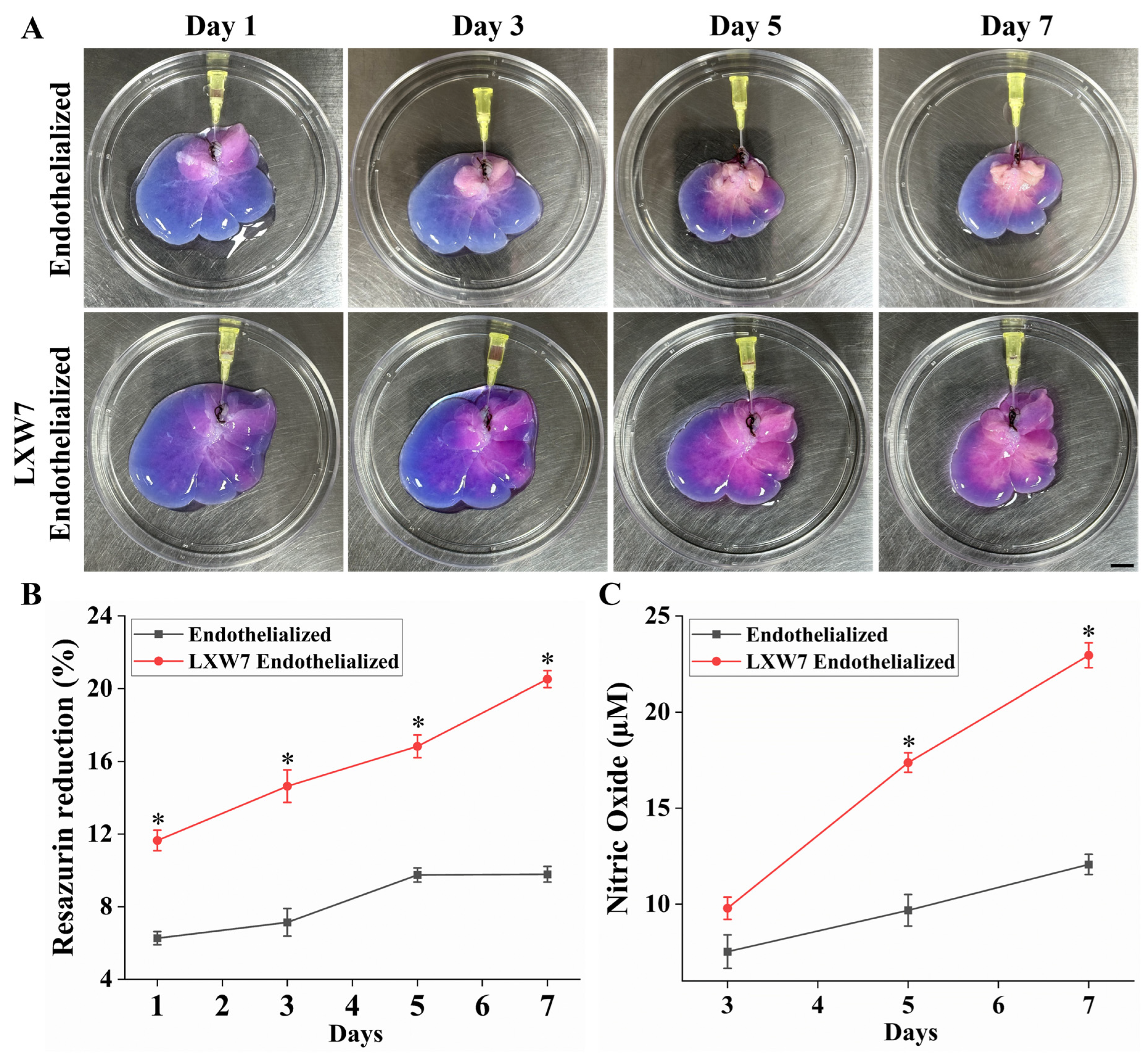
30]. For each assay, a 44 μM working solution was prepared by diluting the stock solution 1:10 in EGM-2 medium. On days 1, 3, 5, and 7, each construct was perfused with 80 mL of the resazurin working solution at 2 mL/min for 1 h at 37 °C. Following perfusion, images of the resazurin-reduced scaffolds were taken to document color changes, after which the resazurin solution was replaced with fresh medium. The absorbance of the perfused solution was measured at 570 nm and 600 nm to quantify the metabolic conversion of resazurin. The percentage reduction, indicative of HUVECs’ metabolic activity and proliferation, was calculated.
2.8. Thrombogenic Evaluation of Re-Endothelialized Constructs
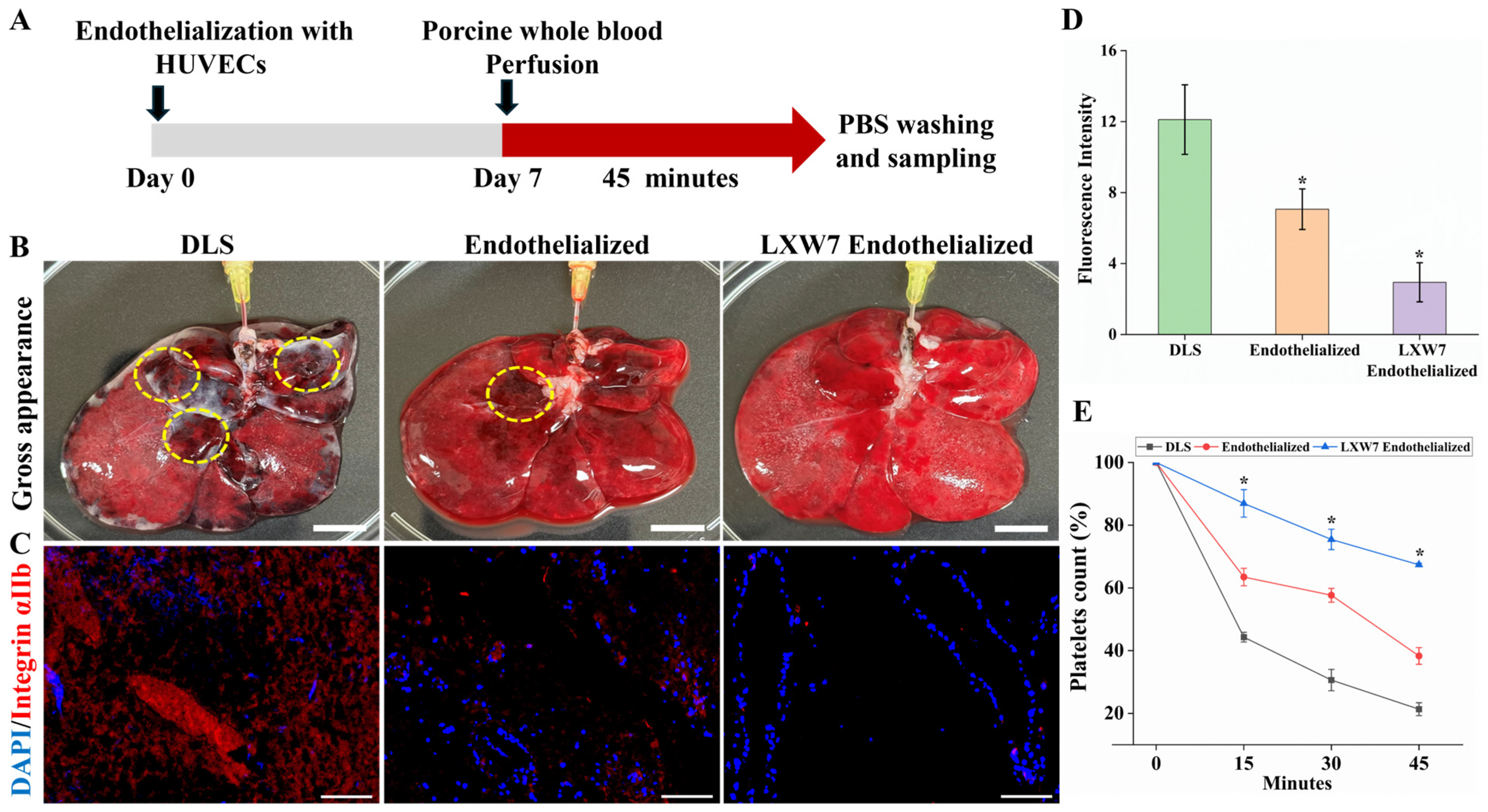
To evaluate the thrombotic response and efficiency of endothelialization, re-endothelialized liver scaffolds (n = 3) were retrieved from the perfusion bioreactor after 7 days of dynamic culture and subsequently perfused with porcine blood. Fresh porcine blood collected from a local slaughterhouse was anticoagulated with sodium citrate and diluted 1:1 with PBS for perfusion. The constructs were perfused with diluted blood for 1 h, after which they were thoroughly rinsed with PBS to remove non-adherent components. The macroscopic photographs of the scaffolds were captured to visualize the clot formation within the scaffold. Platelet deposition on the scaffold surface was assessed by IF staining using an anti–integrin αIIb antibody. Quantification of platelet adhesion was performed by measuring integrin αIIb fluorescence intensity from randomly selected microscopic fields using ImageJ software. Blood samples were collected from the perfusion at predefined time points (0, 15, 30, and 45 min) during ex vivo blood perfusion. Platelet counts were measured using an automated hematology analyzer following standard operating procedures. The platelet numbers at each time point were expressed as percentages to evaluate time-dependent changes in platelet count.
2.9. Omentum Implantation
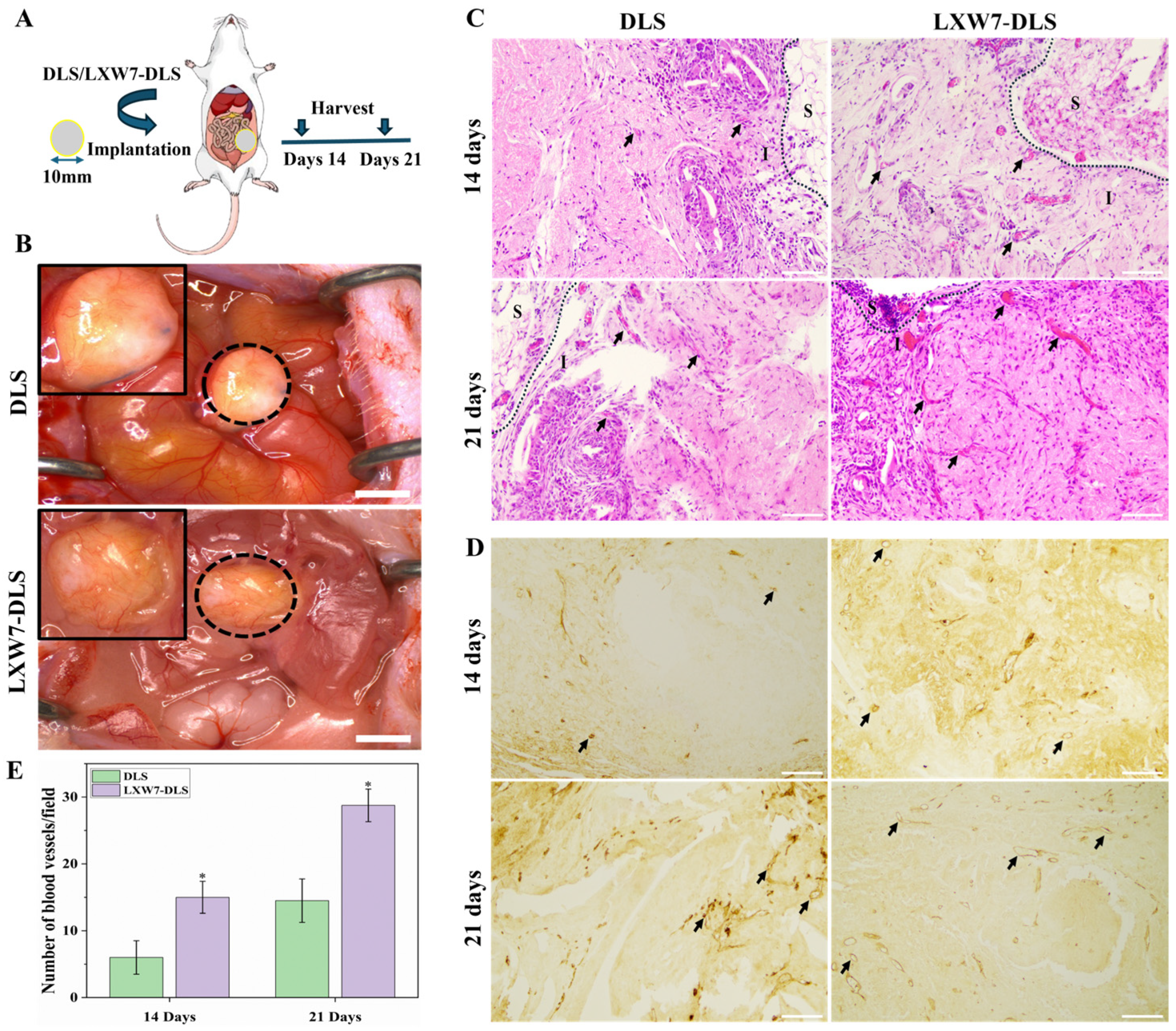
An in vivo angiogenesis assay was performed using Balb/c nude male mice aged 6 weeks (Nara-Biotec, Seoul, Republic of Korea) to evaluate the angiogenic potential of DLS and LXW7-DLS scaffolds. Following intraperitoneal anesthesia with Alfaxan (30 mg/kg) and Domitor (0.5 mg/kg) and aseptic preparation, 10 mm scaffold disks from both groups were implanted into the omentum (n = 4 mice per group per time point) and maintained in vivo for 21 days. Following surgery, meloxicam (5 mg/kg) was administered subcutaneously once daily for three days to ensure postoperative pain relief. In addition, postoperative pain was monitored based on behavioral and clinical indicators, in accordance with institutional animal welfare guidelines. At the predetermined endpoint, mice were humanely euthanized using a lethal dose of anesthesia, and gross images of the implanted scaffold were captured to document the formation of neovascularization. The implanted constructs together with surrounding tissues were collected for histological examination, and images were acquired at 20× magnification. Quantification of angiogenesis was performed by manual counting of CD31-positive vessels in six randomly selected fields per group. Investigators were blinded to group assignments during the analysis of both in vitro and in vivo experiments.
2.10. TAA-Induced Liver Fibrosis Mouse Model
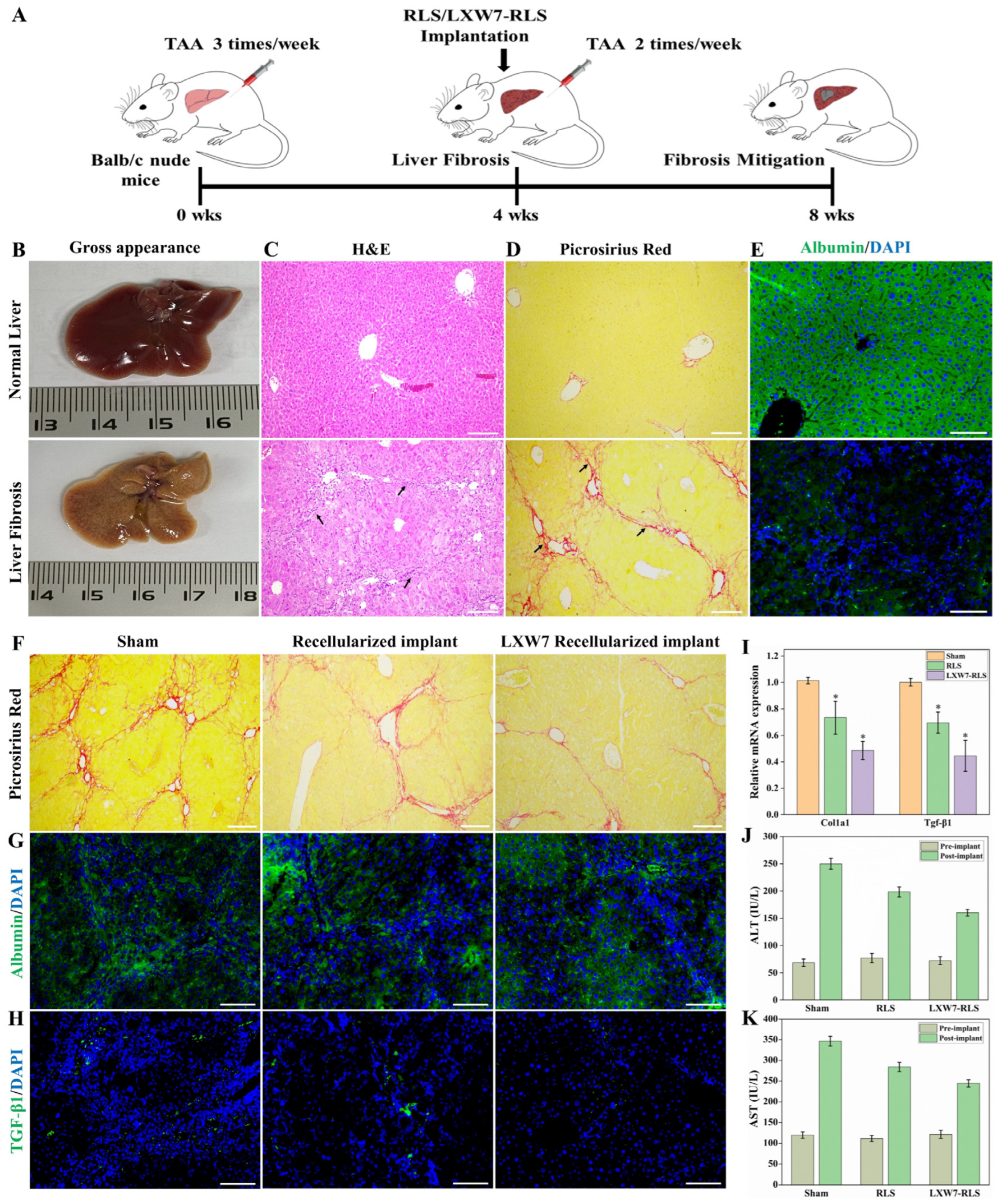
Liver fibrosis was established in six-week-old Balb/c nude mice by administering thioacetamide (TAA; Sigma-Aldrich) intraperitoneally at a dose of 100 mg/kg, three times per week for four consecutive weeks. The establishment of fibrosis was confirmed histologically using H and E and Picrosirius red staining of liver sections. After fibrosis induction, mice were anesthetized by intraperitoneal injection of Alfaxan (30 mg/kg) and Domitor (0.5 mg/kg) following aseptic preparation. A midline laparotomy was performed, and 10 mm recellularized liver scaffold (RLS) pieces from each experimental group were implanted into the interlobular space between the median and right lateral lobes. Postoperative analgesia was provided by subcutaneous administration of meloxicam (5 mg/kg) once daily for three consecutive days. All mice were maintained under standard environmental conditions and randomly assigned to each group. Five mice were assigned purely by chance (Sham, Recellularized, and LXW7-Recellularized), with a total of three groups included in the study. The Sham group served as a surgical control and underwent laparotomy without scaffold implantation. To sustain the fibrotic microenvironment, mice continued to receive TAA (100 mg/kg, IP) twice weekly for an additional four weeks following implantation. At four weeks post-transplantation, mice were humanely euthanized using a lethal dose of anesthesia, and host livers adjacent to the implanted constructs were collected for histological evaluation (H and E, Picrosirius Red) and IF staining for albumin and transforming growth factor-β1 (TGF-β1). For RNA isolation and Reverse Transcription Quantitative Polymerase Chain Reaction (RT-qPCR), host liver tissues surrounding the implantation site were collected to assess fibrosis-related gene expression. Total RNA was extracted using the RNeasy
® Mini kit (Qiagen, Hilden, Germany), and RNA purity and concentration were determined using spectrophotometry. Subsequently, 1 µg of total RNA was reverse transcribed into cDNA using the TOPscriptTM RT DryMix (dN6Plus, Enzynomics, Daejeon, Republic of Korea). The relative expression levels of target genes were analyzed using the
ΔΔCt method, with GAPDH serving as the internal normalization control. Custom primers were sourced from the SFC, Cheongju, Korea, and their sequences are listed in
Table 1. Serum samples were collected prior to implantation and at the end point to assess liver function, alanine aminotransferase (ALT), and aspartate aminotransferase (AST) levels measured on a Beckman Coulter AU480 Chemistry Analyzer (Brea, CA, USA).
2.11. Immunohistochemical and Immunofluorescence Staining
IHC was performed using the ABC Detection IHC Kit (Abcam) according to the manufacturer’s instructions. Paraffin-embedded sections were deparaffinized, rehydrated, and subjected to antigen retrieval, followed by incubation with primary antibodies: anti-Collagen IV (1:100, ab6586, Abcam), Laminin (PA1-16730, Invitrogen, Waltham, MA, USA), anti-Fibronectin (ab268020, Abcam), anti-CD31 (1:500, ab18298, Abcam), and Ki-67 (1:150, MA5-14520, Invitrogen). For IF staining, sections were permeabilized with 0.1% Triton X-100 for 15 min and blocked with 2% bovine serum albumin (Sigma-Aldrich) for 45 min. Tissue sections were incubated overnight with primary antibodies including anti-human CD31 (1:100, MA5-13188, Invitrogen), Albumin (1:200, PA5-89332, Invitrogen), anti-Integrin αIIb (1:100, sc-21783, Santa Cruz Biotechnology, Dallas, TX, USA), and anti-TGF-β1 (1:200, ab170874, Abcam). After washing, fluorescent dye-conjugated secondary antibodies, Goat anti-Mouse IgG (H+L) Cross-adsorbed, Texas Red-X (Invitrogen), and goat anti-mouse IgG (1:1000, Invitrogen) were applied for one hour, followed by nuclear staining with DAPI. Imaging was performed using an Optinity KCS3-50SS microscope.
2.12. Statistical Analysis
Statistical analyses were carried out using Microsoft Excel (Microsoft Corp., Washington, DC, USA), while graphs and plots were generated using OriginPro 10.1.5.132 (OriginLab Corp., Northampton, MA, USA). Quantitative data are presented as the mean ± standard deviation (SD) unless otherwise specified. Statistical comparisons between two groups were performed using Student’s t-test, while comparisons among multiple groups were analyzed using one-way (ANOVA) followed by Tukey’s post hoc test. A p-value of less than 0.05 was considered to indicate statistical significance.
4. Discussion
Tissue engineering has rapidly advanced as a key area of regenerative medicine, with decellularized scaffolds gaining particular attention in liver engineering. Recent progress in decellularization techniques has enabled the creation of organ-derived ECM constructs that preserve native architecture and biochemical cues, moving this approach from experimental studies toward clinical translation [
31]. However, the decellularization process inherently removes the native endothelial lining, leaving the vascular channels exposed and prone to thrombosis and inflammatory cell adhesion. This loss of endothelium represents a major barrier to clinical application, as the vascular lining normally functions as a dynamic, non-adhesive barrier to platelets and leukocytes [
32]. Therefore, achieving rapid and stable endothelialization is not only desirable but critical for graft patency, hemocompatibility, and long-term success in scaffold implantation.
In our study, we modified DLS with LXW7, an integrin αvβ3-specific ligand, as a promising strategy to overcome the challenge of endothelialization. LXW7 selectively binds EPCs and ECs, thereby enhancing their adhesion, proliferation, and vascular network formation, while showing minimal affinity for platelets. This selective interaction is particularly advantageous, as it facilitates rapid and stable HUVECs attachment while simultaneously reducing thrombogenic responses. The establishment of a functional endothelial lining is critical not only for improving hemocompatibility but also for providing a supportive vascular microenvironment that fosters hepatocyte engraftment; thus, advancing the development of clinically relevant bioengineered liver constructs. Compared with conventional approaches such as RGD peptide modification or antibody-based coatings, which often suffer from non-specific cell adhesion [
16], high platelet affinity [
17], high production costs and potential immunogenicity, LXW7 offers a more selective and translationally feasible strategy. By integrating LXW7 with DLS, our approach directly addresses the limitations of earlier methods and represents a significant step forward in engineering functional and hemocompatible liver grafts.
Previous studies have demonstrated that LXW7, an integrin αvβ3-specific ligand, is effective in functionalizing small-diameter vascular grafts, where it enhances EPCs/ECs capture, promotes rapid endothelialization, and reduces platelet adhesion [
21,
33,
34,
35]. Mechanistically, LXW7 binds specifically to αvβ3 integrins on ECs, allowing them to firmly attach to the scaffold surface. This targeted binding promotes rapid cell adhesion, spreading, and alignment, enabling the formation of a stable and continuous endothelial layer. LXW7 αvβ3 engagement also activates pro-survival and angiogenic signaling, including VEGFR2 phosphorylation (Tyr1175), which supports endothelial function and vascular maturation. At the same time, LXW7 has minimal interaction with platelet integrins, resulting in reduced platelet adhesion and decreased thrombosis. Through these coordinated effects, LXW7 enhances endothelialization, strengthens vascular stability, and improves hemocompatibility of the scaffold. However, its potential application for re-endothelialization in whole organ bioengineering has not been investigated. For the first time, we have employed LXW7 to functionalize DLS, aiming to promote rapid endothelialization, improve hemocompatibility, and provide a supportive niche for hepatocyte engraftment in the development of bioengineered liver constructs.
First, we validated HUVECs’ attachment on gelatin-coated plates functionalized with LXW7, and subsequently on DLS. Our findings underscore the effectiveness of LXW7 immobilization as a biofunctionalization strategy to promote HUVECs attachment, consistent with earlier studies reporting enhanced EC attachment and proliferation on LXW7 modified vascular grafts [
17,
21,
33]. Although both adsorption and immobilization facilitated peptide presentation; however, covalent immobilization achieved superior ligand stability and markedly enhanced HUVECs adhesion. Importantly, 1 µM LXW7 was identified as the optimal concentration, as higher densities of 5 µM disrupted integrin ligand interactions, leading to reduced cell attachment. These observations highlight the critical role of crosslinking chemistry in ensuring durable and biologically functional peptide presentation [
27], which is essential for establishing stable endothelialization and advancing scaffold-based liver bioengineering toward clinical translation.
At the same time, the success of re-endothelialization also depends on the preservation of ECM integrity during decellularization. While decellularization is necessary to remove cellular and immunogenic components, it can inadvertently damage key ECM constituents such as fibronectin, laminin, and collagen IV, which are essential for ECs’ adhesion, polarity, and survival [
36]. Disruption of basement membrane architecture and alterations in biomechanical properties further compromise cytoskeletal organization and barrier formation, thereby limiting effective endothelialization [
37,
38]. To address this, we employed a relatively gentle decellularization protocol using Triton X and ammonium hydroxide, instead of harsh ionic detergents such as SDS, in order to minimize ECM damage and preserve structural and biochemical cues [
39].
Our study demonstrates that LXW7 immobilization on DLS significantly improves re-endothelialization efficiency and hemocompatibility. LXW7 modified scaffolds supported the formation of a continuous and functional endothelial lining. This outcome is consistent with prior studies on small-diameter vascular grafts, where LXW7 demonstrated strong endothelial selectivity and low platelet affinity. The ability of LXW7 to sustain endothelial viability and nitric oxide activity over extended culture suggests that it provides not only a structural lining but also functionally active endothelium, which is essential for long-term graft patency. Moreover, the reduced thrombogenicity observed in blood perfusion experiments underscores the translational relevance of this approach, as thrombus formation and platelet adhesion remain key obstacles in vascularized organ scaffolds. This antithrombogenic effect is likely attributable to the dual action of LXW7, its ability to promote the formation of a functional endothelium while simultaneously exerting antiplatelet activity.
Additionally, our study underscores the role of LXW7-mediated endothelialization in enhancing hepatocyte engraftment and function within RLS. The increased amount of albumin and urea production observed in LXW7 modified scaffolds reflects improved hepatocyte viability. LXW7 immobilization supported the establishment of a continuous endothelial lining, which in turn created a vascular niche that stabilized hepatocyte localization and sustained their metabolic activity. This outcome is consistent with the concept that endothelial parenchymal interactions are essential for hepatocyte survival and function [
40]. The factors secreted from vessels, such as NO and VEGF, helped to sustain hepatocytes’ viability and, moreover, improved both the structural and functional maturation of the bioengineered constructs. This is consistent with the previous report demonstrating that NO inhibition led to a significant reduction in HepG2 cluster sizes within bioengineered liver [
41]. The enhanced hepatocyte phenotype and function observed in LXW7 modified scaffolds; therefore, highlight the interdependence of vascular and parenchymal compartments in whole liver bioengineering.
The in vivo omentum implantation studies highlight that LXW7 modification markedly improves biocompatibility and the angiogenic response. LXW7-DLS supported enhanced recruitment of host EC, increased vessel formation, and maturation. These findings are consistent with an earlier study in skin tissue engineering [
42], where LXW7 was shown to recruit and retain EPCs through αvβ3 engagement and VEGFR2 activation [
17], thereby sustaining angiogenic function under ischemic conditions. Therefore, LXW7 modification not only accelerates biocompatibility but also provides a microenvironment capable of sustaining angiogenic function, thereby advancing scaffold performance toward translational applications.
The LXW7-RLS constructs exhibited functional capacity to provide both structural support and paracrine signals that modulate the repair process. Heterotopic implantation of RLS and LXW7 recellularized scaffolds alleviated fibrotic changes and improved liver function in the fibrotic mouse liver. The observed reduction in collagen deposition, improved albumin expression, and lower serum ALT/AST levels collectively indicate that LXW7 functionalization promotes hepatocyte activity while attenuating fibrogenic signaling. These beneficial effects can be attributed to the recellularized scaffold, which generates biochemical cues that support tissue repair and regeneration. The presence of both endothelial and parenchymal cells within the constructs further contributed to functional integration and mitigated the liver fibrosis progression. The reduction in fibrosis observed in the TAA-induced fibrotic liver model likely reflects the combined contribution of both improved endothelialization and restored hepatocyte function. LXW7-mediated endothelialization enhances vascular patency, which improves oxygenation and nutrient delivery within the regenerating tissue. A stable and functional endothelial layer also suppresses platelet activation and inflammatory cell infiltration. Simultaneously, improved hepatocyte viability and function within LXW7-DLS promote metabolic recovery and reduce the secretion of pro-fibrotic cytokines. Together, these effects create a microenvironment that downregulates fibrogenic signaling pathways while supporting healthy parenchymal regeneration, thereby contributing to the overall attenuation of fibrosis. Previous studies have shown that human-derived cells can exert therapeutic effects in rodent models of TAA-induced liver injury [
40,
43]. However, the use of a short-term mouse fibrosis model may not fully recapitulate the chronic progression of human cirrhosis.
This study was designed to evaluate the structural and functional benefits of LXW7 immobilization on DLS, with less emphasis on the underlying molecular mechanisms. Since LXW7 interacts strongly with integrin αvβ3, further work should aim to elucidate the downstream signaling pathways that regulate re-endothelialization, which may provide valuable mechanistic insights. While LXW7 treatment effectively promoted endothelialization, the study was limited by using simplified cell models such as HepG2 and HUVECs, which cannot fully replicate the behavior of primary hepatocytes or autologous ECs. In this study, HepG2 cells were used as an alternative to primary hepatocytes due to their ready availability, phenotypic stability, and reproducibility, which enabled consistent evaluation of scaffold–cell interactions. However, it is acknowledged that HepG2 cells do not fully recapitulate the metabolic complexity and functional heterogeneity of primary human hepatocytes.
Future studies will therefore focus on the use of iPSC-derived hepatic cells and ECs on scaling the approach in large animal transplantation models, critical for progressing toward clinical translation. This study shows that LXW7-immobilized DLS enhances endothelialization, minimizes thrombogenicity, and establishes a supportive niche that preserves hepatocyte function. By providing both structural endothelial coverage and sustained functional activity, LXW7 overcomes two major challenges, insufficient endothelialization and platelet-driven thrombosis in liver scaffold engineering. LXW7-mediated endothelialization contributes to the mitigation of liver fibrosis by improving vascular patency, reducing inflammatory activation, and supporting functional hepatic remodeling. These findings offer compelling proof-of-concept for the application of LXW7 in advancing whole organ bioengineering.