You are currently viewing a new version of our website. To view the old version click .
Journal of Functional Biomaterials
  • Editor’s Choice
  • Review
  • Open Access

24 June 2024

Advances in Extraction, Structure, and Physiochemical Properties of Sorghum Kafirin for Biomaterial Applications: A Review

,
,
,
and
1
School of Molecular and Life Sciences, Faculty of Science and Engineering, Curtin University, Perth, WA 6845, Australia
2
The Biotechnology and Drug Development Research Laboratory, Curtin Medical School and Curtin Health Innovation Research Institute, Curtin University, Perth, WA 6845, Australia
3
ARC ITTC for Functional Grains, Graham Centre for Agricultural Innovation, Charles Sturt University, Wagga Wagga, NSW 2678, Australia
*
Author to whom correspondence should be addressed.

Abstract

Kafirin is an endosperm-specific hydrophobic protein found in sorghum grain and the waste by-product from sorghum biorefineries known as sorghum dried distillers’ grain with solubles (DDGS). Because of kafirin’s poor nutritional profile (negative nitrogen balance, slow digestibility, and lack of some essential amino acids), its direct human use as a food is restricted. Nevertheless, increased focus on biofuel production from sorghum grain has triggered a new wave of research to use sorghum DDGS kafirin as a food-grade protein for biomaterials with diverse applications. These applications result from kafirin’s unique chemical nature: high hydrophobicity, evaporation-induced self-assembling capacity, elongated conformation, water insolubility, and low digestibility. Aqueous alcohol mixtures have been widely used for the extraction of kafirin. The composition, structure, extraction methodologies, and physiochemical properties of kafirin, emphasising its biomaterial functionality, are discussed in detail in this review. The literature survey reveals an in-depth understanding of extraction methodologies and their impact on structure functionality, which could assist in formulating materials of kafirin at a commercial scale. Ongoing research continues to explore the potential of kafirin and optimise its utilisation as a functional biomaterial, highlighting its valuable structural and physicochemical properties. Further studies should focus on covering gaps in the research as some of the current structural understanding comes from data on zein protein from maize.

1. Introduction

Understanding protein structure and interactions at the molecular level has a crucial role in biomaterial preparation due to their influence on material’s functionality and performance [1]. Factors like high hydrophobicity, slow digestibility, self-assembling capacity, water insolubility, and surface properties need to be understood in-depth to identify the potential biomaterial applications of specific proteins.
Proteins are classified within many groups with widely different physicochemical properties; however, prolamins, a group of cereal grain storage proteins, are known for their high thermal stability, resistance to enzymatic proteolysis, self-assembling nature, high hydrophobicity, and slow digestibility. Due to these unusual properties, the potential of prolamins such as zein from maize and kafirin from sorghum for biomaterial applications in the food and pharmaceutical industry is currently a topic of exploration [2].
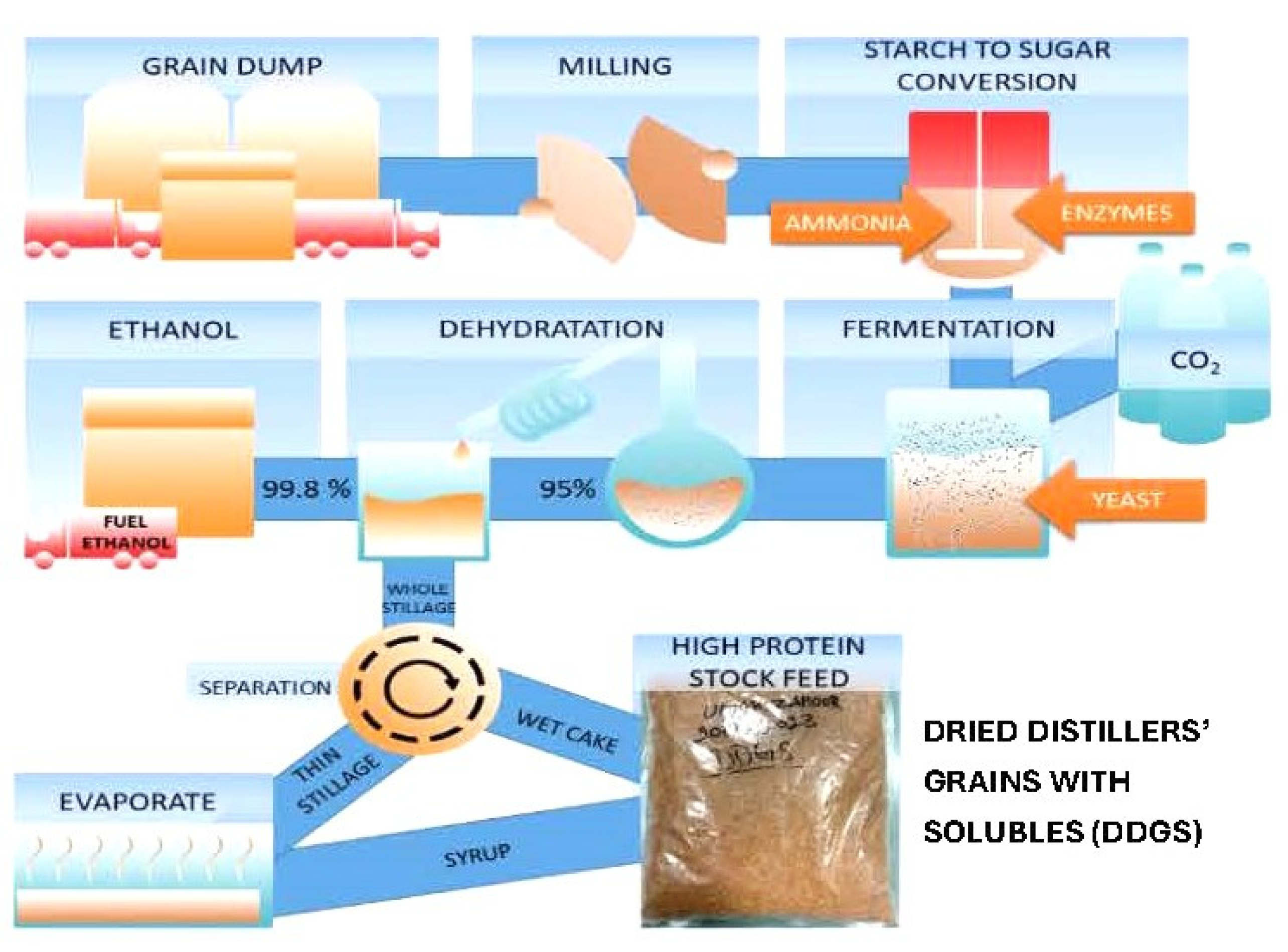
Ongoing research continues to explore the potential of biopolymers from industrial waste such as carbon based nanomaterials from olive solid waste [3] and nanobiochar from orange peel [4] for biomaterial production. The production of biofuels sorghum grain leaves a protein-enriched by-product called dried distillers’ grain with solubles (DDGS) (Figure 1). Until now, there have been no industrial strategies for the use of sorghum DDGS beyond its traditional usage as a low-cost animal feed. New strategies for the use of sorghum DDGS will help to reduce the burden on environmental concerns (as a large amount of sorghum DDGS is dumped in sewers and rivers) as well as add economical value to sorghum grain and the biorefinery process. Sorghum grain and sorghum DDGS contain the prolamin protein kafirin. Kafirin protein contain levels of hydrophobic amino acids, and this hydrophobic-to-hydrophilic amino acid ratio is among the principal characteristics that induce the self-assembly to kafirin into various mesostructures (micro-to-nano metre scale), ranging from spherical particles to fibres. For application as a food- and pharmaceutical-grade biomaterial, kafirin satisfies all key characteristics: generally recognised as safe “GRAS” status [5]; natural origin and biodegradable [6]; slowly digested by proteases; low-cost; and non-allergenic [7].
Figure 1. Production process for manufacture of biofuels from sorghum grain resulting in waste product of dried distillers’ grains with solubles (DGGS).
Various methodologies have been developed and used for the extraction and purification of kafirin protein, including aqueous alcohol mixtures with or without additives (such as reducing agents) [8], glacial acetic acid methodology [9], and purifications via anion and cation exchange chromatography [10]. Despite the advancements in the science of kafirin extraction and purification, there are still some limitations in terms of its potential for commercial scale-up, e.g., low selectivity of extraction solvents and economic viability. This review summarises the structure and composition of kafirin and provides an overview of kafirin extraction and purification methodologies. Recent developments in the physicochemical properties of kafirin proteins with emphasises on material functionality are discussed.

2. Protein Composition of Sorghum Grain

Sorghum (Sorghum bicolor (L). Moench) is a cereal in the grass family Poaceae and ranks as the fifth grain crop worldwide in terms of production after rice, wheat, maize and barley [11]. This high production is related to its resistance to high temperatures, drought, and fungal infections [12]. Sorghum grain is rich in available carbohydrates (mainly starch) (~65% dry basis), protein (~12% dry basis), lipids (~4% dry basis), and dietary fibre (~2% dry basis) and contains valuable levels of minerals, vitamins, and polyphenols [13].
Sorghum proteins are classified into five groups based on solubility criteria: (a) water-soluble albumin; (b) salt-soluble globulins; (c) alcohol-soluble kafirins; (d) alcohol- and reducing-agent-soluble, cross-linked kafirins; and (e) alkaline-soluble glutelin [14]. Among these, kafirin, accounts for ~70% of total protein in the grain [15]. The prolamins are rich in proline and glutamine amino acids (from which the name prolamin is derived) and are found in corn (zein), sorghum (kafirin), oats (avelin), rice (prolamin), rye (secalin), and barley (hordein). Based on their molecular weight and amino acid composition, prolamins are categorised into various subgroups (Table 1).
Table 1. Prolamin subunits and their percentage in different grains.
GrainProlaminProlamin SubunitsProlamins
% of Total
Protein
Reference
SorghumKafirinα-, β-, γ-70–80[14]
MaizeZeinα-, β-, γ-, δ-40–45[16]
OatsAvelin 4–15[17]
RiceProlamin10-,13-, 16-3–6[18]
RyeSecalinγ- and ω-17–19[19]
BarleyHordeinβ-, k-, δ-, γ-50–80[20]
As such, kafirin exists in protein bodies. The protein bodies are specialised organelles within the endosperm cells of sorghum seeds, in which kafirin accumulated during seed development and maturation [21]. These protein bodies containing kafirin typically exhibit a spherical or ellipsoidal shape, ranging from a few micrometres to tens of micrometres in diameter [21]. In these protein bodies, kafirin molecules are densely packed together, forming a matrix like-structure that surrounds and encases lipid droplets. This arrangement provides stability and protection to the kafirin molecules, shielding them from enzymatic activity (proteolytic) and other environmental stresses during seed storage [22]. During the extraction process, the disruption of the native structure of kafirin is necessary to isolate kafirin for many diverse applications including the development of biomaterials. This breakdown typically involves physical, chemical, and mechanical procedures that disrupt the protein bodies of sorghum releasing kafirin molecules from their native environment. Despite their high nutrient content, the use of sorghum grain in the mainstream global food system is restricted because of the low digestibility of its protein and starch and deficiencies in some essential amino acids, such as lysine and threonine [23]. To address these deficiencies, considerable research has been conducted using conventional breeding and genetic modification [14]. Chemical mutagenesis has been used to produce high protein digestibility/high lysine sorghum by suppressing the synthesis of γ-kafirin and β-kafirin, with a concomitant increase in non-kafirin and decrease in kafirin content in the endosperm [24]. Similarly, sorghum protein nutritional quality (in terms of digestibility, amino acid score, and digestibility-corrected amino acid score) was improved by co-suppressing the synthesis of kafirin subunits, i.e., α-, γ-, and δ- kafirin subunits and removal of tannin.
Kafirin was first extracted from a sorghum grain type called “kafir”, from which it gets its name, by Johns and Brewster in 1916 using 70% ethanol, followed by 60% tertiary butyl alcohol [25]. They found that the seeds of kafir contains more than one-half of a protein (kafirin) that resembles the maize protein zein. Its resemblance with zein is based on its elemental composition, for example, kafirin and zein have carbon contents of 55.19 and 55.23, hydrogen contents of 7.36 and 7.26, sulphur contents of 0.60 (both), nitrogen contents of 16.44 and 16.13, and oxygen contents of 20.41 and 20.78, respectively. However, they reported that kafirin contains higher levels of tryptophan and lysine, both of which are lacking in zein.

3. Extraction and Purification of Kafirin

Sorghum components gained commercial attention in the USA during World War II due to the shortage of maize. From 1948 to 1970, Corn Product Co. (Corpus Christi, TX, USA) used sorghum to produce starch and dextrose. However, its use was discontinued due to (a) low starch recovery; (b) low oil yield; (c) high wax content; (d) the price of sorghum rising to almost that of maize [26].
An early method used for laboratory-scale sorghum protein isolation was sequential (Osborne) extraction [27], in which water-soluble proteins (albumins) and salt-soluble proteins (globulins) are extracted by water and salt solutions, respectively, followed by extraction of prolamins by aqueous alcohol at room temperature. Other early methodologies for extracting kafirin include the Landry–Moureaux method, which extracted kafirin fractions with different molecular weights, either with alcohol or aqueous alcohol and reducing agents like sodium metabisulphite. Using this approach, the extracted protein fractions were as follow: Fraction I, albumins and globulins extracted in the presence of NaCl; Fraction II: Type-1 kafirin extracted using 60% butanol (aq); Fraction III: type-2 kafirin using 60% butanol (aq) plus the reducing agent, mercaptoethanol; Fraction IV: glutelin-like protein using alkali borate buffer and mercaptoethanol; and Type V: true glutelins extracted with alkali borate and sodium dodecyl sulfate.
Glacial acetic acid [9] and chromatographic purification [10] have been reported for extraction and purification of kafirin (Table 2). In comparison to zein, kafirin requires a lower-polarity solvent because of its more highly hydrophobic nature. Tertiary propanol [28], sonication + sodium borate [29], reducing agent + high temperature + sonication, and 2-propanol [30], reducing agent [31], high temperature [8], and reducing agent + high temperature [31] are all approaches that have been successfully used for kafirin extraction. Reducing agents are particularly desirable to extract the polymeric components of kafirin, but monomeric and oligomeric kafirin subunits may not need reducing agents for extraction. Further, different subunit types have different solubility when compared at the same polymerisation level and in the same solvent system. β-kafirin, for instance, demonstrates lower solubility in aqueous alcohol than the other types due to its higher level of disulphide bonding between monomers.
Kafirin protein is highly non-polar but contains some polar amino acids; thus, extraction solvent systems should possess mixed characteristics, i.e., the capacity to solvate ionic polar, non-ionic polar, and non-polar groups. A primary solvent alone dissolves kafirin protein at solvent concentrations of >10%. Examples of primary solvents include aqueous acetamide, 2-amino-2-ethyl-1,3-propanediol, butylamine, glacial acetic acid, phenol, and ethylene glycol in water [32]. Each primary solvent needs a different temperature and solvent concentration for maximum kafirin dissolution. For example, propylene glycol (aq) is effective at room temperature, but ethanol (aq) and glycerol (aq) need elevated temperatures of 60 °C and 150 °C, respectively.
Binary solvents are those in which a second component is added to either water or a lower-molecular-weight aliphatic alcohol, such as ethanol and methanol—for example, (a) water + acetone, n-butanol, ethanol, isopropanol, or methanol; (b) a lower aliphatic alcohol + ethyl lactate, ethylene glycol, furfural, methylene chloride, or propylene glycol. In these binary systems, the more polar solvent, e.g., water, interacts with polar amino acids. In contrast, the less polar organic compound interacts with the non-polar amino acids to give effective dissolution [27].
Table 2. Methodologies for kafirin extraction and the resulting protein content, yield, and extraction details.
Authors
(Year)
Yield
(%)
Purity
(%)
Miscellaneous Details/Pre-TreatmentExtractionProcess Flow
[33]1916.6Albumin, globulin and LMW N2 fragments
(1)
An amount of 0.5 M NaCl for 60 min.
Sequential extraction in given order.
0.3NASalt and traces removal
(2)
Double distilled water for 20 min.
11.617.3Kafirin
(3)
A total of 60% 2-propanol for 4 h.
20.824.5Cross-linked kafirin
(4)
A total of 60% 2-propanol + 1% dithioreitol (DTT) for 4 h.
3.84.8Glutelin like proteins
(6)
A total of 0.1 M borate buffer, pH 10.8 for 4 h.
44.527.2Glutelin
(5)
A total of 0.1 M borate buffer, pH 10.8 + 1% DTT + 1% sodium dodecyl sulphate (SDS) for 18 h.
11.5Non-extractable nitrogen
[34]46.1
(WGF)
NAAdaptation of Carter and Reck process [35].A total of 70% w/w ethanol in distilled water, 0.35% w/w sodium hydroxide, and 0.5 w/w sodium metabisulphite at a ratio of 1:5 w/w flour-bran to extraction with vigorous stirring at 70 °C for 1 h.Extraction, centrifugation, evaporation, pH, precipitation, freeze-drying, and oil removal.
[9]54.389.3Comparison of different extractants; flour screened through 800 µm screen.A total of 70% ethanol + 0.5% sodium metabisulphite + 0.2% NaOH at 70 °C.Extraction, centrifugation, evaporation, pH, precipitation, filtration, freeze-drying, and oil removal.
55.391.2 A total of 55% isopropanol + 0.5 sodium metabisulphite + 0.3% NaOH at 40 °C.
25 Glacial acetic acid at 25 °C.
25 Glacial acetic acid + 0.5% sodium metabisulphite at 25 °C.
52.8 Presoak (1 h) 0.5% sodium metabisulphite; glacial acetic acid at 25 °C.
59.3 Presoak (16 h) 0.5% sodium metabisulphite; glacial acetic acid at 25 °C.
6192.9 Presoak (16 h) 1.0% sodium metabisulphite; glacial acetic acid at 25 °C.
[8] DDGS washed with hot water (50 °C); dried in hot-air oven at 50 °C overnight before extractionA total of 70% (w/v) ethanol + 0.5% w/w sodium metabisulphite + 0.35% w/w NaOH at 70 °C for 1 h.Hot water wash, oil removal, extraction, centrifugation, dilution, centrifugation, deionised wash, and freeze-drying.
[36]87 (total protein) Flour defatted with n-hexane (1:10 ratio); washed with water (1:10 ratio) for 1 h and centrifuged at 8000 rpm for 10 min. The procedure was repeated with 0.5 M NaCl and distilled water.Extracted with 60% t-butanol for 2 h each and 10 min of ultrasonication using an FS-28 solid-state ultrasonicate (bath-type with sonic power, 225 W; sweep frequency, 40 kHz) at interval of 30 min.Oil removal, saline wash, extraction, centrifugation, evaporation, pH precipitation, filtration, and freeze-drying.
[37]70 (total protein Adapted from [34].Sorghum flour (250 g) extracted using a mixture of 900 mL ethanol (70% w/w) in deionised water, 25 g/kg sodium metabisulphite, and 17.5 g/kg w/w sodium hydroxide as a reducing agent. The mixture was heated and held at 70 °C with continuous stirring for 1 h.Extraction, centrifugation, dilution, freeze-drying, milling, and oil removal.
[38]54.367.2Percolation (liquid-to-solid ratio of 2:5:1).A total of 70% w/w aqueous ethanol + 1.0% w/w sodium metabisulphite + 0.35% w/w NaOH at 70 °C for 1 h.Extraction, evaporation, pH precipitation, dilution, filtration, and air-drying.
Tertiary solvent systems are those with a combination of water, low aliphatic alcohol, and other components. Examples reported for kafirin extraction include water + lower aliphatic alcohol + acetone, ethylene glycol, formaldehyde, or nitromethane [27]. The different extraction systems used for kafirin will now be reviewed in more detail.

3.1. Extraction by Glacial Acetic Acid

This food-compatible methodology utilises glacial acetic acid (primary solvent) to solubilise kafirin protein from the sorghum matrix. Glacial acetic acid disrupts protein–protein and protein–non-protein interactions within the sorghum matrix, releasing kafirin into the acetic acid. The acidic conditions created by the glacial acetic acid help to solubilise kafirin by protonating ionisable amino acid residues, thereby enhancing the solubility of kafirin in the acetic acid [9]. This protonation of ionisable amino acid residues reduces the net charge by weakening strong electrostatic interactions, increasing hydrogen bonding and ion-diploe interactions; subsequently, this enhances the solubility of kafirin in polar glacial acetic acid solvent.
The glacial acetic acid was used as a primary solvent with and without reducing agent to extract kafirin from sorghum flour [9]. The authors found it desirable to presoak sorghum flour in 0.5% sodium metabisulfite for 16 h before extraction to provide a better yield. The extracted kafirin showed the presence of all major kafirin subunits. The glacial acetic acid without a reducing agent gave a lower yield than that of glacial acetic acid with sodium metabisulfite overnight soaking. The use of sodium metabisulfite may have reduced the high levels of disulfide cross-linking between the kafirin subunits, as well as disrupting kafirin starch interactions. So, this technology is primarily based on the selective solubilisation of kafirin in an acidic environment, which is facilitated by the denaturation and solubilisation effects of glacial acetic acid. This methodology offers various advantages, including food compatibility, cost-effectiveness, high efficiency, versatility, and compatibility with downstream applications [14].
The structure and physicochemical properties of kafirin protein made from sorghum DDGS and extracted using three methodologies including glacial acetic acid methodologies were investigated [39]. The results from the study revealed that the protein content and yield of kafirin were higher when acetic acid (44.1% yield and 98.9% protein content) and alkaline-ethanol methodologies (56.8% yield and 94.9% protein content) were employed compared to the acid ethanol methodology (24.2% yield and 42.32% protein content). FTIR analysis of the extracted kafirins determined that the acetic acid and the alkaline-ethanol kafirins contain greater levels of α-helices and random coils than that of kafirin made from the acidic-ethanol methodology, which contained more β-sheet conformation. This presence of the β-sheet in kafirin isolated using the acidic-ethanol methodology could be due to the higher extraction temperature employed in this treatment. Size exclusion chromatography revealed that the acetic acid and the acidic-ethanol extraction methodology extracted higher-molecular-weight polymeric proteins than the alkaline-ethanol methodology. Notably, the results from chromatography revealed the presence of γ-kafirins only in the alkaline-ethanol methodology. The use of glacial acetic acid is considered superior because it is a food-compatible solvent, non-volatile, and does not require a licence or raise regional concerns, as is the case with alcohols. The only restriction to this extraction solvent is that the solvent temperature should be kept low to prevent polymerisation of kafirin polypeptides. Careful selection of extraction conditions, such as the concentration of glacial acetic acid, time-temperature combination, and pre-soaking conditions (with and without reducing agent), could achieve better yields of kafirin with minimal interference from other sorghum components.

3.2. Extraction by Aqueous Alcohol Methodology

Kafirin is insoluble in water alone due to its high hydrophobic nature. Therefore, aqueous alcohol mixtures (secondary solvent) can effectively and selectively (specific fractions of kafirin) extract kafirin from the sorghum matrix. The principle behind the extraction of kafirin using water-alcohol mixtures lies in differential solubility [32]. In a water–alcohol mixture, alcohol serves as a protein denaturant and solvent, disrupting protein–protein interactions and interactions with other sorghum components such as starch. Water helps to maintain the solubility of polar components including polar amino acid residues such as cysteine, tyrosine, glutamine, etc., for protein extraction [32,40]. Several laboratory-scale studies have extracted kafirin using aqueous alcohol mixtures, with high extraction yields for use in various downstream applications such as structural, physicochemical, and biochemical analysis, as well as food science research [8,39]. Compared to acetic acid, this methodology offers higher purity advantages [41], primarily because alcohol can disrupt the non-covalent interactions like hydrogen bonding, ionic factors, and van der Waals interactions of the kafirin more effectively.
The sorghum prolamin kafirin and sorghum non-prolamins have been differentiated using the extract methodology that was previously applied to maize [42]. Sorghum flour was first treated with sodium chloride (aq) to remove albumins and globulins. The resulting insoluble residue was then treated with an aqueous solution of sodium borate, sodium dodecyl sulfate, and mercaptoethanol at pH 10 with a sorghum flour to solvent ratio of 1:10. After 1 h, the samples were centrifuged. Then, 60% butanol was added to the supernatant to precipitate the non-kafirins. Then, the supernatant that contained kafirin was separated from the pellet. A similar procedure was followed by [43] to identify the parameters and factors required for sorghum protein extraction to minimise extraction time. This optimised extraction study revealed that the sorghum flour to solvent ratio, pH, detergent and reducing agent were significant factors affecting sorghum protein extractability. For example, at pH 2.5 to 10, the extraction yield increases with increased pH in the presence of sodium dodecyl sulfate.
An ultrasound-assisted tert-butanol methodology was used to isolate and purify kafirin [41]. These authors milled sorghum to 40 mesh to break open the cellular structure and to achieve uniform particle size, followed by defatting using n-hexane. The defatted sorghum flour was extracted with water and 0.5 M NaCl, followed by centrifugation. In this way, water-soluble protein (albumins) and salt-soluble protein (globulins) were removed by discarding the supernatant. The remnant was then used for isolation and purification of kafirin using tert-butanol (60%) twice for 2 h, followed by ultrasonication (10 min) and centrifugation; the supernatant was freeze-dried directly. The authors reported a protein content of 87% dry basis and extraction of all major kafirin polypeptides.
Most of these methodologies for kafirin extraction and purification have some problems in terms of commercial scalability including cost, toxicity, and safety concerns. For example, solvents such as tert-butanol are highly toxic, ethanol is flammable, and its use is prohibited in some regions of the world. However, water–alcohol plus reducing agent remains popular for the extraction of kafirin at the laboratory level due to high yield, high assembling capacity, and easy solvent recovery.

3.3. Ultrasonic Assisted Extraction

Ultrasound-assisted extraction utilises high-frequency sound waves to disrupt the cell structure of sorghum grain, leading to the release of kafirin. This process involves the generation of cavitation bubbles in the solvent, which implode due to the alternating cycles of compression and rarefaction produced by the sonic waves. This phenomenon creates localised regions of high pressure and temperature that lead to the physical disruption of cell walls and membranes. As a result, kafirin protein is released from the endosperm matrix and becomes solubilised in the extraction medium. Ultrasound-assisted extraction offers some advantages for kafirin production, including higher efficiency, reduced extraction time, and enhanced mass transfer compared to the water–alcohol only methodology [44].
Ultrasound-assisted extraction of sorghum flour was followed by size exclusion and reverse-phase, high-performance liquid chromatography (HPLC) analysis [45]. A sorghum meal slurry containing sodium borate (pH 10) and sodium dodecyl sulfate was sonicated at 10 watts for 20 s. Sonication was seen to reduce the molecular weight of large proteins by breaking non-covalent bonds through shear degradation. Sonication was seen to extract more sorghum polymeric protein than sodium borate alone. Sonication might have resulted in enhanced mass transfer, improved solvent penetration, and accelerated diffusion, resulting in extraction of polymeric protein. In another study, ultrasound-assisted extraction and purification of kafirin were performed [46]. This methodology used heptane for defatting of the sorghum flour; then, albumins were extracted from the defatted sample using water at ambient temperature and the residue was recovered via centrifugation. Globulins were extracted from the residue 0.5 M NaCl (aq) followed by centrifugation of the kafirin-containing residue, which was then lyophilised. The lyophilised residue was sonicated in water at different amplitudes, 0%, 20%, and 40%, for different time combinations (5 min or 10 min) at 4 °C at a frequency of 20 kHz. The sonication treatment to the samples was followed by centrifugation, and kafirin was isolated from the residue using 60% isopropanol at room temperature. The kafirin pellets were recovered via evaporation of the solvent. Sonication treatment gave kafirin of a higher yield compared to non-ultrasonicated control samples. Furthermore, sonication altered the secondary structure of kafirin, as evident from CD and FTIR spectroscopy. Some limitations associated with ultrasound-assisted extraction include difficulty in upscaling and higher equipment costs.

3.4. Chromatographic Purification of Kafirin Protein

Chromatographic purification of proteins is one of the most efficient technologies in biochemistry for purifying proteins from complex mixtures. It exploits differences in the physicochemical properties of proteins to separate them based on their interactions with a stationary phase (solid or liquid) and a mobile phase (liquid). This technology offers advantages such as high purity, selective separation, automation, and compatibility with downstream applications.
Adsorptive chromatography was used for the purification of kafirin, providing the first scientific insight into the isotherm and kinetic studies of kafirin adsorption on anion- and cation-exchange resins for future practical application in preparative scale chromatography [10]. In this methodology, kafirin extraction was performed via steeping and fractionation of sorghum seeds to obtain endosperm and bran fractions. In brief, 100 g of sorghum was soaked in 200 mL distilled water containing 0.3% w/v sodium metabisulphite and 1.4% v/v lactic acid and steeped for 48 h at 50 °C under stirring conditions (200 rpm). Further extraction steps in this processing followed those from the literature [34], using 70% absolute ethanol in distilled water containing 0.1% sodium metabisulphite and 0.1% sodium hydroxide at 50 °C for 1 h. The author’s reported that the extracted protein had impurities such as triglyceride oil, free fatty acids, and traces of phenolics. Such impurities influence the higher material functionality of the protein kafirin such as in the preparation of prolonged release delivery systems. Generally, phenolic impurities might be easily removed by washing with the 30–35% ethanol, but the oil remains with kafirin, possibly due to its hydrophobic association with kafirin, when it is precipitated at its isoelectric point. Likewise, hexane wash removes oils but with associated limitations such as toxicity and a flammable nature. The study indicated that, given the solubility of kafirin in aqueous ethanol, a preparative adsorption system is of interest. The authors found that the differences in surface chemistry, hydrodynamic design of the adsorbent, and the surface charge of kafirin with respect to the environment in batch equilibrium experiments as well as the uptake kinetic experiments were significant contributors in determining the adsorption behaviour. Kafirin adsorbed on anion exchange resins can be eluted at a pH close to pI. This study is essential to develop and upscale the adsorptive chromatographic processes for the purification of kafirin. Furthermore, the results of SDS-PAGE showed kafirin polypeptides in the range of 13 to 37 kDa consisting of α-kafirin (26–27 kDa), β-kafirin (20 kDa), and γ-kafirin (13 kDa).

4. Kafirin Structure

4.1. Primary Structure

Kafirin proteins are rich in the hydrophobic amino acids glutamine, proline, alanine, and leucine and are deficient, from a nutritional perspective, in lysine and threonine (Table 3) [41].
Table 3. Amino acid profile of kafirin, composition, hydrophobicity of amino acid side chains, hydration capacity of amino acid residues, and water solubility of kafirin amino acids.
Non-polar amino acids comprise 60.1% of total amino acids [41]. Based on molecular sequencing and electrophoretic studies, kafirin has been divided into four groups: α-kafirin subunits, β-kafirin subunits, γ-kafirin subunits and δ-kafirin subunits (Table 4) [10].
Table 4. Kafirin protein subunits, molecule weight identification on electrophoretic studies, amino acid composition, and percentage of subunits in total kafirin.
Kafirin SubunitMolecular Weight (kDa), Amino Acid ResiduesAmino Acid CompositionPercentage in Total KafirinReference
α-kafirin (α1- and α2 kafirin)22–25; 240–250High in non-polar amino acids and 1 Tyrosine; lysine deficient80–84[6,50]
β-kafirin18; 172High in methionine, cysteine, and 2 tyrosine7–8[51,52]
γ-kafirin27; 193High in proline and cysteine; no lysine and aspartic acid9–12[53]
δ-kafirin-; 114High in methionine; one tyrosine-[14,50]
The major component of kafirin, α-kafirin (analogy to α-zein), is high in non-polar amino acids, containing one tyrosine, no lysine, and ten blocks of repeated amino acids that are rich in glutamine, proline, alanine, and leucine. From the electrophoretic profile under the reducing conditions of α-kafirin, Belton et al. [50] first reported that α-kafirin accounted for about 45% of total kafirin, with α1-kafirin at 19 kDa contributing ~25% of total protein and α2-kafirin at 22 kDa contributing ~20% of total protein. Later, it was reported that polypeptides of ~23.8 kDa and ~25.1 kDa corresponded to α1- and α2-kafirin and it was calculated that α-kafirin was 68% of the total kafirin (Table 4) [41]. This shows there is some variation in the data on kafirin composition, which may be related to the variety (genotype) of the sorghum and its production environment. Alpha-kafirin is water-insoluble and tends to form gel-like structure upon hydration, due to its strong hydrophobic interactions. It primarily contributes to the formation of core structure of kafirin protein [54]. The amino acid composition of the α-kafirin at 22 kDa is tabulated in Table 5.
Table 5. Difference in composition of amino acids between α-zein and α-kafirin at 22 kDa.
The β-kafirin, having a molecular weight of 17 kDa, accounts for about 7–8% of total kafirin from sorghum varieties with a vitreous (glassy) endosperm and 10–13% in those varieties with an opaque (floury) endosperm [22]. Β-kafirin is high in methionine and cysteine and contains two tyrosines (Table 4). The amino acid sequencing of β-kafirin shows some analogy with β-zein; however, it has ten cysteine residues, while the latter has only seven [50]. β-kafirin tends to behave similarly to α-kafirin in terms of solubility properties—insoluble in water and forming a gel-like structure upon hydration.
The only subgroup readily soluble in water is γ-kafirin; therefore, it is also called “reduced soluble kafirin” [36]. It contains a significant amount of proline, cysteine, aspartic acid, and no lysine. γ-kafirins are found in lower quantities and play a role in the modulation of protein body properties, e.g., porosity and texture. Both β- and γ-kafirins contain higher levels of cysteine than α-kafirin subunits [54].
The δ-kafirin subunits are resolved at ~14 kDa and 21 kDa. The δ-kafirins are rich in methionine, with a methionine content of 26.9 mol % at ~14 kDa and 22.8 mol % at 21 kDa. They are present in trace amounts within the protein bodies and are believed to have regulatory functions.

4.2. Secondary Structure of Kafirin Protein

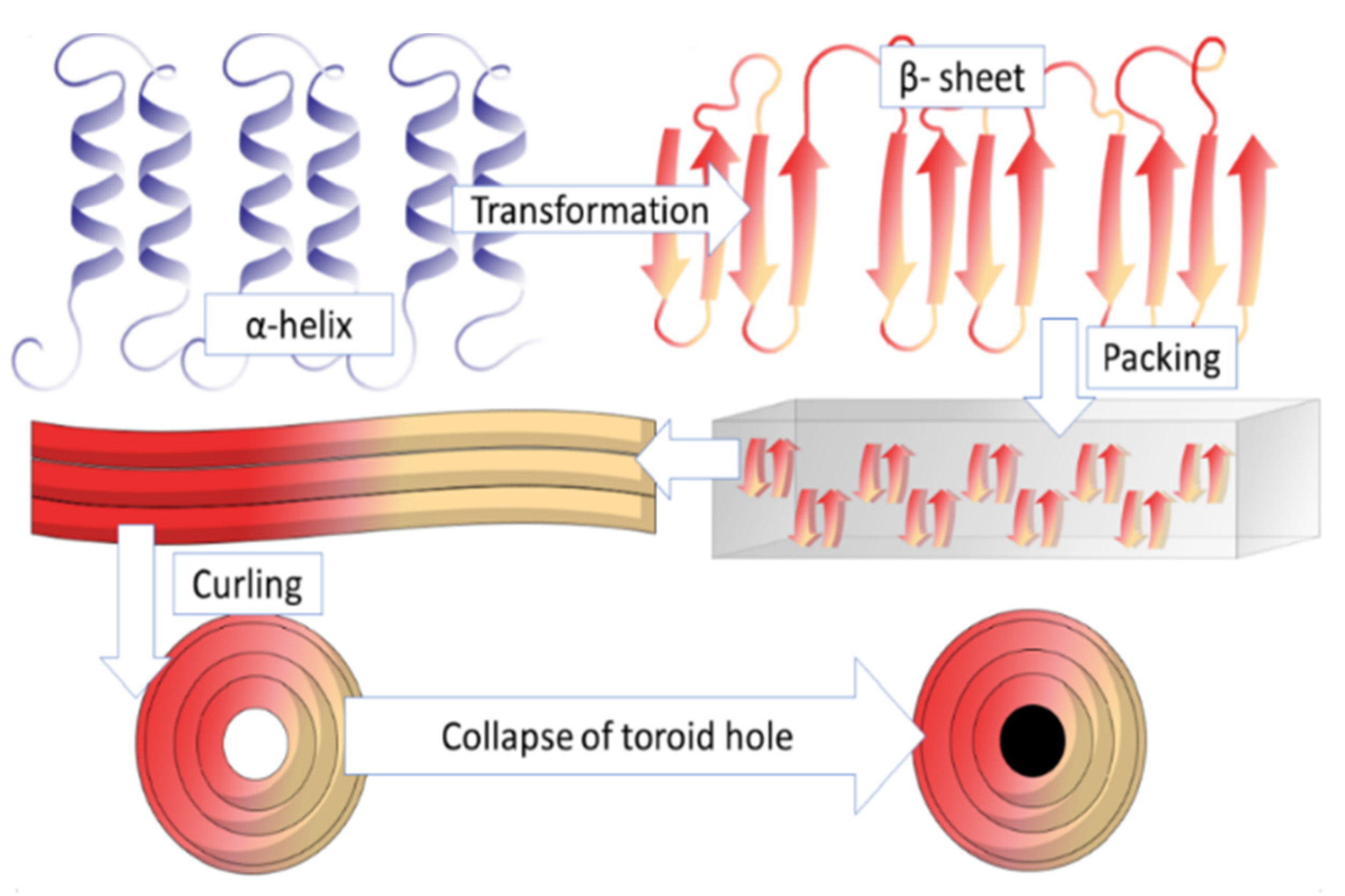
The secondary structure of kafirin has been investigated using the powerful analytical technique of Fourier transform infrared spectroscopy (FTIR) from which it has been elucidated that kafirin polypeptides, in general, are in their native state, highly folded with a secondary structure dominated by α-helices at 40–60% of the total kafirin secondary structure, β-sheet secondary structure at ~27%, and unordered/disordered structures (mixture of random coils) at ~24% [36]. There are only limited secondary structure studies on the individual kafirin subunits. α-kafirin subunits have been reported to contain a greater number of α-helices than other kafirin subunits, as identified using FTIR, while γ-kafirin has more random coils and β-sheet secondary structure than α-kafirin subunits [36]. The α-helical structure in kafirin contributes most highly to its hydrophobicity since the hydrophilic amino acid side chains are closely packed and buried inside the helices, whereas the hydrophobic side of aliphatic amino acids point outwards [56]. In contrast, the β-sheet secondary structure is a more unfolded open structure with hydrophilic amino acid residues present more on the outside of the structure [57].
The proportion of the different secondary structures of isolated kafirin is influence by the solvent systems used for its extraction. For example, dissolution in 60% tert-butanol (aq) gave 58% α-helix, whilst 65% isopropanol (aq) gave 53% α-helix and 85% ethanol (aq) showed 68% α-helix [41]. In-depth understanding of the conformational changes with processing conditions and solvent system, therefore, can help to assist in the development of newer methodologies, to optimise functional properties related to the secondary structure of kafirin. More studies are needed in the near future to investigate the secondary structure of each subunit of the kafirin.

4.3. Tertiary Structure of Kafirin Protein

The current understanding of kafirin tertiary structure behaviour is primarily interpolated from data on zein, so direct data from kafirin is clearly lacking in the literature. A summary of zein tertiary structure is, therefore, given here. Based on the circular dichroism study, the model of the α-zein tertiary structure has been proposed as “a group of nine antiparallel α-helices arranged in a cylinder wherein hydrophilic amino acids are on the surface and hydrophobic amino acids are hidden inside” [57]. They proposed that α-helices were highly clustered to form a distorted cylinder in which hydrogen bonds facilitate packing. Based on the small angle X-ray scattering (SAXS) modelling results, combined with some assumptions from the previous literature, we proposed an elongated prism-shaped tertiary structure model, 13 (L) × 1.2 (W) × 3 (D) nm, for zein with 9–10 helical segments aligned in an antiparallel fashion [58]. The assumptions made from the previous literature and added to this proposed model include the follow: each tandem repeat unit (sequence of amino acids) forms a single α-helix and they are joined by glutamine-rich turns or loops; in solution, the secondary structure of zein has 50% α-helix and tandem repeat units favour α-helix [57,59,60].
In terms of tertiary structure, both zein and kafirin are rich in repetitive sequences of amino acids, which contribute to their unique properties. The tertiary structure of kafirin is not as extensively studied as zein, but it is generally believed to consist of a compact structure stabilised by disulfide bonding [36]. The only model proposed for the tertiary structure of purified kafirin is an elongated conformation with dimensions of 11.8 (L) × 1.5 (W) × 1.5 (D) nm and 10 (L) × 1.1 (W) × 1.1 (D) nm in 60% tert-butanol (aq) and 65% isopropanol (aq), respectively [41]. Studies have reported that, on increasing the concentration of kafirin in the solvent, a concentration-dependent aggregation of kafirin occurs as indicated by an overall increase in the radius of gyration with a decrease in the cross-section radius of gyration measured using small angle X-ray scattering (SAXS).
Kafirin from DDGS, which has been exposed to heat treatment during fermentation and drying, has a larger radius of gyration compared to that of kafirin from the raw grain [31]. This indicates the difference in the tertiary structure between the two kafirins, which might be a result of partial unfolding brought about by the exposure to high heat in the case of DDGS kafirin.
Although, the precise quaternary structure of kafirin has not been extensively studies, the formation of disulfide bonds between cysteine residues present in the protein sequence of kafirin is among the most studied cross-linking in kafirin. When two cysteine residues from different kafirin subunits come into close proximity they undergo oxidation to form a disulfide bond, covalently linking the two subunits together [14,36,50]. This process contributes to the stabilisation of overall structure of kafirin including its quaternary structure. Furthermore, the kafirin molecules can assemble through various interactions including hydrophobic interactions and other non-covalent interactions such as capillary and hydrogen bonding and van der Waals interactions.

6. Conclusions

Kafirin is a major protein component in sorghum grain and in sorghum bioethanol production waste. Kafirin is a unique and complex protein. It is usually extracted using aqueous alcohol mixtures or acetic acid methodology. Current knowledge of kafirin at the molecular level is that it contains three subtypes α-, β-, and γ kafirin. Among these subunits, α-kafirin is the most dominant, made of α-helices, β-sheets, and some random coils. Furthermore, kafirin assembles into the spherical particles following evaporation-induced self-assembly, which serves as a driving force to extensively study kafirin for potential development of biomaterials. Kafirin protein has shown excellent physicochemical properties that are required for biomaterials including an evaporation-induced self-assembling capacity, high hydrophobicity, low digestibility, and water insolubility. There are still some challenges associated with the development of kafirin-based biomaterials including (a) scalability issues of extraction and purification processes and (b) limited understanding of the structure–functionality relationship of kafirin need for optimal for biomaterial preparation. To overcome these challenges, researchers could utilise more advanced extraction technology and fully optimise the process using engineering approaches such as Design of Experiment using Response Surface Methodology. Additionally, advanced purification techniques such as chromatography could be utilised to enhance the purity and yield of kafirin and purifying individual subunits, which should have consistent and predictable functionality. An in-depth understanding of extraction methodologies and their impact on physicochemical properties of kafirin can provide newer strategies to develop kafirin-based biomaterials with tailored functionalities.

Author Contributions

U.S.: Writing original draft, editing, and reviewing; R.B.: final writing, reviewing, and proofreading; H.A.-S.: final writing and reviewing; C.B.: writing and reviewing; and S.K.J.: supervision, writing, and reviewing. All authors have read and agreed to the published version of the manuscript.

Funding

The author, Umar Shah, acknowledges Curtin University for scholarship and operating funds, and Graham Centre for Agricultural Innovation, Charles Sturt University for top-up scholarship and operating funds.

Data Availability Statement

No new data were created or analyzed in this study. Data sharing is not applicable to this article.

Acknowledgments

We thank Mark Hackett of Curtin University for his advice on some of the analytical chemistry aspects of this review.

Conflicts of Interest

The authors declare no conflicts of interest.

References

  1. Foster, W.; Miyazawa, K.; Fukuma, T.; Kusumaatmaja, H.; Voϊtchovsky, K. Self-assembly of small molecules at hydrophobic interfaces using group effect. Nanoscale 2020, 12, 5452–5463. [Google Scholar] [CrossRef] [PubMed]
  2. Cetinkaya, T.; Mendes, A.C.; Jacobsen, C.; Ceylan, Z.; Chronakis, I.S.; Bean, S.R.; García-Moreno, P.J. Development of kafirin-based nanocapsules by electrospraying for encapsulation of fish oil. LWT 2021, 136, 110297. [Google Scholar] [CrossRef]
  3. Nocito, G.; Sciuto, E.L.; Franco, D.; Nastasi, F.; Pulvirenti, L.; Petralia, S.; Spinella, C.; Calabrese, G.; Guglielmino, S.; Conoci, S. Physicochemical Characterization and Antibacterial Properties of Carbon Dots from Two Mediterranean Olive Solid Waste Cultivars. Nanomaterials 2022, 12, 885. [Google Scholar] [CrossRef] [PubMed]
  4. Iannazzo, D.; Celesti, C.; Espro, C.; Ferlazzo, A.; Giofrè, S.V.; Scuderi, M.; Scalese, S.; Gabriele, B.; Mancuso, R.; Ziccarelli, I.; et al. Orange-Peel-Derived Nanobiochar for Targeted Cancer Therapy. Pharmaceutics 2022, 14, 2249. [Google Scholar] [CrossRef] [PubMed]
  5. Anyango, J. Improving the functionality of kafirin microparticles. South Afr. Food Sci. Technol. 2013, 44–45. [Google Scholar]
  6. Song, J.; Sun, C.; Gul, K.; Mata, A.; Fang, Y. Prolamin-based complexes: Structure design and food-related applications. Compr. Rev. Food Sci. Food Saf. 2021, 20, 1120–1149. [Google Scholar] [CrossRef] [PubMed]
  7. Taylor, J.; Anyango, J.O.; Potgieter, M.; Kallmeyer, K.; Naidoo, V.; Pepper, M.S.; Taylor, J.R. Biocompatibility and biodegradation of protein microparticle and film scaffolds made from kafirin (sorghum prolamin protein) subcutaneously implanted in rodent models. J. Biomed. Mater. Res. A 2015, 103, 2582–2590. [Google Scholar] [CrossRef] [PubMed]
  8. Lau, E.T.L.; Johnson, S.K.; Stanley, R.A.; Mereddy, R.; Mikkelsen, D.; Halley, P.J.; Steadman, K.J. Formulation and Characterization of Drug-Loaded Microparticles Using Distillers Dried Grain Kafirin. Cereal Chem. 2015, 92, 246–252. [Google Scholar] [CrossRef]
  9. Taylor, J.; Taylor, J.; Dutton, M.; Kock, S. Glacial Acetic Acid—A Novel Food-Compatible Solvent for Kafirin Extraction. Cereal Chem. 2005, 82, 485–487. [Google Scholar] [CrossRef]
  10. Kumar, P.; Lau, P.W.; Kale, S.; Johnson, S.; Pareek, V.; Utikar, R.; Lali, A. Kafirin adsorption on ion-exchange resins: Isotherm and kinetic studies. J. Chromatogr. A 2014, 1356, 105–116. [Google Scholar] [CrossRef]
  11. FAO. FAO Statistical Yearbook 2023—World Food and Agriculture; FAO: Rome, Italy, 2023. [Google Scholar]
  12. Stefoska-Needham, A.; Beck, E.J.; Johnson, S.K.; Tapsell, L.C. Sorghum: An Underutilized Cereal Whole Grain with the Potential to Assist in the Prevention of Chronic Disease. Food Rev. Int. 2015, 31, 401–437. [Google Scholar] [CrossRef]
  13. Tanwar, R.; Panghal, A.; Chaudhary, G.; Kumari, A.; Chhikara, N. Nutritional, phytochemical and functional potential of sorghum: A review. Food Chem. Adv. 2023, 3, 100501. [Google Scholar] [CrossRef]
  14. Taylor, J.; Taylor, J.R.N. Making Kafirin, the Sorghum Prolamin, into a Viable Alternative Protein Source. J. Am. Oil Chem. Soc. 2018, 95, 969–990. [Google Scholar] [CrossRef]
  15. Xiao, J.; Chen, Y.; Huang, Q. Physicochemical properties of kafirin protein and its applications as building blocks of functional delivery systems. Food Funct. 2017, 8, 1402–1413. [Google Scholar] [CrossRef]
  16. Abdelbost, L.; Morel, M.-H.; Nascimento, T.P.D.; Cameron, L.-C.; Bonicel, J.; Larraz, M.F.S.; Mameri, H. Sorghum grain germination as a route to improve kafirin digestibility: Biochemical and label free proteomics insights. Food Chem. 2023, 424, 136407. [Google Scholar] [CrossRef]
  17. Shull, J.M.; Watterson, J.J.; Kirleis, A.W. Proposed nomenclature for the alcohol-soluble proteins (kafirins) of Sorghum bicolor (L. Moench) based on molecular weight, solubility, and structure. J. Agric. Food Chem. 1991, 39, 83–87. [Google Scholar] [CrossRef]
  18. Duodu, K.G.; Taylor, J.R.N.; Belton, P.S.; Hamaker, B.R. Factors affecting sorghum protein digestibility. J. Cereal Sci. 2003, 38, 117–131. [Google Scholar] [CrossRef]
  19. Benmoussa, M.; Chandrashekar, A.; Ejeta, G.; Hamaker, B.R. Cellular Response to the high protein digestibility/high-Lysine (hdhl) sorghum mutation. Plant Sci. 2015, 241, 70–77. [Google Scholar] [CrossRef]
  20. Johns, C.O.; Brewster, J.F. Kafirin, an Alcohol-Soluble Protein from Kafir, Andropogon Sorghum. J. Biol. Chem. 1916, 28, 59–65. [Google Scholar] [CrossRef]
  21. De Mesa-Stonestreet, N.J.; Alavi, S.; Bean, S.R. Sorghum Proteins: The Concentration, Isolation, Modification, and Food Applications of Kafirins. J. Food Sci. 2010, 75, R90–R104. [Google Scholar] [CrossRef] [PubMed]
  22. Lawton, J. Zein: A History of Processing and Use. Cereal Chem. 2002, 79, 1–18. [Google Scholar] [CrossRef]
  23. van der Walt, W.H.; Schussler, L.; Van der Walt, W.H. Fractionation of proteins from low-tannin sorghum grain. J. Agric. Food Chem. 1984, 32, 149–154. [Google Scholar] [CrossRef]
  24. Ioerger, B.; Bean, S.R.; Tuinstra, M.R.; Pedersen, J.F.; Erpelding, J.; Lee, K.M.; Herrman, T.J. Characterization of Polymeric Proteins from Vitreous and Floury Sorghum Endosperm. J. Agric. Food Chem. 2007, 55, 10232–10239. [Google Scholar] [CrossRef]
  25. Wong, J.H.; Lau, T.; Cai, N.; Singh, J.; Pedersen, J.F.; Vensel, W.H.; Hurkman, W.J.; Wilson, J.D.; Lemaux, P.G.; Buchanan, B.B. Digestibility of protein and starch from sorghum (Sorghum bicolor) is linked to biochemical and structural features of grain endosperm. J. Cereal Sci. 2009, 49, 73–82. [Google Scholar] [CrossRef]
  26. Xiao, J.; Li, Y.; Li, J.; Perez Gonzalez, A.; Xia, Q.; Huang, Q. Structure, Morphology, and Assembly Behavior of Kafirin. J. Agric. Food Chem. 2015, 63, 216–224. [Google Scholar] [CrossRef]
  27. Shah, U.; Dwivedi, D.; Hackett, M.; Al-Salami, H.; Utikar, R.P.; Blanchard, C.; Gani, A.; Rowles, M.R.; Johnson, S.K. Physicochemical characterisation of kafirins extracted from sorghum grain and dried distillers grain with solubles related to their biomaterial functionality. Sci. Rep. 2021, 11, 15204. [Google Scholar] [CrossRef]
  28. Shukla, R.; Cheryan, M. Zein: The industrial protein from corn. Ind. Crops Prod. 2001, 13, 171–192. [Google Scholar] [CrossRef]
  29. Wang, Y.; Tilley, M.; Bean, S.; Sun, S.; Wang, D. Comparison of Methods for Extracting Kafirin Proteins from Sorghum Distillers Dried Grains with Solubles. J. Agric. Food Chem. 2009, 57, 8366–8372. [Google Scholar] [CrossRef]
  30. Evans, C.D.; Manley, R.H. Ternary Solvents for Zein. Ind. Eng. Chem. 1944, 36, 408–410. [Google Scholar] [CrossRef]
  31. Hamaker, B.R.; Mohamed, A.A.; Habben, J.E.; Huang, C.P.; Larkins, B.A. Efficient procedure for extracting maize and sorghum kernel proteins reveals higher prolamin contents than the conventional method. Cereal Chem. 1995, 72, 583–588. [Google Scholar]
  32. Park, S.H.; Bean, S.R. Investigation and optimization of the factors influencing sorghum protein extraction. J. Agric. Food Chem. 2003, 51, 7050–7054. [Google Scholar] [CrossRef] [PubMed]
  33. Su, J.; Cavaco-Paulo, A. Effect of ultrasound on protein functionality. Ultrason. Sonochemistry 2021, 76, 105653. [Google Scholar] [CrossRef] [PubMed]
  34. Zhao, R.; Bean, S.R.; Ioerger, B.P.; Wang, D.; Boyle, D.L. Impact of Mashing on Sorghum Proteins and Its Relationship to Ethanol Fermentation. J. Agric. Food Chem. 2008, 56, 946–953. [Google Scholar] [CrossRef] [PubMed]
  35. Sullivan, A.C.; Pangloli, P.; Dia, V.P. Impact of ultrasonication on the physicochemical properties of sorghum kafirin and in vitro pepsin-pancreatin digestibility of sorghum gluten-like flour. Food Chem. 2018, 240, 1121–1130. [Google Scholar] [CrossRef] [PubMed]
  36. Emmambux, N.M.; Taylor, J.R.N. Sorghum kafirin interaction with various phenolic compounds. J. Sci. Food Agric. 2003, 83, 402–407. [Google Scholar] [CrossRef]
  37. Belton, P.S.; Delgadillo, I.; Halford, N.G.; Shewry, P.R. Kafirin structure and functionality. J. Cereal Sci. 2006, 44, 272–286. [Google Scholar] [CrossRef]
  38. Wu, Y.; Yuan, L.; Guo, X.; Holding, D.R.; Messing, J. Mutation in the seed storage protein kafirin creates a high-value food trait in sorghum. Nat. Commun. 2013, 4, 2217. [Google Scholar] [CrossRef] [PubMed]
  39. Dianda, N.; Rouf, T.B.; Bonilla, J.C.; Hedrick, V.; Kokini, J. Effect of solvent polarity on the secondary structure, surface and mechanical properties of biodegradable kafirin films. J. Cereal Sci. 2019, 90, 102856. [Google Scholar] [CrossRef]
  40. Argos, P.; Pedersen, K.; Marks, M.D.; Larkins, B.A. A structural model for maize zein proteins. J Biol Chem 1982, 257, 9984–9990. [Google Scholar] [CrossRef]
  41. Matsushima, N.; Danno, G.-i.; Takezawa, H.; Izumi, Y. Three-dimensional structure of maize α-zein proteins studied by small-angle X-ray scattering. Biochim. Et Biophys. Acta (BBA)-Protein Struct. Mol. Enzymol. 1997, 1339, 14–22. [Google Scholar] [CrossRef]
  42. Garratt, R.; Oliva, G.; Caracelli, I.; Leite, A.; Arruda, P. Studies of the zein-like α-prolamins based on an analysis of amino acid sequences: Implications for their evolution and three-dimensional structure. Proteins: Struct. Funct. Bioinform. 1993, 15, 88–99. [Google Scholar] [CrossRef] [PubMed]
  43. Tatham, A.; Field, J.; Morris, V.; I’Anson, K.; Cardle, L.; Dufton, M.; Shewry, P. Solution conformational analysis of the alpha-zein proteins of maize. J. Biol. Chem. 1993, 268, 26253–26259. [Google Scholar] [CrossRef] [PubMed]
  44. Law, K.-Y. Definitions for Hydrophilicity, Hydrophobicity, and Superhydrophobicity: Getting the Basics Right. J. Phys. Chem. Lett. 2014, 5, 686–688. [Google Scholar] [CrossRef] [PubMed]
  45. Sun, Q.; Fu, Y.; Wang, W. Temperature effects on hydrophobic interactions: Implications for protein unfolding. Chem. Phys. 2022, 559, 111550. [Google Scholar] [CrossRef]
  46. Shewry, P.R. Improving the protein content and composition of cereal grain. J. Cereal Sci. 2007, 46, 239–250. [Google Scholar] [CrossRef]
  47. Dong, F.; Padua, G.W.; Wang, Y. Controlled formation of hydrophobic surfaces by self-assembly of an amphiphilic natural protein from aqueous solutions. Soft Matter 2013, 9, 5933–5941. [Google Scholar] [CrossRef]
  48. Wang, Y.; Padua, G.W. Formation of Zein Microphases in Ethanol−Water. Langmuir 2010, 26, 12897–12901. [Google Scholar] [CrossRef] [PubMed]
  49. Wang, Y.; Padua, G.W. Nanoscale characterization of zein self-assembly. Langmuir 2012, 28, 2429–2435. [Google Scholar] [CrossRef] [PubMed]
  50. Wang, W.; Xiao, J.; Chen, X.; Luo, M.; Liu, H.; Shao, P. Fabrication and characterization of multilayered kafirin/gelatin film with one-way water barrier property. Food Hydrocoll. 2018, 81, 159–168. [Google Scholar] [CrossRef]
  51. Liu, G.; Feng, J.; Zhu, W.; Jiang, Y. Zein self-assembly using the built-in ultrasonic dialysis process: Microphase behavior and the effect of dialysate properties. Colloid Polym. Sci. 2018, 296, 173–181. [Google Scholar] [CrossRef]
  52. Hamaker, B.R.; Kirleis, A.W.; Mertz, E.T.; Axtell, J.D. Effect of cooking on the protein profiles and in vitro digestibility of sorghum and maize. J. Agric. Food Chem. 1986, 34, 647–649. [Google Scholar] [CrossRef]
  53. Liardon, R.; Hurrell, R.F. Amino acid racemization in heated and alkali-treated proteins. J. Agric. Food Chem. 1983, 31, 432–437. [Google Scholar] [CrossRef]
  54. Hahn, D.; Rooney, L.; Earp, C. Tannins and phenols of sorghum. Cereal Foods World 1984. [Google Scholar]
  55. Elkhalil, E.A.I.; El Tinay, A.; Mohamed, B.; Elsheikh, E.A. Effect of malt pretreatment on phytic acid and in vitro protein digestibility of sorghum flour. Food Chem. 2001, 72, 29–32. [Google Scholar] [CrossRef]
  56. Hamaker, B.R.; Kirleis, A.W.; Butler, L.G.; Axtell, J.D.; Mertz, E.T. Improving the in vitro protein digestibility of sorghum with reducing agents. Proc. Natl. Acad. Sci. USA 1987, 84, 626–628. [Google Scholar] [CrossRef] [PubMed]
  57. da Silva, L.S.; Taylor, J.; Taylor, J.R. Transgenic sorghum with altered kafirin synthesis: Kafirin solubility, polymerization, and protein digestion. J. Agric. Food Chem. 2011, 59, 9265–9270. [Google Scholar] [CrossRef] [PubMed]
  58. Grootboom, A.W.; Mkhonza, N.L.; Mbambo, Z.; O’Kennedy, M.M.; da Silva, L.S.; Taylor, J.; Taylor, J.R.; Chikwamba, R.; Mehlo, L. Co-suppression of synthesis of major α-kafirin sub-class together with γ-kafirin-1 and γ-kafirin-2 required for substantially improved protein digestibility in transgenic sorghum. Plant Cell Rep. 2014, 33, 521–537. [Google Scholar] [CrossRef] [PubMed]
  59. Abedi, E.; Pourmohammadi, K. The effect of redox agents on conformation and structure characterization of gluten protein: An extensive review. Food Sci. Nutr. 2020, 8, 6301–6319. [Google Scholar] [CrossRef]
  60. Glusac, J.; Fishman, A. Enzymatic and chemical modification of zein for food application. Trends Food Sci. Technol. 2021, 112, 507–517. [Google Scholar] [CrossRef]
  61. Yong, Y.H.; Yamaguchi, S.; Gu, Y.S.; Mori, T.; Matsumura, Y. Effects of enzymatic deamidation by protein-glutaminase on structure and functional properties of alpha-zein. J. Agric. Food Chem. 2004, 52, 7094–7100. [Google Scholar] [CrossRef]
  62. Kong, B.; Xiong, Y.L. Antioxidant activity of zein hydrolysates in a liposome system and the possible mode of action. J. Agric. Food Chem. 2006, 54, 6059–6068. [Google Scholar] [CrossRef] [PubMed]
  63. Kamani, M.H.; Semwal, J.; Mousavi Khaneghah, A. Functional modification of grain proteins by dual approaches: Current progress, challenges, and future perspectives. Colloids Surf. B Biointerfaces 2022, 211, 112306. [Google Scholar] [CrossRef] [PubMed]
  64. Huang, L.; Ding, X.; Li, Y.; Ma, H. The aggregation, structures and emulsifying properties of soybean protein isolate induced by ultrasound and acid. Food Chem. 2019, 279, 114–119. [Google Scholar] [CrossRef] [PubMed]
  65. Semwal, J.; Ms, M. In situ thermal modification of kafirin using infrared radiations and microwaves. J. Sci. Food Agric. 2022, 102, 1903–1911. [Google Scholar] [CrossRef]
  66. Xiao, J.; Shi, C.; Zheng, H.; Shi, Z.; Jiang, D.; Li, Y.; Huang, Q. Kafirin Protein Based Electrospun Fibers with Tunable Mechanical Property, Wettability, and Release Profile. J. Agric. Food Chem. 2016, 64, 3226–3233. [Google Scholar] [CrossRef]
  67. Blasco, L.; Viñas, M.; Villa, T.G. Proteins influencing foam formation in wine and beer: The role of yeast. Int. Microbiol. 2011, 14, 61–71. [Google Scholar] [CrossRef]
  68. Murray, B.S.; Ettelaie, R. Foam stability: Proteins and nanoparticles. Curr. Opin. Colloid Interface Sci. 2004, 9, 314–320. [Google Scholar] [CrossRef]
  69. Maldonado-Valderrama, J.; Martin-Molina, A.; Martin-Rodriguez, A.; Cabrerizo-Vílchez, M.; Gálvez-Ruiz, M.; Langevin, D. Surface Properties and Foam Stability of Protein/Surfactant Mixtures: Theory and Experiment. J. Phys. Chem. 2007, 111, 2715–2723. [Google Scholar] [CrossRef]
  70. Thewissen, B.G.; Celus, I.; Brijs, K.; Delcour, J.A. Foaming properties of wheat gliadin. J. Agric. Food Chem. 2011, 59, 1370–1375. [Google Scholar] [CrossRef]
  71. King, B.L.; Taylor, J.; Taylor, J.R.N. Formation of a viscoelastic dough from isolated total zein (α-, β- and γ-zein) using a glacial acetic acid treatment. J. Cereal Sci. 2016, 71, 250–257. [Google Scholar] [CrossRef]
  72. Gupta, P.; Bansal, S.; Isser, H.S.; Chakraborty, P.; Garg, R. Soy protein hydrolysate and gelling polysaccharides systems in cooked foams: A method to improve their combinations. Sci. Postprint 2014, 1. [Google Scholar] [CrossRef]
  73. Zhao, M.; Xiong, W.; Chen, B.; Zhu, J.; Wang, L. Enhancing the solubility and foam ability of rice glutelin by heat treatment at pH12: Insight into protein structure. Food Hydrocoll. 2020, 103, 105626. [Google Scholar] [CrossRef]
  74. Teklehaimanot, W.H.; Emmambux, M.N. Foaming properties of total zein, total kafirin and pre-gelatinized maize starch blends at alkaline pH. Food Hydrocoll. 2019, 97, 105221. [Google Scholar] [CrossRef]
  75. Riha, W.E.; Izzo, H.V.; Zhang, J.; Ho, C.T. Nonenzymatic deamidation of food proteins. Crit. Rev. Food Sci. Nutr. 1996, 36, 225–255. [Google Scholar] [CrossRef]
  76. Kalirajan, C.; Dukle, A.; Nathanael, A.J.; Oh, T.H.; Manivasagam, G. A Critical Review on Polymeric Biomaterials for Biomedical Applications. Polymers 2021, 13, 3015. [Google Scholar] [CrossRef]
  77. Xiao, J.; Wang, X.A.; Perez Gonzalez, A.; Huang, Q. Kafirin nanoparticles-stabilized Pickering emulsions: Microstructure and rheological behavior. Food Hydrocoll. 2016, 54, 30–39. [Google Scholar] [CrossRef]
  78. Pickering, S.U. Cxcvi.—Emulsions. J. Chem. Soc. Trans. 1907, 91, 2001–2021. [Google Scholar] [CrossRef]
  79. Dickinson, E. Use of nanoparticles and microparticles in the formation and stabilization of food emulsions. Trends Food Sci. Technol. 2012, 24, 4–12. [Google Scholar] [CrossRef]
  80. Giroux, H.J.; Constantineau, S.; Fustier, P.; Champagne, C.P.; St-Gelais, D.; Lacroix, M.; Britten, M. Cheese fortification using water-in-oil-in-water double emulsions as carrier for water soluble nutrients. Int. Dairy J. 2013, 29, 107–114. [Google Scholar] [CrossRef]
  81. Qi, X.; Wang, L.; Zhu, J.; Hu, Z.; Zhang, J. Self-double-emulsifying drug delivery system (SDEDDS): A new way for oral delivery of drugs with high solubility and low permeability. Int. J. Pharm. 2011, 409, 245–251. [Google Scholar] [CrossRef]
  82. Xiao, J.; Lu, X.; Huang, Q. Double emulsion derived from kafirin nanoparticles stabilized Pickering emulsion: Fabrication, microstructure, stability and in vitro digestion profile. Food Hydrocoll. 2017, 62, 230–238. [Google Scholar] [CrossRef]
  83. Zhong, Q.; Jin, M. Zein nanoparticles produced by liquid–liquid dispersion. Food Hydrocoll. 2009, 23, 2380–2387. [Google Scholar] [CrossRef]
  84. Pascoli, M.; de Lima, R.; Fraceto, L.F. Zein Nanoparticles and Strategies to Improve Colloidal Stability: A Mini-Review. Front. Chem. 2018, 6, 1–5. [Google Scholar] [CrossRef]
  85. Kumar, T.; Dweikat, I.; Sato, S.; Ge, Z.; Nersesian, N.; Chen, H.; Elthon, T.; Bean, S.; Ioerger, B.P.; Tilley, M.; et al. Modulation of kernel storage proteins in grain sorghum (Sorghum bicolor (L.) Moench). Plant Biotechnol. J. 2012, 10, 533–544. [Google Scholar] [CrossRef]
  86. Chen, H.; Zhong, Q. Processes improving the dispersibility of spray-dried zein nanoparticles using sodium caseinate. Food Hydrocoll. 2014, 35, 358–366. [Google Scholar] [CrossRef]
  87. Yao, K.; Chen, W.; Song, F.; McClements, D.J.; Hu, K. Tailoring zein nanoparticle functionality using biopolymer coatings: Impact on curcumin bioaccessibility and antioxidant capacity under simulated gastrointestinal conditions. Food Hydrocoll. 2018, 79, 262–272. [Google Scholar] [CrossRef]
  88. Patel, A.R.; Bouwens, E.C.; Velikov, K.P. Sodium caseinate stabilized zein colloidal particles. J Agric Food Chem 2010, 58, 12497–12503. [Google Scholar] [CrossRef] [PubMed]
  89. Huang, X.; Huang, X.; Gong, Y.; Xiao, H.; McClements, D.J.; Hu, K. Enhancement of curcumin water dispersibility and antioxidant activity using core–shell protein–polysaccharide nanoparticles. Food Res. Int. 2016, 87, 1–9. [Google Scholar] [CrossRef]
  90. Chen, Y.; Ye, R.; Liu, J. Understanding of dispersion and aggregation of suspensions of zein nanoparticles in aqueous alcohol solutions after thermal treatment. Ind. Crops Prod. 2013, 50, 764–770. [Google Scholar] [CrossRef]
  91. Huang, D.; Zhang, Z.; Ma, Z.; Quan, Q.; Ding, J. A facile strategy for the modification of chitosan/gliadin composites by tannic acid. Mater. Lett. 2019, 240, 209–212. [Google Scholar] [CrossRef]
  92. Ching, S.H.; Bhandari, B.; Webb, R.; Bansal, N. Visualizing the interaction between sodium caseinate and calcium alginate microgel particles. Food Hydrocoll. 2015, 43, 165–171. [Google Scholar] [CrossRef]
  93. Chang, C.; Wang, T.; Hu, Q.; Zhou, M.; Xue, J.; Luo, Y. Pectin coating improves physicochemical properties of caseinate/zein nanoparticles as oral delivery vehicles for curcumin. Food Hydrocoll. 2017, 70, 143–151. [Google Scholar] [CrossRef]
  94. Chen, H.; Zhong, Q. A novel method of preparing stable zein nanoparticle dispersions for encapsulation of peppermint oil. Food Hydrocoll. 2015, 43, 593–602. [Google Scholar] [CrossRef]
  95. Philipp, B.; Dautzenberg, H.; Linow, K.-J.; Kötz, J.; Dawydoff, W. Polyelectrolyte complexes—Recent developments and open problems. Prog. Polym. Sci. 1989, 14, 91–172. [Google Scholar] [CrossRef]
  96. Zhang, X.; Hu, B.; Zhao, Y.; Yang, Y.; Gao, Z.; Nishinari, K.; Yang, J.; Zhang, Y.; Fang, Y. Electrostatic Interaction-Based Fabrication of Calcium Alginate–Zein Core–Shell Microcapsules of Regulable Shapes and Sizes. Langmuir 2021, 37, 10424–10432. [Google Scholar] [CrossRef]
  97. Gali, L.; Bedjou, F.; Ferrari, G.; Donsì, F. Formulation and characterization of zein/gum arabic nanoparticles for the encapsulation of a rutin-rich extract from Ruta chalepensis L. Food Chem. 2022, 367, 129982. [Google Scholar] [CrossRef]
  98. Mejia, C.D.; Gonzalez, D.C.; Mauer, L.J.; Campanella, O.H.; Hamaker, B.R. Increasing and Stabilizing β-Sheet Structure of Maize Zein Causes Improvement in Its Rheological Properties. J. Agric. Food Chem. 2012, 60, 2316–2321. [Google Scholar] [CrossRef]
  99. Tanner, G.; Juhász, A.; Florides, C.G.; Nye-Wood, M.; Békés, F.; Colgrave, M.L.; Russell, A.K.; Hardy, M.Y.; Tye-Din, J.A. Preparation and Characterization of Avenin-Enriched Oat Protein by Chill Precipitation for Feeding Trials in Celiac Disease. Front. Nutr. 2019, 6, 162. [Google Scholar] [CrossRef]
  100. Amagliani, L.; O’Regan, J.; Kelly, A.L.; O’Mahony, J.A. Composition and protein profile analysis of rice protein ingredients. J. Food Compos. Anal. 2017, 59, 18–26. [Google Scholar] [CrossRef]
  101. Redant, L.; Buggenhout, J.; Brijs, K.; Delcour, J.A. Extractability and chromatographic separation of rye (Secale cereale L.) flour proteins. J. Cereal Sci. 2017, 73, 68–75. [Google Scholar] [CrossRef]
  102. Yu, W.; Tan, X.; Zou, W.; Hu, Z.; Fox, G.; Gidley, M. Relationships between protein content, starch molecular structure and grain size in barley. Carbohydr. Polym. 2016, 155, 271–279. [Google Scholar] [CrossRef] [PubMed]
  103. Jones, R.W.; Beckwith, A.C. Proximate composition and proteins of three grain sorghum hybrids and their dry-mill fractions. J. Agric. Food Chem. 1970, 18, 33–36. [Google Scholar] [CrossRef]
  104. Shull, J.M.; Watterson, J.J.; Kirleis, A.W. Purification and immunocytochemical localization of kafirins in Sorghum bicolor (L. Moench) endosperm. Protoplasma 1992, 171, 64–74. [Google Scholar] [CrossRef]
  105. Dey, T. Fennema’s Food Chemistry, 4th ed.; Damodaran, S., Parkin, K.L., Fennema, O.R., Eds.; CRC Press: Boca Raton, FL, USA, 2007. [Google Scholar] [CrossRef]
  106. El Nour, I.N.A.; Peruffo, A.D.; Curioni, A. Characterisation of Sorghum Kafirins in Relation to their Cross-linking Behaviour. J. Cereal Sci. 1998, 28, 197–207. [Google Scholar] [CrossRef]
  107. Chamba, E.B.; Halford, N.G.; Forsyth, J.; Wilkinson, M.; Shewry, P.R. Molecular cloning of β-kafirin, a methionine-rich protein of sorghum grain. J. Cereal Sci. 2005, 41, 381–383. [Google Scholar] [CrossRef]
  108. de Barros, E.G.; Takasaki, K.; Kirleis, A.W.; Larkins, B.A. Nucleotide Sequence of a cDNA Clone Encoding γ-Kafirin Protein from Sorghum bicolor. Plant Physiol. 1991, 97, 1606–1607. [Google Scholar] [CrossRef][Green Version]
  109. Song, R.; Segal, G.; Messing, J. Expression of the sorghum 10-member kafirin gene cluster in maize endosperm. Nucleic Acids Res. 2004, 32, e189. [Google Scholar] [CrossRef]
  110. Carter, R.; Reck, D.R. Low Temperature Solvent Extraction Process for Producing High Purity Zein. U.S. Patent 3,535,305, 20 October 1970. [Google Scholar]
  111. Giteru, S.G.; Oey, I.; Ali, M.A.; Johnson, S.K.; Fang, Z. Effect of kafirin-based films incorporating citral and quercetin on storage of fresh chicken fillets. Food Control 2017, 80, 37–44. [Google Scholar] [CrossRef]
  112. Muhiwa, P.; Taylor, J.; Taylor, J. Extraction and Film Properties of Kafirin from Coarse Sorghum and Sorghum DDGS by Percolation. Cereal Chem. J. 2017, 94, 693–698. [Google Scholar] [CrossRef]
Disclaimer/Publisher’s Note: The statements, opinions and data contained in all publications are solely those of the individual author(s) and contributor(s) and not of MDPI and/or the editor(s). MDPI and/or the editor(s) disclaim responsibility for any injury to people or property resulting from any ideas, methods, instructions or products referred to in the content.

Article Metrics

Citations

Article Access Statistics

Multiple requests from the same IP address are counted as one view.