


Engineered Cross-Linked Silane with Urea Polymer Thin Durable Coatings onto Polymeric Films for Controlled Antiviral Release of Activated Chlorine and Essential Oils

Abstract
1. Introduction
2. Experimental
2.1. Materials
2.2. Methodology
2.2.1. Preparation of SiO2-Urea and SiO2-Urea-Thymol Coatings on PC Film
2.2.2. Rod-Coating Technique
2.2.3. SiO2-Urea-Cl Coating on PC Film
Chlorination of the SiO2-Urea Coating
Active Chlorine Determination
2.2.4. Characterization of the Coatings
Atomic Force Microscope
Fourier Transform Infrared Spectroscopy
Contact Angles
X-ray Photoelectron Spectroscopy
2.2.5. Release Rates at Different Temperatures of Activated Cl from PC/SiO2-Urea-Cl Films
2.2.6. Determination of Thymol Content in PC/SiO2-Urea Thymol-Containing Films
2.2.7. Release Rates of Thymol from PC/SiO2-Urea-Thymol and PC/SiO2-Urea-Cl-Thymol Films
2.2.8. Durability of SiO2-Urea Coating on PC Film
2.2.9. Bacteriophage Assay
2.2.10. CCV Assay
3. Results and Discussion
3.1. Characterization of the Coatings
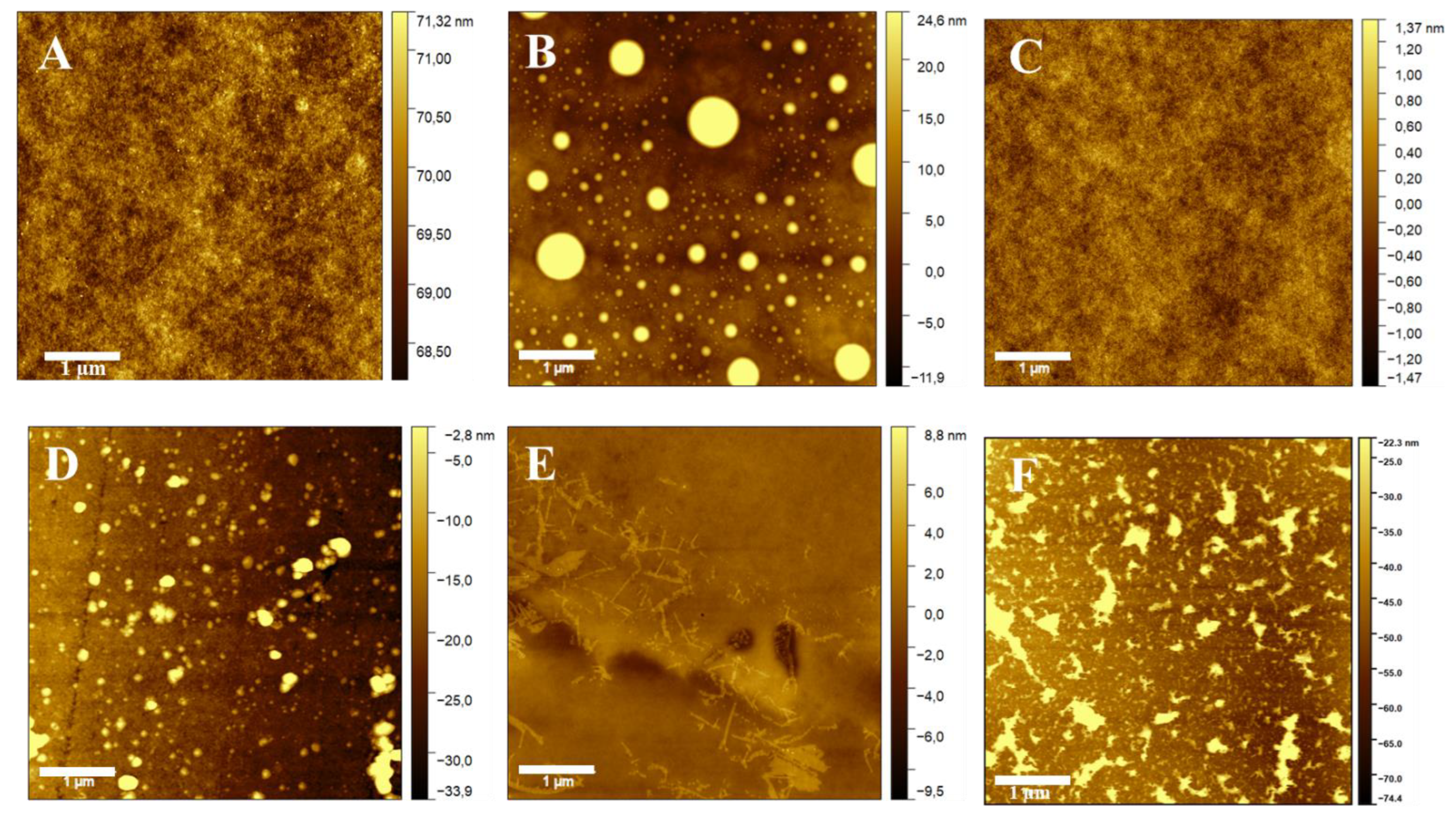
3.1.1. Atomic Force Microscopy (AFM)
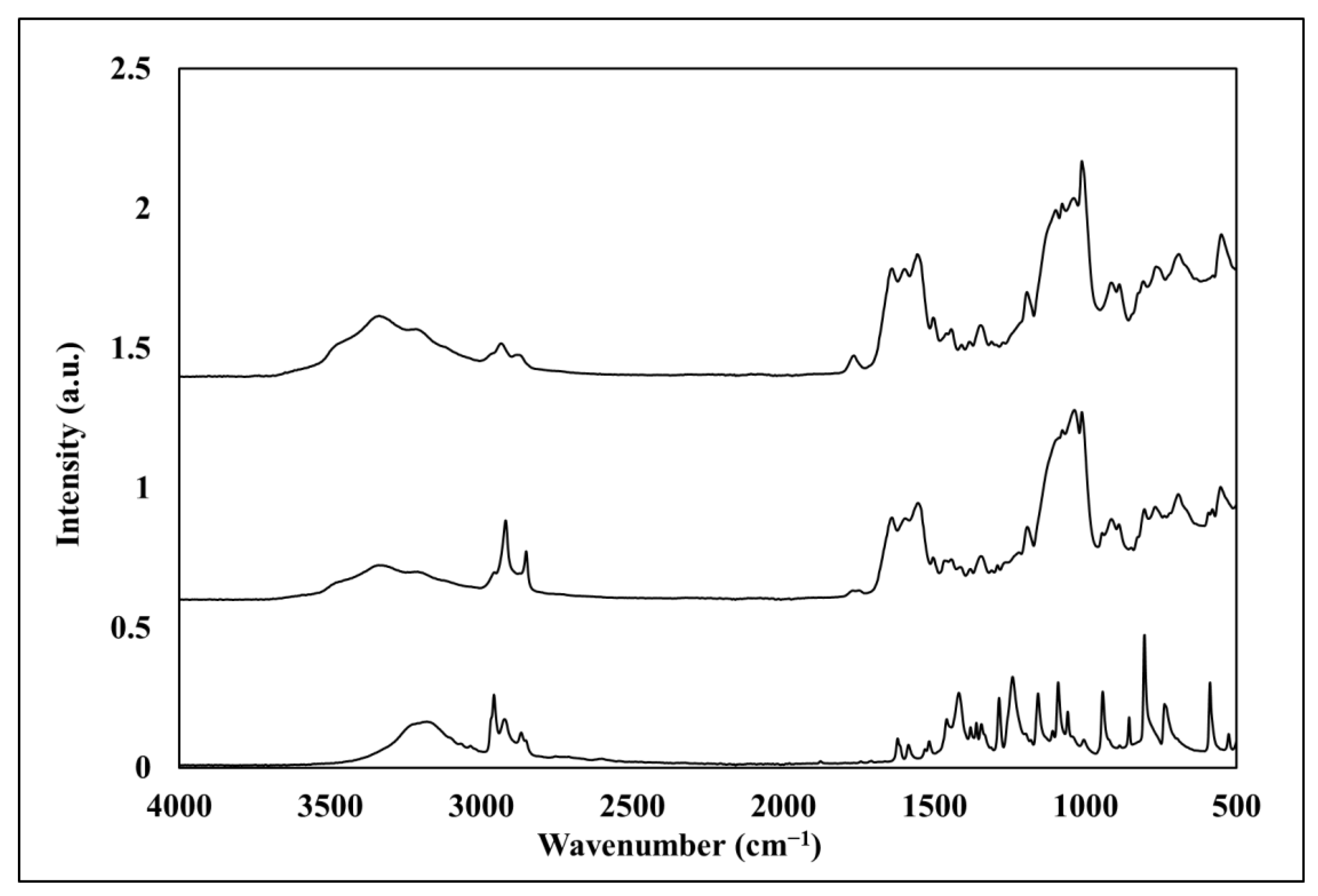
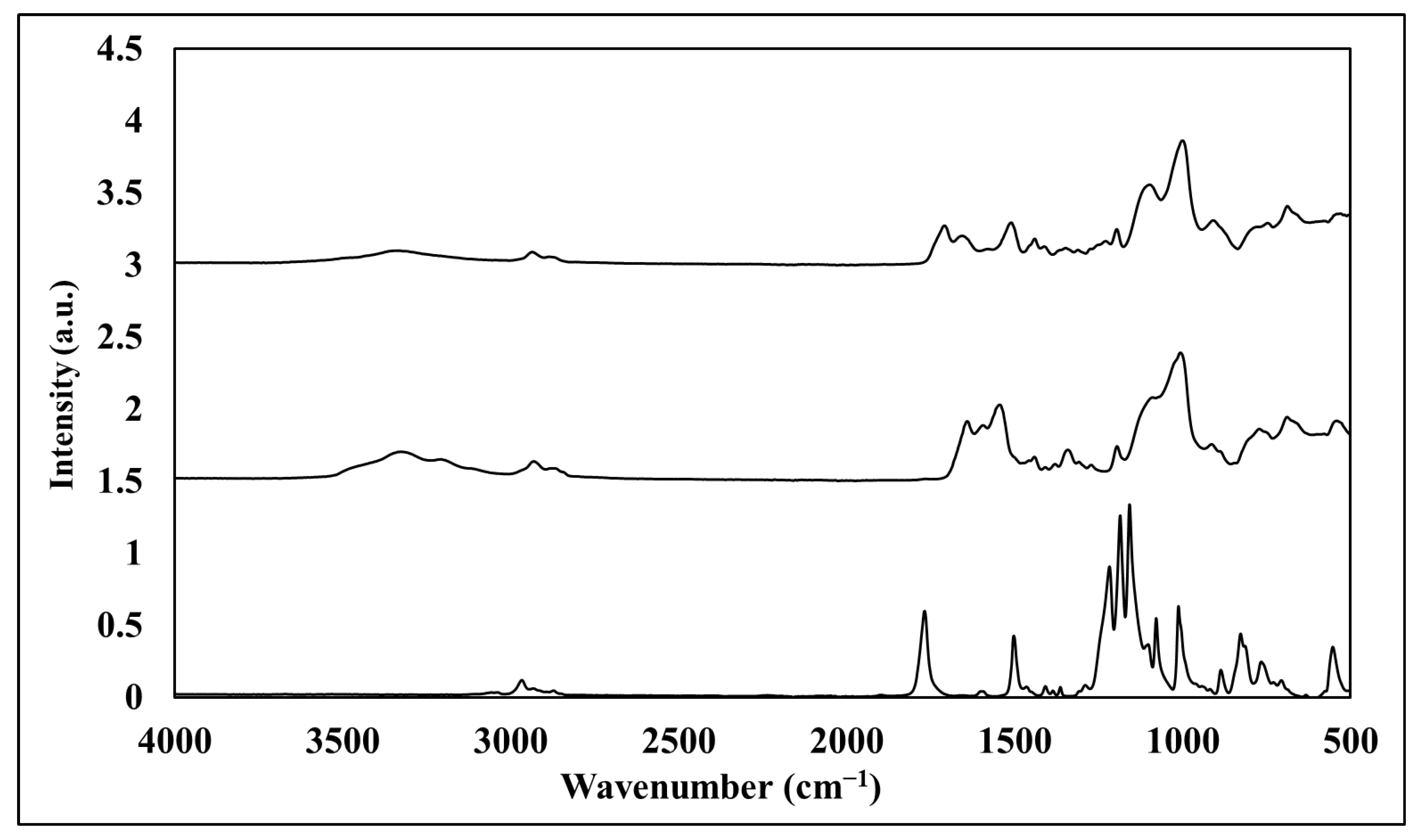
3.1.2. Fourier Transform IR/Attenuated Total Reflection
3.1.3. Contact Angle (CA)
3.2. Determination of Cl Content in PC/SiO2-Urea-Cl Film
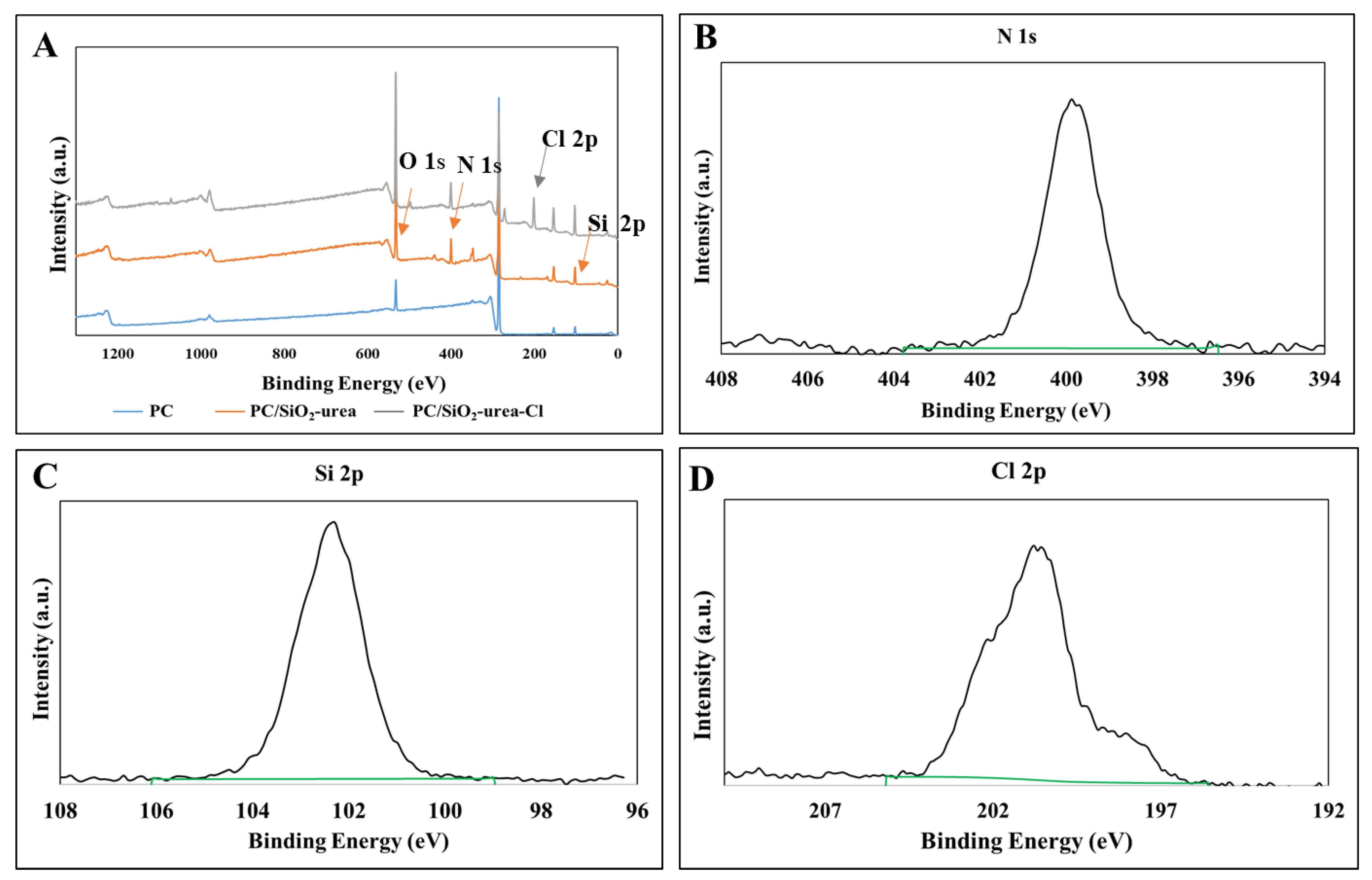
3.2.1. X-ray Photoelectron Spectroscopy
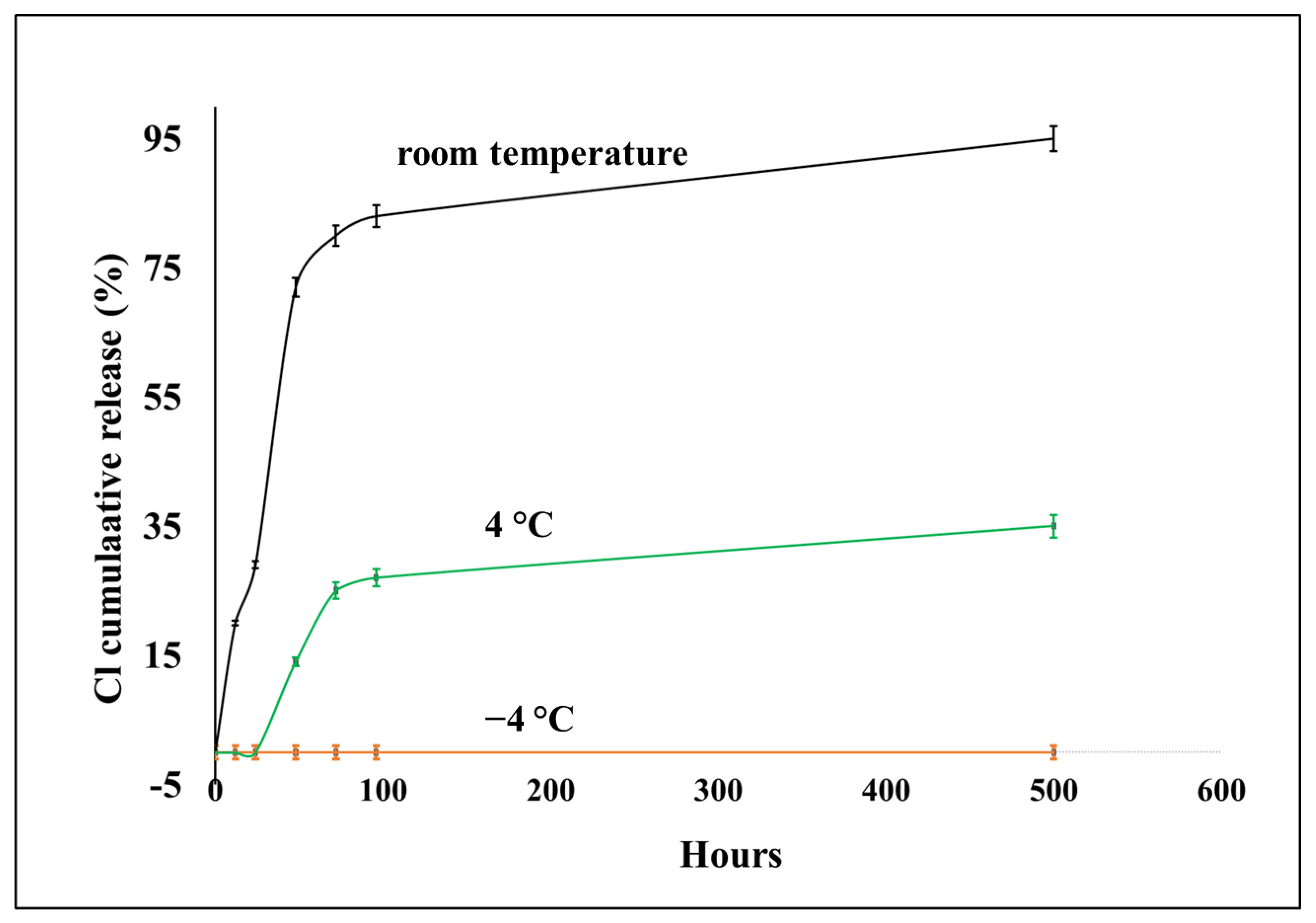
3.2.2. Release Rates of Chlorine from PC/SiO2-Urea-Cl and PC/SiO2-Urea-Cl-Thymol Films
3.3. Determination of Thymol Content in PC/SiO2-Urea Films
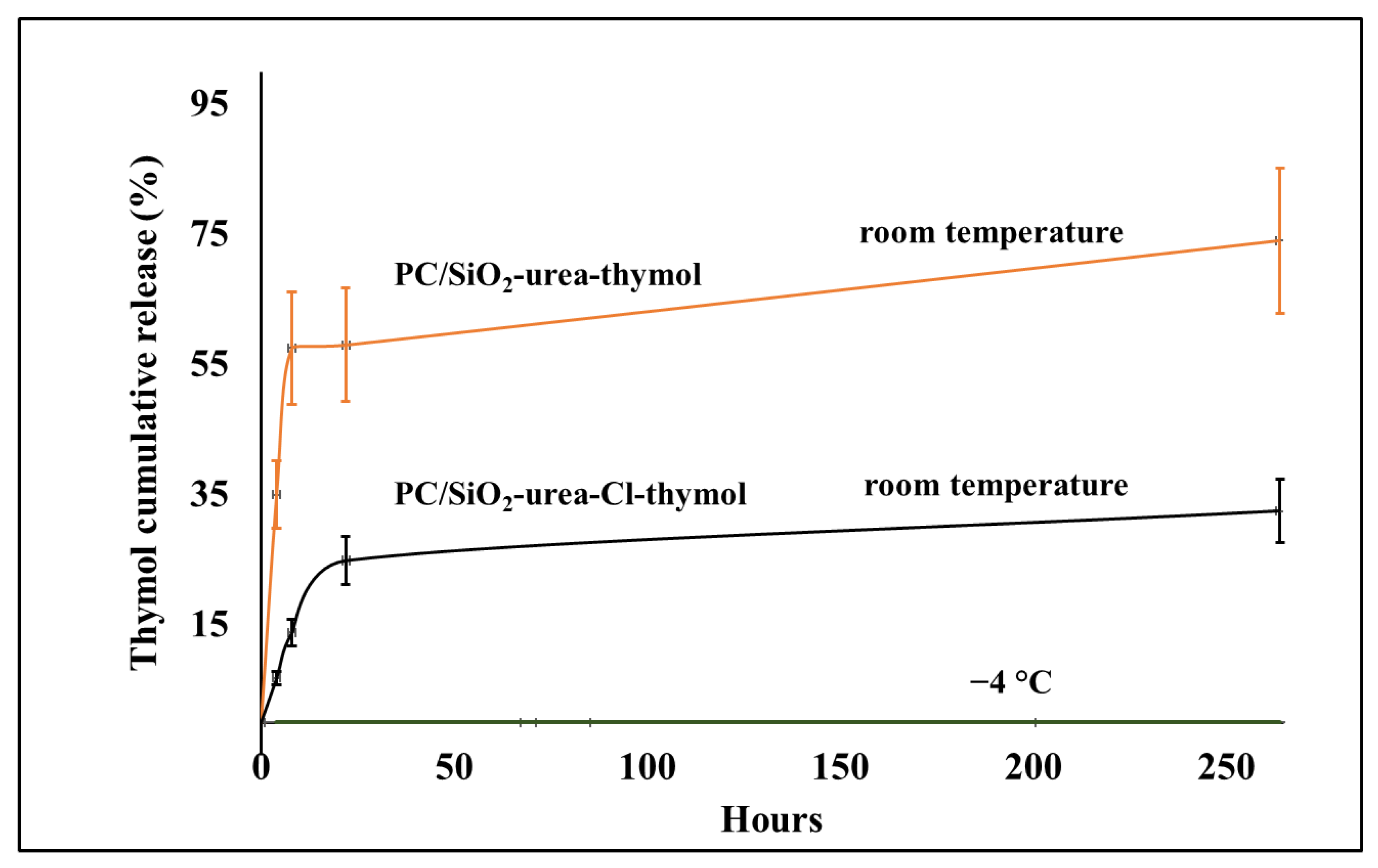
Release Rates of Thymol from PC/SiO2-Urea-Thymol and PC/SiO2-Urea-Cl-Thymol Films
3.4. Durability of SiO2-Urea Coating on PC Film
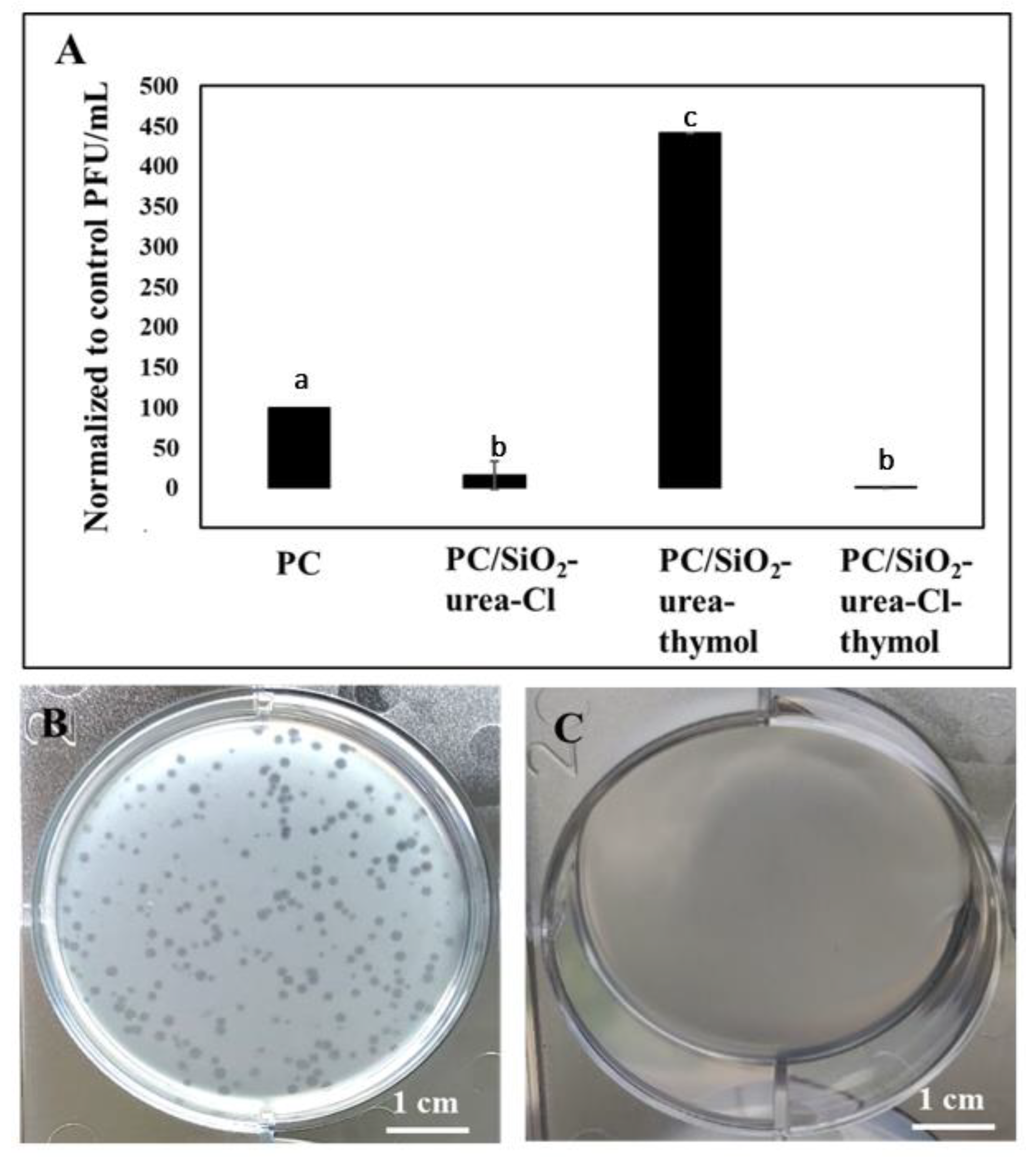
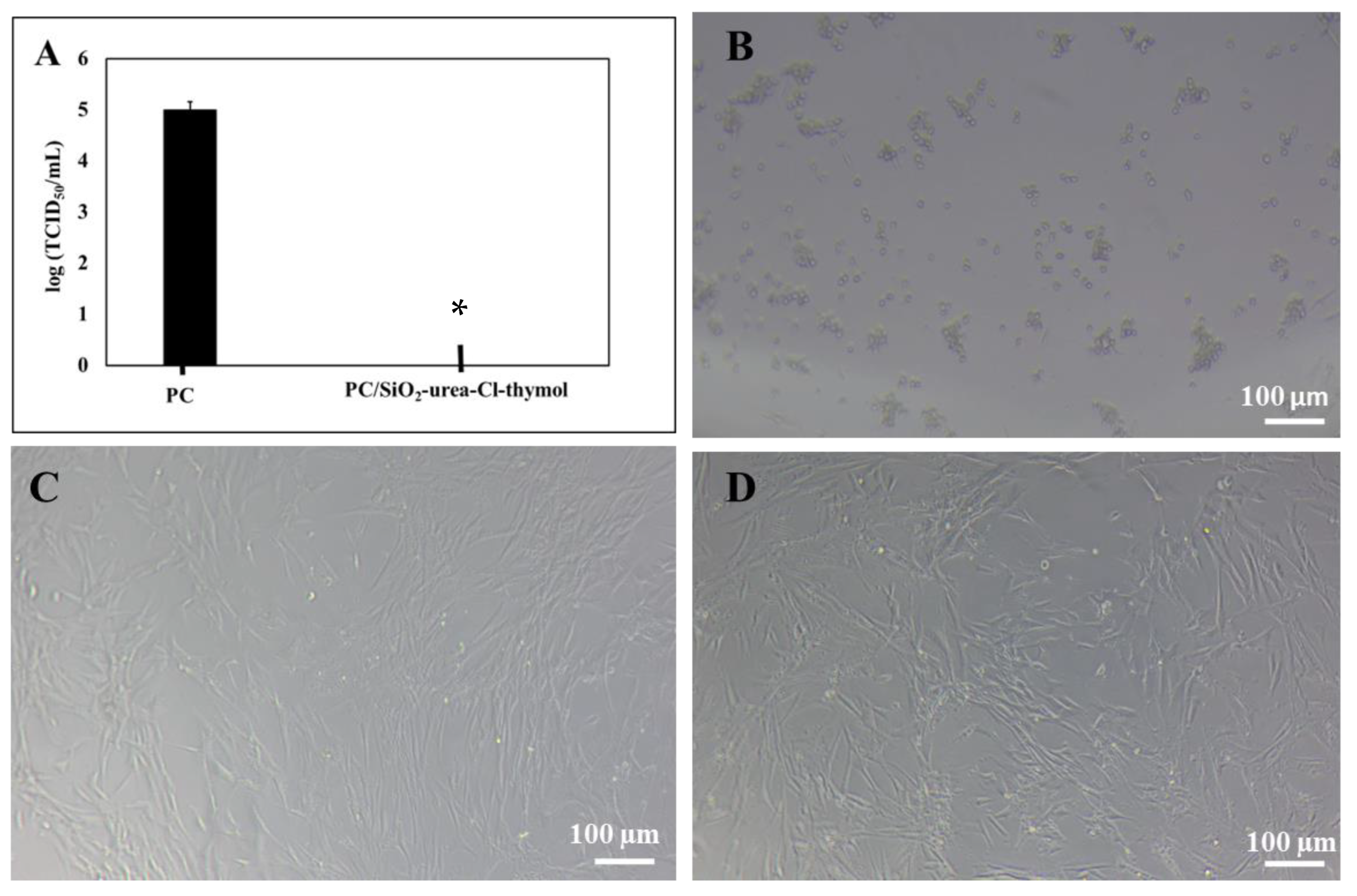
3.5. Antiviral Activity
4. Summary and Discussion
Supplementary Materials
Author Contributions
Funding
Data Availability Statement
Acknowledgments
Conflicts of Interest
References
- McIntosh, K.; Hirsch, M.S.; Bloom, A. Coronavirus disease (COVID-19). UpToDate Hirsch MS Bloom 2020, 5, 873. [Google Scholar]
- Rawlinson, S.; Ciric, L.; Cloutman-Green, E. COVID-19 pandemic—Let’s not forget surfaces. J. Hosp. Infect. 2020, 105, 790–791. [Google Scholar]
- Patients, L.; Taylor, D.; Lindsay, A.C.; Halcox, J.P. Aerosol and surface stability of SARS-CoV-2 as compared with SARS-CoV-1. N. Engl. J. Med. 2020, 382, 1564–1567. [Google Scholar]
- Kampf, G.; Todt, D.; Pfaender, S.; Steinmann, E. Persistence of coronaviruses on inanimate surfaces and their inactivation with biocidal agents. J. Hosp. Infect. 2020, 104, 246–251. [Google Scholar]
- Imani, S.M.; Ladouceur, L.; Marshall, T.; Maclachlan, R.; Soleymani, L.; Didar, T.F. Antimicrobial nanomaterials and coatings: Current mechanisms and future perspectives to control the spread of viruses including SARS-CoV-2. ACS Nano 2020, 14, 12341–12369. [Google Scholar]
- Chiari, W.; Damayanti, R.; Harapan, H.; Puspita, K.; Saiful, S.; Rahmi, R.; Rizki, D.R.; Iqhrammullah, M. Trend of polymer research related to COVID-19 pandemic: Bibliometric analysis. Polymers 2022, 14, 3297. [Google Scholar]
- Sharun, K.; Timari, R.; Yatoo, M.I.; Natesan, S.; Megawati, D.; Singh, K.P.; Michalak, I.; Dhama, K. A comprehensive review on pharmacologic agents, immunotherapies and supportive therapeutics for COVID-19. Narra J. 2022, 2, e92. [Google Scholar]
- Pirtle, E.C.; Beran, G.W. Virus survival in the environment. Rev. Sci. Tech. 1991, 10, 733–748. [Google Scholar]
- Centers for Disease Control (US). Recommendations for Prevention of HIV Transmission in Health-Care Settings; US Department of Health and Human Services, Public Health Service, Centers for Disease Control: Atlanta, GA, USA, 1987; Volume 37.
- Otter, J.A.; Donskey, C.; Yezli, S.; Douthwaite, S.; Goldenberg, S.; Weber, D.J. Transmission of SARS and MERS coronaviruses and influenza virus in healthcare settings: The possible role of dry surface contamination. J. Hosp. Infect. 2016, 92, 235–250. [Google Scholar]
- Noyce, J.O.; Michels, H.; Keevil, C.W. Inactivation of influenza A virus on copper versus stainless steel surfaces. Appl. Environ. Microbiol. 2007, 73, 2748–2750. [Google Scholar]
- Karlstrom, A.R.; Levine, R.L. Copper inhibits the protease from human immunodeficiency virus 1 by both cysteine-dependent and cysteine-independent mechanisms. Proc. Natl. Acad. Sci. USA 1991, 88, 5552–5556. [Google Scholar]
- Ingle, A.P.; Duran, N.; Rai, M. Bioactivity, mechanism of action, and cytotoxicity of copper-based nanoparticles: A review. Appl. Microbiol. Biotechnol. 2014, 98, 1001–1009. [Google Scholar]
- Rai, M.; Deshmukh, S.D.; Ingle, A.P.; Gupta, I.R.; Galdiero, M.; Galdiero, S. Metal nanoparticles: The protective nanoshield against virus infection. Crit. Rev. Microbiol. 2016, 42, 46–56. [Google Scholar]
- Lara, H.H.; Ayala-Nuñez, N.V.; Ixtepan-Turrent, L.; Rodriguez-Padilla, C. Mode of antiviral action of silver nanoparticles against HIV-1. J. Nanobiotechnol. 2010, 8, 1. [Google Scholar]
- Gupta, P.; Rapp, F. Effect of zinc ions on synthesis of herpes simplex virus type 2-induced polypeptides. Proc. Soc. Exp. Biol. Med. 1976, 152, 455–458. [Google Scholar]
- Fridlender, B.; Chejanovsky, N.; Becker, Y. Selective inhibition of herpes simplex virus type 1 DNA polymerase by zinc ions. Virology 1978, 84, 551–554. [Google Scholar]
- Arens, M.; Travis, S. Zinc salts inactivate clinical isolates of herpes simplex virus in vitro. J. Clin. Microbiol. 2000, 38, 1758–1762. [Google Scholar]
- Gelman, F.; Lewis, K.; Klibanov, A.M. Drastically lowering the titer of waterborne bacteriophage PRD1 by exposure to immobilized hydrophobic polycations. Biotechnol. Lett. 2004, 26, 1695–1700. [Google Scholar]
- Liu, H.; Kim, Y.; Mello, K.; Lovaasen, J.; Shah, A.; Rice, N.; Yim, J.H.; Pappas, D.; Klibanov, A.M. Aerosol-assisted plasma deposition of hydrophobic polycations makes surfaces highly antimicrobial. Appl. Biochem. Biotechnol. 2014, 172, 1254–1264. [Google Scholar]
- Hu, T.; Agazani, O.; Nir, S.; Cohen, M.; Pan, S.; Reches, M. Antiviral activity of peptide-based assemblies. ACS Appl. Mater. Interfaces 2021, 13, 48469–48477. [Google Scholar]
- Steinman, N.Y.; Hu, T.; Dombrovsky, A.; Reches, M.; Domb, A.J. Antiviral polymers based on N-halamine polyurea. Biomacromolecules 2021, 10, 4357–4364. [Google Scholar]
- Padmanabhuni, R.V.; Luo, J.; Cao, Z.; Sun, Y. Preparation and characterization of N-halamiine-based antimicrobial fillers. Ind. Eng. Chem. Res. 2012, 51, 5148–5156. [Google Scholar]
- Kocer, H.B.; Cerkez, I.; Worley, S.D.; Broughton, R.M.; Huang, T.S. N-halamine copolymers for use in antimicrobial paints. ACS Appl. Mater. Interfaces 2011, 3, 3189–3194. [Google Scholar]
- Lauten, S.D.; Sarvis, H.; Wheatley, W.B.; Williams, D.E.; Mora, E.C.; Worley, S.D. Efficacies of novel N-halamine disinfectants against Salmonella and Pseudomonas species. Appl. Environ. Microbiol. 1992, 58, 1240–1243. [Google Scholar]
- Eknoian, M.W.; Worley, S.D.; Bickert, J.; Williams, J.F. Novel antimicrobial N-halamine polymer coatings generated by emulsion polymerization. Polymer 1999, 40, 1367–1371. [Google Scholar]
- Zhao, N.; Liu, S. Thermoplastic semi-IPN of polypropylene (PP) and polymeric N-halamine for efficient and durable antibacterial activity. Eur. Polym. J. 2011, 47, 1654–1663. [Google Scholar]
- Liang, J.; Chen, Y.; Ren, X.; Wu, R.; Barnes, K.; Worley, S.D.; Broughton, R.M.; Cho, U.; Kocer, H.; Huang, T.S. Fabric treated with antimicrobial N-halamine epoxides. Ind. Eng. Chem. Res. 2007, 46, 6425–6429. [Google Scholar]
- Escobar, A.; Pérez, M.; Romanelli, G.; Blustein, G. Thymol bioactivity: A review focusing on practical applications. Arab. J. Chem. 2020, 13, 9243–9269. [Google Scholar]
- Kachur, K.; Suntres, Z. The antibacterial properties of phenolic isomers, carvacrol and thymol. Crit. Rev. Food Sci. Nutr. 2020, 60, 3042–3053. [Google Scholar]
- Salehi, B.; Mishra, A.P.; Shukla, I.; Sharifi-Rad, M.; Contreras, M.D.M.; Segura-Carretero, A.; Fathi, H.; Nasrabadi, N.N.; Kobarfard, F.; Sharifi-Rad, J. Thymol, thyme, and other plant sources: Health and potential uses. Phyther. Res. 2018, 32, 1688–1706. [Google Scholar]
- Marchese, A.; Orhan, I.E.; Daglia, M.; Barbieri, R.; Di Lorenzo, A.; Nabavi, S.F.; Gortzi, O.; Izadi, M.; Nabavi, S.M. Antibacterial and antifungal activities of thymol: A brief review of the literature. Food Chem. 2016, 210, 402–414. [Google Scholar]
- Kulkarni, S.A.; Nagarajan, S.K.; Ramesh, V.; Palaniyandi, V.; Selvam, S.P.; Madhavan, T. Computational evaluation of major components from plant essential oils as potent inhibitors of SARS-CoV-2 spike protein. J. Mol. Struct. 2020, 1221, 128823. [Google Scholar]
- Walczak, M.; Michalska-Sionkowska, M.; Kaczmarek, B.; Sionkowska, A. Surface and antibacterial properties of thin films based on collagen and thymol. Mater. Today Commun. 2020, 22, 100949. [Google Scholar]
- Yue, Y.; Gong, X.; Jiao, W.; Li, Y.; Yin, X.; Si, Y.; Yu, J.; Ding, B. In-situ electrospinning of thymol-loaded polyurethane fibrous membranes for waterproof, breathable, and antibacterial wound dressing application. J. Colloid Interface Sci. 2021, 592, 310–318. [Google Scholar]
- Robledo, N.; Vera, P.; López, L.; Yazdani-Pedram, M.; Tapia, C.; Abugoch, L. Thymol nanoemulsions incorporated in quinoa protein/chitosan edible films; antifungal effect in cherry tomatoes. Food Chem. 2018, 246, 211–219. [Google Scholar]
- Ribes, S.; Ruiz-Rico, M.; Pérez-Estave, É.; Fuentes, E.; Barat, J.M. Eugenol and thymol immobilised on mesoporous silica-based material as an innovative antifungal system: Application in strawberry jam. Food Control 2017, 81, 181–188. [Google Scholar]
- Lai, W.L.; Chuang, H.S.; Lee, M.H.; Wei, C.L.; Lin, C.F.; Tsai, Y.C. Inhibition of herpes simplex virus type 1 by thymol-related monoterpenoids. Planta Med. 2012, 78, 1636–1638. [Google Scholar]
- Alagawany, M.; Farag, M.R.; Abdelnour, S.A.; Elnesr, S.S. A review on the beneficial effect of thymol on health and production of fish. Rev. Aquac. 2021, 13, 632–641. [Google Scholar]
- Aranega, A.; Boulaiz, H. Susceptibility of herpes simplex virus type 1 to monoterpenes thymol, carvacrol, p-cymene and essential oils of Sinapis arvensis L., Lallemantia royleana Benth. and Pulicaria vulgaris Gaertn. Cell. Mol. Biol. 2005, 51, 1. [Google Scholar]
- Iqhrammullah, M.; Rizki, D.R.; Purnama, A.; Duta, T.F.; Harapan, H.; Idroes, R.; Gintig, B. Antiviral molecular targets of essential oils against SARS-CoV-2: A systematic review. Sci. Pharm. 2023, 91, 15. [Google Scholar]
- Lionis, C.; Karakasiliotis, I.; Petelos, E.; Linardakis, M.; Diamantakis, A.; Symvoulakis, E.; Panopoulou, M.; Kampa, M.; Pirintsos, S.A.; Sourvinos, G.; et al. A mixture of essential oils from three Cretan Aromatic Plants (thyme, Greek sage and Cretan dittany, CAPeo) inhibits SASR-CoV-2 proliferation: In vitro evidence and a Proof-of-Concept intervention study in mild ambulatory COVID-19-positive patients. MedRxiv 2021. [Google Scholar] [CrossRef] [Scilit]
- Torres-Neto, L.; Monteiro, M.L.; Fernández-Romero, J.; Teleshova, N.; Sailer, J.; Conte-Junior, C.A. Essential oils block cellular entry of SARS-CoV-2 delta variant. Sci. Rep. 2022, 12, 20639. [Google Scholar]
- Esharkawy, E.R.; Almalki, F.; Hadda, T.B. In vitro potential antiviral SARS-CoV-19-activity of natural product thymohydroquinone and dithymoquinone from Nigella sativa. Bioorg. Chem. 2022, 120, 105587. [Google Scholar]
- Ćavar-Zeljković, S.; Schadich, E.; Džubák, P.; Hajdúch, M.; Tarkowski, P. Antiviral activity of selected lamiaceae essential oils and their monoterpenes against SARS-Cov-2. Front. Pharmacol. 2022, 13, 1589. [Google Scholar]
- Yadav, P.K.; Jaiswal, A.; Singh, R.K. In silico study on spice-derived antiviral phytochemicals against SARS-CoV-2 TMPRSS2 target. J. Biomol. Struct. Dyn. 2021, 40, 11874–11884. [Google Scholar]
- Hayne, S.; Margel, S. In situ coatings of polymeric films with core polystyrene, core-shell polystyrene/SiO2, and hollow SiO2 micro/nanoparticles and potential applications. ACS Omega 2023, 8, 11406–11413. [Google Scholar]
- Gutman, O.; Natan, M.; Banin, E.; Margel, S. Characterization and antibacterial properties of N-halamine-derivatized cross-linked polymethacrylamide nanoparticles. Biomaterials 2014, 35, 5079–5087. [Google Scholar]
- Jonathan, N. The infrared and Raman spectra and structure of acrylamide. J. Mol. Spectrosc. 1961, 6, 205–214. [Google Scholar]
- Rickerby, D.S. A review of the methods for the measurement of coating-substrate adhesion. Surf. Coatings Technol. 1988, 36, 541–557. [Google Scholar]
- Li, J.; Chen, F.; Yang, L.; Jiang, L.; Dan, Y. FTIR analysis on aging characteristics of ABS/PC blend under UV-irradiation in air. Spectrochim. Acta-Part A Mol. Biomol. Spectrosc. 2017, 184, 361–367. [Google Scholar]
- Demir, B.; Broughton, R.M.; Qiao, M.; Huang, T.S.; Worley, S.D. N-halamine biocidal materials with superior antimicrobial efficacies for wound dressings. Molecules 2017, 22, 1582. [Google Scholar]
- Michalska-Sionkowska, M.; Walczak, M.; Sionkowska, A. Antimicrobial activity of collagen material with thymol addition for potential application as wound dressing. Polym. Test. 2017, 63, 360–366. [Google Scholar]






| Film a | Roughness (nm) b |
|---|---|
| PC | 0.40 ± 0.02 |
| Corona-treated PC | 11.7 ± 0.5 |
| PC/SiO2-urea | 0.85 ± 0.01 |
| PC/SiO2-urea-Cl | 6.7 ± 0.3 |
| PC/SiO2-urea-thymol | 1.2 ± 0.1 |
| PC/SiO2-urea-Cl-thymol | 9.1 ± 0.7 |
| Film a | CA (°) |
|---|---|
| PC | 74 ± 2 |
| Corona-treated PC | 40 ± 2 |
| PC/SiO2-urea | 69 ± 3 |
| PC/SiO2-urea-Cl | 93 ± 4 |
| PC/SiO2-urea-thymol | 110 ± 6 |
| PC/SiO2-urea-Cl-thymol | 102 ± 4 |
| Wet Film Thickness a (µm) | [Cl] (µmol/cm2) |
|---|---|
| 120 | 0.75 |
| 200 | 1.5 |
| 400 | 3.5 |
Disclaimer/Publisher’s Note: The statements, opinions and data contained in all publications are solely those of the individual author(s) and contributor(s) and not of MDPI and/or the editor(s). MDPI and/or the editor(s) disclaim responsibility for any injury to people or property resulting from any ideas, methods, instructions or products referred to in the content. |
© 2023 by the authors. Licensee MDPI, Basel, Switzerland. This article is an open access article distributed under the terms and conditions of the Creative Commons Attribution (CC BY) license (https://creativecommons.org/licenses/by/4.0/).
Share and Cite
Sasson, E.; Agazani, O.; Malka, E.; Reches, M.; Margel, S. Engineered Cross-Linked Silane with Urea Polymer Thin Durable Coatings onto Polymeric Films for Controlled Antiviral Release of Activated Chlorine and Essential Oils. J. Funct. Biomater. 2023, 14, 270. https://doi.org/10.3390/jfb14050270
Sasson E, Agazani O, Malka E, Reches M, Margel S. Engineered Cross-Linked Silane with Urea Polymer Thin Durable Coatings onto Polymeric Films for Controlled Antiviral Release of Activated Chlorine and Essential Oils. Journal of Functional Biomaterials. 2023; 14(5):270. https://doi.org/10.3390/jfb14050270
Chicago/Turabian StyleSasson, Elisheva, Omer Agazani, Eyal Malka, Meital Reches, and Shlomo Margel. 2023. "Engineered Cross-Linked Silane with Urea Polymer Thin Durable Coatings onto Polymeric Films for Controlled Antiviral Release of Activated Chlorine and Essential Oils" Journal of Functional Biomaterials 14, no. 5: 270. https://doi.org/10.3390/jfb14050270
APA StyleSasson, E., Agazani, O., Malka, E., Reches, M., & Margel, S. (2023). Engineered Cross-Linked Silane with Urea Polymer Thin Durable Coatings onto Polymeric Films for Controlled Antiviral Release of Activated Chlorine and Essential Oils. Journal of Functional Biomaterials, 14(5), 270. https://doi.org/10.3390/jfb14050270