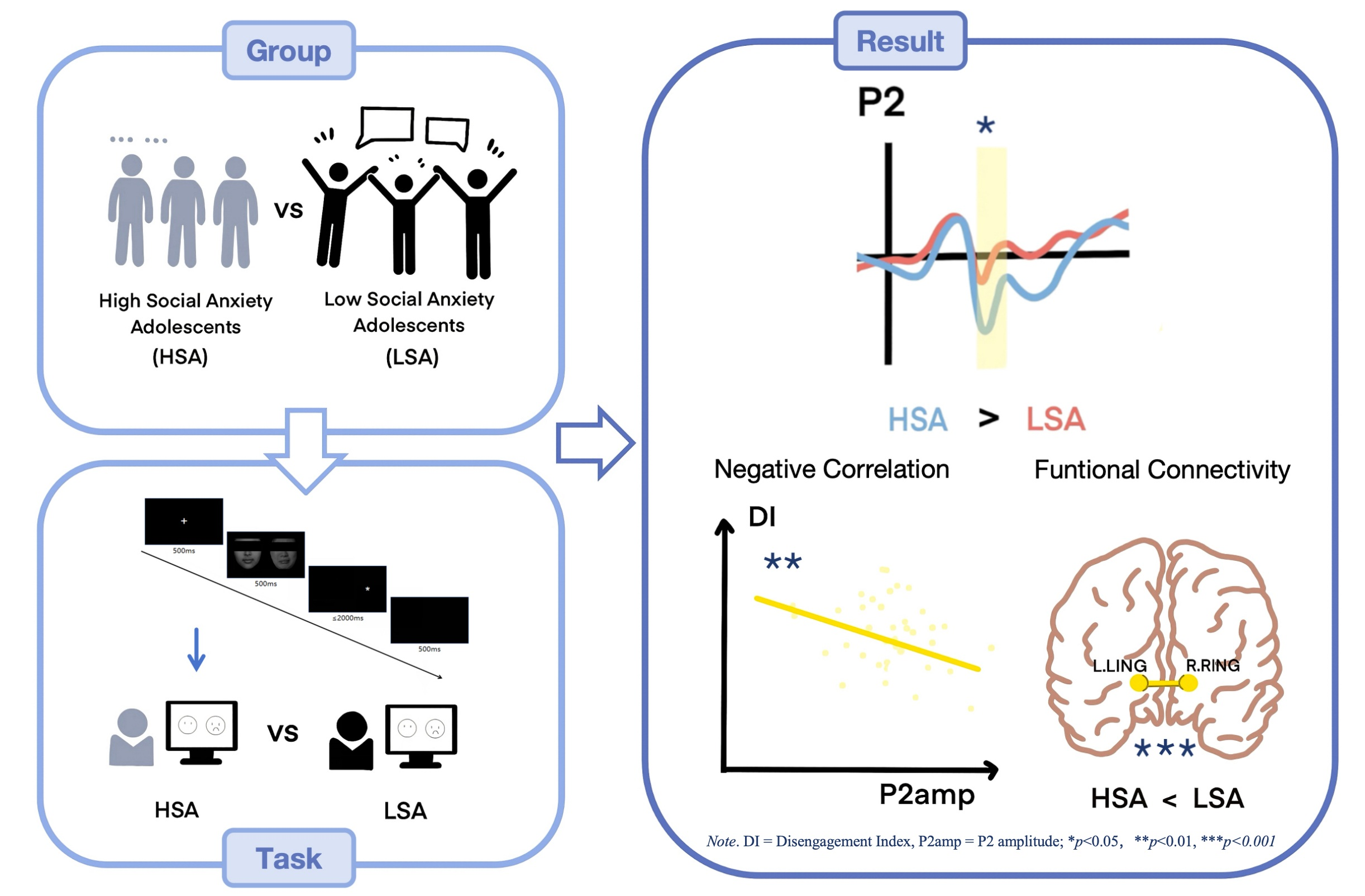
Attentional Impairments and Neural Compensation in Adolescents with High Social Anxiety Traits: A Combined ERP and Functional Connectivity Study


Abstract
1. Introduction
1.1. Social Anxiety
1.2. Social Anxiety in Adolescence
1.3. The Present Study
2. Materials and Methods
2.1. Participants
2.2. Design and Procedures
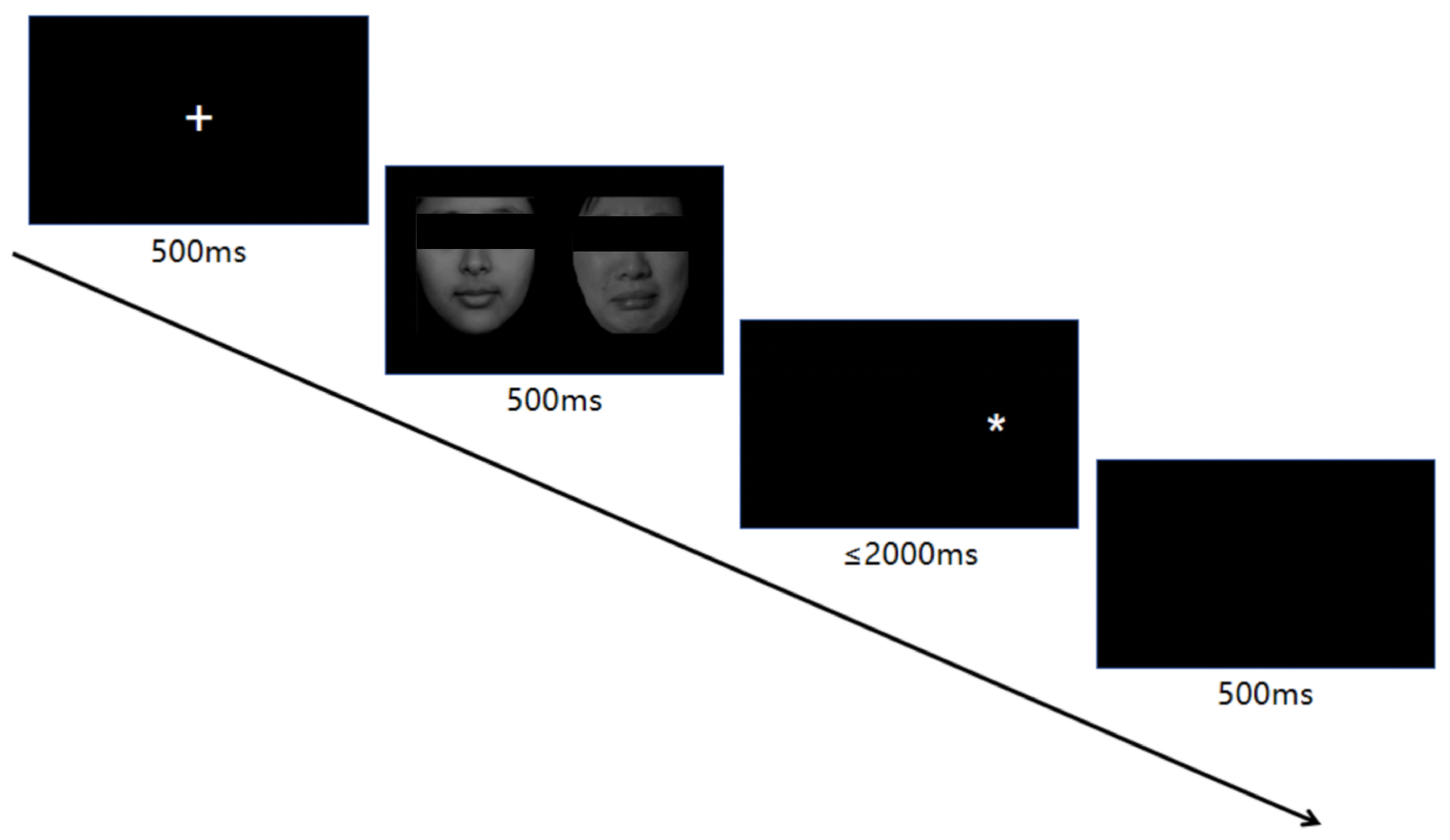
2.3. Dot-Probe Task
2.4. EEG Recording and Data Analysis
2.4.1. EEG Recording and Preprocessing
2.4.2. Behavioral Data
2.4.3. ERPs
2.4.4. Functional Connectivity
2.4.5. Graph Theory
2.5. Statistical Data Analyses
- (1)
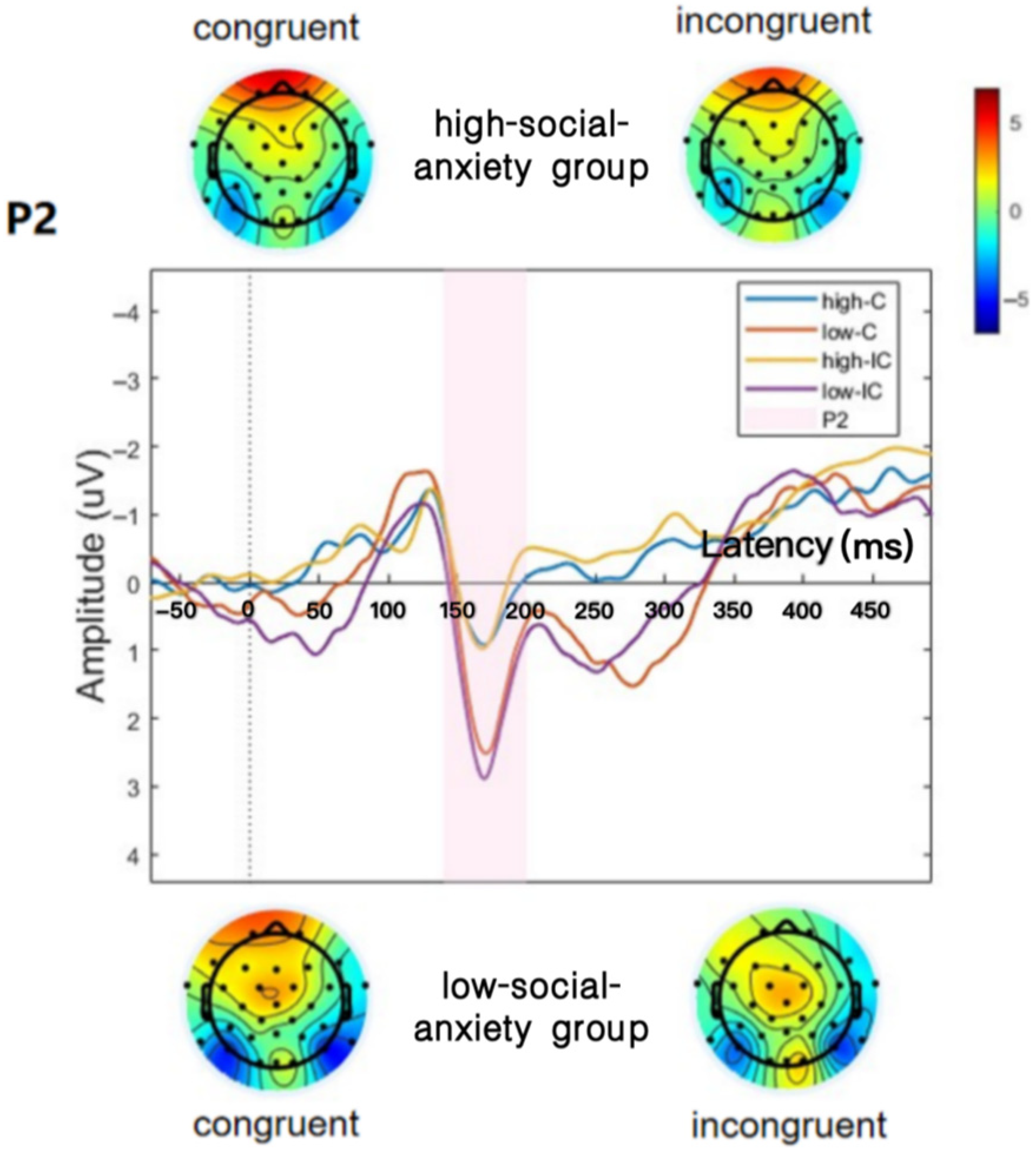
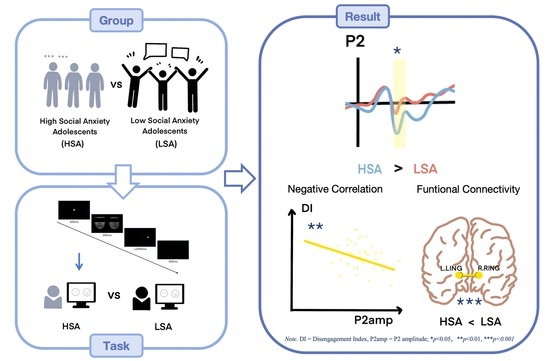
- ERP: Separate 2 (Group: HSA vs. LSA) × 2 (Condition: congruent vs. incongruent) repeated-measures ANOVAs were conducted on P2 amplitudes.
- (2)
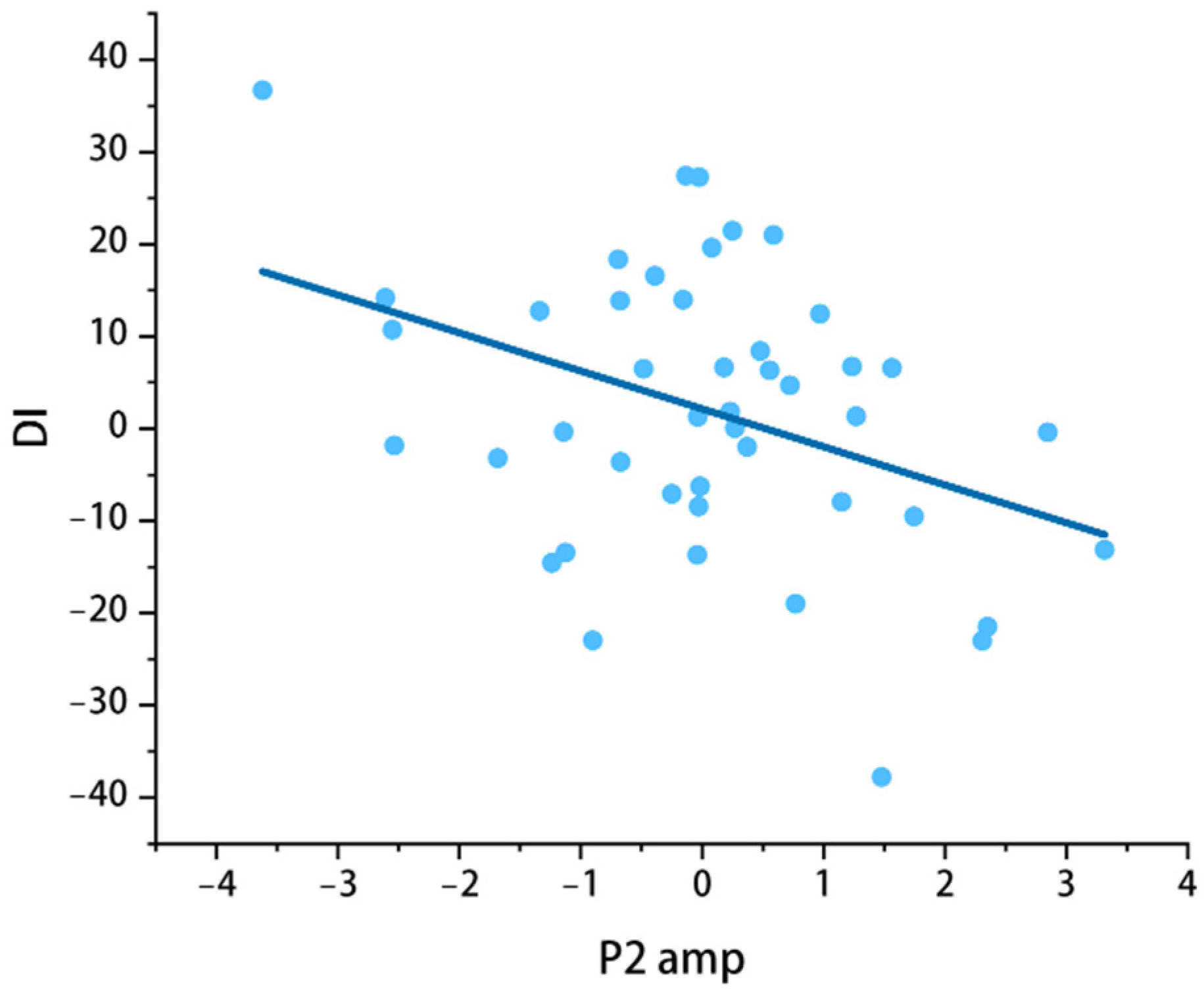
- Correlation analysis: Pearson’s correlations were computed to assess the relationships between attention bias indices (bias index, orienting index, disengagement index), social anxiety symptoms, and the analyzed ERP components (P2 amplitudes).
- (3)
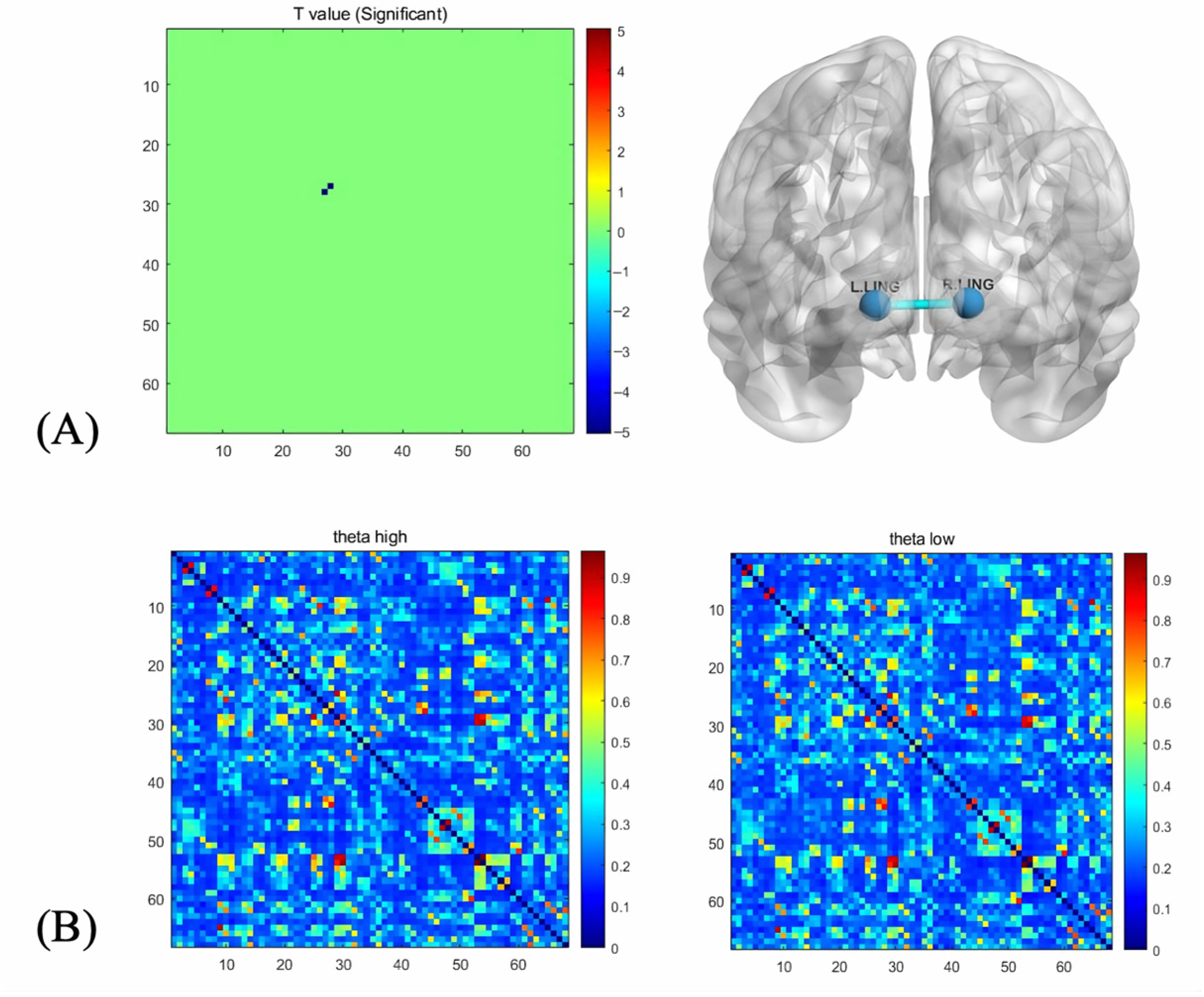
- Functional connectivity analysis: (a) The PLV was computed to assess functional connectivity between brain regions. (b) To compare lingual L’-R’ amplitude differences between HSA and LSA groups, an independent-samples t-test was performed.
- (4)
- Graph theory analysis: Graph theory analysis was conducted to examine the topological properties of brain networks, including node degree (Dc), node strength (Ne), node betweenness centrality (Bc), and node lateralization (Nlp). These metrics were calculated across different frequency bands (theta: 4–7 Hz, alpha: 8–13 Hz, beta: 14–30 Hz, gamma: 31–50 Hz) and conditions (congruent vs. incongruent).
3. Results
3.1. ERP
3.2. Correlation Analysis
3.3. Functional Connectivity
3.4. Graph Theory
- (1)
- Theta
- (2)
- Alpha
- (3)
- Beta
- (4)
- Gamma
4. Discussion
4.1. Neural Patterns in Social Information Processing
4.2. Attentional Processing in Adolescents with High Social Anxiety Traits
4.3. Functional Connectivity and Cognitive Efficiency in Adolescents with High Social Anxiety Traits
4.4. Graph Theory Metrics and Brain Network Organization in Adolescents with High Social Anxiety Traits
4.5. Attentional Bias and Early Emotional Processing in Adolescents with High Social Anxiety Traits
4.6. Strengths and Practical Implications
4.7. Limitation and Future Direction
5. Conclusions
Author Contributions
Funding
Institutional Review Board Statement
Informed Consent Statement
Data Availability Statement
Acknowledgments
Conflicts of Interest
Abbreviations
| HSA | High Social Anxiety |
| LSA | Low Social Anxiety |
| BI | Bias Index |
| OI | Orienting Index |
| DI | Disengagement Index |
| Dc | Degree Centrality |
| Bc | Betweenness Centrality |
| Nlp | Node Load Proportion |
| Ne | Network Efficiency |
Appendix A. Behavioral Results

| HSA | LSA | |||||||
|---|---|---|---|---|---|---|---|---|
| M | SD | M | SD | t | P | 95% CI | t | |
| RTs in the congruent conditions | 365.876 | 76.613 | 368.147 | 17.186 | −1.042 | 0.303 | −78.185 | −1.042 |
| RTs in the incongruent conditions | 368.147 | 79.273 | 394.737 | 102.758 | −0.979 | 0.333 | −81.389 | −0.979 |
| BI | 2.272 | 11.946 | −1.7341 | 21.074 | 0.814 | 0.420 | −5.925 | 0.814 |
| OI | −1.224 | 16.814 | −1.316 | 21.056 | 0.016 | 0.987 | −11.326 | 0.016 |
| DI | 3.494 | 14.380 | −0.434 | 16.740 | 0.841 | 0.405 | −5.496 | 0.841 |
Appendix B. Results of ERP Analysis with Gender and Age as Covariates
| F | p | ηp2 | ||
|---|---|---|---|---|
| P2 | gender | 1.314 | 0.258 | 0.030 |
| age | 0.259 | 0.614 | 0.006 |
References
- Abdel-Ghaffar, S. A., Huth, A. G., Lescroart, M. D., Stansbury, D., Gallant, J. L., & Bishop, S. J. (2024). Occipital-temporal cortical tuning to semantic and affective features of natural images predicts associated behavioral responses. Nature Communications, 15(1), 5531. [Google Scholar] [CrossRef] [PubMed]
- Al-Ezzi, A., Kamel, N., Al-Shargabi, A. A., Al-Shargie, F., Al-Shargabi, A., Yahya, N., & Al-Hiyali, M. I. (2023). Machine learning for the detection of social anxiety disorder using effective connectivity and graph theory measures. Frontiers in Psychiatry, 14, 1155812. [Google Scholar] [CrossRef] [PubMed]
- Bantin, T., Stevens, S., Gerlach, A. L., & Hermann, C. (2016). What does the facial dot-probe task tell us about attentional processes in social anxiety? A systematic review. Journal of Behavior Therapy and Experimental Psychiatry, 50, 40–51. [Google Scholar] [CrossRef]
- Battaglia, M., Zanoni, A., Taddei, M., Giorda, R., Bertoletti, E., Lampis, V., Scaini, S., Cappa, S., & Tettamanti, M. (2011). Cerebral responses to emotional expressions and the development of social anxiety disorder: A preliminary longitudinal study. Depression and Anxiety, 29(1), 54–61. [Google Scholar] [CrossRef]
- Bechor, M., Ramos, M. L., Crowley, M. J., Silverman, W. K., Pettit, J. W., & Reeb-Sutherland, B. C. (2019). Neural correlates of attentional processing of threat in youth with and without anxiety disorders. Journal of Abnormal Child Psychology, 47(1), 119–129. [Google Scholar] [CrossRef]
- Bell, C., Bourke, C., Colhoun, H., Carter, F., Frampton, C., & Porter, R. (2011). The misclassification of facial expressions in generalised social phobia. Journal of Anxiety Disorders, 25(2), 278–283. [Google Scholar] [CrossRef]
- Birk, S. L., Horenstein, A., Weeks, J., Olino, T., Heimberg, R., Goldin, P. R., & Gross, J. J. (2019). Neural responses to social evaluation: The role of fear of positive and negative evaluation. Journal of Anxiety Disorders, 67, 102114. [Google Scholar] [CrossRef]
- Borsboom, D., Deserno, M. K., Rhemtulla, M., Epskamp, S., Fried, E. I., McNally, R. J., Robinaugh, D. J., Perugini, M., Dalege, J., Costantini, G., Isvoranu, A., Wysocki, A. C., Van Borkulo, C. D., Van Bork, R., & Waldorp, L. J. (2021). Network analysis of multivariate data in psychological science. Nature Reviews Methods Primers, 1(1), 58. [Google Scholar] [CrossRef]
- Chen, N. T. M., Clarke, P. J. F., MacLeod, C., & Guastella, A. J. (2012). Biased attentional processing of positive stimuli in social anxiety disorder: An eye movement study. Cognitive Behaviour Therapy, 41(2), 96–107. [Google Scholar] [CrossRef]
- Chiu, K., Clark, D. M., & Leigh, E. (2021). Prospective associations between peer functioning and social anxiety in adolescents: A systematic review and meta-analysis. Journal of Affective Disorders, 279, 650–661. [Google Scholar] [CrossRef]
- Choudhury, S., Pi-Sunyer, B. P., & Blakemore, S. (2023). A neuroecosocial perspective on adolescent development. Annual Review of Developmental Psychology, 5(1), 285–307. [Google Scholar] [CrossRef]
- Cui, L., Dong, X., & Zhang, S. (2021). ERP evidence for emotional sensitivity in social anxiety. Journal of Affective Disorders, 279, 361–367. [Google Scholar] [CrossRef]
- Delorme, A., & Makeig, S. (2004). EEGLAB: An open source toolbox for analysis of single-trial EEG dynamics including independent component analysis. Journal of Neuroscience Methods, 134(1), 9–21. [Google Scholar] [CrossRef] [PubMed]
- Deng, X., Chen, X., Zhang, L., Gao, Q., Li, X., & An, S. (2022). Adolescent social anxiety undermines adolescent-parent interbrain synchrony during emotional processing: A hyperscanning study. International Journal of Clinical and Health Psychology, 22(3), 100329. [Google Scholar] [CrossRef] [PubMed]
- Di Biase, L., Ricci, L., Caminiti, M. L., Pecoraro, P. M., Carbone, S. P., & Di Lazzaro, V. (2023). Quantitative high density EEG brain connectivity evaluation in Parkinson’s disease: The phase locking value (PLV). Journal of Clinical Medicine, 12(4), 1450. [Google Scholar] [CrossRef]
- Edgar, E. V., Waugh, A., Wu, J., Castagna, P., Potenza, M. N., Mayes, L. C., & Crowley, M. J. (2024). Risk avoidance and social anxiety in adolescence: Examination of event-related potentials and theta-dynamics on the balloon risk avoidance task. Brain and Cognition, 180, 106209. [Google Scholar] [CrossRef]
- Evans, T. C., Walukevich, K. A., & Britton, J. C. (2016). Vigilance-avoidance and disengagement are differentially associated with fear and avoidant behaviors in social anxiety. Journal of Affective Disorders, 199, 124–131. [Google Scholar] [CrossRef]
- Faul, F., Erdfelder, E., Lang, A.-G., & Buchner, A. (2007). G*Power 3: A flexible statistical power analysis program for the social, behavioral, and biomedical sciences. Behavior Research Methods, 39(2), 175–191. [Google Scholar] [CrossRef]
- Freitas-Ferrari, M. C., Hallak, J. E., Trzesniak, C., Santos Filho, A., Machado-de-Sousa, J. P., Chagas, M. H. N., Nardi, A. E., & Crippa, J. A. S. (2010). Neuroimaging in social anxiety disorder: A systematic review of the literature. Progress in Neuro-Psychopharmacology and Biological Psychiatry, 34(4), 565–580. [Google Scholar] [CrossRef]
- Frenkel, T. I., & Bar-Haim, Y. (2011). Neural activation during the processing of ambiguous fearful facial expressions: An ERP study in anxious and nonanxious individuals. Biological Psychology, 88(2–3), 188–195. [Google Scholar] [CrossRef]
- Gilboa-Schechtman, E., & Shachar-Lavie, I. (2013). More than a face: A unified theoretical perspective on nonverbal social cue processing in social anxiety. Frontiers in Human Neuroscience, 7, 904. [Google Scholar] [CrossRef] [PubMed]
- Grafton, B., & MacLeod, C. (2014). Enhanced probing of attentional bias: The independence of anxiety-linked selectivity in attentional engagement with and disengagement from negative information. Cognition & Emotion, 28(7), 1287–1302. [Google Scholar] [CrossRef]
- Grafton, B., & MacLeod, C. (2016). Engaging with the wrong people: The basis of selective attention to negative faces in social anxiety. Clinical Psychological Science, 4(5), 793–804. [Google Scholar] [CrossRef]
- Hahn, A., Stein, P., Windischberger, C., Weissenbacher, A., Spindelegger, C., Moser, E., Kasper, S., & Lanzenberger, R. (2011). Reduced resting-state functional connectivity between amygdala and orbitofrontal cortex in social anxiety disorder. NeuroImage, 56(3), 881–889. [Google Scholar] [CrossRef]
- Haller, S. P., Kadosh, K. C., Scerif, G., & Lau, J. Y. (2015). Social anxiety disorder in adolescence: How developmental cognitive neuroscience findings may shape understanding and interventions for psychopathology. Developmental Cognitive Neuroscience, 13, 11–20. [Google Scholar] [CrossRef]
- Heller, A. S., Cohen, A. O., Dreyfuss, M. F. W., & Casey, B. J. (2016). Changes in cortico-subcortical and subcortico-subcortical connectivity impact cognitive control to emotional cues across development. Social Cognitive and Affective Neuroscience, 11, 1910–1918. [Google Scholar] [CrossRef]
- Hornung, J., Noack, H., Kogler, L., & Derntl, B. (2019). Exploring the fMRI based neural correlates of the dot probe task and its modulation by sex and body odor. Psychoneuroendocrinology, 99, 87–96. [Google Scholar] [CrossRef]
- Jiang, T., Song, S., Zhao, S., Tian, X., Zhang, M., Feng, J., & Ge, R. (2024). Neurophysiological effects of cognitive behavioral therapy in social anxiety: An ERP study using a dot-probe task. Journal of Behavior Therapy and Experimental Psychiatry, 85, 101988. [Google Scholar] [CrossRef]
- Judah, M. R., Grant, D. M., & Carlisle, N. B. (2015). The effects of self-focus on attentional biases in social anxiety: An ERP study. Cognitive Affective & Behavioral Neuroscience, 16(3), 393–405. [Google Scholar] [CrossRef]
- Jung, Y., Shin, J. E., Lee, Y. I., Jang, J. H., Jo, H. J., & Choi, S. (2018). Altered amygdala Resting-State functional connectivity and hemispheric asymmetry in patients with social anxiety disorder. Frontiers in Psychiatry, 9, 164. [Google Scholar] [CrossRef]
- Kappenman, E. S., Farrens, J. L., Luck, S. J., & Proudfit, G. H. (2014). Behavioral and ERP measures of attentional bias to threat in the dot-probe task: Poor reliability and lack of correlation with anxiety. Frontiers in Psychology, 5, 1368. [Google Scholar] [CrossRef] [PubMed]
- Kelsen, B. A., Sumich, A., Kasabov, N., Liang, S. H. Y., & Wang, G. Y. (2022). What has social neuroscience learned from hyperscanning studies of spoken communication? A systematic review. Neuroscience and Biobehavioral Reviews, 132, 1249–1262. [Google Scholar] [CrossRef] [PubMed]
- Kruijt, A. W., Parsons, S., & Fox, E. (2019). A meta-analysis of bias at baseline in RCTs of attention bias modification: No evidence for dot-probe bias towards threat in clinical anxiety and PTSD. Journal of Abnormal Psychology, 128(6), 563–573. [Google Scholar] [CrossRef]
- La Greca, A. M., Dandes, S. K., Wick, P., Shaw, K., & Stone, W. L. (1988). Development of the social anxiety scale for children: Reliability and concurrent validity. Journal of Clinical Child Psychology, 17(1), 84–91. [Google Scholar] [CrossRef]
- Lee, S., Liu, A., Wang, Z. J., & McKeown, M. J. (2019). Abnormal phase coupling in Parkinson’s disease and normalization effects of subthreshold vestibular stimulation. Frontiers in Human Neuroscience, 13, 118. [Google Scholar] [CrossRef]
- Liu, Z., Hu, Y., Zhang, Y., Liu, W., Zhang, L., Wang, Y., Yang, H., Wu, J., Cheng, W., & Yang, Z. (2020). Altered gray matter volume and structural co-variance in adolescents with social anxiety disorder: Evidence for a delayed and unsynchronized development of the fronto-limbic system. Psychological Medicine, 51(10), 1742–1751. [Google Scholar] [CrossRef]
- MacLeod, C., Mathews, A., & Tata, P. (1986). Attentional bias in emotional disorders. Journal of Abnormal Psychology, 95(1), 15–20. [Google Scholar] [CrossRef]
- Mao, Y., Zuo, X., Ding, C., & Qiu, J. (2020). OFC and its connectivity with amygdala as predictors for future social anxiety in adolescents. Developmental Cognitive Neuroscience, 44, 100804. [Google Scholar] [CrossRef]
- McGrath, L. M., Oates, J. M., Dai, Y. G., Dodd, H. F., Waxler, J., Clements, C. C., Weill, S., Hoffnagle, A., Anderson, E., MacRae, R., Mullett, J., McDougle, C. J., Pober, B. R., & Smoller, J. W. (2016). Attention bias to emotional faces varies by IQ and anxiety in Williams syndrome. Journal of Autism and Developmental Disorders, 46(6), 2174–2185. [Google Scholar] [CrossRef]
- Miers, A. C., & Warner, C. M. (2023). Adolescent social anxiety: Bridging cognitive and social behavioral perspectives through a developmental lens (pp. 89–100). Elsevier. [Google Scholar] [CrossRef]
- Mizzi, S., Pedersen, M., Rossell, S. L., Rendell, P., Terrett, G., Heinrichs, M., & Labuschagne, I. (2024). Resting-state amygdala subregion and precuneus connectivity provide evidence for a dimensional approach to studying social anxiety disorder. Translational Psychiatry, 14(1), 147. [Google Scholar] [CrossRef]
- Myllyneva, A., Ranta, K., & Hietanen, J. K. (2015). Psychophysiological responses to eye contact in adolescents with social anxiety disorder. Biological Psychology, 109, 151–158. [Google Scholar] [CrossRef] [PubMed]
- National Library of Medicine. (n.d.). Adolescent. In medical subject headings (MeSH). Available online: https://www.ncbi.nlm.nih.gov/mesh/68000293 (accessed on 12 February 2026).
- Natu, V. S., Gomez, J., Barnett, M., Jeska, B., Kirilina, E., Jaeger, C., Zhen, Z., Cox, S., Weiner, K. S., Weiskopf, N., & Grill-Spector, K. (2019). Apparent thinning of human visual cortex during childhood is associated with myelination. Proceedings of the National Academy of Sciences of the United States of America, 116(41), 20750–20759. [Google Scholar] [CrossRef] [PubMed]
- Pintzinger, N. M., Pfabigan, D. M., Tran, U. S., Kryspin-Exner, I., & Lamm, C. (2016). Attentional biases in healthy adults: Exploring the impact of temperament and gender. Journal of Behavior Therapy and Experimental Psychiatry, 52, 29–37. [Google Scholar] [CrossRef] [PubMed]
- Rauschenbach, A. L., Hauffe, V., Fink-Lamotte, J., Tuschen-Caffier, B., & Schmitz, J. (2024). Reduced early neural processing of faces in children and adolescents with social anxiety disorder. Biological Psychology, 191, 108827. [Google Scholar] [CrossRef]
- Revers, H., Van Deun, K., Vroomen, J., & Bastiaansen, M. (2023). Neural responses to facial attractiveness: Event-related potentials differentiate between salience and valence effects. Biological Psychology, 179, 108549. [Google Scholar] [CrossRef]
- Roberson-Nay, R., & Brown, R. C. (2011). Neurodevelopmental aspects of social anxiety (pp. 53–71). American Psychological Association. [Google Scholar] [CrossRef]
- Rossignol, M., Fisch, S., Maurage, P., Joassin, F., & Philippot, P. (2013). Reduced processing of facial and postural cues in social anxiety: Insights from electrophysiology. PLoS ONE, 8(9), e75234. [Google Scholar] [CrossRef]
- Rubinov, M., & Sporns, O. (2010). Complex network measures of brain connectivity: Uses and interpretations. NeuroImage, 52(3), 1059–1069. [Google Scholar] [CrossRef]
- Salari, N., Heidarian, P., Hassanabadi, M., Babajani, F., Abdoli, N., Aminian, M., & Mohammadi, M. (2024). Global prevalence of social anxiety disorder in children, adolescents and youth: A systematic review and meta-analysis. Journal of Prevention, 45, 795–813. [Google Scholar] [CrossRef]
- Schubring, D., & Schupp, H. T. (2019). Affective picture processing: Alpha- and lower beta-band desynchronization reflects emotional arousal. Psychophysiology, 56(8), e13386. [Google Scholar] [CrossRef]
- Schupp, H. T., Junghöfer, M., Weike, A. I., & Hamm, A. O. (2003). Attention and emotion: An ERP analysis of facilitated emotional stimulus processing. Neuroreport, 14(8), 1107–1110. [Google Scholar] [CrossRef]
- Smith, A., Nelson, E., Kircanski, K., Rappaport, B. I., Do, B. Q., Leibenluft, E., Pine, D., & Jarcho, J. (2020). Social anxiety and age are associated with neural response to social evaluation during adolescence. Developmental Cognitive Neuroscience, 42, 100768. [Google Scholar] [CrossRef] [PubMed]
- Song, S., Liu, A., Gao, Z., Tian, X., Zhu, L., Shang, H., Gao, S., Zhang, M., Zhao, S., Xiao, G., Zheng, Y., & Ge, R. (2023). Event-related alpha power in early stage of facial expression processing in social anxiety: Influence of language context. Psychophysiology, 61(2), e14455. [Google Scholar] [CrossRef] [PubMed]
- Sporns, O. (2013). Structure and function of complex brain networks. Dialogues in Clinical Neuroscience, 15(3), 247–262. [Google Scholar] [CrossRef]
- Sur, S., & Sinha, V. (2009). Event-related potential: An overview. Industrial Psychiatry Journal, 18(1), 70–73. [Google Scholar] [CrossRef]
- Thai, N., Taber-Thomas, B. C., & Pérez-Edgar, K. E. (2016). Neural correlates of attention biases, behavioral inhibition, and social anxiety in children: An ERP study. Developmental Cognitive Neuroscience, 19, 200–210. [Google Scholar] [CrossRef]
- Thoern, H. A., Grueschow, M., Ehlert, U., Ruff, C. C., & Kleim, B. (2016). Attentional Bias towards Positive Emotion Predicts Stress Resilience. PLoS ONE, 11(3), e0148368. [Google Scholar] [CrossRef]
- Topel, S., Van Noordt, S. J., Willner, C. J., Banz, B. C., Wu, J., Castagna, P., Kortink, E. D., Van Der Molen, M. J., & Crowley, M. J. (2021). As they wait: Anticipatory neural response to evaluative peer feedback varies by pubertal status and social anxiety. Developmental Cognitive Neuroscience, 51, 101004. [Google Scholar] [CrossRef]
- Torrence, R. D., & Troup, L. J. (2017). Event-related potentials of attentional bias toward faces in the dot-probe task: A systematic review. Psychophysiology, 55(6), e13051. [Google Scholar] [CrossRef]
- Trujillo, N., Gómez, D., Trujillo, S., López, J. D., Ibáñez, A., & Parra, M. A. (2021). Attentional bias during emotional processing: Behavioral and electrophysiological evidence from an Emotional Flanker Task. PLoS ONE, 16(4), e0249407. [Google Scholar] [CrossRef]
- Vogel, F., Reichert, J., Hartmann, D., & Schwenck, C. (2021). Cognitive variables in social anxiety disorder in children and Adolescents: A network analysis. Child Psychiatry & Human Development, 54(3), 625–638. [Google Scholar] [CrossRef]
- Wang, H., Mou, S., Pei, X., Zhang, X., Shen, S., Zhang, J., Shen, X., & Shen, Z. (2025). The power spectrum and functional connectivity characteristics of resting-state EEG in patients with generalized anxiety disorder. Scientific Reports, 15(1), 5991. [Google Scholar] [CrossRef] [PubMed]
- Wang, J., Wang, X., Xia, M., Liao, X., Evans, A., & He, Y. (2015). GRETNA: A graph theoretical network analysis toolbox for imaging connectomics. Frontiers in Human Neuroscience, 9, 386. [Google Scholar] [CrossRef] [PubMed]
- Wang, Y., Liang, J., Zhu, Z., Gao, J., Yao, Q., & Ding, X. (2024). Attentional bias of individuals with social anxiety towards facial and somatic emotional cues in a holistic manner. Behavioral Sciences, 14(3), 244. [Google Scholar] [CrossRef]
- Wauthia, E., D’Hondt, F., Blekic, W., Lefebvre, L., Ris, L., & Rossignol, M. (2022a). Neural responses associated with attentional engagement and disengagement from threat in high socially anxious children: Evidence from temporal-spatial PCA. PLoS ONE, 17(1), e0261172. [Google Scholar] [CrossRef]
- Wauthia, E., Rossignol, M., Blekic, W., Lefebvre, L., & D’Hondt, F. (2022b). Electrophysiological correlates of attentional bias towards threat in children with high levels of social anxiety. Cognitive Affective & Behavioral Neuroscience, 23(1), 190–202. [Google Scholar] [CrossRef]
- Xia, M., Wang, J., & He, Y. (2013). BrainNet Viewer: A network visualization tool for human brain connectomics. PLoS ONE, 8(7), e68910. [Google Scholar] [CrossRef]
- Xing, M., Tadayonnejad, R., MacNamara, A., Ajilore, O., DiGangi, J., Phan, K. L., Leow, A., & Klumpp, H. (2017). Resting-state theta band connectivity and graph analysis in generalized social anxiety disorder. NeuroImage Clinical, 13, 24–32. [Google Scholar] [CrossRef]
- Yoon, K. L., Yang, J., Chong, S. C., & Oh, K. J. (2014). Perceptual sensitivity and response bias in social anxiety: An application of signal detection theory. Cognitive Therapy and Research, 38(5), 551–558. [Google Scholar] [CrossRef]
- Yu, H., Li, S., Qian, M., Yang, P., Wang, X., Lin, M., & Yao, N. (2014). Time-course of attentional bias for positive social words in individuals with high and low social anxiety. Behavioural and Cognitive Psychotherapy, 42(4), 479–490. [Google Scholar] [CrossRef]
- Yuan, J., Zhang, Q., & Cui, L. (2021). Social anxiety is related to impaired ability to filter out irrelevant information but not reduced storage capacity. Biological Psychology, 160, 108049. [Google Scholar] [CrossRef]
- Yuan, L., Zhou, R., & Hu, S. (2014). Cognitive reappraisal of facial expressions: Electrophysiological evidence of social anxiety. Neuroscience Letters, 577, 45–50. [Google Scholar] [CrossRef]
- Zhou, X., Xu, Q., Inglés, C. J., Hidalgo, M. D., & La Greca, A. M. (2008). Reliability and validity of the Chinese version of the social anxiety scale for adolescents. Child Psychiatry & Human Development, 39(2), 185–200. [Google Scholar] [CrossRef]
- Zickerick, B., Rösner, M., Sabo, M., & Schneider, D. (2021). How to refocus attention on working memory representations following interruptions—Evidence from frontal theta and posterior alpha oscillations. European Journal of Neuroscience, 54(11), 7820–7838. [Google Scholar] [CrossRef]


| HSA (n = 27) | LSA (n = 18) | ||
|---|---|---|---|
| Gender | Female | 16 | 4 |
| Male | 11 | 14 | |
| Age (M ± SD) | 15.89 ± 1.41 | 14.61 ± 3.54 | |
| Parental Education Level | Middle School | 3 | 8 |
| High School | 24 | 10 | |
| Only-Child Status | 7 | 4 |
| HSA | LSA | |||||||||
|---|---|---|---|---|---|---|---|---|---|---|
| M | SD | M | SD | t | p | d | 95% CI | |||
| P2 | Congruent | 0.330 | 1.841 | 1.625 | 2.218 | −1.578 | 0.122 | −0.480 | −2.186 | 0.267 |
| Incongruent | 0.197 | 1.860 | 1.625 | 2.416 | −2.237 | 0.031 * | −0.681 | −2.715 | −0.141 | |
| 1 | 2 | 3 | 4 | 5 | ||
|---|---|---|---|---|---|---|
| Behavioral Measures | 1 BI | 1 | ||||
| 2 OI | 0.614 ** | 1 | ||||
| 3 DI | 0.316 * | −0.555 ** | 1 | |||
| 4 social anxiety | 0.220 | 0.181 | 0.014 | 1 | ||
| ERPs | 5 P2amp | −0.218 | 0.127 | −0.384 ** | −0.143 | 1 |
| Theta | Alpha | Beta | Gamma | |||||
|---|---|---|---|---|---|---|---|---|
| Congruent | Incongruent | Congruent | Incongruent | Congruent | Incongruent | Incongruent | ||
| Nodal Metrics | Dc | 3.721 * | 3.996 * | - | 4.005 * | - | 3.675 * | - |
| Bc | - | 4.377 ** | - | - | 4.320 ** | - | 3.891 * | |
| Nlp | - | - | −3.661 * | −4.074 * | - | - | - | |
| Ne | −3.675 * | 3.857 * | - | 4.057 * | - | - | - | |
Disclaimer/Publisher’s Note: The statements, opinions and data contained in all publications are solely those of the individual author(s) and contributor(s) and not of MDPI and/or the editor(s). MDPI and/or the editor(s) disclaim responsibility for any injury to people or property resulting from any ideas, methods, instructions or products referred to in the content. |
© 2026 by the authors. Licensee MDPI, Basel, Switzerland. This article is an open access article distributed under the terms and conditions of the Creative Commons Attribution (CC BY) license.
Share and Cite
Lin, W.; Deng, X. Attentional Impairments and Neural Compensation in Adolescents with High Social Anxiety Traits: A Combined ERP and Functional Connectivity Study. J. Intell. 2026, 14, 51. https://doi.org/10.3390/jintelligence14040051
Lin W, Deng X. Attentional Impairments and Neural Compensation in Adolescents with High Social Anxiety Traits: A Combined ERP and Functional Connectivity Study. Journal of Intelligence. 2026; 14(4):51. https://doi.org/10.3390/jintelligence14040051
Chicago/Turabian StyleLin, Wenqing, and Xinmei Deng. 2026. "Attentional Impairments and Neural Compensation in Adolescents with High Social Anxiety Traits: A Combined ERP and Functional Connectivity Study" Journal of Intelligence 14, no. 4: 51. https://doi.org/10.3390/jintelligence14040051
APA StyleLin, W., & Deng, X. (2026). Attentional Impairments and Neural Compensation in Adolescents with High Social Anxiety Traits: A Combined ERP and Functional Connectivity Study. Journal of Intelligence, 14(4), 51. https://doi.org/10.3390/jintelligence14040051