Artificial Neural Networks and the Actiotope Model of Giftedness—Clever Solutions from Complex Environments


Abstract
1. Introduction
2. Systemic Nature of the Actiotope Model of Giftedness
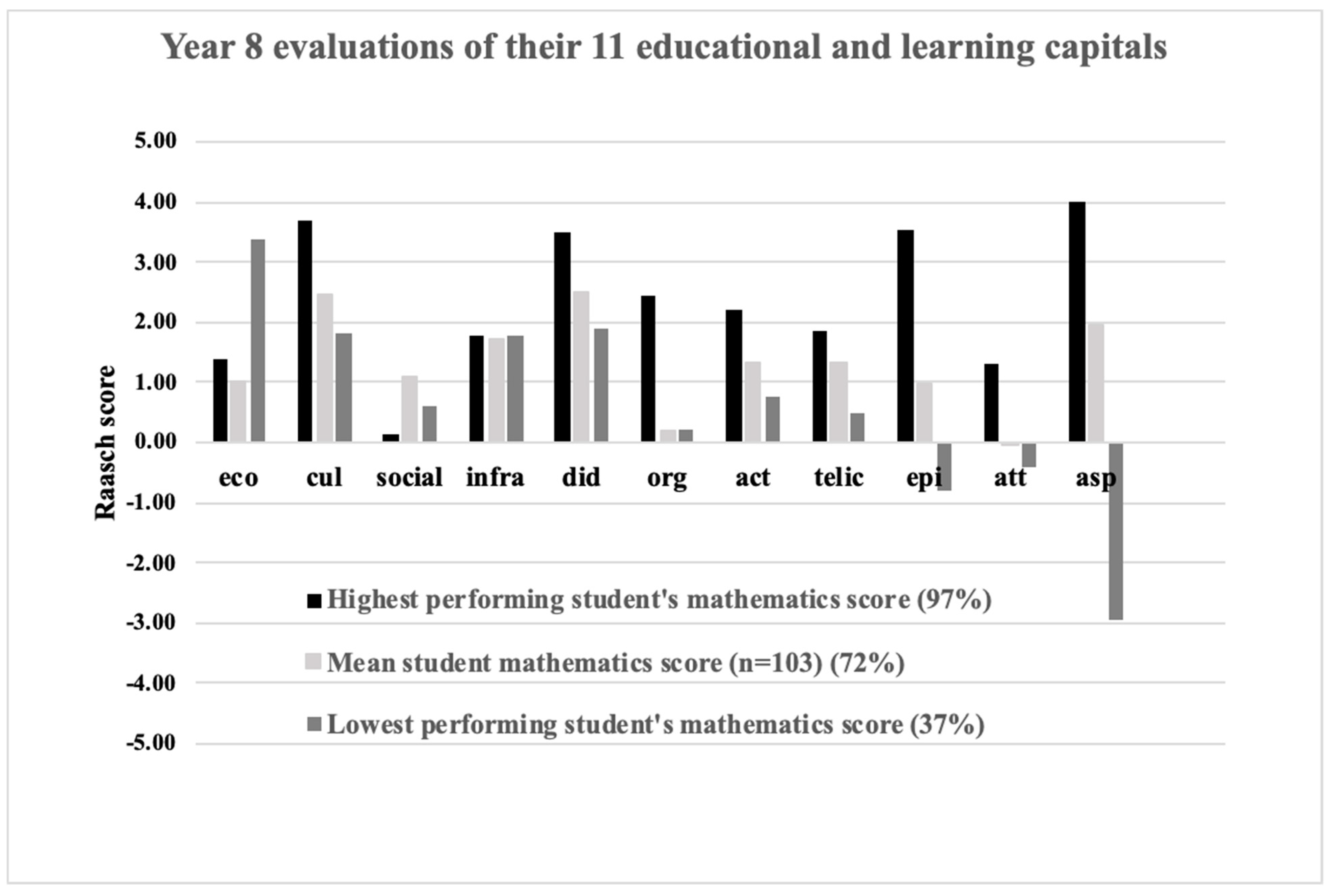
Susie is a Year 8 school student. Two years ago, Susie had ambitions to become an engineer. Her reading level was several years ahead of her classmates and she enjoyed learning mathematics. Today, Susie is now struggling academically and her parents and teachers are concerned that her mathematics achievement scores do not appear to match her potential. Furthermore, Susie’s parents and teachers agree that without some specific intervention, there is a danger that she may fall behind and not realize her dreams. The problem is: what intervention is needed? What is the likelihood that this intervention will raise her current mathematics score from 50% to 75%?
3. Research Based on the Actiotope Model of Giftedness
3.1. Validation Studies
3.2. Links between Capitals and Academic Achievement
3.3. Investigating the Systemic Nature of the AMG
4. Methodological Considerations in Current AMG Research
5. Clever Solutions—Artificial Neural Networks and the AMG
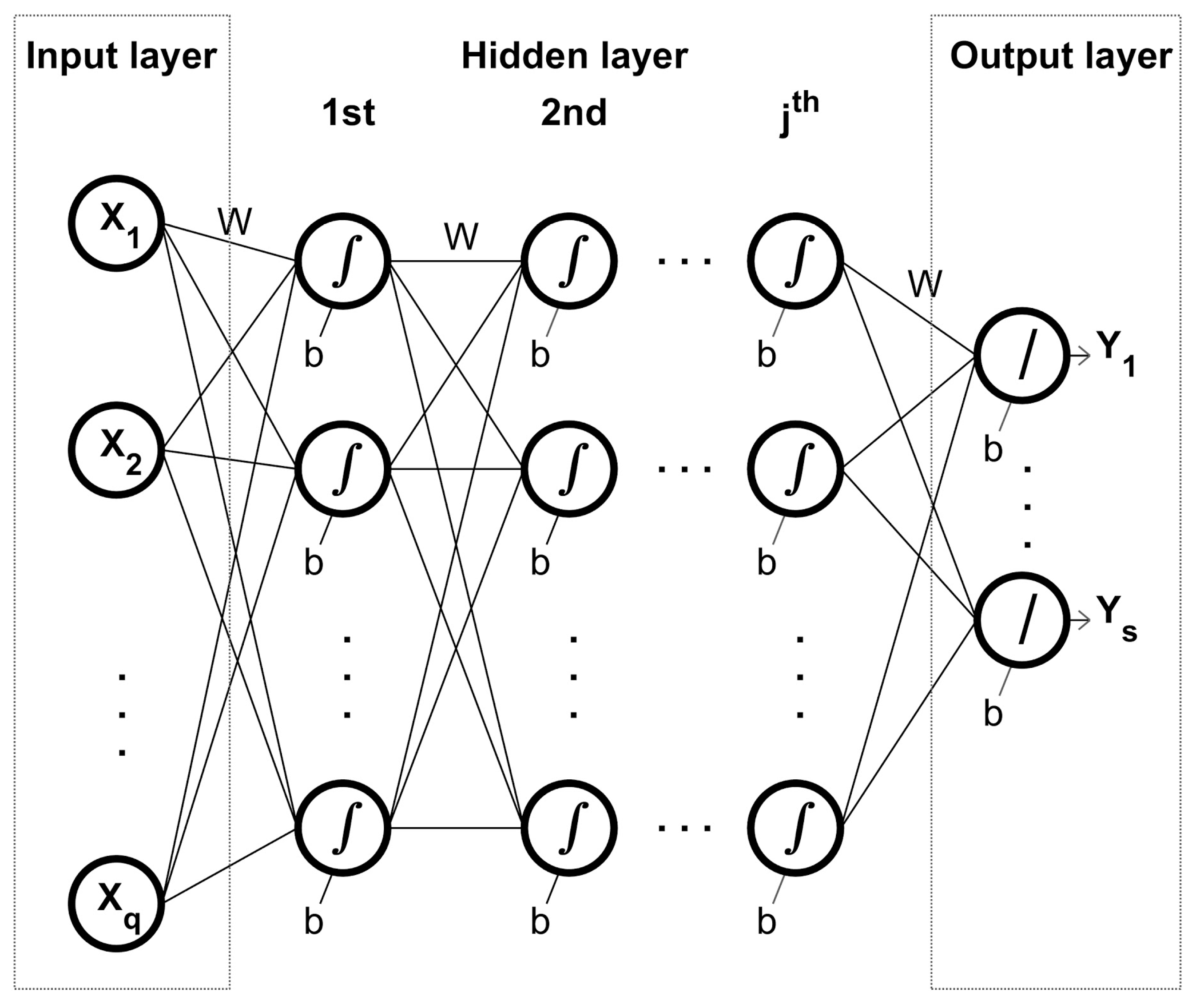
Basic Structure of Artificial Neural Network
- Number of neurons in the input layer—usually, the number of neurons in the input layer is the number of input variables. In the case of the AMG, this means that there would be 10 (or 11) neurons corresponding to the 10 (or 11) capitals. Additional input variables such as IQ score, gender, and year level could be added where deemed necessary. Here, we recommend Rasch-standardized survey scores for each capital and one-hot coding for gender. Although the year level is nominal information, it can be coded as interval-level data.
- Number of hidden layers—the general guideline is that fewer is better as neural networks with one hidden layer can map most relationships between input and output variables as long as there are sufficient neurons (Hornik et al. 1989). However, in some instances, models with two hidden layers outperform their one-hidden-layer counterparts (Thomas et al. 2016). Therefore, we advise researchers to test models with one and two hidden layers.
- Number of neurons in each hidden layer—the general guideline is that the number of neurons in each hidden layer should be fewer than the preceding layer (Huang 2003; Stathakis 2009). In practical terms, Thomas et al. (2016) provided guidelines for a ‘short-cut trajectory’ to identify the optical number of neurons within each hidden layer for ANNs with two hidden layers.
- The number of neurons in the output layer—the number in this layer is simply the number of output variables.
- Activation function—as information is transferred through each neuron, it undergoes a transformation. This transformation is referred to as an activation (or transfer) function and is selected to fit the values of the input and outputs of the ANN. Commonly used activation functions include linear, hard-limit, and log-sigmoid (Beale et al. 2017). Further choices of activation functions are listed in Table 2.1 of Hagan et al. (2014).
- Training function—the training function refers to how the weightings and biases are adjusted for each cycle. Using the appropriate parlance, researchers need to decide which back-propagation method is used, with common options including Levenberg-Marquardt and Bayesian regularization (Beale et al. 2017; Okut 2016).
- Specifying the proportion of the data set as training set and test set—usually, the complete data set is randomly divided into a training set (i.e., 70%) and test set (i.e., 30%). However, this proportion can be adjusted if necessary.
6. Approaches to and Benefits of Using Artificial Neural Networks to Model the AMG
7. Concluding Remarks
Author Contributions
Funding
Institutional Review Board Statement
Data Availability Statement
Conflicts of Interest
| 1 | Ziegler and Baker (2013, p. 35) preferred the term capital over resource becaue capitals could take negative values, are interchangeable with other capitals, generally need to be ‘earned’ and can grow. |
| 2 | Irrespective of this distinction, SEM assumes that measures are independent of each other (Byrne 2016; Morrison et al. 2017). In other words, data sets that are based on individual evaluations of all capitals contravene the assumption of data independence and, strictly speaking, should not be used in SEM. |
| 3 | There are two types of SEM, including covariance-based (CB) SEM and partial least squares structural equation modeling (PLS-SEM) (cf. Hair et al. 2021). Being the first to be developed, CB-SEM techniques seem to be more commonly used in education-related contexts whereas PLS-SEM is used more in business-related contexts. The strengths and limitations of each type of SEM are outlined in Hair et al. (2021). |
| 4 | |
| 5 | Indeed, Ziegler and colleagues have often posed similar questions. For example, Ziegler et al. (2018) asked What are the chances that students from Beijing No. 8 Middle School will win at least 20 gold medals at the International Mathematics Olympiad between 2020 and 2030? |
| 6 | We use the term to refer to parents, teachers and/or students. |
References
- Alamer, Saad M., and Shane N. Phillipson. 2020. Current status and future prospects of Saudi gifted education: A macro-systemic perspective. High Ability Studies 33: 21–44. [Google Scholar] [CrossRef] [Scilit]
- Alamer, Saad M., Shane N. Phillipson, Sivanes Phillipson, and Abdullah I. Al Fafi. 2022. The Saudi gifted educational and learning environment: Parents and student perspectives. High Ability Studies 34: 109–30. [Google Scholar] [CrossRef] [Scilit]
- Alfaiz, Fahad S., Abdulrahman A. Alfaid, and Abdullah M. Aljughaiman. 2022. Current status of gifted education in Saudi Arabia. Cogent Education 9: 2064585. [Google Scholar] [CrossRef] [Scilit]
- Asif, Raheela, Agathe Merceron, Syed Abbas Ali, and Najmi Ghani Haider. 2017. Analyzing undergraduate students’ performance using educational data mining. Computers and Education 113: 177–94. [Google Scholar] [CrossRef] [Scilit]
- Awad, Sarah, Wilma Vialle, and Albert Ziegler. 2020. Moving from sandwich to human body: Introducing the concept of embodiment to the field of gifted education. Journal for the Education of Gifted Young Scientists 8: 1523–33. [Google Scholar] [CrossRef] [Scilit]
- Ayoub, Alaa Eldin A., Ahmed M. Abdulla Alabbasi, and Ahmed Morsy. 2022. Gifted education in Egypt: Analyses from a learning-resource perspective. Cogent Education 9: 2082118. [Google Scholar] [CrossRef] [Scilit]
- Bakhiet, Salaheldin Farah, and Huda Mohamed. 2022. Gifted education in Sudan: Reviews from a learning-resource perspective. Cogent Education 9: 2034246. [Google Scholar] [CrossRef] [Scilit]
- Beale, Mark Hudson, Martin T. Hagan, and Howard B. Demuth. 2017. Neural Network Toolbox User’s Guide. Natick: The MathWorks, Inc. [Google Scholar]
- Bond, Trevor G., and Christine M. Fox. 2015. Applying the Rasch Model: Fundamental Measurement in the Human Sciences, 3rd ed. New York: Routledge. [Google Scholar]
- Bono, Roser, María J. Blanca, Jaume Arnau, and Juana Gómez-Benito. 2017. Non-normal distributions commonly used in health, education, and social sciences: A systematic review. Frontiers in Psychology 8: 1602. [Google Scholar] [CrossRef] [Scilit]
- Burden, Frank, and Dave Winkler. 2008. Bayesian regularization of neural networks. In Artificial Neural Networks. Berlin and Heidelberg: Springer, pp. 23–42. [Google Scholar]
- Byrne, Barbara M. 2016. Structural Equation Modeling with AMOS: Basic Concepts, Applications, and Programming, 3rd ed. New York: Routledge. [Google Scholar]
- Coronel, Grecia Emilia Ortiz, María De los Dolores Valadez Sierra, María Elena Rivera Heredia, Óscar Ulises Reynoso González, and Jaime Fuentes Balderrama. 2021. Validation of the Educational and Learning Capital Questionnaire (QELC) on the Mexican population. Psychological Test and Assessment Modeling 63: 227–38. [Google Scholar]
- Cruz-Jesus, Frederico, Mauro Castelli, Tiago Oliveira, Ricardo Mendes, Catarina Nunes, Mafalda Sa-Velho, and Ana Rosa-Louro. 2020. Using artificial intelligence methods to assess academic achievement in public high schools of a European Union country. Heliyon 6: e04081. [Google Scholar] [CrossRef] [Scilit]
- Deng, Lifang, Miao Yang, and Katerina M. Marcoulides. 2018. Structural Equation Modeling With Many Variables: A Systematic Review of Issues and Developments. Frontiers in Psychology 9: 580. [Google Scholar] [CrossRef] [Scilit]
- Feng, Shuo, Huiyu Zhou, and Hongbiao Dong. 2019. Using deep neural network with small dataset to predict material defects. Materials and Design 162: 300–10. [Google Scholar] [CrossRef] [Scilit]
- Gagné, Françoys. 2013. The DMGT: Changes within, beneath, and beyond. Talent Development and Excellence 5: 5–19. [Google Scholar]
- Gagné, Françoys. 2018. The DMGT/IMTD: Building talented outputs of gifted inputs. In Fundamentals of Gifted Education: Considering Multiple Perspectives. Edited by Carolyn M. Callahan and Holly L. Hertberg-Davis. New York: Routledge, pp. 22–31. [Google Scholar]
- Gagné, Françoys. 2021. Implementing the DMGT’s Constructs of Giftedness and Talent: What, Why, and How? In Handbook of Giftedness and Talent Development in the Asia-Pacific. Springer International Handbooks of Education. Edited by Susen R. Smith. Singapore: Springer. [Google Scholar] [CrossRef] [Scilit]
- Gari, Aikaterini D., Kostas Mylonas, Vassiliki Nikolopoulou, and Irina Mrvoljak. 2021. Educational and Learning Resources in a Greek Student Sample: QELC factor structure and methodological considerations. Psychological Test and Assessment Modeling 63: 205–26. [Google Scholar]
- Gilar-Corbi, Raquel, Alejandro Veas, Pablo Miñano, and Juan-Luis Castejón. 2019a. Differences in personal, familial, social, and school factors between underachieving and non-underachieving gifted secondary students. Frontiers in Psychology 10: 2367. [Google Scholar] [CrossRef] [Scilit] [PubMed]
- Gilar-Corbi, Raquel, Pablo Miñano, Alejandro Veas, and Juan-Luis Castejón. 2019b. Testing for invariance in a structural model of academic achievement across underachieving and non-underachieving students. Contemporary Educational Psychology 59: 101780. [Google Scholar] [CrossRef] [Scilit]
- Hagan, M. T., H. B. Demuth, M. H. Beale, and O. De Jesús. 2014. Neural Network Design, 2nd ed. Boston: PWS Publishing Co. [Google Scholar]
- Hair, Joseph F., Jr., G. Tomas M. Hult, Christian M. Ringle, Marko Sarstedt, Nicholas P. Danks, and Soumya Ray. 2021. Partial Least Squares Structural Equation Modeling (PLS-SEM) Using R: A Workbook. Berlin and Heidelberg: Springer Nature. [Google Scholar]
- Han, Cindy Di, Shane. N. Phillipson, and Vincent C. S. Lee. 2023. Artificial neural network modeling of student responses to the AMG and academic achievement. unpublished data.
- Hemdan, Ahmed Hassan, Abdallah Ambusaidi, and Tarik Al-Kharusi. 2022. Gifted Education in Oman: Analyses from a Learning-Resource Perspective. Cogent Education 9: 2064410. [Google Scholar] [CrossRef] [Scilit]
- Hoffait, Anne-Sophie, and Michael Schyns. 2017. Early detection of university students with potential difficulties. Decision Support Systems 101: 1–11. [Google Scholar] [CrossRef] [Scilit]
- Hornik, Kurt, Maxwell Stinchcombe, and Halbert White. 1989. Multilayer feedforward networks are universal approximators. Neural Networks 2: 359–66. [Google Scholar] [CrossRef] [Scilit]
- Hsieh, Manying. 2022. The Relationships Between Home-Based Parental Involvement, Study Habits and Academic Achievement among Adolescents. The Journal of Early Adolescence 43: 02724316221101527. [Google Scholar] [CrossRef] [Scilit]
- Huang, Guang-Bin. 2003. Learning capability and storage capacity of two-hidden-layer feedforward networks. IEEE Transactions on Neural Networks 14: 274–81. [Google Scholar] [CrossRef] [Scilit] [PubMed]
- Kayri, Murat. 2016. Predictive abilities of Bayesian regularization and Levenberg–Marquardt algorithms in artificial neural networks: A comparative empirical study on social data. Mathematical and Computational Applications 21: 20. [Google Scholar] [CrossRef] [Scilit]
- Kollmayer, Marlene, Marie-Therese Schultes, Marko Lüftenegger, Monika Finsterwald, Christiane Spiel, and Barbara Schober. 2020. REFLECT–A teacher training program to promote gender equality in schools. Frontiers in Education 5: 136. [Google Scholar] [CrossRef] [Scilit]
- Lafferty, Kate, Shane N. Phillipson, and Shane Costello. 2020. Educational resources and gender norms: An examination of the actiotope model of giftedness and social gender norms on achievement. High Ability Studies 32: 171–87. [Google Scholar] [CrossRef] [Scilit]
- Leana-Taşcılar, Marilena Z. 2015a. The actiotope model of giftedness: Its relationship with motivation, and the prediction of academic achievement among Turkish students. The Educational and Developmental Psychologist 32: 41–55. [Google Scholar] [CrossRef] [Scilit]
- Leana-Taşcılar, Marilena Z. 2015b. Age differences in the Actiotope Model of Giftedness in a Turkish sample. Psychological Test and Assessment Modeling 57: 111–25. [Google Scholar]
- Leana-Taşcılar, Marilena Z. 2016. Turkish adaptation of the educational-learning capital questionnaire: Results for gifted and non-gifted students. Gifted and Talented International 31: 102–13. [Google Scholar] [CrossRef] [Scilit]
- Lin, Xin, and Sarah R. Powell. 2022. The Roles of Initial Mathematics, Reading, and Cognitive Skills in Subsequent Mathematics Performance: A Meta-Analytic Structural Equation Modeling Approach. Review of Educational Research 92: 288–325. [Google Scholar] [CrossRef] [Scilit]
- Matthews, Michael S., and Jennifer L. Jolly. 2022. Why Hasn’t the Gifted Label Caught up with Science? Journal of Intelligence 10: 84. [Google Scholar] [CrossRef] [Scilit] [PubMed]
- Mendl, Anamaria, Bettina Harder, and Wilma Vialle. 2021. Moderating Effects of Educational and Learning Capital on the Consequences of Performance Feedback. Psychological Test and Assessment Modeling 63: 239–69. [Google Scholar]
- Morrison, Todd G., Melanie A. Morrison, and Jessica M. McCutcheon. 2017. Best Practice Recommendations for Using Structural Equation Modeling in Psychological Research. Psychology 8: 1326–41. [Google Scholar] [CrossRef]
- Mudrak, Jiri, Katerina Zabrodska, and Katerina Machovcova. 2020. Psychological constructions of learning potential and a systemic approach to the development of excellence. High Ability Studies 31: 181–212. [Google Scholar] [CrossRef] [Scilit]
- Musso, Mariel F., Carlos Felipe Rodríguez Hernández, and Eduardo C. Cascallar. 2020. Predicting key educational outcomes in academic trajectories: A machine-learning approach. Higher Education 80: 875–94. [Google Scholar] [CrossRef] [Scilit]
- Niknam, Karim, and Mustafa Baloğlu. 2021. Validating the Persian Version of Questionnaire of Educational and Learning Capital (QELC) in Iran. Chowanna 57: 1–19. Available online: https://www.journals.us.edu.pl/index.php/CHOWANNA/article/view/12838/10357 (accessed on 1 April 2023). [CrossRef] [Scilit]
- Okut, Hayrettin. 2016. Bayesian regularized neural networks for small n big p data. Artificial Neural Networks Models and Applications 2: 27–48. [Google Scholar] [CrossRef] [Scilit]
- Paz-Baruch, Nurit. 2015. Validation study of the Questionnaire of Educational and Learning Capital (QELC) in Israel. Psychological Test and Assessment Modeling 57: 222–35. [Google Scholar]
- Paz-Baruch, Nurit. 2017. Educational and learning capitals of israeli students with high achievements in mathematics. Journal for the Education of the Gifted 40: 334–49. [Google Scholar] [CrossRef] [Scilit]
- Paz-Baruch, Nurit. 2020. Educational and learning capital as predictors of general intelligence and scholastic achievements. High Ability Studies 31: 75–91. [Google Scholar] [CrossRef] [Scilit]
- Phillipson, Shane N., and Albert Ziegler. 2021. Towards Exceptionality: The Current Status and Future Prospects of Australian Gifted Education. In Handbook of Giftedness and Talent Development in the Asia-Pacific. Edited by Susen R. Smith. Singapore: Springer International Handbooks of Education. [Google Scholar] [CrossRef] [Scilit]
- Phillipson, Shane N., Cindy Di Han, Sivanes Phillipson, and Wayne Jaeschke. n.d. Learning at home: Australian parents respond to the challenges of COVID-19. Australian Journal of Education.
- Phillipson, Shane N., Heidrun Stoeger, and Albert Ziegler, eds. 2013. Exceptionality in East Asia: Explorations in the Actiotope Model of Giftedness. New York: Routledge, pp. 18–39. [Google Scholar]
- Phillipson, Shane N., Sivanes Phillipson, and Mariko Anwen Francis. 2017. Validation of the Family Educational and Learning Capitals Questionnaire in Australia. Journal for the Education of the Gifted 40: 350–71. [Google Scholar] [CrossRef] [Scilit]
- Phillipson, Sivanes, Eugenia Koh, and Salwa Sujuddin. 2019. Academic or else: Singapore parents’ aspirations for their children’s early education. In Teachers’ and Families’ Perspectives in Early Childhood Education and Care. Edited by Sivanes Phillipson and Susanne Garvis. London: Routledge, vol. 2, pp. 193–209. [Google Scholar]
- Phillipson, Sivanes, Shane N. Phillipson, and Sarika Kewalramani. 2018. Cultural Variability in the Educational and Learning Capitals of Australian Families and Its Relationship With Children’s Numeracy Outcomes. Journal for the Education of the Gifted 41: 348–68. [Google Scholar] [CrossRef] [Scilit]
- Piirto, Jane. 2021. Talented Children and Adults: Their Development and Education, 3rd ed. New York: Routledge. [Google Scholar]
- Renzulli, Joseph S., and Sally M. Reis. 2021. The Schoolwide Enrichment Model: A How-To Guide for Talent Development, 3rd ed. New York: Routledge. [Google Scholar]
- Richards, Gerarda, Sivanes Phillipson, and Ann Gervasoni. 2019. Australian families’ perceptions of access to capitals to support early mathematical learning. In Teachers’ and Families’ Perspectives in Early Childhood Education and Care. Edited by Sivanes Phillipson and Susanne Garvis. London: Routledge, vol. 2, pp. 7–24. [Google Scholar]
- Skorobogatova, Anna S., and Irina N. Melikhova. 2021. Work with Gifted Young People: A Survey of Practices of the Leading Russian Universities. International Journal of Emerging Technologies in Learning 16: 11. [Google Scholar] [CrossRef] [Scilit]
- Stathakis, Dimitris. 2009. How many hidden layers and nodes? International Journal of Remote Sensing 30: 2133–47. [Google Scholar] [CrossRef] [Scilit]
- Subotnik, Rena Faye, Paula Olszewski-Kubilius, and Frank C. Worrell. 2019. Environmental factors and personal characteristics interact to yield high performance in domains. Frontiers in Psychology 10: 2804. [Google Scholar] [CrossRef] [Scilit] [PubMed]
- Sun, Qi, Wen-Gang Che, and Hong-Liang Wang. 2014. Bayesian regularization BP neural network model for the stock price prediction. In Foundations and Applications of Intelligent Systems. Berlin and Heidelberg: Springer, pp. 521–31. [Google Scholar]
- Thomas, Alan J., Simon D. Walters, Saeed Malekshahi Gheytassi, Robert E. Morgan, and Miltos Petridis. 2016. On the optimal node ratio between hidden layers: A probabilistic study. International Journal of Machine Learning and Computing 6: 241. [Google Scholar] [CrossRef] [Scilit]
- Vialle, Wilma. 2017. Supporting giftedness in families: A resources perspective. Journal for the Education of the Gifted 40: 372–93. [Google Scholar] [CrossRef] [Scilit]
- Visier-Alfonso, María Eugenia, Mairena Sánchez-López, Celia Álvarez-Bueno, Abel Ruiz-Hermosa, Marta Nieto-López, and Vicente Martínez-Vizcaíno. 2022. Mediators between physical activity and academic achievement: A systematic review. Scandinavian Journal of Medicine and Science in Sorts 32: 452–64. [Google Scholar] [CrossRef] [Scilit]
- Vladut, Anamaria, Qian Liu, Marilena Z. Leana-Tascila, Wilma Vialle, and Albert Ziegler. 2013. A cross-cultural validation study of the Questionnaire of Educational and Learning Capital (QELC) in China, Germany and Turkey. Psychological Test and Assessment Modeling 55: 462. [Google Scholar]
- Vladut, Anamaria, Wilma Vialle, and Albert Ziegler. 2015. Learning resources within the Actiotope: A validation study of the QELC (Questionnaire of Educational and Learning Capital). Psychological Test and Assessment Modeling 57: 40–56. [Google Scholar]
- Vladut, Anamaria, Wilma Vialle, and Albert Ziegler. 2016. Two studies of the empirical basis of two learning resource-oriented motivational strategies for gifted educators. High Ability Studies 27: 39–60. [Google Scholar] [CrossRef] [Scilit]
- Waheed, Hajra, Saeed-Ul Hassan, Naif Radi Aljohani, Julie Hardman, Salem Alelyani, and Raheel Nawaz. 2020. Predicting academic performance of students from VLE big data using deep learning models. Computers in Human Behavior 104: 106189. [Google Scholar] [CrossRef] [Scilit]
- Wolf, Erika J., Kelly M. Harrington, Shaunna L. Clark, and Mark W. Miller. 2013. Sample Size Requirements for Structural Equation Models: An Evaluation of Power, Bias, and Solution Propriety. Educational and Psychological Measurement 76: 913–34. [Google Scholar] [CrossRef] [Scilit] [PubMed]
- Xu, Xing, Jianzhong Wang, Hao Peng, and Ruilin Wu. 2019. Prediction of academic performance associated with internet usage behaviors using machine learning algorithms. Computers in Human Behavior 98: 166–73. [Google Scholar] [CrossRef] [Scilit]
- Yağcı, Mustafa. 2022. Educational data mining: Prediction of students’ academic performance using machine learning algorithms. Smart Learning Environments 9: 11. [Google Scholar] [CrossRef] [Scilit]
- Ziegler, Albert. 2005. The Actiotope model of giftedness. In Conceptions of Giftedness, 2nd ed. Edited by Robert J. Sternberg and Janet E. Davidson. Cambridge: Cambridge University Press, pp. 411–36. [Google Scholar]
- Ziegler, Albert, and Heidrun Stoeger. 2017. Systemic gifted education: A theoretical introduction. Gifted Child Quarterly 61: 183–93. [Google Scholar] [CrossRef] [Scilit]
- Ziegler, Albert, and Joseph Baker. 2013. Talent development as adaptation: The role of educational and learning capital. In Exceptionality in East Asia: Explorations in the Actiotope Model of Giftedness. Edited by Shane N. Phillipson, Heidrun Stoeger and Albert Ziegler. New York: Routledge, pp. 18–39. [Google Scholar]
- Ziegler, Albert, and Shane N. Phillipson. 2012. Towards a systemic theory of gifted education. High Ability Studies 23: 3–30. [Google Scholar] [CrossRef] [Scilit]
- Ziegler, Albert, Daniel Patrick Balestrini, and Heidrun Stoeger. 2018. An international view of gifted education: Incorporating the macro-systemic perspective. In Handbook of Giftedness in Children, 2nd ed. Edited by Steven I. Pfeiffer. Cham: Springer, pp. 15–28. [Google Scholar]
- Ziegler, Albert, Katharina L. Gryc, Manuel DS Hopp, and Heidrun Stoeger. 2021. Spaces of possibilities: A theoretical analysis of mentoring from a regulatory perspective. Annals of the New York Academy of Sciences 1483: 174–98. [Google Scholar] [CrossRef] [Scilit]
- Ziegler, Albert, Kimberley L. Chandler, Wilma Vialle, and Heidrun Stoeger. 2017. Exogenous and endogenous learning resources in the actiotope model of giftedness and its significance for gifted education. Journal for the Education of the Gifted 40: 310–33. [Google Scholar] [CrossRef] [Scilit]
- Ziegler, Albert, Wilma Vialle, and Bastian Wimmer. 2013. The Actiotope Model of Giftedness: A short introduction to some central theoretical assumptions. In Exceptionality in East-Asia: Explorations in the Actiotope Model of Giftedness. Edited by Shane N. Phillipson, Heidrun Stoeger and Albert Ziegler. London: Routledge, pp. 1–17. [Google Scholar]
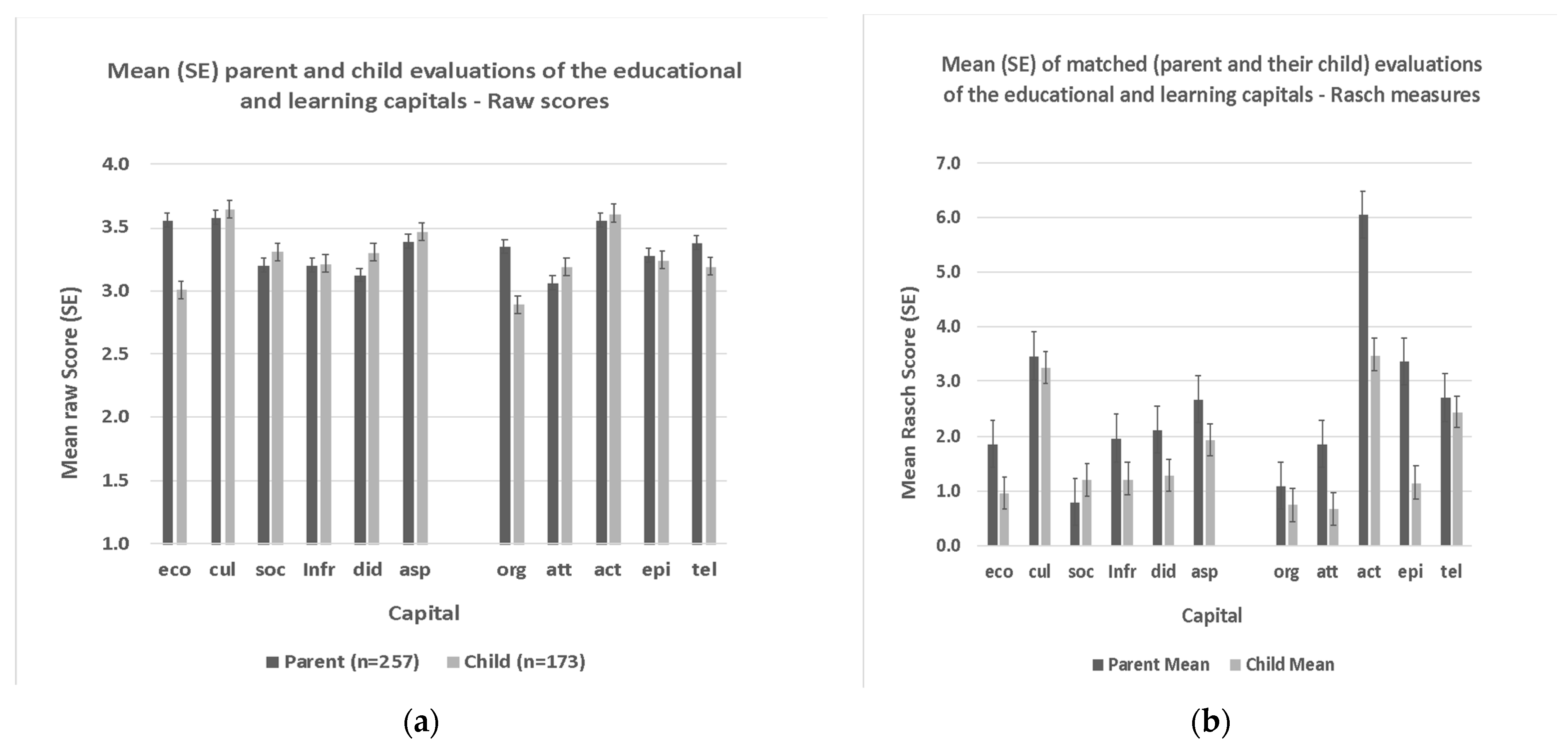


| Exogenous Capitals | Endogenous Capitals |
|---|---|
| Economic educational capital (eco) includes every kind of wealth, possession, money, or valuable that can be invested in the initiation and maintenance of educational and learning processes. | Organismic learning capital (org) consists of the physiological and constitutional resources of a person. |
| Cultural educational capital (cul) includes value systems, thinking patterns, models, and the like that can facilitate or hinder the attainment of learning goals. | Actional learning capital (act) denotes the action repertoire of a person—the totality of actions they are capable of performing. |
| Social educational capital (soc) includes all persons and social institutions that can directly or indirectly contribute to the success of learning. | Telic learning capital (tel) comprises the totality of a person’s anticipated goal states that offer possibilities for satisfying a person’s performance. |
| Infrastructural educational capital (infra) relates to materially implemented possibilities for action that permit learning to take place. | Episodic learning capital (epi) concerns the simultaneous goal- and situation-relevant action patterns that are accessible to a person. |
| Didactic educational capital (did) means the assembled know-how involved in the design and improvement of learning processes. | Attentional learning capital (att) denotes the quantitative and qualitative attentional resources that a person can apply to learning. |
| Aspirational educational capital (asp) refers to the value placed on higher education. | |
Disclaimer/Publisher’s Note: The statements, opinions and data contained in all publications are solely those of the individual author(s) and contributor(s) and not of MDPI and/or the editor(s). MDPI and/or the editor(s) disclaim responsibility for any injury to people or property resulting from any ideas, methods, instructions or products referred to in the content. |
© 2023 by the authors. Licensee MDPI, Basel, Switzerland. This article is an open access article distributed under the terms and conditions of the Creative Commons Attribution (CC BY) license (https://creativecommons.org/licenses/by/4.0/).
Share and Cite
Phillipson, S.N.; Han, C.D.; Lee, V.C.S. Artificial Neural Networks and the Actiotope Model of Giftedness—Clever Solutions from Complex Environments. J. Intell. 2023, 11, 128. https://doi.org/10.3390/jintelligence11070128
Phillipson SN, Han CD, Lee VCS. Artificial Neural Networks and the Actiotope Model of Giftedness—Clever Solutions from Complex Environments. Journal of Intelligence. 2023; 11(7):128. https://doi.org/10.3390/jintelligence11070128
Chicago/Turabian StylePhillipson, Shane N., Cindy Di Han, and Vincent C. S. Lee. 2023. "Artificial Neural Networks and the Actiotope Model of Giftedness—Clever Solutions from Complex Environments" Journal of Intelligence 11, no. 7: 128. https://doi.org/10.3390/jintelligence11070128
APA StylePhillipson, S. N., Han, C. D., & Lee, V. C. S. (2023). Artificial Neural Networks and the Actiotope Model of Giftedness—Clever Solutions from Complex Environments. Journal of Intelligence, 11(7), 128. https://doi.org/10.3390/jintelligence11070128