

Deep Learning Enriched Automation in Damage Detection for Sustainable Operation in Pipelines with Welding Defects under Varying Embedment Conditions





Abstract
:1. Introduction
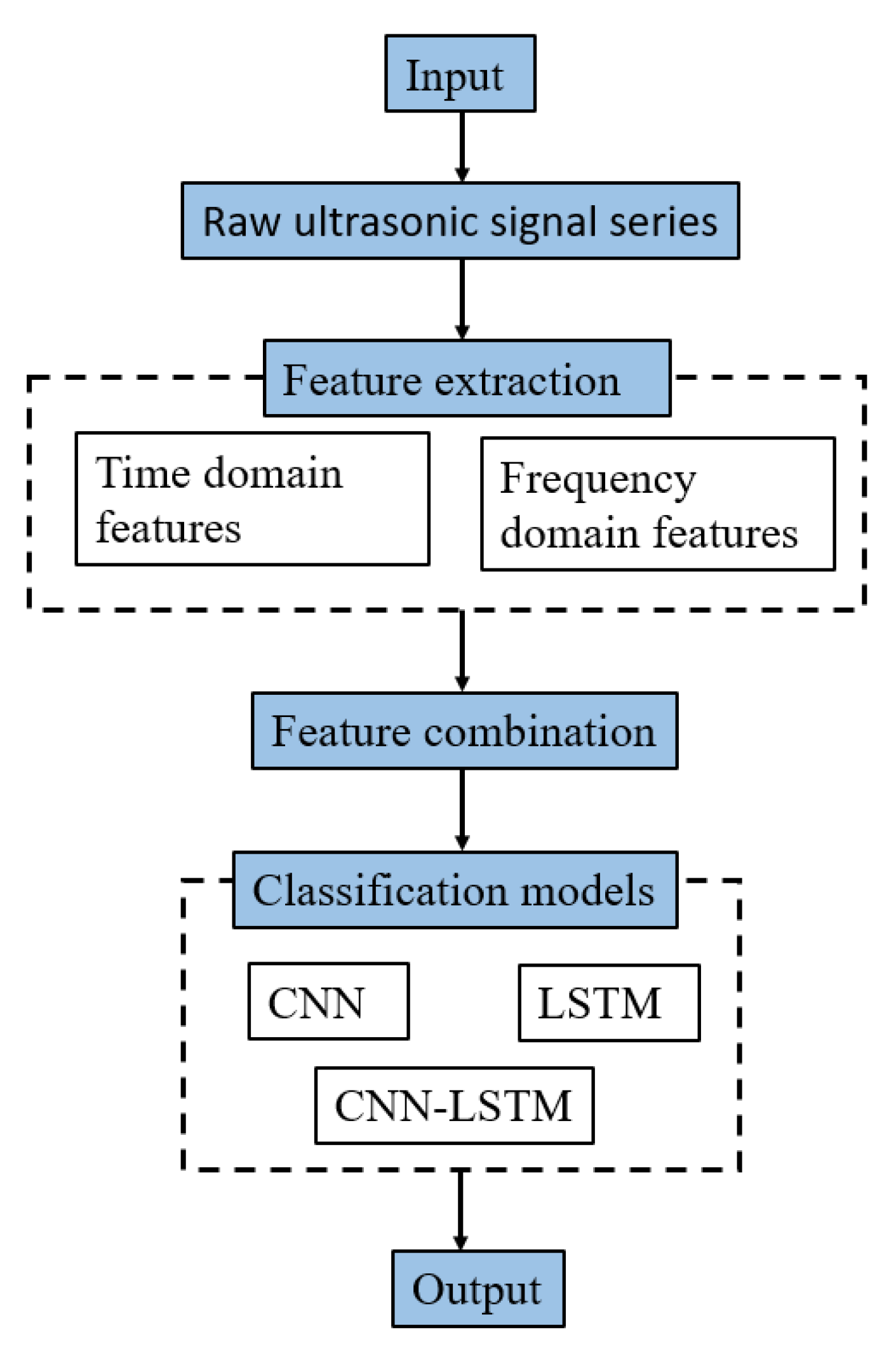
2. Deep Learning Enriched Automation in Damage Detection
2.1. CNN Model
2.2. LSTM Model
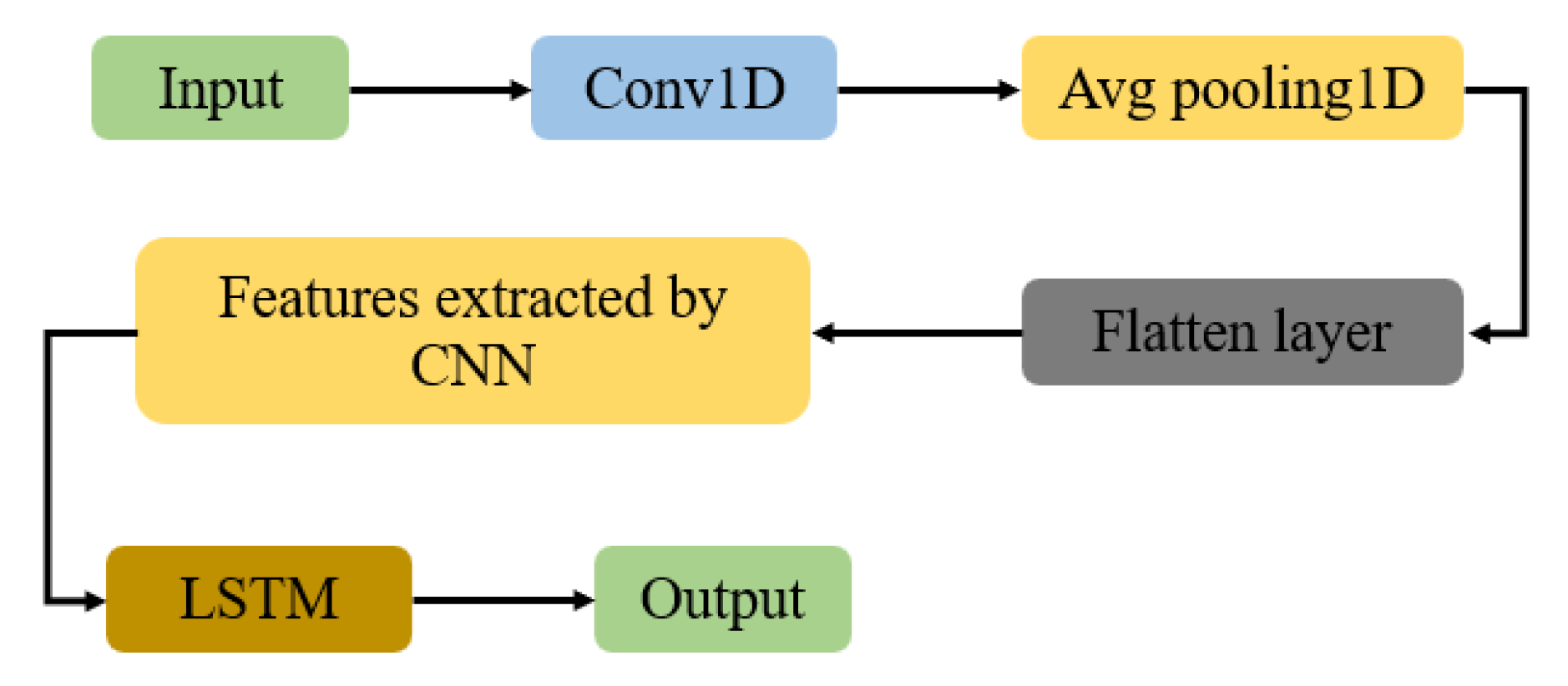
2.3. CNN-LSTM Hybrid Model
2.4. Features Extraction
Definition of Features
2.5. Evaluation of Model Performances
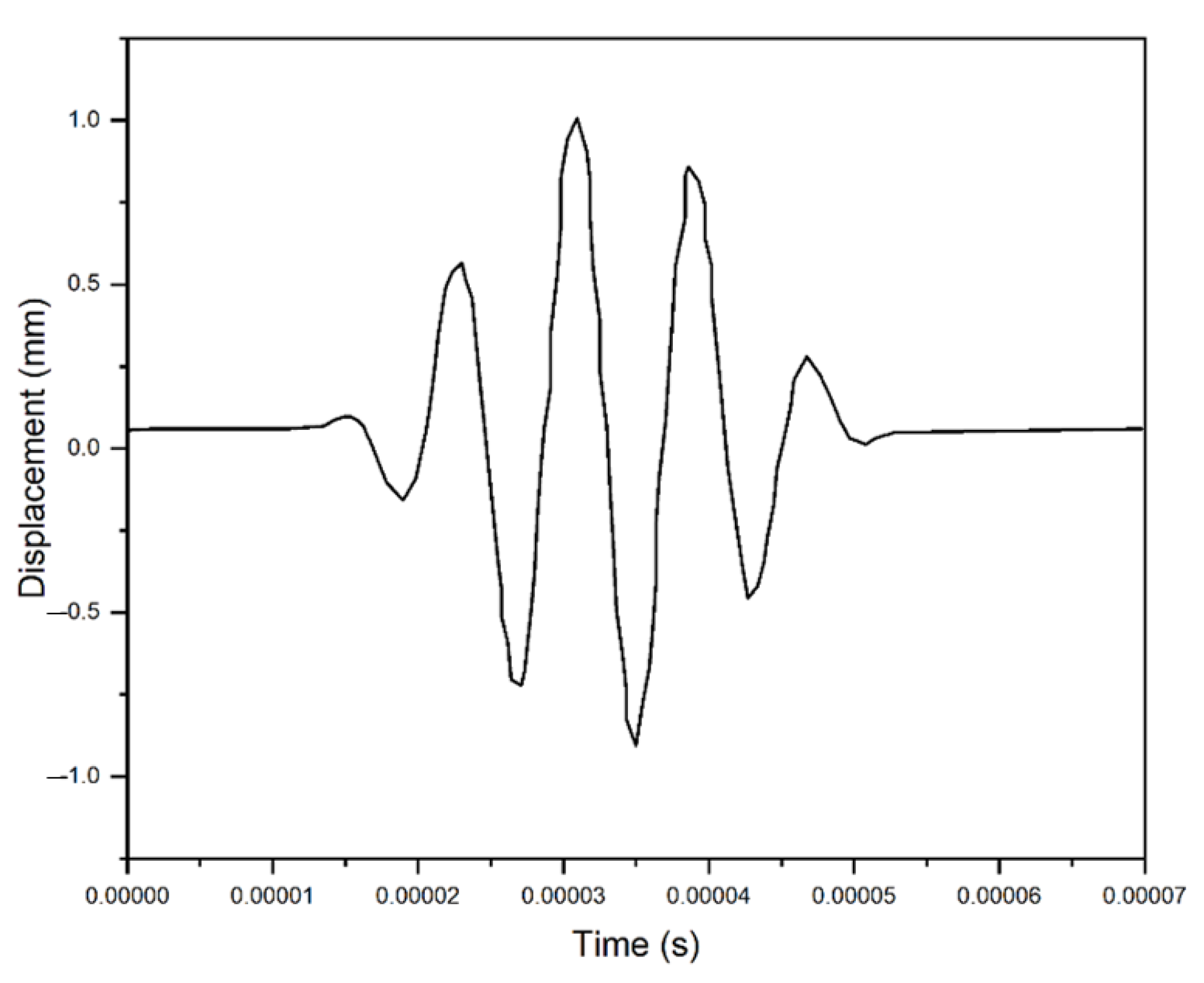
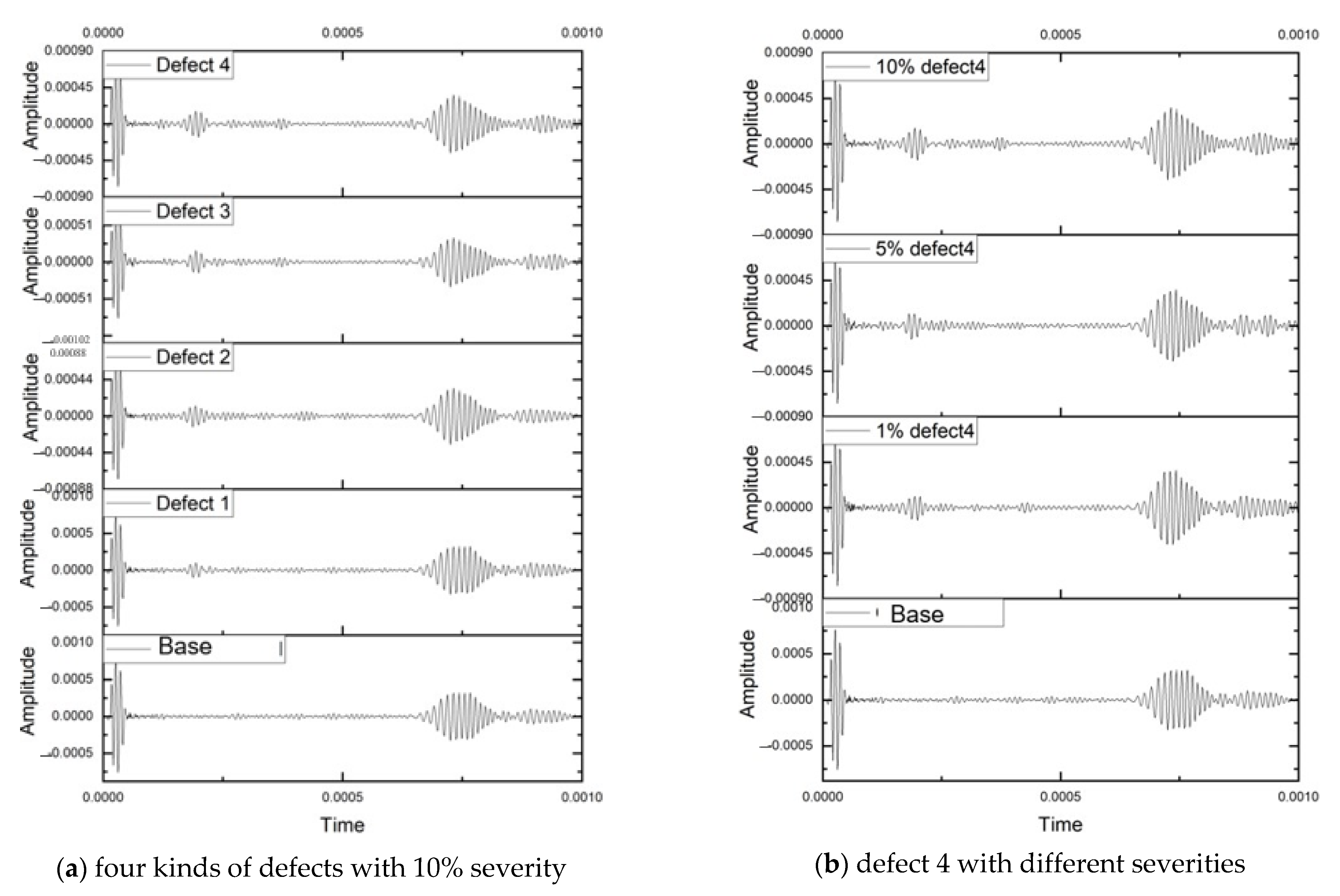
3. Datasets Generated from Lamb Wave Approaches
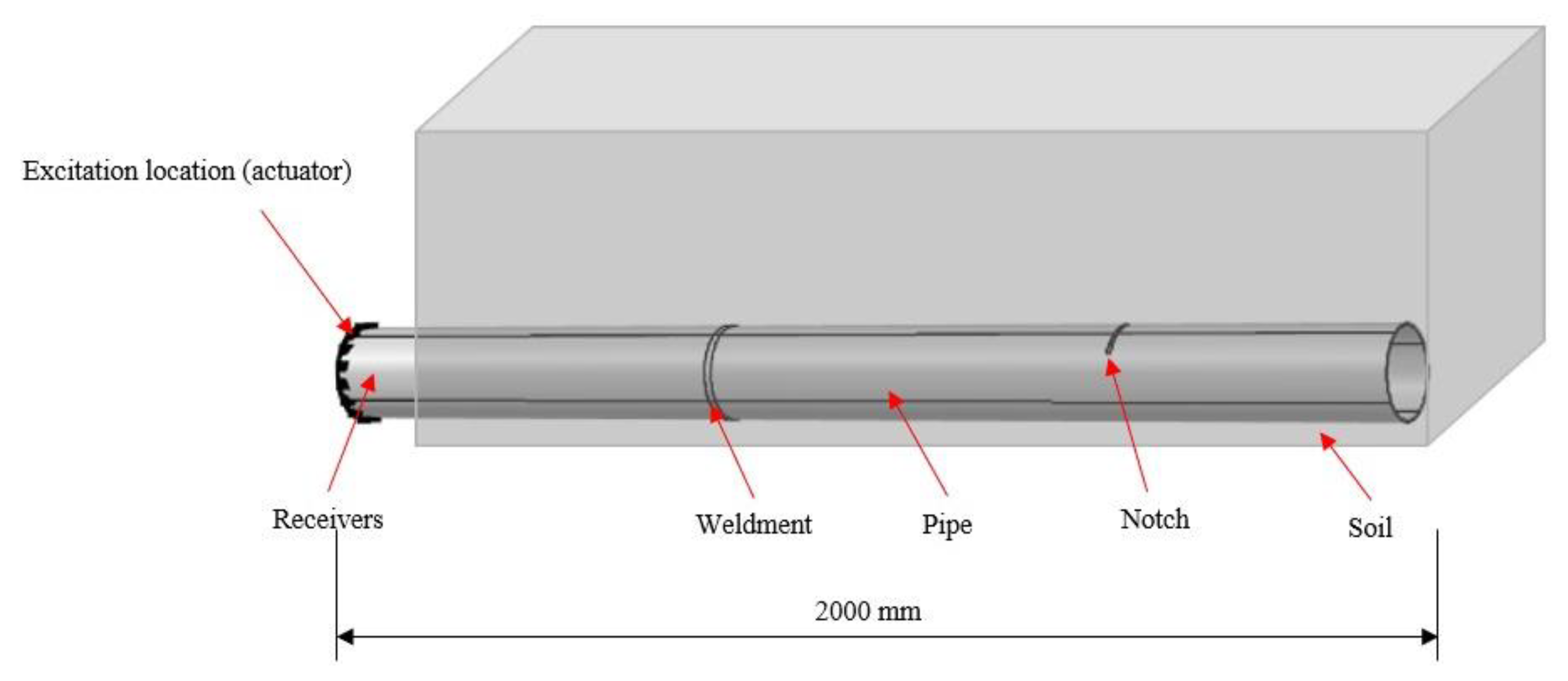
3.1. Model Construction from COMSOL
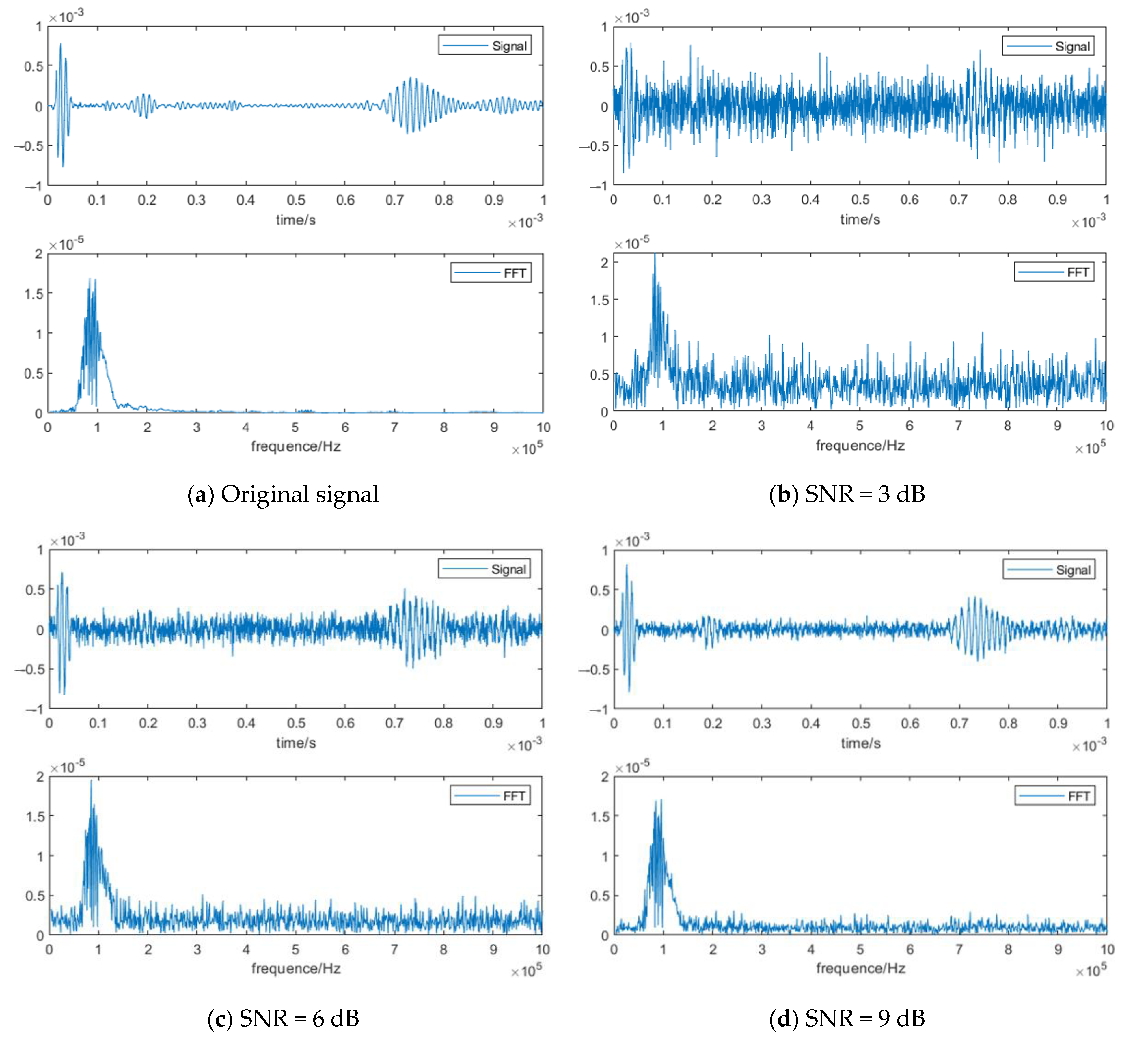
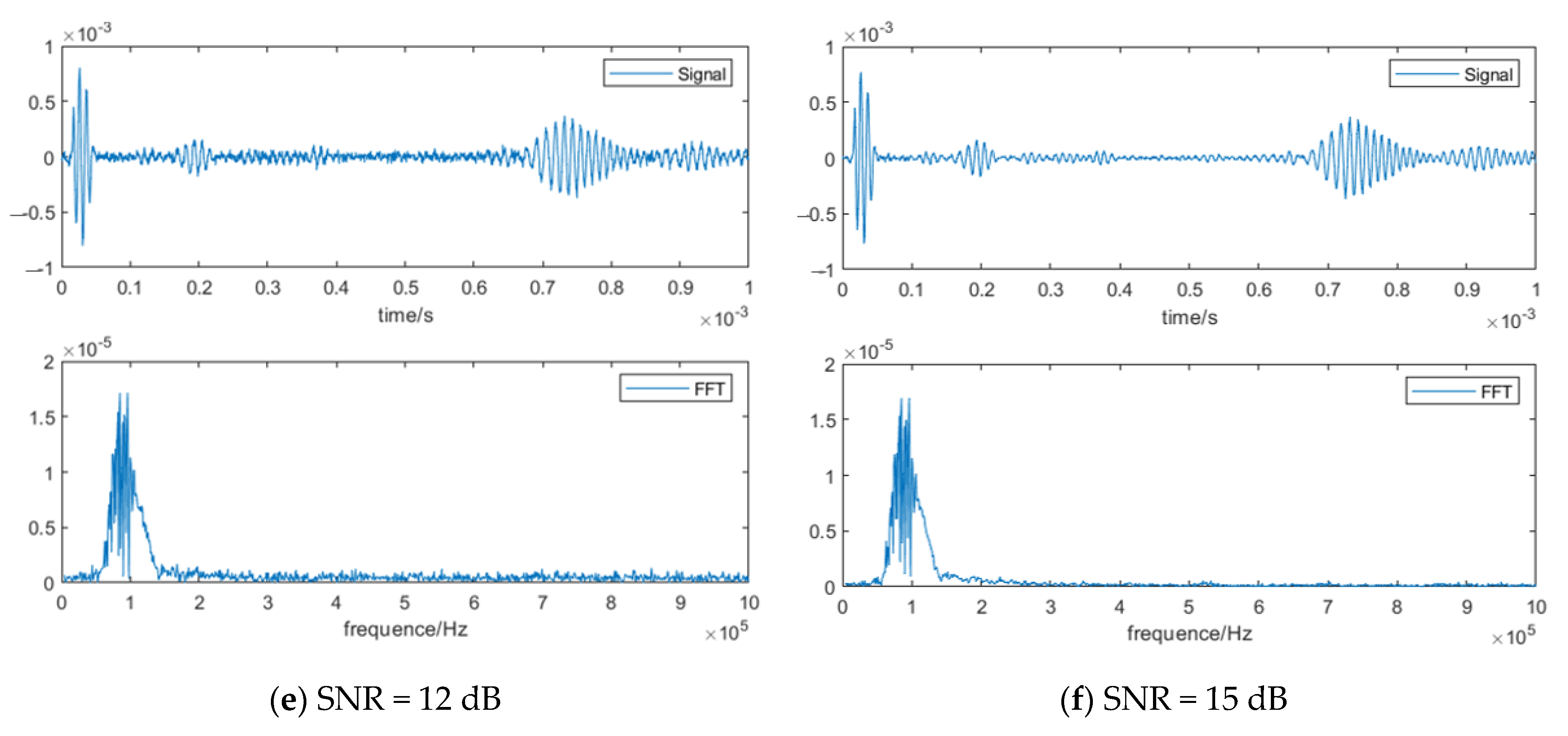
3.2. Signals with Noise Interference
4. Results and Discussion
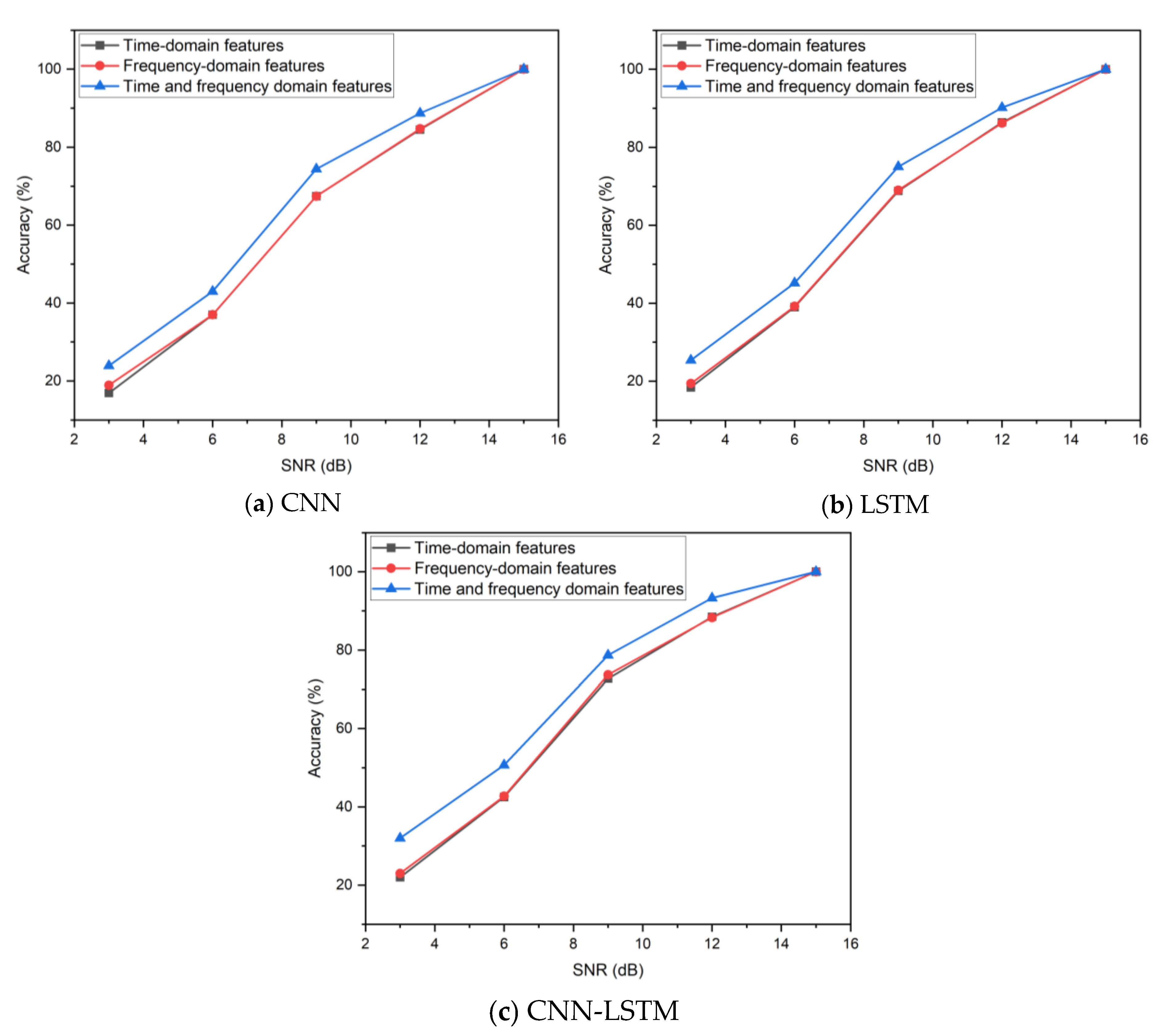
4.1. Impacts of Features on the Performance of the Deep Learning Models (Case 1)
Comparison of the Performance of Three Deep Learning Models (Case 1)
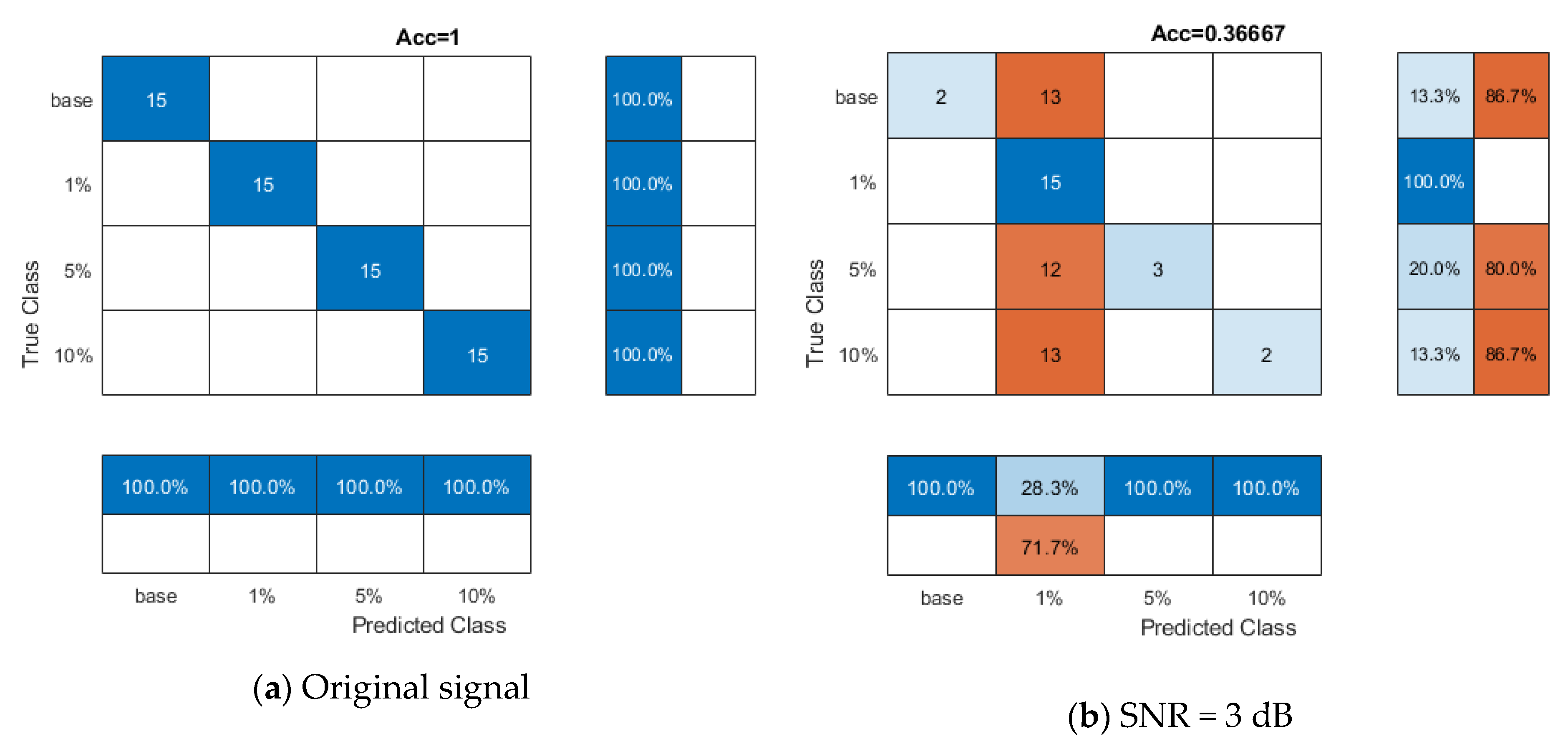
4.2. Classification Performance of CNN, LSTM and CNN-LSTM Models (Case 2)
5. Further Discussion of Pipelines under Different Embedment
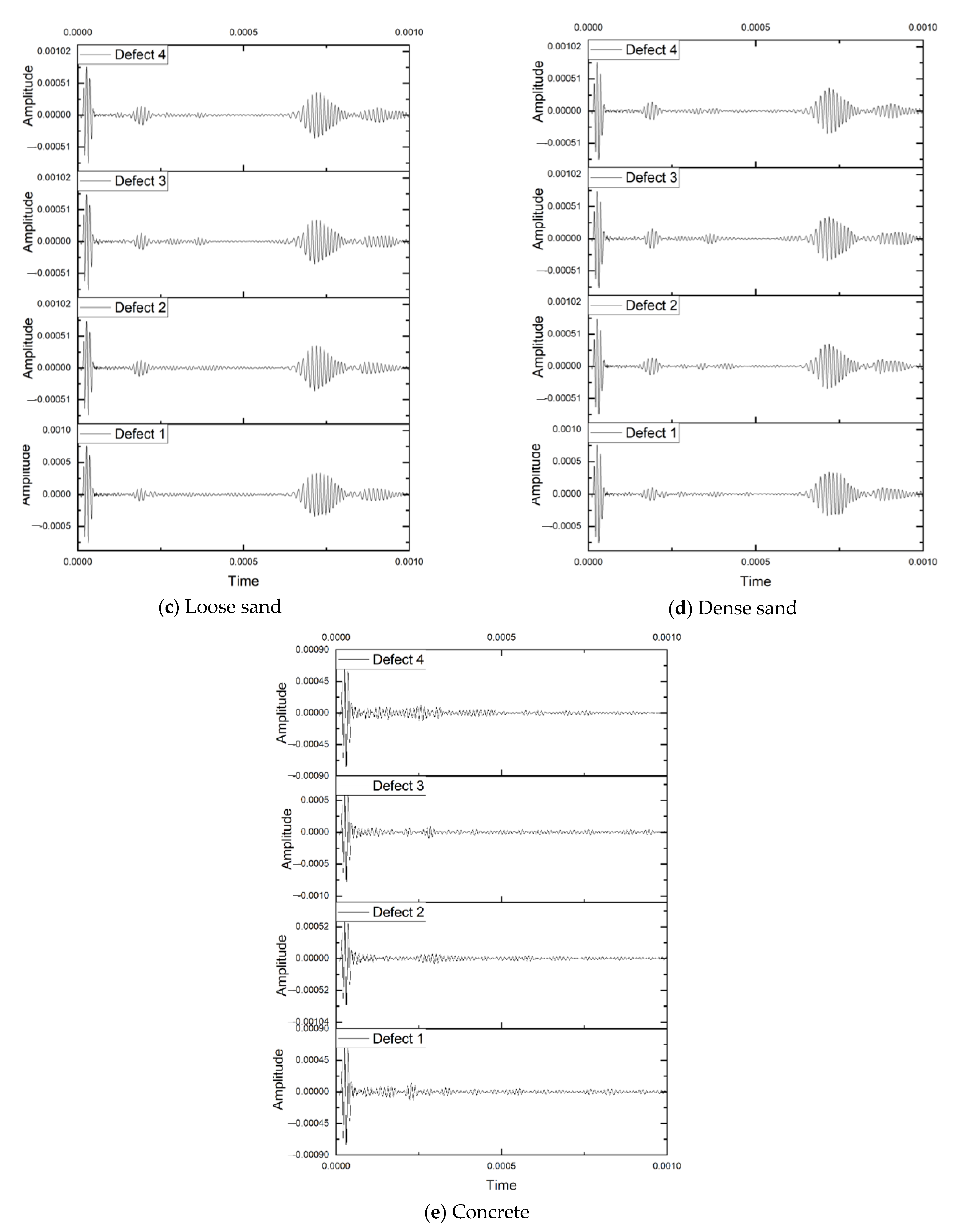
5.1. Signal Characteristics of the Pipes under Different Embedment Materials
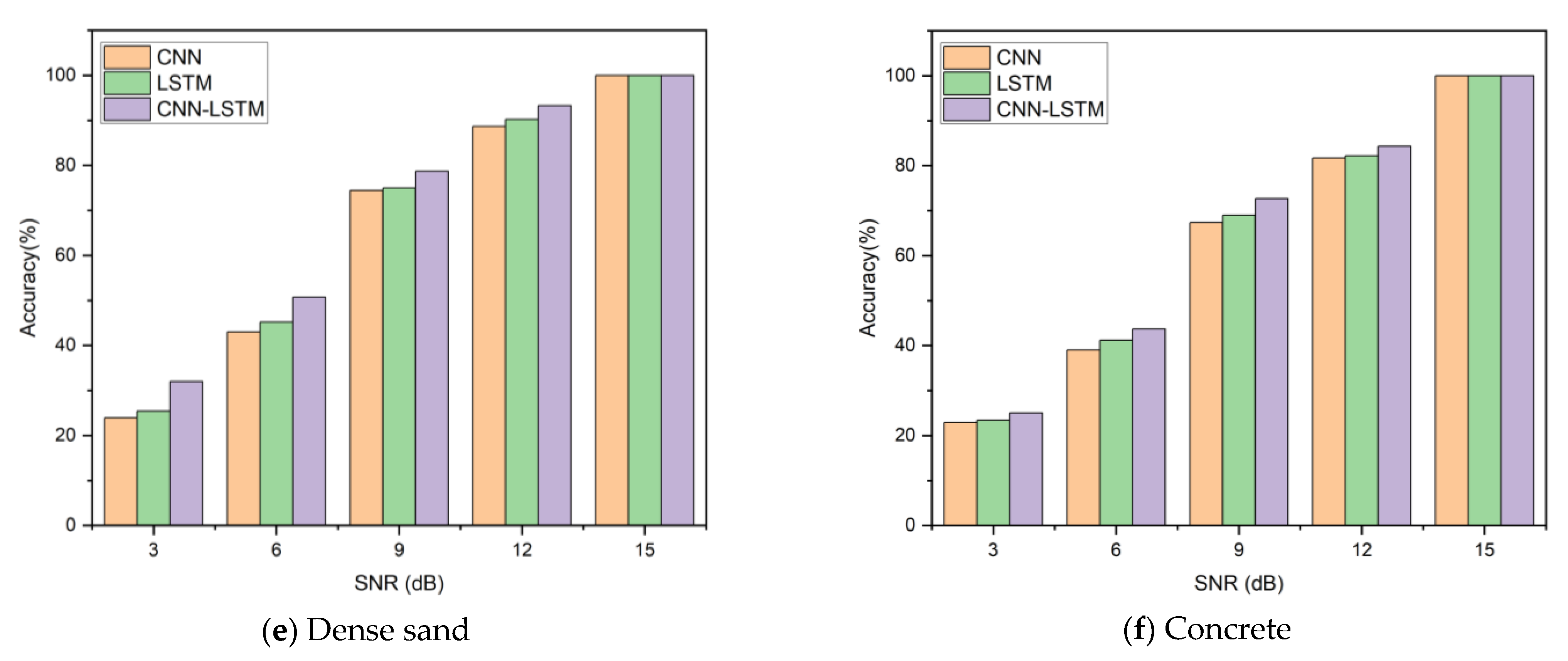
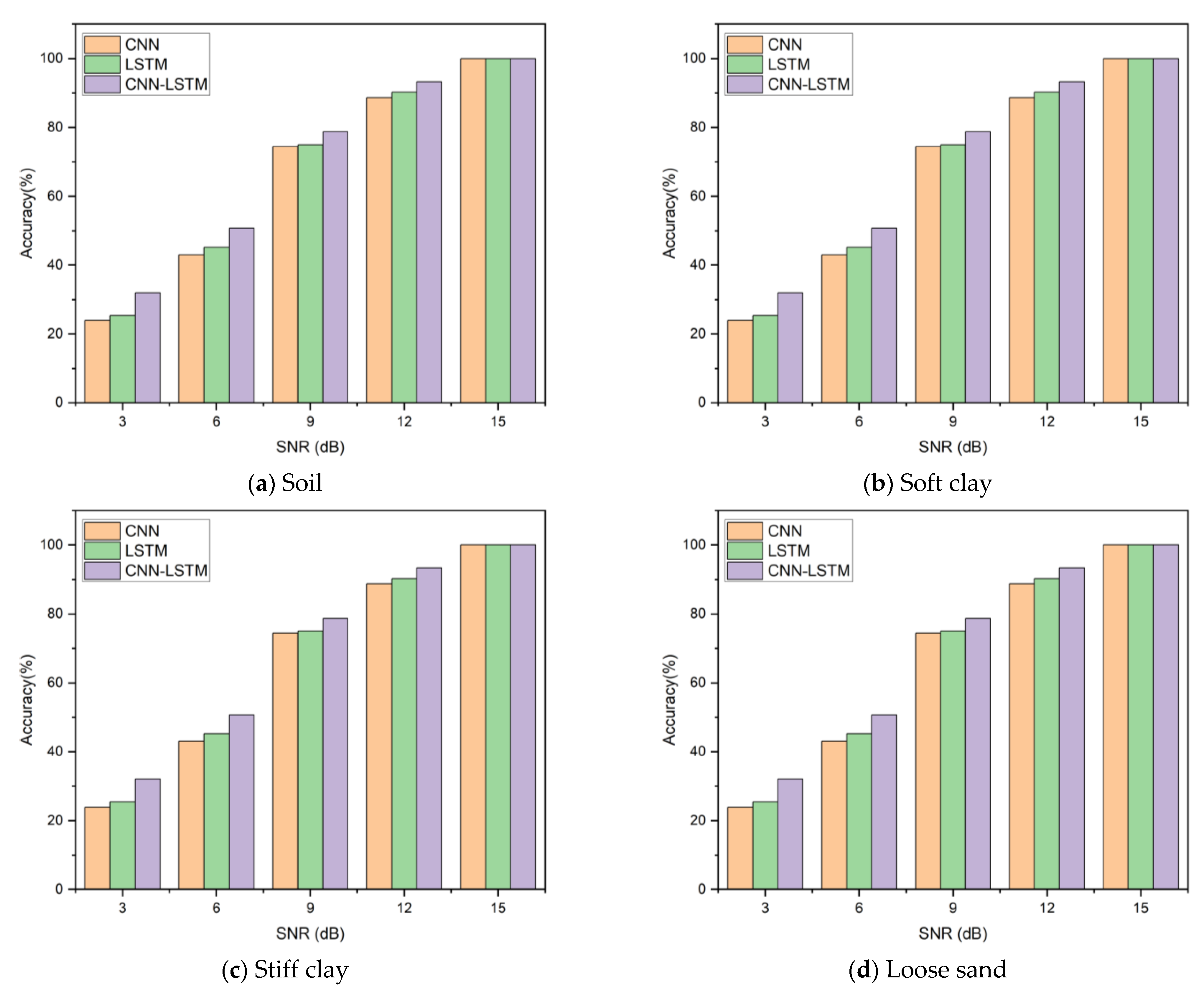
5.2. Impacts of Embedment Conditions on Classification Performance of Deep Learning Models
5.3. Further Discussion about the Applicability to Different Metallic Materials
6. Conclusions
- (a)
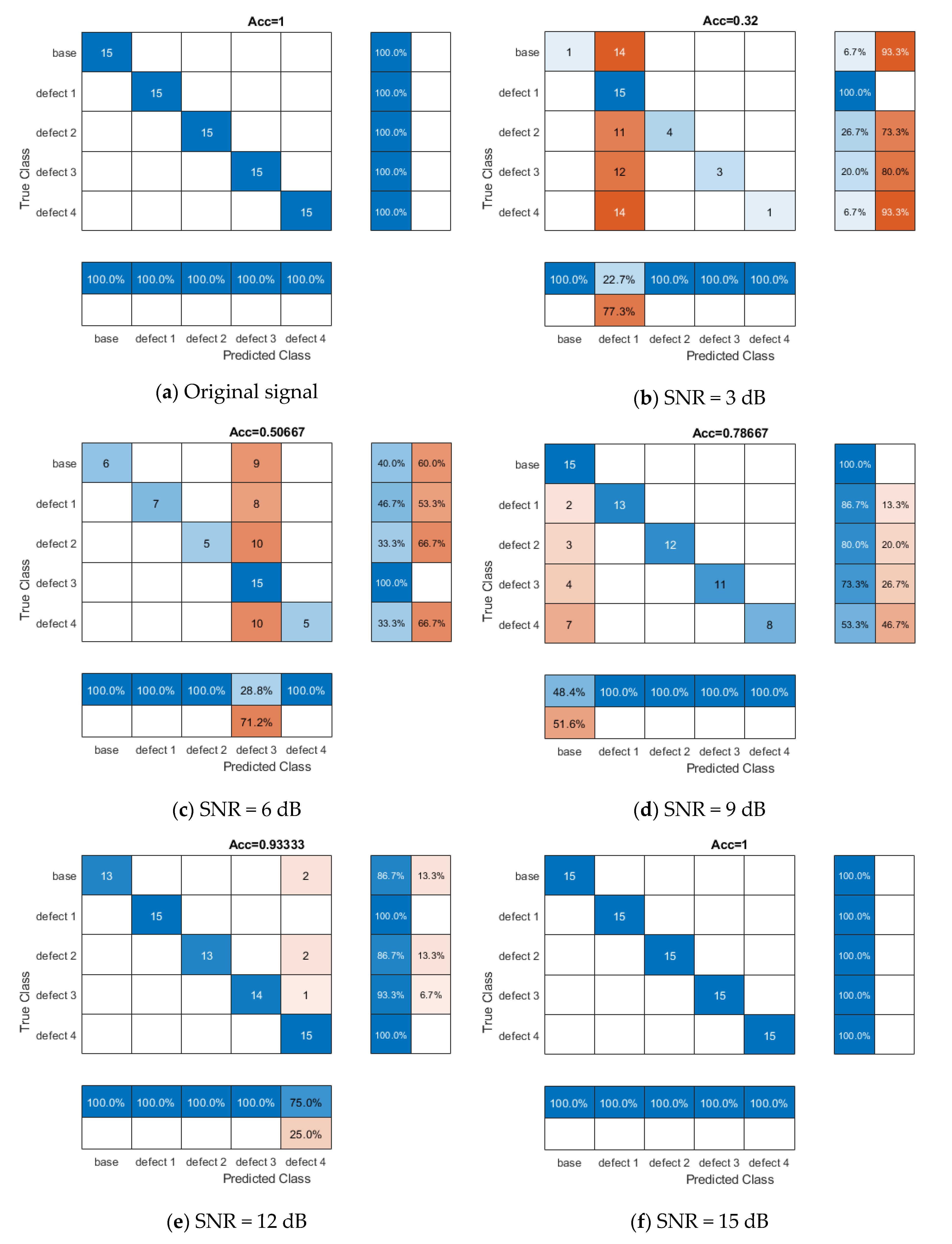
- Time- and frequency-domain features have the most comprehensive information about signals. In this study, for most of the cases (noise levels from 3 to 15 dB), the accuracies of the three models (CNN, LSTM and CNN-LSTM models) with time- and frequency-domain features are much higher than the three models’ time-domain and frequency-domain features. It means time-frequency features have more signal information than time difference features.
- (b)
- When the noise interference can be ignored (e.g., 15 dB), three types of features, including time-domain features, frequency-domain features, and time- and frequency-domain features, can be used to express signals’ information and can achieve the best classification performance.
- (c)
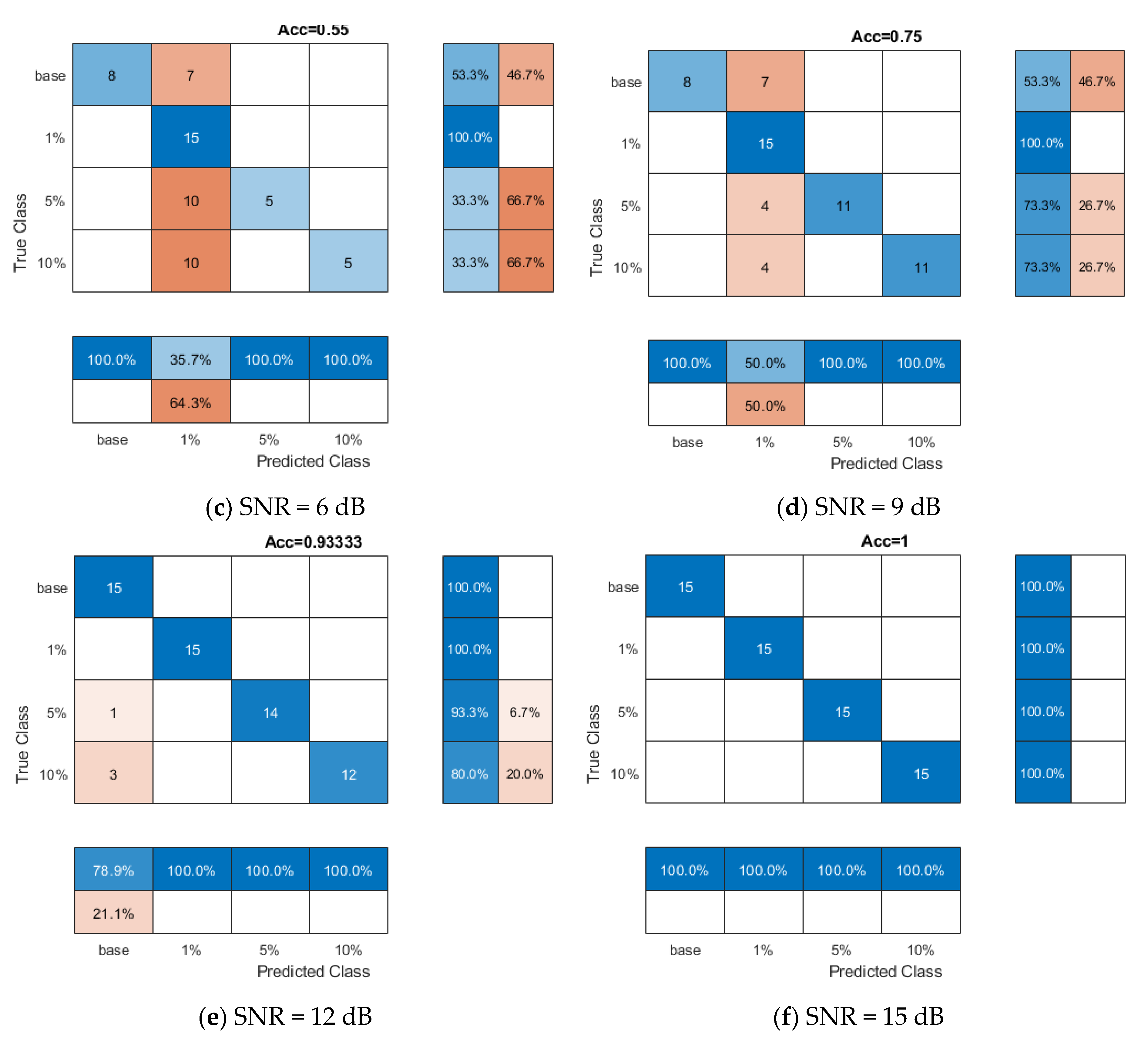
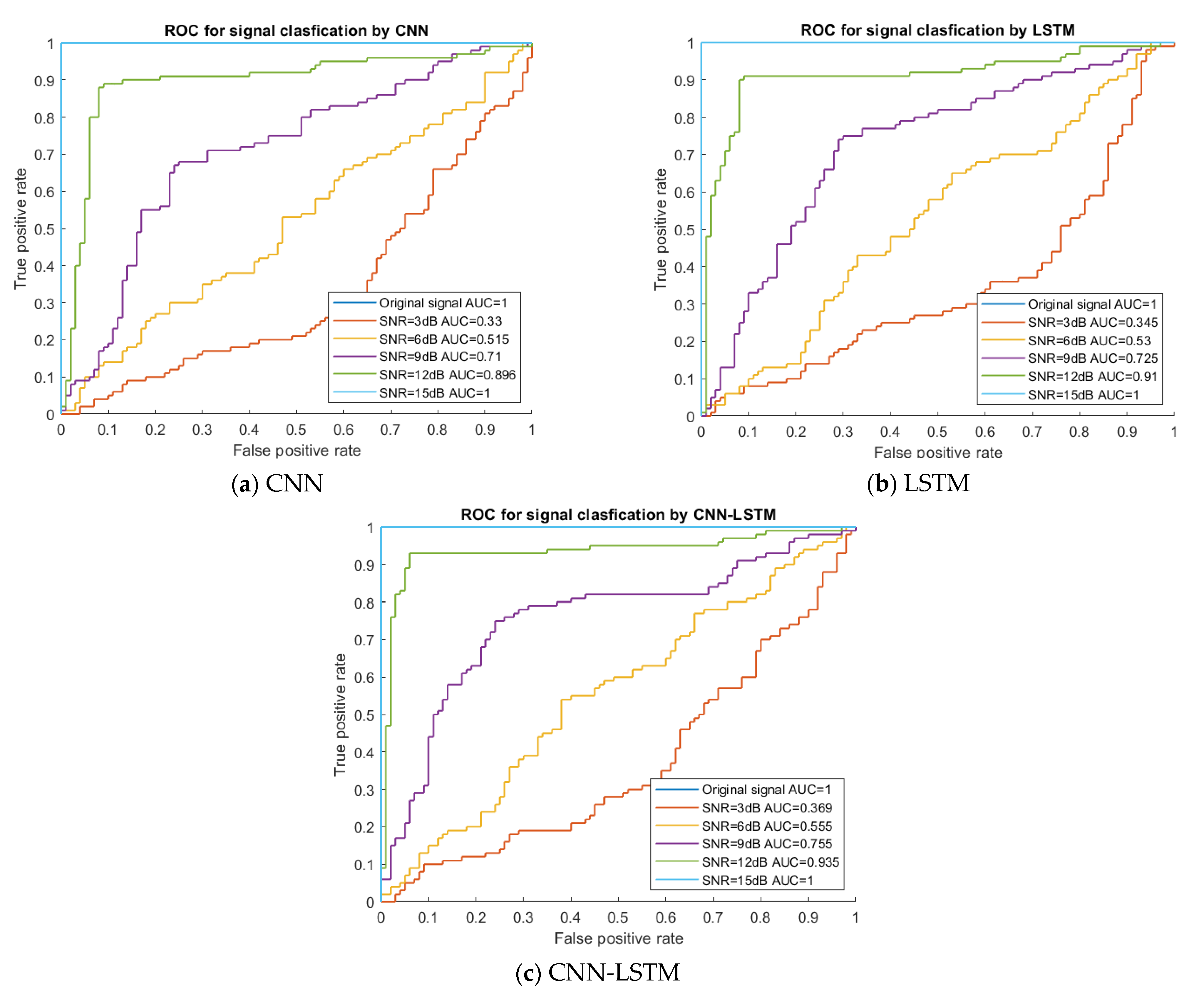
- The CNN-LSTM hybrid model has a better performance for automated damage detection than the CNN and LSTM models, because the hybrid model can make up the shortcomings of CNN and combine the advantages of LSTM to better process the time series signal.
- (d)
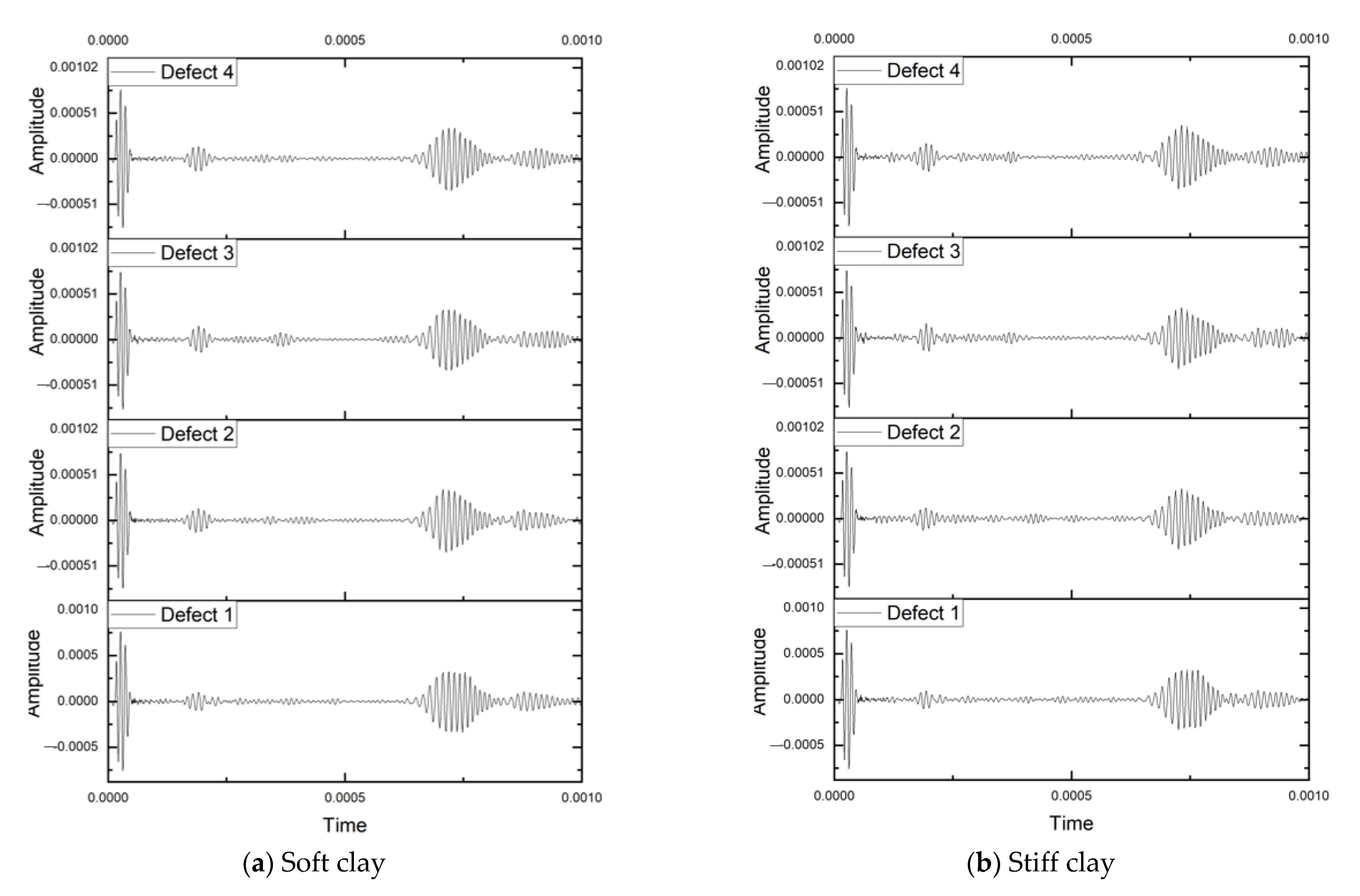
- Embedding materials could impact signal processing, and results reveal variances in different types of soil or sand did not affect the accuracy of the deep learning approaches significantly. However, when concrete is used as an embedding material, all deep models (CNN, LSTM, and CNN-LSTM models) have much lower classification, particularly with an increase in noise interference.
Author Contributions
Funding
Acknowledgments
Conflicts of Interest
References
- Al-Kaseasbeh, Q.; Lin, Z.; Wang, Y.; Azarmi, F.; Qi, X. Electrochemical Characterization of Steel Bridge Welds under Simulated Durability Test. J. Bridge Eng. 2018, 23, 04018068. [Google Scholar] [CrossRef]
- Kim, J.; Lee, D.; Shin, S.; Lee, C. Phase Evolution in Cu54Ni6Zr22Ti18 Bulk Metallic Glass Nd:YAG Laser Weld. Mater. Sci. Eng. A 2006, 434, 194–201. [Google Scholar] [CrossRef]
- Radi, D.; Abo-Elsoud, M.E.A.; Khalifa, F. Accurate Segmentation of Weld Defects with Horizontal Shapes. NDT E Int. 2022, 126, 102599. [Google Scholar] [CrossRef]
- Zhang, Z.; Pan, H.; Wang, X.; Lin, Z. Deep Learning Empowered Structural Health Monitoring and Damage Diagnostics for Structures with Weldment via Decoding Ultrasonic Guided Wave. Sensors 2022, 22, 5390. [Google Scholar] [CrossRef]
- Xu, X.; Xie, L.; Zhou, S.; An, J.; Huang, Y.; Liu, Y.; Jin, L. Effect of Welding Defects on Fatigue Properties of SWA490BW Steel Cruciform Welded Joints. Materials 2023, 16, 4751. [Google Scholar] [CrossRef]
- Tan, X.; Fan, L.; Huang, Y.; Bao, Y. Detection, Visualization, Quantification, and Warning of Pipe Corrosion Using Distributed Fiber Optic Sensors. Autom. Constr. 2021, 132, 103953. [Google Scholar] [CrossRef]
- Gui, G.; Pan, H.; Lin, Z.; Li, Y.; Yuan, Z. Data-Driven Support Vector Machine with Optimization Techniques for Structural Health Monitoring and Damage Detection. KSCE J. Civ. Eng. 2017, 21, 523–534. [Google Scholar] [CrossRef]
- Pan, H.; Azimi, M.; Gui, G.; Yan, F.; Lin, Z. Vibration-Based Support Vector Machine for Structural Health Monitoring. Lect. Notes Civ. Eng. 2018, 5, 167–178. [Google Scholar] [CrossRef]
- Madhvacharyula, A.S.; Pavan, A.V.S.; Gorthi, S.; Chitral, S.; Venkaiah, N.; Kiran, D.V. In Situ Detection of Welding Defects: A Review. Weld. World 2022, 66, 611–628. [Google Scholar] [CrossRef]
- Moinuddin, S.Q.; Hameed, S.S.; Dewangan, A.K.; Ramesh Kumar, K.; Shanta Kumari, A. A Study on Weld Defects Classification in Gas Metal Arc Welding Process Using Machine Learning Techniques. Mater. Today Proc. 2021, 43, 623–628. [Google Scholar] [CrossRef]
- Raj, A.; Chadha, U.; Chadha, A.; Mahadevan, R.R.; Sai, B.R.; Chaudhary, D.; Selvaraj, S.K.; Lokeshkumar, R.; Das, S.; Karthikeyan, B.; et al. Weld Quality Monitoring via Machine Learning-Enabled Approaches. Int. J. Interact. Des. Manuf. (IJIDeM) 2023, 3, 1–43. [Google Scholar] [CrossRef]
- Sumesh, A.; Rameshkumar, K.; Mohandas, K.; Babu, R.S. Use of Machine Learning Algorithms for Weld Quality Monitoring Using Acoustic Signature. Procedia Comput. Sci. 2015, 50, 316–322. [Google Scholar] [CrossRef]
- Liang, R.; Yu, R.; Luo, Y.; Zhang, Y.M. Machine Learning of Weld Joint Penetration from Weld Pool Surface Using Support Vector Regression. J. Manuf. Process. 2019, 41, 23–28. [Google Scholar] [CrossRef]
- Cheng, Y.; Wang, Q.; Jiao, W.; Yu, R.; Chen, S.; Zhang, Y.M.; Xiao, J. Detecting Dynamic Development of Weld Pool Using Machine Learning from Innovative Composite Images for Adaptive Welding. J. Manuf. Process. 2020, 56, 908–915. [Google Scholar] [CrossRef]
- Asif, K.; Zhang, L.; Derrible, S.; Indacochea, J.E.; Ozevin, D.; Ziebart, B. Machine Learning Model to Predict Welding Quality Using Air-Coupled Acoustic Emission and Weld Inputs. J. Intell. Manuf. 2022, 33, 881–895. [Google Scholar] [CrossRef]
- Huang, L.; Hong, X.; Yang, Z.; Liu, Y.; Zhang, B. CNN-LSTM Network-Based Damage Detection Approach for Copper Pipeline Using Laser Ultrasonic Scanning. Ultrasonics 2022, 121, 106685. [Google Scholar] [CrossRef]
- Xu, W.; Yang, C.; Yu, H.; Jin, X.; Guo, B.; Shan, D. Microcrack Healing in Non-Ferrous Metal Tubes through Eddy Current Pulse Treatment. Sci. Rep. 2018, 8, 6016. [Google Scholar] [CrossRef]
- Liu, P.; Nazirah, A.W.; Sohn, H. Numerical Simulation of Damage Detection Using Laser-Generated Ultrasound. Ultrasonics 2016, 69, 248–258. [Google Scholar] [CrossRef]
- Zhang, Z.; Pan, H.; Wang, X.; Lin, Z. Machine Learning-Enriched Lamb Wave Approaches for Automated Damage Detection. Sensors 2020, 20, 1790. [Google Scholar] [CrossRef]
- Zhang, Z.; Tang, F.; Cao, Q.; Pan, H.; Wang, X.; Lin, Z. Deep Learning-Enriched Stress Level Identification of Pretensioned Rods via Guided Wave Approaches. Buildings 2022, 12, 1772. [Google Scholar] [CrossRef]
- Watanabe, Y.; Yonezu, A.; Chen, X. Measurement of Interfacial Fracture Toughness of Surface Coatings Using Pulsed-Laser-Induced Ultrasonic Waves. J. Nondestr. Eval. 2018, 37, 2. [Google Scholar] [CrossRef]
- Zeng, W.; Wang, H.; Tian, G.; Wang, W. Detection of Surface Defects for Longitudinal Acoustic Waves by a Laser Ultrasonic Imaging Technique. Optik 2016, 127, 415–419. [Google Scholar] [CrossRef]
- Feng, Q.; Li, R.; Nie, B.; Liu, S.; Zhao, L.; Zhang, H. Literature Review: Theory and Application of In-Line Inspection Technologies for Oil and Gas Pipeline Girth Weld Defection. Sensors 2016, 17, 50. [Google Scholar] [CrossRef]
- Moles, M.; Dubé, N.; Labbé, S.; Ginzel, E. Review of Ultrasonic Phased Arrays for Pressure Vessel and Pipeline Weld Inspections. J. Press. Vessel. Technol. 2005, 127, 351–356. [Google Scholar] [CrossRef]
- Zhu, Y.; Xu, Y.; Wang, M.; Wang, X.; Liu, G.; Huang, Y. Understanding the Influences of Temperature and Microstructure on Localized Corrosion of Subsea Pipeline Weldment Using an Integrated Multi-Electrode Array. Ocean. Eng. 2019, 189, 106351. [Google Scholar] [CrossRef]
- Dong, S.; Sun, X.; Xie, S.; Wang, M. Automatic Defect Identification Technology of Digital Image of Pipeline Weld. Nat. Gas Ind. B 2019, 6, 399–403. [Google Scholar] [CrossRef]
- Rattanawangcharoen, N.; Zhuang, W.; Shah, A.H.; Datta, S.K. Axisymmetric Guided Waves in Jointed Laminated Cylinders. J. Eng. Mech. 1997, 123, 1020–1026. [Google Scholar] [CrossRef]
- Zhuang, W.; Shah, A.H.; Datta, S.K. Axisymmetric Guided Wave Scattering by Cracks in Welded Steel Pipes. J. Press. Vessel. Technol. 1997, 119, 401–406. [Google Scholar] [CrossRef]
- Zhang, Z.; Pan, H.; Wang, X.; Tang, F.; Lin, Z. Ultrasonic Guided Wave Approaches for Pipeline Damage Diagnosis Based on Deep Learning. In Proceedings of the ASCE Pipelines 2022 Conference, Indianapolis, IN, USA, 31 July–3 August 2022; Volume 29. [Google Scholar]
- Pan, H.; Lin, Z.; Gui, G. Enabling Damage Identification of Structures Using Time Series–Based Feature Extraction Algorithms. J. Aerosp. Eng. 2019, 32, 04019014. [Google Scholar] [CrossRef]
- Hong, P.; Mohsen, A.; Fei, Y.; Zhibin, L. Time-Frequency-Based Data-Driven Structural Diagnosis and Damage Detection for Cable-Stayed Bridges. J. Bridge Eng. 2018, 23, 04018033. [Google Scholar] [CrossRef]
- Zhang, Z.; Pan, H.; Lin, Z. Data-Driven Identification for Early-Age Corrosion-Induced Damage in Metallic Structures. In Proceedings of the Bridge Engineering Institute Conference, Honolulu, HI, USA, 22–25 July 2019. [Google Scholar]
- Liu, Y.; Bao, Y. Review on Automated Condition Assessment of Pipelines with Machine Learning. Adv. Eng. Inform. 2022, 53, 101687. [Google Scholar] [CrossRef]
- Xu, L.; Yuan, S.; Chen, J.; Ren, Y. Guided Wave-Convolutional Neural Network Based Fatigue Crack Diagnosis of Aircraft Structures. Sensors 2019, 19, 3567. [Google Scholar] [CrossRef]
- Su, C.; Jiang, M.; Lv, S.; Lu, S.; Zhang, L.; Zhang, F.; Sui, Q. Improved Damage Localization and Quantification of CFRP Using Lamb Waves and Convolution Neural Network. IEEE Sens. J. 2019, 19, 5784–5791. [Google Scholar] [CrossRef]
- Feng, C.; Zhang, H.; Wang, S.; Li, Y.; Wang, H.; Yan, F. Structural Damage Detection Using Deep Convolutional Neural Network and Transfer Learning. KSCE J. Civ. Eng. 2019, 23, 4493–4502. [Google Scholar] [CrossRef]
- Kumaresan, S.; Aultrin, K.S.J.; Kumar, S.S.; Anand, M.D. Transfer Learning with CNN for Classification of Weld Defect. IEEE Access 2021, 9, 95097–95108. [Google Scholar] [CrossRef]
- Cao, J.; Li, Z.; Li, J. Financial Time Series Forecasting Model Based on CEEMDAN and LSTM. Phys. A Stat. Mech. Appl. 2019, 519, 127–139. [Google Scholar] [CrossRef]
- Siami-Namini, S.; Namin, A.S. Forecasting Economics and Financial Time Series: ARIMA vs. LSTM. arXiv 2018, arXiv:1803.06386. [Google Scholar]
- Yadav, A.; Jha, C.K.; Sharan, A. Optimizing LSTM for Time Series Prediction in Indian Stock Market. Procedia Comput. Sci. 2020, 167, 2091–2100. [Google Scholar] [CrossRef]
- Guo, A.; Beheshti, R.; Khan, Y.M.; Langabeer, J.R.; Foraker, R.E. Predicting Cardiovascular Health Trajectories in Time-Series Electronic Health Records with LSTM Models. BMC Med. Inform. Decis. Mak. 2021, 21, 5. [Google Scholar] [CrossRef]
- Yao, L.; Guan, Y. An Improved LSTM Structure for Natural Language Processing. In Proceedings of the 2018 IEEE International Conference of Safety Produce Informatization, IICSPI 2018, Chongqing, China, 10–12 December 2018; pp. 565–569. [Google Scholar] [CrossRef]
- Zhao, B.; Cheng, C.; Peng, Z.; Dong, X.; Meng, G. Detecting the Early Damages in Structures with Nonlinear Output Frequency Response Functions and the CNN-LSTM Model. IEEE Trans. Instrum. Meas. 2020, 69, 9557–9567. [Google Scholar] [CrossRef]
- Choe, D.E.; Kim, H.C.; Kim, M.H. Sequence-Based Modeling of Deep Learning with LSTM and GRU Networks for Structural Damage Detection of Floating Offshore Wind Turbine Blades. Renew Energy 2021, 174, 218–235. [Google Scholar] [CrossRef]
- Swapna, G.; Soman, K.P.; Vinayakumar, R. Automated Detection of Diabetes Using CNN and CNN-LSTM Network and Heart Rate Signals. Procedia Comput. Sci. 2018, 132, 1253–1262. [Google Scholar] [CrossRef]
- Lecun, Y.; Bengio, Y.; Hinton, G. Deep Learning. Nature 2015, 521, 436–444. [Google Scholar] [CrossRef]
- Mellit, A.; Pavan, A.M.; Lughi, V. Deep Learning Neural Networks for Short-Term Photovoltaic Power Forecasting. Renew Energy 2021, 172, 276–288. [Google Scholar] [CrossRef]
- Hochreiter, S.; Schmidhuber, J. Long Short-Term Memory. Neural. Comput. 1997, 9, 1735–1780. [Google Scholar] [CrossRef]
- Kim, T.Y.; Cho, S.B. Predicting Residential Energy Consumption Using CNN-LSTM Neural Networks. Energy 2019, 182, 72–81. [Google Scholar] [CrossRef]
- Rani, C.J.; Devarakonda, N. An Effectual Classical Dance Pose Estimation and Classification System Employing Convolution Neural Network –Long ShortTerm Memory (CNN-LSTM) Network for Video Sequences. Microprocess. Microsyst. 2022, 95, 104651. [Google Scholar] [CrossRef]
- Shang, L.; Zhang, Z.; Tang, F.; Cao, Q.; Pan, H.; Lin, Z. CNN-LSTM Hybrid Model to Promote Signal Processing of Ultrasonic Guided Lamb Waves for Damage Detection in Metallic Pipelines. Sensors 2023, 23, 7059. [Google Scholar] [CrossRef]
- Chen, C. Reliability Assessment Method for Space Rolling Bearing Based on Condition Vibration Feature; Chongqing University: Chongqing, China, 2014. [Google Scholar]
- Heydarian, M.; Doyle, T.E.; Samavi, R. MLCM: Multi-Label Confusion Matrix. IEEE Access 2022, 10, 19083–19095. [Google Scholar] [CrossRef]
- Barranco-Chamorro, I.; Carrillo-García, R.M.; Franco, M.; Vivo, J.M. Techniques to Deal with Off-Diagonal Elements in Confusion Matrices. Mathematics 2021, 9, 3233. [Google Scholar] [CrossRef]
- Düntsch, I.; Gediga, G. Indices for Rough Set Approximation and the Application to Confusion Matrices. Int. J. Approx. Reason. 2020, 118, 155–172. [Google Scholar] [CrossRef]
- Ahmad, S.; Ansari, S.U.; Haider, U.; Javed, K.; Rahman, J.U.; Anwar, S. Confusion Matrix-Based Modularity Induction into Pretrained CNN. Multimed. Tools Appl. 2022, 81, 23311–23337. [Google Scholar] [CrossRef]
- Fan, J.; Upadhye, S.; Worster, A. Understanding Receiver Operating Characteristic (ROC) Curves. Can. J. Emerg. Med. 2006, 8, 19–20. [Google Scholar] [CrossRef]
- Leinov, E.; Lowe, M.J.S.; Cawley, P. Investigation of Guided Wave Propagation and Attenuation in Pipe Buried in Sand. J. Sound Vib. 2015, 347, 96–114. [Google Scholar] [CrossRef]
- Moghaddas Tafreshi, S.N.; Khalaj, O. Laboratory Tests of Small-Diameter HDPE Pipes Buried in Reinforced Sand under Repeated-Load. Geotext. Geomembr. 2008, 26, 145–163. [Google Scholar] [CrossRef]
- Schupp, J.; Eacott, N.; Byrne, B.W.; Martin, C.M.; Oliphant, J.; Maconochie, A.; Cathie, D. Pipeline Unburial Behaviour in Loose Sand. Proc. Int. Conf. Offshore Mech. Arct. Eng. OMAE 2008, 2006, 297–308. [Google Scholar] [CrossRef]
- Leinov, E.; Lowe, M.J.S.; Cawley, P. Investigation of Guided Wave Propagation in Pipes Fully and Partially Embedded in Concrete. J. Acoust. Soc. Am. 2016, 140, 4528–4539. [Google Scholar] [CrossRef]
- Liu, Y.; Hajj, M.; Bao, Y. Review of Robot-Based Damage Assessment for Offshore Wind Turbines. Renew. Sustain. Energy Rev. 2022, 158, 112187. [Google Scholar] [CrossRef]








| Method | Advantages | Disadvantages | Accuracy | Cost | Ease of Use |
|---|---|---|---|---|---|
| Ultrasonic-Guided Waves | Non-invasive | Equipment setup can be complex | High | Moderate | Moderate |
| X-ray Radiography | Excellent defect visualization | Ionizing radiation, requires safety precautions | Very High | High | Complex |
| Magnetic Particle | Portable and cost-effective | Only detects surface defects | Moderate | Low | Easy |
| Eddy Current Testing | Detects surface and some subsurface defects | Requires skilled operators | Moderate | Moderate | Moderate |
| Network | Number of Layers | Layer Types | Hyperparameters |
|---|---|---|---|
| CNN | 3 | Sequence Input, Convolution, Average Pooling | Filters: 16, Padding: ‘same’, Dilation Factor: 1 |
| LSTM | 4 | Sequence Input, Sequence Folding, LSTM, Dropout | Number of Units: 100 |
| CNN-LSTM | 7 | Sequence Input, Sequence Folding, Convolution, Average Pooling, Sequence Unfolding, Flatten, LSTM, Dropout, Fully Connected, SoftMax | Filters: 16, Padding: ‘same’, Dilation Factor: 1, LSTM Units: 100 |
| Time-Domain Features (16 Features) | |||
|---|---|---|---|
| Index of Characteristics | Formulations | Index of Characteristics | Formulations |
| ) | ) | ||
| ) | ) | ||
| ) | ) | ||
| ) | ) | ||
| ) | peak-to-peak value ) | ||
| ) | ) | ||
| ) | ) | ||
| ) | ) | ||
| Frequency-domain features (13 features) | |||
| 1 | 8 | ||
| 2 | 9 | ||
| 3 | 10 | ||
| 4 | 11 | ||
| 5 | 12 | ||
| 6 | 13 | ||
| 7 | |||
| Defects | Description |
|---|---|
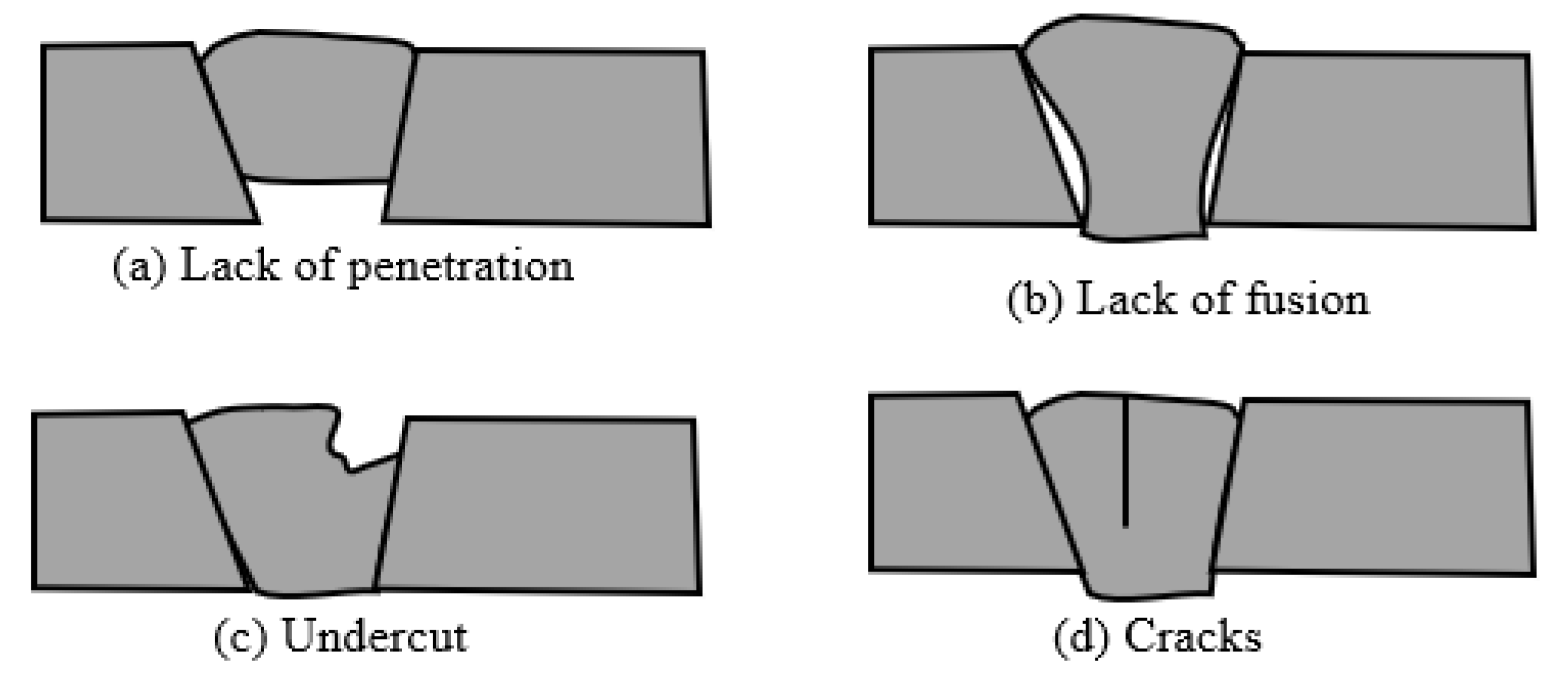
| Defect 1 | placement |
| Defect 2 | placement |
| Defect 3 | placement |
| Defect 4 | placement |
| Case Design | Label | Damage Location | Damage Size | Damage Depth (mm) | Welding Defects Type | Severity of Welding Defects | Noise Interference |
|---|---|---|---|---|---|---|---|
| Base | State #1 | / | / | / | / | / | |
| Case 1: variance due to the variety of welding defects | State #2 | 4 | Defect 1 | 10% | |||
| State #3 | 4 | Defect 2 | 10% | From 3 dB to 15 dB | |||
| State #4 | 4 | Defect 3 | 10% | ||||
| State #5 | 4 | Defect 4 | 10% | ||||
| Case 2: variance due to severity of welding defects | State #6 | 4 | Defect 4 | 1% | From 3 dB to 15 dB | ||
| State #7 | 4 | Defect 4 | 5% | ||||
| State #8 | 4 | Defect 4 | 10% |
| Input | SNR (dB) | Accuracy | ||
|---|---|---|---|---|
| CNN | LSTM | CNN-LSTM | ||
| Time- and frequency-domain features | NAN | 100.0% | 100.0% | 100.0% |
| Time- and frequency-domain features | 3 | 32.8% | 34.2% | 36.7% |
| 6 | 51.0% | 53.0% | 55.0% | |
| 9 | 71.0% | 73.0% | 75.0% | |
| 12 | 89.3% | 90.5% | 93.3% | |
| 15 | 100.0% | 100.0% | 100.0% | |
| Input | SNR (dB) | Accuracy | ||
|---|---|---|---|---|
| CNN | LSTM | CNN-LSTM | ||
| Time- and frequency-domain features | NAN | 1.000 | 1.000 | 1.000 |
| Time- and frequency-domain features | 3 | 0.330 | 0.345 | 0.369 |
| 6 | 0.515 | 0.530 | 0.555 | |
| 9 | 0.710 | 0.725 | 0.755 | |
| 12 | 0.896 | 0.910 | 0.935 | |
| 15 | 1.000 | 1.000 | 1.000 | |
| Embedding Materials | Young’s Modulus | Poisson | Density (kg/m3) |
|---|---|---|---|
| Soft clay | 3.5 MPa | 0.42 | 1.4 × 10³ |
| Stiff clay | 20 MPa | 0.20 | 2.6 × 10³ |
| Loose sand | 10.35 MPa | 0.30 | 1.5 × 10³ |
| Dense sand | 50 MPa | 0.40 | 1.6 × 10³ |
| Concrete | 32.5 GPa | 0.16 | 25 × 103 |
Disclaimer/Publisher’s Note: The statements, opinions and data contained in all publications are solely those of the individual author(s) and contributor(s) and not of MDPI and/or the editor(s). MDPI and/or the editor(s) disclaim responsibility for any injury to people or property resulting from any ideas, methods, instructions or products referred to in the content. |
© 2023 by the authors. Licensee MDPI, Basel, Switzerland. This article is an open access article distributed under the terms and conditions of the Creative Commons Attribution (CC BY) license (https://creativecommons.org/licenses/by/4.0/).
Share and Cite
Shang, L.; Zhang, Z.; Tang, F.; Cao, Q.; Yodo, N.; Pan, H.; Lin, Z. Deep Learning Enriched Automation in Damage Detection for Sustainable Operation in Pipelines with Welding Defects under Varying Embedment Conditions. Computation 2023, 11, 218. https://doi.org/10.3390/computation11110218
Shang L, Zhang Z, Tang F, Cao Q, Yodo N, Pan H, Lin Z. Deep Learning Enriched Automation in Damage Detection for Sustainable Operation in Pipelines with Welding Defects under Varying Embedment Conditions. Computation. 2023; 11(11):218. https://doi.org/10.3390/computation11110218
Chicago/Turabian StyleShang, Li, Zi Zhang, Fujian Tang, Qi Cao, Nita Yodo, Hong Pan, and Zhibin Lin. 2023. "Deep Learning Enriched Automation in Damage Detection for Sustainable Operation in Pipelines with Welding Defects under Varying Embedment Conditions" Computation 11, no. 11: 218. https://doi.org/10.3390/computation11110218
APA StyleShang, L., Zhang, Z., Tang, F., Cao, Q., Yodo, N., Pan, H., & Lin, Z. (2023). Deep Learning Enriched Automation in Damage Detection for Sustainable Operation in Pipelines with Welding Defects under Varying Embedment Conditions. Computation, 11(11), 218. https://doi.org/10.3390/computation11110218