Article

From Prediction to Diagnostic Support: A Data-Driven System for Retail Demand Forecasting and Inventory Risk Assessment


by
Gao Huan
and
Mohammad-Ali Sarvghadi
*
School of Computer Sciences, Universiti Sains Malaysia, George Town 11800, Penang, Malaysia
*
Author to whom correspondence should be addressed.
Information 2026, 17(9), 909; https://doi.org/10.3390/info17090909
Submission received: 4 August 2026 / Revised: 2 September 2026 / Accepted: 8 September 2026 / Published: 17 September 2026

Abstract

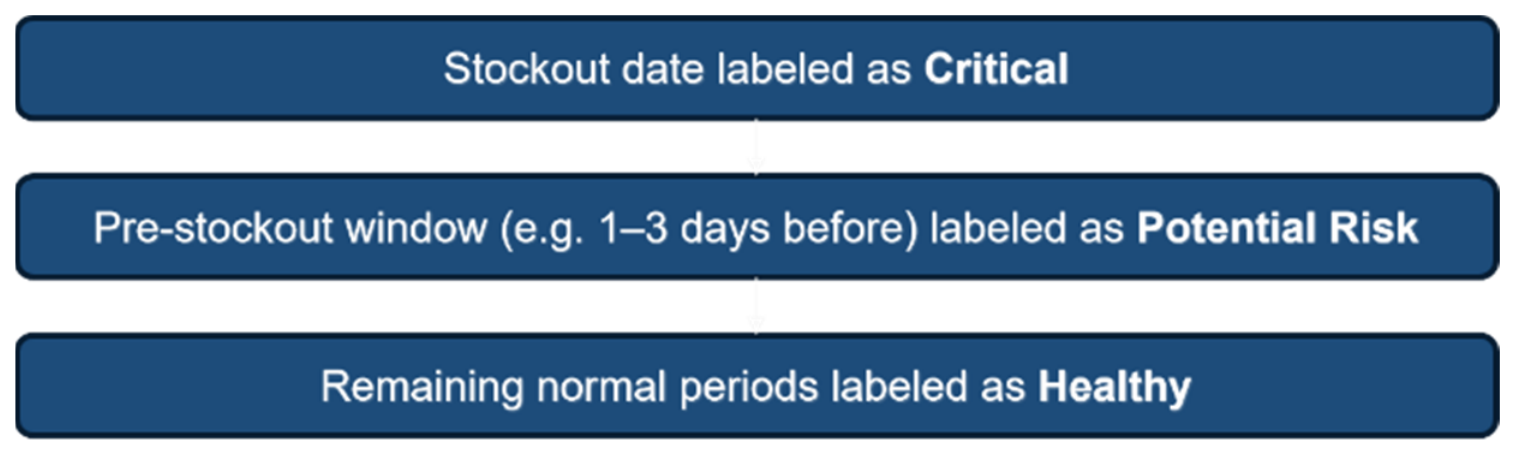
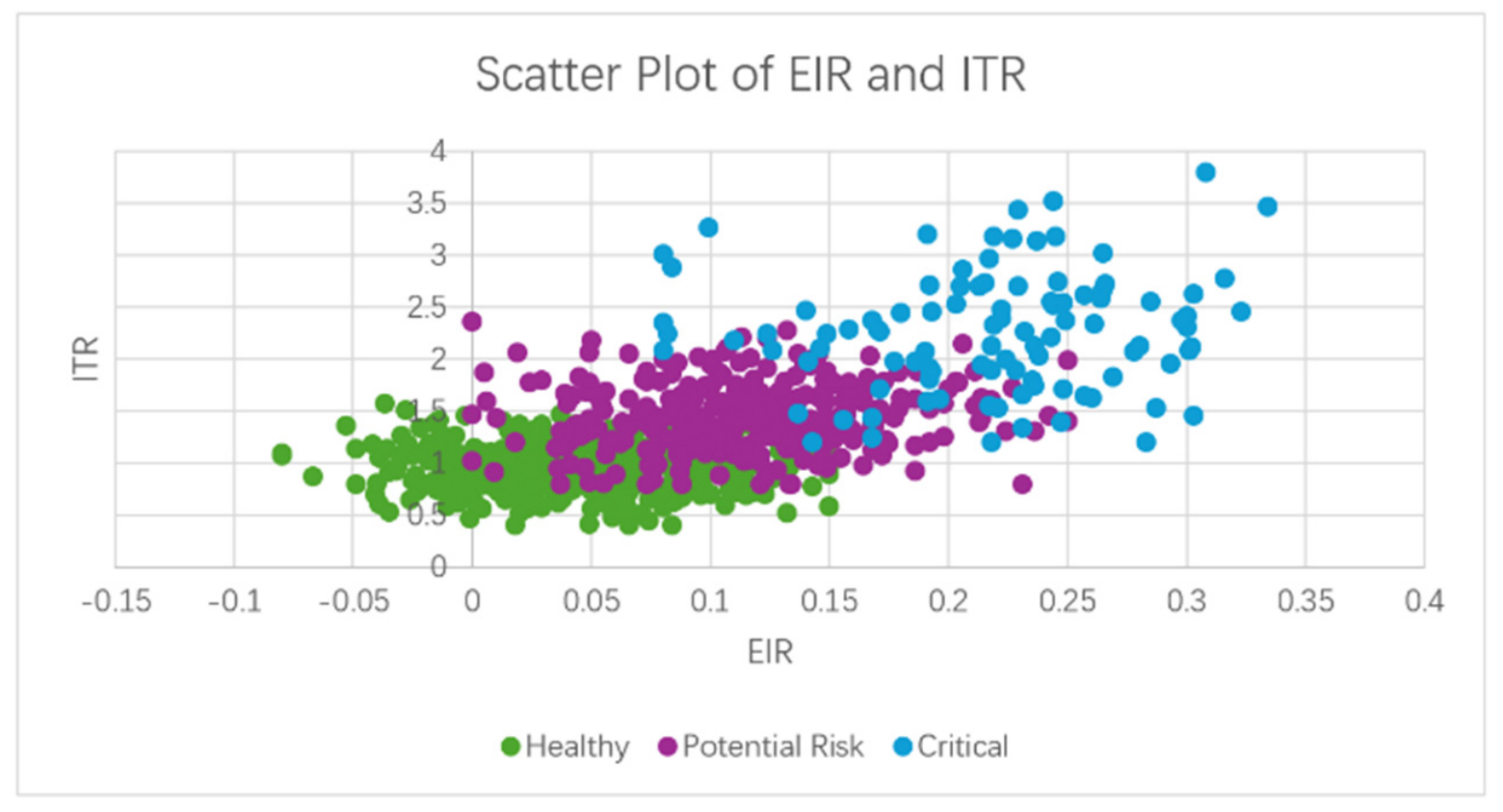
The rapid digital transformation of the retail industry has generated large-scale, high-frequency data; yet many retailers still rely on siloed systems that decouple demand forecasting from operational inventory management. This separation often leads to structural inventory imbalances, including simultaneous stockouts and overstock situations. To address this, we propose a unified, data-driven framework that integrates advanced sales forecasting with a diagnostic inventory health system, bridging predictive analytics with diagnostic decision support for proactive inventory-risk assessment. Utilizing a real-world dataset of approximately 500,000 product–store–day records from a Chinese e-commerce company, we evaluate six forecasting models across statistical, machine learning, and Deep Learning (DL) architectures. Results indicate that DL models achieved the lowest RMSE and MAPE values, whereas RF and XGBoost produced more favorable MASE values. Forecasting performance varied by evaluation criterion, with no model consistently outperforming all others. However, LSTM achieved the lowest testing RMSE (0.3996) and MAPE (21.63%). Building upon these predictive outputs, we introduce an inventory health diagnosis framework based on empirically calibrated thresholds for the Inventory Turnover Ratio (ITR) and Excess Inventory Rate (EIR), with the thresholds calibrated on the training and calibration period and evaluated on an independent temporal validation period. Application of this framework to the independent diagnostic validation period shows that 61.1% of SKU–store observations were classified as Potential Risk or Critical, including 16.3% classified as Critical, indicating inventory misalignment requiring managerial attention. By providing an interpretable and scalable system for proactive risk detection, this research provides a practical framework to support retailers in transitioning from demand forecasting to inventory diagnostic decision support.
Keywords: retail demand forecasting; inventory health; DL; LSTM; supply chain analytics; diagnostic decision support retail demand forecasting; inventory health; DL; LSTM; supply chain analytics; diagnostic decision support