Article

Vocational Teachers’ Adoption of and Resistance to AI Teaching Tools: A Dual-Path Framework


1
School of Finance and Business, Shanxi Vocational University of Culture and Tourism, Taiyuan 030032, China
2
Graduate School of Management of Technology, Pukyong National University, Busan 48513, Republic of Korea
3
Department of Economic Management, Shanxi Engineering Vocational College, Taiyuan 030009, China
4
School of Integrated Circuits, Guangdong University of Technology, Guangzhou 510006, China
*
Author to whom correspondence should be addressed.
Information 2026, 17(6), 544; https://doi.org/10.3390/info17060544
Submission received: 15 April 2026 / Revised: 12 May 2026 / Accepted: 25 May 2026 / Published: 2 June 2026

Abstract

As artificial intelligence becomes increasingly embedded in educational practice, how teachers evaluate and respond to AI teaching tools has become an important issue for understanding human–AI interaction and technology application in educational contexts. However, existing research has yet to provide a clear explanation of why teachers form divergent decisions—namely, adoption and resistance—toward the same technology. To address this issue, this study integrates the Artificial Intelligence Device Use Acceptance framework, Behavioral Reasoning Theory, and Diffusion of Innovation Theory to develop a dual-path analytical framework, aiming to uncover the evaluation and decision-making mechanisms underlying vocational teachers’ responses to AI teaching tools. Based on survey data collected from 503 Chinese vocational college teachers and analyzed using structural equation modeling, the results indicate that perceived attractiveness significantly enhances adoption intention through positive emotions, whereas risk barriers increase alternative attractiveness and thereby indirectly strengthen resistance intention. Usage barriers show no significant effect. In addition, trust significantly moderates the relationship between positive emotions and resistance intention. The findings suggest that teachers’ responses to AI teaching tools are not driven by a single behavioral tendency but are instead shaped by a dual-path decision mechanism in which cognitive evaluations and affective processing jointly operate, with a core trade-off between attractiveness and alternative attractiveness. This study deepens the understanding of behavioral divergence in AI teaching tool use by highlighting the role of evaluation and decision-making mechanisms in human–AI interaction contexts.

Graphical Abstract

1. Introduction

In the current era of educational digitalization, artificial intelligence has become increasingly embedded in teaching practices, instructional resource development, and classroom interaction. AI-based teaching tools (AITTs) integrate functions such as automated content generation, intelligent feedback, learning analytics, and personalized instructional support [1]. Rather than serving as peripheral technological aids, AITTs are gradually becoming part of teachers’ everyday pedagogical work. Policy initiatives, including UNESCO’s guidance on artificial intelligence and education and China’s Action Plan for Artificial Intelligence Innovation in Higher Education Institutions, have further accelerated the integration of AI into educational settings. However, the sustainable implementation of AITTs depends not only on technological advancement or institutional support, but also on how teachers perceive, evaluate, and respond to these tools in real instructional contexts [2]. Recent research on educators’ AI adoption shows that although educators generally recognize the potential value of AI, they also express concerns regarding trust, transparency, and ethical implications [3]. Similarly, existing research has found that teachers do not follow a uniform acceptance path when integrating generative AI into teaching but instead display differentiated patterns ranging from cautious adaptation to pedagogical innovation [4]. Therefore, understanding vocational teachers’ responses to AITTs requires attention not only to adoption-oriented evaluations, but also to possible concerns and resistance [3,4,5].
Compared with conventional digital teaching platforms, AITTs are characterized by stronger generative, interactive, and adaptive capabilities. These features may help teachers improve teaching efficiency, enrich instructional resources, optimize classroom interaction, and provide more personalized learning support [6,7]. At the same time, they may also introduce new uncertainties into teaching practice. Teachers may question whether AITTs can reliably support pedagogical goals [2], whether their functions are compatible with existing teaching routines, and whether their use may increase workload, weaken professional autonomy, or raise concerns related to data ethics and instructional responsibility [3,8]. These concerns are particularly salient in vocational education, where teaching is oriented not only toward knowledge transmission but also toward practice-based skill formation, workplace readiness, and the integration of classroom instruction with applied tasks [9]. Unlike teachers in more knowledge-oriented educational settings, vocational teachers often act simultaneously as instructors, skill trainers, practice facilitators, and assessors of students’ occupational competence [10,11]. In this context, their evaluation of AITTs is likely to be more task-dependent and role-sensitive, because these tools may affect not only instructional resource preparation and classroom interaction, but also skill demonstration, practice guidance, feedback provision, and competence assessment. On the one hand, AITTs may be perceived as useful for improving teaching efficiency, generating applied learning resources, and supporting personalized feedback. On the other hand, vocational teachers may question whether AI-generated content can accurately reflect industry practices [12], whether AITTs can reliably support hands-on skill training, and whether their use may weaken teachers’ professional autonomy and practical judgment [2,3]. These task- and role-specific concerns make vocational education a theoretically distinct context for examining teachers’ responses to AITTs.
Existing studies have provided valuable insights into teachers’ acceptance of AI-related educational technologies [2,13]. Most of these studies have relied on general technology acceptance frameworks, such as TAM, TPB, and UTAUT, to explain teachers’ adoption intentions toward AI technologies [8,12,14]. This acceptance-oriented stream has clarified why teachers may perceive AI tools as useful, easy to use, or beneficial for instructional improvement [2,8]. However, it offers a limited explanation of why teachers may hesitate, oppose, or resist using AITTs [3,15]. This limitation is particularly important because AITTs are still evolving [1] and differ from conventional educational technologies in terms of generativity, autonomy, and uncertainty [3,4]. In such contexts, examining adoption intention alone is insufficient for fully understanding teachers’ behavioral responses. Resistance intention should also be treated as a meaningful outcome, rather than being simply regarded as insufficient adoption intention [15]. Therefore, adoption and resistance intentions need to be examined simultaneously to capture vocational teachers’ dual evaluative responses toward AITTs.
To address this limitation, the Artificial Intelligence Device Use Acceptance (AIDUA) framework provides a useful theoretical basis for examining teachers’ adoption and resistance intentions toward AITTs. Unlike conventional acceptance models that primarily focus on adoption-oriented outcomes, AIDUA explicitly considers both willingness to use and resistance to AI devices and explains these outcomes through cognitive appraisal and affective responses [15]. However, because AIDUA was originally developed for AI devices in general, it does not fully account for how teachers form supportive and opposing reasons when evaluating AITTs in vocational teaching contexts. It also gives limited attention to the role of perceived innovation attributes in the initial evaluation of emerging technologies. Therefore, this study integrates AIDUA with Behavioral Reasoning Theory (BRT) and Diffusion of Innovation (DOI) theory. BRT explains how reasons for and reasons against AITTs enter teachers’ intention formation, whereas DOI captures teachers’ evaluation of the innovation attributes of AITTs at the initial appraisal stage [16,17,18]. Through this integration, the study links innovation-attribute evaluation, behavioral reasoning, affective appraisal, and intention formation within a unified framework, thereby explaining how vocational teachers may form both adoption-oriented and resistance-oriented intentions toward AITTs within the same evaluative framework.
Overall, this study contributes to the literature on AITTs by contextualizing and refining the AIDUA framework for vocational education. By incorporating BRT and DOI, this study extends AIDUA’s general dual-path logic from a general AI-device context to the analysis of vocational teachers’ evaluations of AITTs. This theoretical integration helps explain teachers’ adoption and resistance intentions as distinct but potentially coexisting evaluative responses to AITTs, thereby advancing educational technology research beyond a predominantly acceptance-oriented view. The findings also provide practical guidance for improving the design and implementation of AITTs in vocational education.

2. Literature Review and Research Hypotheses

2.1. Vocational College Teachers’ Acceptance of AI Technologies

In vocational education, teachers’ acceptance of AITTs is not merely a general issue of technology adoption but is closely related to how AI technologies are translated into instructional design, classroom interaction, skill training, and practice-based assessment. Because vocational teachers work within task-oriented and competence-based teaching environments, their evaluations of AITTs are more likely to be shaped by instructional task fit, professional role demands, and responsibility for applied skill development, rather than by general technology perceptions alone. Existing studies have shown that the integration of AI into education still faces challenges related to technological reliability, ethical governance, and human–AI collaboration [1,3,8]. However, systematic research on vocational college teachers’ responses to AITTs remains limited, especially regarding how they form both supportive and opposing evaluations in applied teaching contexts.
In the educational domain, research on teachers’ willingness to adopt artificial intelligence technologies has often been conducted within different theoretical frameworks. Some studies have drawn on TAM-related perspectives, emphasizing that teachers’ adoption of AI technologies is closely associated with perceived usefulness and ease of use [12,19]. At the same time, other studies have shifted toward UTAUT as an important perspective for understanding teachers’ technology use behavior [20]. Related research indicates that UTAUT has been widely applied and repeatedly validated in educational contexts and has been continuously extended and refined to account for variations across teaching environments [21,22]. Studies grounded in the UTAUT framework generally suggest that teachers’ intentions to use AITTs do not form in isolation but are shaped by the joint influence of multiple factors [23,24], including expectations of teaching performance, perceived operational burden, social pressures from colleagues or institutions, the adequacy of instructional conditions, and the extent to which positive experiences can be obtained during the application process.
Although these models have contributed to research on teachers’ technology acceptance, their explanatory scope remains limited in the context of AITTs [19]. In particular, UTAUT provides a relatively comprehensive framework for predicting users’ acceptance and use intentions, but its explanatory logic remains primarily acceptance-oriented. Negative responses are often inferred from weak performance expectancy, high effort requirements, or insufficient facilitating conditions, rather than examined as an independent resistance intention. Moreover, these models were mainly developed to explain users’ acceptance of general or non-intelligent technologies, whereas AITTs are intelligent and interactive systems that can reshape the relationship between teachers and technology [13]. Therefore, teachers’ evaluations of AITTs are not limited to whether the tools are useful or easy to operate, but also involve instructional task fit, perceived risk, usage barriers, uncertainty, and affective responses arising from human–AI interaction. This issue is particularly salient in vocational education, where teachers’ evaluations of AITTs extend beyond general technology perceptions and are closely tied to applied teaching tasks. Explaining vocational teachers’ adoption and resistance intentions toward AITTs thus requires a framework that can capture both adoption and resistance pathways. Accordingly, a theoretical framework is needed to explain both the reason-based processes and innovation-related antecedents underlying vocational teachers’ evaluations of AITTs.

2.2. Theoretical Foundations and Model Development: AIDUA, Behavioral Reasoning Theory, and Innovation Diffusion Theory

The AIDUA framework was developed to explain users’ adoption and resistance responses toward AI-based devices [15]. Rather than understanding technology evaluation only in terms of a single level of acceptance, AIDUA provides a structured dual-path framework for examining how users may form different evaluative orientations toward the same AI technology. Grounded in the theoretical logic of AIDUA, individuals’ responses to AI-based devices can be understood as a multi-layered evaluative process involving primary appraisal, secondary appraisal, and outcome-related responses [15]. In this study, the dual-path mechanism is understood as a structural rather than temporal explanation, in which the two paths represent analytically distinct evaluative routes within the same appraisal process rather than sequential stages. The adoption-oriented path is shaped by favorable appraisals of AITTs, such as perceived instructional value, task compatibility, and attractiveness, whereas the resistance-oriented path is shaped by unfavorable appraisals, such as perceived risk, usage barriers, uncertainty, and concerns about professional roles. Therefore, adoption and resistance intentions are modeled as distinct intention outcomes associated with different appraisal contents. This logic is highly relevant to the context of AITTs, because vocational teachers may evaluate not only the tools’ instructional value and task compatibility but also their uncertainty in use, implementation burden, and implications for professional roles. Accordingly, AIDUA provides a theoretical basis for examining vocational teachers’ adoption and resistance intentions toward AITTs within a unified framework.
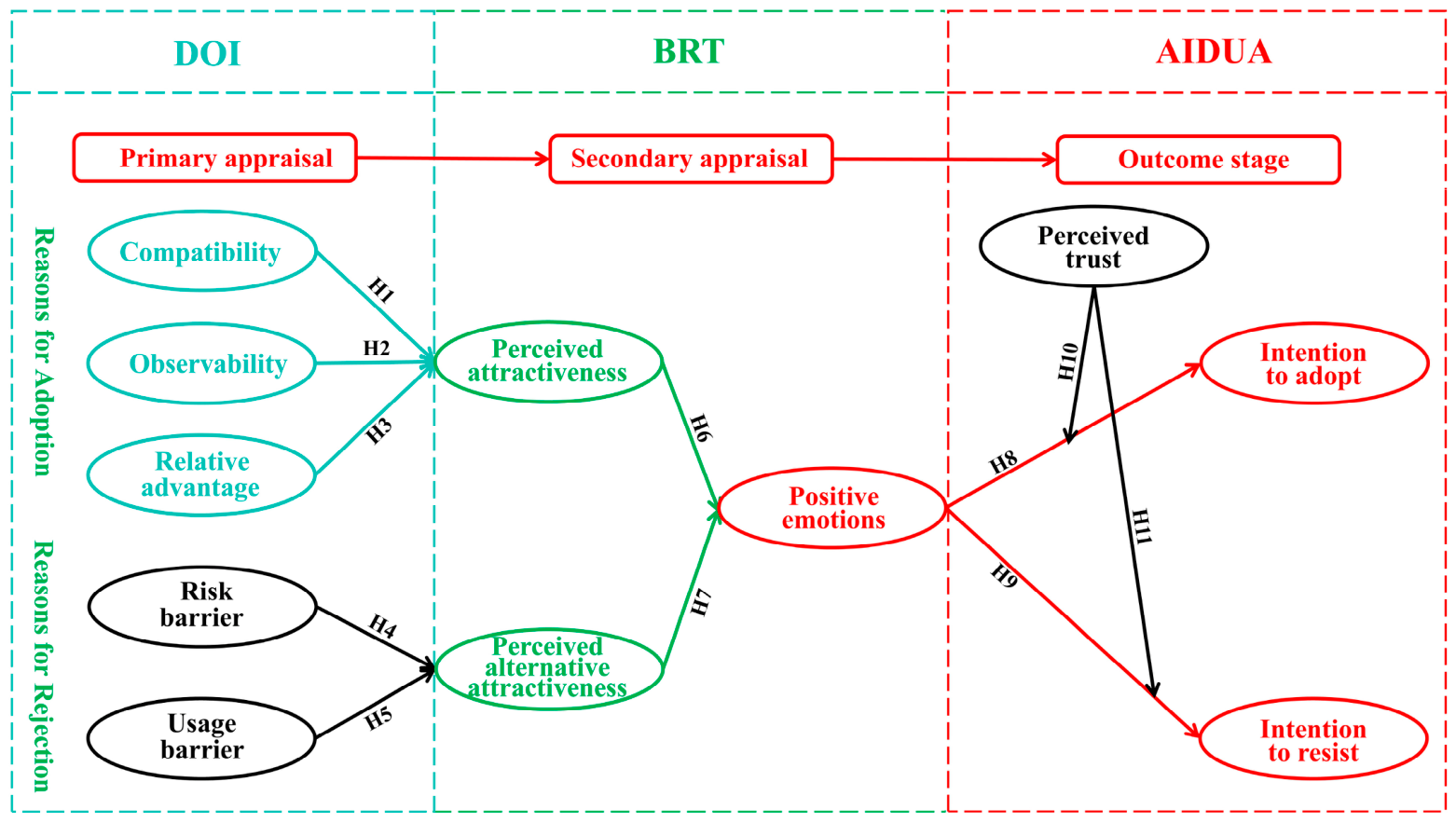
The primary appraisal stage concerns the fit between AI technologies and users’ behavioral contexts, including relevance and congruence. Relevance refers to the extent to which a technology corresponds to users’ task demands and practical objectives, whereas congruence reflects whether the technology aligns with or disrupts users’ values, beliefs, and established ways of working [15]. In educational settings, teachers’ evaluations of AITTs are shaped not only by general perceptions of technology acceptance but also by instructional objectives, classroom conditions, institutional expectations, and professional responsibilities. Therefore, the primary appraisal of AITTs requires a more context-sensitive specification of the evaluative contents that may support adoption or generate resistance. Although AIDUA establishes a dual-path structure linking technology appraisal to adoption and resistance intentions, its original formulation offers a relatively general account of the specific antecedents that shape these two paths. To address this issue, this study incorporates DOI and BRT into the AIDUA framework. DOI identifies the innovation-related attributes through which users evaluate a new technology [25], while BRT explains how these evaluations and perceived constraints are organized into reasons for or against use. In this integrated logic, AIDUA provides the dual-path structure, DOI specifies the attribute-based sources of evaluation, and BRT explains the reason-based interpretation of these attributes and constraints. Accordingly, compatibility, observability, and relative advantage are retained as adoption-oriented antecedents because they reflect the extent to which AITTs fit teachers’ instructional tasks, generate visible teaching value, and offer advantages over existing teaching approaches. Trialability is not included because vocational teachers’ exposure to AITTs is often shaped by institutional deployment, training arrangements, or administrative promotion rather than fully voluntary trial. Complexity is represented by usage barrier because both constructs concern perceived difficulty, learning cost, and operational burden in technology use. Risk barrier and usage barrier are included as resistance-oriented antecedents because they reflect teachers’ concerns about uncertainty, potential negative consequences, and practical difficulty in classroom application [5,26]. Thus, the primary appraisal stage in this study includes compatibility, observability, and relative advantage as antecedents conducive to adoption, and risk barrier and usage barrier as antecedents associated with resistance.
In the secondary appraisal stage, individuals compare potential benefits and risks and assess the technology in relation to their emotional experiences [15]. Rather than directly retaining performance expectancy and effort expectancy from the original AIDUA framework, this study argues that, within instructional contexts, the attractiveness of AITTs and teachers’ comparisons with alternative teaching approaches may better capture the substantive considerations involved in the secondary appraisal stage. Accordingly, incorporating attractiveness and alternative attractiveness into the secondary appraisal stage helps connect teachers’ initial evaluations of AITTs with their subsequent emotional responses and intention formation.
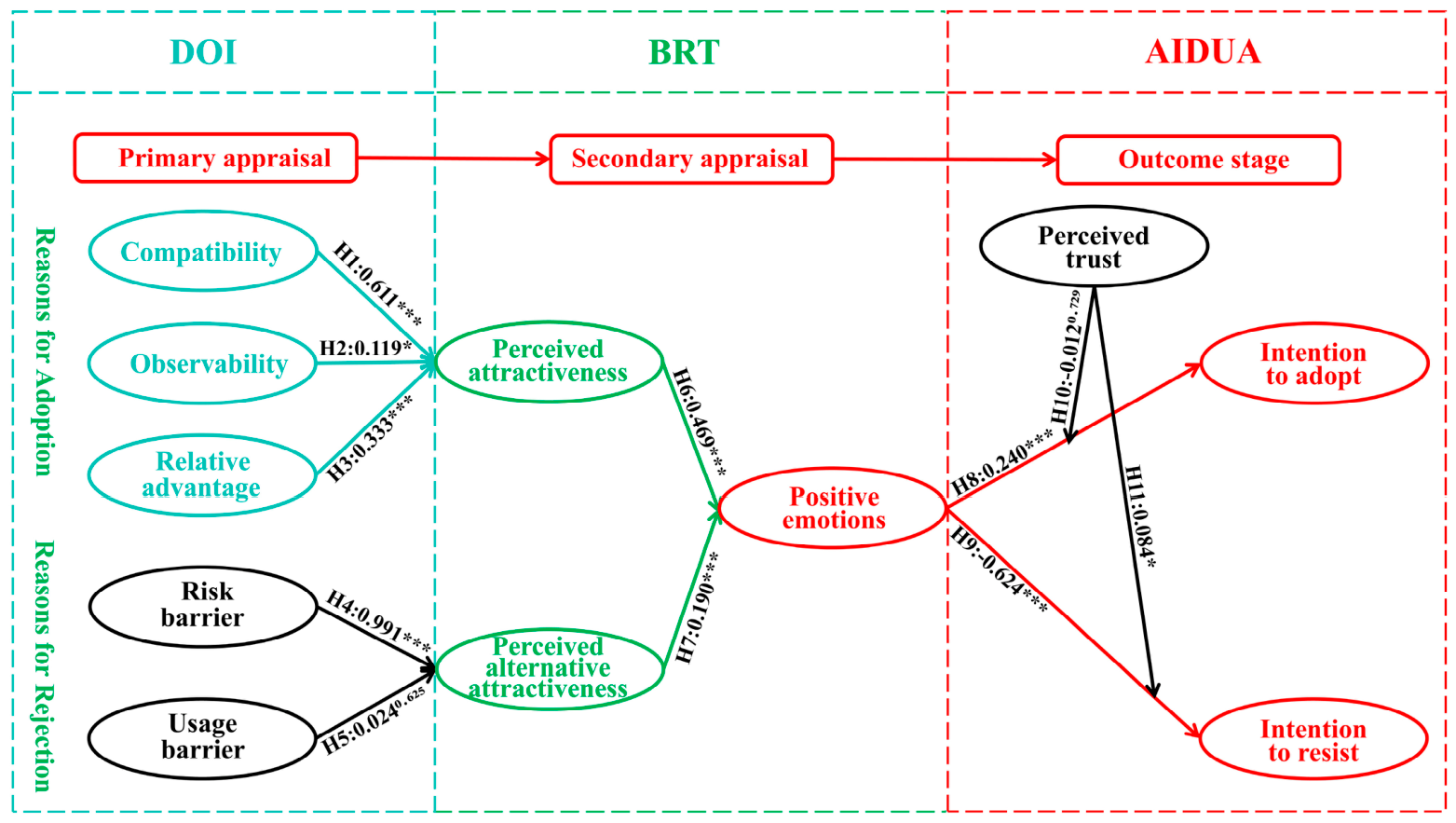
Together, the primary and secondary appraisal mechanisms explain how different appraisal contents are associated with vocational teachers’ adoption and resistance intentions toward AITTs. The theoretical model is illustrated in Figure 1.

2.3. Research Hypotheses

2.3.1. The Effect of Compatibility on Attractiveness

Compatibility refers to a key attribute that reflects the extent to which a new technology can be smoothly embedded into users’ existing life structures and value systems [25]. When individuals perceive a technology as highly consistent with their habitual behaviors, value orientations, and practical needs, they are more likely to develop psychological acceptance and positive behavioral responses. In educational contexts, compatibility is manifested in teachers’ subjective perceptions of the degree to which AITTs align with their prior teaching experience, technological proficiency, and course requirements. According to BRT, individuals’ reasons constitute core cognitive elements that shape overall motivations, such as attitudes and interests [17]. For teachers, AITTs with high compatibility can reduce the friction of transition and adaptation costs within instructional processes, enabling them to focus more on teaching the content itself. At the same time, through functions such as personalized feedback and enhanced interactive responsiveness, such tools can significantly improve classroom engagement and instructional effectiveness [1]. The resulting positive teaching experiences are likely to strengthen teachers’ interest in and favorable attitudes toward AITTs, thereby increasing their overall perceived attractiveness in instructional practice. Accordingly, the following hypothesis is formulated:
H1. 
Compatibility positively influences perceived attractiveness.

2.3.2. The Effect of Observability on Perceived Attractiveness

Observability is defined as the extent to which the process of using a new technology and its actual benefits are visible to individuals or social groups [27]. Prior studies emphasize that when an innovation is more readily observable, its advantages and usage outcomes are more easily perceived by potential users, thereby reducing uncertainty and accelerating cognitive formation and attitude change [28]. Empirical research in the information systems domain further indicates that high observability enhances users’ understanding and evaluation of a technology by increasing the visibility of its use and the demonstrability of its results, which in turn facilitates diffusion and adoption [27]. Building on this line of research, subsequent studies have found that when a technology exhibits greater visibility within social contexts, individuals are more likely to form clear cognitions and positive attitudes by observing others’ usage behaviors and actual outcomes, thereby strengthening their interest in and favorable perceptions of the technology [28]. In educational settings, if teachers can clearly observe concrete practices and successful outcomes of AITTs implemented by colleagues or other institutions, they are more likely to be attracted by their demonstrated effectiveness, thus increasing the perceived attractiveness of such technologies. Accordingly, the following hypothesis is formulated:
H2. 
Observability positively influences perceived attractiveness.

2.3.3. The Effect of Relative Advantage on Perceived Attractiveness

Relative advantage represents a key adoption-related attribute, capturing individuals’ assessments of whether a new technology delivers superior outcomes compared with existing solutions, particularly in terms of performance, efficiency, and value generation [25]. A substantial body of research indicates that relative advantage, by enhancing the perceived value and utility of a technology, serves as a key antecedent shaping users’ attitudes and preferences [29]. When users recognize that an innovation provides superior solutions for performance improvement, efficiency enhancement, or problem solving, their subjective perceptions of the technology’s usefulness and importance are correspondingly strengthened [30]. This perceived value further stimulates interest, preference, and positive emotional responses, rendering the technology more attractive at the psychological level [31]. In educational contexts, if teachers perceive AITTs as outperforming traditional approaches in terms of teaching efficiency, classroom interaction, and feedback quality, their perceived attractiveness is likely to increase accordingly. Accordingly, the following hypothesis is formulated:
H3. 
Relative advantage positively influences perceived attractiveness.

2.3.4. The Effect of Risk Barriers on Perceived Alternative Attractiveness

Risk barriers refer to individuals’ perceptions of risk that arise when they encounter a new technology due to its potential uncertainty and unpredictability, which often trigger psychological vigilance and defensive responses [32]. Such perceptions typically stem from users’ lack of trust in a technology’s reliability and information security and subsequently shape their overall evaluation of the new technology. Existing studies indicate that perceived risk is multidimensional in nature and is commonly categorized into functional risk, privacy and security risk, and performance risk [33]. Accordingly, this study defines risk barriers as teachers’ overall perceptions of uncertainty regarding technological performance, information security, and instructional effectiveness when using AITTs. In educational contexts, vocational college teachers likewise consider these potential risks when evaluating AITTs. For instance, teachers may be concerned that technical failures during classroom use could disrupt instruction; they may worry about privacy breaches related to student and instructional data under intelligent management systems; or they may lack confidence in the actual instructional support provided by AITTs. Such concerns can weaken teachers’ trust and sense of security toward AITTs, leading them to favor established instructional approaches when weighing alternatives, thereby increasing their perceived attractiveness of traditional teaching methods relative to AITTs. On this basis, this study argues that risk barriers, by undermining teachers’ positive expectations of AITTs, reduce their attractiveness relative to conventional instructional approaches. Accordingly, the following hypothesis is formulated:
H4. 
Risk barriers positively influence perceived alternative attractiveness.

2.3.5. The Effect of Usage Barriers on Perceived Alternative Attractiveness

Usage barriers are defined as individuals’ psychological resistance to new technologies arising from perceptions that the learning and operational processes are overly complex [34,35]. Scholars generally argue that usage barriers essentially represent the inverse manifestation of perceived ease of use; together, these two constructs reflect users’ subjective judgments regarding the convenience of technology use, such that stronger perceived barriers are associated with lower perceived ease of use [36].
In educational contexts, usage barriers are primarily manifested in vocational college teachers’ perceived difficulties in learning, operating, and integrating AITTs into existing instructional processes. This judgment incorporates multiple considerations, including process restructuring, time investment, and individual digital literacy. When teachers perceive substantial obstacles in using AITTs, they are more likely to rely on familiar and stable traditional teaching methods, thereby enhancing the attractiveness of alternative options. Accordingly, the following hypothesis is proposed:
H5. 
Usage barriers positively affect perceived alternative attractiveness.

2.3.6. The Effects of Perceived Attractiveness and Perceived Alternative Attractiveness on Positive Emotions

In technology adoption contexts, individuals’ emotional responses do not arise directly from external attributes but are grounded in subjective cognitive evaluations of technological characteristics [17]. Perceived attractiveness and perceived alternative attractiveness respectively represent individuals’ overall positive and negative judgments of a new technology and constitute cognitive outcomes formed during the secondary appraisal stage [37]. Such cognitive evaluations elicit emotional experiences and serve as important antecedents of positive emotions. Accordingly, positive emotions play a critical psychological mediating role between cognitive evaluations and behavioral intentions, driving individuals to translate perceptual judgments into tendencies toward adoption or resistance [38]. Specifically, perceived attractiveness enhances individuals’ positive expectations of a technology, thereby eliciting positive emotional responses such as pleasure, reassurance, and curiosity. In contrast, perceived alternative attractiveness reflects teachers’ comparative preference for existing teaching approaches when AITTs are perceived as risky, complex, or uncertain, thereby weakening positive emotional responses toward AITTs. Through this cognition–emotion–behavior chain mechanism, perceived attractiveness and perceived alternative attractiveness indirectly influence individuals’ adoption and resistance intention.
In this study, perceived attractiveness refers to teachers’ overall positive evaluations formed based on their integrated perceptions of AITTs’ compatibility, relative advantage, and observability. Perceived alternative attractiveness reflects teachers’ negative judgments arising from perceived risk barriers and usage barriers, including concerns about safety, stability, and operational complexity. Positive emotions denote teachers’ favorable emotional experiences, such as pleasure, reassurance, and curiosity, that emerge following their evaluation of the technology. Within educational application contexts, vocational college teachers’ subjective assessments of AITTs follow the same underlying mechanism. When teachers perceive a high degree of fit between AITTs and instructional activities and believe that such tools can deliver convenience and innovation, they are more likely to experience positive emotions, thereby strengthening their interest in and trust toward the technology. Conversely, when teachers perceive AITTs as risky, complex, or misaligned with existing teaching practices, they may experience negative emotions such as anxiety and resistance, which in turn weaken their positive emotional responses. Accordingly, the following hypothesis is formulated:
H6. 
Perceived attractiveness positively influences positive emotions.
H7. 
Perceived alternative attractiveness negatively influences positive emotions.

2.3.7. The Effects of Positive Emotions on Adoption Intention and Resistance Intention

Positive emotions constitute an important psychological factor influencing technology adoption intentions. Emotions are commonly defined as subjective psychological states that shape individuals’ selection and processing of affective information [39]. According to cognitive appraisal theory [40], individuals develop emotional responses toward AITTs after undergoing complex evaluative processes, which ultimately influence their intentions to accept and use such technologies. Positive emotions can be understood as an overall sense of psychological comfort experienced by vocational college teachers during the evaluation process. Adoption decisions regarding AITTs refer to vocational college teachers’ willingness to use such tools in future instructional activities and represent the outcome of their cognitive evaluations of the technology. During the multidimensional assessment of AITTs, teachers form positive or negative attitudes and emotional responses, which largely determine their final adoption intentions. When vocational college teachers perceive a high degree of consistency and reliability in AITTs across both functional and emotional dimensions, and obtain tangible benefits from their teaching experiences, they are more likely to experience positive emotions such as pleasure, interest, and reassurance. These emotions can strengthen their intrinsic motivation and psychological energy, thereby promoting their intention to adopt AITTs in instructional practice. Conversely, when positive emotions are insufficient, vocational college teachers may exhibit resistance and psychological defensiveness, which in turn increases their tendency to reject the technology. Prior studies likewise indicate that positive emotions enhance individuals’ technology adoption intentions while reducing psychological resistance [15,41]. Accordingly, the following hypothesis is formulated:
H8. 
Positive emotions positively influence adoption intention toward AITTs.
H9. 
Positive emotions negatively influence resistance intention toward AITTs.

2.3.8. The Moderating Effect of Trust Tendency

In contexts where technology use involves outcome uncertainty and performance dependence, trust in artificial intelligence can be understood as individuals’ beliefs and attitudes that AI systems can operate reliably, avoid unintended adverse consequences, and contribute to the achievement of usage goals [42]. In educational application settings, trust in AI has repeatedly been identified as a key determinant of technology acceptance and use [2]. According to cognitive appraisal theory, positive emotions such as pleasure, interest, and a sense of achievement tend to elicit approach-oriented intentions while inhibiting avoidance or resistance [40]. However, the translation of emotions into intentions is context-dependent and contingent on individuals’ judgments regarding risk cues and perceived controllability [2,42]. In this regard, trust in AI can reduce perceived uncertainty, strengthen teachers’ confidence in engaging with AI-based educational technologies, and support their acceptance and use of such tools [43]. Accordingly, when vocational college teachers hold higher levels of trust in AITTs, positive emotions are more likely to be converted into adoption intentions, and their inhibitory effect on resistance intention is expected to be more pronounced. Accordingly, the following hypothesis is formulated:
H10. 
Trust tendency positively moderates the relationship between positive emotions and adoption intention.
H11. 
Trust tendency positively moderates the relationship between positive emotions and resistance intention.

3. Methodology

3.1. Measures

This study adopted a quantitative research design to examine vocational college teachers’ adoption and resistance intention toward AITTs. To systematically capture this process, the study integrated AIDUA, BRT, and DOI to construct a comprehensive analytical framework encompassing cognitive appraisal, emotional responses, and behavioral intentions. The questionnaire measured 11 latent variables, all of which are treated as independent constructs in subsequent analyses. These constructs include compatibility, observability, relative advantage, risk barriers, usage barriers, perceived attractiveness, perceived alternative attractiveness, positive emotions, adoption intention, resistance intention, and trust. All measurement items were adapted from established and validated scales, as summarized in Appendix A, Table A1, with necessary modifications made to reflect the specific context of vocational college teachers’ use of AITTs, thereby ensuring the contextual appropriateness of the measurements.
The survey was structured around three distinct components. The first section explained the ethical conditions of the survey, including anonymous participation, academic-only data usage, and the protection of respondents’ privacy. This section also briefly introduced the definition and key characteristics of AITTs to ensure a shared understanding of the core concepts among respondents. The second section collected respondents’ demographic information and characteristics related to their daily use of AITTs. The third section focused on the core constructs of the proposed model, covering multiple variables associated with the primary appraisal, secondary appraisal, and outcome stages. All measurement items were assessed using a seven-point Likert scale (1 = “strongly disagree,” 7 = “strongly agree”), with respondents asked to evaluate each statement based on their personal perceptions and actual teaching experiences.
To ensure content validity and linguistic appropriateness of the measurement scales, this study followed a “translation–review–pilot test” procedure in developing the questionnaire. First, two experts in educational technology and educational measurement translated the original English scales into Chinese to ensure accurate correspondence between key terms and theoretical constructs. Next, an expert whose native language is Chinese and who has a background in educational measurement and survey methodology reviewed and refined the translated items. This step focused on optimizing wording, sentence structure, and contextual relevance so that the items better matched vocational college teachers’ language habits and instructional settings.
After revision, a pilot test was conducted with a small sample of vocational college teachers to examine item clarity, semantic consistency, and logical coherence. Based on the pilot test results, the items were further refined, resulting in the final version of the questionnaire, which was subsequently used for large-scale data collection.

3.2. Sample and Data Collection

This study employed an online questionnaire survey targeting in-service teachers at vocational colleges in China. China’s higher vocational education system was selected as the primary research context. China hosts one of the largest vocational education systems worldwide and is among the countries experiencing the most rapid digital transformation, providing rich and realistic application scenarios for AITTs [44]. Moreover, the wide regional coverage and disciplinary heterogeneity of vocational colleges allow teachers’ intention formation to be examined within a consistent institutional context, which strengthens the robustness and general applicability of the results. The survey was disseminated using Sojump hyperlinks and circulated through platforms including teacher development centers, affiliated colleges, and teaching–research communities. The formal survey was conducted from 13 October to 29 October 2025, yielding a total of 650 responses. In accordance with predefined quality control criteria, invalid questionnaires were excluded, including responses with completion times shorter than 120 s or longer than 900 s, straight-lining responses, failure to pass attention-check items, and duplicate submissions [45]. After applying the data screening criteria, 503 questionnaires were retained for further analysis, corresponding to an effective response rate of 77.38%.
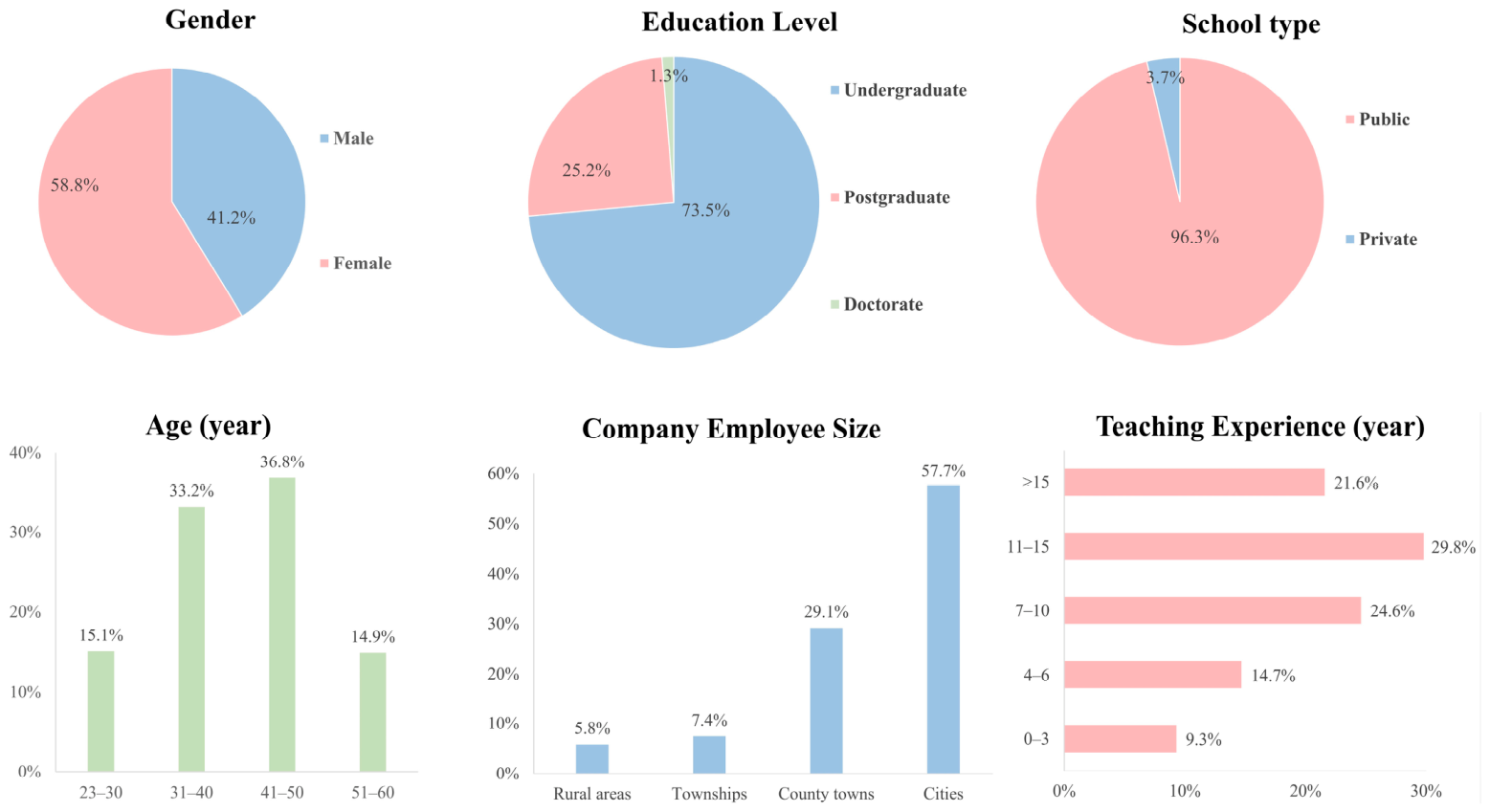
The demographic characteristics of the sample are presented in Figure 2. In terms of gender distribution, the ratio of male to female teachers is approximately 4:6, which is broadly consistent with the gender composition of the teacher population in China [46]. With respect to teaching experience, teachers with 7–10 years of experience account for 24.6% of the sample, while those with 11–15 years of experience represent 29.8%, indicating that most respondents possess relatively substantial teaching experience. In terms of academic qualifications, most respondents hold either a bachelor’s degree, accounting for 73.5% of the sample, or a master’s degree, representing 25.2%. This distribution closely aligns with the overall educational profile of vocational education teachers nationwide. In terms of institutional affiliation, teachers from public institutions account for 96.3% of the sample, whereas those from private institutions represent 3.7%. Overall, the sample demonstrates an appropriate demographic and professional composition for examining vocational college teachers’ responses to AITTs.

3.3. Common Method Bias

When data are collected through questionnaire surveys, there is a potential risk of common method bias (CMB), which may lead to inflated relationships among variables. To mitigate this risk, several procedural remedies were implemented during the questionnaire design and administration stages [47]. First, all measurement items were adapted from well-established and validated scales. In addition, the questionnaire was administered online anonymously, privacy was assured, and respondents were encouraged through introductory statements to provide honest and accurate responses. As an additional diagnostic for common method bias, Harman’s single-factor test was performed as an initial check. The analysis indicates that the first unrotated factor explains 34.40% of the variance, falling below the commonly accepted cutoff of 50%, and thus suggesting that common method bias is unlikely to pose a serious concern [47]. However, given the limitations of Harman’s single-factor test, additional diagnostic procedures were conducted. To further diagnose common method bias, a confirmatory factor analysis was conducted on a single-factor measurement structure. The single-factor CFA yielded an unsatisfactory model fit (χ2/df = 15.342, NFI = 0.325, GFI = 0.393, RMSEA = 0.127, SRMR = 0.120), indicating that no dominant single factor accounted for the majority of covariance among the measurement items.
In addition, the unmeasured latent method construct (ULMC) technique was applied by adding a common latent method factor to the baseline measurement model [47]. Following prior ULMC applications, substantial common method bias would be indicated if the inclusion of the method factor increased CFI and TLI by more than 0.10 and decreased RMSEA and SRMR by more than 0.05 [48]. The baseline model showed acceptable fit (χ2/df = 1.247, CFI = 0.958, TLI = 0.955, RMSEA = 0.034, SRMR = 0.050), while the ULMC model also showed acceptable fit (χ2/df = 1.174, CFI = 0.988, TLI = 0.986, RMSEA = 0.019, SRMR = 0.025). The changes in fit indices were limited (ΔCFI = 0.030, ΔTLI = 0.031, ΔRMSEA = 0.015, ΔSRMR = 0.025), suggesting that adding the common method factor did not substantially improve model fit. Therefore, common method bias is unlikely to seriously affect the empirical results of this study.

4. Results and Discussion

4.1. Confirmatory Factor Analysis

Cronbach’s alpha coefficients were calculated to examine the internal consistency of the measurement scales, and the corresponding results are presented in Table 1. All statistical analyses were conducted using SPSS 23.0 and AMOS 26.0. Cronbach’s alpha values across all constructs fall between 0.785 and 0.923, all of which are above the conventional benchmark of 0.70, demonstrating adequate internal reliability. The adequacy of the data for factor analysis is supported by KMO values exceeding 0.60 and a statistically significant Bartlett’s test of sphericity (p < 0.001). Evidence of convergent validity is provided by standardized factor loadings between 0.668 and 0.894, AVE values ranging from 0.518 to 0.750, and CR estimates spanning 0.785 to 0.923, all of which satisfy established evaluation standards [49]. According to established criteria for assessing skewness and kurtosis, the skewness and kurtosis values of all variables fell within acceptable ranges, indicating that the data did not substantially deviate from the normality assumption [49]. Discriminant validity was assessed according to the Fornell–Larcker criterion by comparing the square root of AVE for each construct with the corresponding inter-construct correlations. The results show that the square root of AVE for each construct is greater than its correlations with all other constructs, demonstrating adequate discriminant validity among the latent constructs, as presented in Table 2.
The confirmatory factor analysis provided evidence that the measurement model achieved a good overall fit, with fit indices consistently falling within acceptable ranges suggested by previous studies. Specifically, χ2/df was 1.247, which is below the commonly accepted threshold of 3.0 [50], suggesting an acceptable level of model complexity. Moreover, the values of CFI (0.982), TLI (0.980), and NFI (0.914) all exceed the recommended threshold of 0.90, further supporting the adequacy of the model fit [50]. RMSEA is 0.022, which is substantially lower than the acceptable upper limit of 0.08 [51]. Furthermore, to rule out potential multicollinearity issues, variance inflation factors (VIFs) were calculated for all variables. The VIF values ranged from 1.559 to 2.285, which are well below the threshold of 3.0 [49], indicating that multicollinearity is not a serious concern. Overall, the measurement model demonstrates robust performance in terms of overall fit, bias control, and construct distinctiveness, providing a solid empirical foundation for subsequent structural path analysis.

4.2. Structural Model Testing

After validating the measurement model, we estimated the structural model using the valid sample data. As illustrated in Figure 3, the model demonstrates a good overall fit, with all fit indices (χ2/df = 1.591, RMSEA = 0.034, SRMR = 0.050, IFI = 0.958, TLI = 0.955, CFI = 0.958) meeting commonly accepted evaluation criteria. Among the nine proposed hypotheses, eight are supported, whereas one is not supported. The results indicate that, in the primary appraisal stage, compatibility (β = 0.611, p < 0.001), observability (β = 0.119, p < 0.05), and relative advantage (β = 0.333, p < 0.001) all exert significant positive effects on perceived attractiveness, thereby supporting H1, H2, and H3. Risk barriers (β = 0.991, p < 0.001) have a significant positive effect on perceived alternative attractiveness, supporting H4. In contrast, usage barriers (β = 0.024, p > 0.05) do not exert a significant positive effect on perceived alternative attractiveness; thus, H5 is not supported. In the secondary appraisal stage, perceived attractiveness (β = 0.469, p < 0.001) and perceived alternative attractiveness (β = −0.190, p < 0.001) show significant positive and negative effects on positive emotions, respectively, supporting H6 and H7. In the outcome stage, positive emotions have a significant positive effect on adoption intention (β = 0.240, p < 0.001) and a significant negative effect on resistance intention (β = −0.624, p < 0.001), thereby supporting H8 and H9.

4.3. Direct, Indirect, and Total Effect Analysis

Indirect effects were examined using the bootstrap method. The results indicate that innovation characteristics and inhibiting factors in the primary appraisal stage do not exert significant direct effects on either adoption intention or resistance intention; rather, their effects are mainly transmitted to the outcome stage through subsequent appraisal processes and emotional pathways. Further analysis reveals that perceived attractiveness and perceived alternative attractiveness play critical mediating roles in the adoption and resistance pathways, respectively, and translate primary appraisal outcomes into behavioral intentions by eliciting positive emotions. In other words, the influence of primary appraisal variables on final intentions does not occur directly but depends on a multistage transmission process. In addition, with the exception of the path from usage barriers to perceived alternative attractiveness, which fails to reach statistical significance, all other appraisal-related paths exhibit stable and significant indirect effects. These findings suggest that both adoption-related drivers and resistance-related barriers can, overall, shape individuals’ behavioral intentions through mediating mechanisms.
Table 3 reports the effects of exogenous variables on endogenous variables in the proposed model. With respect to direct effects, in the primary appraisal stage, compatibility (β = 0.611, p < 0.001), relative advantage (β = 0.333, p < 0.001), and observability (β = 0.119, p < 0.05) all exert significant positive effects on perceived attractiveness. Along the resistance pathway, risk barriers (β = 0.991, p < 0.001) show a significant positive effect on perceived alternative attractiveness, whereas the effect of usage barriers (β = 0.024, p = 0.625) does not reach statistical significance. Moving to the secondary appraisal stage, perceived attractiveness (β = 0.469, p < 0.001) and perceived alternative attractiveness (β = −0.190, p < 0.001) both have significant effects on positive emotions. Finally, in the outcome stage, positive emotions exhibit significant direct effects on both adoption intention (β = 0.240, p < 0.001) and resistance intention (β = −0.624, p < 0.001).
About indirect effects, along the adoption pathway, perceived attractiveness exerts the strongest indirect effect on adoption intention (b64 = 0.113), followed by compatibility (b14 = 0.069) and relative advantage (b34 = 0.037), whereas the indirect effect of observability is relatively weaker (b24 = 0.013). In contrast, risk barriers (b44 = −0.045) and perceived alternative attractiveness (b74 = −0.046) generate negative indirect effects on adoption intention through mediating pathways. Along the resistance pathway, compatibility shows the strongest negative indirect effect on resistance intention (b15 = −0.179), followed by relative advantage (b35 = −0.097) and observability (b25 = −0.035). At the same time, perceived alternative attractiveness (b75 = 0.119) and risk barriers (b45 = 0.117) both exert positive indirect effects on resistance intention through mediating mechanisms. The effects of primary appraisal variables on both types of behavioral intentions are mainly transmitted through a chain-mediated pathway involving perceived attractiveness, perceived alternative attractiveness, and positive emotions.
With respect to total effects, along the adoption pathway, positive emotions exert the strongest overall influence on adoption intention (c84 = 0.240), representing the largest direct effect in this pathway. This is followed by perceived attractiveness (c64 = 0.113), which shows a moderate positive total effect. In comparison, the total effects of compatibility (c14 = 0.069) and relative advantage (c34 = 0.037) are relatively weaker, while observability exhibits the most limited effect (c24 = 0.013). By contrast, risk barriers (c44 = −0.045) and perceived alternative attractiveness (c74 = −0.046) display negative total effects on adoption intention. Along the resistance pathway, positive emotions likewise demonstrate the strongest total effect, exerting a significant negative influence on resistance intention (c85 = −0.624). Subsequently, perceived attractiveness (c65 = −0.293) and compatibility (c15 = −0.179) also show pronounced inhibitory effects on resistance intention, whereas the total effects of relative advantage (c35 = −0.097) and observability are comparatively weaker (c25 = −0.035). Meanwhile, perceived alternative attractiveness (c75 = 0.119) and risk barriers (c45 = 0.117) exhibit positive total effects on resistance intention.

4.4. Moderating Effect Analysis

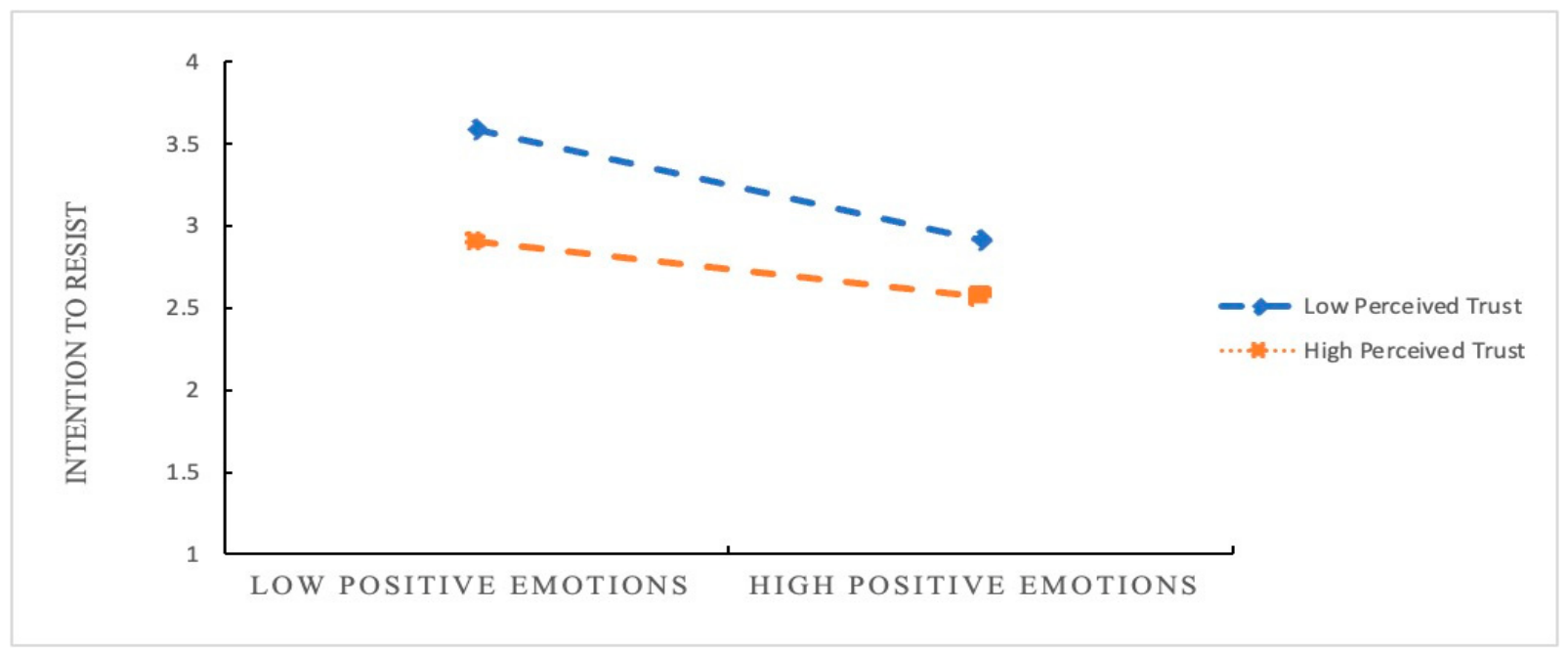
To test whether the strength of the relationship between teachers’ positive emotions and behavioral intentions varies across levels of individual perceived trust tendency, regression analyses were performed using PROCESS Model 1, with 5000 bootstrap resamples employed to verify interaction robustness. All variables were mean centered before inclusion in the models, and simple slope analyses were plotted at ±1 standard deviation of the moderator. The significance of the moderation effects was evaluated using 95% confidence intervals. Positive emotions, adoption intention, and resistance intention were operationalized using the mean values of their respective measurement items, while individual trust tendency was introduced as the moderating variable. Interaction terms were constructed to test the proposed hypotheses.
The results indicate that although positive emotions have a significant direct effect on adoption intention, the interaction effect between positive emotions and individual trust tendency does not reach statistical significance (β = −0.012, p > 0.05). This suggests that the effect of positive emotions on adoption intention does not differ significantly across levels of trust tendency; therefore, H10 is not supported. In contrast, trust tendency exhibits a significant moderating effect on the relationship between positive emotions and resistance intention (β = 0.084, p < 0.05). As illustrated in Figure 4, with increasing levels of trust tendency, the negative effect of positive emotions on resistance intention gradually weakens. In other words, under conditions of high trust, the inhibitory effect of positive emotions on resistance intention is relatively attenuated, providing support for H11.

4.5. Discussion of Results

First, in the primary appraisal stage, vocational college teachers’ perceptions of the attractiveness of AITTs are mainly driven by technological attributes. Compatibility, observability, and relative advantage all significantly enhance perceived attractiveness, indicating that before teachers develop sufficient usage experience, their initial judgments tend to be shaped by the fit between AITTs and existing teaching practices, the visibility of instructional outcomes, and the perceived advantages over traditional teaching approaches. This finding is consistent with Diffusion of Innovation theory, which suggests that users often evaluate whether a new technology is worth further adoption based on its innovation attributes [25,27,29]. Along the resistance pathway, risk barriers significantly increase perceived alternative attractiveness, suggesting that vocational college teachers do not evaluate AITTs only in terms of convenience or efficiency, but also pay close attention to potential risks such as system errors, improper data handling, ambiguous instructional responsibility, and reduced teaching reliability [1,42]. This finding is also consistent with research suggesting that technology adoption decisions may be shaped not only by rational evaluations of expected benefits but also by cognitive biases and perceived adoption barriers, especially when new technologies involve uncertainty and potential negative consequences [52,53]. Notably, usage barriers do not exert a significant effect on perceived alternative attractiveness, which differs from studies that regard complexity or usage difficulty as a major source of technology resistance [34,35,36]. However, existing innovation resistance research suggests that different types of barriers do not affect resistance-related outcomes in a uniform way [35,54,55]. In intelligent technology contexts such as algorithmic decision-making and service robots, value, tradition, image, or risk barriers may be more closely associated with rejection tendencies or alternative evaluations, whereas the effect of usage barriers does not always appear consistently [54,55]. In the context of AITTs, usage barriers are mainly reflected in learning costs, operational burden, and adaptation difficulty, which may be better understood as implementation frictions that can be gradually alleviated through training, accumulated experience, or technical support [56]. Thus, in the AITT context, the resistance pathway is not driven solely by perceived difficulty of use but may instead reflect teachers’ broader judgments regarding technological uncertainty, responsibility risks, and instructional reliability [1,26,42].
Second, at the secondary appraisal stage, perceived attractiveness significantly enhances vocational college teachers’ positive emotions, whereas perceived alternative attractiveness significantly weakens positive emotions. These results are consistent with cognitive appraisal theory, which argues that emotions do not arise independently of cognitive judgment but are shaped by individuals’ evaluations of situational value, potential benefits, and possible consequences [40,57,58]. Research on technology adoption and intelligent technology use also suggests that users’ positive judgments of a technology’s functional value, task fit, and perceived attractiveness tend to elicit positive emotions; conversely, when alternative options are perceived as more stable, reliable, or consistent with existing usage habits, users’ positive emotions toward the target technology may be weakened [57,58]. Therefore, these findings support the secondary-appraisal logic of the AIDUA framework, indicating that positive emotions are shaped not only by the perceived attractiveness of AITTs but also by the comparative pull of alternative teaching approaches [15,58].
Third, at the outcome stage, positive emotions significantly enhance vocational college teachers’ adoption intentions while significantly reducing their resistance intentions. These results are consistent with the basic logic of the AIDUA framework, which suggests that emotional responses function as outcome-related appraisals linking cognitive evaluations of AI technologies with adoption and resistance intentions [15]. Research on the cognition–emotion–behavior relationship also indicates that emotions serve as an important psychological mechanism linking prior cognitive evaluations to subsequent behavioral intentions [38,59]. Existing studies on service robots, autonomous vehicles, and AI device use similarly show that positive emotions can significantly promote users’ adoption intentions and weaken their rejection or resistance tendencies [15,57,58]. Therefore, the present findings further indicate that positive emotions play a key transforming role in the dual pathways of AITT adoption and resistance.
Finally, trust tendency only significantly moderates the relationship between positive emotions and resistance intention, whereas its moderating effect on the relationship between positive emotions and adoption intention is not significant. This suggests that, in the context of AITTs, trust tendency appears to function more as a risk-buffering condition than as a general amplifier of emotion-driven adoption intention. Prior AI trust research indicates that, in technology contexts characterized by high uncertainty, trust can reduce users’ concerns about system reliability, controllability, and potential negative consequences, thereby shaping their behavioral judgments [60,61]. In the AITT context, concerns about technological reliability, pedagogical applicability, and responsibility boundaries may make trust particularly relevant to the resistance pathway [2,42,43].

5. Conclusions

5.1. Theoretical Contributions

First, this study applies the dual-path logic of AIDUA to the evaluation of AITTs, thereby enriching educational technology adoption research by giving greater attention to teachers’ resistance intention. Prior studies on educational technology have mainly focused on teachers’ adoption or acceptance intention, while resistance intention has rarely been examined as an outcome distinct from adoption intention [2,8,12,14]. Although AIDUA already incorporates the coexistence of adoption and resistance [15], its application to teachers’ evaluation of AITTs remains limited. By examining adoption intention and resistance intention within the same empirical framework, this study provides a more balanced explanation of teachers’ positive evaluations and reservations toward AITTs.
Second, this study refines the explanatory scope of AIDUA by incorporating BRT and DOI to specify the antecedent structure of adoption and resistance intentions. AIDUA provides an evaluative structure that links cognitive appraisal, affective response, and behavioral intention [15], while BRT further explains how supportive and inhibitive reasons shape teachers’ judgments [17]. DOI specifies the innovation-related sources of teachers’ positive evaluations by introducing compatibility, observability, and relative advantage as antecedents of perceived attractiveness [25]. Meanwhile, risk barrier and usage barrier capture the constraint-based judgments associated with perceived alternative attractiveness. Thus, this integration improves the explanatory precision of AIDUA by distinguishing the antecedents underlying adoption-oriented and resistance-oriented evaluations.
Third, this study advances the contextual development of educational technology adoption research by focusing on vocational education. Compared with more general educational settings, vocational education places stronger emphasis on practical instruction, skill development, and task-oriented teaching outcomes [9,10]. In this context, teachers’ evaluations of AITTs depend not only on general perceptions of technological benefits, but also on whether these tools are compatible with instructional tasks, whether their teaching value is observable, and whether their use introduces additional risk or operational burden. By situating AITTs evaluation within this context, this study enriches the theoretical understanding of how adoption and resistance intentions are formed in practice-oriented educational environments.

5.2. Implications for Management

The findings of this study provide several practical implications for the sustainable use of AITTs in vocational education.
First, both enhancing tool attractiveness and addressing risk barriers are important. When adopting AITTs, teachers pay attention to their fit with teaching activities and their ability to improve efficiency [2,3]. At the same time, they are concerned about data security and responsibility allocation. Therefore, promotion efforts should demonstrate the value of these tools through verifiable teaching scenarios. Clear security safeguards and reliable technical support are also necessary. These measures can help create a positive cycle in which teachers continue to use the technology, providing sustained momentum for the digital transformation of vocational education.
Second, emotional experience should be taken seriously in technology adoption. Positive emotions play a key role in linking teachers’ evaluations of technology with adoption intentions. For this reason, the design of AITTs should focus on improving user experience. Stable systems and friendly interaction can create feelings of enjoyment and control. Such experiences can strengthen teachers’ willingness to accept the technology and support its sustained use.
Third, it is important to balance technological advantages with teachers’ concerns in order to support sustainable human–machine collaboration. Teachers’ evaluations of AITTs may involve both acceptance-oriented and resistance-oriented considerations. On the one hand, they recognize the efficiency advantages of these technologies. On the other hand, they worry about reduced teaching autonomy and unclear responsibility boundaries. These concerns suggest that technological development should also consider ethical norms, teachers’ professional agency, and professional identity [3,62,63]. Appropriate governance mechanisms can guide teachers to use AITTs in a responsible way. This helps maintain a long-term balance between technological benefits and professional values.
Finally, trust plays a stabilizing role in reducing resistance to AITT adoption. Although trust tendency does not significantly strengthen the relationship between positive emotions and adoption intention, it moderates the relationship between positive emotions and resistance intention. This suggests that trust may be more important for reducing teachers’ defensive responses to AITTs than for further amplifying their adoption intention. Schools and technology providers should therefore help teachers build basic trust in AITTs through transparent explanations of system functions, clear responsibility boundaries, and professional learning support related to ethical AI use [2,42,63]. These measures can provide a psychological foundation for reducing resistance and supporting more sustainable technology use.

5.3. Limitations and Future Research

Despite the contributions of this research to understanding vocational college teachers’ adoption and resistance intentions toward AITTs, several limitations remain. First, this study considered teachers’ general usage experience but did not distinguish between specific application types or functional scenarios. Different modules, such as intelligent lesson planning, automated grading, learning feedback, and content generation, may involve different instructional objectives and technological complexity. Prior research has also indicated that teachers’ trust in AI-powered educational technology is shaped by both technology-related perceptions and professional development contexts [64]. Future research could therefore compare different functional modules and instructional contexts to identify more specific adoption and resistance mechanisms. Second, the cross-sectional design limits the ability to capture dynamic changes in teachers’ cognition, emotions, and intentions over time. As teachers become more familiar with AITTs, their risk perceptions, emotional responses, and behavioral intentions may change. Future studies could employ longitudinal or experimental designs to examine the stability of the proposed model and further validate causal directions. Third, although the structural model reveals the overall adoption and resistance pathways, it may not fully capture heterogeneity across teacher groups. Teachers with different institutional backgrounds, disciplinary areas, and levels of digital literacy may differ in their ethical trust, instructional dependence, and perceptions of professional roles. Future research could incorporate interviews, classroom observations, or case studies to complement quantitative findings and provide a more nuanced understanding of adoption and resistance mechanisms in authentic instructional contexts.

Author Contributions

Conceptualization, J.W.; Investigation, J.W. and J.L.; Methodology, J.W.; Project Administration, J.L.; Resources, Y.N.; Software, J.W.; Supervision, J.L.; Validation, J.W. and Y.N.; Visualization, J.L.; Writing—Original Draft, J.W.; Writing—Review and Editing, J.W. and J.L. All authors have read and agreed to the published version of the manuscript.

Funding

This research was funded by Shanxi Provincial Education Science “14th Five-Year Plan” 2024 Annual Planning Project (grant number GH-240642); Shanxi Provincial Higher Education Philosophy and Social Science Research Project (grant number 2024W247); Shanxi Provincial Higher Education Philosophy and Social Science Research Project (grant number 2024W386).

Institutional Review Board Statement

In accordance with the ethical guidelines established by the National Health Commission, Ministry of Education, Ministry of Science and Technology, and Administration of Traditional Chinese Medicine of China, our research is categorized under life science research due to the use of sociological methods for behavioral data collection. However, it does not involve any life science or medical issues, nor does it include the collection of biospecimens, health records, or sensitive personal information. Per Article 32 of the National Guidelines for Scientific Research Ethics Review, studies involving human data or anonymized information—where there is no harm to participants, no sensitive personal information or commercial interests, and no relevance to life science or medical topics—are eligible for exemption from ethical review. This provision is intended to alleviate unnecessary burdens on researchers and foster the development of life science and medical research. Specifically, Article 32, Item 2 allows for exemption from ethical review for research utilizing anonymized data. Our study fully complies with this criterion, as it involved a voluntary questionnaire, ensuring complete anonymization of participant responses. The data collected are non-sensitive, non-medical, and unrelated to life science research. After thorough consideration, the study was conducted in accordance with the Declaration of Helsinki. Ethical review and approval were waived for this study because it involved anonymous survey data, in accordance with institutional and national guidelines.

Informed Consent Statement

Informed consent was obtained from all subjects involved in the study.

Data Availability Statement

The data presented in this study are available from the corresponding author upon reasonable request. The data are not publicly available to protect participant confidentiality.

Acknowledgments

The authors would like to thank the editors and anonymous referees for their valuable comments, which have significantly improved this paper.

Conflicts of Interest

The authors declare no conflicts of interest.

Abbreviations

The following abbreviations are used in this manuscript:
AITTsAI-based teaching tools
AIDUAArtificial Intelligence Device Use Acceptance
BRTBehavioral Reasoning Theory
DOIDiffusion of Innovation

Appendix A

Table A1. Measurement items and source.
ConstructIDMeasurementSource
CompatibilityCOM1I believe that AI-based teaching tools align well with my current teaching practices.Petschnig M et al., 2014 [28]
COM2I think AI-based teaching tools are consistent with my teaching philosophy and instructional goals.
COM3AI-based teaching tools are compatible with the teaching activities I am familiar with.
COM4The use of AI-based teaching tools does not disrupt my established teaching style.
COM5AI-based teaching tools can be easily integrated into my daily teaching resources.
ObservabilityOBS1I have observed other teachers successfully using AI-based teaching tools.
OBS2I have learned about the applications of AI-based teaching tools through different channels.
OBS3I have seen how AI-based teaching tools improve teaching efficiency.
OBS4I can clearly perceive the benefits of using AI-based teaching tools.
Relative advantageREA1I think AI-based teaching tools are more effective than traditional methods.
REA2I believe AI-based teaching tools help me improve teaching performance.
REA3Using AI-based teaching tools enhances the quality of my classroom instruction.
REA4I believe AI-based teaching tools improve my teaching efficiency.
REA5AI-based teaching tools bring better teaching outcomes than traditional methods.
Risk barrierRIB1I am concerned about the overall safety of AI-based teaching tools in teaching.Yuen K F et al., 2020; Zhang C et al., 2025 [29,42]
RIB2I worry that malfunctions or system failures of AI-based teaching tools may cause teaching accidents.
RIB3I am concerned that AI-based teaching tools collect too much personal information.
RIB4I worry that my personal data could be accessed or exploited by AI-based teaching tools beyond their intended purposes without my explicit consent.
RIB5I am concerned that AI-based teaching tools may share my personal information with other entities without authorization.
Usage barrierUSB1I feel that it is difficult to learn how to use AI-based teaching tools.Chen C C et al., 2022 [34]
USB2I find it troublesome to operate AI-based teaching tools.
USB3Using AI-based teaching tools consumes too much time.
USB4It is challenging for me to use AI-based teaching tools without external assistance.
USB5I need extra training to effectively use AI-based teaching tools.
Perceived attractivenessPEA1Compared with traditional teaching methods or other instructional technologies, I believe that AI-based teaching tools can bring me more benefits.Koh L Y, Yuen K F, 2024 [16]
PEA2AI-based teaching tools make me feel interested and motivated.
PEA3I feel positive emotions when using AI-based teaching tools.
PEA4I think AI-based teaching tools are appealing to me.
PEA5I feel encouraged and inspired when using AI-based teaching tools.
Perceived alternative attractivenessPEL1Compared with AI-based teaching tools, I find traditional teaching methods more reliable.
PEL2Compared with AI-based teaching tools, I prefer other educational technologies.
PEL3Compared with AI-based teaching tools, I believe traditional methods are more effective.
PEL4Compared with AI-based teaching tools, I think other methods are more valuable.
PEL5I am more willing to use traditional teaching methods instead of AI-based teaching tools.
Positive emotionsPOE1I feel delighted when using AI-based teaching tools.
POE2I feel a sense of achievement when AI-based teaching tools help me teach effectively.
POE3I feel excited when using AI-based teaching tools in the classroom.
POE4I am satisfied with my teaching experience when using AI-based teaching tools.
POE5I feel happy when thinking about using AI-based teaching tools in the future.
Intention to adopt INA1I am likely to adopt AI-based teaching tools in my future instructional practice.
INA2I will consider AI-based teaching tools as my first choice for classroom assistance.
INA3I will recommend AI-based teaching tools to my colleagues or students.
INA4I will speak positively about AI-based teaching tools when communicating with others.
INA5I predict that I will continue to use AI-based teaching tools in the future.
Intention to resist INR1I oppose introducing AI-based teaching tools into the current teaching model.
INR2I am unwilling to cooperate in using AI-based teaching tools for teaching activities.
INR3I prefer to continue using traditional teaching methods rather than AI-based teaching tools.
INR4I feel uneasy when using AI-based teaching tools.
INR5I feel resistant to using AI-based teaching tools in teaching.
Perceived TrustPT1I think that the AI-based teaching tools used in teaching can provide reliable support for my instructional decisions.Choi S et al., 2023 [2]
PT2I think that the suggestions or feedback generated by the AI-based teaching tools are fair and unbiased.
PT3I feel that the AI-based teaching tools used in vocational teaching are dependable in practical use.
PT4Overall, I can trust the AI-based teaching tools used in my teaching activities.

References

  1. Alwaqdani, M. Investigating teachers’ perceptions of artificial intelligence tools in education: Potential and difficulties. Educ. Inf. Technol. 2025, 30, 2737–2755. [Google Scholar] [CrossRef]
  2. Choi, S.; Jang, Y.; Kim, H. Influence of pedagogical beliefs and perceived trust on teachers’ acceptance of educational artificial intelligence tools. Int. J. Hum.–Comput. Interact. 2023, 39, 910–922. [Google Scholar] [CrossRef]
  3. Celik, I. Towards Intelligent-TPACK: An empirical study on teachers’ professional knowledge to ethically integrate artificial intelligence (AI)-based tools into education. Comput. Hum. Behav. 2023, 138, 107468. [Google Scholar] [CrossRef]
  4. Song, Z.; Qin, J.; Jin, F.; Cheung, W.M.; Lin, C.H. A case study of teachers’ generative artificial intelligence integration processes and factors influencing them. Teach. Teach. Educ. 2025, 165, 105157. [Google Scholar] [CrossRef]
  5. Liu, Y.; Awang, H.; Mansor, N.S. Exploring the potential barrier factors of AI chatbot usage among teacher trainees: From the perspective of innovation resistance theory. Sustainability 2025, 17, 4081. [Google Scholar] [CrossRef]
  6. Song, P.; Wang, X. A bibliometric analysis of worldwide educational artificial intelligence research development in recent twenty years. Asia Pac. Educ. Rev. 2020, 21, 473–486. [Google Scholar] [CrossRef]
  7. Pal, D.; Patra, S. University students’ perception of video-based learning in times of COVID-19: A TAM/TTF perspective. Int. J. Hum.–Comput. Interact. 2021, 37, 903–921. [Google Scholar] [CrossRef]
  8. Filiz, O.; Kaya, M.H.; Adiguzel, T. Teachers and AI: Understanding the factors influencing AI integration in K-12 education. Educ. Inf. Technol. 2025, 30, 17931–17967. [Google Scholar] [CrossRef]
  9. McGrath, S.; Yamada, S. Skills for development and vocational education and training: Current and emergent trends. Int. J. Educ. Dev. 2023, 102, 102853. [Google Scholar] [CrossRef]
  10. Long, Y.; Zhang, X.; Zeng, X. Application and effect analysis of virtual reality technology in vocational education practical training. Educ. Inf. Technol. 2025, 30, 9755–9786. [Google Scholar] [CrossRef]
  11. Wu, H.; Li, D.; Mo, X. Understanding GAI risk awareness among higher vocational education students: An AI literacy perspective. Educ. Inf. Technol. 2025, 30, 14273–14304. [Google Scholar] [CrossRef]
  12. Kelly, S.; Kaye, S.A.; Oviedo-Trespalacios, O. What factors contribute to the acceptance of artificial intelligence? A systematic review. Telemat. Inform. 2023, 77, 101925. [Google Scholar] [CrossRef]
  13. Zhai, X. Transforming teachers’ roles and agencies in the era of generative AI: Perceptions, acceptance, knowledge, and practices. J. Sci. Educ. Technol. 2025, 34, 1323–1333. [Google Scholar] [CrossRef]
  14. Hazzan-Bishara, A.; Kol, O.; Levy, S. The factors affecting teachers’ adoption of AI technologies: A unified model of external and internal determinants. Educ. Inf. Technol. 2025, 30, 15043–15069. [Google Scholar] [CrossRef]
  15. Gursoy, D.; Chi, O.H.; Lu, L.; Nunkoo, R. Consumers acceptance of artificially intelligent (AI) device use in service delivery. Int. J. Inf. Manag. 2019, 49, 157–169. [Google Scholar] [CrossRef]
  16. Koh, L.Y.; Yuen, K.F. The role of motivators, barriers, attractiveness, and positive emotions on consumers’ intention to adopt and resist self-driving delivery robots. J. Retail. Consum. Serv. 2024, 81, 103998. [Google Scholar] [CrossRef]
  17. Westaby, J.D. Behavioral reasoning theory: Identifying new linkages underlying intentions and behavior. Organ. Behav. Hum. Decis. Process. 2005, 98, 97–120. [Google Scholar] [CrossRef]
  18. Rogers, E.M.; Singhal, A.; Quinlan, M.M. Diffusion of innovations 1. In An Integrated Approach to Communication Theory and Research; Routledge: London, UK, 2019; pp. 415–434. [Google Scholar]
  19. Zhang, C.; Schießl, J.; Plößl, L.; Hofmann, F.; Gläser-Zikuda, M. Acceptance of artificial intelligence among pre-service teachers: A multigroup analysis. Int. J. Educ. Technol. High. Educ. 2023, 20, 49. [Google Scholar] [CrossRef]
  20. Alhwaiti, M. Acceptance of artificial intelligence application in the post-covid ERA and its impact on faculty members’ occupational well-being and teaching self efficacy: A path analysis using the utaut 2 model. Appl. Artif. Intell. 2023, 37, 2175110. [Google Scholar] [CrossRef]
  21. Hu, L.; Wang, H.; Xin, Y. Factors influencing Chinese pre-service teachers’ adoption of generative AI in teaching: An empirical study based on UTAUT2 and PLS-SEM. Educ. Inf. Technol. 2025, 30, 12609–12631. [Google Scholar] [CrossRef]
  22. Guo, S.; Shi, L.; Zhai, X. Developing and validating an instrument for teachers’ acceptance of artificial intelligence in education. Educ. Inf. Technol. 2025, 30, 13439–13461. [Google Scholar] [CrossRef]
  23. Xu, S.; Chen, P.; Zhang, G. Exploring Chinese university educators’ acceptance and intention to use AI tools: An application of the UTAUT2 model. Sage Open 2024, 14, 21582440241290013. [Google Scholar] [CrossRef]
  24. Zhao, J.; Li, S.; Zhang, J. Understanding teachers’ adoption of AI technologies: An empirical study from Chinese middle schools. Systems 2025, 13, 302. [Google Scholar] [CrossRef]
  25. Rogers, E.M. Diffusion of Innovations/Everett M. rogers; Simon and Schuster: New York, NY, USA, 2003; p. 576. [Google Scholar]
  26. Wut, T.M.; Ka-man Sum, C.; Shun-mun Wong, H. Does perceived risk of AI matter? Teachers’ AI literacy and institutional support: Perspective from self-determination theory. Educ. Inf. Technol. 2025, 30, 23271–23293. [Google Scholar] [CrossRef]
  27. Frei-Landau, R.; Muchnik-Rozanov, Y.; Avidov-Ungar, O. Using Rogers’ diffusion of innovation theory to conceptualize the mobile-learning adoption process in teacher education in the COVID-19 era. Educ. Inf. Technol. 2022, 27, 12811–12838. [Google Scholar] [CrossRef] [PubMed]
  28. Petschnig, M.; Heidenreich, S.; Spieth, P. Innovative alternatives take action–Investigating determinants of alternative fuel vehicle adoption. Transp. Res. Part A Policy Pract. 2014, 61, 68–83. [Google Scholar] [CrossRef]
  29. Yuen, K.F.; Wong, Y.D.; Ma, F.; Wang, X. The determinants of public acceptance of autonomous vehicles: An innovation diffusion perspective. J. Clean. Prod. 2020, 270, 121904. [Google Scholar] [CrossRef]
  30. Pinho, C.; Franco, M.; Mendes, L. Application of innovation diffusion theory to the E-learning process: Higher education context. Educ. Inf. Technol. 2021, 26, 421–440. [Google Scholar] [CrossRef]
  31. Yin, J.; Qiu, X. AI technology and online purchase intention: Structural equation model based on perceived value. Sustainability 2021, 13, 5671. [Google Scholar] [CrossRef]
  32. Cabeza-Ramírez, L.J.; Sánchez-Cañizares, S.M.; Santos-Roldán, L.M.; Fuentes-García, F.J. Impact of the perceived risk in influencers’ product recommendations on their followers’ purchase attitudes and intention. Technol. Forecast. Soc. Change 2022, 184, 121997. [Google Scholar] [CrossRef]
  33. Adu-Gyamfi, G.; Song, H.; Obuobi, B.; Nketiah, E.; Wang, H.; Cudjoe, D. Who will adopt? Investigating the adoption intention for battery swap technology for electric vehicles. Renew. Sustain. Energy Rev. 2022, 156, 111979. [Google Scholar] [CrossRef]
  34. Chen, C.C.; Chang, C.H.; Hsiao, K.L. Exploring the factors of using mobile ticketing applications: Perspectives from innovation resistance theory. J. Retail. Consum. Serv. 2022, 67, 102974. [Google Scholar] [CrossRef]
  35. Huang, D.; Jin, X.; Coghlan, A. Advances in consumer innovation resistance research: A review and research agenda. Technol. Forecast. Soc. Change 2021, 166, 120594. [Google Scholar] [CrossRef]
  36. Ray, A.; Bala, P.K.; Dwivedi, Y.K. Exploring barriers affecting eLearning usage intentions: An NLP-based multi-method approach. Behav. Inf. Technol. 2022, 41, 1002–1018. [Google Scholar] [CrossRef]
  37. Schrepp, M.; Held, T.; Laugwitz, B. The influence of hedonic quality on the attractiveness of user interfaces of business management software. Interact. Comput. 2006, 18, 1055–1069. [Google Scholar] [CrossRef]
  38. Perugini, M.; Bagozzi, R.P. The role of desires and anticipated emotions in goal-directed behaviours: Broadening and deepening the theory of planned behaviour. Br. J. Soc. Psychol. 2001, 40, 79–98. [Google Scholar] [CrossRef]
  39. Kim, M.; Beehr, T.A. Empowering leadership improves employees’ positive psychological states to result in more favorable behaviors. Int. J. Hum. Resour. Manag. 2023, 34, 2002–2038. [Google Scholar] [CrossRef]
  40. Lazarus, R.S. Cognition and motivation in emotion. Am. Psychol. 1991, 46, 352. [Google Scholar] [CrossRef]
  41. Lin, H.; Chi, O.H.; Gursoy, D. Antecedents of customers’ acceptance of artificially intelligent robotic device use in hospitality services. J. Hosp. Mark. Manag. 2020, 29, 530–549. [Google Scholar] [CrossRef]
  42. Zhang, C.; Hu, M.; Wu, W.; Kamran, F.; Wang, X. Unpacking perceived risks and AI trust influences pre-service teachers’ AI acceptance: A structural equation modeling-based multi-group analysis. Educ. Inf. Technol. 2025, 30, 2645–2672. [Google Scholar] [CrossRef]
  43. Lucas, M.; Zhang, Y.; Bem-Haja, P.; Vicente, P.N. The interplay between teachers’ trust in artificial intelligence and digital competence. Educ. Inf. Technol. 2024, 29, 22991–23010. [Google Scholar] [CrossRef]
  44. Luo, Y.; Zhou, G.; Cui, Y. Understanding generative artificial intelligence adoption in higher education faculty: Evidence from Chinese Universities and technical and vocational colleges. Educ. Inf. Technol. 2026, 31, 1711–1751. [Google Scholar] [CrossRef]
  45. Meade, A.W.; Craig, S.B. Identifying careless responses in survey data. Psychol. Methods 2012, 17, 437. [Google Scholar] [CrossRef]
  46. Ding, N.; Hu, L.; Kim, K.T.; Chen, M. When Generative Artificial Intelligence Becomes a Colleague: Dual Pathways of Empowerment and Depletion in University Design Teachers’ Work Behaviors. Sustainability 2026, 18, 1775. [Google Scholar] [CrossRef]
  47. Podsakoff, P.M.; MacKenzie, S.B.; Podsakoff, N.P. Sources of method bias in social science research and recommendations on how to control it. Annu. Rev. Psychol. 2012, 63, 539–569. [Google Scholar] [CrossRef] [PubMed]
  48. Huang, Y.; Jiang, M.; Dai, Z.; Hu, C. Empowering future educators: How school connectedness relates to employability through future work self salience and learning engagement. BMC Psychol. 2026, 14, 223. [Google Scholar] [CrossRef] [PubMed]
  49. Hair, J.F.; Risher, J.J.; Sarstedt, M.; Ringle, C.M. When to use and how to report the results of PLS-SEM. Eur. Bus. Rev. 2019, 31, 2–24. [Google Scholar] [CrossRef]
  50. Anderson, J.C.; Gerbing, D.W. Structural equation modeling in practice: A review and recommended two-step approach. Psychol. Bull. 1988, 103, 411. [Google Scholar] [CrossRef]
  51. Fornell, C.; Larcker, D.F. Evaluating structural equation models with unobservable variables and measurement error. J. Mark. Res. 1981, 18, 39–50. [Google Scholar] [CrossRef]
  52. Shuraida, S.; Titah, R. An examination of cloud computing adoption decisions: Rational choice or cognitive bias? Technol. Soc. 2023, 74, 102284. [Google Scholar] [CrossRef]
  53. Mobarak, A.M.; Saldanha, N.A. Remove barriers to technology adoption for people in poverty. Nat. Hum. Behav. 2022, 6, 480–482. [Google Scholar] [CrossRef]
  54. Mahmud, H.; Islam, A.N.; Mitra, R.K. What drives managers towards algorithm aversion and how to overcome it? Mitigating the impact of innovation resistance through technology readiness. Technol. Forecast. Soc. Change 2023, 193, 122641. [Google Scholar] [CrossRef]
  55. Lee, G.; Kim, Y. Effects of resistance barriers to service robots on alternative attractiveness and intention to use. Sage Open 2022, 12, 21582440221099293. [Google Scholar] [CrossRef]
  56. Kim, H.W.; Kankanhalli, A. Investigating user resistance to information systems implementation: A status quo bias perspective1. MIS Q. 2009, 33, 567–582. [Google Scholar] [CrossRef]
  57. Huang, D.; Chen, Q.; Huang, S.; Liu, X. Consumer intention to use service robots: A cognitive–affective–conative framework. Int. J. Contemp. Hosp. Manag. 2024, 36, 1893–1913. [Google Scholar] [CrossRef]
  58. Ribeiro, M.A.; Gursoy, D.; Chi, O.H. Customer acceptance of autonomous vehicles in travel and tourism. J. Travel Res. 2022, 61, 620–636. [Google Scholar] [CrossRef]
  59. Gerli, P.; Clement, J.; Esposito, G.; Mora, L.; Crutzen, N. The hidden power of emotions: How psychological factors influence skill development in smart technology adoption. Technol. Forecast. Soc. Change 2022, 180, 121721. [Google Scholar] [CrossRef]
  60. Glikson, E.; Woolley, A.W. Human trust in artificial intelligence: Review of empirical research. Acad. Manag. Ann. 2020, 14, 627–660. [Google Scholar] [CrossRef]
  61. Kaplan, A.D.; Kessler, T.T.; Brill, J.C.; Hancock, P.A. Trust in artificial intelligence: Meta-analytic findings. Hum. Factors 2023, 65, 337–359. [Google Scholar] [CrossRef]
  62. Henriksen, D.; Creely, E.; Gruber, N.; Leahy, S. Social-emotional learning and generative AI: A critical literature review and framework for teacher education. J. Teach. Educ. 2025, 76, 312–328. [Google Scholar] [CrossRef]
  63. Mouta, A.; Torrecilla-Sánchez, E.M.; Pinto-Llorente, A.M. Comprehensive professional learning for teacher agency in addressing ethical challenges of AIED: Insights from educational design research. Educ. Inf. Technol. 2025, 30, 3343–3387. [Google Scholar] [CrossRef]
  64. Nazaretsky, T.; Ariely, M.; Cukurova, M.; Alexandron, G. Teachers’ trust in AI-powered educational technology and a professional development program to improve it. Br. J. Educ. Technol. 2022, 53, 914–931. [Google Scholar] [CrossRef]
Figure 1. Theoretical Model.
Information 17 00544 g001
Figure 2. Demographic Information.
Information 17 00544 g002
Figure 3. Results of the structural model estimation. * Significance criterion: *** p < 0.001, * p < 0.05.
Information 17 00544 g003
Figure 4. The moderating effect of perceived trust on the relationship between positive emotions and resistance intention.
Information 17 00544 g004
Table 1. Results of Confirmatory Factor Analysis.
ConstructItemMeanSDLoadingsCronbach’s AlphaAVECR
CompatibilityCOM13.4931.015 0.7060.843 0.518 0.843
COM20.730
COM30.716
COM40.709
COM50.738
ObservabilityOBS13.5170.966 0.7020.8160.5260.816
OBS20.729
OBS30.745
OBS40.725
Relative advantageRA13.5440.945 0.8890.9000.6490.902
RA20.791
RA30.742
RA40.808
RA50.792
Risk barrierRB13.0531.091 0.6990.7850.5500.786
RB20.763
RB30.762
Usage barrierUB13.0261.058 0.8320.8980.7500.900
UB20.917
UB30.847
Perceived attractivenessPA13.5540.910 0.8780.9030.6530.904
PA20.782
PA30.770
PA40.782
PA50.824
Perceived alternative attractivenessPAA12.8641.010 0.8940.9230.7090.924
PAA20.850
PAA30.735
PAA40.882
PAA50.841
Positive emotionsPE13.3170.971 0.7070.8470.5250.847
PE20.668
PE30.780
PE40.729
PE50.735
Intention to adoptIA13.6280.908 0.7970.8700.5740.870
IA20.701
IA30.782
IA40.749
IA50.754
Intention to resist IR13.0451.021 0.7240.8500.5310.850
IR20.736
IR30.737
IR40.717
IR50.730
Perceived TrustPT13.2351.163 0.7910.8780.6420.878
PT20.805
PT30.808
PT40.802
Table 2. Discriminant Validity.
PTPAIRIAPAAPEUBRBRAOBSCOM
PT0.801 a
PA0.6220.808
IR−0.505−0.640.729
IA0.1370.143−0.1090.758
PAA−0.541−0.6650.569−0.1580.842
PE0.6480.686−0.4850.191−0.5940.725
UB−0.377−0.4170.314−0.0690.321−0.5230.866
RB−0.543−0.6920.583−0.0980.653−0.6320.4050.742
RA0.6190.681−0.5730.104−0.6390.661−0.516−0.6220.806
OBS0.3940.468−0.3270.220−0.3650.475−0.348−0.3630.4580.725
COM0.6370.721−0.6110.174−0.6230.724−0.454−0.650.6760.4710.720
a √AVE values are shown along the main diagonal.
Table 3. Direct, indirect, and total effects in the model.
Exogenous (i)Endogenous (j)
Perceived Attractiveness (1)Perceived Alternative Attractiveness (2)Positive Emotions (3)Intention to Adopt (4) Intention to Resist (5)
Direct effects (aij) of ‘…
Compatibility (1)0.611
Observability (2)0.119
Relative advantage (3)0.333
Risk barrier (4)0.991
Usage barrier (5)
Perceived attractiveness (6)0.469
Perceived alternative attractiveness (7)−0.190
Positive emotions (8)0.240−0.624
Indirect effects (bij) of ‘…
Compatibility (1)0.2870.069−0.179
Observability (2)0.0560.013−0.035
Relative advantage (3)0.1560.037−0.097
Risk barrier (4)−0.188−0.0450.117
Usage barrier (5)
Perceived attractiveness (6)0.113−0.293
Perceived alternative attractiveness (7)−0.0460.119
Positive emotions (8)
Total effects (cij) of ‘…
Compatibility (1)0.6110.2870.069−0.179
Observability (2)0.1190.0560.013−0.035
Relative advantage (3)0.3330.1560.037−0.097
Risk barrier (4)0.991−0.188−0.0450.117
Usage barrier (5)
Perceived attractiveness (6)0.4690.113−0.293
Perceived alternative attractiveness (7)−0.190−0.0460.119
Positive emotions (8)0.240−0.624
Disclaimer/Publisher’s Note: The statements, opinions and data contained in all publications are solely those of the individual author(s) and contributor(s) and not of MDPI and/or the editor(s). MDPI and/or the editor(s) disclaim responsibility for any injury to people or property resulting from any ideas, methods, instructions or products referred to in the content.