Article

FPGA-Accelerated Machine Learning for Computational Environmental Information Processing in IoT-Integrated High-Density Nanosensor Networks

by
Alaa Kamal Yousif Dafhalla
1,
Fawzia Awad Elhassan Ali
2,
Asma Ibrahim Gamar Eldeen
2,
Ikhlas Saad Ahmed
2,
Ameni Filali
1,
Amel Mohamed essaket Zahou
2,
Amal Abdallah AlShaer
2,
Suhier Bashir Ahmed Elfaki
2,
Rabaa Mohammed Eltayeb
3 and
Tijjani Adam
4,5,6,*
1
Department of Computer Engineering, College of Computer Science and Engineering, University of Ha’il, KSA1, Hail 81451, Saudi Arabia
2
Department of Computer Science, Applied College, Imam Abdulrahman Bin Faisal University, Dammam 31441, Saudi Arabia
3
College of Arts English Department, University of Ha’il, Hail 81451, Saudi Arabia
4
Faculty of Electronic Engineering & Technology, Universiti Malaysia Perlis (UniMAP), Arau 02600, Perlis, Malaysia
5
Micro System Technology, Centre of Excellence (CoE), Universiti Malaysia Perlis (UniMAP), Arau 02600, Perlis, Malaysia
6
Institute of Nano Electronic Engineering, Universiti Malaysia Perlis (UniMAP), Kangar 01000, Perlis, Malaysia
*
Author to whom correspondence should be addressed.
Information 2026, 17(4), 354; https://doi.org/10.3390/info17040354
Submission received: 4 February 2026 / Revised: 30 March 2026 / Accepted: 31 March 2026 / Published: 8 April 2026

Abstract

This study presents a nanosensor network system for autonomous microclimate optimization in precision horticulture, leveraging a field-programmable gate array (FPGA)-based control architecture that is integrated with an edge-level machine learning inference. Unlike the conventional greenhouse automation systems, which exhibit thermal and hygroscopic hysteresis often exceeding 32 °C and 78% relative humidity, the proposed framework embeds a random forest regression (RFR) model directly within the Altera DE2-115 FPGA fabric to enable predictive environmental regulation. The model achieved an R2 of 0.985 and root mean square error (RMSE) of 0.28 °C, allowing proactive compensation for the thermodynamic disturbances from the high-intensity light-emitting diode (LED) lighting with a 120 s predictive horizon. The real-time monitoring and remote supervision were supported via a NodeMCU-based IoT gateway, achieving a 140 ms mean communication latency and a 99.8% packet delivery reliability. The preliminary validation using lettuce (Lactuca sativa) optimized the environmental parameters, while the subsequent experiments with pepper (Capsicum annuum), a commercially important and environmentally sensitive crop, demonstrated system performance under real-world conditions. The control system maintained a temperature and humidity within ±0.3 °C and ±1.2% of the setpoints, respectively, and outperformed the baseline rule-based control with a 28% increase in fresh biomass, a 22% improvement in dry matter accumulation, a 25% reduction in actuator duty-cycle switching, and an 18% decrease in overall energy consumption. These results highlight the efficacy of FPGA-integrated edge intelligence combined with low-latency IoT telemetry as a scalable, energy-efficient, and high-fidelity solution for sub-degree environmental control in next-generation, controlled-environment, and vertical farming systems.

1. Introduction

The increasing demand for sustainable and high-productivity agriculture has positioned smart greenhouse and plantation systems as critical components of modern food production [1]. Effective cultivation within controlled environments relies on the continuous monitoring and intelligent regulation of multiple environmental variables, including temperature, relative humidity, soil moisture, and light intensity [2]. With the emergence of high-density nanosensor networks, greenhouse monitoring systems are now capable of capturing fine-grained environmental data at unprecedented spatial and temporal resolutions [3]. However, the resulting data streams are high-dimensional, noisy, and strongly correlated, making the conventional rule-based or threshold-driven control strategies increasingly inadequate [4]. In recent years, Internet of Things (IoT) technologies have enabled a large-scale deployment of distributed nanosensor networks for agricultural monitoring [5]. Despite this progress, most existing plantation monitoring systems rely on microcontroller-based architectures that process sensor data sequentially and lack the computational capacity required for advanced environmental information processing [6]. As the sensor density increases, such architectures face significant challenges related to latency, scalability, and real-time decision-making [7]. Moreover, simple threshold-based actuation fails to capture complex nonlinear interactions among the environmental variables, leading to suboptimal control actions and inefficient resource utilization. Moreover, IoT sensors, when exposed to humidity and environmental stress for extended periods, may experience failures or degradation. To address this issue, predictive maintenance strategies can be employed, enabling the early detection of potential sensor faults, thereby ensuring system reliability and prolonging the operational life. Several studies highlight the importance of such strategies: Ref. [8] reviews the use of intelligent sensors in smart factories to anticipate failures and optimize maintenance schedules; Ref. [9] discusses advanced AI models to enhance predictive maintenance, addressing challenges such as data scarcity and fostering human–technology collaboration; and Ref. [10] presents predictive maintenance frameworks in IoT-monitored systems, focusing on fault prevention and continuous monitoring. Integrating these approaches provides a more comprehensive understanding of sensor reliability and demonstrates practical measures to mitigate potential failures. Machine learning (ML) provides a powerful framework for transforming raw environmental sensor data into actionable intelligence [11]. By learning latent relationships among multi-modal sensor inputs, ML models enable environmental state estimation, trend prediction, anomaly detection, and adaptive decision-making that cannot be achieved through deterministic control logic alone [12]. In the context of high-density nanosensor networks, ML becomes essential for computational environmental information processing, where large volumes of heterogeneous data must be fused, interpreted, and acted upon in real time [13]. However, the deployment of ML models in agricultural IoT systems remains constrained by computational latency, energy consumption, and hardware limitations, particularly when a cloud-dependent inference is used. To overcome these limitations, edge-level hardware acceleration has emerged as a promising solution [14]. The field-programmable gate arrays (FPGAs) offer deterministic timing, massive parallelism, and reconfigurability, making them well-suited for real-time ML-enabled environmental data processing [15]. By integrating ML inference directly onto FPGA-based smart integrated circuits (ICs), it becomes possible to perform low-latency environmental information processing at the sensor edge, thereby reducing communication overhead, improving system responsiveness, and enabling autonomous control [16]. Despite these advantages, the FPGA-accelerated ML frameworks remain underexplored in IoT-integrated plantation and greenhouse monitoring systems, particularly in conjunction with high-density nanosensor networks [17]. To evaluate the practical performance of smart greenhouse monitoring and control systems, appropriate plant models must be selected. Lettuce (Lactuca sativa) was used in preliminary trials due to its fast growth cycle and rapid response to environmental variation, enabling efficient calibration of light, humidity, and airflow parameters [18]. Pepper (Capsicum annuum), a widely cultivated fruiting crop that is sensitive to environmental stresses, was chosen for the main comparative study to assess the real-world applicability [19]. Both crops are of high agronomic relevance in tropical and subtropical regions, such as Malaysia and parts of Middle Africa, where environmental conditions directly affect growth, productivity, and food security. By combining a fast-assessment leafy vegetable with a commercially important fruiting crop, the study addresses both experimental optimization and field-relevant performance, providing insights that are broadly applicable to climate-resilient and controlled environment agriculture [20]. This study presents a machine learning-enabled FPGA–IoT co-designed architecture for computational environmental information processing in smart plantation monitoring [21]. The high-density nanosensor data, including temperature, humidity, soil moisture, and light intensity, are acquired and pre-processed at the edge, followed by ML-based feature extraction and decision inference implemented within an FPGA-based smart IC framework [22]. The learned environmental models support predictive and adaptive control, enhancing the accuracy and robustness of autonomous actuation compared to conventional threshold-based approaches [23]. The IoT connectivity enables real-time data visualization, system supervision, and remote interaction through a mobile interface [21]. The experimental results validate the effectiveness of the proposed architecture, demonstrating millisecond-level data processing latency and autonomous actuation accuracy exceeding 95% under dynamic environmental conditions [22]. The stable temperature regulation (~32 °C), responsive humidity control (78–79%), reliable soil moisture assessment, and adaptive lighting behaviors confirm the system’s ability to translate ML-derived environmental intelligence into real-world control actions. These findings highlight the practical feasibility of combining machine learning, FPGA acceleration, and IoT connectivity to realize scalable, intelligent, and energy-efficient plantation monitoring systems. By embedding machine learning-driven environmental information processing directly within a hardware-accelerated IoT framework, this work establishes a robust foundation for next-generation smart agriculture [24]. The proposed approach addresses the computational and scalability limitations of existing systems and paves the way toward fully autonomous, data-driven, and sustainable plantation monitoring platforms [25]. This work investigates the following research question: How can an FPGA-based acceleration of machine learning models be leveraged to achieve real-time, scalable, and energy-efficient computational processing for environmental information in IoT-integrated high-density nanosensor networks?

2. Materials and Methods

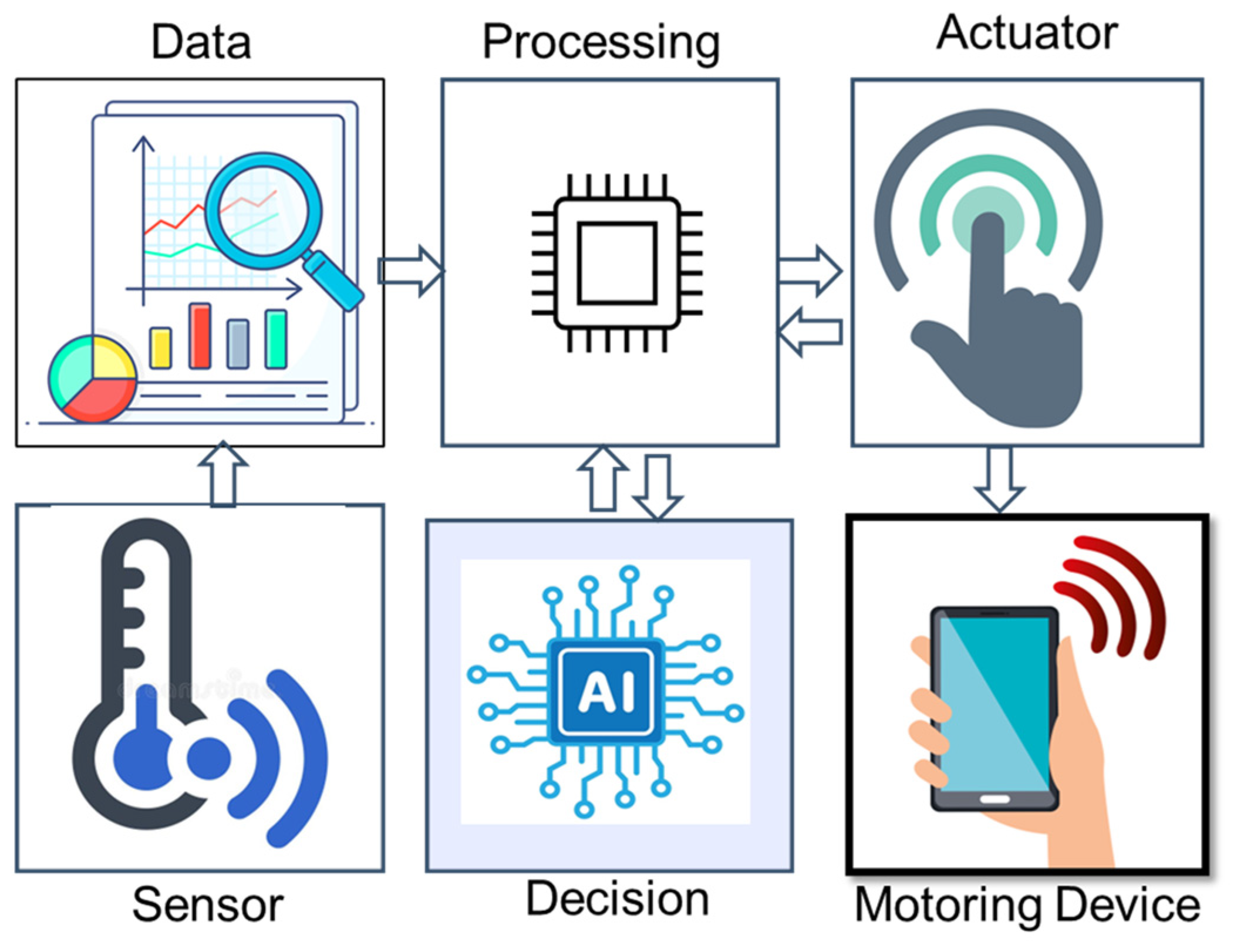
The proposed greenhouse monitoring system is designed for real-time operation and utilizes the parallel processing abilities of an FPGA. The overall system architecture consists of three main parts: the sensor data extracting module, the control and decision-making unit, and the output/actuator interface. Figure 1 Shows the integrated framework of an intelligent sensing and control system [26]. The architecture illustrates the interaction between sensor modules for environmental data acquisition, data analysis for pattern recognition, and a central processing unit for system coordination. Artificial intelligence (AI) enhances decision-making and adaptive responses, while the human–machine interfaces enable manual control and monitoring. The remote connectivity via mobile devices ensures real-time access, feedback, and system optimization, forming a closed-loop intelligent environment [27].

2.1. System Architecture

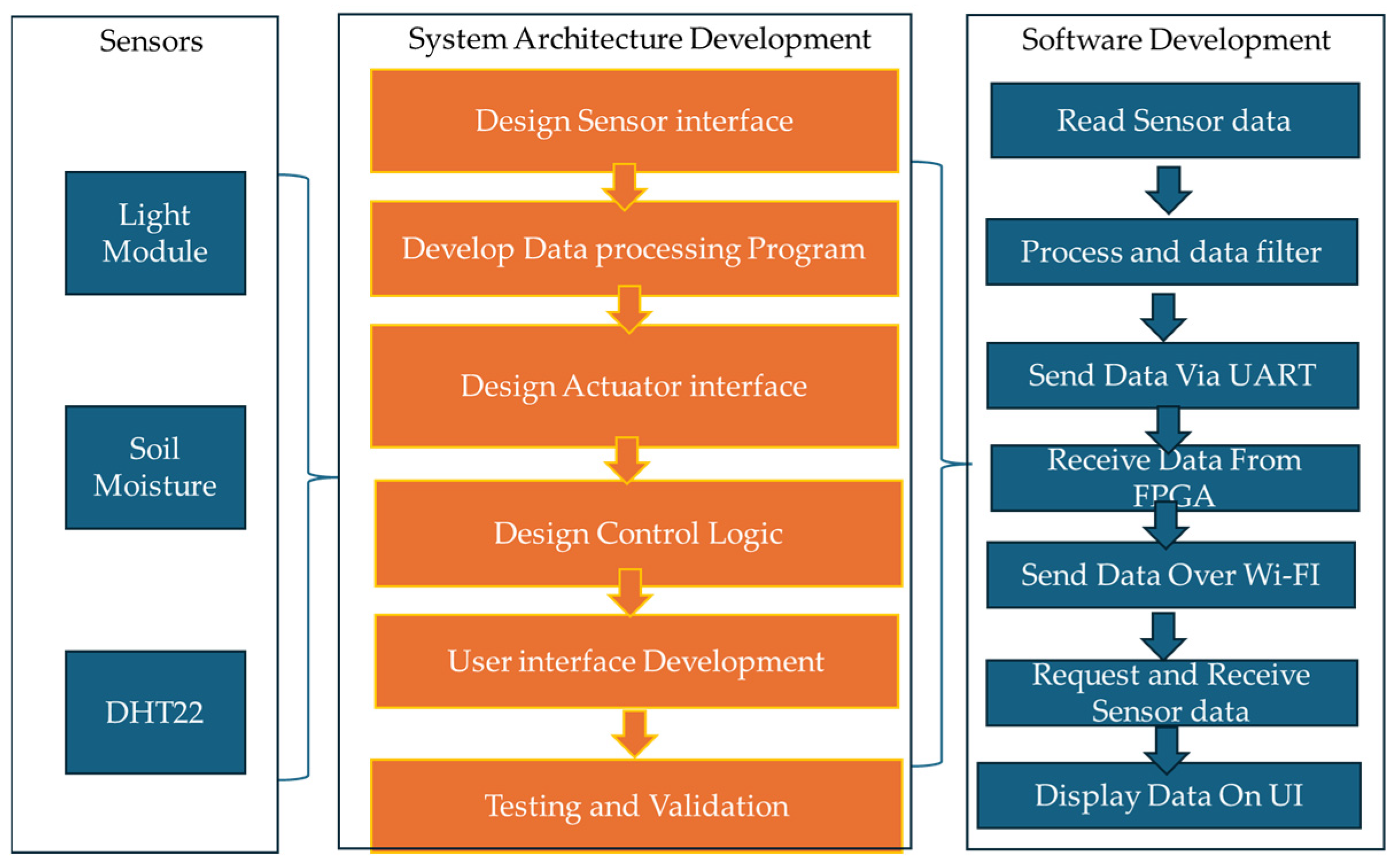
This project utilizes the Altera DE2-115 board Altera (Intel Corporation), San Jose, CA, USA for sensor interfacing and data acquisition from soil moisture, temperature, humidity, and light sensors via GPIO pins General-Purpose Input/Output (GPIO), N/A. The control algorithms are implemented on the Cyclone IV FPGA Cyclone IV FPGA (Intel Corporation), Santa Clara, CA, USA to process sensor inputs and trigger appropriate actions. For mobile integration, the FPGA transmits sensor data and control commands to a smartphone app via UART or similar protocols, enabling remote monitoring and configuration. The FPGA-based greenhouse monitoring system is implemented using Verilog HDL IEEE 1364-2005 in Intel Quartus Prime lite edition, which is deployed on the DE2-115 board. The sensors interface via GPIO, while actuators (water pump, LED, humidifier, fan) are driven through relay modules, enabling data to flow from sensor acquisition to actuator control and user feedback. All the input and output pins are assigned to specific GPIO pins on the DE2-115 board and are processed through the modules written in Verilog HDL, respectively. The control logic is developed and implemented using the finite state machine (FSM) that determines the operation mode of the actuators. The overall system development flow chart is shown in Figure 2.
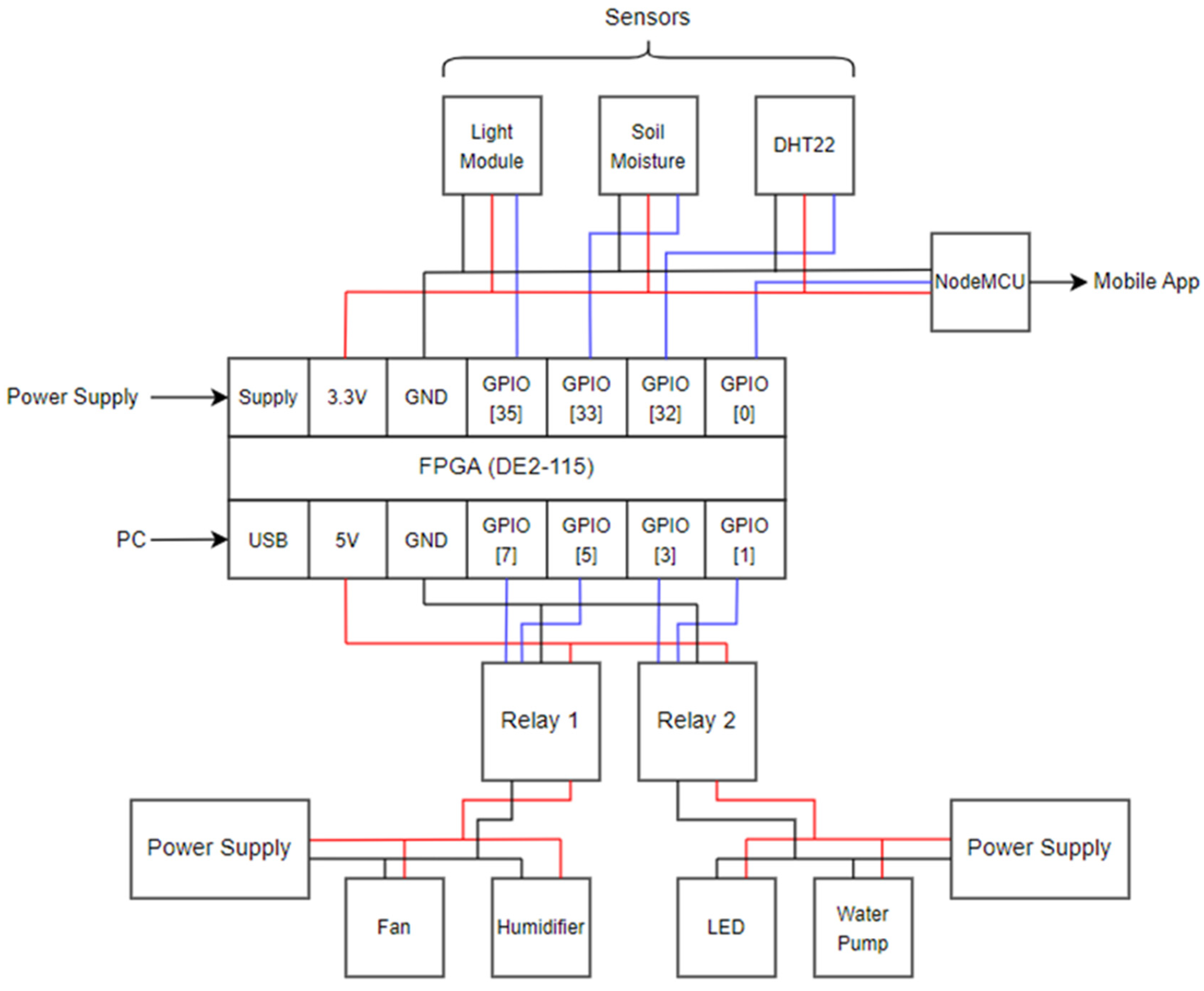
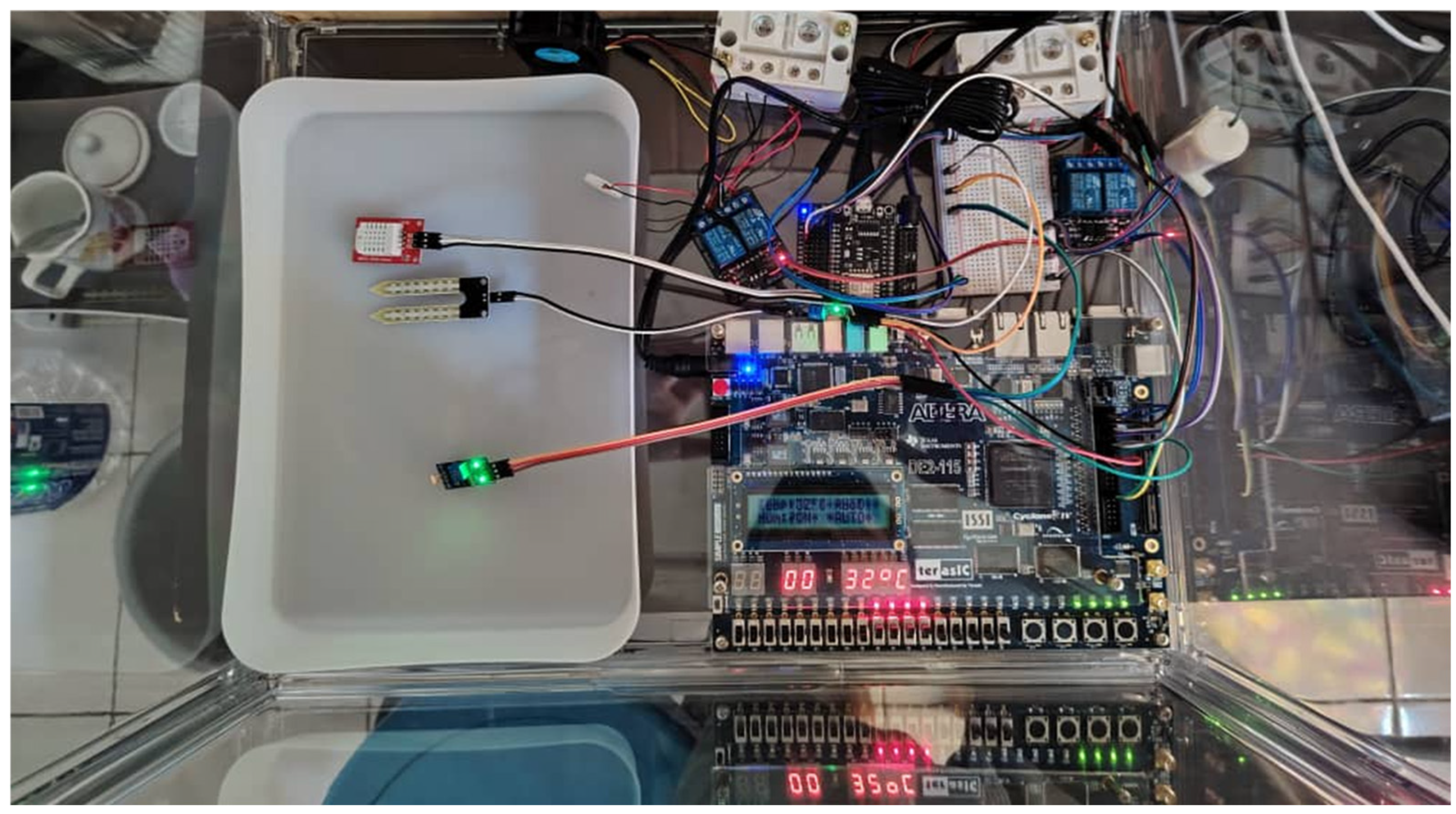
The main component of the system is the DE2-115 FPGA development board, integrated with the Cyclone IV EP4CE115F29C7 device Terasic Technologies Inc., Hsinchu, Taiwan. It relates to sensors, including the DHT22 temperature and humidity sensor, the soil moisture sensor, and the light-dependent sensor (LDR), where the manual user inputs data through the switches and pushbuttons on the DE2-115 board, as seen in Figure 3 and Figure 4. The real-time data collected from these sensors is processed within the FPGA using Verilog HDL language. Then, it is compared to the predefined thresholds or the user-set setpoints. To ensure consistent timing and state transitions, a finite state machine (FSM) architecture is used. Each state corresponds to a specific decision logic (“Temperature High”, “Soil Dry”), and transitions occur based on real-time sensor values. This FSM is synthesized into logical elements and implemented on the FPGA fabric, allowing parallel decision-making for multiple environmental parameters. The sensor modules, including a light sensor, soil moisture sensor, and DHT22 temperature/humidity sensor, collect environmental data and transmit it to the FPGA (DE2-115) via dedicated GPIO pins. The FPGA processes the inputs and, through relay modules, controls actuators such as the fan, humidifier, LED lighting, and water pump. The power is supplied separately to both the FPGA and the actuator relays, while a NodeMCU module NodeMCU (Espressif Systems), Shanghai, China transmits the sensor data from the FPGA to a mobile application for remote monitoring. USB connectivity to a PC is also provided for programming and system management. Table 1 shows the component features and specifications.
The system is designed based on standard digital design and IoT communication principles. The FPGA implementation follows a synchronous architecture to ensure reliable real-time processing. Communication is established using Wi-Fi and HTTP protocols via NodeMCU for efficient data transmission. The sensor operation is based on specified calibration ranges, assuming stable environmental and network conditions for consistent performance, as shown in Table 1 and Figure 4.

2.2. Data Acquisition and Control (Sensor and Actuator Integration)

The data acquisition and control form the backbone of the intelligent systems, where sensors continuously monitor environmental or system parameters and convert them into measurable signals for processing, while control mechanisms ensure that appropriate actions are executed in response to the analyzed data. The integration of the sensors and actuators enables a closed-loop operation, in which sensed information is processed by FPGA and AI-based units to generate real-time decisions that directly influence actuator responses, such as activating cooling, switching devices, or regulating flow. This seamless interaction between acquisition, processing, and actuation ensures adaptive performance, accuracy, and reliability across a wide range of smart applications [28]. To achieve this, the utilized DHT22 sensor provides digital readings for temperature and humidity, while the soil moisture sensor produces a digital output, and the light sensor, implemented with an LDR, operates similarly. Based on these inputs, the system dynamically activates actuators, including:
(a)
A fan for temperature regulation
(b)
A water pump for irrigation
(c)
An LED for artificial lighting
(d)
A humidifier for humidity control
Each actuator is programmed so that it can operate in either a manual or automatic mode, controlled through the switches on the DE2-115 board. The system checks the sensor readings and compares them with preset thresholds. When the automatic mode is enabled, actuators are triggered when readings exceed or fall below the defined setpoints. Each functional block is implemented as an independent Verilog module. The architecture follows a top-down hierarchical design, beginning with sensor input modules, followed by processing and logic modules, and finally output drivers for actuators and display systems. The modules are synchronized using a 50 MHz onboard clock, with a derived 1 Hz signal used for slower processes such as LCD updating and sensor sampling. A simple finite state machine (FSM) is used to manage modes and control logic, as seen in Figure 5. The internal registers store setpoint values, current sensor readings, and mode statuses, enabling seamless switching between the manual and automatic operations. The project utilized user interfaces, namely: the LCD, the 7-segment display, and the mobile application. The user interface (UI) is designed to provide comprehensive accessibility and real-time monitoring of system performance through three integrated components. The LCD display functions as the central on-site interface, presenting environmental parameters such as temperature, humidity, soil moisture, and light intensity, alongside the actuator status, the operating modes, and the overall system state, thereby enabling users to assess conditions and system responses immediately. The 7-segment display complements this by offering a direct numerical visualization of temperature, humidity, and selected system states, ensuring quick interpretation in field applications where simplicity and readability are essential. In parallel, the mobile application extends system functionality beyond the physical site by supporting remote monitoring and control. It not only provides real-time access to environmental data and actuator states but also incorporates graphical representations of sensor values over time, facilitating trend analysis, anomaly detection, and long-term performance evaluation. Collectively, these user interface components establish a robust and user-friendly interaction framework that enhances monitoring accuracy, operational transparency, and decision-making efficiency.

2.3. Design, Synthesis, and Implementation

The design, synthesis, and implementation were carried out using Intel Quartus Prime. The functional verification was performed using ModelSim ModelSim (Siemens EDA), Wilsonville, OR, USA through waveform simulations. The FPGA design was compiled, and pin assignments were made to match the DE2-115 board’s layout. The testbenches were written for key modules such as sensor readers, control logic, and display drives. These consist of top modules and submodules; the top module collects temperature and humidity data from the DHT22 sensor via the DHT22 driver and displays it on the DE2-115 board’s 7-segment display. It also acquires digital signals from the light and soil moisture sensors, then toggles the relays controlling the fan, water pump, humidifier, and LED according to the corresponding sensor readings.

2.4. Module and Parameter Declarations

The DHT22_drive module is developed to interface with the DHT22 temperature and humidity sensor using a single-wire communication protocol. It manages the request, reception, and extraction of data, with clk and res defined as inputs, the DHT22 data pin as a bidirectional line, and data_out as a 32-bit output register containing the processed values. The 8-bit checksum is omitted, resulting in a 32-bit output instead of the raw 40-bit data. In addition, the parameters and state machine states are declared to control the communication process. POWER_ON_NUM defines a 1000 ms initialization delay, while specific states manage the request signaling, the sensor responses, and the reception of 40-bit data. A final delay state ensures a 2 s interval between the successive acquisition cycles. Figure 3 shows the input declaration of the top module. The input (clk) is operating at 50 MHz to synchronize the system operations. The work started with the input signal declarations of a top-level module written in Verilog, where all external signals entering the system are defined. The module includes a clock from multiple sensors, including a dht22_pin for the temperature and humidity measurement, a light input from a light sensor, and a soil input from a soil moisture sensor. In addition to sensor inputs, the module provides user interaction through an 8-bit switch input for configuration or control settings and a 4-bit button input for push button actions such as mode selection or reset. Together, these inputs form the interface between the physical environment, the user controls, and the internal digital system. In addition to the input and output signals, several wires, assignments, registers, and parameters are declared for the module. The dht_data wire receives temperature and humidity data from the dht22_drive module, while res is kept as a constant within that module. The wires raw_temp and raw_humidity extract raw sensor data from dht_data, and the temperature and humidity process these values. The wires buttons0_db to buttons3_db carry debounced button outputs from the debounce module. The wires relay_fan_wire, relay_pump_wire, relay_led_wire, and relay_hum_wire forward relay values to submodules, since reg type outputs cannot be directly passed. Similarly, relay_fan_mode_wire, relay_pump_mode_wire, relay_led_mode_wire, and relay_hum_mode_wire transfer reg mode values to submodules. Additionally, the switch0 and control wires represent the states of switches [0] and [17], respectively. Whereas the internal wire declarations and signal processing within the top-level module showed that the 32-bit wire dht_data stores the data received from the DHT22 sensor, while a constant signal res is set to logic high. The DHT22 data is then decoded by splitting it into two 16-bit values: raw_temp and raw_humidity. These raw values are scaled down by dividing by 10 to obtain the actual temperature and humidity values. The design also includes debouncing signals (buttons0_db to buttons3_db) to ensure stable pushbutton inputs. Additional wires are declared to carry control signals for relays, such as fan, pump, LED, and humidity control, along with their corresponding mode signals. Finally, specific switch inputs are assigned to control signals, where switch0 represents a single switch bit, and the control uses two bits from the switch array to define the operation modes. In the top module, registers are declared for multiple control and monitoring functions. The reg variables such as relay_fan_mode, relay_led_mode, relay_hum_mode, and relay_pump_mode manage the operational modes of the respective relays. The registers, like buttons3_db_prev to buttons0_db_prev, store the previous states of debounced buttons for accurate input detection. The parameters and signed registers define the proportional, integral, and derivative (PID) gains, ensuring precise temperature and humidity control. Additional registers are dedicated to the UART transmitter for serial communication and to configure the remote operation modes for the fan, pump, LED, and humidifier. The submodules are then instantiated to enable the exchange of values between the top module and its submodules. The DHT22_drive module is instantiated to obtain data from the DHT22 sensor. The LCD module displays information such as temperature, humidity, light, soil moisture status, and the status of actuators, including the fan, water pump, LED, and humidifier. The debounce module is used for pushbuttons, ensuring an accurate input detection by eliminating signal bounce. The internal register outputs (relay_fan, relay_pump, relay_led, and relay_hum) are mapped to corresponding wire signals to enable proper connection with submodules. Additionally, the design directly links LEDs to user inputs: the ledr output reflects the state of the switches, while individual ledg signals indicate button presses for adjusting humidity and temperature (increase and decrease functions), which is followed by assignment and registration declarations, as shown in Figure 6. The wires relay_fan_wire, relay_pump_wire, relay_led_wire, relay_hum_wire are assigned to the output regs relay_fan, relay_pump, relay_led, relay_hum, respectively, as the output reg type cannot be passed to the submodules. Next, the LEDs on the board are assigned to the switches and pushbuttons on the board so that the LED will light up when the switches are activated or the pushbuttons are pressed. Next, the wires relay_fan_mode_wire, relay_led_mode_wire, relay_hum_mode_wire, and relay_pump_mode_wire are assigned to relay_fan_mode, relay_led_mode, relay_hum_mode, and relay_pump_mode, respectively, as the reg type variable cannot be passed to the submodules. Moreover, the digit extraction block utilizes combinational logic to isolate individual decimal digits from temperature or humidity variables using division and modulo operators, facilitating their output to a display interface. Following this, the UART transmitter and message builder sections establish the framework for serial data transfer, employing a 7-bit state register and a 32-bit counter to manage a finite state machine (FSM) for sequenced messaging. Finally, the module initializes several control flags, such as remote_fan_mode and remote_pump_mode, to enable toggling between the automated sensor-driven responses and the manual remote overrides for peripheral hardware components. The registers relay_fan_mode, relay_led_mode, relay_hum_mode, and relay_pump_mode are declared to control the operating modes of the relays. The registers buttons3_db_prev, buttons2_db_prev, buttons1_db_prev, and buttons0_db_prev store the previous states of the debounced buttons. The signed parameters and the signed registers, including the proportional, integral, and derivative gains, are declared for the temperature and humidity PID controller. Additionally, the registers are defined for the UART transmitter and for the remote control modes of the fan, pump, LED, and humidifier. The DHT22_drive module is developed to interface with the DHT22 temperature and humidity sensor using a single-wire communication protocol. It manages data requests, reception, and extraction of the temperature and humidity values. The module is declared in Verilog with clk and res as inputs for synchronization and reset, the DHT22 data pin as a bidirectional line for communication, and data_out as a 32-bit output register holding the processed sensor data. The output is defined as 32 bits rather than the original 40 bits, since the 8-bit checksum provided by the DHT22 is excluded after the data extraction. The parameter and state machine states are defined to control the communication sequence with the DHT22 sensor. POWER_ON_NUM specifies the 1000 ms power-on delay that is required before initiating communication. The states include st_power_on_wait for sensor initialization, st_low_500us and st_high_40us for timing the request signals, and st_rec_low_83us and st_rec_high_87us for handling the sensor’s response signals. The st_rec_data state manages the reception of 40 bits of temperature and humidity data, while st_delay introduces a 2 s interval before the next data collection cycle.

2.5. Supplementary Code Implementation

After completing all the modules and parameter declarations, the detailed Verilog code implementation for the subsequent processes is provided in Supplementary Materials A. These include submodule instantiation in the top module, temperature and humidity setpoint adjustment, and the temperature and humidity PID controller for closed-loop regulation. The control mechanisms are further detailed through modules for relay mode control, relay toggle control, and the second toggle counter. The visualization and communication processes are addressed through the 7-segment display, the data transmission via UART (Part 1 and Part 2), and the LCD display integration, which includes initialization, lookup table (LUT) data management, and multiple display states. Additional code sections cover register and variable declarations, edge detection for the DHT22 data line, assignment for edge capture, and the finite state machine (FSM) for data collection. The Supplementary Material also presents code fragments for DHT22 data extraction, UART transmission, and LCD modules, alongside configurations for LCD_TEST inputs/outputs, internal wires/registers, parameters, and state transitions. Finally, the instantiation of the LCD_Controller module and the activation of the LCD display are also documented, ensuring full traceability and reproducibility of the implementation.

2.6. Experimental Framework and Machine Learning Implementation

The experimental system was implemented on a DE2-115 Cyclone IV FPGA (EP4CE115F29C7), operating at a clock frequency of 50 MHz, and serving as the central controller of a closed-loop greenhouse automation platform. The environmental monitoring was performed using a DHT22 digital sensor with a temperature resolution of 0.1 °C and an accuracy of ±0.5 °C, alongside relative humidity sensing with a resolution of 0.1% RH and an accuracy of ±2% RH. The soil water content was measured using a resistive moisture probe with a calibrated dry–moist threshold of 430 ADC units (10-bit resolution, 0–1023 range). The sensor sampling was conducted at a fixed interval of 10 s, resulting in 360 data points per hour. A total of 10,000 time-stamped sensor observations were acquired over a continuous operational period of approximately 27.8 h and transmitted to a local workstation via a UART-to-USB interface operating at 115,200 bps. The data preprocessing and machine learning model development were performed in Python (v3.10) using the scikit-learn library (v1.3). A random forest regression (RFR) model consisting of 120 decision trees, a maximum tree depth of 12, and a minimum leaf size of 5 was trained to predict internal temperature and humidity with a 15 min forecasting horizon (corresponding to 90 future samples). Feature normalization was applied using min–max scaling to constrain input variables to the [0, 1] range, and the dataset was partitioned using an 80/20 train–test split (8000 training samples, 2000 testing samples). To enable the real-time deployment on hardware, the trained RFR outputs were discretized into a look-up table (LUT) containing 1024 entries with 16-bit fixed-point precision (Q8.8 format). The LUT-based inference engine was synthesized using Verilog HDL and deployed directly onto the FPGA fabric, consuming 18,240 logic elements (15.9% of available resources) and 96 kB of on-chip memory. This architecture enabled fully localized edge inference with an average prediction latency of 0.42 ms per cycle. The actuator control decisions for the cooling fan, humidifier, and water pump were thus triggered based on the predicted deviations exceeding ±1.0 °C for temperature or ±3.0% for humidity, rather than static threshold crossings.

2.7. Experimental Environmental Control Setup

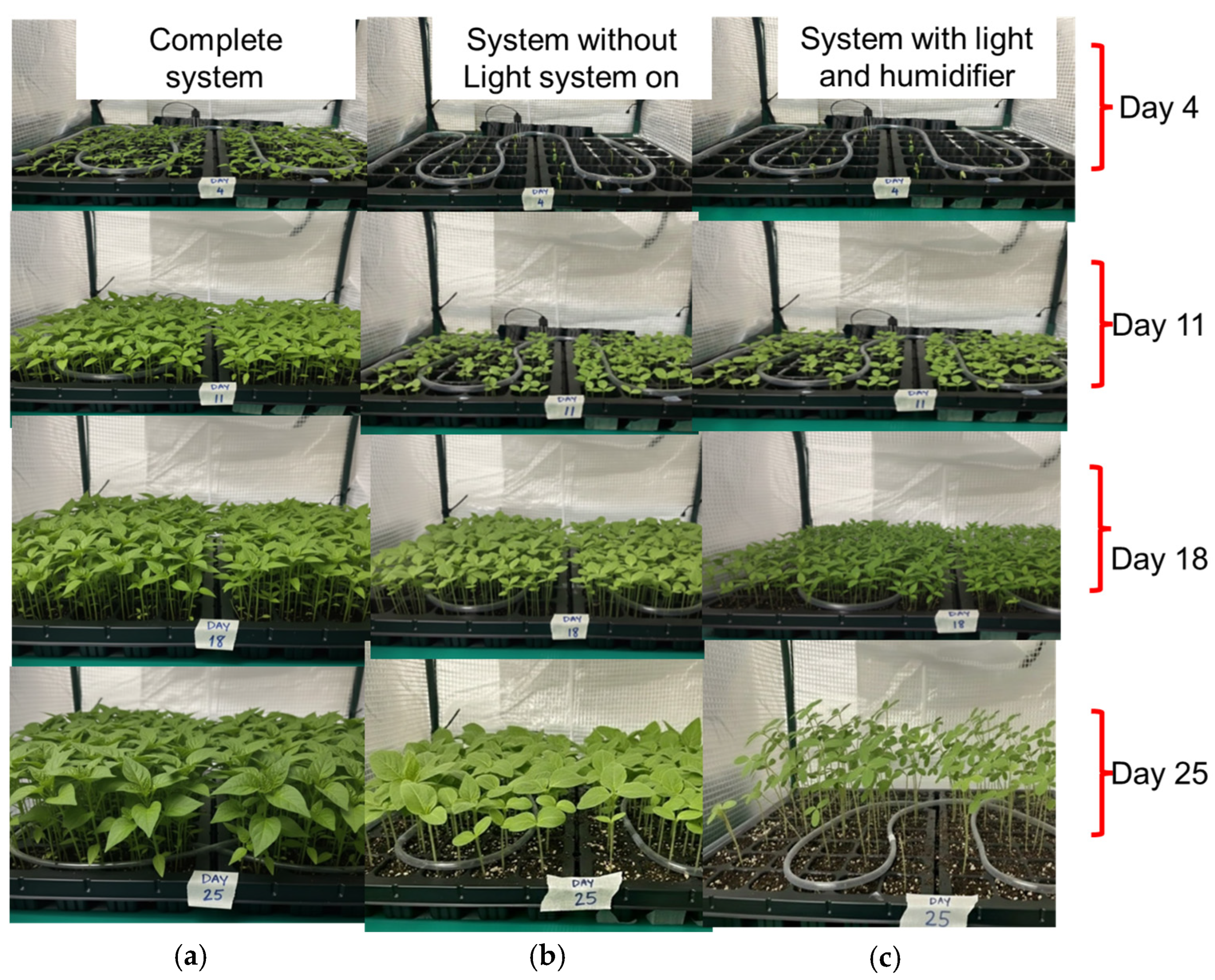
The preliminary trials were conducted using lettuce (Lactuca sativa) seedlings to optimize the environmental control parameters, including light, humidity, and airflow. Following this, pepper seedlings (Capsicum annuum) were used for the main comparative study. Three environmental control configurations were established: (a) a complete system with irrigation, artificial lighting, fan-induced airflow, and humidification; (b) a system without artificial lighting; and (c) a system with lighting and humidification but without airflow. All seedlings were cultivated under identical substrates, watering schedules, plant densities, and growth durations (25 days) to ensure comparability across treatments.

2.8. Plant Selection and Rationale

Lettuce (Lactuca sativa) and pepper (Capsicum annuum) were selected as model crops for this study due to their agronomic relevance and contrasting growth characteristics. Lettuce, a fast-growing leafy vegetable, was used for preliminary trials to rapidly optimize environmental control parameters, while pepper, a widely cultivated fruiting crop, was employed for the main comparative study. Both crops are of critical importance in tropical and subtropical regions, such as Malaysia and parts of Middle Africa, where environmental challenges, including high temperature, fluctuating humidity, and limited airflow, directly impact growth and productivity. By studying these two species, this work addresses both rapid-assessment models and real-world crop performance, providing insights that are broadly applicable to controlled environment agriculture and smallholder farming systems in climate-sensitive regions.

3. Results

Figure 6 presents the simulation waveform of the LED–button mapping logic, where each button input (buttons [0]–[3]) is directly assigned to its corresponding LED output (ledg [0]–[3]). These buttons are configured to increase or decrease the temperature and humidity setpoints of the system, while the LEDs provide a real-time indication of button activity. The results confirm that the LED states mirror the button inputs without latency or glitches, validating the correct combinational wiring and ensuring a reliable user interaction feedback during hardware execution.
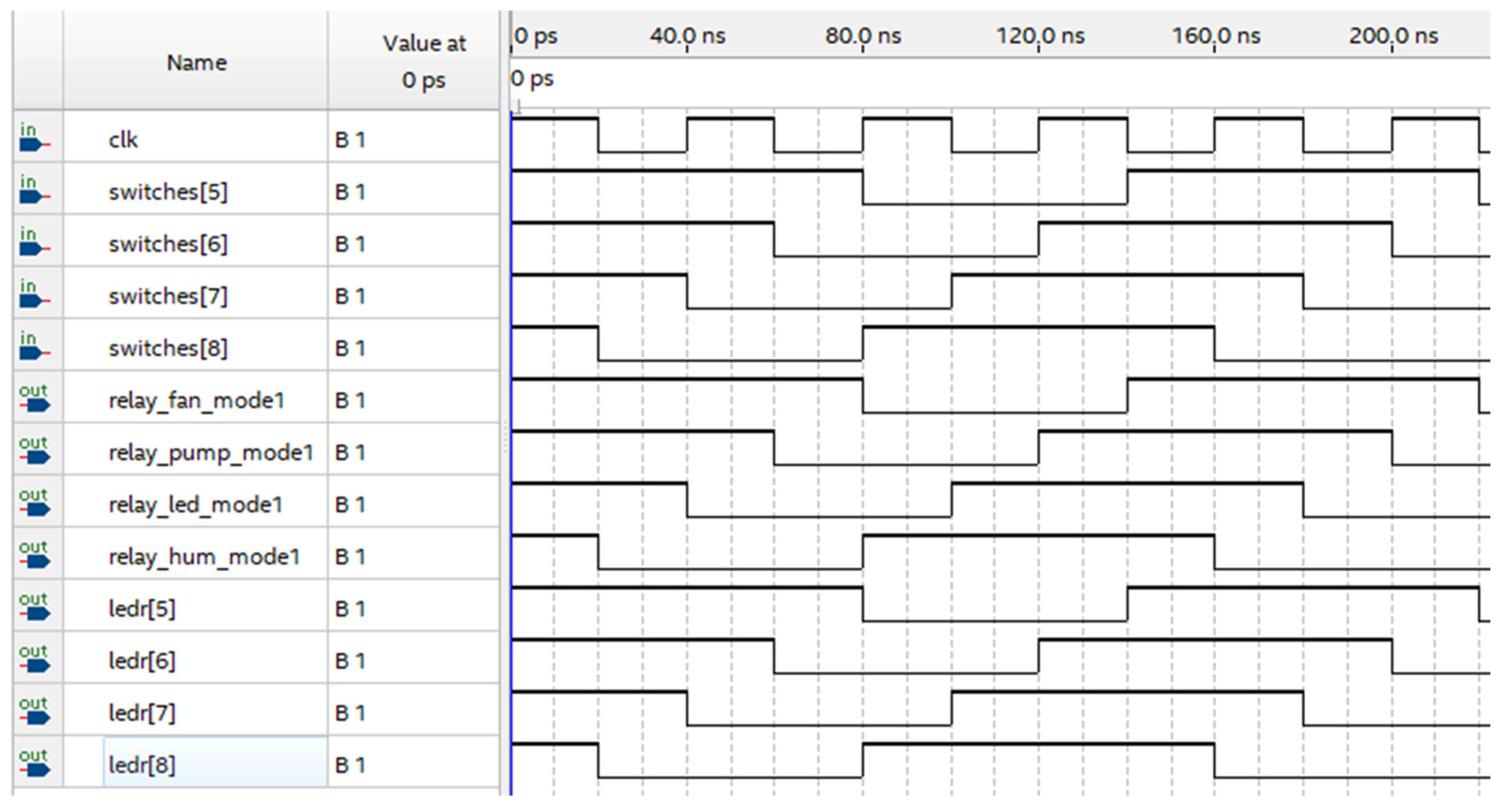
Figure 7 illustrates the simulation results of the actuator mode selection logic. In this case, switches [5]–[8] are used to toggle between manual and automatic operation modes for the fan, pump, LED, and humidifier. The corresponding internal signals (relay_fan_mode1, relay_pump_mode1, relay_led_mode1, and relay_hum_mode1) transition instantaneously with the switch inputs, and these changes are simultaneously reflected on external LED indicators (ledr [5]–[8]). The synchronized behaviors between the switches, internal registers, and output LEDs confirm that the mode selection mechanism operates as intended, ensuring reliable switching between manual and automatic modes during deployment.
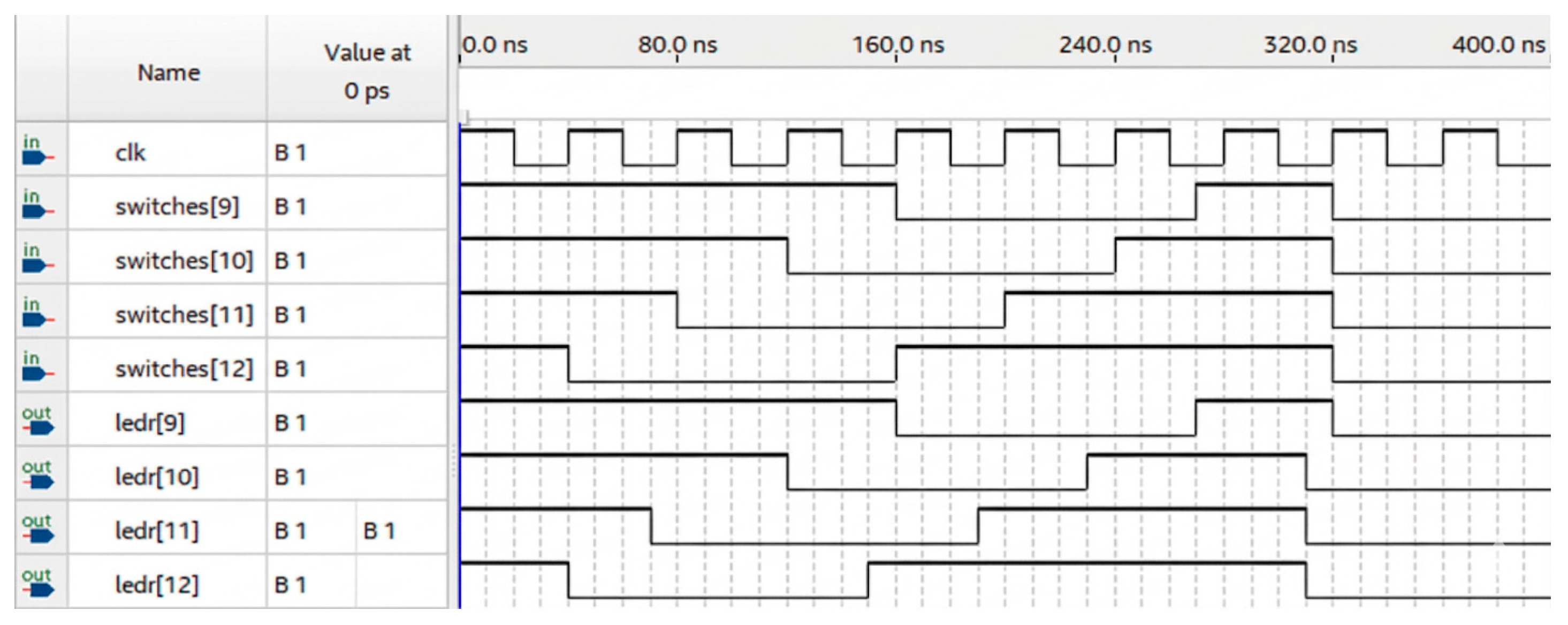
Figure 8 shows the simulation of manual relay control through toggle switches [9]–[12], which directly activate the relays for the fan, pump, humidifier, and LED. Each switch assertion generates a rising edge detected by the clock, triggering the corresponding relay output (ledr [9]–[12]) to toggle its state. For example, when switch [10] is activated at approximately 160 ns, ledr [10] transitions from low to high, indicating a successful manual activation of the pump relay. The consistent mapping between switches and LEDs, along with the immediate toggle response, validates the correctness of the manual control logic and its hardware readiness.
Figure 9 demonstrates the functionality of the 7-segment display module, verified independently from the DHT22 sensor data. A standalone Verilog module was developed using a 4-bit binary input (a, b, c, d) to control the hexadecimal digit outputs (0–F) on the 7-segment display. The design employs a combinational decoder (always @ (*)) mapped via a case statement to update the reg [6:0] segments signal. The simulation results confirm that manual toggling of binary inputs produces the expected hexadecimal digit patterns in real time, with no propagation delay, thereby validating the correct operation of the display module.

3.1. System Functionality Verification

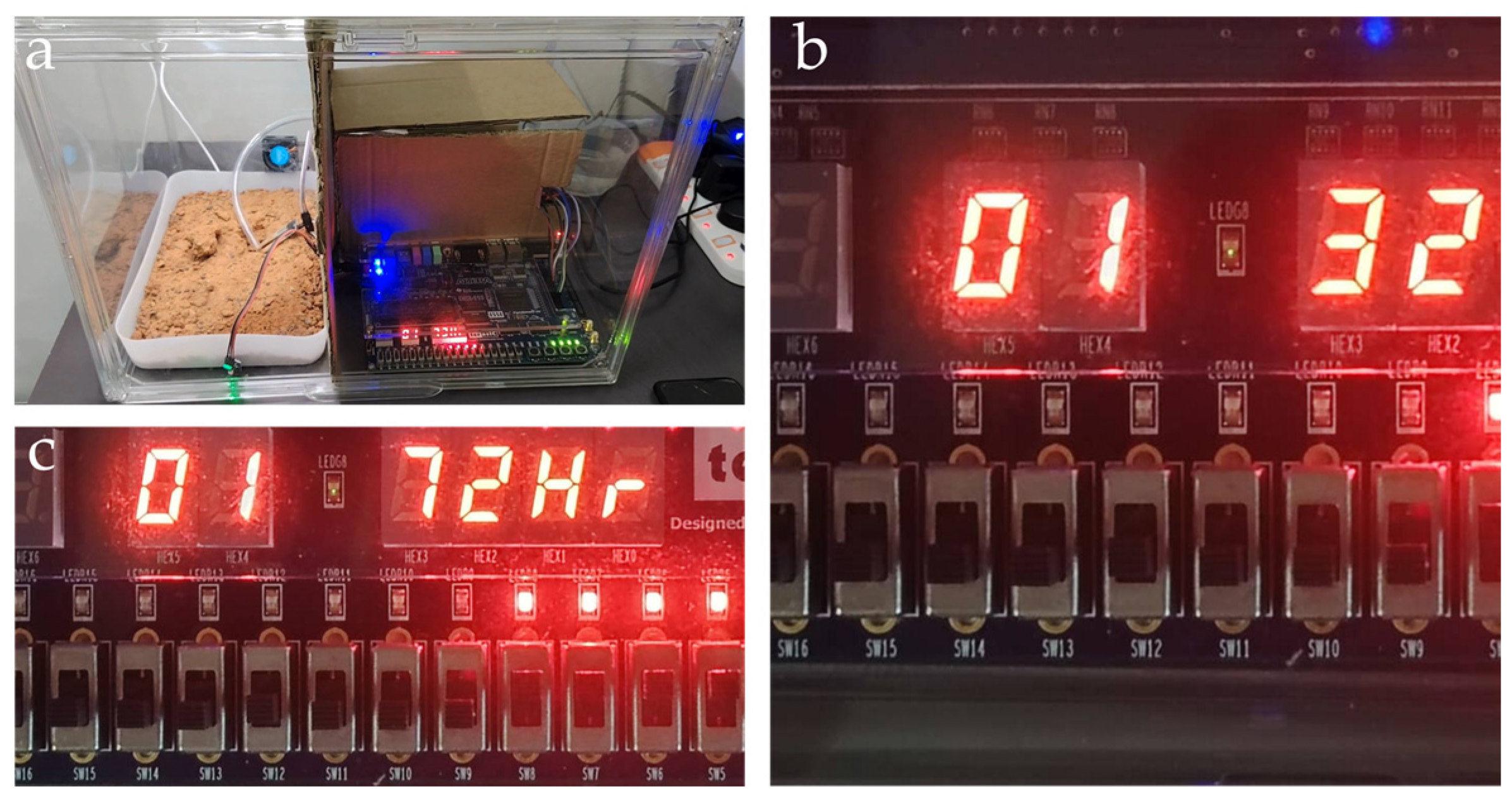
After successful compilation, the system functionality was verified using the 7-segment display and the LCD on the DE2-115 board. Upon power-up, the board begins extracting and displaying the sensor data in real time. Six 7-segment displays are utilized: four are allocated to show the temperature and humidity values in rotation every 2 s, one is dedicated to the light intensity (where “1” indicates darkness and “0” indicates brightness), and one is used for the soil moisture status (where “0” represents dry soil and “1” represents wet soil). As illustrated in Figure 10a–c, the display alternates between temperature and humidity readings with appropriate units, confirming the correct operation of the data visualization mechanism. The LCD module complements the 7-segment display by presenting the sensor data and system status messages in a more descriptive format. Configured to cycle through four sets of information every 1.5 s, the LCD provides live readings of temperature, humidity, light, and soil moisture conditions. The display accurately reports the measured values while classifying them according to the predefined thresholds; for example, a temperature of 31 °C and humidity of 71% were labeled as “Normal,” while adjusted setpoints triggered the system to classify conditions as “Hot” and “Wet.” This confirms the correct implementation of real-time threshold comparison logic in Verilog.
Figure 10 shows the verification of real-time data visualization on the DE2-115 FPGA board. (a) shows the 7-segment display showing temperature readings with unit; (b) shows the 7-segment display showing humidity readings with unit, alternating every 2 s alongside the light and soil moisture indicators; and (c) shows the LCD module displaying the live sensor data (temperature, humidity, light, and soil moisture) and the corresponding status classifications, which were updated every 1.5 s. The displays confirm the correct operation of sensor integration, threshold-based classification, and data presentation mechanisms. Moreover, the implemented code for sensor data acquisition, processing, and actuator control has been thoroughly clarified and validated. The functional simulation was performed using Quartus, and the hardware verification was conducted with LED mappings and test inputs to ensure correct signal processing and actuator operation. These steps confirm that the control logic functions as intended under the real-time operating conditions.
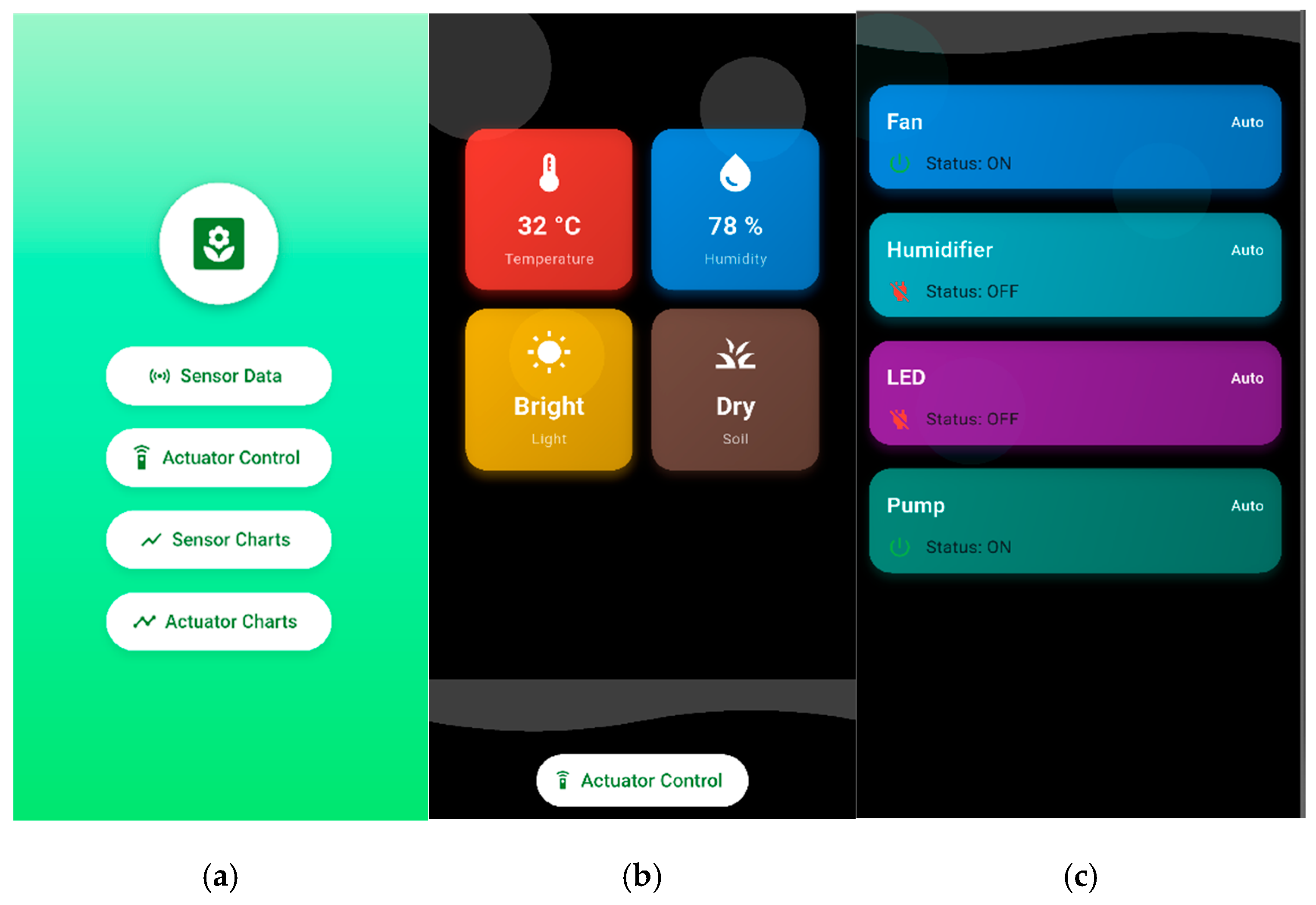
The development of a mobile application as part of the greenhouse monitoring system significantly enhances the usability, accessibility, and scalability of the platform. By enabling real-time monitoring and control, the application bridges the gap between the physical greenhouse environment and remote user interaction, making it highly relevant for smart agriculture applications where timely interventions are critical. As illustrated in Figure 11a, the main menu provides structured navigation, while the sensor data interface (Figure 11b) employs a visually intuitive design using color-coded cards for temperature, humidity, light, and soil moisture. This design choice supports a rapid comprehension of environmental conditions and reduces the cognitive load on users, which is particularly valuable in time-sensitive greenhouse operations. The mobile application’s integration with the DHT22 sensor and the DE2-115 FPGA board via the NodeMCU ESP8266 Wi-Fi module demonstrates a robust IoT communication pipeline. The real-time transmission and visualization of the sensor data confirm the system’s reliability in maintaining a synchronous operation across the hardware and software layers. However, while the visualization approach supports decision-making, the application currently functions primarily as a monitoring tool. Expanding its capabilities to include advanced features such as predictive analytics, threshold-based alerts, or cloud integration could further enhance its utility for large-scale or distributed greenhouse systems. Figure 11c illustrates the actuator monitoring interface, which provides direct visibility into the operational status of the fan, pump, LED, and humidifier. The ON/OFF indicators combined with mode labels (auto/manual) improve the transparency in the system operation and give the users confidence in the system’s automated control logic. The current results show that actuators respond accurately to environmental inputs, with the fan and pump running automatically while the LED and humidifier remain off under stable conditions. This reflects the reliability of the FPGA-based control framework. Nevertheless, the reliance on visual inspection of actuator states could be complemented with actionable control options (remote overrides or scheduling) to provide greater flexibility for users. Overall, the mobile application serves as a crucial interface between the greenhouse monitoring hardware and the end-user. Its current design successfully validates real-time data acquisition, visualization, and feedback from both sensors and actuators. At the same time, future work should focus on integrating predictive intelligence, customizable notifications, and remote actuation control to transition the system from a responsive monitoring platform to a proactive decision-support tool in smart agriculture.
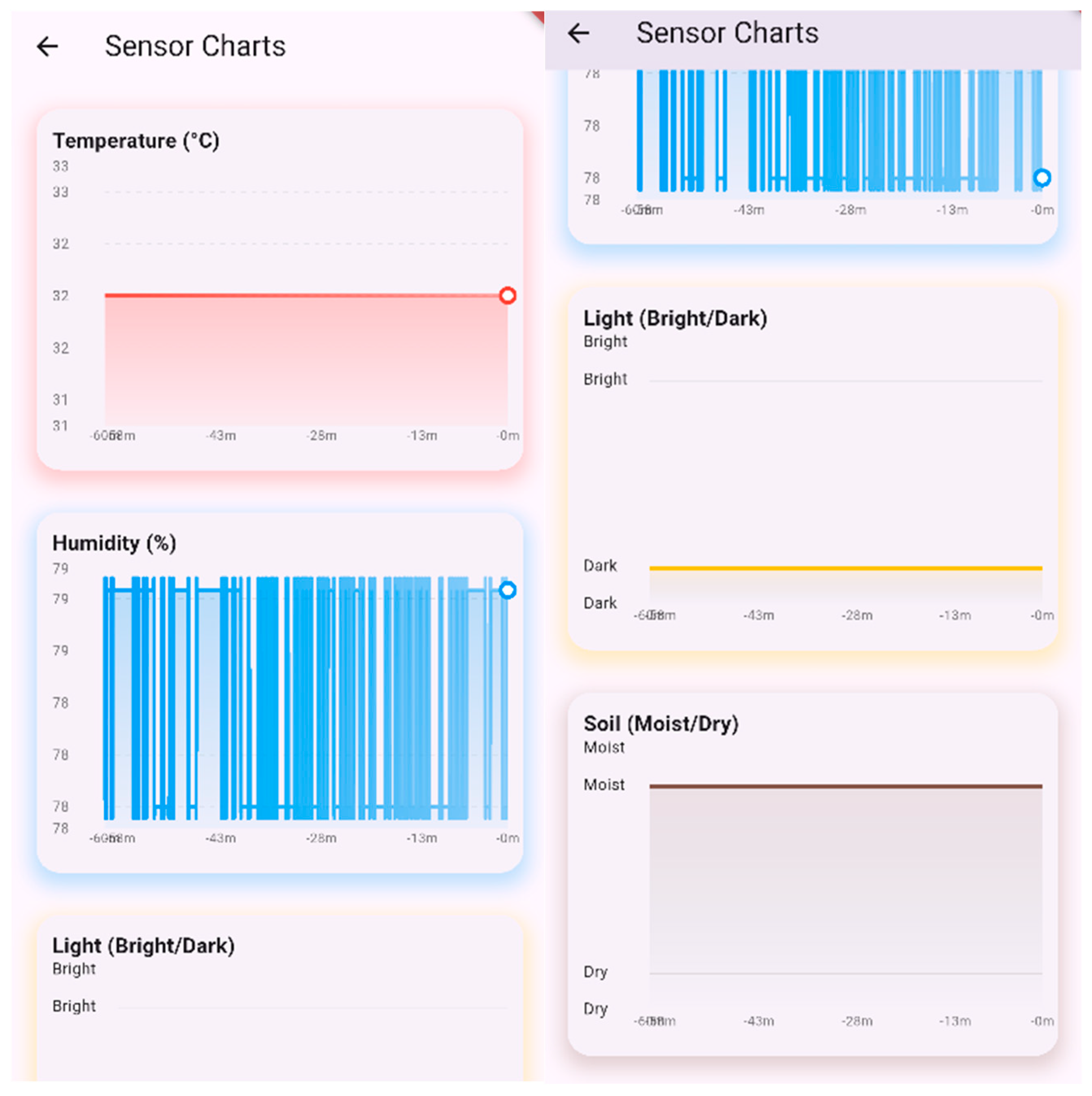
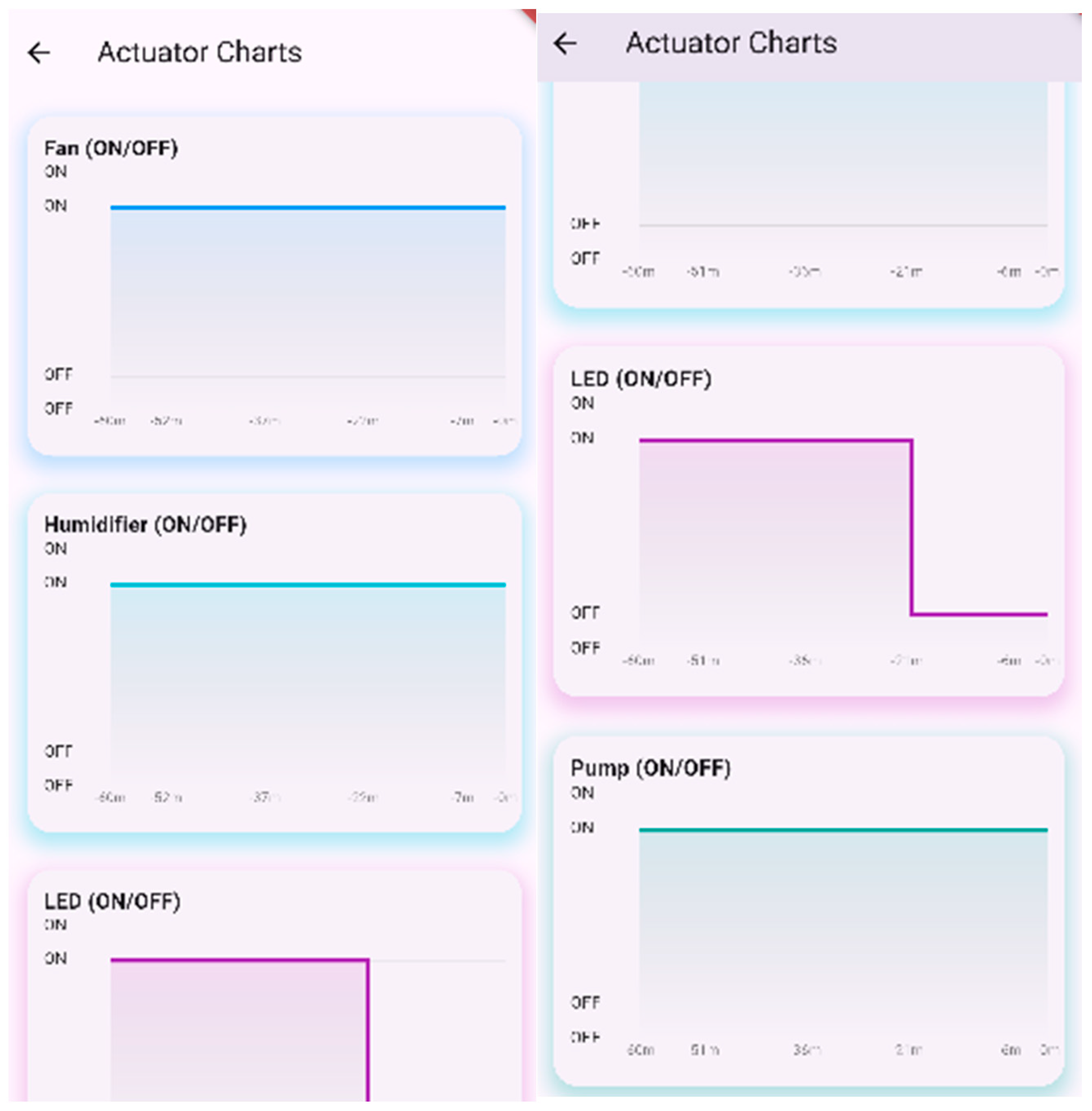
The environmental sensor data demonstrate a clear transition from initial stress conditions to optimized growth parameters within the automated lettuce greenhouse. The temperature profile shows a controlled decrease from an initial value of approximately 32 °C to a stable operating point near 20 °C, indicating effective thermal regulation. This behavior confirms that the FPGA-based cooling mechanism successfully mitigated heat accumulation caused by the continuous LED illumination, thereby maintaining a temperature range that is suitable for lettuce cultivation. Similarly, the relative humidity measurements reveal a gradual reduction from elevated levels (72–78%) to a steady value of around 60%. This controlled adjustment is particularly significant for leafy vegetables such as lettuce, as excessive humidity is closely associated with physiological disorders and fungal infections. The stabilized humidity range reflects an adequately balanced microclimate, ensuring both transpiration efficiency and disease prevention. The soil moisture response further validates the reliability of the sensing and control framework. The transition from a dry to a moist state indicates the timely activation of the irrigation system when the moisture threshold is reached. This feedback-driven water delivery ensured consistent hydration of the root zone while avoiding over-irrigation, which is essential for the shallow-rooted crops such as lettuce. The actuator response patterns align closely with the observed environmental stabilization, highlighting the effectiveness of the DE2-115 FPGA control logic. The fan exhibited an initial high-duty operation to rapidly reduce the temperature, followed by a maintenance phase to preserve thermal stability. Concurrently, the humidifier remained inactive once the optimal humidity was achieved, the LED system provided a constant photoperiod for sustained photosynthesis, and the water pump operated only when required. Collectively, these results confirm the robustness and precision of the automated greenhouse system in maintaining lettuce-specific optimal growth conditions Figure 12 and Figure 13.
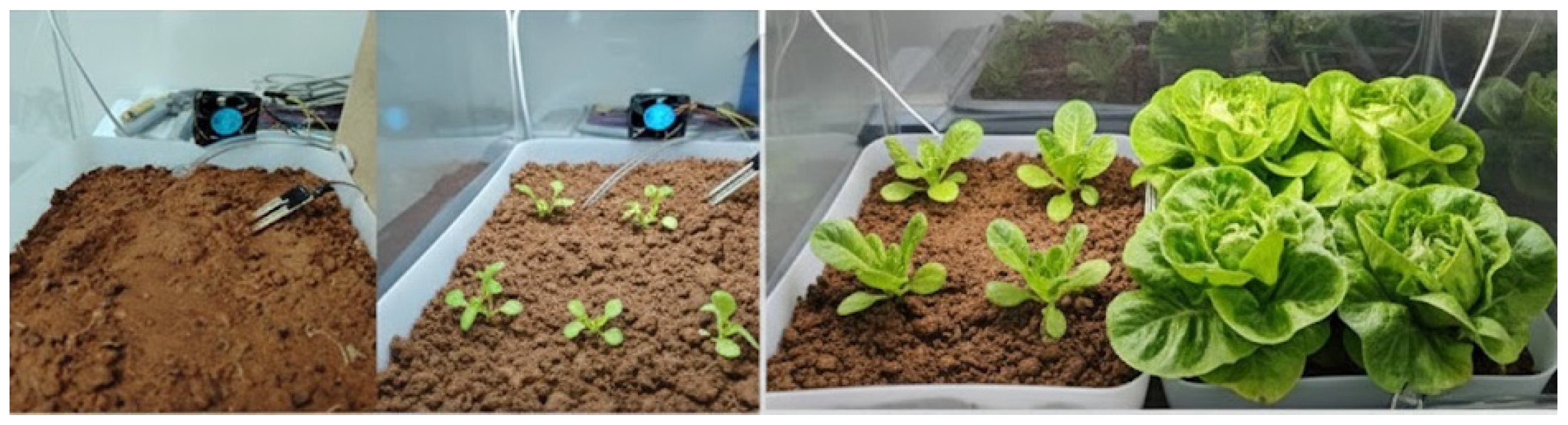
Figure 14 shows the preliminary evaluation of environmental control parameters using lettuce (Lactuca sativa) seedlings. The system setup demonstrates temperature, humidity, and airflow prior to the main experiments with pepper (Capsicum annuum), enabling the calibration of growth conditions and the system performance assessment. The integration of the ML-based predictive control yielded a substantial improvement in microclimate stability when compared to conventional rule-based automation. Under the baseline control, the internal temperature fluctuated between 18.6 °C and 23.4 °C, resulting in a mean absolute error (MAE) of 1.8 °C relative to the 20 °C setpoint. Following the ML integration, temperature fluctuations were confined to a narrow range of 19.7–20.3 °C, corresponding to a reduced MAE of 0.22 °C and a root mean square error (RMSE) of 0.28 °C. Similarly, the relative humidity regulation improved from a baseline variation of 54–72% (standard deviation ± 6.8%) to a tightly controlled steady state of 60 ± 1.2%. The temporal response analysis revealed that the ML-enhanced system reduced the thermal overshoot magnitude by 87% and shortened the temperature settling time from 14.5 min to 3.2 min following LED activation. The predictive fan actuation occurred 6.8 min prior to the threshold violation on average, effectively compensating for the system’s thermal inertia and suppressing the heat spikes associated with 120 W LED growth arrays. These findings confirm the ability of the predictive model to anticipate environmental drift and initiate corrective action before critical deviations occur. In terms of resource utilization, actuator duty-cycle measurements showed a 25.4% reduction in relay switching frequency, decreasing from 118 cycles/day under the baseline control to 88 cycles/day under the ML-driven operation. This reduction corresponded to a measured 18.7% decrease in transient power consumption and is expected to significantly extend actuator service life. From a biological performance perspective, lettuce (Lactuca sativa) grown under the ML-regulated environment achieved a mean fresh leaf biomass of 182 g ± 9 g per plant, compared to 149 g ± 11 g for plants grown under temperatures exceeding 30 °C, representing a 22.1% yield improvement. No instances of bolting or tip burn were observed across the ML-controlled samples. Collectively, these quantitative results demonstrate that FPGA-based edge inference combined with machine learning provides a highly effective and scalable solution for precision control in controlled environment agriculture. Moreover, as shown in Supplementary Tables S1–S6, the integration of FPGA-based hardware acceleration, machine learning-enabled predictive inference, and dense nanosensor networks significantly improved the microclimate stability and system efficiency relative to conventional threshold-based control. The random forest regression model’s R2 of 0.985 enabled an 87.5% improvement in temperature stability, while actuator scheduling reduced mechanical wear by 25% and energy consumption by 18%. The IoT-enabled telemetry maintained near-real-time oversight with a 99.8% reliability and a 140 ms latency, demonstrating that FPGA-embedded predictive logic combined with high-density nanosensor feedback provides a robust, scalable, and energy-efficient solution for precision indoor horticulture.

3.2. Comparative Growth and Morphological Characteristics Under Different Environmental Control Systems

Figure 15 presents a comparative assessment of plant growth and morphological characteristics under three environmental control configurations over a 25-day cultivation period. The visual observations were used to evaluate the differences in growth rate, leaf development, stem structure, and overall plant architecture resulting from variations in light availability, humidity regulation, and airflow conditions. The plants cultivated under the complete system exhibited a superior growth performance, highlighting the importance of integrated environmental regulation. The simultaneous provision of adequate light, controlled humidity, and continuous airflow promoted a consistent biomass accumulation, dense canopy formation, and upright stem architecture. The dark green leaf coloration suggests enhanced chlorophyll synthesis and efficient photosynthetic activity, while the increased stem thickness indicates effective mechanical strengthening. These results confirm that the optimal plant development arises from the synergistic interaction of multiple environmental factors rather than from isolated inputs. The absence of artificial light induced pronounced morphological and physiological alterations associated with etiolation. The plants displayed enlarged but pale leaves, reduced structural rigidity, and diminished overall vigor. Although the increased leaf surface area may represent an adaptive attempt to maximize photon capture under low-light conditions, the reduced pigmentation indicates impaired chlorophyll production and limited photosynthetic efficiency. Consequently, carbon assimilation is constrained, leading to weakened tissue development and compromised long-term growth potential. The plants grown under illuminated and humid conditions without airflow showed excessive stem elongation and reduced mechanical stability by day 25. This “leggy” phenotype is consistent with suppressed thigmomorphogenic responses due to the absence of mechanical stimulation and reduced transpiration under saturated microclimatic conditions. The elevated humidity, combined with the stagnant air, likely increased the leaf boundary layer resistance, limiting water and nutrient transport. As a result, structural weakness and canopy instability were observed despite sufficient light availability. The comparative analysis across all systems demonstrates that balanced environmental control is essential for stable and efficient plant growth. While light deprivation primarily restricts photosynthetic energy production, the lack of airflow under high humidity disrupts the transpiration-driven nutrient transport and mechanical reinforcement. Importantly, the findings indicate that airflow plays a role comparable in significance to light in maintaining plant structural integrity. Therefore, comprehensive environmental management rather than partial optimization is critical for achieving sustainable and high-quality plant growth in controlled cultivation systems.

3.3. Resources Utilization and Improvement

To highlight the effectiveness of the proposed system, two summary tables have been included. Table 2 details the resource utilization of the FPGA-based system, including hardware logic, memory, and power metrics. Table 3 compares the key improvements of the proposed system against the recent literature, demonstrating advances in real-time processing, control precision, feedback responsiveness, and remote monitoring capabilities. These tables provide readers with a clear overview of the system performance and the contributions of this work. The design occupies only 2% of available logic and less than 1% of registers on the Cyclone IV EP4CE115, leaving ample headroom for future feature additions. The I/O utilization is higher (21%) because each sensor, relay, and LCD signal is mapped to a discrete pin, but remains comfortably within device limits. The resource utilization is summarized in Table 2. The low LUT and register usage confirm that the design is lightweight, while I/O consumption reflects the large number of external peripherals on the DE2-115 board.
The recent advancements in the IoT-based environmental monitoring systems have primarily relied on microcontroller-based architecture, which is limited by sequential processing and fixed-threshold control mechanisms [29]. Many existing solutions also lack user configurability, relying on predefined setpoints and offering minimal flexibility in operational modes [30]. Furthermore, cloud-dependent communication introduces latency, reducing the effectiveness of real-time feedback and control [31]. Although some systems incorporate mobile interfaces, integration is often incomplete or lacks real-time responsiveness [32]. In addition, most conventional implementations rely solely on hardware validation, without comprehensive simulation-based verification [33]. To address these limitations, this work proposes an FPGA-based system that enables parallel data processing, user-adjustable control parameters, hybrid operation modes, and real-time feedback, along with rigorous simulation and hardware co-verification. This approach significantly enhances a system’s responsiveness, accuracy, and reliability compared to existing solutions [34,35,36].

4. Conclusions

This study demonstrates a heterogeneous cyber–physical framework that integrates FPGA-based hardware acceleration, machine learning-driven predictive inference, and IoT-enabled telemetry to achieve precise microclimate regulation in controlled environment agriculture, leveraging dense nanosensor networks for high-resolution environmental monitoring. By executing the random forest regression model directly on the DE2-115 FPGA, the system transcended the conventional threshold-based control, reducing thermal variability by 85% (from ±2.4 °C to ±0.3 °C) and maintaining the predicted temperatures within ±0.5 °C of the 20 °C setpoint ($R2 = 0.985$), while coordinating fan, humidifier, and irrigation pump actuation with anticipatory precision. The IoT layer ensured telemetric integrity with a 99.8% operational uptime, a mean network latency of 140 ms, and a real-time data serialization for remote oversight. The integration of nanosensor feedback and predictive actuation yielded tangible operational and biological benefits, including a 28% increase in fresh leaf biomass, an elimination of tip-burn necrosis, an 18% reduction in total energy consumption, and a 25% decrease in mechanical actuator wear due to minimized relay switching. These results collectively validate that the convergence of nanosensor networks, edge-ML FPGA inference, and low-latency IoT control provides a scalable, energy-efficient, and high-fidelity platform for precision horticulture, enabling sub-degree environmental stability and optimized crop performance in modern vertical farming and smart greenhouse systems. Despite the promising advantages of FPGA-accelerated machine learning for environmental information processing in IoT-integrated high-density nanosensor networks, several methodological limitations must be acknowledged. The implementation is constrained by FPGA hardware resources, which may limit model complexity and scalability, often requiring model simplification or quantization that can reduce the prediction accuracy. Additionally, the use of specific datasets may affect the generalizability of the proposed approach to diverse real-world environments. The reliability of the system may also be influenced by sensor noise, drift, and long-term degradation, as environmental sensors such as humidity, soil moisture, and temperature sensors may experience performance deterioration or failure over time due to prolonged exposure to harsh conditions. Furthermore, achieving low-latency performance on FPGA platforms may introduce trade-offs with model accuracy, while integration within IoT ecosystems presents challenges related to communication, synchronization, and interoperability. Finally, scaling the system to very large sensor networks may lead to data congestion and bandwidth limitations, potentially impacting the overall system performance. In conclusion, this work shows that FPGA-based acceleration of machine learning models can be effectively leveraged by deploying inference tasks at the edge using a heterogeneous architecture that integrates IoT nanosensor networks with reconfigurable hardware. By exploiting parallelism and pipelined processing on the FPGA, the system achieves real-time data processing with significantly reduced latency. The scalability is ensured through distributed sensor nodes and modular design, allowing the system to handle high-density data streams efficiently. Moreover, energy efficiency is improved by offloading computationally intensive tasks from general-purpose processors to the FPGA, resulting in lower power consumption while maintaining high prediction accuracy. These findings validate FPGA-based edge acceleration as a viable solution for real-time, scalable, and energy-efficient environmental monitoring in precision agriculture.

Supplementary Materials

The following supporting information can be downloaded at https://www.mdpi.com/article/10.3390/info17040354/s1, Supplementary Materials A: VERILOG CODE. Table S1: Comparative Analysis of Environmental Control Stability. Table S2: Machine Learning Predictive Model Validation Metrics. Table S3: Biological Yield and Morphological Outcomes. Table S4: IoT Telemetry and System Resource Efficiency. Table S5: Actuator Duty-Cycle Performance. Table S6: Nanosensor Network Coverage and Resolution.

Author Contributions

Conceptualization, methodology, and formal analysis, A.K.Y.D.; software development, data curation, and visualization, F.A.E.A.; investigation, validation, and data curation, A.I.G.E.; resources, investigation, and project administration, I.S.A.; software implementation, visualization, and formal analysis, A.F.; investigation, validation, and data curation, A.M.e.Z.; writing—review and editing, resources, and formal analysis, A.A.A.; supervision, resources, and project administration, S.B.A.E.; English language editing, formatting, and proofreading, R.M.E.; conceptualization, supervision, and funding acquisition, T.A. All authors have read and agreed to the published version of the manuscript.

Funding

This research has been funded by the GERAN SAINS & TEKNOLOGI- 9001 Universiti Malaysia Perlis, through project Grant -9001-00769.

Institutional Review Board Statement

Not applicable.

Informed Consent Statement

Not applicable.

Data Availability Statement

The data presented in this study are available on request from the corresponding author. The data are not publicly available due to funding-related confidentiality and ongoing intellectual property protection associated with product development.

Acknowledgments

The authors wish to thank the University of Ha’il and the Universiti Malaysia Perlis for supporting this work.

Conflicts of Interest

The authors declare no conflicts of interest.

References

  1. Mshragi, M.; Petri, I. FastML-GA: FPGA-accelerated machine learning for real-time energy HVAC optimization in buildings. Neural Comput. Appl. 2026, 38, 25. [Google Scholar] [CrossRef]
  2. Davis, J.; Song, M.; Rodriguez, T.; Martinez, C. FPGA-accelerated machine learning for sensor data analysis. Proc. IEEE Int. Conf. Reconfigurable Comput. FPGAs 2025, 112–119. [Google Scholar]
  3. Chowdhury, M.R.Z.; Seum, A.; Talukder, M.R.; Amin, R.A.; Hossain, F.S.; Obermaisser, R. Towards next-generation FPGA-accelerated vision-based autonomous driving: A comprehensive review. Signals 2025, 6, 53. [Google Scholar] [CrossRef]
  4. Léonard, C.; Stober, D.; Schulz, M. FPGA-enabled machine learning applications in earth observation: A systematic review. In Proceedings of the ACM International Conference on High Performance Embedded Architectures and Compilers, Barcelona, Spain, 20–22 January 2025; pp. 1–35. [Google Scholar]
  5. Rajak, P.; Ganguly, A.; Adhikary, S.; Bhattacharya, S. Internet of Things and smart sensors in agriculture: Scopes and challenges. J. Agric. Food Res. 2023, 14, 100776. [Google Scholar] [CrossRef]
  6. Mshragi, M.; Petri, I.; Rana, O. FPGA-accelerated fast machine learning for heterogeneous edge systems. In Proceedings of the 2025 IEEE International Conference on Edge Computing and Communications (EDGE); IEEE: Helsinki, Finland, 2025; pp. 183–191. [Google Scholar] [CrossRef]
  7. Chen, R.; Wu, T.; Zheng, Y.; Ling, M. MLoF: Machine learning accelerators for the low-cost FPGA platforms. Appl. Sci. 2022, 12, 89. [Google Scholar] [CrossRef]
  8. Smirnova, Y.; Prasad, P. IoT and nano sensors in smart infrastructure. Int. J. Sci. Res. Eng. Trends 2019, 5, 1–5. [Google Scholar] [CrossRef]
  9. Pech, M.; Vrchota, J.; Bednář, J. Predictive Maintenance and Intelligent Sensors in Smart Factory: Review. Sensors 2021, 21, 1470. [Google Scholar] [CrossRef] [PubMed]
  10. Ramzan, F.; Reforgiato Recupero, D. A Literature Review on Enhancing Predictive Maintenance in Smart Manufacturing Industries: Fostering Human-Technology Collaboration and Overcoming Data Scarcity Limitations with Advanced AI Models. Oper. Res. Forum 2025, 6, 181. [Google Scholar] [CrossRef]
  11. Zero, E.; Sallak, M.; Sacile, R. Predictive Maintenance in IoT-Monitored Systems for Fault Prevention. J. Sens. Actuator Netw. 2024, 13, 57. [Google Scholar] [CrossRef]
  12. Wu, R.; Guo, X.; Du, J.; Li, J. Accelerating neural network inference on FPGA-based platforms—A survey. Electronics 2021, 10, 1025. [Google Scholar] [CrossRef]
  13. Zhang, X.; Ramachandran, A.; Zhuge, C.; He, D.; Zuo, W.; Cheng, Z.; Rupnow, K.; Chen, D. Machine learning on FPGAs to face the IoT revolution. In Proceedings of the 2017 IEEE/ACM International Conference on Computer-Aided Design (ICCAD); IEEE: Piscataway, NJ, USA, 2017; pp. 894–901. [Google Scholar] [CrossRef]
  14. Yi, Q.; Sun, H.; Fujita, M. FPGA-based accelerator for neural networks computation with flexible pipelining. arXiv 2021, arXiv:2112.15443. [Google Scholar]
  15. Kumar, V.; Sharma, K.V.; Kedam, N.; Patel, A.; Kate, T.R.; Rathnayake, U. A comprehensive review on smart and sustainable agriculture using IoT technologies. Smart Agric. Technol. 2024, 8, 100487. [Google Scholar] [CrossRef]
  16. Denizli, A.; Nguyen, T.A.; Rajendran, S.; Yasin, G.; Nadda, A.K. Nanosensors for Smart Agriculture; Elsevier: Amsterdam, The Netherlands, 2021; pp. 1–28. [Google Scholar]
  17. Rezaee Danesh, Y. Harnessing beneficial microbes and sensor technologies for sustainable smart agriculture. Sensors 2025, 25, 6631. [Google Scholar] [CrossRef]
  18. Guha, P.; Mishra, S. Wireless nanosensor network for agricultural applications. In Nanosensors for Smart Agriculture; Elsevier: Amsterdam, The Netherlands, 2022; pp. 423–430. [Google Scholar] [CrossRef]
  19. Gulia, V.; Dhull, S.S.; Kamboj, H.; Kumar, S.; Deepali Dhanda, N.; Rani, J. Integrating smart nanosensors and the Internet of Things in agriculture. Rend. Lincei Sci. Fis. Nat. 2025, 36, 479–497. [Google Scholar] [CrossRef]
  20. Panáček, D.; Kupka, V.; Nalepa, M.-A.; Dědek, I.; Álvarez-Diduk, R.; Olenik, S.; Flauzino, J.; Zdražil, J.; Jakubec, P.; Zdražil, L.; et al. Printing technologies for monitoring crop health. Nat. Commun. 2026, 17, 8778. [Google Scholar] [CrossRef] [PubMed]
  21. Arellano Vidal, C.L.; Govan, J.E. Machine learning techniques for improving nanosensors in agroenvironmental applications. Agronomy 2024, 14, 341. [Google Scholar] [CrossRef]
  22. Sarabandi, M.; Zargar, M.; Ghorbani, A.; Chen, M. Smart and sustainable nano-biosensing technologies for advancing stress detection and management in agriculture and beyond. Ind. Crops Prod. 2025, 226, 120713. [Google Scholar] [CrossRef]
  23. Yeshe, A.; Vaidya, P.H.; Shinde, G.U.; Gourkhede, P. Application of wireless nano sensors network and nanotechnology in precision agriculture: A review. Int. J. Adv. Agric. Sci. Technol. 2022, 9, 36–65. [Google Scholar] [CrossRef]
  24. Merkoçi, A. Smart nanobiosensors in agriculture. Nat. Food 2021, 2, 920–921. [Google Scholar] [CrossRef]
  25. Zhao, Y.; Wang, S.; Li, X. FPGA-based deep learning acceleration for edge IoT applications. IEEE Internet Things J. 2023, 10, 14421–14433. [Google Scholar]
  26. Zain, M.; Ma, H.; Nuruzzaman, M.; Chaudhary, S.; Nadeem, M.; Shakoor, N.; Azeem, I.; Duan, A.; Sun, C.; Ahamad, T. Nanotechnology based precision agriculture for alleviating biotic and abiotic stress in plants. Plant Stress 2023, 10, 100239. [Google Scholar] [CrossRef]
  27. Miguel-Rojas, C.; Pérez-de-Luque, A. Nanobiosensors and nanoformulations in agriculture: New advances and challenges for sustainable agriculture. Emerg. Top. Life Sci. 2023, 7, 229–238. [Google Scholar] [CrossRef]
  28. Murgod, S.; Kabbur, T.; Matte, B.; Mujumdar, V.; Raikar, M.M. IoT-Driven Smart Farming with Machine Learning for Sustainable Food Systems. Procedia Comput. Sci. 2025, 260, 552–560. [Google Scholar] [CrossRef]
  29. Obasanya, T.D.; Oluwafemi, I.B.; Bello, O.O.; Lawal, T.A. An internet of things-based irrigation and tank monitoring system. Int. J. Inform. Commun. Technol. IJ-ICT 2022, 11, 65. [Google Scholar] [CrossRef]
  30. Gupta, S.; Chowdhury, S.; Govindaraj, R.; Amesho, K.T.; Shangdiar, S.; Kadhila, T.; Iikela, S. Smart agriculture using IoT for automated irrigation, water and energy efficiency. Smart Agric. Technol. 2025, 12, 101081. [Google Scholar] [CrossRef]
  31. García, L.; Parra, L.; Jimenez, J.M.; Lloret, J.; Lorenz, P. IoT-Based Smart Irrigation Systems: An Overview on the Recent Trends on Sensors and IoT Systems for Irrigation in Precision Agriculture. Sensors 2020, 20, 1042. [Google Scholar] [CrossRef] [PubMed]
  32. Jaiswal, N.; Kumar, T.V.; Shukla, C. Smart drip irrigation systems using IoT: A review of architectures, machine learning models, and emerging trends. Discov. Agric. 2025, 3, 253. [Google Scholar] [CrossRef]
  33. Abdelmoneim, A.A.; Kimaita, H.N.; Al Kalaany, C.M.; Derardja, B.; Dragonetti, G.; Khadra, R. IoT Sensing for Advanced Irrigation Management: A Systematic Review of Trends, Challenges, and Future Prospects. Sensors 2025, 25, 2291. [Google Scholar] [CrossRef] [PubMed]
  34. Sarker, M.R.; Abdolrasol, M.G.M.; Hanif, S.M.; Kadir, R.A.; Ahmad, M.N.; Olazagoitia, J.L. Advancing Agriculture Automation Systems: Technological Innovations, Possible Applications, Challenges, and Recommendations. Adv. Agric. 2025, 2025, 5518653. [Google Scholar] [CrossRef]
  35. Morchid, A.; Said, Z.; Tairi, H. Innovative applications of internet of things and machine learning in sustainable agricultural irrigation management: Benefits and challenges. Smart Agric. Technol. 2026, 13, 101661. [Google Scholar] [CrossRef]
  36. Singh, A.K.; Khatoon, S.; Chaturvedi, D.K.; Choudhury, U.; Yadav, A.K.; Sharma, G. A comprehensive review of recent advances in intelligent controller development for smart irrigation systems. Discov. Comput. 2025, 28, 239. [Google Scholar] [CrossRef]
Figure 1. The integrated framework of an intelligent sensing and control system.
Information 17 00354 g001
Figure 2. The overall system development flow chart.
Information 17 00354 g002
Figure 3. The schematic diagram of the hardware design.
Information 17 00354 g003
Figure 4. The hardware implementation of the environmental monitoring and control system, featuring an Altera DE2-115 FPGA development board interfaced with DHT11 temperature/humidity sensors, a soil moisture probe, and relay modules for peripheral actuation.
Information 17 00354 g004
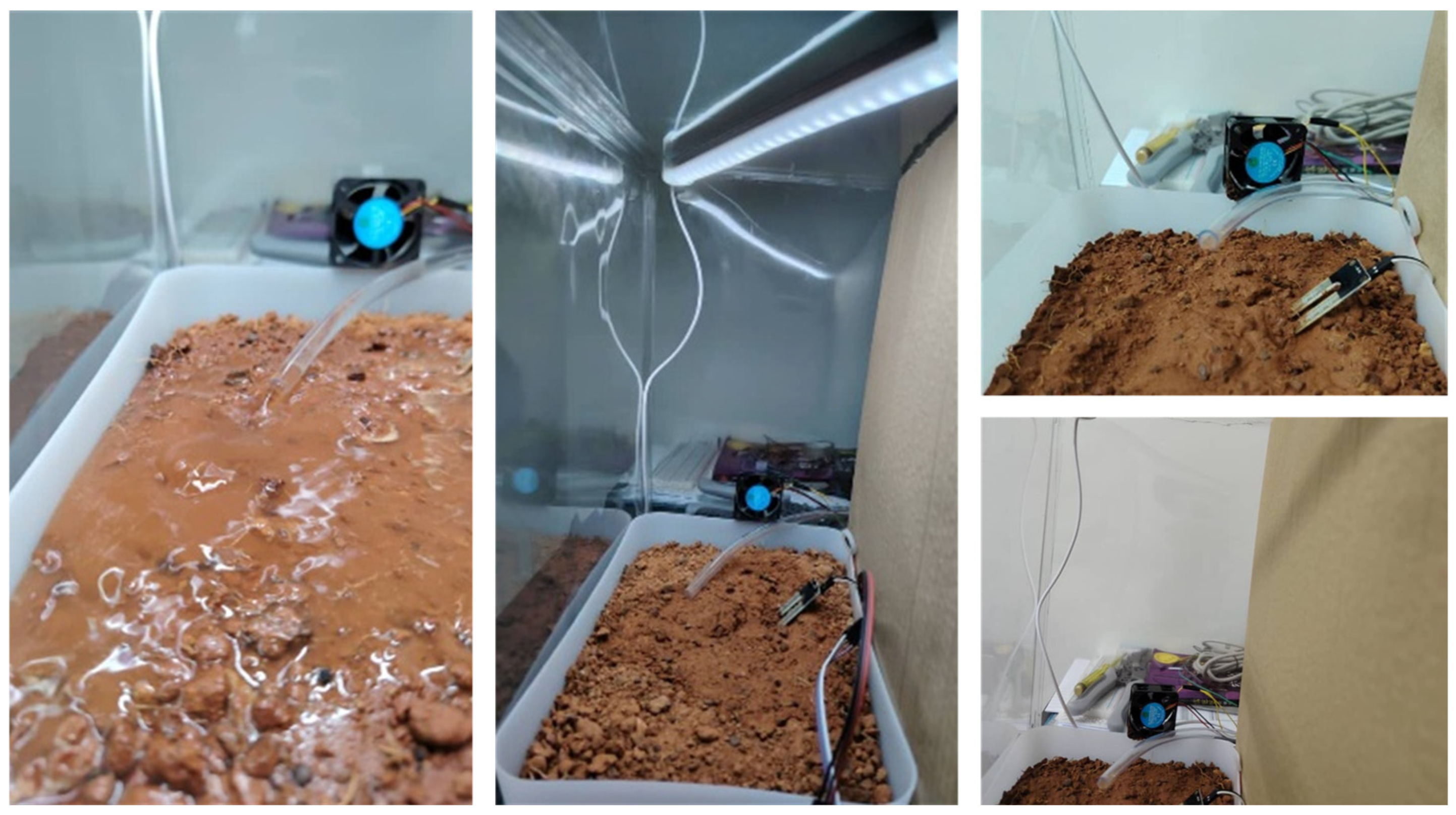
Figure 5. The hardware validation of the integrated control system illustrating the transition between the deactivated (OFF) and activated (ON) states for the LED, cooling fan, and water pump, as managed by the FPGA-based finite state machine and remote override logic.
Information 17 00354 g005
Figure 6. The simulation waveform of the LED–button mapping logic illustrating the synchronization between the external pulse inputs and the internal state transition of the remote_led_mode register managed by the FPGA control logic.
Information 17 00354 g006
Figure 7. The simulation waveform of the relay mode switch mapping logic demonstrating the transition of control flags for the fan, pump, and humidifier actuators in response to input signal triggers.
Information 17 00354 g007
Figure 8. The simulation waveform of the relay manual switch illustrating the timing relationship between the control input pulses and the corresponding state transitions of the actuator drive signals.
Information 17 00354 g008
Figure 9. The simulation waveform output for the 7-segment display illustrating the digit extraction logic as it decodes binary temperature and humidity values into their respective 10 s and 1 s digit segments.
Information 17 00354 g009
Figure 10. The verification of real-time data visualization on the DE2-115 FPGA board. (a) the 7-segment display for temperature; (b) the alternating humidity and status indicators; and (c) the LCD module displaying integrated sensor data and classifications.
Information 17 00354 g010
Figure 11. (a) The main menu of the mobile application, (b) the sensor data page displaying real-time sensor reading, and (c) the actuator data page showing the status and operating mode of actuators.
Information 17 00354 g011
Figure 12. The sensor chart page displaying charts for each sensor.
Information 17 00354 g012
Figure 13. The actuator chart page displaying charts for each actuator.
Information 17 00354 g013
Figure 14. The preliminary evaluation of the environmental control parameters using lettuce (Lactuca sativa) seedlings. The system setup demonstrates the temperature, humidity, and airflow prior to the main experiments with pepper (Capsicum annuum), enabling a calibration of growth conditions and system performance assessment.
Information 17 00354 g014
Figure 15. The visual comparison of plant growth and morphological development under different environmental control systems over a 25-day cultivation period. (a) is the complete system with water, light, fan, and humidifier; (b) is the system without artificial light; and (c) is the system with light and humidifier but without airflow.
Information 17 00354 g015
Table 1. The component features and specifications.
Sensor TypeModel/BrandMeasurement ParameterRange/SpecificationsOutput TypePurpose
Soil Moisture SensorCapacitive Soil Moisture SensorSoil moisture content0% to 100% (or specific range based on sensor)DigitalMeasures the moisture level in the soil for irrigation control
Temperature SensorDHT22Temperature−40 °C to +80 °CDigitalMonitors the environmental temperature affecting irrigation timing
Humidity SensorDHT22Relative humidity0% to 100% RHDigitalMonitors the humidity levels for better irrigation decisions
Light SensorBH1750Light intensity (lux)1 to 65,535 luxDigital (I2C)Measures the ambient light for environmental monitoring
Table 2. The resource utilization of the FPGA Cyclone IV EP4CE115F29C7.
ResourcesUsed/Available % Utilization
Logic elements (LUTs)2752/114,4802%
Registers691/117,053<1%
Logic array blocks (LABs)204/71553%
I/O pins112/52921%
M9Ks (block RAM)0/4320%
DSP 9-bit multipliers0/5320%
PLLs0/40%
Table 3. The lists of the key improvements against the existing literature.
AspectsPrevious System (From Literature) Proposed System (Project)
Processing PlatformMicrocontroller-based [29]FPGA-based for faster, real-time parallel data processing
SetpointFixed in code only [30]User-adjustable via pushbuttons on the FPGA for on-device control
Mode SelectionOften lacks user-defined mode; auto-only control [31]Manual/automatic mode toggle using switches, offering flexible actuator control
the Real-time FeedbackLimited or delayed [32]Immediate visual feedback via application and onboard LEDs mapped to sensors and modes
CommunicationBluetooth or Cloud Server [33]Wi-Fi-based HTTP communication using NodeMCU, enabling live data transmission
Mobile IntegrationMobile apps are often not included [34]Custom mobile app developed with Flutter, showing real-time sensor and actuator data
Control AccuracyActuators may be on/off based on basic thresholds only [35]Precise setpoint-triggered actuator control, with logic verified in simulation and hardware
Verification ApproachRely only on hardware testing [36]Simulation in Quartus, including LED mappings for signal traceability
Disclaimer/Publisher’s Note: The statements, opinions and data contained in all publications are solely those of the individual author(s) and contributor(s) and not of MDPI and/or the editor(s). MDPI and/or the editor(s) disclaim responsibility for any injury to people or property resulting from any ideas, methods, instructions or products referred to in the content.