1. Introduction
The continuous digital evolution of industrial environments is introducing both new capabilities and critical security challenges. The main reason behind this shift is the increasing convergence of Operational Technology (OT) with Information Technology (IT) systems [
1]. This has inevitably resulted in the expansion of the risk landscape, exposing Cyber–Physical Systems (CPSs) to progressively more cyber threats. In other words, the risk of cyber–physical attacks has moved far beyond theoretical speculation, as demonstrated by high-impact incidents such as the Stuxnet malware [
2], which manipulated PLC logic to silently alter centrifuge operation while concealing its effects from operators. The nature of these threats varies, ranging from system-level disruptions to targeted attacks on control logic, compromising both system safety and integrity. Beyond technical disruption, cyber–physical attacks are responsible for substantial economic and operational consequences. Recent industry reports indicate that ransomware incidents targeting manufacturing have resulted in billions of dollars in increasing downtime losses, while the average cost of an industrial data breach may exceed USD 5 million per event [
3,
4]. Also, regarding operational environments, unplanned downtime caused by cyber incidents can reach six-figure losses per hour, particularly in energy and manufacturing sectors [
5]. These real-world insights show that industrial cybersecurity failures not only pose safety risks but also material business liabilities. Consequently, enhancing the security posture of industrial systems is a strategic imperative for Critical Infrastructure (CI) operators and policymakers alike.
Nevertheless, assessing cybersecurity posture directly on operational systems remains difficult and often impractical, especially in CI environments. Live OT systems must maintain continuous availability and safety compliance, and many rely on legacy technologies that cannot tolerate intrusive testing, active scanning, or simulated attacks without risking operational disruption. In this context, Digital Twin (DT) technology has emerged as a promising solution to these challenges. A DT’s ability to enable advanced cybersecurity functionalities, such as continuous monitoring, anomaly detection, predictive threat analysis, and rapid incident response, is facilitated through the creation of high-fidelity, real-time virtual replicas of physical assets and processes [
6]. Their ability to simulate, assess, and adapt to various operational and threat conditions makes DT a supportive and proactive, intelligence-driven approach to industrial cybersecurity [
7]. In the context of this paper,
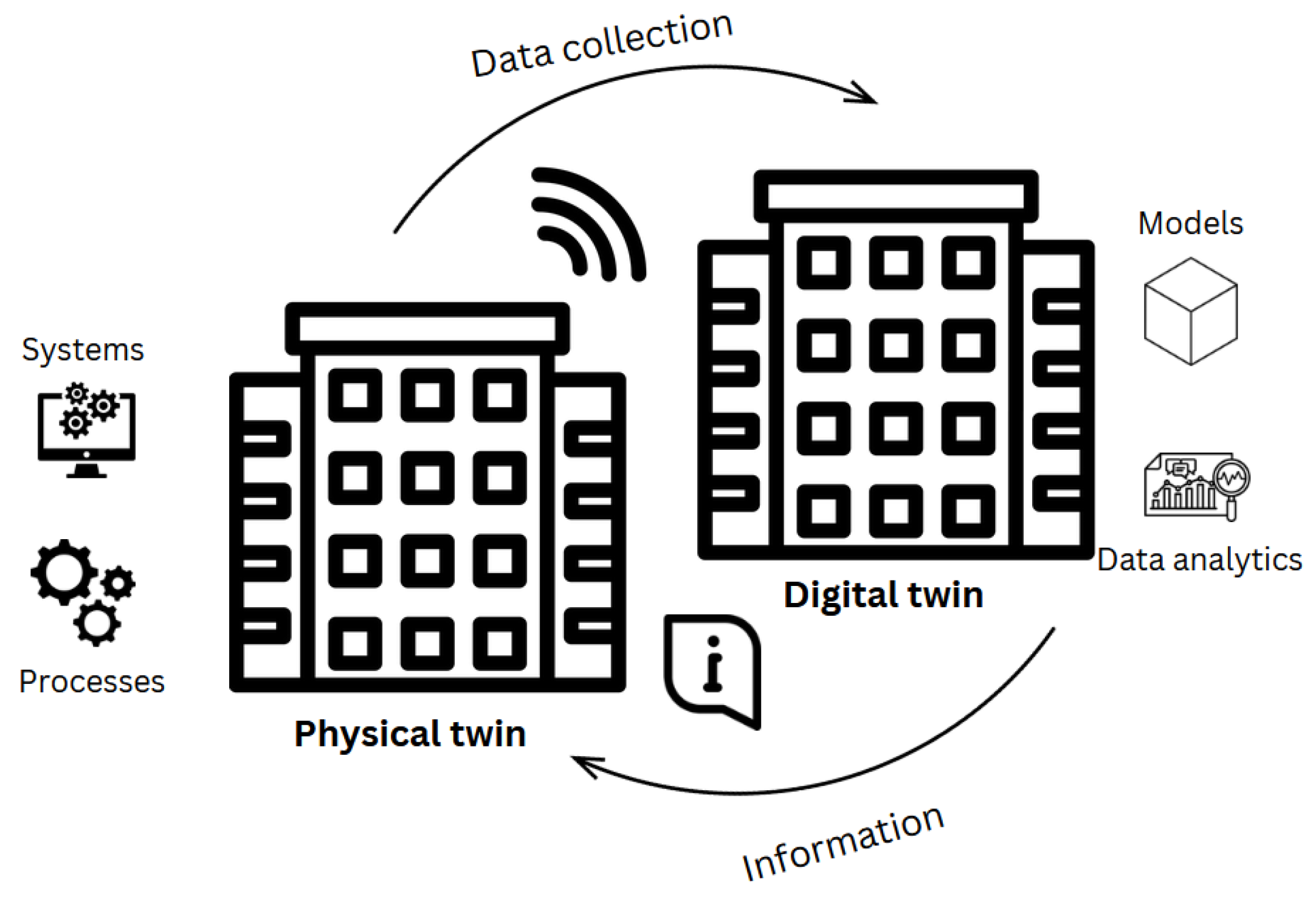
Figure 1 provides a conceptual representation of the connection between the DT and the physical asset. Specifically, the DT continuously synchronizes with real-world industrial systems to collect operational data, perform real-time analysis, and provide actionable insights for various cybersecurity functions.
The concept of a Cybersecurity Digital Twin (CS-DT) extends beyond passive replication of assets, as it can be utilized as an on-field, active measure of safeguarding industrial environments. A CS-DT is responsible for continuously monitoring IoT sensors and network traffic to detect anomalies in real time, reducing the Mean Time to Detect (MTTD) and Mean Time to Recovery (MTTR) through automated containment, rollback, and adaptive response [
8,
9]. It further enhances resilience through simulated cyber attacks, penetration testing support, and modeling of cascading failures without disrupting live operations [
10], analogous to cyber ranges [
11,
12] and security testbeds [
13]. Furthermore, integrating the CS-DT with Security Information and Event Management (SIEM) systems and Cyber Threat Intelligence (CTI) platforms can also provide forensic data collection and context-aware risk evaluation using metrics such as the Common Vulnerability Scoring System (CVSS) [
14,
15]. On top of that, its modular, standards-aligned architecture, compatible with NIST CSF [
16] and IEC 62443 [
17], ensures interoperability with existing systems while scaling across diverse CI domains. In this sense, the CS-DT can operate as both a defensive mechanism and a proactive instrument for incident detection, analysis, and response. Despite these promising capabilities, the practical use of CS-DTs for end-to-end cybersecurity in industrial environments remains fragmented. Existing approaches often address isolated functions, such as anomaly detection, simulation, or response orchestration, but rarely integrate them into a coherent, standards-aligned workflow. This gap highlights the need for a systematic assessment of current DT-based security solutions and for a unified framework that operationalizes these capabilities in a consistent and interoperable manner.
Contribution: The current work first presents a systematic investigation into the role of DTs in cybersecurity incident detection and response within industrial environments. Unlike prior works that often focus on broader DT applications or isolated technical aspects, this study centers specifically on the intersection of DTs and cybersecurity in operational settings such as power grids, manufacturing plants, and industrial IoT (IIoT) networks. Through our extensive analysis of the existing literature regarding recent DT-based security frameworks, we synthesize current trends, identify key architectural patterns, and outline the technical roles that DTs fulfil across the incident detection and response lifecycle. Second, building on this analysis, we design a cybersecurity and integration–aligned (ISO 23247)-based [
18] DT framework for manufacturing, that embeds four additional dedicated Feature Elements (FEs), namely Data Ingestion & Synchronization, Anomaly Detection, Incident Response, and Adaptive Learning, directly into the standard’s entities. These Feature Elements are derived from the evidence-based requirement gaps identified through the SLR. As a result, the framework is structured to enable secure data flow, real-time threat detection, and verifiable response sequencing at the architectural level. The rationale for selecting these four FEs is systematically derived from the SLR findings and requirement analysis presented in
Section 4 and
Section 5.
This paper’s scope is restricted to frameworks that embed DTs specifically into industrial cybersecurity workflows. The contributions focus on synthesized requirements, DT-security threat surfaces, and a standards-aligned reference framework mapped to ISO 23247 baseline entities. The aim is to explicitly expand the framework’s entities, without modifying the core reference architecture. Although DTs are widely deployed for real-time industrial monitoring, predictive maintenance, and optimization, security-specific DT engineering that closes the loop from anomaly reasoning to safe containment prior to control-plane actuation is rarely standardized or empirically exercised. This work contributes an architecture-level generalization that emphasizes incident-handling enforceability, evidence-derived requirements, plant-safe validation sequencing, and SOC feedback integration, addressing gaps not resolved by real-time DT monitoring alone. Specifically, the main scope of this paper is:
To analyze the current state of DT-based cybersecurity frameworks in industrial environments.
To extract a set of requirements to inform the design and development of a robust and adaptive DT-based cybersecurity framework.
To perform a targeted risk assessment that identifies DT-specific threat vectors and mitigation strategies across representative industrial sectors.
To develop a structured DT-based cybersecurity framework, powered by advanced technologies, for scalable and adaptive incident detection and response.
The remainder of the paper is structured as follows: The following section reviews recent surveys on DTs and cybersecurity, with a comparative analysis of their scope and limitations.
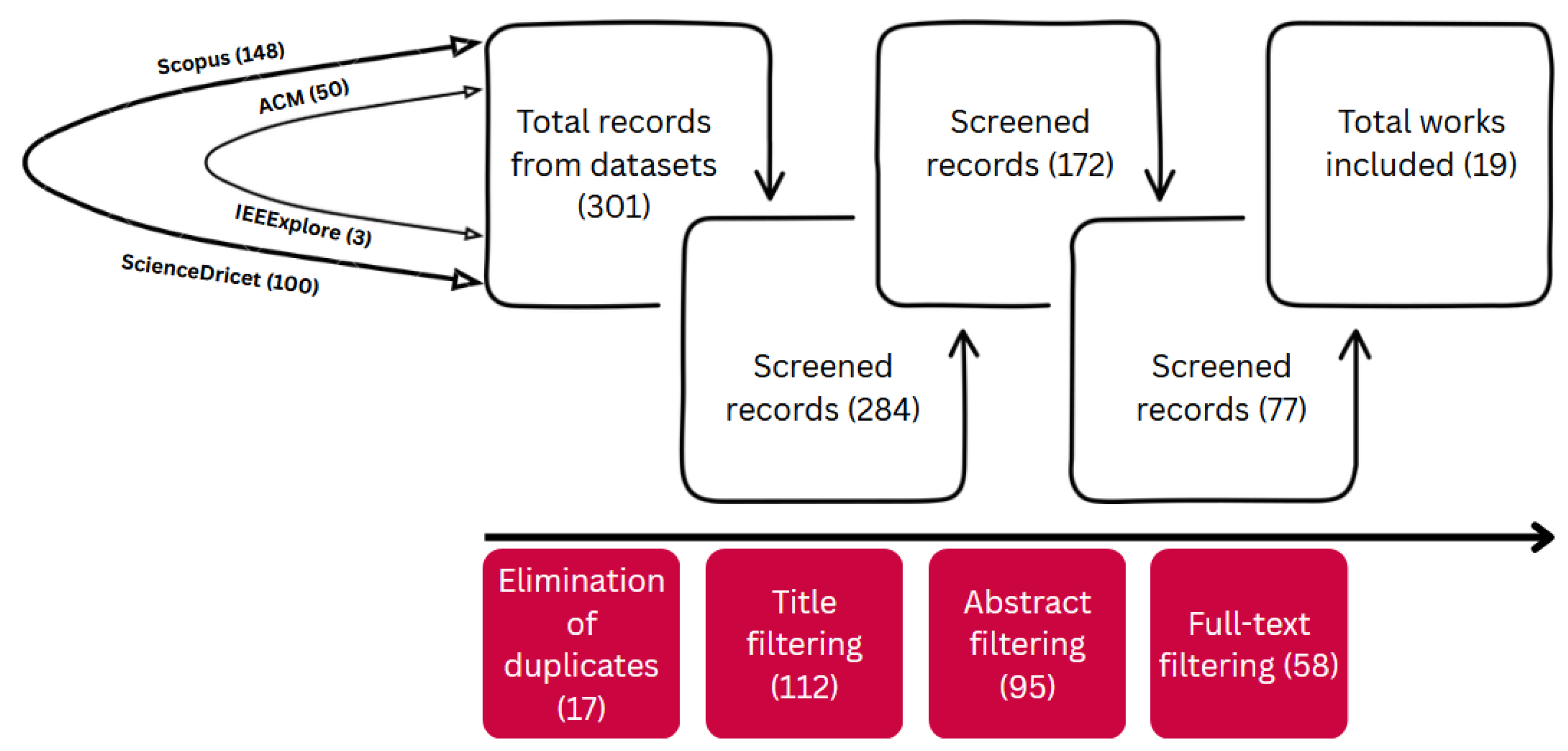
Section 3 outlines the systematic literature review (SLR) process, as well as the steps followed for designing our proposed framework.
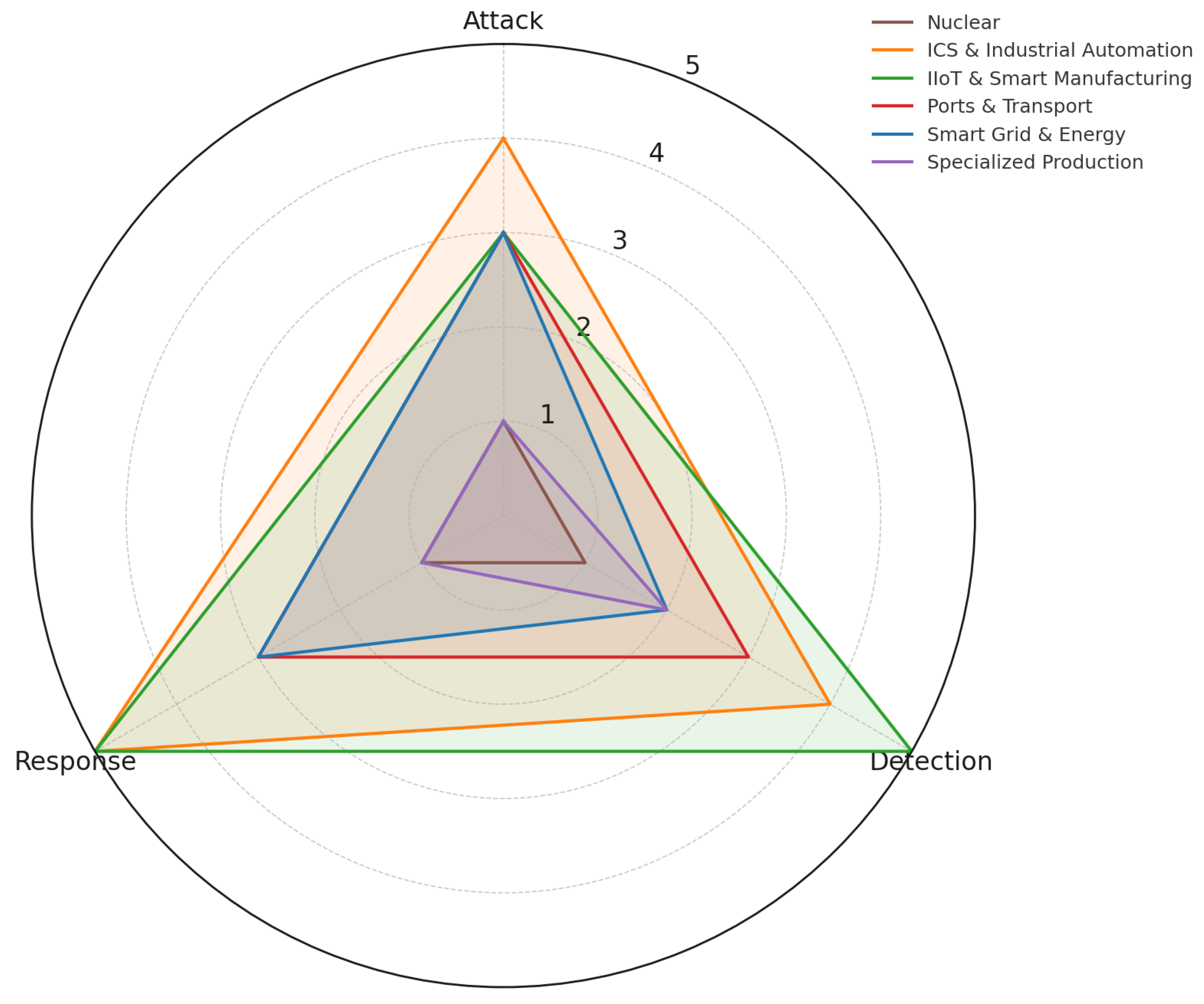
Section 4 then discusses the selected studies in depth, summarising use-cases, attack types, detection techniques, response mechanisms, DT roles, and underlying technologies across multiple industrial sectors.
Section 5 distills this evidence into a structured set of functional, non-functional, security-specific, and domain-specific requirements that a modern DT-centric security architecture must satisfy. Finally,
Section 6 synthesizes the previous insights into an ISO 23247-aligned DT security framework, and
Section 7 concludes the paper and proposes directions for future research in DT-enabled cybersecurity.
2. Related Work & Research Positioning
This section reviews existing literature related to the use of DTs for cybersecurity incident detection and response, with a particular emphasis on industrial environments. Given the specific scope of this review, broader surveys on DTs or general cybersecurity, such as those in [
19,
20,
21,
22], which primarily address architectural considerations or overarching security concerns, are intentionally excluded. We focus exclusively on works published between 2020 and 2025, as no significant research aligning with our criteria was identified before this timeframe. The analysis centers on studies that explicitly integrate DTs into cybersecurity workflows for incident detection and response within industrial or CI contexts. Moreover, we include works that have a clear relevance to this focus, with a particular preference given to studies that propose or discuss structured frameworks for DT-enabled cybersecurity. This broader inclusion allows for a comprehensive comparative analysis of the current research landscape and highlights the specific contributions relevant to industrial environments.
Table 1 summarizes these works in reverse chronological order, evaluating them across six key dimensions: use of DTs, cybersecurity focus, incident detection, incident response, industrial environment applicability, and the presence of a structured framework.
The authors in [
23] present a comprehensive review on the convergence of DTs and AI for cybersecurity across various industrial domains. They highlight how DTs, when integrated with AI, enhance system resilience by enabling real-time monitoring, simulation, and autonomous decision-making within CPS. The authors discuss the architectural components of DTs, particularly focusing on their evolution from simple digital models to fully interactive cyber–physical mirrors. They examine common misconceptions and clarify differences between digital models, shadows, and twins. Importantly, the work explores cybersecurity challenges across DT ecosystems, including threats to IoT devices, sensor data integrity, and communication protocols, while emphasizing the limitations of current security standards. A layered DT architecture is proposed, outlining how each layer (physical, data, service, or application) introduces unique security needs. The study also categorizes DT protocols, identifies key vulnerabilities, and discusses mitigation techniques using public key infrastructure, anomaly detection, and multi-layered IDS systems. This work contributes a valuable synthesis of DT security challenges, threat models, and AI-driven solutions, making it a key reference for understanding the cybersecurity landscape in industrial DT applications. Nevertheless, it does not deliver a structured, end-to-end framework explicitly designed for incident detection and response in industrial environments.
The authors in [
24] provide a comprehensive survey, highlighting the evolution of DTs beyond traditional modeling into domains requiring real-time synchronization, predictive analytics, and large-scale integration. Their work underscores the importance of DTs in enabling closed-loop control, proactive system optimization, and resilient network operations, particularly in 5G and 6G contexts. The survey also outlines major barriers to widespread DT adoption, including issues related to standardization, interoperability, latency, and cybersecurity. Furthermore, the authors map out the current ecosystem of software tools and standardization bodies, offering valuable insights into how the field is maturing technically and organizationally. This work establishes a strong foundation for understanding how DTs can support scalable, secure, and intelligent industrial applications. However, it does not specifically address incident detection or response mechanisms within industrial cybersecurity contexts, nor does it provide a structured framework approach.
The work in [
25] conducts a comprehensive SLR on the integration of DTs with Distributed Ledger Technologies (DLTs), particularly focusing on enhancing data security, trustworthiness, and auditability in DT-based systems. The paper identifies key challenges in securing heterogeneous and potentially untrustworthy data streams in CPS and argues that DLTs, such as blockchains, can provide immutability, transparency, and decentralized validation for DT operations. The authors analyze 61 selected studies, answering seven research questions related to use cases, architectural requirements, and implementation challenges in DT-DLT integration. Based on this review, they propose a domain-agnostic reference architecture for DT systems leveraging DLTs and validate it through two proof-of-concept implementations across different industrial scenarios. Their work highlights the potential of combining DTs with blockchain to mitigate threats like data tampering and to improve system reliability in Industry 4.0 contexts. While this work provides meaningful insights into security and trust frameworks, it does not concentrate on real-time incident detection or coordinated response mechanisms within DT-driven cybersecurity environments.
The authors in [
26] present a comprehensive survey of DT technologies, focusing on their architectural design, enabling tools, security challenges, and operational requirements. Their work categorizes DTs into various application domains, such as manufacturing, energy, healthcare, and smart cities, and introduces a layered DT architecture spanning data acquisition, synchronization, modeling, and visualization. A key contribution of this study is a unified security framework that classifies threats and vulnerabilities across DT layers, proposing mitigation strategies including AI, blockchain, and access control mechanisms. While the survey offers a broad view of DT adoption and security considerations, its scope is cross-domain and does not exclusively target industrial environments. The work remains general in scope and does not offer an in-depth exploration of incident-level detection or response mechanisms tailored to industrial CPS environments.
In [
27], the authors provide a critical review of DTs as enablers of enhanced security and operational efficiency within CPS and Industry 4.0 environments. The study positions DTs as a transformative technology that bridges physical and virtual realms, supporting real-time simulation, streamlined operations, and advanced modeling of security threats. The review highlights DTs’ contributions across the product lifecycle, from design through to operation and optimization, while emphasizing their role in fostering resilience, adaptability, and interoperability in smart manufacturing and industrial automation systems. Furthermore, the authors discuss the integration of DTs with emerging technologies such as IoT, AI, and blockchain, and identify ongoing challenges related to data privacy, cybersecurity, and system reliability. While this work provides a valuable overview of response strategies within CPS, it does not propose specific methods or frameworks for incident detection.
The study in [
28] offers a comprehensive review of the evolution from traditional to smart and decentralized grids, ultimately framing the concept of the “Electric DT Grid” as a convergence point of real-time monitoring, predictive modeling, cybersecurity, and cloud-based energy management. Unlike prior studies focusing on isolated grid elements, this review emphasizes a layered DT framework comprising online analysis, cloud integration, communication protocols, and self-healing capabilities. It also outlines the integration of advanced technologies like ML, blockchain, and real-time Supervisory Control and Data Acquisition (SCADA) updates to improve fault prediction, energy optimization, and cybersecurity resilience. The study identifies current technical challenges, including communication latency, data overload, and cybersecurity vulnerabilities, while also mapping a future roadmap for DT implementation in national grid systems. This work stands out for presenting a holistic, multi-layered perspective that incorporates both technical architecture and strategic management of DTs in critical energy infrastructure. While the study provides a broad architectural perspective, it does not explicitly develop or evaluate frameworks for DT-based incident detection and response workflows.
In
Table 1, the “Industrial Environment” dimension reflects the degree to which a study explicitly targets operational industrial or CI contexts. Full coverage denotes domain-specific validation or architectural grounding in concrete industrial use cases, whereas partial coverage indicates conceptual or cross-domain relevance without empirical industrial deployment or sector-specific adaptation. Moreover, while all reviewed works emphasize the role of DTs, often in conjunction with enabling technologies such as AI or blockchain, their coverage of incident detection and incident response varies notably. Studies such as [
23,
24,
25] offer strong contributions in cybersecurity and architectural modeling, yet they either omit or only partially address detection and response processes. Notably, refs. [
26,
27] advance the field through layered architectures and resilience-oriented strategies but fall short on providing full integration of incident detection and incident response mechanisms. Although ref. [
28] proposes a forward-looking vision for DTs in smart grids, their approach addresses detection and response in a high-level manner without linking them into a coordinated security lifecycle. In contrast, the present work distinguishes itself by fully addressing all six dimensions, delivering a structured synthesis of DT integration, security modeling, incident detection, and response strategies, all within the context of industrial environments. This positions the study as a unique and valuable reference for advancing DT-enabled cybersecurity frameworks in critical industrial applications.
The works reviewed in this section are not part of the systematic literature review corpus analyzed in
Section 4. Rather, they represent closely related survey and framework contributions that motivate the need for a focused SLR on DT-enabled incident detection and response in industrial environments. The structured selection, screening, and analysis of the 19 primary studies forming the evidence base of this work are described in the following section.
5. Requirements Engineering
In this section, we apply a structured Requirements Engineering (RE) perspective to identify the system-level requirements that a DT-based cybersecurity framework must fulfill to be both technically robust and operationally relevant within industrial environments. Following the principles of ISO/IEC/IEEE 29148:2018 [
57], requirements are derived through a systematic analysis of the works discussed in
Section 4 and are characterized according to the qualities of good requirements: Necessary, Verifiable, Unambiguous, Feasible, and Consistent.
ISO/IEC/IEEE 29148 defines nine characteristics of well-formed requirements. In this study, we focus on these five core attributes because they directly influence the technical enforceability, evaluability, and internal coherence of DT-based cybersecurity architectures. The remaining characteristics, such as traceable, modifiable, prioritized, and complete, are addressed implicitly through structured requirement mapping and documentation but are not independently analyzed, as they pertain primarily to requirements management processes rather than architectural design logic.
It should be noted that the application of ISO 29148 in this work is not fully fledged. Rather than executing the entire requirements engineering process prescribed by the standard, we applied its core principles as an analytical lens to structure and assess requirements derived from the literature. As such, the use of ISO 29148 here provides methodological rigor in evaluating requirement quality. This approach ensures that the requirements not only reflect empirical findings from the literature but are also framed within a standardized RE process. Moreover, RE provides the methodological foundation for translating stakeholder needs into precise and actionable system specifications. Within the DT context, this ensures that the digital representation of assets and processes directly supports incident detection, simulation, and response while remaining aligned with operational and regulatory constraints. Requirements are categorized to promote systematic coverage and traceability across technical and contextual dimensions.
Stakeholder groups in industrial environments include operators, SOC analysts, OT engineers, and decision-makers. These roles were identified based on recurring functional responsibilities observed in the reviewed literature and are consistent with the role separation principles reflected in the NIST CSF, which distinguishes between operational execution, monitoring and detection, response coordination, and governance functions. The selected stakeholders directly interact with DT data flows and hold operational responsibility for detection, response, and system adjustments. In contrast, higher-level managerial roles primarily influence governance and policy but do not directly shape the technical system requirements addressed in this framework. Their needs therefore map directly into system-level requirements, forming the basis of the four requirement categories defined below:
Functional requirements (FR): These typically refer to the core DT capabilities that enable real-time detection, autonomous response, simulation, and integration with legacy environments.
Non-functional requirements (NFR): These are a set of operational qualities such as scalability, latency, accuracy, reliability, maintainability, and usability, which ensure deployment viability. These requirements describe how the system must perform its functions under certain constraints, rather than specifying what the system does. They are critical for ensuring the framework is effective in real-world industrial environments where factors like speed, stability, and ease of use are paramount.
Security-specific requirements (SR): These encompass the capabilities necessary to protect the system and the industrial environment it monitors, aligning with the foundational principles of confidentiality, integrity, and availability (CIA). While security is often categorized as a non-functional requirement in general software engineering, this study treats it as a distinct category due to the safety-critical and operational nature of industrial cyber–physical systems. In DT-enabled architectures, security mechanisms such as threat detection, containment orchestration, forensic data capture, and secure communications directly influence system behavior and control logic, extending beyond traditional quality attributes. They include threat resilience capabilities like broad-spectrum detection, forensic data capture, and secure communications.
Domain-specific requirements (DR): A customization to heterogeneous industrial sectors, including modeling fidelity and compatibility with simulators or testbeds.
This mapping preserves a direct line of traceability from stakeholder needs to framework requirements. Further, based on the analysis of relevant work done in
Section 4, each of these four system-level requirements can be divided into relevant sub-requirements as shown in
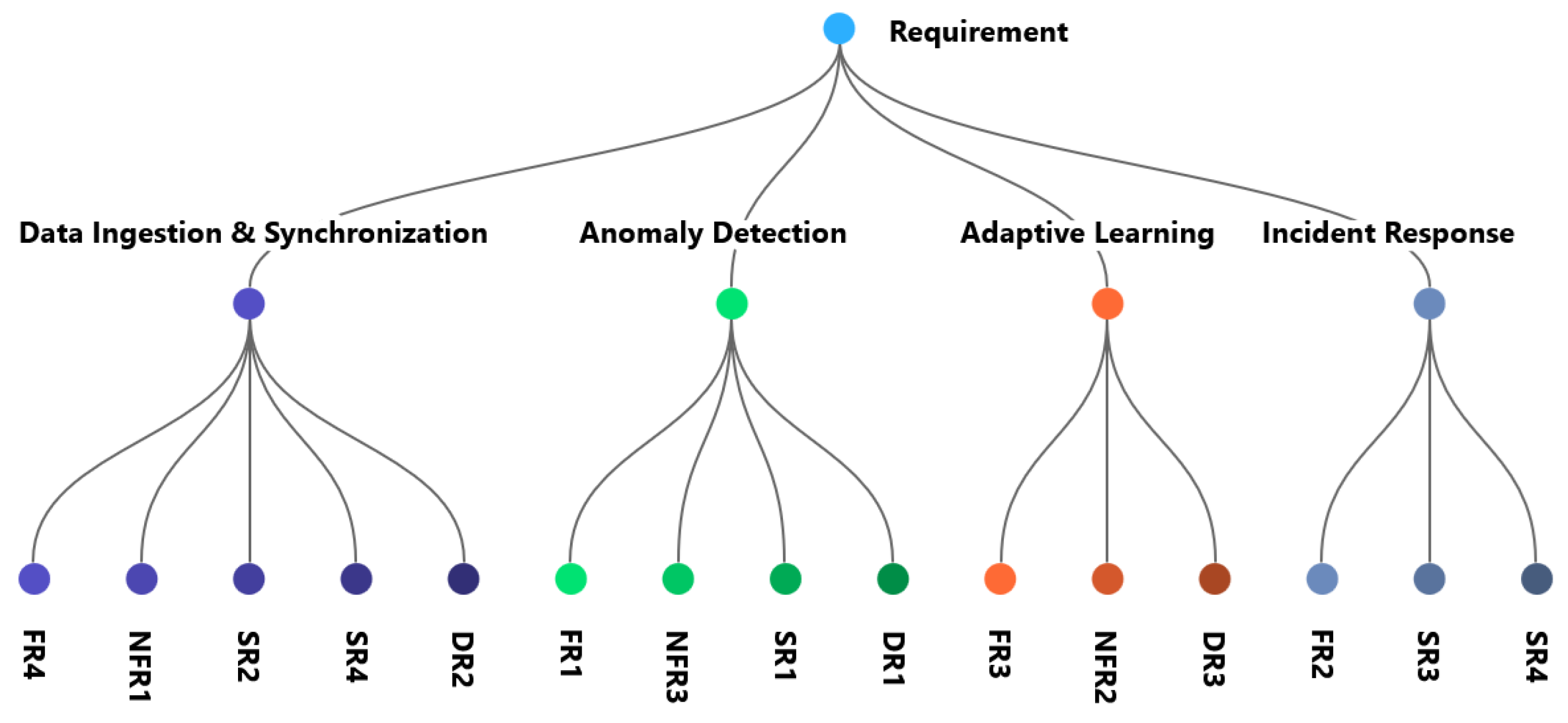
Table 6. For instance, FR1 specifies the need for real-time anomaly detection using AI/ML techniques, NFR1 emphasizes ultra-low latency to ensure responsiveness during fast-spreading attacks, SR2 requires forensic data capture to support post-incident analysis, and DR3 highlights configurable fidelity levels to balance accuracy and performance across different industrial domains. Specifically, to meet the stringent low-latency (NFR1) and scalability (NFR2) demands of industrial environments, the framework should be designed to support distributed processing at the network edge. That is, by performing analytics closer to the data source, one can minimize data transmission times and reduce the computational load on central systems, enabling faster detection and response.
Moreover, to ensure robustness, each identified sub-requirement is structured to align with five ISO/IEC/IEEE 29148 characteristics. Recall that this standard, which focuses on requirements engineering for systems and software, guides what constitutes a “well-formed” requirement. A key part of this is defining nine characteristics in total that each system-level requirement should possess, which are used to evaluate their quality. In this work, we focus on five of them, namely necessary, verifiable, unambiguous, feasible, and consistent. This is because these directly determine the technical robustness and operational enforceability of DT-based cybersecurity requirements. The remaining characteristics, namely Complete, Traceable, Modifiable, and Prioritized, are not disregarded; rather, either they are addressed implicitly or fall outside the immediate scope of this study. Specifically, Completeness is achieved by ensuring that all four requirement categories are fully represented in
Table 6, while Traceability is maintained by linking each requirement to its literature source in the table and to its implementation within the FEs in
Figure 5. On the other hand, Modifiability and Prioritization pertain more to requirements management processes than to the design of the framework itself. Concentrating on the five selected characteristics, therefore, balances methodological rigor with clarity and relevance to the technical objectives of this work. Below, the five key characteristics are outlined as guiding criteria for assessing the quality and applicability of the identified requirements.
Necessary: Each requirement addresses a distinct stakeholder or system-level objective. For instance, FR1 (real-time anomaly detection) is necessary for operators to detect and respond to cyber attacks before they propagate through industrial networks. Omitting FR1 would directly undermine the stakeholder goal of timely incident detection and leave the system exposed to cascading failures.
Verifiable: Requirements can be validated through testing, simulation, or monitoring. SR2 (forensic data capture) is verifiable because the presence and integrity of stored packet traces and control-state logs can be directly measured and audited. Verification can be performed by checking log completeness, integrity, and compliance with forensic standards.
Unambiguous: Requirements are expressed in measurable and precise terms. NFR3 (low detection false positive rate, e.g., <2%) is unambiguous because it specifies a quantifiable performance metric, unlike vague statements such as “the DT should be accurate”. This allows performance to be validated against a clear threshold, avoiding interpretation gaps.
Feasible: Requirements must be technically achievable within industrial resource constraints. FR4 (interoperability with legacy systems) demonstrates feasibility since it leverages existing communication standards and interfaces, avoiding unrealistic system overhauls. This ensures that the requirement can be satisfied in practice without prohibitive cost or redesign.
Consistent: Requirements must not conflict with each other. For example, DR3 (configurable fidelity levels) ensures consistency by allowing designers to balance the need for simulation accuracy with NFR1 (low latency), preventing contradictions between precision and performance. This illustrates how consistency is preserved across requirement categories rather than compromised.
Figure 5.
Linkage between RE and FEs.
The classification into FR, NFR, SR, and DR further provides a structured foundation for quality assurance, as each requirement can be validated against representative use cases in CIs. In power grids, the ability to satisfy FR1 (real-time anomaly detection) and SR1 (broad-spectrum threat detection) is essential for identifying malicious SCADA commands. Together with FR3 (simulation capabilities), these requirements enable modeling of cascading blackout scenarios and validation of proactive response. By contrast, oil and gas pipelines emphasize rapid containment: FR2 (autonomous incident response) addresses spoofed flow control signals, while SR3 (isolated response testing) enables safe evaluation of containment strategies in sandboxed DT replicas.
In water treatment plants, SR2 (forensic data capture) guarantees that unauthorized dosing commands are logged in sufficient detail to support post-incident analysis, while NFR1 (low-latency response) ensures that mitigation occurs quickly enough to prevent chemical contamination or safety violations. Finally, in smart manufacturing, DR2 (testbed and simulator compatibility) enables validation in environments such as Factory I/O or MiniCPS, ensuring that simulated responses reflect operational behavior. DR3 (configurable fidelity) also allows system designers to balance high simulation accuracy with NFR2 (scalability), preserving detection capabilities for attacks such as robotic arm hijacking without undermining production efficiency.
These scenario-driven validations demonstrate that the requirements are not abstract design ideals but operationally enforceable constraints. Each requirement directly supports incident detection and response in its respective domain, and their interplay across FR, NFR, SR, and DR establishes the set as both technically complete and contextually validated across heterogeneous CI environments.
Table 6 presents a consolidated overview of the identified requirements, organized according to the four defined categories. Each entry includes a brief description, a reference to the source from which it was derived or inspired, and a mapping to existing industrial standards. This set of requirements forms the baseline for developing our proposed framework in
Section 6, ensuring it is both context-aware and technically grounded. While some requirements may appear conflicting in practice, for example, achieving real-time anomaly detection (FR1) within highly constrained legacy systems (FR4), or balancing low latency (NFR1) against low false positives (NFR3), this tension is not a limitation in our study. Since the RE process here is applied as a guide for enhancing the ISO 23247-2 [
58] framework rather than a strict engineering specification, these potential collisions serve more as design trade-offs to be acknowledged than obstacles. Their role is to shape the direction of the proposed framework and not to prescribe fully resolved implementations.
Table 6.
Consolidated requirements for DT-based cybersecurity frameworks.
| ID | Name | Requirement | Derived From | Standard Alignment |
|---|
| FR1 | Real-time anomaly detection | The framework shall enable real-time anomaly detection using AI/ML techniques to identify cyber attacks and operational anomalies. | [35,42] | IEC 62443-3-3 [59], NIST 800-82 [60] |
| FR2 | Autonomous incident response | The framework shall support autonomous incident response via predefined playbooks or adaptive policies. | [35,38] | IEC 62443-3-3, NIST 800-61 [61] |
| FR3 | Predictive simulation | The framework shall replicate both physical and cyber behaviors to enable predictive simulation and proactive threat testing. | [41,45] | NIST 800-30 [62], MITRE ATT&CK |
| FR4 | Legacy interoperability | The framework shall interoperate with industrial standards and legacy systems. | [39,43] | ISO 23247 |
| NFR1 | Low latency | The framework shall offer low-latency responses (e.g., <500 ms) suitable for CI applications. | [34,49] | IEC 62443-3-3, NIST 800-82 |
| NFR2 | Scalability | The architecture must scale to thousands of devices and support distributed DTs in edge or fog environments. | [35,40] | ISO 23247, NIST 800-207 [63] |
| NFR3 | Low false positives | The framework should maintain a low detection false positive rate, e.g., <2%. | [35] | NIST 800-82 |
| SR1 | Broad-spectrum detection | The DT framework shall detect and respond to a representative range of cyber attacks relevant to industrial environments. | [39,41,45] | IEC 62443-3-3, MITRE ATT&CK |
| SR2 | Forensic data capture | The framework shall capture forensic data to support post-incident analysis. | [50,51] | NIST 800-61, IEC 62351-14 [64] |
| SR3 | Isolated response testing | The framework shall offer isolated test environments for safely validating response strategies. | [50,54] | IEC 62443 |
| SR4 | Secure communications | The system shall employ secure communication protocols and enforce robust access control mechanisms, like role-based or attribute-based for DT interfaces. | [65] | IEC 62443-3-3, NIST 800-207 |
| DR1 | Domain-specific modeling | The framework shall support DT modeling for domain-specific CPS. | [43,50] | ISO 27005 [66], IEC 62443 |
| DR2 | Testbed compatibility | The DT framework shall interface with physical testbeds and/or simulators. | [41,45] | IEC 62443 testbeds |
| DR3 | Configurable fidelity | The framework shall provide configurable fidelity levels in DT modeling to match varying operational needs. | [67] | ISO 27005, IEC 62443 |
Figure 5 depicts a traceability scheme that connects the outcomes of the RE analysis with the four proposed FEs of the cybersecurity DT framework, which were detailed in
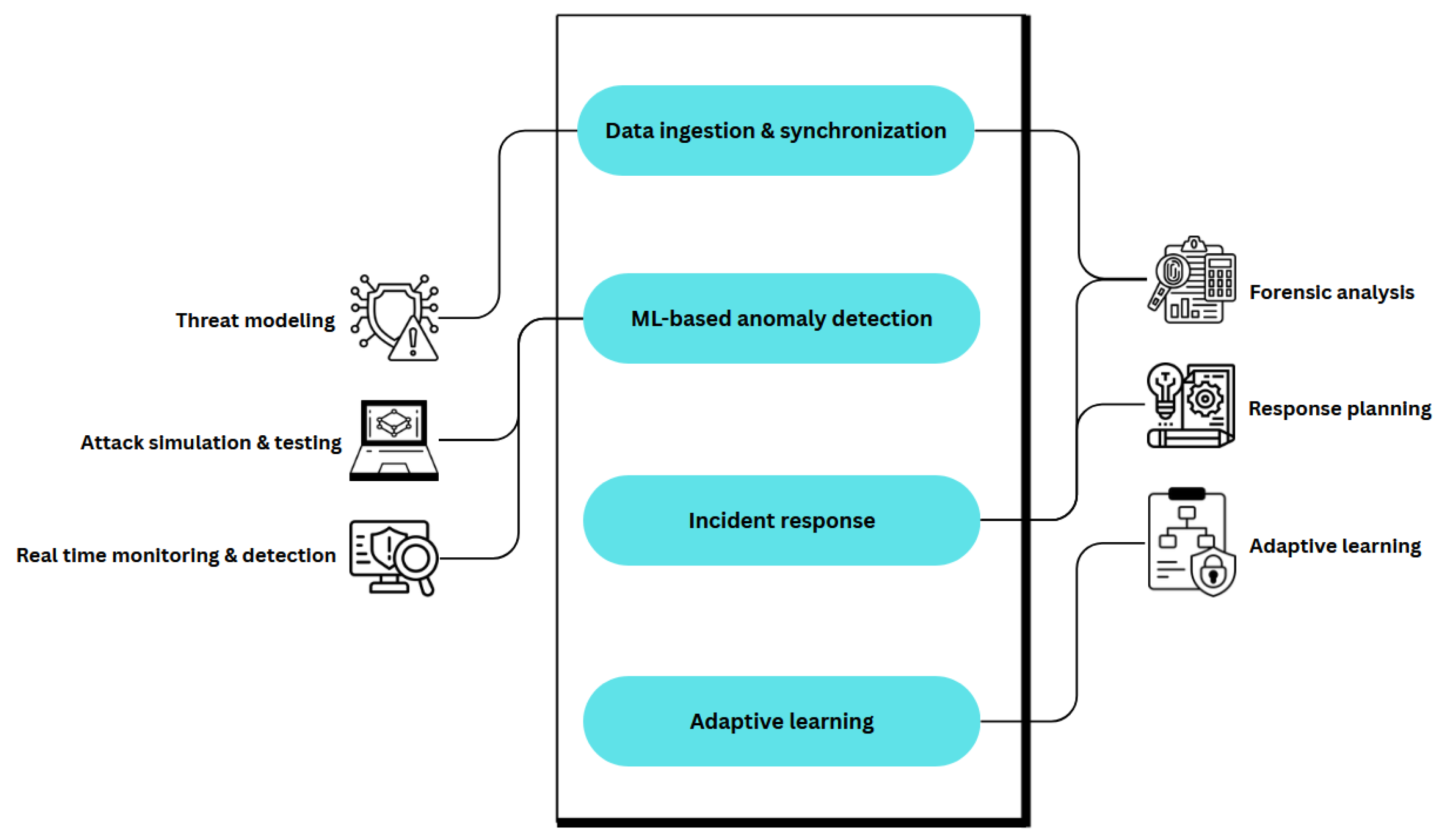
Section 4. The lower layer groups the identified requirements into their respective category ID, while the upper layer lists the proposed four FEs. The links between them highlight how each requirement is concretely operationalized within the framework design. For instance, FR1 and SR1 are realized through the Anomaly Detection FE, while FR2 and SR3 map to the Incident Response FE. Similarly, NFR1 and SR2 are addressed by the Data Ingestion & Synchronization FE, which provides secure, efficient data pipelines for telemetry and log collection. Adaptive Learning is motivated by requirements such as FR3, NFR2, and DR3, ensuring that the DT evolves dynamically with operational changes and emerging threats. In addition, SR4 illustrates the role of cross-cutting requirements, as it maps simultaneously to Data Ingestion & Synchronization and Incident Response, reflecting the dual need for secure pipelines and controlled response execution. Overall, the figure demonstrates how all 14 identified requirements are systematically translated into framework features, offering a transparent and verifiable link between stakeholder needs, RE outcomes, and the technical architecture of the proposed DT-based security framework.
6. Towards a Standardized Framework: An ISO 23247-Based Approach
Building on the architectural insights and requirements, outlined in
Section 4 and
Section 5, this section introduces a comprehensive DT framework for industrial cybersecurity, explicitly aligned with the reference architecture defined in the ISO 23247 series, specifically ISO 23247-2 [
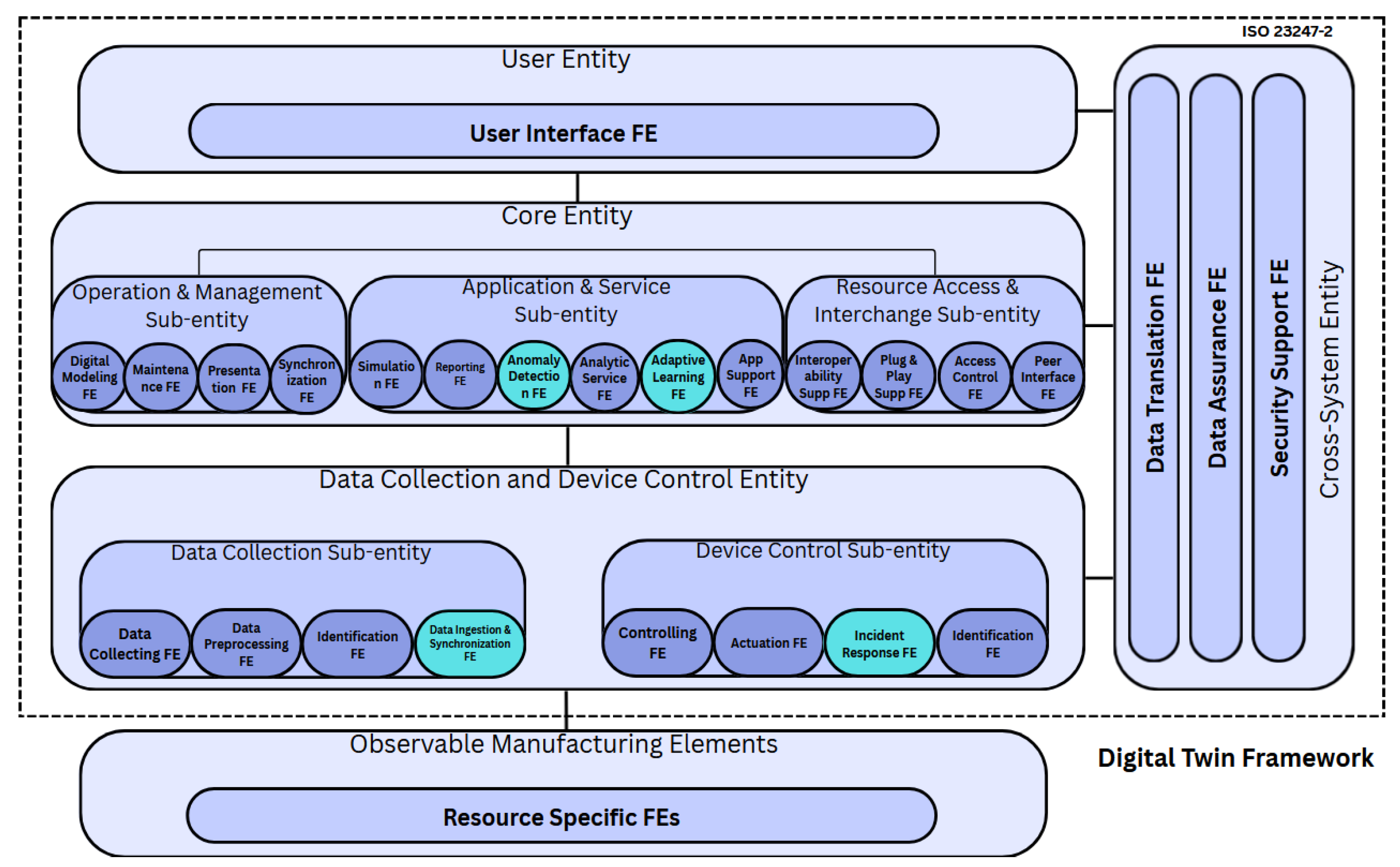
68]. Recall that ISO 23247 defines a reference architecture composed of four core entities: the Observable Manufacturing Element (OME), representing the physical assets; the Data Collection and Device Control Entity (DCDCE), responsible for data collection and control; the Core Entity (CE), which is the core digital model; and the User Entity (UE), which includes the applications and human users. ISO 23247 provides a modular, bidirectional DT architecture originally for manufacturing systems and increasingly referenced in OT cybersecurity research. The standard separates observation, control, modeling, and user interaction into independent entities, allowing analytics and simulation to run in the CE, while field data ingestion and control connectors run in the DCDCE, preserving real-time determinism on production assets. Typical compliant implementations rely on timestamped state synchronization, event logging, and secure message-bus integration, and are frequently validated in isolated CPS/ICS testbeds or co-simulation replicas before operational deployment. The architecture’s separation of concerns and configurable fidelity levels make it suitable for integrating anomaly detection, safe incident-response validation, and adaptive learning without modifying the underlying control plan.
Specifically, the design is grounded in the above-mentioned ISO 23247’s four entities; this ensures consistency with established DT principles while extending the architecture with cybersecurity-centric capabilities. The following subsections detail a step-by-step analysis of each FE, formally mapping them to the corresponding ISO 23247 entities and sub-entities, thereby forming the final framework (as overviewed in
Section 6.6).
To aid the reader,
Table 7 consolidates the mapping between the proposed FEs, their supporting requirements, and the ISO 23247-2 entities and sub-entities in which they are realized. Each suggested FE operationalizes a distinct subset of functional, non-functional, security-specific, or domain-specific requirements identified in
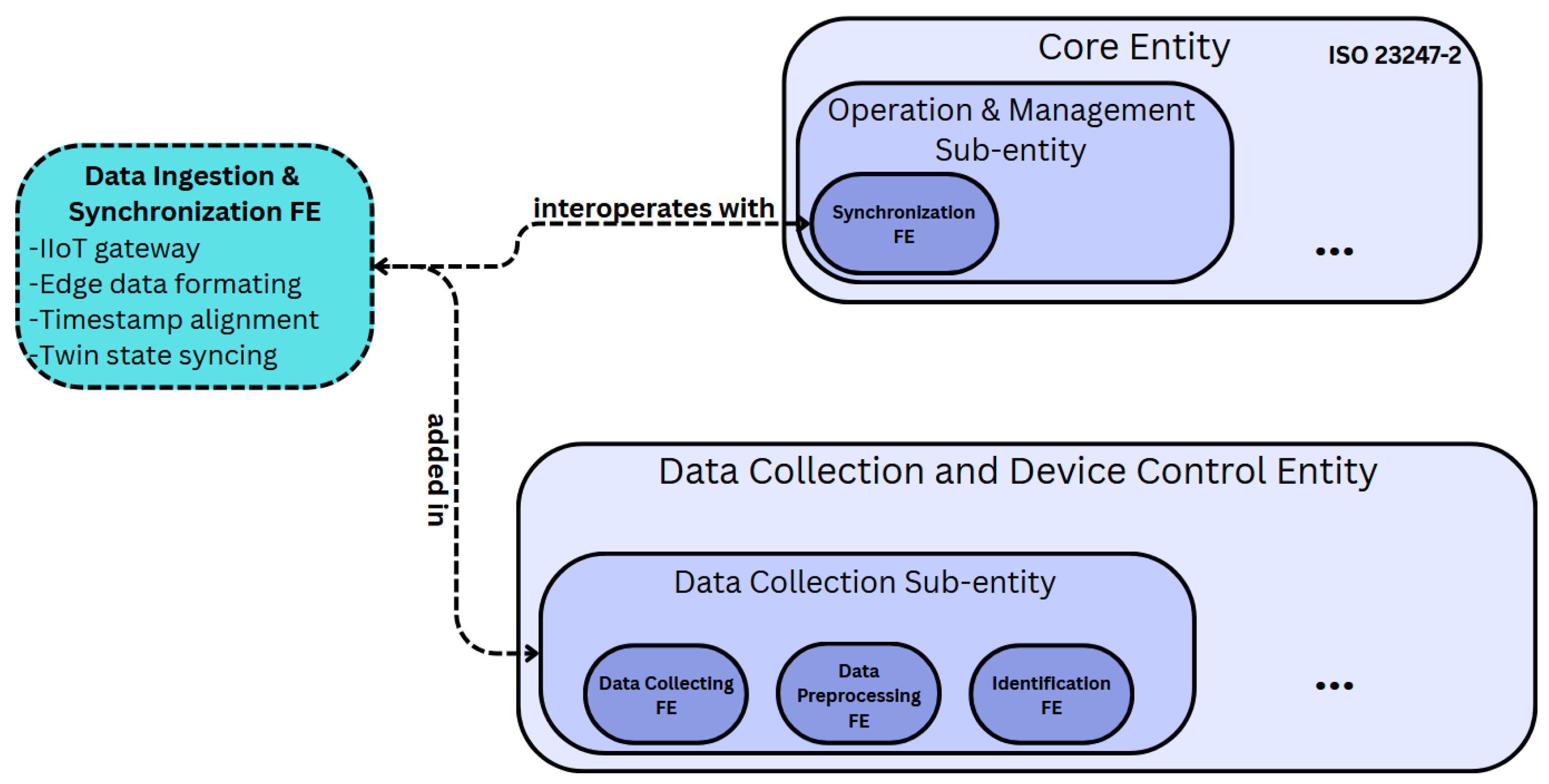
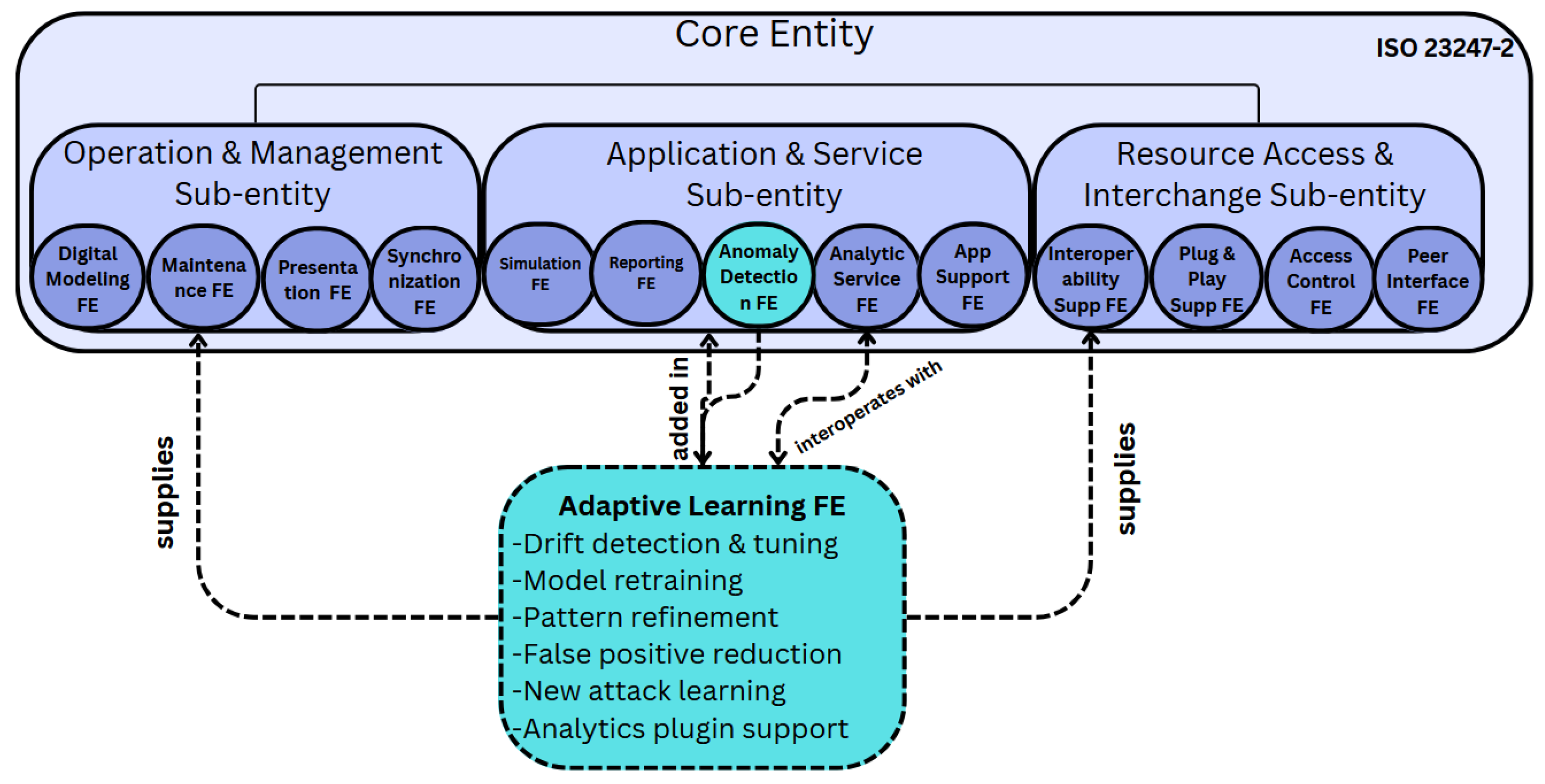
Section 5, ensuring systematic coverage across the requirement space. Moreover, the proposed FEs are anchored within specific ISO 23247-2 entities and sub-entities (which include ISO 23247-specified FEs), ensuring architectural alignment and modular integration. Specifically, as detailed in the following subsections, the data ingestion & synchronization and incident response FEs reside within the DCDCE, while the anomaly detection and adaptive learning FEs are implemented within the CE, leveraging its Application & Service sub-entity for analytics, model execution, and decision-making.
It is to be noted that the remaining two ISO 23247-2 entities, namely OME and UE, are not included in
Table 7, because no new cybersecurity-specific FEs are introduced within them. The OME represents the physical industrial assets themselves; it is observed and controlled, but is not extended with additional digital functionalities. Similarly, the UE provides operator interfaces and application endpoints for interacting with the DT, but the proposed framework leverages existing visualization and management FEs rather than defining new ones within this entity. Actually, the OME and UE roles remain essential as sources of data (OME) and sinks for decision support (UE), yet the proposed extension FEs are concentrated in the DCDCE and CE, where security-relevant processing and control occur.
Table 7.
Mapping of FEs to requirements and to the ISO 23247-2 framework core entities.
| Proposed FE | Requirement ID | Entity | Sub-Entity |
|---|
| Data Ingestion & Synchronization | FR4, NFR1, SR2, SR4, DR2 | DCDCE | Data Collection |
| Anomaly Detection | FR1, NFR3, SR1, DR1 | CE | Application & Service |
| Incident Response | FR2, SR3, SR4 | DCDCE | Device Control |
| Adaptive Learning | FR3, NFR2, DR3 | CE | Application & Service |
6.2. Machine Learning-Based Anomaly Detection
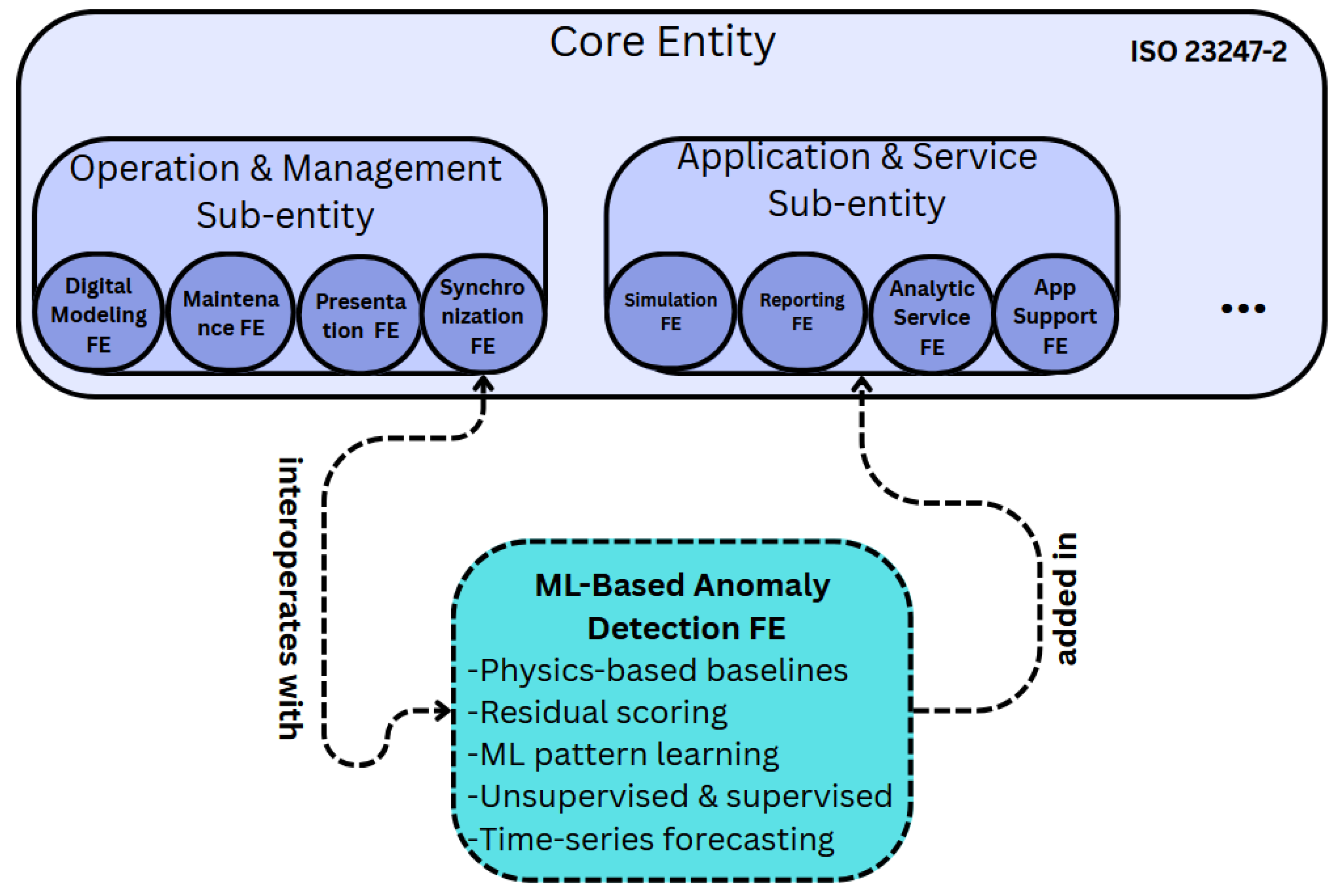
At the core of the cybersecurity DT framework is an intelligent anomaly detection FE powered by data analytics and ML. This capability maps primarily to the ISO 23247 core entity’s analytical functions. Within the core entity, the Application and Service sub-entity provides the necessary computational features for analysis, simulation, and prediction. In particular, ISO 23247 defines an analytical service FE for analyzing collected data and a Simulation FE for testing scenarios via virtual representations. The proposed anomaly detection FE integrates both physics-based and data-driven approaches. The DT’s simulation models establish expected behavior baselines, while ML models learn normal patterns and detect deviations that may indicate cyber incidents or process faults. Formally, the detection logic evaluates the difference between the observed physical state and the twin’s predicted state in real time [
75]. Let
be the vector of key measurements from the physical system at time
t, and
the twin’s simulated or predicted state. The framework computes a residual
which under normal operations remains near zero, within expected bounds. An anomaly score can thus be defined as
or a statistical divergence (e.g., the Mahalanobis distance [
76])
Accordingly, an alarm is raised if
where
is a chosen threshold. This residual-based detection aligns with ISO 23247 CE’s use of simulation for expected values and analytics for residual evaluation. In practice, a hybrid approach is used: the Simulation FE continuously generates expected sensor readings from the DT model, while the Analytical Service flags deviations beyond normal variance. The proposed framework supports multiple ML techniques to implement this anomaly detection FE, consistent with state-of-the-art ICS security practices. When little attack data is available, unsupervised or one-class models can be employed, like autoencoders or one-class SVMs, or models can use one-shot learning that learn a compact representation of legitimate behavior, such that any significant deviation indicates an anomaly [
77].
Efficient anomaly detection for industrial DTs increasingly relies on models that scale linearly or use sparse attention for long temporal windows. Approaches such as GNNs for cross-sensor correlation modeling, Temporal Convolutional Autoencoders (TCA) [
78] for deterministic sequential inference, and lightweight transformer models such as PatchTST [
79] or Informer [
80] are now common for real-time anomaly detection. These models reduce infrastructure overhead compared to classical methods that store or compare every signal independently.
For capturing temporal patterns, time-series forecasting models like ARIMA [
81] or LSTMs [
82] predict sensor values and trigger alerts if actual readings lie outside forecasted confidence intervals. In scenarios where labeled attack data exists, supervised classifiers, say SVMs, Random Forests, and neural networks, are trained to recognize known attack signatures [
83]. Prior studies have shown that an ensemble of diverse detectors can enhance accuracy, especially in ICS contexts [
84]. Embedding these techniques within the CE’s analytical framework enables the DT to identify a broad spectrum of cyber threats and process anomalies in real-time. Crucially, hosting the detection algorithms in the core entity avoids impacting real-time control performance. In terms of computational complexity, approaches such as large-scale K-nearest neighbours introduce linear query cost per comparison but scale poorly at thousands of devices due to the need to compare against large sample banks. Kernel SVM inference is efficient post-training, but cannot adapt online due to quadratic or cubic training cost. By contrast, TCN or LSTM autoencoders with compressed state, drift-aware statistical detectors, and sparse-neighbour GNNs introduce predictable linear inference cost on sliding windows or sparse graphs, meeting industrial constraints. This design choice, consistent with ISO 23247’s separation of concerns, ensures that security monitoring is rigorous yet non-intrusive to operational processes.
Rather than prescribing a single algorithm, the framework is intentionally algorithm-agnostic: it specifies where detection logic runs and how it interacts with DT synchronization and response, while allowing practitioners to select techniques that match their threat model and data properties. In all cases, detection performance should be assessed using standard metrics such as detection accuracy, FPR, and MTTD, alongside operational indicators like detection latency and resource overhead in the CE. These metrics provide a basis for comparing alternative detectors implemented within the same architectural slot.
A practical consideration for DT anomaly detection is the computational cost of ML inference and training relative to industrial constraints. Classical model inference, once trained, can be lightweight. Still, algorithms that rely on similarity search over large reference banks, require linear compare operations over every stored sample, which becomes expensive when thousands of devices are scanned at the edge. Kernel-based SVMs offer very efficient inference after training. Yet, their training cost grows quadratically to cubically with sample size, depending on kernel choice, making them unsuitable for continuous retraining in fast-changing production networks. By contrast, neural reconstruction models such as autoencoders or temporal convolutional networks exhibit linear inference cost proportional to network depth and time-window length, enabling long detection horizons within deterministic compute budgets. Recent lightweight transformer architectures restrict attention to fixed or windowed temporal patches, avoiding quadratic time-step comparisons. Online statistical detectors, including CUSUM, EWMA, DDM, ADWIN, DDM/EDDM variants, and other sliding-window divergence tests, scale in linear time on rolling buffers and require minimal memory.
Figure 7 illustrates the integration of the proposed anomaly detection FE within the CE of the ISO 23247 architecture, highlighting its interaction with synchronization FE and the Application & Service Sub-Entity. This visual emphasizes the modular placement of our detection logic without deviating from the standard framework structure.
6.3. Incident Response
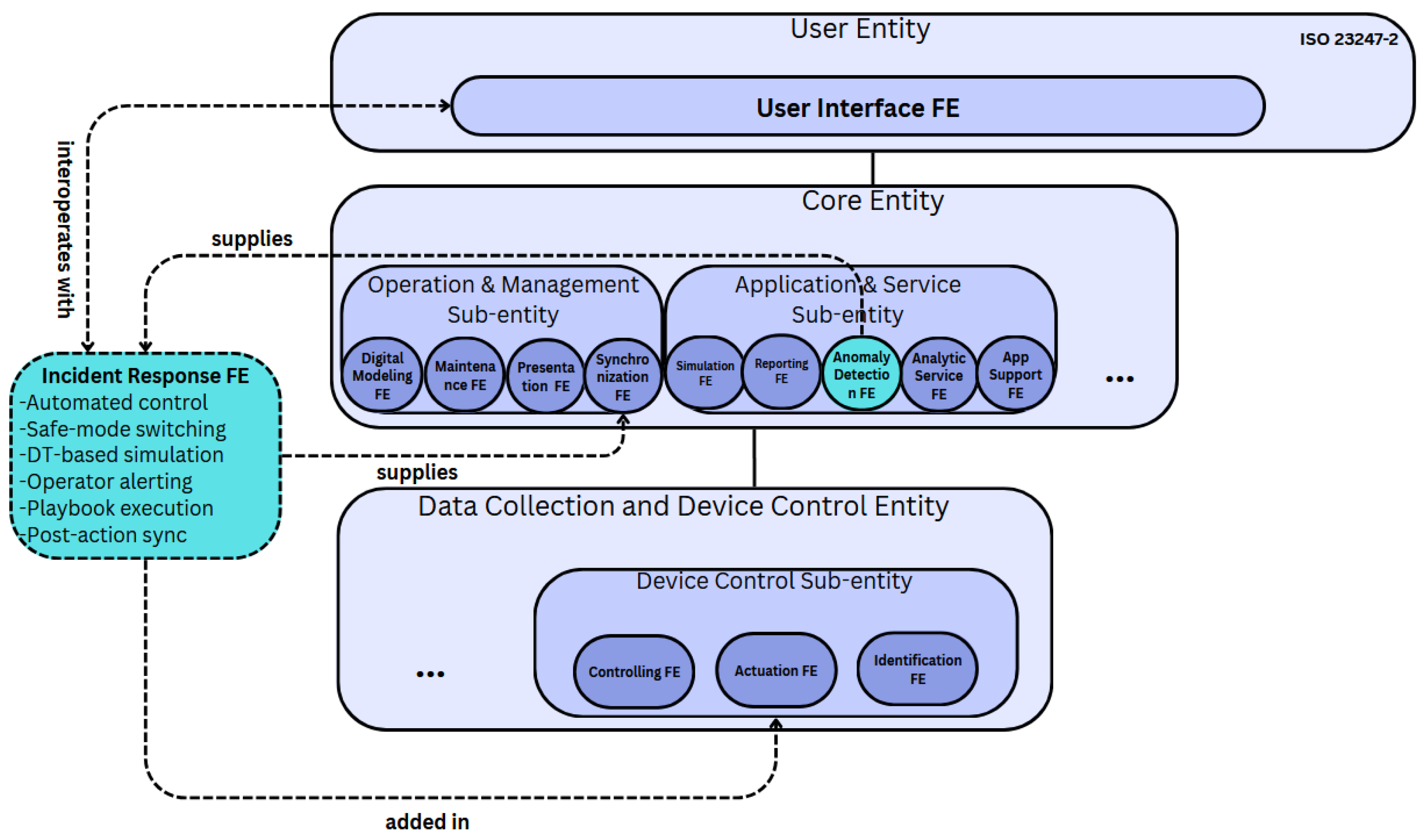
Detection is only half of the cybersecurity loop. The framework should also include incident response mechanisms to swiftly mitigate or contain attacks once detected. In the ISO 23247 architecture, this functionality corresponds to the device control sub-entity of the DCDCE, which is responsible for transmitting commands and adjustment values back to the physical system. Within the DCDCE, we leverage this sub-entity to enact response measures on the industrial process. In the proposed framework, when an anomaly is confirmed as a security incident, the system can issue appropriate control actions via the DCDCE’s Controlling and Actuation FEs, effectively enabling the DT to intervene in the physical process. This typically involves commands to isolate a compromised device, adjust process set-points, or switch to a safe mode of operation, which is analogous to an automated ICS incident response.
Our approach is strengthened by the integration of the DT’s predictive capabilities into the response loop. Before executing any drastic action on the real system, the DT can simulate the response scenario using the CE’s Simulation FE. This allows “what-if” analysis of various countermeasures in the virtual model before deployment. For example, if a sensor is suspected to be spoofed, the twin can be used to virtually disable that sensor and observe the impact on the process, helping determine a safe mitigation strategy. Only after verifying the outcome within the DT environment does the framework issue commands to the actual process, such as ignoring a compromised sensor or shutting down a related actuator. This DT-driven response planning is a novel extension consistent with ISO 23247’s modular architecture, through the utilization of the CE’s computation power while relying on the DCDCE for execution.
The proposed incident response FE also interfaces with the ISO 23247 UE, which represents higher-level user applications and interfaces. Upon detecting an incident, the framework immediately raises alerts to human operators or security personnel through the UE’s visualization and Human-Machine Interface (HMI) components. The CE’s Operation & Management sub-entity also includes a Presentation FE that creates user interfaces for data visualization, which fulfills a similar role to the UE’s interface in the ISO model. Operators can view anomaly alerts and system status via dashboards, like Kibana [
85] that highlight the twin–physical discrepancies. The integration with operator tools aligns with ISO’s notion of the UE using DT data for decision support. Additionally, the framework can follow predefined incident response playbooks, mapping detected attack types to specific response workflows. These playbooks can be informed by industry standards, such as actions aligned with ISA/IEC 62443 [
17] guidelines for industrial incident response.
All response actions, whether automated or manual, are logged and fed back into both the physical system and its DT: the DCDCE relays any control actions to the physical equipment while the twin updates its state to reflect those interventions, maintaining post-incident alignment. Verifiability is enforced at two levels. First, every candidate response is exercised in the DT using the CE’s Simulation FE before any actuation command is sent to the DCDCE, ensuring that process and safety constraints are not violated under the proposed mitigation. Second, each automated response workflow is encoded as an explicit playbook with preconditions, postconditions, and human-override checkpoints, aligned with industrial guidance such as ISA/IEC 62443 for incident response in safety-critical environments. All executed actions and their justifications are surfaced through the UE and CE presentation FEs, providing an auditable trail for post-incident review. The closed-loop design guarantees that the DT remains an accurate representation even as the system undergoes rapid changes during incident handling.
Figure 8 illustrates the incident response FE as a multi-entity mechanism that bridges the CE’s Synchronization FE, the DCDCE’s Device Control sub-entity, and the user interface FE. This figure highlights the framework’s modular response loop, which leverages DT foresight while ensuring safe interaction with the physical process.
6.6. Overview
Throughout the design of the cybersecurity-centric DT framework depicted in
Figure 11, we have ensured a tight alignment with ISO 23247, a foundational standard for DT reference architectures in manufacturing. This deliberate approach, detailed across this section, serves a dual purpose: it guarantees consistency with established DT principles while simultaneously extending the framework’s capabilities to directly address modern industrial cybersecurity challenges. By formally mapping each of our four proposed FEs (Data Ingestion & Synchronization, Anomaly Detection, Incident Response, and Adaptive Learning) to specific ISO 23247 entities and their respective functionalities, we have created a robust, yet modular, architecture. This structure avoids the need to reinvent the core DT model, instead providing a clear and standardized method for enhancing it with essential security features.
The framework’s strength lies in its ability to operationalize the security requirements identified in
Section 5. For instance, the Data Ingestion & Synchronization FE, realized within the DCDCE, addresses the need for secure, low-latency data flow (NFR1, SR2, SR4), which is often a point of failure in less-structured systems. Similarly, the Anomaly Detection FE, housed in the CE, fulfills the core functional requirements of real-time threat identification (FR1, SR1), leveraging ML models to achieve a low false positive rate (NFR3). This clear separation of concerns, consistent with the ISO 23247-2 standard, ensures that security analytics are non-intrusive to real-time physical control.
The Incident Response FE demonstrates the framework’s proactive nature by using the DT’s predictive capabilities to simulate and validate countermeasures before execution on the physical asset. This crucial step, which leverages the CE’s simulation capabilities and the DCDCE’s control functions, directly addresses the need for isolated response testing (SR3). Finally, the Adaptive Learning FE ensures the framework’s long-term viability by enabling continuous model refinement and adaptation to evolving threats, thereby addressing scalability (NFR2) and configurability (DR3). This continuous feedback loop transforms the DT from a static replica into an intelligent, self-improving guardian of the industrial environment.
In summary, the proposed framework embodies a convergence of best practices from both DT architecture and industrial cybersecurity. The formal alignment with ISO 23247 not only facilitates clarity and consistency in its design but also provides a clear pathway for practical adoption and implementation in real-world industrial settings. It offers a tangible model for achieving next-generation cybersecurity resilience and serves as a blueprint for safeguarding CI in an increasingly interconnected and threat-prone landscape.
To illustrate the practical potential of the proposed framework, we consider its application to widely used ICS testbeds such as SWaT [
87] and WADI [
88]. These datasets capture realistic water treatment and distribution processes under both normal and attack scenarios, making them suitable proxies for CI environments. Within this context, the Data Ingestion & Synchronization FE would align the DT with raw telemetry streams, while the Anomaly Detection FE would employ ML-based models to distinguish legitimate process variations from injected attacks. Moreover, the Incident Response FE could then be validated by simulating containment strategies such as isolating compromised pumps or reverting unauthorized set-point changes, first within the DT environment before issuing real-world control actions. Finally, the Adaptive Learning FE would leverage repeated exposure to diverse attack scenarios in these datasets to refine detection thresholds and response playbooks over time.
For anomaly detection on SWaT and WADI, the framework would employ a combination of unsupervised and supervised ML algorithms to balance generalization and accuracy. Unsupervised models such as autoencoders and one-class SVMs would learn normal operational patterns from clean segments of the datasets, flagging deviations without requiring extensive attack labels. In parallel, supervised classifiers like Random Forests, SVMs, or LSTMs could be trained on labeled attack scenarios to capture domain-specific threats more effectively. Detection performance would be evaluated using standard metrics such as precision, recall, F1-score, and ROC-AUC, alongside operationally critical measures including false positive rate (targeting <2%) and detection latency.
While this use case remains theoretical, it demonstrates how the framework could be instantiated and experimentally validated in controlled settings, providing a foundation for future empirical research and real-world deployments.
7. Conclusions
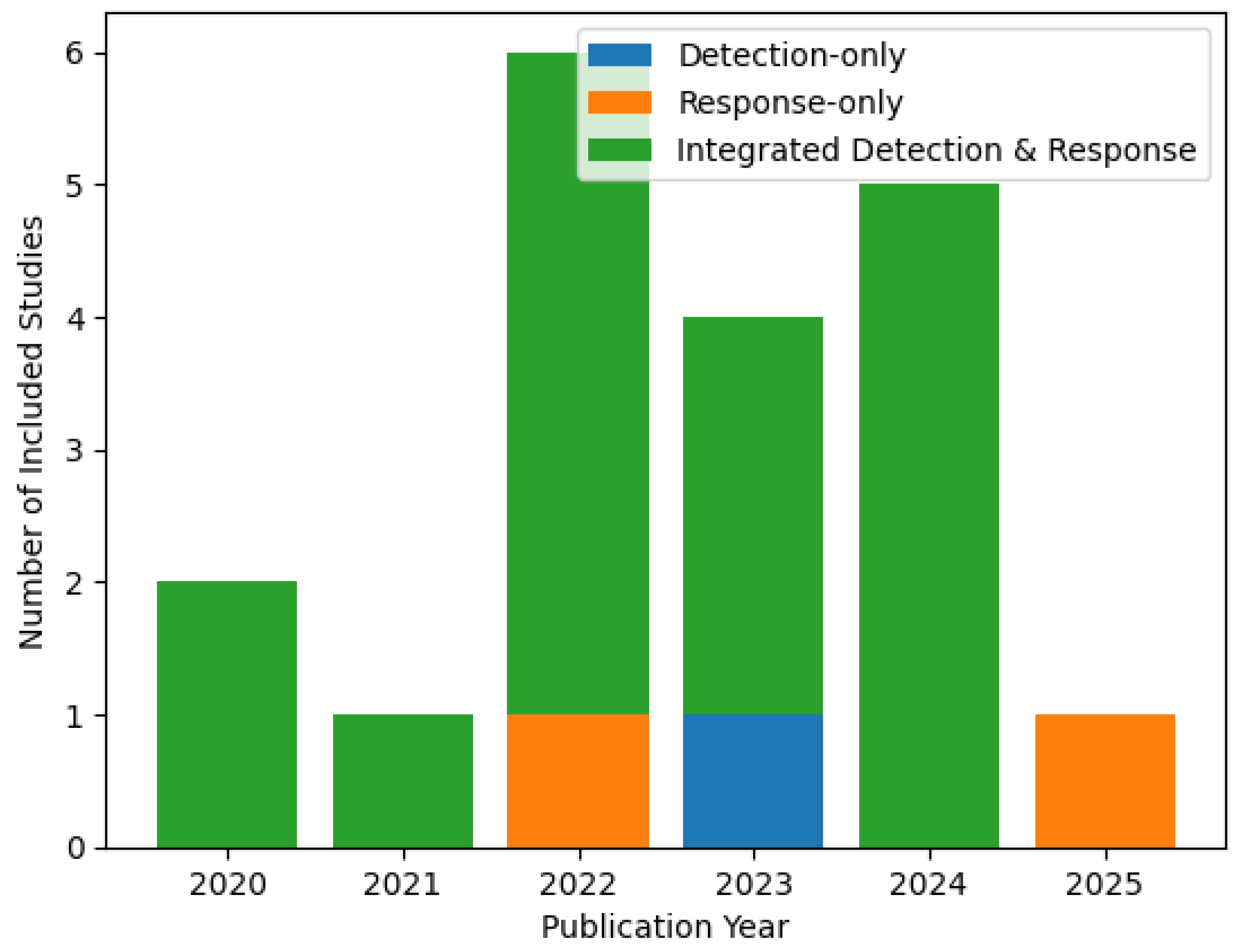
This study systematically investigated how DTs can be engineered to strengthen cybersecurity incident detection and response in industrial environments. A systematic review of 19 works published between 2020 and 2025 revealed common design patterns, like real-time anomaly detection, AI-assisted response, and simulation-based testing, alongside notable gaps, such as limited end-to-end validation, insufficient integration with legacy OT, and fragmented adherence to security standards. Building on this evidence, we distilled a consolidated set of functional, non-functional, security-specific, and domain-specific requirements. These requirements were then translated into a structured, ISO 23247-aligned CS-DT framework. The proposed framework integrates edge analytics, autonomous playbooks, forensic logging, and role-based access control, while remaining modular enough to plug into existing industrial stacks without requiring a full overhaul.
Our findings confirm a clear trend: a shift from static DT replicas toward adaptive, AI-enabled twins capable of closing the loop from detection to mitigation. Despite this progress, the survey part of this work underscores ongoing challenges in achieving interoperability, a deficiency in performance assessments anchored in benchmarks, and limited deployment of real-world testbeds. These issues must be resolved to truly enhance the cyber-resilience of OT environments leveraging DTs.
The proposed design mitigates several deficiencies in existing DT-based security frameworks, but significant avenues for future exploration remain. The framework’s design is based on a specific literature set, and its practical interoperability with the wide range of legacy OT protocols requires further investigation. Subsequent studies should prioritize instantiating and validating the framework using benchmark ICS testbeds such as SWaT and WADI. This includes assessing how the Data Ingestion & Synchronization FE manages complex telemetry streams, testing the effectiveness of ML-based Anomaly Detection under diverse attack scenarios, and evaluating the safety and reliability of DT-driven Incident Response strategies before deployment. Future work should also explore how Adaptive Learning can refine detection thresholds and response playbooks over time, ensuring resilience against novel threats. Such testbed-driven validation will provide empirical grounding for the framework and pave the way for its integration into real-world CI environments.
From a practical perspective, the proposed framework offers implementation guidance for industrial cybersecurity practitioners by formalizing the integration of data ingestion, anomaly detection, incident response, and adaptive learning within a standards-aligned DT architecture. It provides a structured pathway for reducing detection latency, improving containment reliability, and enabling safe validation of response strategies in replicated environments. These implications support both industrial operators seeking operational resilience and system designers aiming to embed security-by-design principles in DT deployments.
In light of increasingly complex cyber threats and the evolution of industrial systems, DTs represent a formidable foundation for developing adaptive, intelligent, and context-conscious defense strategies. The work at hand advances that vision by bridging the gap between theoretical constructs and practical execution, offering a tangible model for next-generation cybersecurity resilience in industrial sectors. With further enhancements and stringent validation, CS-DTs may soon serve as an essential component in safeguarding CI.