Article

HSE-GNN-CP: Spatiotemporal Teleconnection Modeling and Conformalized Uncertainty Quantification for Global Crop Yield Forecasting


by
Salman Mahmood
1,
Raza Hasan
2,* and
Shakeel Ahmad
2
1
Department of Computer Science, Nazeer Hussain University, ST-2, Near Karimabad, Karachi 75950, Pakistan
2
School of Technology and Maritime Industries, Southampton Solent University, Southampton SO14 0YN, UK
*
Author to whom correspondence should be addressed.
Information 2026, 17(2), 141; https://doi.org/10.3390/info17020141
Submission received: 10 December 2025 / Revised: 15 January 2026 / Accepted: 27 January 2026 / Published: 1 February 2026

Abstract

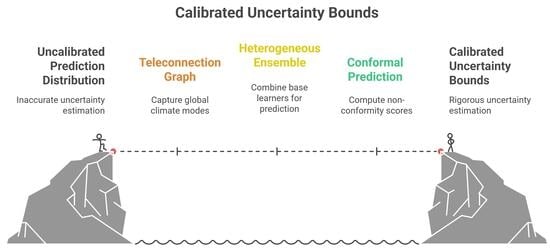
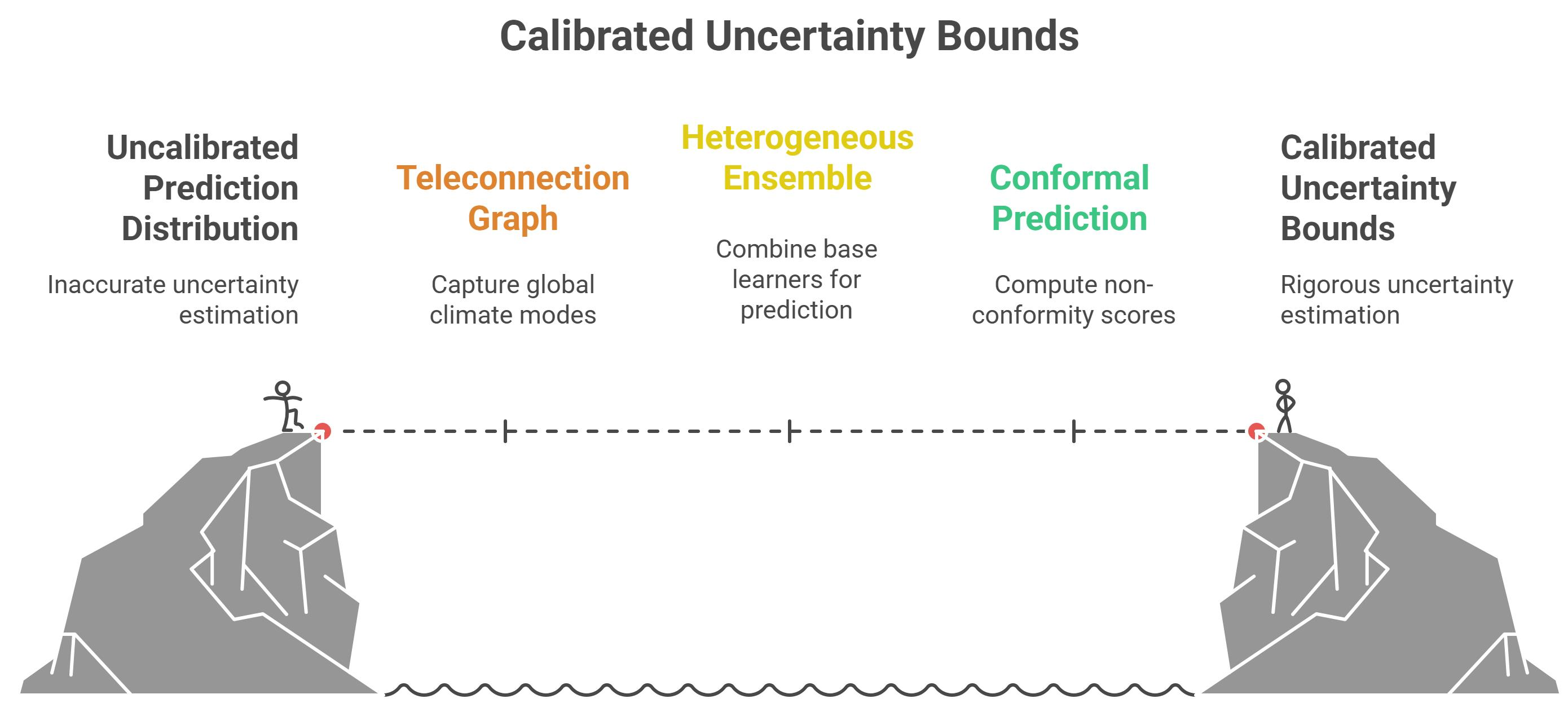
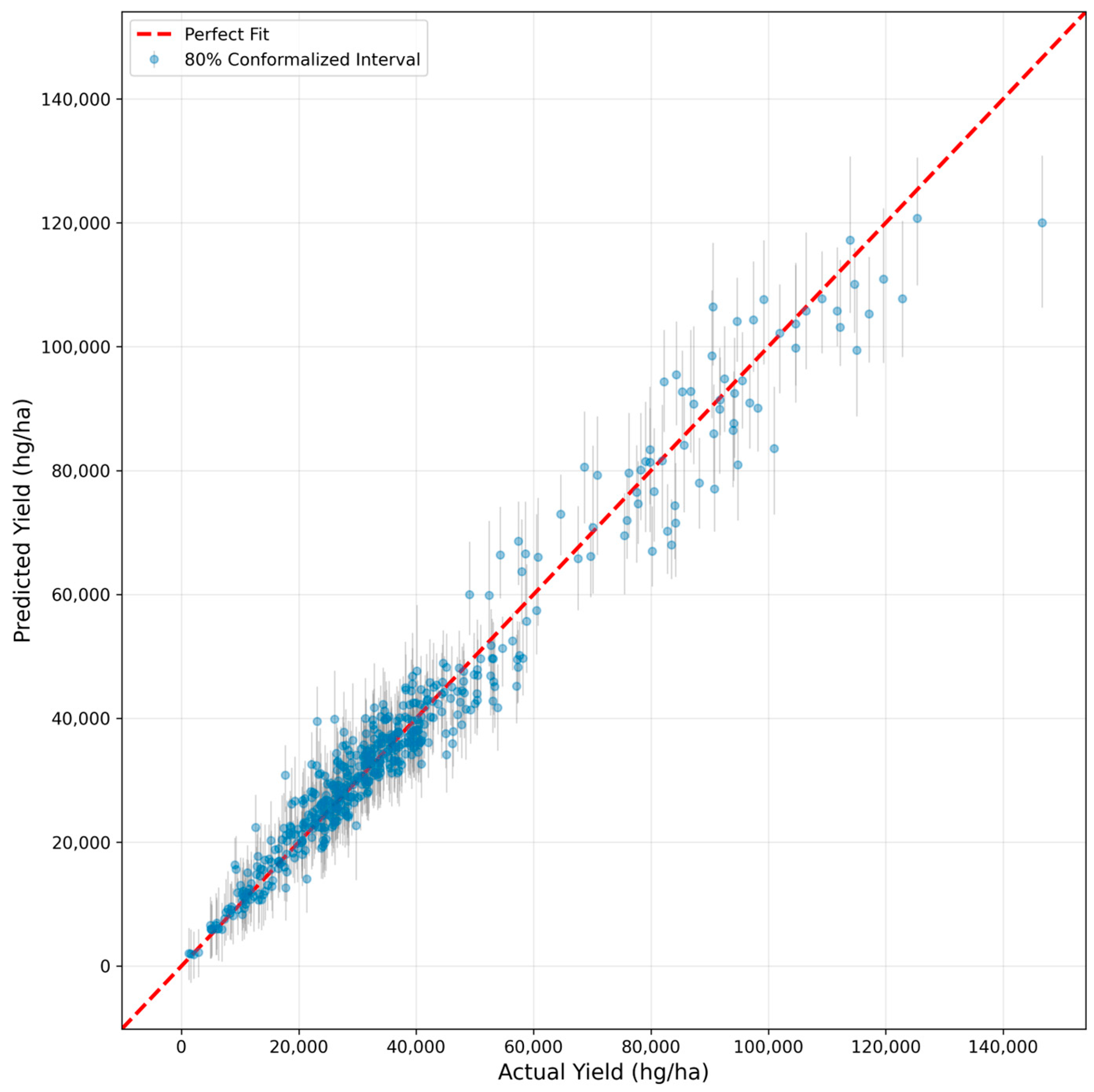
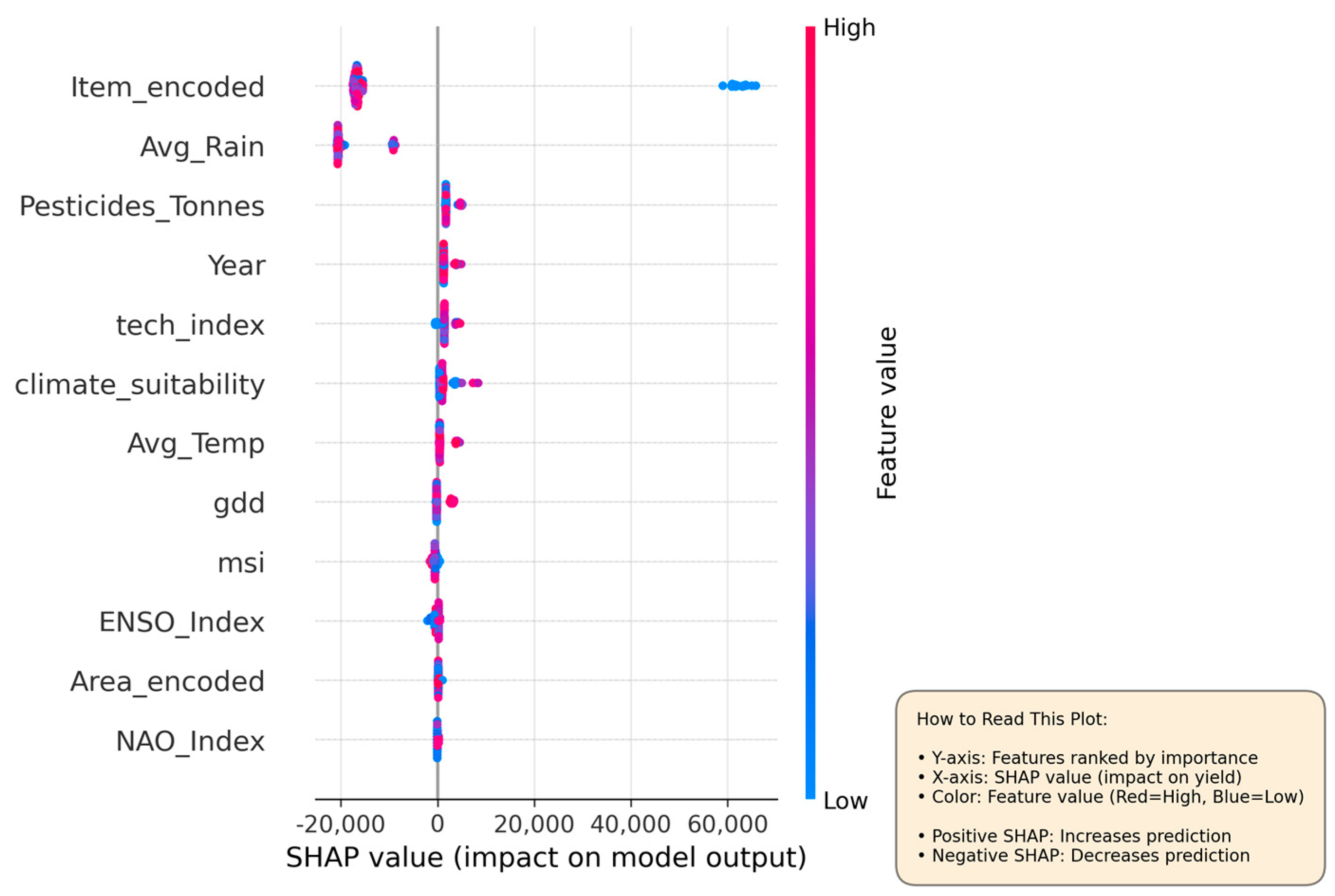
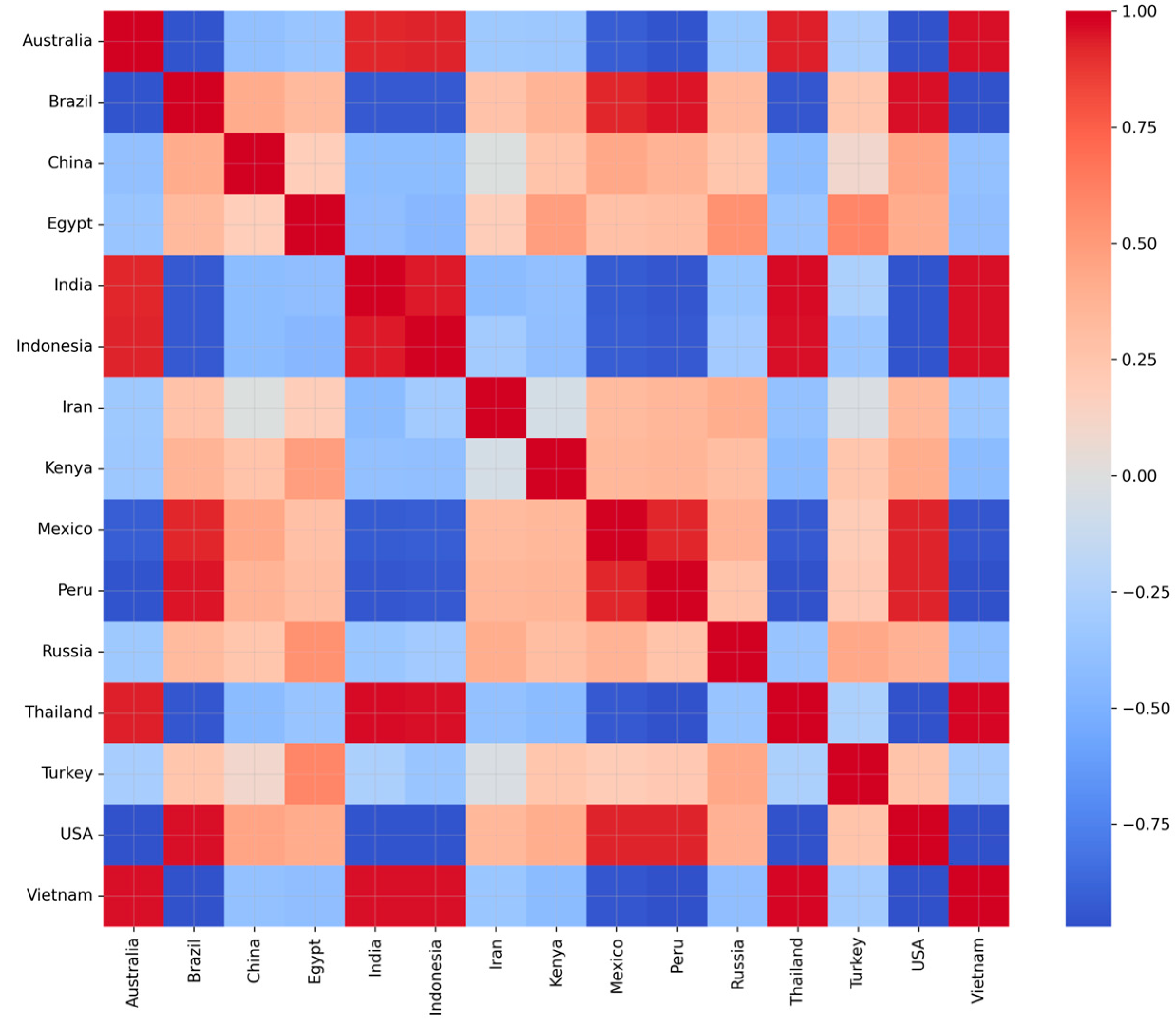
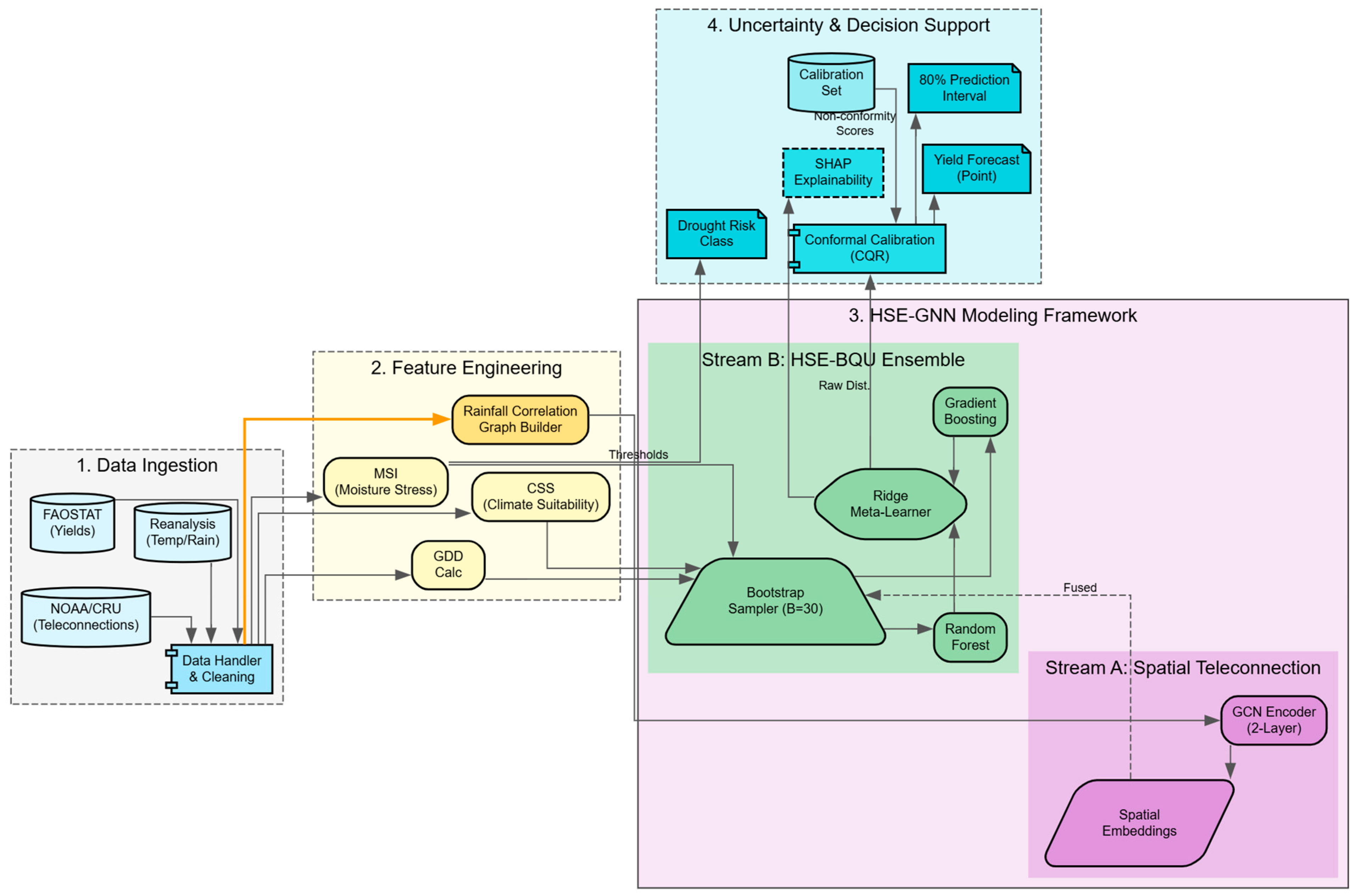
Global food security faces escalating threats from climate variability and resource constraints. Accurate crop yield forecasting is essential; however, existing methods frequently overlook complex spatial dependencies driven by climate teleconnections, such as the ENSO, and lacks rigorous uncertainty quantification. This paper presents HSE-GNN-CP, a novel framework integrating heterogeneous stacked ensembles, graph neural networks (GNNs), and conformal prediction (CP). Domain-specific features are engineered, including growing degree days and climate suitability scores, and explicitly model spatial patterns via rainfall correlation graphs. The ensemble combines random forest and gradient boosting learners with bootstrap aggregation, while GNNs encode inter-regional climate dependencies. Conformalized quantile regression ensures statistically valid prediction intervals. Evaluated on a global dataset spanning 15 countries and six major crops from 1990 to 2023, the framework achieves an R2 of 0.9594 and an RMSE of 4882 hg/ha. Crucially, it delivers calibrated 80% prediction intervals with 80.72% empirical coverage, significantly outperforming uncalibrated baselines at 40.03%. SHAP analysis identifies crop type and rainfall as dominant predictors, while the integrated drought classifier achieves perfect accuracy. These contributions advance agricultural AI by merging robust ensemble learning with explicit teleconnection modeling and trustworthy uncertainty quantification.
Keywords: crop yield forecasting; conformal prediction; graph neural networks; climate teleconnections; uncertainty quantification; ensemble learning agricultural AI; ENSO; explainable AI crop yield forecasting; conformal prediction; graph neural networks; climate teleconnections; uncertainty quantification; ensemble learning agricultural AI; ENSO; explainable AI
Graphical Abstract