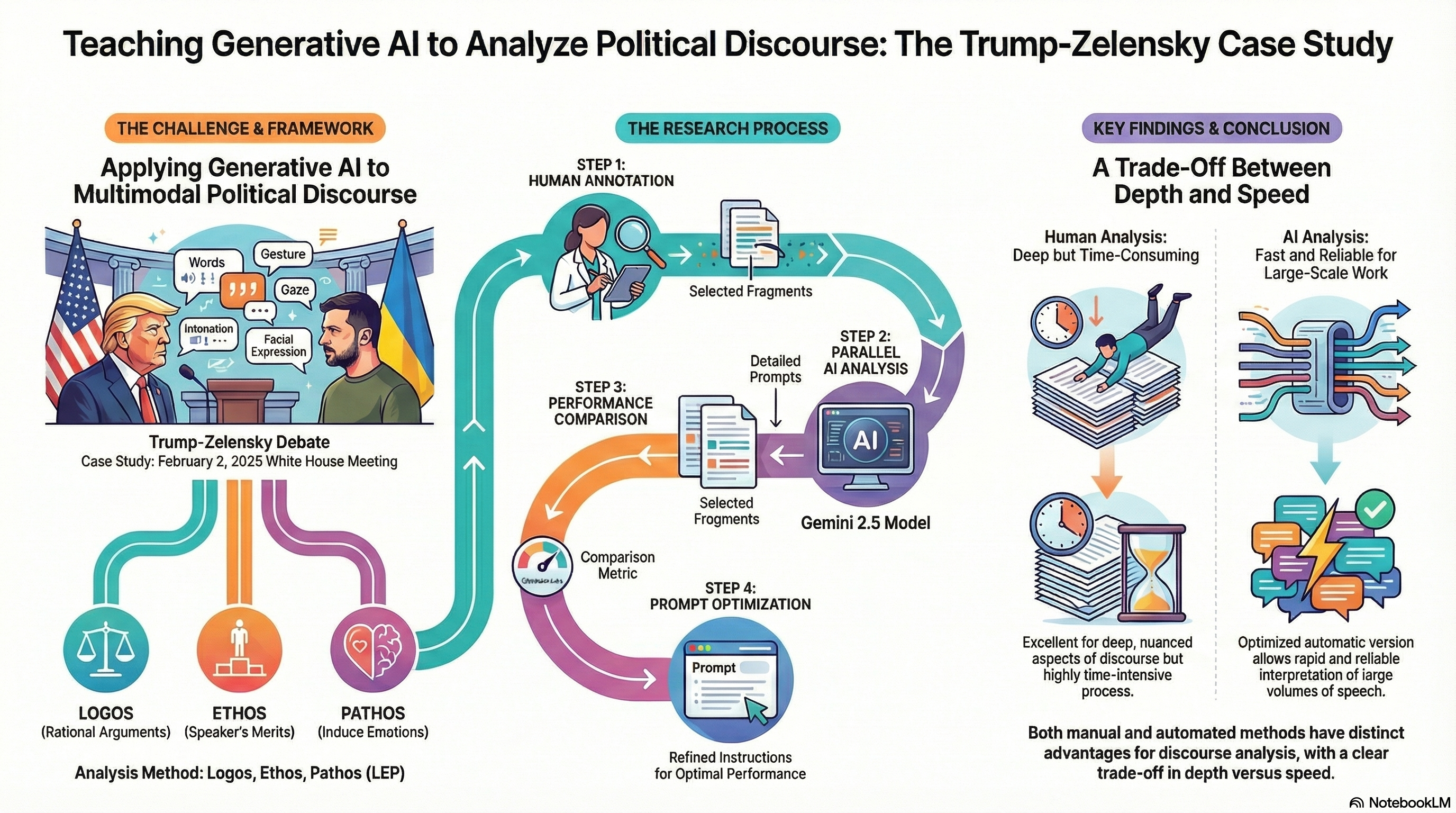


The Ten Minutes That Shocked the World—Teaching Generative AI to Analyze the Trump–Zelensky Multimodal Debate
 , and
, and Abstract
Share and Cite
Poggi, I.; Scaramella, T.; Violini, S.; Careri, S.; Epure, M.D.; Dragoni, D. The Ten Minutes That Shocked the World—Teaching Generative AI to Analyze the Trump–Zelensky Multimodal Debate. Information 2026, 17, 136. https://doi.org/10.3390/info17020136
Poggi I, Scaramella T, Violini S, Careri S, Epure MD, Dragoni D. The Ten Minutes That Shocked the World—Teaching Generative AI to Analyze the Trump–Zelensky Multimodal Debate. Information. 2026; 17(2):136. https://doi.org/10.3390/info17020136
Chicago/Turabian StylePoggi, Isabella, Tommaso Scaramella, Sissy Violini, Simona Careri, Maria Désirée Epure, and Daniele Dragoni. 2026. "The Ten Minutes That Shocked the World—Teaching Generative AI to Analyze the Trump–Zelensky Multimodal Debate" Information 17, no. 2: 136. https://doi.org/10.3390/info17020136
APA StylePoggi, I., Scaramella, T., Violini, S., Careri, S., Epure, M. D., & Dragoni, D. (2026). The Ten Minutes That Shocked the World—Teaching Generative AI to Analyze the Trump–Zelensky Multimodal Debate. Information, 17(2), 136. https://doi.org/10.3390/info17020136