Article

Development and Accessibility of the INCE App to Assess the Gut–Brain Axis in Individuals with and Without Autism


by
Agustín E. Martínez-González
Department of Developmental Psychology and Didactics, Education Faculty, University of Alicante, Calle Aeroplano, 03690 Alicante, Spain
Information 2026, 17(1), 104; https://doi.org/10.3390/info17010104
Submission received: 12 November 2025 / Revised: 9 January 2026 / Accepted: 15 January 2026 / Published: 20 January 2026
(This article belongs to the Special Issue Information Technology in Society)

Abstract

In recent years, there has been increasing interest in the study of the gut–brain axis. Furthermore, there appears to be a relationship between abdominal pain, selective eating patterns, emotional instability, and intestinal disorders in Autism Spectrum Disorder (ASD). This work describes the development and accessibility evaluation of the INCE mobile app. This mobile app allows users to obtain levels of gut–brain interaction severity using two scientifically proven scales: The Gastrointestinal Symptom Severity Scale (GSSS) and the Pain and Sensitivity Reactivity Scale (PSRS). The validity of both instruments was established in previous studies in neurotypical and autistic populations. Statistically significant improvements were found following post-design changes in the use and accessibility of the INCE app (.NET Maui 9 Software) reported by professionals (p = 0.013), families (p = 0.011), and adolescents (p = 0.004). INCE represents an important contribution to evidence-based applications and clearly translates into society.

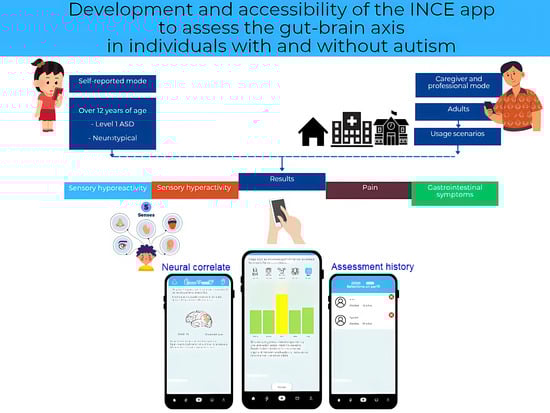
Graphical Abstract

1. Introduction

The scientific community is increasingly interested in the relationship between the gut and the brain. It appears that there is comprehensive communication between the neural, immune, and metabolic pathways via the gut–microbiota–brain axis [1]. The manifestations of this gut–brain axis are detected through the behaviours and emotions a person may have towards environmental stimuli (e.g., smells, tastes, textures, visual aspects, etc.) [2]. Thus, these behaviours show the level of sensory reactivity. In addition, negative behaviour or emotions (e.g., irritability, loneliness, or sadness) may appear when the person is hungry and unable to eat [3]. When hungry, pupillary dilation responses are more intense, even to neutral, non-food-related stimuli. In general, there is a greater intensity and arousal to the stimuli. The person is more alert and has more memory [4].
On the other hand, emotional instability, gastrointestinal symptoms, and intestinal dysbiosis are three factors that may be involved in the gut–microbiota–brain axis through the enteric nervous system [1]. Moreover, both sensory reactivity [5] and behaviour or emotions [6,7] have an associated neural correlate. Therefore, in the gut–microbiota–brain axis, there are multiple related factors to consider.
One of the symptoms most associated with a problem in the gut microbiota is the occurrence of gastrointestinal symptoms [8]. Gastrointestinal symptoms are related to an increase in the frequency of visits to the doctor’s office and a poor quality of life [9] and psychosocial difficulties [10]. Gastrointestinal symptoms may occur in 50% of the neurotypical population, and are more common in women [9]. Between 9.9% and 29% of typically developing children and adolescents may present with gastric problems, and over 40% in adults [9,11,12]. However, the prevalence of gastrointestinal symptoms is higher in individuals with a neurodevelopmental disorder. In this sense, Autism Spectrum Disorder (ASD) is a neurodevelopmental disorder characterised by communication difficulties and repetitive behaviour at a very early age [13], and those with ASD have been reported to be 40% and 70% more likely to have gastrointestinal symptoms [14,15].
Among other factors, gastrointestinal symptoms are closely associated with the onset of selective or restrictive eating behaviours (e.g., picky eating). This is a behaviour that may be common in individuals with ASD [16]. Therefore, nutritional factors and dietary patterns can influence the increased activity of certain neurotransmitters, such as serotonin, noradrenaline, etc., in individuals with ASD. Furthermore, there is a neural correlation between these neurotransmitters and the psychological development of individuals with ASD [17]. In addition, gastrointestinal symptoms, such as abdominal discomfort and constipation, have been associated with anxiety and sensory difficulties in ASD [18,19].
Recurrent gastrointestinal symptoms (constipation, abdominal pain, etc.) without organic cause are the result of impaired communication in the brain–gut axis. This is the proposal based on the Rome IV criteria, which defines this set of symptoms within the category of disorders of gut–brain interaction (DGBI), which includes Irritable Bowel Syndrome (IBS) and Functional Dyspepsia (FD) [20].
One of the major concerns for families with children with ASD is the difficulty they have in managing anxiety situations that can arise for different reasons. One of these is heightened anxiety before gastrointestinal symptoms such as constipation [21]. In addition, heightened sensory hyper-reactivity is a significant factor in parental stress [22,23].
At the clinical level, healthcare professionals traditionally use psychometric tests, biological analysis, neuroimaging, etc., as complementary tools that aid in the diagnosis of certain physical or mental disorders. In the field of autism research, it has been necessary to develop specific psychometric instruments to analyse the severity of gastrointestinal symptoms, pain, and sensory reactivity as variables involved in the gut–brain axis [24,25]. In this regard, there are several limitations in the tools used to assess sensory reactivity in autism, including the fact that the collaboration of stakeholders (e.g., primary caregivers) has not been considered [26], and for measures of gastrointestinal symptoms, the new Rome IV criteria are not used [20]. Furthermore, age, gender, the presence of intellectual disability (ID) in the person with ASD, and the person who is reporting the data (e.g., caregiver versus self-reported) are moderating variables in clinical assessment that have not always been taken into account in other validation studies [27]. Recently, psychometric instruments have been developed and validated to overcome all of the aforementioned limitations, with the aim of indirectly analysing brain–gut interaction in humans [25]. In this sense, new technologies can facilitate work in both the assessment and intervention of ASD.

1.1. Technology and Autism Spectrum Disorder

mHealth, or mobile health, is a term referring to the integration of mobile technology into healthcare practices. Following the COVID-19 pandemic, there has been an increase in the development of apps for healthcare and educational purposes [28]. Information and communication technologies (ICT) are increasingly being employed to improve the quality of life of individuals with ASD. Serious games, wearables, robots, etc., are being used more and more in research and are gradually being introduced into the daily lives of individuals with autism [29,30]. Among the advantages of using mobile phones is their ability to provide immediate and personalised information [31]. A recent review study on apps used in autism points out that autism support apps are designed to help individuals with ASD learn one or more specific skills (reading, maths, social communication skills). Examples of an app to improve communication in ASD would be PlanTEA [32] and SimpleTEA [33], or to improve psychomotor skills, the PuzzleWalk app [34]. Similarly, there are support apps to teach parents how to care for their children with ASD, and to train teachers who have students with ASD. Another group of apps focuses on data collection for doctors and autism researchers. However, most autism apps are intervention and educational apps [31].
Currently, there are very few evidence-based applications with a psychometric basis for the detection and assessment of ASD. Some precedents include the COREAT application (.NET Maui 9 Software), which measures the severity of repetitive behaviour in individuals suspected of having ASD, diagnosed with autism, and/or with intellectual disabilities [35]. On the other hand, there are no evidence-based apps that use scales to assess and monitor gastrointestinal symptoms, pain, and reactivity in autism and neurotypical individuals. Some mobile apps analyse the sensory reactivity of individuals with autism. However, these apps may contain scales that have not been psychometrically validated [31].

1.2. INCE App: System Description

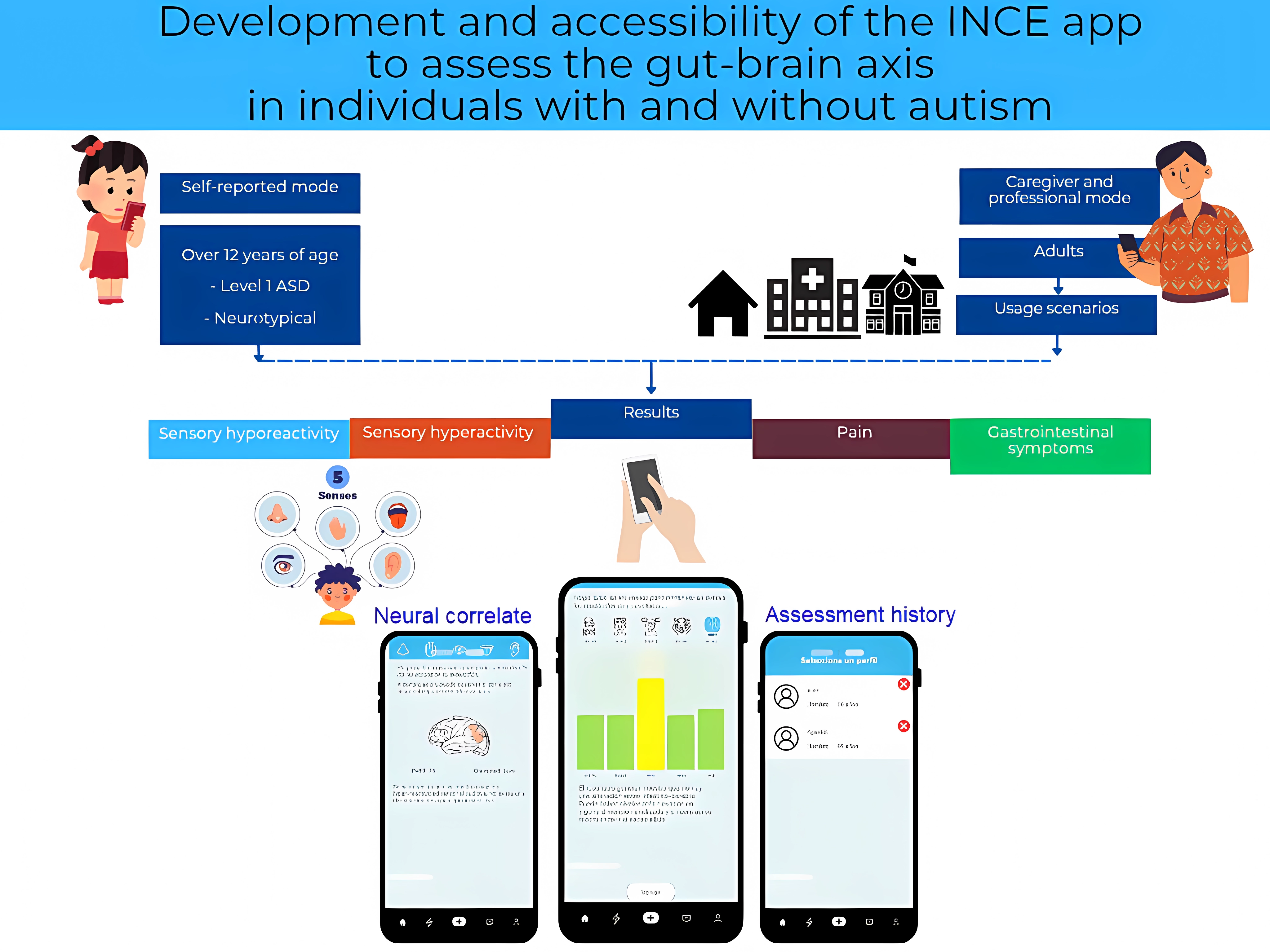
INCE is the acronym for IN, which means intestine in Spanish, and CE, which means brain in Spanish. The INCE app assesses the severity of gastrointestinal symptoms using the Gastrointestinal Symptom Severity Scale (GSSS) based on Rome IV criteria, and pain reactions and sensory reactivity using the Pain and Sensitivity Reactivity Scale (PSRS) in individuals with and without ASD [24,25]. Sensory reactivity is assessed by evaluating the severity of sensory hypo-reactivity and sensory hyper-reactivity in each of the senses (sight, hearing, smell, touch, and taste). The app has two modes of use depending on the informant: (1) caregiver or professional mode, where the person reports sensory reactions, pain tolerance level, and severity of gastrointestinal symptoms in children and adults with ASD between the ages of 3 and 60; and (2) a self-reporting mode that can be used by individuals aged 12 and older, both neurotypical individuals and individuals with Level 1 ASD. Currently, the app’s user interface is in Spanish, although future versions will offer multilingual support as the instruments are validated in other countries.
The INCE app allows users to track sensory reactivity, pain, and gastrointestinal symptoms by registering their name, gender, and age. Similarly, the professional can create an identification code for each case instead of entering the name. On the other hand, the app’s self-reporting mode does not include the personal code registration feature, and clinical data is recorded in the user’s app. Each time the complete test is completed, the date of the test is recorded in the history. The history file has two sections: (1) ‘my self-assessments’, which corresponds to the self-reporting mode; and (2) ‘case history’, which corresponds to the mode for caregivers and professionals (See Figure 1). Similarly, the INCE app interface allows you to delete assessments stored in the history file for both modes of use.
The app can be used in educational centres, medical centres, and at home. The INCE app allows for the detection of symptoms related to the gut–brain axis and is a complementary assessment tool at a medical, psychological, and educational level. Currently, there is no cloud server where the app user’s personal and clinical data is stored. All information remains in the mobile phone’s internal storage, ensuring privacy. Therefore, it is up to the user to decide whether or not to share this information with professional staff.
Information about the General Data Protection Regulation (GDPR) (Regulation 2016/679) of the European Parliament is provided in the mobile app in the ‘Research’ section, which states the following: “This questionnaire does not allow personal data to be included. The general data provided will be completely anonymous. Similarly, the numerical data obtained will not be stored in any database for research purposes”.
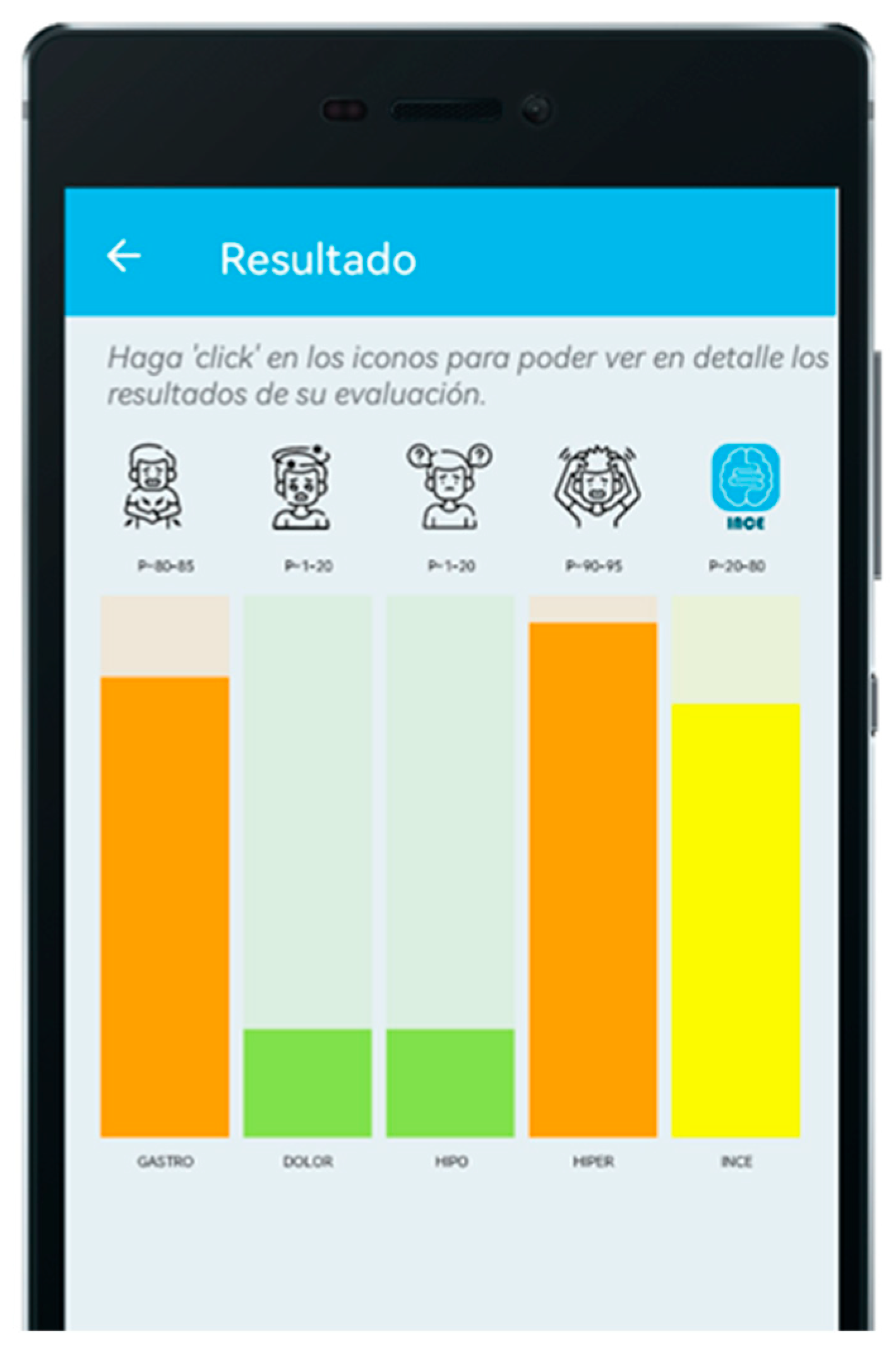
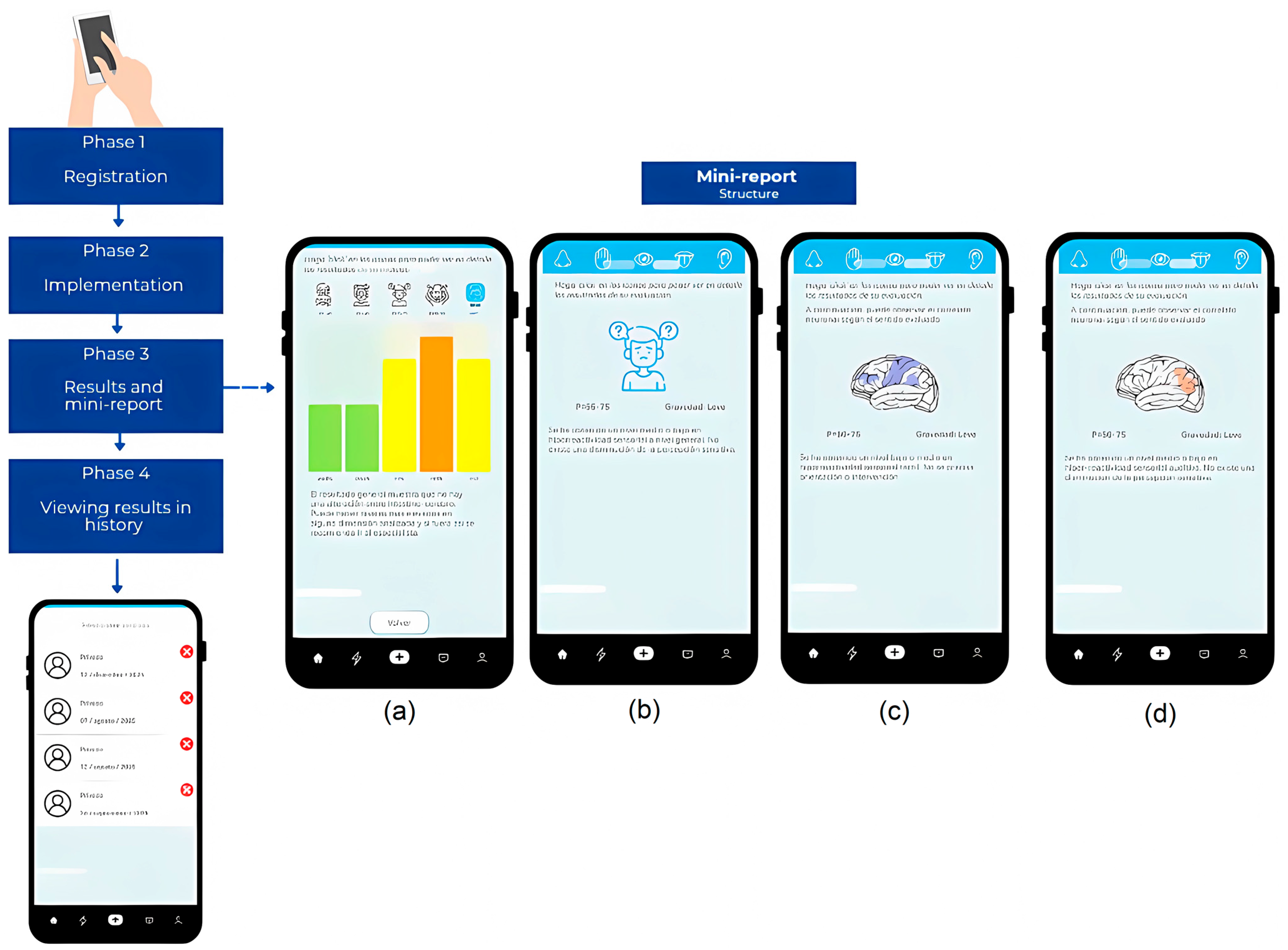
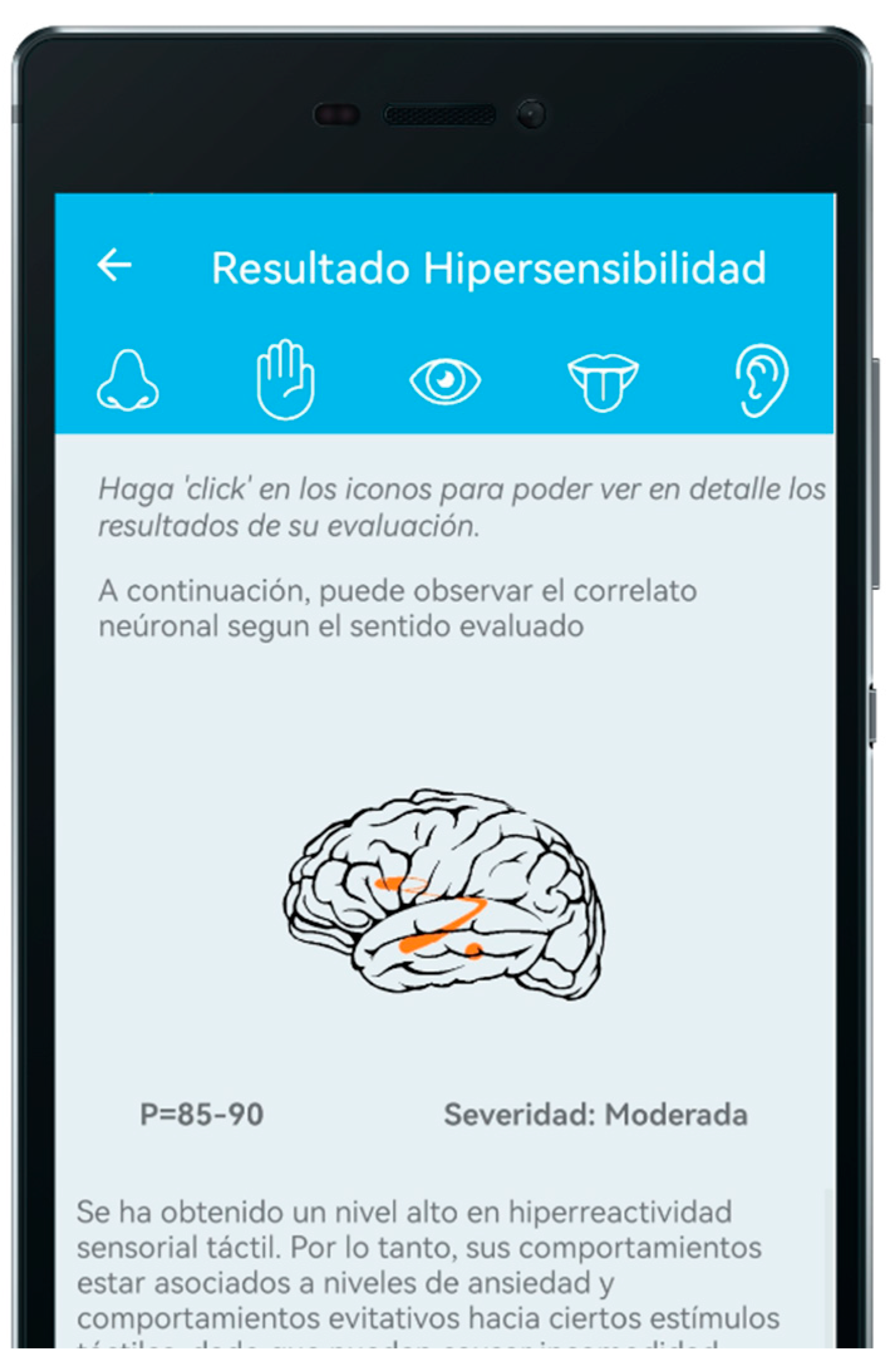
Finally, the application generates a mini-report showing the percentiles obtained in each sensory dimension (smell, hearing, taste, touch, and sight) of sensory reactivity for hypo- and hyper-sensory reactivity, pain, and gastrointestinal symptoms. Four types of colours are associated with each degree of symptom severity. Green indicates that there is no problem, yellow indicates mild symptoms, orange indicates moderate symptoms, and red indicates severe symptoms. In the illustrations of the brain, blue is associated with sensory hypo-reactivity and red with sensory hyper-reactivity. The greater intensity of colour in a brain area indicates greater severity in that sensory dimension. The neural correlate of the brain area is based on previous meta-analysis studies in neuroimaging [36,37,38,39,40,41]. The mini-report describes the results and provides general guidance and recommendations, as well as a referral to a specialist (See Figure 2).
This article aims to show the process of evaluating the accessibility and development of the INCE mobile application.

2. Materials and Methods

2.1. Participants

2.1.1. Sample Used in the Prior Validation Study

Research manuscripts reporting on the psychometric validation of the instruments that are integrated in the INCE app, 265 individuals with ASD (Mean age = 9.44; SD = 4.99), 1242 children and adolescents (Mean age = 13.95; SD = 1.37), and 1122 neurotypical young adults (Mean age = 22.17; SD = 7.19 years) participated. In the description of the samples, there is a higher percentage of gastrointestinal symptoms in individuals with ASD, especially constipation. However, the percentages are similar between the groups for other gastrointestinal symptoms, such as diarrhoea, between the neurotypical adult group and the group with ASD (see Table 1).

2.1.2. Sample to Evaluate the Design and Accessibility of the INCE App

The accessibility of the INCE app was assessed by two families who had a child with autism, five professionals, and five neurotypical adolescents.

2.2. Measures

For the development of the INCE application, both the caregiver/professional version and the self-reporting version of the instruments detailed below were included, which were validated in previous studies.
Gastrointestinal Symptom Severity Scale (GSSS): The GSSS [25] is a seven-item instrument developed based on Rome IV criteria [42] to assess the main gastrointestinal symptoms. Each item is rated on a 4-point Likert scale, with 0 equivalent to no symptoms, up to 3 points for the most severe symptoms, which are more frequent and bothersome. The severity of gastrointestinal symptoms is assessed based on the intensity of discomfort, frequency, and negative impact on daily activities. The instrument demonstrated adequate test–retest reliability and strong convergent validity. The GSSS has excellent psychometric properties in the ASD and neurotypical population [25].
Pain and Sensitivity Reactivity Scale (PSRS): The PSRS [24] is an instrument for assessing pain and sensory stimuli through a total of 50 items. The PSRS has three subscales: pain reactivity, sensory hypo-reactivity, and sensory hyper-reactivity. Each item on the scale is rated on a four-point Likert scale, with 0 being no behaviour occurring and 3 being behaviour occurring and posing a serious problem. Internal consistency of the overall PSRS and its subscales has been assessed using Cronbach’s alpha, demonstrating good reliability when administered to a Spanish sample with ASD, with reliability coefficients of 0.83 for the pain subscale, 0.90 for broad sensory hypo-reactivity, and 0.93 for broad sensory hyper-reactivity. In this study, the ordinal alpha coefficients for each dimension were pain subscale (0.79), broad sensory hypo-reactivity (0.87), and broad sensory hyper-reactivity (0.94). The ordinal alpha for the total scale was 0.94. The dimensions of the PSRS have shown strong internal consistency in previous studies with neurotypical and ASD populations [24].
INCE app accessibility survey: The feasibility and acceptability of the INCE mobile application were analysed. To this end, comments from professionals, primary caregivers, and neurotypical adolescents were used. Similarly, the intention to use and acceptability of the mobile app were examined through an ad hoc survey. The survey contained 11 questions with a dichotomous response mode (yes = 1 point/no = 0 points). The questions were about the purpose of the mobile application (e.g., whether the purpose of the mobile application was appropriate, whether the test instructions were clear, etc.); usability (future use, sharing the app, etc.); structure (whether the response format was appropriate, etc.); design (whether the font size and colours were appropriate, etc.); and accessibility (whether the mobile app was intuitive and accessible). The survey took 5 min to complete.

2.3. Procedure

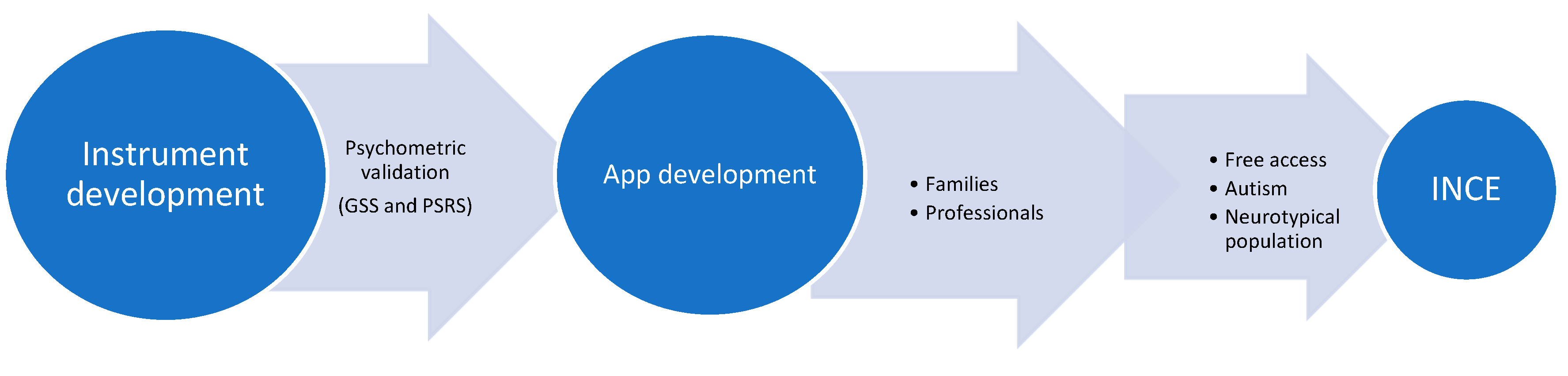
Figure 3 shows the comprehensive development model of the INCE app. Rounds of formative research were conducted as recommended by Arnab et al. [43]. At the professional level, the need to create an accessible and cost-effective resource for families and professionals was identified. Thus, the need to develop the INCE mobile application was identified as a way to transfer the resource to society. Usability tests and pilot tests were carried out to examine the acceptability to the main users.
Phase 1: Development of the instruments: This phase consisted of the development of both scales through an initial theoretical model [24,25].
The development of the instruments was carried out by a multidisciplinary team (two special education teachers, a paediatrician, a psychiatrist, a doctor of psychology, a neuropsychologist, and a doctor of chemistry). Initially, a bank of 110 situations on sensory reactivity and complaints of pain and gastrointestinal symptoms provided by the paediatric service and several centres with students diagnosed with ASD was created. After evaluating all the items, a total of seven items were selected that matched the Rome IV criteria for gastrointestinal symptoms and 50 for sensory reactivity, including pain situations. The description of each item was reviewed by experts in autism. Thereafter, the self-reported version of the questionnaires was administered to 10 typically developing individuals with adequate reading comprehension. The informants did not observe any difficulties in understanding the items. Similarly, the caregiver version of the instruments was completed by 11 families who had a child with ASD. The life experience of caregivers greatly helped to improve the items on the scale, because examples and clarifications were included for each item. Finally, the caregiver version of the caregiver instruments was developed, with a total of 50 items.
Phase 2: Recruitment of the sample: Families with children with ASD were recruited through 15 Spanish schools in the Valencia, Andalusia, and Murcia regions. The sample of neurotypical children and adolescents was recruited from nine secondary schools in the same regions. The young adult population was recruited in different Spanish universities in these communities.
A letter with information about the study was sent to a number of organisations and schools. The school headteachers informed families about the possibility of participating in the study through an online survey or a paper-and-pencil survey, both with the same questionnaires. The researchers held an online meeting or a phone call with the centres to explain the purpose of the research. Subsequently, the autism institutions contacted the families to arrange a meeting and explain the purpose of the study. Similarly, the heads of the secondary schools and departmental directors of the participating universities contacted the teaching staff to clarify the purpose of the research. An explanatory video about the study was sent out to raise awareness about the development of the INCE app.
The surveys were carried out under the supervision of the study researchers in the classrooms of the neurotypical pupils. In the case of caregivers of individuals with ASD, the survey was administered at the centre’s facilities, or the protocol was provided for them to complete at home. Any doubts that the family might have were answered by the psychologists of the participating centres and the researchers of the study.
Inclusion criteria: All individuals with ASD in the study had been assessed with standardised instruments for autism and met criteria for the diagnosis of ASD according to DSM-5 [13]. The ASD diagnosis was previously established by the neuropediatric services of the mental health centres in each area. Caregivers or families who had children with other neurodevelopmental disorders (e.g., ADHD) were excluded from the study.
Phase 3: Technological development of the app:
The INCE app was developed with NET MAUI technology over a period of 2 years. During this period, the design of other similar apps was analysed. A list of 10 limitations of these apps was drawn up, the main limitation being that the apps were not based on scientific evidence. As a scientific app precedent, the COREAT app [35] was taken as an initial reference, especially for the development of an accessible and intuitive preliminary menu, and for the elaboration of the results menu based on graphs with a mini-report (see Figure 4).
Design and aesthetics of the app: A search of the scientific literature was carried out to find out the areas of the brain associated with each sensory reaction. Subsequently, illustrations of the brain were created, and this task was carried out between the researchers of the study and the graphic designers. In addition, the computer team developed graphs indicating the level of severity of the symptoms, and the more severe the symptoms, the redder the colour. On the other hand, as for the illustrations of the brain and its neural correlates associated with sensory reactivity, etc., the colour red was associated with sensory hyper-reactivity and blue with sensory hypo-reactivity (see Figure 5). In addition, illustrations were created, and emoticons were chosen for each variable involved (sensory hypo-reactivity, sensory hyper-reactivity, pain, gastrointestinal symptoms, etc.). The logo design was defined after obtaining the results of a survey of university students.
Design of the mini-report section: After obtaining all the psychometric data for the ASD and non-ASD population, the percentiles associated with age, sex, and type of mobile app profile were included. Subsequently, different mini-report models were made according to the severity levels of the variables obtained. The mini-report shows the neurological correlates according to percentile scores for each user mode of the app (self-report and caregiver mode) for the variables of sensory reactivity, pain, and gastrointestinal symptoms. This mini-report according to the percentiles of each sample was elaborated by four experts (two physicians, one educational psychologist, and one neuropsychologist).
Accessibility design: Subsequently, an exhaustive evaluation and analysis of the app’s accessibility was carried out. In this process, two families with a child with autism; five professionals (one special education teacher, one psychologist, two neuropsychologists, one paediatrician–child psychiatrist), and five neurotypical adolescents participated. All the professionals who evaluated the app were experts with more than 10 years of experience in caring for individuals with ASD. The total evaluation time was 6 months. Among the tasks performed were to analyse (1) the accessibility of the flow of access to the menu; (2) the coherence of the results with the illustrations; (3) problems in the font size and clarity of the font; (4) whether there were problems in the line spacing or punctuation marks. Accessibility errors were detected and corrected through bi-directional communication between the research team and the technical team developing the app. This communication took the form of evaluation reports for each updated version of the app. The report was a product of the collection of information from the users participating in this phase, who took screenshots and wrote written comments on the problems encountered. Based on the feedback from these users, important contributions were made to accessibility, regarding (1) the colours of the app; (2) the suitability of emoticons; (3) the size and colours of fonts; (4) the option to delete cases in the history; (5) providing the option to go back in the answers to see the answer given previously, in case the person wanted to modify their answer; and (6) including an explanatory video at the beginning of the mobile app menu.
Professional staff and caregivers evaluated the app in the caregiver and professional modes, while neurotypical adolescents evaluated the self-reported version of the INCE app. Both versions were identical in content: they included the same variables, explanatory examples, items, etc.

2.4. Ethical Considerations

This study was approved by the ethics committee (reference: UA-2019-10-04). The privacy and confidentiality of data in this study were guaranteed in accordance with EU regulation (2016/679 of the European Parliament and of the Council, dated 27 April 2016).
Participants did not receive financial compensation. Caregivers and other participants gave informed consent at all stages of the research.

2.5. Data Analysis

To evaluate the accessibility of the INCE application, descriptive statistics were used to analyse the pre- and post-surveys of professionals, caregivers, and neurotypical adolescents. IBM SPSS-Statistics 22 for Windows (IBM Corp. Armonk, NY, USA, 2013) [44] was used. The main analysis consisted of calculating a Student’s t-test before and after the design on the intention to use and acceptability of the INCE application. The pre-design phase is the first step towards creating the mobile app; it is the initial design of the INCE app. In this phase, the basic design is defined, taking other mental health apps as a reference, which include different functions in the menu, such as case history. On the other hand, other evidence-based autism apps were used as a reference, such as the COREAT app [35], which displays scales according to the user’s profile. Post-design refers to the actions taken to achieve maximum accessibility in the app. As a result, p-values of 0.01 or less were considered significant. Differences with p < 0.05 were considered significant. Cohen’s criteria [45] were used to assess the Effect Sizes (ESs). Thus, an ES is small if it is less than 0.10, medium if it is between 0.10 and 0.30, and large if it is greater than 0.50 [45].

3. Results

The results show a consensus of informants pre–post-design on the usefulness of the app, indicating that they like it and will recommend it because they find it useful. Similarly, they report that the structure of the app is appropriate and that the design of the graphics and results are displayed in a clear way. Similarly, there is an overall consensus on the pre-design among the three groups of informants in terms of improving (1) the test instructions; (2) the transition between items; (3) the font size and colour; and (4) the accessibility of the app. Finally, the purpose of the app was not well-informed according to the group of families and adolescents in the pre-design period. In addition, it was not clear to the adolescents that the tests mediate the variables of sensory reactivity, pain, and gastrointestinal symptoms. They were aware of this information after taking the tests. Ultimately, the data from the pre-design of the app show that there is a general consensus among informants regarding the use and accessibility of the app. In fact, there are no statistically significant differences between the groups in relation to the total evaluation of the use and accessibility in the pre-design period (t = 1.581, p = 0.15) between the group of professionals and adolescents and between the group of families and the group of professionals and adolescents (t = 1.195, p = 0.28).
Statistically significant differences are found after post-design changes in the use and accessibility of the INCE app, as reported by professionals (t = 2.714; df = 4; p = 0.013), families (t = 2.797; df = 1; p = 0.011), and adolescents (t = 3.200; df = 4; p = 0.004), with the magnitude of the differences being high in all cases (Professionals d = 1.15; families d = 1.19; adolescents d = 1.36) (see Table 2).
In general, there is agreement among professionals in their evaluation of the INCE app’s preliminary design. However, a higher percentage of disagreement was found among health and education professionals on the items “They said that the test instructions were clear” and “They said that font size and colours were adequate.” Similarly, a discrepancy was observed between these professionals and mental health professionals in general (doctors and psychologists) on the item “They said that the mobile application was intuitive and accessible” (see Table 3). On the other hand, there is almost total agreement on the non-compliance of the item “They said that the transition between items was adequate.” In fact, in the previous version of the app, the transitions were fast, and users pointed out that they could not be sure if they had answered one option or another because the options were not shaded when selected. Similarly, in the pre-design version of the INCE app, users could not go back to check and correct an answer.

4. Discussion

Previous studies have shown that gastrointestinal symptoms are related to gut microbiota dysbiosis in individuals with ASD [1]. Furthermore, there is a relationship between gastrointestinal symptoms and sensory reactivity in neurotypical individuals and individuals with ASD [18,19].
The psychometric instruments included in INCE assess gastrointestinal symptoms and sensory reactivity according to current diagnostic standards and present adequate psychometric properties [24,25]. Therefore, they represent a very integrative measure of the gut–brain axis.
This article presents both the technological development and the comprehensive design and accessibility of the INCE mobile application. The results of the design and accessibility interventions and the pilot tests carried out with feedback from professionals, families, and adolescents have significantly improved the usability and accessibility of the INCE application. The results of the design and accessibility interventions and pilot tests carried out with feedback from professionals, families, and adolescents have improved the usability and accessibility of the INCE application. The results of the study show that there was prior consensus among all groups regarding the design of the INCE application. However, these data should be treated with caution due to their low statistical power. The samples are very heterogeneous and too small to draw clear conclusions. Although this methodology is consistent with the evaluation of the design and accessibility of other evidence-based autism assessment applications [35], an in-depth analysis of the INCE app is needed, with more elaborate statistical analyses based on various accessibility designs and larger sample sizes. On the other hand, discrepancies among professionals in some aspects may be due to the fact that education professionals are more accustomed to using applications with students. They regularly use mobile applications for sensory stimulation, neuroeducational interventions, listening to music, serious games, etc. [31]. Therefore, the opinion of special education teachers was essential for improving the accessibility and design of the INCE app.
INCE is one of the first applications that allows users to calculate variables associated with the gut–brain axis through gastrointestinal and sensory symptoms. It is presented as a freely accessible resource for use by caregivers of individuals with ASD and the general population [46]. This technological tool can also be used by health, education, and psychology professionals. In addition, case or history tracking allows for analysis of the effectiveness of interventions. Finally, the INCE application provides the user with a report on the severity levels of gastrointestinal symptoms, pain, and sensory reactivity associated with a neural correlate that helps to understand the connection between the gut and the brain. This represents a slight improvement over previous mobile applications that only measure variables such as repetitive behaviour, communication, social skills, etc. [31,46]. Therefore, the development of INCE can help improve the quality of life of individuals with ASD, as well as enhance research on the relationship between the gut microbiota and brain axis in ASD and the general population.
The INCE app has substantial improvements compared to other apps in Spain (e.g., Coreat app; Martínez-González et al. [35]). For example, it offers two modes of use, the ability to track cases, scales for populations with and without ASD, greater richness in the analysis of variables, etc. However, it has several limitations: (1) the accessibility analysis was conducted with a small sample of participants; although the sample of participants was not representative, the impressions of professionals and families helped to improve the design of the app; (2) the potential recruitment bias and the absence of long-term outcome data to verify whether the accessibility of the application is adequate; (3) the app uses Spanish scales and not scales for other similar cultures, such as the Latin American population; (4) the guidelines or mini-reports are very indicative and do not include more specific intervention guidelines; (5) the app does not allow you to extract a report in Word or PDF format; (6) the mini-report cannot be shared with other users of the app who may be professionals; and (7) the data is not stored in a repository or cloud server that allows for long-term research. These limitations should be considered in future studies.
Future studies should develop more environmentally friendly and immediate technological mechanisms for analysing gastrointestinal symptoms in the general population and in individuals with ASD. The future could lie in the use of machine learning in smart toilets that allow for immediate assessment based on the colour and composition of faeces [47]. In addition, the use of artificial intelligence can assist in the analysis and interpretation of interacting data such as diet, the application of treatments such as probiotics, etc., based on gender, age, culture, etc. The use of a smart app that analyses all these variables in situ would be a new advancement in improving the physical and mental health of the general population and those with autism.

5. Conclusions

The INCE app is a free, technology-based resource for professional staff in Spain that can serve as a complementary tool for evaluating variables involved in the gut–brain axis in ASD. Similarly, the INCE app is an evidence-based resource that can be used by primary caregivers of individuals with ASD. This allows for case monitoring and understanding the scope of medical treatments (e.g., pharmacology, probiotics, etc.) and educational treatments (e.g., sensory stimulation, communication skills, etc.).

Funding

This research was funded by the University of Alicante, grant number GRE22-05C.

Institutional Review Board Statement

The study was conducted in accordance with the Declaration of Helsinki. It was approved by the ethics committee of the University of Alicante (Spain): Reference: UA-2019-10-04.

Informed Consent Statement

Informed consent was obtained from all subjects involved in the study.

Data Availability Statement

The data presented in this study are available on request from the corresponding author. The data are not publicly available due to privacy.

Acknowledgments

We thank all the members of the GINTA research group at the University of Alicante, and participating autism associations.

Conflicts of Interest

The author declares no conflicts of interest.

References

  1. Andreo-Martínez, P.; García-Martínez, N.; Sánchez-Samper, E.P.; Quesada-Medina, J.; MacFabe, D. Metabolitos de la microbiota intestinal implicados en el trastorno del espectro autista. DCN 2018, 5, 39. [Google Scholar] [CrossRef]
  2. Schreuder, E.; Van Erp, J.; Toet, A.; Kallen, V.L. Emotional Responses to Multisensory Environmental Stimuli: A Conceptual Framework and Literature Review. Sage Open 2016, 6, 2158244016630591. [Google Scholar] [CrossRef]
  3. Dicker-Oren, S.D.; Gelkopf, M.; Greene, T. The dynamic network associations of food craving, restrained eating, hunger and negative emotions. Appetite 2022, 175, 106019. [Google Scholar] [CrossRef]
  4. Montagrin, A.; Martins-Klein, B.; Sander, D.; Mather, M. Effects of hunger on emotional arousal responses and attention/memory biases. Emotion 2021, 21, 148–158. [Google Scholar] [CrossRef]
  5. Scheliga, S.; Kellermann, T.; Lampert, A.; Rolke, R.; Spehr, M.; Habel, U. Neural correlates of multisensory integration in the human brain: An ALE meta-analysis. Rev. Neurosci. 2023, 34, 223–245. [Google Scholar] [CrossRef]
  6. Behnke, M.; Kreibig, S.D.; Kaczmarek, L.D.; Assink, M.; Gross, J.J. Autonomic Nervous System Activity During Positive Emotions: A Meta-Analytic Review. Emot. Rev. 2022, 14, 132–160. [Google Scholar] [CrossRef]
  7. Pozzi, E.; Vijayakumar, N.; Rakesh, D.; Whittle, S. Neural Correlates of Emotion Regulation in Adolescents and Emerging Adults: A Meta-analytic Study. Biol. Psychiatry 2021, 89, 194–204. [Google Scholar] [CrossRef] [PubMed]
  8. Wei, L.; Singh, R.; Ro, S.; Ghoshal, U.C. Gut microbiota dysbiosis in functional gastrointestinal disorders: Underpinning the symptoms and pathophysiology. JGH Open 2021, 5, 976–987. [Google Scholar] [CrossRef]
  9. Sperber, A.D.; Bangdiwala, S.I.; Drossman, D.A.; Ghoshal, U.C.; Simren, M.; Tack, J.; Whitehead, W.E.; Dumitrascu, D.L.; Fang, X.; Fukudo, S.; et al. Worldwide Prevalence and Burden of Functional Gastrointestinal Disorders, Results of Rome Foundation Global Study. Gastroenterology 2021, 160, 99–114.e3. [Google Scholar] [CrossRef] [PubMed]
  10. Black, C.J.; Drossman, D.A.; Talley, N.J.; Ruddy, J.; Ford, A.C. Functional gastrointestinal disorders: Advances in understanding and management. Lancet 2020, 396, 1664–1674. [Google Scholar] [CrossRef]
  11. Oka, P.; Parr, H.; Barberio, B.; Black, C.J.; Savarino, E.V.; Ford, A.C. Global prevalence of irritable bowel syndrome according to Rome III or IV criteria: A systematic review and meta-analysis. Lancet Gastroenterol. Hepatol. 2020, 5, 908–917. [Google Scholar] [CrossRef]
  12. Boronat, A.C.; Ferreira-Maia, A.P.; Matijasevich, A.; Wang, Y.-P. Epidemiology of functional gastrointestinal disorders in children and adolescents: A systematic review. World J. Gastroenterol. 2017, 23, 3915. [Google Scholar] [CrossRef]
  13. APA. Diagnostic and Statistical Manual of Mental Disorders Fifth Edition Text Revision—DSM-5-TR; APA: Washington, DC, USA, 2022. [Google Scholar]
  14. Lasheras, I.; Real-López, M.; Santabárbara, J. Prevalence of gastrointestinal symptoms in autism spectrum disorder: A meta-analysis. An. Pediatr. 2023, 99, 102–110. [Google Scholar] [PubMed]
  15. Wang, J.; Ma, B.; Wang, J.; Zhang, Z.; Chen, O. Global prevalence of autism spectrum disorder and its gastrointestinal symptoms: A systematic review and meta-analysis. Front. Psychiatry 2022, 13, 963102. [Google Scholar] [CrossRef]
  16. Berding, K.; Donovan, S.M. Diet Can Impact Microbiota Composition in Children with Autism Spectrum Disorder. Front. Neurosci. 2018, 12, 515. [Google Scholar] [CrossRef]
  17. Bamicha, V.; Pergantis, P.; Drigas, A. The Effect of Gut Microbiome, Neurotransmitters, and Digital Insights in Autism. Appl. Microbiol. 2024, 4, 1677–1701. [Google Scholar] [CrossRef]
  18. Mazurek, M.O.; Vasa, R.A.; Kalb, L.G.; Kanne, S.M.; Rosenberg, D.; Keefer, A.; Murray, D.S.; Freedman, B.; Lowery, L.A. Anxiety, Sensory Over-Responsivity, and Gastrointestinal Problems in Children with Autism Spectrum Disorders. J. Abnorm. Child. Psychol. 2013, 41, 165–176. [Google Scholar]
  19. Mazurek, M.O.; Keefer, A.; Shui, A.; Vasa, R.A. One-year course and predictors of abdominal pain in children with autism spectrum disorders: The role of anxiety and sensory over-responsivity. Res. Autism Spectr. Disord. 2014, 8, 1508–1515. [Google Scholar] [CrossRef]
  20. Baaleman, D.F.; Velasco-Benítez, C.A.; Méndez-Guzmán, L.M.; Benninga, M.A.; Saps, M. Functional gastrointestinal disorders in children: Agreement between Rome III and Rome IV diagnoses. Eur. J. Pediatr. 2021, 180, 2297–2303. [Google Scholar] [CrossRef]
  21. Prosperi, M.; Santocchi, E.; Balboni, G.; Narzisi, A.; Bozza, M.; Fulceri, F.; Apicella, F.; Igliozzi, R.; Cosenza, A.; Tancredi, R.; et al. Behavioral Phenotype of ASD Preschoolers with Gastrointestinal Symptoms or Food Selectivity. J. Autism Dev. Disord. 2017, 47, 3574–3588. [Google Scholar] [CrossRef]
  22. Falk, N.H.; Norris, K.; Quinn, M.G. The Factors Predicting Stress, Anxiety and Depression in the Parents of Children with Autism. J. Autism Dev. Disord. 2014, 44, 3185–3203. [Google Scholar] [CrossRef]
  23. McIntyre, L.L.; Santiago, R.T.; Sutherland, M.; Garbacz, S.A. Parenting stress and autistic children’s emotional problems relate to family-school partnerships and parent mental health. Sch. Psychol. 2023, 38, 273–286. [Google Scholar] [CrossRef]
  24. Martínez-González, A.E.; Cervin, M.; Piqueras, J.A.; Infante-Cañete, L.; Pérez-Sánchez, S. Development and Psychometric Properties of the Pain and Sensitivity Reactivity Scale in a Diverse Sample of Autistic People. Children 2024, 11, 1562. [Google Scholar] [CrossRef] [PubMed]
  25. Martínez-González, A.E.; Cervin, M.; Pérez-Sánchez, S. Assessing gastrointestinal symptoms in people with autism: Applying a new measure based on the Rome IV criteria. Dig. Liver Dis. 2024, 56, 1863–1870. [Google Scholar] [CrossRef] [PubMed]
  26. Gunderson, J.; Worthley, E.; Byiers, B.; Symons, F.; Wolff, J. Self and caregiver report measurement of sensory features in autism spectrum disorder: A systematic review of psychometric properties. J. Neurodev. Disord. 2023, 15, 5. [Google Scholar] [CrossRef]
  27. Ben-Sasson, A.; Gal, E.; Fluss, R.; Katz-Zetler, N.; Cermak, S.A. Update of a Meta-analysis of Sensory Symptoms in ASD: A New Decade of Research. J. Autism Dev. Disord. 2019, 49, 4974–4996. [Google Scholar] [CrossRef] [PubMed]
  28. Diano, F.; Sica, L.S.; Ponticorvo, M. Empower Psychotherapy with mHealth Apps: The Design of “Safer”, an Emotion Regulation Application. Information 2023, 14, 308. [Google Scholar] [CrossRef]
  29. Kokol, P.; Vošner, H.B.; Završnik, J.; Vermeulen, J.; Shohieb, S.; Peinemann, F. Serious Game-based Intervention for Children with Developmental Disabilities. Curr. Pediatr. Rev. 2020, 16, 26–32. [Google Scholar]
  30. Carlier, S.; Van Der Paelt, S.; Ongenae, F.; De Backere, F.; De Turck, F. Empowering Children with ASD and Their Parents: Design of a Serious Game for Anxiety and Stress Reduction. Sensors 2020, 20, 966. [Google Scholar] [CrossRef]
  31. Liu, X.; Zhao, W.; Qi, Q.; Luo, X. A Survey on Autism Care, Diagnosis, and Intervention Based on Mobile Apps: Focusing on Usability and Software Design. Sensors 2023, 23, 6260. [Google Scholar] [CrossRef]
  32. Hernández, P.; Molina, A.I.; Lacave, C.; Rusu, C.; Toledano-González, A. PlanTEA: Supporting Planning and Anticipation for Children with ASD Attending Medical Appointments. Appl. Sci. 2022, 12, 5237. [Google Scholar] [CrossRef]
  33. Jaramillo-Alcázar, A.; Arias, J.; Albornoz, I.; Alvarado, A.; Luján-Mora, S. Method for the Development of Accessible Mobile Serious Games for Children with Autism Spectrum Disorder. Int. J. Environ. Res. Public Health 2022, 19, 3844. [Google Scholar] [CrossRef]
  34. Kim, B.; Lee, D.; Min, A.; Paik, S.; Frey, G.; Bellini, S.; Han, K.; Shih, P.C. PuzzleWalk: A theory-driven iterative design inquiry of a mobile game for promoting physical activity in adults with autism spectrum disorder. PLoS ONE 2020, 15, e0237966. [Google Scholar] [CrossRef] [PubMed]
  35. Martínez-González, A.E. COREAT: Developing a Mobile Application to Assess the Severity of Repetitive Behavior in Autism. Eur. J. Psychol. E 2022, 5, 1–10. [Google Scholar] [CrossRef]
  36. Yeung, A.W.K.; Goto, T.K.; Leung, W.K. Basic taste processing recruits bilateral anteroventral and middle dorsal insulae: An activation likelihood estimation meta-analysis of fMRI studies. Brain Behav. 2017, 7, e00655. [Google Scholar] [CrossRef] [PubMed]
  37. Mas-Herrero, E.; Maini, L.; Sescousse, G.; Zatorre, R.J. Common and distinct neural correlates of music and food-induced pleasure: A coordinate-based meta-analysis of neuroimaging studies. Neurosci. Biobehav. Rev. 2021, 123, 61–71. [Google Scholar] [CrossRef]
  38. Zou, L.; Van Hartevelt, T.J.; Kringelbach, M.L.; Cheung, E.F.C.; Chan, R.C.K. The neural mechanism of hedonic processing and judgment of pleasant odors: An activation likelihood estimation meta-analysis. Neuropsychology 2016, 30, 970–979. [Google Scholar] [CrossRef]
  39. Van Der Laan, L.N.; De Ridder, D.T.D.; Viergever, M.A.; Smeets, P.A.M. The first taste is always with the eyes: A meta-analysis on the neural correlates of processing visual food cues. NeuroImage 2011, 55, 296–303. [Google Scholar] [CrossRef]
  40. Andrzejewski, J.A.; Greenberg, T.; Carlson, J.M. Neural correlates of aversive anticipation: An activation likelihood estimate meta-analysis across multiple sensory modalities. Cogn. Affect. Behav. Neurosci. 2019, 19, 1379–1390. [Google Scholar] [CrossRef]
  41. Lamp, G.; Goodin, P.; Palmer, S.; Low, E.; Barutchu, A.; Carey, L.M. Activation of Bilateral Secondary Somatosensory Cortex With Right Hand Touch Stimulation: A Meta-Analysis of Functional Neuroimaging Studies. Front. Neurol. 2019, 9, 1129. [Google Scholar] [CrossRef]
  42. Drossman, D.A.; Hasler, W.L. Rome IV—Functional GI Disorders: Disorders of Gut-Brain Interaction. Gastroenterology 2016, 150, 1257–1261. [Google Scholar] [CrossRef] [PubMed]
  43. Arnab, S.; Dunwell, I.; Debattista, K. (Eds.) Serious Games for Healthcare: Applications and Implications; Advances in Healthcare Information Systems and Administration; IGI Global: Palmdale, PA, USA, 2013; Available online: http://services.igi-global.com/resolvedoi/resolve.aspx?doi=10.4018/978-1-4666-1903-6 (accessed on 14 January 2026).
  44. SPSS Statistics for Windows, Version 22.0; Computer Software; IBM Corp.: Armonk, NY, USA, 2013.
  45. Cohen, J. Statistical Power Analysis for the Behavioral Science, 2nd ed.; Lawrence Erlbaum Associates: Mahwah, NJ, USA, 1988. [Google Scholar]
  46. Boulton, K.A.; Hilton, M.; Sutton, E.; Guastella, A.J. Apps and Digital Resources for Child Neurodevelopment, Mental Health, and Well-Being: Review, Evaluation, and Reflection on Current Resources. J. Med. Internet Res. 2025, 27, e58693. [Google Scholar] [CrossRef] [PubMed]
  47. Climent-Pérez, P.; Martínez-González, A.E.; Andreo-Martínez, P. Contributions of Artificial Intelligence to Analysis of Gut Microbiota in Autism Spectrum Disorder: A Systematic Review. Children 2024, 11, 931. [Google Scholar] [CrossRef] [PubMed]
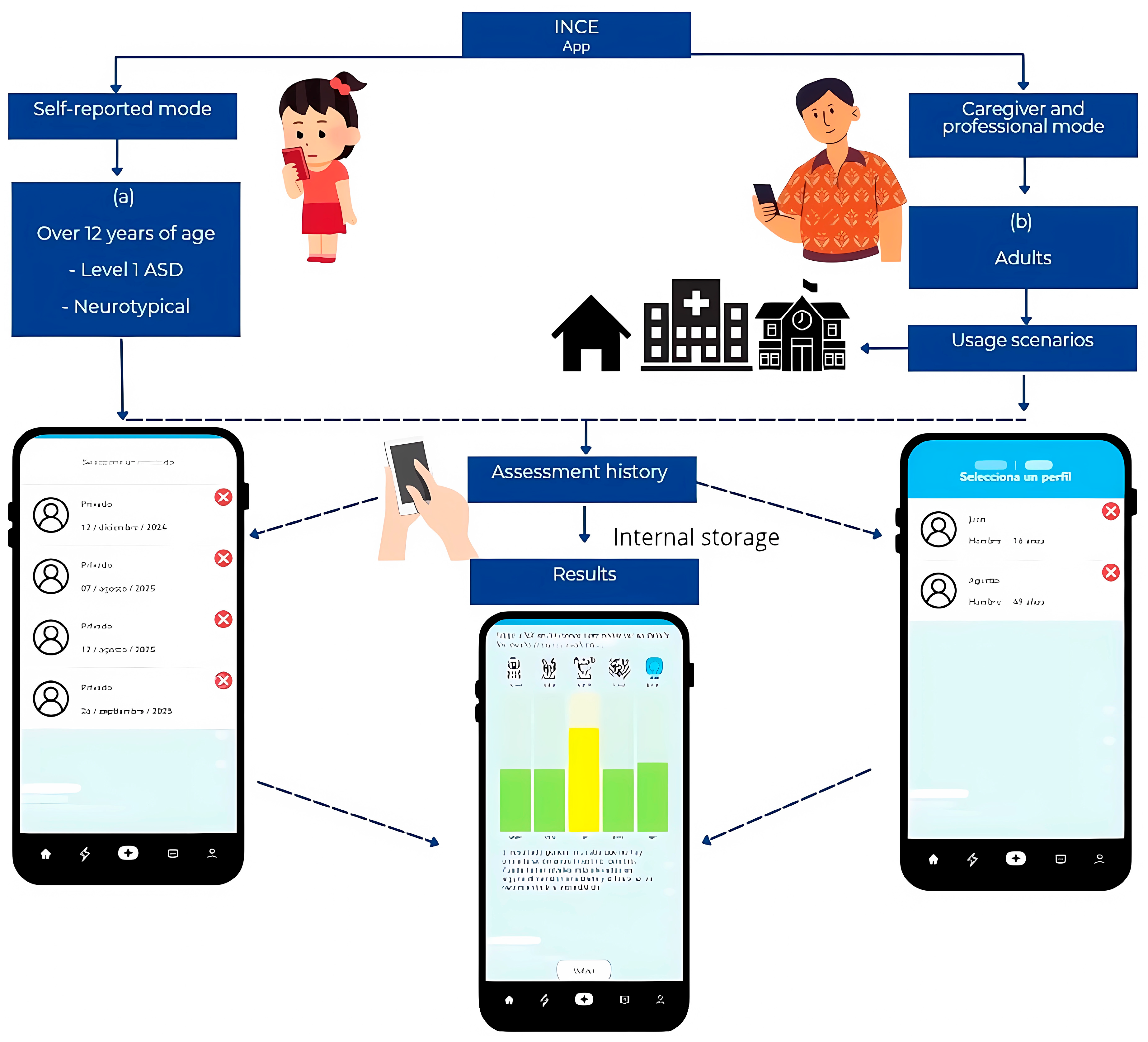
Figure 1. Overview of INCE. Note: (a) Features available in self-reporting mode for individuals with Level 1 ASD and neurotypical individuals; (b) Functionalities available for caregivers and professional staff.
Information 17 00104 g001
Figure 2. Mini-report structure. Note: (a) Indicates the overall results for gastrointestinal symptoms, sensory hypo-reactivity, sensory hyper-reactivity, and pain; (b) shows the result for general sensory hypo-reactivity; (c) shows the result in percentiles and the specific severity of tactile hypo-reactivity with the neural correlate in blue; and (d) shows the result in percentiles and the specific severity of auditory hyper-reactivity with the neural correlate in red.
Information 17 00104 g002
Figure 3. Procedure for the development of the INCE app.
Information 17 00104 g003
Figure 4. Percentiles and mini-report of the INCE app. Note: Resultados = Results; P = Percentile; GASTRO = Gastrointestinal symptoms; DOLOR = Pain; HIPO = Sensory hypo-reactivity; HIPER = Sensory hyper-reactivity; INCE = INCE total score; Haga “click” en los iconos para poder ver en detalle los resultados de su evaluación = “Click” on the icons to see the results of your assessment in detail.
Information 17 00104 g004
Figure 5. Neural correlates of the INCE app. Note: Resultado hipersensibilidad = Result Hypersensitivity; P = Percentile; Severidad: Moderada = Severity: Moderate; Haga “click” en los iconos para poder ver en detalle los resultados de su evaluación. A continuación, puede observar el correlato neuronal según el sentido evaluado = “Click” on the icons to see the results of your assessment in detail. Below, you can see the neural correlation according to the sense assessed.
Information 17 00104 g005
Table 1. Gastrointestinal symptoms by group.
Gastrointestinal SymptomsNeurotypical Children and Adolescents
(13.95 ± 1.37 Years)
Neurotypical Adults
(22.17 ± 7.19 Years)
ASD
(9.44 ± 4.99 Years)
N12421122265
Presence of gastrointestinal disorders
   Constipation--55.5%
   Diarrhoea172 (13.8%)287 (23.0%)23.4%
   Abdominal pain157 (12.6%)246 (19.7%)20.6%
   Dyspepsia62 (5.0%)132 (10.6%)11.4%
   Gastro-oesophageal reflux32 (2.6%)138 (11.1%)10.9%
   Significant flatulence24 (1.9%)67 (5.4%)-
   Irritable bowel syndrome11 (0.9%)46 (3.7%)-
   Infantile dyschezia11 (0.9%)18 (1.4%)-
   Inflammatory bowel disease6 (0.5%)13 (1.0%)-
   Coeliac disease11 (0.9%)11 (0.9%)-
   Ulcerative colitis2 (0.2%)9 (0.7%)-
   Peptic ulcer disease4 (0.3%)5 (0.4%)-
   Crohn’s disease2 (0.2%)4 (0.3%)-
Note: ASD = Autism Spectrum Disorder.
Table 2. Pre- and post-design overall scores on usage intent and acceptability in the INCE app.
Professionals
(n = 5)
Families
(n = 2)
Adolescents
(n = 5)
Topic AreaPre-DesignPost-DesignPre-DesignPost-DesignPre-DesignPost-Design
Objective
They said that the objective of the mobile application was adequate0.610.60.90.61
They said that the test instructions were clear0.410.410.41
They said that the test measures sensory reactivity, pain, and gastrointestinal symptoms11110.61
Utility
They said that they would like to use it in the future111111
They said that they would like to spread the mobile application to other individuals111111
Structure
They said that response format was appropriate111111
They said that the transition between items was adequate0.210.410.21
Design
They said that font size and colours were adequate0.410.610.61
They said that graphics were clear and understandable111111
They said that wording of the results was clear111111
Accessibility
They said that mobile application was intuitive and accessible0.610.410.41
Intention of used and Acceptability Total
M (SD)
0.7 (0.3)1 (0.0)0.7 (0.2)11 (0.0)0.7 (0.3)1 (0.0)
Note. M = mean; SD = standard deviation.
Table 3. Pre-design scores on the intended use and acceptability of the INCE application among professional staff.
% AgreeSpecial Education Teacher 1Special Education Teacher 2 Paediatrician Neuropsychologist Psychologist
Objective
They said that the objective of the mobile application was adequate60%10110
They said that the test instructions were clear40%00110
They said that the test measures sensory reactivity, pain, and gastrointestinal symptoms100%11111
Utility
They said that they would like to use it in the future100%11111
They said that they would like to spread the mobile application to other individuals100%11111
Structure
They said that response format was appropriate100%11111
They said that the transition between items was adequate20%10000
Design
They said that font size and colours were adequate40%00110
They said that graphics were clear and understandable100%11111
They said that wording of the results was clear100%11111
Accessibility
They said that mobile application was intuitive and accessible60%00111
Disclaimer/Publisher’s Note: The statements, opinions and data contained in all publications are solely those of the individual author(s) and contributor(s) and not of MDPI and/or the editor(s). MDPI and/or the editor(s) disclaim responsibility for any injury to people or property resulting from any ideas, methods, instructions or products referred to in the content.