Article

Indoor Positioning and Tracking System in a Multi-Level Residential Building Using WiFi

by
Elmer Magsino
1,*,
Joshua Kenichi Sim
2,
Rica Rizabel Tagabuhin
2 and
Jan Jayson Tirados
2
1
Physics and Engineering Department, Faculty of Applied and Technical Studies, University of the Fraser Valley, 33844 King Rd., Abbotsford, BC V2S 7M7, Canada
2
Department of Electronics and Computer Engineering, Gokongwei College of Engineering, De La Salle University, 2401 Taft Ave., Malate, Manila 1004, Metro Manila, Philippines
*
Author to whom correspondence should be addressed.
Information 2025, 16(8), 633; https://doi.org/10.3390/info16080633
Submission received: 21 June 2025 / Revised: 21 July 2025 / Accepted: 23 July 2025 / Published: 24 July 2025

Abstract

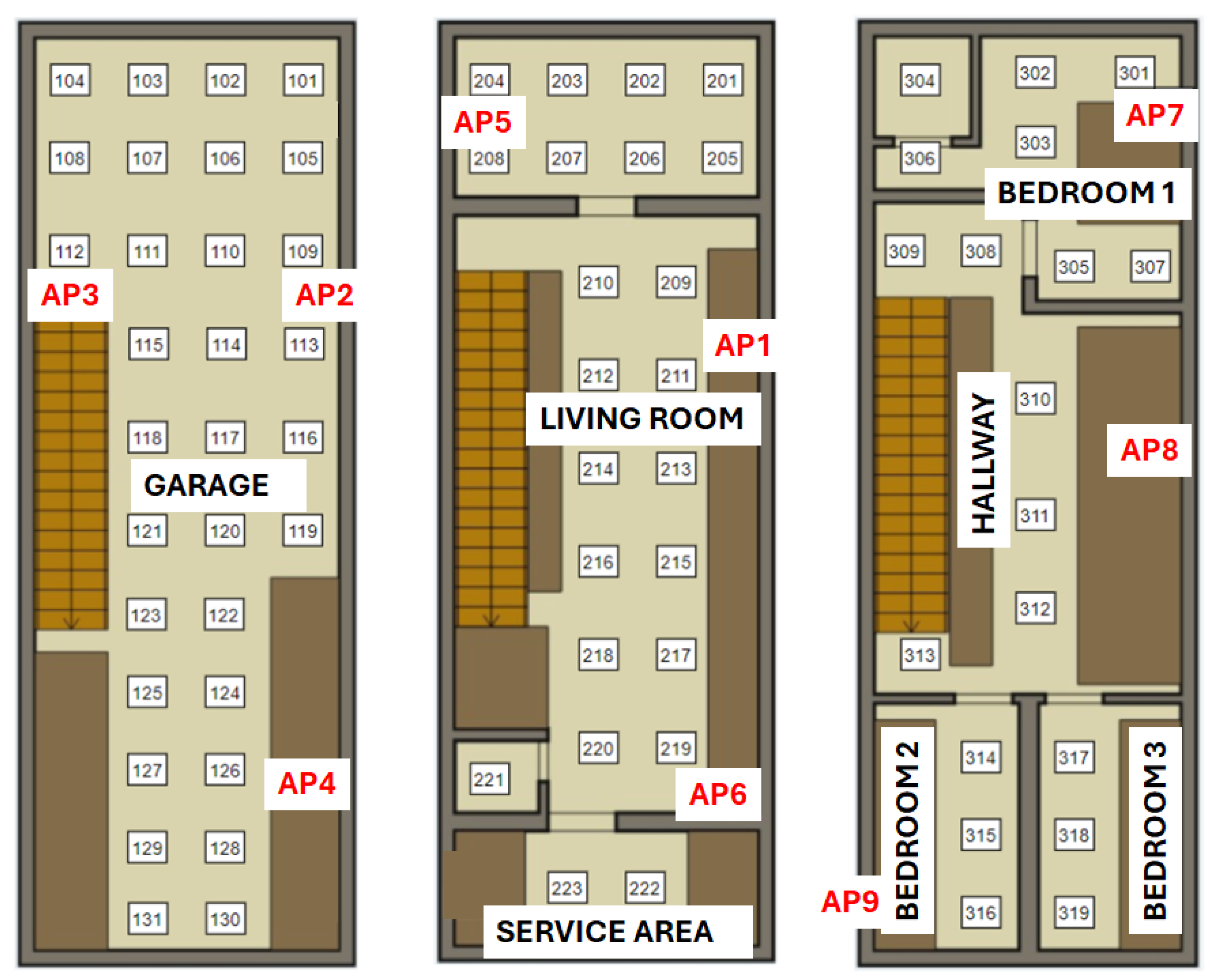
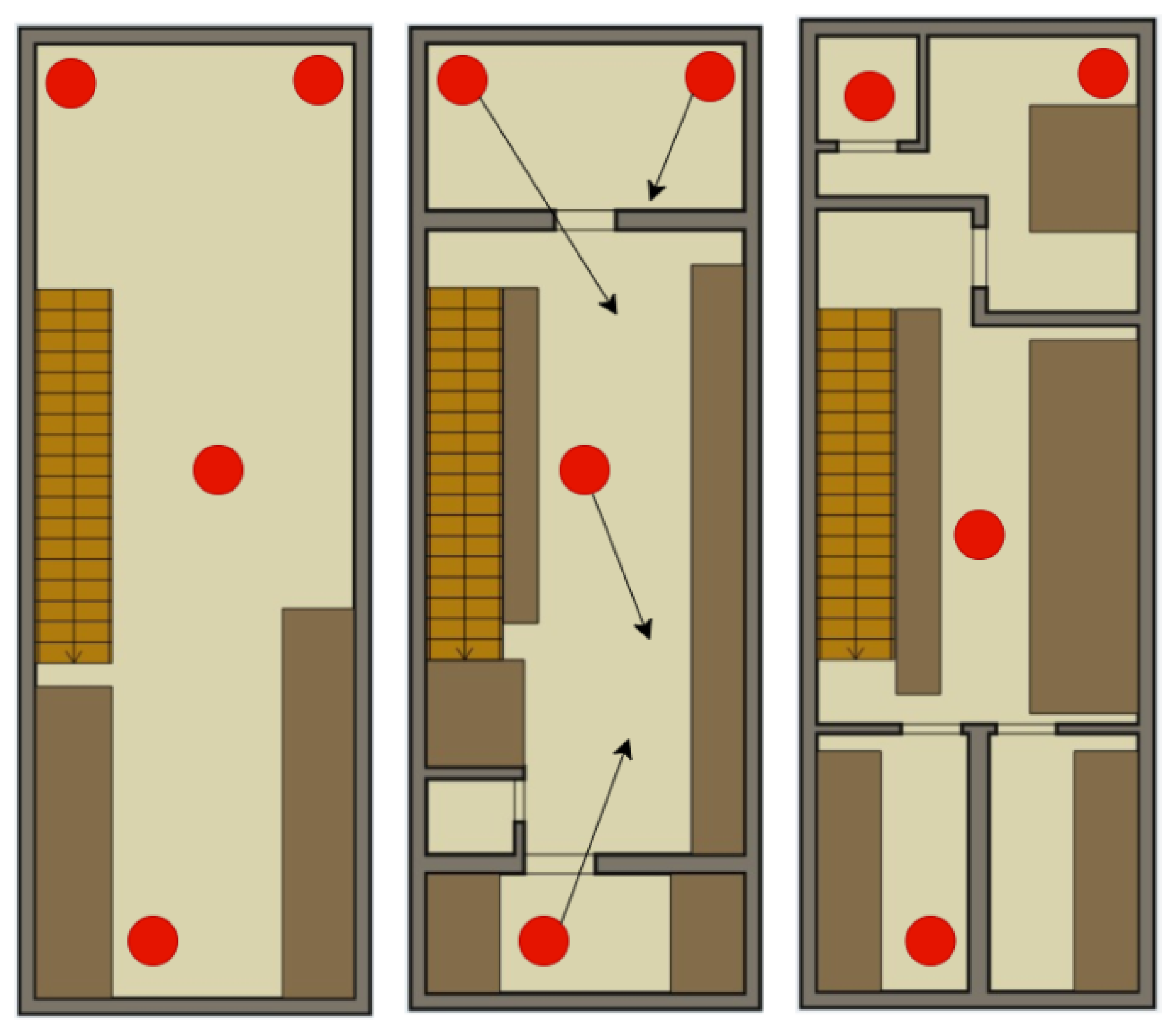
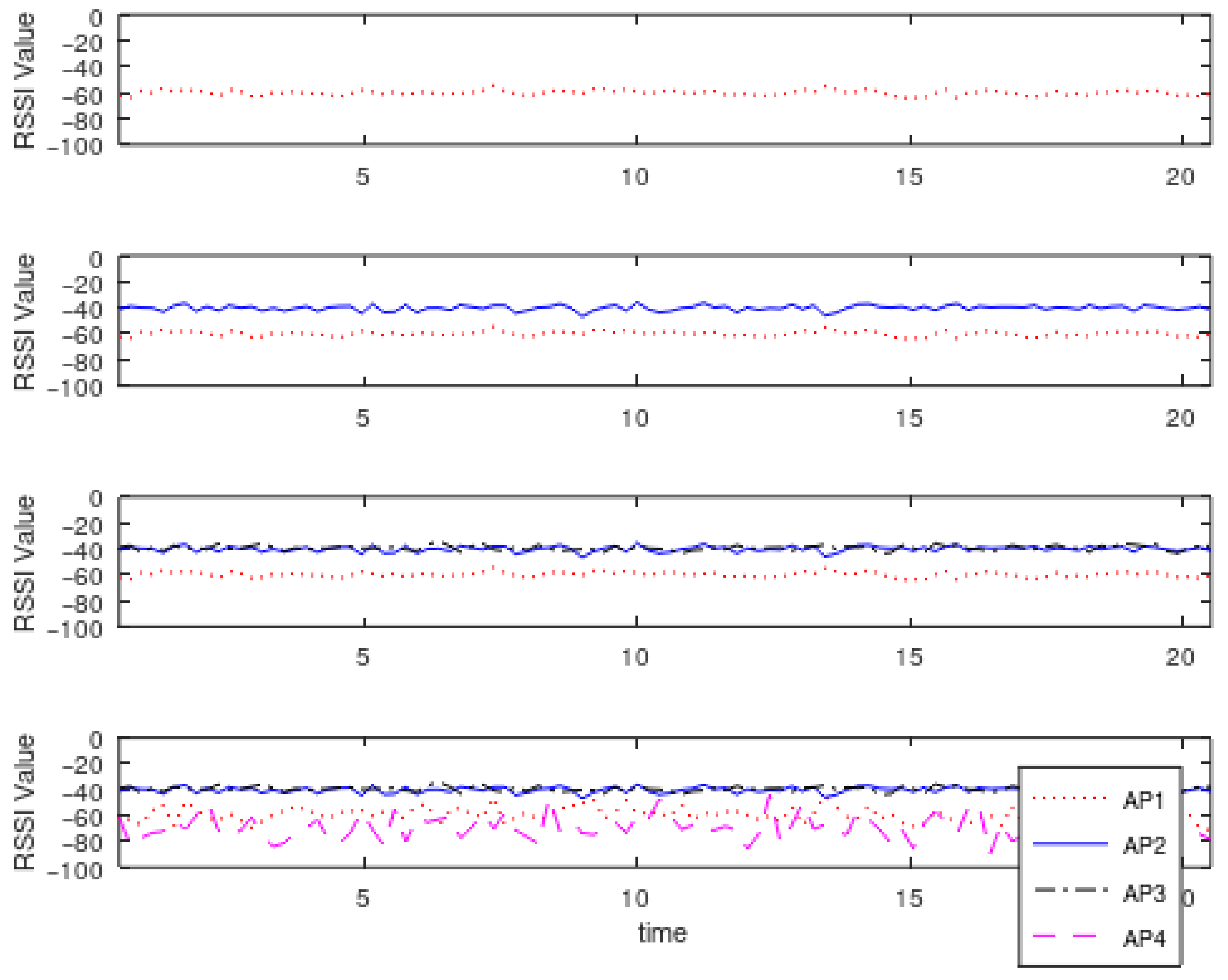
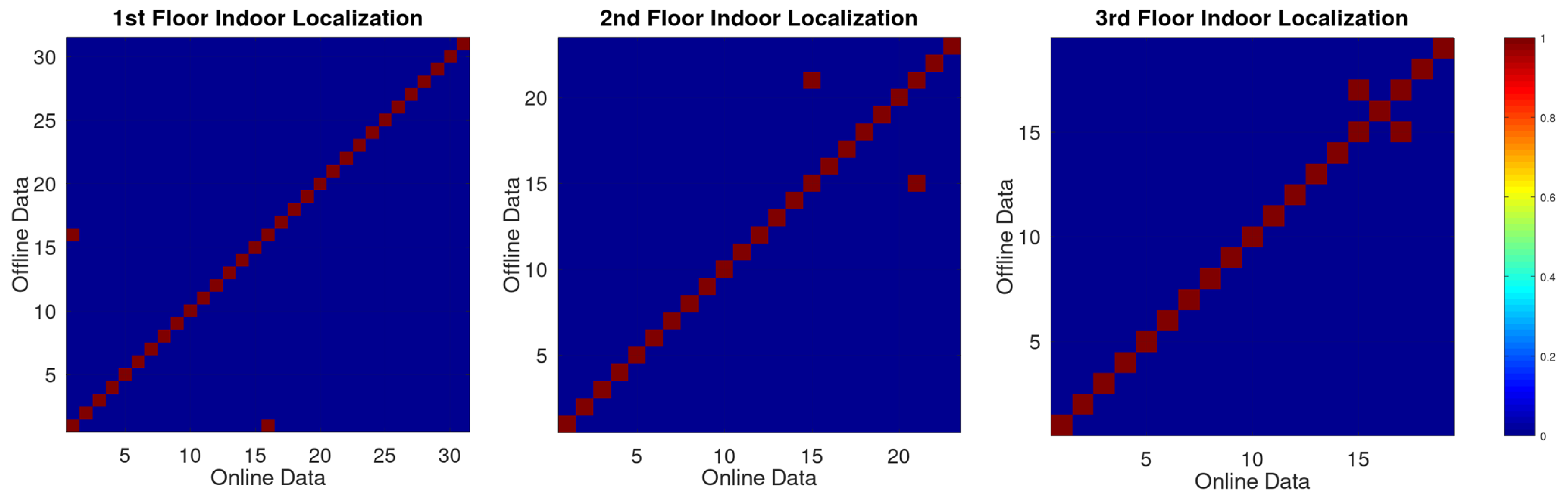
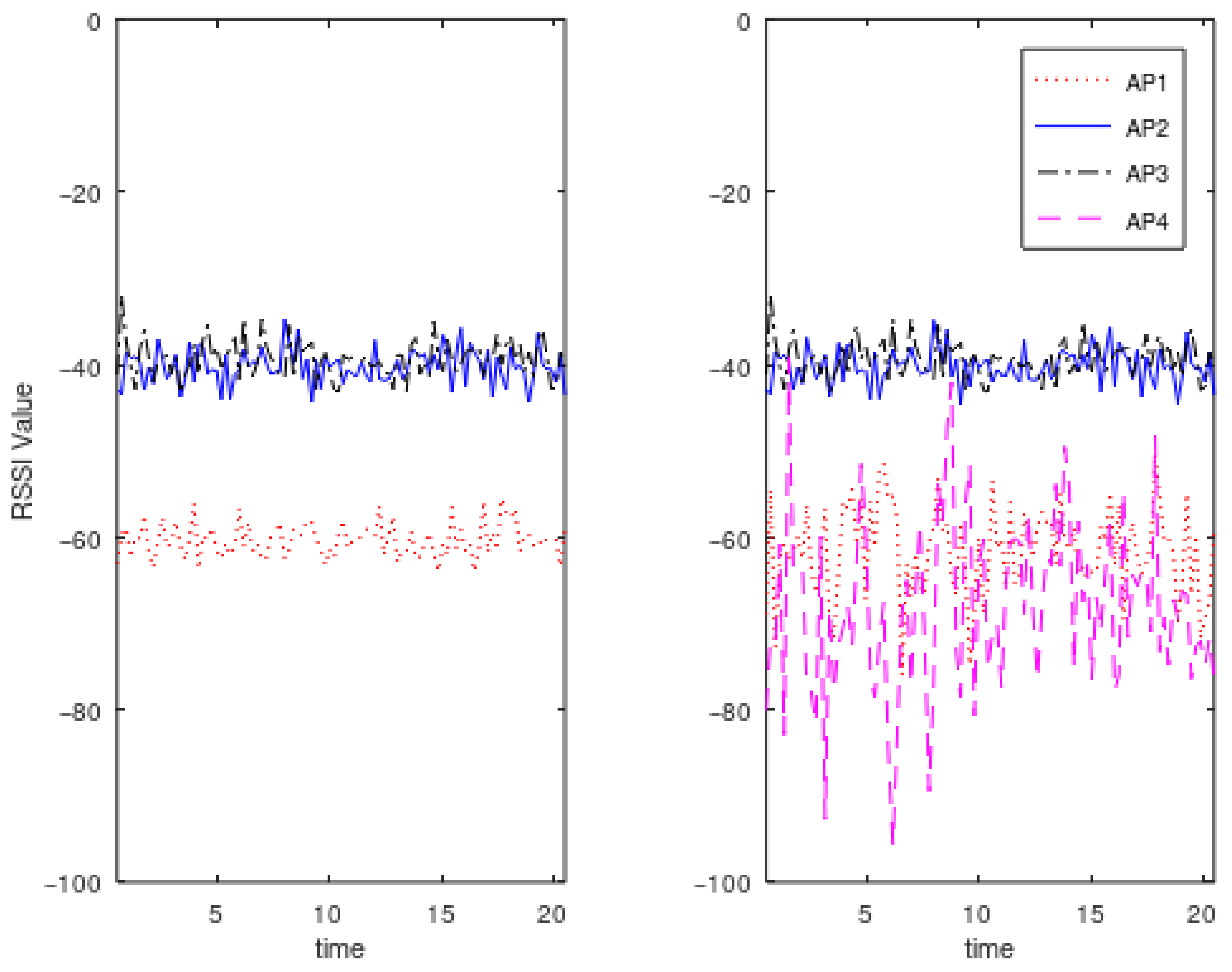
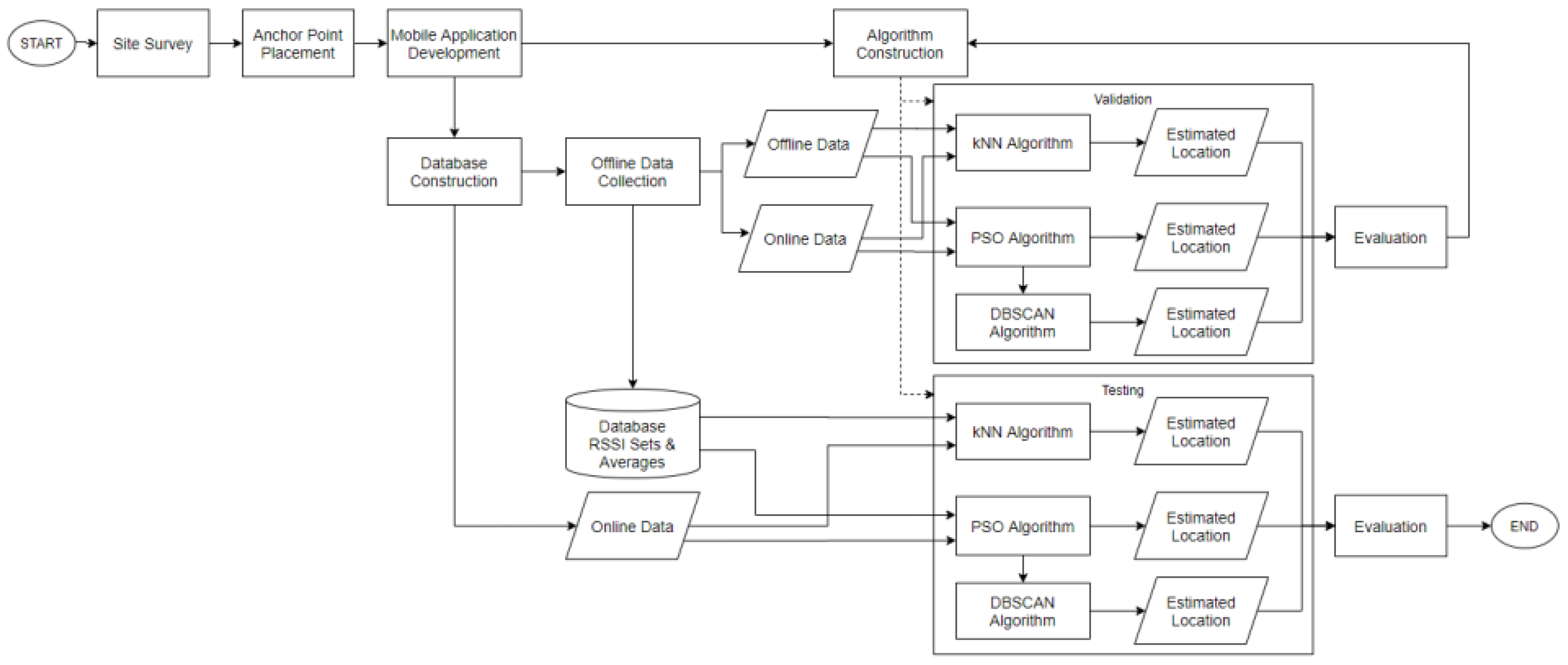
The implementation of an Indoor Positioning System (IPS) in a three-storey residential building employing WiFi signals that can also be used to track indoor movements is presented in this study. The movement of inhabitants is monitored through an Android smartphone by detecting the Received Signal Strength Indicator (RSSI) signals from WiFi Anchor Points (APs).Indoor movement is detected through a successive estimation of a target’s multiple positions. Using the K-Nearest Neighbors (KNN) and Particle Swarm Optimization (PSO) algorithms, these RSSI measurements are trained for estimating the position of an indoor target. Additionally, the Density-based Spatial Clustering of Applications with Noise (DBSCAN) has been integrated into the PSO method for removing RSSI-estimated position outliers of the mobile device to further improve indoor position detection and monitoring accuracy. We also employed Time Reversal Resonating Strength (TRRS) as a correlation technique as the third method of localization. Our extensive and rigorous experimentation covers the influence of various weather conditions in indoor detection. Our proposed localization methods have maximum accuracies of 92%, 80%, and 75% for TRRS, KNN, and PSO + DBSCAN, respectively. Each method also has an approximate one-meter deviation, which is a short distance from our targets.
Keywords: indoor positioning system; RSSI; K-Nearest Neighbors; Particle Swarm Optimization; Density-based Spatial Clustering of Applications with Noise; Time Reversal Resonating Strength; dynamic environment indoor positioning system; RSSI; K-Nearest Neighbors; Particle Swarm Optimization; Density-based Spatial Clustering of Applications with Noise; Time Reversal Resonating Strength; dynamic environment
Graphical Abstract