Article

From Cybercrime to Digital Balance: How Human Development Shapes Digital Risk Cultures

by
Răzvan Rughiniș
1,2,
Emanuela Bran
2,3,4,*,
Ana Rodica Stăiculescu
1,3,5 and
Alexandru Radovici
2
1
Romanian Academy of Scientists, 010071 Bucharest, Romania
2
Faculty of Automatic Control and Computers, National University for Science and Technology Politehnica Bucharest, 060042 Bucharest, Romania
3
Doctoral School of Sociology, University of Bucharest, 010181 Bucharest, Romania
4
Neo Networking SRL, 031786 Bucharest, Romania
5
Faculty of Psychology, Behavioral and Legal Sciences, Andrei Saguna University of Constanta, 900196 Constanta, Romania
*
Author to whom correspondence should be addressed.
Information 2024, 15(1), 50; https://doi.org/10.3390/info15010050
Submission received: 18 November 2023 / Revised: 4 January 2024 / Accepted: 12 January 2024 / Published: 17 January 2024
(This article belongs to the Special Issue Digital Privacy and Security)

Abstract

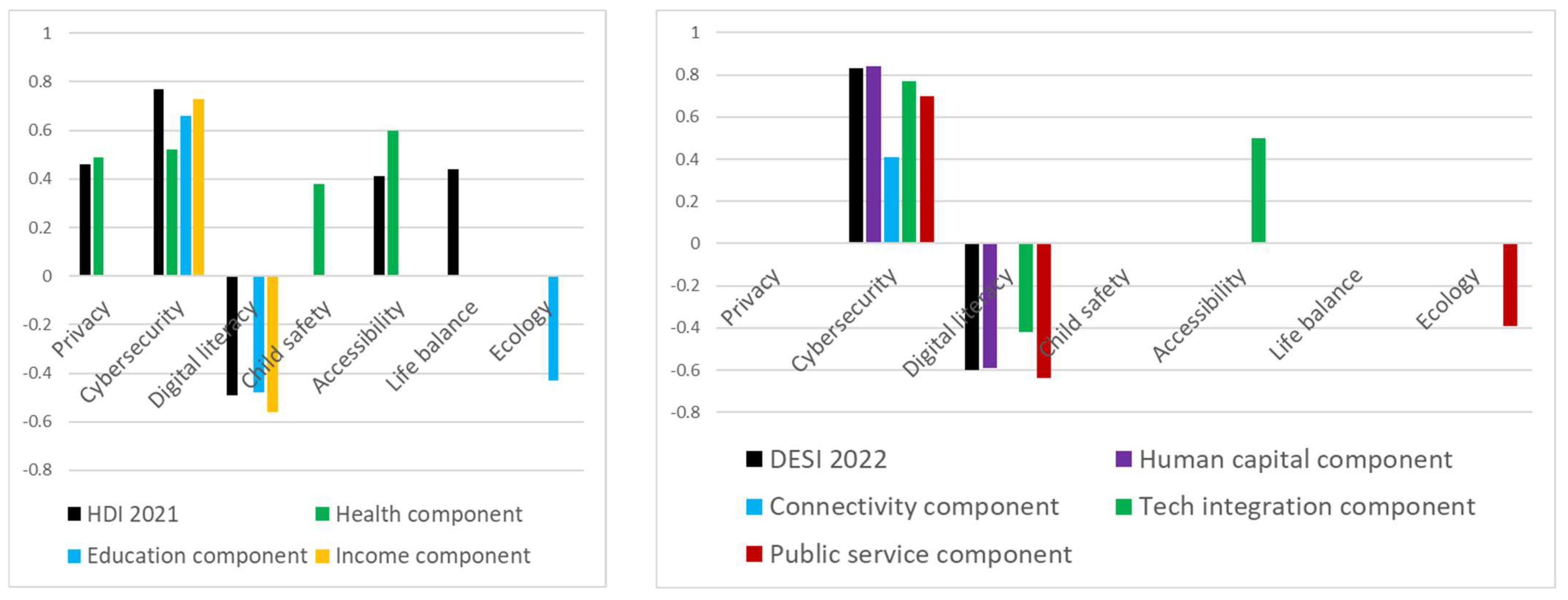
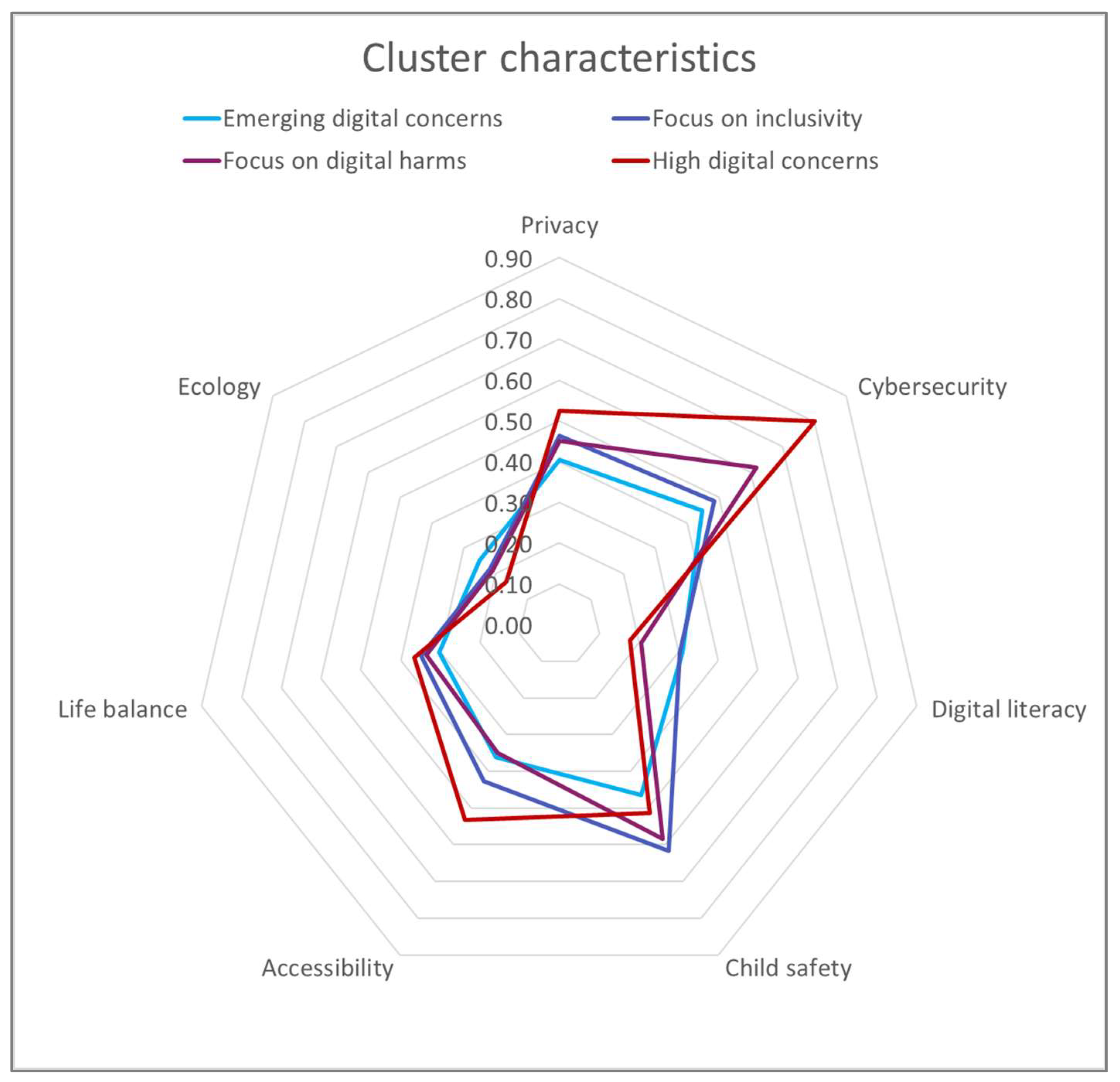
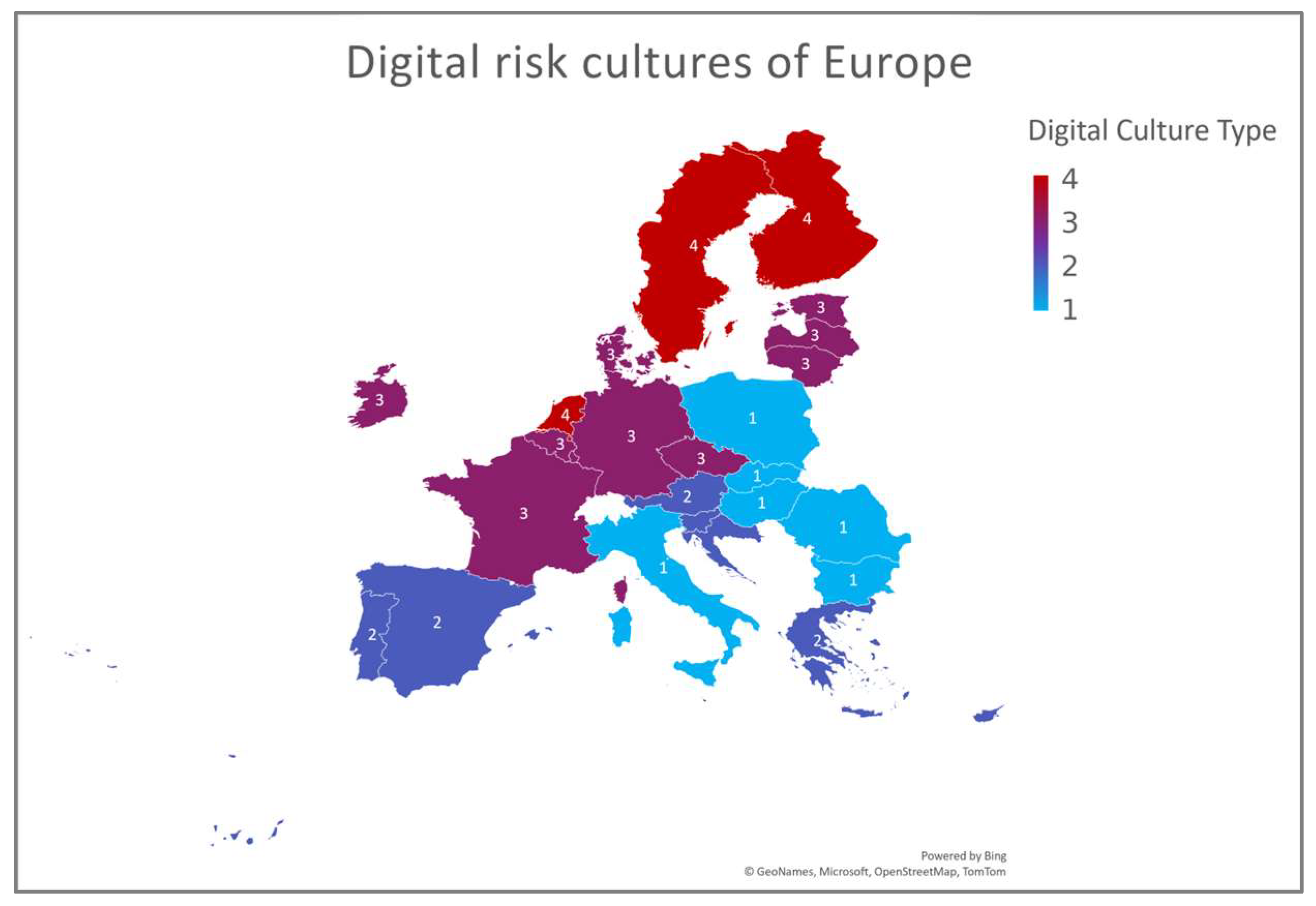
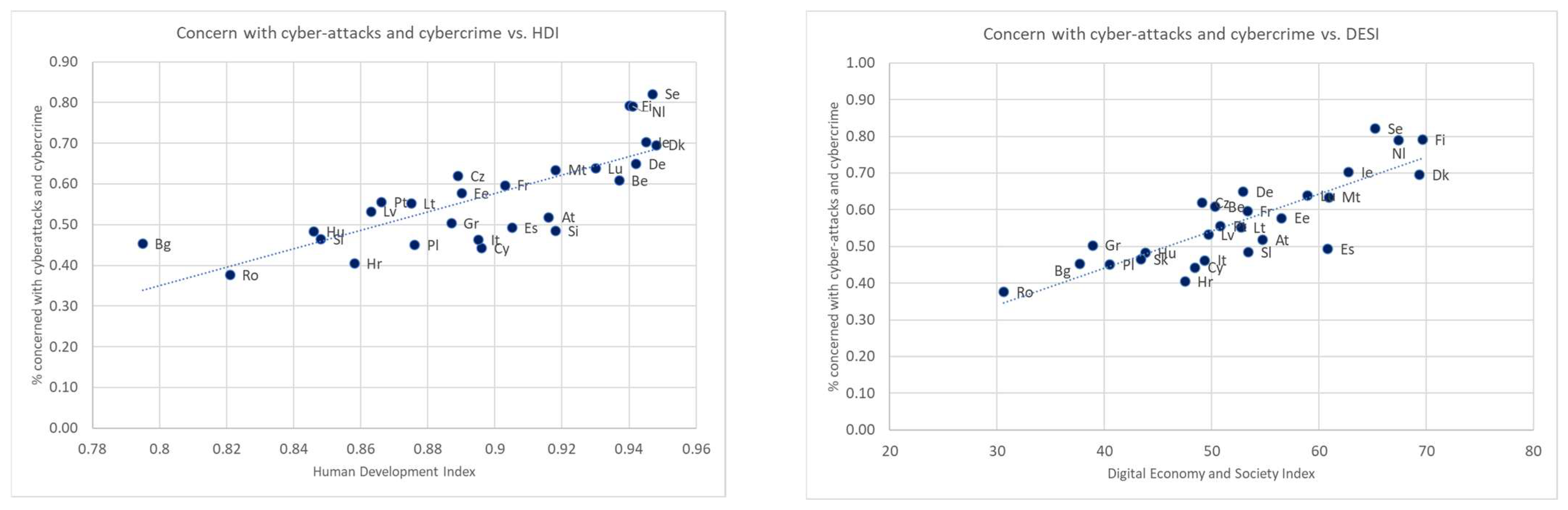
This article examines configurations of digital concerns within the European Union (EU27), a leading hub of innovation and policy development. The core objective is to uncover the social forces shaping technology acceptance and risk awareness, which are essential for fostering a resilient digital society in the EU. The study draws upon Bourdieu’s concept of capital to discuss technological capital and digital habitus and Beck’s risk society theory to frame the analysis of individual and national attitudes towards digital risks. Utilizing Eurobarometer data, the research operationalizes technological capital through proxy indicators of individual socioeconomic status and internet use, while country-level development indicators are used to predict aggregated national risk perception. Article contributions rely on individual- and country-level statistical analysis. Specifically, the study reveals that digital concerns are better predicted at a national level rather than individual level, being shaped by infrastructure, policy, and narrative rather than by personal technological capital. Key findings highlight a positive and a negative correlation between digital advancement with cybersecurity fears and digital literacy, respectively. HDI and DESI are relevant country-level predictors of public concerns, while CGI values are not. Using cluster analysis, we identify and interpret four digital risk cultures within the EU, each with varying foci and levels of concern, which correspond to economic, political, and cultural influences at the national level.
Keywords: cybersecurity; digital risk culture; risk society; technological capital; human development index; GCI; DESI cybersecurity; digital risk culture; risk society; technological capital; human development index; GCI; DESI