Article

IT Process Alignment in Business Strategy: Examining the Role of Transactional Leadership and Organization Culture
Faculty of Management and Economics, Kunming University of Science and Technology, Kunming 650093, China
*
Author to whom correspondence should be addressed.
Information 2021, 12(6), 237; https://doi.org/10.3390/info12060237
Submission received: 18 April 2021 / Revised: 1 May 2021 / Accepted: 11 May 2021 / Published: 31 May 2021
(This article belongs to the Special Issue Enterprise Architecture in the Digital Era)

Abstract

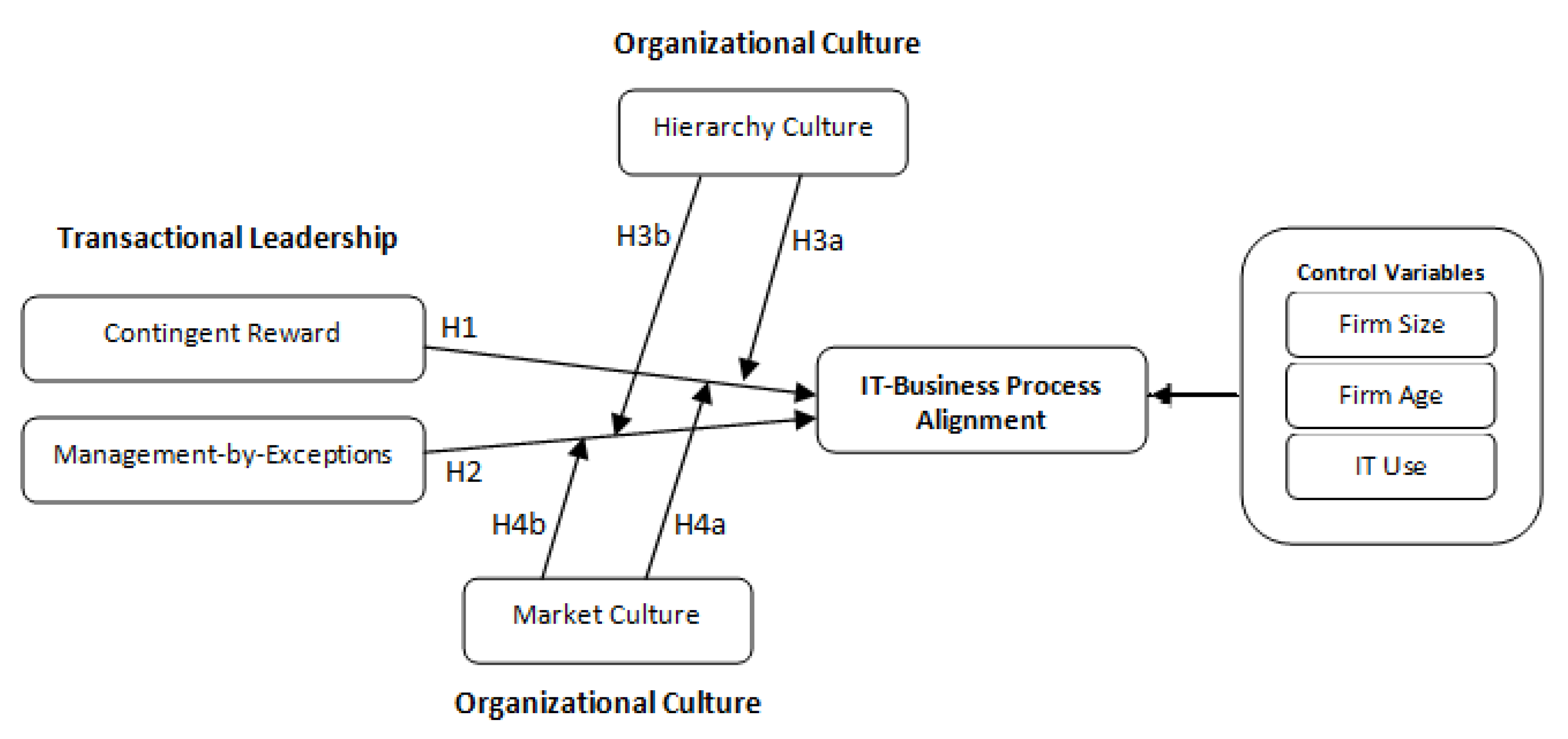
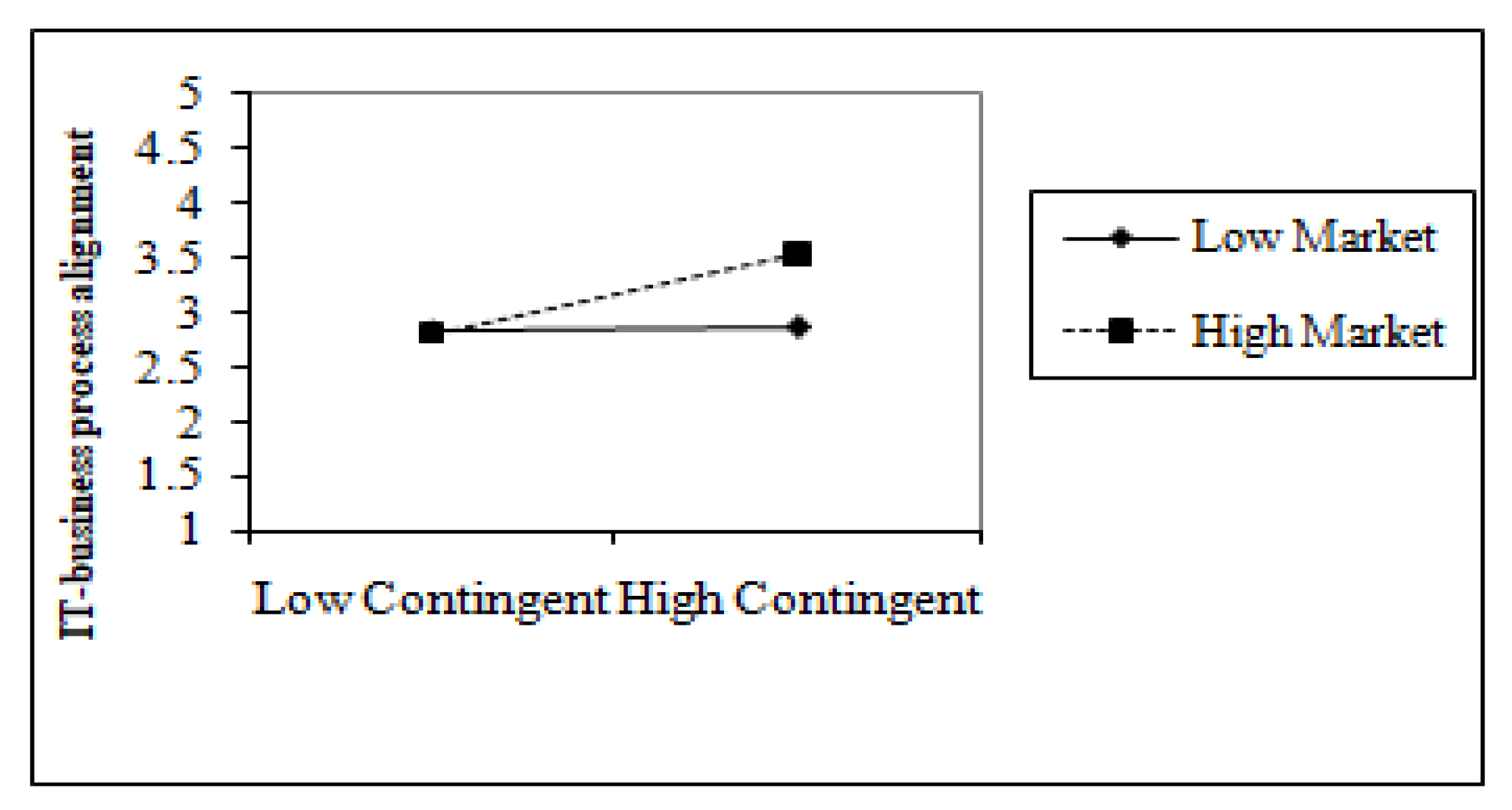
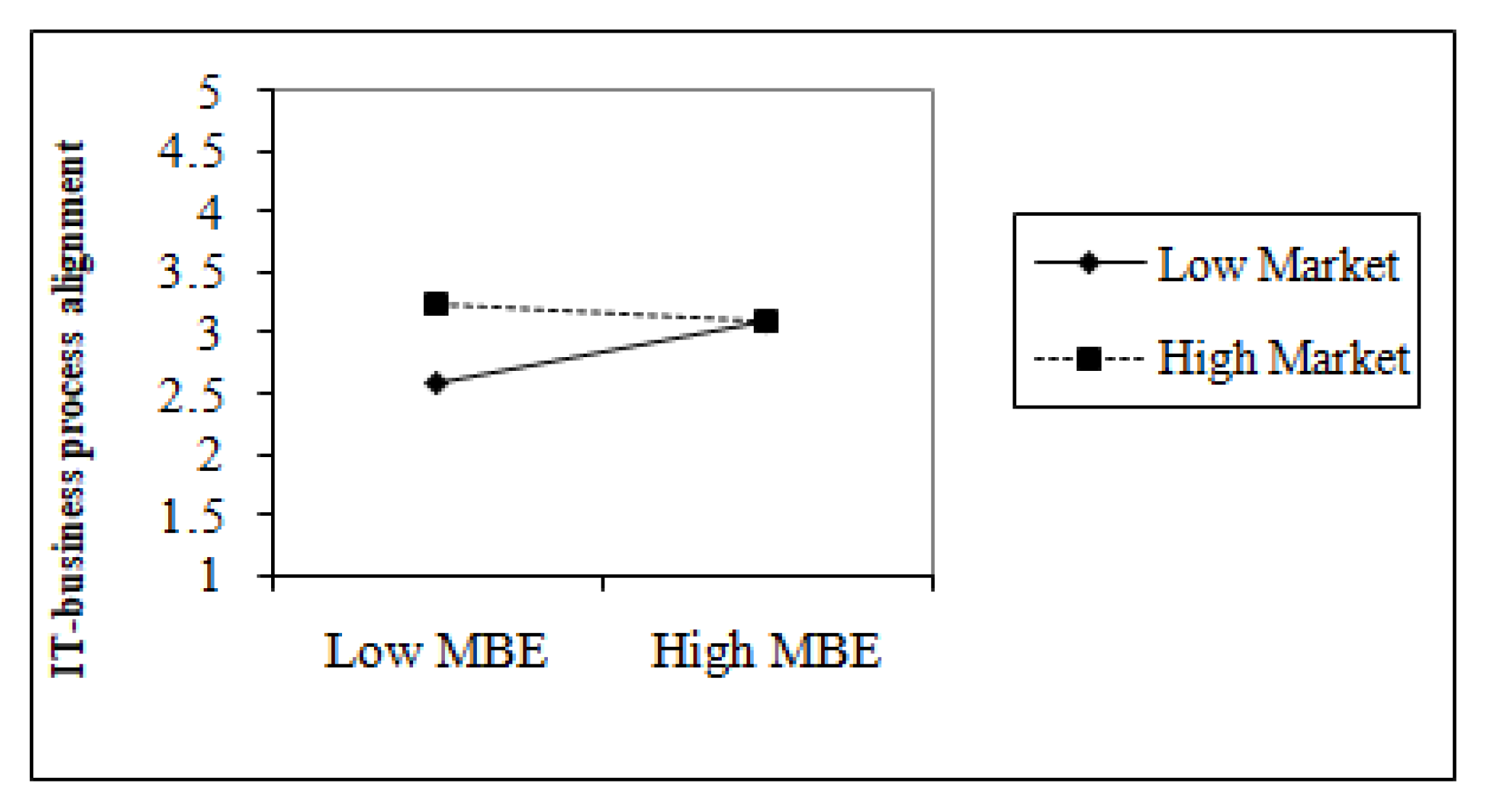
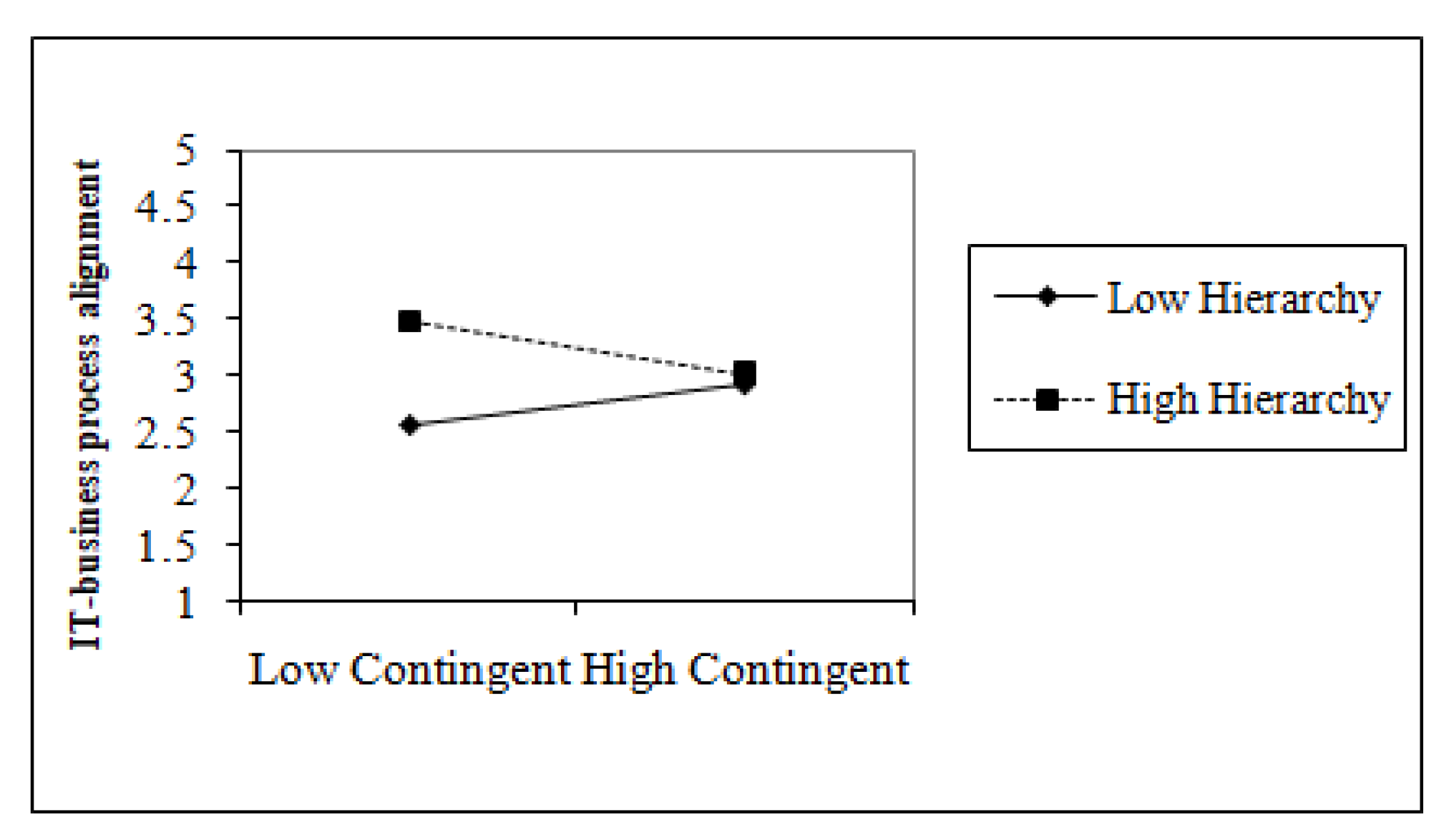
Information technology (IT) is a competitive path and offers the entrepreneurial opportunity of accumulating business knowledge in capturing consumer behavior. This study employed a conceptual framework to investigate the information processing facet of IT–business alignment under the impact mechanism of transactional leadership in the manufacturing sector of Yunnan Province, China. Specifically, organization culture is taken as a moderating factor extracted from situational theory and has been highlighted as important in previous organizational research. This study aimed at investigating the impact of transactional leadership on IT–business process alignment and studying the moderating effect of organizational culture on the relationship between transactional leadership and IT–business process alignment. The empirical findings reveal that contingent reward and management by exception behaviors of entrepreneurs are significant drivers of IT–business process alignment. Furthermore, market culture had a moderating effect on the relationship between entrepreneurs’ transactional behaviors and IT–business process alignment. Similarly, hierarchy culture exerts a moderating effect on the path between contingent rewarding behavior and IT–business process alignment. Here, it exerts an insignificant moderating effect on the management by exception behavior and IT–business process alignment path. The study findings mainly reveal the association of transactional leadership with IT–business process alignment, along with the moderating role of organizational culture. This study contributes to the literature on business knowledge by showcasing empirical evidence—how information processing aids entrepreneurial behavior to capture market opportunities and consumer behavior.
Keywords: information processing; IT–business process alignment; transactional leadership; organization culture information processing; IT–business process alignment; transactional leadership; organization culture