You are currently viewing a new version of our website. To view the old version click .
Information
  • Article
  • Open Access

18 April 2019

MFA-OSELM Algorithm for WiFi-Based Indoor Positioning System


,
,
,
,
and
1
Broadband and Networking (BBNET) Research Group, Centre for Telecommunication and Research Innovation (CeTRI), Fakulti Kejuruteraan Elektronik dan Kejuruteraan Komputer (FKEKK), Universiti Teknikal Malaysia Melaka (UTeM), Hang Tuah Jaya, Durian Tunggal 76100, Melaka, Malaysia
2
Faculty of Computer System and Software Engineering, University Malaysia Pahang (UMP), Gambang 26300, Pahang, Malaysia
3
Institute of High Voltage and High Current (IVAT), School of Electrical Engineering, Faculty of Engineering, Universiti Teknologi Malaysia (UTM), Skudai 81310, Johor Bharu, Malaysia
4
Faculty of Computer Science, Universitas Sriwijaya (UNSRI), Inderalaya, Sumatera Selatan 30151, Indonesia
This article belongs to the Section Information and Communications Technology

Abstract

Indoor localization is a dynamic and exciting research area. WiFi has exhibited a tremendous capability for internal localization since it is extensively used and easily accessible. Facilitating the use of WiFi for this purpose requires fingerprint formation and the implementation of a learning algorithm with the aim of using the fingerprint to determine locations. The most difficult aspect of techniques based on fingerprints is the effect of dynamic environmental changes on fingerprint authentication. With the aim of dealing with this problem, many experts have adopted transfer-learning methods, even though in WiFi indoor localization the dynamic quality of the change in the fingerprint has some cyclic factors that necessitate the use of previous knowledge in various situations. Thus, this paper presents the maximum feature adaptive online sequential extreme learning machine (MFA-OSELM) technique, which uses previous knowledge to handle the cyclic dynamic factors that are brought about by the issue of mobility, which is present in internal environments. This research extends the earlier study of the feature adaptive online sequential extreme learning machine (FA-OSELM). The results of this research demonstrate that MFA-OSELM is superior to FA-OSELM given its capacity to preserve previous data when a person goes back to locations that he/she had visited earlier. Also, there is always a positive accuracy change when using MFA-OSELM, with the best change achieved being 27% (ranging from eight to 27% and six to 18% for the TampereU and UJIIndoorLoc datasets, respectively), which proves the efficiency of MFA-OSELM in restoring previous knowledge.

1. Introduction

In the current mobile technology age, several new and emerging applications are being adopted to improve communication techniques. In most of these applications, a person is always digitally connected, and their devices receive and transmit data via a protected cloud environment or a device in the same room [1]. Essentially, data regarding location take into account the use of different services used by single devices, which is regarded as hugely important in tracking and supervising devices. The Global Positioning System (GPS) is a satellite-based system that is used to estimate the position of a certain device/user. GPS signals that are broadcast via satellites, for instance, are produced with low power levels, causing weak signal strength indoors. Thus, the building of systems that can afford satisfactory location estimates indoors is important. Such a system is called an indoor positioning system (IPS). Services that depend on IPSs are known as indoor location-based services (ILBSs) [2]. Instances of such services include ILBSs for travelers who need tools or position guidance services to pinpoint significant exotic sites of interest [3]. Another instance can be found in huge shopping areas and malls [4], where customers generally wish to quickly locate a restaurant or shop that has an outstanding user rating. Additionally, in hospitals and clinics, it is necessary to track the locations of wandering patients in real time in order to locate them quickly and give them timely treatment. Also, in distribution depots, staff requires tracking devices in order to detect the location of goods in real time. Moreover, in art displays, visitors may request to look at the most fascinating paintings located within a museum, and so on. As mentioned, it is not guaranteed that the GPS will work correctly in an intricate indoor region, since satellite signals are often obstructed or very weak. Additionally, in comparison with outdoor areas, greater location resolutions are needed to locate users in indoor areas [2]. This presents new issues in the construction of systems for indoor positioning on the basis of time-crucial constraints, high accuracy requirements, and efficiency of energy use. In fact, new developments in mobile and wireless technology have commenced a new era of indoor positioning. WiFi positioning is presently among the most potent techniques for localization, and is based on smart devices’ detection and computing. The reasons for this are the availability of the WiFi infrastructure in nearly every indoor area and the WiFi detection feature available in almost all smart devices.
Among the major issues with WiFi positioning is the way in which the fingerprint model can be adopted every time an update to the environment takes place. An update refers to any change due to the population density in the area, the number of access points (APs) that are active, or signal interference caused by internal and/or external sources. This requires a well-performing model to transfer learning that will facilitate the optimization of previous data and facts in present scenarios [5]. The transfer of knowledge and proficiency among domains is called transfer learning, and improves an associated target task by making use of the data acquired from a source task. It is very often not possible to gather the required data for training from scratch when categorizing tasks, and transfer learning was motivated by this partial training data. By the transfer of weights related to already trained data, this method can assist in considerably lowering the quantity of trainable variables in the target area. Concerning WiFi positioning, several studies [5,6,7,8] have used the idea of transfer learning to reduce the costs of training related to changes in the environment. A common environmental change is when there is a change in the quantity of APs in an environment. There can be lasting changes, such as the removal or addition of one AP. In this situation, it is necessary to carry out transfer learning once [9]. A greater change takes place in real life, which consequently implies that transfer learning should be carried out more often. At the same time, there should be a maximum preservation of previous data if needed, so that the previous situation can be replicated later on. This paper concentrates on transfer learning of this sort, and particularly addresses the issue of its efficiency in instances, which include cyclic dynamic factors. Therefore, it is noticed when an individual frequently goes to locations that he/she has visited earlier and where this scenario is viewed as an actual and practical problem. In this condition, the transfer-learning model has to preserve previous data about a previously visited place in order to enable and tag that location as revisited. To the best of the authors’ knowledge, this issue has not yet been resolved in the learning transfer literature or in studies of WiFi-based localization. Extreme learning machine (ELM) is viewed as an appropriate learning instrument since it possesses a structure with a hidden layer. This structure is suitable for real-time positioning and needs less training efforts in comparison with other types of neural networks, confirming that ELM can be used as a general approximator [10].
The remainder of this article is structured as follows: Section 2 presents associated works; Section 3 discusses the methodology; Section 4 outlines the experimental work and outcomes; and Section 5 presents the conclusion and future work.

3. Methodology

This section provides a description of the approaches and methods that were used to build the knowledge-preserving model pertaining to WiFi localization. It starts by describing the creation of dynamic scenarios pertaining to localization. Then, the design of the algorithmic and mathematical procedure for the maximum feature adaptive online sequential extreme learning machine (MFA-OSELM) is described. Finally, the evaluation measures are conducted and presented.

3.1. Generating Dynamic Scenarios of Localization

This section describes the creation of dynamic states with regards to a person moving from one place to another in an area, which results in changes in the number of available APs. The aspect of knowledge preservation is crucial when handling mobility scenarios. For instance, a person might move from area A, in which N1 features (APs) are the only ones available, to area B, in which N2 features are available. The subsequent return of the person to area A would necessitate the use of previous knowledge. Through FA-OSELM, knowledge is transferred from area A to area B, however there is a chance of knowledge loss due to a change in dimension pertaining to the neural network when the person moves to an area with fewer APs. Next, upon the return of the person to the previous area, the new transferred knowledge neural network cannot return the lost knowledge. As a result, an extended period is needed to gain back the lost previous knowledge. This can be addressed by developing the idea of transferring knowledge to a new model, which can also assure knowledge preservation along with minimal knowledge loss. In the present study, the following scenarios are investigated in order to quantify this limitation of FA-OSELM:
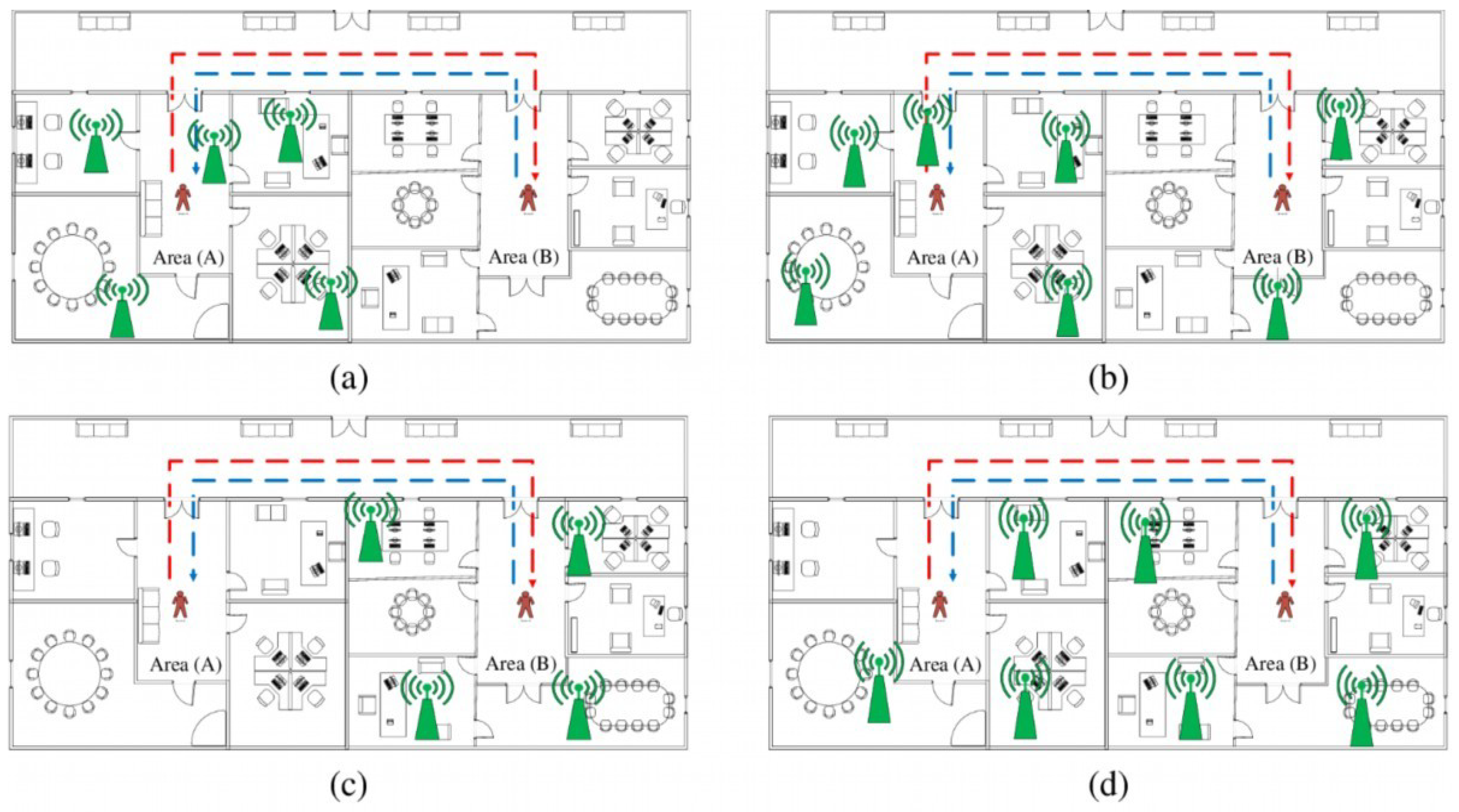
  • The movement of a person from area A to area B. The number of APs in A ( N A ) is higher than the number of APs in B ( N B ). The APs in B are contained in the APs in A, or A P B A P A . As shown in Figure 1a, the person then returns to area A. The red line signifies their trajectory from area A to area B, while the blue line denotes their trajectory from area B to area A. Based on the figure, it can be seen that all APs are contained in area A, which explains why A P B A P A .
    Figure 1. Evaluation scenarios of different areas in an environment according to access point (AP) distribution. (a) Scenario 1: A P B A P A and N B N A ; APs are located in area A only; (b) scenario 2: A P B A P A and N B N A ; APs are located in both areas, with a higher AP density in area A; (c) scenario 3:   A P A A P B and N B N A ; APs are located in area B only; (d) scenario 4: A P A A P B and N A < N B ; APs are located in both areas, with a higher AP density in area B.
  • The person moves from area A to area B. N A is greater than or equal to N B . The APs in area B are not contained in the APs in area A, or A P A A P B . Then, the person returns to area A, as represented in Figure 1b. As in the previous scenario, the red line represents the trajectory from area A to area B, while the blue line represents the trajectory from area B to area A. It can be seen that the APs are distributed in both areas A and B, with greater AP density in area A, i.e., N A > N B and A P A A P B .
  • The person moves from area A to area B. N A is less than N B . The APs in area B are contained in the APs in area A, or A P A A P B . Then, the person returns to area A, as represented in Figure 1c. As in scenario 1, the APs are distributed in one area only; however, in this scenario, it is area B. Thus, A P A A P B .
  • The person moves from area A to area B. N A is less than or equal to N B . The APs in area B are not contained in the APs in area A, or A P A A P B . Then, the person returns to area A, as represented in Figure 1d. As in scenario 2, the APs are distributed in both areas, however this time there is a higher AP density in area B.
The four scenarios are summarized in Table 1. N A denotes number of access points in area A, while N B denotes number of access points in area B, and A P A denotes the access points of area A, while A P B denotes the access points of area B.
Table 1. Dynamic scenarios of localization.

3.2. General Algorithmic Procedure

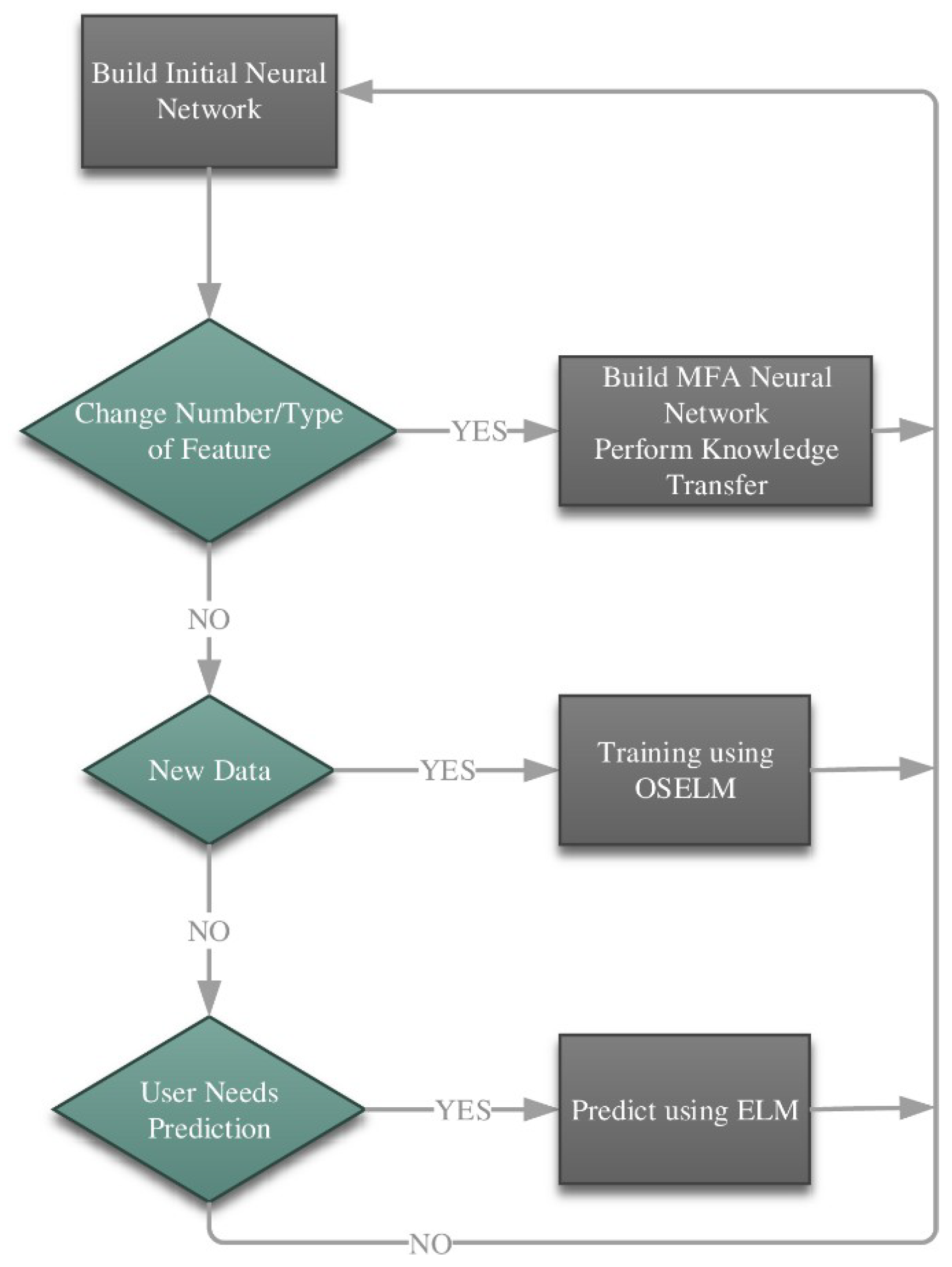
The generic process of MFA-OSELM is the same as that of FA-OSELM. However, in order to alter the model to permit knowledge preservation, the transferring matrices and the variant of the used activation function were altered. This process is shown in Figure 2.
Figure 2. General procedure for the maximum feature adaptive online sequential extreme learning machine (MFA-OSELM) algorithm.
The process of MFA-OSELM allows the constant updating of the neural network whenever data is obtained. Furthermore, it looks for any alteration in the number of features and reacts to such a change by carrying out transfer learning. There are four key operations of MFA-OSELM:
  • Constructing the initial neural network;
  • Constructing the maximum feature adaptive NN and carrying out transfer learning whenever a change in the number of features takes place;
  • Impart training whenever data is accessible;
  • Carry out prediction whenever a user request is required (or intermittently).
In the process of creating the preliminary neural network, the model criteria are chosen from the primary data file of the characteristic d_0 specimen. These criteria are the quantity of concealed nodes L and the activation relation g(x) which fulfills the criteria of passing through (0, 0) as in a tansig, where:
tansig(x) = 2/(1 + e−2x) − 1
It is important to note that the difference between MFA-OSELM and FA-OSLEM is in the approach of combining the input-weight transfer matrix P and the input-weight supplement vector Q i , i = 1, 2, …, L.
In FA-OSLEM, P and Q i are given by the following equations:
P = ( a i , j ) m t 1 X m t   w h e r e   { a i , j = 1   w h e n   t h e   f e a t u r e   i   r e m a i n s   i n   t h e   n e w   d a t a   a i , j = 0   w h e n   t h e   f e a t u r e   i   i s   d i s a b l e d   i n   t h e   n e w   d a t a  
Q i = [ Q j ] 1 X m t { Q j = 1   w h e n   t h e   f e a t u r e   a p p e a r s   o n l y   i n   t h e   n e w   d a t a   Q j = 0   w h e n   t h e   f e a t u r e   i s   o n l y   i n   t h e   o l d   d a t a
where j = 1 , , m t .
In MFA-OSELM, P and Q i are given as follows:
P = ( a i , j ) m t 1 X M   { a i , j = 1   w h e n   t h e   f e a t u r e   i   r e m a i n s   i n   t h e   n e w   d a t a a i , j = 0   w h e n   t h e   f e a t u r e   i   i s   d i s a b l e d   i n   t h e   n e w   d a t a
Q i = [ Q j ] 1 X M { Q j = 1   w h e n   t h e   f e a t u r e   a p p e a r s   o n l y   i n   t h e   n e w   d a t a   Q j = 0   w h e n   t h e   f e a t u r e   i s   o n l y   i n   t h e   o l d   d a t a
where j = 1 , , M , where:
M = max ( m t 1 , m t )
As soon as Q i and P are merged, the learning is transferred in the same way as in FA-OSELM [9]. The learning transfer happens only after the quantity of APs change. If the quantity of APs does not change, then two things can happen: Either there is a user call for prediction where the classical ELM prediction functions are employed or new labeled data become available where the classical OSELM training is applied. Algorithm 1 depicts the pseudo-code for this overall process.
Algorithm 1. Procedure of the maximum feature adaptive online sequential extreme learning machine (MFA-OSELM) for WiFi localization.
1- 
Input:
Data of access points RSS features d t = ( x t 1 x t 1 , x t 2 , x t m t , y t ) , where x t i denotes the RSS signal of access points i , y t denotes the location of the user at time t , and m t denotes the number of access points
2- 
Output:
3-
Trained neural network based on data of features of access points
4-
Predicted location y t when user request for prediction is needed
5- 
Start:
6-
For each time t, receive data block d t = ( x t 1 , x t 2 , x t m t , y t )
7-
Build single hidden-layer neural network NN t with size ( m t × L ,   L × 1 ) , where L denotes the number of neurons in the hidden layer
8-
If m t m t 1 or t y p e ( x t 1 x t 1 , x t 2 , x t m t ) t y p e ( x t 1 x t 1 , x t 2 , x t m t 1 )
9-
NN t = transfer _ MFA ( NN t , m t , m t 1 )
10-
Else if y t [ ]
11-
NN t = train _ OSELM ( NN t , d t )
12-
Else
13-
NN t = predict _ ELM ( NN t , d t )
14-
End   if
15- 
End

3.3. Evaluation Measures

This section discusses the standard calculation methods employed for this study. It also discusses how the evolved prototypes were evaluated. The localization system is based on machine learning that performs the classification for any of the possible locations using the fingerprint dataset. The categorization is based on common assessment metrics. For instance, if someone is in location 1 in area A, the classifier classifies it as 1; this is considered to be a true positive (TP). When the classifier classifies it as 2, it is considered to be a false negative (FN). When someone is in location 2 and the classifier classifies it as 1, it is considered to be a false positive (FP). When someone is in location 2 and the classifier classifies it to not be in location 1, it is considered to be a true negative (TN). Out of all of these, i.e., TP, TN, FP, and FN, we can construct a binary confusion matrix, which can be used to compute other performance criteria. These criteria are shown using a statistical matrix known as the confusion matrix. It should be noted that positive and negative classifications are ascertained based on a specific place. Thus, another type of binary confusion matrix can be formed considering the positive and negative classifications [27].
Moreover, assessment criteria that are able to compute a more detailed difference in performance were added. First, the most accurate localization at a specific place was computed by deriving the maximum temporal accuracy of the localization when someone is in the same location. This measure indicates the relative improvement of one new method over an old one. Basically, the maximum difference in the accuracy between the two approaches is used to describe how much improvement was introduced by the new over the old.
M A C =   a c c u r a c y n e w a c c u r a c y o l d
where a c c u r a c y n e w denotes the accuracies obtained by the new method, and a c c u r a c y o l d denotes the accuracies obtained by the old method.
Second, in the case of maximum accuracy change (MAC), the difference between the two outcomes is always positive. Here, we refer to the outcomes that specify the maximum deviation of accuracies from each other. This indicated the superiority of the MFA-OSELM in all instances. The resulting figure in results section validates this assumption. The final approach uses the standard deviation (SD) of the sequence of precisions. The method that results in a lower SD is the one that gives more stable learning. This measure is devised in such a way that it is minimized when someone visits a previously visited location, which is tantamount to using previously acquired knowledge in place of gaining it again progressively.

4. Experimental Results

This section discusses examples that validate MFA-OSELM, and compares its performance against that of FA-OSELM. First, the datasets are presented, and then the datasets are pre-processed for further validation. Then, the accuracy of the developed model is obtained and juxtaposed using the baseline method.

4.1. Dataset Description and Pre-Processing

This experiment used the UJIIndoorLoc and TampereU datasets. The UJIIndoorLoc dataset was used as the basis for this experiment. This dataset contains data from three buildings of Jaume I University, Valencia, Spain, each with at least four levels and with areas of about 110,000 m2 [28]. This can be utilized for classification purposes, e.g., regression or actual floor and building identification, and e.g., actual estimation of longitude and latitude. The dataset was developed in 2013, with more than 20 distinct users accessing it with 25 Android mobile devices. It contains 19,937 training or reference records and 1111 validation or test records. The dataset also contains an aggregate of 529 attributes with a WiFi fingerprint, which also takes into account the coordinates where the information was obtained and other related information.
The Tampere University (TampereU) dataset is an indoor localization dataset used for testing indoor positioning systems that are dependent on the WLAN/WiFi fingerprint. It was created by E.S. Lohan and J. Talvitie, and has been utilized to test indoor localization techniques [29]. The dataset contains data from two buildings of the Tampere University of Technology, Finland, that have three and four levels. The dataset contains 489 test attributes and 1478 training/reference records for the first building and 312 attributes for the second building. The coordinates (latitude, longitude, and height) and WiFi fingerprints (309 WAPs) are also contained in the dataset.
Table 2 and Table 3 present the parameters for both of the datasets (UJIIndoorLoc and TampereU) that were used for the creation of the scenarios. It is evident that a different number of characteristics were selected depending on the scenario and the size of the dataset. Block size indicates the number of measurements prepared for one location query provided to the system; each block contains the records of various classes. We used 100 and 300 records for TampereU and UJIIndoorLoc respectively which was found to be suitable according to the size of the whole dataset and its rate of classes change.
Table 2. Settings of testing scenarios for block size = 300 and regularization parameter C = 2−9 for the UJIIndoorLoc dataset.
Table 3. Settings of testing scenarios for block size = 100 and regularization parameter C = 2−6 for the TampereU dataset.
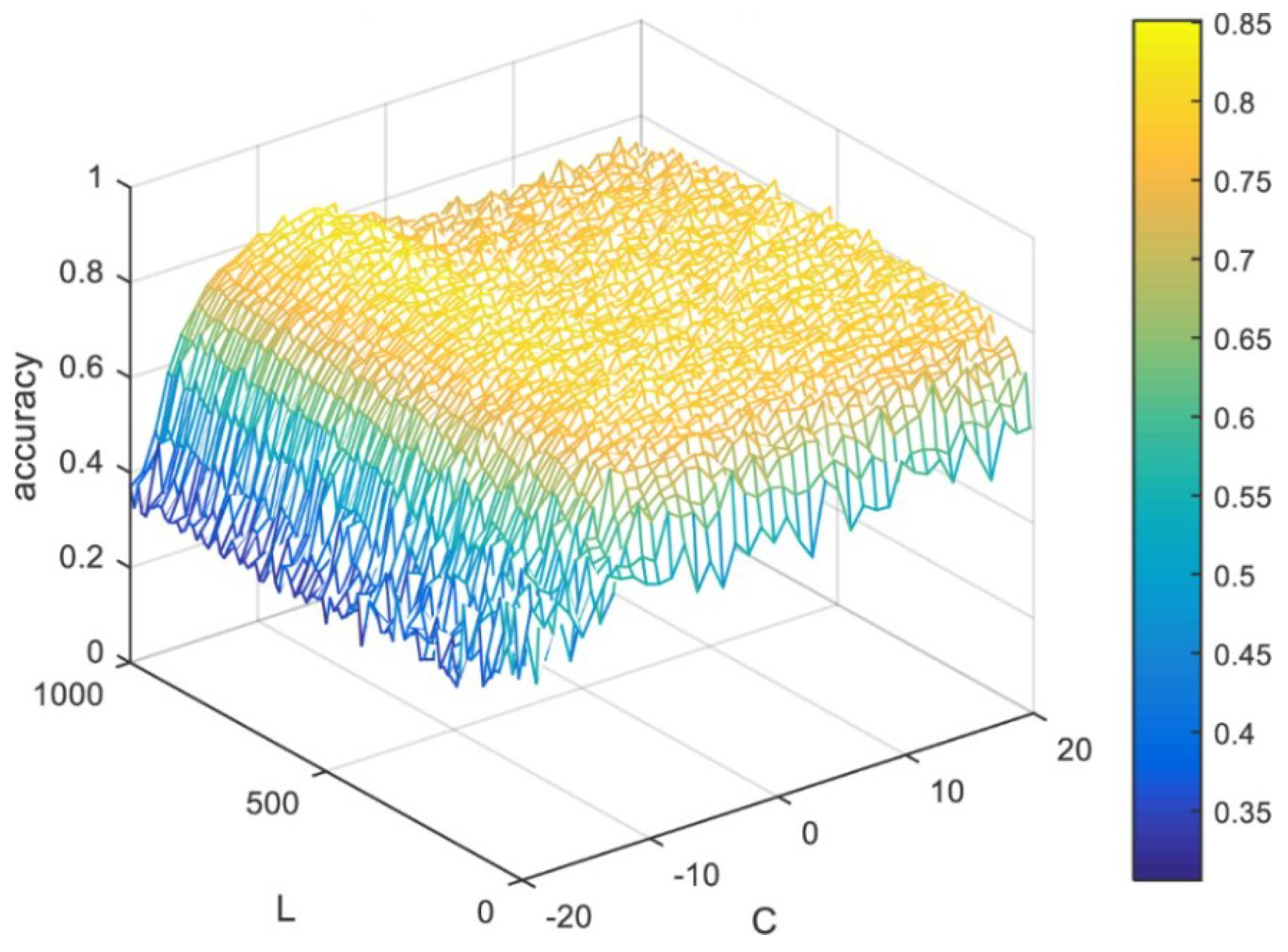
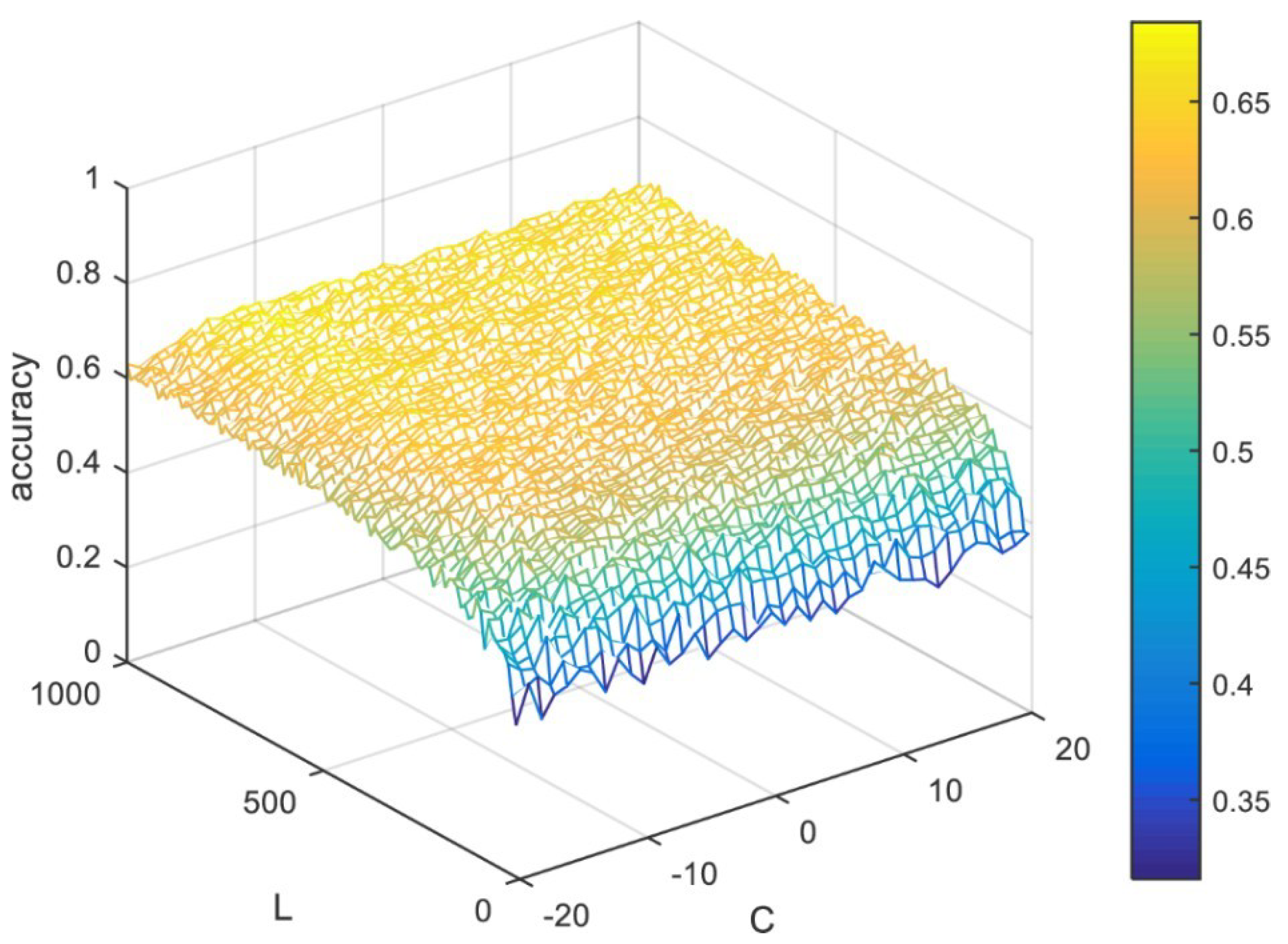
For the selection of the scenario parameters, the regularization parameter was dependent on the relationship between the accuracy and regularization parameter (C), and was selected based on C = 2−9 for the UJIIndoorLoc dataset. As depicted in Figure 3, the number of hidden neurons L was chosen to be 850 for this dataset, on the basis of the relationship between L and the accuracy. Similarly, L was selected to be 750 and C = 2−6 for the TampereU dataset, as shown in Figure 4.
Figure 3. Mesh representation of the relationship between the accuracy, the number of neurons L, and the regularization parameter C for the extreme learning machine (ELM) classifier based on the UJIIndoorLoc dataset.
Figure 4. Mesh representation of the relationship between the accuracy, the number of neurons L, and the regularization parameter C for the extreme learning machine (ELM) classifier based on the TampereU dataset.
During the formation of the dataset, the first classification was made with two equal parts, one for testing and another for training. Subsequently, for location A, a set of arbitrary characteristics was selected. Out of this set of characteristics, another set of arbitrary characteristics was selected for location B. Moreover, to disable the non-working APs, the values of the pre-processing step were set in the range of 0 to 100. Algorithm 2 explains the specifics of the process used for testing scenario 1. The process was applied in the same way for the other scenarios.
Algorithm 2. Pseudocode for the dataset preparation for testing scenario 1.
1- 
Input:
2-
trainD: Raw training dataset of Wi-Fi fingerprint
3-
testD: Raw testing dataset of Wi-Fi fingerprint
4-
A, B: two locations with common features
5-
NA: number of features in location A
6-
NB: number of features in location B
7- 
Output:
8-
DA: data of location A
9-
DB: data of location B
10- 
Start:
11-
Replace all 100 in trainD and testD with 0   // preprocessing
12-
nData = number of records in trainD
13-
number of RecordsA = nData/2
14-
testDataA = testD
15-
testDataB = testD              //testData is the same for locations A and B
16-
nFeatures = number of features in dataset
17-
nFeatures = 1:nFeatures           //create vector of features labels 1, 2,..., nFeatures
18-
featuresA = getRandom(features,NA)    //select NA random features from features
19-
featuresB = getRandom(featuresA,NB)    //select NB random features from featuresA
20-
trainDataA = trainData(1:numberofRecordsA)
21-
trainDataB = trainData(numberofRecordsA + 1:end)
22-
trainDataAf = GenerateData(trainDataA, featuresA)
23-
testDataAf = GenerateData (testDataA, featuresA)
24-
trainDataBf = GenerateData (trainDataB, featuresB)
25-
trainDataBf = GenerateData(testDataB, featuresB)
26- 
end

4.2. Results and Analysis

To perform the analysis, the measures were generated for all the presented scenarios. Section 4.2.1 presents the details related to the accuracy of the models. The objective of this is to distinguish the accuracy of the developed model from those of another benchmark model with respect to the performance of location prediction. A new measure, MAC, is introduced in Section 4.2.2 to provide a quantitative summary of the differences in accuracy. The standard deviation measure included in Section 4.2.3 was used to analyze the stability of the classifier. The other measures used for the classification evaluation are discussed in Section 4.2.4.

4.2.1. Accuracy

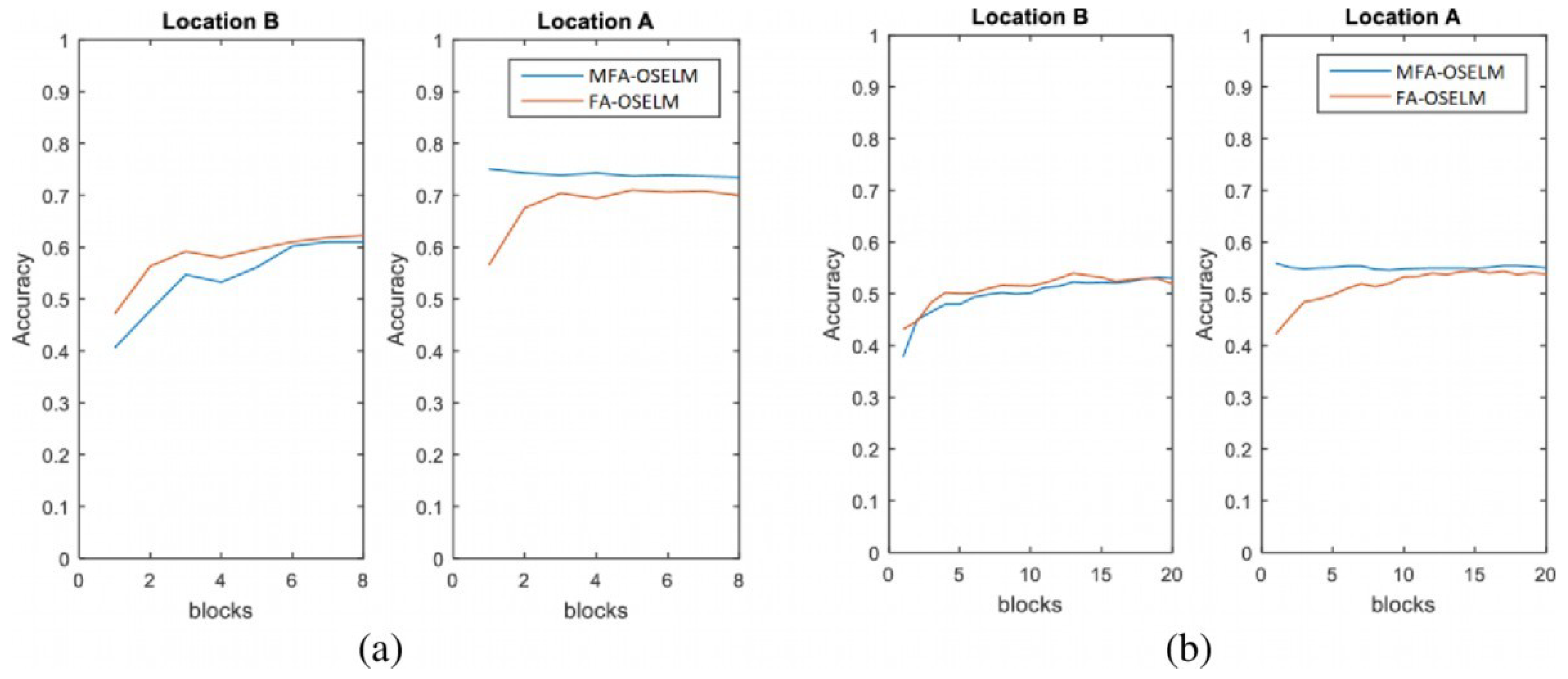
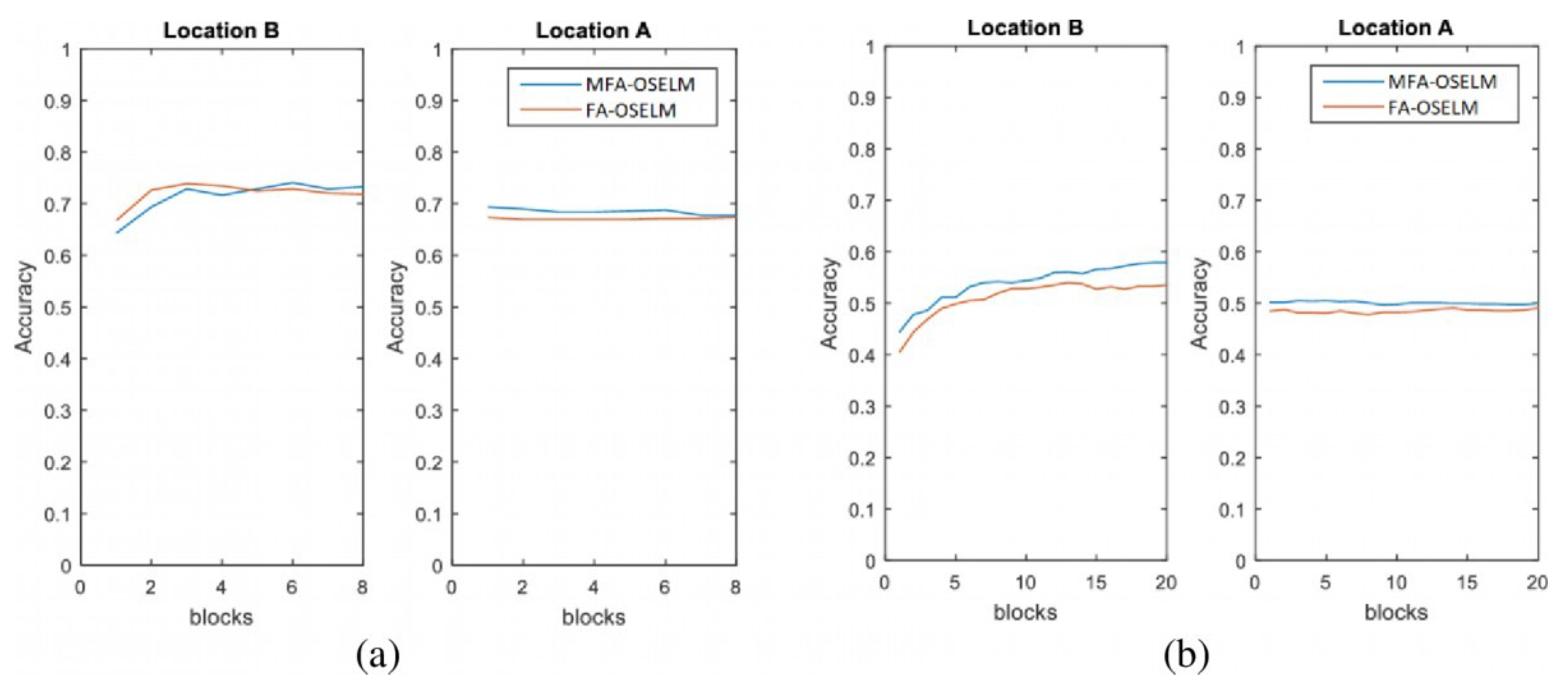
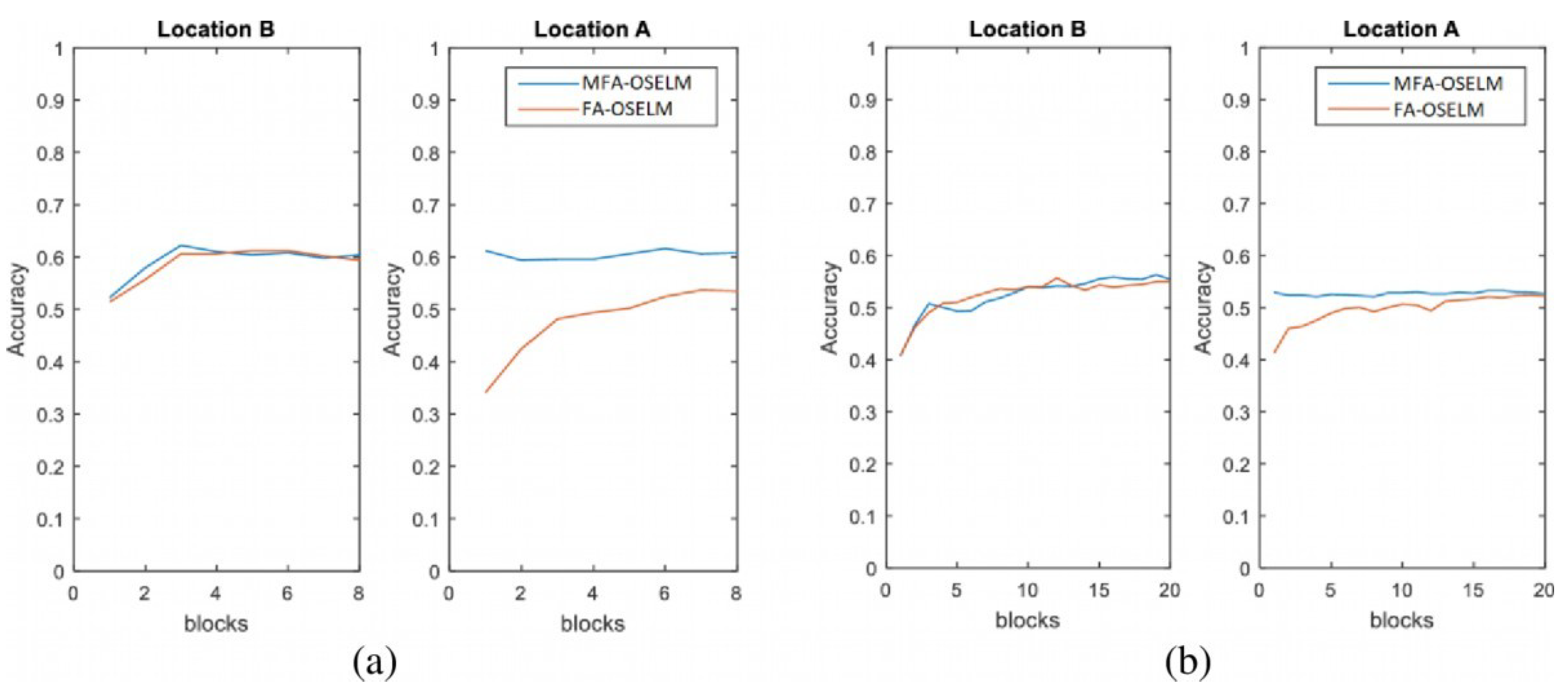
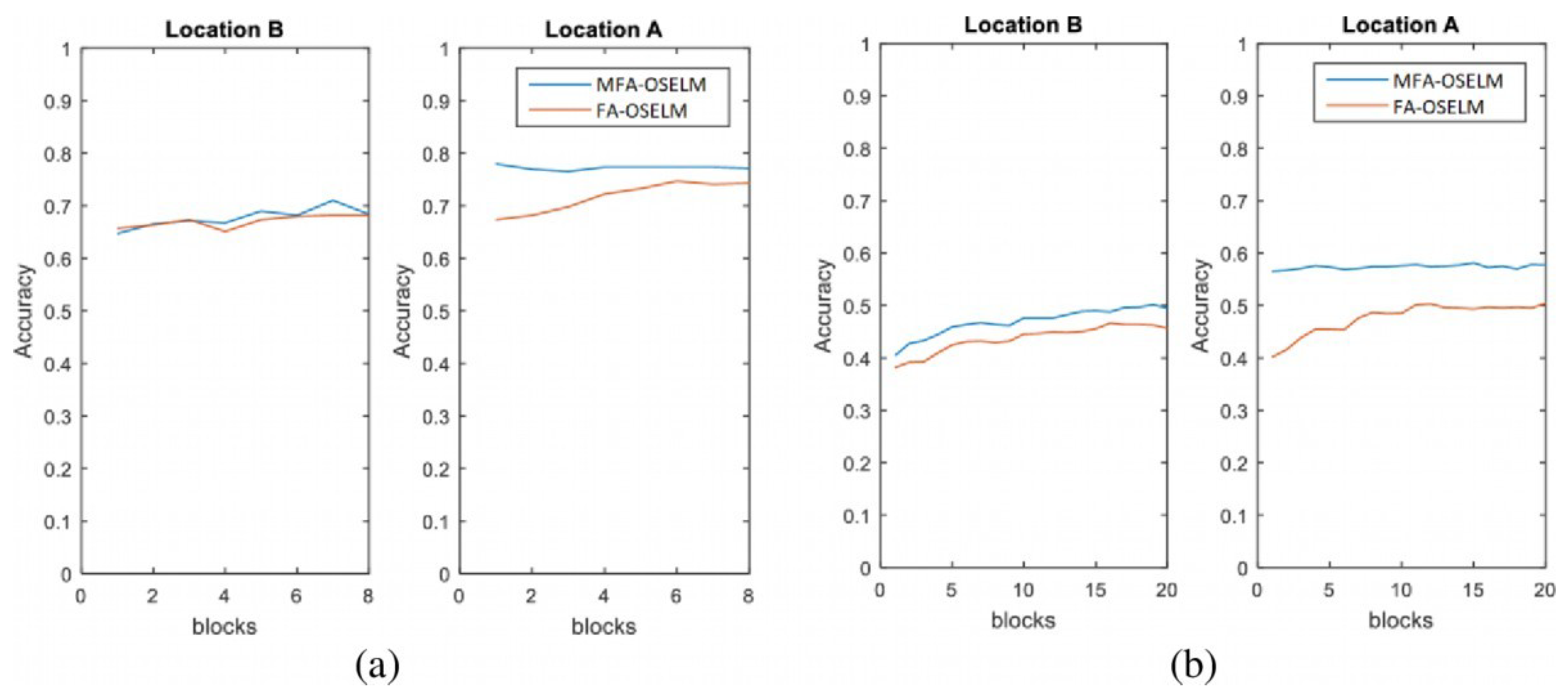
The accuracy of the MFA-OSELM model was computed and compared with that of the FA-OSELM model. The UJIndoorLoc and TampereU datasets were used to perform the comparison. Accuracy indicates the complementarity of the error ratio to 1, and the chunk indicates a block of data obtained by the classifier for estimation, where the correct values are used for the training of the next chunk (block). Figure 5, Figure 6, Figure 7 and Figure 8 represent the accuracy in relation to the chunks for all scenarios and both datasets.
Figure 5. Scenario 1: The accuracy of the maximum feature adaptive online sequential extreme learning machine (MFA-OSELM) and the feature adaptive online sequential extreme learning machine (FA-OSELM) for (a) the TampereU dataset and (b) the UJIIndoorLoc dataset.
Figure 6. Scenario 2: the accuracy of MFA-OSELM and FA-OSELM for (a) the TampereU dataset and (b) the UJIIndoorLoc dataset.
Figure 7. Scenario 3: The accuracy of MFA-OSELM and FA-OSELM for (a) the TampereU dataset and (b) the UJIIndoorLoc dataset.
Figure 8. Scenario 4: The accuracy of MFA-OSELM and FA-OSELM for (a) the TampereU dataset and (b) the UJIIndoorLoc dataset.
The graphs in Figure 5, Figure 6, Figure 7 and Figure 8 show that, for area A, MFA-OSELM and FA-OSELM had similar performances. This is due to the fact that the models did not have previous knowledge to remember. However, in area B, MFA-OSELM was superior to FA-OSELM, which was attributed to the difference in their knowledge preservation aspects. FA-OSELM had the transfer-learning capability. However, since transfer learning is a Markov-type process, it only remembers a previous state and brings its values to the current time. However, MFA-OSELM can restore previous knowledge whenever necessary.

4.2.2. Maximum Accuracy Change

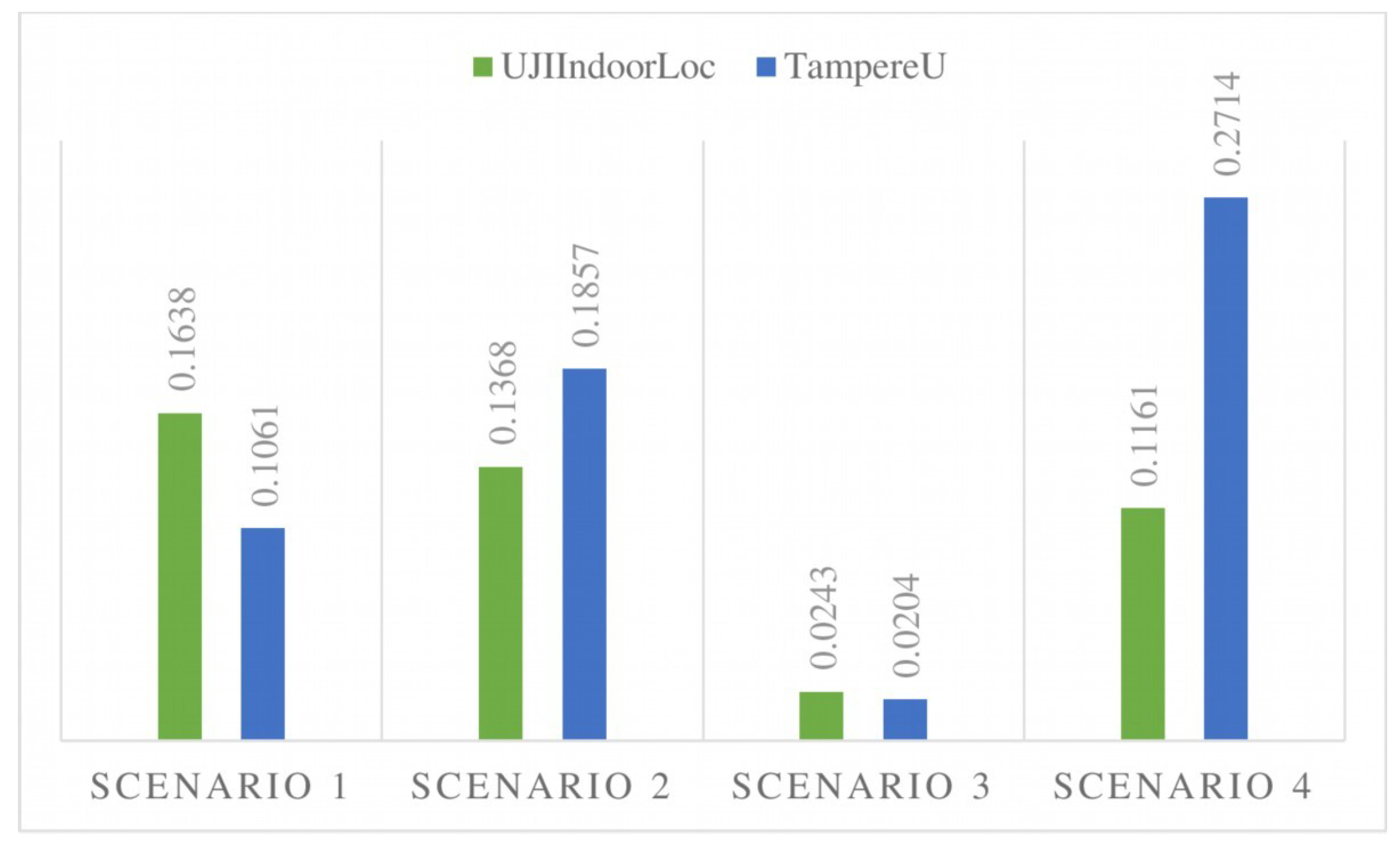
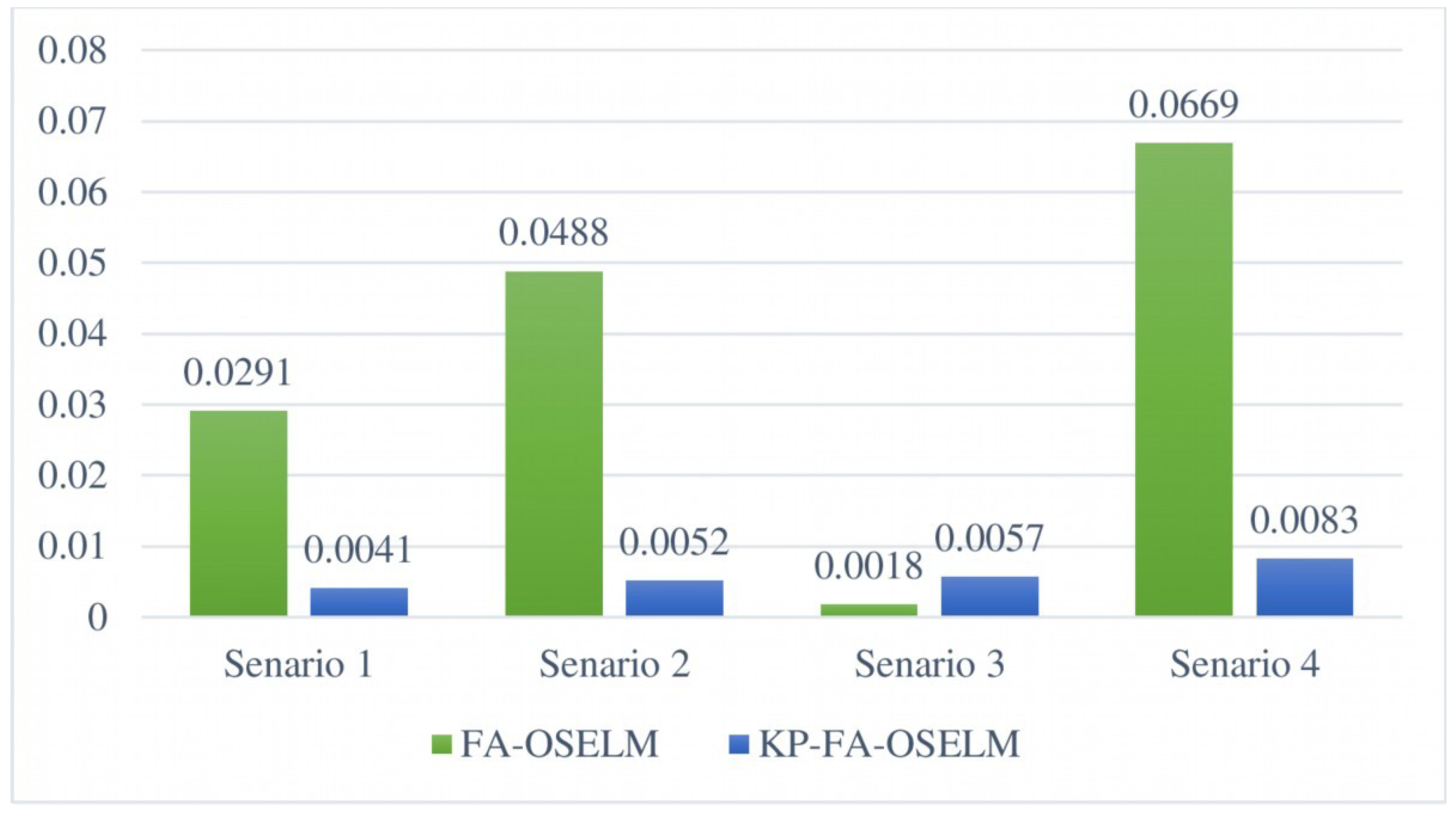
An estimation of MAC was carried out in order to gain a thorough understanding of the variation in the performance of the two models. Figure 9 presents the MAC values for both of the models for scenarios 1 to 4 for both datasets. As can be seen, the values of MAC are positive, which implies that the MFA-OSELM model delivers higher accuracy than the FA-OSELM model. The MAC measure is analyzed in area A, in all scenarios, as it is visited twice, and the purpose of the investigation is to assess the performance of the classification during the second visit. In all scenarios, it is evident that the performance of MFA-OSELM is better than that of FA-OSELM since there is a dearth of knowledge preservation in FA-OSELM, which is not the case with MFA-OSELM. Higher MAC is achieved for scenario 1, with a value of 0.1638 for the UJIIndoorLoc dataset, and for scenario 4, with a value of 0.2714 for the TampereU dataset. This superiority in performance is due to the fact that the MFA-OSELM model has the capability to retain and preserve knowledge. Among all scenarios, the lowest MAC is achieved for scenario 3 for both datasets. This result is justified by NA < NB and APAAPB, which shows that FA-OSELM is able to preserve the previous knowledge gained in area A, similar to MFA-OSELM.
Figure 9. Maximum accuracy change for MFA-OSELM and FA-OSELM for all scenarios for the UJIIndoorLoc and TampereU datasets.

4.2.3. Standard Deviation

The amount of new knowledge acquired by the classifier in an area is indicated by the standard deviation of the model accuracy in relation to the chunks of data. The classifier has the ability to restore previous knowledge when a person goes to an already visited area.
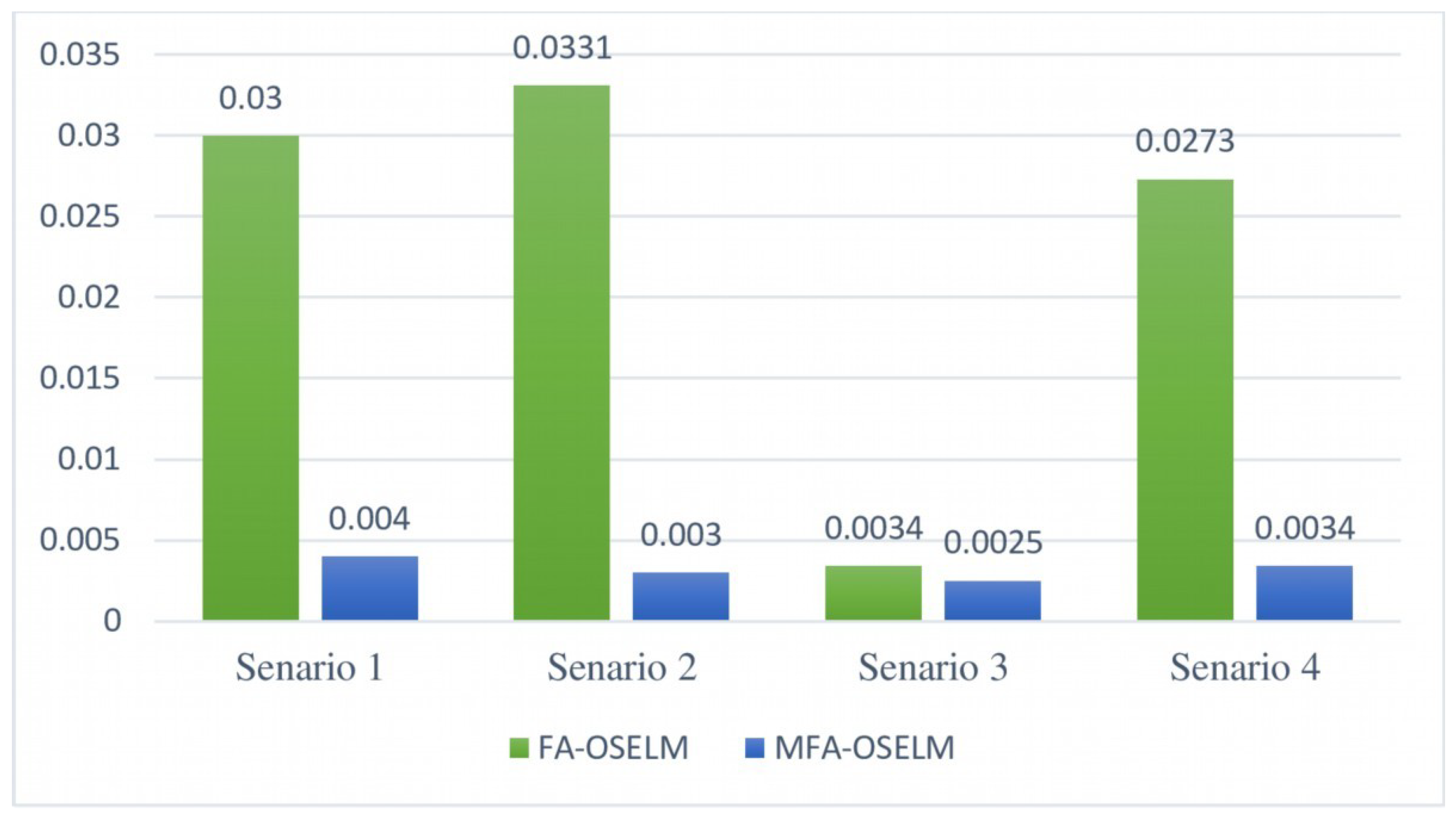
In both the MFA-OSELM and FA-OSELM models, the consistency and stability of the performance was measured using the standard deviations of the accuracy pertaining to the chunks of data, which indicate the volume of new knowledge acquired by the classifier in the area. The standard deviations of signal accuracy for all scenarios are shown in Figure 10 and Figure 11. The computation of these standard deviations was carried out in connection with the learning blocks. Of the two models, FA-OSELM results in the largest standard deviation in all scenarios. This is mainly due to the fact that FA-OSELM does not have the ability to conserve knowledge in accordance with changes in the number of features.
Figure 10. Standard deviations of model signal accuracy obtained using MFA-OSELM and FA-OSELM for the UJIIndoorLoc dataset.
Figure 11. Standard deviations of model signal accuracy obtained using MFA-OSELM and FA-OSELM for the TampereU dataset.

4.2.4. Classification Evaluation Measures

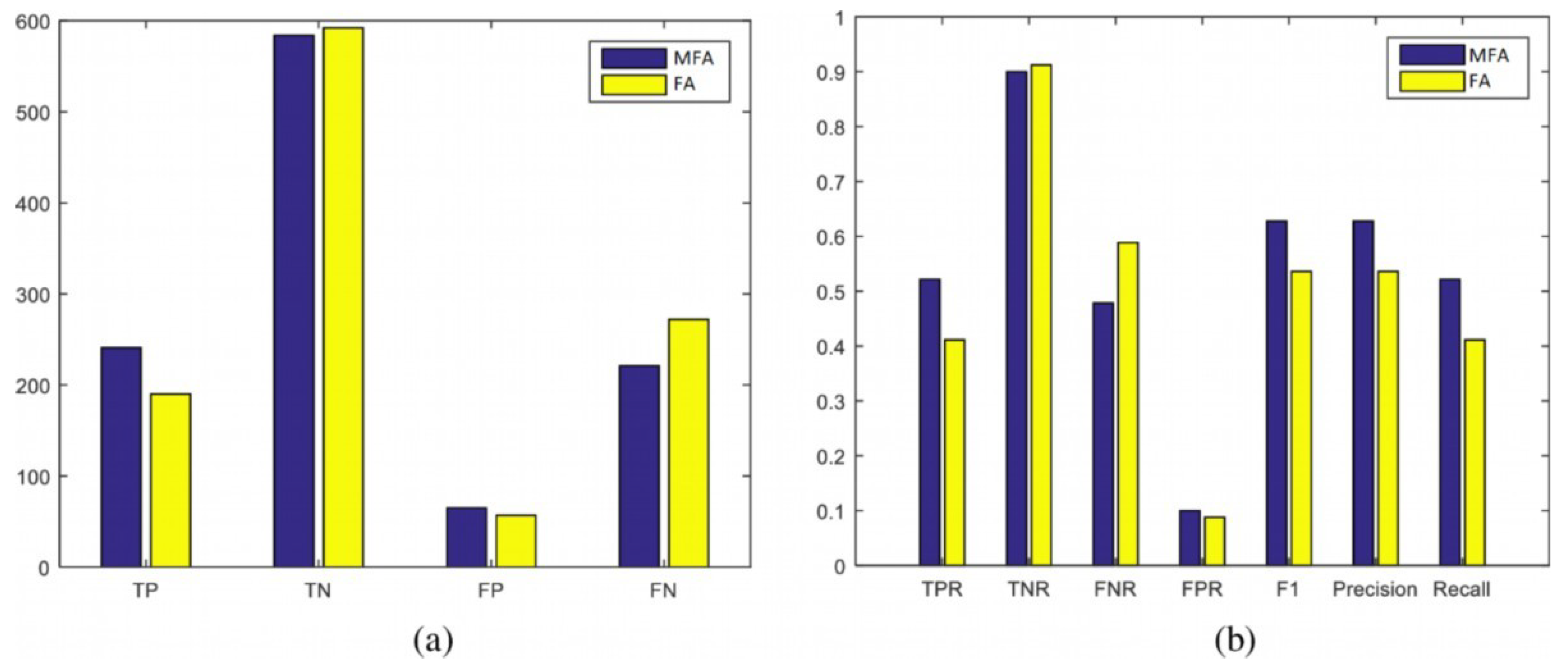
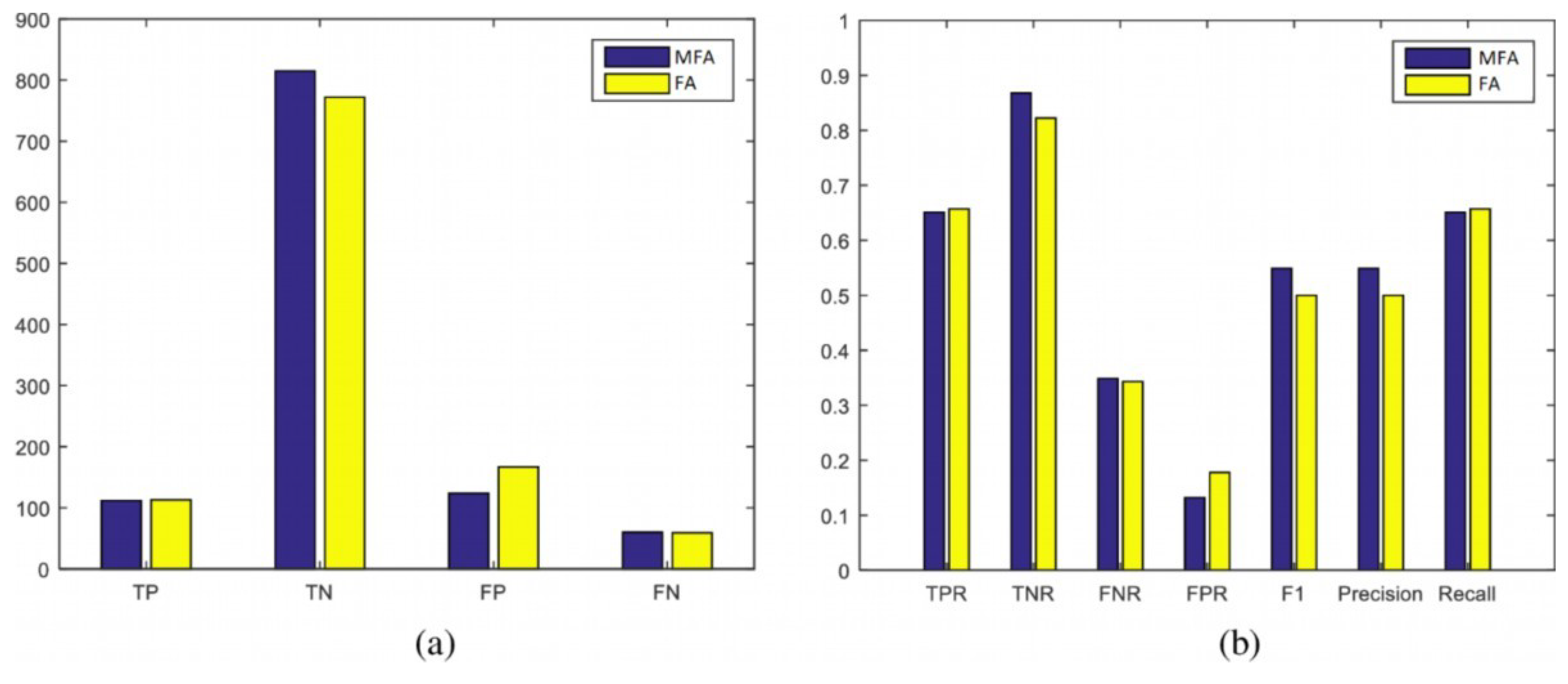
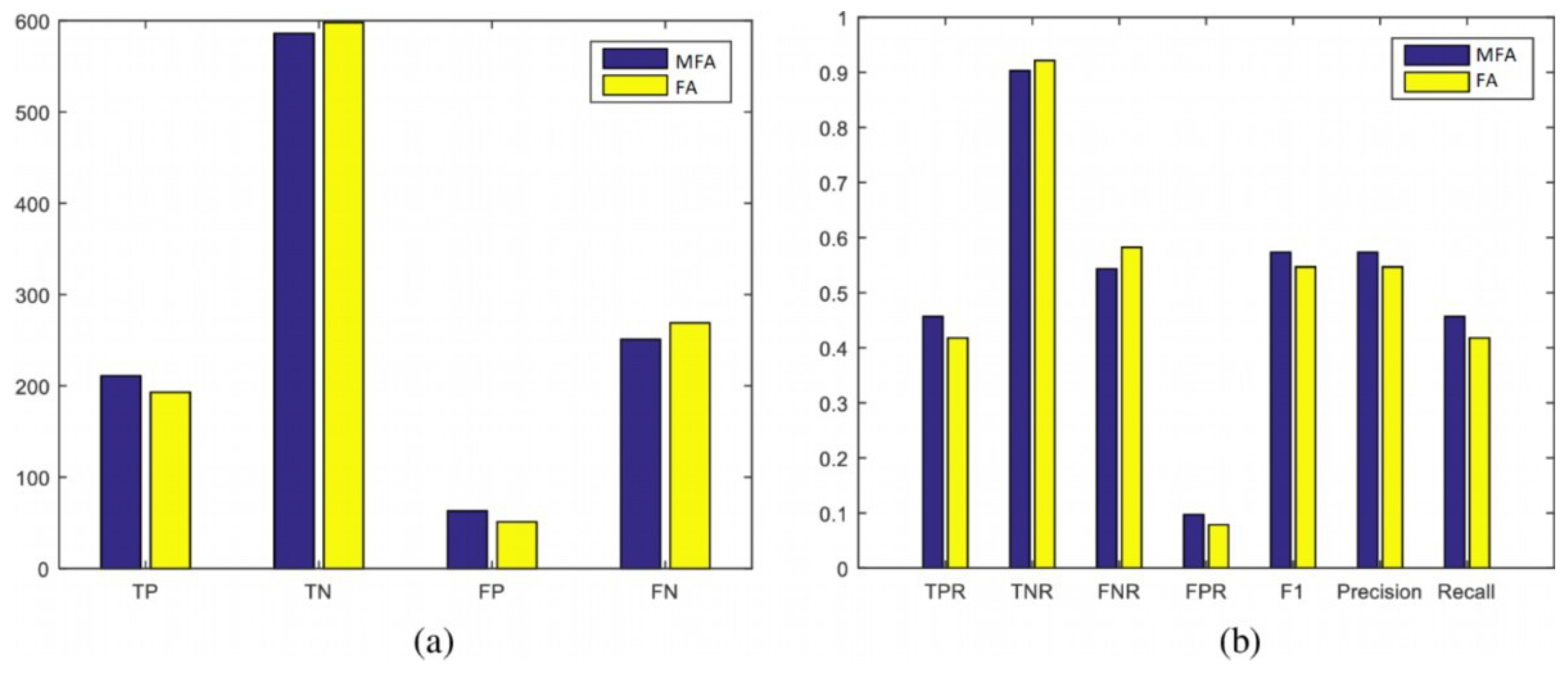
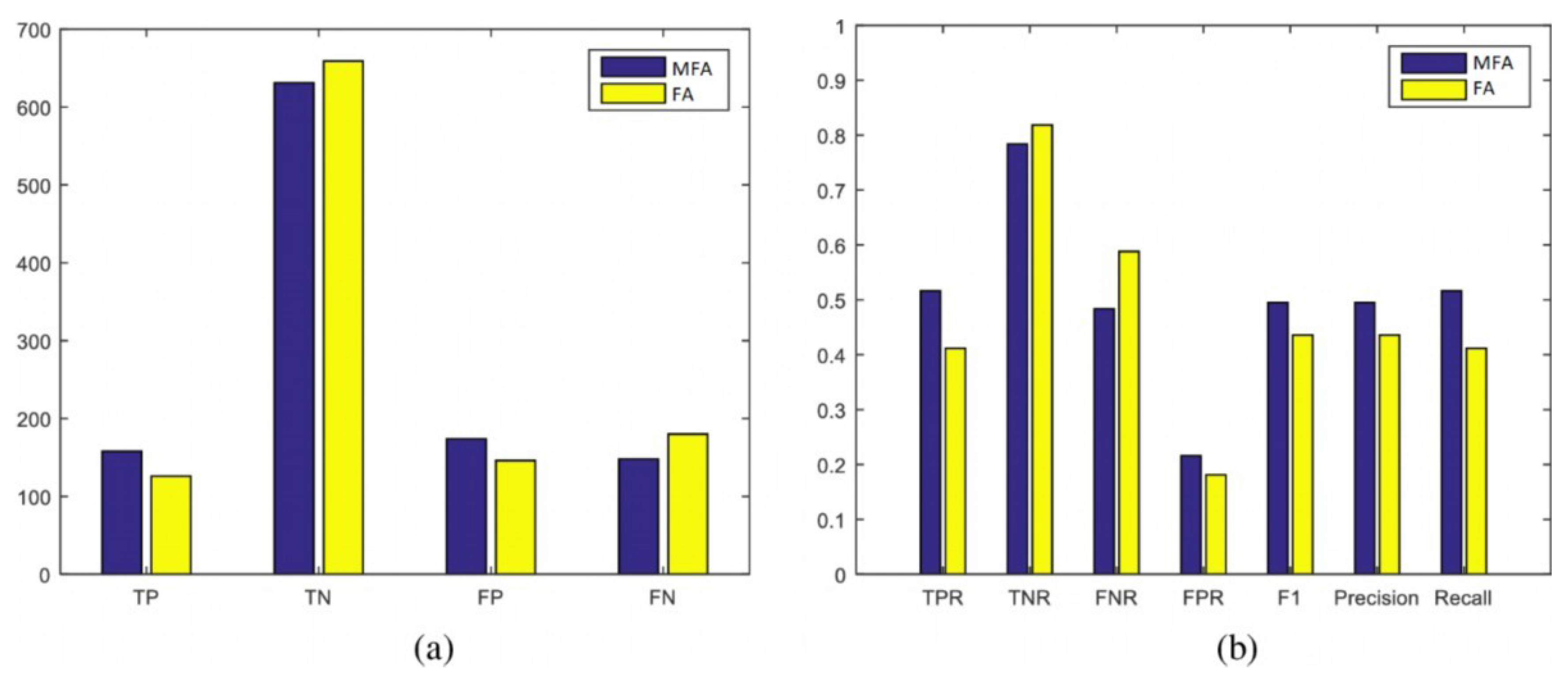
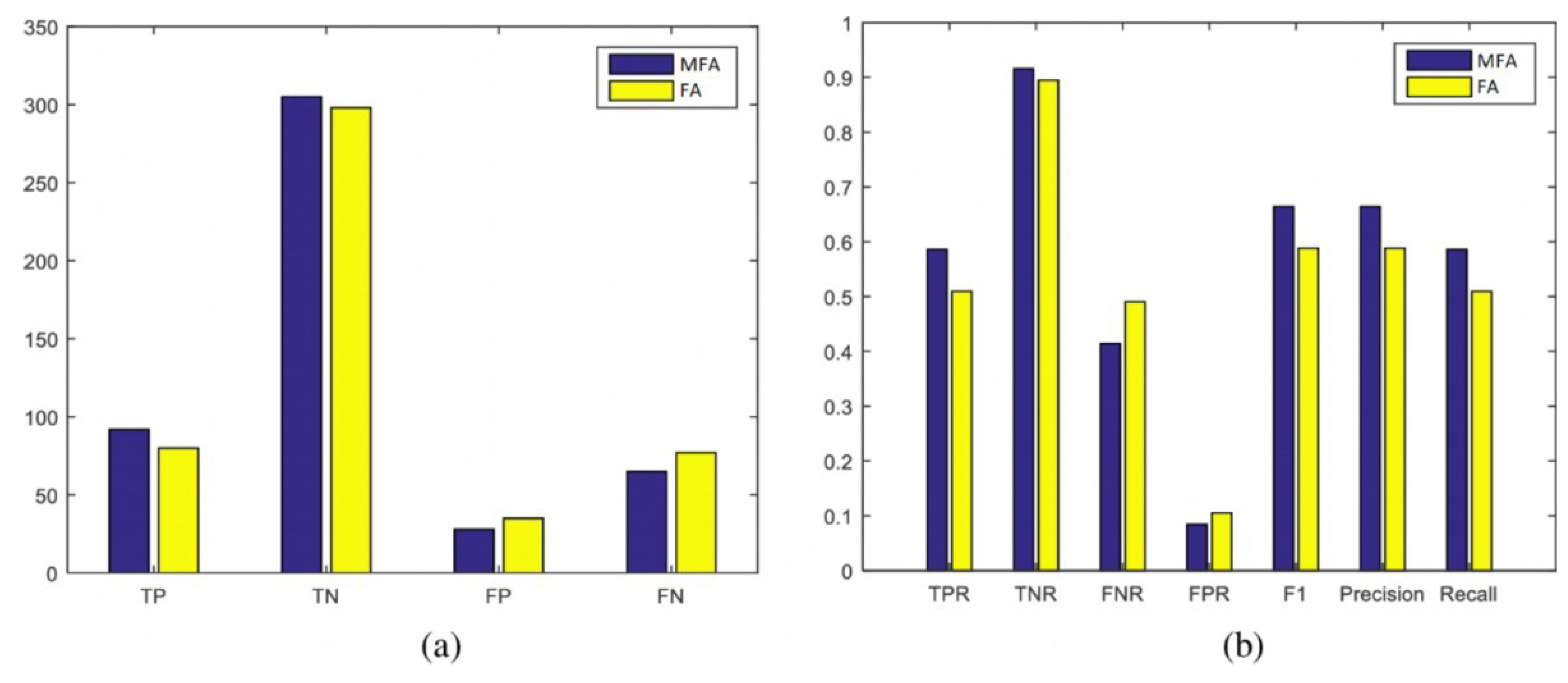
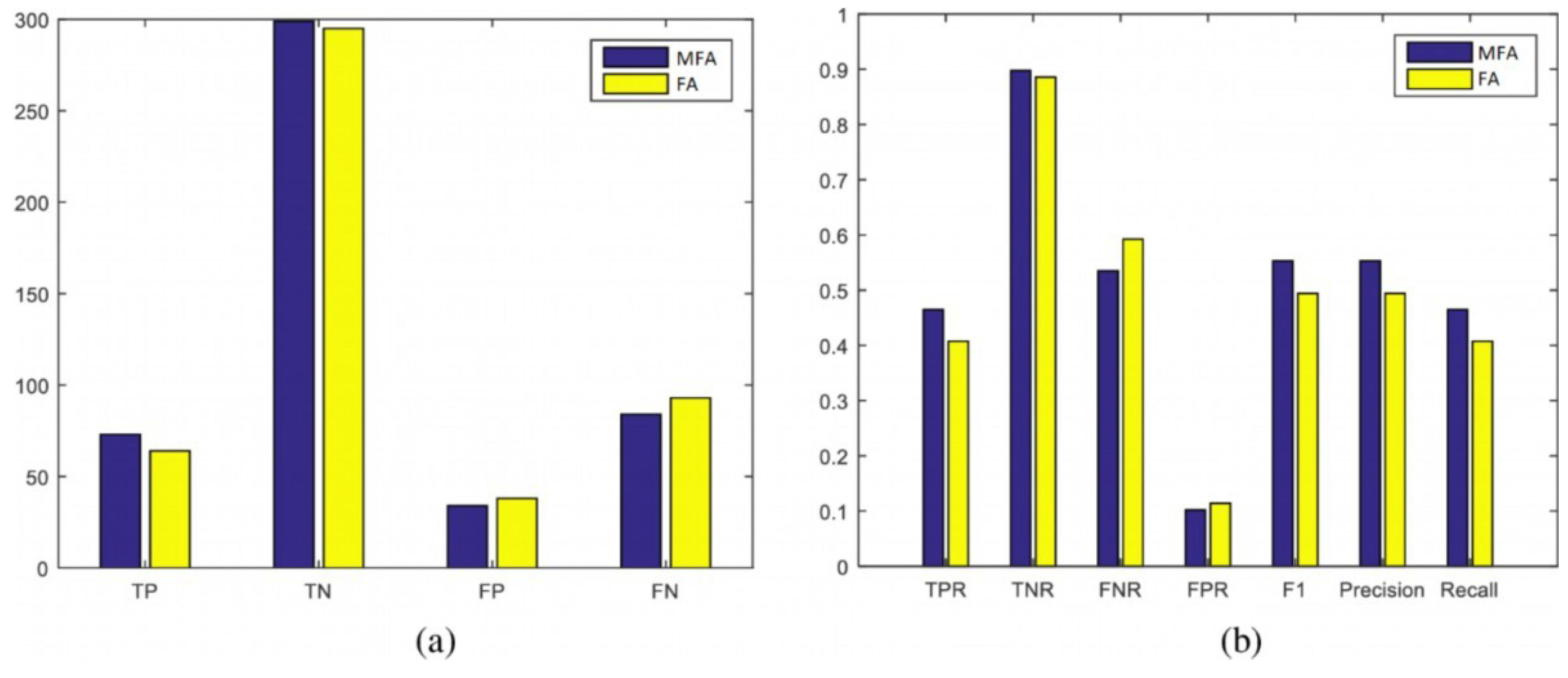
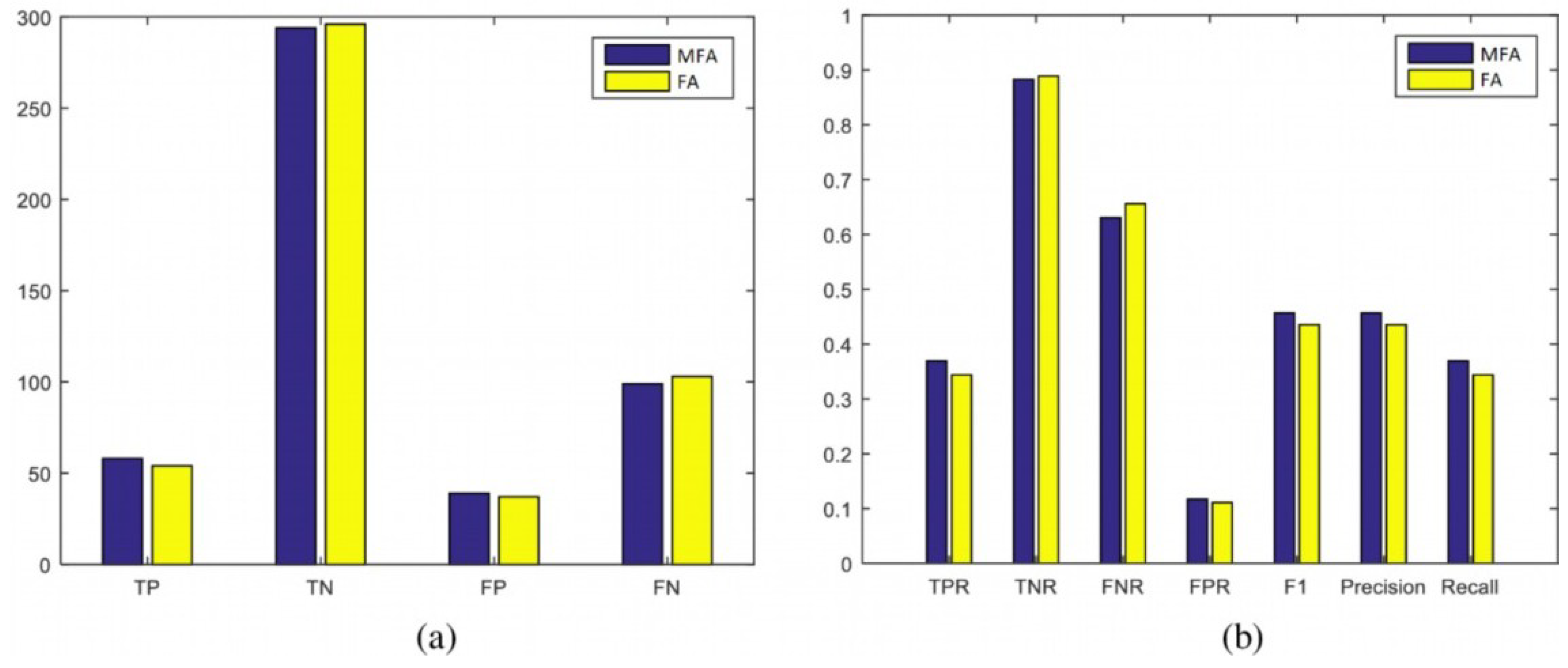
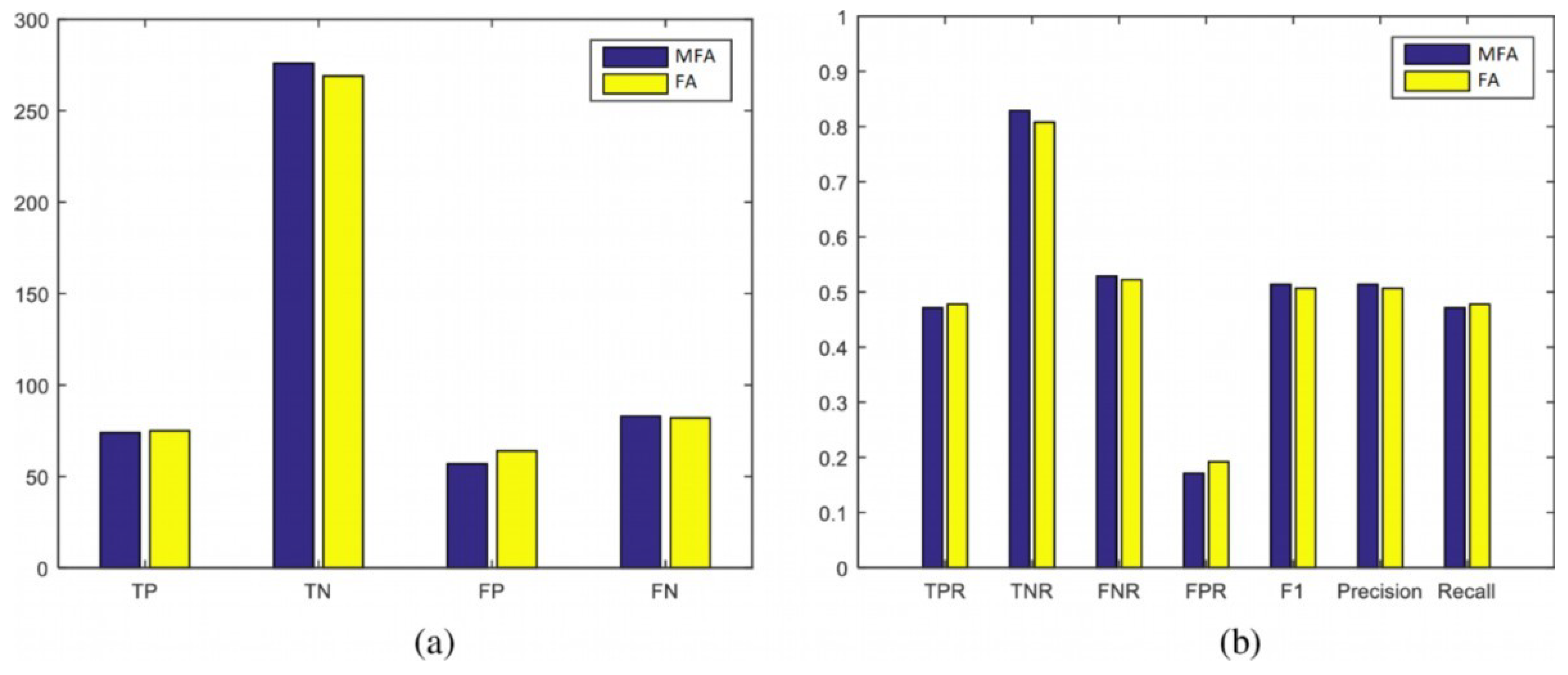
In these measures, the positive and negative identifications of the developed model (i.e., TP, TN, FP, and FN) and their frequencies are presented, and the performance of the benchmark model is evaluated. The recall, precision, and F1 measures for both the MFA-OSELM and FA-OSELM models for all scenarios are presented in Figure 12, Figure 13, Figure 14 and Figure 15 for the TampereU dataset and in Figure 16, Figure 17, Figure 18 and Figure 19 for the UJIIndoorLoc dataset. For the UJIIndoorLoc dataset, the MFA-OSELM model generally returns higher frequencies of TP and FP and generally returns lower frequencies of FN, while for the TampereU dataset, the MFA-OSELM model generally returns higher frequencies of TP and TN and generally returns lower frequencies of FP and FN. This suggests that the MFA-OSELM classifier is capable of a superior performance in general. The superiority in performance is observed for all scenarios. Moreover, the F1 and precision parameters are always greater for MFA-OSELM than for FA-OSELM, while the recall parameter is higher for MFA-OSELM in all cases other than for scenario 2 using the UJIIndoorLoc dataset and scenario 4 using the TampereU dataset. With regards to classification, these results confirm that MFA-OSELM is improved relative to FA-OSELM.
Figure 12. Scenario 1: statistical evaluation of MFA-OSELM and FA-OSELM using two sets of measures, (a,b), for the UJIIndoorLoc dataset.
Figure 13. Scenario 2: Statistical evaluation of MFA-OSELM and FA-OSELM using two sets of measures, (a,b), for the UJIIndoorLoc dataset.
Figure 14. Scenario 3: Statistical evaluation of MFA-OSELM and FA-OSELM using two sets of measures, (a,b), for the UJIIndoorLoc dataset.
Figure 15. Scenario 4: Statistical evaluation of MFA-OSELM and FA-OSELM using two sets of measures, (a,b), for the UJIIndoorLoc dataset.
Figure 16. Scenario 1: Statistical evaluation of MFA-OSELM and FA-OSELM using two sets of measures, (a,b), for the TampereU dataset.
Figure 17. Scenario 2: Statistical evaluation of MFA-OSELM and FA-OSELM using two sets of measures, (a,b), for the TampereU dataset.
Figure 18. Scenario 3: Statistical evaluation of MFA-OSELM and FA-OSELM using two sets of measures, (a,b), for the TampereU dataset.
Figure 19. Scenario 4: Statistical evaluation of MFA-OSELM and FA-OSELM using two sets of measures, (a,b), for the TampereU dataset.

5. Summary and Future Work

This article focuses on an online approach for the localization of an individual who is using WiFi technology and moving in an indoor environment. The approach is based on the concept of transfer learning, which has the potential to adapt to a varying number of APs. This study resolves the problem of the cyclic dynamic factor that occurs due to an individual’s movements within an indoor environment when the individual iteratively moves to positions that have already been visited. A neural network was required to retain previous knowledge for future use. Based on the analysis carried out in this study, the developed MFA-OSELM model shows a superior performance compared to the FA-OSELM model, with a maximum accuracy increase of 27% observed over the baseline approach (overall, accuracy increases ranged from eight to 27% and from six to 18% for the TampereU and UJIIndoorLoc datasets, respectively). This increase in accuracy convincingly validates the efficiency of the MFA-OSELM model compared to that of the FA-OSELM model. The standard deviation of model accuracy was also used for the performance evaluation, and was almost negligible in all scenarios for the MFA-OSELM model, thereby establishing that this model has an improved stability and is less prone to the loss of saved knowledge compared to the FA-OSELM model.
The objective of a future study will be to assess the influence of common characteristics between the two places on knowledge conservation. The purpose of such study will be to generalize this approach in order to optimize knowledge preservation, which will further involve the cyclic dynamic awareness of other kinds of learners.

Author Contributions

Conceptualization, A.S.A.-K.; Formal analysis, A.S.A.-K.; Funding acquisition, M.R.A., A.A.M.I., M.R.M.E., and R.F.M.; Methodology, A.S.A.-K.; Project administration, A.S.A.-K.; Resources, A.A.-S.; Software, A.S.A.-K.; Supervision, M.R.A., A.A.M.I., and M.R.M.E.; Validation, A.A.-S.; Visualization, A.S.A.-K.; Writing—original draft, A.S.A.-K.; Writing—review and editing, A.S.A.-K., M.R.A., A.A.M.I., A.A.-S., M.R.M.E., and R.F.M.

Funding

This research was funded by the Malaysian Ministry of Education, Universiti Teknikal Malaysia Melaka, under grant PJP/2018/FKEKK(3B)/S01615, and in part by Universiti Teknologi Malaysia under grants 14J64 and 4F966.

Conflicts of Interest

The authors declare no conflict of interest regarding this paper.

References

  1. Wan, J.; Zou, C.; Ullah, S.; Lai, C.F.; Zhou, M.; Wang, X. Cloud-enabled wireless body area networks for pervasive healthcare. IEEE Netw. Mag. 2013, 27, 56–61. [Google Scholar] [CrossRef]
  2. Xiao, J.; Zhou, Z.; Yi, Y. A Survey on Wireless Indoor Localization from the Device Perspective. ACM Comput. Surv. CSUR 2016, 49, 25. [Google Scholar] [CrossRef]
  3. Umanets, A.; Ferreira, A.; Leite, N. GuideMe—A Tourist Guide with a Recommender System and Social Interaction. Procedia Technol. 2014, 17, 407–414. [Google Scholar] [CrossRef]
  4. Wang, S.; Fidler, S.; Urtasun, R. Lost shopping! Monocular localization in large indoor spaces. In Proceedings of the IEEE International Conference on Computer Vision, Santiago, Chile, 7–13 December 2015; pp. 2695–2703. [Google Scholar] [CrossRef]
  5. Zou, H.; Zhou, Y.; Jiang, H.; Huang, B.; Xie, L.; Spanos, C. Adaptive localization in dynamic indoor environments by transfer kernel learning. In Proceedings of the Wireless Communications and Networking Conference (WCNC), San Francisco, CA, USA, 19–22 March 2017; pp. 1–6. [Google Scholar] [CrossRef]
  6. He, S.; Lin, W.; Chan, S.G. Indoor Localization and Automatic Fingerprint Update with Altered AP Signals. IEEE Trans. Mob. Comput. 2017, 16, 1897–1910. [Google Scholar] [CrossRef]
  7. Jiang, X.; Chen, Y.; Liu, J.; Gu, Y.; Chen, Z. Wi-Fi and Motion Sensors Based Indoor Localization Combining ELM and Particle Filter. In Proceedings of the ELM-2014; Cao, J., Mao, K., Cambria, E., Man, Z., Toh, K.A., Eds.; Springer: Cham, Switzerlands, 2015; Volume 2, pp. 105–113. [Google Scholar] [CrossRef]
  8. Pan, S.J.; Yang, Q. A Survey on Transfer Learning. IEEE Trans. Knowl. Data Eng. 2010, 22, 1345–1359. [Google Scholar] [CrossRef]
  9. Jiang, X.; Liu, J.; Chen, Y.; Liu, D.; Gu, Y.; Chen, Z. Feature Adaptive Online Sequential Extreme Learning Machine for lifelong indoor localization. Neural Comput. Appl. 2016, 27, 215–225. [Google Scholar] [CrossRef]
  10. Huang, G.; Zhu, Q.; Siew, C. Extreme learning machine: Theory and applications. Neurocomputing 2006, 70, 489–501. [Google Scholar] [CrossRef]
  11. Sun, Z.; Chen, Y.; Qi, J.; Liu, J. Adaptive Localization through Transfer Learning in Indoor Wi-Fi Environment. In Proceedings of the 2008 Seventh International Conference on Machine Learning and Applications Adaptive, San Diego, CA, USA, 11–13 December 2008; pp. 331–336. [Google Scholar] [CrossRef]
  12. Gu, Y.; Liu, J.; Chen, Y.; Jiang, X. Constraint Online Sequential Extreme Learning Machine for lifelong indoor localization system. In Proceedings of the International Joint Conference on Neural Networks, Beijing, China, 6–11 July 2014; pp. 732–738. [Google Scholar] [CrossRef]
  13. Mundo, L.B.D.; Ansay, R.L.D.; Festin, C.A.M.; Ocampo, R.M. A Comparison of Wireless Fidelity (Wi-Fi) Fingerprinting Techniques. In Proceedings of the 2011 International Conference on ICT Convergence (ICTC), Seoul, Korea, 28–30 September 2011; pp. 20–25. [Google Scholar] [CrossRef]
  14. Heidari, M.; Alsindi, N.A.; Pahlavan, K. UDP identification and error mitigation in ToA-based indoor localization systems using neural network architecture. IEEE Trans. Wirel. Commun. 2009, 8, 3597–3607. [Google Scholar] [CrossRef]
  15. Huang, G.; Zhu, Q.; Siew, C. Extreme Learning Machine: A New Learning Scheme of Feedforward Neural Networks. In Proceedings of the 2004 IEEE International Joint Conference on Neural Networks, Budapest, Hungary, 25–29 July 2004; Volume 2, pp. 985–990. [Google Scholar] [CrossRef]
  16. Huang, G.; Zhou, H.; Ding, X.; Zhang, R. Extreme Learning Machine for Regression and Multiclass Classification. IEEE Trans. Syst. Man Cybern. Part B Cybern. 2012, 42, 513–529. [Google Scholar] [CrossRef] [PubMed]
  17. Yim, J. Introducing a decision tree-based indoor positioning technique. Expert Syst. Appl. 2008, 34, 1296–1302. [Google Scholar] [CrossRef]
  18. Zheng, V.W.; Xiang, E.W.; Yang, Q.; Shen, D. Transferring localization models over time. In Proceedings of the Twenty-Third AAAI Conference on Artificial Intelligence, Chicago, IL, USA, 13–17 July 2008; pp. 1421–1426. [Google Scholar]
  19. Koweerawong, C.; Wipusitwarakun, K.; Kaemarungsi, K. Indoor localization improvement via adaptive RSS fingerprinting database. In Proceedings of the International Conference on Information Networking 2013, Bangkok, Thailand, 28–30 January 2013; Volume 1, pp. 412–416. [Google Scholar] [CrossRef]
  20. Lo, C.C.; Hsu, L.Y.; Tseng, Y.C. Adaptive radio maps for pattern-matching localization via inter-beacon co-calibration. Pervasive Mob. Comput. 2012, 8, 282–291. [Google Scholar] [CrossRef]
  21. Zou, H.; Jiang, H.; Lu, X.; Xie, L. An Online Sequential Extreme Learning Machine Approach to WiFi Based Indoor Positioning. IEEE World Forum Internet Things 2014, 2014, 111–116. [Google Scholar] [CrossRef]
  22. Lu, X.; Zou, H.; Zhou, H.; Xie, L.; Huang, G.B. Robust Extreme Learning Machine With its Application to Indoor Positioning. IEEE Trans. Cybern. 2016, 46, 194–205. [Google Scholar] [CrossRef] [PubMed]
  23. Zhang, M.; Wen, Y. Pedestrian Dead-Reckoning Indoor Localization Based on OS-ELM. IEEE Access 2018, 6, 6116–6129. [Google Scholar] [CrossRef]
  24. AL-Khaleefa, A.S.; Ahmad, M.R.; Isa, A.A.M.; Esa, M.R.M.; AL-Saffar, A.; Hassan, M.H. Feature Adaptive and Cyclic Dynamic Learning Based on Infinite Term Memory Extreme Learning Machine. Appl. Sci. 2019, 9, 895. [Google Scholar] [CrossRef]
  25. Al-Khaleefa, A.S.; Ahmad, M.R.; Isa, A.A.M.; Esa, M.R.M.; Al-Saffar, A.; Aljeroudi, Y. Infinite-Term Memory Classifier for Wi-Fi Localization Based on Dynamic Wi-Fi Simulator. IEEE Access 2018, 6, 54769–54785. [Google Scholar] [CrossRef]
  26. Zou, H.; Huang, B.; Lu, X.; Jiang, H.; Xie, L. A Robust Indoor Positioning System Based on the Procrustes Analysis and Weighted Extreme Learning Machine. IEEE Trans. Wirel. Commun. 2016, 15, 1252–1266. [Google Scholar] [CrossRef]
  27. Han, J.; Kamber, M.; Pei, J. 8—Classification: Basic Concepts. In Data Mining: Concepts and Techniques; Han, J., Kamber, M., Pei, J., Eds.; Elsevier: Boston, MA, USA, 2011; pp. 327–391. ISBN 978-0-12-381479-1. [Google Scholar]
  28. Torres-Sospedra, J.; Montoliu, R.; Martinez-Uso, A.; Avariento, J.P.; Arnau, T.J.; Benedito-Bordonau, M.; Huerta, J. UJIIndoorLoc: A new multi-building and multi-floor database for WLAN fingerprint-based indoor localization problems. In Proceedings of the 2014 International Conference on Indoor Positioning and Indoor Navigation (IPIN), Busan, Korea, 27–30 October 2014; pp. 261–270. [Google Scholar] [CrossRef]
  29. Lohan, S.E.; Torres-Sospedra, J.; Leppäkoski, H.; Richter, P.; Peng, Z.; Huerta, J. Wi-Fi crowdsourced fingerprinting dataset for indoor positioning. Data 2017, 2, 32. [Google Scholar] [CrossRef]
Article Metrics

Citations

Article Access Statistics

Multiple requests from the same IP address are counted as one view.