Abstract
We examined the degradation of nuclear waste borosilicate and phosphate glasses containing strong alpha-emitter 238Pu at a specific activity of 6.33 × 10⁵ MBq/g in comparison with similar non-radioactive, non-radioactive irradiated and radioactive samples containing beta- and gamma-emitters, namely radionuclides 134Cs and 137Cs. For irradiation and leaching experiments, we used borosilicate and phosphate glasses, which are well-known and currently used to immobilize high-level radioactive waste. The main focus was the observation of the surface of altered glasses. Comparative analysis of hydrolytic surface alteration of borosilicate and phosphate nuclear waste glasses reveals that the behavior of radioactive samples differs significantly from that of non-radioactive glasses.
1. Introduction
Vitrification is considered as one of the best solutions in providing safe nuclear waste storage, transportation, and final disposal. The use of the vitrification process for conditioning of radioactive wastes is a well-known process, which has been used in many countries across several decades; France, India, Japan, Russia, Slovakia, South Korea, the UK and USA have operational vitrification facilities used to immobilize both radioactive high level waste (HLW) and low and intermediate level waste (LILW), with Germany having recently completed their HLW vitrification program [1,2,3]. Except for alkali-aluminophosphate glass used in Russia, alkali-borosilicate glass has been universally selected as the vitreous wasteform used to immobilize HLW worldwide. Nevertheless, some nuclear waste streams, such as legacy LILW accumulated during the completion of various nuclear development programs, are better suited to immobilization using specially designed silicate or phosphate systems due to their composition [3,4]. Although there are numerous publications dedicated to the chemical durability of vitreous (glass) wasteforms in contact with water and under radiation damage (see, e.g., [5,6,7,8,9,10,11,12,13,14]), it is important to note that most of the results obtained are related to the study of non-radioactive simulants apart from a small number of works with real vitrified nuclear waste [15,16]. This is apparently caused by essential difficulties in carrying out experiments using real radioactive materials and the high cost of such experiments. Sometimes the information obtained from the study of samples of highly radioactive glass formally confirms their stability under intensive self-irradiation, low leach rates, etc. but does not contain analysis of the altered glass surface or vitreous matrix.
The nuclear wasteforms currently used particularly for highly radioactive waste have certain limitations including those of radionuclide contents. The economic incentive is to increase the waste loading including the content of decaying radionuclides. However, the behavior of highly radioactive materials is not fully understood especially from a long-term perspective; therefore, the prudential approach would be not to overload the wasteforms and to obey the limitations to a reasonable extent while investigating the materials’ behavior in limiting cases. Another incentive is to clarify to what extent the behavior of radioactive materials differs from that of analogous non-radioactive materials when the effects of irradiation are simulated using external radiation. Altogether there is a clear need for comparative research of the same type of materials with and without real radioactive components that cause self-irradiation of materials in expected conditions of use or operation of such materials. This was emphasized in earlier works published by researchers including those completed and published with the participation of authors of this paper. In the present study we focus on vitreous materials currently used to immobilize highly radioactive waste produced in the reprocessing of spent nuclear fuel—borosilicate and phosphate glasses. Accordingly, our aim was to confirm and compare the behavior of the same glasses that are used in practice.
This paper demonstrates and contains discussion of some results obtained from the study of borosilicate and phosphate glass doped with strong alpha-emitter 238Pu at specific activity 6.33 × 10⁵ MBq/g in comparison with non-radioactive analogues and a beta-gamma-radioactive sample containing beta-and gamma-emitters 134Cs and 137Cs. The focus was the observation of the surface of altered glasses.
2. Materials and Methods
We manufactured a series of vitreous samples using known data on compositions of glasses used for nuclear waste immobilization. The composition of synthesized borosilicate glass was based on data published by S. Peuget et al. [12]. Published data on composition of glasses utilized at the Russian HLW vitrification plant “Mayak” were used for the synthesis of aluminophosphate glass [3,13,17,18]. The compositions of non-radioactive and Pu-doped glass samples obtained in this study are presented in Table 1 in comparison with the real vitrified LILW containing decaying 134,137Cs [15].
Table 1.
Compositions of non-radioactive and Pu-doped glasses obtained, wt.%. Uncertainty for all data (except Pu content) is less than 0.1 wt.%; for Pu content, uncertainty is 0.05 wt.%.
The borosilicate glasses (non-radioactive and Pu-doped) were synthesized in alumina crucibles by melting the mixture of oxides in air at a fixed temperature of 1400 °C for 2 h and natural (uncontrolled) cooling of samples in closed furnace that was switched off. The glasses obtained were transparent and homogeneous (Figure 1).
Figure 1.
Sample of non-radioactive borosilicate glass «B-Si» in an alumina crucible (a) and a fragment of sample «B-Si_238» doped with 0.45 wt.% 238Pu (b).
The glasses obtained were X-ray amorphous; moreover, the absence of crystalline inclusions in the glass was confirmed by optical microscopy and Raman spectroscopy methods [19].
The synthesis of non-radioactive Na-Al-P glass was carried out in air using following procedures [17]:
- (1)
- Heating and melting of the oxides mixture at a temperature of 1040 °C for 2 h;
- (2)
- Cooling of the melt to 1010 °C and fast quenching on a plate made of stainless steel with a cast iron bottom;
- (3)
- Cooling in air followed by annealing of the glass at a temperature of 400 °C for 3 h
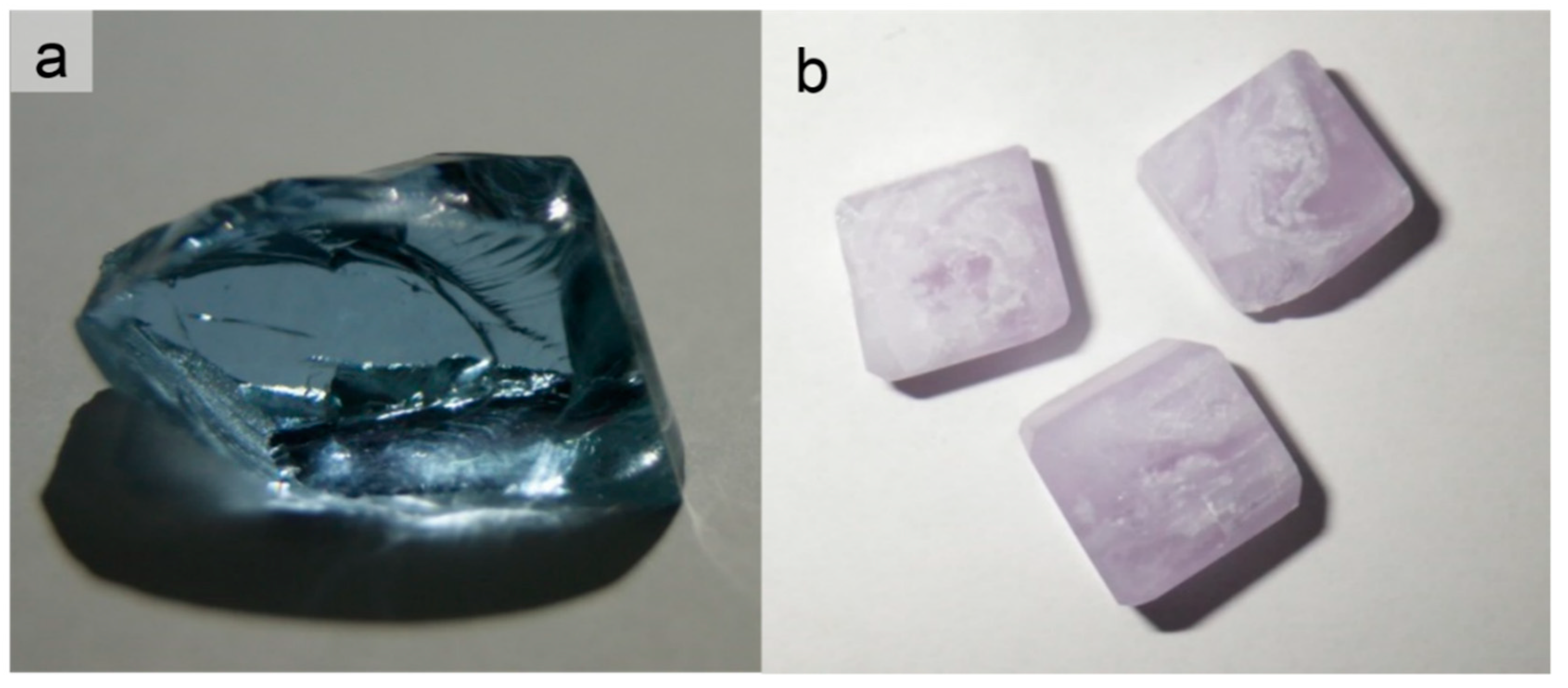
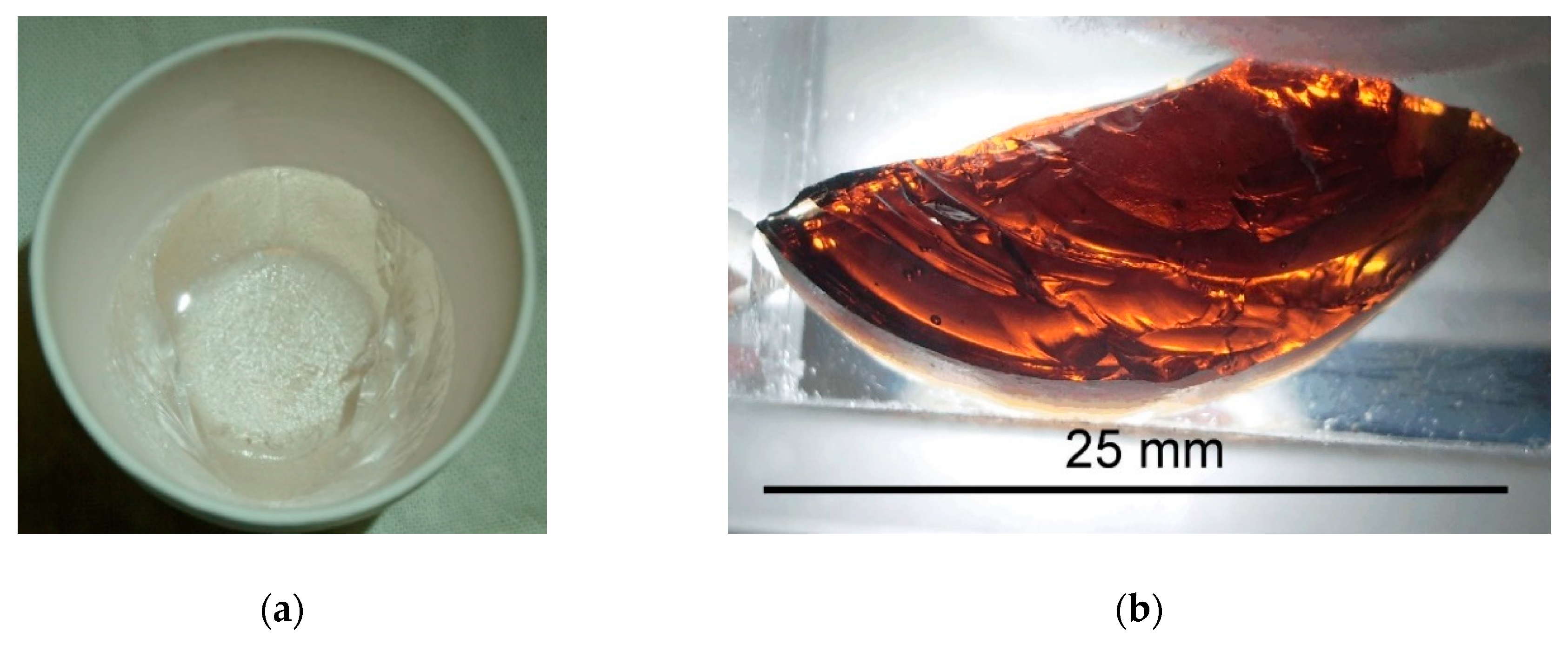
Glass samples obtained in this two-step synthesis process were homogeneous and transparent with a light blue color (Figure 2a). All attempts to synthesize glass in the one-step process (using various quenching times from 5 min to 8 h) were unsuccessful due to formation of crystalline inclusions of AlPO4 (Figure 2b).
Figure 2.
Fragments of homogeneous glass «Na-Al-P» doped with high level waste (HLW) simulant (a) and fragments of unacceptable partly crystallized glass with the same composition obtained in the unsuccessful one-step process (b).
Varying the melting temperature in a range from 800 to 1200 °C followed by fast quenching also did not result in homogeneous glass in the one-step process.
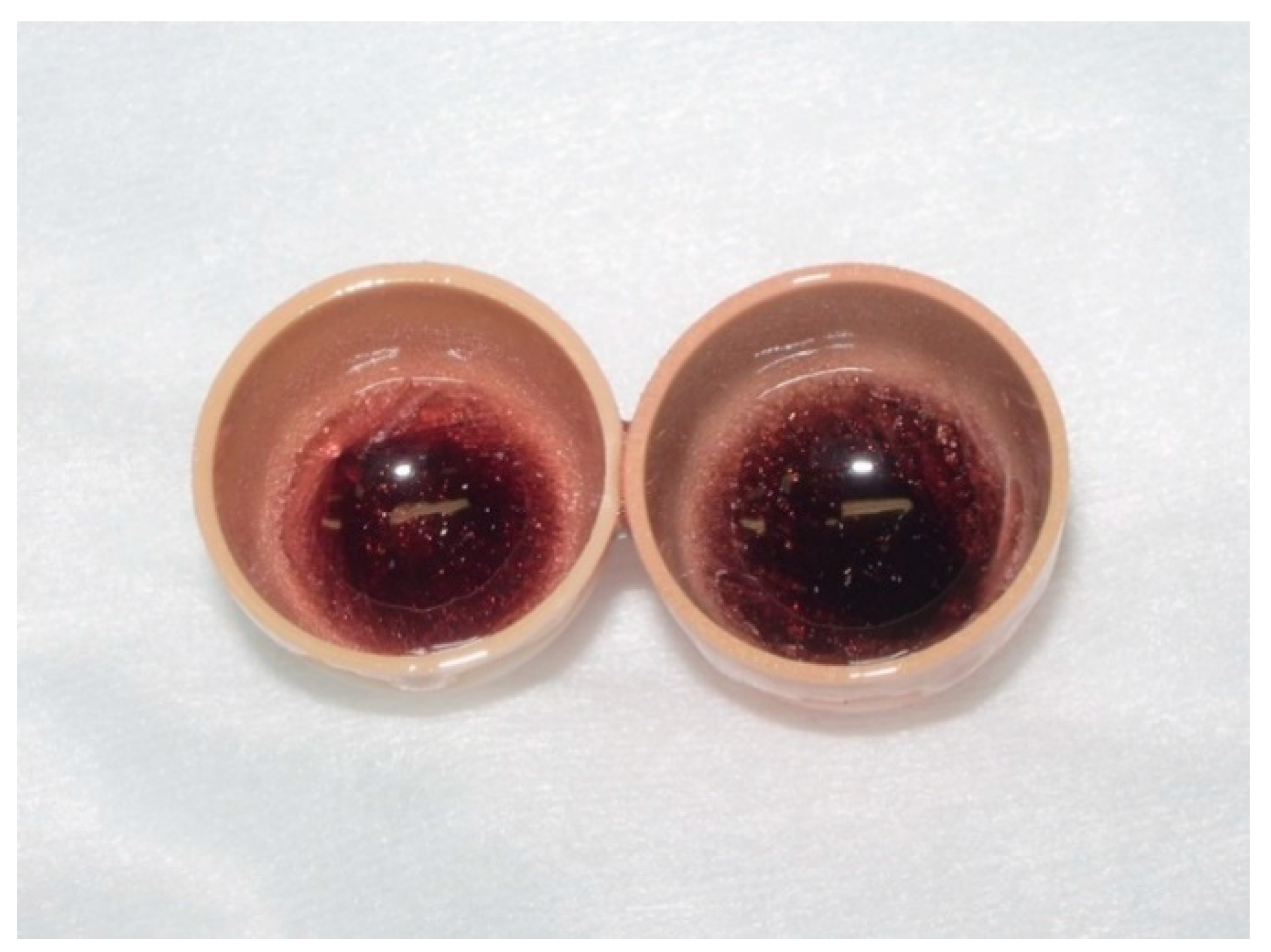
In order to simplify the synthesis procedure of 238Pu-doped glass, we added plutonium oxide powder to the frit of non-radioactive Na-AL-P glass (Figure 2a) instead of the initial oxide precursor. Synthesis was carried out in air at a temperature of 1200 °C for 2 h with natural cooling in air. Two samples doped with 0.15 and 0.43 wt.% 238Pu were obtained (Figure 3).
Figure 3.
Alumina crucibles with highly radioactive aluminophosphate glass «Na-Al-P_238» doped with 0.15 wt.% (left crucible) and 0.43 wt.% (right crucible) 238Pu.
Leaching experiments were carried out at 90 °C using a repeated MCC-1 static leaching test following the ASTM test protocol [20]. The sample of glass doped with 238Pu was placed on a support made of thin Pt wire in the TeflonTM test vessel with distilled water and set in the oven for 7 and 28 days («Na-Al-P_238») and 7, 14, 28, 56 and 112 days («B-Si_238»). For each test, the timing was reset after the replacement of the solution. The normalized Pu mass loss (NL) was calculated as follows:
where A—total activity of Pu in water solution and absorbed on the walls of test vessels after leaching, Bq; A0—the initial activity of Pu in the specimen, Bq; W—the initial mass of the specimen, g and S—the specimen’s geometric surface area without correction for ceramic porosity, m2. Contents of 238Pu in leachates were measured by both alpha- and gamma-spectrometry using Canberra-7401 and Canberra with multi-canal analyzer DSA-1000 and Ge-detector devices, respectively. The sample for alpha-spectrometry was prepared by drying 20 μL of the solution on a stainless steel plate. For gamma-spectrometry, 1 mL of the solution in an Eppendorf tube (1.5 mL) was placed at a distance of 1 cm from the detector. Two main lines (43.8 and 99 kEv) were used for 238Pu determination, but the intensities of these lines are very low (0.038 and 0.08%, respectively), and the detection limit is about 80 Bq/L. At the same time, gamma-spectrometry was used in addition to alpha-spectrometry for measurement of 241Am, which interferes with 238Pu in the alpha spectra (line 5500 kEv).
NL = A × W/A0 × S,
3. Results
3.1. Radionuclide Leaching
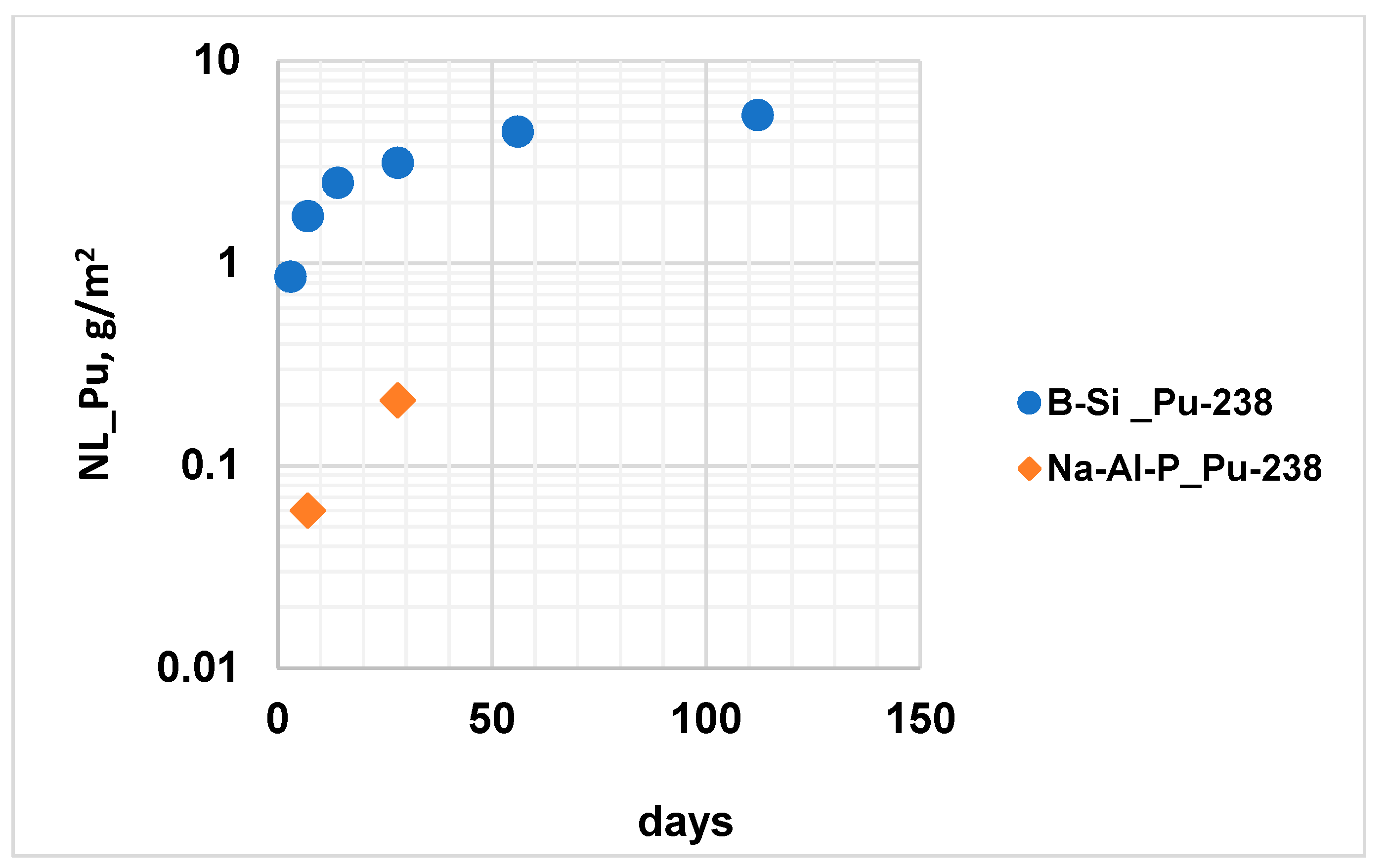
Plutonium normalized mass losses from B-Si_238 and Na-Al-P_238 samples are presented in Figure 4.
Figure 4.
Plutonium normalized mass losses (NL_Pu) from samples of 238Pu-doped borosilicate and alkali-aluminophosphate glass in distilled water at a temperature of 90 °C. Expanded uncertainty for all data is less than 20% of the value.
The Na-Al-P_238 sample demonstrates lower Pu mass loss than B-Si_238 in the same conditions, at least during the first month of the experiment. According to published data [3,13,21], alkali-aluminophosphate glass is less chemically durable than the borosilicate one. Reference [3] also provides acceptance data for normalized leaching rates of vitrified radioactive waste, for which Pu should be below 10−7 g·cm−2·day−1 at room temperature. Controversial results for aluminophosphate glass could be explained by the intensive formation of Pu colloids followed by sorption (precipitation) on the surface of the sample. Measured pH levels of the leachates are similar for both types of glass doped with 238Pu and vary from 5.5 to 6. The solutions after leaching were visually transparent, and possible colloid formation was not studied.
3.2. Surface Alteration
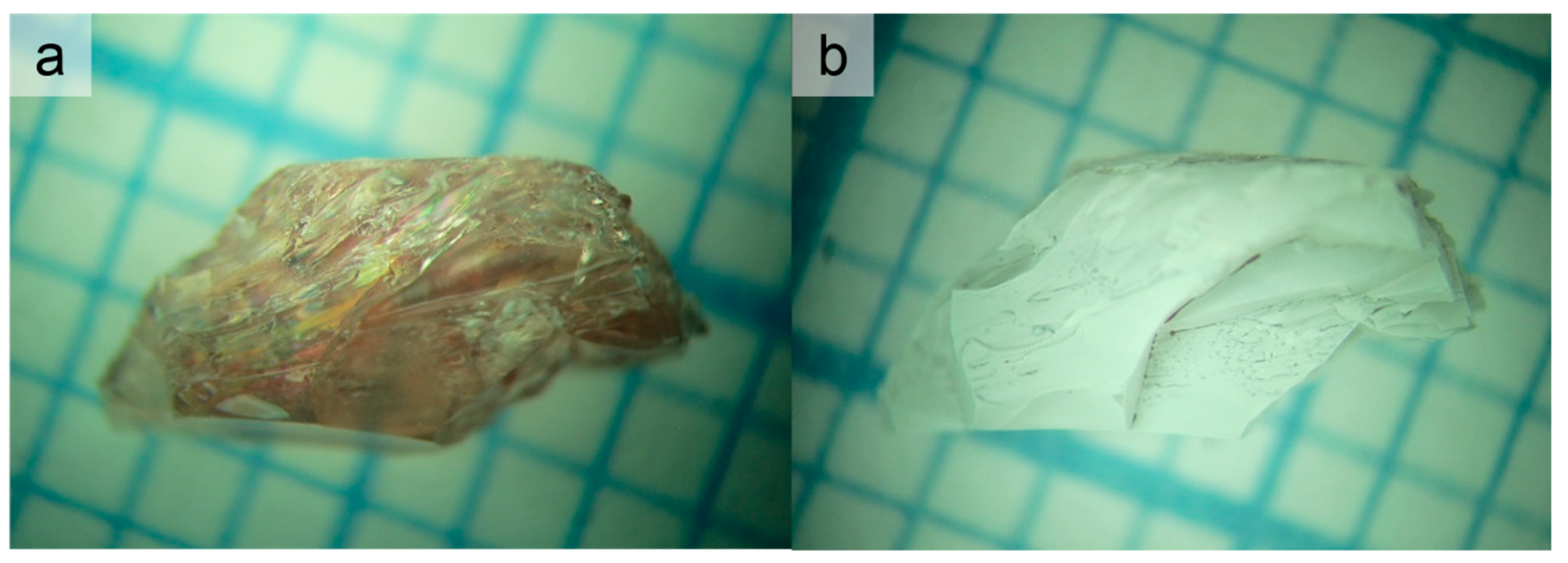
Alteration of glass sample surfaces during long-term contact with water was observed for both types of glasses. It is important to note that alteration of non-radioactive and Pu-doped samples is quite different. For the non-radioactive sample Na-Al-P, only insignificant opacity on the polished surface was observed. Alteration of alkali-aluminophosphate Pu-doped glass was clearly observed after 4.5 months of contact with water at 90 °C. The newly formed thick layer (so-called gel) covers the entire surface of the sample (Figure 5).
Figure 5.
Sample of alkali-aluminophosphate glass Na-Al-P_238 doped with 0.15 wt.% 238Pu (9.5 × 10³ Bq of 238Pu per gram of glass): pristine sample before leaching (a) and glass sample after 4.5 months in contact with distilled water at a temperature of 90 °C (b).
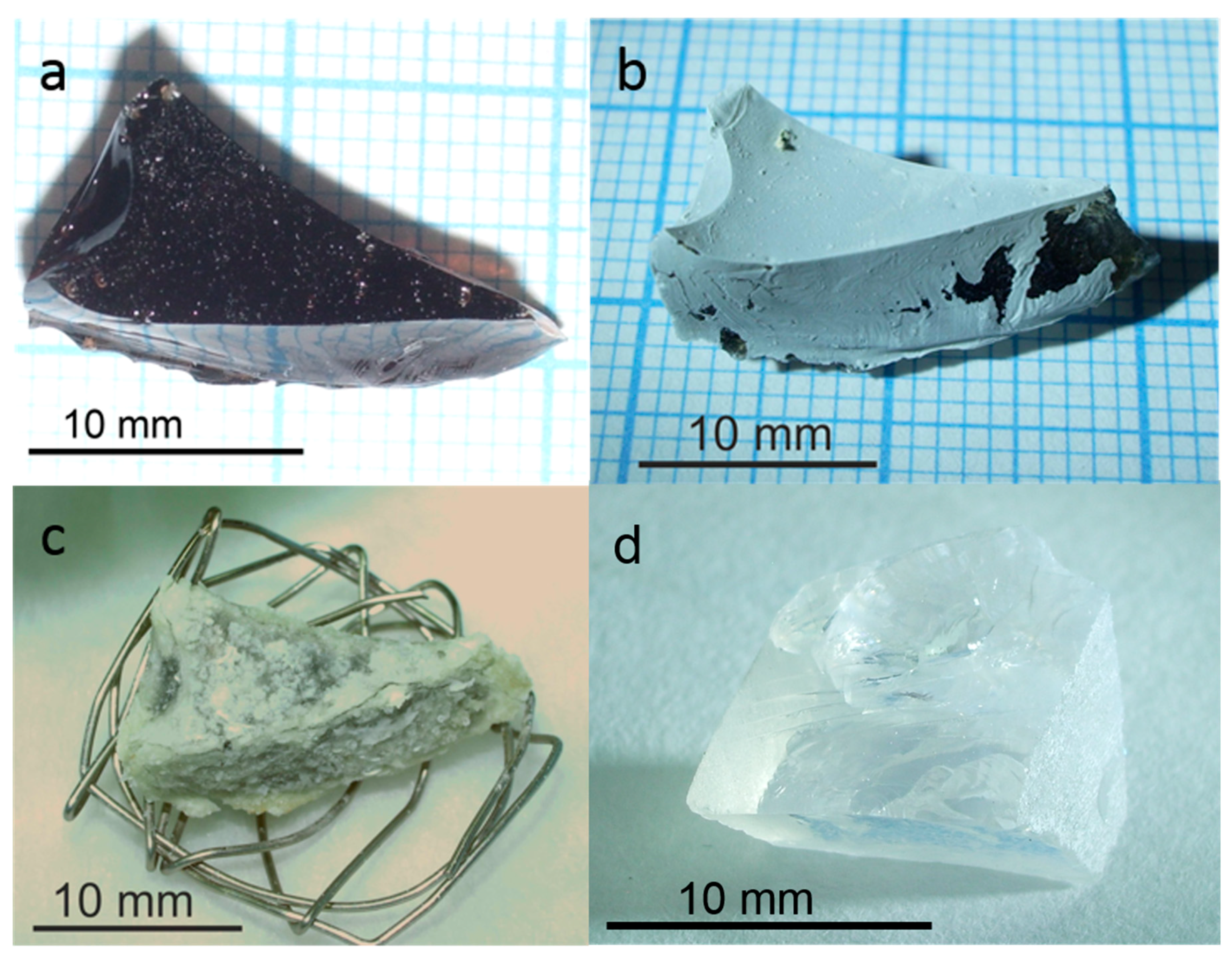
The Pu-doped B-Si_238 sample under the same conditions was significantly altered, and a new phase was formed on the surface (Figure 6b).
Figure 6.
(a–c)—sample of borosilicate glass «B-Si_238» doped with 0.45 wt.% 238Pu: (a)—pristine sample—the fragment extracted from the broken crucible right after synthesis; (b)—glass sample after 4 months in contact with distilled water at 90 °C; (c)—glass sample after 2 years of storage in the wet container at 90 °C on a Pt-wire support; (d)—non-radioactive «B-Si» glass sample after 4 months in contact with distilled water at 90 °C.
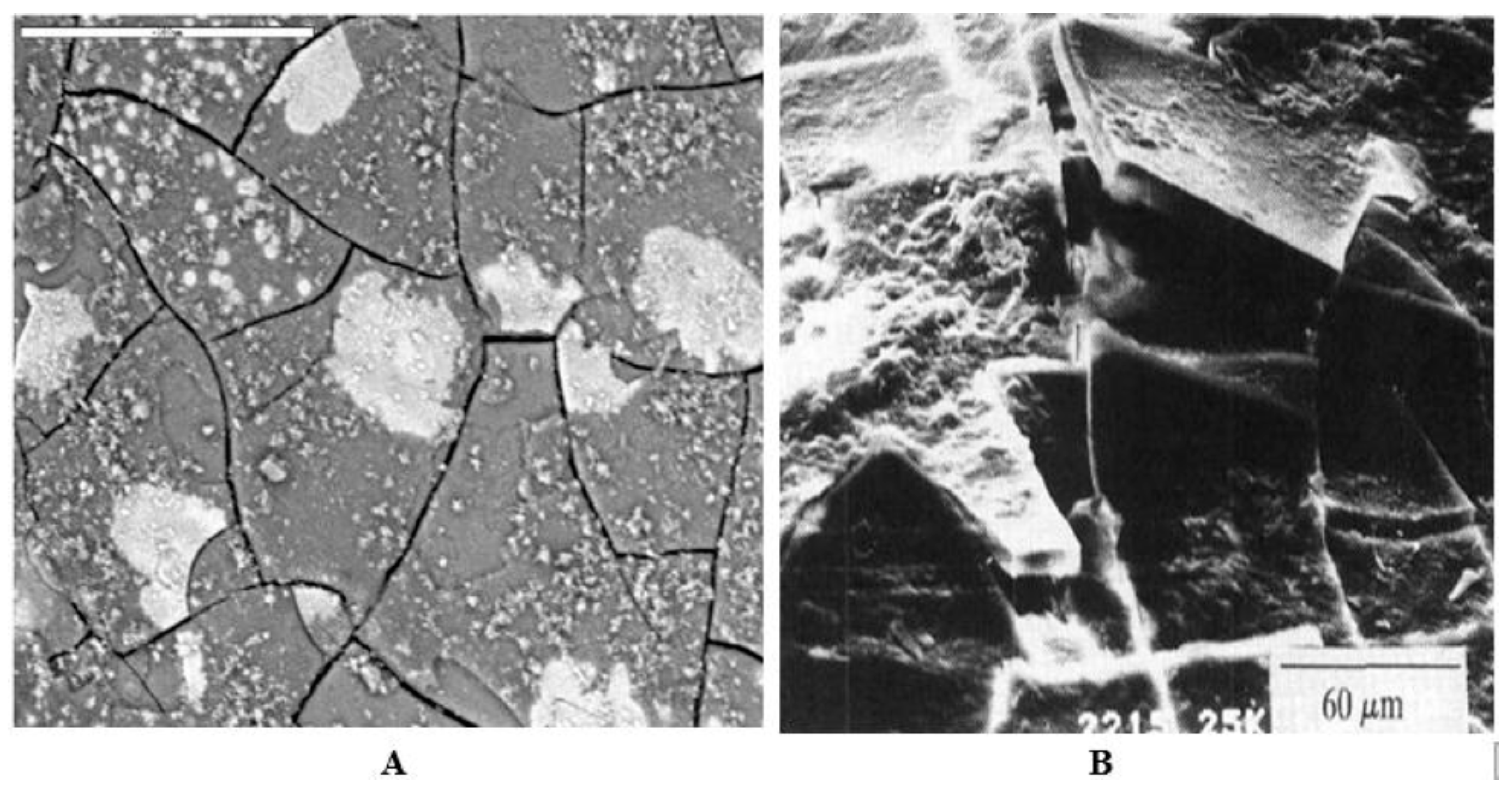
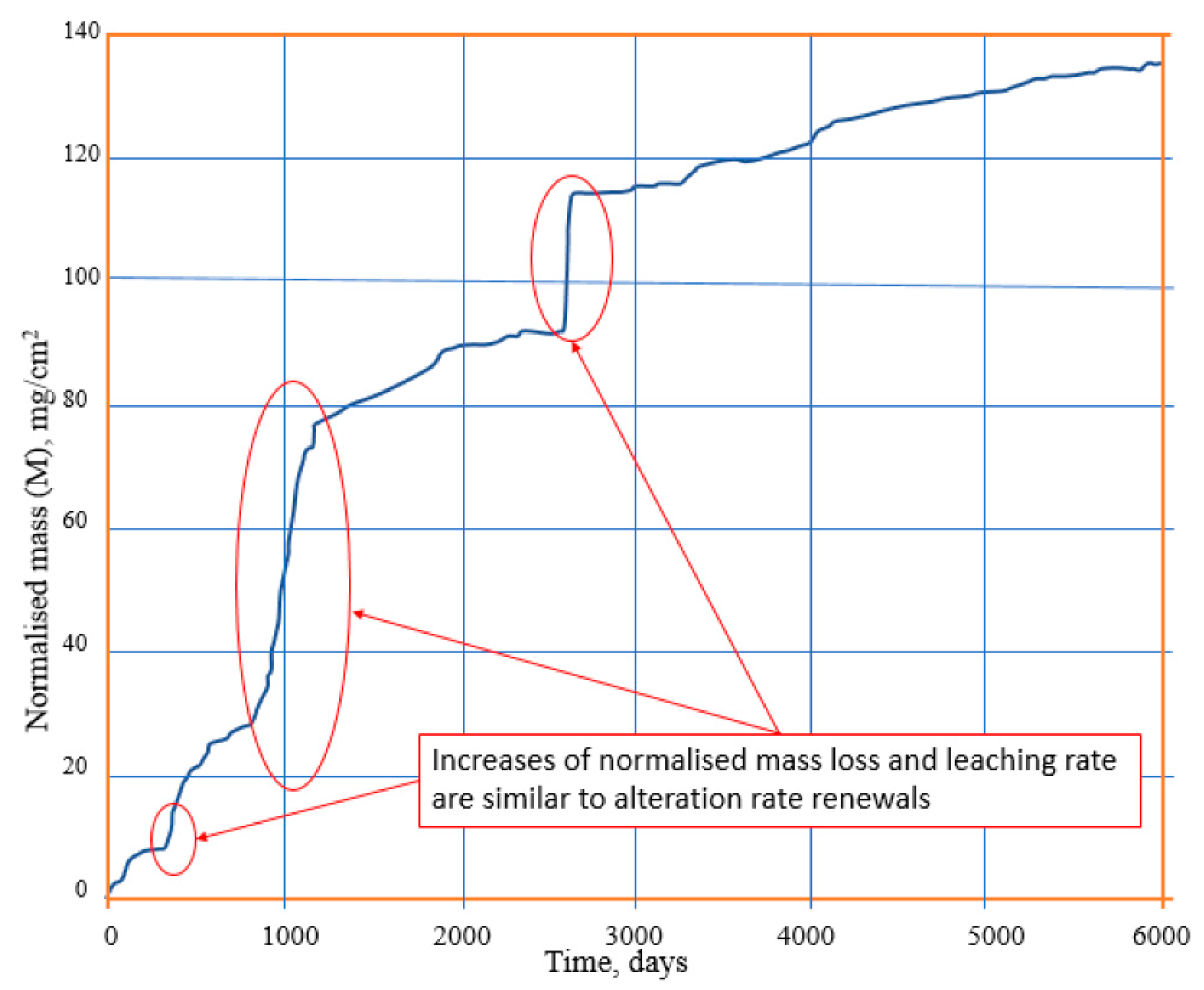
Formation of silica-based gel as a result of contact of the borosilicate glass with water is a well-known effect, which is described in the literature [3,5,6,7,8,9,10,11,12,13,14]. Surprisingly, examination of this particular gel by SEM and Raman spectroscopy showed a mainly aluminohydroxide structure of this phase [19]. According to semi-quantitative SEM-EDS the main elements of gel composition are Al (17–34 wt.%) and Si (1–7 wt.%). There are also some local areas enriched with Pu (up to 44 wt.%) and Eu (up to 30 wt.%), which were formed by Pu and Eu sorption on the gel surface. Formation of the gel was accompanied with a decreased Pu leaching rate (from 0.25 g·m−2·day−1 for 7 days to 0.05 g·m−2·day−1 for 112 days) but, taking into account the mechanical fragility of the gel, this is not direct evidence of its protective effect. Some additional new phases were formed on its surface during further storage of the sample in the wet container at a temperature of 90 °C (Figure 6c). It is notable that a similar process of gel layer destruction and formation of cracks in the near-surface layers of nuclear waste glasses has been observed during a long-term in-situ experiment with real vitrified waste based on borosilicate glass K-26 (Figure A1 and Figure A2 taken from [22]). Despite the fact that samples did not contain alpha-emitters and specific activity of 134,137Cs was 3.73 kBq/g, after 16 years of storage in open air and near-surface conditions, the leaching rate did not stabilize at a residual rate level (Figure A2, taken from [22]). It was suggested that behavior of glass samples similar to the alteration renewal could be explained by formation of small cracks on the surface and the involvement of new pristine glass areas in contact with water [22]. One should also account for possible effects of the inhomogeneous distribution of radionuclides in the vitreous wasteform, which is a non-conducting material, i.e., a good electrical insulator that can accordingly maintain high strength electrical fields near inhomogeneities [23].
3.3. Irradiated Glasses
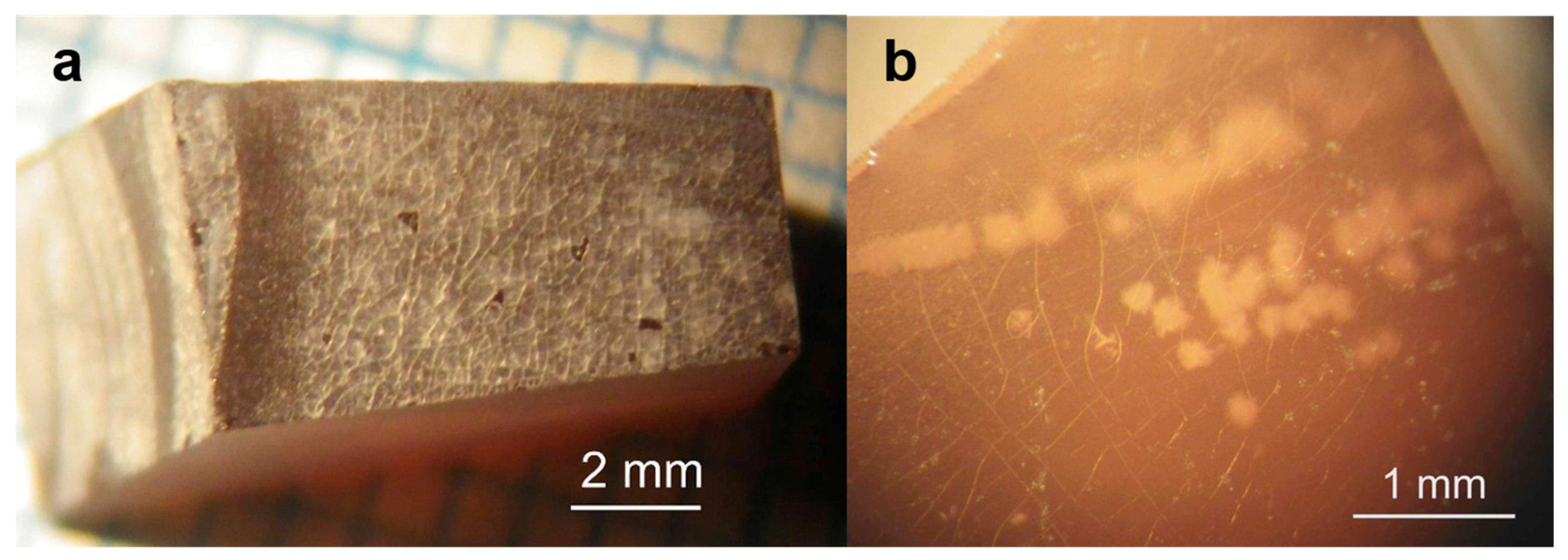
The undoped Na-Al-P glass sample was irradiated by an industrial irradiator using gamma-sources with 137Cs up to a cumulative absorbed dose of 2.0 × 10⁴ Gy and by an industrial irradiator using gamma-sources with 60Co up to a cumulative absorbed dose of 6.2 × 10⁷ Gy. After irradiation by 137Cs gamma radiation at a cumulative dose of 2.0 × 10⁴ Gy there were no visible changes (cracks or newly formed inclusions) of the glass sample, although its color changed from light blue to dark red. However, after irradiation of glass with gamma rays of 60Co up to the dose of 6.2 × 10⁷ Gy, formation of small cracks was observed on the polished surface (Figure 7a) as well as local crystallization of the glass (Figure 7b).
Figure 7.
Sample of Na-Al-P glass after irradiation with gamma rays of 60Co to cumulative dose of 6.2 × 10⁷ Gy: (a)—general image; (b)—local area of the surface at higher magnification.
4. Discussion
Experiments with actinide-containing wasteforms including devitrified glasses [24] and crystalline ceramics have shown that self-irradiation-induced destruction effects reveal themselves after many years of accumulation and gradual ageing [23,25]. Indeed, the self-irradiation over very long time scales such as thousands of years for radioactive waste are creating continuous excitations and long-lasting structural alterations, which evolve in the wasteform material that is ageing with time. Thus, even slowly occurring processes that have hitherto not been revealed in short-term experiments may result in significant consequences for the retention capacities of nuclear wasteforms. The aim of this study was to compare leaching and hydrolytic surface alteration of borosilicate and phosphate nuclear waste glasses used for radioactive waste immobilization.
It is worth comparing the results of evolution of the Na-Al-P glass surface after irradiation by 60Co gamma rays with that irradiated by 137Cs bearing borosilicate glass after 16 years of in-situ testing [22]. This is illustrated by Figure 8.
Figure 8.
137Cs bearing borosilicate glass after 16 years of in-situ testing with a cumulative dose of less than 1.2 × 10⁵ Gy (a); Na-Al-P glass irradiated by 60Co up to a cumulative dose of 6.2 × 10⁷ Gy (b).
The dose accumulated due to self-irradiation can be calculated by assessing the dose rate P (mGy/h) of 137Cs bearing borosilicate glass. This can be performed using the specific activity of 137Cs as high as 3.73 kBq/g and the weight of LILW glass block, which was about 30 kg, using Equation (2):
where A is the activity of the sample, MBq; R is the distance from the source, cm and Kγ for 137Cs is 0.76 mGy·cm2·MBq−1·h−1. Thus, the maximal P value (assuming by order of magnitude R~cm) is ~83.6 mGy/h, and therefore the cumulative dose after 16 years is ~1.2 × 10⁵ Gy. This reveals that despite different cumulative doses, the surface damage of 137Cs-bearing borosilicate glass and irradiated aluminophosphate glass is visually comparable.
The effect of self-alpha-irradiation was studied using 238Pu-doped samples. B-Si and Na-Al-P glass doped with 238Pu were synthesized in June 2016 and September 2017, respectively. After synthesis both samples were cut into fragments and partially used for leaching experiments before a significant dose of self-irradiation was achieved. Other fragments were placed in quartz boxes and sealed. No visual changes were observed for this samples at cumulative doses of self-irradiation of 6.7 × 10²³ α-decays/m3 (B-Si) and 4.4 × 10²³ α-decays/m3 (Na-Al-P). Accumulated dose of self-irradiation, D (α-decays/m3), was calculated using Equation (3):
where A0 is the activity of the sample, Bq; t—time from the synthesis of the sample, seconds; V—geometrical volume of the sample, m3. Calculation of accumulated dose was made without correction for 238Pu decay because its activity decreased insignificantly for the time period described.
5. Conclusions
The results obtained show that highly alpha-radioactive borosilicate and phosphate glasses behave quite differently in contact with distilled water compared with non-radioactive glasses of the same chemical composition at least in the initial phase of corrosion. Alteration processes for radioactive glasses are accompanied by mechanical degradation of near-surface layers that progress faster than those for non-radioactive glasses. Investigation of the long-term durability of highly radioactive nuclear waste glasses requires working with actual radioactive samples, which could reveal potential effects that are not envisaged in experiments with non-radioactive and irradiated samples.
Author Contributions
Conceptualization, all authors.; methodology, investigation, resources, data curation, B.Y.Z. and B.E.B.; writing—original draft preparation, B.Y.Z., B.E.B., M.I.O.; writing—review and editing, B.E.B. and M.I.O.; All authors have read and agreed to the published version of the manuscript.
Funding
This research received no external funding.
Acknowledgments
Authors acknowledge A. Kitsay of V.G. Khlopin Radium Institute for technical support in glass sample synthesis.
Conflicts of Interest
The authors declare no conflict of interest.
Appendix A
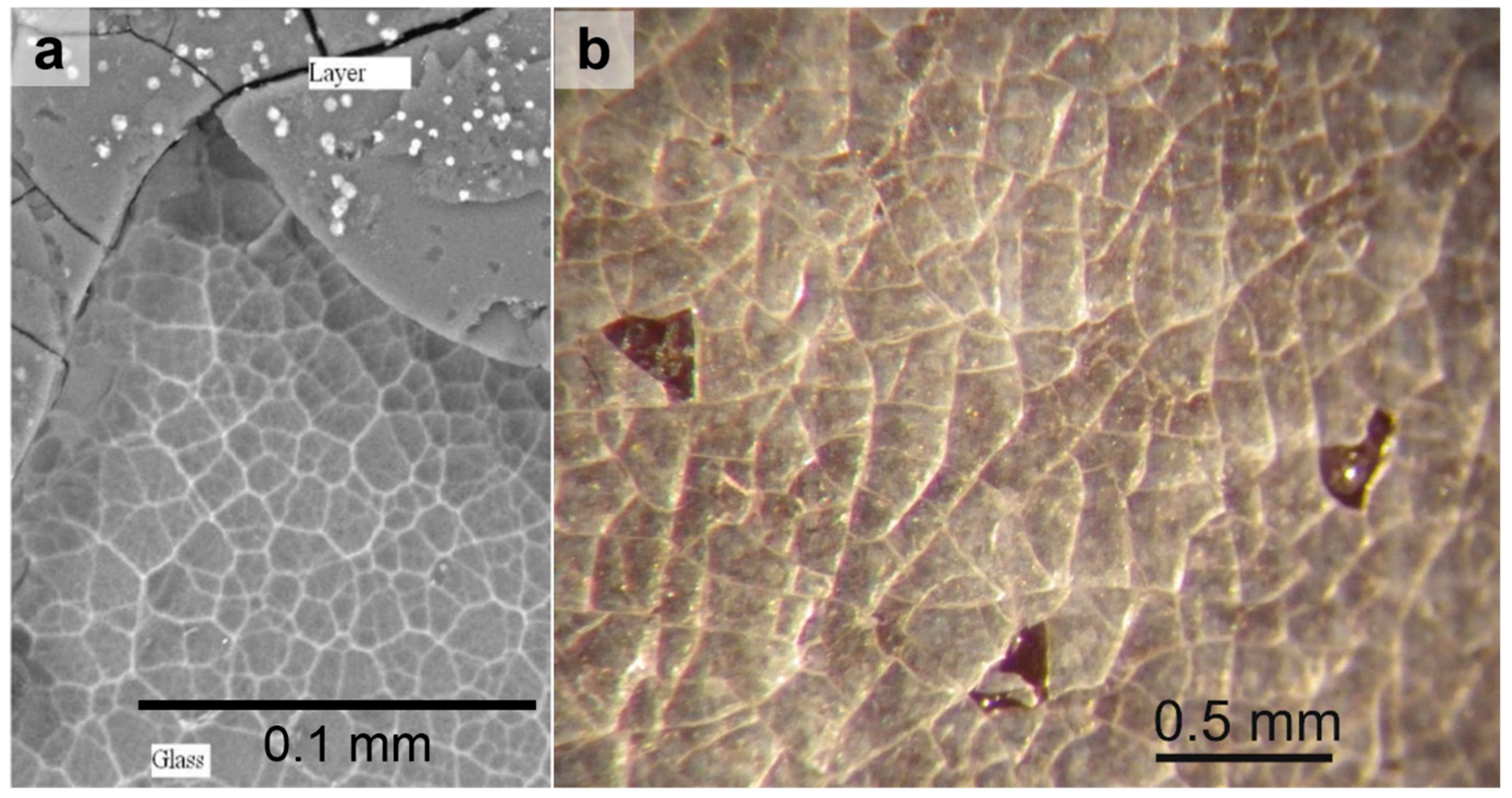
Figure A1 of reference [22] shows SEM images of altered glass where the alteration layer is chemically inhomogeneous and non-uniform both in thickness and structure in the case of glass tested in the underground repository (Figure A1A) and well-defined on the glass with the same composition tested in open site conditions (Figure A1B).
Figure A1.
SEM images of glass surface: (A) sample K26 from underground repository; (B) sample BS8 from open testing area.
Figure A2 of reference [22] shows that there were many observed fluctuations of leaching behavior when leaching rates increased by orders of magnitude due to cracks formed on the glass surface.
Figure A2.
The normalized mass losses of 137Cs from glass.
References
- Marra, J.C.; Ojovan, M.I. Vitrification of Radioactive Wastes. Glass Int. 2014, 37, 19–21. [Google Scholar]
- Gin, S.; Jollivet, P.; Tribet, M.; Peuget, S.; Schuller, S. Radionuclides containment in nuclear glasses: An overview. Radiochim. Acta 2017, 105, 927–959. [Google Scholar] [CrossRef]
- Ojovan, M.I.; Lee, W.E.; Kalmykov, S.N. An Introduction to Nuclear Waste Immobilisation, 3rd ed.; Elsevier: Amsterdam, The Netherlands, 2019; p. 497. [Google Scholar]
- Jantzen, C.M.; Ojovan, M.I. On selection of matrix (wasteform) material for higher activity nuclear waste immobilization (Review). Russ. J. Inorg. Chem. 2019, 64, 1611–1624. [Google Scholar] [CrossRef]
- Weber, W.J.; Ewing, R.C.; Angel, C.A.; Arnold, G.W.; Cormack, A.N.; Delaye, J.M.; Griscom, D.L.; Hobbs, L.W.; Navrotsky, A.; Price, D.L.; et al. Radiation effects in glass used for immobilization of high-level waste and plutonium disposition. J. Mater. Res. 1997, 12, 1946–1978. [Google Scholar] [CrossRef]
- Lemmens, K.; Van Iseghem, P. The Effect of Gamma Radiation on the Dissolution of High-Level Waste Glass in Boom Clay. Mater. Res. Soc. Symp. Proc. 2001, 663, 175–182. [Google Scholar] [CrossRef]
- Van Iseghem, P.; Valcke, E.; Lodding, A. In situ testing of the chemical durability of vitrified high-level waste in a Boom Clay formation in Belgium: Discussion of recent data and concept of a new test. J. Nucl. Mater. 2001, 298, 86–94. [Google Scholar] [CrossRef]
- Gin, S.; Abdelouas, A.; Criscenti, L.; Ebert, W.; Ferrand, K.; Geisler, T.; Harrison, M.; Inagaki, Y.; Mitsui, S.; Mueller, K.; et al. An international initiative on long-term behavior of high-level nuclear waste glass. Mater. Today 2013, 16, 243–248. [Google Scholar] [CrossRef]
- Vienna, J.; Ryan, J.; Gin, S.; Inagaki, Y. Current understanding and remaining challenges in modeling long-term degradation of borosilicate nuclear waste glass. Int. J. Appl. Glass Sci. 2013, 4, 283–294. [Google Scholar] [CrossRef]
- Gin, S. Open scientific questions about nuclear glass corrosion. Procedia Mater. Sci. 2014, 7, 163–171. [Google Scholar] [CrossRef]
- Weber, W.J. Radiation and Thermal Ageing of Nuclear Waste Glass. Procedia Mater. Sci. 2014, 7, 237–246. [Google Scholar] [CrossRef]
- Peuget, S.; Delaye, J.-M.; Jégou, C. Specific outcomes of the research on the radiation stability of the French nuclear glass towards alpha decay accumulation. J. Nucl. Mater. 2014, 444, 76–91. [Google Scholar] [CrossRef]
- Poluektov, P.P.; Schmidt, O.V.; Kascheev, V.A.; Ojovan, M.I. Modelling aqueous corrosion of nuclear waste phosphate glass, J. Nucl. Mater. 2017, 484, 357–366. [Google Scholar] [CrossRef]
- Frankel, G.S.; Vienna, J.D.; Lian, J.; Scully, J.R.; Gin, S.; Ryan, J.V.; Wang, J.; Kim, S.H.; Windl, W.; Du, J. A comparative review of the aqueous corrosion of glasses, crystalline ceramics, and metals. NPJ Mater. Degrad. 2018, 15, 1–17. [Google Scholar] [CrossRef]
- Ojovan, M.I.; Lee, W.E.; Barinov, A.S.; Startceva, I.V.; Bacon, D.H.; McGrail, B.P.; Vienna, J.D. Corrosion of low level vitrified radioactive waste in a loamy soil. Glass Technol. Eur. J. Glass Sci. Technol. A 2006, 47, 48–55. [Google Scholar] [CrossRef]
- Jantzen, C.M.; Kaplan, D.I.; Bibler, N.E.; Peeler, D.K.; Plodinec, M.J. Performance of a buried radioactive high level waste (HLW) glass after 24 years. J. Nucl. Mater. 2008, 378, 244–256. [Google Scholar] [CrossRef]
- Vlasova, N.V.; Remizov, M.B.; Kozlov, P.V.; Belanova, E.A. Investigation of Chemical Stability of Aluminum-Phosphate Glasses Simulating Solidified HLW to be Returned to Foreign Contractors. Radiat. Saf. Issues 2017, 3, 32–37. (In Russian) [Google Scholar]
- Medvedev, G.M.; Remizov, M.B.; Dunkov, S.A. Investigation of the properties of phosphate and borophosphate glass. Radiat. Saf. Issues 2004, 2, 15–23. (In Russian) [Google Scholar]
- Zubekhina, B.Y.; Shiryaev, A.A.; Burakov, B.E.; Vlasova, I.E.; Averin, A.A.; Yapaskurt, V.O.; Petrov, V.G. Chemical alteration of 238Pu-loaded borosilicate glass under saturated leaching conditions. Radiochim. Acta 2020, 108, 19–27. [Google Scholar] [CrossRef]
- American Society for Testing and Materials. ASTM C 1220-98. Standard Test. Method for Static Leaching of Monolithic Waste Forms for Disposal of Radioactive Waste; ASTM International: West Conshohocken, PA, USA, 2004; p. 16. [Google Scholar]
- Vashman, A.A.; Demine, A.V.; Krylova, N.V.; Kushnikov, V.V.; Matyunin, Y.I.; Poluektov, P.P.; Polyakov, A.S.; Teterin, E.G. Phosphate Glasses with Radioactive Waste; CNIIatominform: Moscow, Russia, 1997; p. 172. [Google Scholar]
- Ojovan, M.I. On alteration rate renewal stage of nuclear waste glass corrosion. MRS Adv. 2020, 5, 111–120. [Google Scholar] [CrossRef]
- Ojovan, M.I.; Burakov, B.E.; Lee, W.E. Radiation-induced Microcrystal Shape Change as a Mechanism of Wasteform Degradation. J. Nucl. Mater. 2018, 501, 162–171. [Google Scholar] [CrossRef]
- Weber, W.J.; Turcotte, R.P.; Bunnell, L.R.; Roberts, F.P.; Westsik, J.H. Ceramics in Nuclear Waste Management; Chikalla, T.D., Mendel, J.E., Eds.; CONF-790420; National Technical Information Service: Springfield, VA, USA, 1979; p. 294.
- Burakov, B.E.; Ojovan, M.I.; Lee, W.E. Crystalline Materials for Actinide Immobilisation; Imperial College Press: London, UK, 2010. [Google Scholar]
© 2020 by the authors. Licensee MDPI, Basel, Switzerland. This article is an open access article distributed under the terms and conditions of the Creative Commons Attribution (CC BY) license (http://creativecommons.org/licenses/by/4.0/).