1. Introduction
This article emerges from multi-sited ethnographic research conducted between 2023 and 2024 in several communities of the Liangshan Yi Autonomous Prefecture, with particular focus on Mianning County. The research combined participant observation of ritual performances, in-depth interviews with ritual specialists (both Bimo and Suni) and ritual participants, and analysis of ritual texts and material culture. Through this methodological approach, the study documents and analyzes variations in ritual practice across different contexts, contributing new ethnographic data on contemporary adaptations of traditional Yi rituals. The field research specifically included observations of multiple “xiō bū” rituals, including the S family case presented in this paper, which represents a typical ritual performed by a Suni specialist. Our methodological approach privileged the perspectives of ritual participants, collecting their interpretations of ritual elements and experiences through interviews conducted before, during, and after ritual performances. This approach allows us to move beyond etic descriptions of ritual forms to understand the lived experience of ritual participation and the ways in which rituals create meaningful worlds for Yi communities facing rapid social change.
The central contribution of this research lies in its documentation of the “xiō bū” ritual as performed by different ritual specialists (primarily the Suni rather than the more commonly studied Bimo) and in different social contexts (from remote rural villages to semi-urban settings). While previous scholarship has focused predominantly on Bimo-led rituals, this study reveals important variations in ritual authority and practice that reflect broader socio-economic transformations in Yi society. Furthermore, by applying contemporary theoretical frameworks—particularly the “ontological turn” in anthropology and recent developments in ritual studies—this research moves beyond functionalist interpretations to examine how Yi ritual practices constitute distinct modes of world-making and relational being. This theoretical orientation allows us to recognize Yi ritual practices not as “primitive” or “traditional” beliefs that will inevitably give way to modernization, but as sophisticated knowledge systems that offer alternative ways of conceptualizing relationships between humans, non-humans, and spiritual entities that may have continuing relevance in addressing contemporary challenges.
The Yi people are an ethnic minority with a long history and unique cultural traditions, mainly distributed in the southwest region of China. Through long-term survival practices, the Yi people have developed a religious belief system closely connected with the natural environment and social organization. This system, which centers on nature deity worship and ancestral spirit worship (
Bamo 1994), is performed and reinforced through a variety of ritual activities. It plays an important role in strengthening ethnic identity, regulating ethical order, and responding to survival crises. As an essential part of the Yi religious system, the “xiō bū” ritual has become a focal point of academic attention due to its complex procedures, mysterious symbolism, and unique status in the social life of Yi people.
Research on the “xiō bū” ritual can be traced back to the 1950s, and substantial achievements have been made in describing the ritual itself, analyzing its symbolic system, and exploring its relationship with Yi social structure. However, most of these studies are based on structural-functionalism, and there is a lack of focus on the overall cultural ecology presented by Yi rituals. More significantly, recent theoretical developments in anthropology—particularly what has been termed the “ontological turn” (
Holbraad and Pedersen 2017;
De Castro [2009] 2015)—have yet to be fully applied to the study of Yi ritual practices. These approaches move beyond interpreting rituals as merely symbolic representations of social structures to understand them as constitutive practices that actively create distinctive modes of being and relating to the world. Similarly, contemporary scholarship on ritual and embodiment (
Bell 1992) offers valuable insights into how ritual practices inscribe cultural memory onto the body and generate experiential knowledge that transcends the nature/culture divide.
Traditional studies of Yi religion have often applied Western theoretical frameworks that implicitly position indigenous beliefs and practices as primitive or pre-modern forms that will inevitably give way to more “advanced” belief systems. Such approaches not only misrepresent the sophistication of Yi religious thought but also fail to recognize the dynamic adaptability of ritual practices in responding to changing social conditions. By contrast, this research approaches Yi ritual practices as complex knowledge systems with their own internal logics and epistemological foundations. Rather than measuring these practices against external standards of “rationality” or “modernity,” we examine how they constitute distinctive ways of being in the world that may offer valuable perspectives on contemporary challenges such as ecological sustainability, social cohesion, and cultural identity in an era of rapid change. This theoretical reorientation allows us to move beyond merely documenting ritual forms to understanding how ritual practices actively shape social realities and create meaningful worlds for participants.
In light of this, this study aims to comprehensively reveal how belief elements such as nature deity worship and ancestral spirit worship, through the case study of the “xiō bū” ritual of the Liangshan Yi people, interweave to construct the Yi ecological ethics, embody ethnic historical memory, integrate village communities, and shape the people’s lived world. It also explores the multidimensional conflicts and interactions under the dual context of “tradition—modernity “. The “xiō bū” ritual, typically performed by ritual specialists (either Bimo or Suni), is aimed at counteracting curses and malice from others. According to Folk Culture of the Liangshan Yi (《凉山彝族风俗文化》), Curses are referred to as “ꑭꁮ” by the Yi people. The ritual specialists use their magical powers to curse spirits and individuals through a form of sorcery.” The ritual also incorporates specific components based on the circumstances of the participants, such as soul searching, exorcising evil spirits, and seeking well-being.
This research specifically focuses on ritual performances documented in Mianning County, Liangshan Yi Autonomous Prefecture, Sichuan Province, where the widely practiced and representative “xiō bū” ritual among the Yi people of Liangshan was observed. A key finding of this research is the significant role played by the Suni (苏尼) ritual specialists in performing the “xiō bū” ritual. While much scholarly attention has focused on the Bimo (毕摩) as the primary ritual specialists among the Yi, our fieldwork reveals that in certain regions and ritual contexts, particularly those related to counteracting curses and malice, the Suni plays an equally important role (
Bamo 2001). This diversification of ritual authority reflects the complex adaptations of Yi religious practices to changing social conditions and offers new insights into the dynamic nature of Yi ritual ecology.
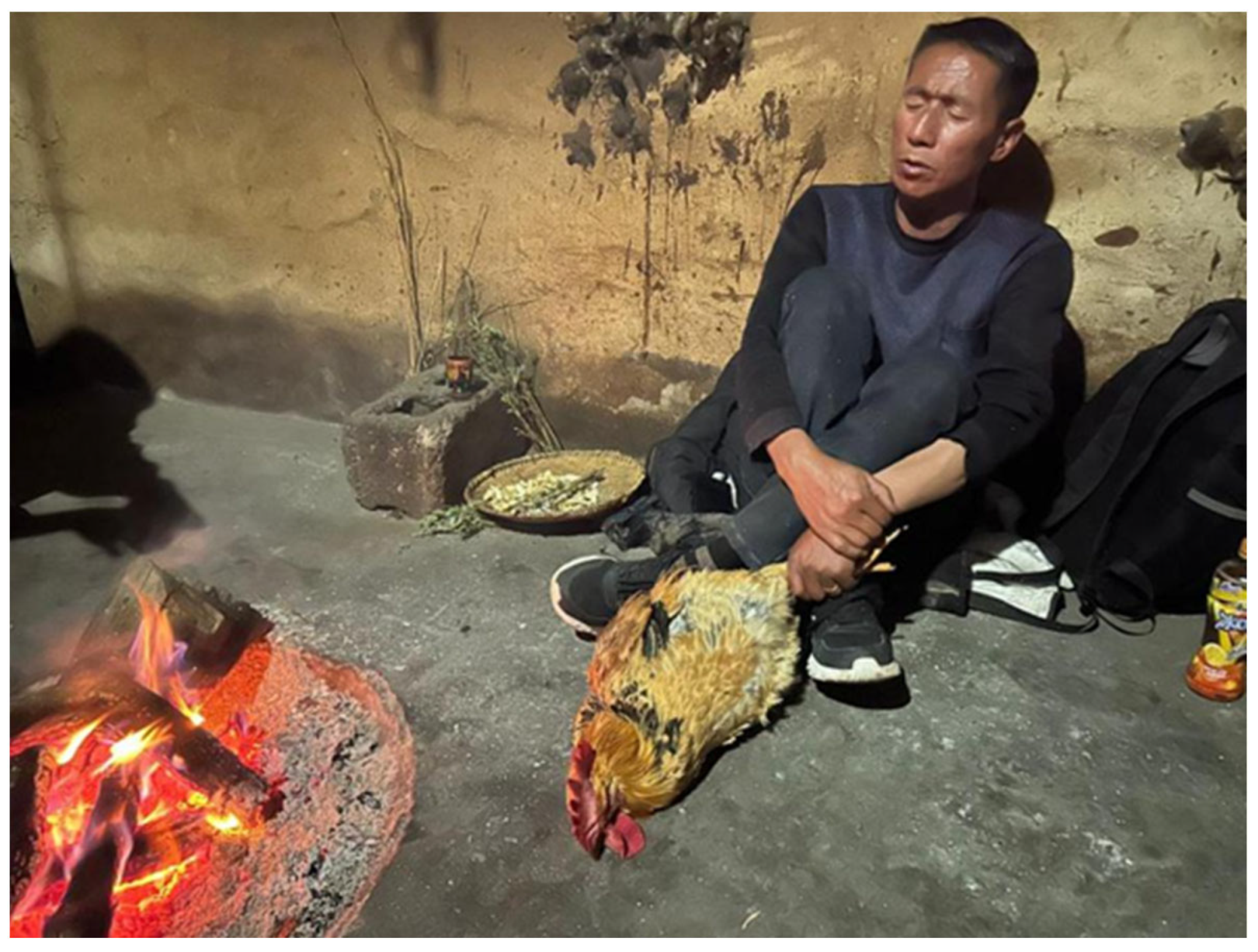
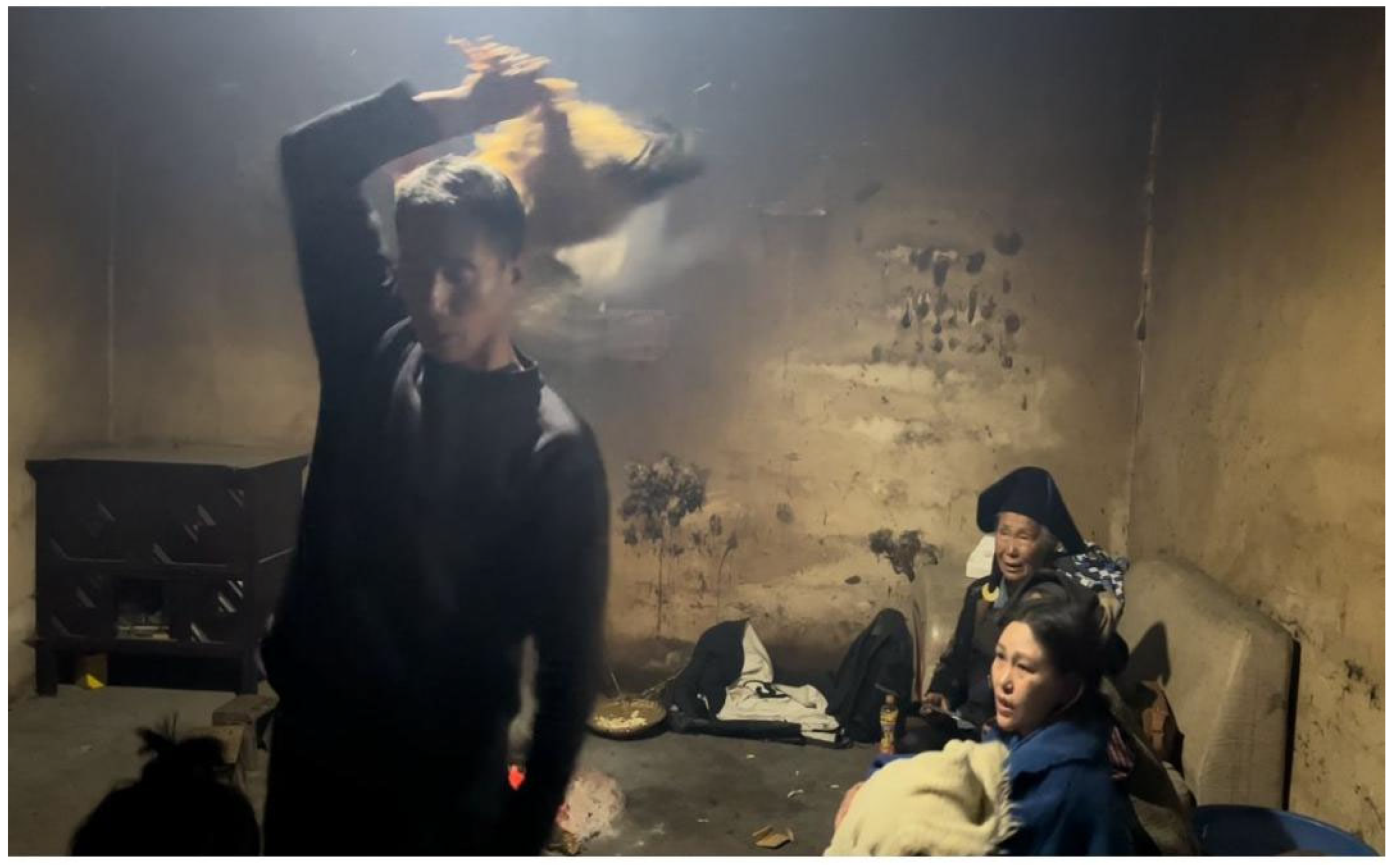
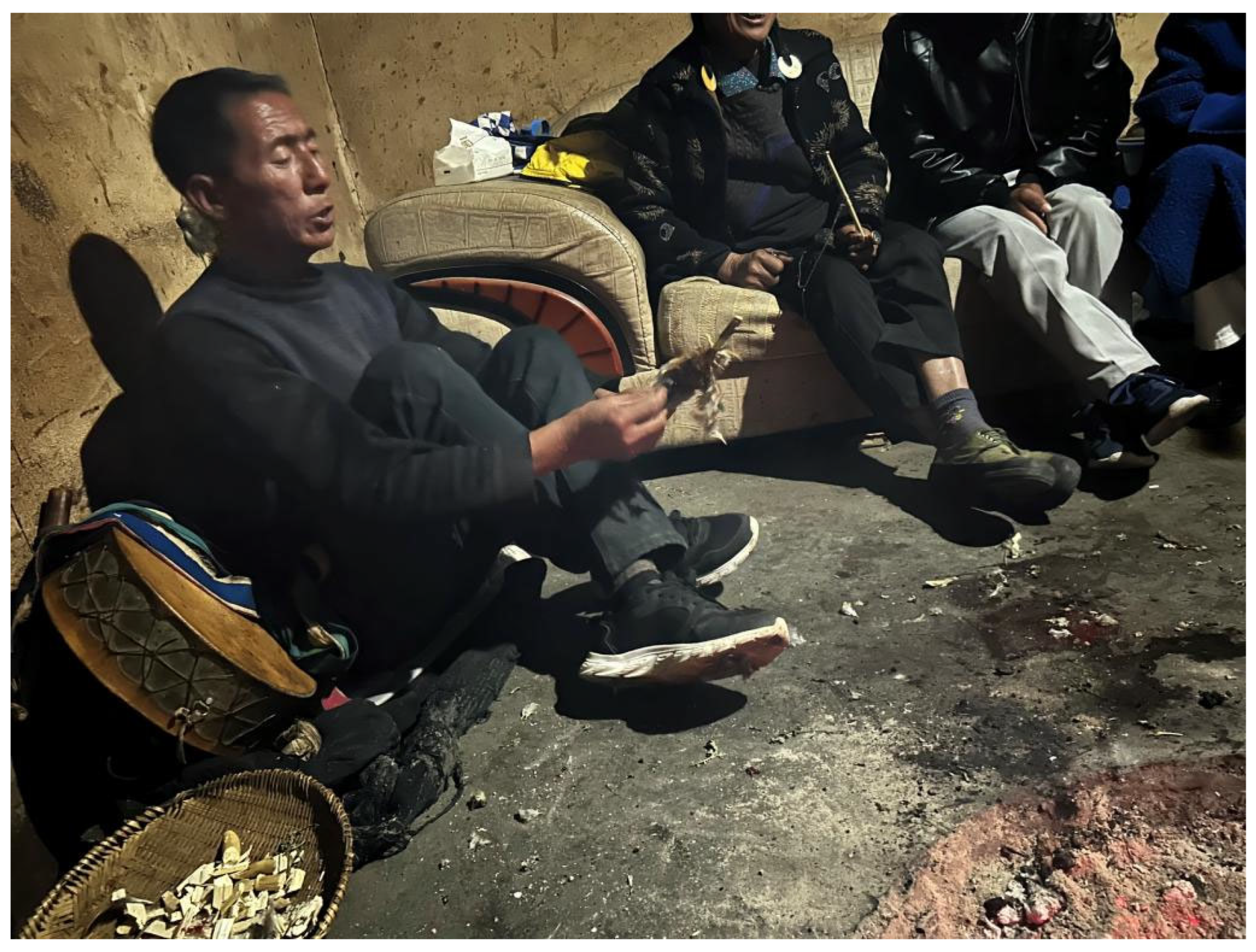
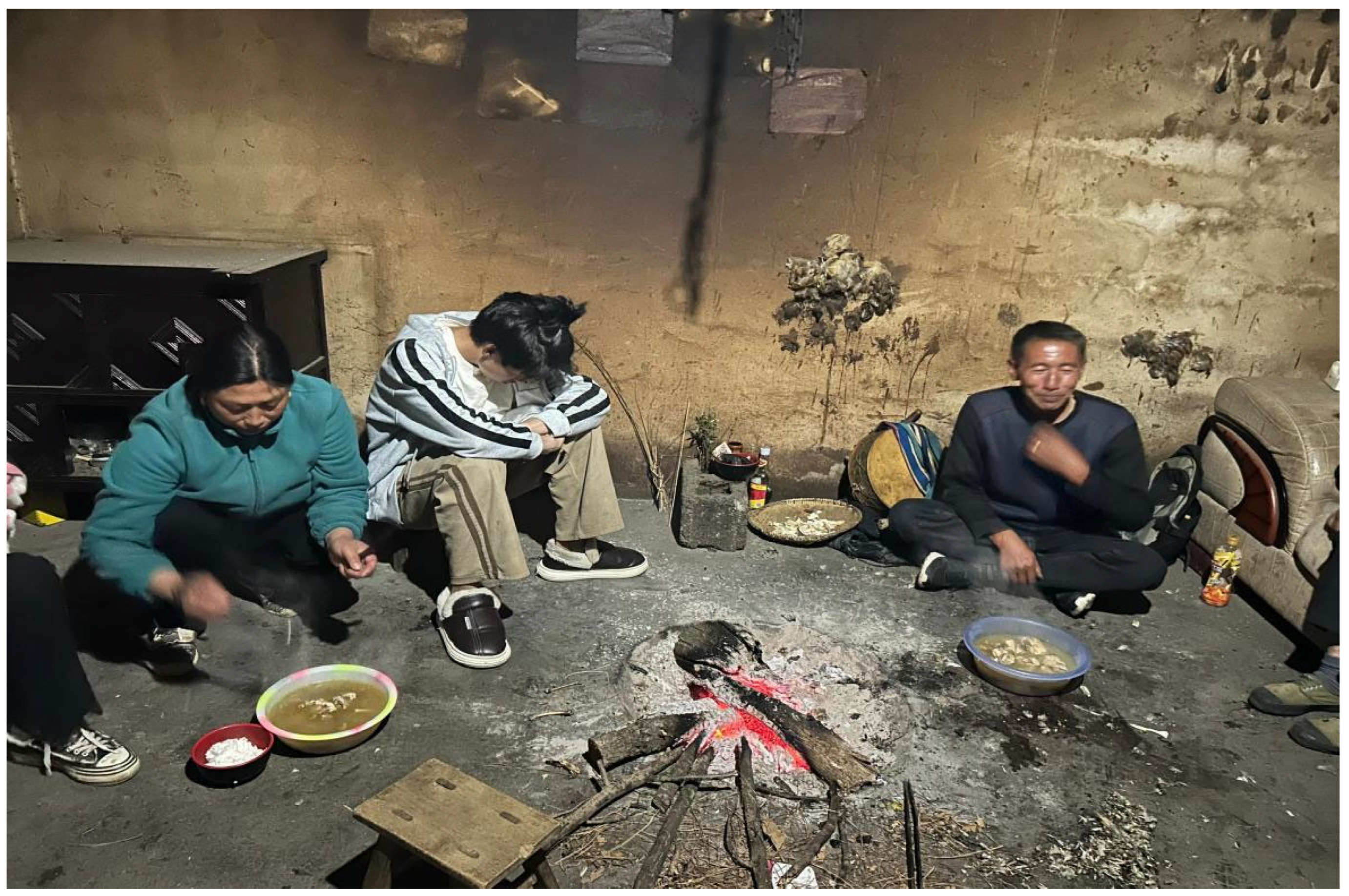
The study observed the “xiō bū” ritual, conducted by Suni (a 58-year-old male local expert in the tradition), useing a sheepskin drum as ceremonial instruments. This ritual serves to ward off curses, and exorcise evil spirits for blessings. All six family members participated throughout, with the mother wearing her usual blue work shirt instead of being present due to working away. The 15-year-old youngest son served as the assistant priest. During the ceremony, family members gathered around the hearth, seated on both sides of Suni in order of seniority from left to right. The ritual process included the following: summoning ancestors, purifying the environment, dispelling evil spells, expelling malevolence, offering sacrifices, reinforcing spiritual protection, appeasing ancestors, ending malevolent influences, honoring deities during communal meals, drumming rituals to drive away evil spirits, and 11 other steps until completion.
2. Nature Deities, Ancestral Spirits, and Humans: The Basic Structure of Yi Religion
Yi religion, as a complex system of cultural symbols, embodies the dialectical relationship between the Yi people’s cultural adaptability and internal cohesion. Its pluralistic yet unified religious form is the result of long-term historical evolution. From indigenous animistic beliefs to the integration of external religious elements such as Taoism and Shamanism over centuries of cultural exchange, Yi religion has developed a unique cosmology and belief system. Although there are regional and historical variations across different Yi branches, the worship of nature deities and ancestral spirits consistently forms the core elements of their religious worldview (
Vermander 1999,
2004). This hybrid religious model not only reflects the Yi people’s cultural resilience in responding to external cultural challenges but also demonstrates their cultural wisdom in maintaining their cultural roots while flexibly absorbing and transforming foreign cultural elements. As a result, religious beliefs serve as a crucial spiritual bond that sustains ethnic identity and social order (
Harrell 1995).
The ontological understanding that “all things embody spirits” forms the fundamental worldview of Yi religion, aligning with what contemporary anthropologists like
De Castro (
[2009] 2015) have described as relational ontologies that challenge Western nature-culture divides. In the eyes of the Yi ancestors, mountains, rivers, plants, animals, as well as celestial bodies like the sun, moon, and stars, all have governing deities known as “Shu (署).” The “Shu” is closely connected to human life, overseeing the growth and natural processes of all things, and are thus highly revered and worshipped. Among the many nature deities, the mountain god “Shan Shu” (山署) and the water god “Qu Shu” (曲署) hold particularly significant roles (
Zhang 2011). The Yi ancestors believed that mountains were sacred places, the dwelling sites of deities and the resting places of their ancestors. As a result, major religious rituals, such as the Bimo ritual (“毕摩祭”), were often conducted on mountains. The “Qu Shu,” or water deity, governs rainfall and rivers, which are vital to agricultural survival (
Yang and Huang 2018). Therefore, during the crucial periods of spring plowing and autumn harvest, sacrificial ceremonies are held to pray for favorable weather and a good harvest.
Above nature deities, ancestral spirits are regarded as having the highest and most supreme status (
Bamo et al. 1992). In important texts such as
Southwest Yi Chronicles (《西南彝志》) and the Liangshan Yi
epic Le’eote Yi (《勒俄特依》), the Yi people’s belief in the “ancestor creation theory” is clearly articulated. According to this belief, human life originates from ancestors, who are seen as the creators, protectors, and rulers of humanity. As a result, the Yi have developed a comprehensive and sacred system of ancestor worship, which includes various levels such as family ancestors, clan ancestors, and tribal founders. Ancestral spirits not only control the birth, aging, illness, and death of their descendants but also preside over the rise and fall, fortune and misfortune of the tribe (
Harrell 1995). Therefore, the worship of ancestral spirits is the most solemn religious ritual for the Yi people (
Zhao 2007). In Yi’s thought, ancestral spirits are not distant or unreachable but are believed to watch over their descendants at all times. Through proper rituals, one can communicate with these spirits and receive guidance and protection (
Bamo 1994;
Meng 2003).
In the Yi religious belief system, humans are not seen as the masters of nature but rather as part of a “community of life” alongside nature deities and ancestral spirits (
Bamo et al. 1992). He Yaohua, in his work
The Yi People’s Nature Worship and Its Characteristics (《彝族的自然崇拜及其特点》), also explores the interaction between Yi nature worship and ancestor worship. He points out that the “ancestor creation theory” often overlaps with the functions of nature deities (such as mountain gods and water gods), reflecting the Yi’s worldview of the trinity of “human-deity-nature”. This interconnected worldview highlights the symbiotic relationship between humans, deities, and the natural world (
He 1982). Humans must rely on the natural world for survival and act in accordance with natural laws. At the same time, humans are the heirs of their ancestors’ bloodline and must uphold ancestral teachings and fulfill their mission. As a result, the Yi people have developed a unique perspective on the relationship between humans and deities, emphasizing the need for harmonious coexistence and mutual benefit between humans, gods, and ancestors.
It is important to note that while the Bimo is often recognized as the primary ritual specialist in Yi society, the “xiō bū” ritual may also be performed by Suni practitioners, particularly in certain geographical regions including parts of Mianning County. While both Bimo and Suni serve as intermediaries between the human and spirit worlds, they typically specialize in different ritual domains and employ distinct ritual techniques. The Bimo traditionally focuses on written scriptures and complex ceremonial procedures, while the Suni often specializes in healing rituals, soul retrieval, and countering malevolent forces through oral traditions and ritual performances. In the case study presented here, the ritual was performed by a Suni practitioner, demonstrating the diversity of ritual specialists within Yi religious ecology. This challenges simplistic understandings of Yi ritual systems and highlights the need for careful ethnographic attention to regional variations and the complementary roles of different ritual practitioners.
It is within this religious context that a series of rituals dedicated to nature deities and ancestral spirits emerged, becoming an indispensable part of Yi social life. Among them, the “xiō bū” ritual encompasses elements of mountain god worship, ancestral spirit worship, and more, making it a concentrated embodiment of Yi religious beliefs. In the case of the “xiō bū” ritual, people can clearly observe that nature deities, ancestral spirits, and humans are the three main pillars of the Yi religious system. These three elements have distinct roles but are interconnected, forming an organic whole. Nature deities represent humans’ reverence for nature, while ancestral worship reflects their remembrance of history, with humans serving as the link between nature and history. In other words, nature deities, ancestral spirits, and humans respectively represent the natural, historical, and practical dimensions of Yi religion. The various stages of the “xiō bū” ritual revolve around this “trinity” structure, aiming to adjust the relationships between humans, deities, and ancestors to maintain the harmony and order of the community (
H. Cai 2013). The relationship between the three—nature deities, ancestral spirits, and humans—is not only the theoretical core of Yi religious thought but also profoundly influences and shapes various aspects of their social life. Therefore, accurately understanding the relationship among the three elements and their dynamic evolution is a key to comprehending both traditional Yi culture and contemporary Yi society (
Bamo 1994).
3. Ecological Ethics in Wooded Mountain Worship: The View of Nature in the “xiō bū” Ritual
In the Yi religious system, the worship of nature deities occupies a significant position, with wooded mountain worship being the most typical. The Yi people believe that “the mountains are the embodiment of the mountain gods, the residence of the gods, the path to the gods and the pillars that hold up the sky. If the gods are happy, then they can obtain food and be free of disease and pain; if the gods are angry, then they will send down disasters and harm (
Zhang 2006, p. 10).” As the most solemn annual sacrificial activity in Yi traditional society, the “xiō bū” ritual embodies the Yi people’s unique concept of wooded mountain worship and contains rich ecological ethical ideas.
In the worldview of the Yi ancestors, mountains, rivers, and plants all have their governing deities. Among them, the “Shu” of the mountain god holds a particularly high and powerful position, not only overseeing the operations of the natural world but also influencing human fortunes. As a result, the Yi people developed a unique “mountain body” concept, viewing mountains as organic living entities with their own spirit and will. The “xiō bū” ritual reflects this cultural psychology of reverence and fear of the mountain.
Tuan’s (
1977) theory of “sense of place” suggests that rituals often create “threshold spaces” through experiences in special natural environments (
Tuan 1977). The spatial arrangement of the ritual reflects the Yi people’s ethical view of mountains and forests as sacred realms. The “xiō bū” altar is often located in the mountains near the village, surrounded by lush trees and flowing streams, creating a secluded and sacred atmosphere. The site selection of the altar takes into account not only the geographical features but also the unique spatial ethics of the Yi people, who regard mountains and forests as the dwelling places of deities, an ideal space for communication between heaven, earth, and humans. In this sense, the mountains and forests, as the spatial backdrop for the “xiō bū” ritual, are not only a natural geographical space but also a “cultural space” and “sacred space” in an ethical sense, carrying the Yi people’s aspirations to communicate with deities and ancestors.
Furthermore, the ritual’s choice and arrangement of offerings highlight the Yi people’s ecological belief in closeness to and reverence for nature. As
Eliade (
1959) proposed in his theory of “sacred space” (hierophany), the religious significance of natural landscapes (mountains, forests, rivers) as “manifestations of the sacred” can explain how the altar’s site selection, through its isolated space, constructs a sense of sanctity (
Eliade 1959). The widespread use of plant elements such as pine needles and cypress branches in the ritual not only carries symbolic meaning but also reflects the Yi people’s cultural mindset of valuing plants and being closely connected to nature. (
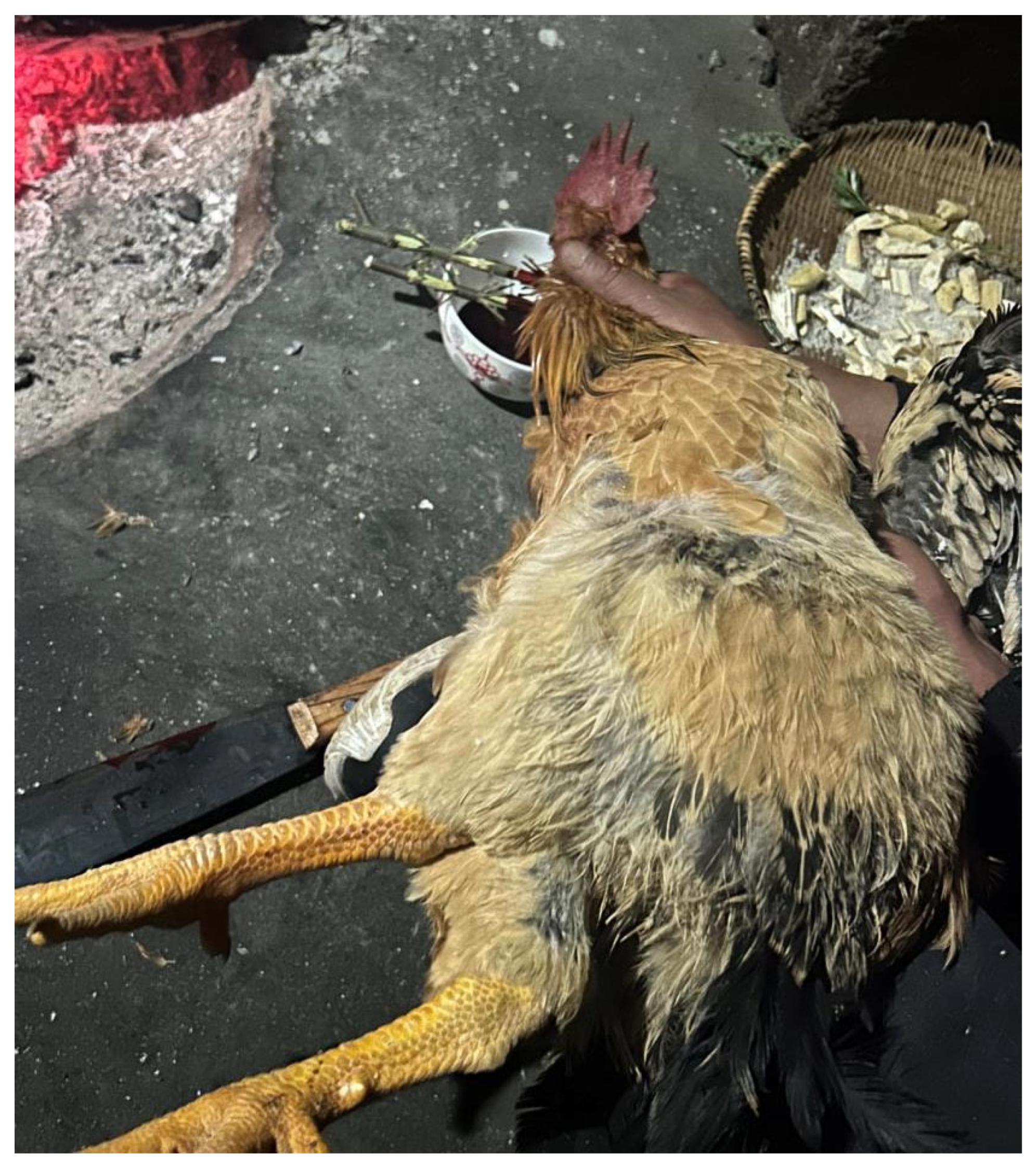
Figure 1 and
Figure 2) The lighting of pine needles to summon ancestral spirits, the holding of cypress branches during worship, and the use of cypress for exorcism all highlight the Yi people’s belief in the sanctity of plants (
Wang 2014;
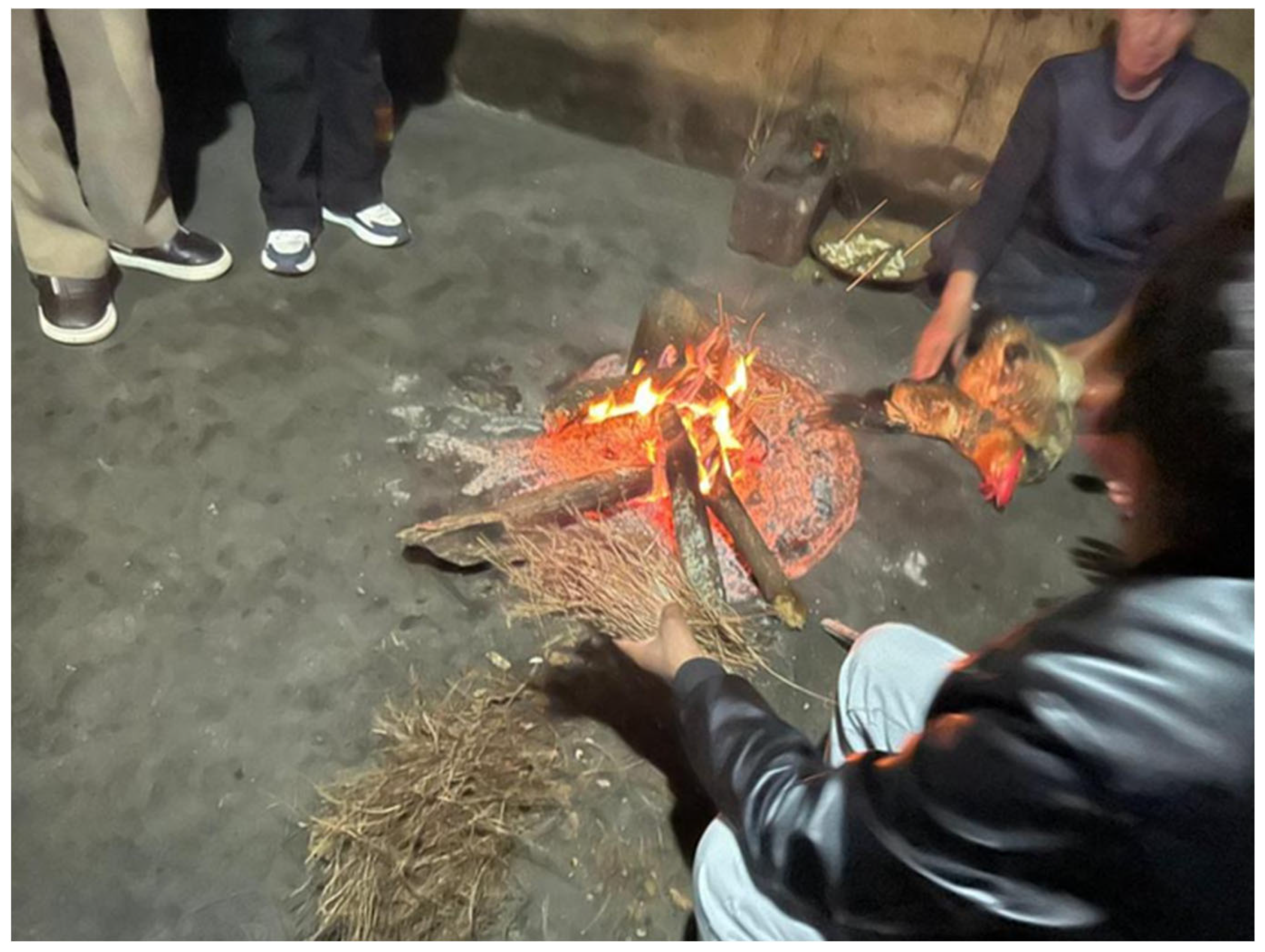
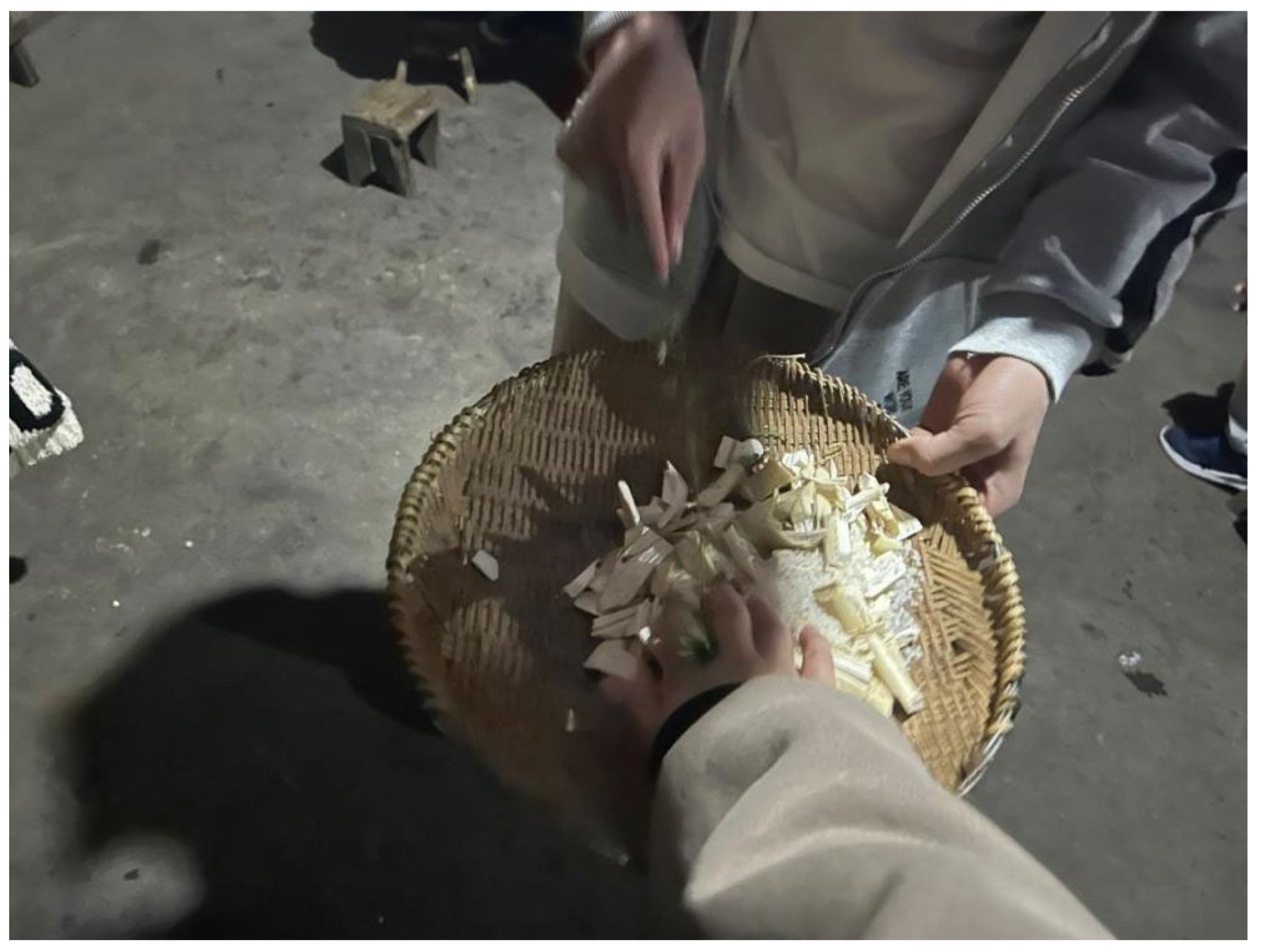
Swancutt 2015). This practice of imbuing natural objects with sacred significance reflects the Yi people’s sophisticated relational cosmology and embedded ecological knowledge developed through generations of intimate engagement with their environment. As demonstrated by the S family’s ritual in Mianning County, the careful selection of pine needles from specific mountain locations and the ritualized handling of these materials reveal not merely symbolic significance but practical ecological awareness.
The Yi people’s approach to mountains and forests as living entities with agency challenges Western ontological divisions between nature and culture, resonating with what anthropologists have termed the ‘ontological turn’ in the study of human-environment relations (
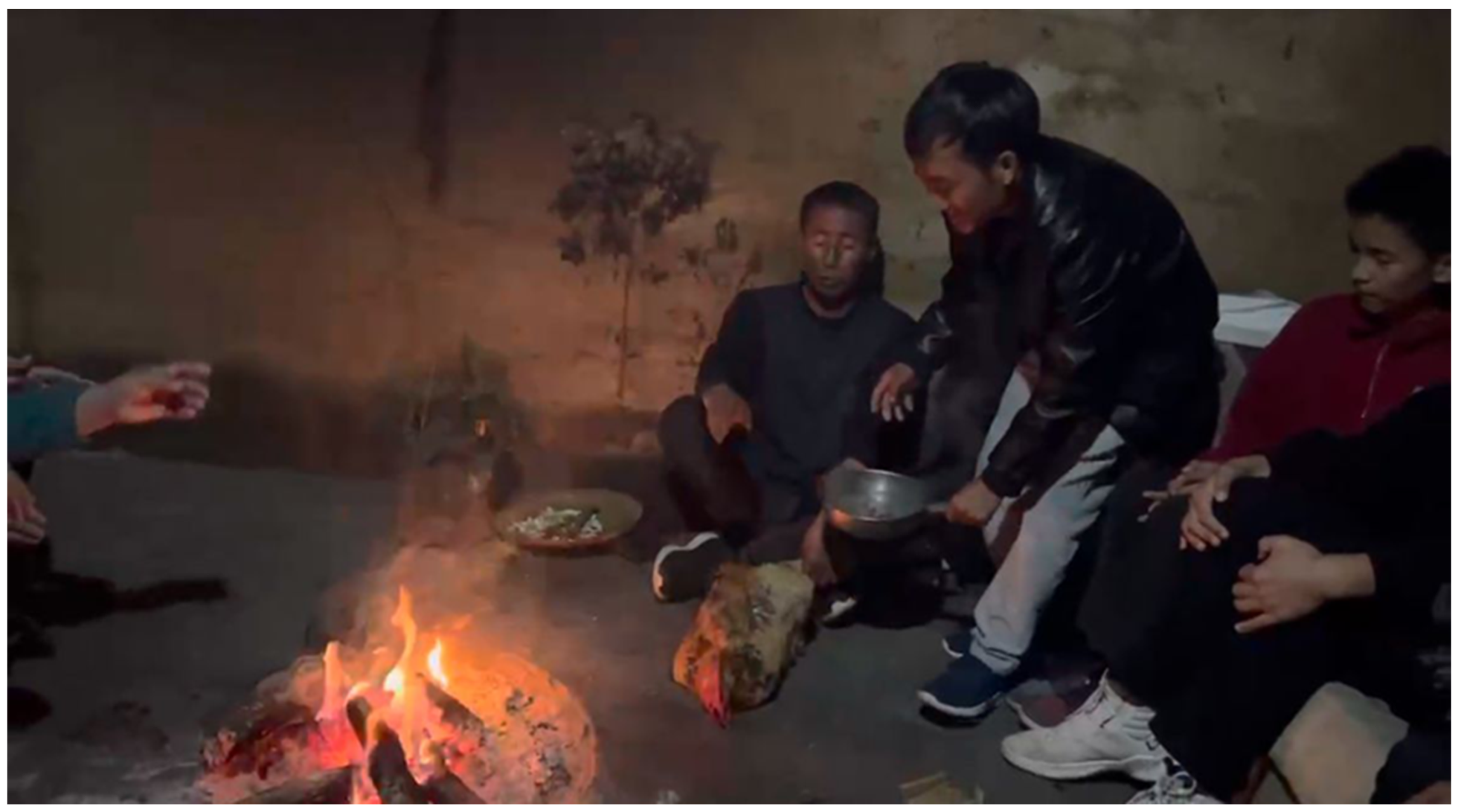
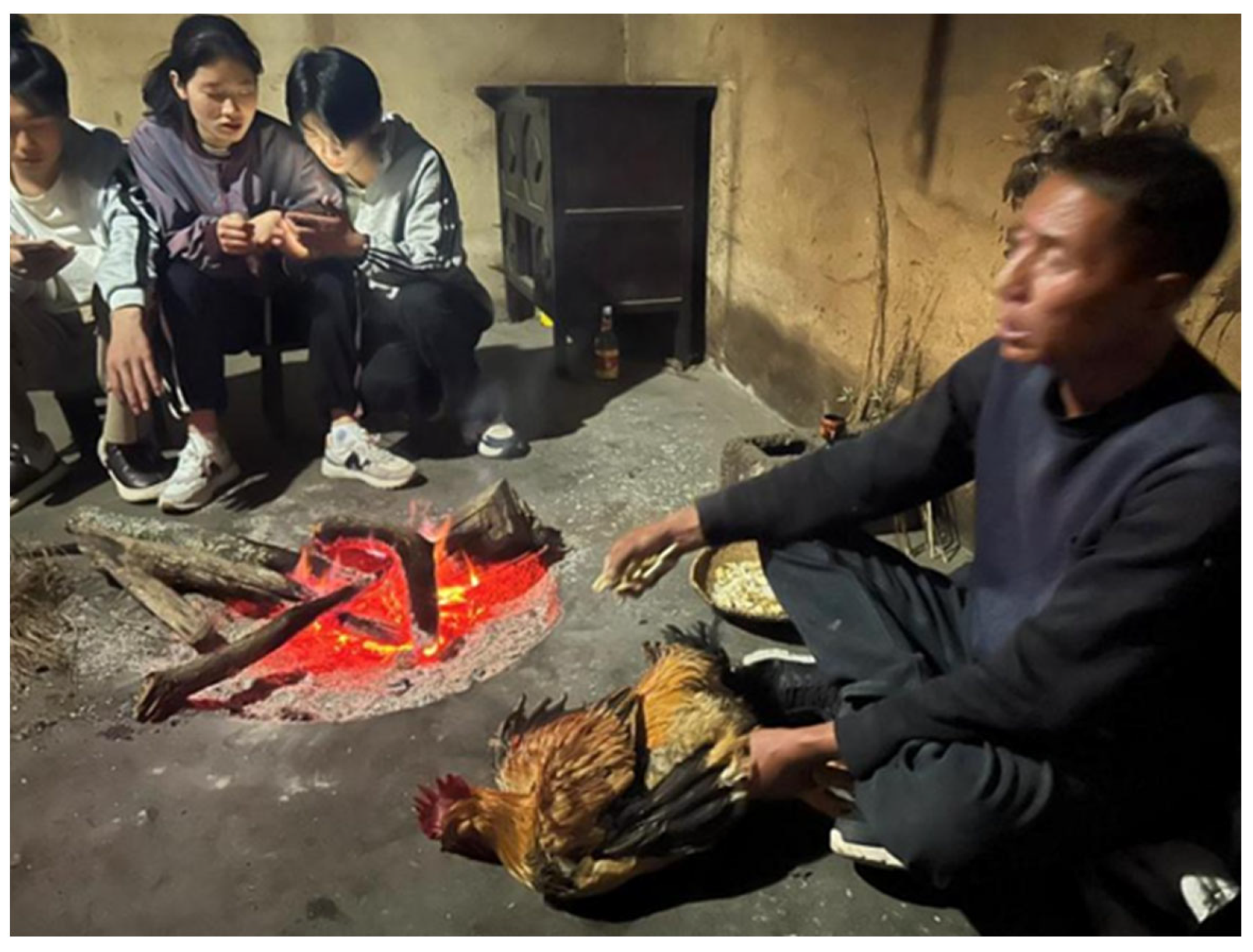
Kohn 2013). Rather than viewing mountains merely as physical features to be exploited or symbolic representations to be interpreted, the Yi people engage with them as sentient participants in an intersubjective field of relationships. This perspective aligns with what Descola terms ‘analogism,’ where entities across ontological domains are understood through networks of correspondence and connection. During the observed “xiō bū” ritual in Mianning County, this relational ontology was evident in the way the Suni practitioner addressed the mountain spirits not as abstract deities but as concrete presences with specific characteristics and histories tied to the local landscape. (
Figure 3 and
Figure 4) The ritual participants likewise engaged with the mountain materials not as passive objects but as active mediators in the human–spirit communication process.
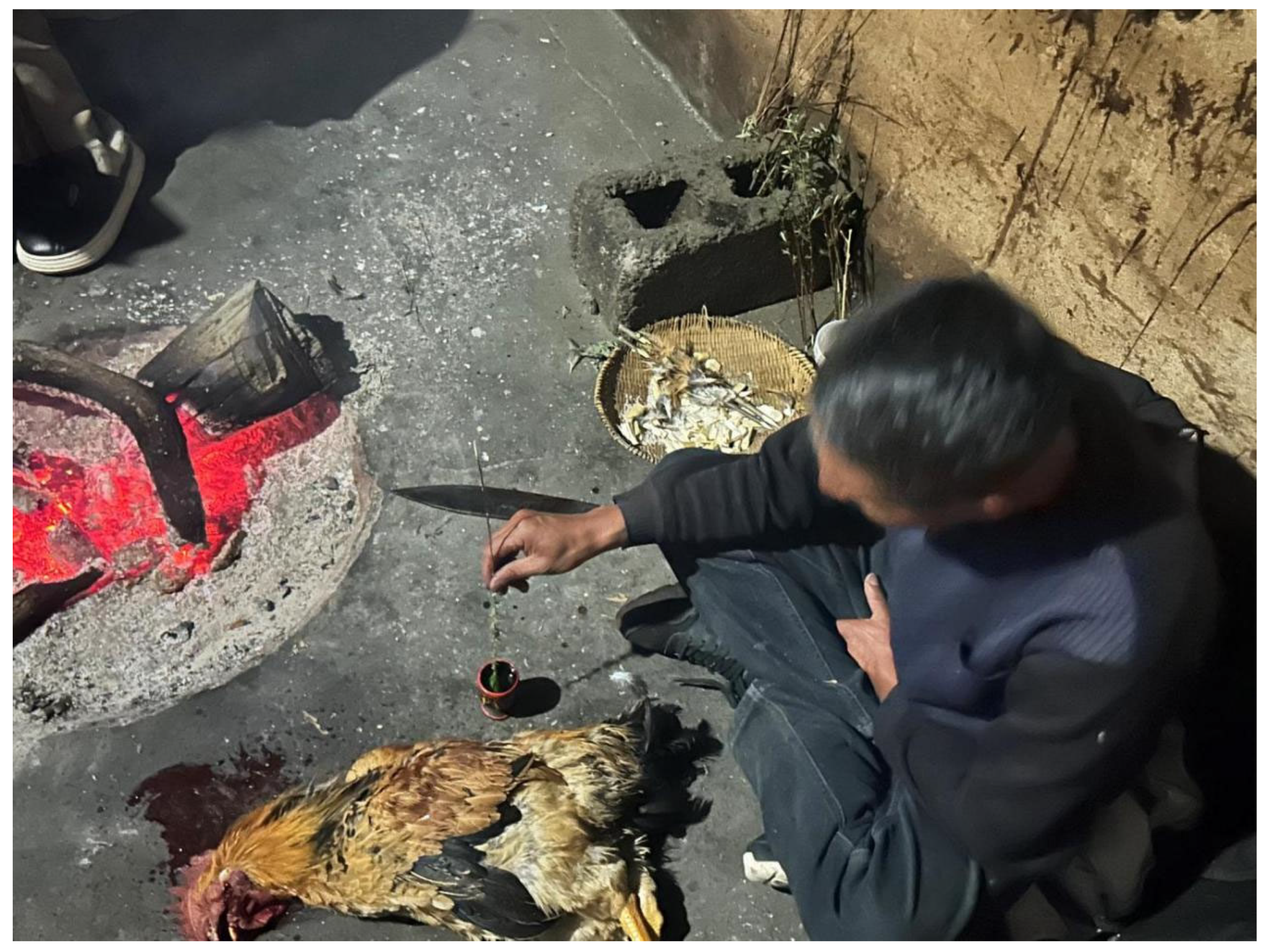
Furthermore, the sacrificial offering, a key element of the “xiō bū” ritual, embodies the Yi people’s unique life ethics while also containing wisdom about ecological balance. A central feature of the “xiō bū” ritual is the sacrifice of livestock, mainly chickens. The blood of the sacrificed chicken is considered sacred, used for worshipping deities and driving away evil, while the meat serves as an important food source for the ritual participants. This sacrificial practice reflects the Yi people’s ecological ethical view of the natural world as a shared community of life where humans, animals, plants, and spirits exist in reciprocal relationships. For them, the ritual use of animal life is understood within a cosmological framework of exchange and transformation. As
Bird-David (
1999) and
Nadasdy (
2007) have argued in their analyses of hunter-gatherer cosmologies, such practices should not be interpreted through Western dichotomies of conservation versus exploitation, but rather through indigenous frameworks of reciprocity and relationship. In the S family’s ritual, the careful handling of the sacrificial chicken, the specific patterns of blood distribution, and the subsequent consumption of the meat by ritual participants all demonstrated the transformative rather than merely consumptive nature of the sacrifice. Through the ritualized killing, animal life is transformed into sacred energy, which honors the deities above and benefits humanity below, thus achieving communication and balance between heaven, earth, and humans (
Bamo 2003). At the same time, sacrifice can also be used to transfer and dispel disease and misfortune, much like what Girard’s “Scapegoat Mechanism” suggests. He argued that by killing a “scapegoat,” or offering a sacrifice, a community can shift internal conflicts and restore social harmony (
Frear 1992).
Therefore, it can be said that the “xiō bū” ritual, with mountains and forests as sacred spaces, plants as sacred symbols, and animals as sacred intermediaries, constructs a sacred ritual that communicates with the three realms of heaven, earth, and humanity. It vividly reflects the Yi people’s ecological ethical view of being closely connected to and reverent of nature. Although this ethical view is steeped in mythology, it also contains the traditional society’s understanding of natural laws developed through long-term survival practices. In contrast, the root cause of the contemporary ecological crisis lies primarily in the imbalance between humans and nature, and the overexploitation of natural resources. The simple reverence for mountains and gods embodied in the “xiō bū” ritual, however, holds more positive ecological ethical significance. The ecological concepts of mountain worship and animism expressed in the Yi people’s “xiō bū” ritual offer valuable insights for reflecting on the relationship between humans and nature, and for rebuilding ecological ethics. A reasonable interpretation and innovative transformation of traditional Yi rituals like “xiō bū” holds important theoretical value and practical significance for promoting ecological civilization and building a modern civilization that fosters harmonious coexistence between humans and nature. This not only aids in the inheritance of Yi traditional culture but also provides wisdom that can be referenced for the sustainable development of human society (
Ma 2017).
4. Historical Memory in Ancestral Worship: The Social Construction of the “xiō bū” Ritual
As an important part of Yi traditional culture, their “xiō bū” ritual carries the collective memory of the ethnic group and embodies a complex social construction process. As Durkheim revealed in The Elementary Forms of Religious Life, religious rituals, as collective representations, hold significance not only in their sanctity but also in their role as instruments of social integration (
Durkheim 2016). Applying this perspective to the “xiō bū” ritual, it becomes clear that, as an ancestral worship ritual, it is not only a concentrated expression of Yi religious beliefs but also a key mechanism for the construction of ethnic identity and the transmission of historical memory.
Maurice Halbwachs’ foundational work on collective memory, further developed by contemporary scholars such as
Connerton (
1989),
Assmann (
2011), and
Olick et al. (
2011), emphasizes that individual memory is always intertwined with collective memory, and the shaping of memory is profoundly influenced by social frameworks (
Halbwachs [1925/1941] 1992). Recent approaches to memory studies have moved beyond Halbwachs’ somewhat static conception to emphasize the dynamic, contested nature of memory formation and the embodied, performative aspects of memory practices (
Erll and Rigney 2009). This theoretical perspective is particularly insightful for understanding the process of meaning construction in the “xiō bū” ritual. In the ritual practice, the Bimo and Suni (shaman-priest) narrates the epic history of the ancestors, as well as clan origin myths, weaving together the Yi people’s long history (
Bamo 2001). Select historical fragments, such as the heroic deeds of ancestors and the struggles the group has endured, are awakened, passed down, and reinforced, thereby constructing a subjective historical narrative for the Yi people. This narrative becomes a spiritual bond that unites the group. Individuals participating in the ritual embed themselves within the long history of the ethnic group, where their personal memory merges with the collective memory (
Figure 5). In this way, Yi identity is confirmed and strengthened through the dialogues between history and reality. In this sense, the “xiō bū” ritual functions as a social framework of memory, stitching together fragments of history into a cohesive epic that solidifies the foundation of collective identity.
The ethnographic data from the S family’s “xiō bū” ritual in Mianning County provides a vivid illustration of these theoretical perspectives. During the ritual, when family members gathered around the fire pit to listen to the Suni’s chanting of ancestral narratives, they were not merely passive recipients of cultural knowledge but active participants in the construction of social memory. The physical arrangement of participants according to kinship position (with elder members given prominence), the bodily postures adopted during key ritual moments, and the tactile engagement with ritual materials all contributed to what
Connerton (
1989) terms ‘incorporating practices’—bodily performances that inscribe collective memory into individual experience. Notably, the S family adapted the traditional ritual to accommodate the absence of the mother, who was away working, by incorporating her clothing as a ritual substitute. This adaptation demonstrates how memory practices flexibly respond to contemporary social conditions while maintaining core symbolic structures.
If memory shaping is regarded as the implicit social function of the “xiō bū” ritual, then the construction of ethnic identity is its explicit real-world focus. Both classic theorists like Weber and Barth and contemporary scholars like
Brubaker (
2002) and
Eriksen (
2010) have emphasized that ethnicity is not a naturally occurring entity but is constructed within specific social contexts through ongoing practices of boundary-making and identification (
Weber [1922] 1963;
Barth [1969] 1998). Brubaker’s critique of ‘groupism’—the tendency to treat ethnic groups as substantial entities with agency—is particularly relevant for understanding how Yi identity is continuously negotiated rather than simply expressed through ritual practices like “xiō bū” (
Brubaker 2002). From this perspective, we can similarly view the “xiō bū” ritual as a dynamic process in the construction of Yi collective identity. As a unique ritual form, the “xiō bū” ritual delineates clear “boundaries” for Yi culture. From the hanging Yi attire to the chanting of scriptures resonating through the valleys, and the offerings placed beneath the sacred tree, each element infused with Yi cultural symbols highlights the existence of the “Yi.” Whether consciously or unconsciously, this cultural expression strengthens the notion of the “Yi” as an imagined community. When people of different surnames and from different villages gather together to complete the sacrificial rites, a sense of identity and cohesion within the community is also reinforced. Therefore, it can be said that the “xiō bū” ritual is not only a carrier of culture but also a field for negotiating ethnic identity. The emotional resonance and the imagined sense of belonging it triggers are precisely the good soil in which ethnic traditions are revitalized in contemporary times.
What is particularly noteworthy is that the continuation of tradition in the modern context is itself a process of creative construction. As Anthony Giddens stated, in the context of reflexive modernization, tradition is not static, but rather a dynamic continuation achieved through continuous responses to real-world demands (
Giddens 1991). In the case of the “xiō bū” ritual, despite the constant impact of modernization, it has persistently survived and remains a vivid representation of Yi tradition today. This continuation is possible precisely because “xiō bū” is not a rigid cultural fossil, but rather a practice that can innovate within its transmission, actively incorporating elements of the contemporary era. When the younger generation takes on the role of the “Bimo or Suni” (shaman-priest), they not only continue the tradition but also quietly integrate new ideas into it. As a result, the ritual is revitalized, and tradition and modernity achieve dynamic coupling (
Meng 2003, p. 13). The contemporary inheritance of “xiō bū” precisely demonstrates that tradition is not a simple opposition to modernity, but rather that it can acquire new meanings through creative transformation, thereby achieving the sustainable development of traditional culture.
However, as a discourse-driven construct, the “xiō bū” ritual inevitably shapes historical memory in a selective manner. In the process of traditional continuation, some values beneficial to modern society are strategically activated, while ideas that conflict with the dominant trends of the times may be intentionally or unintentionally reinforced. In this regard, we need to maintain rational awareness. We should recognize the significant role ancestral worship plays in uniting the ethnic group and fostering identity, while also being cautious of the narrow tendencies it may breed. On all accounts, as an ancestral worship ritual, the social significance of “xiō bū” has already transcended its religious aspects, evolving into a key mechanism for the construction of Yi historical memory and the shaping of ethnic identity. Through the collective memory shaped by the ritual practice, the Yi people are able to establish their position as the subject in the long course of time, thus laying the foundation for their identity. Through the creative transformation of tradition, “xiō bū” has also achieved an organic integration of tradition and modernity. However, as a result of discourse construction, it is inevitably influenced by specific spatial-temporal contexts and power dynamics. Therefore, when considering the continuation of tradition, we must fully recognize the positive significance of “xiō bū” in cultural inheritance, while also reflecting on it critically. Only through such reflection can it truly become a valuable cultural resource that benefits the future development of ethnic cultures, offering greater possibilities for their continued evolution.
5. The Order of Sacrifice: The Ritual Logic of “xiō bū” and Community Integration
In fact, religious rituals, as one of the primordial forms of social life, serve not only to connect individuals with the sacred but also to strengthen the moral order of the group, thus achieving the spiritual integration of social members (
Durkheim 2016;
King 2003). As a core component of Yi traditional culture, the “xiō bū” ritual precisely reflects this social function. As a complex system of rituals, the cultural logic of “xiō bū” has a powerful cohesiveness. It plays an irreplaceable and unique role in building social order and promoting community integration.
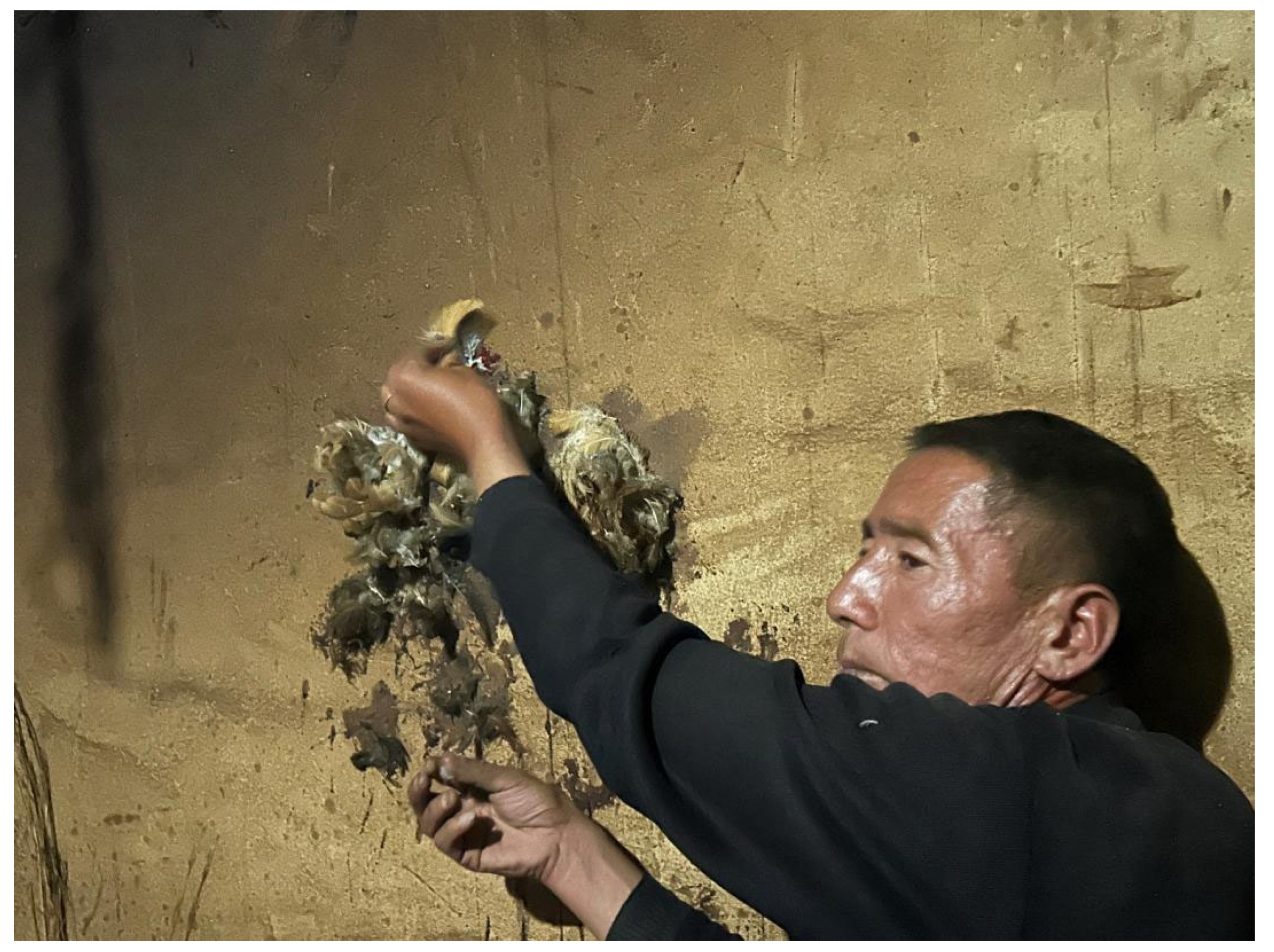
If rituals are symbolic actions, then interpreting the symbolic elements is undoubtedly key to understanding the ritual itself. Through the surface level of the Suni chanting scriptures, it is easy to discern that the “xiō bū” ritual actually sets up a rigorous and complete symbolic system. At the beginning of the ritual, the Suni will walk around the head of the household while using rooster to draw a circle, marking the “sacred boundary” in order to isolate “impure things.” (
Figure 6) In this moment, the invisible boundaries of the community are reestablished. Here, the heated stone is no longer just a purely material existence (
Kraef 2014); it becomes a symbolic weapon. It strictly isolates potential external threats, impurities, and defilements outside the “sacred space,” thereby redefining the purity and safety of the internal world through ritualistic spatial division (
Ding 2020,
2024).
Of course, this sacred space is also reinforced by other symbolic and enchanted ritual tools. In the “xiō bū” ritual, the Suni typically uses willow branches to realize this purpose (
Wang 2014). The members of the household are asked to sit upright at the door, while the Bimo holds a willow branch, chanting incantations, and then spins the enchanted willow around the head of the house in a clockwise direction for nine circles. Afterward, the Bimo places the willow branch at the door, inserting it into the crack of the door to ward off curses and malice from others. Thus, from the fire pit at the center of the main sacrificial area, to the rice placed in front of the altar, to the sacred music of the “xuan” drum (璇鼓) filling the space, every element is infused with specific cultural meanings. Through the careful handling of these symbolic elements, the Yi ancestors constructed a sacred ritual space that is clearly distinct from the everyday world. When people depart from the mundane and enter this structured ritual environment, a sense of order is established (
Meng 2003). Through role division and procedural arrangements, the “xiō bū” ritual provides community members with a uniform code of behavior, symbolically recreating harmonious and orderly social relationships. The latent function of this symbolic order is to provide behavioral norms and moral guidelines for the operation of Yi society, ensuring the smooth functioning of the community. This was evident in the S family’s ritual, where the careful spatial arrangement of participants according to age and gender hierarchies reinforced traditional social structures. However, the ritual also accommodated contemporary realities—the mother’s absence due to migrant labor was symbolically managed through the inclusion of her clothing, demonstrating how ritual simultaneously reproduces and adapts social order. As
Bell (
1992) argues, ritual does not simply reflect social structure but actively participates in its negotiation and transformation (
Figure 7,
Figure 8 and
Figure 9).
More notably, as a religious ritual, the “xiō bū” not only constructs a sacred order but also establishes a form of “secular order.” As Max Weber asserts, religious ethics are a key source of social order, significantly influencing the establishment of secular authority (
Weber [1922] 1963). In Yi society, Suni often cooperated with the political rule of the headman, administering ‘divine judgment laws’ on disputes over property, theft, and verbal disputes, and governing civil affairs by divine authority (
Zhang 2006). This judgment applies equally to the “xiō bū.” The pine needle smoke rising from the ritual fire is far from ordinary smoke; rather, it serves as a spiritual conduit linking the past and present. This invisible yet tangible connection allows the gaze of ancestors to transcend time and space, observing the continuity of the bloodline. Each wisp of smoke carries memory, tradition, and invisible spiritual energy, becoming a living testimony to the historical continuity of the community.
Throughout the ritual, through practices such as invoking deities, offering sacrifices, and sending off spirits, the Yi people place themselves within a sacred relational network (
Meng 2003). They humbly express reverence to the gods in hopes of receiving protection, thus establishing a sacred order of communion between humans and deities. Before the summoned gods and ancestors, the Yi people’s psyche achieves equality, dissolving identity distinctions. As people kneel together amidst the swirling incense smoke, listening to the epic tales, their hearts are filled with a sense of the sacred. Therefore, the “xiō bū” not only provides behavioral norms for daily life but also consolidates the collective psyche of the Yi people through a shared belief, demonstrating its integrative function (
Figure 10).
The intricate details of the “xiō bū” ritual reflect the careful weaving of social order. During the “soul summoning” ritual conducted by the Suni for family members, the traditional hierarchical family structure is precisely reproduced and reinforced. From husband to wife, and then to children, each ritual action performed by every family member subtly reaffirms the internal power dynamics within the family. Throughout the entire “soul summoning” ritual of the “xiō bū,” specific family members are designated to sit before the soul-summoning instruments, assisting in the search for the souls of family members who have “lost their souls.” Additionally, when the Suni rises and chants the invocation spells, other family members participating in the ritual will simultaneously call out the names of the “lost souls” to aid in the soul’s return (
F. L. Cai 2003). This is not merely a mechanical procedure, but a form of deep cultural reproduction. Through the repeated practice of rituals, generational order and family ethics are quietly engraved into the bodily memory of each member (
Tang and Lama 2019). In the circular movements, touches, and postures of the ritual, the individual body is no longer merely a physiological entity, but becomes a vessel for collective will. Every subtle action silently inscribes the totem of the community, with the body transforming into a living archive of cultural memory. Through the repeated practice of rituals, abstract social norms are converted into concrete bodily perceptions and actions (
Figure 11).
Through sharing sacred experiences and internalizing common moral values, the value orientations and emotional structures of community members tend to align, thereby shaping a cohesive collective consciousness. It can be said that the “xiō bū” ritual’s role in shaping community identity precisely stems from what Durkheim termed ‘collective effervescence’—the heightened emotional energy generated through synchronized ritual activity that transforms individual consciousness into a collective state (
Durkheim 2016). Contemporary scholars such as
Rappaport (
1999) and
Collins (
2014) have further developed this insight through theories of ritual as a mechanism for generating solidarity through emotional entrainment and embodied synchronization (
Lewis 1980;
Collins 2014).
The detailed ethnographic observation of the S family’s “xiō bū” ritual in Mianning County reveals the precise mechanisms through which this collective effervescence is generated and channeled. In the culminating moments of the ritual, when the Suni struck the drum while family members moved in synchronized patterns around the fire pit, the participants visibly entered a heightened emotional state marked by intensified breathing, flushed faces, and synchronized bodily movements. This collective arousal was not merely an epiphenomenon of the ritual but constituted its core transformative power. As one participant later explained in an interview, “During that moment when we all move together with the drum, I no longer feel like just myself—I feel connected to my family, our ancestors, and all Yi people.” This experience of transcending individual boundaries through ritual participation creates what
Bell (
1992) terms ‘ritualized bodies’—physical beings that have internalized the dispositions and orientations encoded in ritual practice.
Indeed, the communal integration of the ritual is not without tension. As carnivalesque exuberance reaches its peak, the rules can sometimes be broken (
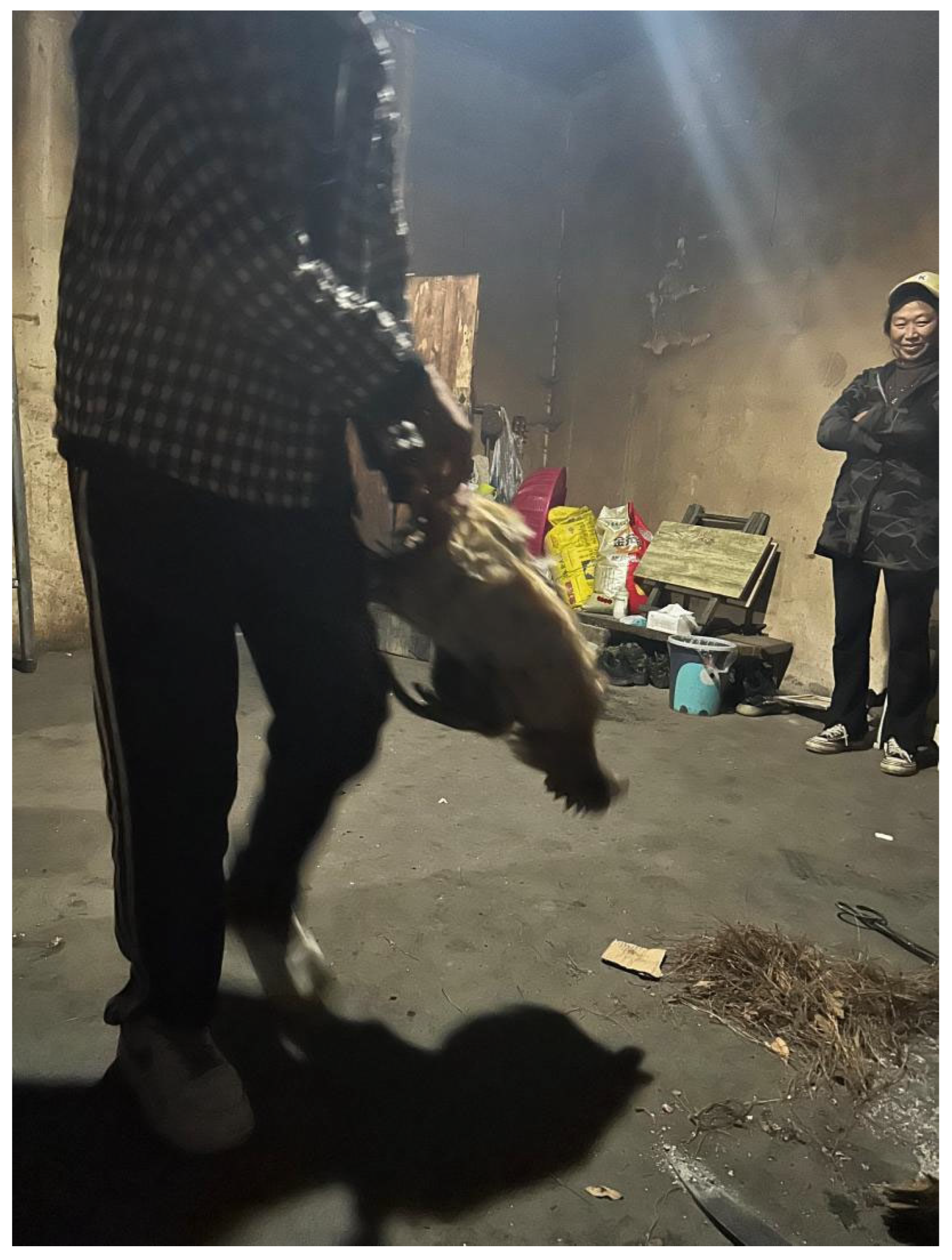
Durkheim 2016). Similarly, the “xiō bū” ritual faces the risk of losing control. To prevent the ritual from descending into disorder, the Yi people have established a rigorous control mechanism. Take the pre-ritual fasting and purification, for example, as well as the various taboos regarding language and behavior during the ritual. These self-imposed constraints underscore the solemnity of the ritual. The setting of these rules not only helps channel heightened emotions towards rationality but also internalizes the consciousness of order as a collective pursuit. Through symbolic acts of expulsion, the ritual can also transform external threats into manageable processes. When the sacrificial chicken is cast away from the center of the altar, ensuring that its head faces outward, it signifies that others’ malice and curses have been successfully expelled. Potential crises are driven out and transformed into a controllable order through ritualistic practice. This is a highly complex social repair mechanism, which, through symbolic acts of expulsion, reestablishes the group’s sense of security and control. Thus, the “xiō bū” ritual cleverly stimulates community emotions while simultaneously containing them within a net of order, allowing communal integration to occur in dynamic balance (
Figure 12).
Undoubtedly, in the “xiō bū” ritual, the retrieval of wandering souls transcends the healing of individual trauma, becoming a profound metaphor for the community’s repair and rebirth through sacred rituals. It is a process that transforms division, loss, and trauma into a holistic experience. Through the ritual, an individual’s spiritual wounds are elevated to the collective level, undergoing a reconstruction of meaning and healing. The return of the soul is not only personal but also a symbolic reconstruction of the spiritual integrity of the entire community. Although these “occasional rituals consisting of acts of witchcraft are the means by which people make up for their real needs through fantasies under certain social conditions. The disillusionment or misery of people in social life gives it social value and significance, and it becomes indispensable for people to seek social compensation and spiritual fulfillment. It plays a special role in comforting and compensating for the frustration of people’s inner world and the misfortune of real life (
Meng 2003, p. 123)”. In any case, as a sacrificial ritual, the significance of the “xiō bū” ritual in the Yi society has transcended the religious realm, rising to the construction of social order and the shaping of group identity (
Swancutt 2015). On one hand, the “xiō bū” ritual reproduces a harmonious social vision through symbolic elements, role divisions, and other stages, placing individuals within a sacred relational framework, thereby shaping secular ethics. (
Figure 13) On the other hand, the intense communal emotions experienced during the ritual also foster the construction of group identity, and this emotional tension is channeled and controlled through a strict system of taboos. It is clear that the reason the “xiō bū” ritual has been able to transcend time and space and endure is due to its unique ritual logic and the community integration it facilitates.
6. The Role of the Bimo and Suni: Knowledge, Power, and Ritual Performance
In traditional Yi society, religious specialists play crucial roles that extend beyond ritual performance to encompass knowledge preservation, community governance, and cultural transmission (
Bamo 2001,
2003). While the Bimo and Suni is often considered the primary ritual practitioner and scriptural expert, ethnographic research in Liangshan reveals a more complex ritual ecology where different specialists perform complementary functions. The Suni, who conducted the “xiō bū” ritual for the S family in Mianning County, represents a distinct category of ritual specialist who typically focuses on healing, soul retrieval, and countering malevolent forces. Unlike the Bimo, who often relies on written texts and complex liturgical knowledge, the Suni primarily works through oral tradition, embodied knowledge, and direct spirit communication. This distinction highlights the internal diversity of Yi ritual systems and challenges simplistic categorizations of indigenous religious specialists. In examining the social significance of the “xiō bū” ritual, we have already touched upon the role of the ritual expert. Indeed, the Suni plays an indispensable role in leading the “xiō bū” ritual. As the orchestrator of the ritual, the Suni carries a unique knowledge lineage within the power structure of the Yi community, undertaking specific social roles (
Meng 2003). In the dynamic interrelation of knowledge, power, and ritual, these three elements intertwine to form a closely connected organic whole. The core of this whole is the “Suni”. The reason the Suni is regarded as sacred lies not only in their mastery of a mysterious and esoteric knowledge system but also in their ability to apply this knowledge in ritual practice. In other words, it is their knowledge that gives content to the ritual, and the ritual gives form to the knowledge; together, they complement each other and collectively establish the Suni’s foundation of power (
Bamo 2001,
2003).
Foucault’s theories of discourse, power, and knowledge provide a valuable framework for understanding the complex position of ritual specialists like the Suni in contemporary Yi society. Rather than viewing ritual knowledge as a static body of information transmitted unchanged across generations, Foucault’s approach helps us recognize how this knowledge is continually produced, contested, and transformed through specific discursive practices (
Gordon and Foucault 1980). The Suni who performed the S family’s ritual demonstrated this process when he explained how he had modified certain ritual elements to address the specific circumstances of the family—including the mother’s absence and the children’s educational needs. This adaptive application of ritual knowledge reveals what Foucault terms ‘productive power’—not merely the power to prohibit or prescribe, but the power to generate new forms of knowledge and practice responsive to changing conditions. The Suni’s authority derives not simply from his possession of traditional knowledge but from his demonstrated ability to make this knowledge effective in contemporary contexts. As Foucault’s discovery of the “archaeology of knowledge” suggests, knowledge is always born alongside power. As a form of discourse practice, the construction and dissemination of knowledge inherently carry the deep logic of power operations (
Gordon and Foucault 1980). To a large extent, Foucault’s assertion also reveals the potential path through which the Suni constructs its own authoritative knowledge. The knowledge the Suni holds includes not only explicit cultural elements such as religious rituals and historical legends, but also reflections on ultimate questions such as the mysteries of life and death and the relationship between humans and gods. These pieces of knowledge are often shrouded in mysticism and are beyond the reach of the general populace. It is precisely through the monopoly on these “truths” that the Suni is able to establish their authoritative position in the spiritual realm. To make this authority perceivable and convincing to the public, however, relies on the performance of rituals (
Bamo 2001). In rituals like “xiō bū,” the Suni, through their superb ritual skills, transforms obscure and difficult knowledge into tangible and perceptible symbols. For example, by manipulating chickens, circling, chanting incantations, and other ritualized actions, the Suni creates a sacred space. In this space, everyday life is suspended, secular logic is broken, and communication between humans and gods is made possible. Thus, the unknowable “other shore” and the perceptible “this shore” magically align. For the Yi people, participating in this ritual means sharing in the Suni’s sacred knowledge and submitting to their spiritual authority (
Bamo 2001). In this way, the ritual’s “visual spectacle” transforms knowledge into tangible power, deeply embedding it into people’s hearts. Consequently, the ritual, in its sensory form, penetrates human nature, showcasing the universal structure of the human spirit. As
Mauss (
1973) noted, ritual is an extension of bodily techniques, a way for the body and faith to unite (
Crossley 2004). In the “xiō bū” ritual, faith is performed through the Suni’s bodily movements, and the body is imbued with sacred meaning within the ritual process. Through these “symbolic actions,” the Suni not only presents the meaningful world of Yi culture but also participates in constructing the social identity of the Yi people.
A deeper examination of the Suni’s discourse system reveals that the power it wields is not only based on the monopoly over mystical knowledge but also relies heavily on the use of complex “meaning symbols.” Geertz’s analysis of the ‘theatre state’ demonstrated that ritual power depends not solely on coercion but on the effective deployment of complex symbolic systems that render authority both legitimate and compelling (
Geertz 1980). Contemporary scholars like
Bell (
1992) have further developed this insight, showing how ritual authority operates through embodied practices that generate particular dispositions and sensibilities rather than merely expressing pre-existing power relations. The ethnographic data from the S family’s ritual illustrates this process: the Suni’s authority was established not primarily through explicit claims but through his skilled manipulation of symbolic materials (chicken blood, willow branches, fire), his command of specialized linguistic forms, and his embodied performance of ritual gestures that family members recognized as efficacious. In this regard, Claude Lévi-Strauss used the term “bricolage” as a metaphor. “Bricolage” originally referred to an impromptu, piecemeal form of creative craftsmanship, where existing materials and tools are reassembled in new ways to achieve new functions. Lévi-Strauss used this term to explain that myths and rituals always express new meanings through the recombination of existing cultural signs (
Mélice 2009;
Johnson 2012). The Yi people’s “xiō bū” ritual provides the best example of this. The ritual implements and sacrifices used, such as stones, clear water, and chickens, all have their usual meanings in everyday contexts. However, through the re-encoding within the ritual context, they acquire different connotations: stones are seen as protective items safeguarding the household’s soul; clear water symbolizes “purification” and “rebirth”; chickens serve as scapegoats and as a means of communication between humans and ancestral spirits. Thus, ordinary food items, transformed through the ritual, acquire “divine power.” The ritual functions as a cultural decoder, generating unique “implications” in the dislocation of the “signifiers” and the “signifieds.” The Suni is the key to this generation. Only through the Suni’s voice can the fragments of “bricolage” be pieced together into a complete web of meaning. Only through the Suni’s hands can everyday objects transform into sacred ritual tools. In this way, knowledge and power are embedded within ritual traditions, vividly manifesting through the Suni’s creative interpretation.
Nevertheless, rituals are not simply copies of knowledge or tools of power; they possess their own agency. On one hand, rituals, through their formalized performance patterns, ritualize profound knowledge, making it tangible, transmissible, and learnable cultural capital (
Wepener 2010). It is through repeated ritual practices that the Yi ancestors could embody and materialize knowledge, ensuring that culture was passed down through generations. On the other hand, rituals, with their sacred aura, provide a legitimate foundation for power. When the Suni presides over rituals and invokes gods to heal, they are exercising not only personal authority but also the sacred responsibility granted by the entire Yi society, a belief in entrusting one’s fate to the gods. Without the sacredness provided by rituals, power loses its moral roots; and without power as a backing, rituals become hollow forms. Thus, in the interaction between content and form, rituals integrate knowledge and power to a high degree (
Barnes 1990;
Somé 1997;
Barrett and Griffin 2000). This integration is the key to the Suni gaining the trust and support of the people.
Further, the knowledge, power, and rituals of the Suni are not only about the individual but also concern the ethical order and value system of the entire Yi society. As a “mediator” between humans and gods, the Suni essentially takes on the social responsibility of resolving conflicts and healing wounds. They are well aware that “clear messages about the mysterious existence and the mysterious forces are conveyed through the various behaviors in the ritual activities. These behaviors allow participants to understand what is happening and what will be changed through ritual means, and rituals create a sense of security and stability for people (
Meng 2003, p. 105).” In the “xiō bū” ritual, the Suni’s ability to “expel malice” and “retrieve wandering souls” is, in fact, an embodiment of a transcendent form of social governance, reconstructing and maintaining the spiritual order of the community. When the ritual drives away evil spirits, heals diseases, or prays for a good harvest, the Suni is using their knowledge and power to provide psychological comfort and a sense of hope for the community (
Apffel-Marglin 2011). In this way, individual suffering is given a cosmic explanation, and social crises are transformed into spiritual trials. Through participating in the ritual and experiencing “divine power,” people gain hope in life and feel the warmth of their community (
Teutsch 2005). In this manner, the Suni becomes a cultural force that unites people’s hearts and regulates order, with their knowledge and power acquiring an ethical significance in serving the Yi people.
In conclusion, within Yi tradition, knowledge, power, and ritual construct a highly interconnected and mutually interpreted system of meaning. As the bearer of this system, the Suni integrates profound knowledge, sacred power, and intricate rituals into a unified whole, thus opening the path to the “sacred.” The “sacred” realm not only reflects the personal wisdom of the Suni but also embodies the spiritual home of the Yi people (
Meng 2003). Through the “xiō bū” ritual, we not only see the wisdom of the Yi ancestors but also touch the fundamental secrets of human civilization—namely, how to bridge the gap between the earthly and the divine through a value system that embodies the unity of knowledge and action, seeking eternity within the confines of finite life.
Moreover, it must be noted that the analysis of the Suni role also prompts a reconsideration of the knowledge class. From Durkheim, Weber, to Gramsci, scholars have had substantial discussions on the social role of intellectual elites. However, when deeply immersed in the Yi context, we seem to need a new understanding: unlike Western societies, the traditional Yi society did not undergo the dramatic changes of religious decline and secularization. The knowledge lineage and belief system have long been intertwined. This has made the structured relationship between knowledge, power, and faith carried by the clergy more complex. Therefore, the Suni’s monopoly over knowledge is not the typical “knowledge-power” relationship, and the deeper cultural mechanisms behind it are worth exploring. This also suggests that only by deeply reflecting on the knowledge lineage within a specific context and its connection with faith and ethics, and subsequently carefully sorting out the operations of knowledge and power, can we truly reach a deeper understanding of the significance of the Suni and Yi society.
7. The Evolving Ritual Ecology: Tradition, Innovation, and Adaptation
The contemporary Chinese society is undergoing dramatic changes, with the ongoing process of modernization. Alongside the reshaping of social structures, Yi traditional culture is inevitably facing impact and challenges (
Meng 2003). As an important component of Yi culture, the survival of the “xiō bū” ritual also warrants attention and reflection. Looking at the current social realities in the Yi regions, the traditional “xiō bū” ritual is confronting multiple challenges. With the spread of secularization and modernization, religious beliefs are gradually weakening. Many young people no longer hold the same strong religious faith as their parents and are even unfamiliar with the rituals of “xiō bū.” Furthermore, the fast pace of life makes it difficult for the complex ritual procedures to align with urban living. A more pressing issue is that with the increase in population mobility, many young and middle-aged laborers in villages work far away for extended periods, making it hard to gather the necessary manpower to perform large-scale rituals. With fewer successors to the Suni role, many precious ritual practices and sacred texts are at risk of disappearing. Under the forces of modernity, how to innovate, transform, and regenerate traditional rituals has become an urgent practical issue that needs to be addressed (
Kraef 2014).
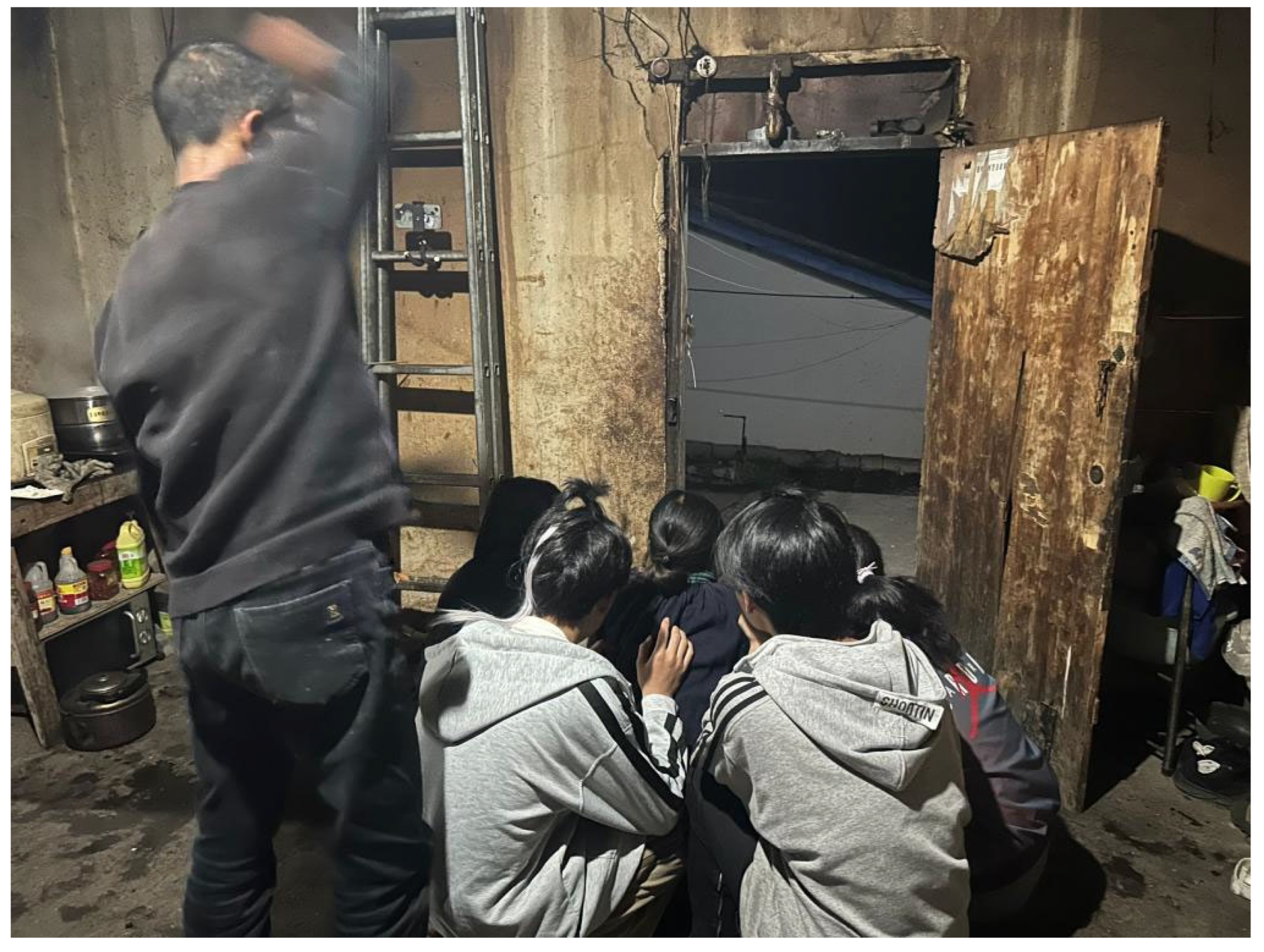
The S family’s adaptation of the “xiō bū” ritual provides a concrete example of how traditional practices evolve in response to contemporary conditions. The ritual was scheduled during the National Day holiday when family members could gather despite their otherwise dispersed living and working situations. The mother’s absence due to migrant labor was accommodated through the ritual inclusion of her clothing as a substitute presence. Several younger family members, who had received formal education and worked in urban areas, participated actively while also documenting parts of the ritual on their smartphones—creating a digital record that could later be shared with absent relatives through social media platforms. Rather than viewing these adaptations as compromising the ‘authenticity’ of the ritual, participants understood them as necessary evolutions that allowed the core spiritual functions to continue despite changed social circumstances. As one young participant explained, ‘Our way of doing “xiō bū” is different from our grandparents’ time, but the heart of it is the same—we still connect with our ancestors and protect our family from harm.’ This perspective aligns with what
Primiano (
1995) terms ‘vernacular religion’—the understanding that religious practice always exists as lived, adapted experience rather than as a static textual ideal.
However, it is not only the decline and decay that people see. Contemporary Yi regions are at the crossroads of tradition and modernity. The wave of modernity has brought both challenges and opportunities. Whether traditional Yi rituals, such as the “xiō bū,” can withstand the baptism of modernization largely depends on the cultural awareness and survival wisdom of the people. In fact, the “xiō bū” ritual in contemporary Yi regions presents a complex picture where tradition and modernity intertwine. While adhering to tradition, it is also actively innovating to adapt to the demands of contemporary development. Even in urban areas, during important festivals, many Yi families still perform simplified versions of the “xiō bū” ritual to express reverence for the deities and to pray for a better life. This objectively continues the Yi people’s religious sentiments and cultural memory.
The vitality of the “xiō bū” ritual is deeply rooted in the Yi culture. After enduring hundreds of years of trials and changes, the reason this ritual has continued to the present day lies in the fact that it carries the collective memory of the group, expresses people’s life experiences, and responds to the ultimate concerns of the spiritual world. Even amid rapid social transformation, the Yi people continue to engage with fundamental existential questions and moral frameworks through evolving ritual practices. Rather than viewing “xiō bū” as merely a cultural survival or an expression of ‘eternal confusions,’ contemporary anthropological approaches recognize how such rituals actively participate in producing meaningful social worlds adapted to current conditions. As
Latour [1991] (
1993) and other scholars associated with the ontological turn have argued, traditional knowledge systems should not be understood as primitive precursors to modern scientific understanding but as alternative modes of world-making with their own internal coherence and practical efficacy. The persistence of “xiō bū” in contemporary Yi communities demonstrates not a failure to modernize but rather an active process of selective adaptation that maintains core relational principles while engaging with changed social realities. On the contrary, they are likely to achieve transformation and revitalization as they evolve with the times, breathing new life into the culture.