Article

The Political Dimension of Liturgical Prayers of Remembrance: Lists of Rulers in the Confraternity Books of the Carolingian Period
Historisches Institut, FernUniversität in Hagen, 58084 Hagen, Germany
Religions 2022, 13(3), 263; https://doi.org/10.3390/rel13030263
Submission received: 7 February 2022 / Revised: 10 March 2022 / Accepted: 10 March 2022 / Published: 19 March 2022
(This article belongs to the Special Issue The Liturgy in the Middle Ages)

Abstract

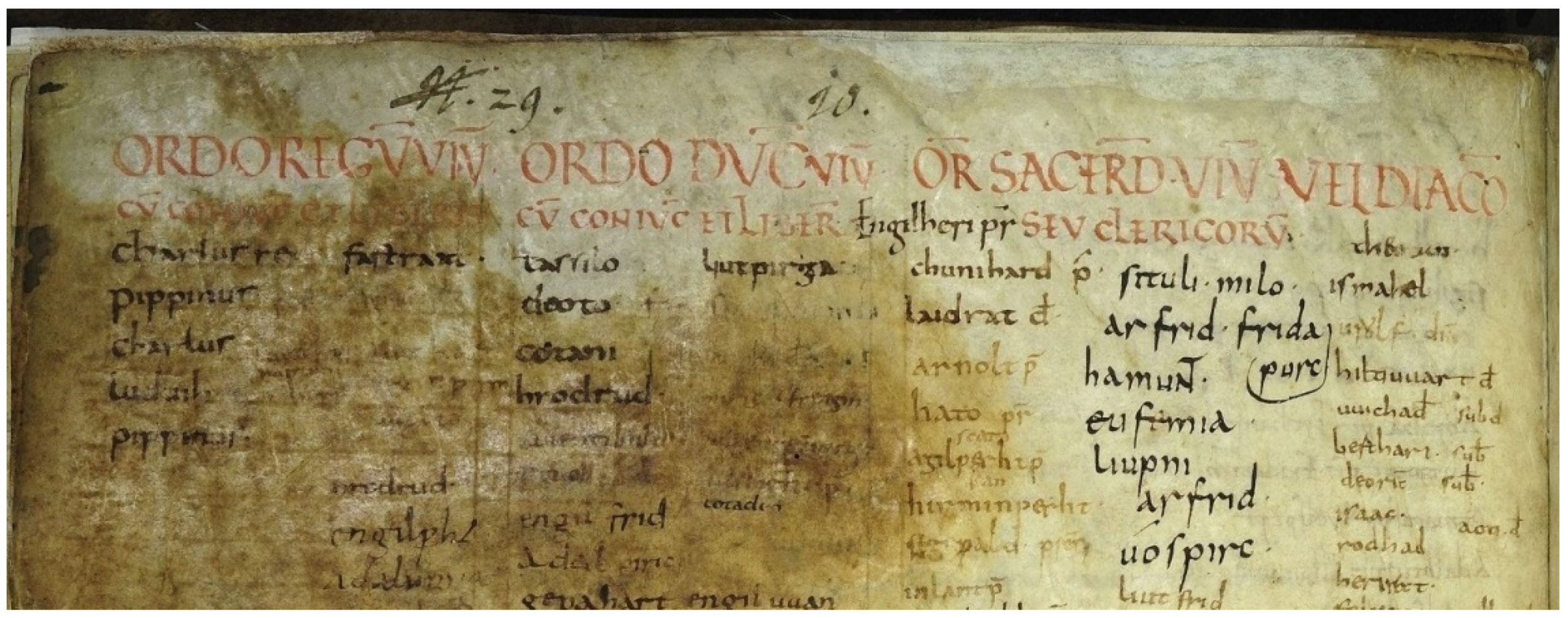
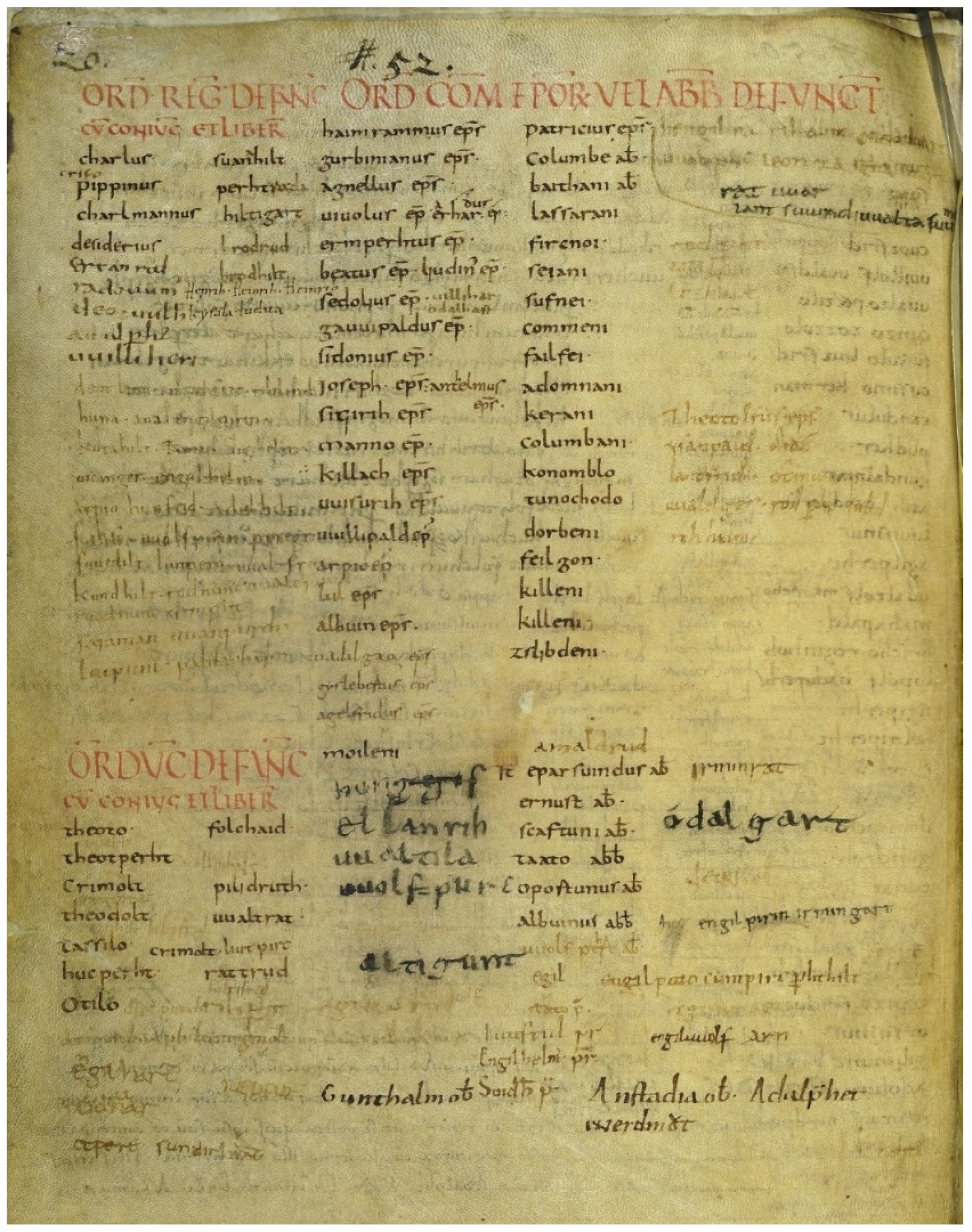
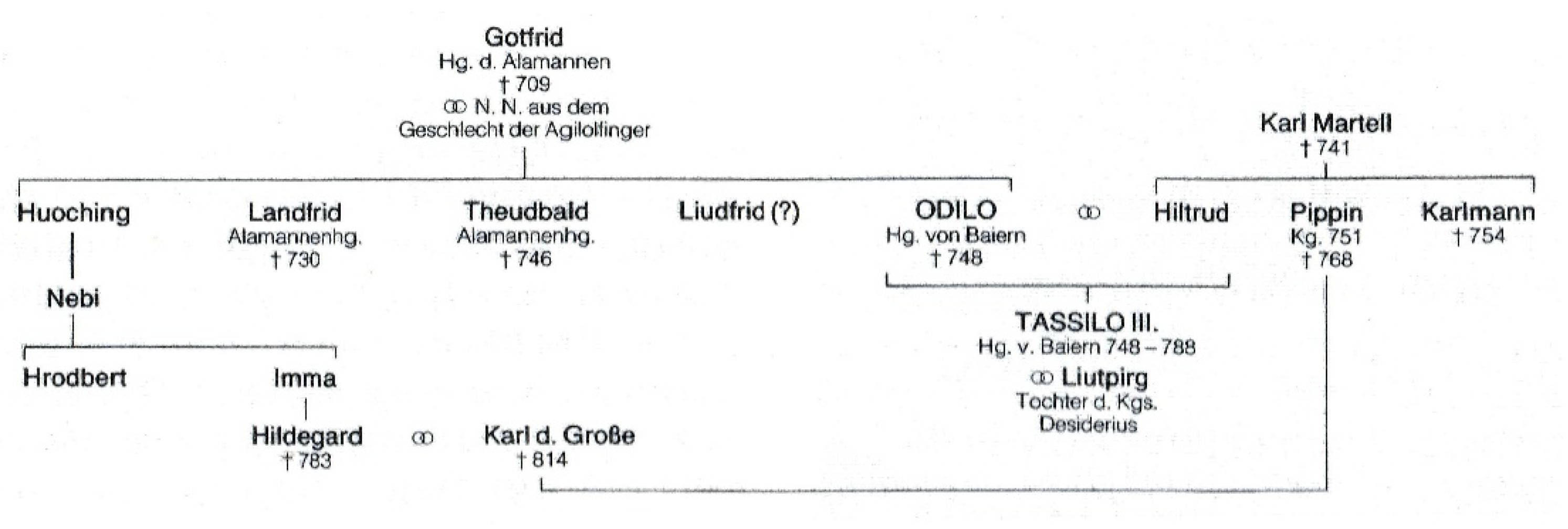
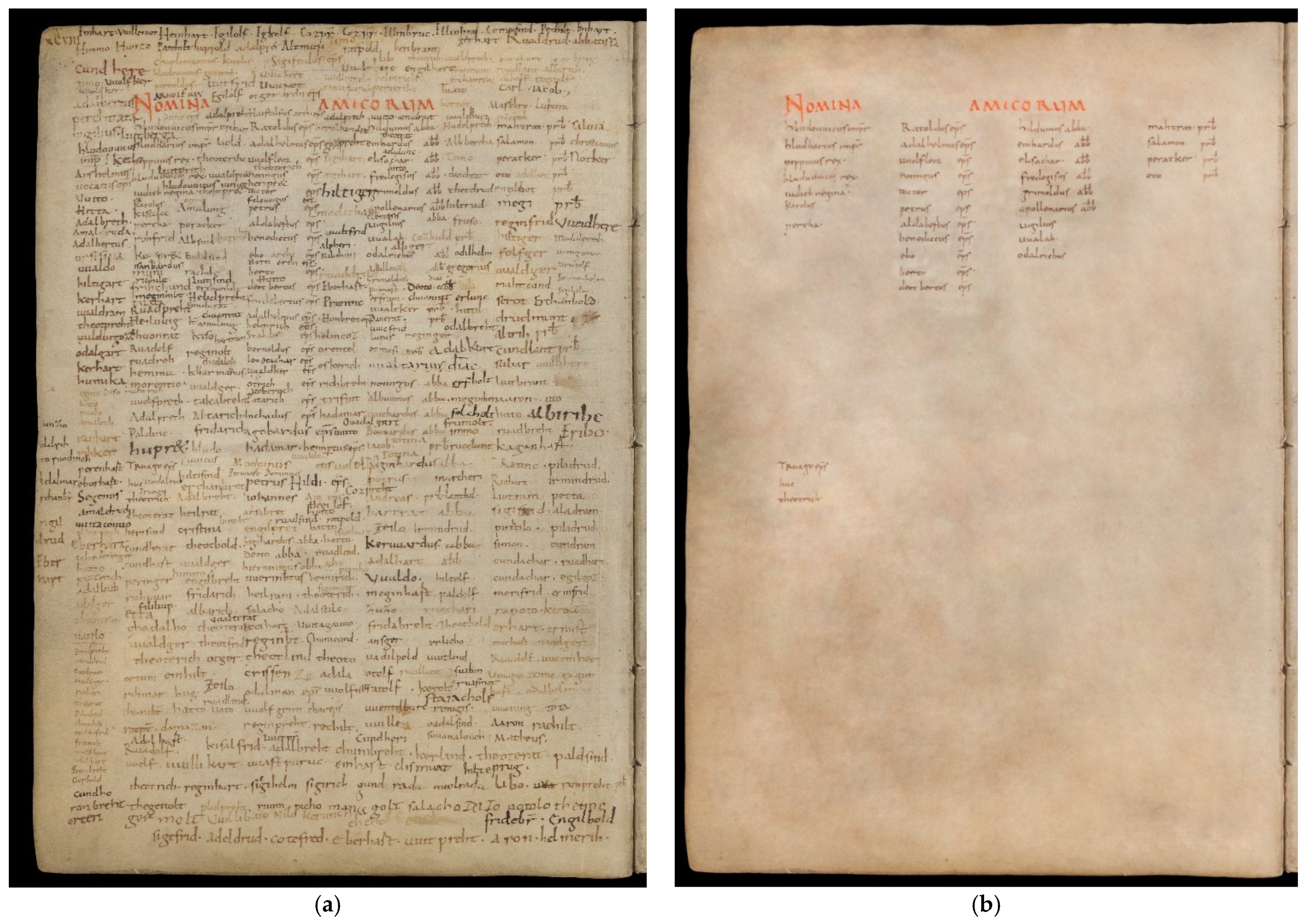
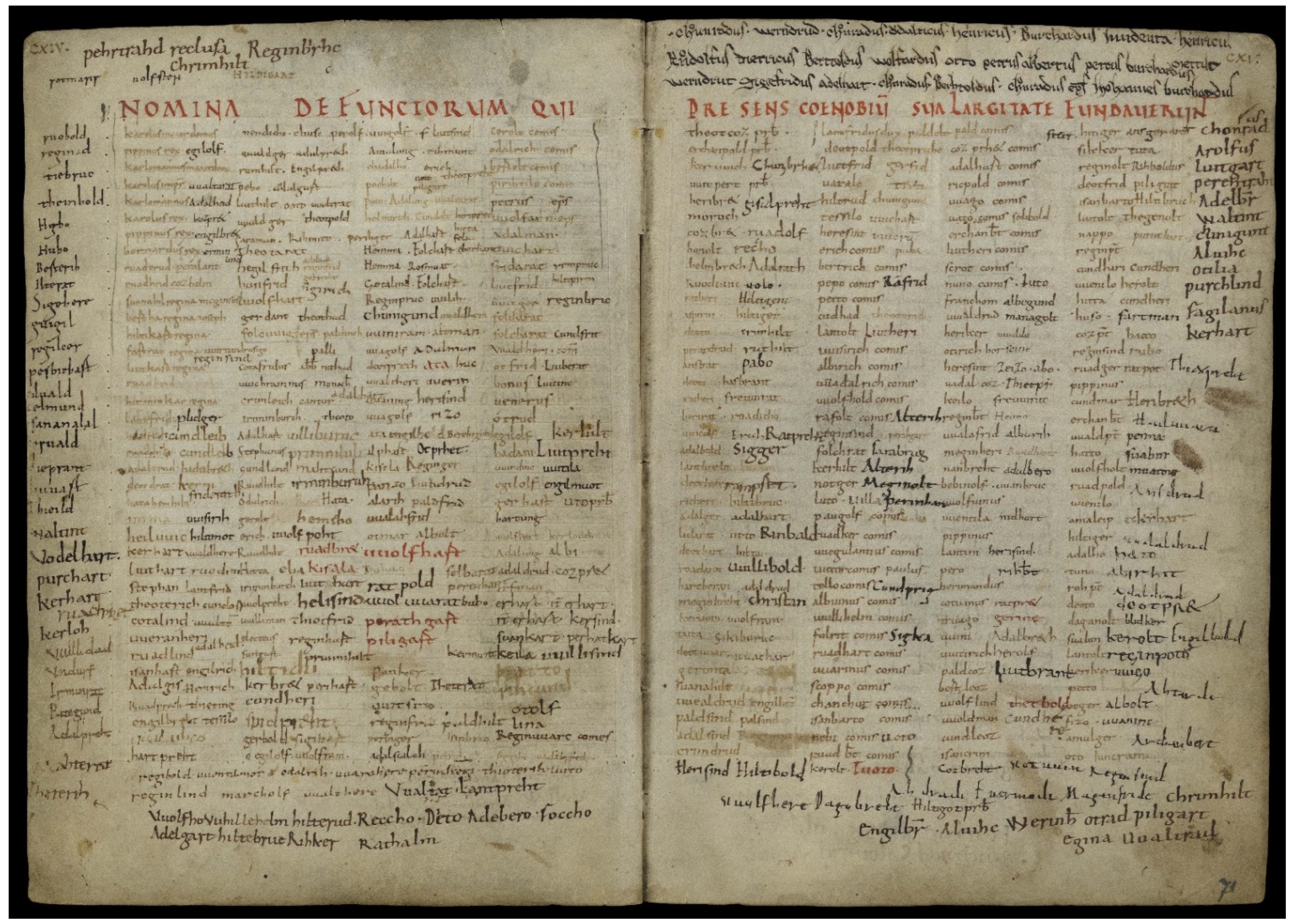
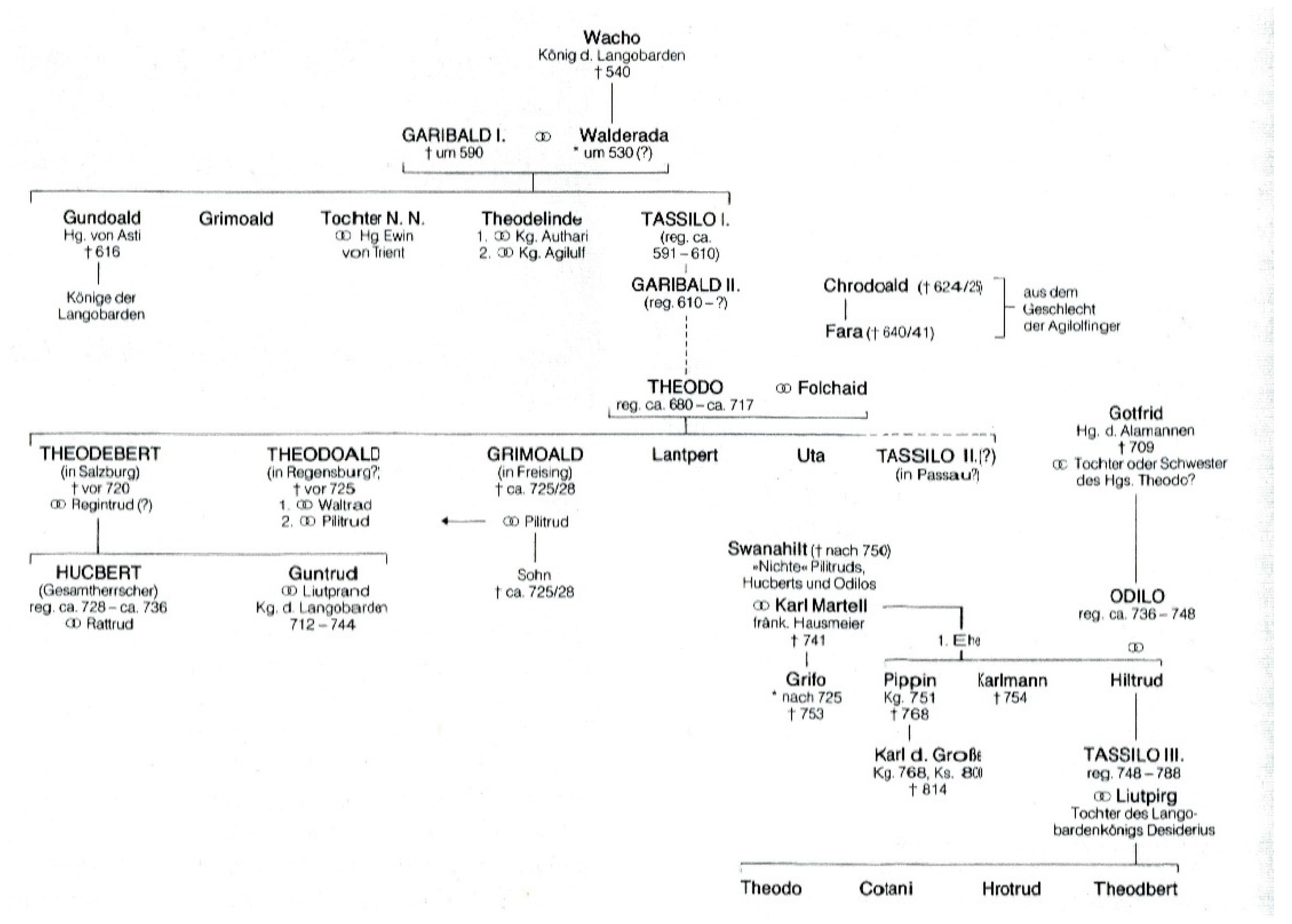
The confraternity books (Libri vitae) of the Early Middle Ages record the names of individuals to be remembered in liturgical prayer. Since the middle of the 20th century, they have come more sharply into focus as historical source material. The records of rulers were of particular interest even then. In order to understand the lists of rulers in the Liber Vitae, the first subject of study is the development of prayers of remembrance for the living and the dead, and the subsequent emergence and shaping of liturgical commemoration of the ruler from late antiquity to the Carolingian period. These diverse developments merge with those of the liturgical Memoria in the confraternity books, indicating that the monasteries, in particular, were important keepers of monarchical Memoria. Taking as examples the Salzburg Liber Vitae (783) and the Reichenau Confraternity Book (824), the steps and methods are followed through and the lists of rulers interpreted in their historical context. The two confraternity books prove to be a source for the legitimisation of Carolingian sovereignty, particularly in terms of substantiating it historically and securing it liturgically. The regional perspective of each monastic community plays a major role here. Complex reference and interpretative systems are exposed in the confraternity books, whose orderliness, structure and prayer also served as a counterbalance to the disorder and crisis prevalent in the world.
Keywords: Frankish empire; Carolingians; Libri vitae; commemoration; manuscripts; Salzburg; Reichenau Abbey Frankish empire; Carolingians; Libri vitae; commemoration; manuscripts; Salzburg; Reichenau Abbey