Abstract
In the ocean, heat waves are vital climatic extremes that can destroy the ecosystem together with ensuing socioeconomic consequences. Marine heat waves (MHW) recently attracted public interest, as well as scientific researchers, which motivates us to analyze the current heat wave events over the Red Sea and its surrounding sea region (Gulf of Aden). First, a comprehensive evaluation of how the extreme Red Sea surface temperature has been changing is presented using 0.25° daily gridded optimum interpolation sea surface temperature (OISST, V2.1) data from 1982 to 2020. Second, an analysis of the MHW’s general behavior using four different metrics over the study area, together with a study of the role of climate variability in MHW characteristics, is presented. Finally, the main spatiotemporal characteristics of MHWs were analyzed based on three different metrics to describe MHW’s local features. Over the studied 39 years, the current results showed that the threshold of warm extreme sea surface temperature events (90th percentile) is 30.03 °C, providing an additional average thermal restriction to MHW threshold values (this value is changed from one grid to another). The current analysis discovered 28 separate MHW events over the Red+, extending from 1988 to 2020, with the four longest events being chosen as a study case for future investigation. For the effect of climate variability, our results during the chosen study cases prove that ENSO and ISMI do not play a significant role in controlling MHW characteristics (except the MHW intensity, which has a clear relation with ENSO/ISMI) on Red+. Moreover, the chlorophyll concentration decreases more significantly than its climatic values during MHW events, showing the importance of the MHW effect on biological Red Sea features. In general, the MHW intensity and duration exhibit a meridional gradient, which increases from north to south over the Red Sea, unlike the MHW frequency, which decreases meridionally.
1. Introduction
Several notable marine heat waves (MHWs) events occurred globally—long periods of abnormal sea surface temperature extremes have had severe impacts on marine ecosystems, as stated by [1]. According to Sparnocchia et al. [2], Oliver et al. [3] and Holbrook et al. [4], MHWs are driven by a range of physical mechanisms, such as air–sea heat fluxes that coincide with atmospheric heat waves and/or horizontal temperature advection. Regardless of the mechanisms that drive individual MHWs, there is a growing acceptance that anthropogenic climate change has raised the likelihood of recent MHWs dramatically, including the following occasions. Prominent occasions occurred over the Red Sea, especially: in its northern basin, as stated by Chaidez et al. [5]; in the Gulf of Aqaba, as stated by Shaltout [6]; along the Mediterranean Sea including the central Ligurian Sea (Sparnocchia et al. [2]), the central basin (Olita et al. [7]) and the eastern basin (Ibrahim et al. [8]); over the eastern Indian ocean, especially along the Western Australian coast (Pearce and Feng [9]) and across northern Australia (Benthuysen et al. [10]); over the northeastern Pacific ocean (Bond et al. [11]); over the northwestern Atlantic ocean (Chen et al. [12]). These occasions resulted in significant environmental and financial impacts, including a reduced chlorophyll-a concentration (Bond et al. [11]), continuous coral bleaching (Hughes et al. [13]), the death of fish (Caputi et al. [14]), mass mortality (Garrabou et al. [15]), geographical and seasonal shifts of marine species (Mills et al. [16]; Cavole et al. [17]) and economic problems (Mills et al. [16]). Considering the current/projected warming trends over the Red Sea (Shaltout [6]), as well as the potential for deep ecological and social consequences, assessing MHWs patterns and trends is currently a critical topic concerning the Red Sea.
The Red Sea surface temperature (SST) experiences a current warming (1982–2017) trend of 0.29 °C/decade, while the annual mean SST over the Red Sea during the current century is expected to increase by 0.6–3.2 °C relative to the 2006–2035 period, as stated by Shaltout [6]. Based on the SST analyses over the Red Sea, Shaltout [6] indicated that the Red Sea suffers heat wave events that currently occur during approximately 3% of each year (≅10 days annually), which is expected to be more frequent by the end of the 21st century. On the other hand, Bindoff et al. [18] showed that changes in extreme weather events affected largely different species in comparison to the effect of changes in mean conditions, indicating the importance of the evaluation of MHWs events rather than SST trends, especially over the warming climate regions (e.g., the Red Sea climate). Moreover, marine organisms in the Red Sea, which is a semi-enclosed basin, are unable to migrate north. Thus, heat waves have been linked to some of the most catastrophic environmental changes over the Red Sea (Hodgkinson et al. [19]; Chaidez et al. [5]).
Some earlier relevant studies concerning MHWs’ duration, frequency and intensity are available. According to Oliver et al. [3], there has been a significant global increase in MHWs’ frequency (duration), which has increased by 34% (17%) from 1925 to 2016. In fact, over 18 days, from 29 July 2012 to 15 August 2012, the longest-detected MHWs occurred in the Gulf of Aqaba, which is north of the Red Sea (Shaltout [6]). In terms of the overall number of events, as well as the intensity and duration, Genevier et al. [20] confirmed that MHWs had a distinct spatial pattern in the Red Sea. The southernmost tip of the Red Sea and the eastern coast of the northern region had the greatest number of days of MHWs, whereas the western coast of the southern region had the most intense events, and the most persistent events occurred over the eastern coast of the southern Red Sea.
In general, this increase in the MHWs events over the Red Sea emphasizes the urgent necessity to describe the MHWs’ main characteristics and their link to climatic variability, together with identifying the regions in the Red Sea that are vulnerable to MHWs.
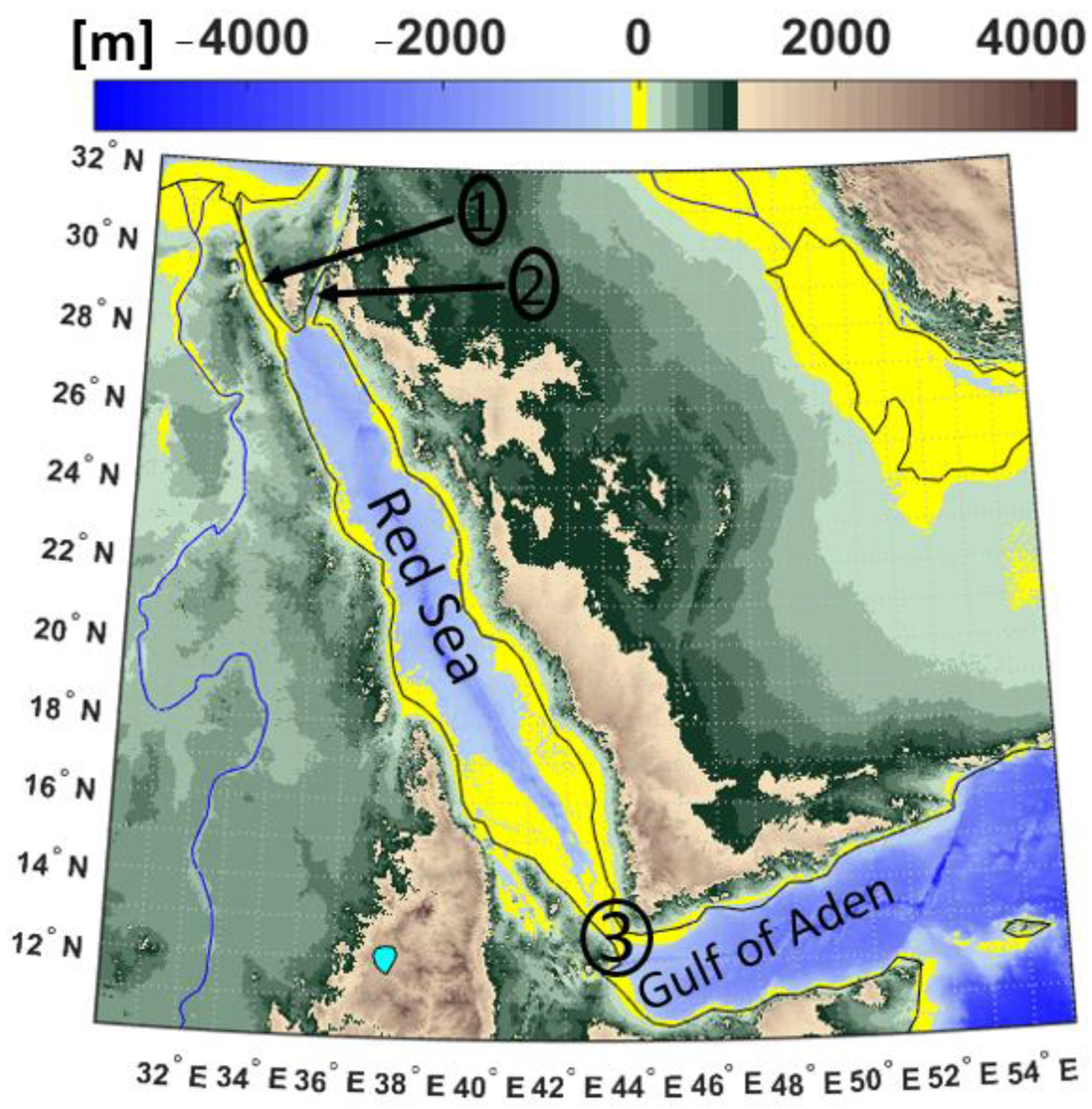
In the current study, MHWs were carefully analyzed to find out their characteristics over the Red Sea, together with the Gulf of Aden (hereafter, Red+; Figure 1). As such, understanding the MHWs’ variabilities in the study region is the main aim of this study, in order to be able to implement appropriate early awareness procedures related to the thermal stress on various marine sectors (e.g., coral reef bleaching), together with finding suitable regional climate policies to cope with climatic change issues. The data used and methods are presented in Section 2. In Section 3, the results are included, while the summary and conclusion are covered in Section 4.
Figure 1.
Digital elevation data of the Red Sea (data acquired from a global 30 arc-second interval grid (GEBCO: https://www.gebco.net/data_and_products/gridded_bathymetry_data/ [accessed on 10 May 2021]). The Gulfs of Suez (1), and Aqaba (2) together with the strait of Bab al Mandab were shown in the figure.
2. Data and Methods
In general, the MHWs are described by their frequency, duration and intensity. Their definition will have an impact on the analyses of the magnitude and duration of such events. According to Hobday et al. [1], MHWs originate when SSTs exceed a seasonally changeable threshold, defined as the 90th percentile of climatic SST mean for at least 5 consecutive days. In addition, Chaidez et al. [5] used a new definition based on considering yearly maximum SST above the climatic maximum SST by a given threshold chosen at 0.25 °C intervals between 0.5 and 1.5 °C as a base to define MHWs events. Finally, Darmaraki et al. [21] used the climatological 99th percentile threshold, based on daily SST over the period 1976 to 2005.
2.1. Data Used
Gridded daily averaged SST fields on a 0.25° horizontal resolution were obtained from NOAA optimum interpolation sea surface temperature data (OISST; version 2) over a 39-year period from January 1982 to December 2020. On a regular global grid, the OISST combines satellite ocean skin temperatures with data from in situ platforms (ships and buoys), as stated by Reynolds et al. [22] and Reynolds [23]. The OISST products, according to Banzon et al. [24], do not capture diurnal variations and do not represent a specific time of day because they are made up of data collected throughout the day. The International Comprehensive Ocean-Atmosphere Data Set (ICOADS) provided the in situ platform measurements for the OISST products (Worley et al. [25]. Karnauskas and Jones [26] highlighted the higher density of the in situ measurements in the ICOADS data bank, especially in the Red Sea. Thus, the OISST products are a relevant tool to study local features of the Red+. Moreover, the OISST data feasibility in describing SST over the Red+ has been carried out by inter-comparisons with independent in situ measurements (Shaltout [6]), confirming the excellent agreement between OISST and in situ measurements. The OISST products are freely available as gridded NetCDF (network Common Data Form) via HTTP link (https://www.ncei.noaa.gov/data/sea-surface-temperature-optimum-interpolation/v2.1/access/avhrr/ [accessed on 1 February 2021]). These data will be used for determining the climatological SST mean and 90th percentile of the historical SST distribution for each day of the year.
Chlorophyll concentration in sea water (chlor_a). Gridded daily data on chlor_a concentration was obtained from the MODIS (Moderate Resolution Imaging Spectroradiometer) sensor database on the NASA Aqua satellite. Currently, the Level 3 standard mapped image with 0.04° (~4-km) resolution was used to study the variability of chlor_a concentration over Red+. SeaWiFS Mission webpage [27] provides detailed description about chlor_a (validations and documentation). These data have been used largely over the Red Sea (Brewin et al. [28]; Eladawy et al. [29]; Shaltout [6]). These data will be used to understand the effect of MHW on the chlor_a concentration, especially during the selected study cases.
El Niño/Southern Oscillation (ENSO) index. The time series of the leading combined empirical orthogonal function (EOF) of five different variables (SST, sea level pressure, outgoing longwave radiation and zonal and meridional components of the surface wind) over the tropical Pacific basin (30° S–30° N and 100° E–70° W) is the bi-monthly multivariate ENSO index (MEI.v2). More detailed information about MEI.v2 is available at Zhang et al. [30]. MEI.v2 data were extracted from the physical science laboratory (https://psl.noaa.gov/enso/mei/ [accessed on 23 May 2021]) for 12 overlapping bi-monthly “seasons” (December–January, January–February,..., November–December) in order to both decrease the impact of higher frequency intra-seasonal variability and take into account ENSO’s seasonality. El Niño periods and La Niña periods were identified based on a threshold of ±0.5. These data are used to study the climate variability role in the characteristics of MHWs.
Indian Summer Monsoon Index (ISMI), which contributes to wind circulation and temperature distribution, lasts only during the summer season (June to September). Monthly ISMI data were obtained from the University of Hawaii Data Center (http://apdrc.soest.hawaii.edu/projects/monsoon/seasonal-monidx.html [accessed on 10 June 2021]) over 1982–2019. According to Wang et al. [31], the ISMI is an 850-hPa zonal wind difference between a southern zone (40–80° E, 5–15° N) and a northern region (70–90° E, 20–30° N). ISMI is used to study how the MHWs’ characteristics are related to ISMI.
Sea surface radiation budget components, including surface latent heat flux (SLHF), surface sensible heat flux (SSHF), surface net thermal radiation (SNTR) and surface net solar radiation (SNSR), were obtained from ERA5 reanalysis database during 1982–2020 (https://cds.climate.copernicus.eu/cdsapp#!/dataset/reanalysis-era5-single-levels?tab=form [accessed on 10 June 2021]). ERA5, which replaced the successful previous version of ERA-Interim, featured a highly spatial/temporal grid point, as well as major improvements in core dynamics and model physics [32]. By merging weather model data with observational data from ground sensors and satellites, ERA5 provides an accurate long-term record of global climate and weather [33]. Furthermore, the total heat loss to the atmosphere (Floss) equals SLHF + SLHF + SNTR +SNSR (fluxes are positive when directed away from surface to the atmosphere).
2.2. Extreme Red+ Sea Surface Temperature
Daily means in a 39-year period SST data were used to determine the thresholds of extreme sea surface temperature events (hereafter, ETEs) over the Red+; thus, SST values above the 90th percentile were considered as warm ETEs and SST values below 10th percentile were considered as cold ETEs. The frequency of warm ETE () and the magnitude of warm ETE (=The maximum values of seasonally averaged SST) were used to identify the warm extreme Red+ sea surface temperature.
2.3. Analyses of the Marine Heat Waves over the Red+
Daily OISST SST data were used to identify MHWs, and a set of four metrics were developed to quantify MHWs: (1) MHWs categories, (2) frequency (the number of individual MHWs events that occur annually), (3) duration (the number of MHWs days over the entire 39-year study period) and (4) intensity of an event (mean, maximum and accumulative). Mean (maximum) intensity is described as the average (maximum) SST (°C) above the climatological mean during an event, whereas the cumulative intensity (°C-day) is described as the mean intensity multiplied by the event’s duration.
The 90th percentile of the historical SST distribution through a baseline period over the Red+ is used to identify MHWs categories (Hobday et al. [1]; Hobday et al. [34]). Thus, MHWs categories were defined as the local difference between climatological 90th percentile and climatological mean. According to Hobday et al. [34], different MHWs categories are defined by a magnitude scale calculated based on the multiples of this local difference. Moderate MHWs category falls in the range (1–2 * local difference), strong MHWs category falls in the range (2–3 * local difference), severe MHWs category falls in the range (3–4 * local difference), extreme MHWs category falls in the range (4–5 * local difference).
A baseline period of 39 years (1982–2020) was used to identify the changeable climatological SST mean and 90th percentile threshold based on each day of the year. The climatological SST mean for a specific day was calculated by averaging the daily SST values within an 11-day window ranging from 5 days prior to the specific day to 5 days after the specific day over the entire 39-year baseline period. The minimum duration of an MHW event was set to be five days (Hobday et al. [1]), and an intermittent period of up to 2 consecutive days or fewer (if the MHWb duration>10 days) was considered to be a single MHW event. Thresholds of warm ETEs (≈30 °C over the Red+ and changeable from grid to grid) were used as an additional thermal restriction to MHWs threshold values.
General characteristics of MHWs categorization over the Red+ were analyzed every year to report the most important MHWs study cases. Local features of MHWs were furtherly analyzed over the selected study cases that have the longest duration.
2.3.1. The Role of Climate Variability
The annual effects of the ENSO—the most reliable indicator of global climate change—on the MHWs characteristics were studied by comparing their annual patterns. Moreover, the annual effect of ISMI on the MHWs variabilities was also studied.
2.3.2. The Role of the Sea Surface Radiation Budget Components
A direct comparison between MHW intensity and different sea surface radiation budget components (SLHF, SSHF, SNTR, SNSR and Floss) was carried out using the correlation coefficient (R) and a number of observations (n) during the selected study cases. Furthermore, a direct comparison between MHWs’ intensity and sea surface radiation budget for different components over the study period was carried out to assess the role of the sea surface radiation budget on MHW.
2.4. Main Spatiotemporal Characteristics of MHWs over the Red+
The spatial and temporal variability of MHWs characteristics were analyzed in Red+ over a studied 39-year period, focusing on annual variability. Annual averaged MHWs’ intensity (°C), marine heat wave duration over the 39-year study period (day) and marine heat wave frequency (event per year) were selected to characterize the main spatiotemporal features of MHWs.
3. Results
3.1. Extreme Red+ Sea Surface Temperature
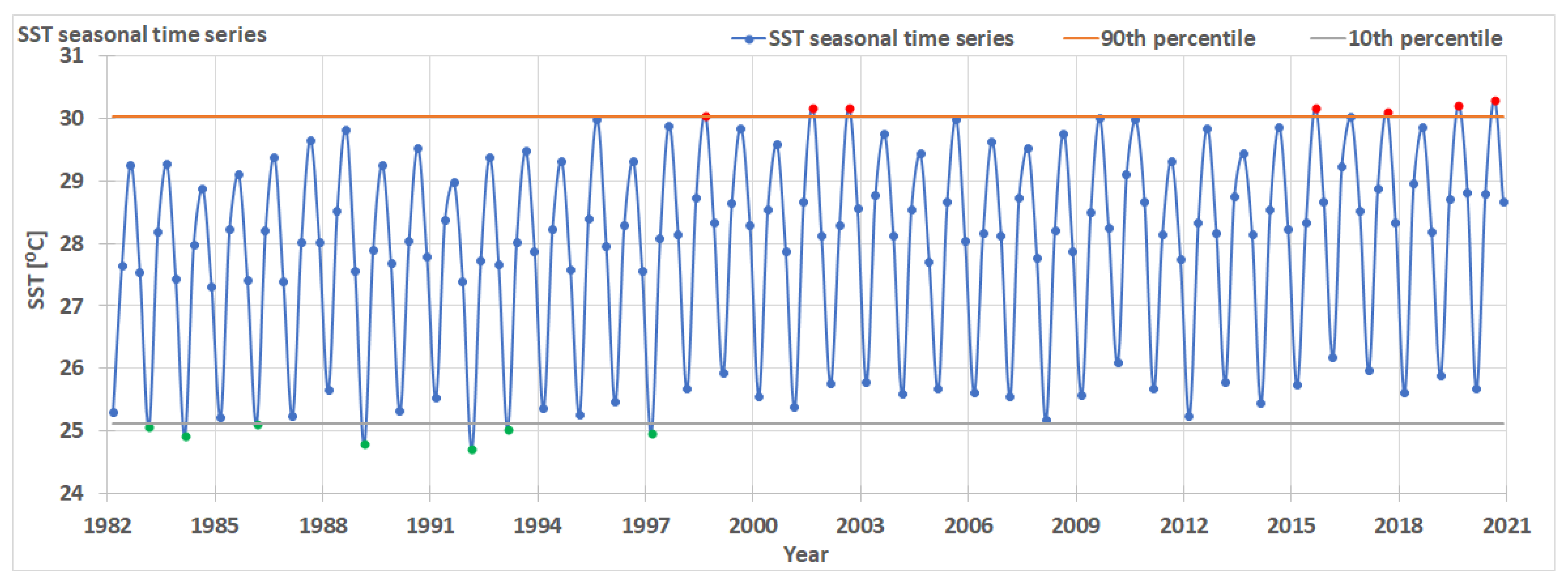
Based on a 39-year period, the time series of the seasonal mean SST (Figure 2) over the Red+ showed that the threshold of warm ETEs (90th percentile) is 30.03 °C and cold ETEs (10th percentile) is 25.13 °C. The frequency of warm ETEs is 4.5% and is most pronounced after 1998, particularly in the summer of 1998, 2017, 2015, 2002, 2001, 2019 and 2020 (years arranged in ascending order). However, the magnitude of warm ETEs is 30.29 °C (occurring during the summer of 2020), partly due to the effects of climate change.
Figure 2.
Time series of seasonally mean sea surface temperature over Red+. Warm ETEs (90th percentile) and cold ETEs (10th percentile) are presented in red and green, respectively.
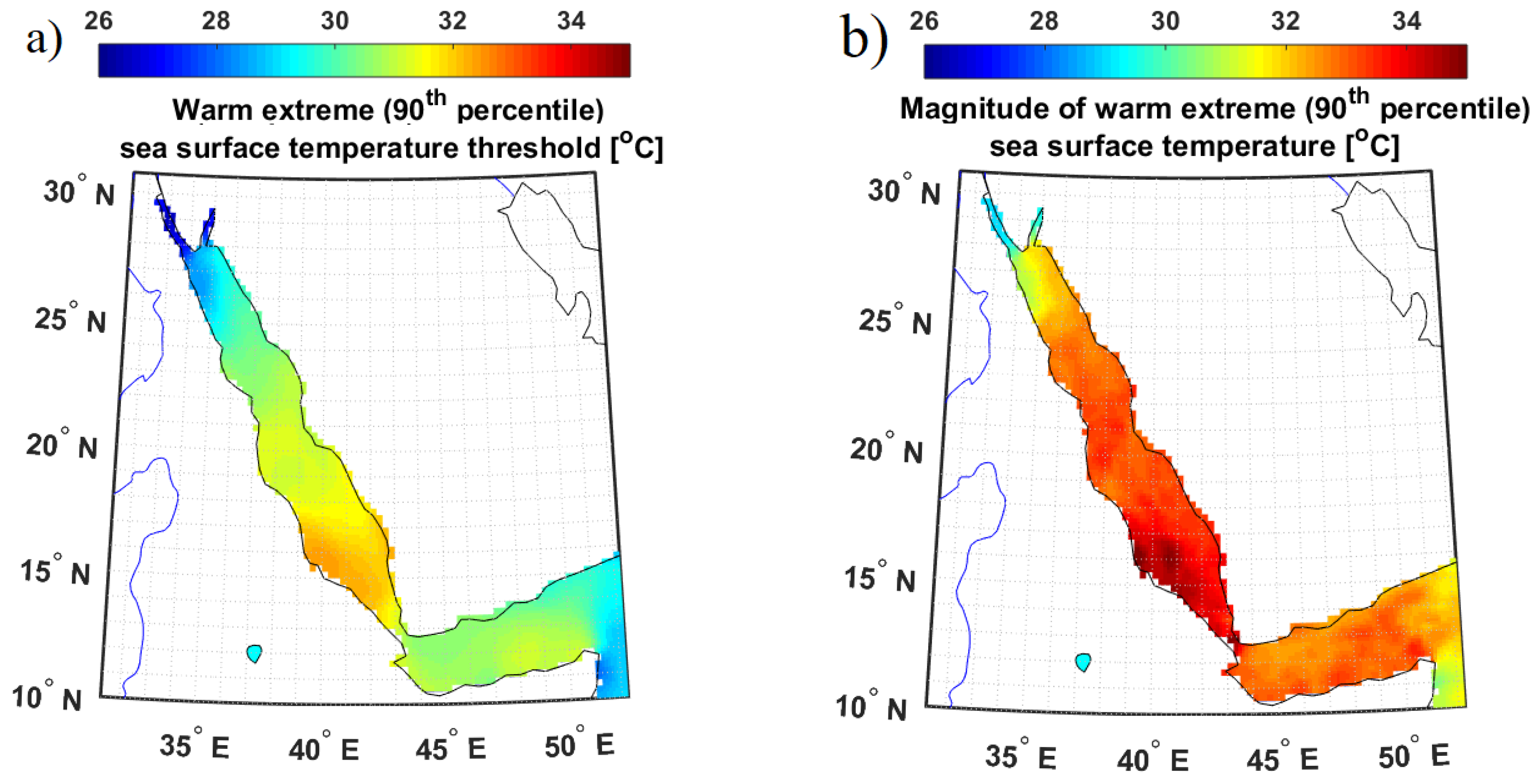
The spatial variation in the extreme Red+ sea surface temperature over the years 1982 to 2020 is described in terms of the threshold and magnitude. The spatial distribution of thresholds of warm ETEs (Figure 3a) increased meridionally over the Red Sea, from the north (≈27 °C; the Gulfs of Suez and Aqaba) to the south (≈32 °C; western–northern part of the Red Sea), partly due to the amount of absorbed solar energy, together with the surface sea water circulation (Shaltout [6]). Moreover, thresholds of warm ETE are much higher in the northern part of the strait of Bab al Mandab in comparison to its southern part, partly due to the moderate SST effect in the Gulf of Aden by water exchange with the Indian Ocean. In the other direction, spatial distribution in the magnitude of warm ETEs (Figure 3b) values increased meridionally over the Red Sea, from the north (≈29 °C; the Gulfs of Suez and Aqaba) to the south (≈35 °C; southwestern coast of the Red Sea from 15–17° N), partly due to the surface sea water circulation (Shaltout [6]). Over the Gulf of Aden, the magnitude of warm ETEs showed a non-significant spatial range around 33 °C.
Figure 3.
Spatial distribution of the threshold (a) and magnitude (b) of warm SST ETEs (90th percentile) over Red+.
3.2. Marine Heat Waves over the Red+
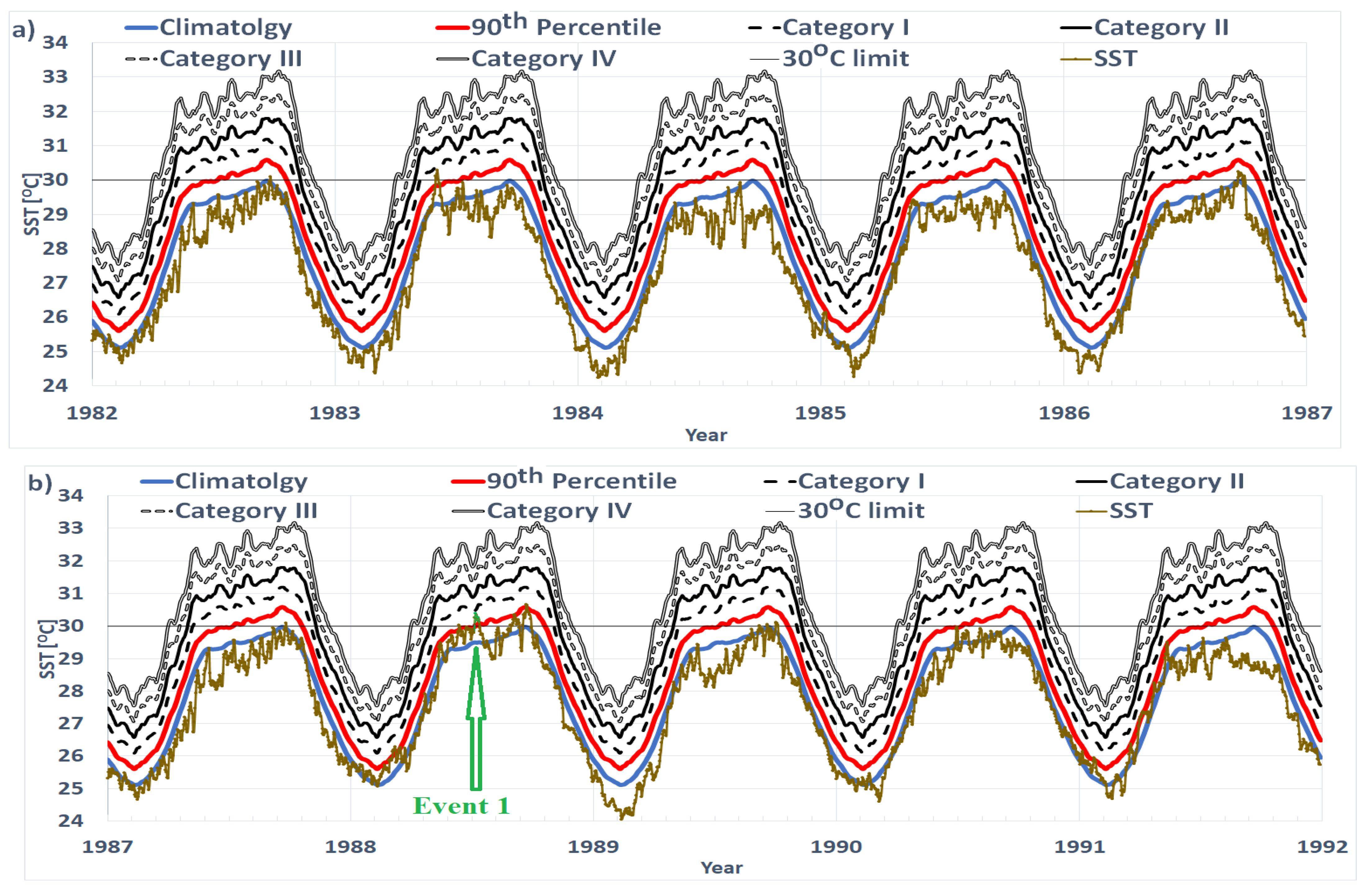
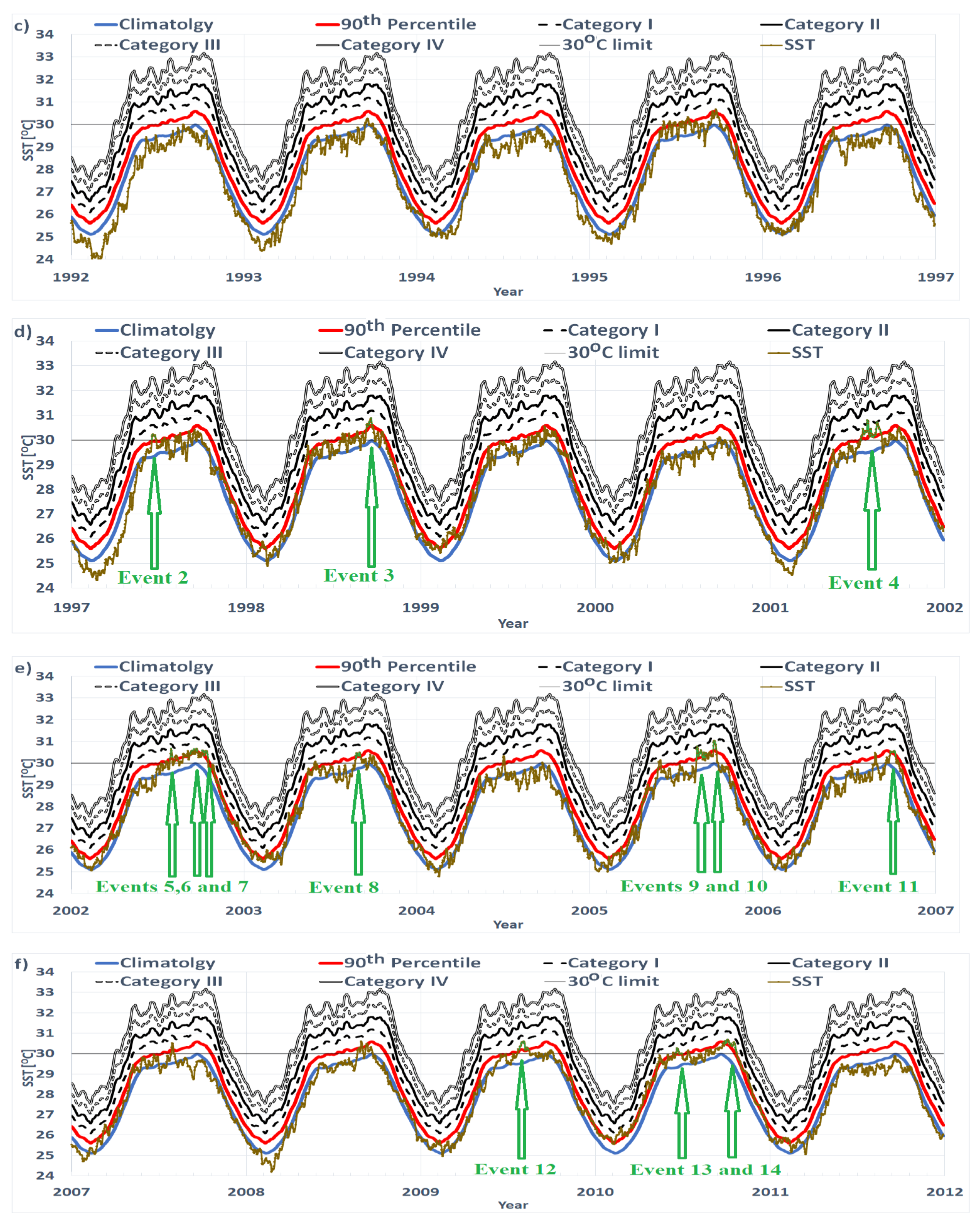
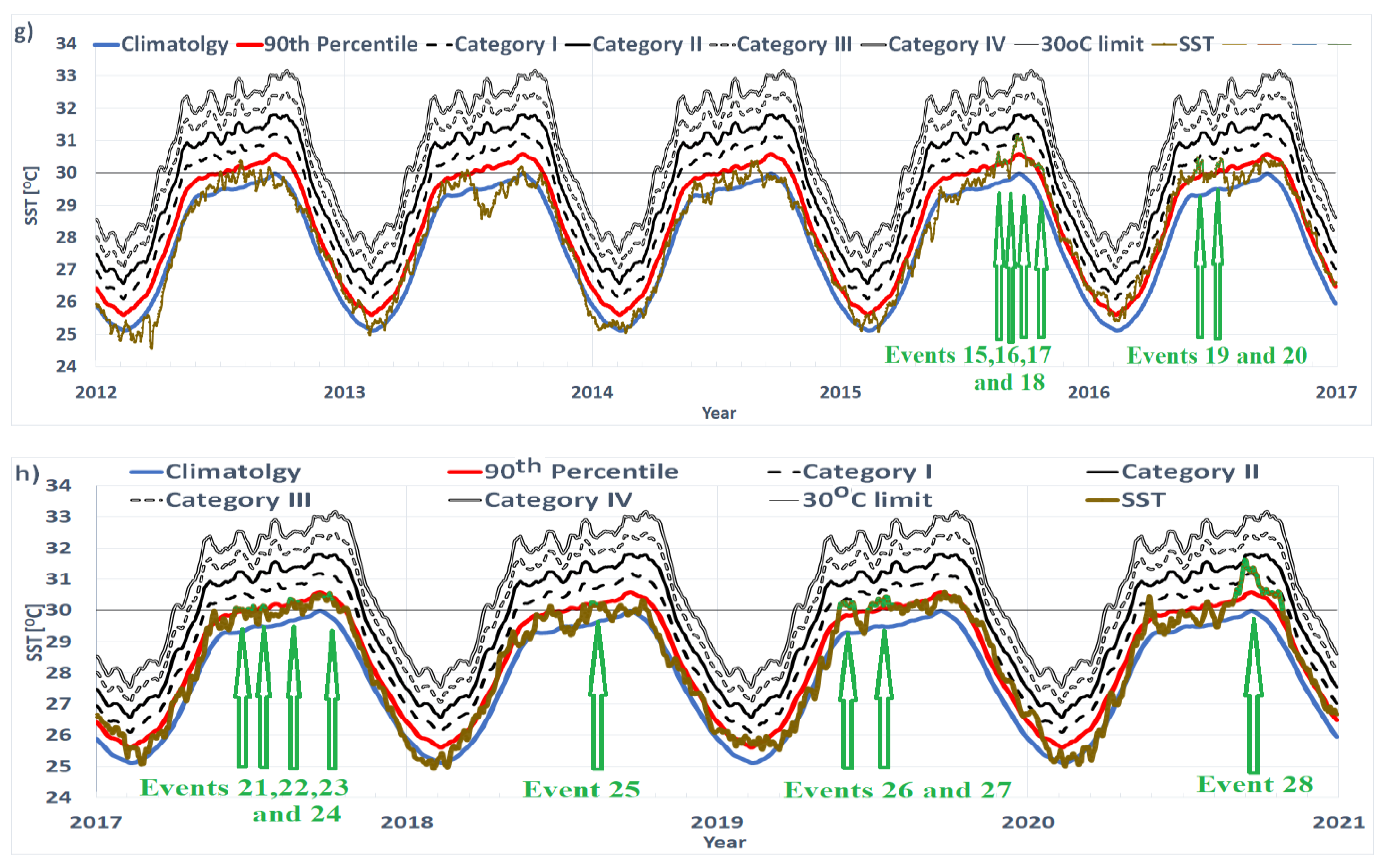
A categorization diagram of MHWs over the Red+ was drawn for every year to monitor the progress of MHWs, with the time as a general feature (Figure 4 and Table 1). For the years 1982–1986, there were no observed MHW events over the Red+. Over the years 1987–1991, there is only one MHW event, which extends 8 days, from 6–13 July/1988 (moderate MHWs category), showing the 1st MHW event for the Red+. Moreover, there is no observed MHW event over 1992–1996. From 1997 to 2001, three moderate MHW events (total number of MHWs = 60 days) were identified; the first event extends 9 days from 18 to 26 June 1997, the second event extends 12 days from 9 to 20 September 1998 and the third event extends 44 days (39 days without gaps) from 10 July to 22 August 2001. MHW events increased to seven moderate MHW events over the period 2002 to 2006 (total number of MHWs = 63 days). MHW events decreased to three moderate MHW events over the period 2007 to 2011 (total number of MHWs = 53 days). There are a total number of 66 days of MHWs in general over the Red+ during the 2012–2016 years, which are divided into six MHW moderate events. The total number of general Red+ MHWs is nearly double the previous periods (=128 days) over 2017–2020, and is divided into eight MH events (seven moderate MHW events and one strong MHW event). Generally, over the Red+ (1992–2020), the general MHW frequency is 0.72 event, and the MHW duration is 378 days. From the reported study cases (Table 1), the average duration of an MHW event is 13.5 ± 11.6 days; however, the average values of the maximum (mean) intensity of an event are 0.97 ± 0.23 (0.8 ± 0.1) °C. The average value of the accumulative intensity of an event is 11.52 ± 12.56°C-day.


Figure 4.
Marine heat waves over the Red+: a categorization diagram showing the observed temperature time series (dashed line) for each year from 1982 to 2020 (1982–1986 (a), 1987–1991 (b), 1992–1996 (c), 1997–2001 (d), 2002–2006 (e), 2007–2011 (f), 2012–2016 (g), and 2017–2020 (h)), the long-term regional climatology and the 90th percentile climatology together with the four categories.
Table 1.
The characteristics of the recent MHWs over the Red+. The entry for each event lists date of peak intensity, the total duration of the event (first day, last day and total days), the category, maximum intensity (Imax, °C above the climatological mean) on that date, mean intensity (Imean) along event’s duration, the cumulative intensity (Icum = Imean * event duration) and the proportion (p) of time spent in each of the four MHW categories along event’s duration. As the presence of “gap days” connecting successive events, the proportions do not always sum up to 100%.
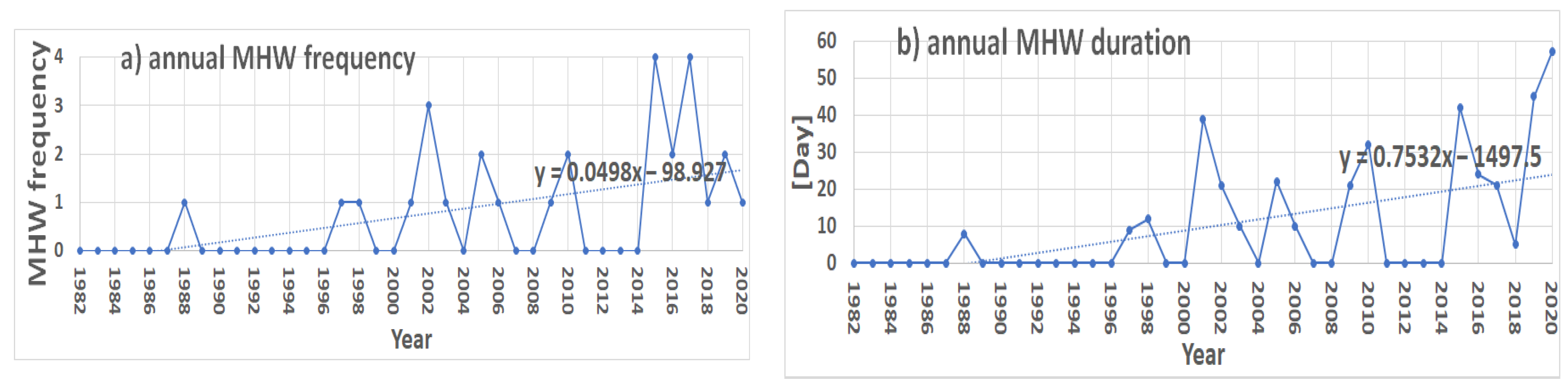
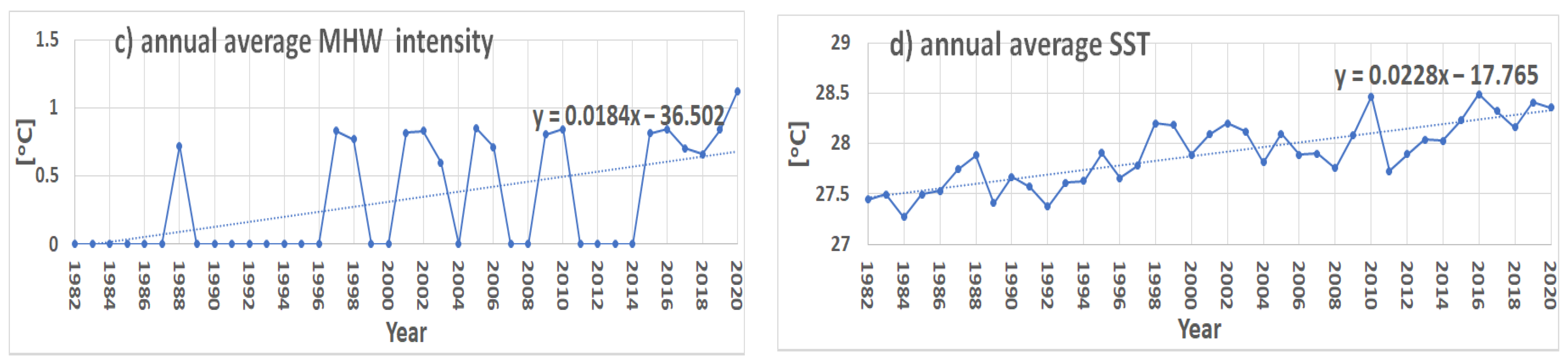
Generally, there are 28 MHW events over the Red+, and the longest four events were select for further investigations as a study case (Table 1; shaded events). As a regional average over Red+, MHW described a significant increasing trend of 0.49 annual events per decade (Figure 5a). The linear trend of the MHW annual duration in a regional average showed a significant increase of 7.5 days per decade, as seen in Figure 5b. Similarly, the averaged MHW intensity increased significantly (linear trend = 0.18 °C per decade), as seen in Figure 5c. On the other hand, the Red+ averaged SST showed a significant trend of 0.22 °C per decade (Figure 5d). The Red+ averaged MHW property time series has a clear interannual variability, with an average value of 1.38 events annually and an average intensity of 0.8 °C, together with an average duration of 22.5 days for an event. Moreover, the Red+ annual average SST is in a positive significant correlation with the annual averaged MHWs intensity (R = 0.75, n = 39), annual average MHWs duration (R = 0.72, n = 39) and annual MHWs frequency (R = 0.69, n = 39).

Figure 5.
Sea surface temperature and marine heat wave properties over Red+.
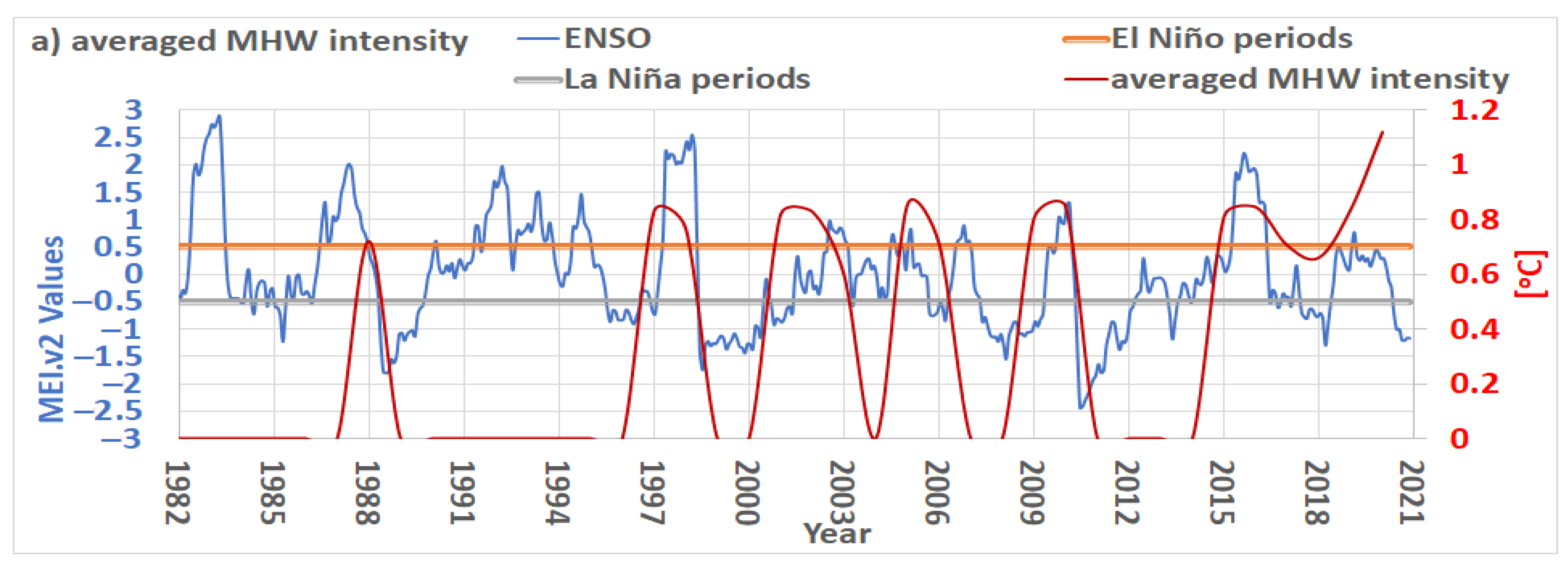
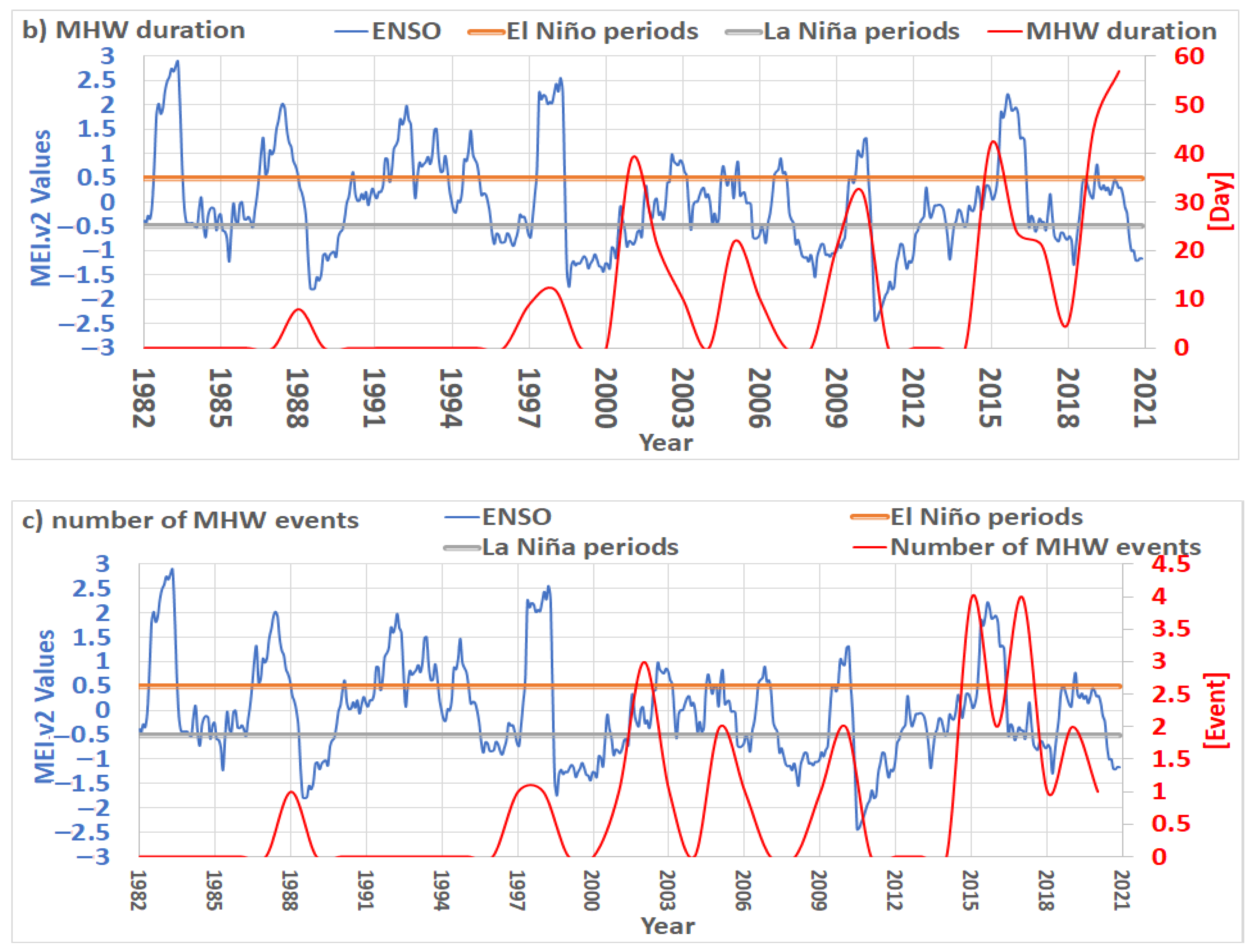
The role of climate variability. The studied MHWs property time series (Figure 5) depict a significant interannual fluctuation over Red+. The scientific method of quantifying such a fluctuation is to examine the ENSO climatic states with the annual averaged MHWs intensity, annual averaged MHWs duration and MHWs frequency. The higher annual averaged MHWs intensity values are related to El Niño periods over most of the events (Figure 6a). The only event of El Niño that is not related to a higher intensity is 1983. The relationship between the frequency/duration and ENSO events was less clear than the intensity was (Figure 6c). The MHWs duration tends to increase (decrease) during El Niño (La Niña periods) periods, except during 1983 (years of the El Niño event), which correlated with no MHWs events, and during 2001 (year of La Niña periods), which correlated with a higher MHWs duration value. Similarly, the MHWs frequency tends to increase (decrease) during El Niño (La Niña periods) periods, except during 1983 and 2015.

Figure 6.
Annual time series of the bi-monthly multivariate El Niño/Southern Oscillation (ENSO) index (MEI.v2) over 1982–2020 are shown in primary axis. Moreover, the lower (higher) limit of El Niño (La Niña) periods is shown in orange (gray) color. In the secondary axis and in red color, intensity, duration and frequency were shown in (a–c), respectively.
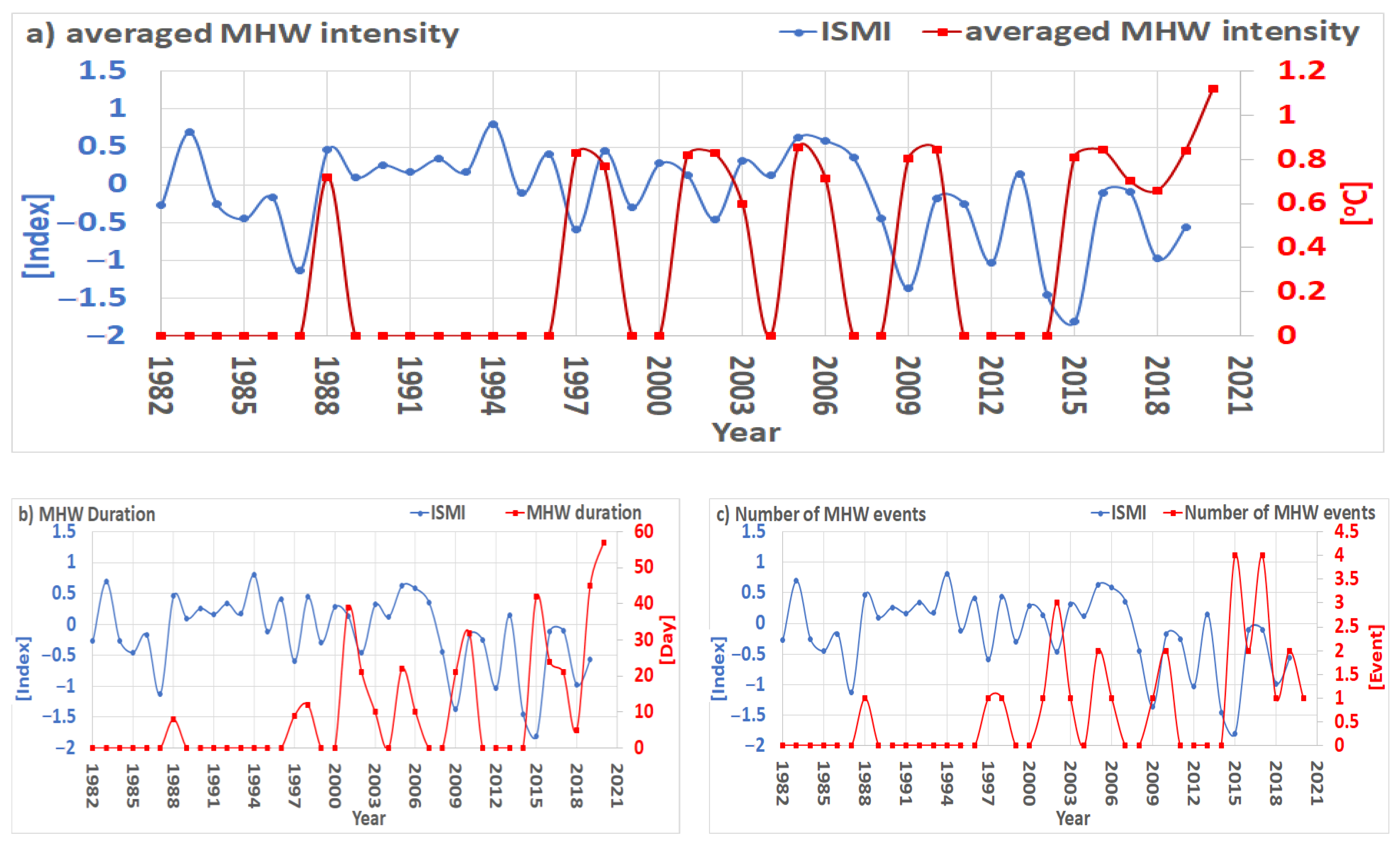
On the other hand, the ISMI’s relationship with the MHWs intensity is varied from one year to another over Red+. The higher (lower) values of the MHWs intensity during 1988, 2005, 2010 and 2016 (2018) are related to the higher (lower) values of the ISMI. At the same time, the higher values of the MHWs intensity during 1997, 2002 and 2015 occurred simultaneously with the lower ISMI values (Figure 7a). The ISMI rarely explains the higher values of the MHWS duration and frequency, such as during 2010 (Figure 7b,c).
Figure 7.
Annual time series of the Indian Summer Monsoon Index (ISMI) over 1982–2019 are shown in primary axis. In the secondary axis and in red color, intensity, duration and frequency are shown in (a–c), respectively.
The relationship between the intensity and ENSO/ISMI is clearer than the relationship between the frequency/duration wand ENSO/ISMI. Thus, there is another climatic mechanism that, if coupled with the ISMI and ENSO, will describe the MHWs’ characteristics more clearly over Red+.
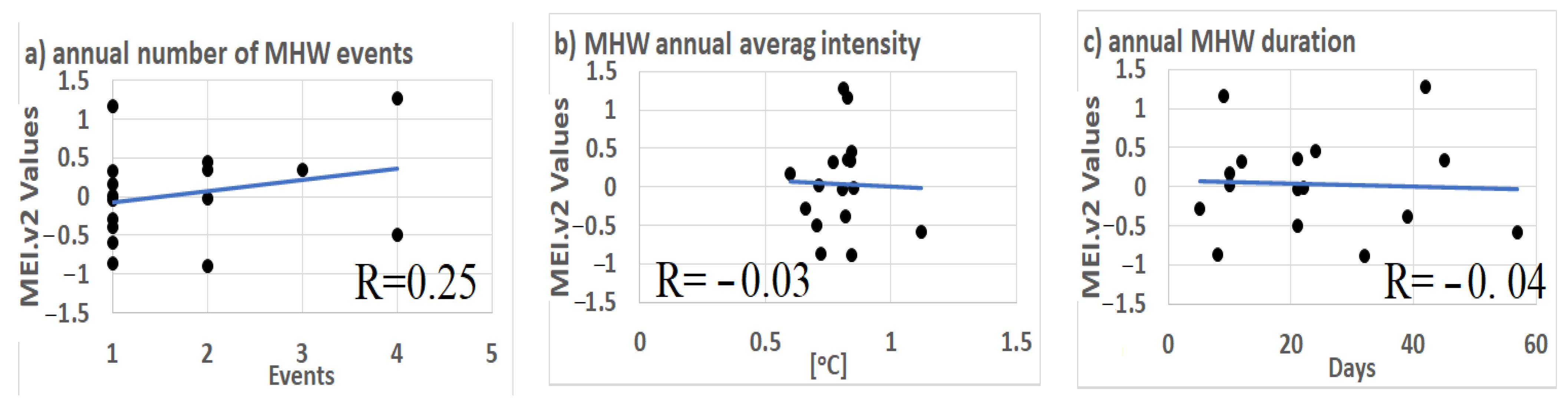
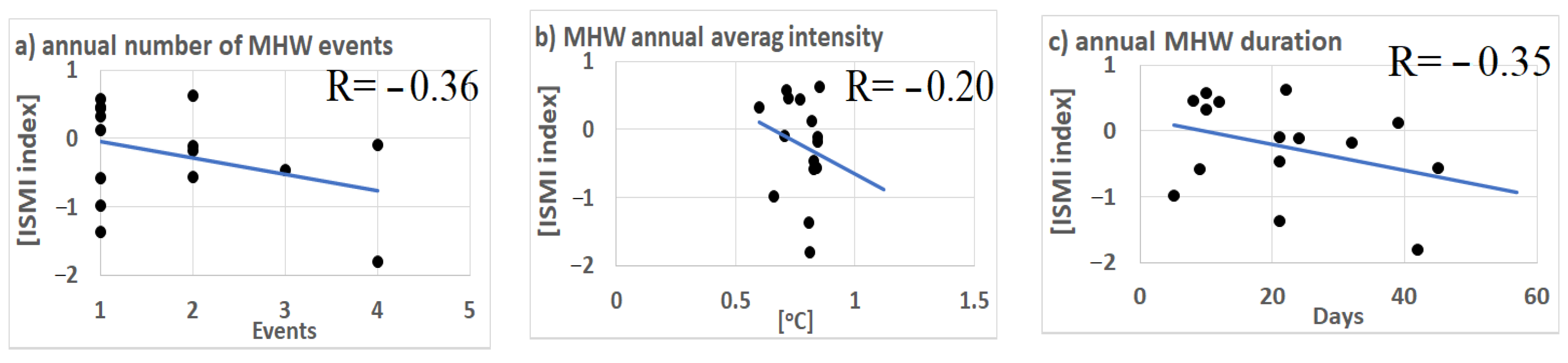
In statistical details, MEI.v2 and different MHW characteristics during the MHW events had an insignificant correlation at the 95% significance level (Figure 8). In the same, context, the ISMI described an insignificant correlation with the MHW annual average intensity, annual number of MHW events and annual MHW duration at the 95% significance level. At the 90% significance level, the ISMI showed a significant correlation only with the annual number of MHW events and annual MHW duration (Figure 9).
Figure 8.
Scatter plots of bi-monthly multivariate ENSO index (MEI.v2) and annual number of MHW events (a), MHW annual average intensity (b) and annual MHW duration (c) during MHW events.
Figure 9.
Scatter plots of Indian Summer Monsoon Index (ISMI) and annual number of MHW events (a), MHW annual average intensity (b) and annual MHW duration (c) during MHW events.
The role of the sea surface radiation budget components. The cross-correlation between different MHW characteristics and different components of the sea surface radiation budget (data not shown) showed insignificant values among each other on an annual level. This may indicate the need for further investigations based on the comparison between the range of the sea surface radiation budget components over the study period and during marine heat wave events (Table 2). Critical conditions of the occurrence of MHW events are less than 206 Wm−2 of SLHF going to the atmosphere, less than 13 Wm−2 of SSHF going to the atmosphere, less than 101 Wm−2 of SNTR going to the atmosphere and more than 210 Wm−2 of SNSR going to the ocean, as seen in Table 2.
Table 2.
Range of the sea surface radiation budget components over the study period and during marine heat wave events (all values are in W m−2).
3.3. Selected Study Cases of Marine Heat Waves over the Red+
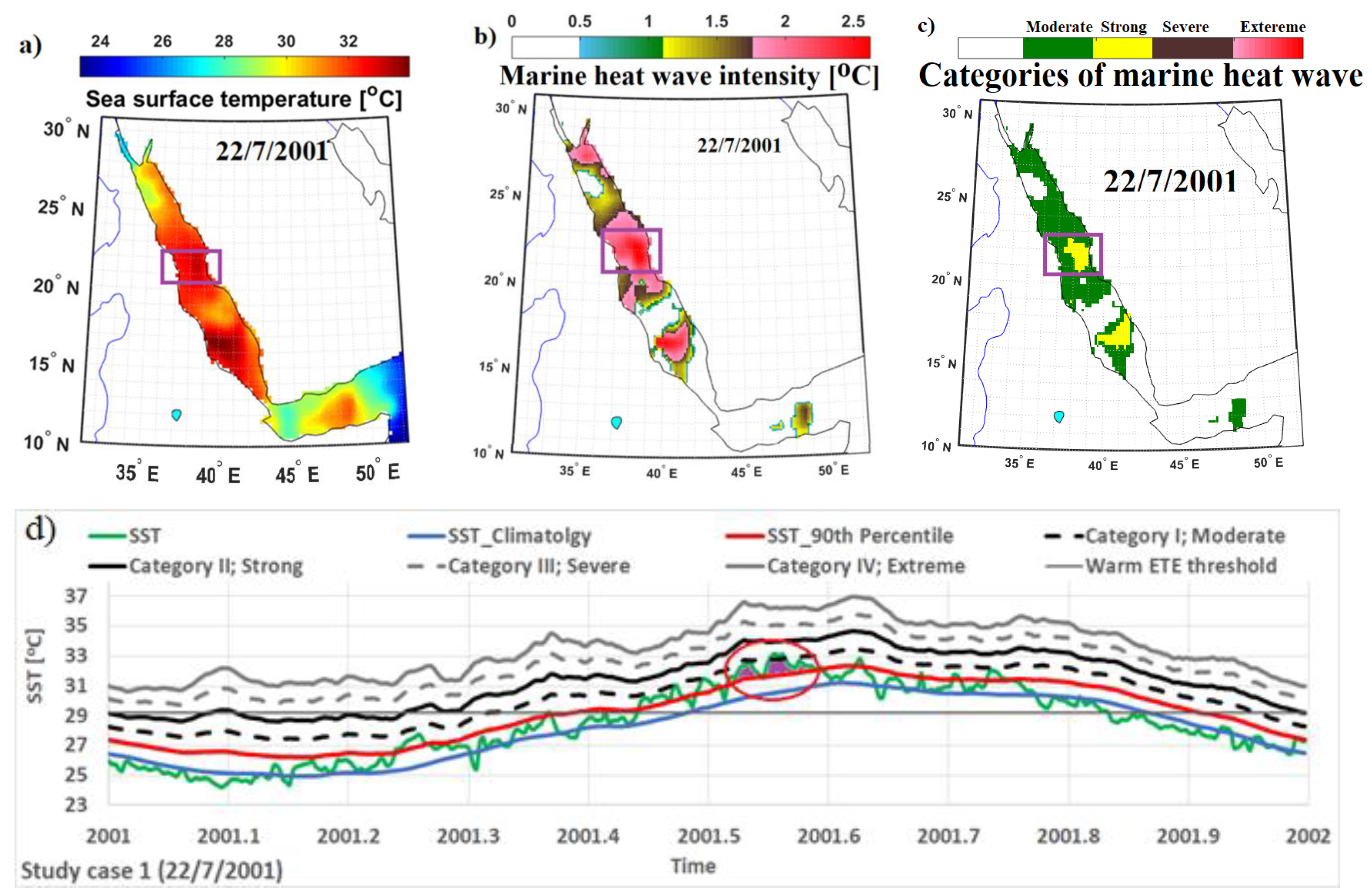
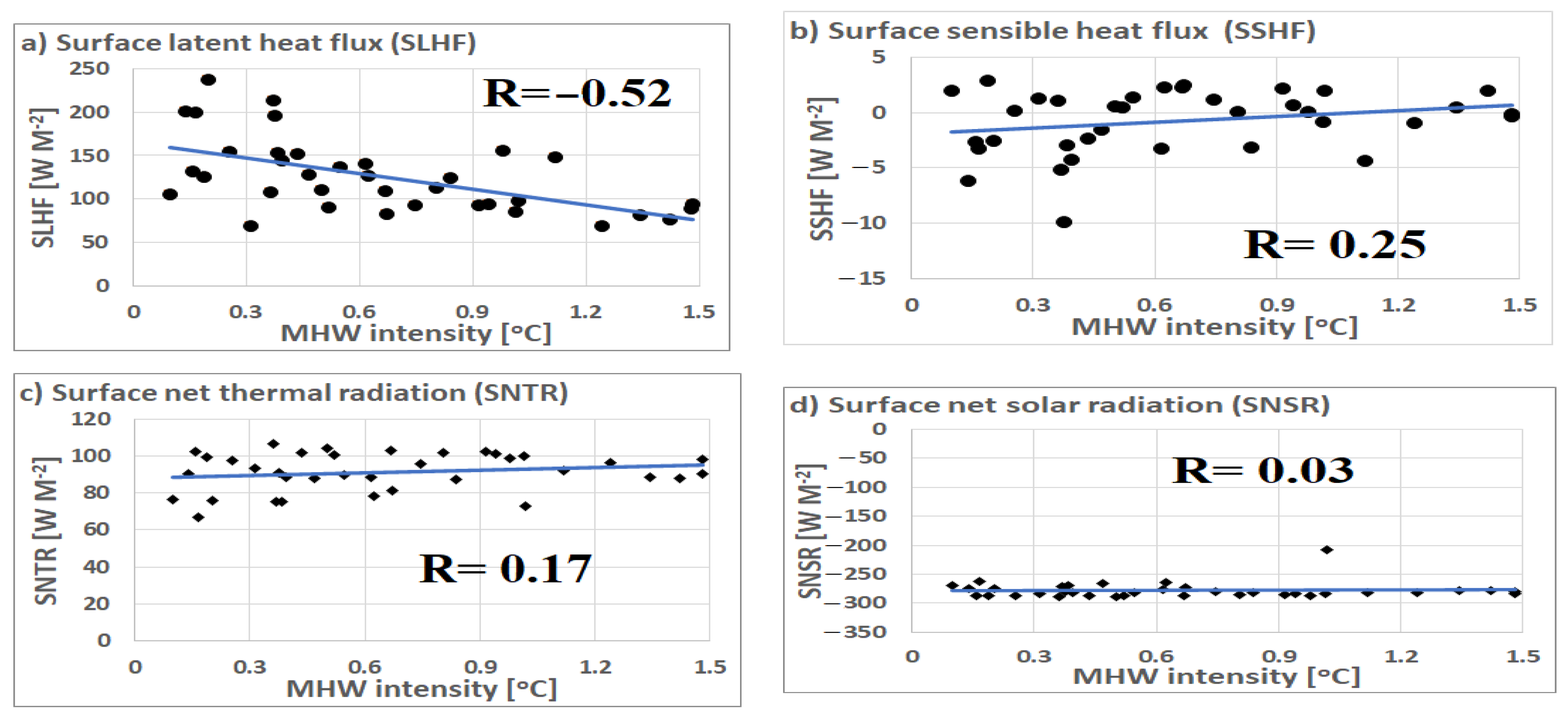
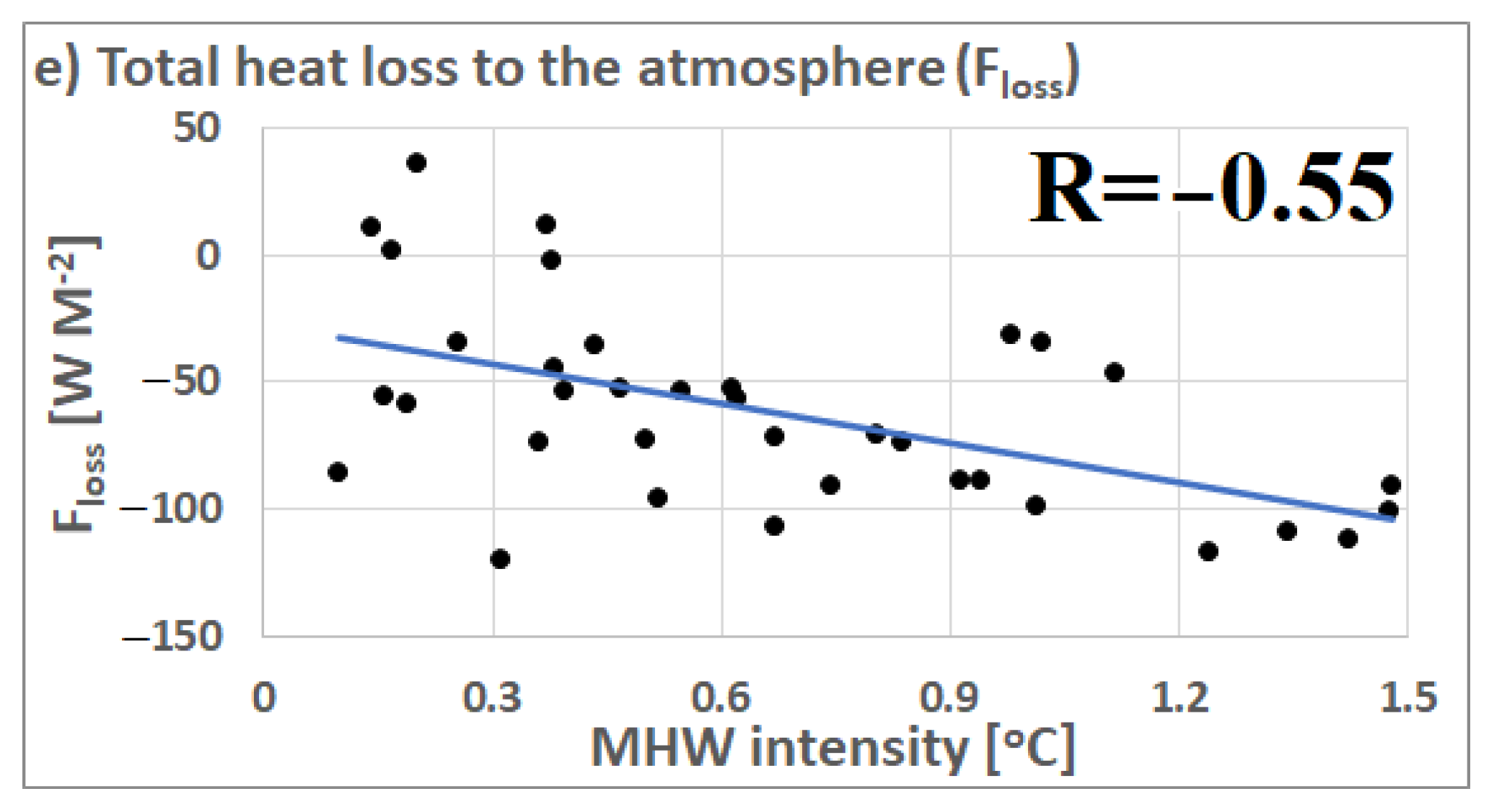
The first study case (peaked on 22 July 2001) centered around the center of the Red Sea (22.125° N and 38.375° E) and occupied 45% (34% in moderate; 11% in strong) of the Red+ area. This MHW event lasted for 39 days (5 days as a strong MHW and 31 days as a moderate MHW) with a mean intensity of 0.92 °C (equivalent to accumulative intensity of 36.03 °C-day), as seen in Figure 10. At a 95% level of significance, the MHW intensity during this study case showed a significant correlation with SLHF (R = −0.52, n = 39), as seen in Figure 11a. In the same context, the other studied surface radiation components (SSHF, SNTR and SNSR) had an insignificant correlation with the marine heat wave intensity. In the same context, Floss shows a significant correlation with the MHW intensity (R = −0.55, n = 39), as seen in Figure 11e.
Figure 10.
Representative of the MHW event (study case 1) showing the sea surface temperature (a), intensity [°C] of marine heat wave event (b) and category of that event (c) at the peak of the event and the time series during the event’s year (d), spatially averaged over an area around the maximum intensity grid, which is shown in bubbles.

Figure 11.
Scatter plots of marine heat wave intensity during the study case 1 (10 July 2001 to 22 August 2001) and surface latent heat flux (a), surface sensible heat flux (b), surface net thermal radiation (c), surface net solar radiation (d), and total heat loss to the atmosphere (e).
The effect of this MHW event on the chlor_a concentration is not discussed due to the missing chlor_a concentration data during this study case.
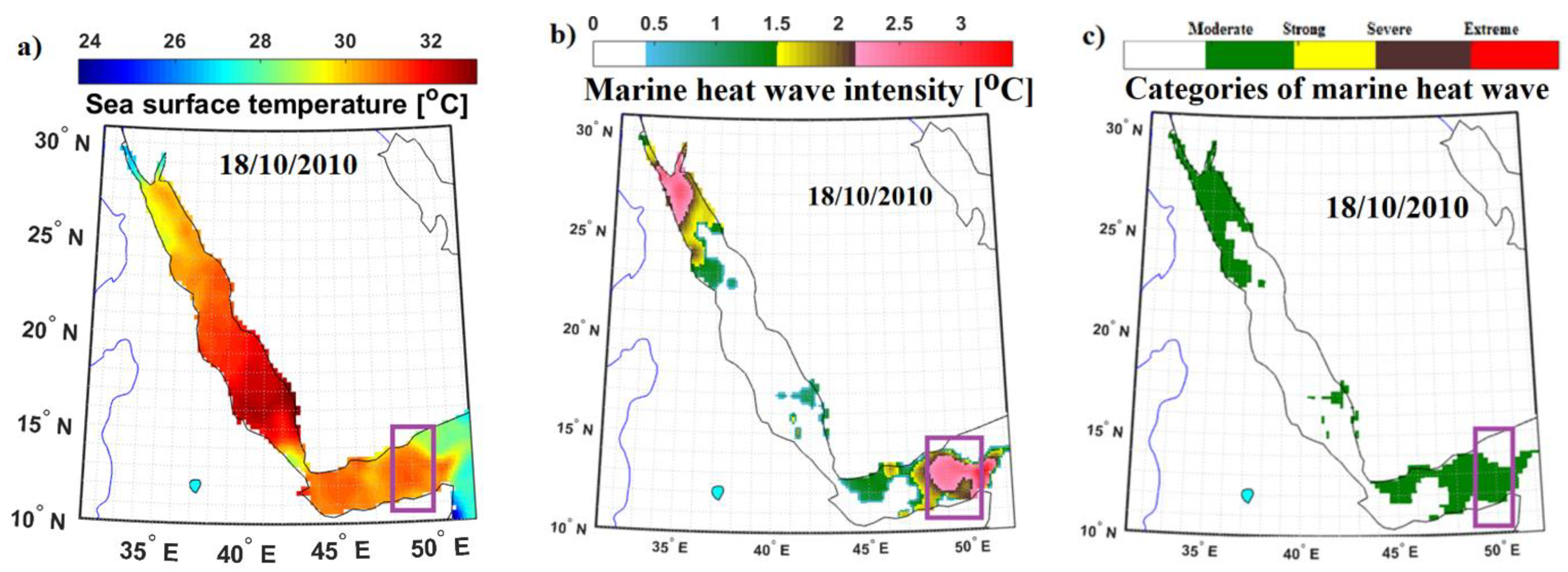
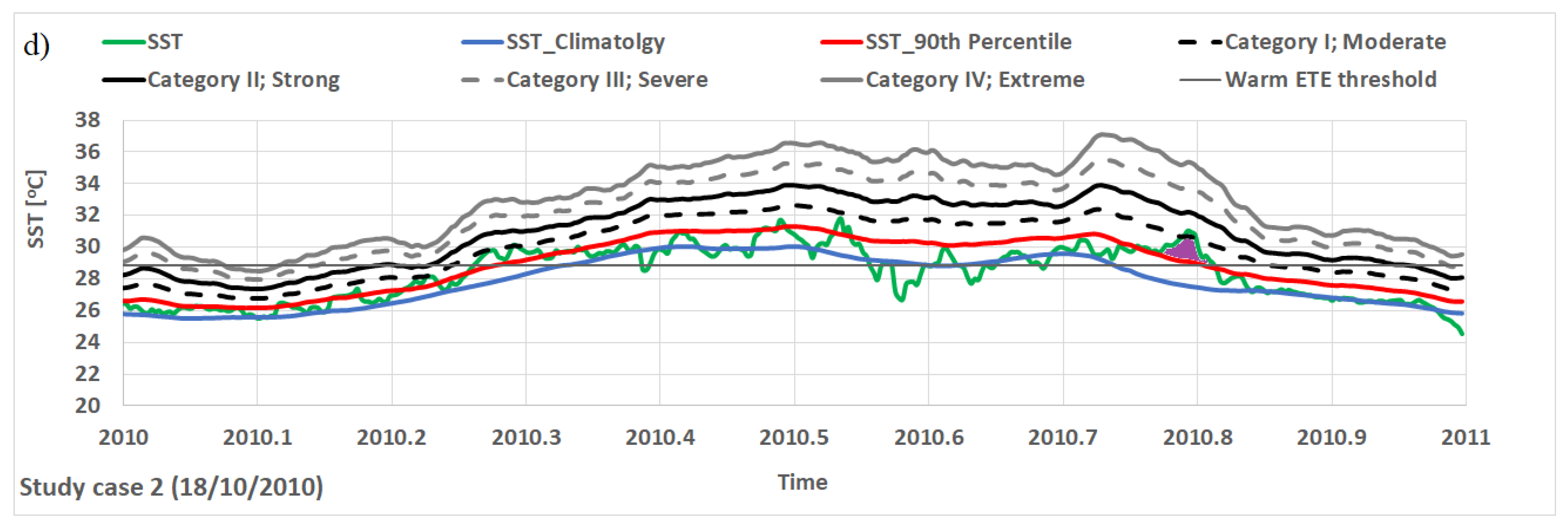
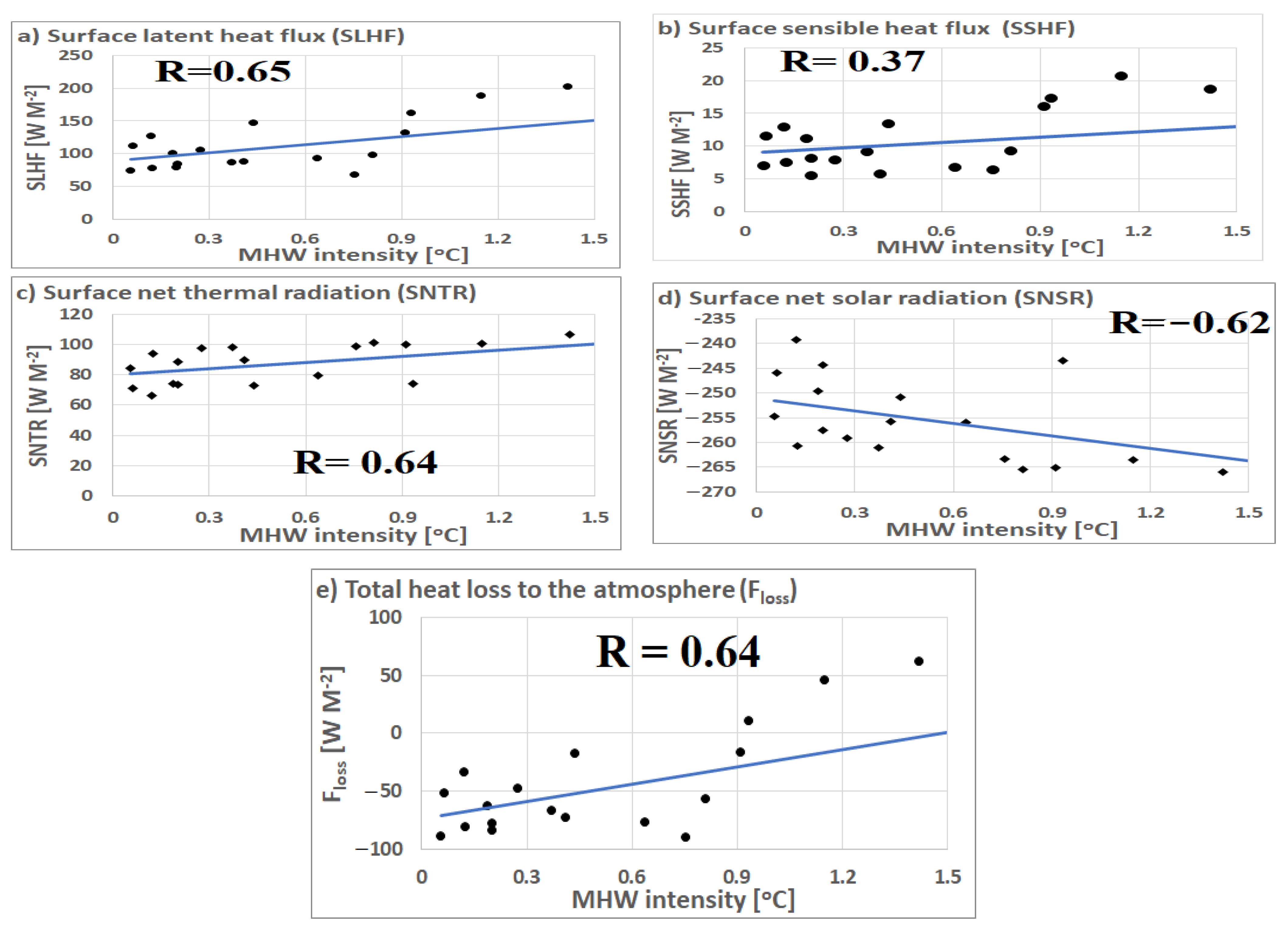
The second study case (peaked on 18 October 2010) centered around the eastern side of the Gulf of Aden (12.875° N and 50.875° E), occupied 37% of the Red+ (36% in moderate; 1% in strong) area and lasted for 25 days (4 days as a strong MHW and 16 days as a moderate MHW), with a mean intensity of 2.02 °C (equivalent to accumulative intensity of 50.5 °C-day), as seen in Figure 12. There is a significant correlation between the marine heat wave intensity during this study case and different components of the surface radiation at the 95% significance level, most markedly with SLHF (R = 0.65, n = 25), as seen in Figure 13. Similarly, Floss shows a significant correlation with the MHW intensity (R = 0.64, n = 25), as seen in Figure 13e.

Figure 12.
Representative of the MHW event (study case 2) showing the sea surface temperature (a), intensity [°C] of marine heat wave event (b) and category of that event (c) at the peak of the event and the time series during the event’s year (d), spatially averaged over an area around the maximum intensity grid, which is shown in bubbles.
Figure 13.
Scatter plots of marine heat wave intensity during the study case 2 (29 September 2010 to 23 October 2010) and surface latent heat flux (a), surface sensible heat flux (b), surface net thermal radiation (c), surface net solar radiation (d), and total heat loss to the atmosphere (e).
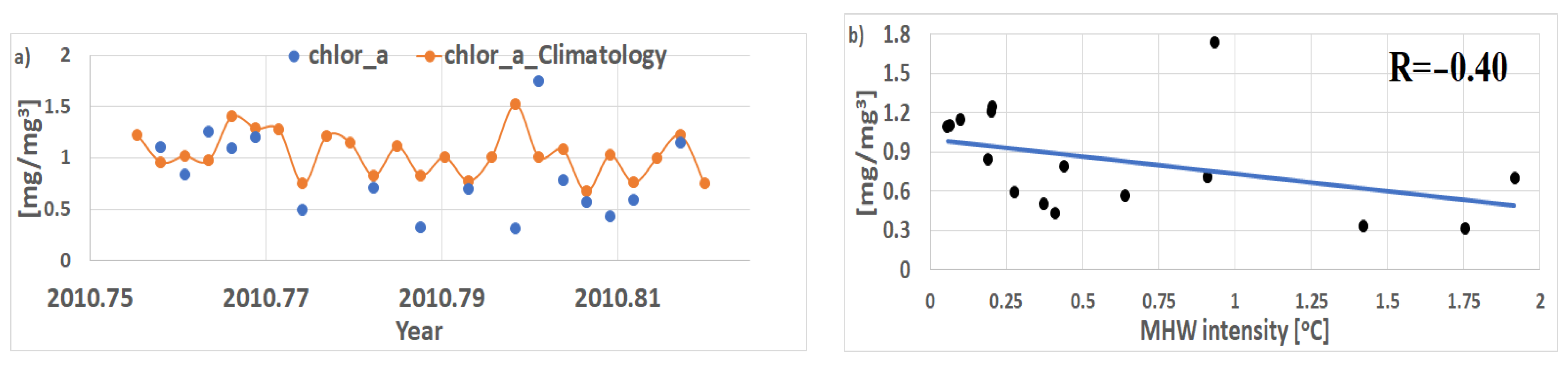
During this second study case, the chlor_a concentration is significantly lower than its climatological values over 82% of the time (Figure 14a), partly showing the effect of MHW on the chlor_a concentration and hence the Red Sea ecology. Moreover, there is a significant correlation between the MHW intensity and chlor_a concentration during this study case (R = −0.40, n = 25) at the 95% significance level, as seen in Figure 14b.
Figure 14.
Representative of the chlorophyll_concentration_in_sea_water (chlor_a) values and its climatological values during the study case 2, which extends from 29 September 2010 to 23 October 2010 (a); scatter plots of marine heat wave intensity and chlor_a concentration during the study case 2 (b).
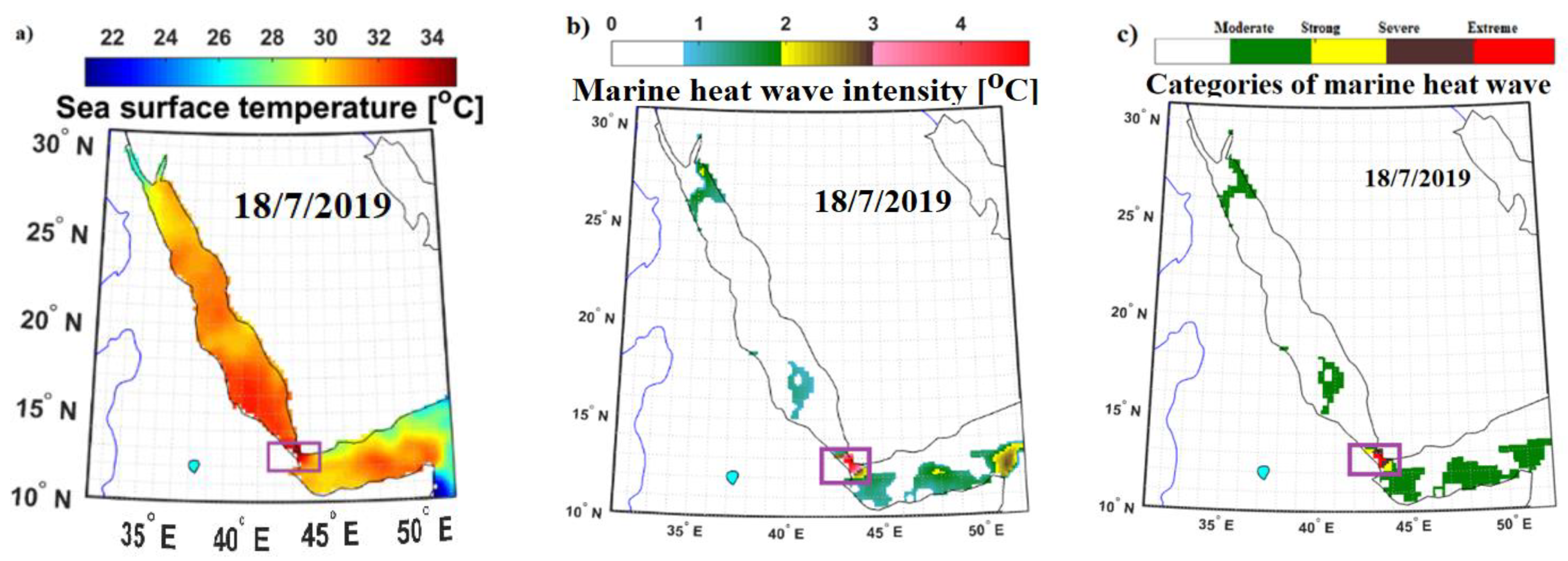
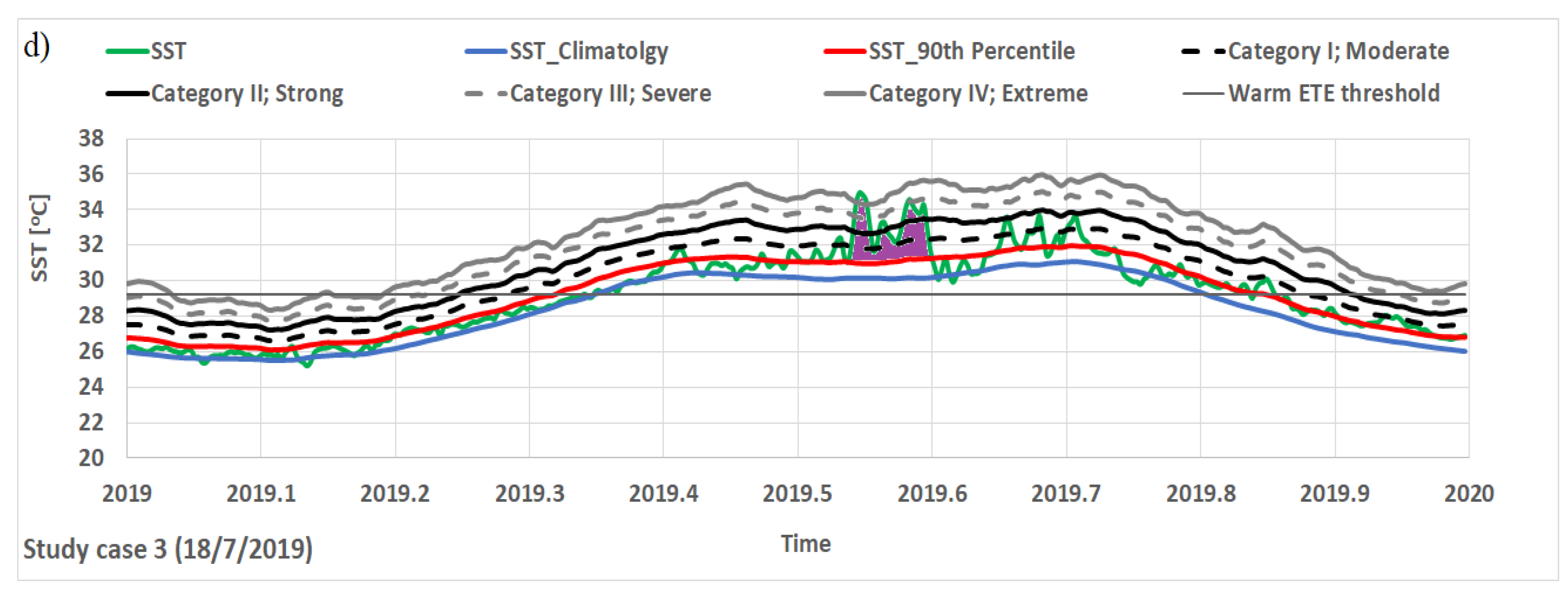
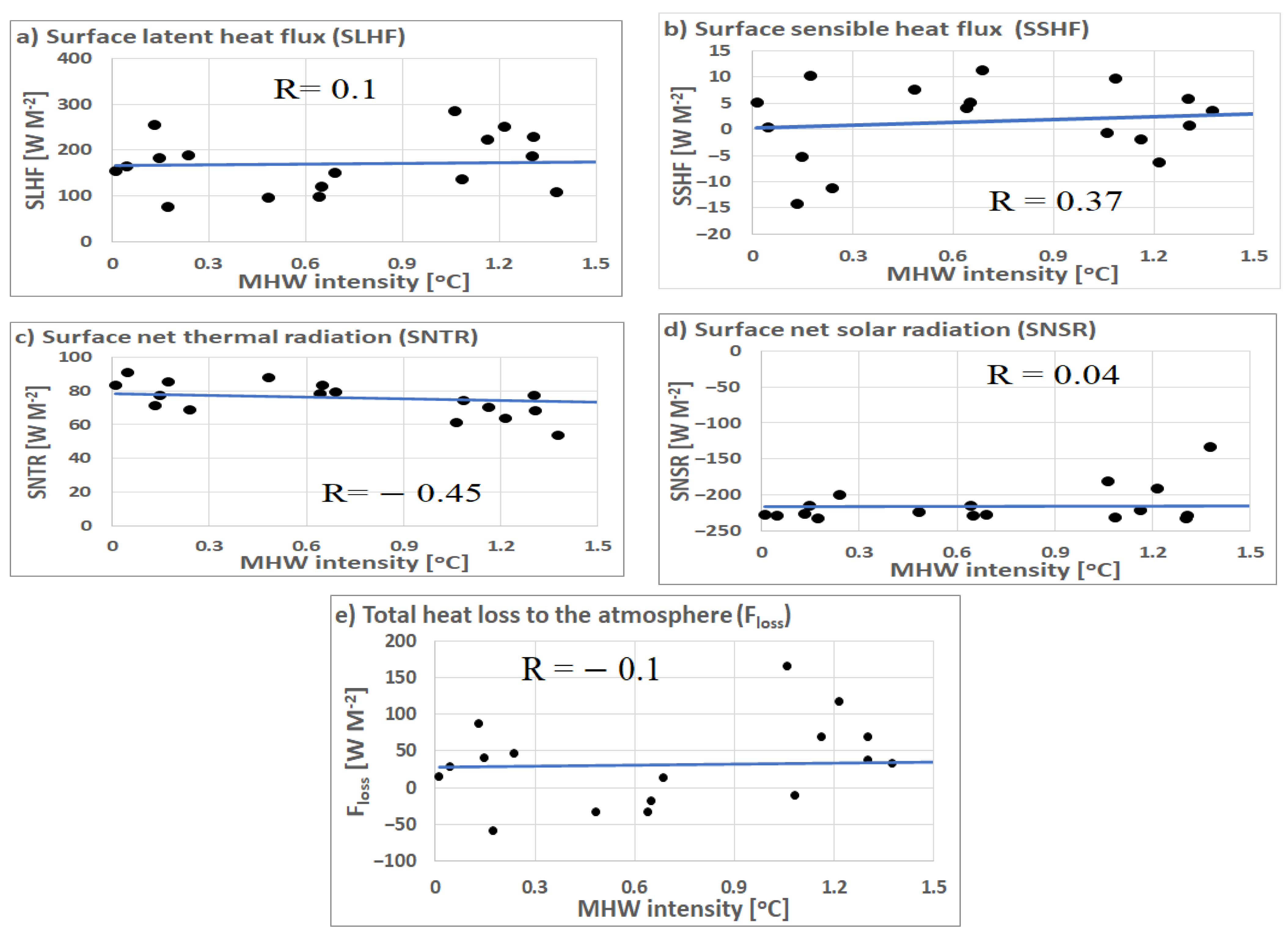
The third study case, which peaked on 18th of July 2019, extended for 24.1% (23% in moderate; 0.5% in strong; 0.4% in severe and 0.2% in extreme) of the study area, most markedly over the strait of Bab al Mandab (Figure 15). Over this strait, this MHW had a mean intensity of 2.99 °C over a duration of 26 days (equivalent to accumulative intensity of 77.84 °C-day): 3 days as an extreme MHW, 5 days as a severe MHW, 12 days as a strong MHW and 6 days as a moderate MHW. At the 95% level of significance, the marine heat wave intensity during this study case showed a significant correlation only with SNTR (R = −0.45, n = 26), as seen in Figure 16c. In the same context, the other studied surface radiation components (SLHF, SSHF, SNSR and Floss) had an insignificant correlation with the marine heat wave intensity.

Figure 15.
Representative of the MHW event (study case 3) showing the sea surface temperature (a), intensity [°C] of marine heat wave event (b) and category of that event (c) at the peak of the event and the time series during the event’s year (d), spatially averaged over an area around the maximum intensity grid, which is shown in bubbles.
Figure 16.
Scatter plots of marine heat wave intensity during the study case 3 (27 June 2019 to 22 July 2019) and surface latent heat flux (a), surface sensible heat flux (b), surface net thermal radiation (c), surface net solar radiation (d), and total heat loss to the atmosphere (e).
During this study case, the link between this MHW event and the chlor_a concentration is not discussed due to the missing chlor_a concentration data.
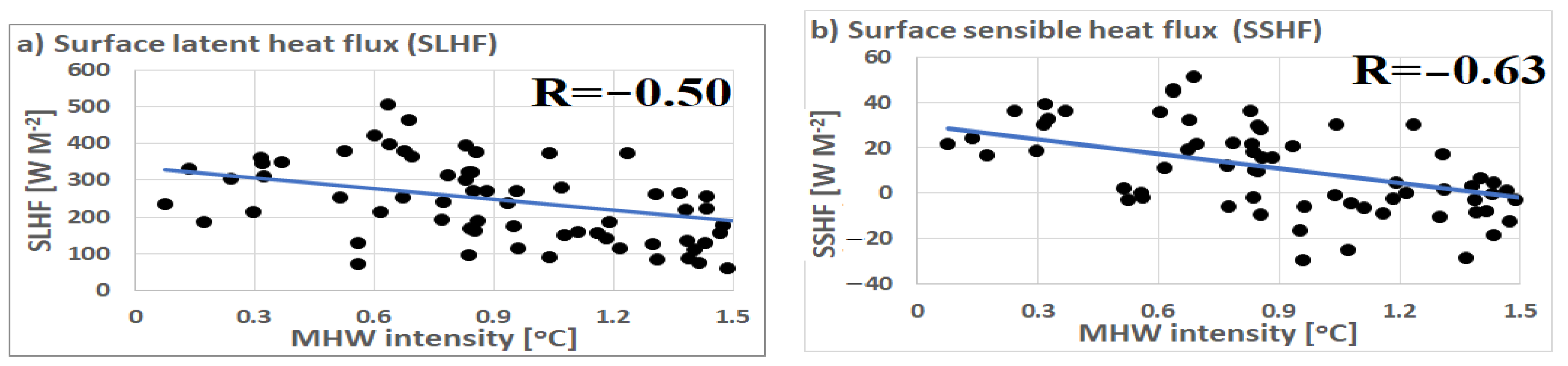
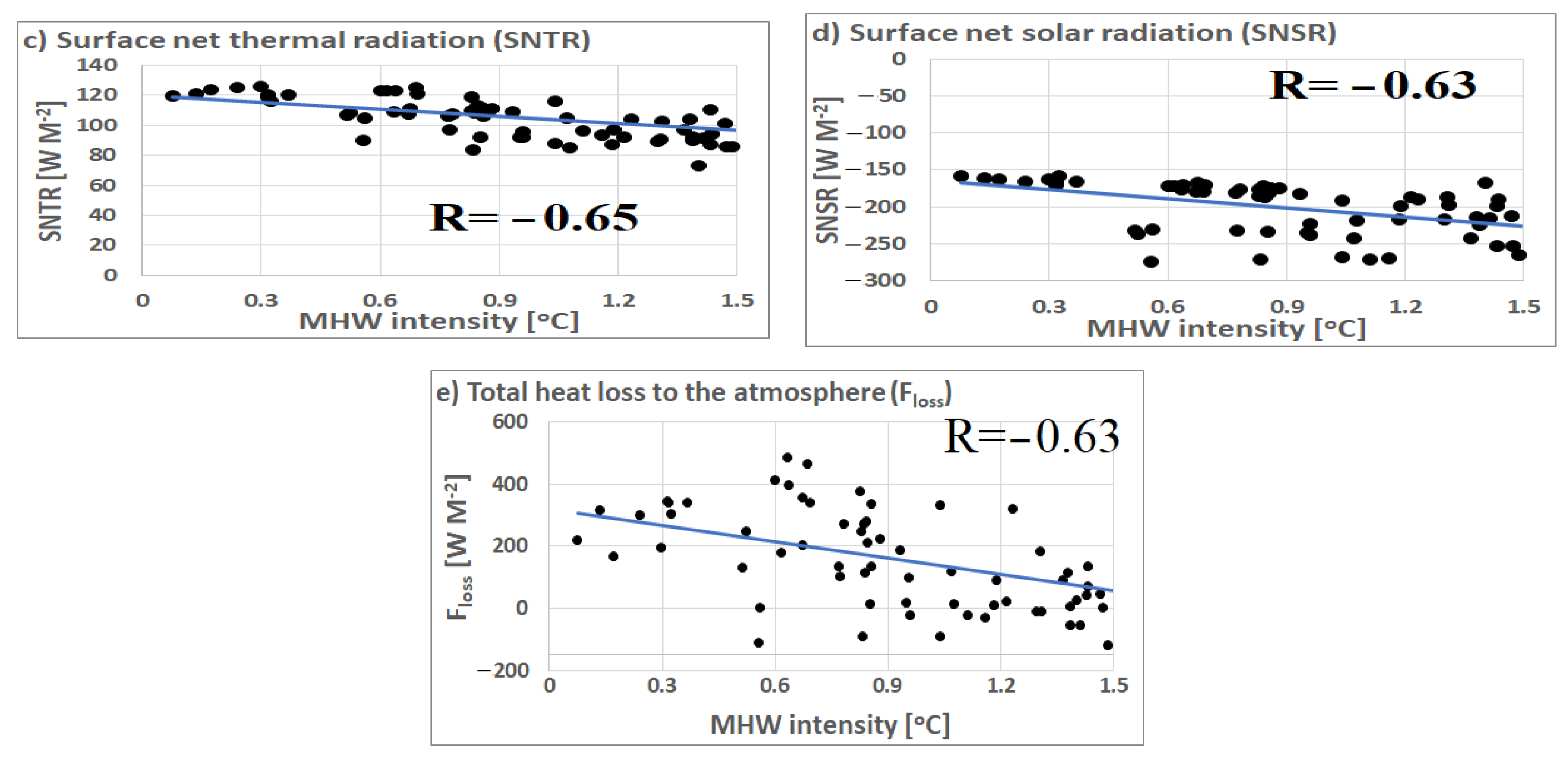
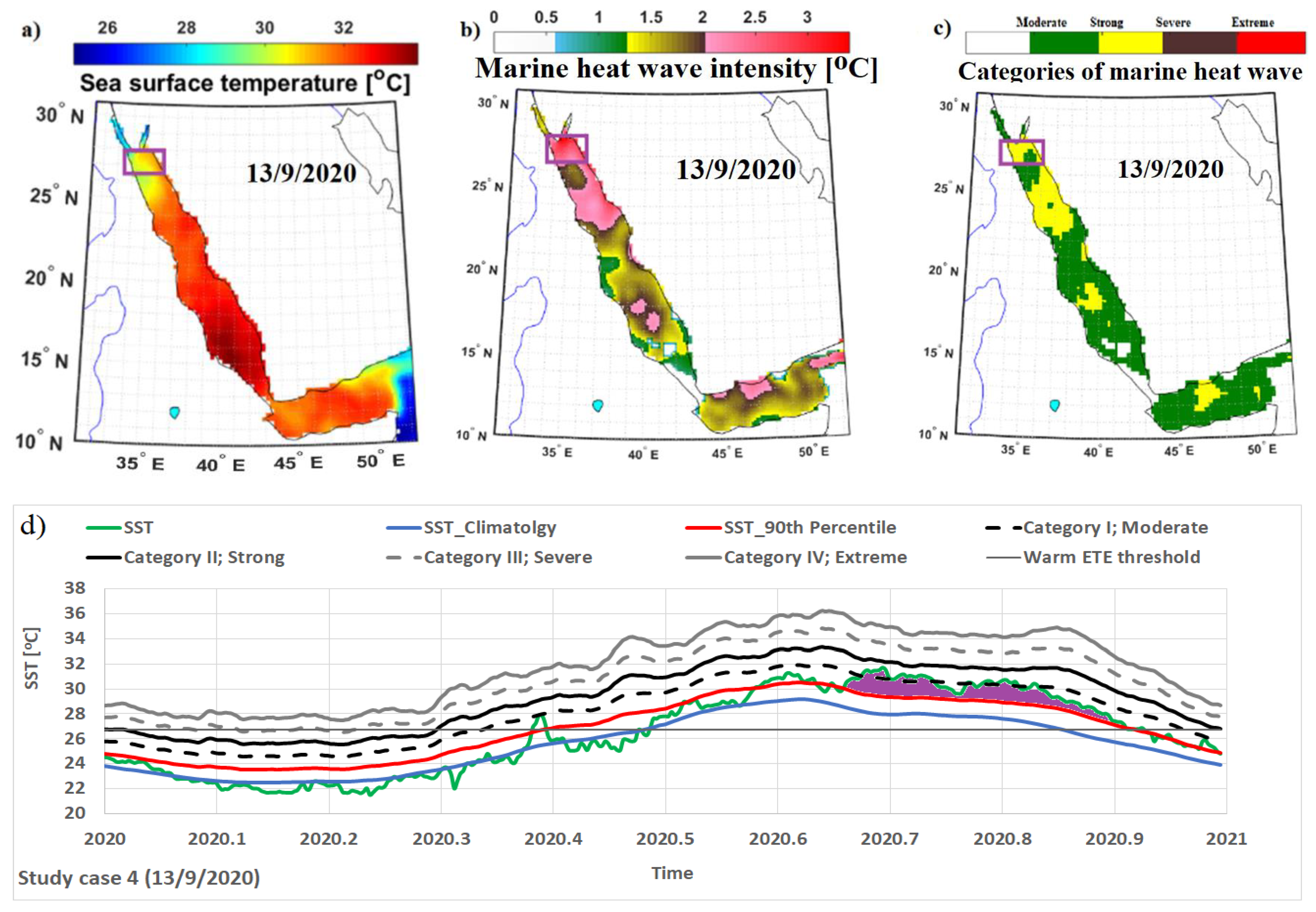
The fourth study case, which peaked on 13 September 2020, extended over 85% (62% in moderate; 23% in strong) of the study area, most markedly around the northern side of the Red Sea (27.625° N and 34.875° E), as seen in Figure 17. Over the area centered around (27.625° N and 34.875° E), the MHW duration extended for a 98-day period from 30 August 2020 to 5 December 2020. This MHW had a mean intensity of 2.56 °C over a 98-day duration (equivalent to an accumulative intensity of 251.3 °C- day): 42 days as a strong MHW and 54 days as a moderate MHW. At the 95% significance level, the correlation between the marine heat wave intensity during this study case and different components of surface radiation, together with the Floss, are significant, most markedly with SNTR (R = −0.65, n = 98), as seen in Figure 18.
Figure 17.
Representative of the MHW event (study case 4) showing the sea surface temperature (a), intensity [°C] of marine heat wave event (b) and category of that event (c) at the peak of the event and the time series during the event’s year (d), spatially averaged over an area around the maximum intensity grid, which is shown in bubbles.

Figure 18.
Scatter plots of marine heat wave intensity during the study case 4 (30 August 2020 to 5 December 2020) and surface latent heat flux (a), surface sensible heat flux (b), surface net thermal radiation (c), surface net solar radiation (d), and total heat loss to the atmosphere (e).
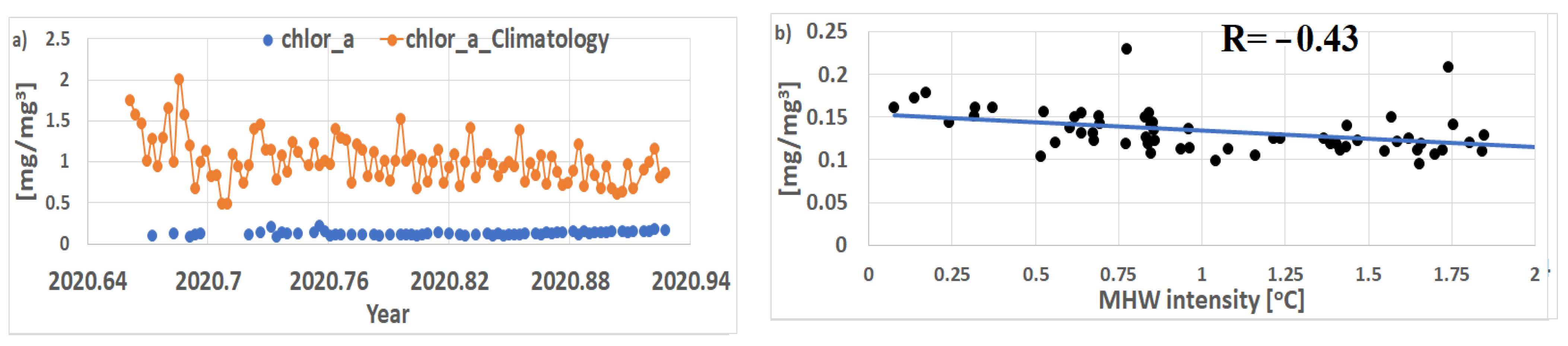
During this study case, the chlor_a concentration is significantly lower than its climatological values over 100% of the time (Figure 19a), confirming the effect of MHWs on the Red Sea ecology similarly to study case 2. In the same context and at the 95% significance level, the MHW intensity and chlor_a concentration had a significant correlation (R = −0.43, n = 98) during this study case, as seen in Figure 19b.
Figure 19.
Representative of the chlorophyll_concentration_in_sea_water (chlor_a) values and its climatological values during the study case 4, which extends from 30 August 2020 to 5 December 2020 (a); scatter plots of marine heat wave intensity and chlor_a concentration during the study case 2 (b).
3.4. Main Spatiotemporal Characteristics of Marine MHWs over the Red+
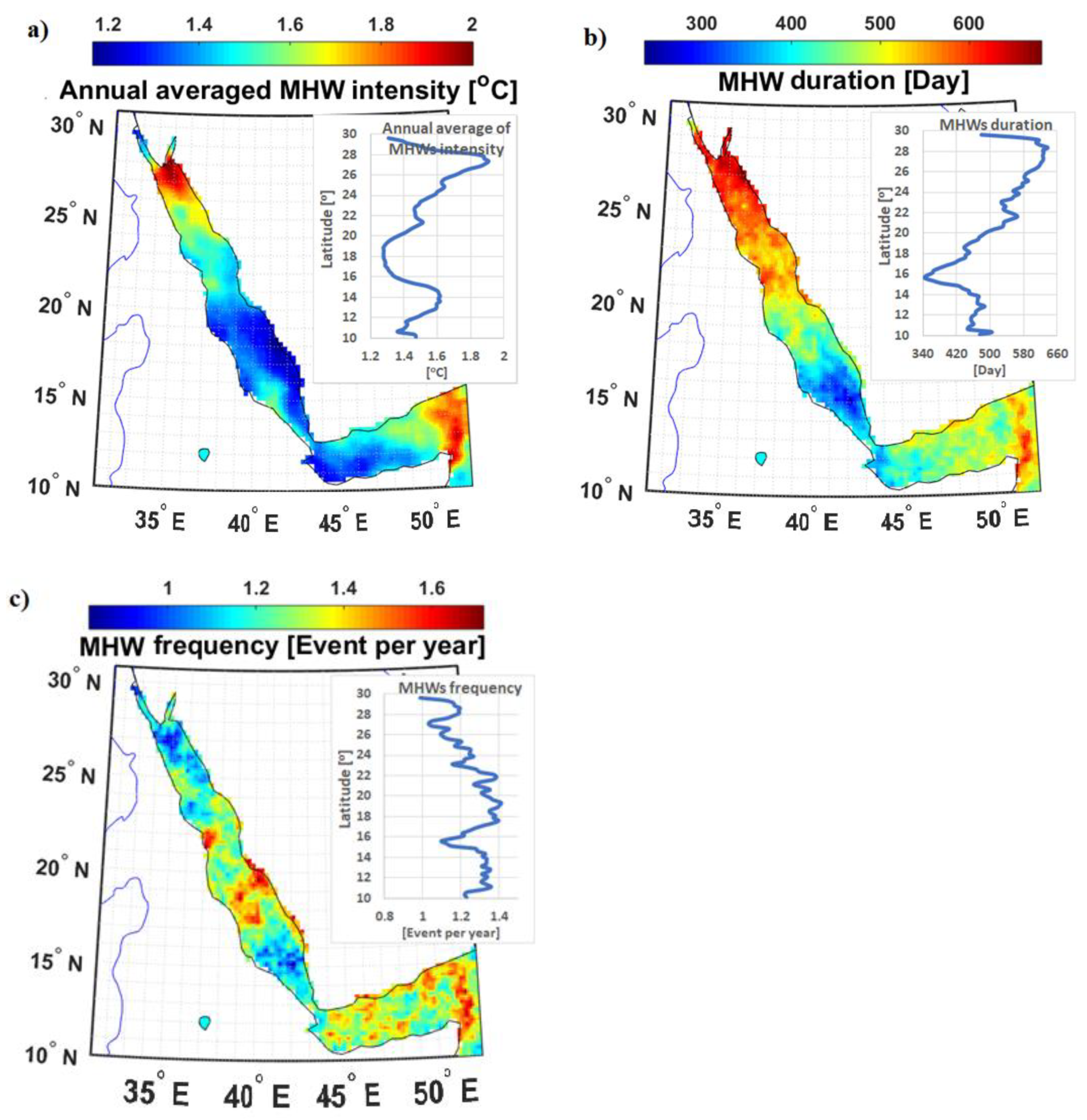
The annual average of the MHWs intensity over Red+ has significant spatial variability, where the lowest values (<1.2 °C) were found along the Saudi Arabia coast at around 18.875° N latitude, and the highest values (>2 °C) were found to the south of the Gulf of Aqaba at around 29.375° N latitude, as described by Figure 20a. On the other hand, the MHWs duration exhibits a markedly spatial pattern and reached its maximum values along the Saudi Arabia coast at around 28.375° N latitude and its minimum values in the southern part of the Red Sea at around 15.625° N, as seen in Figure 20b. Moreover, the MHW frequency shows a different spatial pattern, where its maximum values were found along the Saudi Arabia coast near 19.375° N and its minimum values at the north part of the Gulf of Suez near 29.625° N, as seen in Figure 20c. In general, the Red Sea displays a meridional gradient of an increasing annual average of the MHW intensity and MHW duration from north to south. Conversely, the Red Sea displays a meridional gradient of a decreasing annual average of the MHW frequency from north to south.
Figure 20.
Marine heat wave (MHW) spatial/temporal characteristics over Red+. The latitudinal changes in annual average MHW intensity (a), MHW duration (b), and MHW frequency (c) are also shown.
4. Summary Discussion
Extreme Red+ sea surface temperature is calculated based on analyses of seasonal mean time series from 1982 to 2020, confirming that the thresholds of warm (cold) ETEs is 30.03 (25.13) °C using a 90th (10th) percentile definition. Warm ETEs will be used as an additional thermal restriction to MHWs’ threshold values.
The changeable (based on each day of the year) climatological SST mean and 90th percentile threshold was used to identify the MHW events. To avoid the cold season period, warm ETEs were used as an additional thermal restriction to the MHWs’ threshold values.
From 1982 to 2020, there are 28 different MHW events that extend for 378 days; 360 of those days are in the moderate category, whereas the other 18 days are in a strong category. On the other hand, the MHW average intensity, annual duration and frequency described a significant increasing trend over Red+ from 1982 to 2020. These results follow the global trend pattern (Oliver et al. [3]). The longest MHWs over Red+ extended for 57 days from 31 August 2020 to 26 October 2020, with a maximum (mean) intensity of 1.76 (1.11) °C and a cumulative intensity of 63.78 °C-day. For the longest MHW event, the currently identified MHW duration is approximately 3.2 times more than previously detected by Shaltout [6]. This difference in determining the longest duration of MHWs is due to the fact that the current study extends into 2020 and also because different methods were used. In general, the MHW over Red+ is in a moderate category, with a frequency of 1.38 events annually. The average value of an event intensity and duration is 0.8 °C and 22.5 days, respectively. Furthermore, the annual average days of MHW over Red+ is 9 days, which agrees with the previous finding of Shaltout [6].
During El Niño periods, the MHW intensity tends to reach its maximum value. In the same context, the ISM rarely explains the MHW intensity (the higher values of the MHWs’ intensity may occur simultaneously with lower ISMI values and, at another time, may occur with higher ISMI values). Furthermore, the sea surface radiation budget of different components may describe critical conditions of the occurrence of MHW events (more than 7 W m−2 of Floss going to the ocean). As ENSO and ISMI indexes, together with different components of the sea surface radiation budget, cannot completely describe the controls of MHWs, there is another climatic mechanism that, if coupled with them, will describe the MHWs’ characteristics. This mechanism merits our consideration and will be discussed in our future work by describing a new climatic index for the study area.
There is a markedly interannual variability for the studied MHW property over Red+, which is followed well by the global properties (Oliver et al. [35]). The pattern of the mean MHW frequency, duration, intensity and SST were positively correlated over Red+, indicating that global warming is the main reason for the positive trends of the MHW frequency, duration and intensity. On a global scale, the average duration and frequency of MHWs were negatively correlated (Oliver et al. [35]), indicating that their relations over Red+ (depending on the current result) do not follow the global patterns. Moreover, higher frequency and intensity values on a global scale appear to relate to El Niño period events (Oliver et al., 2018); however, over Red+, only the intensity is clearly related to El Niño periods. On the other side, the MHWs’ intensity has a clearer relation with ISMI than the frequency and duration have with ISMI. This encourages us to find and describe a new valid climatic indicator for the study area in our future study.
For further details about the MHW characteristics, the longest four MHW events were analyzed in depth. These further analyses prove that the chlor_a concentration has lower values than its climatic values during the MHW events, providing early awareness about the impact of MHWs as a heat stress on various marine sectors while shedding light on decision makers in finding a suitable regional climate policy to cope with global warming issues.
Finally, the spatiotemporal analysis of MHWs confirmed that the spatial distribution of the MHW annual average intensity, duration and frequency had a distinct spatial pattern, which agrees with the previous finding of Genevier et al. [20]. The northern region of Red+ (south of the Gulf of Suez and Aqaba) witnessed the most intense MHW events, which disagrees with the previous finding of Genevier et al. [20]. On the other hand, the eastern coast of the northern region had the greatest number of MHW days, which agrees with the previous finding of Genevier et al. [20]. The northeastern coast of the southern region had the most frequent events, which agrees with Genevier et al. [20]. Generally, the current results agree with the previous finding of Genevier et al. [20] concerning the MHW intensity and duration spatial distribution. The only exception in the spatial pattern of the MHW duration is possibly due to the use of warm ETEs as an additional thermal restriction to MHWs’ threshold values.
Author Contributions
Conceptualization, M.S. and K.T.; methodology, M.S.; software, M.S. and A.B.; validation, M.S., N.G., N.B. and K.T.; formal analysis, N.G.; investigation, N.B.; resources, A.B.; data curation, M.S. and K.T.; writing original draft preparation, M.S.; writing review and editing, M.S. and K.T.; visualization, M.S. and N.G.; supervision, M.S.; project administration, A.B.; funding acquisition, A.B. All authors have read and agreed to the published version of the manuscript.
Funding
This research was funded by the Deputyship for Research & Innovation, Ministry of Education in Saudi Arabia, grant number 1213 and “The APC was funded by the Deputyship for Research & Innovation, Ministry of Education in Saudi Arabia”.
Institutional Review Board Statement
Not applicable.
Informed Consent Statement
Not applicable.
Data Availability Statement
Not applicable.
Acknowledgments
The authors extend their appreciation to the Deputyship for Research & Innovation, Ministry of Education in Saudi Arabia for funding this research work through the project number 1213.
Conflicts of Interest
The authors declare no conflict of interest.
References
- Hobday, A.J.; Alexander, L.V.; Perkins-Kirkpatrick, S.; Smale, D.; Straub, S.; Oliver, E.; Benthuysen, J.; Burrows, M.; Donat, M.; Feng, M.; et al. A hierarchical approach to defining marine heatwaves. Prog. Oceanogr. 2016, 141, 227–238. [Google Scholar] [CrossRef] [Green Version]
- Sparnocchia, S.; Schiano, M.E.; Picco, P.; Bozzano, R.; Cappelletti, A. The anomalous warming of summer 2003 in the surface layer of the Central Ligurian Sea (Western Mediterranean). Ann. Geophys. 2006, 24, 443–452. [Google Scholar] [CrossRef]
- Oliver, E.C.J.; Benthuysen, J.; Bindoff, N.; Hobday, A.J.; Holbrook, N.J.; Mundy, C.; Perkins-Kirkpatrick, S. The unprecedented 2015/16 Tasman Sea marine heatwave. Nat. Commun. 2017, 8, 16101. [Google Scholar] [CrossRef] [Green Version]
- Holbrook, N.J.; Scannell, H.A.; Gupta, A.S.; Benthuysen, J.A.; Feng, M.; Oliver, E.C.J.; Alexander, L.V.; Burrows, M.T.; Donat, M.G.; Hobday, A.J.; et al. A global assessment of marine heatwaves and their drivers. Nat. Commun. 2019, 10, 1–13. [Google Scholar] [CrossRef]
- Chaidez, V.; Dreano, D.; Agusti, S.; Duarte, C.M.; Hoteit, I. Decadal trends in Red Sea maximum surface temperature. Sci. Rep. 2017, 7, 8144. [Google Scholar] [CrossRef] [Green Version]
- Shaltout, M. Recent sea surface temperature trends and future scenarios for the Red Sea. Oceanologia 2019, 61, 484–504. [Google Scholar] [CrossRef]
- Olita, A.; Sorgente, R.; Ribotti, A.; Natale, S.; Gaberšek, S. Effects of the 2003 European heatwave on the Central Mediterranean Sea surface layer: A numerical simulation. Ocean Sci. Discuss. 2006, 3, 85–125. [Google Scholar]
- Ibrahim, O.; Mohamed, B.; Nagy, H. Spatial Variability and Trends of Marine Heat Waves in the Eastern Mediterranean Sea over 39 Years. J. Mar. Sci. Eng. 2021, 9, 643. [Google Scholar] [CrossRef]
- Pearce, A.F.; Feng, M. The rise and fall of the ‘marine heat wave’ off Western Australia during the summer of 2010/11. J. Mar. Syst. 2013, 112, 139–156. [Google Scholar] [CrossRef]
- Benthuysen, J.A.; Oliver EC, J.; Feng, M.; Marshall, A.G. Extreme marine warming across tropical Australia during austral summer 2015–16. J. Geophys. Res. 2018, 123, 1301–1326. [Google Scholar] [CrossRef]
- Bond, N.A.; Cronin, M.F.; Freeland, H.; Mantua, N. Causes and impacts of the 2014 warm anomaly in the NE Pacific. Geophys. Res. Lett. 2015, 42, 3414–3420. [Google Scholar] [CrossRef]
- Chen, K.; Gawarkiewicz, G.G.; Lentz, S.J.; Bane, J.M. Diagnosing the warming of the Northeastern US Coastal Ocean in 2012: A linkage between the atmospheric jet stream variability and ocean response. J. Geophys. Res. Ocean. 2014, 119, 218–227. [Google Scholar] [CrossRef] [Green Version]
- Hughes, T.P.; Kerry, J.T.; Álvarez-Noriega, M.; Álvarez-Romero, J.; Anderson, K.; Baird, A.H.; Babcock, R.; Beger, M.; Bellwood, D.R.; Berkelmans, R.; et al. Global warming and recurrent mass bleaching of corals. Nature 2017, 543, 373–377. [Google Scholar] [CrossRef] [PubMed]
- Caputi, N.; Kangas, M.; Denham, A.; Feng, M.; Pearce, A.; Hetzel, Y.; Chandrapavan, A. Management adaptation of invertebrate fisheries to an extreme marine heat wave event at a global warming hot spot. Ecol. Evol. 2016, 6, 3583–3593. [Google Scholar] [CrossRef]
- Garrabou, J.; Coma, R.; Bensoussan, N.; Bally, M.; Chevaldonné, P.; Ciglianos, M.; Díaz, D.; Harmelin, J.G.; Gambi, M.C.; Kersting, D.K.; et al. Mass mortality in Northwestern Mediterranean rocky benthic communities: Effects of the 2003 heat wave. Glob. Chang. Biol. 2009, 15, 1090–1103. [Google Scholar] [CrossRef]
- Mills, K.E.; Pershing, A.J.; Brown, C.J.; Chen, Y.; Chiang, F.-S.; Holland, D.; Lehuta, S.; Nye, J.; Sun, J.C.; Thomas, A.C.; et al. Fisheries Management in a Changing Climate: Lessons From the 2012 Ocean Heat Wave in the Northwest Atlantic. Oceanography 2013, 26. [Google Scholar] [CrossRef] [Green Version]
- Cavole, L.M.; Demko, A.M.; Diner, R.E.; Giddings, A.; Koester, I.; Pagniello, C.M.L.S.; Paulsen, M.-L.; Ramirez-Valdez, A.; Schwenck, S.M.; Yen, N.K. Biological impacts of the 2013–2015 warm-water anomaly in the Northeast Pacific: Winners, losers, and the future. Oceanography 2016, 29, 273–285. [Google Scholar] [CrossRef] [Green Version]
- Bindoff, N.L.; Stott, P.A.; AchutaRao, K.M.; Allen, M.R.; Gillett, N.; Gutzler, D.; Hansingo, K.; Hegerl, G.; Hu, Y.; Jain, S.; et al. Detection and attribution of climate change: From global to regional. In Climate Change 2013: The Physical Science Basis; Contribution of Working Group 1 to the Fifth Assessment Report of the Intergovernmental Panel on Climate Change; Stocker, B.D., Qin, D., Plattner, G.-K., Tignor, M.M.B., Allen, S.K., Boschung, J., Nauels, A., Xia, Y., Bex, V., Midgley, P.M., Eds.; Cambridge University Press: Cambridge, UK, 2013; pp. 867–952. [Google Scholar]
- Hodgkinson, J.H.; Hobday, A.J.; Pinkard, E.A. Climate adaptation in Australia’s resource-extraction industries: Ready or not? Reg. Environ. Chang. 2014, 14, 1663–1678. [Google Scholar] [CrossRef]
- Genevier, L.G.C.; Jamil, T.; Raitsos, D.E.; Krokos, G.; Hoteit, I. Marine heatwaves reveal coral reef zones susceptible to bleaching in the Red Sea. Glob. Chang. Biol. 2019, 25, 2338–2351. [Google Scholar] [CrossRef] [Green Version]
- Darmaraki, S.; Somot, S.; Sevault, F.; Nabat, P.; Narvaez, W.D.C.; Cavicchia, L.; Djurdjevic, V.; Li, L.; Sannino, G.; Sein, D.V. Future evolution of Marine Heatwaves in the Mediterranean Sea. Clim. Dyn. 2019, 53, 1371–1392. [Google Scholar] [CrossRef] [Green Version]
- Reynolds, R.W.; Smith, T.M.; Liu, C.; Chelton, D.B.; Casey, K.; Schlax, M.G. Daily High-Resolution-Blended Analyses for Sea Surface Temperature. J. Clim. 2007, 20, 5473–5496. [Google Scholar] [CrossRef]
- Reynolds, R.W. What’s New in Version 2 of Daily Optimum Interpolation (OI) Sea Surface Temperature (SST) Analysis. 2009. 10p. Available online: https://www.ncdc.noaa.gov/sites/default/files/attachments/Reynolds2009_oisst_daily_v02r00_version2-features.pdf (accessed on 19 August 2021).
- Banzon, V.; Reynolds, R.; National Center for Atmospheric Research Staff (Eds.) The Climate Data Guide: SST Data: NOAA Optimal Interpolation (OI) SST Analysis, Version 2 (OISSTv2) 1x1. 2018. Available online: https://climatedataguide.ucar.edu/climate-data/sst-data-noaa-optimal-interpolation-oi-sst-analysis-version-2-oisstv2-1x1 (accessed on 17 December 2018).
- Worley, S.J.; Woodruff, S.D.; Reynolds, R.W.; Lubker, S.J.; Lott, N. ICOADS release 2.1 data and products. Int. J. Climatol. 2005, 25, 823–842. [Google Scholar] [CrossRef]
- Karnauskas, K.B.; Jones, B.H. The Interannual Variability of Sea Surface Temperature in the Red Sea from 35 Years of Satellite and In Situ Observations. J. Geophys. Res. Oceans 2018, 123, 5824–5841. [Google Scholar] [CrossRef]
- SeaWiFS Mission Page. NASA Ocean Biology Processing Group, Greenbelt, MD, USA. Maintained by NASA Ocean Biology Distibuted Active Archive Center (OB.DAAC), Goddard Space Flight Center, Greenbelt MD. 2019. Available online: https://oceancolor.gsfc.nasa.gov/data/10.5067/ORBVIEW-2/SEAWIFS/L2/OC/2018/ (accessed on 16 August 2021).
- Brewin, R.J.; Raitsos, D.E.; Pradhan, Y.; Hoteit, I. Comparison of chlorophyll in the Red Sea derived from MODIS-Aqua and in vivo fluorescence. Remote. Sens. Environ. 2013, 136, 218–224. [Google Scholar] [CrossRef]
- Eladawy, A.; Nadaoka, K.; Negm, A.; Abdel-Fattah, S.; Hanafy, M.; Shaltout, M. Characterization of the northern Red Sea’s oceanic features with remote sensing data and outputs from a global circulation model. Oceanologia 2017, 59, 213–237. [Google Scholar] [CrossRef]
- Zhang, T.; Hoell, A.; Perlwitz, J.; Eischeid, J.; Murray, D.; Hoerling, M.; Hamill, T.M. Towards Probabilistic Multivariate ENSO Monitoring. Geophys. Res. Lett. 2019, 46, 10532–10540. [Google Scholar] [CrossRef]
- Wang, B.; Wu, R.; Lau, K. Interannual variability of Asian summer monsoon: Contrast between the Indian and western North Pacific-East Asian monsoons. J. Climatol. 2001, 14, 4073–4090. [Google Scholar] [CrossRef]
- Hersbach, H.; Bell, B.; Berrisford, P.; Hirahara, S.; Horanyi, A.; Muñoz-Sabater, J.; Nicolas, J.; Peubey, C.; Radu, R.; Schepers, D.; et al. The ERA5 global reanalysis. Q. J. R. Meteorol. Soc. 2020, 146, 1999–2049. [Google Scholar] [CrossRef]
- Copernicus Climate Change Service (C3S). ERA5: Fifth Generation of ECMWF Atmospheric Reanalyses of the Global Climate. Copernicus Climate Change Service Climate Data Store (CDS). 2017. Available online: https://cds.climate.copernicus.eu/cdsapp#!/home (accessed on 29 January 2020).
- Hobday, A.; Oliver, E.C.J.; Gupta, A.S.; Benthuysen, J.A.; Burrows, M.T.; Donat, M.G.; Holbrook, N.J.; Moore, P.J.; Thomsen, M.S.; Wernberg, T.; et al. Categorizing and naming marine heatwaves. Oceanography 2018, 31, 162–173. [Google Scholar]
- Oliver, E.C.J.; Donat, M.G.; Burrows, M.; Moore, P.; Smale, D.A.; Alexander, L.V.; Benthuysen, J.; Feng, M.; Gupta, A.S.; Hobday, A.J.; et al. Longer and more frequent marine heatwaves over the past century. Nat. Commun. 2018, 9, 1324. [Google Scholar] [CrossRef]
Publisher’s Note: MDPI stays neutral with regard to jurisdictional claims in published maps and institutional affiliations. |
© 2021 by the authors. Licensee MDPI, Basel, Switzerland. This article is an open access article distributed under the terms and conditions of the Creative Commons Attribution (CC BY) license (https://creativecommons.org/licenses/by/4.0/).