Article

Effects of Acute Heat Stress and Hypo-Salinity Exposure on Sea Cucumber Apostichopus japonicus by Widely Targeted Metabolomics Analysis


by
Qi Wang
1,
Defu Gao
2,
Bin Zhao
1,* and
Wei Hu
1,*
1
Marine Science Research Institute of Shandong Province (National Oceanographic Center, Qingdao), Qingdao 266104, China
2
School of Marine Science and Engineering, Qingdao Agricultural University, Qingdao 266237, China
*
Authors to whom correspondence should be addressed.
J. Mar. Sci. Eng. 2026, 14(9), 831; https://doi.org/10.3390/jmse14090831
Submission received: 31 March 2026 / Revised: 27 April 2026 / Accepted: 28 April 2026 / Published: 30 April 2026
(This article belongs to the Special Issue Marine Ecological Ranch, Fishery Remote Sensing, and Smart Fishery)

Abstract

Temperature and salinity are key environmental factors for sea cucumber (Apostichopus japonicus) aquaculture. To better understand the molecular regulation mechanisms of A. japonicus under extreme environmental conditions, we collected metabolomic data from a control group (C: 16 °C, 30 salinity), a heat-stress group (HT: 30 °C, 30 salinity), a hypo-salinity group (LS: 16 °C, 20 salinity), and a heat plus hypo-salinity group (HL: 30 °C, 20 salinity). Liquid chromatography–mass spectrometry-based metabolomics was used to measure the changes in endogenous metabolites in the body wall of A. japonicus and detect differential metabolites and associated metabolic pathways. The results of metabolomic profiling identified a total of 349 secondary metabolites, enriched mainly in unsaturated fatty acid metabolism, cAMP signaling pathway, pantothenic acid and coenzyme A biosynthesis, as well as vitamin metabolism. Compared to the control group, levels of amino acids and lipids were enhanced during adaptation to high-temperature stress (HT and HL groups). Levels of pantothenic acid content increased in the LS group compared with its content in the control group, which suggests that stress promoted the TCA cycle in the body of A. japonicus, providing energy for movement. A. japonicus may adjust energy metabolism by altering pathways or adapt to environmental changes by regulating the activities of certain enzymes to maintain life activities and metabolic homeostasis. In response to these stresses, A. japonicus metabolism increased to bolster its antioxidant capacity and maintain cellular homeostasis and organismal stability. These results clarified the complex physiological processes involved in the response to stress and the maintenance of metabolism of the A. japonicus. This study provides novel insights into the metabolic regulation mechanisms that enable A. japonicus to cope with heat and hypo-salinity stresses.

1. Introduction

The sea cucumber, Apostichopus japonicus, inhabits temperate regions mainly along the North Pacific coast, distributed from Japan, North Korea, and the Russian Far East to northern China. This species is highly valued for its exceptional nutritional and healthcare benefits. Additionally, sea cucumbers play a vital role in the carbon cycle because of the decomposition of submarine biological debris through their unique feeding habits [1,2]. It is crucial for maintaining the stability and harmony of marine ecosystems [3]. The output and scale of A. japonicus aquaculture have been steadily increasing with the expanding demand of the consumer market in the northern and southeastern coasts of China.
As a poikilothermal and stenohaline marine benthic invertebrate, sea cucumbers are highly sensitive to environmental changes such as temperature and salinity [3,4,5]. Temperature has significant effects on various aspects of A. japonicus, including growth performance, enzyme activity, feeding behavior, intestinal health, and gametic fertility [6,7,8]. Numerous studies have characterized the high-temperature response of A. japonicus. Its optimal growth temperature ranges from 10 to 17 °C [9,10]. Exposure to high temperature has been shown to cause weight loss, metabolic suppression, and muscle tissue degradation [11]. Previous studies reported that salinity prominently affected its growth and development, osmotic pressure regulation, energy budget, respiratory metabolism, and non-specific immunity [12]. In 2013, 2016, and 2018, El Niño events led to abnormal climatic conditions, including extreme heat and prolonged heavy rainfall. The frequent occurrence of concentrated heavy rainfall in the flood season and persistent heat in summer leads to low salinity and temperature rise events in mariculture systems. These conditions resulted in substantial yield losses in sea cucumber aquaculture in China under heat and hypo-salinity stresses. These environmental stresses reduce the cytoplasmic osmotic pressure in aquatic organisms, impair proteostasis and cell membrane stability, and induce stress responses, such as antioxidant enzyme activity, proteostasis maintenance, and phospholipid metabolism.
Environmental stressors often manifest in complex and interconnected ways, rarely occurring in isolation [13,14]. However, there is limited understanding of how high temperature and low salinity affect metabolites and modulate metabolic pathways in A. japonicus. Furthermore, even less is known about the synergistic effects of multiple stressors. Unlike previous studies that examined single stressors or focused mainly on primary metabolites, this study comprehensively compares the metabolomic profiles of A. japonicus under heat, hypo-salinity, and combined stresses, with particular attention to secondary metabolites and signaling pathways not yet characterized in echinoderms under multiple environmental stressors. This study aims to generate a comprehensive metabolomic landscape of stress responses in A. japonicus, providing a foundation for future hypothesis-driven mechanistic studies, and the results will provide novel insights and theoretical evidence for early warning and mitigation techniques for both heat and hypo-salinity stresses in sea cucumber aquaculture.

2. Materials and Methods

2.1. Animal Preparation

The sea cucumbers used in this study were purchased from an aquaculture farm located in Rizhao, Shandong Province, China. A total of 120 individuals with an average weight of 60 ± 10 g, exhibiting intact body surface and good vitality, were selected and temporarily reared in seawater for a 2-week acclimation (at a temperature of 16 ± 1.1 °C and a salinity of 30 ± 0.8). During the acclimation phase, the sea cucumbers were fed a daily diet with a mixture of 70% sea mud and 30 °C Sargassum thunbergii powder, amounting to 5% of their weight. To maintain water quality, half of the seawater was replaced daily, and continuous aeration was provided, ensuring a pH of 7.8 ± 0.2 and a dissolved oxygen level exceeding 5 mg/L.

2.2. Experimental Design and Sample Collection

Feeding was suspended 48 h prior to the beginning of the experiment. The 120 individuals were randomly and equally divided into four experimental groups: negative control group, C (16 °C, 30 salinity); heat group, HT (30 °C, 30 salinity); hypo-salinity group, LS (16 °C, 20 salinity); and heat plus hypo-salinity group, HL (30 °C, 20 salinity). For each group, three replicate tanks with 10 individuals were used for each treatment. In the HT group, seawater was gradually heated to 30 °C at a rate of 0.5 °C/h using a temperature-controlled heating rod. Salinity was adjusted by gradually adding tap water that had been aerated for 48 h and reduced by 2 practical units per 2 h. The identical procedures were implemented to achieve the desired temperature and salinity levels in the HL group. The experiment was conducted for a period of 48 h, with samples collected at the end of the trial. Every individual was placed on an ice tray and rapidly dissected. The body wall from three individuals was pooled into one sample, and six biological replicates were set up. The samples were stored in cryogenic vials at −80 °C until required for metabolomic analysis. This strategy helps average out minor individual variations not attributable to treatments. Although pooling prevents assessment of inter-individual variance, the use of six replicates per group provided robust statistical separation, as evidenced by multivariate analyses.

2.3. Oxidative Stress Biomarkers

The body tissue was taken from the freezer to an ice-water bath for melting. For each experimental group, three biological replicates were analyzed. 0.2 g of sample tissue was mixed with 1.8 mL of normal saline in a homogenizer, then centrifuge 1200× g for 10 min. The supernatant was used for testing. Oxidative stress was measured from changes in the levels of acid phosphatase (ACP), alkaline phosphatase (AKP), superoxide dismutase (SOD), and malondialdehyde (MDA) using detection kits (Nanjing Jiancheng Bioengineering Institute, Nanjing, China), as previously described [15].

2.4. Metabolomic Profiling and Bioinformatic Analysis

Metabolites were extracted from the tissue based on standardized flow in Suzhou PanoMix Biotechnology Co., Ltd., Suzhou, China (www.panomix.com). Briefly, 50 mg of sample was accurately weighed and placed in a 2 mL centrifuge tube with 1000 µL tissue extract [75% (9:1 methanol (Thermo Fisher Scientific, Waltham, MA, USA):chloroform (Thermo Fisher Scientific, USA)):25% H2O]. Steel balls were added, the tube was put into a tissue grinder, and the tissue was ground at 50 Hz for 60 s. This process was repeated twice. The ground tissue was exposed to ultrasound for 30 min at room temperature, then placed in an ice bath for 30 min before being centrifuged for 10 min at 14,000 rcf and 4 °C. All the supernatant was transferred to a new 2 mL centrifuge tube, concentrated, and dried. Then, 200 µL of a 50% acetonitrile (Thermo Fisher Scientific, USA) solution with 2-chloro-l-phenylalanine (4 ppm) (Aladdin, Shanghai, China) was added to redissolve the sample. The supernatant was filtered using a 0.22 µm membrane and transferred into a detection bottle for liquid chromatography–mass spectrometry (LC-MS). Metabolite detection, identification, and quantification were carried out by Suzhou PanoMix Biotechnology Co., Ltd. (www.panomix.com). The LC analysis was performed using the Vanquish UHPLC System (Thermo Fisher Scientific, USA) with an ACQUITY UPLC® HSS T3 column (2.1 × 100 mm, 1.8 µm) (Waters, Milford, MA, USA). MS detection of metabolites was performed on an Orbitrap Exploris 120 (Thermo Fisher Scientific, USA) with the ESI ion source. Simultaneous MS1 and MS/MS (full MS-ddMS2 mode, data-dependent MS/MS) acquisition was used.
The raw data were converted to mzXML format using MSConvert in the ProteoWizard software package (v3.0.8789) [16] and processed using the XCMS package (v3.12.0) in R for feature detection [17], retention time correction, and alignment. Key parameter settings were ppm = 15, peak width = c (5, 30), mz diff = 0.01, and method = cent wave. The batch effect was eliminated by correcting the data based on QC samples. Metabolites with relative standard deviation values > 30% in QC samples were filtered and used for the subsequent data analysis.
The metabolites were identified by accurate mass and MS/MS data, which were matched with the metabolite database built by Panomix Biomedical Tech Co., Ltd., Suzhou, China. According to the Metabolomics Standards Initiative (MSI) criteria, the majority of metabolites are reported at confidence Level 2 (putatively annotated compounds based on accurate mass and MS/MS matching). The molecular weight of metabolites was determined based on the mass-to-charge ratio (m/z) of parent ions in the MS data. Molecular formulae were predicted by ppm (parts per million) and adduct ion, then matched with the database for MS identification of metabolites. The MS/MS data from the quantitative table of MS/MS data were matched with the fragment ions and other information of each metabolite in the database for MS/MS identification of metabolites. For the data analysis, two multivariate statistical analysis models, unsupervised and supervised, were applied to discriminate the groups by principal component analysis (PCA) using the ropls (v1.22.0) package in R [18]. The statistical significance of the p values was obtained by statistical tests between groups. Finally, the p value, variable influence on projection (VIP) value in the orthogonal partial least squares discriminant analysis (OPLS-DA) model, and the multiple of difference between groups (FC) were combined to screen biomarker metabolites. By default, metabolites were considered to have significant differential expression when the p value was <0.05 and the VIP value was >1.00. Differential metabolites were subjected to pathway analysis using MetaboAnalyst [19], which combines the results from pathway enrichment and pathway topology analyses. The identified metabolites were then mapped to KEGG pathways for biological interpretation of high-level systemic functions. The metabolites and corresponding pathways were visualized using KEGG Mapper tools. The analysis of statistics was handled utilizing SPSS 26.00 software (SPSS Inc., Chicago, IL, USA).

2.5. Statistical Analysis

The homogeneity of variance (F-test) of all data was tested first, and then one-way ANOVA was performed on the data that met the F-test. Statistical significance was established for p-values ≤ 0.05. Values were presented as the average with the standard deviation (mean ± SD), and the software graphPad Prism 9.00 (GraphPad Software, San Diego, CA, USA) was used to draw graphs.

3. Results

3.1. Survival Rate

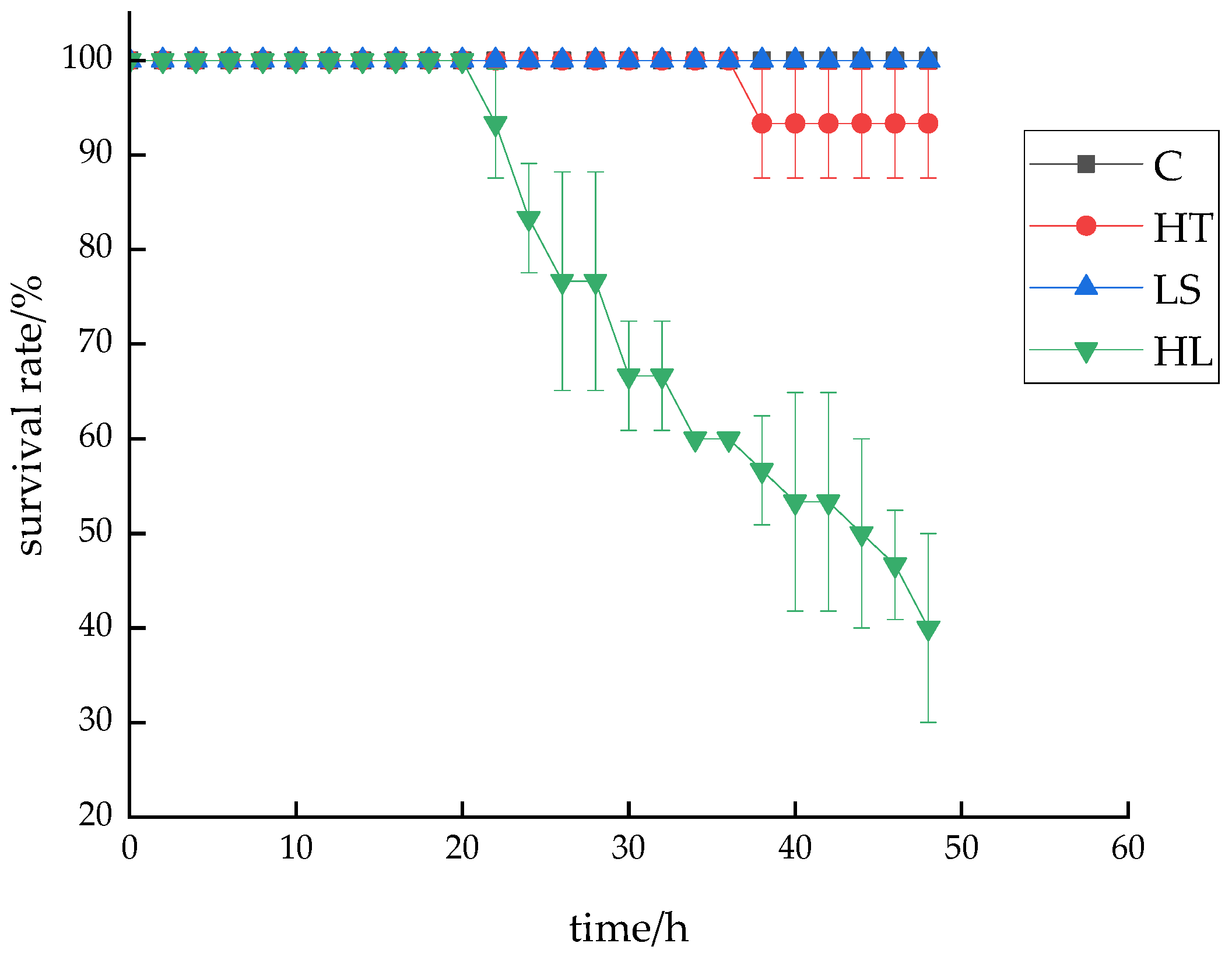
The survival rate of A. japonicus varied under conditions of different environmental stresses (Figure 1). All the sea cucumbers in both the C and LS groups were found to be alive after the 48 h test period. In the HL group, the initial death of an individual was observed after 22 h, and the mortality rate increased to 60.0 ± 10.0% at the end of the experiment. However, the mortality was recorded only 6.67 ± 5.77% after the 48 h test in the HT group.

3.2. Tissue Biochemical Index

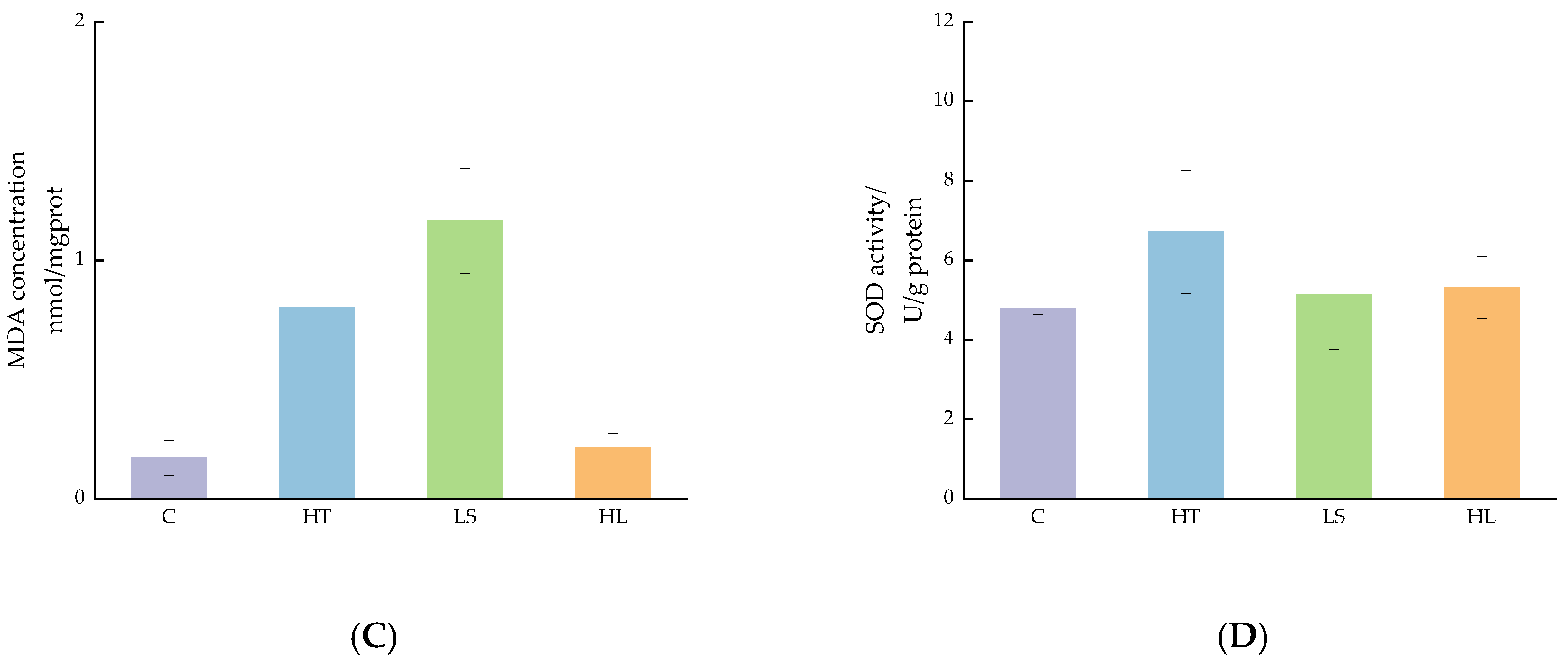
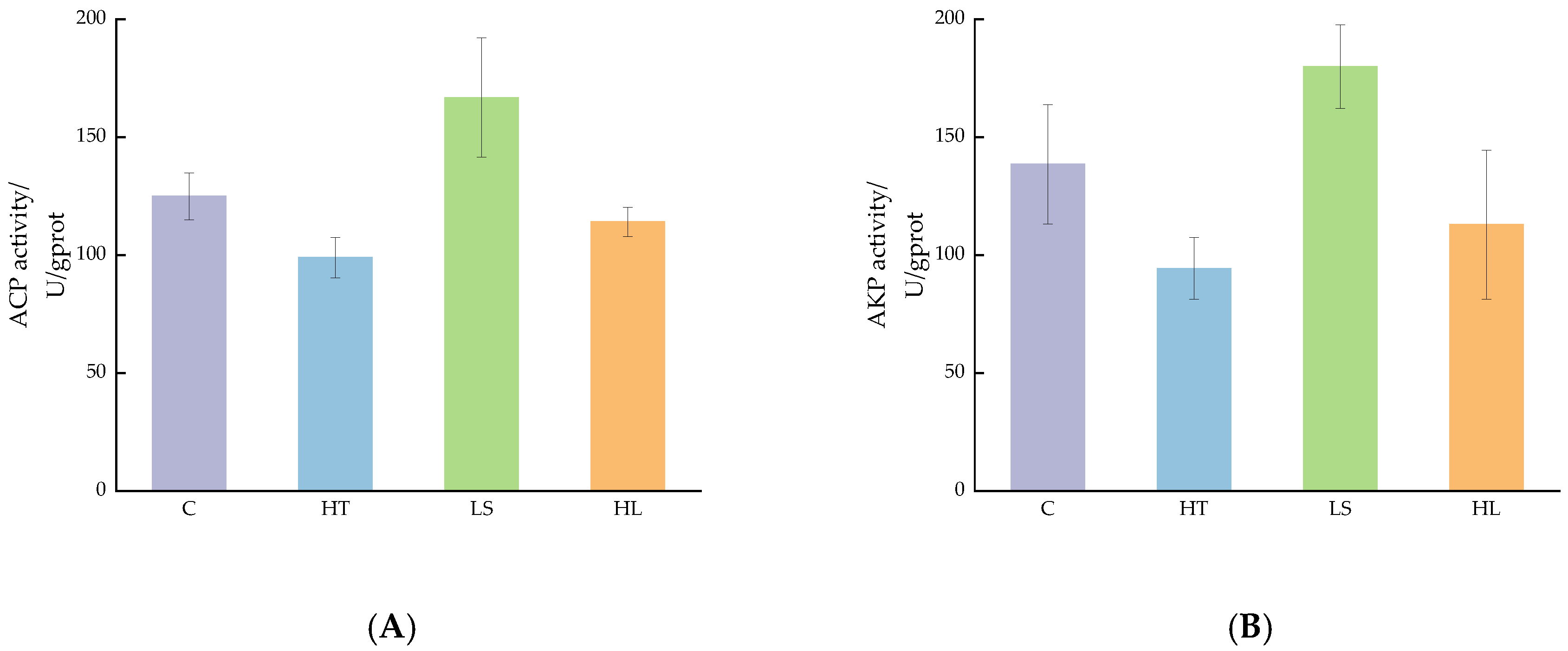
The levels of activity of enzymes ACP, AKP, SOD, and MDA in the body tissue of A. japonicus are shown in Figure 2. The results indicate that the activities of ACP and AKP in body tissues exhibited similar variation trends, which could lead to significant increases under hypo-salinity stress of ACP and AKP activities (1.30-fold and 1.34-fold compared to that of the control) and significant decreases under heat stress (HT and HL). However, the SOD activity in the heat group was higher than that in the control group, while it was similar to that in other groups (LS and HL). As shown in Figure 2, the MDA contents in the body tissue of A. japonicus in the LS and HT groups were significantly higher than those of the control group (4.67-fold and 6.79-fold compared to that of the control), while significantly lower than those of the control group under the heat plus hypo-salinity group.

3.3. Widely Targeted Metabolomic Profile

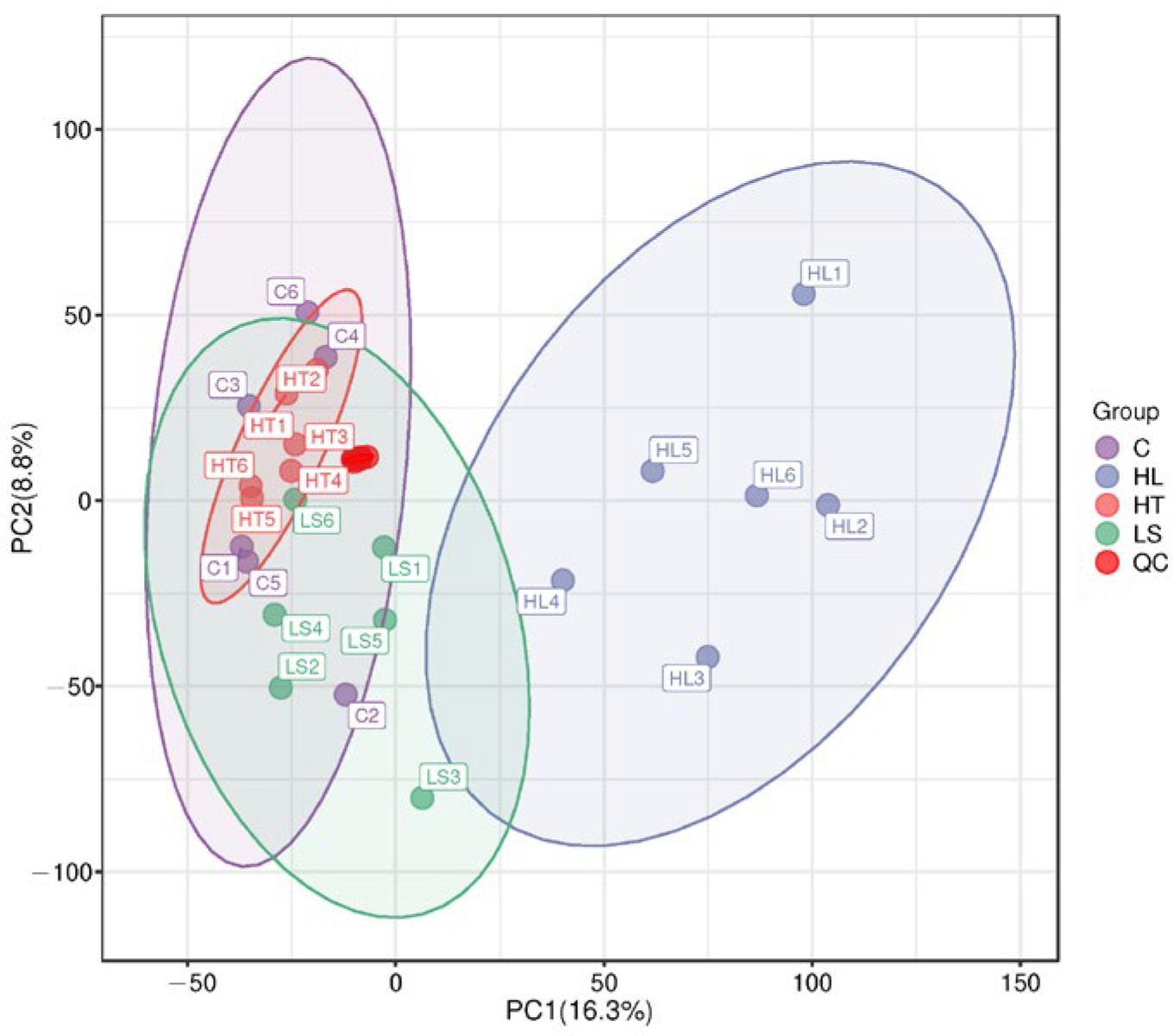
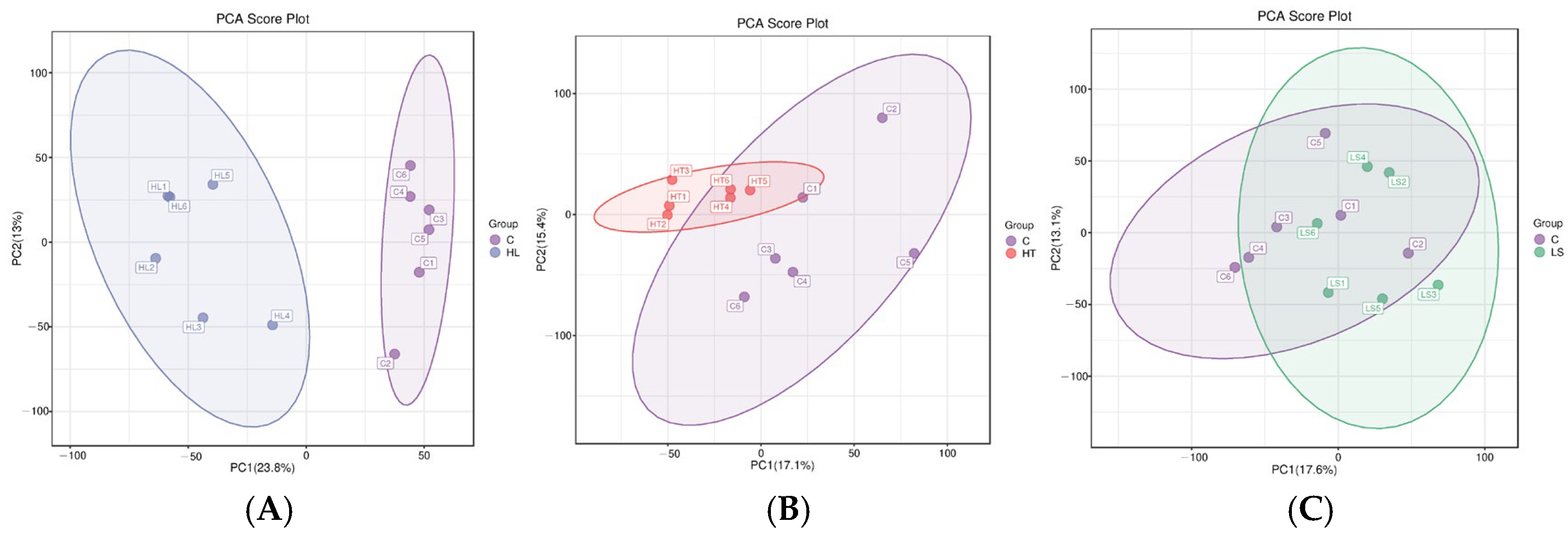
A total of 10,490 metabolites were identified in the body wall of A. japonicus. All the metabolites identified by LC-MS and UPLC-TOF-MS/MS were classified into several classes, including 18.91% fatty acyls, 16.62% carboxylic acids and derivatives, 3.72% steroids and steroid derivatives, 6.59% benzene and substituted derivatives, 5.16% organooxygen compounds, and 6.19% other components (7 metabolites). These metabolites formed four clusters in the PCA score plot (Figure 3), which showed considerable segregation of samples between the high temperature groups (HT and HL) and the normal temperature groups (LS and C). This result confirmed the connection between the different metabolites under environmental stresses. The first principal component (PC1) showed 16.3% variability. Furthermore, the metabolites in the high temperature groups (HL and HT) were different from those in the normal temperature groups (LS and C). Sea cucumbers exhibit a higher tolerance for hypo-salinity compared to heat stress, evidenced by the fact that heat shock induced a more pronounced metabolic response than hypo-salinity stress. The OPLS-DA analysis of metabolites revealed clear separation among the three experimental groups (HT, HL, and LS) and the control group (C), with no discernible outliers detected in the samples (Figure 4).

3.4. Selection of Differential Metabolites

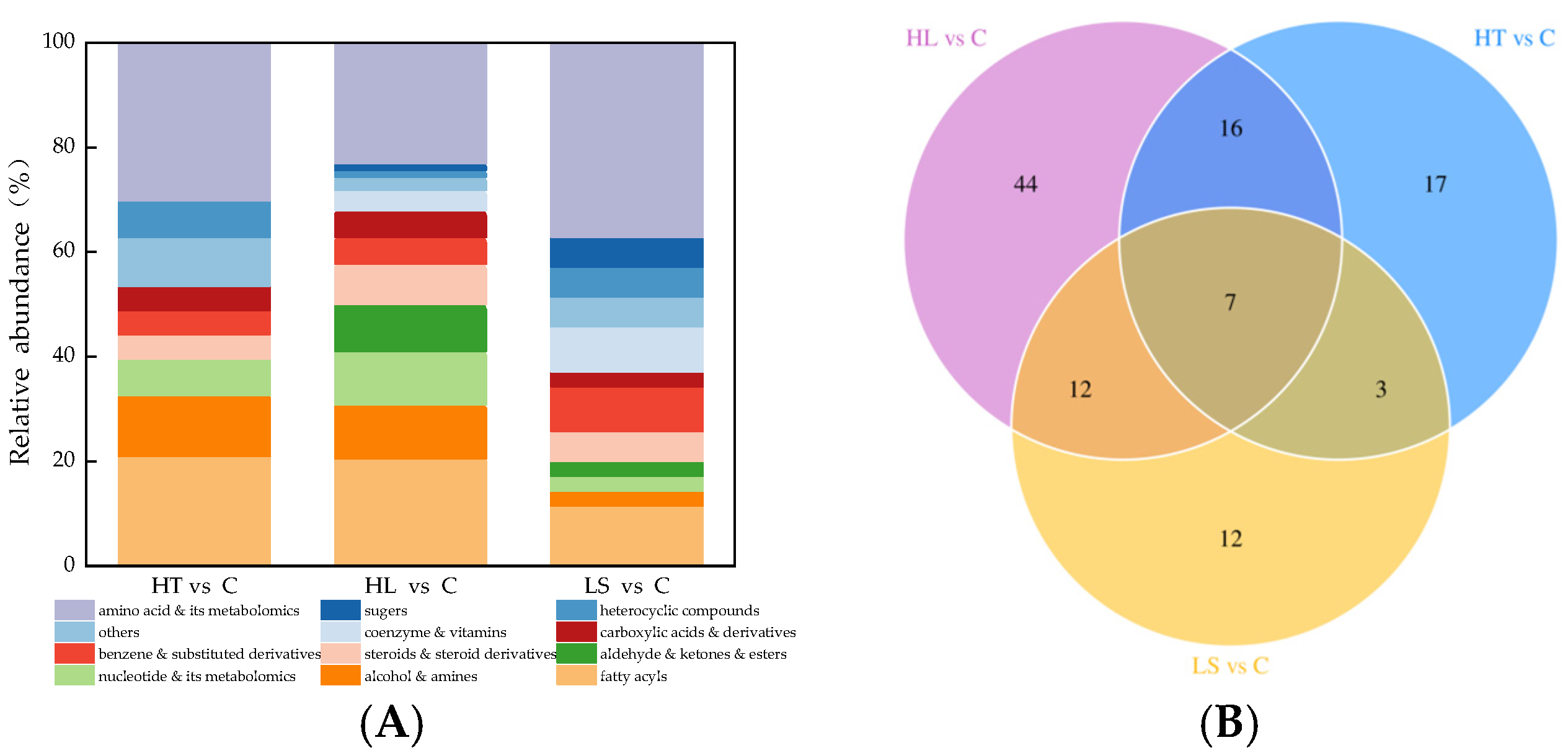
In this study, VIP ≥ 1 and p value < 0.05 were used as the threshold to screen the differential metabolites. 5064 primary metabolites and 349 secondary metabolites were identified. Our study mainly focused on the differential secondary metabolites identified between the experimental groups and the control group. In the comparison between HL vs. C, we identified 30 metabolites with increased levels and 49 with decreased levels. 16 with increased levels and 27 with decreased levels were selected from the HT vs. C comparison. Additionally, the LS vs. C comparison showed 12 with increased levels and 22 with decreased levels. These differential metabolites were classified into 11 categories: fatty acyl; heterocyclic compounds; carboxylic acids and derivatives; aldehyde, ketones, and esters; coenzyme and vitamins; alcohol and amines; nucleotide and their metabolomics; benzene and substituted derivatives; steroids and steroid derivatives; amino acids and their metabolomics; and sugars and others.
The percentage composition of the 11 classes of differential metabolites in the three pairwise comparisons is shown in Figure 5A. Notably, amino acids and their metabolites, as well as fatty acyls, accounted for considerable proportions of the metabolites. Specifically, the proportions of amino acids and their metabolites in the HT vs. C, HL vs. C, and LS vs. C comparisons were 30.23%, 23.08%, and 38.24%, respectively. The proportions of fatty acyls in the HT vs. C group, HL vs. C, and LS vs. C comparisons were 20.93%, 20.51%, and 11.76%, respectively. Overlapping differential metabolites in the three pairwise comparisons were visualized in a Venn diagram (Figure 5B). A total of 73 non-overlapping differential metabolites were obtained. Seven differential metabolites were common to all three comparisons, namely, 3-hydroxymethylglutaric acid, 4,5,6,7-tetrahydroisoxazolo (5,4-c) pyridin-3-ol, adenosine, dethiobiotin, l-methionine, pipecolic acid, and streptozocin. In the HT group, pipecolic acid, 3-hydroxymethylglutaric acid, dethiobiotin, streptozocin, and adenosine levels were decreased, whereas 4,5,6,7-tetrahydroisoxazolo (5,4-c) pyridin-3-ol and l-methionine levels were increased. All seven metabolites exhibited decreased levels in both the HL and LS groups.

3.5. KEGG Pathway Enrichment Analysis of Differential Metabolites

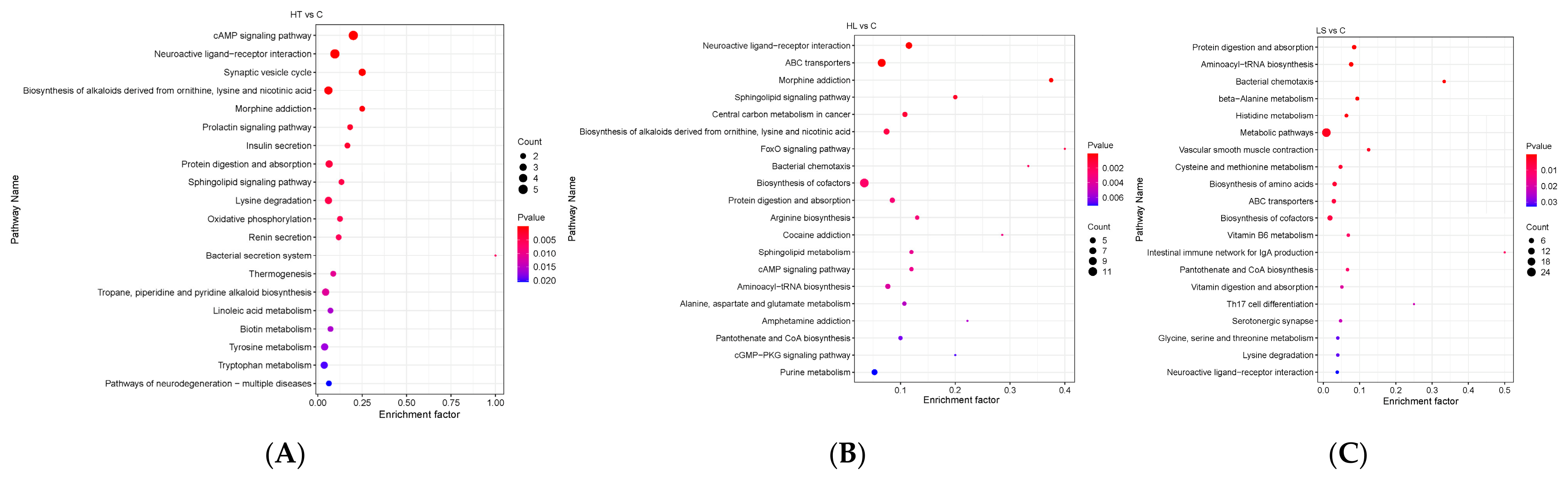
To better understand the major functions and roles of various differential metabolites and metabolic pathways, we conducted KEGG enrichment analysis of differential metabolites in the three pairwise comparisons. The KEGG pathways that were significantly enriched in each comparison are shown in Figure 6. In the HT vs. C comparison, the significantly enriched pathways (p < 0.05) included cAMP signaling pathway, neuroactive ligand-receptor interaction, synaptic vesicle cycle, biosynthesis of alkaloids derived from ornithine, lysine, and nicotinic acid, insulin secretion, protein digestion and absorption, sphingolipid signaling pathway, lysine degradation, and oxidative phosphorylation (Figure 6A). In HL vs. C, the significantly enriched pathways (p < 0.05) included the neuroactive ligand-receptor interaction, ABC transporters, cAMP signaling pathway, aminoacyl-tRNA biosynthesis, alanine, aspartate, and glutamate metabolism, pantothenate and CoA biosynthesis, and cGMP-PKG signaling pathway (Figure 6B). In LS vs. C, the significantly enriched pathways (p < 0.05) included protein digestion and absorption, histidine metabolism, ABC transporters, vitamin B6 metabolism, pantothenate and CoA biosynthesis, vitamin digestion and absorption, Th17 cell differentiation, glycine, serine, and threonine metabolism, and neuroactive ligand-receptor interaction (Figure 6C). Neuroactive ligand-receptor interaction was a common enriched pathway in all three comparisons. In this pathway, the metabolites L-glutamic acid, L-aspartic acid, adenosine, dopamine, anandamide, palmitoylethanolamide, ATP, and acetylcholine are involved. Although this pathway is traditionally associated with neural signaling, many of these metabolites are also known to act as stress-responsive signaling molecules in peripheral tissues. For example, glutamate and adenosine regulate oxidative stress and energy metabolism in invertebrate body wall muscles, and acetylcholine participates in non-neuronal cholinergic systems involved in immune and stress responses. Thus, their enrichment in the body wall of A. japonicus under heat and hypo-salinity stresses suggests a role in peripheral stress signaling rather than classical neural conduction. L-aspartic acid, L-methionine, L-histidine, indole, L-lysine, and L-glutamic acid were also enriched in the protein digestion and absorption pathway, implying that protein digestion and uptake were promoted in the three experimental groups.

3.5.1. Key Pathways and Metabolites of Neuron-Related Metabolism

The key differential metabolites involved in the neuroactive ligand-receptor interaction pathway are L-glutamic acid, L-aspartic acid, adenosine, dopamine, anandamide, palmitoylethanolamide, acetylcholine, and ATP. These metabolites showed significant changes in the two heat stress-related comparisons and were enriched in the synaptic vesicle cycle and sphingolipid signaling pathways. The significant enrichment of all three neuron-related signaling pathways, associated with functions including cell growth, apoptosis, oxidative stress, and metabolic regulation, suggests the involvement of neural conduction in the heat stress response of A. japonicus.

3.5.2. Key Pathways and Metabolites Related to Lipid and Amino Acid Metabolism

Numerous metabolites and pathways related to lipid and amino acid metabolism were significantly enriched across the three stress groups. For example, the cAMP signaling pathway, sphingolipid signaling pathway, oxidative phosphorylation, and linoleic acid metabolism were enriched, all of which are associated with lipid peroxides. We observed significant differences in metabolites, including oleic acid, lipoxin B4, docosatetraenoyl ethanolamide, 9(S)-HPODE, L-methionine S-oxide, and (9E)-octadecenoic acid, suggesting an oxidative stress response in A. japonicus under heat stress. The pathways related to amino acid metabolism included glycine, serine, and threonine metabolism, β-alanine metabolism, histidine metabolism, lysine degradation, and alanine, aspartate, and glutamate metabolism.

4. Discussion

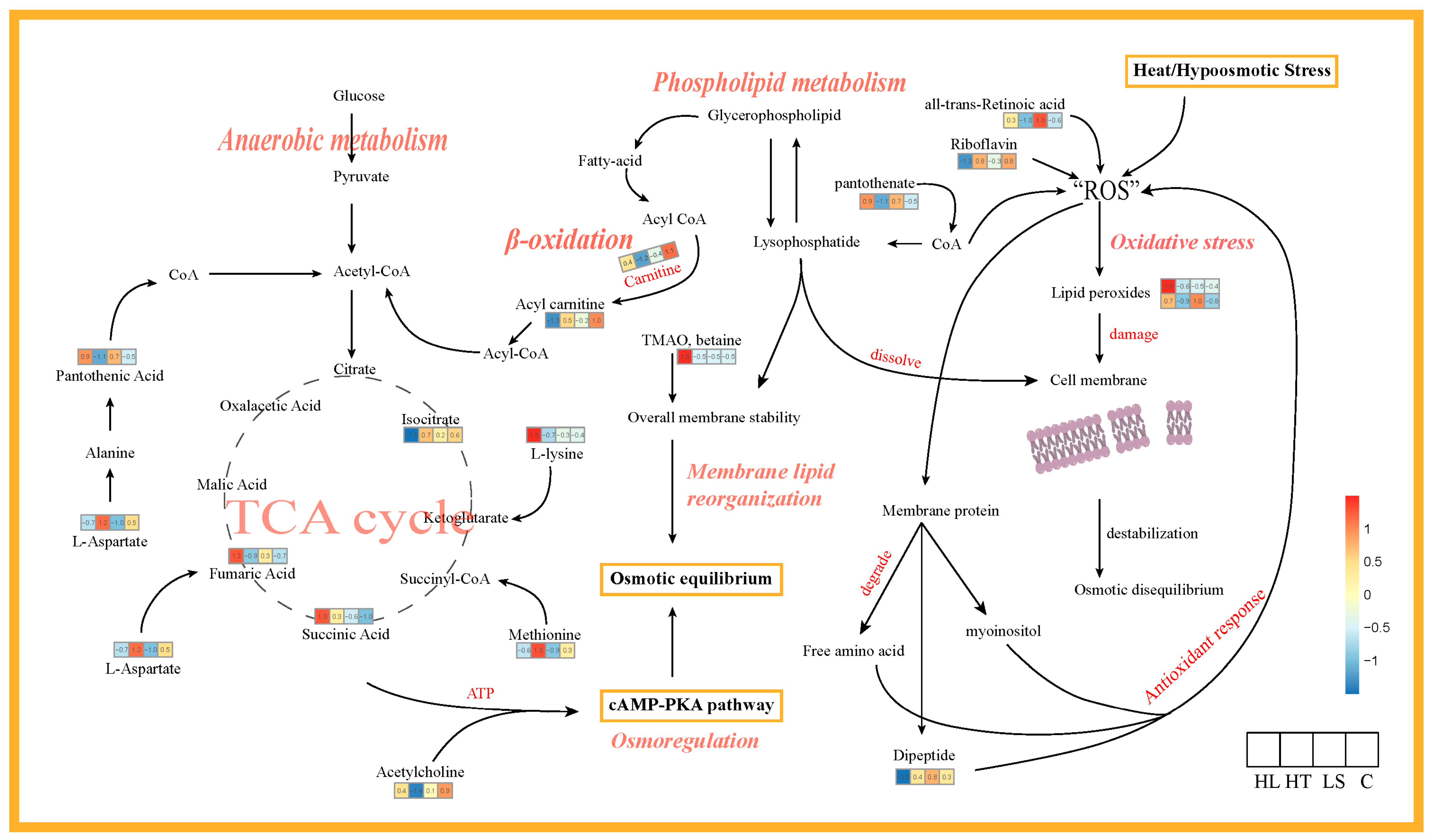
The main metabolic responses of A. japonicus to heat and hypo-salinity stresses based on metabolomic profiling are illustrated in Figure 7.
When subjected to heat or hypo-salinity stress, A. japonicus initiates a range of physiological responses to maintain normal metabolism and osmotic balance. The effects of hypo-salinity or heat single-factor stress on the metabolism of echinoderms have been reported [20,21]; however, studies on the metabolic responses and regulatory mechanisms of A. japonicus under the dual stresses of heat and hypo-salinity have not yet been reported.
In this study, we conducted widely targeted metabolomic profiling for A. japonicus in experimental groups under heat, hypo-salinity, and heat plus hypo-salinity stresses. The results indicate that a series of physiological responses occurred in A. japonicus in response to the stresses, and that these responses were essential for its tolerance to heat and hypo-salinity stresses. These responses include initiation of anaerobic metabolism and metabolic inhibition; an increase in glycerophospholipid metabolism for cell membrane stabilization; an increase in compatible osmoregulation and amino acids for protein structure stabilization; and accumulation of metabolites that protect cells from free radical damage.

4.1. Anaerobic Metabolism and Tricarboxylic Acid (TCA) Cycle Under Stress

In recent years, extreme hot weather and instantaneous heavy rainfall have frequently occurred, causing frequent and simultaneous temperature rises and low salinity drops in aquaculture environments. For aquatic animals to survive in an environment with heat and hypo-salinity stresses, maintaining an adequate energy supply to support cellular stress responses and normal metabolic requirements is paramount [22]. Animals must either maintain their aerobic metabolic rates or provide energy through anaerobic metabolism [23,24,25,26]. Alanine is a biomarker of anaerobic metabolism that is produced from aspartic acid [27]. Haider et al. [28] found that an increase in alanine content accompanied by a decrease in aspartate content occurred in the gills of Mytilus edulis and Crassostrea gigas under hypoxia stress. Refs. [26,29] found that anaerobic metabolism occurred in Mercenaria mercenaria under hypo-salinity stress, leading to increased levels of lactic acid and succinic acid in tissues. We observed similar results in the experimental groups in this study; i.e., the metabolite content of succinic acid notably increased in the body wall of A. japonicus in the high-temperature groups (HT vs. C and HL vs. C), whereas aspartic acid content decreased in the low salinity group (LS vs. C). These results are consistent with the interpretation that anaerobic metabolism was triggered in A. japonicus upon stress, and the accumulation of succinic acid suggests that A. japonicus may have been in a state of metabolic inhibition. However, direct measurements of ATP levels and anaerobic enzyme activities (e.g., lactate dehydrogenase) are required to confirm this conclusion. This state is likely due to the excessive energy expenditure for osmoregulation, and the increase in anaerobic metabolism may ensure adequate energy supply in the overall metabolic inhibition period.
The TCA cycle is a common pathway for the oxidative catabolism of sugars, amino acids, and lipids. Ref. [30] underscored the role of metabolites from the TCA cycle in cell fate and function, as well as changes in their abundance during physiological regulation and disease periods. In our study, the HL group had an elevated level of isocitric acid content in the body wall of A. japonicus, and the HT group had an increased level of succinic acid content, accompanied by decreased levels of pipecolic acid and methionine content, which might be converted to glutamine and succinyl coenzyme A (CoA). Together, these results provide strong evidence that supports the idea that heat stress alters the TCA cycle in A. japonicus. This finding suggests that in response to stress, A. japonicus may adjust energy metabolism by altering amino acid metabolic pathways, or adapt to environmental changes by regulating the activities of certain enzymes, to maintain life activities and metabolic homeostasis, but direct measurements are needed to confirm this interpretation.

4.2. Reactive Oxygen Species Scavenging and Cell Membrane Stabilization

Cell membranes show high sensitivity to environmental perturbations. Membrane stability is essential for maintaining tissue function and facilitating metabolic activities [31]. Lipid peroxidation is an important indicator of cell membrane damage induced by oxidative stress [32]. We found several lipid peroxides, such as 4-oxoglutaramate, L-methionine S-oxide, 9(S)-HPODE, and 16(R)-HETE, with increased levels in the body wall of A. japonicus in the HT group, indicating that prolonged heat stress in A. japonicus caused relatively severe oxidative stress and cell membrane damage. Organisms can initiate a series of antioxidant responses to alleviate oxidative damage, such as increasing antioxidant enzyme activity levels [33]. Moreover, many non-enzymatic metabolites, such as free amino acids, inositol, and Tyr-containing dipeptides, have a strong ability to scavenge reactive oxygen species (ROS) and can clean up free radicals generated by adverse environmental stresses [34,35]. We detected considerable decreases in the content of metabolites S-allylcysteine, glutathione amide disulfide, O-phosphotyrosine, (S)-β-tyrosine, L-lysine, epsilon-(gamma-glutamyl)-lysine, leucine, levamisole, ergothioneine, gamma-glutamylcysteine, mannitol, pantothenol, 2-pyrocatechuic acid, lipoic acid, and lipoxin B4 in the three stress groups. These substances all have ROS scavenging properties that are beneficial for A. japonicus to withstand oxidative stress and alleviate the membrane damage caused during the stress period. The L-methionine content distinctly decreased in the three stress groups compared with its content in the control group, whereas polyamine metabolites, such as n-carbamoylputrescin, increased in the LS group. This may be attributed to the production of S-adenosylmethionine from L-methionine and ATP in the stressed cells. S-Adenosylmethionine can be decarboxylated by ornithine decarboxylase to form polyamines [36]. Polyamines are low-molecular-weight simple fatty amines that are present in almost all living organisms. Their unique molecular structure determines the major roles that polyamines play in promoting intestinal mucosal growth, development, maturation, adaptation to the internal environment, and repair of damage. Polyamines in animals can implement their roles in intestinal homeostasis maintenance by promoting intestinal development, maintaining intestinal mucosal barrier function, improving intestinal antioxidation, and adjusting intestinal metabolism [37].
In the high temperature groups (HT and HL), the content of the differential metabolite L-lysine remarkably decreased. The Lysine degradation pathway was also notably enriched in the HT and HL groups, but no significant difference in this pathway was detected in the LS group. Lysine is the most abundant stored essential amino acid in the body [38]. Lysine can reduce the free radical content, enabling muscle tissues to maintain normal physiological function. Lysine is also an essential amino acid and energy source for the repair of tissue damage, which can delay the generation of fatigue and accelerate recovery from fatigue [39].
The concentration of osmotically friendly substances, such as betaine, choline, and carnitine, increases in organisms when the temperature rises, which can counteract the effect of heat on protein stability [22]. Methylamines, such as trimethylamine N-oxide, betaine, and carnitine, can enhance protein stability, maintain normal protein folding, and protect cells from the harm of high osmotic pressure through stable conformations and subunit–subunit interactions; these in turn have beneficial effects on enzyme activity levels, ensuring adequate cellular energy metabolism under stress conditions [35,40]. In the present study, we found that betaine and butyryl-L-carnitine levels were significantly increased in the high-temperature groups (HT vs. C and HL vs. C). These changes may protect protein structures from degeneration at high temperatures, thereby preserving the stability of cell membranes.

4.3. Vitamins

Vitamin C (ascorbic acid) is an essential micronutrient for normal growth and physiological functioning in most aquatic animals, and therefore it is used as a feed additive and antioxidant [41]. In animals, D-glucose is converted to vitamin C via D-glucuronic acid, L-gulosonic acid, and D-gulono-1,4-lactone, then oxidized to ascorbic acid [42]. In this study, we found that D-gulono-1,4-lactone content decreased in the body wall of A. japonicus in the HL group. Stress possibly promoted glycolysis, leading to the decrease in D-gulono-1,4-lactone due to its catalytic conversion to ascorbic acid in the body wall of A. japonicus, thereby improving the body’s antioxidant capacity to cope with stress [26]. Pantothenic acid (also known as vitamin B5) is involved mainly in the metabolic pathway of pantothenic acid and CoA biosynthesis. Pantothenic acid, a water-soluble vitamin required for sustaining life [43], is primarily converted to CoA in the body. The unique chemical structure of CoA means that it can be used to activate carboxyl groups in catabolic and anabolic reactions, including the metabolism of lipids, sugars, proteins, ethanol, bile acids, and some exogenous substances. A recent study found that gene expression and modification of some proteins require the participation of CoA and its sulfolipid derivatives [44]. We found that pantothenic acid content increased in the body wall of A. japonicus in the LS and HL groups compared with its content in the control group. Pantothenic acid is a precursor of coenzyme A (CoA), which is essential for TCA cycle function. This pattern is consistent with a possible enhancement of CoA availability, which could support TCA cycle activity. However, our metabolomic data are correlative and do not directly demonstrate increased TCA flux. Direct measurements using stable isotope tracers (e.g., 13C-labeled substrates) or TCA cycle enzyme activity assays are required to confirm whether TCA cycle flux is indeed increased under these stress conditions. Pantothenic acid is also involved in β-alanine metabolism. The L-histidine content decreased in the body wall of A. japonicus in the LS group, and the β-alanine metabolism pathway was significantly enriched. This may be because β-alanine and L-histidine form carnosine in vivo, which can penetrate directly into the cell through the cell membrane and perform its function [45]. Carnosine provides active hydrogen through the imidazole ring in its structure to bind and scavenge free radicals, and amino and carboxyl groups on the imidazole ring can chelate metal ions such as Cu2+ and Fe2+ to inhibit oxidative reactions. Together, these findings led us to propose that A. japonicus is likely to respond to environmental stresses by increasing pantothenic acid content and bolstering its antioxidant capacity and motor ability. Riboflavin (also known as vitamin B2) exhibits antioxidant properties [46], and the possible mechanism is that the reduced form of riboflavin is converted to the oxidized form, enabling the degradation of hydrogen peroxide. Ref. [47] showed that riboflavin enhanced the in vivo activity of ROS scavenging enzymes and reduced the in vivo accumulation of ROS in rice, alleviating or eliminating the oxidative damage caused by salinity change and heat stress. These findings are consistent with our results. The riboflavin content in the body wall of A. japonicus decreased considerably in the HL group, indicating that riboflavin played a vital role in the abiotic stress response of A. japonicus.
The content of all-trans-retinoic acid (ATRA) also significantly increased in the LS group. ATRA, a derivative of vitamin A, has been shown to affect the function of various immune cells by modulating the Notch pathway [48]. ATRA can also promote responses in T helper 2 cells [49]. Together, these findings suggest that stress affected organismal homeostasis in A. japonicus and also impaired immune regulation.
The metabolic changes reported here are correlative. Proposed mechanisms—such as enhanced TCA cycle flux or neuroactive signaling—require direct validation using targeted enzyme activity assays, genetic manipulation, or pharmacological intervention in future studies.

5. Conclusions

In this study, we delved into the mechanisms underpinning the effects of hypo-salinity, heat, and heat plus hypo-salinity stresses on the metabolism of A. japonicus. The results indicate that the metabolism of unsaturated fatty acids and vitamins was accelerated in A. japonicus all stress groups compared with their metabolism in the control group. This finding indicated that after exposure to adverse environmental stresses, the metabolism of A. japonicus was increased to enhance antioxidant capacity and maintain cellular homeostasis and organismal stability for adaptation to the stresses. The limit for the stress-resistant ability of A. japonicus may have been reached, which induced inflammation and enabled activation of immune functions. The results of this study extend the results of metabolomics research on the physiological response mechanisms of A. japonicus to adverse environments, such as low salinity and high temperature. Our findings provide novel insights and a theoretical basis for the early warning of heat stress in A. japonicus aquaculture and the development of techniques for the mitigation of heat and hypo-salinity stresses. This work has positive implications for promoting the sustainable and healthy development of the A. japonicus aquaculture industry. While this study provides a descriptive metabolomic resource, the proposed mechanisms remain correlative. Future hypothesis-driven experiments should include direct measurements of ATP and NAD+/NADH ratios, quantification of key enzyme activities (e.g., succinate dehydrogenase, catalase), and stable isotope-labeled tracer studies to confirm flux changes in the TCA cycle and antioxidant pathways.

Author Contributions

Conceptualization, B.Z.; software, D.G.; validation, Q.W. and B.Z.; investigation, Q.W. and D.G.; resources, W.H. and B.Z.; data curation, Q.W.; writing—original draft preparation, Q.W.; writing—review and editing, W.H.; funding acquisition, W.H. All authors have read and agreed to the published version of the manuscript.

Funding

This work was supported by Key Technology Research and Development Program of Shandong Province (grant numbers 2023LZGC019); and Innovation Team Building of Sea Cucumber Industry in Shandong Province Modern Agricultural Technology System (grant number SDARS-22-01; SDARS-22-04); and Agricultural Technology Collaborative Promotion Plan of Shandong Province(grant numbers SDNYXTTG-2024-31); and Fisheries Development in Response to Refined Oil Price Adjustment“ Capacity Improvement and Operation & Maintenance of Shandong Provincial Characteristic Aquatic Germplasm Resource Bank”(grant numbers 2025SDNYYB02).

Data Availability Statement

The original contributions presented in this study are included in the article.

Conflicts of Interest

The authors declare no conflict of interest.

References

  1. Purcell, S.W.; Conand, C.; Uthicke, S.; Byrne, M. Ecological Roles of Exploited Sea Cucumbers. In Oceanography and Marine Biology: An Annual Review; CRC Press: Boca Raton, FL, USA, 2016; Volume 54, pp. 367–386. [Google Scholar]
  2. Ding, K.; Zhang, L.; Sun, L.; Lin, C.; Feng, Q.; Zhang, S.; Yang, H.; Brinkman, R.; Lin, G.; Huang, Z. Transcriptome analysis provides insights into the molecular mechanisms responsible for evisceration behavior in the sea cucumber Apostichopus japonicus. Comp. Biochem. Physiol. Part D Genom. Proteom. 2019, 30, 143–157. [Google Scholar] [CrossRef]
  3. Huo, D.; Sun, L.; Zhang, L.; Ru, X.; Liu, S.; Yang, X.; Yang, H. Global-warming-caused changes of temperature and oxygen alter the proteomic profile of sea cucumber Apostichopus japonicus. J. Proteom. 2019, 193, 27–43. [Google Scholar] [CrossRef]
  4. Morroni, L.; Rakaj, A.; Grosso, L.; Flori, G.; Fianchini, A.; Pellegrini, D.; Regoli, F. Echinoderm larvae as bioindicators for the assessment of marine pollution: Sea urchin and sea cucumber responsiveness and future perspectives. Environ. Pollut. 2023, 335, 122285. [Google Scholar] [CrossRef]
  5. Rakaj, A.; Morroni, L.; Grosso, L.; Fianchini, A.; Pensa, D.; Pellegrini, D.; Regoli, F. Towards sea cucumbers as a new model in embryo-larval bioassays: Holothuria tubulosa as test species for the assessment of marine pollution. Sci. Total Environ. 2021, 787, 147593. [Google Scholar] [CrossRef]
  6. Liu, S.; Zhang, S.; Ru, X.; Sun, L.; Li, J.; Zhou, Y.; Yang, H. Effect of high temperature stress on the fertility of male and female gametes of the sea cucumber Apostichopus japonicus. Aquac. Res. 2016, 47, 3127–3135. [Google Scholar] [CrossRef]
  7. Wang, Q.; Yu, S.; Dong, Y. Parental Effect of Long Acclimatization on Thermal Tolerance of Juvenile Sea Cucumber Apostichopus japonicus. PLoS ONE 2015, 10, e0143372. [Google Scholar] [CrossRef] [PubMed]
  8. Yu, H.; Zhang, C.; Gao, Q.; Dong, S.; Ye, Z.; Tian, X. Impact of water temperature on the growth and fatty acid profiles of juvenile sea cucumber Apostichopus japonicus (Selenka). J. Therm. Biol. 2016, 60, 155–161. [Google Scholar] [CrossRef]
  9. Han, Q.; Keesing, J.K.; Liu, D. A review of sea cucumber aquaculture, ranching, and stock enhancement in China. Rev. Fish. Sci. Aquac. 2016, 24, 326–341. [Google Scholar] [CrossRef]
  10. Shang, Y.; Tian, Y.; Wang, Y.; Guo, R. Novel lncRNA lncRNA001074 participates in the low salinity-induced response in the sea cucumber Apostichopus japonicus by targeting the let-7/NKAalpha axis. Cell Stress Chaperones 2021, 26, 785–798. [Google Scholar] [CrossRef]
  11. Dong, Y.W.; Liao, M.L.; Han, G.D.; Somero, G.N. An integrated, multi-level analysis of thermal effects on intertidal molluscs for understanding species distribution patterns. Biol. Rev. 2022, 97, 554–581. [Google Scholar] [CrossRef] [PubMed]
  12. Geng, C.; Tian, Y.; Shang, Y.; Wang, L.; Jiang, Y.; Chang, Y. Effect of acute salinity stress on ion homeostasis, Na+/K+-ATPase and histological structure in sea cucumber Apostichopus japonicus. SpringerPlus 2016, 5, 1977. [Google Scholar] [CrossRef] [PubMed]
  13. Jackson, M.C.; Woodford, D.J.; Olaf, L.F. Linking key environmental stressors with the delivery of provisioning ecosystem services in the freshwaters of southern Africa. Geogr. Environ. 2016, 3, e00026. [Google Scholar] [CrossRef]
  14. McHale, C.M.; Osborne, G.; Morello-Frosch, R.; Salmon, A.G.; Sandy, M.S.; Solomon, G.; Zhang, L.; Smith, M.T.; Zeise, L. Assessing health risks from multiple environmental stressors: Moving from G×E to I×E. Mutat. Res./Rev. Mutat. Res. 2018, 775, 11–20. [Google Scholar] [CrossRef]
  15. Dörr, A.J.M.; Scalici, M.; Caldaroni, B.; Magara, G.; Scoparo, M.; Goretti, E.; Elia, A.C. Salinity tolerance of the invasive red swamp crayfish Procambarus clarkii (Girard, 1852). Hydrobiologia 2020, 847, 2065–2081. [Google Scholar] [CrossRef]
  16. Rasmussen, J.A.; Villumsen, K.R.; Ernst, M.; Hansen, M.; Forberg, T.; Gopalakrishnan, S.; Gilbert, M.T.P.; Bojesen, A.M.; Kristiansen, K.; Limborg, M.T. A multi-omics approach unravels metagenomic and metabolic alterations of a probiotic and synbiotic additive in rainbow trout (Oncorhynchus mykiss). Microbiome 2022, 10, 21. [Google Scholar] [CrossRef]
  17. Navarro-Reig, M.; Jaumot, J.; García-Reiriz, A.; Tauler, R. Evaluation of changes induced in rice metabolome by Cd and Cu exposure using LC-MS with XCMS and MCR-ALS data analysis strategies. Anal. Bioanal. Chem. 2015, 407, 8835–8847. [Google Scholar] [CrossRef]
  18. Thévenot, E.A.; Roux, A.; Xu, Y.; Ezan, E.; Junot, C. Analysis of the Human Adult Urinary Metabolome Variations with Age, Body Mass Index, and Gender by Implementing a Comprehensive Workflow for Univariate and OPLS Statistical Analyses. J. Proteome Res. 2015, 14, 3322–3335. [Google Scholar] [CrossRef]
  19. Xia, J.; Wishart, D.S. Web-based inference of biological patterns, functions and pathways from metabolomic data using MetaboAnalyst. Nat. Protoc. 2011, 6, 743–760. [Google Scholar] [CrossRef]
  20. Hamer, B. Effect of hypoosmotic stress by low salinity acclimation of Mediterranean mussels Mytilus galloprovincialis on biological parameters used for pollution assessment. Aquat. Toxicol. 2008, 89, 137–151. [Google Scholar] [CrossRef] [PubMed]
  21. Wu, H.; Zhang, X.; Wang, Q.; Li, L.; Ji, C.; Liu, X.; Zhao, J.; Yin, X. A metabolomic investigation on arsenic-induced toxicological effects in the clam Ruditapes philippinarum under different salinities. Ecotoxicol. Environ. Saf. 2013, 90, 1–6. [Google Scholar] [CrossRef] [PubMed]
  22. Chen, Y.; Wang, J.; Liao, M.; Li, X.; Dong, Y. Temperature adaptations of the thermophilic snail Echinolittorina malaccana: Insights from metabolomic analysis. J. Exp. Biol. 2021, 224, jeb238659. [Google Scholar] [CrossRef]
  23. Han, G.; Zhang, S.; Dong, Y. Anaerobic metabolism and thermal tolerance: The importance of opine pathways on survival of a gastropod after cardiac dysfunction. Integr. Zool. 2017, 12, 361–370. [Google Scholar] [CrossRef]
  24. Hui, T.Y.; Dong, Y.W.; Han, G.D.; Lau, S.L.; Cheng, M.C.; Meepoka, C.; Ganmanee, M.; Williams, G.A. Timing metabolic depression: Predicting thermal stress in extreme intertidal environments. Am. Nat. 2020, 196, 501–511. [Google Scholar] [CrossRef]
  25. Meng, J.; Wang, T.; Li, L.; Zhang, G. Inducible variation in anaerobic energy metabolism reflects hypoxia tolerance across the intertidal and subtidal distribution of the Pacific oyster (Crassostrea gigas). Mar. Environ. Res. 2018, 138, 135–143. [Google Scholar] [CrossRef]
  26. Zhou, C.; Song, H.; Feng, J.; Hu, Z.; Yang, M.J.; Shi, P.; Li, Y.R.; Guo, Y.J.; Li, H.Z.; Zhang, T. Metabolomics and biochemical assays reveal the metabolic responses to hypo-salinity stress and osmoregulatory role of cAMP-PKA pathway in Mercenaria mercenaria. Comput. Struct. Biotechnol. J. 2022, 20, 4110–4121. (In Chinese) [Google Scholar] [CrossRef]
  27. Eymann, C.; Götze, S.; Bock, C.; Guderley, H.; Knoll, A.H.; Lannig, G.; Sokolova, I.M.; Aberhan, M.; Pörtner, H.O. Thermal performance of the European flat oyster, Ostrea edulis (Linnaeus, 1758)-explaining ecological findings under climate change. Mar. Biol. 2020, 167, 17. [Google Scholar] [CrossRef]
  28. Haider, F.; Sokolov, E.P.; Timm, S.; Hagemann, M.; Rayón, E.B.; Marigómez, I.; Izagirre, U.; Sokolova, I.M. Interactive effects of osmotic stress and burrowing activity on protein metabolism and muscle capacity in the soft shell clam Mya arenaria. Comp. Biochem. Physiol. Part A 2019, 228, 81–93. [Google Scholar] [CrossRef]
  29. Gharbi, A.; Farcy, E.; Van Wormhoudt, A.; Denis, F. Response of the carpet shell clam (Ruditapes decussatus) and the Manila clam (Ruditapes philippinarum) to salinity stress. Biologia 2016, 71, 551–562. [Google Scholar] [CrossRef]
  30. Martínez-Reyes, I.; Chandel, N.S. Mitochondrial TCA cycle metabolites control physiology and disease. Nat. Commun. 2020, 11, 102. [Google Scholar] [CrossRef] [PubMed]
  31. Somero, G.N.; Lockwood, B.L.; Tomanek, L. Biochemical Adaptation; Sinauer Associates, Inc. Publishers: Sunderland, MA, USA, 2017. [Google Scholar]
  32. Kamat, J.P.; Devasagayam, T.P.A.; Priyadarsini, K.I.; Mohan, H.; Mittal, J.P. Oxidative damage induced by the fullerene C60 on photosensitization in rat liver microsomes. Chem. Biol. Interact. 1998, 114, 145–157. [Google Scholar] [CrossRef]
  33. Freitas, R.; De Marchi, L.; Bastos, M.; Moreira, A.; Velez, C.; Chiesa, S.; Wrona, F.J.; Figueira, E.; Soares, A.M. Effects of seawater acidification and salinity alterations on metabolic, osmoregulation and oxidative stress markers in Mytilus galloprovincialis. Ecol. Indic. 2017, 79, 206–213. [Google Scholar] [CrossRef]
  34. Rivera-Ingraham, G.A.; Lignot, J.-H. Osmoregulation, bioenergetics and oxidative stress in coastal marine invertebrates: Raising the questions for future research. J. Exp. Biol. 2017, 220, 1749–1760. [Google Scholar] [CrossRef]
  35. Yancey, P.H. Organic osmolytes as compatible, metabolic and counteracting cytoprotectants in high osmolarity and other stresses. J. Exp. Biol. 2005, 208, 2819–2830. [Google Scholar] [CrossRef]
  36. Pegg, A.E. S-Adenosylmethionine decarboxylase. Essays Biochem. 2009, 46, 25–45. [Google Scholar] [CrossRef]
  37. Fang, T.T.; Liu, G.M.; Jia, G. Polyamines: Regulation on Intestinal Homeostasis and Possible Mechanisms. Chin. J. Anim. Nutr. 2016, 28, 3400–3407. (In Chinese) [Google Scholar] [CrossRef]
  38. Tian, Y.; Shi, M.H. The Research Progress of the Physiologic Functions of Lysine. J. Res. Diet. Sci. Cult. 2014, 31, 60. [Google Scholar]
  39. Zhang, J.; Dai, J.Y.; Lai, X.H.; Liu, X.X.; Zhang, H.; Wang, X.F.; Tang, B.G. Metabolomic analysis of Trachinotus ovatus under flow velocity stress. Haiyang Xuebao 2023, 45, 53–63. (In Chinese) [Google Scholar] [CrossRef]
  40. Peluso, G.; Barbarisi, A.; Savica, V.; Reda, E.; Nicolai, R.; Benatti, P.; Calvani, M. Carnitine: An osmolyte that plays a metabolic role. J. Cell. Biochem. 2000, 80, 1–10. [Google Scholar] [CrossRef]
  41. Khadim, R.M.; Al-Fartusie, F.S. Antioxidant vitamins and their effect on immune system. J. Phys. Conf. Ser. 2021, 1853, 12065. [Google Scholar] [CrossRef]
  42. Smirnoff, N. L-ascorbic acid biosynthesis. Vitam. Horm. 2001, 61, 241–266. [Google Scholar] [CrossRef]
  43. Combs, G.F.; Mcclung, J.P. Pantothenic acid. In The Vitamins; Academic Press: Cambridge, MA, USA, 2017; pp. 387–398. [Google Scholar]
  44. O’Neill, L.M.; Guo, C.A.; Ding, F.; Phang, Y.X.; Liu, Z.; Shamsuzzaman, S.; Ntambi, J.M. Stearoyl-CoA desaturase-2 in murine development, metabolism, and disease. Int. J. Mol. Sci. 2020, 21, 8619. [Google Scholar] [CrossRef]
  45. Boldyrev, A.A.; Aldini, G.; Derave, W. Physiology and pathophysiology of carnosine. Physiol. Rev. 2013, 93, 1803–1845. [Google Scholar] [CrossRef]
  46. Toyosaki, T.; Mineshita, T. Antioxidant effects of protein-bound riboflavin and free riboflavin. J. Food Sci. 1988, 53, 1851–1853. [Google Scholar] [CrossRef]
  47. Xia, Q.S.; Zhou, Z.K.; Tan, Y.N.; Liu, X.M.; Qin, D.L.; Lin, J.Z. Analysis of riboflavin involvement in abiotic stress response in rice. Acta Bot. Boreali-Occident. Sin. 2023, 43, 1314–1321. (In Chinese) [Google Scholar] [CrossRef]
  48. Yin, W.; Song, Y.; Liu, Q.; Wu, Y.; He, R. Topical treatment of all-trans retinoic acid inhibits murine melanoma partly by promoting CD8+ T-cell immunity. Immunology 2017, 152, 287–297. [Google Scholar] [CrossRef]
  49. Lin, H.; Chen, W.F. Effects of all-trans retinoic acid on Th1/Th2 balance in asthmatic rat models. Biotechnology 2024, 34, 91–95. (In Chinese) [Google Scholar] [CrossRef]
Figure 1. Survival rate of A. japonicus exposed to heat and hypo-salinity stresses. HL, heat and hypo-salinity group; HT, heat group; LS, hypo-salinity group; C, control group.
Jmse 14 00831 g001
Figure 2. Non-specific immunoenzyme activity levels in the body wall of A. japonicus exposed to heat and hypo-salinity stresses. (A) ACP activity; (B) AKP activity; (C) MDA concentration; (D) SOD activity.
Jmse 14 00831 g002aJmse 14 00831 g002b
Figure 3. Principal component analysis (PCA) of the metabolites in the body wall of A. japonicus. HL, heat and hypo-salinity group; HT, heat group; LS, hypo-salinity group; C, control group; QC, quality control.
Jmse 14 00831 g003
Figure 4. Orthogonal partial least squares discriminant analysis (OPLS-DA) scores plots of the metabolites in the body wall of A. japonicus. (A) HL vs. C; (B) HT vs. C; (C) LS vs. C.
Jmse 14 00831 g004
Figure 5. Differential metabolite analysis based on pairwise comparisons. (A) Composition and percentage of differential metabolites in the body wall tissue of A. japonicus under environmental stresses. (B) Venn diagram of the differential metabolites pairwise comparison results. HL, heat and hypo-salinity group; HT, heat group; LS, hypo-salinity group; C, control group.
Jmse 14 00831 g005
Figure 6. Enriched KEGG pathways for the differential metabolites. (A) HT vs. C; (B) HL vs. C; (C) LS vs. C. HL, heat and hypo-salinity group; HT, heat group; LS, hypo-salinity group; C, control group.
Jmse 14 00831 g006
Figure 7. Schematic diagram of the metabolic responses of A. japonicus to heat and hypo-salinity stresses. The colors of the four boxes in a row near each metabolite indicate the relative content of each metabolite in each group, HL, HT, LS, and C. Red indicates high content, and blue indicates low content. HL, heat and hypo-salinity group; HT, heat group; LS, hypo-salinity group; C, control group.
Jmse 14 00831 g007
Disclaimer/Publisher’s Note: The statements, opinions and data contained in all publications are solely those of the individual author(s) and contributor(s) and not of MDPI and/or the editor(s). MDPI and/or the editor(s) disclaim responsibility for any injury to people or property resulting from any ideas, methods, instructions or products referred to in the content.