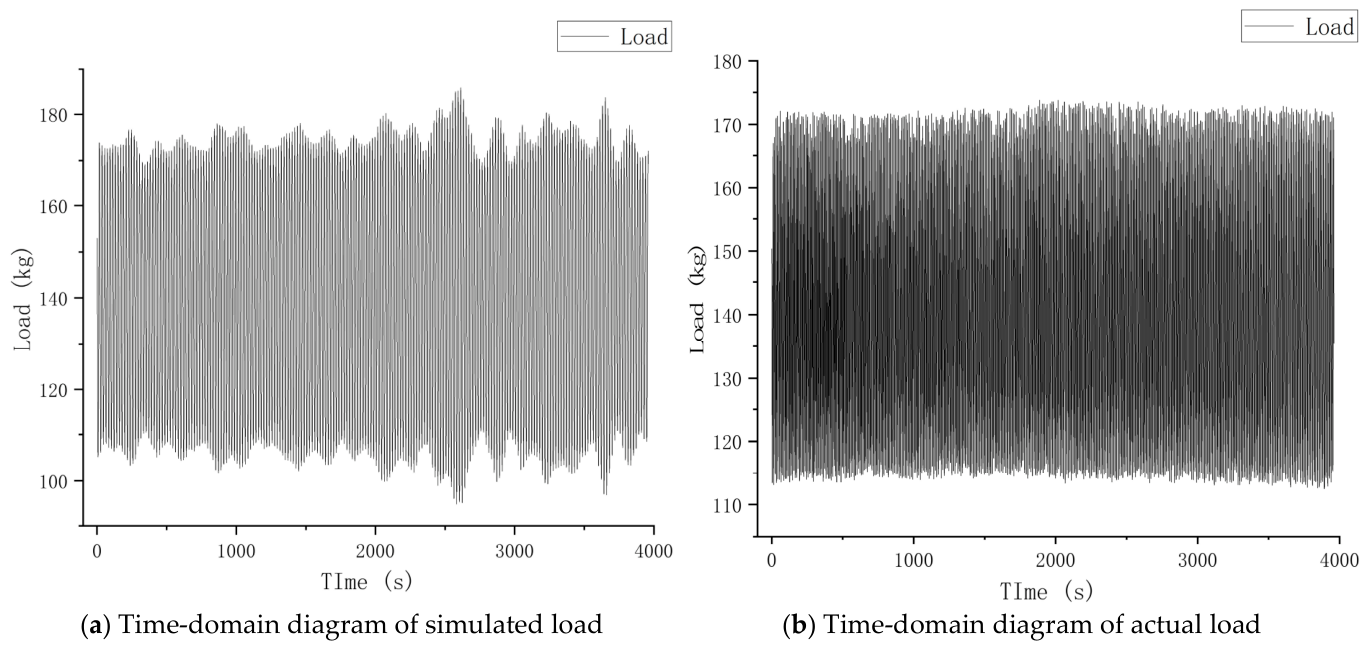
1. Introduction
As a critical component of a ship’s propulsion system, the shafting transmits power from the main engine to the propeller and conveys the generated thrust to the hull via the thrust bearing. The quality of shafting alignment is paramount to the operational reliability and safety of the vessel. While early alignment calculations often neglected dynamic factors, the trend towards higher speeds and heavier loads in modern ship design has rendered these factors increasingly significant [
1]. Variations in alignment conditions are most directly and quantitatively reflected in shafting loads. Consequently, predicting these loads enables the effective monitoring of alignment condition trends.
However, in actual operational scenarios, the direct measurement of propulsion shafting bearing loads is prohibitively difficult due to the harsh and complex working environment [
2]. Consequently, the development of non-contact, high-precision indirect measurement techniques has become an imperative.
Indirect measurement methods estimate target parameters by acquiring correlated variables and integrating them with mathematical or surrogate models. In the realm of shafting load identification, traditional approaches have primarily relied on indicators such as oil film pressure, bearing elevation, and bearing strain [
3], and also use torque obtained from torquemeters to estimate bearing loads. Yet, constrained by measurement accessibility and limited accuracy [
4], research focus has progressively shifted towards load identification utilizing shafting vibration responses. Methods based on vibration responses are predominantly categorized into frequency-domain and time-domain approaches [
4,
5]. Time-domain methods reconstruct loads by solving differential equations step-by-step using temporal vibration data, whereas frequency-domain methods achieve load inversion by analyzing the spectral characteristics of the response signals.
In the realm of dynamic load identification, time-domain and frequency-domain methods offer distinct advantages [
6]. Time-domain approaches are particularly effective for identifying impact and transient loads. For instance, the algorithm proposed by Jiang et al. [
7], which leverages the Newmark-β method, and the time-state space model constructed by Abdulkhaled Zareei et al. [
8] both demonstrate that time-domain methods exhibit superior accuracy and robustness for load identification.
Conversely, the efficacy of frequency-domain methods is often constrained by signal duration and is susceptible to significant errors when the Frequency Response Function (FRF) matrix is ill-conditioned [
7,
8,
9,
10]. To mitigate these limitations, researchers have introduced various optimizations. Notably, Jiang et al. [
11] developed a novel dynamic calibration technique integrating orthogonal polynomials with Gauss–Legendre integration, enabling the accurate reconstruction of distributed loads in the frequency domain. Similarly, Rahmi Can Ugras et al. [
12] refined a frequency-domain algorithm to facilitate real-time fatigue assessment of mechanical components, achieving a substantial improvement in computational efficiency without compromising accuracy. Zakaria Bitro et al. [
13] used a gradient-based optimization algorithm to simultaneously identify structural parameters and dynamic loads in the time domain using limited response measurements. However, this method can only be applied in a reduced-order modal space and requires a certain computational capability for large-scale finite element models. Du et al. [
14] used FRF and vibration differential equations to predict the quality of large-scale structures, achieving a prediction error within 5%, which is conceptually similar to the load identification method employed in this paper. Qin Y et al. [
15] established a frequency domain identification model and used genetic algorithms to identify dynamic loads on components. In conclusion, while time-domain methods excel in capturing transient load characteristics, frequency-domain methods remain superior for the identification of periodic or steady-state loads.
Both frequency-domain and time-domain methods have not only achieved notable success in shafting load identification [
7,
8,
11,
12,
13,
14,
15,
16,
17] but have also been increasingly applied to load prediction tasks [
18,
19,
20]. Traditional approaches—such as solving governing equations or generating load spectra—have enabled early efforts in load forecasting. However, in the context of rapid advances in computing technology, these conventional techniques now face significant limitations.
On one hand, physics-based methods typically require precise knowledge of system parameters and boundary conditions, which are often difficult to acquire accurately in the complex and dynamic operating environments of marine vessels. On the other hand, when confronted with load signals exhibiting strong nonlinearities, traditional methods suffer from limited identification accuracy and poor predictive adaptability [
21]. Moreover, they generally demand extensive domain expertise and involve intricate mathematical derivations, leading to high computational overhead and hindering real-time monitoring capabilities.
The recent proliferation of sensor technologies and enhanced data acquisition systems has led to the accumulation of vast amounts of operational shafting data in engineering practice, opening new avenues for load identification and prediction. Data-driven methods—leveraging their powerful nonlinear mapping and self-learning capabilities—have emerged as a paradigm shift in this field [
22,
23,
24,
25], offering effective alternatives to overcome challenges that are intractable for conventional approaches. Deep learning, in particular, plays a pivotal role in constructing robust data-driven models [
8,
17]. For example, Boqiang Xu et al. [
26] developed a Bayesian-optimized deep learning framework for real-time vehicle load identification. Gui-jie Shi et al. [
9] proposed a data-driven regression approach that significantly improves the effectiveness and robustness of impact load reconstruction, providing novel insights into indirectly measurable loads. Jianwei Wang et al. [
27] successfully identified ice-induced loads using a radial basis function (RBF) neural network integrated with an ice strain inversion method—even under sensor failure conditions—thereby addressing critical gaps in ice load statistical databases. Similarly, Ye Li et al. [
28] employed a Transformer-based neural network to compile rolling bearing load spectra, markedly enhancing the accuracy of load trend prediction. A hybrid approach integrating temporal neural networks and feature prioritization techniques is proposed by Xuyang Wang et al. [
29] for power load forecasting. By synergizing sequence modeling with adaptive weighting mechanisms, the method selectively enhances influential features to improve prediction precision and overall forecasting efficacy. Li Yang et al. [
30] employed the PINN method by embedding ballistic boundary constraints and physical model constraints into the neural network. Simulation results showed a 22.83% improvement in hit accuracy compared to the traditional LSTM method. Meng Wang et al. [
31] proposed a hybrid model combining LSTM and PINN for multiaxial fatigue life prediction. The results indicate that LSTM can effectively extract information and maintain sufficient prediction accuracy, while PINN enhances the neural network’s capability to handle nonlinearity. However, using the PINN model complicates the learning process, increases computational demands, and may lead to overfitting.
Collectively, deep learning algorithms constitute a cornerstone of modern data-driven strategies for tackling highly nonlinear problems in load identification.
While time-domain and frequency-domain methods have been extensively applied to shafting load identification, they are often hindered by cumbersome measurement procedures, prohibitive computational costs, and inherent limitations in simultaneously characterizing both transient and steady-state loads. Conversely, although data-driven surrogate models offer superior efficiency in data utilization and prediction, their extrapolation capabilities are severely constrained by the absence of physical constraints. Moreover, integrating temporal and spectral methodologies with optimization methods and deep learning algorithms signifies an emerging research direction, offering innovative perspectives for characterizing and forecasting shafting dynamics in this study. So, to address these challenges, this paper proposes a hybrid modeling framework for load identification and prediction. The proposed method introduces a ‘Digital-Physical’ weighting strategy during data preprocessing, establishes an interpretable architecture grounded in physical entities and finite element models (FEM), and leverages deep learning algorithms to synergistically learn from both measured and simulated datasets. This approach facilitates the robust indirect identification of shafting loads and enables accurate reconstruction of their time-domain histories.
2. Research Theory and Methodology
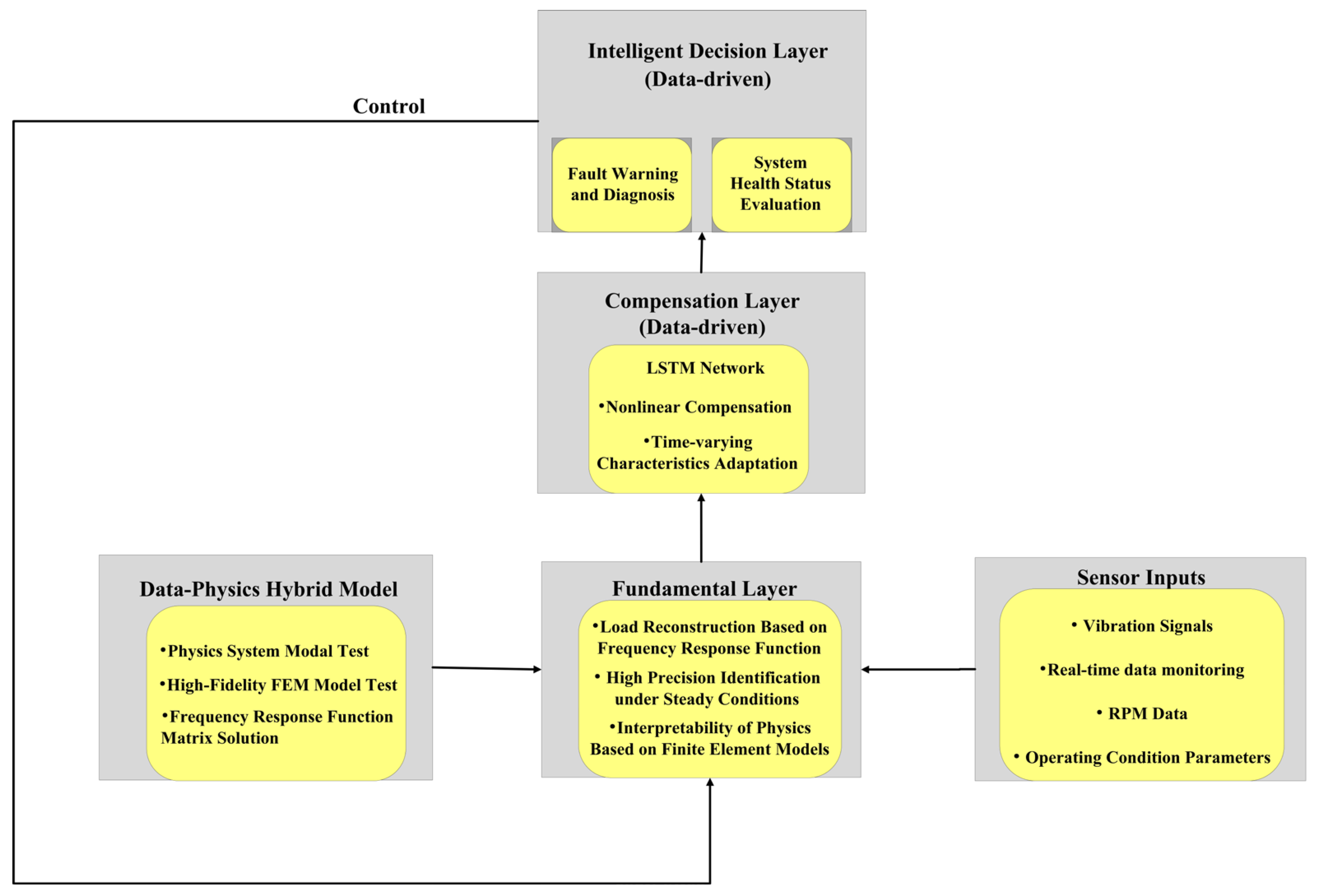
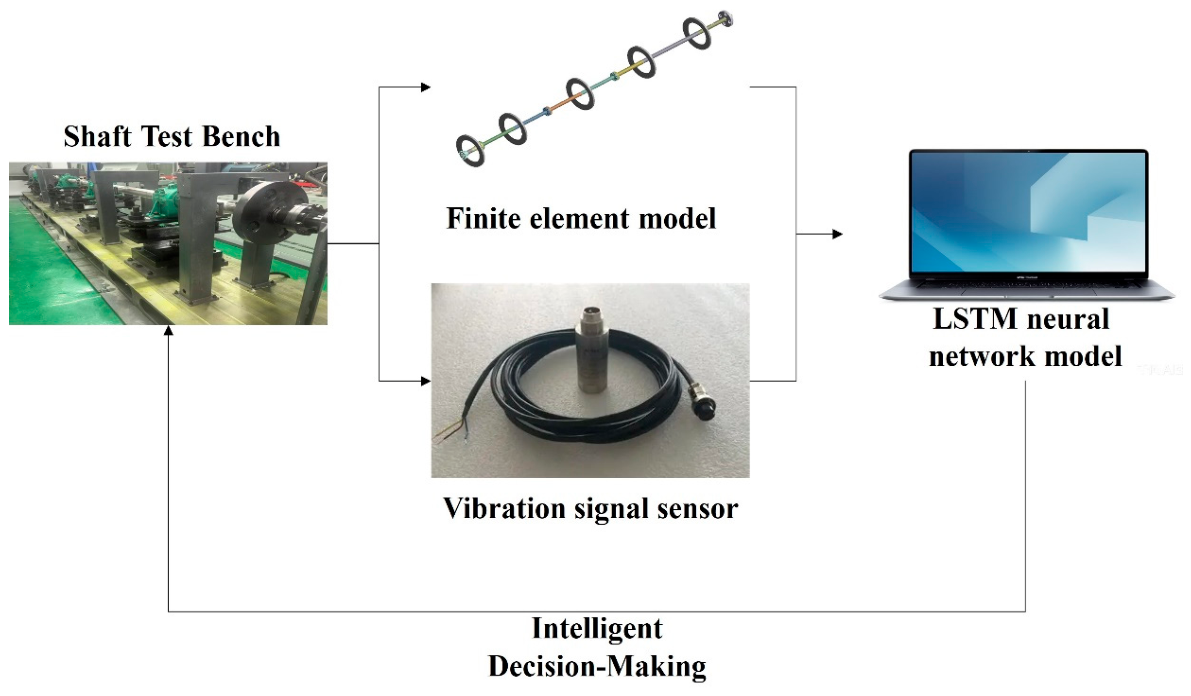
The proposed digital–physical hybrid model comprises three hierarchical layers: the physical layer, the data layer, and the decision layer. In the physical layer, a FEM is coupled with the physical entity to establish an interpretable framework for shafting load identification and prediction. The identification results derived from this coupling are subsequently fed into the data layer. Under steady-state operating conditions, shafting loads typically exhibit a characteristic pattern dominated by deterministic periodic components, superimposed with low-amplitude stochastic fluctuations and nonlinear harmonics. Leveraging this temporal behavior, the data layer employs an LSTM neural network, selected for its proficiency in modeling the strongly time-dependent dynamics of shafting loads. The LSTM is trained on a hybrid dataset comprising theoretical loads (derived from experimental Frequency Response Functions) and simulated loads (generated via simulated FRFs) to identify and predict bearing loads over specific time horizons. In the decision layer, decisions regarding the future state of the system are made based on the predicted load levels. A state decision library is constructed according to alignment criteria, the historical operating status of the shafting system, and engineering practice. According to engineering practice experience, using ±10% of the normal load range under the predicted operating condition as the threshold, the system state is assessed to determine its alignment status. The architecture of this framework is illustrated in
Figure 1.
Within the proposed framework for propulsion shafting load identification and prediction, load inverse identification serves as a cornerstone algorithm of the hybrid model. Consequently, the shafting loads are mathematically formulated as follows:
where
denotes the FRF matrix of the shafting system,
represents the vibration response spectrum vector,
corresponds to the unknown the bearing load spectrum vector, and ω is the angular frequency. This equation reveals that identifying the shafting loads requires a two-step process: first, acquiring the system’s FRF based on known vibration responses; second, performing a matrix inversion on the FRF. Consequently, the explicit expression for the shafting loads is derived as:
Two primary approaches exist for determining the FRF of the shafting system.
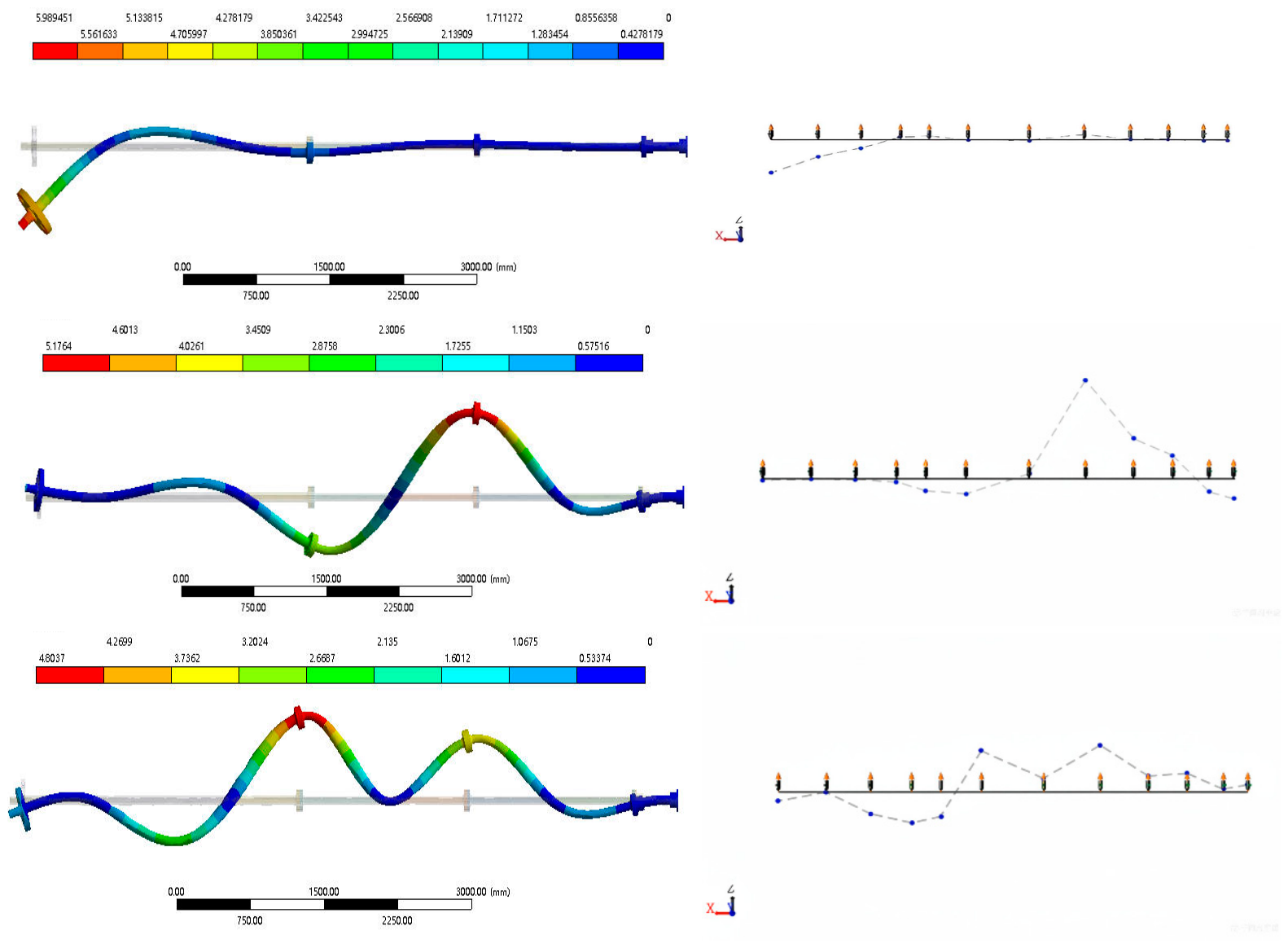
The first approach relies on the FEM. In this process, a parametric finite element model is initially constructed. Subsequently, modal analysis is conducted to extract the system’s natural frequencies and mode shapes. Following this, a harmonic response analysis is performed over a specified frequency range to compute the FRF.
Experimental identification of the shafting system FRF:
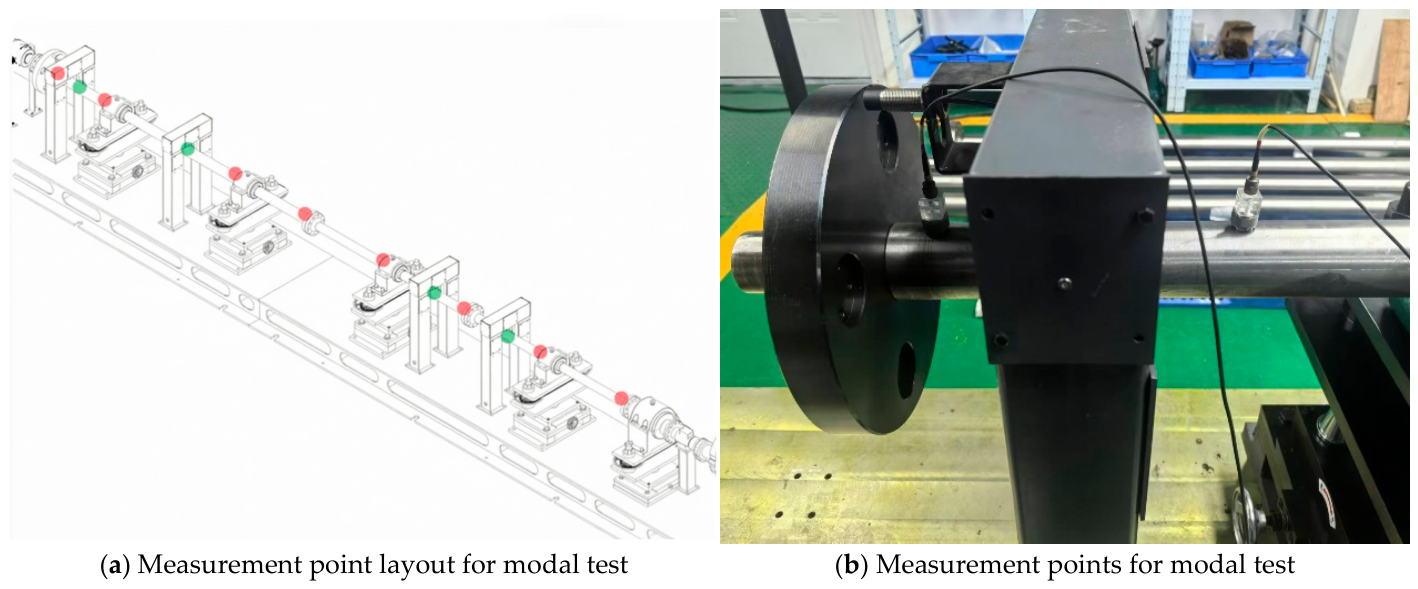
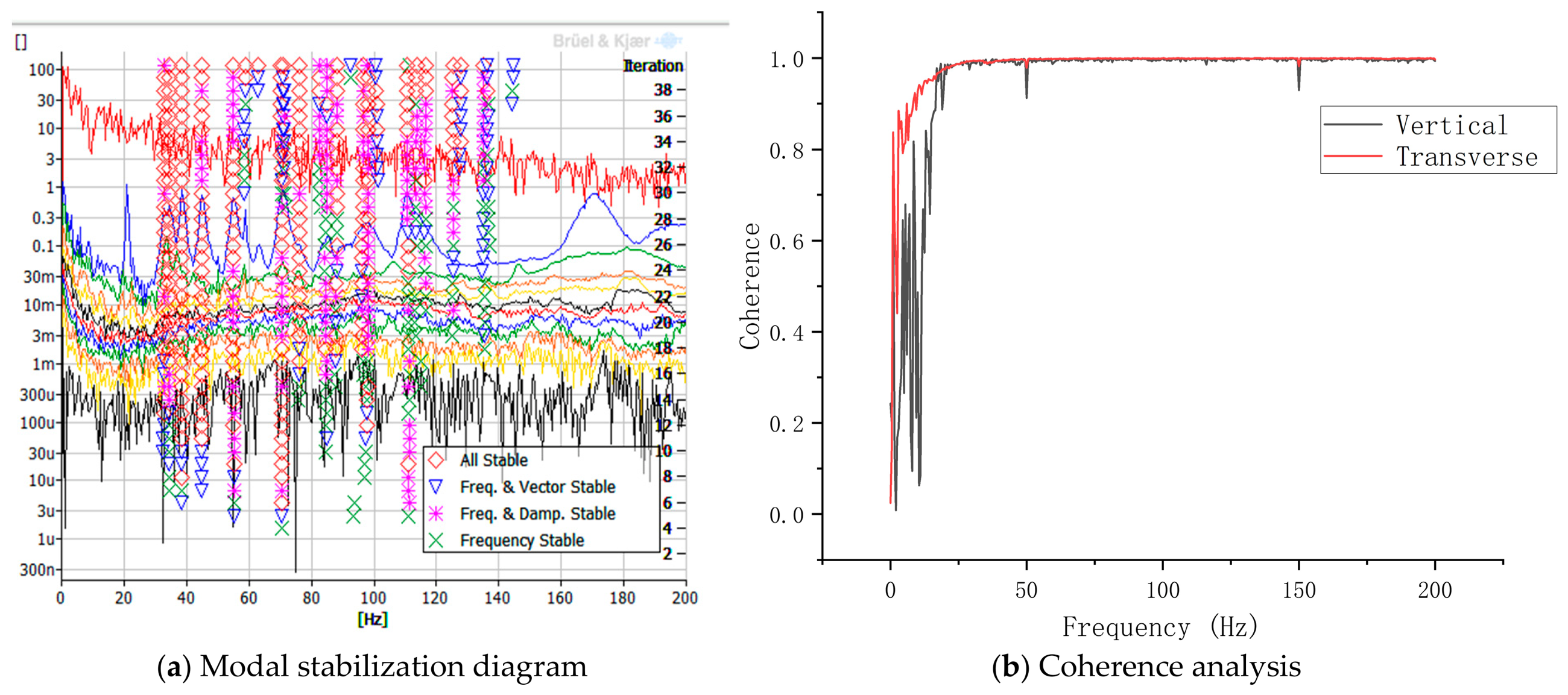
This approach involves conducting modal testing on the physical prototype. Excitation forces are applied to multiple locations along the shafting using an instrumented impact hammer, while vibration response signals are simultaneously acquired. The FRF matrix is then derived by estimating the ratio between the input-output cross-power spectral density (CPSD) and the input auto-power spectral density (APSD).
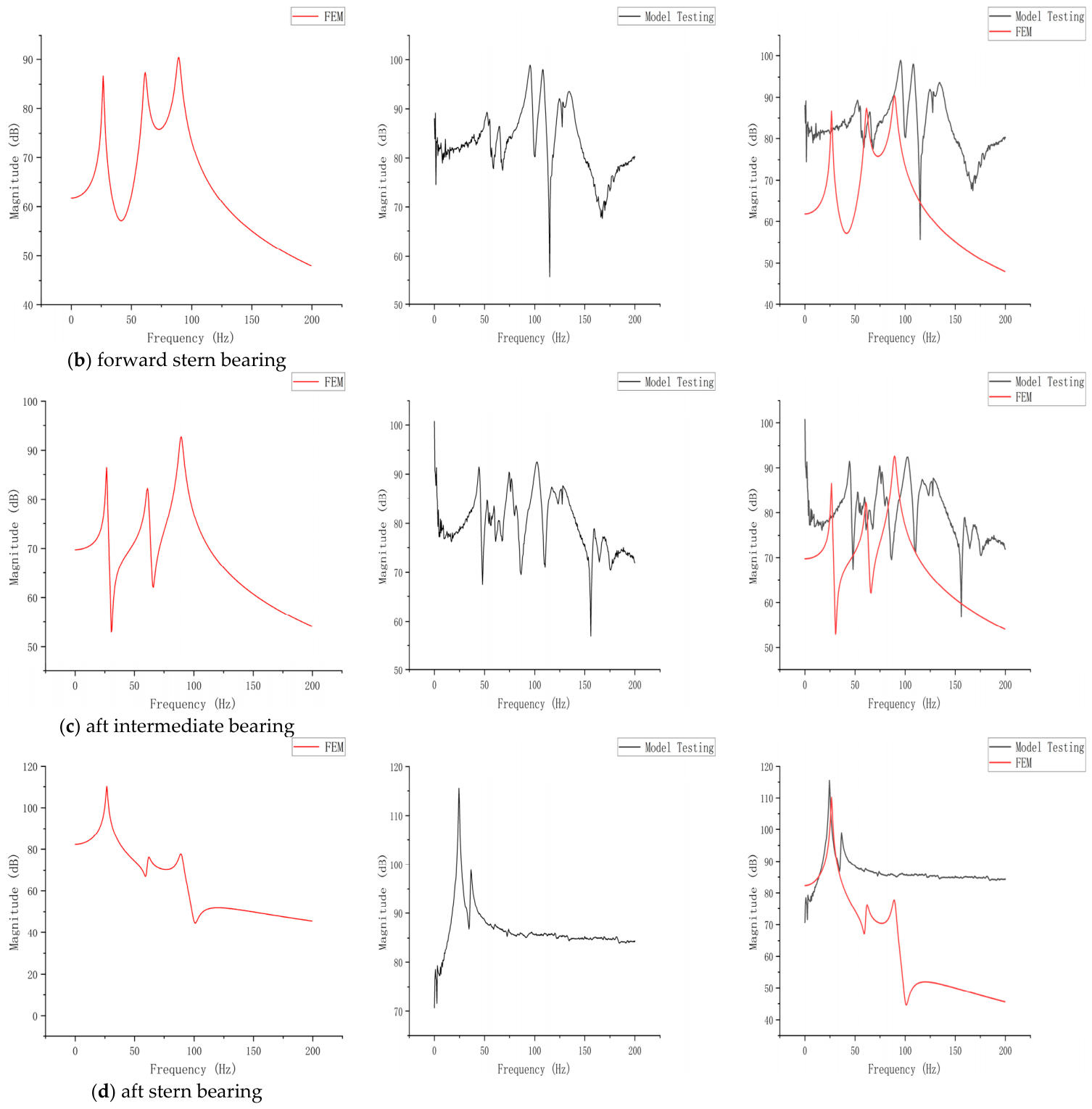
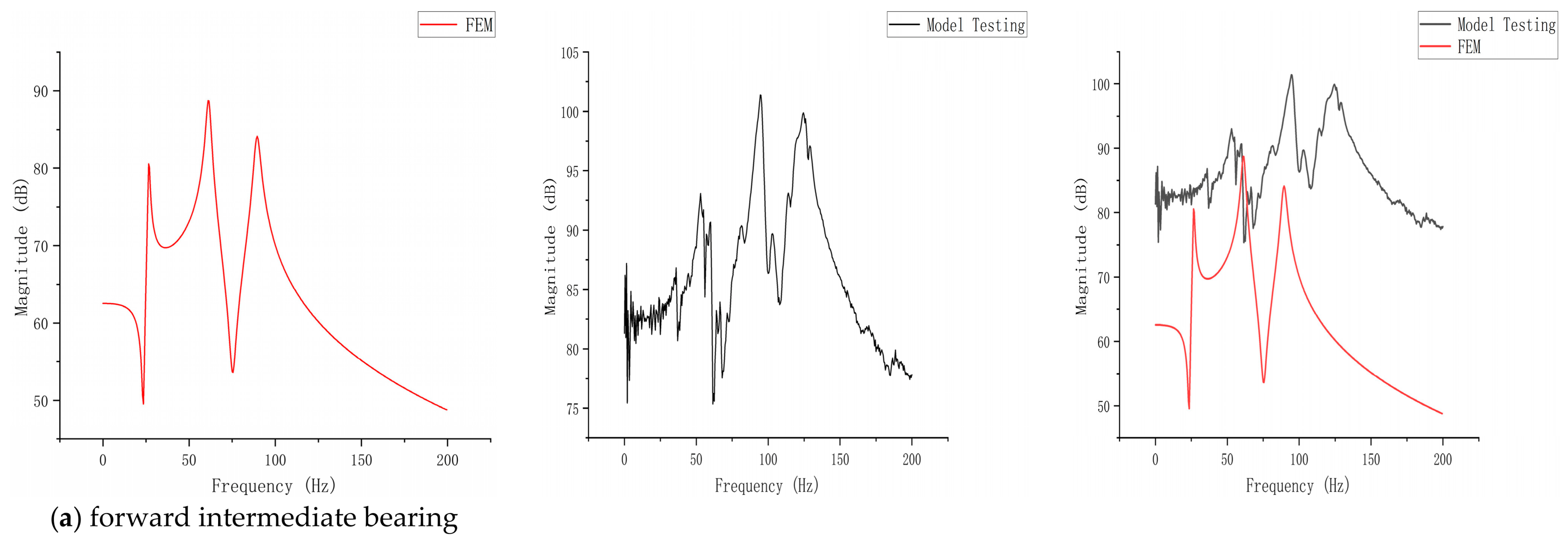
The FEM is calibrated by optimizing the parameters and spatial configurations of the bearing units, leveraging the shafting FRFs acquired from modal experiments. This optimization minimizes the discrepancy between the simulated and experimentally measured FRFs, thereby significantly enhancing the fidelity of the numerical model.
During the reconstruction of the FRF, an optimized FRF matrix is obtained, necessitating the inversion of
. However, the inherent ill-conditioning of this matrix, characterized by a large condition number, renders the inversion highly sensitive to measurement noise. Even minor perturbations can be significantly amplified, leading to numerically unstable and physically implausible solutions. To mitigate this ill-posedness, this study employs Tikhonov regularization [
32] to constrain the solution of Equation (2). The regularized problem is formulated as follows:
Therefore, based on Equation (4), the analytical solution to this optimization problem can be described as:
In this formulation,
denotes the regularization parameter, determined via the Generalized Cross-Validation (GCV) method [
33].
represents the identity matrix.
Compared to selecting the λ value empirically, GCV is a data-driven approach for selecting regularization parameters. Its benefits stem from its data-driven adaptivity and asymptotic optimality. By minimizing a proxy function of the prediction error, GCV automatically balances data fitting and the solution’s regularization strength without requiring noise variance estimation. Consequently, it has been widely applied to ill-posed problems such as frequency response function inversion and load reconstruction. However, GCV also has limitations. Under high noise levels or small sample sizes, the λ selected by GCV may deviate from the optimal value. For this study, given the large dataset available, the λ obtained via the data-driven GCV method is significantly superior to a fixed λ determined by empirical judgment.
Subsequently, the time-domain history of the shafting load is reconstructed by applying the Discrete Inverse Fourier Transform (DIFT) to the analytical solution, yielding:
In the equation, represents the discrete time-domain sequence of the shafting load, denotes the index of the discrete frequency, and is the sequence length.
High-fidelity modeling is critical for accurate shafting load identification. To address inevitable discrepancies between analytical predictions and actual loads—caused by model simplifications, operational variations, and unmodeled dynamics—an LSTM network is integrated as a residual compensator. Whether derived from FE-based FRFs or modal experiments, physical models often yield errors due to these uncertainties. By leveraging historical data, the LSTM captures complex temporal dependencies within the residuals [
34], effectively adapting to nonlinear time-varying factors such as sensor placement, bearing wear, and material fatigue. This hybrid approach enhances the physical model’s robustness against real-world complexities.
Unlike the Transformer, Bayesian optimization, and PINN, the LSTM model demonstrates superior generalization capability with limited data. In contrast, the Transformer requires larger datasets to prevent overfitting due to its self-attention mechanism, while Bayesian optimization is essentially infeasible with the Gaussian process for the dataset in this paper. Furthermore, LSTM exhibits linear computational complexity (), whereas the Transformer and Bayesian neural networks entail quadratic () and cubic () complexities, respectively, rendering LSTM significantly more efficient. Regarding physical interpretability, LSTM allows for validation via residual analysis, while PINN necessitates embedding physical constraints into the loss function. Conversely, Transformer and Bayesian methods struggle to directly correlate with the dynamic mechanisms of the shafting system. For this study’s objective, the shafting system’s dynamic equations are mathematically complex and difficult to embed into the loss function; moreover, employing simplified physical equations in PINN could induce model distortion. Consequently, compared to the aforementioned methods, LSTM offers lower computational costs under data constraints and is therefore more suitable for this study.
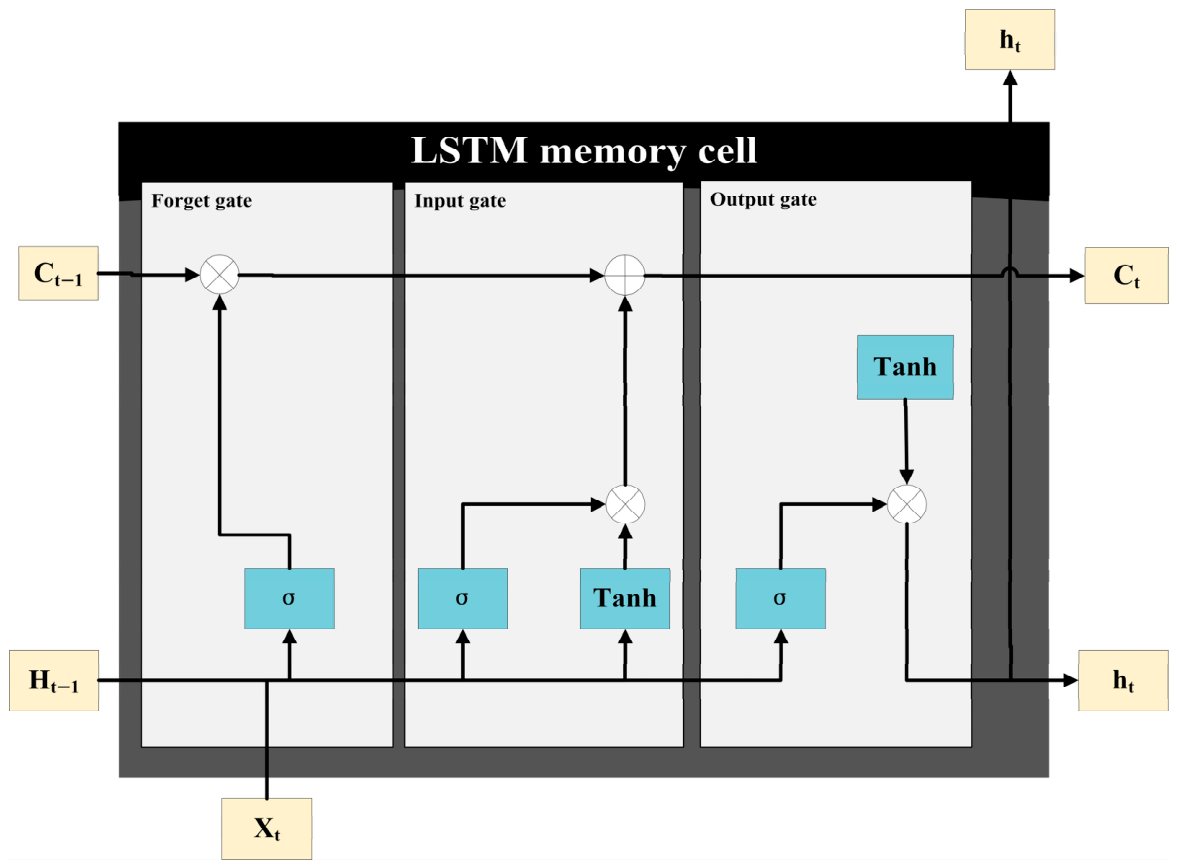
Following a data-driven framework, the LSTM training dataset was constructed by preprocessing measured signals and temporally aligning them with digital model outputs. This dataset contains an input feature matrix and a corresponding target vector. As illustrated in
Figure 2, the LSTM unit leverages internal memory states to capture temporal dependencies. Information flow is regulated by three gating mechanisms—input (includes six dimensions: rotational speed, torque and four fused bearing loads), forget, and output gates—which selectively update or discard cell states. The mathematical formulation of these gates and the state updates is given by:
In Equation, the forget gate performs the initial filtering of historical information. Governed by the sigmoid activation function , which maps inputs to the range [0, 1], generates a vector of forgetting coefficients dimensionally consistent with the previous cell state . Values approaching 1 signify the complete preservation of historical data in that dimension, whereas values near 0 indicate total discarding. Similarly, the input gate regulates the integration of new information via a sigmoid layer. Concurrently, a candidate cell state is derived from the current input and the preceding hidden state . The tanh activation function constrains within [−1, 1] to ensure numerical stability. As defined in Equation (10), the updated cell state synthesizes retained historical memory and new candidate information, serving as the core long-term memory repository of the LSTM. Finally, the output gate filters the updated cell state to determine the hidden state , which propagates relevant features to the subsequent time step or output layer.
Conventional weighted averaging and static selection methods often fail to capture the nonlinear dynamics of shafting systems. Furthermore, in typical industrial scenarios, installation constraints preclude direct sensor placement on bearings, rendering true load monitoring impossible. Uniquely, this study leverages an experimental setup capable of direct bearing load measurement, providing rare ground-truth supervisory signals. Capitalizing on the linear correlation between shaft segment and bearing loads, we propose an LSTM-based prediction framework. Considering that in actual ship shafting, horizontal displacements and vibrations are challenging to measure, precluding acquisition of true components for supervised training, and for the low-speed shafting studied herein, vertical loads dominate, the strategy simplifies horizontal loads and exclusively predicts vertical loads. To construct high-fidelity input features in the absence of direct shaft instrumentation, we devise an unsupervised adaptive weighting strategy. This approach quantifies the divergence between theoretical loads and FE loads , mapping it via a parameterized Sigmoid function into dynamic fusion weights. The strategy assigns equal weights when results converge but prioritizes the noise-robust simulation model during significant divergence, yielding shaft segment estimates that closely approximate physical reality. These refined estimates serve as inputs to the LSTM network, which is trained against the experimentally measured bearing loads to achieve robust prediction performance.
The strategy can be described as follow:
Here,
quantifies the divergence, and
is an infinitesimal constant ensuring numerical stability. Guided by systematic error analysis and practical constraints, the weight assignment protocol operates in two regimes: Since
represents the error between
and
, the selection of its critical threshold primarily accounts for the typical engineering error tolerance (5–10%). We determined a value of 0.1 as the critical threshold. So, when
, weights for both the simulation
and theoretical calculation
are equally distributed 0.5. Conversely, when significant divergence occurs, the fusion scheme shifts dominance to the FE simulation. This decision leverages the FE model’s noise-free environment and superior handling of nonlinear dynamics compared to noisy experimental conditions. Ultimately, Equation (14) computes the shaft segment load
, achieving adaptive extrapolation through this intelligent weight allocation.
The model inputs comprise optimized load estimates synchronized with multidimensional operational states at each time step, including bearing rotational speed, operating regimes, and shaft centerline orbits. Ground-truth bearing loads , acquired via direct measurement, serve as the target labels for supervised training. Prior to model construction, all input features and target variables undergo dimension-wise standardization to ensure numerical consistency and convergence.
Subsequently, an LSTM network is established to learn the nonlinear mapping from these fused inputs to the dynamic bearing loads. Leveraging the measured loads as supervisory signals, the trained model effectively predicts bearing dynamics under diverse operating conditions. By synergizing physics-informed calculations with data-driven learning, this hybrid framework offers a robust tool for comprehensive shafting load analysis and condition monitoring.
This strategy not only enhances predictive accuracy but also bolsters model credibility via a physics-informed data fusion mechanism. The resulting framework is characterized by interpretability, robustness, and adaptability, ensuring its viability for practical engineering applications. The schematic of this approach is illustrated in
Figure 3.
4. Results Analysis and Discussion
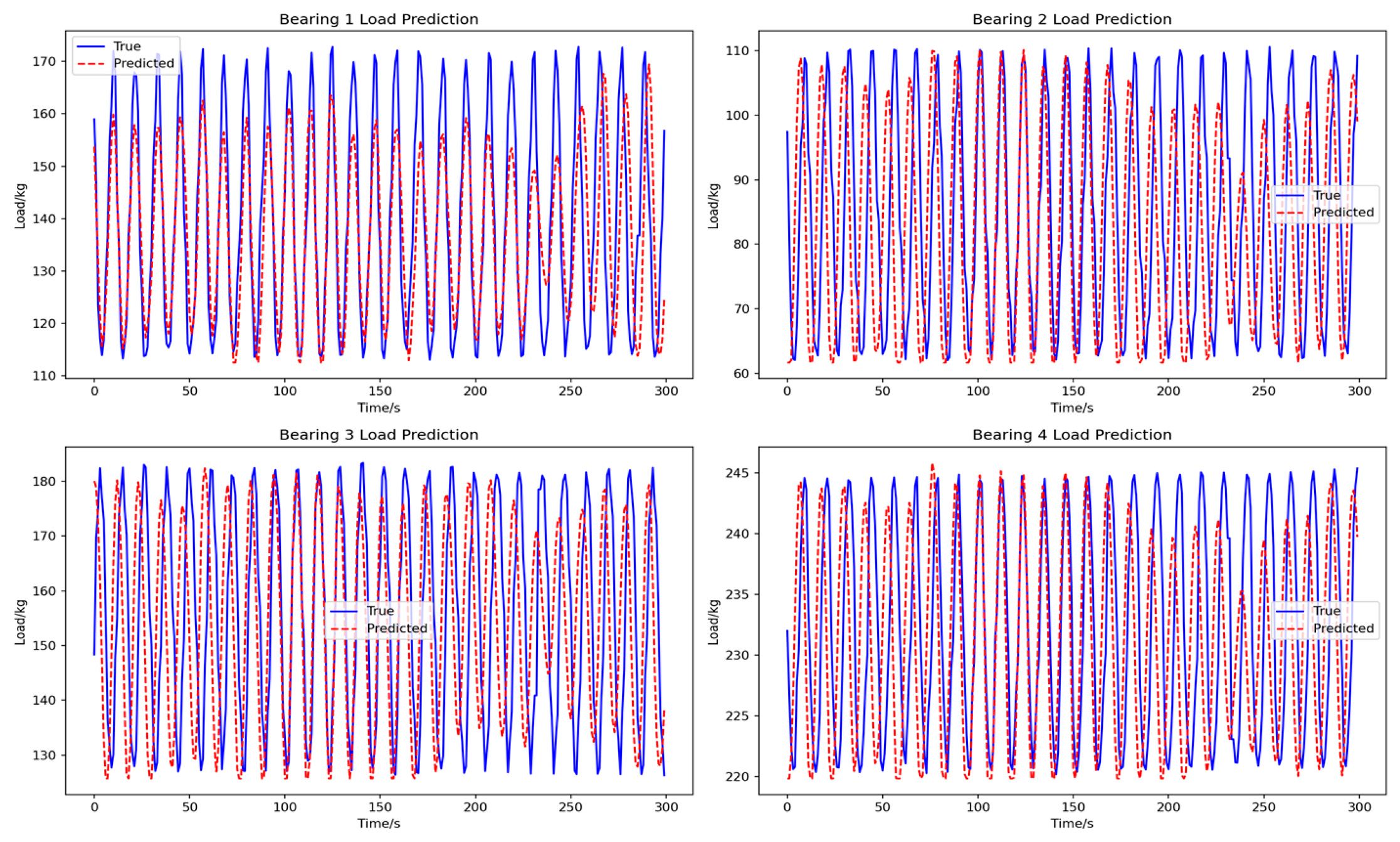
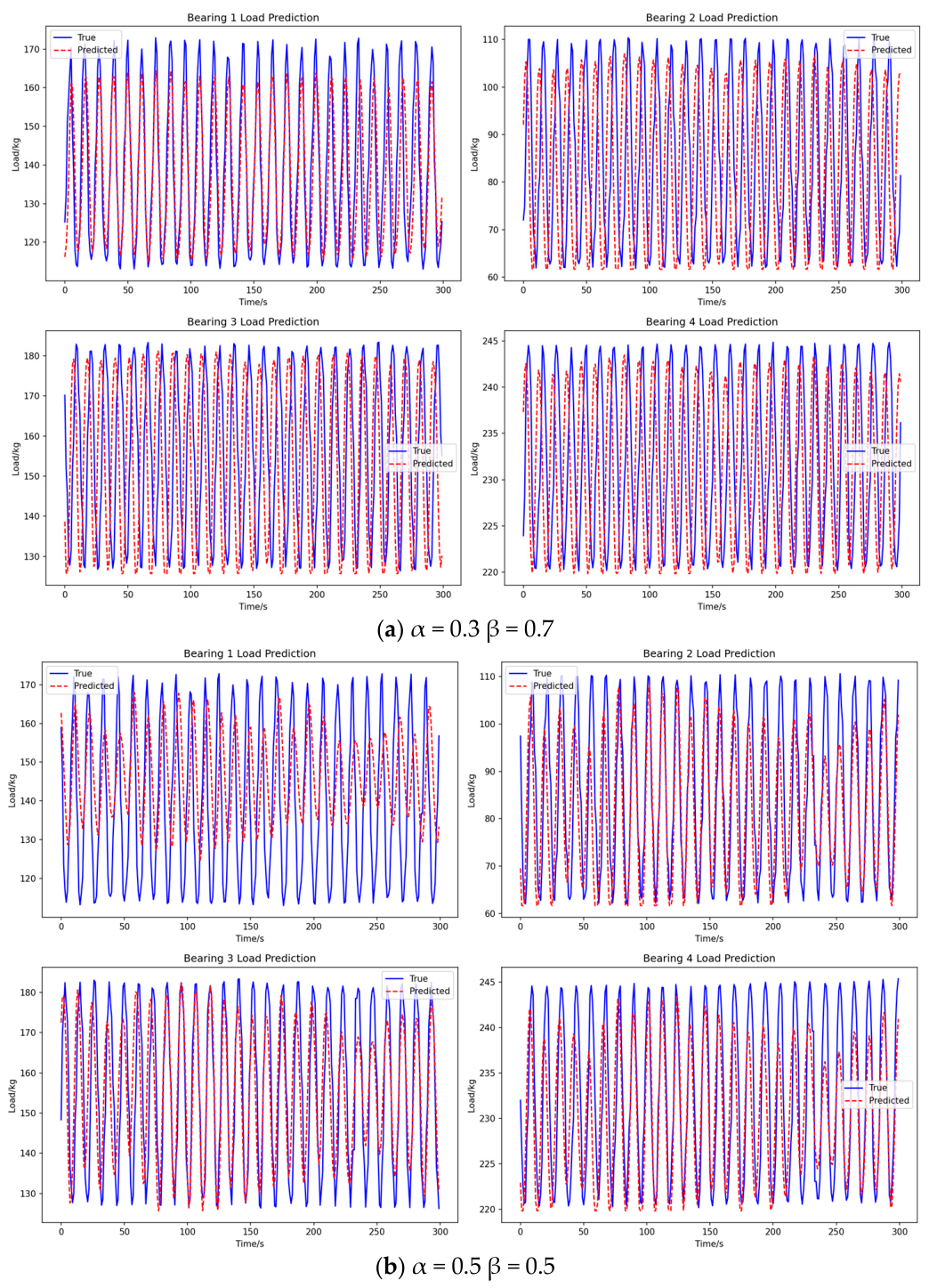
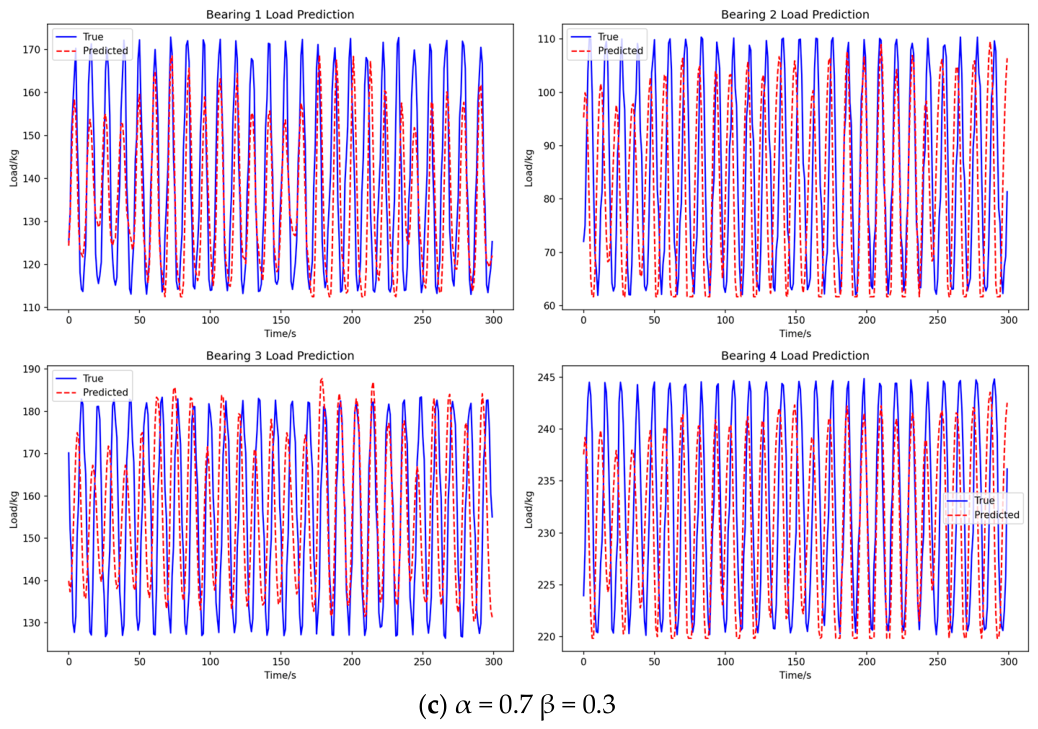
As shown in
Figure 12,
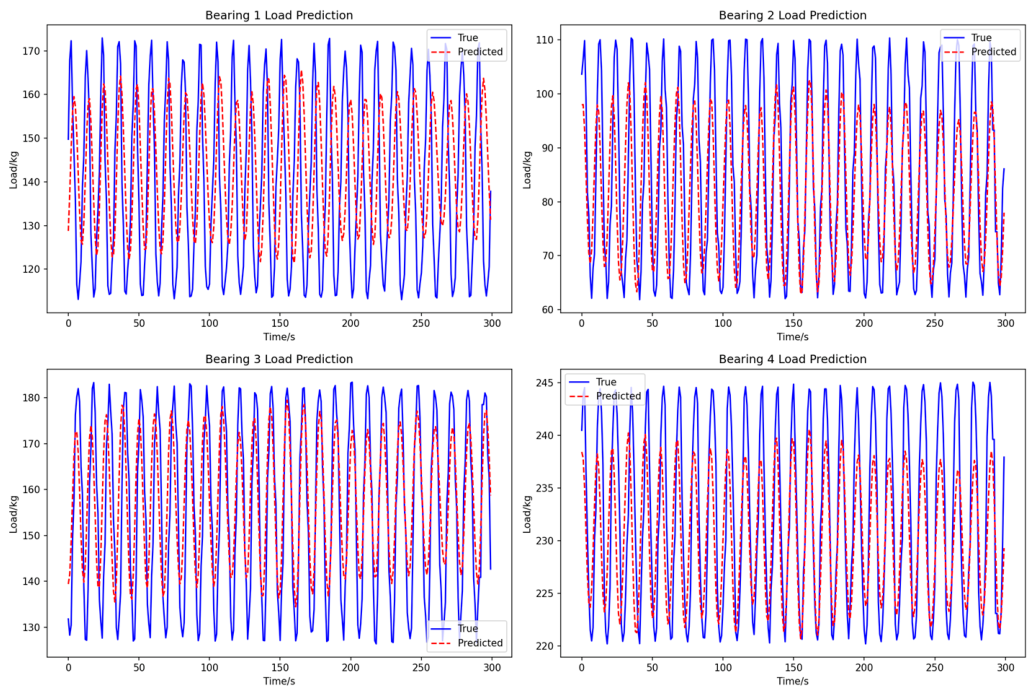
Figure 13 and
Figure 14, the adaptively weighted digital-physical hybrid model proposed in this study performs well under the tested operating conditions. The evaluation metrics of the model under various conditions are presented in
Table 3.
This study proposes a digital–physical hybrid model leveraging a fused dataset to predict shafting load.
Figure 12a–c depict varying characteristics: (a) exhibits notable phase deviation, (b) demonstrates precise temporal alignment and amplitude fidelity, while (c) shows a decline in both temporal and amplitude accuracy.
Figure 13 and
Figure 14 display contrasting trends—13 features high amplitude accuracy but suboptimal synchronization, whereas 14 achieves temporal precision yet lags in amplitude correspondence. Qualitative results (
Figure 12,
Figure 13 and
Figure 14) reveal that the physics-only model suffers from significant temporal misalignment, whereas the simulation-only model is limited by fidelity constraints, yielding inaccurate load magnitudes. In contrast, the proposed hybrid approach effectively balances these trade-offs, enhancing both temporal synchronization and magnitude accuracy. Using 4000 s steady-state shaft load data as the training set, optimal performance occurs at α = 0.5 (divergence < 0.1), as indicated by superior temporal alignment and amplitude fidelity. This is validated by
Table 3. Varying α from 0 to 1 yields underperforming to optimal to underperforming trends, indicating that hybrid modeling outperforms pure simulation or physical approaches for load prediction.
Quantitative analysis (
Table 3) confirms that all three weighting schemes outperform baseline models in terms of error metrics and global coefficient of determination (R
2). Specifically, the balanced configuration (α = 0.5, β = 0.5) minimizes average error and maximizes, albeit with marginally reduced stability. Conversely, the simulation-weighted scheme (α = 0.3, β = 0.7) offers near-optimal accuracy with superior robustness. Specifically,
Table 3 reports test-set predictive metrics (RMSE, MAE, MSE, R
2) for three dynamic weighting schemes and baselines (unweighted/theoretical-only/FEM-only loads). Evaluated via 10× repeated runs, mean values show the balanced (α = 0.5, β = 0.5) configuration reduces RMSE by 32–34.2%, MAE by 31.9–32.5%, and MSE by 44.4–48.4% vs. single-model baselines, achieving fastest computation and highest R
2 (>4% improvement). It offers optimal accuracy and speed, with slightly lower robustness than the theoretical-biased scheme (α = 0.3, β = 0.7). This validates the weighting strategy’s effectiveness and study method’s validity. However, for the front intermediate bearing (first-row data), the theoretical-only model outperforms due to insufficient FEM boundary modeling, hindering full expression of its physical characteristics in FEM.
These findings demonstrate the model’s capacity to capture nonlinear dynamics while maintaining stable inference latency and strong generalization. To further enhance predictive fidelity, future work should integrate boundary condition constraints directly into the loss function, thereby mitigating phase shifts and refining the physical consistency of the predictions.
5. Conclusions
This study addresses the critical challenge of direct load measurement and prediction in marine propulsion shafting. Utilizing a dedicated test rig, we propose a digital–physical hybrid model for load identification and forecasting. The method is rigorously validated through modal testing, FEA, and deep learning. Furthermore, a comparative analysis highlights the limitations of standalone physics-based and data-driven models, demonstrating the superior efficacy of the proposed hybrid approach.
Since the data inherently reflects the shafting system’s operating status, datasets from different sources exhibit varying parameters during model training. Consequently, the nonlinear characteristics learned by the model differ, resulting in performance variations.
It should be noted that this study aims to propose a novel approach for load identification and prediction. To focus on elucidating load transfer mechanisms and enhancing prediction accuracy through fusion strategies, and due to practical constraints, model training and validation were conducted exclusively using data from a single rotational speed (185 r/min) and standardized alignment conditions, which limits generalizability. Nevertheless, under these specified conditions, the proposed approach achieved the targeted results, validating its theoretical feasibility and conceptual applicability. Future research will extend this methodology to predict loads under dynamic operating conditions.
Experimental validation confirms it that the hybrid model yields predictions highly consistent with actual load measurements, demonstrating its capability to capture the nonlinear dynamics inherent in shafting systems. To benchmark its performance against single-source model, comparative analyses were conducted on physics-only and simulation-only models. Visual inspection reveals that the physics-only approach suffers from noise-induced temporal misalignment, whereas the simulation-only counterpart is constrained by limited fidelity, resulting in significant magnitude errors. By synergizing these approaches, the hybrid model achieves superior predictive accuracy. Quantitative metrics further corroborate this. The study’s results demonstrate that the hybrid model significantly outperforms single models, reducing the RMSE by 32–34.2%, MAE by 31.9–32.5%, and MSE by 44.4–48.4%, while boosting the coefficient of determination (R2) by over 4%. Although predictions for the front intermediate bearing exhibit limited improvement, the hybrid model’s accuracy and computational efficiency remain superior, thereby validating its effectiveness.
Notably, the front intermediate bearing exhibits relatively larger residuals. This discrepancy is attributed to its unique position as the primary interface between the motor and the shafting, subjecting it to distinct boundary conditions compared to the downstream bearings. Consequently, future modeling efforts should incorporate bearing-specific stiffness and damping coefficients. To determine bearing-specific support stiffness and damping coefficients, this problem is formulated as an optimization challenge. First, the stiffness and damping ranges are defined. Using deep learning methods, these coefficients are specified as inputs while maintaining fixed operating conditions. The predicted values are then adopted as outputs. The coefficients minimizing the output error are extracted, thereby yielding the optimized boundary parameters.
In summary, this study makes four contributions. First of all, a divergence-based weighted fusion approach is introduced, which adjusts fusion weights through discrepancies between theoretical shaft load calculations and finite element simulations—eliminating the reliance on actual shaft load supervision. Secondly, an LSTM-driven load prediction model is developed, integrating weighted loads and operating parameters as inputs to capture nonlinear temporal relationships between shaft segments and bearings. Thirdly, performance comparisons reveal that equal weighting optimizes accuracy and robustness when divergence falls below 0.1, offering practical insights for future studies. Fourth, the proposed digital–physical fusion plus temporal neural network method demonstrates generalizability, applicable to load estimation in unmeasurable mechanical systems (e.g., gearboxes, engine rods).
Collectively, these advancements establish a novel theoretical foundation for physics-informed data-driven load prediction in mechanical systems.
Future studies will explore three key directions: (1) examining how refined boundary conditions for individual bearings influence overall prediction accuracy; (2) assessing the method’s robustness under variable operating conditions; and (3) validating its generalizability across diverse scenarios.