Frequency-Domain Physics-Informed Neural Networks for Modeling and Parameter Inversion of Wave-Induced Seabed Response


Abstract
1. Introduction
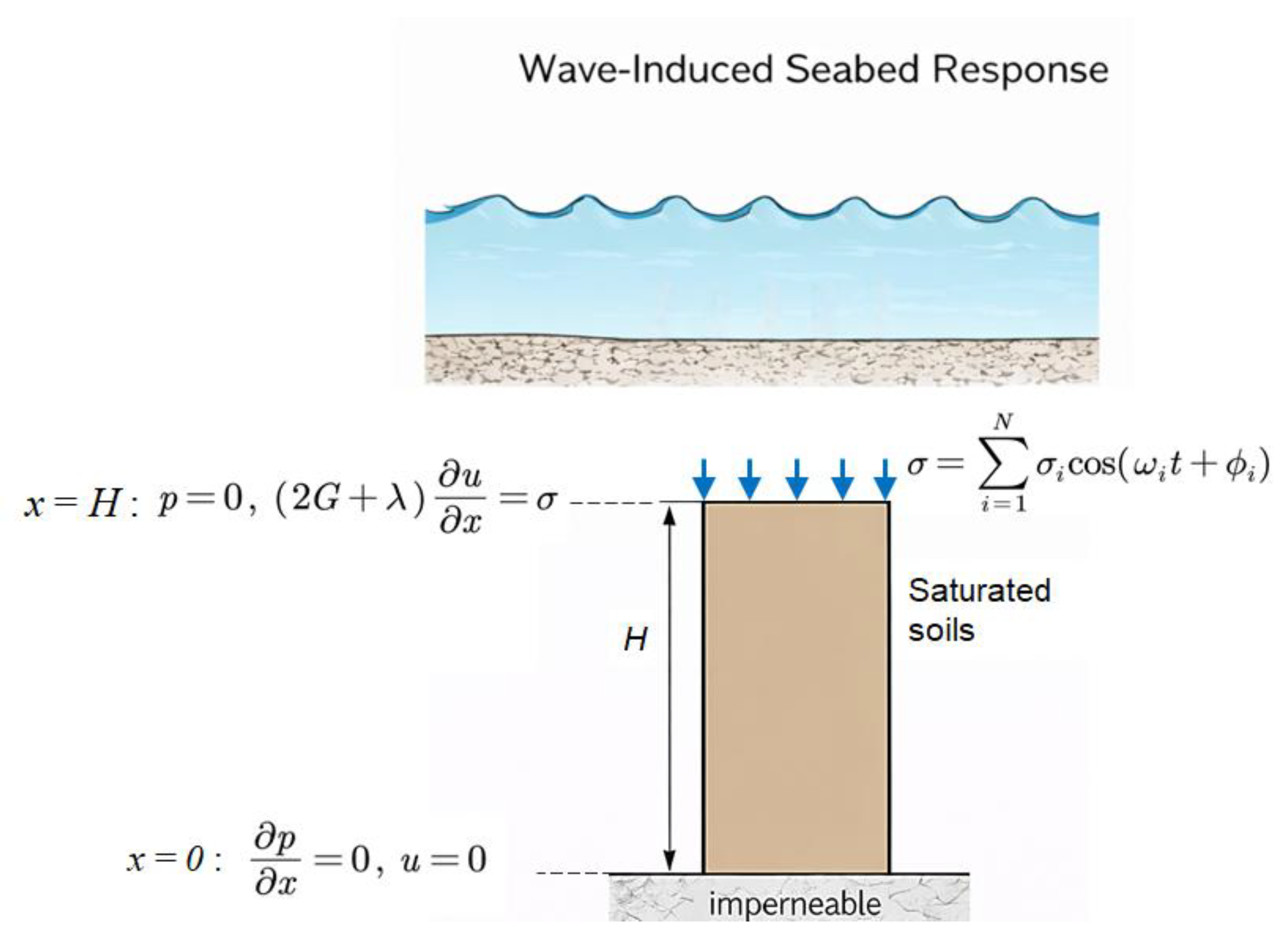
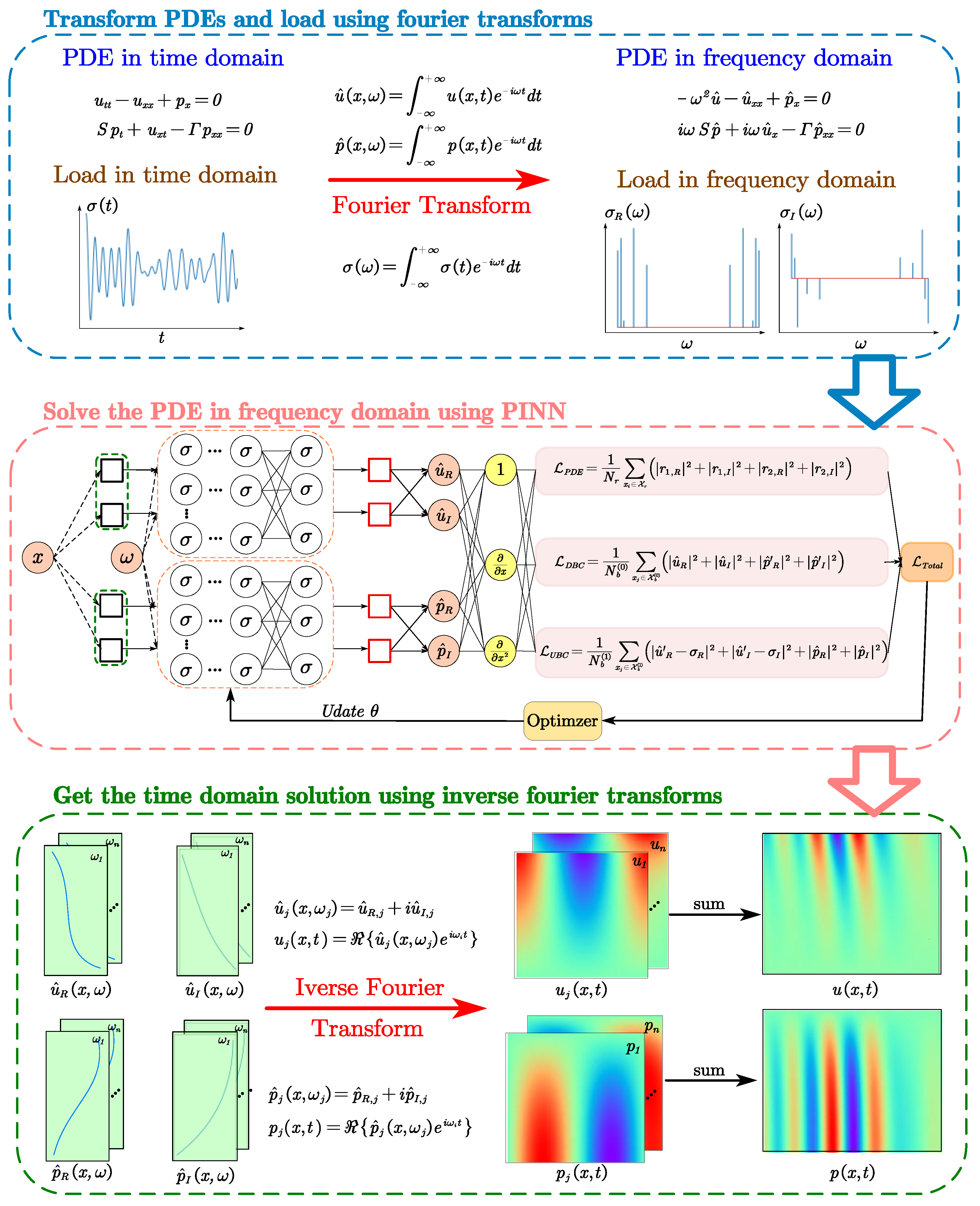
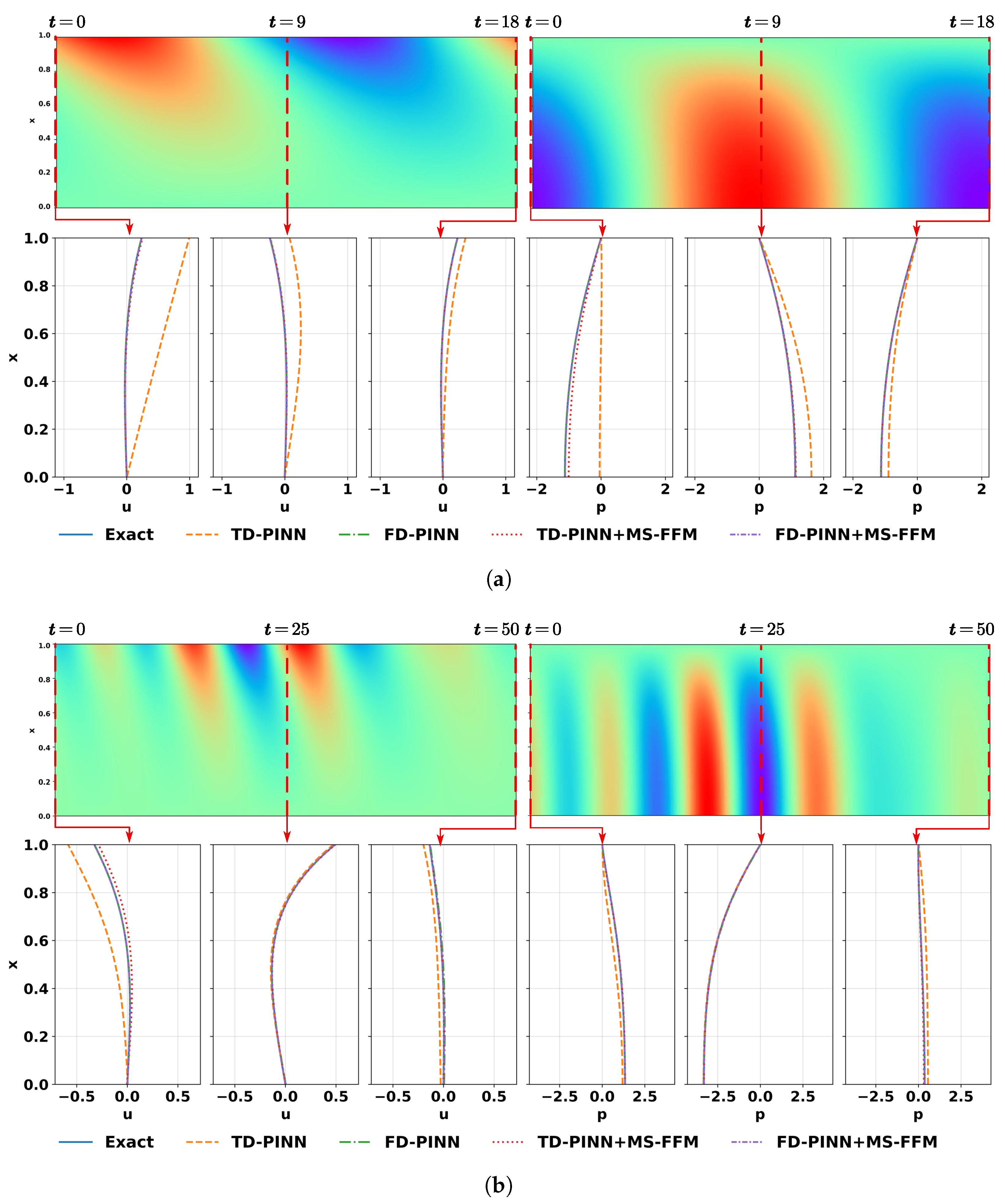
- Proposal of the FD-PINN framework: A frequency-domain physics-informed neural network is developed for high-fidelity modeling of saturated marine soils under dynamic loading, directly predicting complex-valued responses while being strictly constrained by physical laws.
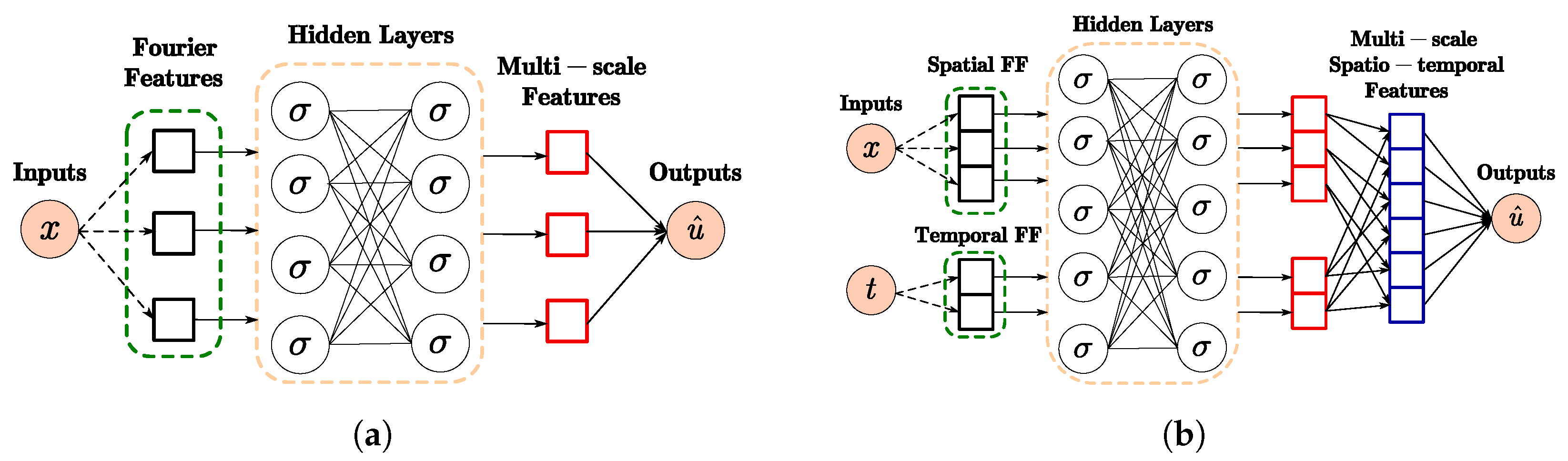
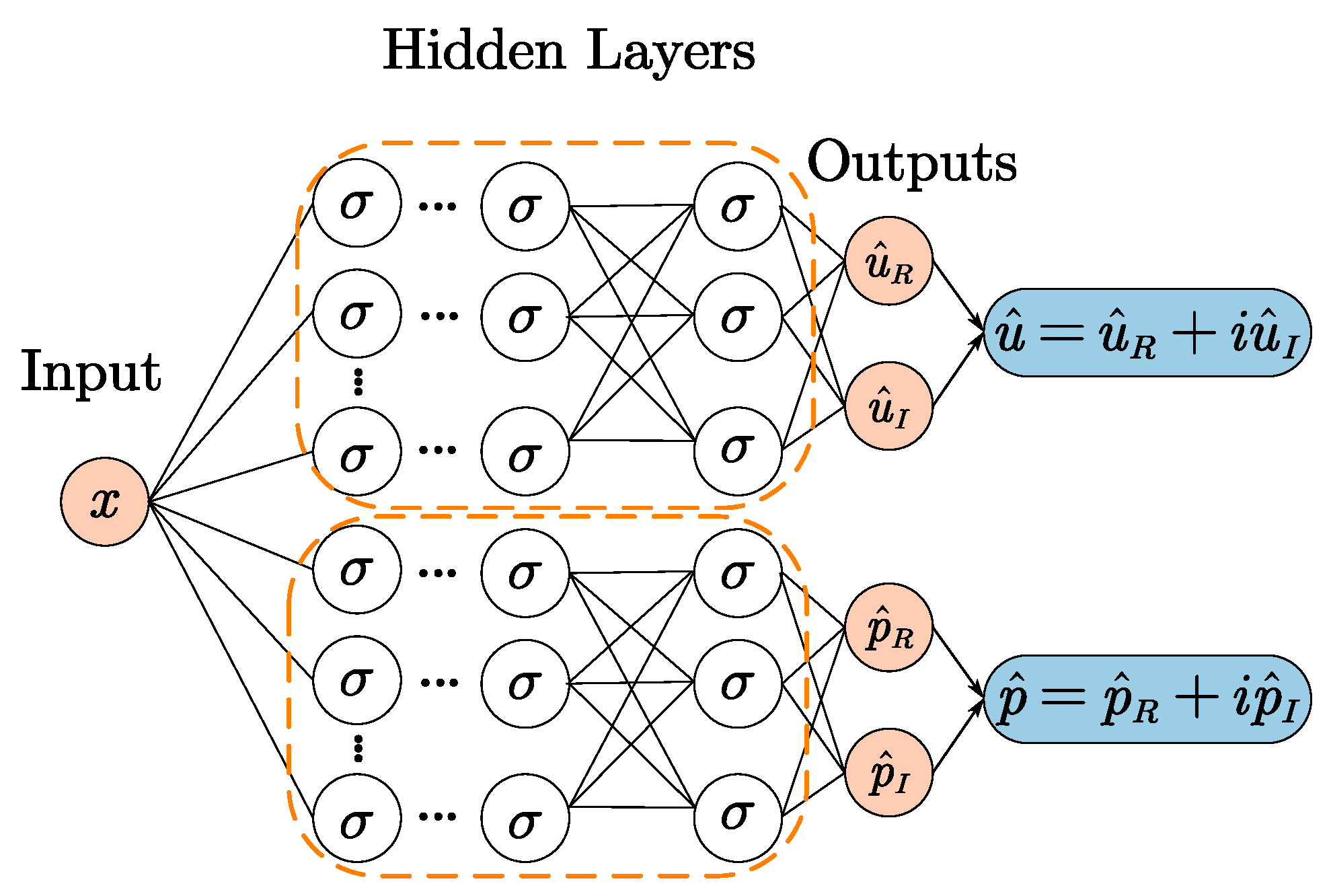
- Introduction of MS-FFM to mitigate spectral bias: Multiscale Fourier feature mappings are incorporated to effectively alleviate spectral bias, capturing high-frequency effects and boundary layers crucial for multi-frequency wave analysis.
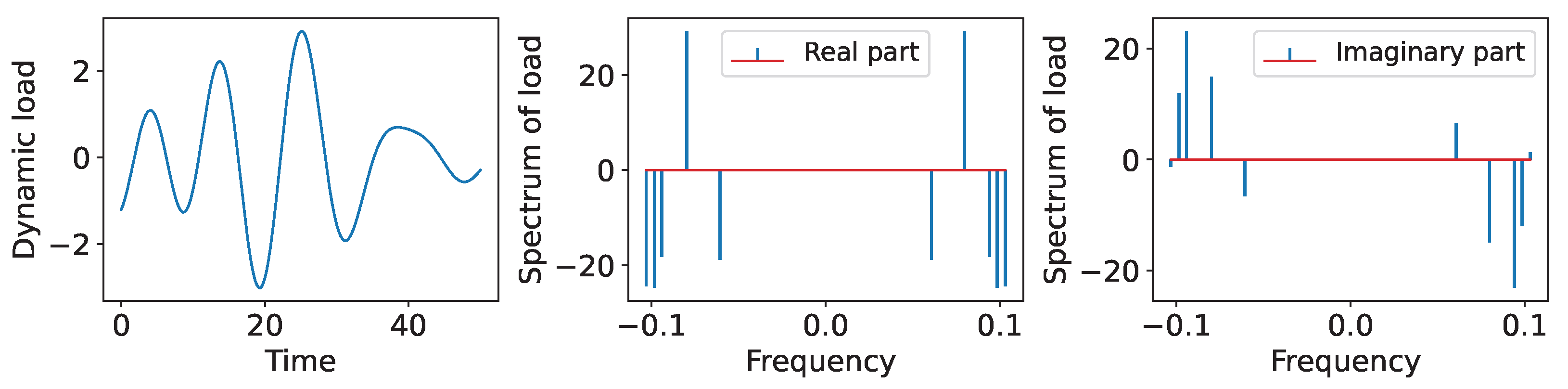
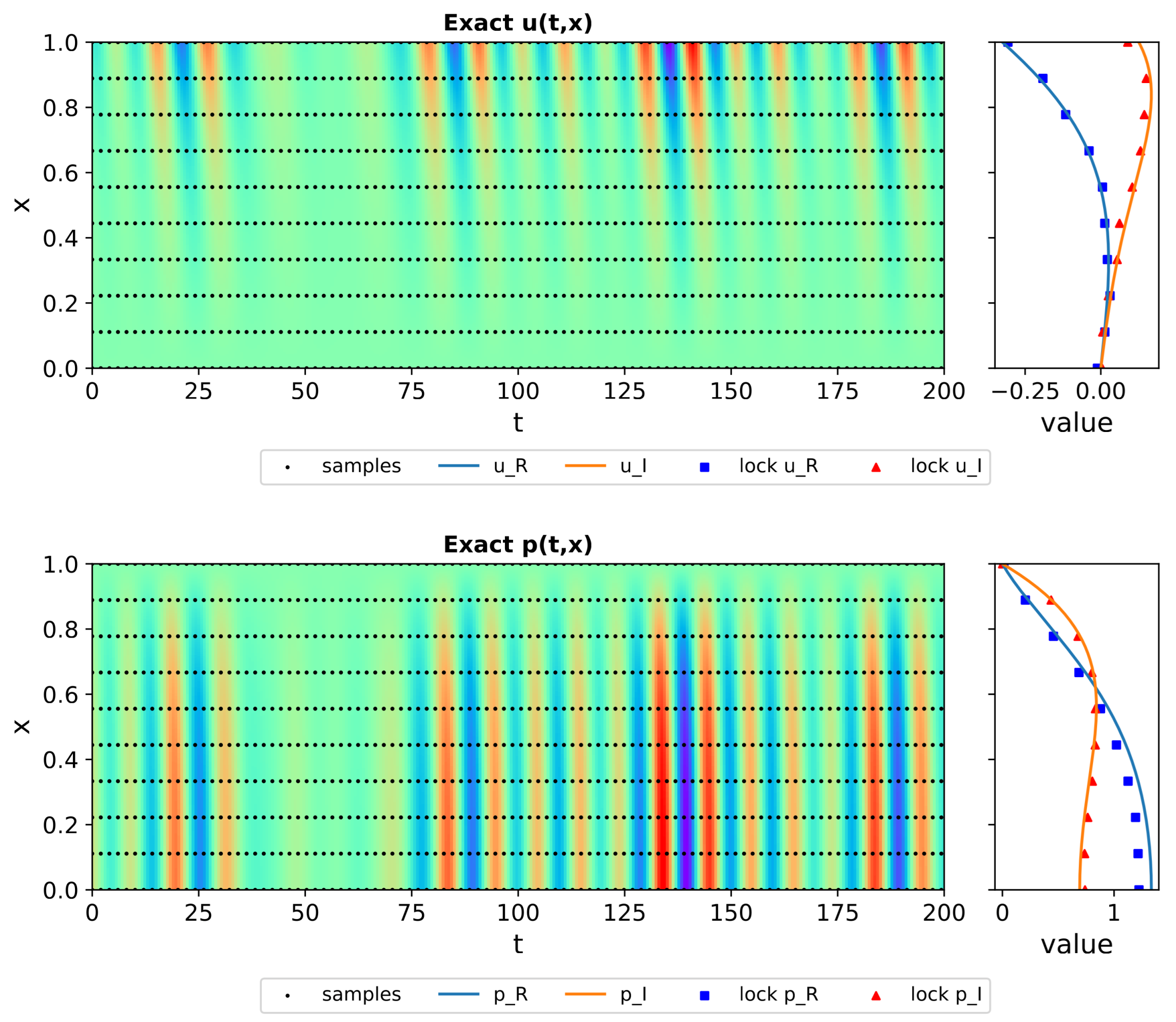
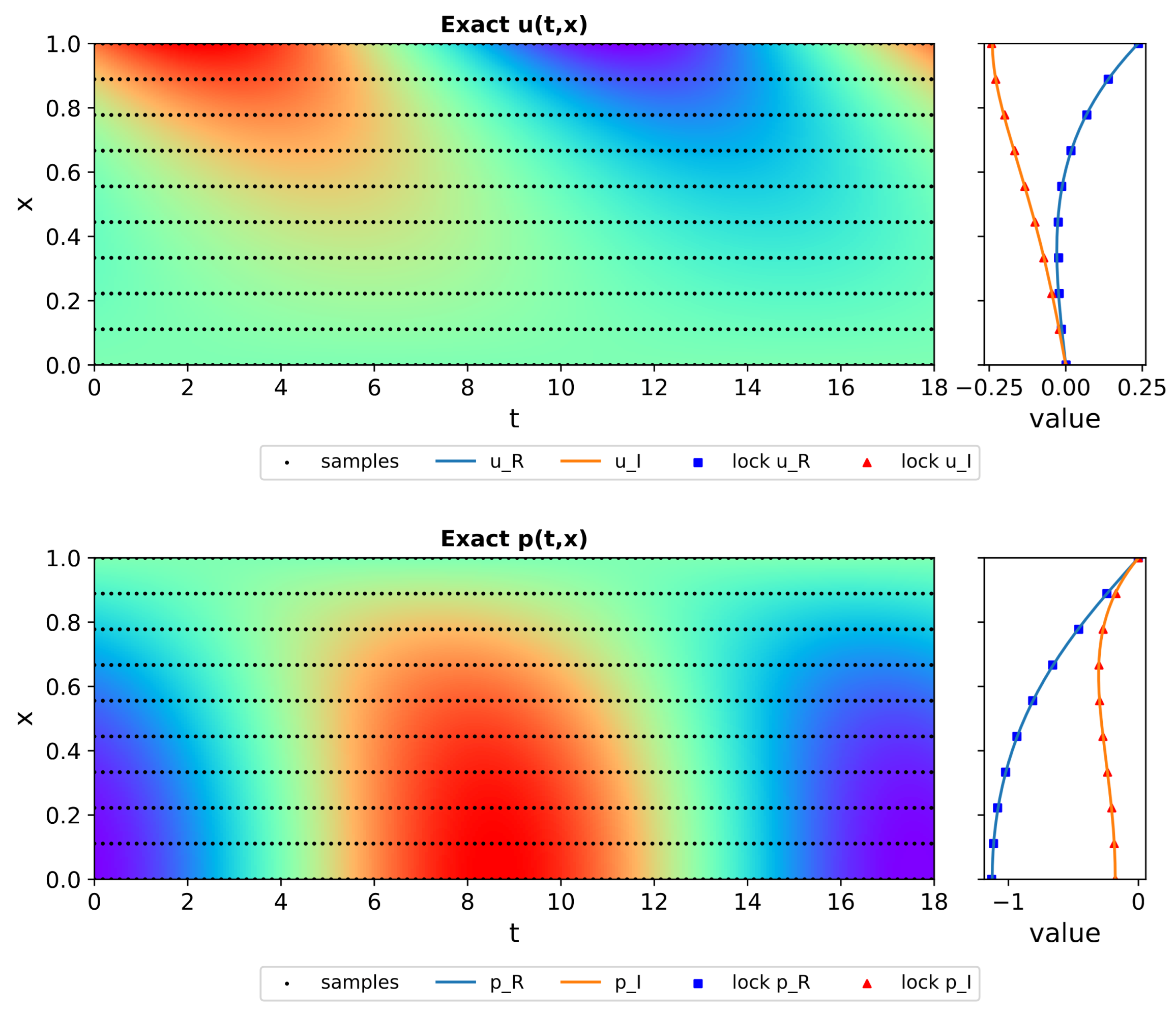
- Development of a lock-in extraction strategy for noise-tolerant inversion: A phase-sensitive strategy is proposed to extract robust frequency-domain targets from noisy time-domain measurements, enabling the accurate inversion of physically meaningful parameters (S and ) under sparse data conditions.
2. Governing Equations
3. PINN and Enhancements
3.1. Physics-Informed Neural Networks (PINNs)
3.2. Multiscale Fourier Feature Mapping
3.3. Network Architecture
3.4. Frequency-Domain PINN
4. Forward Problems: Setup and Comparisons
4.1. Model Parameters
4.2. Forward-Problem Results
5. Inverse Problem: Design and Results
5.1. Lock-In Extraction
5.2. Sampling, Noise, and Training Settings
5.3. Sensitivity to Noise and Data Sparsity
6. Conclusions
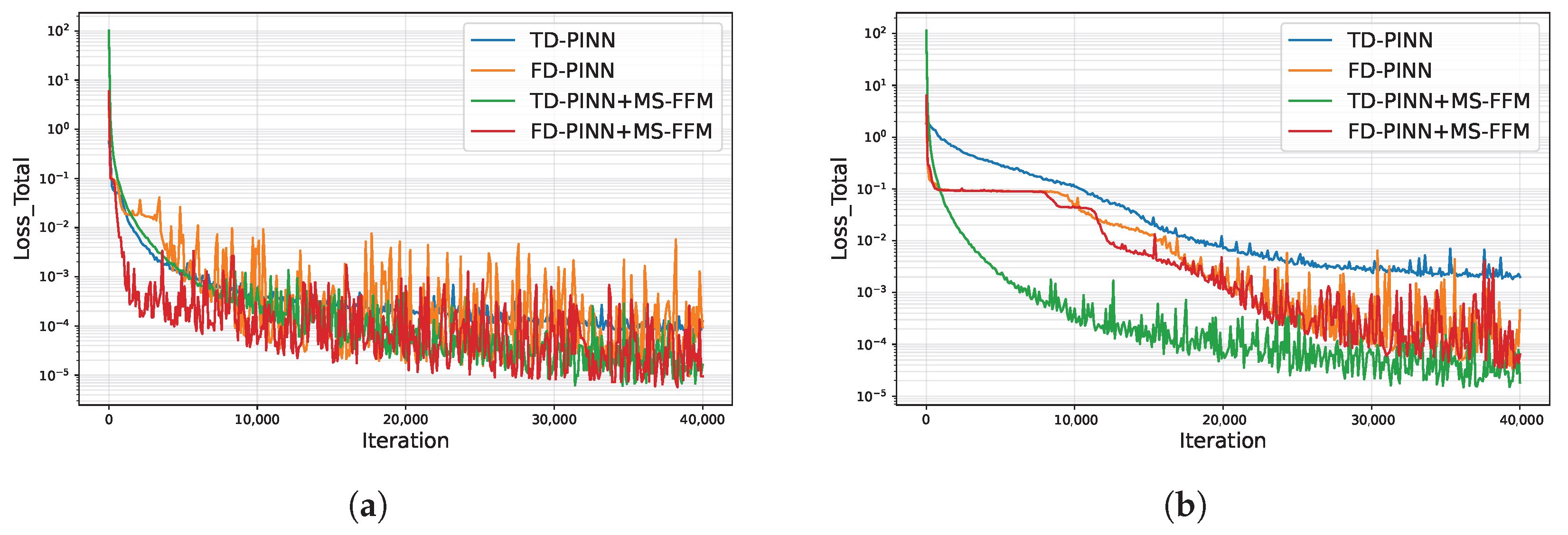
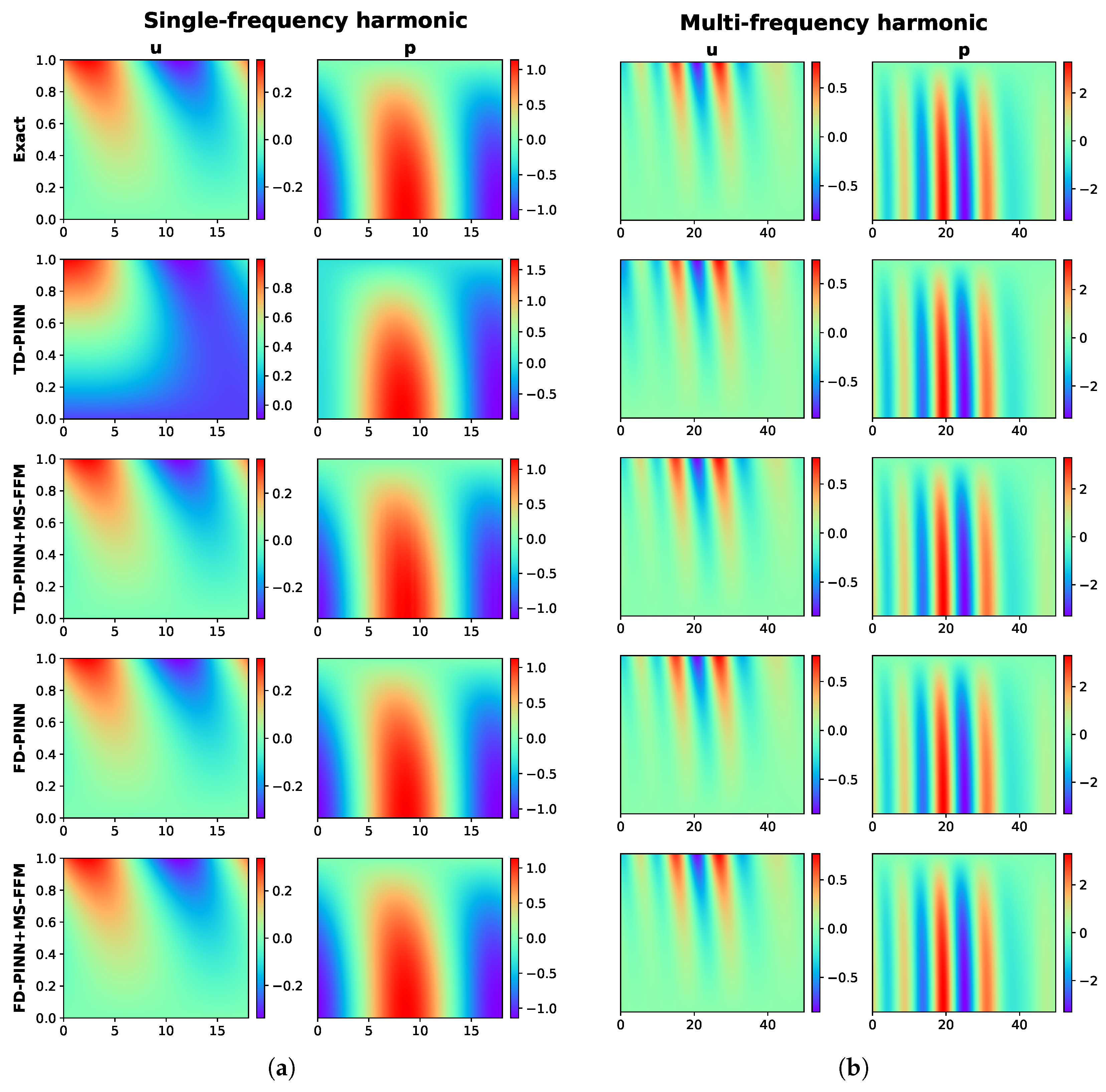
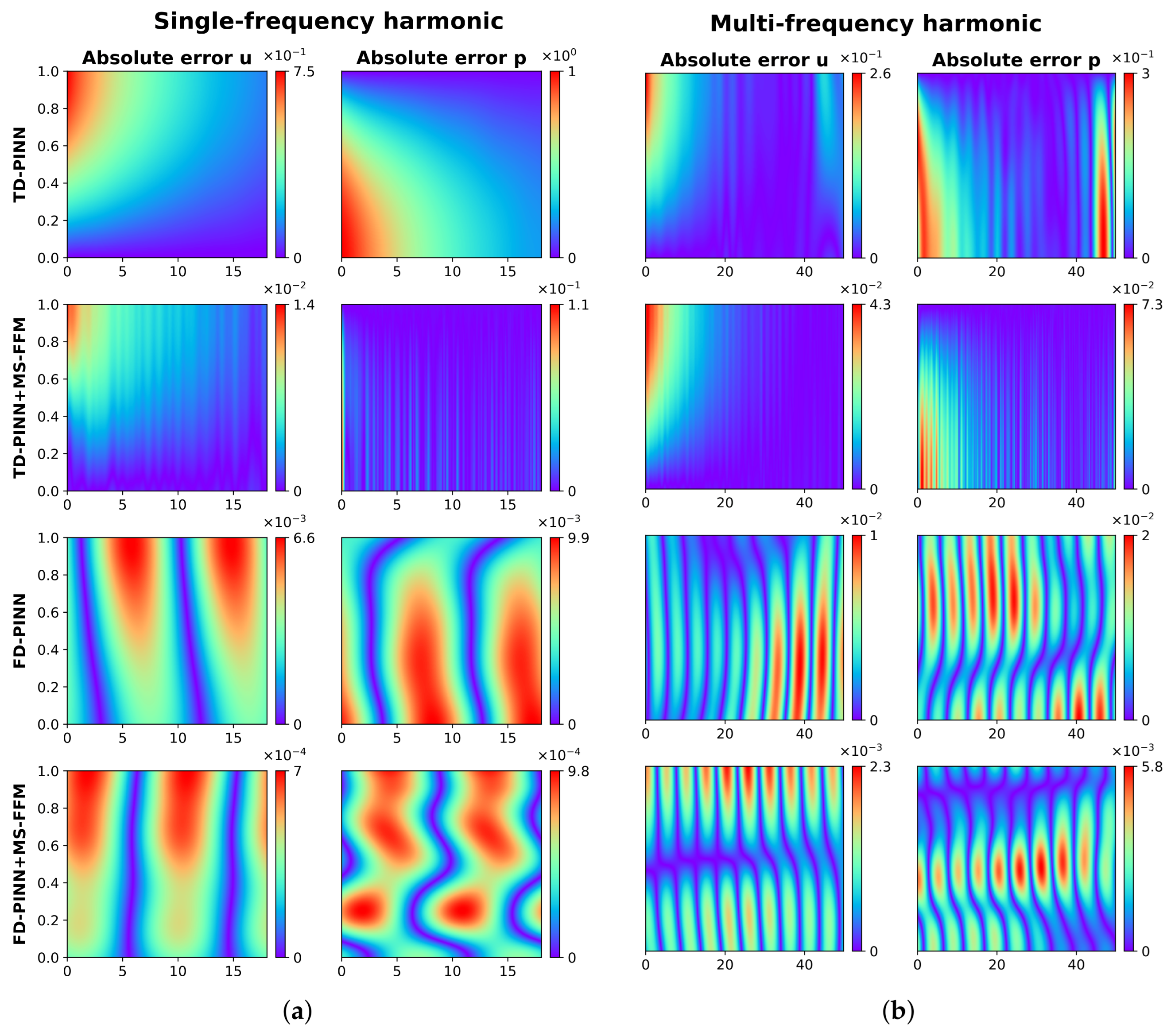
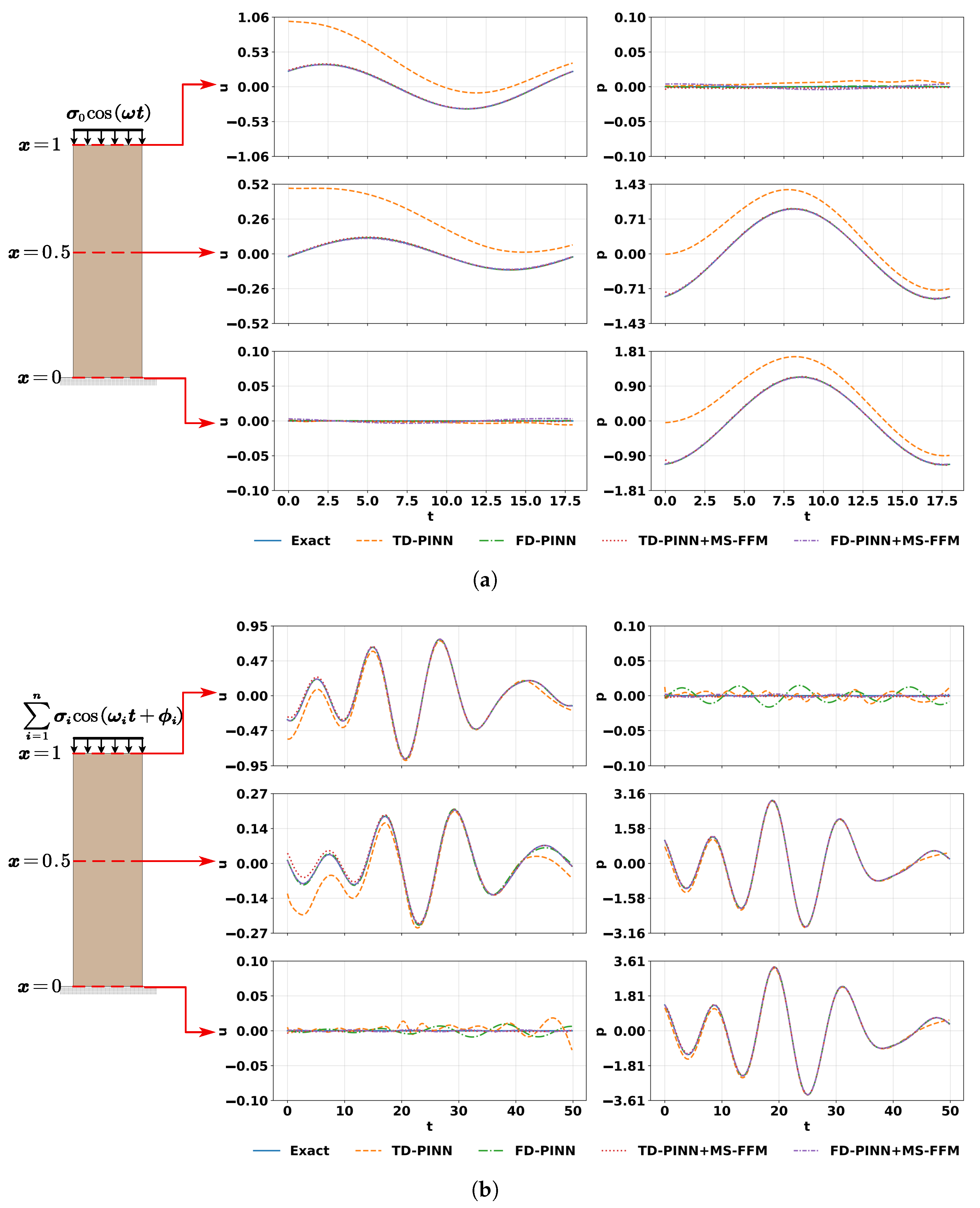
- High-fidelity forward modeling: For both single- and multi-frequency excitations (simulating typical wave-induced loadings), the proposed FD-PINN substantially outperforms conventional time-domain PINN. Phase-accumulation errors associated with time integration are effectively avoided, and relative errors are consistently reduced to the order of .
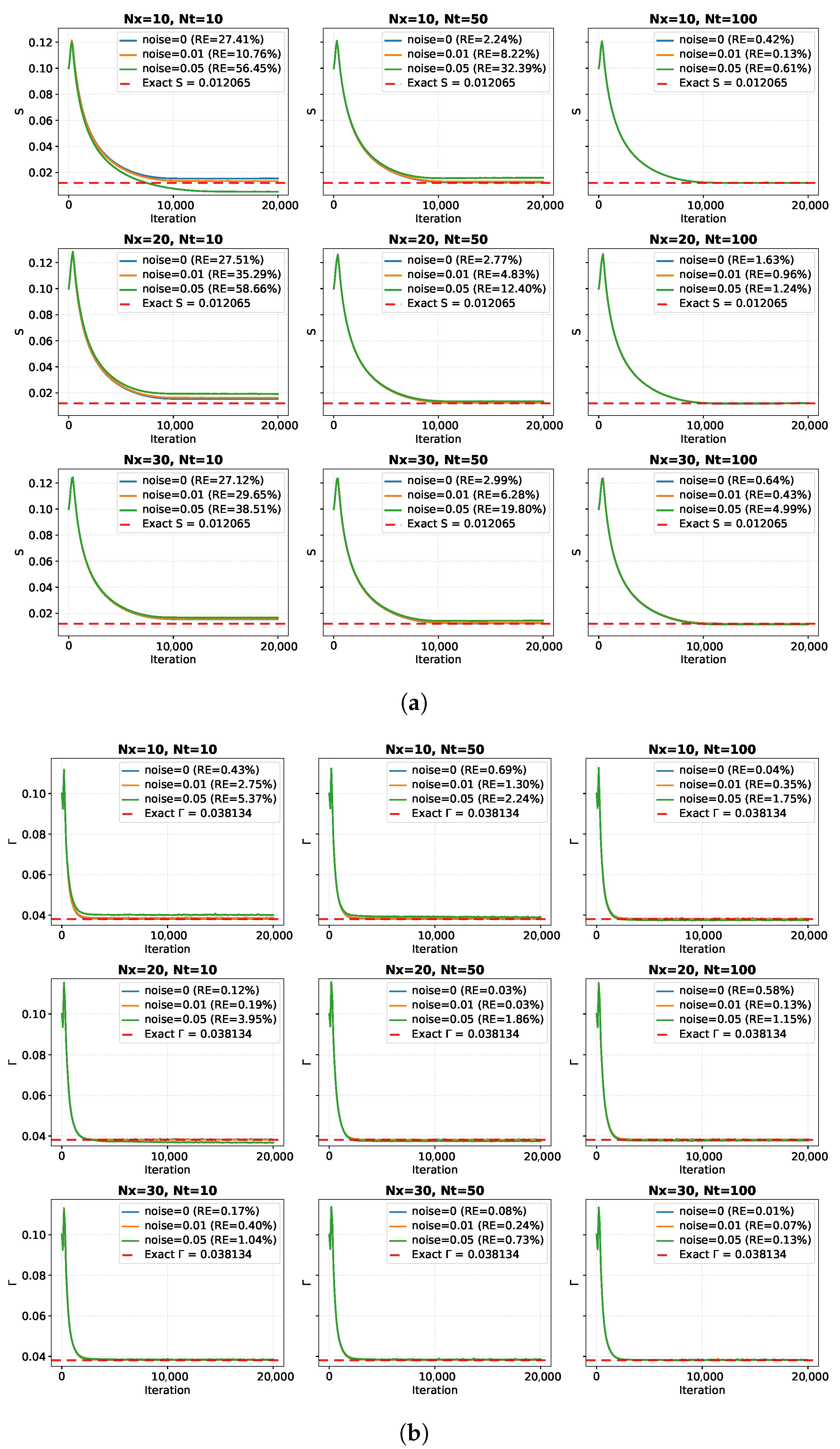
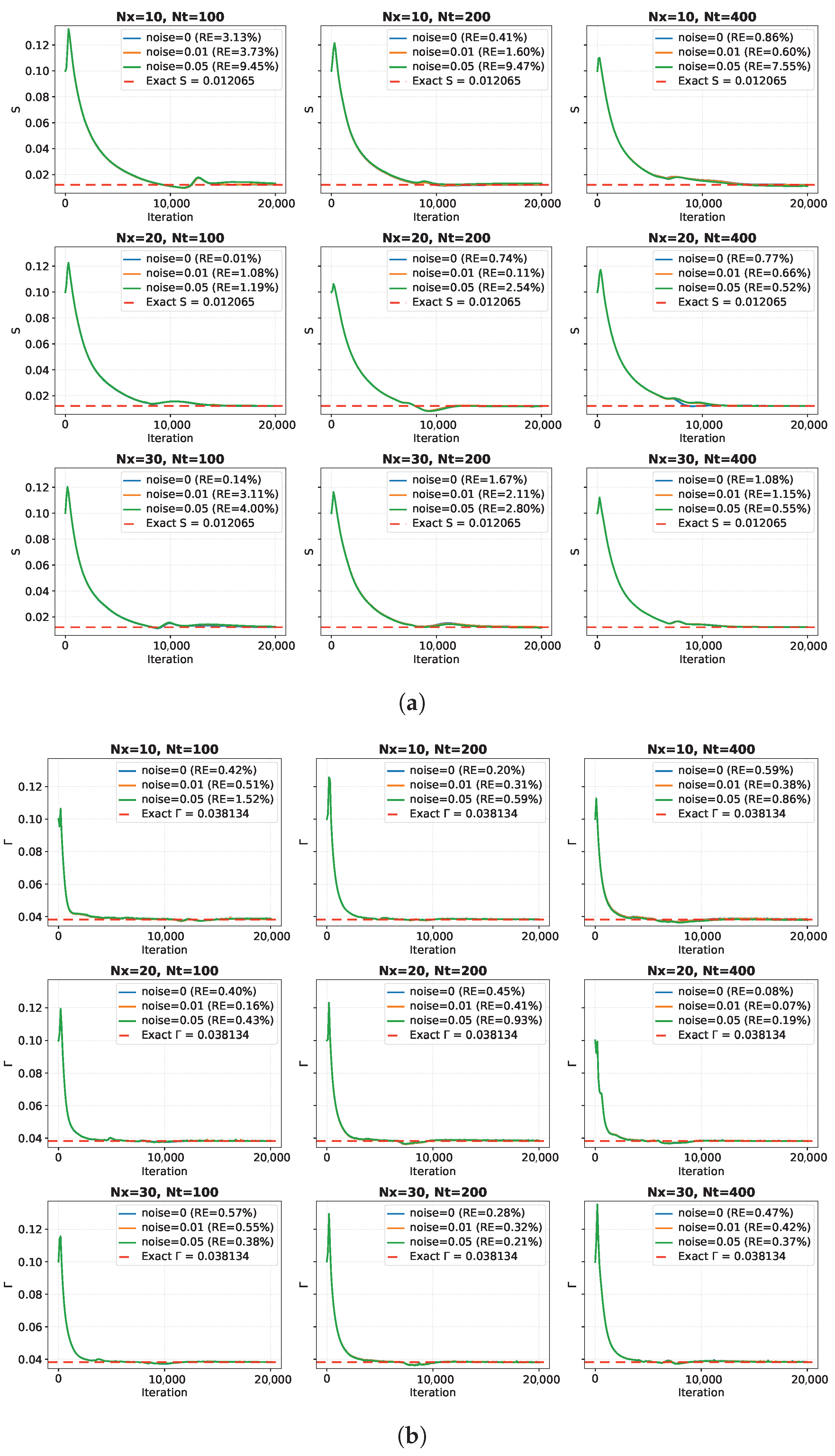
- Robust inversion under sparse and noisy data: The framework exhibits exceptional noise tolerance and data efficiency during inverse analysis. Specifically, the diffusion-importance parameter is reliably identified and remains highly robust even under extremely sparse spatial–temporal sampling configurations (e.g., , ) and high noise levels (up to 5%. Although the storage parameter S is more sensitive to sampling density and frequency content, its identification accuracy improves significantly when multi-frequency excitation and sufficient phase coverage are utilized.
- Value for marine engineering applications: The FD-PINN framework can efficiently and accurately invert key poroelastic parameters (S and ) that characterize seabed liquefaction potential and drainage properties. This physically consistent capability is highly valuable for evaluating the wave-induced dynamic response of marine sediments and assessing the long-term service performance of offshore structure foundations, particularly in environments where high-quality field data is scarce.
Author Contributions
Funding
Data Availability Statement
Conflicts of Interest
Abbreviations
| AI | Artificial Intelligence |
| DNN | Deep Neural Network |
| PINN | Physics-Informed Neural Network |
| FD-PINN | Frequency-Domain Physics-Informed Neural Network |
| TD-PINN | Time-Domain Physics-Informed Neural Network |
| FFE | Fourier Feature Embeddings |
| MS-FFM | Multiscale Fourier Feature Mapping |
| PDE | Partial Differential Equation |
| ODE | Ordinary Differential Equation |
| MLP | Multilayer Perceptron |
Appendix A. Derivation of the One-Dimensional u-p Frequency-Domain Solution Under Multi-Frequency Harmonic Loading
Appendix A.1. Governing Equations and Boundary Conditions
Appendix A.2. Characteristic Equation for a Single-Frequency Phasor Problem
Appendix A.3. Mode Decomposition and the p/u Ratio
Appendix A.4. A 2 × 2 System from the Top Boundary Conditions
Appendix A.5. Linear Superposition for Multi-Frequency Harmonic Loading
References
- Mohapatra, S.C.; Guedes Soares, C. Wave–current interaction with a deformable bottom in a three-dimensional channel. Phys. Fluids 2025, 37, 057109. [Google Scholar] [CrossRef] [Scilit]
- Guo, Y.; Mohapatra, S.; Soares, C.G. Composite breakwater of a submerged horizontal flexible porous membrane with a lower rubble mound. Appl. Ocean. Res. 2020, 104, 102371. [Google Scholar] [CrossRef] [Scilit]
- Biot, M.A. Theory of Propagation of Elastic Waves in a Fluid-Saturated Porous Solid. I. Low-Frequency Range. J. Acoust. Soc. Am. 1956, 28, 168–178. [Google Scholar] [CrossRef] [Scilit]
- Biot, M.A. Theory of Propagation of Elastic Waves in a Fluid-Saturated Porous Solid. II. Higher Frequency Range. J. Acoust. Soc. Am. 1956, 28, 179–191. [Google Scholar] [CrossRef] [Scilit]
- Costabal, F.S.; Pezzuto, S.; Perdikaris, P. Δ-PINNs: Physics-informed neural networks on complex geometries. Eng. Appl. Artif. Intell. 2024, 127, 107324. [Google Scholar] [CrossRef] [Scilit]
- Zhang, P.; Yin, Z.Y.; Sheil, B. Interpretable data-driven constitutive modelling of soils with sparse data. Comput. Geotech. 2023, 160, 105511. [Google Scholar] [CrossRef] [Scilit]
- Liu, H.; Su, H.; Sun, L.; Dias-da Costa, D. State-of-the-art review on the use of AI-enhanced computational mechanics in geotechnical engineering. Artif. Intell. Rev. 2024, 57, 196. [Google Scholar] [CrossRef] [Scilit]
- Yuan, B.; Choo, C.S.; Yeo, L.Y.; Wang, Y.; Yang, Z.; Guan, Q.; Suryasentana, S.; Choo, J.; Shen, H.; Megia, M.; et al. Physics-informed machine learning in geotechnical engineering: A direction paper. Geomech. Geoengin. 2025, 20, 1128–1159. [Google Scholar] [CrossRef] [Scilit]
- Amiri-Simkooei, A.; Tiberius, C.; Lindenbergh, R. Deep learning in standard least-squares theory of linear models: Perspective, development and vision. Eng. Appl. Artif. Intell. 2024, 138, 109376. [Google Scholar] [CrossRef] [Scilit]
- Raissi, M.; Perdikaris, P.; Karniadakis, G.E. Physics-informed neural networks: A deep learning framework for solving forward and inverse problems involving nonlinear partial differential equations. J. Comput. Phys. 2019, 378, 686–707. [Google Scholar] [CrossRef] [Scilit]
- Luo, K.; Zhao, J.; Wang, Y.; Li, J.; Wen, J.; Liang, J.; Soekmadji, H.; Liao, S. Physics-informed neural networks for PDE problems: A comprehensive review. Artif. Intell. Rev. 2025, 58, 323. [Google Scholar] [CrossRef] [Scilit]
- Henkes, A.; Herrmann, L.; Wessels, H.; Kollmannsberger, S. Generative adversarial networks enable outlier detection and property monitoring for additive manufacturing of complex structures. Eng. Appl. Artif. Intell. 2024, 136, 108993. [Google Scholar] [CrossRef] [Scilit]
- Tavakoli, S.; Singh, M.; Hosseinzadeh, S.; Hu, Z.; Shao, Y.; Wang, S.; Huang, L.; Grammatikopoulos, A.; Li, Y.P.; Khojasteh, D.; et al. A review of flexible fluid-structure interactions in the ocean: Progress, challenges, and future directions. Ocean. Eng. 2025, 342, 122545. [Google Scholar] [CrossRef] [Scilit]
- Wang, S.; Teng, Y.; Perdikaris, P. Understanding and mitigating gradient flow pathologies in physics-informed neural networks. SIAM J. Sci. Comput. 2021, 43, A3055–A3081. [Google Scholar] [CrossRef] [Scilit]
- Wang, S.; Wang, H.; Perdikaris, P. On the eigenvector bias of Fourier feature networks: From regression to solving multi-scale PDEs with physics-informed neural networks. Comput. Methods Appl. Mech. Eng. 2021, 384, 113938. [Google Scholar] [CrossRef] [Scilit]
- Tancik, M.; Srinivasan, P.; Mildenhall, B.; Fridovich-Keil, S.; Raghavan, N.; Singhal, U.; Ramamoorthi, R.; Barron, J.; Ng, R. Fourier features let networks learn high frequency functions in low dimensional domains. Adv. Neural Inf. Process. Syst. 2020, 33, 7537–7547. [Google Scholar]
- Song, C.; Wang, Y. Simulating seismic multifrequency wavefields with the Fourier feature physics-informed neural network. Geophys. J. Int. 2023, 232, 1503–1514. [Google Scholar] [CrossRef] [Scilit]
- Sallam, O.; Fürth, M. On the use of Fourier Features-Physics Informed Neural Networks (FF-PINN) for forward and inverse fluid mechanics problems. Proc. Inst. Mech. Eng. Part M J. Eng. Marit. Environ. 2023, 237, 846–866. [Google Scholar] [CrossRef] [Scilit]
- Liang, R.; Liu, W.; Xu, L.; Qu, X.; Kaewunruen, S. Solving elastodynamics via physics-informed neural network frequency domain method. Int. J. Mech. Sci. 2023, 258, 108575. [Google Scholar] [CrossRef] [Scilit]
- Li, S.; Li, X.; Jiang, Y.; Yang, Q.; Lin, M.; Peng, L.; Yu, J. A novel frequency-domain physics-informed neural network for accurate prediction of 3D spatio-temporal wind fields in wind turbine applications. Appl. Energy 2025, 386, 125526. [Google Scholar] [CrossRef] [Scilit]
- Coussy, O. Poromechanics; Wiley: Chichester, UK, 2004. [Google Scholar] [CrossRef] [Scilit]
- Cheng, A.H.D. Poroelasticity; Theory and Applications of Transport in Porous Media; Springer: Cham, Switzerland, 2016. [Google Scholar] [CrossRef] [Scilit]
- Cuomo, S.; Schiano Di Cola, V.; Giampaolo, F.; Rozza, G.; Raissi, M.; Piccialli, F. Scientific Machine Learning Through Physics–Informed Neural Networks: Where We Are and What’s Next. J. Sci. Comput. 2022, 92, 88. [Google Scholar] [CrossRef] [Scilit]
- Raissi, M.; Yazdani, A.; Karniadakis, G.E. Hidden fluid mechanics: Learning velocity and pressure fields from flow visualizations. Science 2020, 367, 1026–1030. [Google Scholar] [CrossRef] [Scilit] [PubMed]
- Rasht-Behesht, M.; Huber, C.; Shukla, K.; Karniadakis, G.E. Physics-Informed Neural Networks (PINNs) for wave propagation and full waveform inversions. J. Geophys. Res. Solid Earth 2022, 127, e2021JB023120. [Google Scholar] [CrossRef] [Scilit]
- Bai, J.; Rabczuk, T.; Gupta, A.; Alzubaidi, L.; Gu, Y. A physics-informed neural network technique based on a modified loss function for computational 2D and 3D solid mechanics. Comput. Mech. 2023, 71, 543–562. [Google Scholar] [CrossRef] [Scilit]
- Zhang, E.; Dao, M.; Karniadakis, G.E.; Suresh, S. Analyses of internal structures and defects in materials using physics-informed neural networks. Sci. Adv. 2022, 8, eabk0644. [Google Scholar] [CrossRef] [Scilit]
- Mildenhall, B.; Srinivasan, P.P.; Tancik, M.; Barron, J.T.; Ramamoorthi, R.; Ng, R. NeRF: Representing Scenes as Neural Radiance Fields for View Synthesis. In European Conference on Computer Vision (ECCV); Springer: Cham, Switzerland, 2020; pp. 405–421. [Google Scholar] [CrossRef] [Scilit]
- Müller, T.; Evans, A.; Schied, C.; Keller, A. Instant neural graphics primitives with a multiresolution hash encoding. ACM Trans. Graph. (TOG) 2022, 41, 1–15. [Google Scholar] [CrossRef] [Scilit]
- Hirose, A. Complex-Valued Neural Networks; Studies in Computational Intelligence (SCI, Volume 32); Springer: Berlin/Heidelberg, Germany, 2006. [Google Scholar] [CrossRef] [Scilit]
- Dramsch, J.S.; Lüthje, M.; Christensen, A.N. Complex-valued neural networks for machine learning on non-stationary physical data. Comput. Geosci. 2021, 146, 104643. [Google Scholar] [CrossRef] [Scilit]
- Trabelsi, C.; Bilaniuk, O.; Zhang, Y.; Serdyuk, D.; Subramanian, S.; Santos, J.F.; Mehri, S.; Rostamzadeh, N.; Bengio, Y.; Pal, C.J. Deep complex networks. arXiv 2017, arXiv:1705.09792. [Google Scholar] [CrossRef] [Scilit]
- Lee, C.Y.; Hasegawa, H.; Gao, S. Complex-Valued Neural Networks: A Comprehensive Survey. IEEE/CAA J. Autom. Sin. 2022, 9, 1406–1426. [Google Scholar] [CrossRef] [Scilit]
- Chen, W.; Fang, D.; Chen, G.; Jeng, D.; Zhu, J.; Zhao, H. A simplified quasi-static analysis of wave-induced residual liquefaction of seabed around an immersed tunnel. Ocean. Eng. 2018, 148, 574–587. [Google Scholar] [CrossRef] [Scilit]
- Duan, L.; Liao, C.; Jeng, D.; Chen, L. 2D numerical study of wave and current-induced oscillatory non-cohesive soil liquefaction around a partially buried pipeline in a trench. Ocean. Eng. 2017, 135, 39–51. [Google Scholar] [CrossRef] [Scilit]
- Wang, X.; Jeng, D.; Lin, Y. Effects of a cover layer on wave-induced pore pressure around a buried pipe in an anisotropic seabed. Ocean. Eng. 2000, 27, 823–839. [Google Scholar] [CrossRef] [Scilit]
- Tarantola, A. Inverse Problem Theory and Methods for Model Parameter Estimation; SIAM: Philadelphia, PA, USA, 2005. [Google Scholar] [CrossRef] [Scilit]
- Aster, R.C.; Borchers, B.; Thurber, C.H. Parameter Estimation and Inverse Problems, 3rd ed.; Elsevier Academic Press: Amsterdam, The Netherlands, 2019. [Google Scholar]
- Advanced Projects Lab, University of Oregon. Lock-In Amplifier. 2016. Available online: https://june.uoregon.edu/mediawiki/index.php/Lock-in_Amplifier (accessed on 3 November 2025).
- Zurich Instruments AG. Principles of Lock-In Detection. 2016. Available online: https://www.zhinst.com/en/resources/principles-of-lock-in-detection (accessed on 3 November 2025).
- Bendat, J.S.; Piersol, A.G. Random Data: Analysis and Measurement Procedures, 4th ed.; Wiley Series in Probability and Statistics; John Wiley & Sons: Hoboken, NJ, USA, 2010. [Google Scholar] [CrossRef] [Scilit]
- Ghaderpour, E.; Liao, W.; Lamoureux, M.P. Antileakage least-squares spectral analysis for seismic data regularization and random noise attenuation. Geophysics 2018, 83, V157–V170. [Google Scholar] [CrossRef] [Scilit]









| Quantity | Symbol | Scale | Description |
|---|---|---|---|
| Geometric scale | H | H | Layer thickness |
| Reference wave speed | Skeleton reference wave speed | ||
| Time scale | T | Travel time across the layer | |
| Stress scale | Representative magnitude of top stress | ||
| Displacement scale | Representative displacement due to top stress | ||
| Pore-pressure scale | Representative pore pressure due to top stress |
| Parameter | Value | Unit |
|---|---|---|
| Specimen height H | 10 | m |
| Porosity n | — | |
| Mixture density | 2072 | kg m−3 |
| Shear modulus G | Pa | |
| Lamé parameter | Pa | |
| Biot coefficient | — | |
| Biot modulus M | Pa | |
| Intrinsic permeability k | m2 | |
| Dynamic viscosity | Pa·s |
| Excitation | Method | Max. Absolute Error | Relative Error | ||
|---|---|---|---|---|---|
| Single | TD-PINN | ||||
| TD-PINN+MS-FFM | |||||
| FD-PINN | |||||
| FD-PINN+MS-FFM | |||||
| Multi | TD-PINN | ||||
| TD-PINN+MS-FFM | |||||
| FD-PINN | |||||
| FD-PINN+MS-FFM | |||||
| S Relative Error/% | Relative Error/% | ||||||
|---|---|---|---|---|---|---|---|
| 10 | 10 | 27.41 | 10.76 | 56.45 | 0.43 | 2.75 | 5.37 |
| 10 | 50 | 2.24 | 8.22 | 32.39 | 0.69 | 1.30 | 2.24 |
| 10 | 100 | 0.42 | 0.13 | 0.61 | 0.04 | 0.35 | 1.75 |
| 20 | 10 | 27.51 | 35.29 | 58.66 | 0.12 | 0.18 | 3.95 |
| 20 | 50 | 2.77 | 4.83 | 12.40 | 0.03 | 0.03 | 1.86 |
| 20 | 100 | 1.63 | 0.96 | 1.24 | 0.58 | 0.13 | 1.15 |
| 30 | 10 | 27.13 | 29.65 | 38.51 | 0.17 | 0.40 | 1.04 |
| 30 | 50 | 2.99 | 6.28 | 19.80 | 0.08 | 0.24 | 0.74 |
| 30 | 100 | 0.64 | 0.43 | 4.99 | 0.02 | 0.08 | 0.13 |
| S Relative Error/% | Relative Error/% | ||||||
|---|---|---|---|---|---|---|---|
| 10 | 100 | 3.13 | 3.73 | 9.45 | 0.42 | 0.51 | 1.52 |
| 10 | 200 | 0.41 | 1.60 | 9.47 | 0.20 | 0.31 | 0.59 |
| 10 | 400 | 0.86 | 0.60 | 7.55 | 0.59 | 0.38 | 0.86 |
| 20 | 100 | 0.01 | 1.08 | 1.19 | 0.40 | 0.16 | 0.43 |
| 20 | 200 | 0.74 | 0.11 | 2.54 | 0.45 | 0.41 | 0.93 |
| 20 | 400 | 0.77 | 0.66 | 0.52 | 0.08 | 0.07 | 0.19 |
| 30 | 100 | 0.14 | 3.11 | 4.00 | 0.57 | 0.55 | 0.38 |
| 30 | 200 | 1.67 | 2.11 | 2.80 | 0.28 | 0.32 | 0.21 |
| 30 | 400 | 1.08 | 1.15 | 0.55 | 0.47 | 0.42 | 0.37 |
Disclaimer/Publisher’s Note: The statements, opinions and data contained in all publications are solely those of the individual author(s) and contributor(s) and not of MDPI and/or the editor(s). MDPI and/or the editor(s) disclaim responsibility for any injury to people or property resulting from any ideas, methods, instructions or products referred to in the content. |
© 2026 by the authors. Licensee MDPI, Basel, Switzerland. This article is an open access article distributed under the terms and conditions of the Creative Commons Attribution (CC BY) license.
Share and Cite
Chen, W.; Tao, H.; Wang, L.; Fan, S. Frequency-Domain Physics-Informed Neural Networks for Modeling and Parameter Inversion of Wave-Induced Seabed Response. J. Mar. Sci. Eng. 2026, 14, 690. https://doi.org/10.3390/jmse14080690
Chen W, Tao H, Wang L, Fan S. Frequency-Domain Physics-Informed Neural Networks for Modeling and Parameter Inversion of Wave-Induced Seabed Response. Journal of Marine Science and Engineering. 2026; 14(8):690. https://doi.org/10.3390/jmse14080690
Chicago/Turabian StyleChen, Weiyun, Hairong Tao, Lei Wang, and Shaofen Fan. 2026. "Frequency-Domain Physics-Informed Neural Networks for Modeling and Parameter Inversion of Wave-Induced Seabed Response" Journal of Marine Science and Engineering 14, no. 8: 690. https://doi.org/10.3390/jmse14080690
APA StyleChen, W., Tao, H., Wang, L., & Fan, S. (2026). Frequency-Domain Physics-Informed Neural Networks for Modeling and Parameter Inversion of Wave-Induced Seabed Response. Journal of Marine Science and Engineering, 14(8), 690. https://doi.org/10.3390/jmse14080690