Effects of Hydrotreated Vegetable Oil and Diesel Blends on Combustion, Energy Performance, and Emissions of a Compression Ignition Engine Under EGR-Controlled Operation


Abstract
1. Introduction
2. Materials and Methods
2.1. Experimental Engine and Test Bench
2.2. In-Cylinder Pressure Measurement

2.3. Fuels and Test Conditions
2.4. Combustion Analysis
3. Results and Discussion
3.1. Combustion Indicators
3.2. Energy Performance Indicators
3.3. Environmental Performance Indicators
4. Conclusions
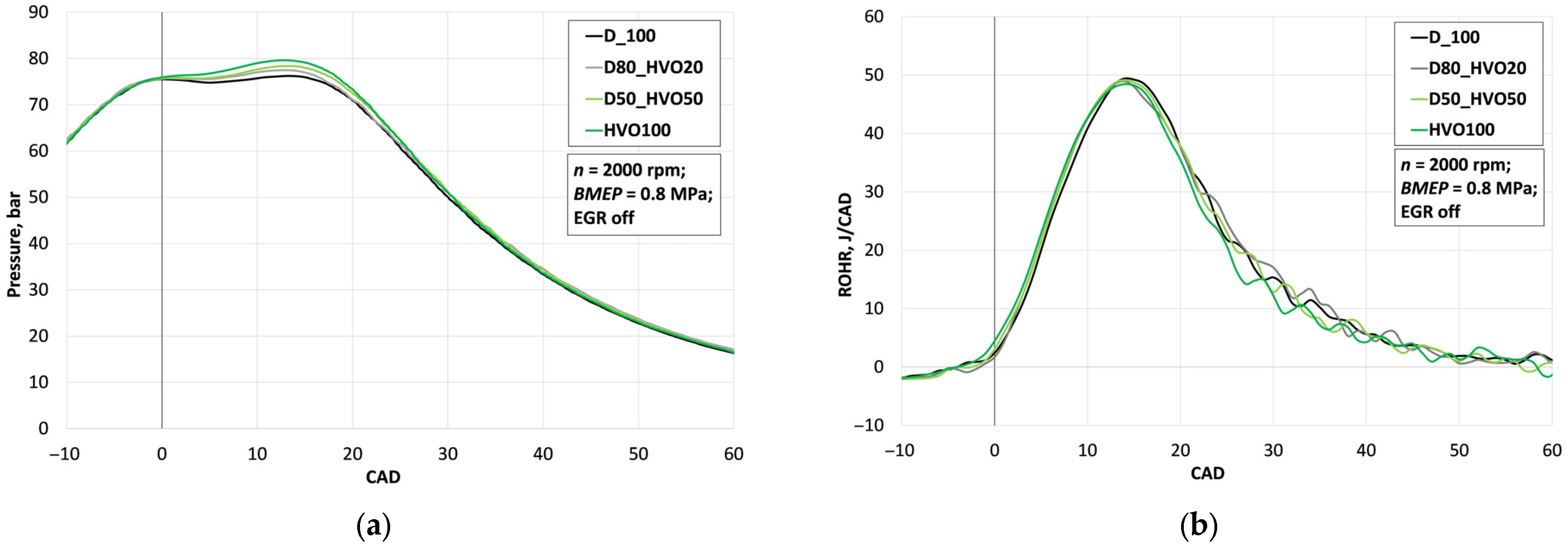
- Increasing the HVO share in diesel mixtures changes key fuel properties, including density and ignition characteristics, which in turn alter combustion development and the resulting energy and emissions indicators.
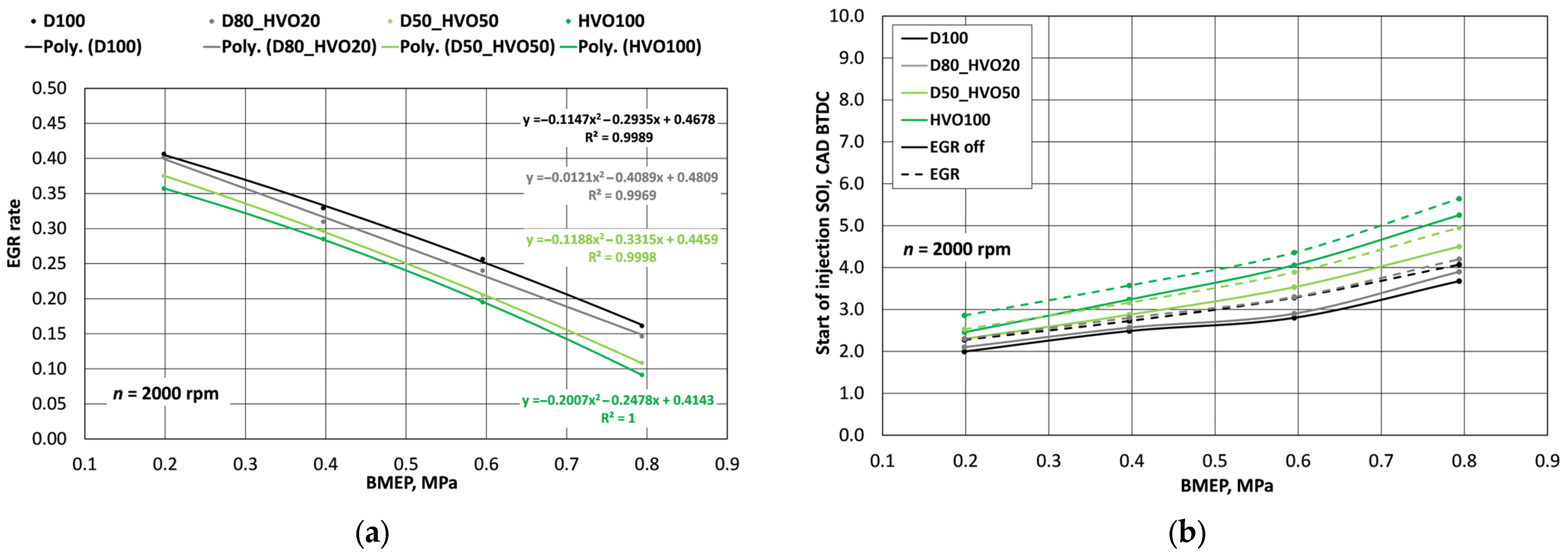
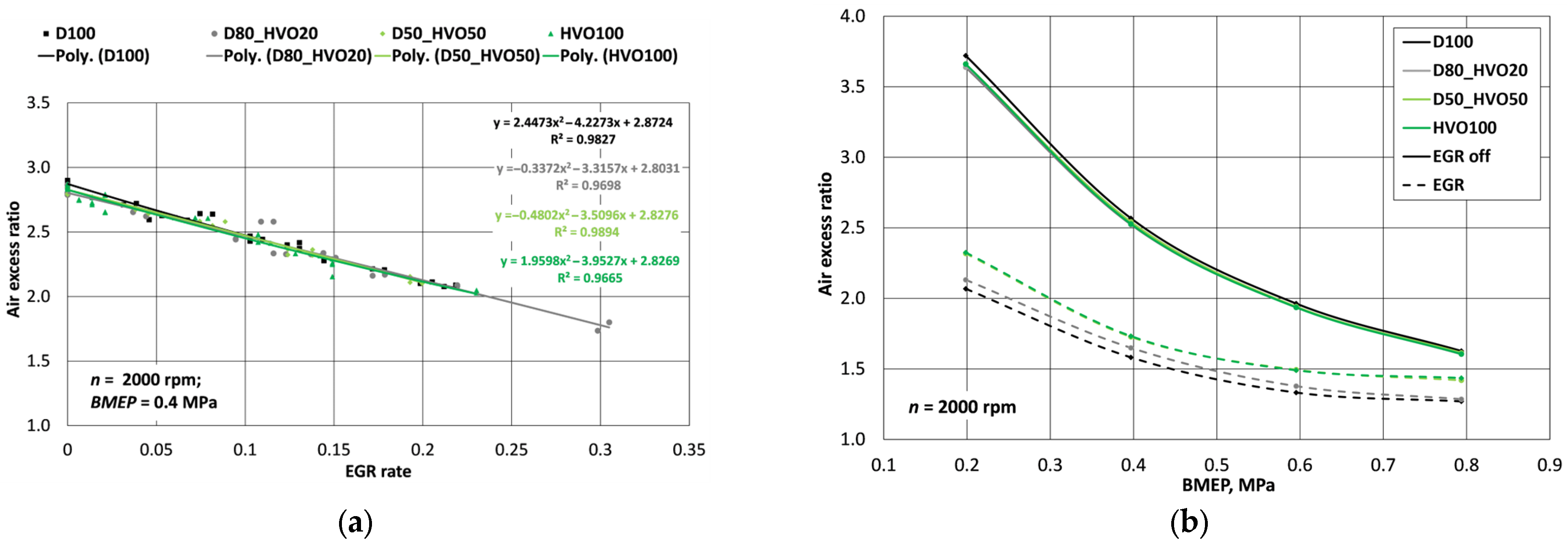
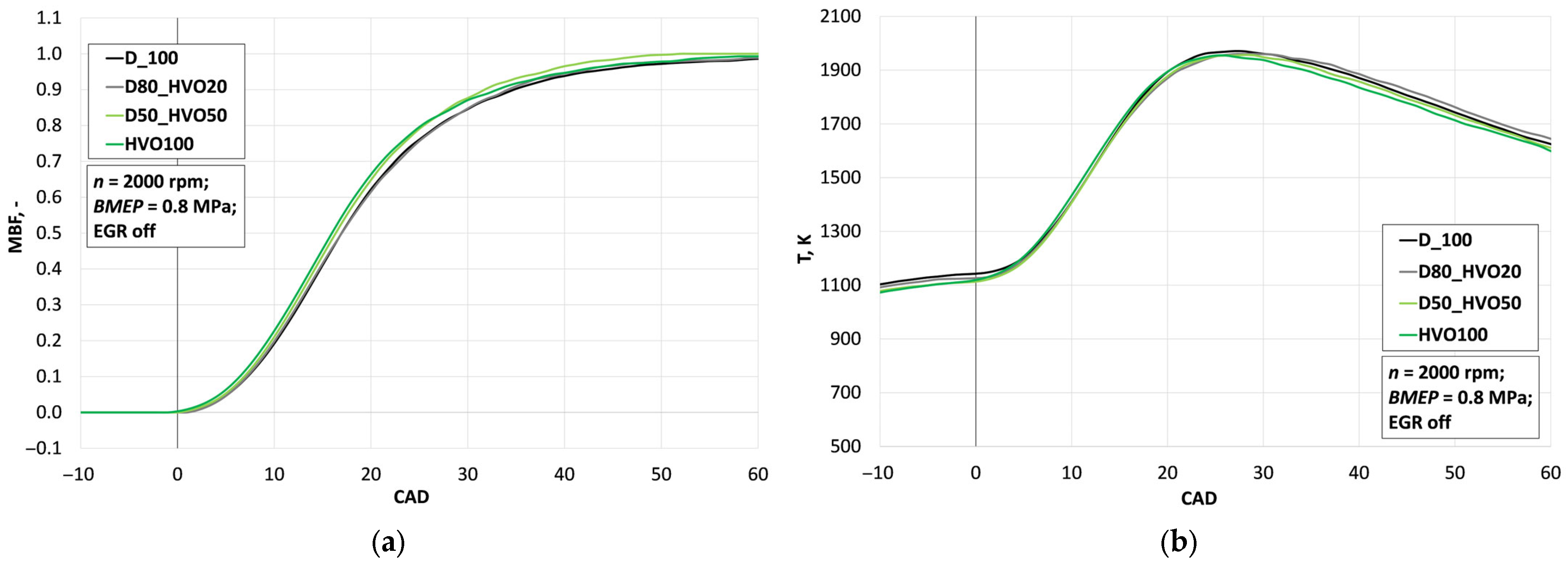
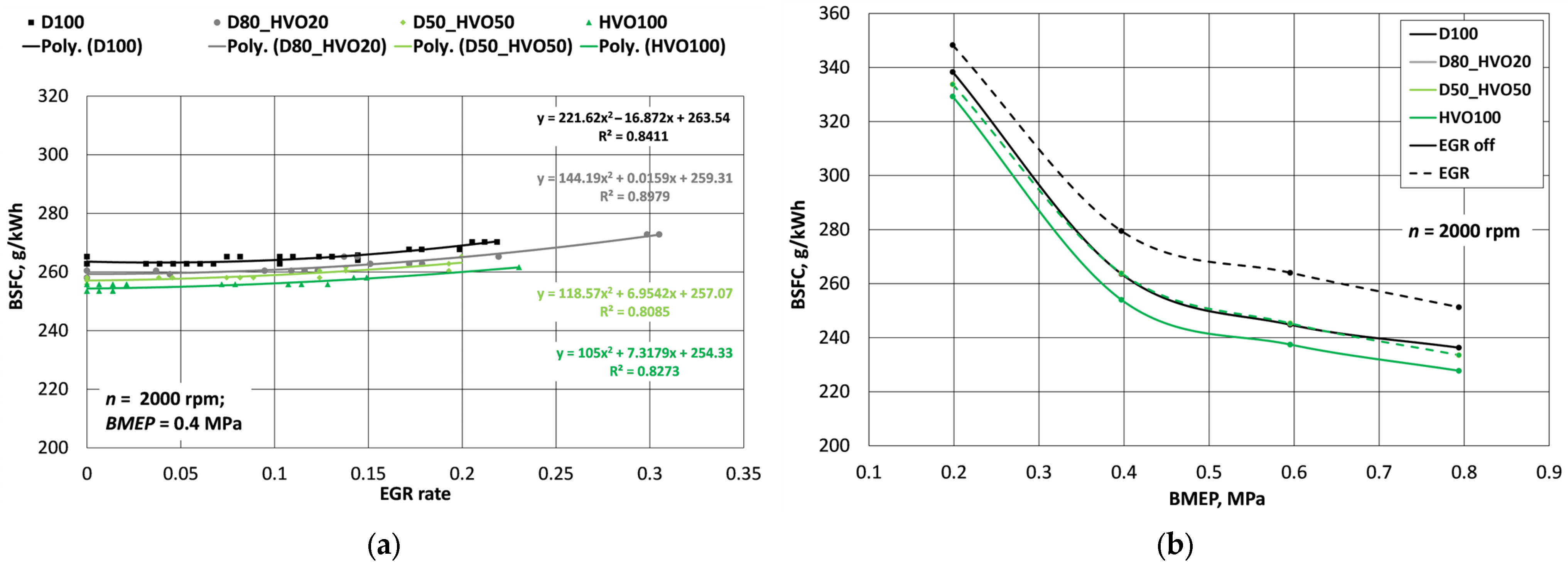
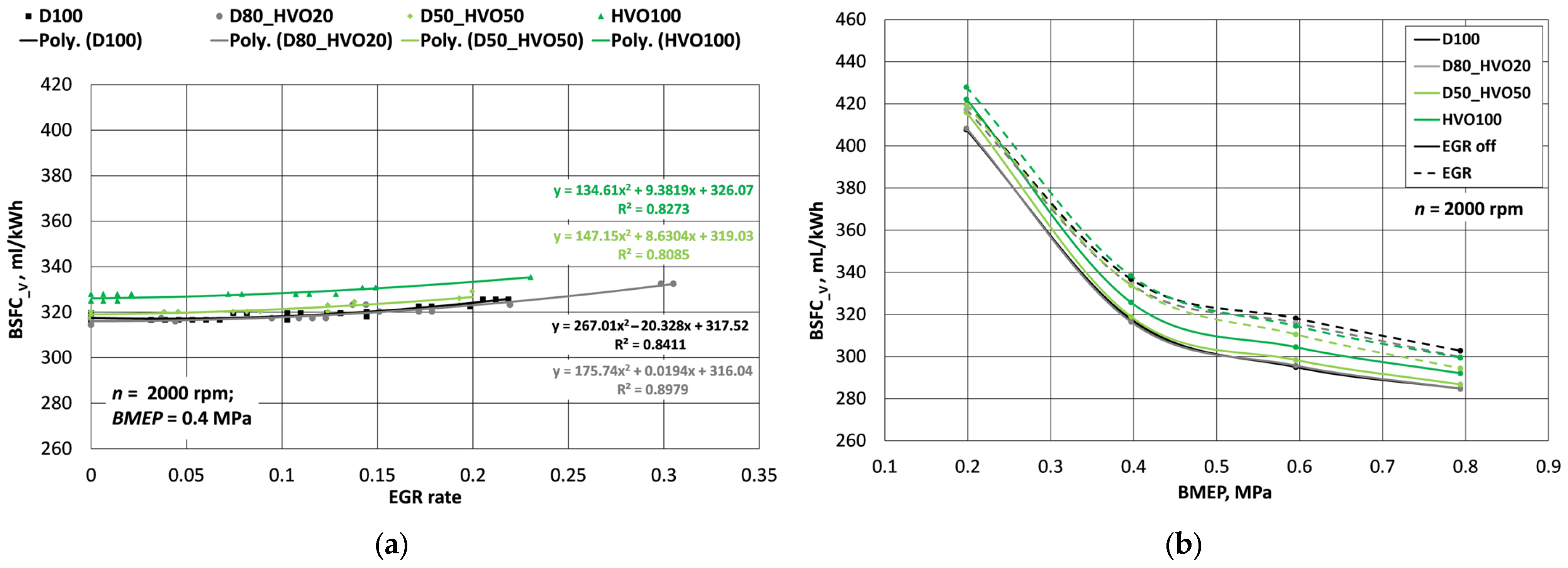
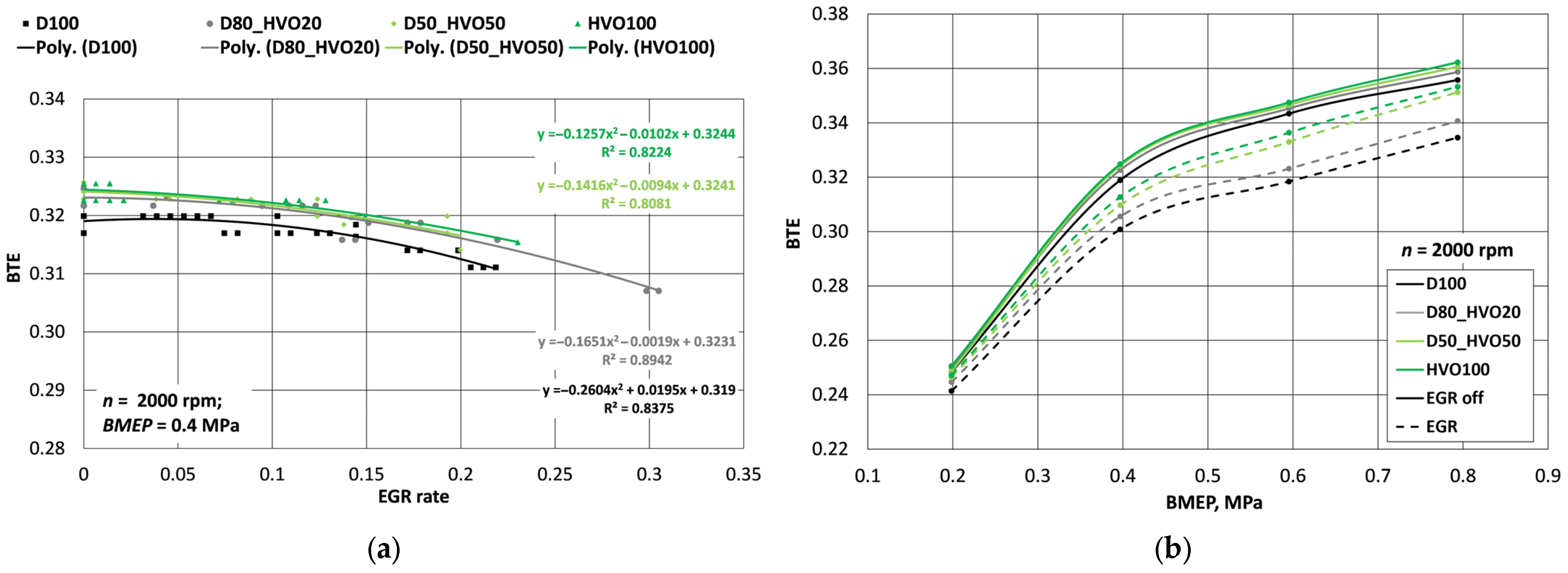
- The higher heating value of HVO reduces fuel mass consumption by up to 3.4%, while improved combustion efficiency increases brake thermal efficiency by as much as 1.9% when neat HVO is used. At the same time, the approximately 6% lower density of HVO increases volumetric fuel consumption by up to 3.8%, raises the injected fuel volume, and prolongs the injection duration. For this reason, the EGR ratio at a given operating point was reduced by 12–43%, indicating that the ECU response varied with fuel properties rather than remaining identical for all tested fuels.
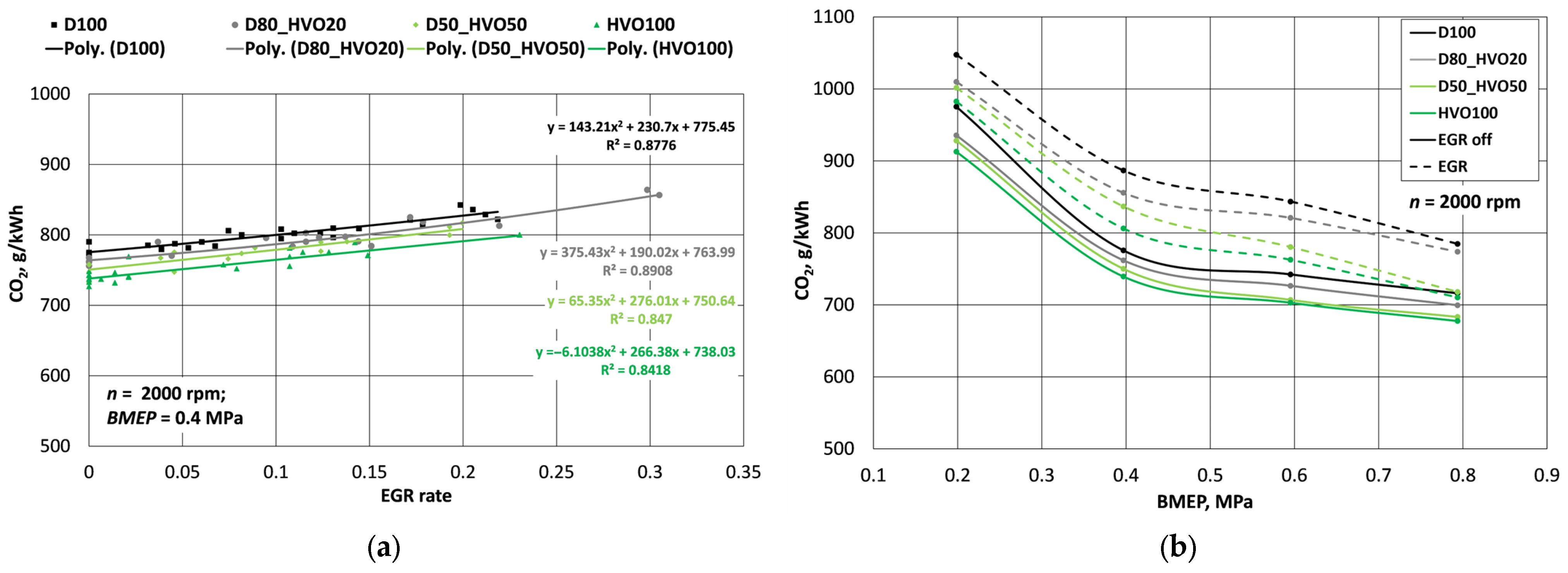
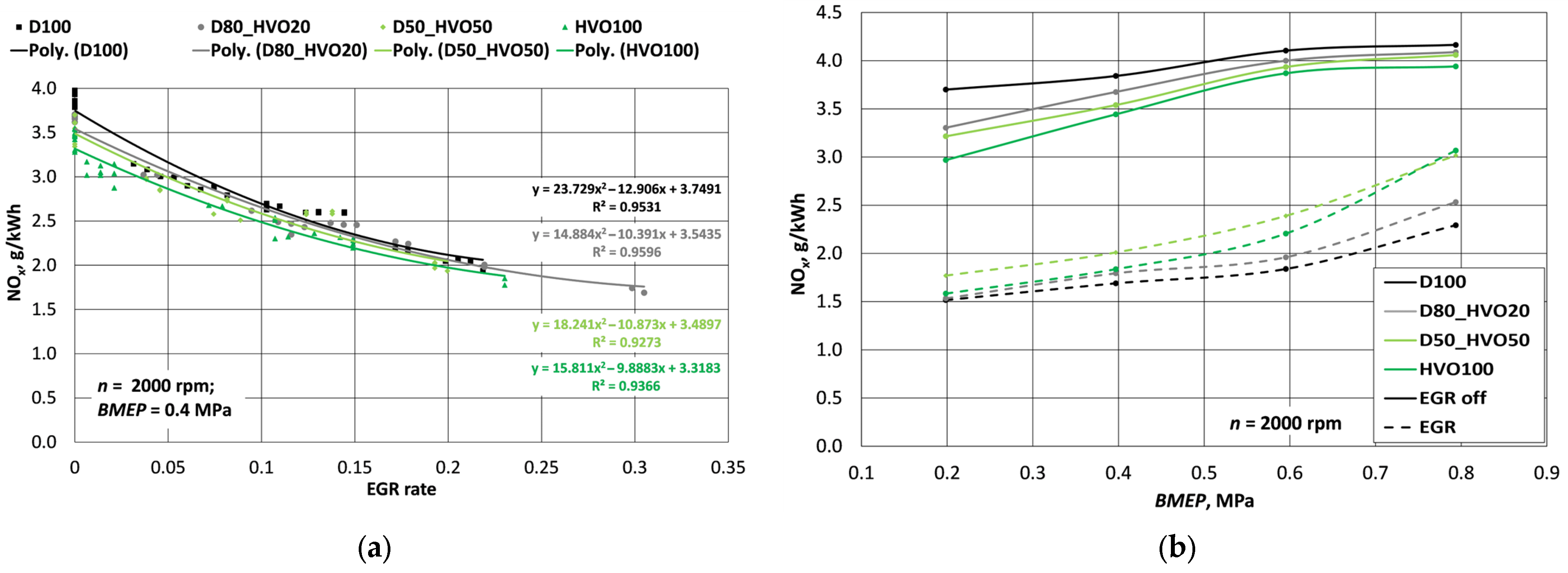
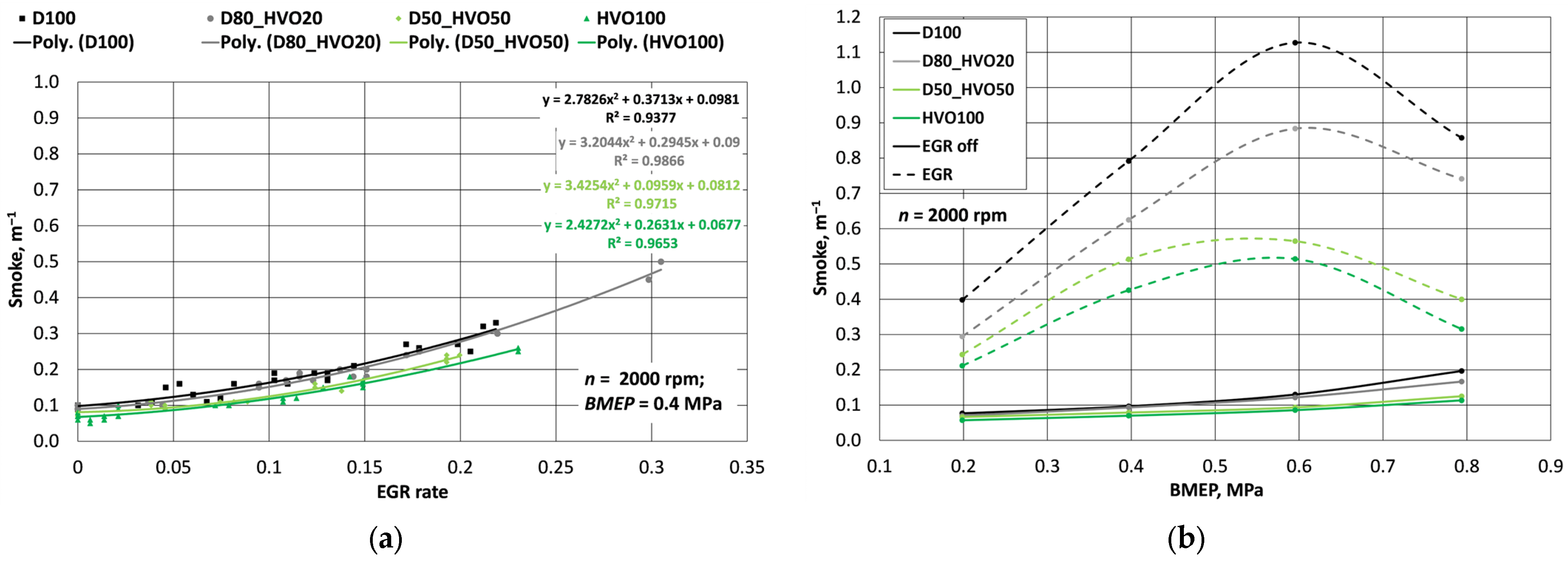
- In general, the addition of HVO reduced smoke opacity by 24–42% and decreased CO2 emissions by 4.7–5.2%, mainly due to lower carbon intensity (C/H ratio) and reduced brake-specific fuel consumption. However, the greater injected fuel volume can lead to an ECU-driven reduction in EGR and an advance in SOI, which may partly offset the anticipated reduction in NOx emissions. In EGR-on modes, high-HVO fuels may exhibit NOx levels close to those of D100, because of the combined effect of lower EGR dilution and earlier combustion phasing.
- The results indicate that replacing conventional fuels with various mixtures without recalibration can shift the combustion and emissions trade-off, especially when maintaining unadjusted EGR and injection control. Achieving the best overall performance requires fuel-specific optimization of EGR and SOI control maps when changing the diesel–HVO composition.
- These outcomes are particularly relevant for medium-speed marine diesel generator and auxiliary engines, where maintaining the desired efficiency, NOx, and smoke trade-off requires fuel-specific optimization of EGR and SOI control maps when the diesel–HVO composition is changed.
Author Contributions
Funding
Institutional Review Board Statement
Informed Consent Statement
Data Availability Statement
Acknowledgments
Conflicts of Interest
Abbreviations
| ATDC | After top dead center |
| BMEP | Brake mean effective pressure |
| BSFC | Brake specific fuel consumption |
| BTDC | Before top dead center |
| BTE | Brake thermal efficiency |
| CAD | Crank angle degree |
| CO | Carbon monoxide |
| CO2 | Carbon dioxide |
| D_100 | Pure diesel fuel |
| D50_HVO50 | 50/50 (v/v) diesel–HVO blend |
| D80_HVO20 | 80/20 (v/v) diesel–HVO blend |
| ECU | Electronic control unit |
| EGR | Exhaust gases recirculation |
| FAME | Fatty acid methyl esters |
| GHG | Greenhouse gas |
| HC | Hydrocarbons |
| HVO | Hydrotreated vegetable oil |
| HVO_100 | Pure hydrotreated vegetable oil |
| ID | Ignition delay |
| IMO | International Maritime Organization |
| MBF | Mass burned fraction |
| NOx | Nitrogen oxides |
| NSCR | Non-selective catalytic reduction |
| pmax | Maximum cylinder pressure |
| ROHR | Rate of heat release |
| SCR | Selective catalytic reduction |
| SOI | Start of fuel injection |
References
- International Maritime Organization Note by the International Maritime Organization to the UNFCCC Talanoa Dialogue. Available online: https://unfccc.int/sites/default/files/resource/250_IMO%20submission_Talanoa%20Dialogue_April%202018.pdf (accessed on 4 March 2026).
- Megiso, T.D.; Ancha, V.R.; Nallamothu, R.B. Effects of Graphene Oxide Nanoparticles on the Performance and Emissions of Marine Microalgae-Derived Biodiesel-Diesel Blends in a Diesel Engine. Energy Convers. Manag. X 2025, 28, 101259. [Google Scholar] [CrossRef]
- Liang, Z.; Chen, Z.; Awad, O.I.; Wang, Y.; Wan, Y.; Mohammed, M.K. Numerical Investigation on Spray, Combustion and Emission Characteristics of Marine Engine for Polyol Solution-Heavy Fuel Oil Blend Fuels. Case Stud. Therm. Eng. 2024, 53, 103814. [Google Scholar] [CrossRef]
- Sun, X.; Ning, J.; Liang, X.; Jing, G.; Chen, Y.; Chen, G. Effect of Direct Water Injection on Combustion and Emissions Characteristics of Marine Diesel Engines. Fuel 2022, 309, 122213. [Google Scholar] [CrossRef]
- Ma, Z.; Yang, Y.; Sun, P.; Xing, H.; Duan, S.; Qu, H.; Zou, Y. Analysis of Marine Diesel Engine Emission Characteristics of Different Power Ranges in China. Atmosphere 2021, 12, 1108. [Google Scholar] [CrossRef]
- Chong, C.T.; Ng, J.-H. Progress in Transport Biofuel Production Technologies. In Advanced Transport Biofuels; Elsevier: Amsterdam, The Netherlands, 2025; pp. 69–156. [Google Scholar]
- McCaffery, C.; Zhu, H.; Sabbir Ahmed, C.M.; Canchola, A.; Chen, J.Y.; Li, C.; Johnson, K.C.; Durbin, T.D.; Lin, Y.-H.; Karavalakis, G. Effects of Hydrogenated Vegetable Oil (HVO) and HVO/Biodiesel Blends on the Physicochemical and Toxicological Properties of Emissions from an off-Road Heavy-Duty Diesel Engine. Fuel 2022, 323, 124283. [Google Scholar] [CrossRef]
- Ismael, M.A.; Rosli, M.A.F.; Aziz, A.R.A.; Mohammed, S.E.; Opatola, R.A.; El-Adawy, M. Gas to Liquid (GTL) Role in Diesel Engine: Fuel Characteristics and Emission: A Review. Clean. Eng. Technol. 2024, 18, 100706. [Google Scholar] [CrossRef]
- Ben Abdelwahed, S.; Hamdi, F.; Gassoumi, M.; Yahya, I.; Moussa, N.; Alrasheedi, N.H.; Ennetta, R.; Louhichi, B. Enhancing Diesel Engine Performance Through Hydrogen Addition. Fire 2025, 8, 206. [Google Scholar] [CrossRef]
- Dimitriadis, A.; Žvar Baškovič, U.; Vihar, R.; Seljak, T.; Dimaratos, A.; Bezergianni, S.; Samaras, Z.; Katrašnik, T. Emission Reduction in a Light-Duty Compression Ignition Engine Using Hydrotreated Vegetable Oils (HVO) through Recalibration of Exhaust Gas Recirculation Rate and Main Injection Timing. J. Energy Inst. 2026, 126, 102475. [Google Scholar] [CrossRef]
- Deng, J.; Wang, X.; Wei, Z.; Wang, L.; Wang, C.; Chen, Z. A Review of NOx and SOx Emission Reduction Technologies for Marine Diesel Engines and the Potential Evaluation of Liquefied Natural Gas Fuelled Vessels. Sci. Total Environ. 2021, 766, 144319. [Google Scholar] [CrossRef]
- Boscarato, I.; Hickey, N.; Kašpar, J.; Prati, M.V.; Mariani, A. Green Shipping: Marine Engine Pollution Abatement Using a Combined Catalyst/Seawater Scrubber System. 1. Effect of Catalyst. J. Catal. 2015, 328, 248–257. [Google Scholar] [CrossRef]
- Pukazhselvan, D.; Sandhya, K.S.; Fagg, D.P.; Blaabjerg, F. The Future of Clean Transportation: Hydrogen, Batteries, Ammonia, and Green Methane in Perspective. Renew. Sustain. Energy Rev. 2026, 226, 116286. [Google Scholar] [CrossRef]
- Perčić, M.; Vladimir, N.; Koričan, M.; Jovanović, I.; Haramina, T. Alternative Fuels for the Marine Sector and Their Applicability for Purse Seiners in a Life-Cycle Framework. Appl. Sci. 2023, 13, 13068. [Google Scholar] [CrossRef]
- Zhang, W.; Wang, J.; Qin, G.; Kuntal, S.; Gong, F.; Yan, R. Review of the State-of-the-Art of Alternative Marine Fuels: A Viable Approach to Zero-Carbon Shipping. Clean. Logist. Supply Chain 2025, 16, 100232. [Google Scholar] [CrossRef]
- Foretich, A.; Zaimes, G.G.; Hawkins, T.R.; Newes, E. Challenges and Opportunities for Alternative Fuels in the Maritime Sector. Marit. Transp. Res. 2021, 2, 100033. [Google Scholar] [CrossRef]
- Chen, S.; Wang, X.; Zheng, S.; Chen, Y. Exploring Drivers Shaping the Choice of Alternative-Fueled New Vessels. J. Mar. Sci. Eng. 2023, 11, 1896. [Google Scholar] [CrossRef]
- Kondratenko, A.A.; Zhang, M.; Tavakoli, S.; Altarriba, E.; Hirdaris, S. Existing Technologies and Scientific Advancements to Decarbonize Shipping by Retrofitting. Renew. Sustain. Energy Rev. 2025, 212, 115430. [Google Scholar] [CrossRef]
- Arias, A.; Nika, C.-E.; Vasilaki, V.; Feijoo, G.; Moreira, M.T.; Katsou, E. Assessing the Future Prospects of Emerging Technologies for Shipping and Aviation Biofuels: A Critical Review. Renew. Sustain. Energy Rev. 2024, 197, 114427. [Google Scholar] [CrossRef]
- Manikandan, S.; Vickram, S.; Devarajan, Y. Cutting-Edge Technologies: Biofuel Innovations in Marine Propulsion Systems to Lower Black Carbon Emissions. Results Eng. 2025, 25, 104095. [Google Scholar] [CrossRef]
- Chountalas, T.D.; Founti, M.; Hountalas, D.T. Review of Biofuel Effect on Emissions of Various Types of Marine Propulsion and Auxiliary Engines. Energies 2023, 16, 4647. [Google Scholar] [CrossRef]
- Gomes, D.M.; Neto, R.C.; Baptista, P.; Ramos, C.P.; Correia, C.B.; Rocha, R. A Review of Advanced Techniques in Hydrotreated Vegetable Oils Production and Life Cycle Analysis. Biomass Bioenergy 2025, 194, 107689. [Google Scholar] [CrossRef]
- Hunicz, J.; Mikulski, M.; Shukla, P.C.; Gęca, M.S. Partially Premixed Combustion of Hydrotreated Vegetable Oil in a Diesel Engine: Sensitivity to Boost and Exhaust Gas Recirculation. Fuel 2022, 307, 121910. [Google Scholar] [CrossRef]
- Jaworski, A.; Kuszewski, H.; Szpica, D.; Woś, P.; Balawender, K.; Ustrzycki, A.; Krzemiński, A.; Jakubowski, M.; Mieczkowski, G.; Borawski, A.; et al. Comparative Study on the Effects of Diesel Fuel, Hydrotreated Vegetable Oil, and Its Blends with Pyrolytic Oils on Pollutant Emissions and Fuel Consumption of a Diesel Engine Under WLTC Dynamic Test Conditions. Energies 2025, 18, 5038. [Google Scholar] [CrossRef]
- Pullen, J.; Saeed, K. Factors Affecting Biodiesel Engine Performance and Exhaust Emissions—Part I: Review. Energy 2014, 72, 1–16. [Google Scholar] [CrossRef]
- Kuszewski, H.; Jaworski, A.; Szpica, D. Performance of Hydrotreated Vegetable Oil–Diesel Blends: Ignition and Combustion Insights. Energies 2025, 18, 5962. [Google Scholar] [CrossRef]
- Cosseddu, C.; Spedicato, T.; Pennazio, D.; Vassallo, A.; Fittavolini, C. Experimental Assessment of Drop-In Hydrotreated Vegetable Oil (HVO) in a Medium-Duty B7 Diesel Engine for Low-Emissions Marine Applications; SAE: Warrendale, PA, USA, 2024. [Google Scholar]
- Renewable Diesel. Available online: https://www.neste.com/products-and-innovation/neste-my-renewable-diesel (accessed on 3 March 2026).
- Preem Redefine HVO100 Launches—The World’s First Nordic Swan Ecolabel HVO100. Available online: https://www.preem.com/en/press-and-news/news/2025/preem-redefine-hvo100-launches--the-worlds-first-nordic-swan-ecolabel-hvo100 (accessed on 3 March 2026).
- Diamond Green Diesel|Renewable Fuel for a Low-Carbon World. Available online: https://www.diamondgreendiesel.com/ (accessed on 3 March 2026).
- Pinto, G.M.; Da Costa, R.B.R.; De Souza, T.A.Z.; Rosa, A.J.A.C.; Raats, O.O.; Roque, L.F.A.; Frez, G.V.; Coronado, C.J.R. Experimental Investigation of Performance and Emissions of a CI Engine Operating with HVO and Farnesane in Dual-Fuel Mode with Natural Gas and Biogas. Energy 2023, 277, 127648. [Google Scholar] [CrossRef]
- Pinto, G.M.; De Souza, T.A.Z.; Da Costa, R.B.R.; Roque, L.F.A.; Frez, G.V.; Coronado, C.J.R. Combustion, Performance and Emission Analyses of a CI Engine Operating with Renewable Diesel Fuels (HVO/FARNESANE) under Dual-Fuel Mode through Hydrogen Port Injection. Int. J. Hydrogen Energy 2023, 48, 19713–19732. [Google Scholar] [CrossRef]
- Bortel, I.; Vávra, J.; Takáts, M. Effect of HVO Fuel Mixtures on Emissions and Performance of a Passenger Car Size Diesel Engine. Renew. Energy 2019, 140, 680–691. [Google Scholar] [CrossRef]
- Roque, L.F.A.; Da Costa, R.B.R.; De Souza, T.A.Z.; Coronado, C.J.R.; Pinto, G.M.; Cintra, A.J.A.; Raats, O.O.; Oliveira, B.M.; Frez, G.V.; Alves, L.F.R. Experimental Analysis and Life Cycle Assessment of Green Diesel (HVO) in Dual-Fuel Operation with Bioethanol. J. Clean. Prod. 2023, 389, 135989. [Google Scholar] [CrossRef]
- Diezemann, M.; Tzschentke, M.; Garbe, T.; Kemski, T. HVO100—The Pathway to a CO2-Neutral Future for Diesel Engine Drives. MTZ Worldw. 2025, 86, 44–49. [Google Scholar] [CrossRef]
- Ushakov, S.; Lefebvre, N. Assessment of Hydrotreated Vegetable Oil (HVO) Applicability as an Alternative Marine Fuel Based on Its Performance and Emissions Characteristics. SAE Int. J. Fuels Lubr. 2019, 12, 109–120. [Google Scholar] [CrossRef]
- Suarez-Bertoa, R.; Kousoulidou, M.; Clairotte, M.; Giechaskiel, B.; Nuottimäki, J.; Sarjovaara, T.; Lonza, L. Impact of HVO Blends on Modern Diesel Passenger Cars Emissions during Real World Operation. Fuel 2019, 235, 1427–1435. [Google Scholar] [CrossRef]
- Dimitriadis, A.; Natsios, I.; Dimaratos, A.; Katsaounis, D.; Samaras, Z.; Bezergianni, S.; Lehto, K. Evaluation of a Hydrotreated Vegetable Oil (HVO) and Effects on Emissions of a Passenger Car Diesel Engine. Front. Mech. Eng. 2018, 4, 7. [Google Scholar] [CrossRef]
- Park, Y.; Kim, H. Advanced Design of Naval Ship Propulsion Systems Utilizing Battery-Diesel Generator Hybrid Electric Propulsion Systems. J. Mar. Sci. Eng. 2024, 12, 2034. [Google Scholar] [CrossRef]
- Lamas Galdo, M.I. (Ed.) Marine Engines Performance and Emissions; MDPI—Multidisciplinary Digital Publishing Institute: Basel, Switzerland, 2021. [Google Scholar]
- Vargün, M.; Yılmaz, I.T.; Özsezen, A.N.; Sayın, C. A Study on Combustion Parameters and Exhaust Characteristics in a Diesel Engine Using Alternative Fuels at Different SOI and GPP. Processes 2025, 13, 3024. [Google Scholar] [CrossRef]
- Huang, H.; Tian, J.; Li, J.; Tan, D. Effects of Different Exhaust Gas Recirculation (EGR) Rates on Combustion and Emission Characteristics of Biodiesel–Diesel Blended Fuel Based on an Improved Chemical Mechanism. Energies 2022, 15, 4153. [Google Scholar] [CrossRef]
- Bohl, T.; Smallbone, A.; Tian, G.; Roskilly, A.P. Particulate Number and NO Trade-off Comparisons between HVO and Mineral Diesel in HD Applications. Fuel 2018, 215, 90–101. [Google Scholar] [CrossRef]
- d’Ambrosio, S.; Mancarella, A.; Manelli, A. Utilization of Hydrotreated Vegetable Oil (HVO) in a Euro 6 Dual-Loop EGR Diesel Engine: Behavior as a Drop-In Fuel and Potentialities along Calibration Parameter Sweeps. Energies 2022, 15, 7202. [Google Scholar] [CrossRef]
- Millo, F.; Jafari, M.J.; Piano, A.; Postrioti, L.; Brizi, G.; Vassallo, A.; Pesce, F.; Fittavolini, C. A Fundamental Study of Injection and Combustion Characteristics of Neat Hydrotreated Vegetable Oil (HVO) as a Fuel for Light-Duty Diesel Engines. Fuel 2025, 379, 132951. [Google Scholar] [CrossRef]
- No, S.-Y. Application of Hydrotreated Vegetable Oil from Triglyceride Based Biomass to CI Engines—A Review. Fuel 2014, 115, 88–96. [Google Scholar] [CrossRef]
- Liu, B.; Zhang, F.; Zhao, C.; An, X.; Pei, H. A Novel Lambda-Based EGR (Exhaust Gas Recirculation) Modulation Method for a Turbocharged Diesel Engine under Transient Operation. Energy 2016, 96, 521–530. [Google Scholar] [CrossRef]
- Dimitriadis, A.; Seljak, T.; Vihar, R.; Žvar Baškovič, U.; Dimaratos, A.; Bezergianni, S.; Samaras, Z.; Katrašnik, T. Improving PM-NOx Trade-off with Paraffinic Fuels: A Study towards Diesel Engine Optimization with HVO. Fuel 2020, 265, 116921. [Google Scholar] [CrossRef]
- Zheng, M.; Reader, G.T.; Hawley, J.G. Diesel Engine Exhaust Gas Recirculation—A Review on Advanced and Novel Concepts. Energy Convers. Manag. 2004, 45, 883–900. [Google Scholar] [CrossRef]
- Parravicini, M.; Barro, C.; Boulouchos, K. Experimental Characterization of GTL, HVO, and OME Based Alternative Fuels for Diesel Engines. Fuel 2021, 292, 120177. [Google Scholar] [CrossRef]
- Tang, X.; Wang, P.; Zhang, Z.; Zhang, F.; Shi, L.; Deng, K. Effects of High-Pressure and Donor-Cylinder Exhaust Gas Recirculation on Fuel Economy and Emissions of Marine Diesel Engines. Fuel 2022, 309, 122226. [Google Scholar] [CrossRef]
- Lebedevas, S.; Lazareva, N.; Rapalis, P.; Daukšys, V.; Čepaitis, T. Influence of Marine Fuel Properties on Ignition, Injection Delay and Energy Efficiency. Transport 2021, 36, 339–353. [Google Scholar] [CrossRef]
- Szeto, W.; Leung, D.Y.C. Is Hydrotreated Vegetable Oil a Superior Substitute for Fossil Diesel? A Comprehensive Review on Physicochemical Properties, Engine Performance and Emissions. Fuel 2022, 327, 125065. [Google Scholar] [CrossRef]
- Mancarella, A.; Marello, O.; d’Ambrosio, S.; Manelli, A. Emission Reduction Potential of Hydrotreated Vegetable Oil (HVO) in a Dual-Loop EGR Diesel Engine with Fuel-Specific Optimized Calibration. Int. J. Engine Res. 2026, 14680874251401364. [Google Scholar] [CrossRef]
- Napolitano, P.; Guido, C.; Beatrice, C.; Pellegrini, L. Impact of Hydrocracked Diesel Fuel and Hydrotreated Vegetable Oil Blends on the Fuel Consumption of Automotive Diesel Engines. Fuel 2018, 222, 718–732. [Google Scholar] [CrossRef]
- Ni, P.; Wang, X.; Li, H. A Review on Regulations, Current Status, Effects and Reduction Strategies of Emissions for Marine Diesel Engines. Fuel 2020, 279, 118477. [Google Scholar] [CrossRef]
- Qi, D.; Ma, L.; Chen, R.; Jin, X.; Xie, M. Effects of EGR Rate on the Combustion and Emission Characteristics of Diesel-Palm Oil-Ethanol Ternary Blends Used in a CRDI Diesel Engine with Double Injection Strategy. Appl. Therm. Eng. 2021, 199, 117530. [Google Scholar] [CrossRef]



| Parameter | Specification |
|---|---|
| Engine displacement | 1896 cm3 |
| Cylinders/valve train | 4/OHC |
| Compression ratio | 19.5:1 |
| Rated power | 66 kW at 4000 rpm |
| Maximum torque | 180 Nm at 2000–2500 rpm |
| Cylinder bore | 79.5 mm |
| Piston stroke | 95.5 mm |
| Fuel injection system | Direct injection (single-stage) |
| Injection pump type | Axial-piston distributor-type pump |
| Injector nozzle | Hole-type |
| Nozzle–holder assembly | Two-spring design |
| Nozzle opening pressure | 190–200 bar |
| Properties | D_100 | D80_HVO20 | D50_HVO50 | HVO_100 |
|---|---|---|---|---|
| Diesel/HVO content, % (v/v) | 100/0 | 80/20 | 50/50 | 0/100 |
| Stoichiometric air to fuel ratio, kg air/1 kg fuel | 14.50 | 14.61 | 14.79 | 15.10 |
| C/H ratio | 6.80 | 6.57 | 6.22 | 5.60 |
| Density at 15 °C, g/mL | 830.0 | 820.5 | 805.8 | 780.0 |
| Lower heating value (LHV), MJ/kg | 42.82 | 42.97 | 43.21 | 43.63 |
| Cetane number | 50.8 | 54.7 | 61.8 | 77.4 |
Disclaimer/Publisher’s Note: The statements, opinions and data contained in all publications are solely those of the individual author(s) and contributor(s) and not of MDPI and/or the editor(s). MDPI and/or the editor(s) disclaim responsibility for any injury to people or property resulting from any ideas, methods, instructions or products referred to in the content. |
© 2026 by the authors. Licensee MDPI, Basel, Switzerland. This article is an open access article distributed under the terms and conditions of the Creative Commons Attribution (CC BY) license.
Share and Cite
Rimkus, A.; Žaglinskis, J.; Pukalskas, S. Effects of Hydrotreated Vegetable Oil and Diesel Blends on Combustion, Energy Performance, and Emissions of a Compression Ignition Engine Under EGR-Controlled Operation. J. Mar. Sci. Eng. 2026, 14, 665. https://doi.org/10.3390/jmse14070665
Rimkus A, Žaglinskis J, Pukalskas S. Effects of Hydrotreated Vegetable Oil and Diesel Blends on Combustion, Energy Performance, and Emissions of a Compression Ignition Engine Under EGR-Controlled Operation. Journal of Marine Science and Engineering. 2026; 14(7):665. https://doi.org/10.3390/jmse14070665
Chicago/Turabian StyleRimkus, Alfredas, Justas Žaglinskis, and Saugirdas Pukalskas. 2026. "Effects of Hydrotreated Vegetable Oil and Diesel Blends on Combustion, Energy Performance, and Emissions of a Compression Ignition Engine Under EGR-Controlled Operation" Journal of Marine Science and Engineering 14, no. 7: 665. https://doi.org/10.3390/jmse14070665
APA StyleRimkus, A., Žaglinskis, J., & Pukalskas, S. (2026). Effects of Hydrotreated Vegetable Oil and Diesel Blends on Combustion, Energy Performance, and Emissions of a Compression Ignition Engine Under EGR-Controlled Operation. Journal of Marine Science and Engineering, 14(7), 665. https://doi.org/10.3390/jmse14070665