4.1. Experiment Results of the Amplitude Response
This section provides a systematic comparative analysis of the non-dimensional amplitudes and frequencies from the 2-DOF experiments to characterize the dynamic response of the vertical rigid cylinder under VIV excitation. The non-dimensional amplitude results in CF are assessed by comparison with reference data from classical 1-DOF cylinder experiments, which provides a consistency check for the present measurements. Simultaneously, comparison of the IL response shows a distinct distribution of response amplitudes under 2-DOF conditions. Six representative cases are selected to characterize the typical stages of the VIV evolution process. The initial excitation stage () marks the onset of the VIV phenomenon, where the vibration amplitude gradually increases from rest while remaining relatively small. The early lock-in stage () is associated with the establishment of frequency synchronization between the structure and the flow, leading to a significant amplification of the vibration response and enhanced fluid-structure coupling. The core lock-in stage () is characterized by robust and stable synchronization between the vibration and vortex-shedding frequencies, producing nearly steady periodic oscillations and the most efficient energy exchange within the system, and is therefore treated as a representative phase in VIV studies. The late lock-in stage () exhibits increasing wake asymmetry and turbulence, indicating that the system is about to leave the lock-in region. The desynchronization stage () represents the termination of lock-in, during which vortex shedding returns to an unsynchronized state. The high-velocity stage () is dominated by turbulence, where vortex shedding becomes irregular and the VIV signature weakens markedly. The subsequent analyses of hydrodynamic responses and vortex-field evolution are also conducted based on the above stages.
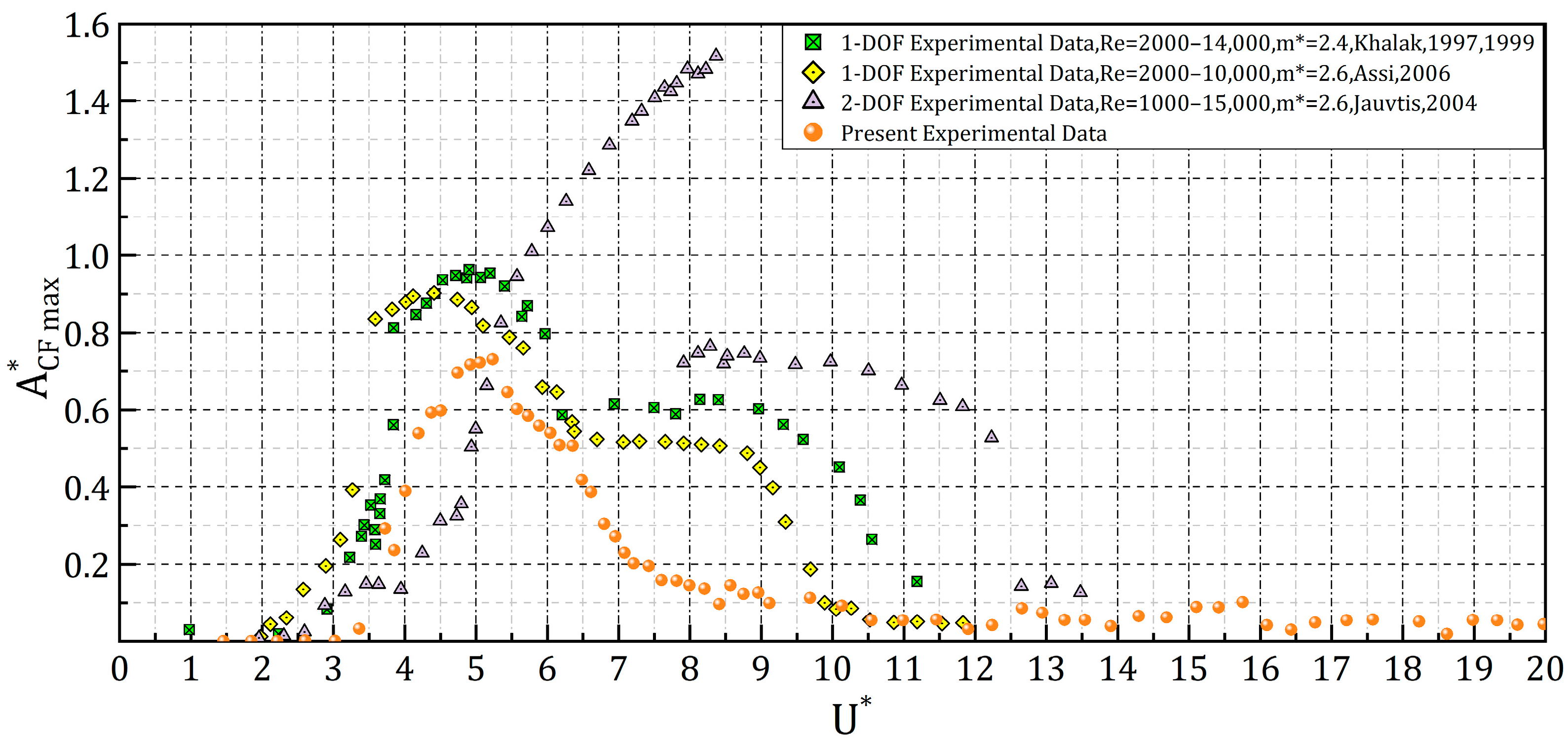
Figure 5 compares the maximum non-dimensional CF amplitude
of the present 2-DOF cylinder with previously published experimental results obtained at similar
[
5,
6,
31,
38]. In all cases, the amplitude increases with
, reaches a peak in the lock-in region, and then decreases as
increases further. The general lock-in trend is consistent. However, quantitative differences are evident. The 1-DOF experiments [
5,
6,
38] show peak amplitudes close to unity. In the present results, the maximum value is about 0.7 at
, and the lower branch is smoother with a more gradual amplitude growth. The 2-DOF experiments of Jauvtis and Williamson [
31] show a higher peak level and the presence of a super-upper branch under low mass–damping conditions. In the present study, no super-upper mode is observed within the investigated parameter range. This difference is mainly related to the mass–damping parameter. When the mass–damping level is low, fluid energy input can more easily overcome structural dissipation, and additional upper branches can develop. When the mass–damping level increases, energy dissipation becomes more significant, and the response amplitude is moderated. In addition, the present configuration allows motion in both CF and IL directions. Part of the hydrodynamic energy is redistributed from CF motion to IL motion. This redistribution reduces the concentration of response energy in the CF direction and contributes to the lower peak amplitude compared with the low mass–damping 2-DOF case reported by Jauvtis and Williamson.
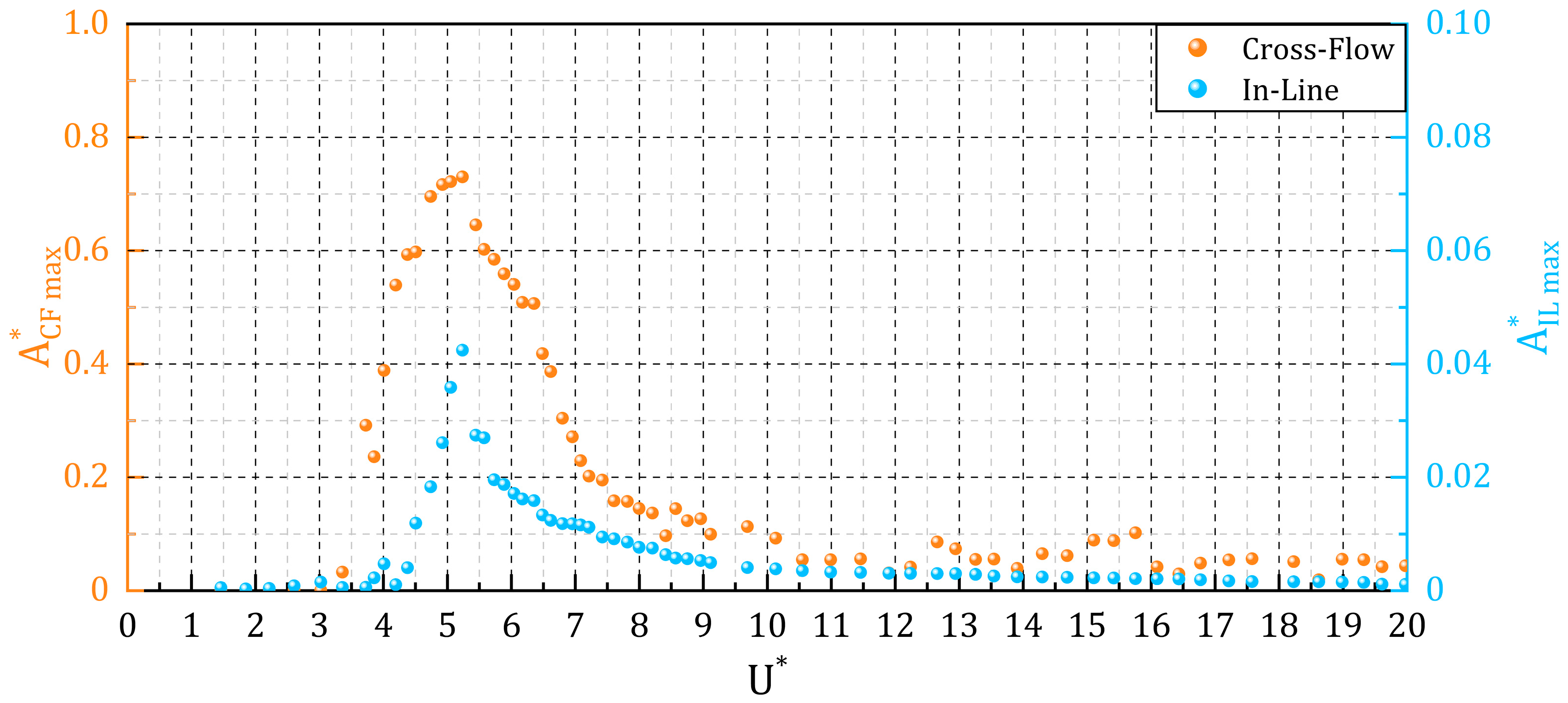
Figure 6 compares the maximum non-dimensional amplitudes in the CF direction and the IL direction. The CF amplitude is much larger than the IL amplitude over the full range of
. This shows that the CF motion dominates the VIV response. Inside the lock-in region, the IL amplitude rises at the same
where the CF amplitude approaches its peak. This indicates a clear CF–IL coupling. The hydrodynamic loading is not confined to the CF direction. Part of it is transferred to the IL direction through the coupled 2-DOF motion and the nonlinear flow–structure interaction. The IL motion is therefore not an independent response. It is mainly activated by the CF oscillation during lock-in. A useful comparison can be made with the 2-DOF experiments of Jauvtis and Williamson. Their data show stronger IL participation and different branch features. The main reason is the difference in the mass–damping parameter. A lower mass–damping level allows a larger response to develop and makes the IL component easier to sustain. A higher mass–damping level increases dissipation and reduces the IL amplitude. This difference is consistent with the present trend, where the IL amplitude remains smaller than the CF amplitude even when coupling is strongest. The force analysis and the PIV results discussed later are used to support this coupling and the related wake changes.
Frequency is a key variable in this experiment. The cylinder is designed with the same natural frequency in CF and IL. Therefore, the evolution of frequency with
is important.
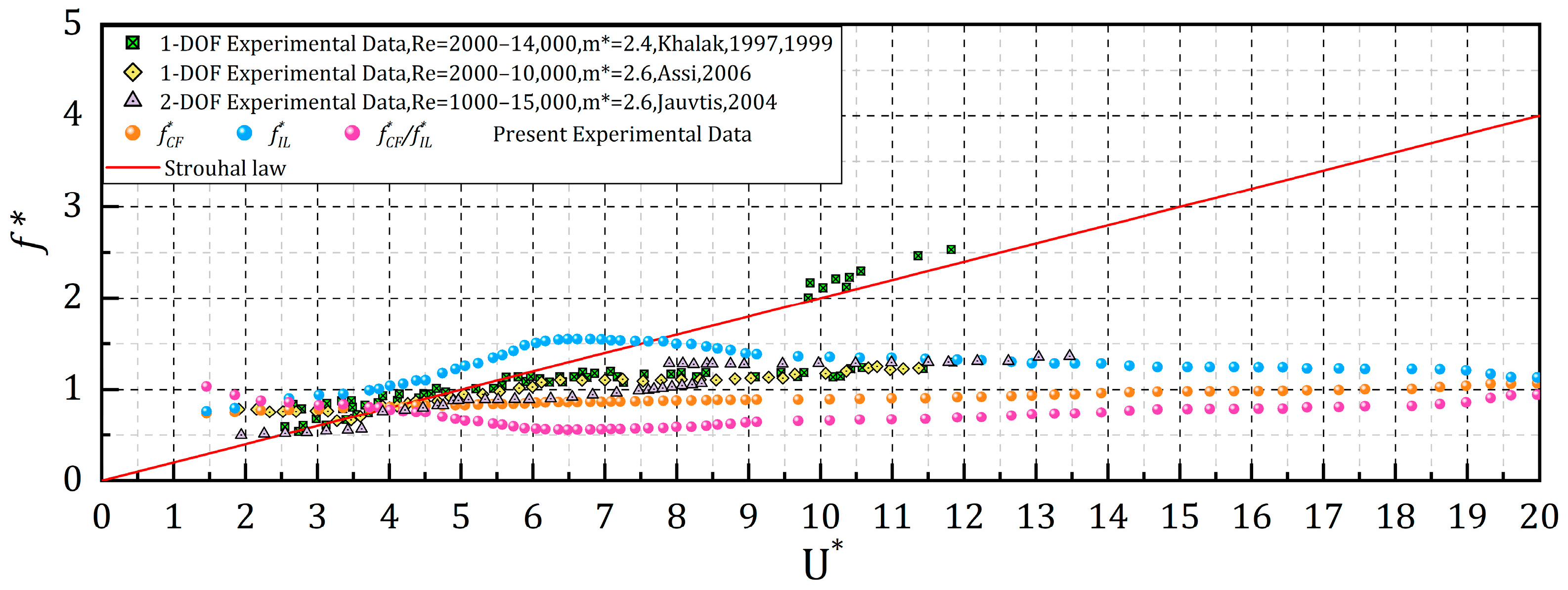
Figure 7 shows the non-dimensional CF and IL frequencies as functions of
. In the lock-in range, approximately
, the CF frequency forms a clear plateau. In this interval, the dominant CF frequency remains close to the structural natural frequency. This behavior represents classical VIV lock-in. Outside this range, the CF frequency increases with
. It gradually follows the linear trend predicted by the Strouhal relation. The IL frequency behaves differently. Near the onset of lock-in, it approaches the CF frequency. In the middle and late lock-in stages, deviations appear. The IL frequency does not remain strictly constant. This indicates that the IL motion is mainly driven by the CF oscillation, but it is also affected by CF–IL coupling and flow nonlinearity. As a result, its frequency response is more variable. The ratio
decreases from 0.8781 at the initial excitation stage to 0.5640 in the late lock-in stage. During desynchronization, the ratio increases to 0.6410. This change reflects stronger IL participation inside the lock-in region, while CF remains dominant. A comparison with the 2-DOF experiments of Jauvtis and Williamson shows different frequency branch characteristics. In their study, stronger IL participation and additional frequency features were observed. The main cause is the difference in the mass–damping parameter. Lower mass–damping conditions allow IL motion to persist and develop more complex frequency components. In the present system, the mass–damping level is higher. Structural dissipation limits the growth of IL oscillation. Therefore, the IL frequency curve is less extended and remains secondary to the CF plateau.
The results in
Figure 5,
Figure 6 and
Figure 7 collectively reveal a stage-dependent hydrodynamic load-redistribution mechanism in the present 2-DOF system, rather than isolated amplitude or frequency variations. First,
Figure 5 shows that the CF amplitude reaches a moderated peak and exhibits a smoother lower branch compared with both classical 1-DOF cases and the low mass–damping 2-DOF configuration of Jauvtis and Williamson. This reduction is not merely quantitative. It indicates that the hydrodynamic load induced by vortex shedding is no longer concentrated solely in the CF direction. Instead, under coupled 2-DOF conditions, part of the load is redistributed between directions, which limits CF peak growth and reshapes the branch structure. Second,
Figure 6 demonstrates that IL motion does not emerge as an independent excitation branch. Although CF motion remains dominant, the IL amplitude increases distinctly inside the lock-in region. This increase reflects a coupling-induced load-transfer pathway in which hydrodynamic loading is partially redirected from CF to IL through structural interaction. The response therefore departs from the single-direction load balance that characterizes 1-DOF systems. Third,
Figure 7 shows that the CF frequency forms a stable lock-in plateau, while the IL frequency exhibits stronger variability. The CF component governs the primary synchronization rhythm, whereas the IL component reflects nonlinear inter-DOF coupling. The absence of a comparable IL frequency plateau explains why IL amplitude growth is accompanied by increased frequency variability. Compared with low mass–damping configurations reported in earlier studies, the present system operates under a different load balance. The combined effects of structural dissipation and bidirectional motion prevent excessive load concentration in CF and suppress the development of additional upper branches. As a result, amplitude growth remains moderated, synchronization remains CF-dominated, and no super-upper branch appears within the investigated parameter range. Taken together, the moderated CF peak, the coupling-induced IL activation, and the distinct CF–IL frequency behavior constitute a unified dynamic mechanism governed by hydrodynamic load redistribution. The additional structural freedom reshapes the directional distribution of hydrodynamic loading and modifies the synchronization structure of vortex-induced vibration. This quantitative linkage between amplitude moderation, frequency organization, and directional load redistribution clarifies how 2-DOF coupling alters the classical VIV response framework.
During the VIV process, periodic vortex shedding in the wake causes the surface pressure on the cylinder to reverse periodically along the CF direction, forming the dominant oscillatory component of the lift coefficient
. Consequently, the dominant frequency of
corresponds closely to the vortex-shedding frequency, making
a reliable observable proxy for the vortex-shedding frequency. Compared with directly extracting the shedding frequency from the flow field, the lift signal provides a higher signal-to-noise ratio and stronger correlation with structural response, making it particularly suitable for quantitative analysis of energy transfer and coupling mechanisms in VIV.
Table 4 presents the non-dimensional frequency results for representative VIV stages. Combined with
Figure 7, it can be observed that the vibration frequencies of the structure and hydrodynamic forces in the2-DOF rigid cylinder exhibit systematic evolution across different VIV stages, which differs significantly from that of a single-DOF system. In the CF direction, the structural non-dimensional frequency
and the dominant lift frequency
remain highly consistent within the lock-in region, with a frequency difference below 0.01; notably, during the core lock-in stage (
), the relative deviation is only 0.34%. This consistency suggests that the wake vortex shedding is effectively modulated by the CF structural response, approaching near-synchronization. Unlike the idealized single-DOF theory predicting perfect lock-in at
, the experimental results show a maximum frequency ratio of about 87%, revealing a sub-lock-in deviation caused by damping and three-dimensional wake effects that cannot be neglected in real flow conditions.
The IL response exhibits a pronounced flow–structure coupling enhancement, with its structural vibration frequency increasing from 0.87623 in the initial excitation stage to 1.28701 (+46.9%) in the core lock-in stage, and further reaching 1.53826 (+75.6% relative to the initial stage) in the late lock-in stage. The corresponding frequency deviation from the natural frequency reaches up to +53.8%, indicating a significant amplification and high-frequency shift of the IL response driven by inter-DOF energy transfer. Meanwhile, the dominant drag coefficient frequency remains highly consistent with the IL structural frequency, with a relative deviation below 0.22% (as low as 0.013%) except for the initial excitation case. This consistency supports the view that nonlinear hydrodynamic loading in the IL direction tends to act as a primary energy-output channel in the present cases. Moreover, the harmonic relation further validates the nonlinear modulation and load redistribution mechanisms inherent in 2-DOF VIV. Compared with classical single-DOF theoretical predictions, the present results reveal distinct discrepancies in lock-in range, frequency amplitude, and response coherence, highlighting the higher-order coupling and nonlinear effects that may be associated with realistic experimental conditions.
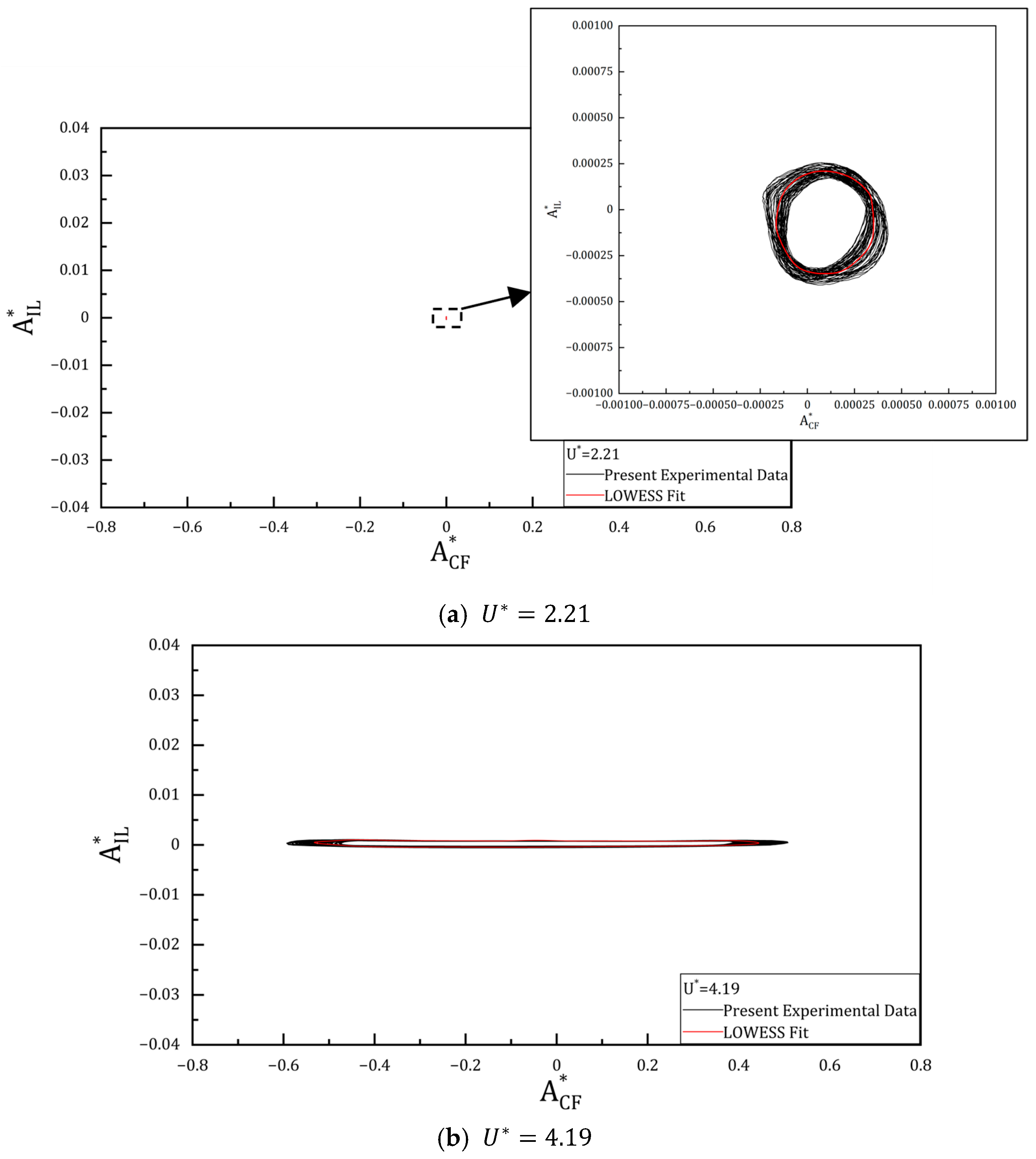
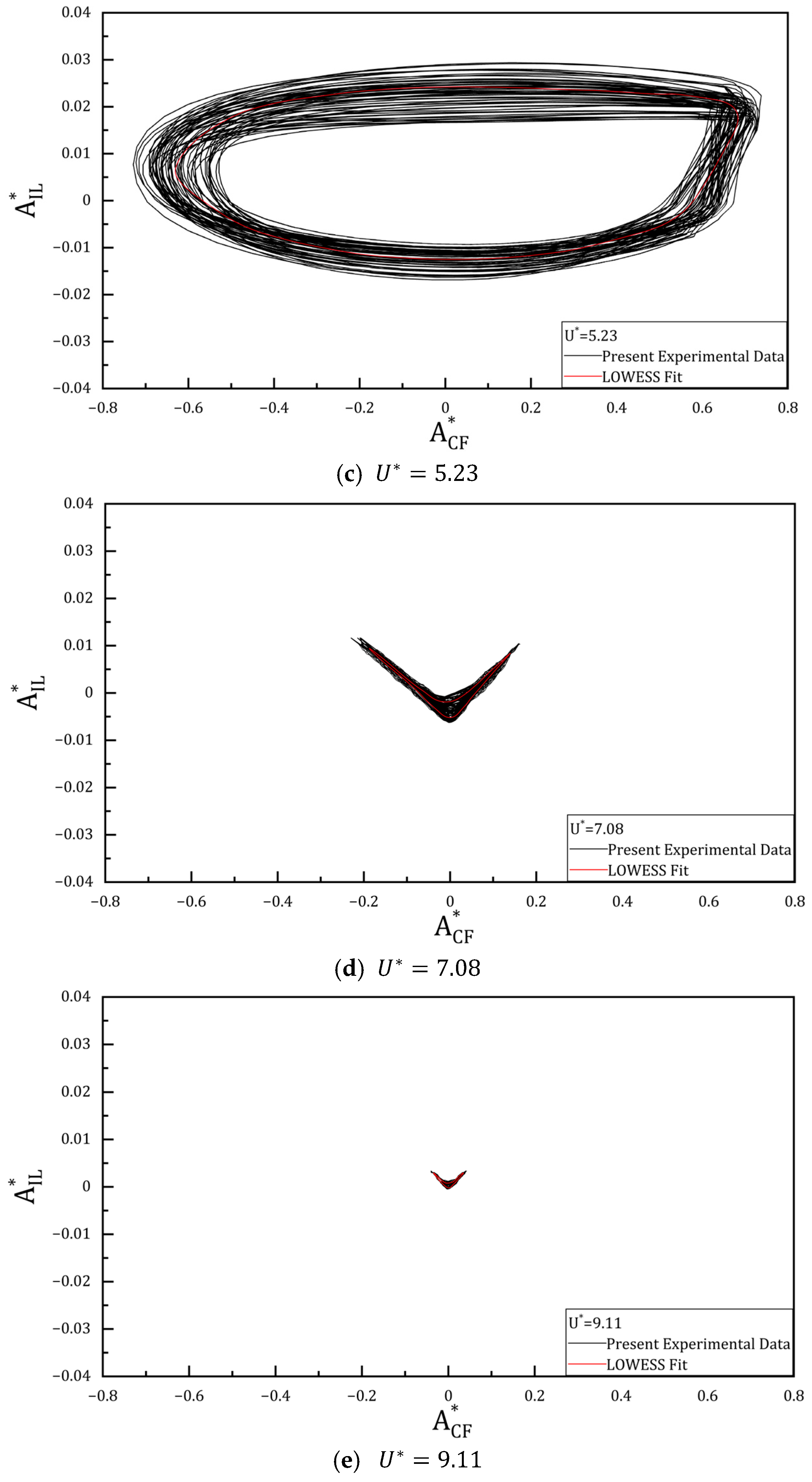
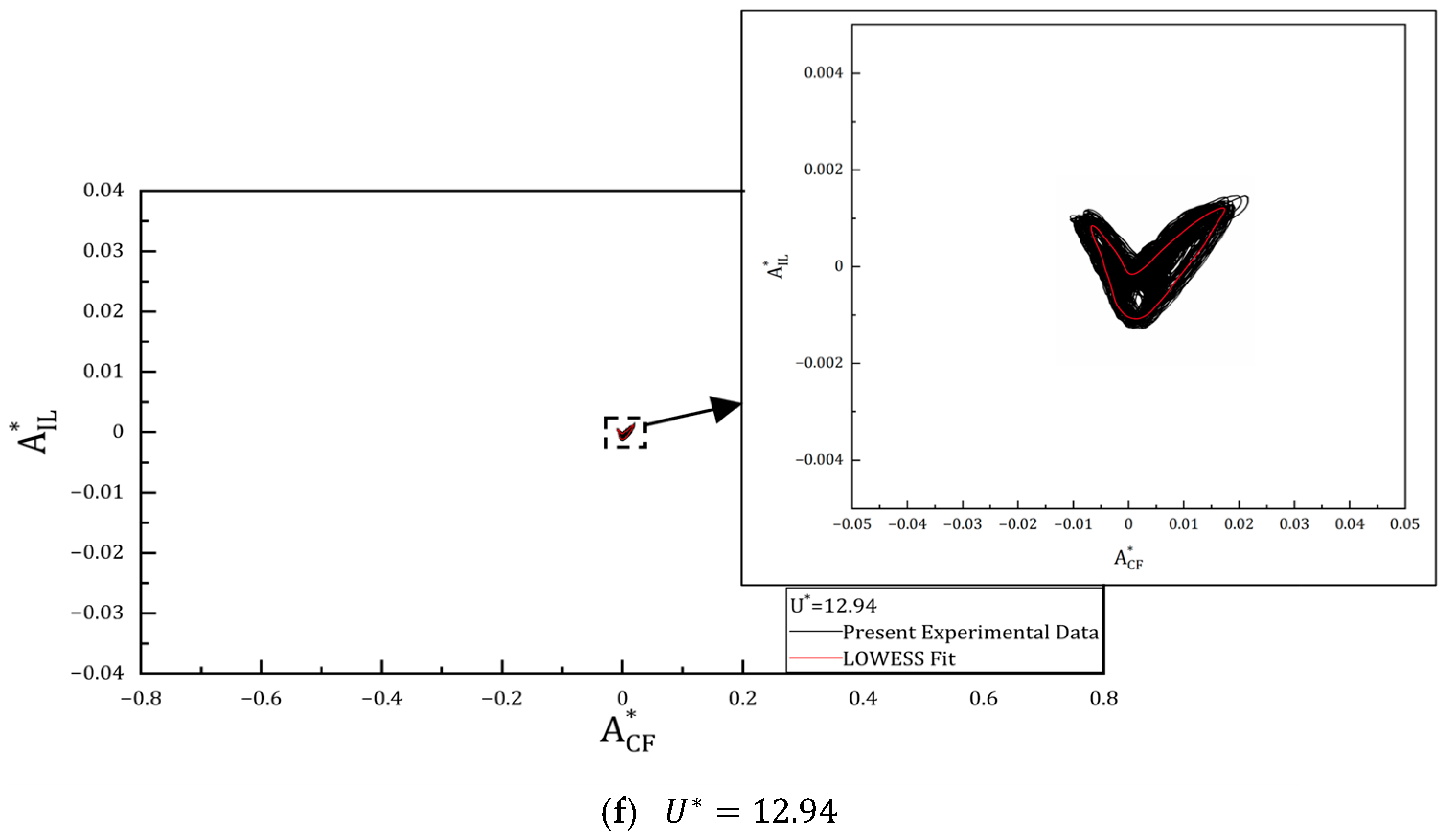
The oscillation trajectories provide a phase-space description of the 2-DOF VIV response. Six representative reduced velocities are selected, and the CF–IL trajectories are shown together with LOWESS fitted curves. Similar trajectory evolutions have been widely reported in previous 2-DOF studies, where line-like motion, elliptical loops, and contracted clusters correspond to the excitation, lock-in, and desynchronization stages [
6,
9,
31,
39]. However, the present study does not only reproduce these geometric patterns. It further examines how the evolution of trajectory shape and enclosed area reflects stage-dependent load redistribution and coupling strength in the 2-DOF system, thereby clarifying how CF-dominant motion activates IL motion during lock-in and how this coupling weakens after desynchronization.
At low
(
Figure 8a,b), the trajectories collapse into nearly straight lines aligned with the CF axis, and the IL displacement remains very small. Similar line-like trajectories have been reported in weak-coupling regimes of 2-DOF cylinders. In the present case, this pattern indicates that hydrodynamic loading acts mainly in the CF direction, structural coupling is weak, and IL motion remains passive. The response therefore approaches a 1-DOF CF-dominated VIV mode. When the system enters the lock-in region (
Figure 8c), the trajectories expand rapidly and form large closed loops with smooth elliptical shapes, which are also characteristic of strong lock-in reported in earlier experiments. In the present system, the increase in IL amplitude occurs simultaneously with the CF peak region identified in
Figure 5, indicating that part of the hydrodynamic loading driving CF motion is redistributed to IL motion through structural interaction. The enlargement of the enclosed phase-plane area reflects increased participation of IL in the synchronized VIV response. Compared with the low mass–damping configuration reported by Jauvtis and Williamson, the present trajectories remain more compact and do not exhibit excessively large loops or additional upper branches, suggesting moderated amplitude growth under the current structural configuration. Near the end of the lock-in region (
Figure 8d), the loops shrink and transform into a narrow V-shaped pattern. Similar degenerated trajectories have been observed close to desynchronization in previous studies. In the present case, the reduction of enclosed area corresponds to decreasing IL amplitude and gradual loss of synchronization, while CF motion still dominates. In the desynchronization region (
Figure 8e,f), the trajectories contract further and cluster near the origin, consistent with non-synchronized responses documented in earlier VIV research. Both CF and IL amplitudes become small, and the motion becomes weak and irregular. Unlike the low mass–damping system, the present configuration does not develop complex additional branches, and the response decays smoothly as synchronization is lost. Overall, the trajectory evolution from straight-line motion to large closed loops and finally to contracted clusters demonstrates how coupling develops and then weakens with increasing
. The CF motion remains dominant, while IL motion is activated inside the lock-in region through load redistribution and decreases after desynchronization. The trajectory variation therefore provides phase-space evidence of controlled coupling intensity and stage-dependent load redistribution in the present 2-DOF VIV system.
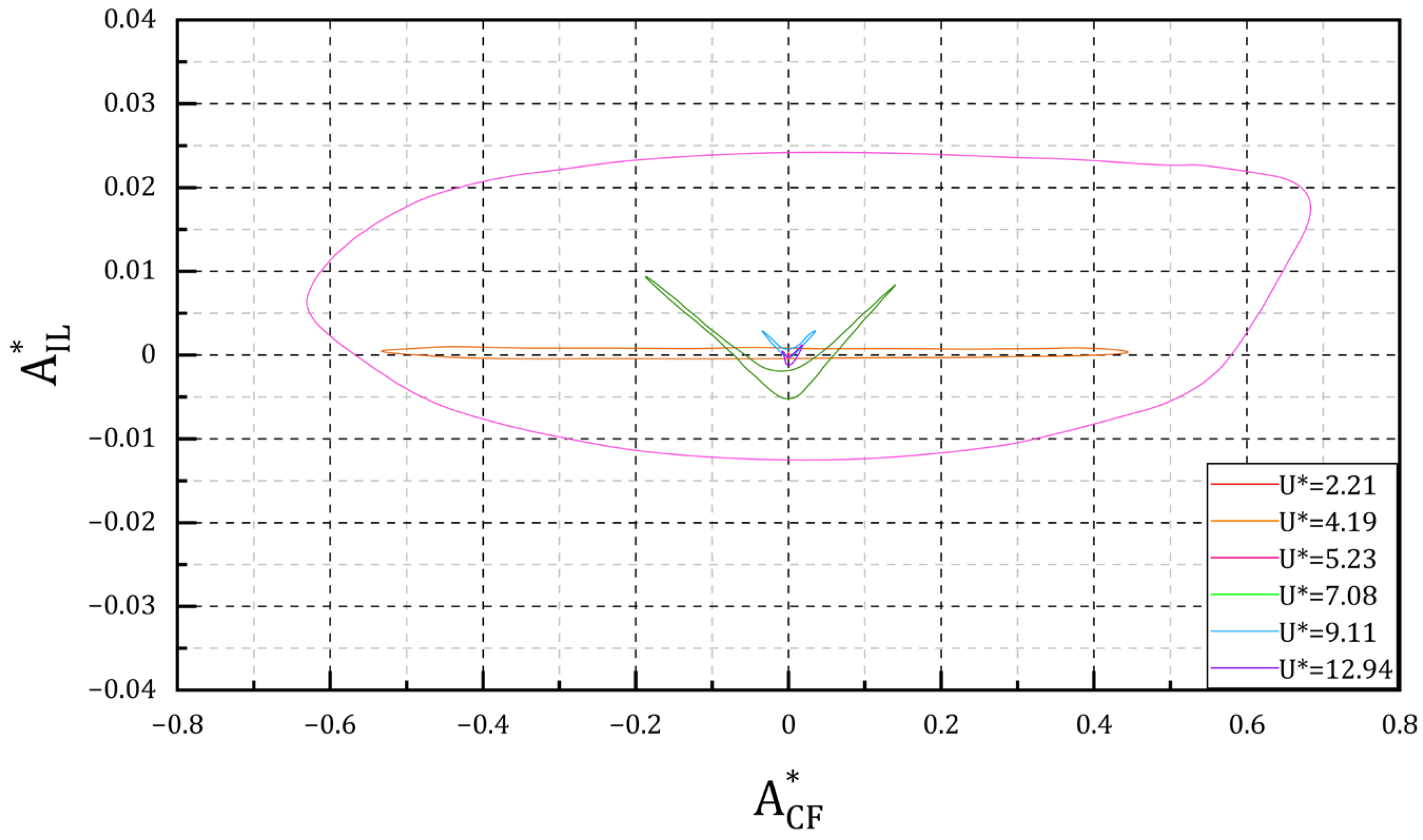
Figure 9 compiles the LOWESS fitted curves under all representative conditions and presents a compact phase-space representation of trajectory evolution with increasing
. The variation of trajectory size, inclination, and enclosed area reflects systematic changes in coupling intensity and hydrodynamic load redistribution within the 2-DOF system. At low
, the fitted curve remains close to a straight line along the CF axis. The IL component is negligible. This indicates that hydrodynamic loading acts primarily in the CF direction and structural coupling is weak. As
increases into the lock-in region, the fitted curve expands into a pronounced inclined elliptical loop. The enlargement of the enclosed area corresponds directly to the CF amplitude peak shown in
Figure 5 and the frequency synchronization plateau shown in
Figure 7. This indicates that the strongest CF–IL interaction occurs within the lock-in range. The inclination of the loop reflects phase coupling between the two DOF and demonstrates that part of the hydrodynamic energy driving CF oscillation is redistributed to IL motion. With further increase in
, the loop contracts and gradually approaches a narrow pattern. The reduction of enclosed area is consistent with the decay of IL amplitude and the loss of frequency synchronization beyond lock-in. Unlike low mass–damping 2-DOF systems reported in earlier literature, the present system does not develop excessively enlarged loops or additional branches. Instead, the trajectory evolution remains controlled and smooth. Therefore,
Figure 9 integrates phase-space geometry with amplitude and frequency behavior, providing direct evidence that amplitude moderation, IL activation, and synchronization loss are linked through stage-dependent energy redistribution in the present 2-DOF configuration.
4.2. Experiment Results of the Hydrodynamic Force
The hydrodynamic force acting on the structure governs the amplitude and frequency characteristics of the oscillations and directly reflects the governing principles of fluid–structure interaction. In this section, the non-dimensional lift and drag are presented to illustrate the patterns and differences in the hydrodynamic response of the 2-DOF rigid cylinder. The modulation of the hydrodynamic-force peak magnitude and plateau width by hydrodynamic load redistribution and coupling within a 2-DOF rigid cylinder oscillations is discussed and interpreted based on the measured responses. These findings provide mechanics-based evidence for analyzing the dynamical response and VIV of the 2-DOF rigid cylinder oscillations.
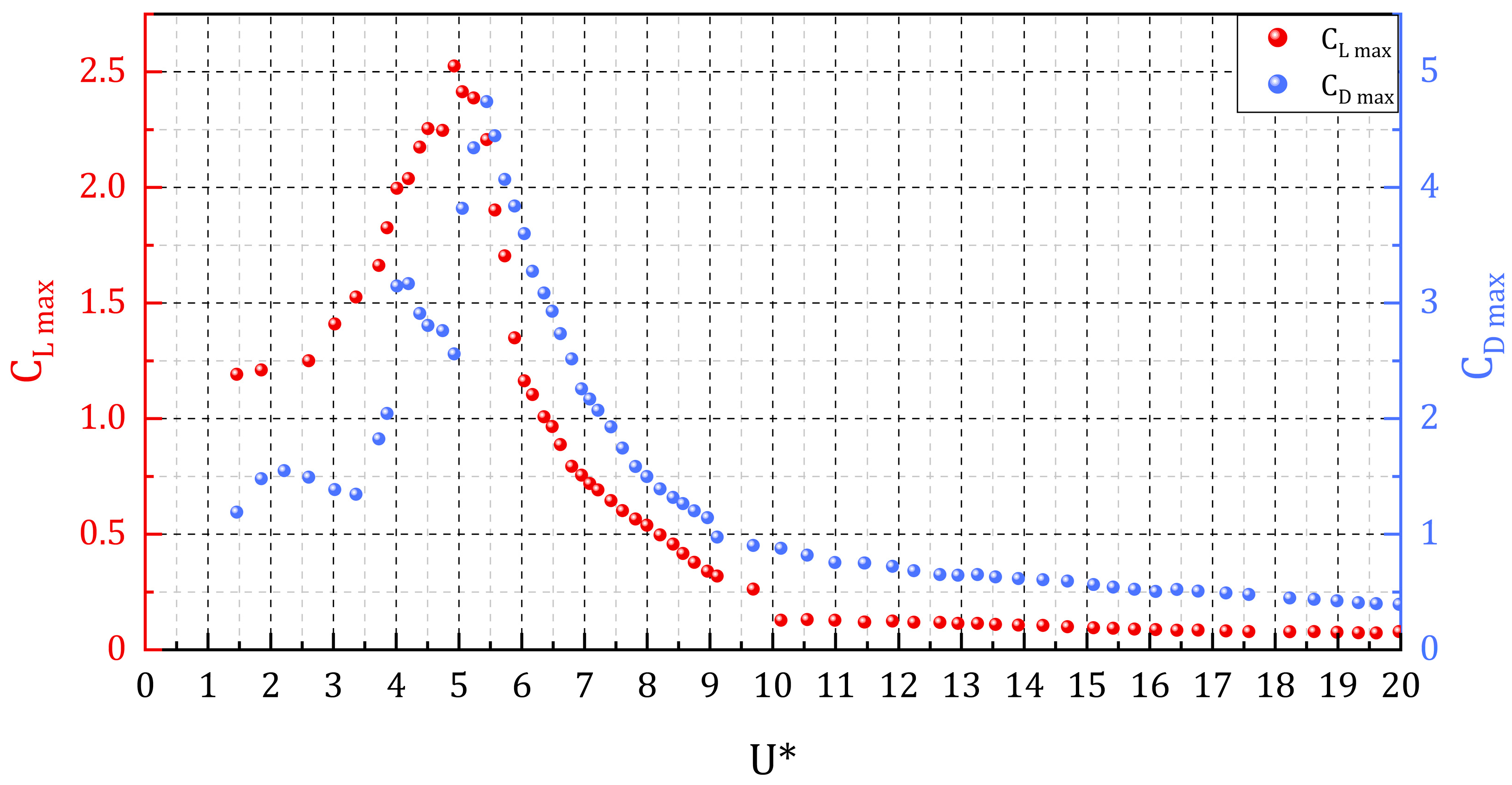
Figure 10 presents the evolution of the maximum hydrodynamic force coefficients with increasing
. Upon entering the lock-in region,
rises sharply and exhibits a pronounced primary peak in the low–to–intermediate
range, indicating phase coherence between CF vortex shedding and the structural natural frequency, which drives the
fluctuations to their maximum. With further increases in
, the coherence of the CF and IL responses diminishes, and
decays rapidly toward a low level. By contrast, the peak of
is delayed and, over higher
, develops into a broad and persistent high-value plateau within which mild undulations and local secondary maxima are observed. This behavior reflects persistent amplification of the relative-velocity contribution in the IL under coupling, accompanied by superposed multi-modal components.
The systematic difference in peak sequence and curve morphology shown in
Figure 10 provides direct quantitative support for the stage-dependent hydrodynamic load-redistribution mechanism identified in
Figure 5,
Figure 6 and
Figure 7. The CF-dominated oscillations strengthen first and decay earlier, while the IL-related response exhibits delayed amplification and persists over a broader
interval. This sequential evolution is not a trivial manifestation of CF–IL coupling. It reflects a directional redistribution of hydrodynamic loading during the lock-in process. Specifically, the early and sharp peak in
indicates that hydrodynamic loading initially concentrates in the CF direction as synchronization is established. As
increases further, the rapid decay of
together with the delayed and plateau-like development of
indicates that part of the hydrodynamic load is progressively sustained in the IL direction. The broader high-level band of
demonstrates that IL-associated loading remains effective even after the CF component begins to weaken. These load-sequence characteristics are consistent with the frequency organization shown in
Figure 7, where the CF frequency forms a stable lock-in plateau while the IL frequency exhibits greater variability. They also agree with the trajectory expansion and contraction observed in
Figure 8 and
Figure 9 and the wake-structure evolution discussed in the subsequent PIV analysis. Together, these results establish a coherent load–response–wake linkage: CF dominance governs the onset of synchronization, IL coupling becomes amplified within lock-in, and hydrodynamic loading is directionally redistributed as the system transitions toward desynchronization.
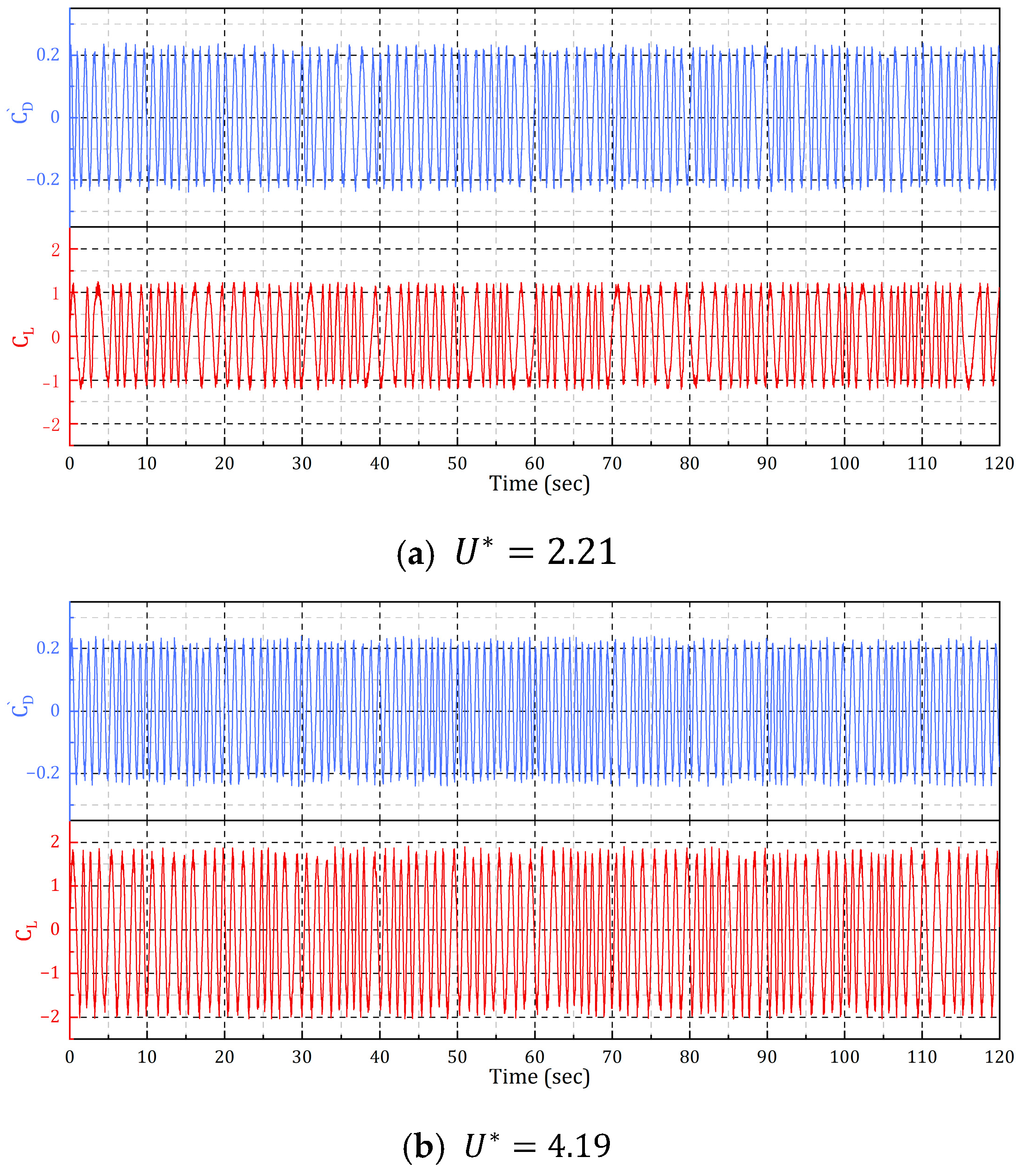
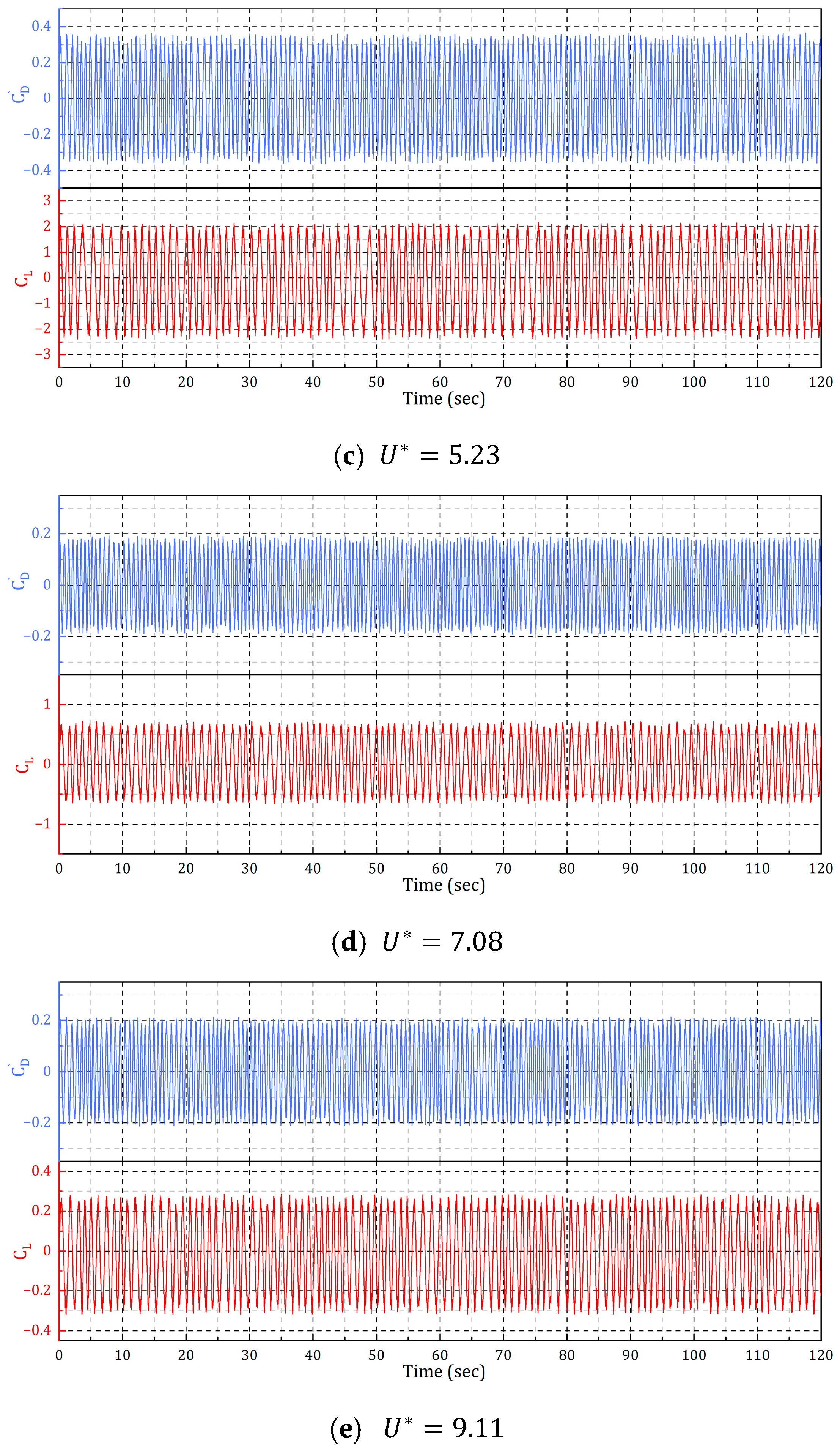
Figure 11 presents the time histories of
and the fluctuating component of
for five representative reduced velocities. For clarity, the mean value of
is subtracted before plotting, and only the oscillatory component is shown to better resolve the temporal fluctuations. For each condition, a temporally steady segment of the signal is selected for analysis to ensure statistical representativeness. At low
(
Figure 11a), both
and
exhibit small-amplitude fluctuations with weak periodicity. The signals show limited coherence and low energy content, which corresponds to the small vibration amplitudes observed in
Figure 5 and indicates weak fluid–structure interaction. In the early lock-in region (
Figure 11b), the oscillation amplitude of
increases rapidly and a clear periodic pattern emerges. The enhancement of
occurs earlier and more prominently than that of
, which is consistent with the peak-sequence difference shown in
Figure 10. The strengthening of lift fluctuations reflects the onset of phase synchronization between vortex shedding and the structural natural frequency. Within the core lock-in region (
Figure 11c), the largest oscillations are observed. Both coefficients display high-amplitude and temporally stable periodic behavior over long time intervals. The strong coherence of
confirms the frequency plateau identified in
Figure 7, while the sustained oscillatory component of
indicates continued coupling effects in the IL direction. This stage corresponds to the maximum vibration amplitudes and the strongest CF–IL interaction, as previously identified in the displacement and trajectory analyses. Near the end of the lock-in region (
Figure 11d), the fluctuation amplitudes of both coefficients decrease. The periodicity becomes less stable and slight amplitude modulation appears. The decay of
is more pronounced, while the oscillatory component of
remains relatively persistent for a longer interval. This temporal difference aligns with the broader plateau-like behavior of
observed in
Figure 10 and provides time-domain evidence of stage-dependent load redistribution. In the desynchronization stage (
Figure 11e), the oscillations further weaken and approach small, irregular fluctuations around zero. The coherence between fluid forcing and structural response is lost. Both coefficients exhibit reduced amplitude and diminished periodic stability, consistent with the collapse of the lock-in plateau in
Figure 7 and the contraction of phase trajectories shown in
Figure 9.
Overall, the evolution of the force signals from weak fluctuations to strong synchronized oscillations and finally to attenuated irregular behavior is consistent with the staged changes of vibration amplitude and frequency. The earlier amplification of
and the comparatively sustained oscillation of
provide direct time-domain support for the peak-sequence difference and load redistribution mechanism identified in
Figure 10. Together with the displacement, frequency, and trajectory analyses, these results establish a coherent evidence chain linking force evolution, synchronization dynamics, and stage-dependent coupling behavior in the present 2-DOF VIV system.
4.3. PIV Vorticity Field Analysis
The preceding analysis of structural oscillation amplitudes and hydrodynamic force responses provides an interpretation of the dynamical response behavior of the 2-DOF rigid cylinder. However, a comprehensive analysis of VIV necessitates an examination from the perspective of the flow field. Therefore, a comparative analysis of the vorticity field under representative conditions provides a direct reflection of the changes in wake patterns at different stages. It also is consistent with the results of amplitude, frequency, and force coefficients, supporting the coupling mechanism between CF and IL responses.
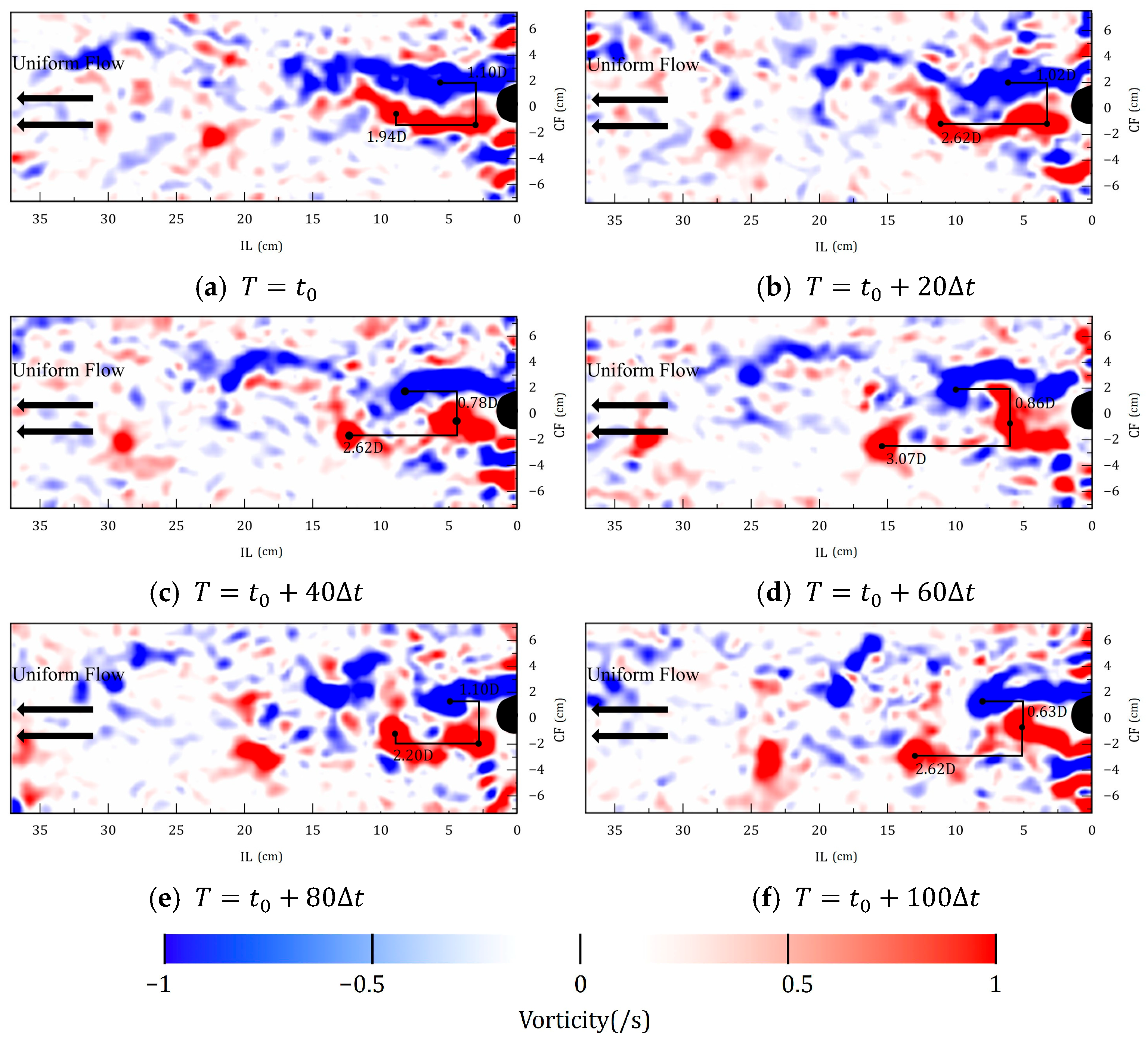
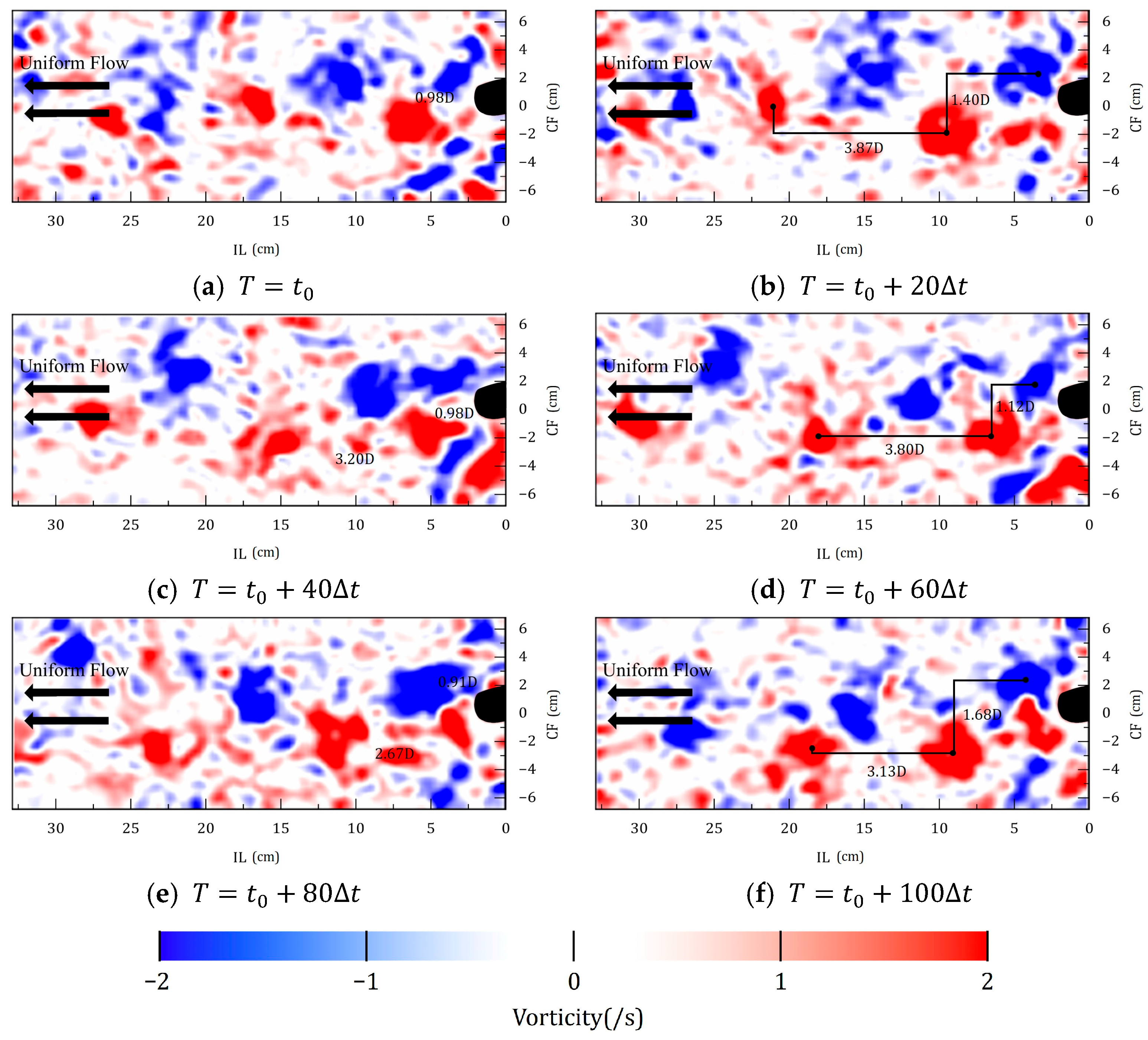
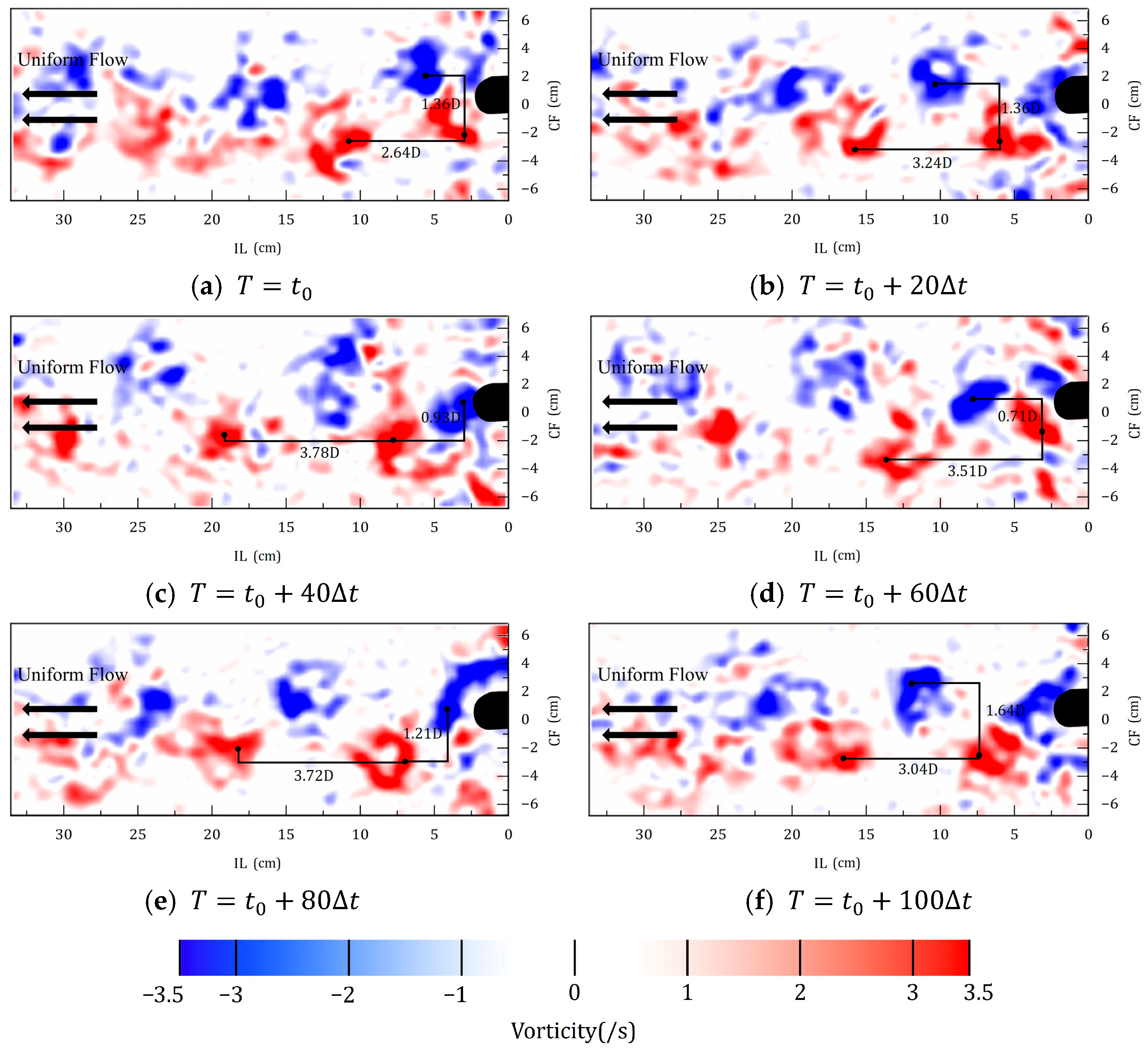
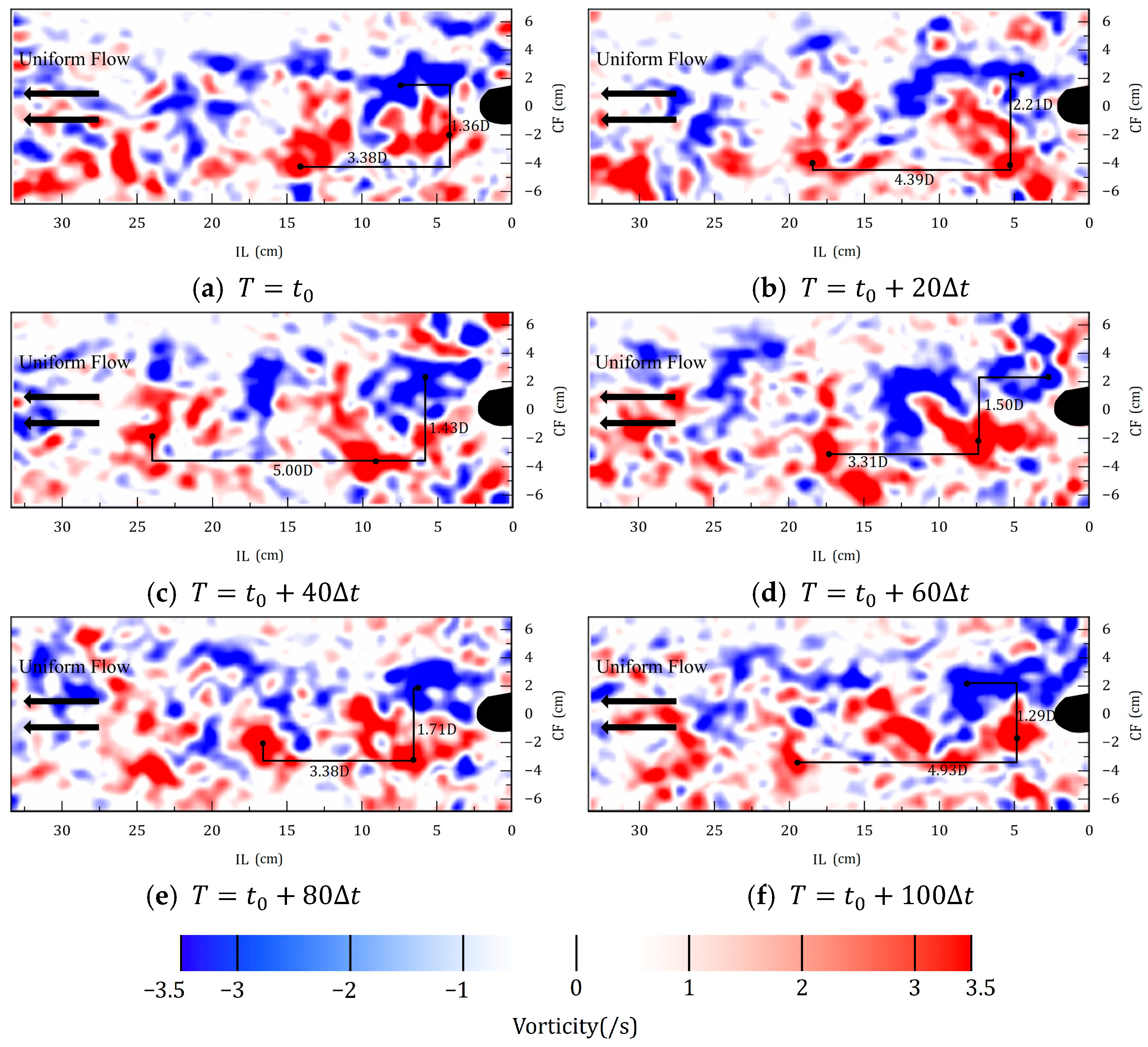
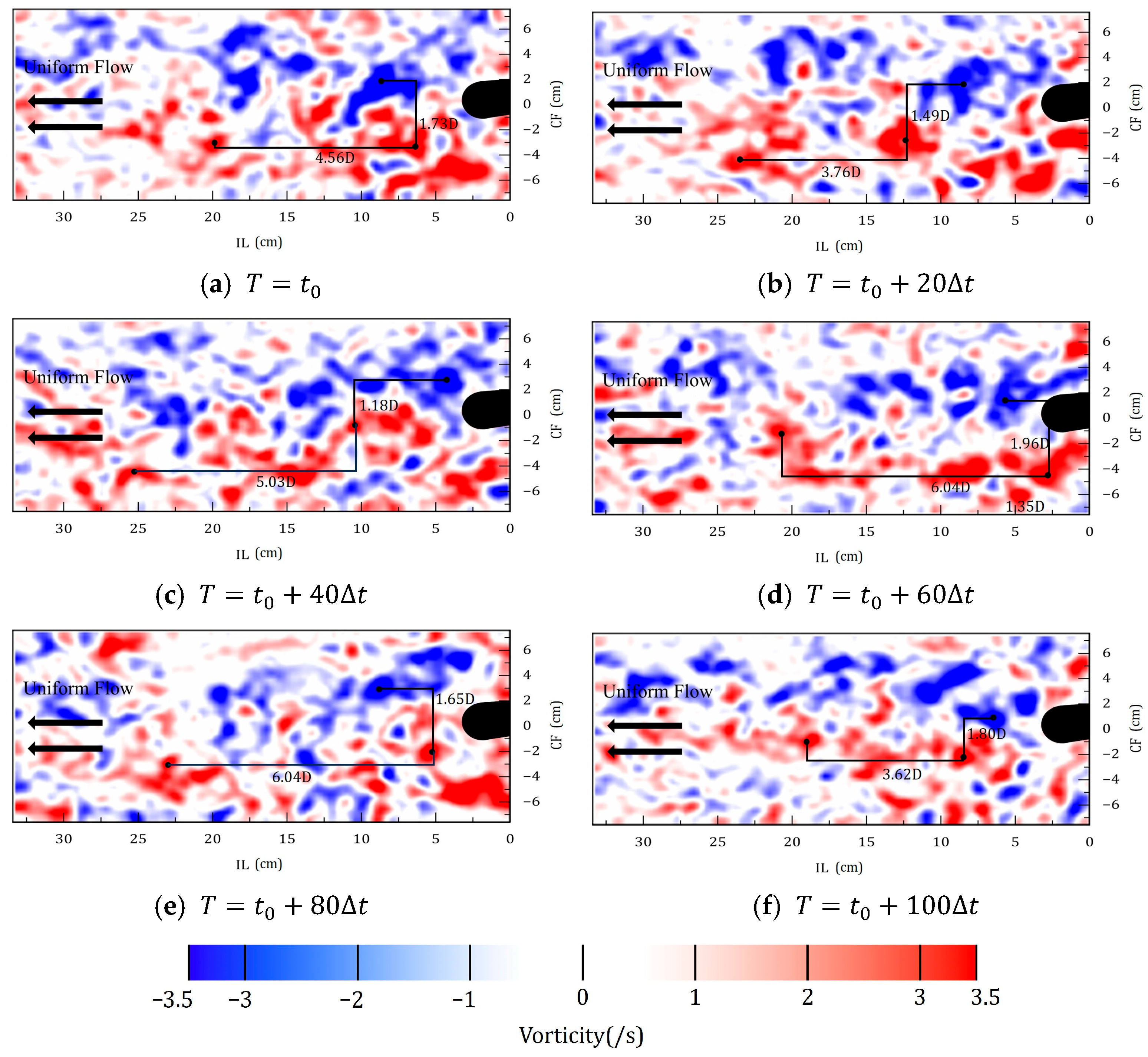
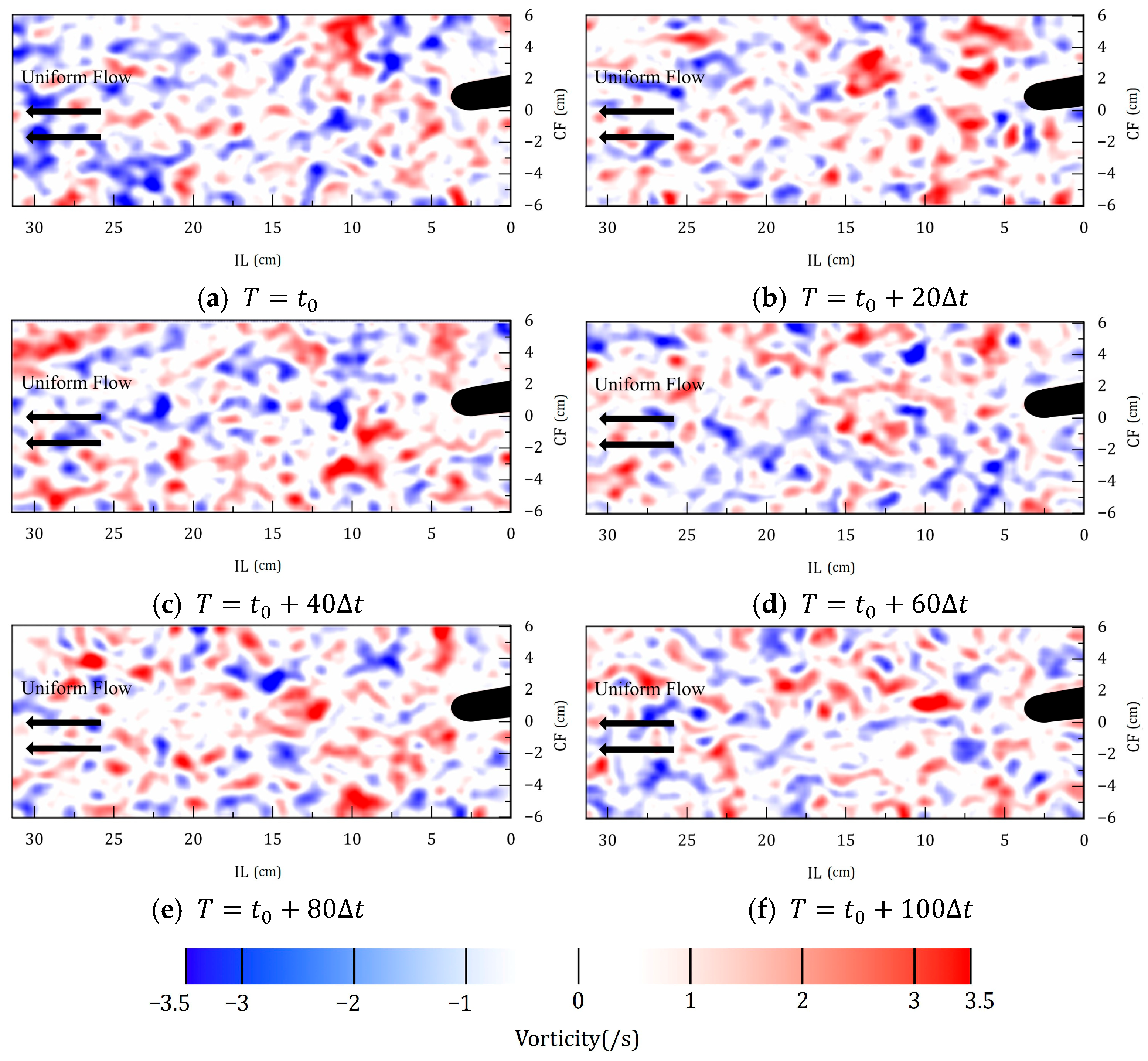
Figure 12,
Figure 13,
Figure 14,
Figure 15 and
Figure 16 presents the six representative conditions, corresponding to the analysis in
Figure 8, as discussed above. For each case, six instantaneous vorticity fields separated by 20
(
) are selected to illustrate the temporal evolution of the wake. The direction of the uniform flow is indicated by the black arrows, the spatial scale is marked, and the region occupied by the cylinder is masked. Owing to the perspective distortion of the wide-angle PIV camera and the subsequent image-processing procedure, the masked projection of the cylinder appears elongated rather than circular in the field of view. This black region therefore represents the optical projection of the cylinder rather than its true geometric cross-section. The wake structures observed here can be interpreted using the classical vortex-shedding modes widely reported for circular cylinders, where two single vortices per cycle (2S mode) and vortex pairing or double-vortex shedding (2P mode) are typically identified [
4,
6].
At the onset stage (
Figure 12), the vorticity fields are dominated by isolated and irregular vortices, and no continuous alternating vortex street is formed. The wake coherence is weak, and the peak vorticity magnitude remains below about 1.0. The measured streamwise shedding wavelength is
, and the transverse spacing is
, which indicates a narrow and sparse wake band. These features correspond to a weak and disordered 2S-type shedding pattern rather than a fully developed alternating vortex street, and no clear vortex pairing associated with a 2P mode is observed. The absence of a coherent alternating vortex street indicates that hydrodynamic loading remains weak and does not preferentially concentrate in either direction at this stage, which explains the negligible IL activation observed in the displacement and force responses. In other words, the wake does not yet generate a directional load imbalance capable of sustaining coupled motion. This flow state is consistent with the small CF and IL vibration amplitudes and the low-amplitude fluctuations of the hydrodynamic forces at this stage. Compared with previously reported low mass–damping 2-DOF configurations, no early formation of organized paired vortices or amplified wake structures is observed under the present structural conditions. This indicates that additional structural freedom alone does not automatically lead to enhanced wake coherence or load concentration in the pre-lock-in regime.
Early in the lock-in region (
Figure 13), gradually forming band-like shear layers become visible in the wake. Although the bands are not yet fully continuous, the vorticity fields at successive time instants exhibit a clear spatial shift, indicating the emergence of periodic vortex shedding. Similar partially organized wakes and the progressive establishment of coherence have been widely reported during the early lock-in stage of rigid cylinders. The peak vorticity magnitude increases to about
, which indicates strengthened momentum exchange. The measured streamwise shedding wavelength increases to
, and the transverse spacing becomes
, both larger than those at the onset stage, reflecting an expanded shedding scale and a wider wake. The wake structure remains predominantly a 2S-type shedding pattern, while local instabilities and weak vortex pairing begin to appear. The emergence of spatially aligned shear layers and the increase in shedding wavelength indicate that hydrodynamic loading is no longer distributed isotropically. Instead, a directional concentration of loading begins to develop along the CF direction as synchronization strengthens. This directional organization of the wake explains the rapid growth of CF vibration amplitude observed in
Figure 5 and the initial amplification of IL motion shown in
Figure 6. At this stage, the load imbalance generated by periodic shedding becomes sufficiently coherent to activate structural coupling, although full plateau behavior in frequency has not yet formed. Unlike low mass–damping 2-DOF configurations reported in the literature, the present wake does not immediately develop into a fully paired or highly coherent vortex street. The structural parameter range considered here moderates wake amplification and delays the formation of strongly organized paired vortices. This behavior is consistent with the moderated CF peak amplitude and the absence of an early super-upper branch identified in the amplitude analysis.
Within the core of the lock-in region (
Figure 14), the vorticity fields exhibit clearly continuous and well-organized vortex street bands. The wake shows strong spatial and temporal coherence, and successive frames display nearly uniform phase progression, which indicates stable and periodic vortex shedding. Such highly ordered wakes are widely reported during the classical lock-in stage of circular cylinders under strong synchronization. The peak vorticity magnitude increases to about
, which is higher than that in the early lock-in stage. The measured streamwise shedding wavelength remains around
, and the transverse spacing is
, indicating a relatively stable shedding scale. The wake remains predominantly 2S-type but approaches a transitional state with intermittent pairing of same-signed vortices, marking the highest level of wake organization observed in the present parameter range. At this stage, the strong alignment of vortex cores indicates a pronounced directional concentration of hydrodynamic loading in the CF direction. The coherent shedding generates a sustained load imbalance that drives the maximum CF vibration amplitude reported in
Figure 5. Meanwhile, the stable periodic wake provides a consistent coupling pathway that amplifies IL motion, as shown in
Figure 6, while the primary synchronization rhythm remains governed by the CF frequency plateau in
Figure 7. The organized vortex street at this condition corresponds to the peak stage of the load-redistribution process. The early dominance of CF loading and the subsequent persistence of IL-associated loading, reflected in the force-peak sequence shown in
Figure 10, are physically manifested in the spatial coherence and sustained structure of the wake. This condition therefore represents the strongest CF–IL coupling and the maximum directional load concentration before the system transitions toward desynchronization.
As lock-in progresses into its later stage (
Figure 15), the vortex street bands persist but become less distinct and more fragmented. The coherence between successive frames decreases, and local rupture and merging of vortex cores are frequently observed, indicating a gradual loss of synchronization. Similar weakening and breakdown of the wake structure have been widely reported during the late lock-in or desynchronization stage of circular cylinders. The peak vorticity magnitude remains high at about
, but its spatial distribution becomes irregular. The measured streamwise shedding wavelength increases to
, and the transverse spacing expands to
, both larger than those in the core lock-in stage, which indicates an enlarged and less compact wake. The shedding pattern shifts toward a mixed mode that is predominantly 2P-type with intermittent 2S features. Paired vortices are generated within each cycle, but their alignment and coherence are unstable. This mixed and fragmented structure reflects a breakdown of the organized load pathway that previously sustained strong CF-dominated synchronization. This wake evolution corresponds directly to the reduction of CF and IL vibration amplitudes observed in
Figure 5 and
Figure 6. The CF frequency plateau shown in
Figure 7 begins to destabilize, and the sequential load pattern identified in
Figure 10 enters its decay stage. The previously concentrated hydrodynamic loading in the CF direction becomes spatially dispersed, and the IL-associated loading no longer receives sustained coupling support. Therefore, this condition represents the onset of directional load weakening. The coherent load concentration that governed the core lock-in stage deteriorates, and the coupled CF–IL response gradually transitions toward desynchronization. The wake no longer sustains a stable load imbalance, which explains the attenuation of vibration amplitudes and force fluctuations at this stage
Throughout the desynchronization stage (
Figure 16), the vorticity field becomes fragmented and dispersed. The previously continuous vortex street breaks down, and only short and discontinuous band-like structures remain locally. The differences between successive frames increase, indicating weak temporal coherence and irregular shedding. Similar disordered wakes and the loss of periodicity have been widely reported for rigid cylinders after the collapse of lock-in. The peak vorticity magnitude remains around
, but its spatial distribution becomes highly nonuniform. The measured streamwise shedding wavelength further increases to
, and the transverse spacing expands to
, indicating a broadened and diffuse wake. The shedding pattern becomes irregular and mixed. Paired vortices appear intermittently, but their spatial organization is unstable. No persistent 2S or 2P structure dominates the wake. This irregular distribution indicates that hydrodynamic loading is no longer directionally concentrated. Instead, the load becomes spatially dispersed and temporally incoherent. This flow state corresponds directly to the reduction of CF and IL vibration amplitudes shown in
Figure 5 and
Figure 6. The CF frequency plateau observed in
Figure 7 disappears, and the sequential load pattern identified in
Figure 10 completes its decay process. The directional load concentration that governed the lock-in stages is fully dismantled. Without a coherent load imbalance, neither CF nor IL motion can sustain synchronized oscillation. Therefore, this condition represents the complete collapse of the stage-dependent load-redistribution mechanism. The wake no longer provides a stable pathway for coupled CF–IL dynamics. The system transitions into a load-dispersed, desynchronized regime, where structural responses are weak and irregular.
Under the high
condition (
Figure 17), the vorticity field becomes strongly dispersed and fragmented, and no persistent band-like vortex street is observed. The differences between successive frames are large, indicating very weak temporal coherence and highly irregular shedding. Similar disordered wake structures at high
, after the collapse of lock-in, have been widely reported for rigid cylinders. The vorticity magnitude remains locally strong, but the spatial distribution is patchy and asymmetric, with clustered small-scale vortical regions that decay rapidly downstream. Because coherent vortex cores are not consistently identifiable in space and time, the shedding wavelength
and the transverse spacing
cannot be determined with sufficient confidence for this case. The shedding pattern does not exhibit persistent 2S or 2P characteristics. Instead, irregular multi-scale vortical structures dominate the flow field. Without organized vortex alignment, hydrodynamic loading becomes spatially and temporally incoherent. There is no directional load concentration capable of sustaining coupled oscillation. This wake state corresponds directly to the minimal CF and IL vibration amplitudes observed in
Figure 5 and
Figure 6, the disappearance of frequency locking in
Figure 7, and the low force levels in
Figure 10 and
Figure 11. The stage-dependent load-redistribution process identified in the lock-in regime has fully terminated. The wake no longer provides a structured load pathway, and the 2-DOF system behaves as a weakly forced, desynchronized oscillator. This condition represents the complete breakdown of directional load organization and marks the final transition into a load-dispersed, post-lock-in regime.
Table 5 presents the mean vortex-shedding wavelength
and transverse spacing
obtained from the vorticity-field evolution at typical VIV stages. With increasing
, both
and
exhibit a consistent growth trend, revealing the progressive transition of the wake structure from a compact and orderly pattern to a broadened and irregular state. At the initial excitation stage (
),
and
; the shedding follows a typical 2S pattern, with a narrow wake, concentrated energy, and weak vorticity coherence. As the system enters the early and core lock-in stages (
),
increases to
and
stabilizes around
; the vortices become more regularly arranged and symmetric, vorticity intensity rises markedly, and the force/response frequencies exhibit close agreement within the lock-in region, indicating a high degree of synchronization, corresponding to enhanced flow–structure coupling. With further increase in flow velocity to the late lock-in stage (
),
and
grow to
and
, respectively, showing a transition from the 2S to 2P shedding pattern. The wake becomes wider, the vortex pairing and entrainment intensify, but local coherence begins to decline. In the desynchronization stage (
),
and
further increase to
and
, and the periodic shedding structure gradually disappears as the wake evolves from an ordered to a chaotic distribution, indicating that the system has left the lock-in region. Overall, the synchronous increase of
and
reflects the expansion of the dominant wake scale with increasing flow velocity, while the progressive loss of coherence captures the typical evolution of VIV from excitation through lock-in to desynchronization.
Through a systematic comparison of the vorticity fields across different reduced velocities, a clear evolution of wake organization is identified. At low , the wake is spatially scattered and temporally incoherent, and no directional concentration of hydrodynamic loading is observed. As the system enters the lock-in region, coherent band-like vortex streets form, and vortex cores align in a sustained spatial pattern. This organization indicates the establishment of a directional load concentration, which supports strong CF-dominated synchronization and activates IL motion through structural coupling. Within the core lock-in stage, the wake coherence and spatial alignment reach their maximum, corresponding to the peak CF amplitude and the most pronounced CF–IL interaction. As increases further, the organized vortex street gradually fragments. The shedding wavelength enlarges, the transverse spacing increases, and vortex alignment weakens. This transition reflects the progressive decay of directional load concentration and the destabilization of synchronization. In the fully desynchronized regime, coherent vortex alignment disappears entirely, and hydrodynamic loading becomes spatially and temporally dispersed. No sustained load imbalance remains to support coupled oscillation. This staged wake evolution directly corresponds to the measured variations of CF and IL amplitudes, frequency organization, and force-coefficient peaks. Together, the results establish a consistent load–response–wake linkage: directional load organization forms during lock-in, strengthens at peak synchronization, weakens during late lock-in, and collapses in the post-lock-in regime. The PIV measurements therefore provide direct experimental evidence of a stage-dependent load-redistribution mechanism governing the coupled dynamics of the 2-DOF system.