1. Introduction
Offshore oil and gas platforms represent highly complex engineering systems operating in harsh and remote environments, where environmental loading, limited accessibility, and aggressive corrosion conditions significantly affect structural integrity and operational reliability. Many offshore installations worldwide are approaching or have exceeded their originally designed service life, which further increases the importance of effective maintenance and inspection planning to ensure safe and sustainable operation [
1,
2]. Recent reviews on offshore and subsea infrastructure highlight that aging assets and increasing exposure to complex degradation mechanisms require systematic integrity management approaches beyond conventional inspection practices [
3].
Failures of offshore structures and associated process systems may result in severe safety, environmental, and economic consequences. Therefore, maintenance strategies play a critical role throughout the entire service life of offshore platforms. Recent studies have shown that advanced monitoring and data-driven tools improve condition awareness but still require structured decision-support frameworks to translate information into effective inspection and maintenance prioritization [
4,
5]. Traditionally, offshore maintenance has been based on preventive and corrective approaches supported by periodic inspections. In recent decades, predictive and condition-based maintenance strategies have gained increasing importance, supported by advanced monitoring techniques and unmanned inspection technologies. While these approaches improve data availability and intervention timing, they do not inherently address the prioritization of inspection and maintenance activities across complex offshore systems with diverse failure mechanisms and consequences [
6].
Offshore platforms consist of numerous structural and process components exposed to different degradation mechanisms, such as corrosion, fatigue, and environmentally assisted cracking. Given the limited inspection windows and high costs of offshore interventions, inspection planning based solely on fixed time intervals or condition indicators may lead to inefficient allocation of maintenance resources. This challenge highlights the need for structured decision-making frameworks that explicitly account for both the likelihood and the consequences of failure [
6,
7]. In offshore and subsea pipeline systems, corrosion and fatigue often act simultaneously, and their interaction significantly influences risk evolution and inspection planning decisions [
8,
9].
Risk-Based Inspection (RBI) provides such a framework by integrating degradation mechanisms, operational conditions, and failure consequences into a unified risk assessment methodology [
10,
11,
12,
13]. By ranking components according to risk, RBI enables inspection and maintenance activities to be prioritized in a systematic and transparent manner, supporting optimized integrity management of offshore installations [
6,
7]. Within RBI frameworks, inspection strategies are no longer defined solely by time or condition, but by quantified risk levels, allowing maintenance efforts to be focused on the most critical components. Quantitative and semi-quantitative RBI frameworks have therefore been widely adopted to support inspection prioritization by explicitly balancing risk, cost, and uncertainty in deteriorating structural systems [
14,
15].
Among various offshore structural concepts, SPAR-type floating platforms are widely used in deep-water applications due to their favorable motion characteristics and structural stability [
1,
12]. However, piping and pipeline systems associated with SPAR platforms remain particularly vulnerable to corrosion and fatigue damage, often acting in combination and directly influencing integrity and inspection requirements, as demonstrated in recent risk-based inspection studies on pipeline systems considering interacting damage mechanisms [
16]. From an operator’s perspective, pipeline integrity management in offshore environments increasingly relies on RBI-based approaches to address spatially varying degradation and limited intervention opportunities [
3]. Platform motions, environmental loading, and operational conditions collectively affect the degradation behavior of these systems and must therefore be considered within integrity assessments [
17].
While several studies address RBI methodologies and pipeline integrity separately, fewer contributions explicitly link risk quantification to maintenance strategy selection within integrated offshore platform–pipeline systems [
18]. The objective of this paper is to demonstrate the integration of maintenance strategies and Risk-Based Inspection within an offshore platform integrity management framework. A semi-quantitative RBI approach is applied to a pipeline system associated with a SPAR offshore platform to support optimized inspection planning under offshore operating conditions. The presented methodology illustrates how preventive, predictive, and corrective maintenance strategies can be systematically linked to risk levels, providing a rational basis for inspection prioritization and maintenance decision-making in offshore environments.
Integrity and risk assessment of offshore structures has been widely recognized as a key element of lifecycle management, where structural configuration, degradation mechanisms, and failure consequences must be jointly considered to support safe operation and inspection planning [
19]. Pipeline systems are commonly evaluated using different optimization criteria depending on the phase of their lifecycle, including design, operation, and integrity management. While design-oriented studies often focus on economic optimization, integrity-focused assessments require prioritization based on degradation mechanisms and failure consequences [
20].
The main contributions of this study are threefold: (i) an integrated RBI-based integrity assessment of a SPAR–pipeline system considering interacting damage mechanisms, (ii) the introduction of a normalized risk-per-unit-length metric for spatial risk comparison and inspection prioritization, and (iii) a decision-support framework linking RBI results to maintenance strategy selection. This study addresses this gap by demonstrating how RBI-derived risk indicators can support maintenance strategy selection for SPAR-associated pipeline systems. The proposed framework should therefore be interpreted as a decision-support approach rather than a deterministic optimization model. The presented analysis is particularly relevant for marine and offshore structures operating in harsh environmental conditions, where limited accessibility and high intervention costs require efficient, risk-informed inspection planning.
2. Materials and Methods
This section presents the methodological framework adopted for the integrity assessment, including the maintenance strategy context, system description, identification of relevant degradation mechanisms, and the applied Risk-Based Inspection (RBI) approach.
2.1. Maintenance Strategies for Offshore Platforms
The maintenance framework is introduced as a conceptual basis for linking inspection prioritization with integrity management decisions in offshore platform systems. Offshore platforms operate in harsh and remote environments characterized by limited accessibility, high intervention costs, and severe environmental loading, which impose strict requirements on maintenance planning. To ensure structural integrity, operational reliability, and safety, offshore maintenance activities are commonly classified into preventive, predictive (condition-based), and corrective strategies [
21,
22].
Preventive maintenance is based on scheduled inspections, repairs, and component replacements performed at predefined time intervals. Typical offshore preventive activities include visual inspection of structural elements and pipelines, testing of safety systems, application of protective coatings, and cathodic protection maintenance. While preventive maintenance contributes to safety and reliability, its time-based nature does not explicitly account for actual degradation rates or evolving operating conditions, which may result in inefficient allocation of inspection resources, particularly in offshore environments with limited access.
Predictive maintenance relies on condition monitoring, sensor data, and diagnostic techniques to assess equipment health and anticipate failures [
22]. In offshore applications, predictive approaches are implemented through vibration monitoring, corrosion monitoring systems, oil analysis, infrared thermography, and continuous process parameter monitoring. Compared to time-based strategies, predictive maintenance enables more efficient intervention timing and reduced unplanned downtime. However, predictive maintenance alone does not inherently provide a systematic basis for prioritizing inspection and maintenance activities across complex offshore systems with varying failure consequences.
Corrective maintenance involves repair or replacement actions performed after a failure has occurred [
21]. Due to logistical complexity, safety risks, and potential production losses, corrective maintenance is generally undesirable for offshore installations but remains unavoidable for non-critical or low-risk components and therefore constitutes an integral part of an overall maintenance framework.
In practice, effective offshore asset management relies on a combination of preventive, predictive, and corrective maintenance strategies. Nevertheless, the coexistence of multiple maintenance approaches does not automatically ensure optimal prioritization of inspection and maintenance activities. Offshore platforms comprise numerous components exposed to different degradation mechanisms and failure consequences, and maintenance planning based solely on fixed intervals or condition indicators may lead to suboptimal decision-making. This limitation highlights the need for a structured decision-making framework capable of explicitly accounting for both the likelihood and the consequences of failure.
Recent studies have highlighted the increasing role of AI-assisted diagnostics and drone-based inspections in improving corrosion detection, anomaly identification, and inspection accessibility in offshore and subsea pipeline systems, particularly in remote or safety-restricted environments. These technologies enhance data acquisition, enable earlier identification of degradation patterns, and support predictive maintenance strategies in complex offshore infrastructure.
In the present study, AI-assisted monitoring and drone-based inspections are treated as supporting diagnostic tools that improve inspection effectiveness and reduce uncertainty in degradation assessment, thereby influencing probability-of-failure inputs and inspection prioritization within the RBI framework rather than representing independent risk mitigation measures.
Structured guidelines for subsea leak detection and advanced monitoring approaches have highlighted the importance of integrating inspection technologies within broader integrity and risk management frameworks for offshore pipeline systems [
23,
24].
Although preventive, predictive, and corrective maintenance strategies form the foundation of offshore asset management, their effective implementation requires clear prioritization of inspection and maintenance activities [
25,
26]. Offshore platforms comprise numerous components exposed to different degradation mechanisms and failure consequences, making maintenance planning based solely on fixed intervals or condition indicators insufficient [
27].
In this context, Risk-Based Inspection (RBI) provides a structured decision-making framework that complements maintenance strategies by prioritizing inspection activities based on the probability and consequences of failure [
26,
28]. By integrating degradation mechanisms, operational conditions, and failure impact, RBI supports optimized inspection planning and enables maintenance resources to be focused on the most critical components in offshore environments. These benefits are widely recognized in offshore maintenance practice and are primarily realized through improved inspection planning and decision support rather than through monitoring technologies alone.
2.2. System Description, Damage Mechanisms and RBI Framework
The subject of the Risk-Based Inspection (RBI) analysis comprises three carbon steel pipeline systems (36″-POLARLED, HSLL, and GES) associated with a SPAR offshore platform. These pipelines represent critical elements of the hydrocarbon transport system and are exposed to offshore environmental and operational conditions that directly influence their integrity and inspection requirements.
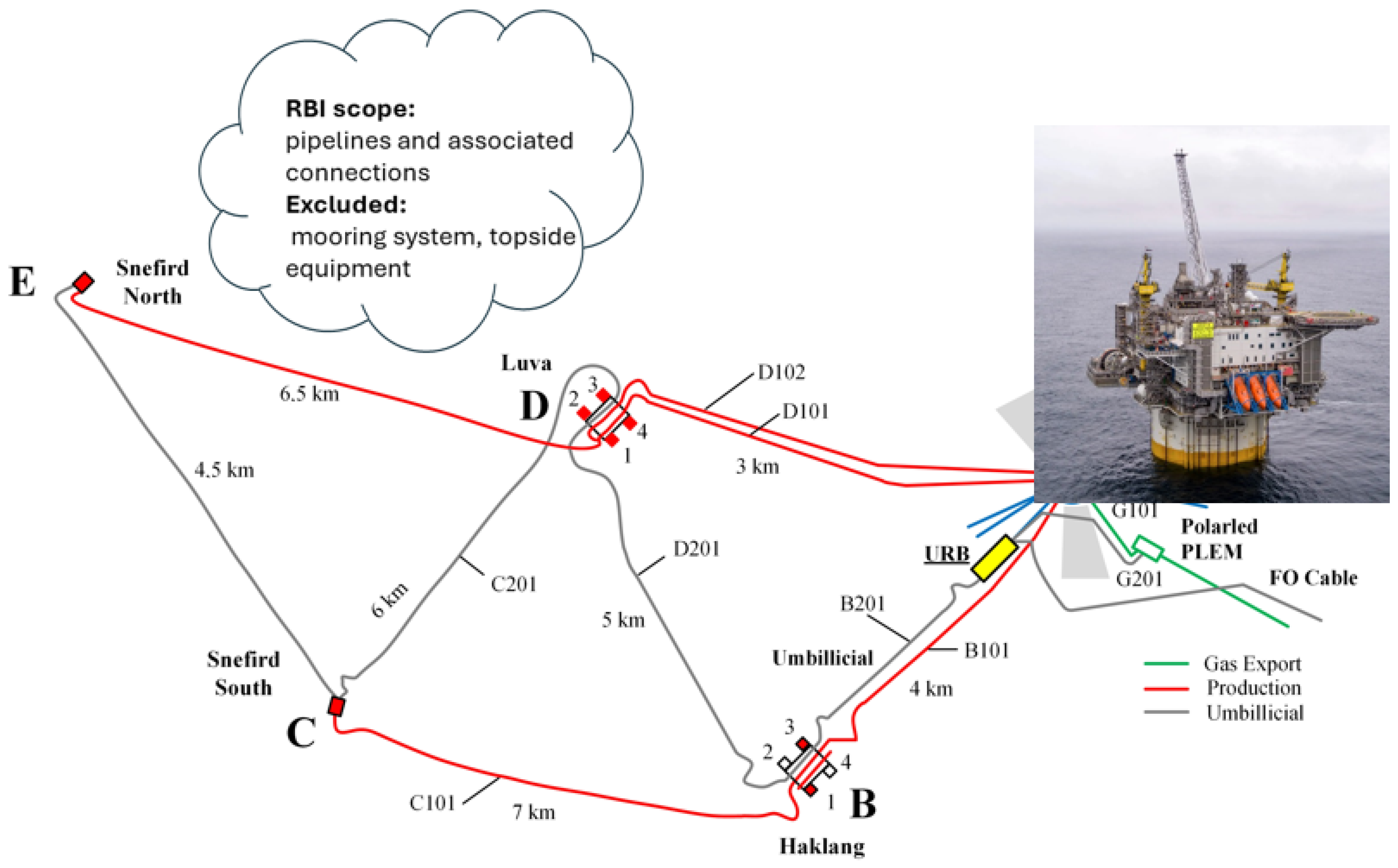
Figure 1 illustrates a schematic layout of the SPAR platform and associated pipeline systems considered within the RBI scope.
Table 1 summarizes the main design, material, and operating parameters of the analyzed pipelines that are relevant for the RBI assessment. The presented data define the scope of the analysis and provide the necessary input for evaluating degradation mechanisms, probability of failure, and potential consequences of failure.
Geometrical and inventory-related parameters, including pipeline length, internal volume, and steel mass, were determined from pipeline design data using standard geometric relationships. These parameters were introduced to support consequence characterization and system-level comparison within the RBI framework. The presented values represent aggregated system characteristics and are not intended for detailed structural verification but rather for comparative risk interpretation.
Based on the system configuration shown in
Figure 1 and the main characteristics summarized in
Table 1 the analyzed pipeline systems are exposed to several degradation mechanisms typical for offshore carbon steel pipelines associated with floating platforms. Due to the combination of internal process conditions, external marine environment, and platform-induced dynamic effects, different damage mechanisms contribute to the overall probability of failure and are therefore considered within the RBI framework.
The dominant damage mechanism for the analyzed pipeline systems is internal corrosion. This mechanism is primarily driven by the use of carbon steel materials, which are inherently susceptible to corrosion, the presence of liquid hydrocarbons in the transported fluid, and long operating times. Internal corrosion leads to progressive wall thinning, which is classified as a time-dependent damage mechanism. Wall thinning reduces the effective load-carrying capacity of the pipeline and increases the probability of failure, making internal corrosion the dominant PoF driver within the RBI framework.
The next relevant damage mechanism is external corrosion. Although this mechanism is significant, its severity is highly variable and depends on pipeline configuration, total length, seabed exposure, insulation systems, and coating conditions. Differences in insulation thickness among the analyzed pipelines further contribute to variations in external corrosion susceptibility. While cathodic protection is implemented as a mitigation measure, it does not eliminate corrosion but rather reduces its progression. Therefore, the effectiveness of cathodic protection must be considered probabilistically within the RBI assessment rather than assumed as fully preventive. Consequently, external corrosion remains an important damage mechanism that must be considered in inspection planning.
Stress corrosion cracking (SCC) has a secondary influence on the RBI assessment and the estimation of remaining service life. Although the conditions for SCC may be present, it is not identified as a dominant failure mechanism. Instead, SCC is included within the RBI framework as a screening damage mechanism, ensuring that its potential contribution to integrity degradation is systematically evaluated.
Fatigue represents a particularly important consideration in the context of SPAR-associated systems. Fatigue damage is primarily addressed at the design stage; however, it cannot be neglected within an integrity management framework. Platform motions, the behavior of risers and tie-in zones, and the combined effects of vortex-induced vibrations (VIV) and low-cycle fatigue may contribute to long-term degradation. Therefore, fatigue is retained as a relevant damage mechanism for integrity screening and long-term risk management of SPAR-associated pipeline systems.
Although fatigue is classified as a low contributing mechanism within the applied RBI screening framework, offshore pipeline systems connected to floating platforms may be subjected to combined degradation mechanisms (interaction of corrosion and cyclic loading). In marine environments, corrosion processes can reduce fatigue resistance and accelerate crack initiation and propagation under dynamic loading conditions [
29]. This interaction may be particularly relevant in dynamically loaded regions such as riser interfaces, coupling zones, or parts affected by vortex-induced vibration (VIV). While fatigue is usually addressed during the design phase through dynamic fatigue analysis and verification, corrosion-assisted fatigue mechanisms can be the cause of long-term degradation in offshore pipeline systems.
Other damage mechanisms were screened during the RBI process and were either deemed not applicable or assessed as negligible contributors to the overall risk for the analyzed systems.
The RBI assessment was performed in accordance with API RP 580 and API RP 581 recommendations using a semi-quantitative approach. The probability of failure (PoF) was estimated using degradation-related damage factors representing the severity and progression of the relevant degradation mechanisms affecting the component. These damage factors are determined based on several key parameters, including assumptions about the corrosion rate, exposure time, inspection efficiency, and operating conditions. For each piping system, the dominant degradation mechanisms were first identified based on material properties, characteristics of the transported fluid, environmental exposure, and operating conditions. Internal corrosion was considered the primary wall thinning mechanism, while external corrosion and other potential degradation mechanisms were assessed within the RBI screening process. The evolution of the damage factors over time reflects the progression of the degradation process and directly affects the calculated failure probability. Consequence of failure was evaluated using representative release scenarios and qualitative consequence categories consistent with API 581 guidance, considering inventory, operating pressure, and environmental impact.
Within the applied RBI framework, probability of failure was estimated using a damage-factor-based formulation consistent with API RP 581 principles, where PoF reflects the combined influence of corrosion-driven wall thinning, inspection effectiveness, exposure time, and operating conditions.
The analysis was conducted at the pipeline system level to support comparative inspection prioritization rather than detailed segment-level optimization. Inspection effectiveness was conservatively assumed based on typical offshore inspection practices. The applied approach focuses on relative risk ranking and risk evolution trends rather than absolute risk prediction, which is consistent with the decision-support objective of the study.
3. Results and Discussion
The integration between RBI outcomes and maintenance strategy selection is conceptual and decision-oriented, aiming to support engineering judgment in inspection prioritization rather than to prescribe deterministic maintenance intervals or optimization-based decision rules.
The results of the RBI assessment are interpreted in the context of the maintenance framework introduced in
Section 2, enabling integrated evaluation of risk evolution and maintenance strategy selection.
Table 2 presents a comparative overview of the dominant and secondary damage mechanisms identified for the 36″ POLARLED, HSLL, and GES pipeline systems, together with the corresponding RBI damage factors and categories. All analyzed pipelines transport the same fluid type (C25+) with a low toxic fraction (1%), enabling a consistent comparison of degradation mechanisms across the systems.
Internal corrosion is identified as the dominant damage mechanism for all analyzed pipelines. Although the assumed internal corrosion rate is identical for all systems (0.06 mm/year), significant differences in thinning factors and corresponding categories are observed. The 36″ POLARLED pipeline is classified in the highest thinning category (5), whereas HSLL and GES belong to category 2. These differences indicate that system geometry, length, and configuration strongly influence the overall probability of failure, even under similar material and operating conditions.
External corrosion represents a significant but highly variable damage mechanism. Differences in insulation type (fiberglass for POLARLED and foamglass for HSLL and GES), combined with seabed exposure conditions, result in varying predicted external corrosion rates. The highest external corrosion rate is obtained for the POLARLED pipeline (approximately 0.20 mm/year), while lower values are predicted for HSLL and GES. Although cathodic protection is applied, the results confirm that it mitigates but does not eliminate external corrosion, which remains a relevant driver for inspection planning.
Stress corrosion cracking (SCC) exhibits uniform factors and low category levels across all systems, indicating that it does not represent a dominant contributor to overall risk. Nevertheless, SCC is retained within the RBI framework as a screening damage mechanism. Similarly, brittle fracture and fatigue show low category levels, confirming that these mechanisms are adequately addressed during the design phase and have a limited influence on integrity within the defined RBI scope.
Within the RBI methodology, thinning factors represent dimensionless degradation indices derived from corrosion rate, exposure time, inspection effectiveness, and system characteristics. The high thinning factor obtained for the 36″ POLARLED pipeline reflects cumulative system-level degradation associated with extended pipeline length and exposure duration rather than localized extreme wall loss.
The relatively high PoF obtained for the 36″ POLARLED pipeline reflects an aggregated system-level failure likelihood associated with extended pipeline length and cumulative exposure, rather than a localized segment-level failure probability.
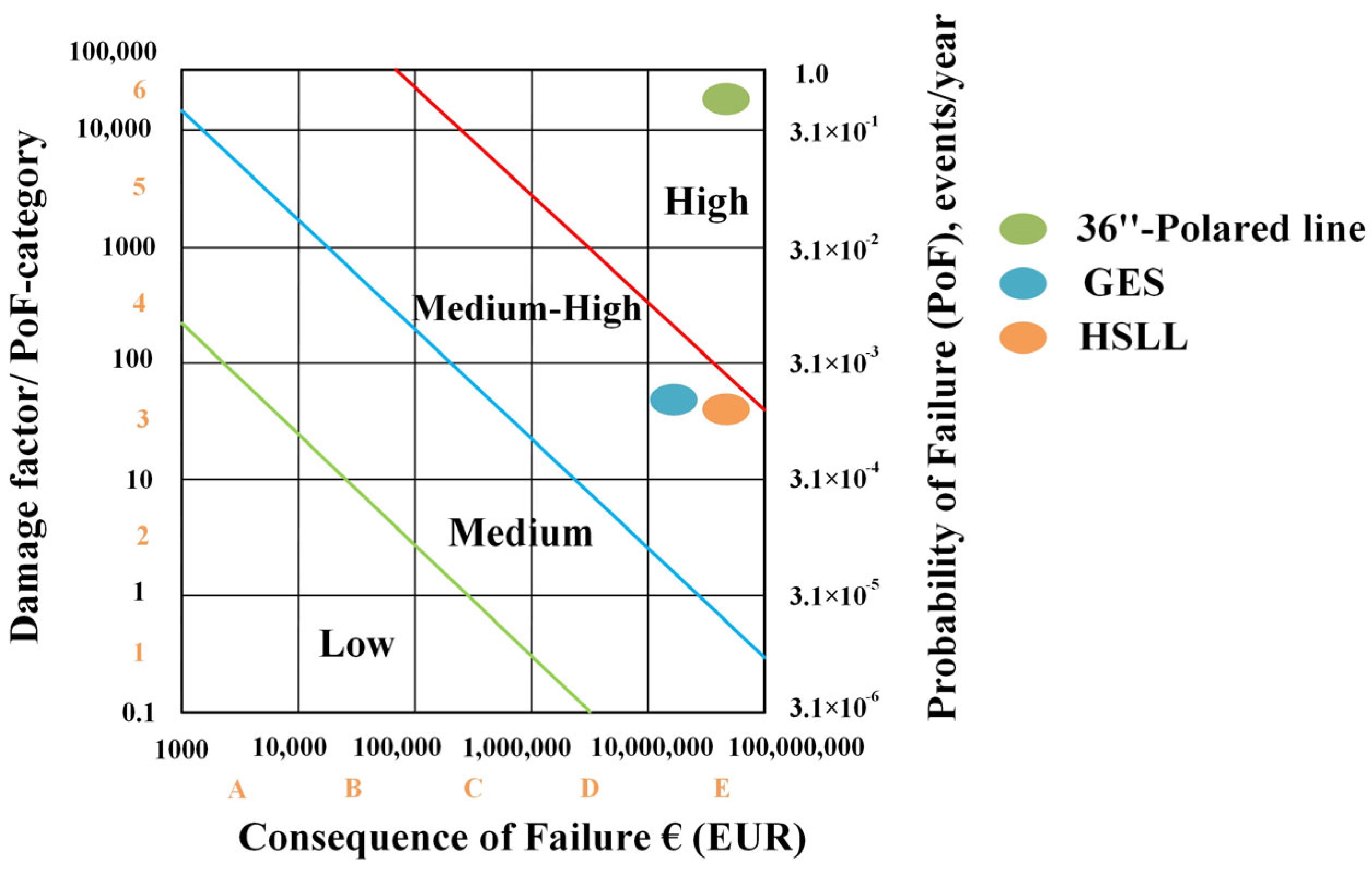
Table 3 summarizes the key RBI outputs for the analyzed pipeline systems. All pipelines are classified in the highest-consequence category (E), reflecting the transported inventory, operating pressure, and the potential impact of failure on safety and the environment. Although all pipelines fall within the same high-risk category, the RBI results reveal pronounced differences in probability of failure, driven primarily by system length and dominant corrosion mechanisms.
The relatively low values of financial risk reflect the conservative economic assumptions adopted in the RBI assessment. Therefore, the financial risk in this work is interpreted as an additional indicator, while the prioritization of inspections is primarily guided by the probability of failure and the extent of consequences. The financial risk values shown in
Table 3 represent conservative baseline estimates and primarily include direct costs associated with loss of fluid containment, equipment damage, and production interruption. Wider operational impacts, such as extended downtime, disruptions in the supply chain or system-level effects on the offshore facility, are only partially represented in the simplified formulation of the economic consequences of the applied RBI method. Therefore, the calculated indicator of financial risk should be interpreted as a conservative estimate of the total economic impact of a potential failure.
To further differentiate the analyzed pipeline systems beyond static risk categories, additional indicators reflecting risk intensity and damage growth behavior were derived from the RBI results.
In addition to probability-based risk indicators, the severity of consequences associated with the analyzed pipeline systems is strongly governed by their functional role within the offshore production infrastructure. The 36-inch POLARLED pipeline represents the primary gas export route from the SPAR platform, where loss of containment directly affects overall field operability rather than constituting a localized failure. As the sole transport route to onshore processing facilities, any integrity failure of the POLARLED pipeline may lead to immediate production shutdown. These findings indicate that, in export-critical offshore systems, consequence severity is dominated by functional dependency and transported inventory rather than by local geometric characteristics alone.
Table 4 summarizes risk intensity and damage growth indicators obtained from the RBI assessment. Although all analyzed pipelines are classified within the same overall risk category, significant differences in probability of failure, normalized risk per unit length, and damage growth behavior are observed, indicating fundamentally different risk dynamics and inspection needs.
In this study, normalized risk per unit length is defined as the ratio between system-level risk indicators and the total pipeline length, enabling comparative assessment of spatial risk intensity across pipelines with different extents. The proposed normalization approach is not limited to the present case study and may be extended to other distributed infrastructure systems where risk comparison across different scales is required.
In this study, risk growth behavior is interpreted qualitatively based on the relative increase in RBI damage factors over time. Systems exhibiting steeper damage factor evolution were classified as rapidly-growing risk, whereas systems with gradual changes were categorized as moderate or slow-growing risk. This classification is intended to support inspection prioritization and does not represent a formal probabilistic growth model. This qualitative classification is supported by the relative slope of damage factor evolution curves, which provides a comparative indicator of degradation progression across the analyzed systems. For comparative interpretation, qualitative categories of risk growth behavior were defined using semi-quantitative thresholds based on the relative change in damage factors over the assessment period. Systems showing a pronounced increase in damage factors and steep evolution curves were classified as rapidly growing risk, systems with moderate increases were classified as moderately growing risk, while systems with gradual changes in damage factors were categorized as slowly growing risk. This simplified classification provides a practical engineering indicator of degradation progression within the semi-quantitative RBI framework and supports inspection prioritization without introducing a full probabilistic growth model.
Table 4 highlights that pipelines classified within the same overall risk category may exhibit fundamentally different risk behaviors. The 36″ POLARLED pipeline is characterized by both high risk intensity and a rapid increase in damage factors over time, indicating a rapidly-growing risk profile. In contrast, the HSLL pipeline shows low probability of failure, low normalized risk, and slow damage progression, despite being formally classified as high risk due to severe failure consequences. The GES pipeline represents an intermediate case, with moderate normalized risk and a higher damage growth rate driven primarily by external corrosion mechanisms. These results demonstrate that static risk categorization alone is insufficient for inspection planning and that consideration of risk growth behavior provides additional, decision-relevant insight.
Similarly to dynamic RBI frameworks proposed in the literature, where time-dependent degradation is used to support inspection and maintenance decisions (e.g., [
16]), the present study treats risk as an evolving quantity rather than a static category. However, instead of relying on complex probabilistic networks, the proposed approach demonstrates that risk growth behavior derived from standard RBI outputs can be directly translated into differentiated maintenance strategies for SPAR-associated pipeline systems.
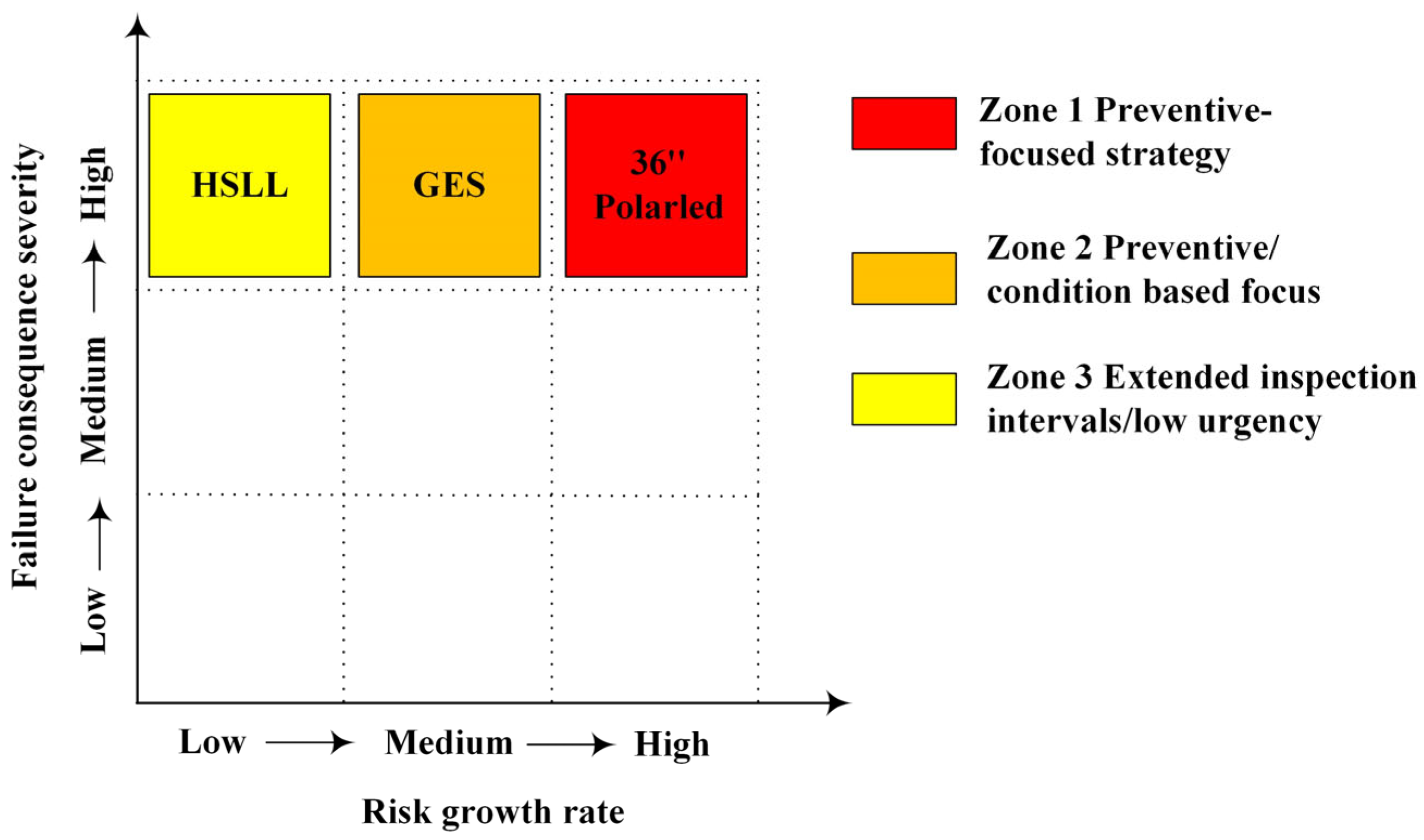
Figure 2 illustrates how RBI outcomes can be translated into differentiated maintenance strategies by considering both risk growth behavior and failure consequences. The 36″ POLARLED pipeline exhibits a rapidly-growing risk profile combined with high failure consequences, supporting a preventive-focused maintenance strategy with short inspection intervals. In contrast, the HSLL pipeline shows slow risk evolution and low inspection urgency, justifying extended inspection intervals despite high failure consequences. The GES pipeline represents an intermediate case, where moderate risk growth combined with high local consequences supports a predictive or condition-based maintenance focus. These results confirm that static risk categorization alone is insufficient for inspection planning and that incorporating risk growth behavior enhances decision-oriented integrity management of SPAR-associated pipeline systems.
Figure 3 illustrates the overall risk ranking of the analyzed pipeline systems, while
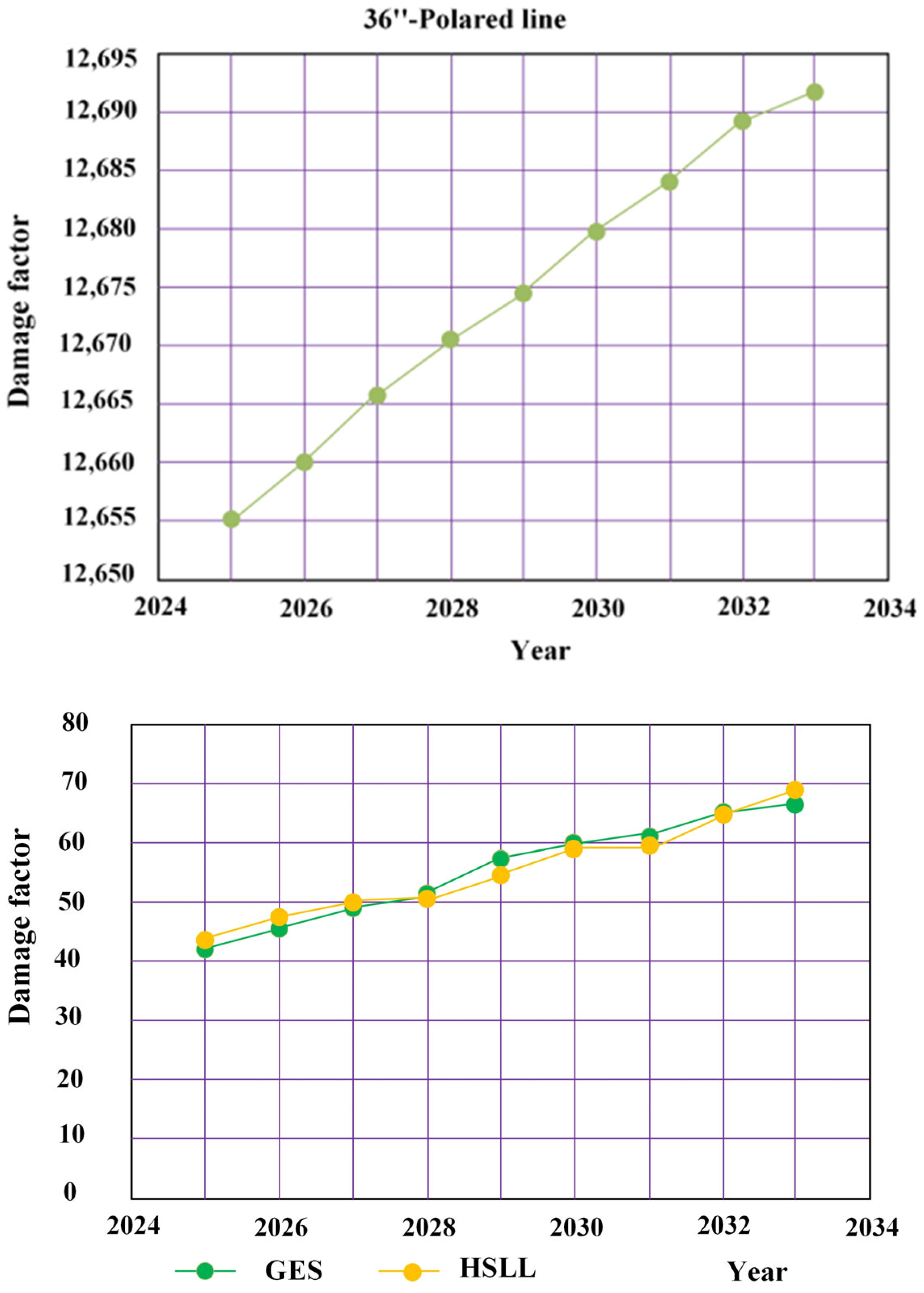
Figure 4 shows the predicted evolution of damage factors over time. The results indicate a continuous increase in degradation-related factors, reflecting the accumulation of corrosion-driven damage. The rate of increase differs among the systems, demonstrating that risk evolution is strongly influenced by system configuration, exposure conditions, and functional role.
Damage growth rate is derived from the time-dependent evolution of damage factors presented in
Figure 4 and is expressed qualitatively to reflect relative differences in risk escalation among the analyzed systems.
To enable a meaningful comparison between pipeline systems with significantly different total lengths, the RBI results were additionally interpreted using normalized risk indicators per unit length (
Table 5). The normalized risk indicators are introduced solely as comparative metrics to illustrate spatial differences in risk intensity between pipeline systems of different total lengths and should not be interpreted as local failure probabilities. While absolute probability of failure and total risk values are dominated by the longest system (36″ POLARLED), normalization by pipeline length provides insight into local risk intensity. When expressed as probability of failure per kilometer, the POLARLED pipeline still exhibits the highest risk intensity. However, among the shorter SPAR-connected systems, the GES pipeline exhibits a higher risk per kilometer than HSLL due to its larger consequence area and functional role within the gas export system.
These results demonstrate that risk normalization provides additional decision-relevant insight within the RBI framework. While total risk metrics remain essential for asset-level prioritization, normalized indicators support refined inspection planning by identifying systems where localized consequences may justify increased inspection focus, even when the overall probability of failure is relatively low. In particular, the GES pipeline represents a system with comparatively low failure likelihood but high consequence-driven local risk, underscoring the importance of consequence-informed inspection prioritization in SPAR-associated pipeline networks.
Figure 4 illustrates the predicted evolution of damage factors over time for the analyzed pipeline systems, as obtained through RBI modelling of different degradation mechanisms. Although all analyzed pipelines are classified within the same overall risk category, the time-dependent evolution of damage factors clearly differentiates the systems by their risk growth behavior. Differences in growth rates reflect the influence of system configuration, exposure conditions, and functional role, indicating fundamentally different inspection needs despite similar qualitative risk classification. Pipelines exhibiting steeper damage growth require shorter inspection intervals and are more sensitive to delayed inspections, whereas systems with slower growth allow for extended intervals even under high consequence classification. These results confirm that risk should be treated as a dynamic quantity rather than a static category and that consideration of risk growth behavior enhances RBI-driven inspection planning.
This analysis is conducted at the level of entire pipeline systems to allow for a comparative assessment of risk behavior at the system level. However, in a practical implementation of RBI, local variations in environmental exposure, operating conditions, or degradation mechanisms may occur along individual pipeline segments. Such variations may affect local failure probabilities and inspection priorities. Detailed segment-level analyses therefore represent an important step in practical integrity management, although they are beyond the scope of this comparative system-level assessment.
The normalized risk indicator per unit pipeline length provides an additional perspective for comparing pipeline systems of different spatial scales. While total system risk values reflect the overall magnitude of risk associated with a given pipeline, normalization by pipeline length allows for an assessment of the spatial concentration of risk independent of the overall system scale. Similar normalization approaches are often applied in risk assessment and infrastructure analysis to enable comparisons between systems of different sizes or spatial distributions. In this context, the normalized indicator complements system-level risk assessments by explaining how risk is distributed along the pipeline network.
The RBI analysis reveals a clear qualitative relationship between insulation type and predicted external corrosion behavior for the analyzed SPAR-associated pipeline systems. The 36″ POLARLED pipeline, which is insulated with fiberglass, exhibits the highest predicted external corrosion rate of approximately 0.20 mm/year. In contrast, the foamglass-insulated pipelines show lower corrosion rates, with values of approximately 0.16 mm/year for the HSLL pipeline and 0.08 mm/year for the GES pipeline. Although all systems operate under offshore environmental conditions and are protected by coatings and cathodic protection, these differences indicate that insulation characteristics represent an important differentiating parameter in external corrosion susceptibility.
At the same time, the observed variation between the two foamglass-insulated pipelines demonstrates that insulation type does not act in isolation. Factors such as local exposure conditions, system configuration, seabed interaction, and coating condition also influence external corrosion behavior. These findings support the inclusion of insulation properties as a relevant input parameter for inspection prioritization and external corrosion management within RBI-based offshore integrity frameworks.
The predicted corrosion rates indicate that external corrosion represents the primary time-dependent mechanism governing inspection interval definition, while internal corrosion acts as a longer-term degradation driver.
In contrast, internal corrosion is characterized by a lower assumed corrosion rate of approximately 0.06 mm/year, resulting in a significantly longer indicative time to corrosion allowance consumption. This difference suggests that internal corrosion represents a long-term degradation mechanism, whereas external corrosion acts as a more immediate driver for inspection interval definition within the analyzed offshore system.
Overall, the results emphasize that comparative evaluation of degradation progression and normalized risk indicators provides a more informative basis for inspection prioritization than static risk categorization alone.
Structured Sensitivity Assessment of Key RBI Parameters
To assess the robustness of the obtained RBI results, a structured sensitivity assessment of the most influential input parameters within the applied semi-quantitative RBI framework was performed. The assessment focused on the parameters that primarily govern the failure probability estimate and the derived risk indicators: internal corrosion rate, external corrosion rate, inspection efficiency, pipeline length, and consequence area.
In semi-quantitative RBI analyses, these parameters represent the dominant drivers of degradation progression and system-level risk indicators. Variations in corrosion rate directly affect the damage factor and the resulting failure probability estimate. Similarly, inspection efficiency affects the uncertainty associated with the detection of degradation and therefore affects the calculated failure probability.
Pipeline length primarily affects system-level failure probability estimates and overall risk magnitude, while normalized risk indicators per unit pipeline length remain relatively less sensitive to length variations. Variations in the consequence area mainly affect the absolute magnitude of the calculated risk indicators, without significantly affecting the comparative interpretation of the intensity of the consequence risk among the analyzed pipeline systems. The considered parameter variations (
Table 6) represent realistic ranges of engineering uncertainties typically encountered in RBI-based integrity assessments.
The structured sensitivity assessment therefore confirms that, although reasonable variations in key RBI input parameters can affect the magnitude of the calculated risk indicators, the comparative ranking of the analyzed pipeline systems and the qualitative interpretation of the risk behavior remain stable within realistic engineering assumptions.
From a practical RBI perspective, the purpose of this sensitivity assessment is to assess the robustness of the comparative interpretation of the analyzed pipeline systems. Although variations in key parameters can affect the absolute magnitude of the calculated risk indicators, the relative ranking of the pipeline systems and the resulting conclusions on inspection prioritization remain stable within realistic engineering ranges of the parameters considered.
4. Conclusions
This study investigated the application of Risk-Based Inspection (RBI) to three carbon steel pipeline systems associated with a SPAR offshore platform, with the aim of supporting inspection prioritization under demanding offshore operating conditions. By combining system description, dominant damage mechanisms, and RBI quantification, a consistent integrity assessment framework was established for pipelines operating under similar environmental and process conditions.
The analysis confirmed that internal corrosion represents the dominant long-term degradation mechanism for all analyzed systems, whereas external corrosion acts as a primary short-term driver for inspection interval definition. Differences in insulation systems, exposure conditions, and pipeline configuration resulted in markedly different external corrosion rates, indicating that insulation characteristics and environmental interaction should be explicitly considered within RBI-based inspection planning rather than treated as secondary parameters.
Although all pipelines were classified within the same overall risk category, the results revealed pronounced differences in probability of failure and consequence-driven risk behavior. In particular, the 36″ POLARLED pipeline exhibited a substantially higher probability of failure, while the GES pipeline, despite a lower failure likelihood, showed elevated local risk due to its functional role and consequence footprint. These observations clearly indicate that qualitative risk categories alone are insufficient to support effective inspection planning for offshore pipeline systems.
To address this limitation, normalized risk indicators per unit length were introduced to enable meaningful comparison between pipeline systems of significantly different total lengths. The normalized results provided insight into local risk intensity and spatial risk distribution that is not evident from absolute risk values alone. From an engineering perspective, this approach supports more refined inspection prioritization, especially for systems where localized consequences may justify increased inspection focus despite relatively low overall failure probability.
Overall, the study demonstrates that risk in offshore pipeline systems should be treated as a dynamic quantity governed by degradation mechanisms, system configuration, and consequence footprint rather than as a static classification. The proposed RBI-based approach, supported by normalized risk metrics, provides practical decision-support insight for inspection planning and maintenance strategy selection in SPAR-associated offshore pipeline networks.