1. Introduction
Under the goals of carbon peaking and carbon neutrality, natural gas is recognized as an environmentally friendly energy source. This recognition has led to a significant increase in global demand. Liquefied natural gas (LNG) has become the preferred transportation fuel due to its high energy density. Membrane-type LNG tanks are now widely used in large carriers because of their high loading efficiency and cost-effectiveness. As global LNG trade grows, membrane-type tanks have increased in size. Modern LNG carrier tanks typically measure 40–50 m in length, with capacities exceeding 170,000 cubic meters. However, the higher loading capacity of these tanks causes complex liquid sloshing [
1]. This phenomenon presents serious safety challenges [
2]. Therefore, studying LNG tank sloshing is crucial for ensuring the structural integrity and safe operation of next-generation LNG carriers under increasing environmental demands.
Theoretical research on liquid sloshing in tanks dates back to 1966 when researchers established an analytical model based on linear potential flow theory for cylindrical and spherical tanks [
3]. Over the following decades, a substantial number of scholars have systematically and thoroughly elucidated and validated the theoretical principles of liquid tank sloshing [
4,
5,
6]. Though theoretical analysis helps reveal the fundamental principles of sloshing, analytical solutions struggle to capture the nonlinear sloshing phenomena observed in realistic scenarios [
7]. Therefore, physical model experiments and numerical simulations guided by analytical solutions are essential for conducting in-depth, practical studies of LNG tank sloshing. Luo et al. [
8] experimentally revealed the complex wave characteristics of three-dimensional sloshing under coupled excitation, particularly the destructive effects of swirling waves, providing critical insights for the design and safe operation of membrane-type LNG tanks. Cao et al. [
9] investigated liquid sloshing in LNG tanks under single or coupled excitation through physical model tests and expanded flow field information using OpenFOAM simulations. The study offers further clarity on sloshing phenomena to support engineering design. Ahn et al. [
10] developed a database from over 20,000 h of small-scale physical model tests conducted at Seoul National University. They trained artificial neural networks to predict sloshing pressures under diverse conditions. This approach, adaptable to the complexity and randomness of sloshing, reduces time costs compared to numerical simulations. Later, they proposed a Grouping Method to minimize experimental repetitions for long-term evaluation of sloshing loads in LNG carrier cargo tanks [
11].
Compared to high-cost large-scale physical experiments, small-scale model tests are economical and also useful for qualitatively assessing violent sloshing phenomena. However, the accuracy of pressure measurements requires further verification due to scale effects [
7]. Consequently, numerical simulation has become the dominant approach for studying sloshing in membrane-type LNG tanks. Current numerical methods are developed based on potential flow theory, the Navier–Stokes equations, or the Euler equations. Widely adopted numerical techniques include the Moving Particle Semi-implicit (MPS) method, Smoothed Particle Hydrodynamics (SPH) [
12], the Volume of Fluid (VOF) method, etc. With the aid of these numerical tools, researchers’ focus has expanded from sloshing phenomena itself to incorporating ship-tank coupling, sloshing suppression, and other multidimensional aspects. Wang et al. [
13] extended MPS to three dimensions, improving kernel functions, boundary treatment, and free-surface detection to enhance simulation accuracy and stability for complex motions. Jiao et al. [
14] employed the open-source SPH code to simulate the coupled response of LNG tank sloshing and ship motion in waves, overcoming mesh distortion issues in grid-based methods and better capturing strongly nonlinear sloshing phenomena. Zhuang et al. [
15] developed an in-house solver called naoe-FOAM-SITU to address ship-tank coupling challenges, integrating dynamic meshing, VOF free-surface tracking, and viscous RANS equations for precise simulations. Inspired by porous wave-absorbing materials used in coastal engineering, Xue et al. [
16] applied porous materials to suppress LNG tank sloshing, identifying optimal ranges for thickness ratios, porosity, and pore diameter ratios. Calderon-Sanchez et al. [
17] conducted systematic OpenFOAM simulations to reveal the critical role of compressibility and density ratios during liquid impacts. Saripilli and Sen [
18] adopted a hybrid approach to study the coupling effects between sloshing in partially filled tanks and global ship motions. Despite these advances, numerical methods still underperform in localized pressure modeling. Future research should integrate global CFD with localized analytical models to optimize load parameters.
Additionally, the LNG unique physical properties lead to boil-off gas (BOG) challenges [
19] during transportation. The change in flow field and the generation of BOG will further affect the distribution of sloshing impact pressure and the evolution of free surface, which makes the hydrodynamic behavior of LNG sloshing more complex [
20]. As a result, scholars have carried out in-depth research on the hydrodynamic characteristics of sloshing under the influence of a complex flow field by means of multiphysics coupling modeling. Chen et al. [
21] combined small-scale experiments and numerical simulations to find that low liquid levels exhibit greater sensitivity to changes in sloshing frequency and display larger free surface deformations. Calderón-Sánchez et al. [
22] pointed out that the gas cushion formed can buffer the direct impact of liquid on the tank wall. Duan et al. [
23] developed a three-dimensional dynamic model to predict pressure evolution in LNG tanks under sloshing, which showed that different sloshing frequencies produce different liquid sloshing modes, which may generate liquid jet flow.
Engineers often employ baffles to control excessive liquid sloshing. Cao et al. [
24] proved analytically that baffles are effective in reducing the sloshing response. Xue et al. [
25] investigated the suppression effects of various vertical baffle configurations on sloshing impact pressures under a wide range of excitation frequencies. Wang et al. [
26] discovered that the strategic configuration of the baffle’s position and width can significantly suppress liquid sloshing. Jin et al. [
27] investigated the effectiveness of baffles in suppressing liquid sloshing under seismic excitation. Lu et al. [
28] employed baffles to suppress Faraday waves. Their experimental results demonstrated that a heavier floating baffle enhances the suppression effect. Through integrated experimental and numerical investigations, Ren et al. [
29] demonstrated that an elastic baffle exhibits superior performance in suppressing liquid sloshing compared to a rigid baffle, particularly at lower submersion ratios.
Although LNG tank sloshing has been extensively studied, existing literature reveals a significant research gap regarding the suppression effectiveness of different baffle configurations (e.g., perforated or multi-layer structures) under coupled resonant conditions. Traditional studies have primarily focused on simple baffle designs or single-degree-of-freedom motions, whereas actual navigation often involves multi-degree-of-freedom coupled excitations (such as combined roll-pitch-heave motions), which may trigger more severe resonant sloshing. Thus, this study employs OpenFOAM to establish a high-fidelity numerical model for LNG tank sloshing, focusing on the suppression effects of baffles and porous media to enhance safety in large-capacity membrane-type LNG carriers. Moreover,
Table 1 presents a comparison of core characteristics for different baffles. This table systematically sorts out the core differences between the proposed “T-shaped baffle with porous medium composite structure” and existing studies (Xue et al. [
16]; Ünal et al. [
30]; Liu et al. [
31]) in terms of structure type, applicable working conditions, sloshing mitigation mechanism, and limitations. It demonstrates that this study focuses on multi-degree-of-freedom coupled resonance conditions through the dual-scale synergistic mechanism of “macroscopic obstruction and microscopic dissipation”, intuitively presenting the innovative value of this study and the filling of research gaps. A key innovation lies in optimizing non-traditional baffle geometries (e.g., perforated or porous media) to disrupt sloshing waves while minimizing cargo space loss, drawing inspiration from coastal wave-absorbing structures. Moreover, this study focuses on the multi-degree-of-freedom coupled resonance condition in actual navigation. We first reveal the nonlinear sloshing mitigation law of vertical baffle height and the dominant frequency mechanism of tank wall pressure under coupled conditions, and innovatively integrate the macroscopic flow field obstruction of T-shaped baffles with the microscopic energy dissipation characteristics of porous media to propose a macro-micro synergistic composite anti-sloshing structure, revealing its new multi-scale synergistic sloshing mitigation mechanism.
2. Mathematical Model
In this study, numerical simulations of the liquid sloshing are conducted using the olaDyMFlow solver based on the OpenFOAM platform. This solver is built upon the governing equations for incompressible two-phase flow, which incorporates the Volume of Fluid (VOF) method for interface capturing, the six-degree-of-freedom (6-DoF) dynamic mesh technique, and porous media modeling approaches. It enables accurate characterization of free-surface wave propagation, structural response, and flow behavior in energy dissipation zones. The momentum equation is coupled with the dynamic pressure term, the gravity source term, and the porous medium resistance source term. When handling porous media regions, olaDyMFlow incorporates a resistance term based on the Darcy-Forchheimer model, which is directly added to the momentum equation to account for both linear and nonlinear damping effects experienced by the fluid flow within porous structures. The porous media resistance coefficients can be configured as either isotropic or anisotropic based on engineering requirements. Additionally, through local coordinate transformation, the solver enables an oblique arrangement of resistance control, allowing for flexible modeling of inclined porous structures. Thus, we can obtain continuity (1) and momentum conservation (2) equations.
where
ρ is the density,
ui is velocity vector,
gi is gravity,
Xj is position vector,
μeff is dynamic viscosity,
is porosity, and
D50 is the nominal diameter of the material, which is the particle size for which 50% (by mass) of the solid grains are smaller, and 50% are larger. The linear term
A<
ui> represents the Darcy drag, which accounts for the viscous resistance of the porous medium to the flow. The quadratic term
represents the Forchheimer inertial drag, which accounts for the additional inertial resistance at higher flow velocities.
B is the Forchheimer coefficient, which quantifies the intensity of inertial resistance in the porous medium.
β is a material property of the porous medium, determined by the particle shape, packing structure, and surface roughness. In the present work,
C is 0.34. According to previous experience, the influence of
KC is less than other empirical coefficients; therefore,
KC can be ignored in the calculation process [
16].
Air is adopted as the gas phase in the present simulation. Since the liquid phase dominates the sloshing dynamics and the properties of the gas phase have negligible influence on the global hydrodynamic behavior, this simplification is reasonable for the present engineering-scale sloshing analysis.
In the VOF (Volume of Fluid) method, the phase fraction
is a variable used to represent the volume ratio of a certain phase in the calculation unit, which is usually in the range of [0, 1], where
= 1 means that the unit is completely filled with liquid,
= 0 means that it is completely air, and the area of 0 <
< 1 is the gas–liquid interface. The core of the VOF method is to solve the transport equation of the phase fraction to track the evolution of the free surface position over time. Thus, the transport equation is as follows:
Then, the density (
ρ) can be obtained [
9]:
In the numerical simulation of liquid sloshing within tanks, the selection of an appropriate flow model and the control of the Courant number play a crucial role in ensuring both computational stability and the accuracy of interface evolution. In the present study, a laminar flow model was adopted, and the Courant number was strictly regulated throughout the simulations. Given the confined geometry of liquid tanks and the gravity-driven motion involved in sloshing, the overall flow remains within a low Reynolds number regime, where viscous diffusion dominates over inertial effects. Although localized regions of strong velocity gradients and interface deformation may emerge during violent sloshing, the development of fully turbulent structures is limited, especially under low- to moderate-amplitude excitation. As a result, the use of a laminar model was considered sufficient to capture the essential physics of the flow while avoiding unnecessary dissipation that may be introduced by turbulence models. Furthermore, since interface-capturing techniques such as the Volume of Fluid (VOF) method inherently involve sharp density and velocity gradients near the free surface, turbulence models are often less reliable in such regions. This further supports the use of a laminar model in the present simulations. In order to ensure numerical stability and improve the accuracy of interface tracking, the time step was controlled based on the Courant number, which is defined as follows [
9]:
where
u denotes the local flow velocity,
is the time step, and
is the local grid spacing. In VOF-based simulations, a small Courant number is essential to minimize numerical diffusion and oscillations near the interface. In this study, the global Courant number was limited to a maximum of 0.25, particularly for the solution of the phase fraction transport equation. A slightly less restrictive limit, typically
Co ≤ 0.5, was applied to the momentum equation. An adaptive time-stepping strategy was employed, allowing the time step to be dynamically adjusted according to the evolving velocity field to ensure that Courant number constraints were always satisfied. By applying a laminar flow model in combination with low Courant number constraints, the solver olaDyMFlow is able to achieve stable and accurate simulations of nonlinear free surface motion during sloshing. This modeling approach is found to be effective in resolving complex wave-interface interactions and capturing the dynamic response of the fluid-structure system.
In this study, the numerical model proposed by Cao et al. [
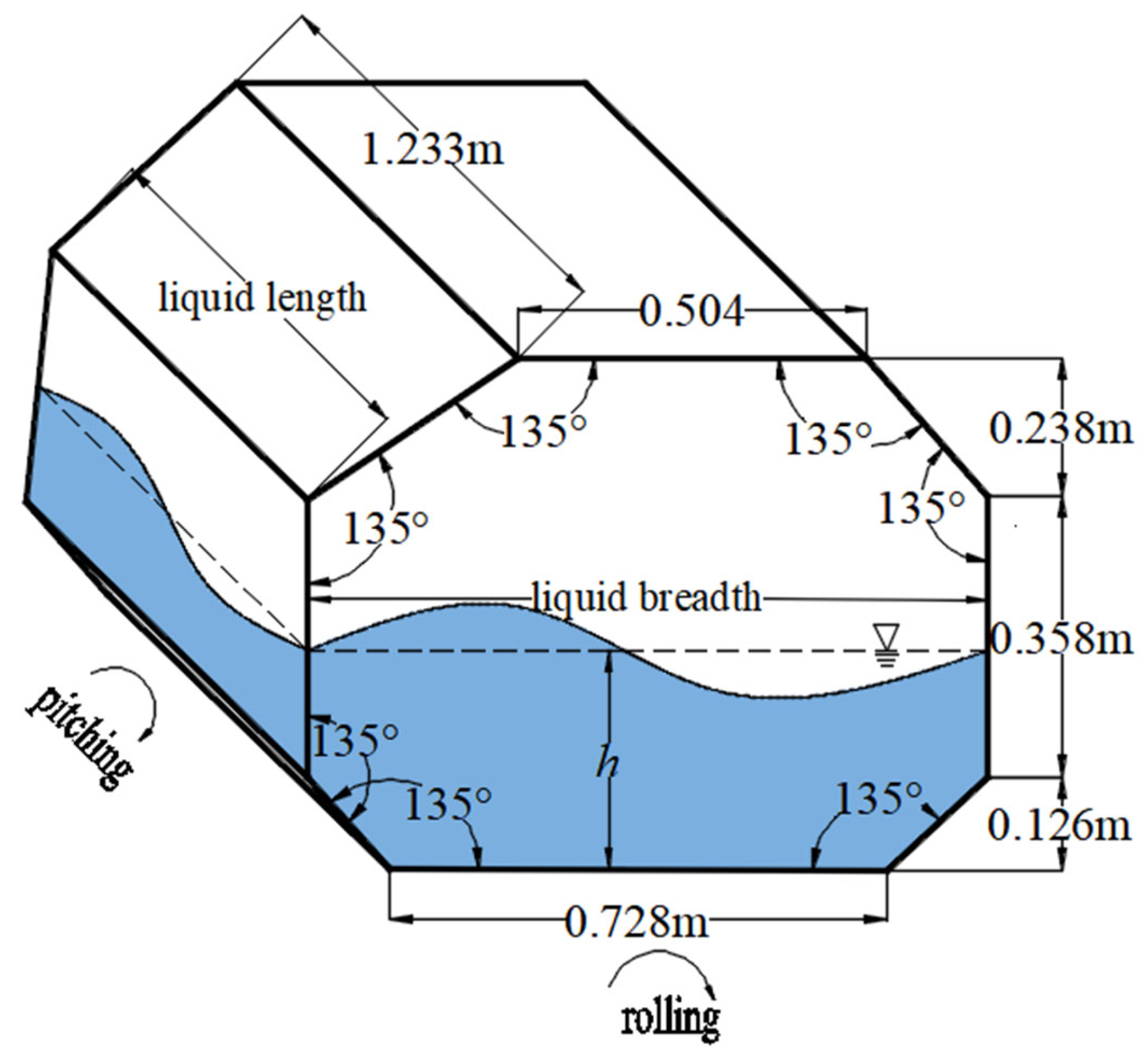
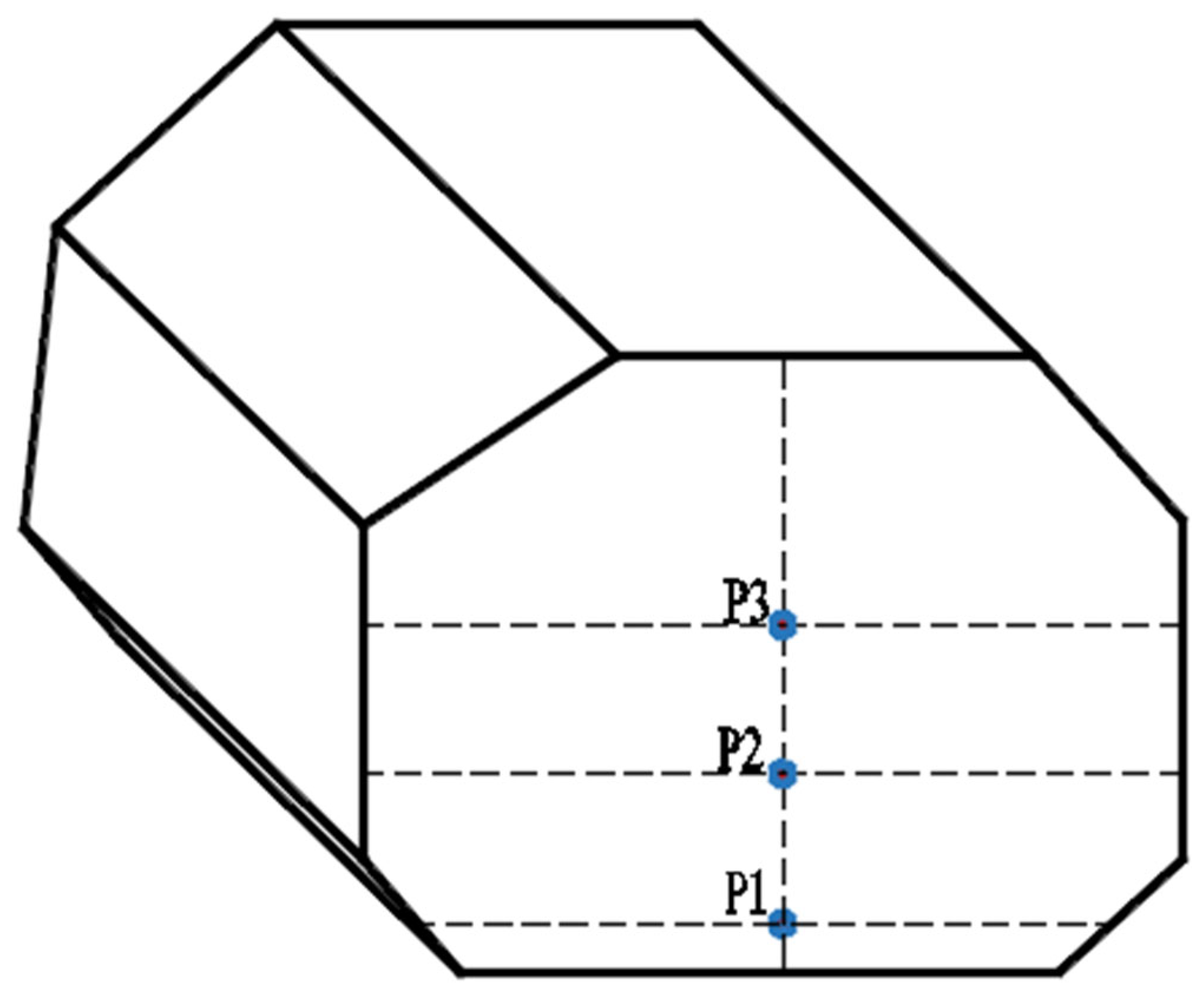
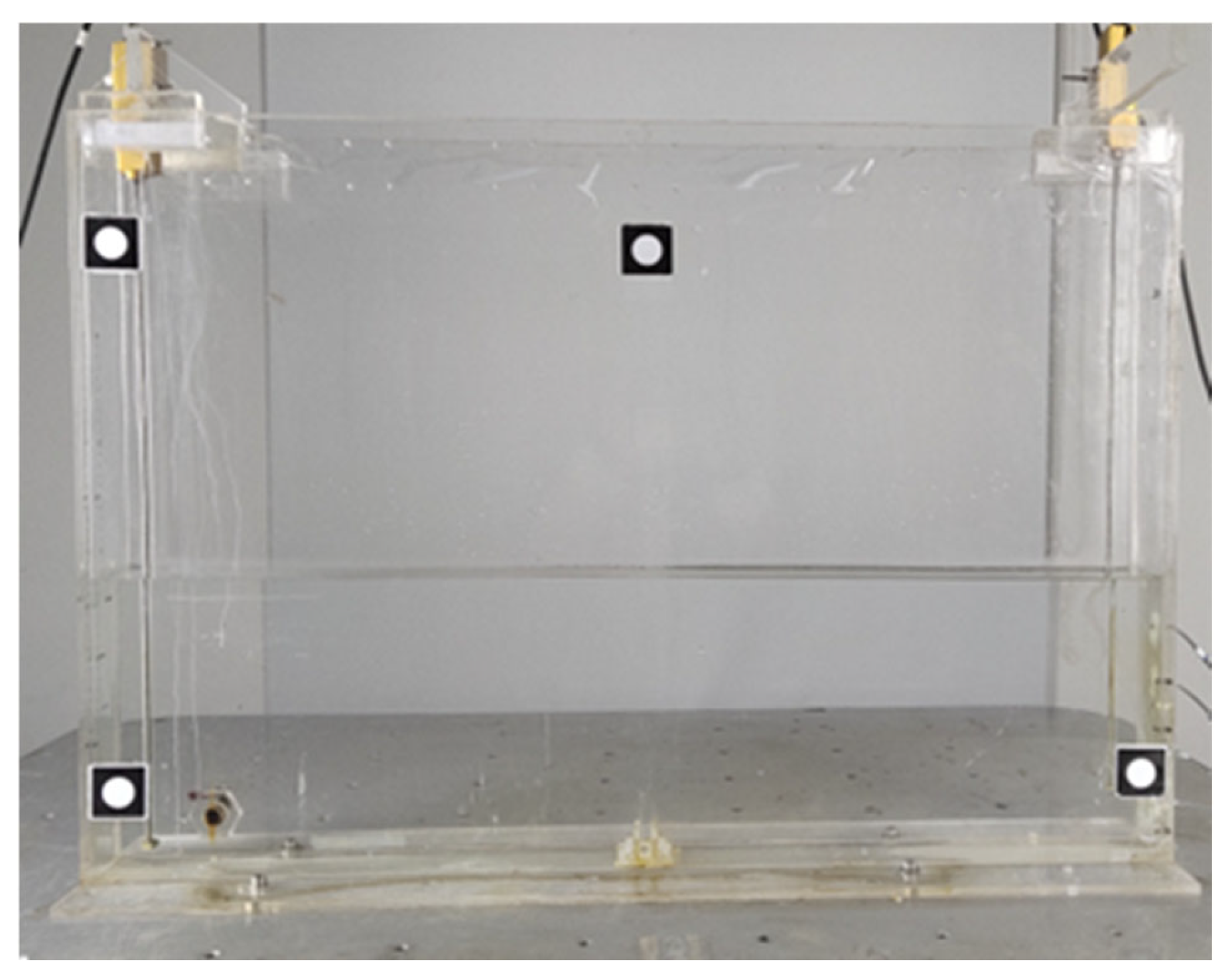
9] is adopted to simulate the sloshing behavior within a liquefied natural gas (LNG) tank. Different baffles or porous media are studied to further suppress liquid sloshing. The geometric configuration of the tank is shown in
Figure 1. The tank measures 1.233 m in length, 0.980 m in width, and 0.720 m in height. A 135° chamfer is applied at the bottom and top corners. The blue area represents liquid, the white area represents air, and the dashed line indicates the interface when the liquid is not sloshing. The liquid height is defined as
h, and the dimensionless ratio
h/0.720 is used to characterize the filling level. When a liquid filling level is 50%, the liquid height (
h) is 0.360 m. When a liquid filling level is 80%, the liquid height (
h) is 0.576 m. When a liquid filling level is 100%, the liquid height (
h) is 0.720 m. This parameter allows for flexible adjustment of the initial liquid volume, enabling the investigation of sloshing responses under various partially filled conditions.
In this paper, the excitation method of rolling motion is , where is the amplitude of rolling motion, and is the excitation frequency of rolling motion. Moreover, the excitation method of pitching motion is , where is the amplitude of pitching motion, and is the excitation frequency of pitching motion.
4. Results
Numerical modeling of sloshing behavior in LNG tanks at an 80% high filling level is investigated in this section, where the laminar flow model is employed to accurately simulate the complex fluid motion within confined spaces. Under high filling conditions, the liquid sloshing exhibits typical confined flow characteristics, with the free surface being significantly affected by wall constraint effects, while the impact between the liquid surface and tank roof generates transient shock loads. Based on the laminar flow assumption, the viscous dissipation mechanism and free surface constraint effects specific to high liquid level conditions are primarily captured through refined boundary layer meshing and optimized time step strategy. This study provides a reliable analytical tool for understanding sloshing characteristics in high-filling LNG tanks, and the proposed modeling methodology offers an important reference value for similar fluid sloshing problems in confined spaces.
In this section, we investigate the influence of coupled pitch and roll motions on the sloshing dynamics in LNG tanks. The excitation amplitudes for both pitch and roll are set to
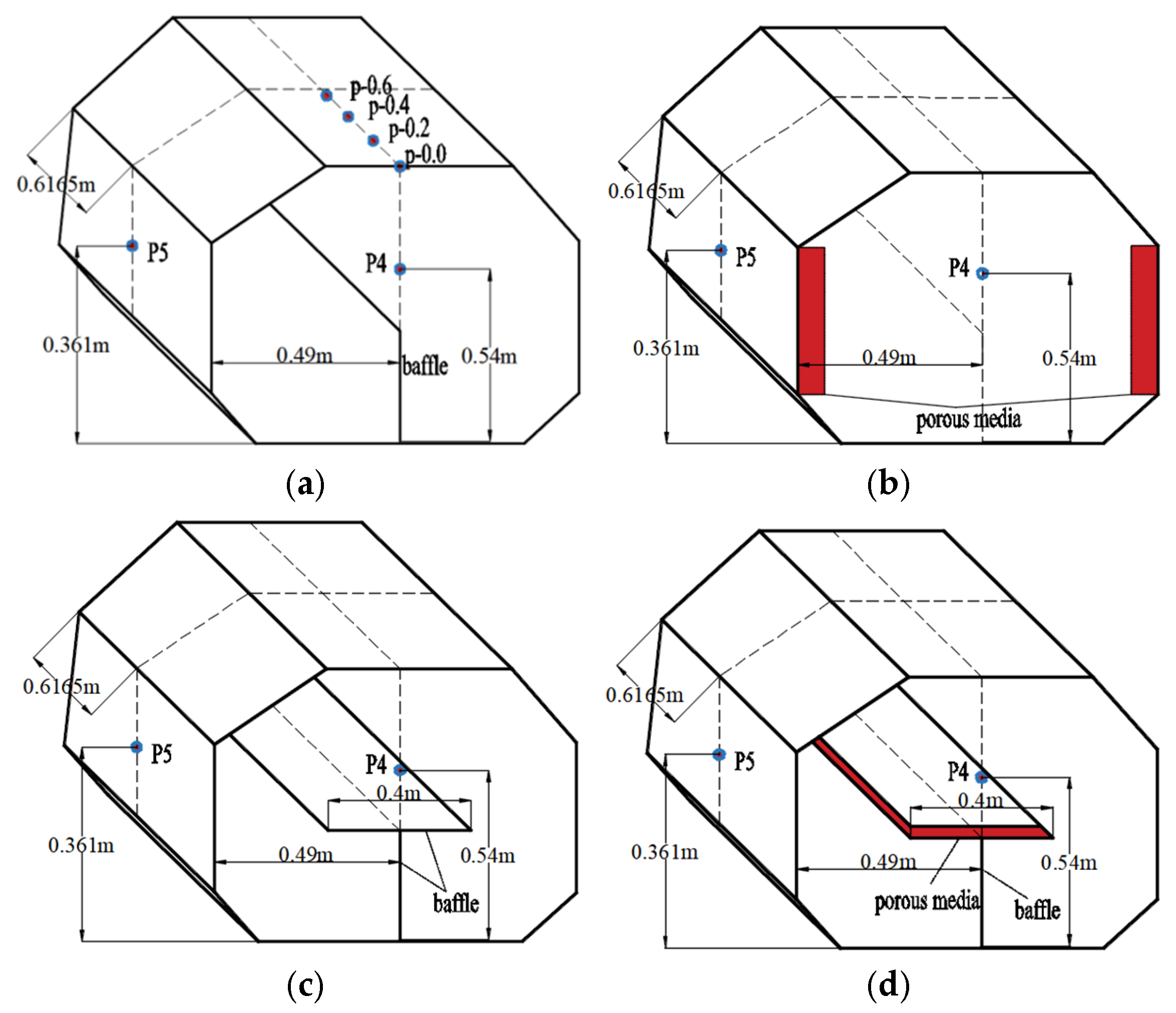
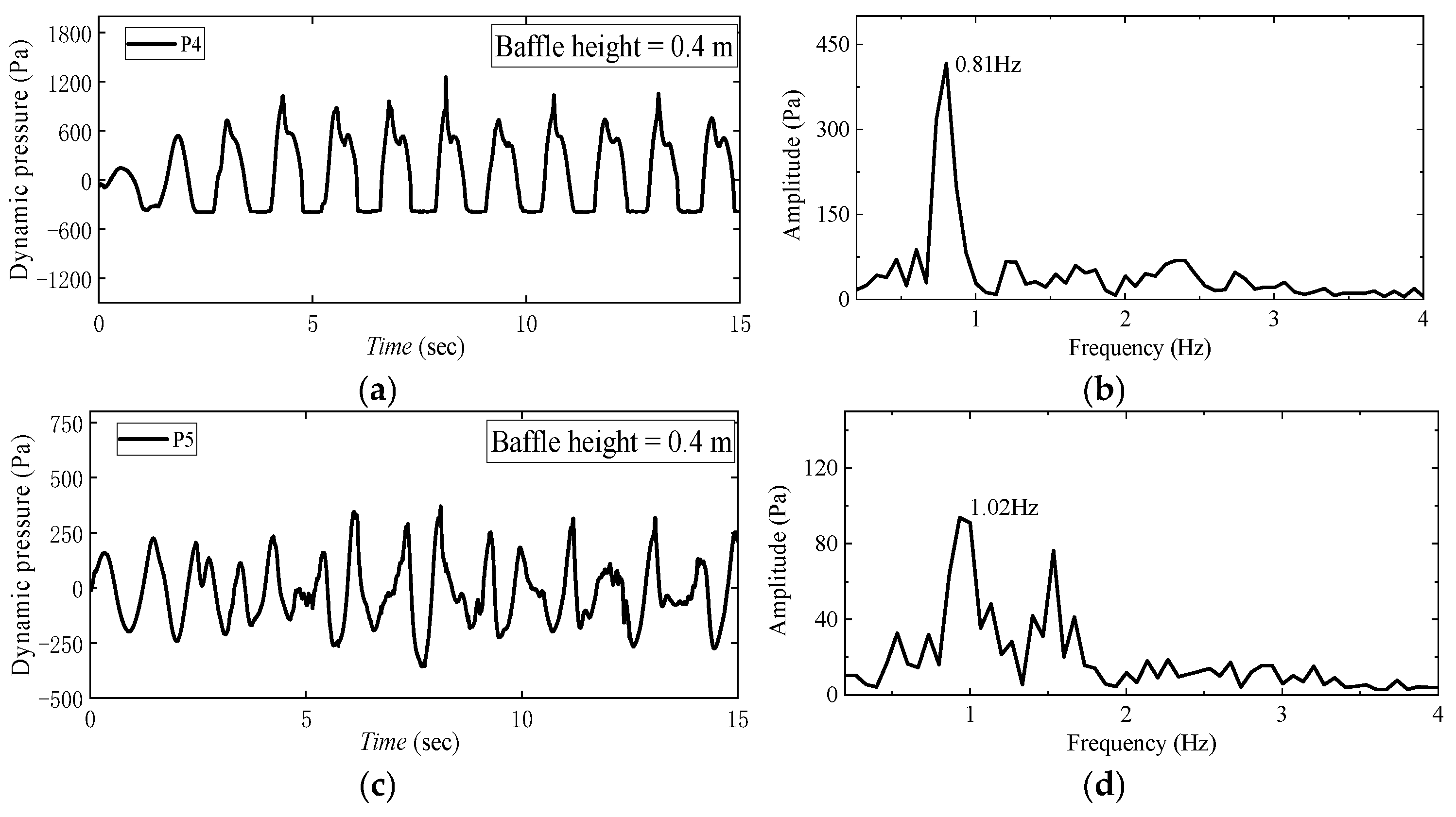
, with pitch excitation frequency at 0.81 Hz and roll excitation frequency at 1.02 Hz. By analyzing the nonlinear fluid response under dual-degree-of-freedom coupled excitation, the mechanism of multi-frequency excitation on sloshing loads and free surface evolution is elucidated. Four sloshing suppression configurations are investigated in this study, including vertical baffles, porous media, T-shaped baffles, and composite T-shaped baffles with porous media inserts (see
Figure 12 for structural parameters). The porous media baffles are set with a median particle diameter
D50 of 0.003 m, a porosity of 0.5 and uniformly distributed isotropic pores, and simulated by the Darcy–Forchheimer model embedded in the olaDyMFlow solver to characterize the flow resistance characteristics.
Firstly, we systematically investigate the influence of vertical baffle height (Model 1) on the dynamic pressure distribution at the tank roof in LNG sloshing problems. As shown in
Figure 13a, four characteristic monitoring points (located at 0 m, 0.2 m, 0.4 m, and 0.6 m from the width wall) along the central axis of the tank roof are selected, with five vertical baffles of different heights (0.2 m, 0.3 m, 0.4 m, 0.5 m, 0.6 m) installed at the tank center. Under coupled pitch (0.81 Hz) and roll (1.02 Hz) motions (both with the amplitude of
), the research reveals significant spatial variation in impact pressure distribution in
Figure 14. As the measurement points approach the tank center, the accumulated kinetic energy of liquid increases, leading to gradually enhanced dynamic pressure. More importantly, the baffle height demonstrates nonlinear effects on dynamic pressure mitigation. When the baffle height increases from 0.2 m to 0.4 m, the effective constraint on free surface motion promotes energy dissipation, resulting in remarkable pressure reduction. However, when the baffle height exceeds 0.4 m, excessive liquid compartmentalization intensifies local vortex strength, causing the impact pressure to rebound. This phenomenon indicates the existence of an optimal baffle height (approximately 0.4 m) for LNG sloshing control, which can effectively suppress large free surface motions while avoiding secondary vortex effects induced by over-constraint, providing important theoretical guidance for the anti-sloshing design of LNG tanks.
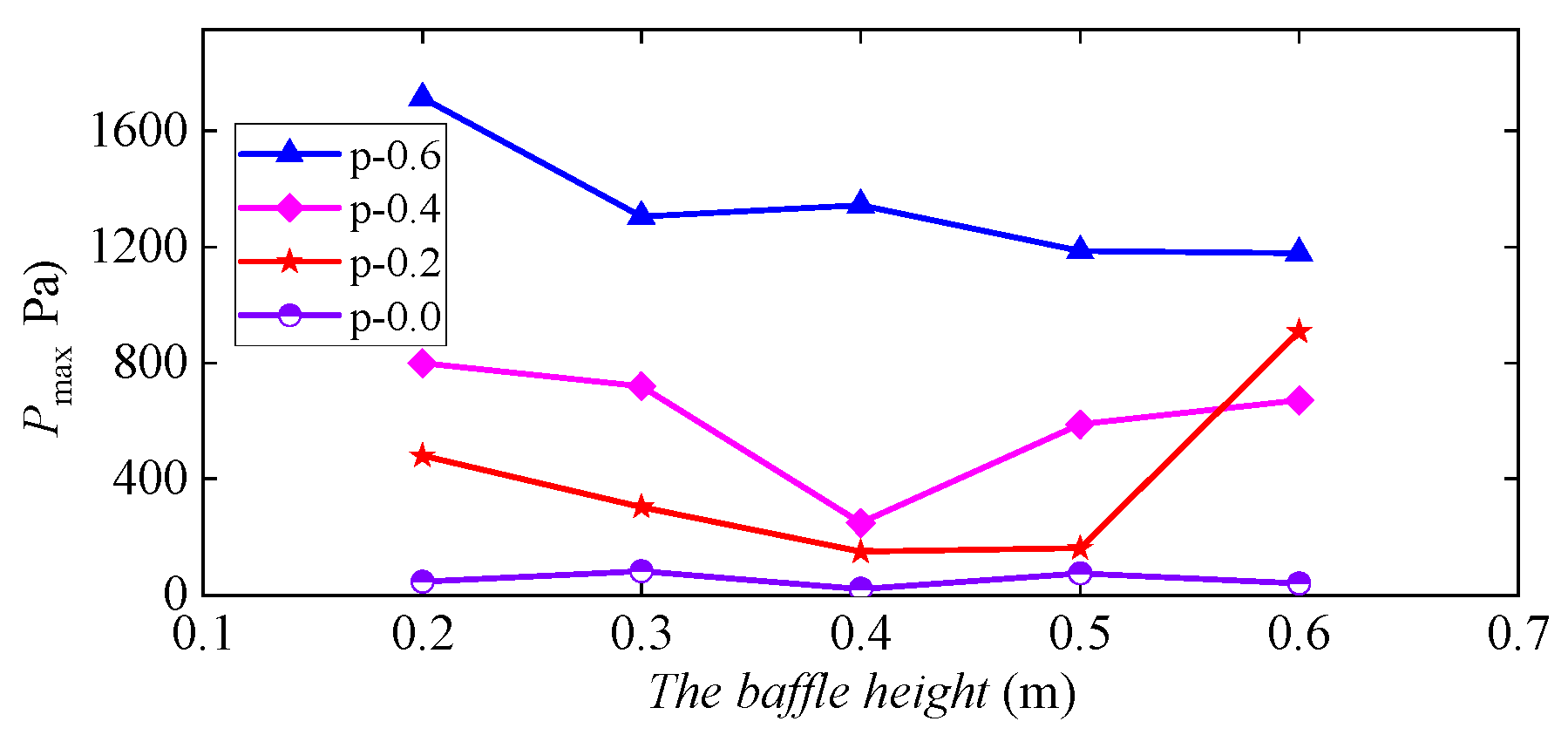
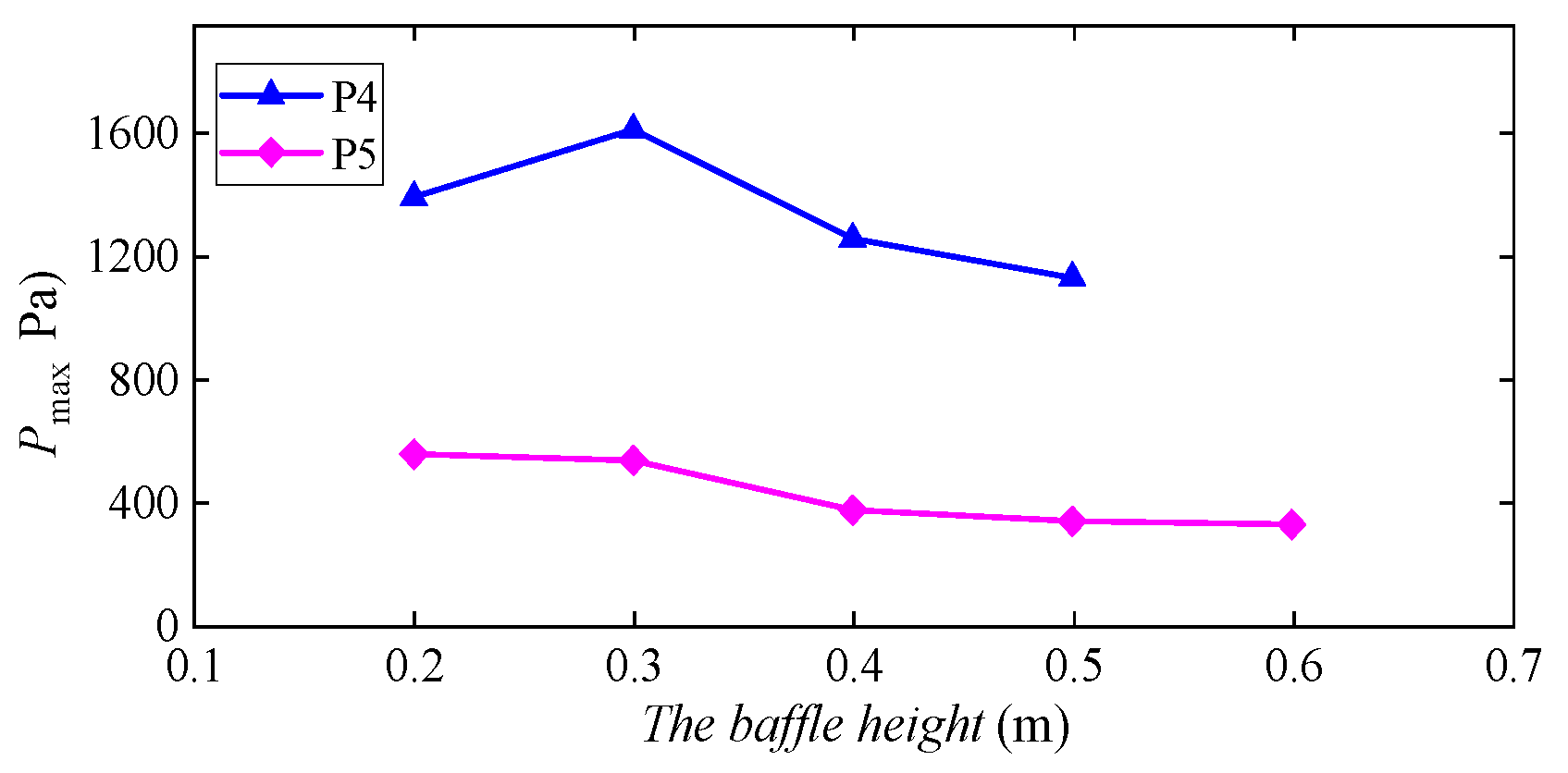
Then, we further investigate the influence of vertical baffle height on the dynamic pressure characteristics at measurement points P4 and P5, whose locations are illustrated in
Figure 13a. P4 is positioned on the width-side wall of the LNG tank to measure the dynamic pressure induced by pitch motion. At the same time, P5 is installed on the length-side wall primarily to capture the pressure response generated by roll motion. The numerical results in
Figure 15 demonstrate that as the baffle height increases, the peak dynamic pressure at P5 exhibits a monotonic decrease, whereas P4 shows a nonlinear trend of initial increase followed by reduction. This indicates that baffles installed along the length direction provide more effective suppression of roll motion compared to their limited efficiency in mitigating pitch motion. Moreover, comparative data reveal that the pressure amplitude on the width-side wall (P4) consistently exceeds that on the length-side wall (P5). Optimal suppression of sloshing is achieved when the baffle height reaches 0.4 m. Therefore, for the 80% filling level (liquid height
h = 0.576 m), the optimal dimensionless baffle height is defined as
hb = 0.4/
h ≈ 0.694. Energetically, this value achieves an optimal balance, maximizing the dissipation of macroscopic sloshing kinetic energy into microscopic viscous dissipation through flow constraint, while avoiding excessive compartmentalization that amplifies local vortex energy and pressure rebound.
For deeper dynamic analysis,
Figure 16 presents the time-history curves and corresponding Fast Fourier Transform (FFT) of P4 and P5. In the present study, the sampling frequency is 3150 Hz, the number of data points is 47,250, and a Hanning window (50% overlap) is used to mitigate spectral leakage. Due to the P4 proximity to the free surface, its time-history curve displays distinct double-peak characteristics. FFT analysis confirms that pressure fluctuations at P4 are predominantly governed by the pitch excitation frequency, whereas P5 is strongly influenced by the roll motion frequency. Thus, although the LNG tank undergoes coupled roll and pitch motions, the dynamic pressure on the width-side wall is primarily determined by pitch motion, while that on the length-side wall is dominated by roll motion.
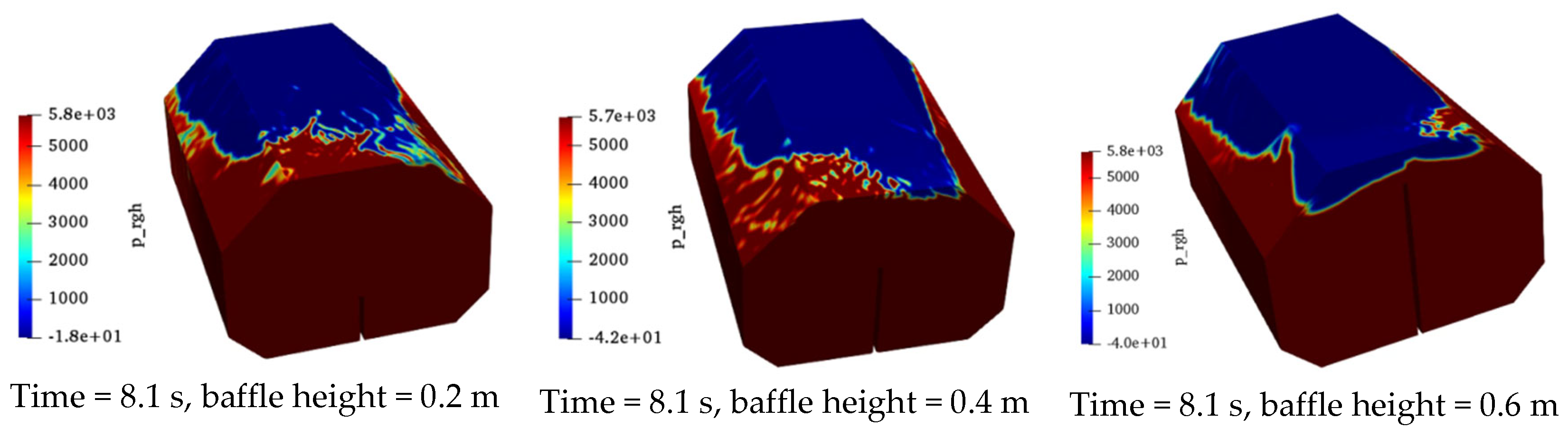
In order to more intuitively demonstrate the influence of baffle height on liquid sloshing, we compare the liquid motion states at the same moment under different baffle heights, as shown in
Figure 17.
Figure 17 presents pressure contours, with a unified color applied to the regions where pressure exceeds the free-surface pressure. This visualization approach is adopted to clearly illustrate the effect of baffles on the free liquid surface. The analysis reveals that when the baffle height is small, the liquid sloshing is intense, leading to significant free-surface fluctuations and even direct impact pressure on the tank roof, accompanied by noticeable droplet splashing and free-surface breakup. Under such conditions, the violently agitated liquid near the free surface entrains air, forming a gas–liquid mixing zone, which may exacerbate local pressure fluctuations.
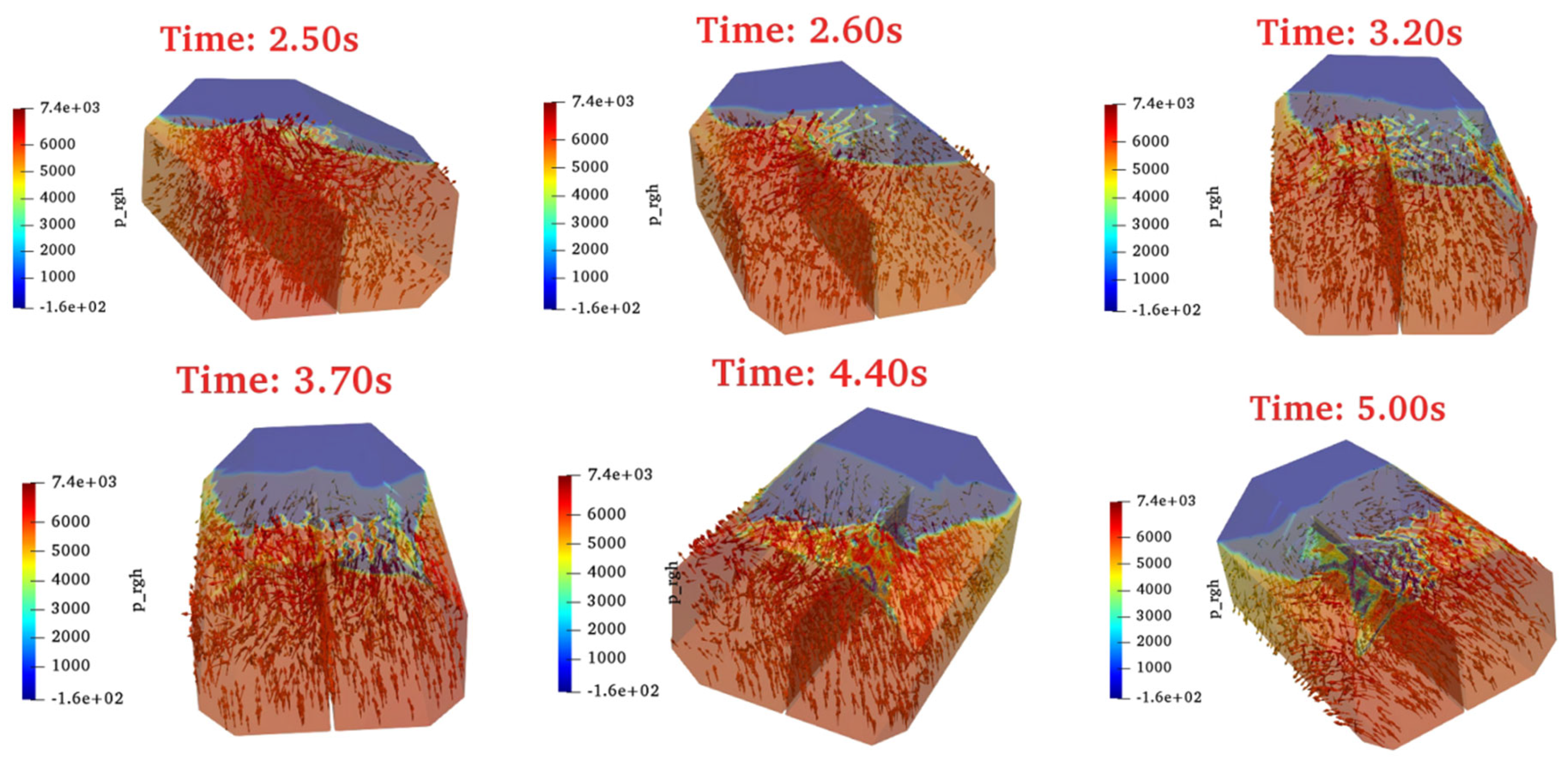
Figure 18 shows pressure contours with superimposed velocity vectors, illustrating the direction of sloshing-induced impact pressure on the wall and the free-surface evolution at different time instants for a baffle height of 0.4 m. The analysis demonstrates that at 2.5 s, liquid breakup initiates with slight contact against the tank roof. As time progresses to 2.6 s, intensified sloshing induces more pronounced free-surface fragmentation and droplet ejection. As time progresses to 3.2 s, the sloshing wave propagates to the opposite end of the tank, generating vigorous impact with the roof. Further observations reveal that the liquid sloshing exhibits periodic characteristics, with impact pressure gradually amplifying over time before reaching a dynamic equilibrium state. This phenomenon suggests that while the 0.4 m baffle effectively reduces sloshing amplitude, intermittent roof contact persists under specific excitation conditions. The underlying mechanism can be attributed to the baffle’s ability to suppress lateral kinetic energy transfer, whereas residual wave energy in the longitudinal direction remains insufficiently dissipated, resulting in sustained structural loading on the roof.
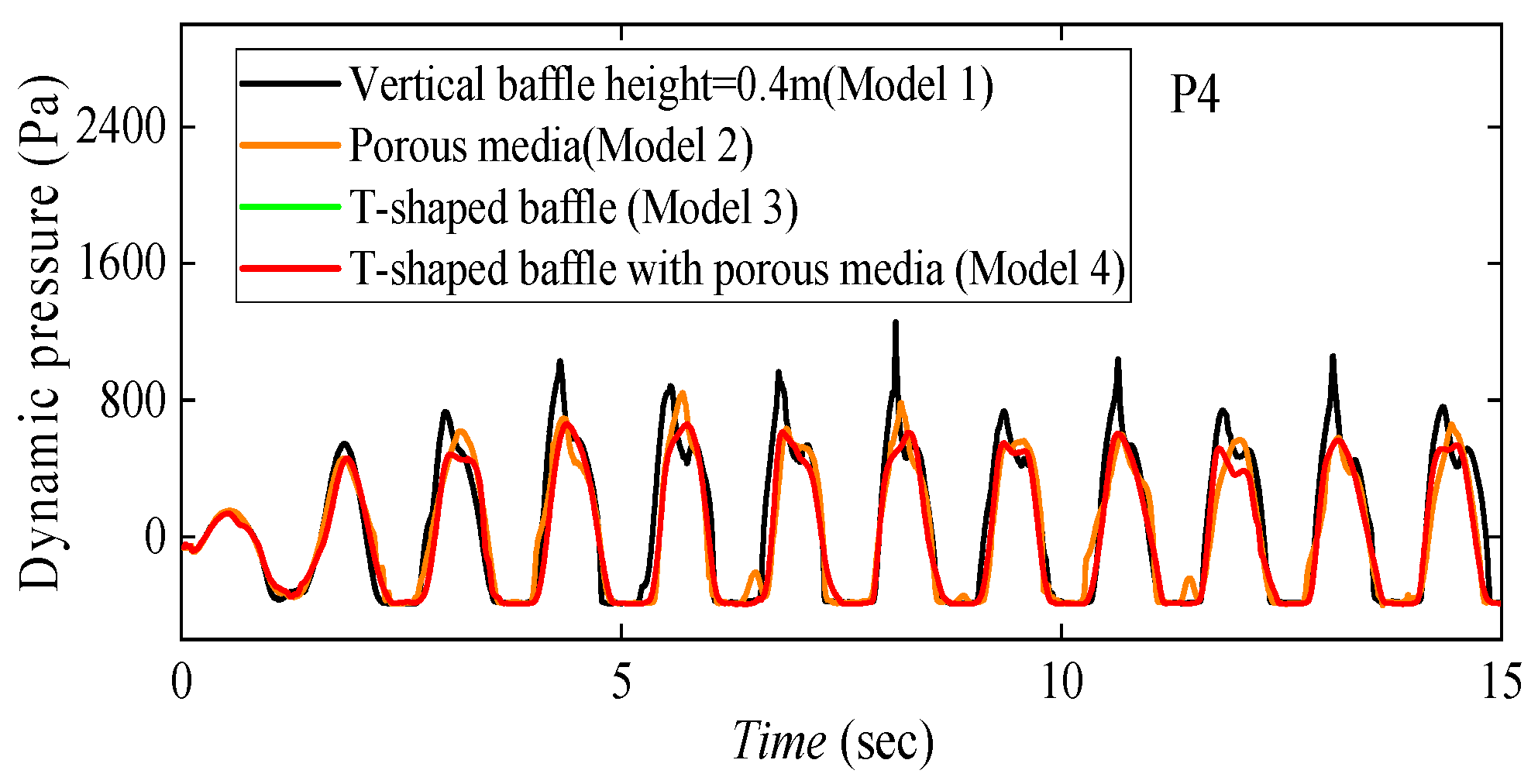
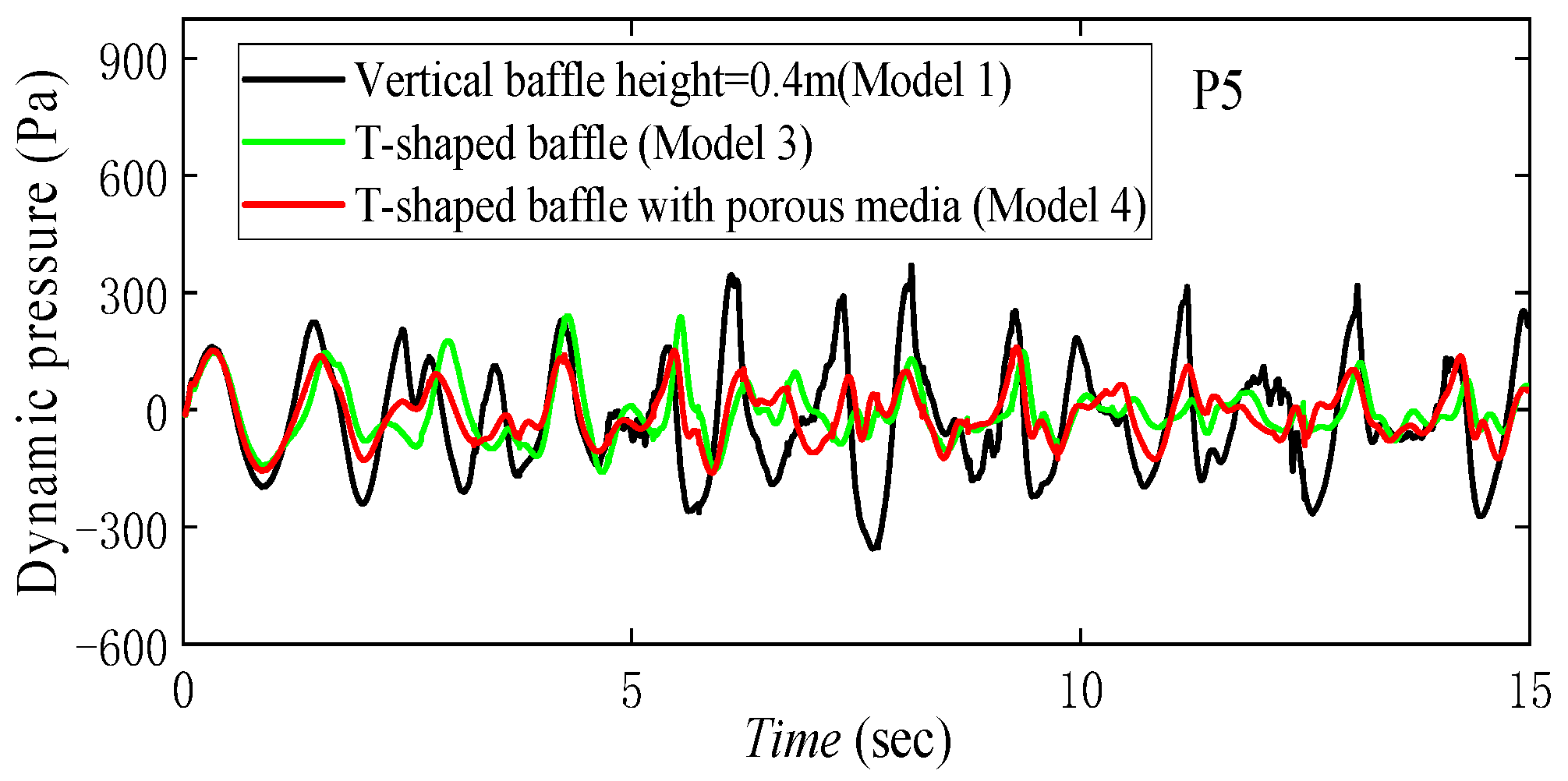
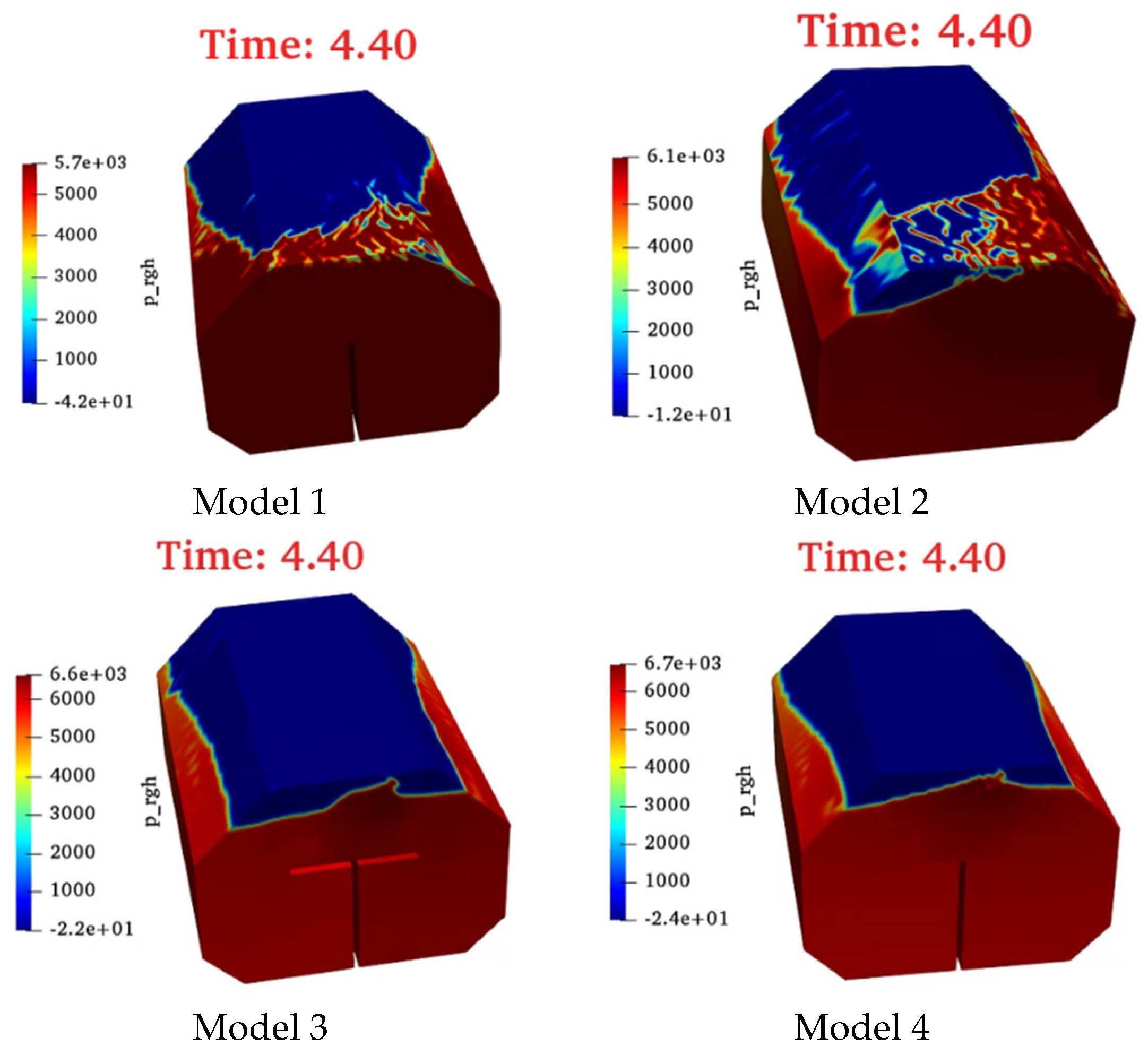
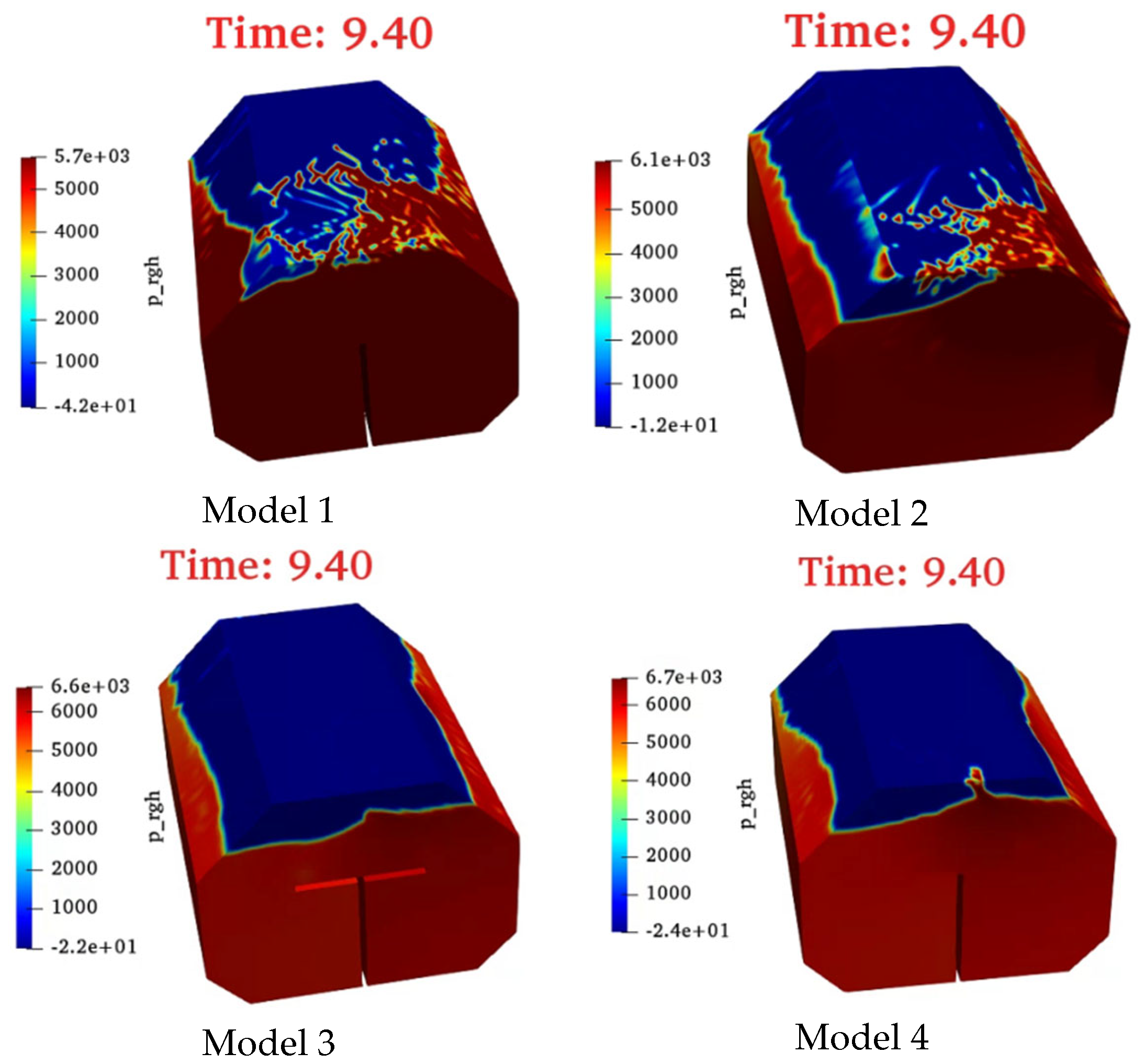
In the previous study, the baffle has a good inhibitory effect on liquid sloshing when the baffle height is 0.4 m. Therefore, we carry out further optimization research on the basis of the baffle height of 0.4 m. Then, a comparative analysis is conducted for different baffles regarding their sloshing suppression performance, with numerical results presented in
Figure 19 and
Figure 20. The findings demonstrate that porous media, T-shaped baffles, and T-shaped baffles with porous media have a good inhibitory effect on liquid sloshing. The viscous shear force generated by the additional structure effectively dissipates the kinetic energy. Moreover, the complex pore network for porous media breaks down large-scale vortical structures, converting macroscopic sloshing energy into microscopic turbulent dissipation. The permeable characteristics delay instantaneous liquid impact, ensuring a more uniform pressure distribution. Notably, the porous media also significantly mitigate free-surface breakup during liquid penetration, further confirming their comprehensive advantages in sloshing suppression. Compared with the pitch motion, the additional structure has a better inhibitory effect on the roll motion. Comparative numerical results demonstrate that among the four suppression configurations, the T-shaped baffle with porous media achieves optimal performance.
Figure 21 and
Figure 22 present a comparative visualization of different suppression configurations during severe sloshing events. The flow field analysis distinctly reveals that neither conventional vertical baffles nor porous media structures can prevent liquid impact on the tank roof, resulting in a pronounced free-surface breakup. In contrast, the T-shaped baffle successfully blocks vertical liquid movement through dual-flow obstruction created by its horizontal extension, while the composite T-baffle with porous media additionally reduces turbulent intensity via energy dissipation characteristics of the porous layer. Although both T-type configurations demonstrate comparable macroscopic suppression performance, the data in
Figure 17 clearly show that the T-shaped baffle with porous media has the best effect. This is due to the porous medium’s persistent kinetic energy dissipation and its synergistic control mechanism with the T-shaped structure.
5. Conclusions
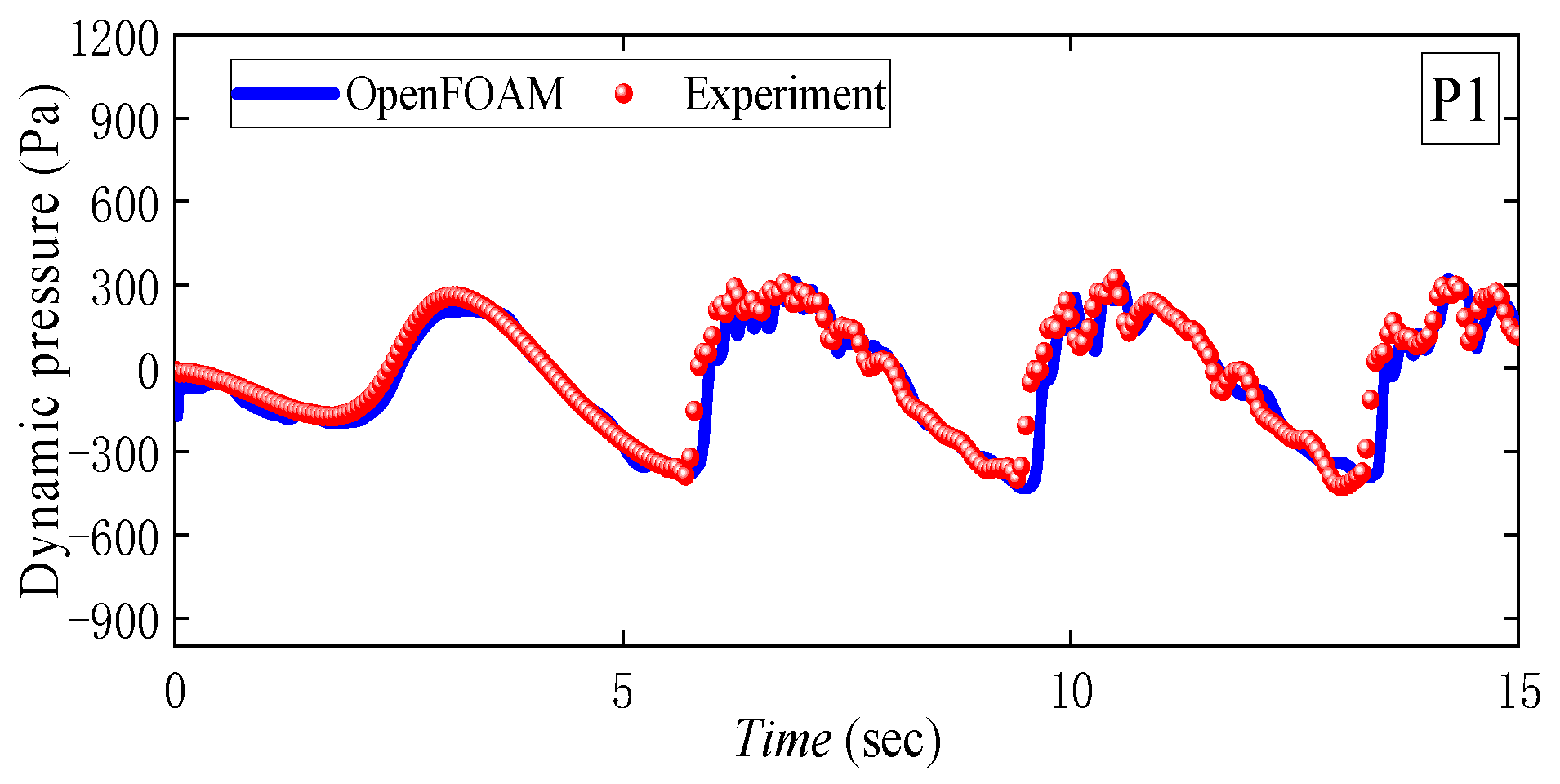
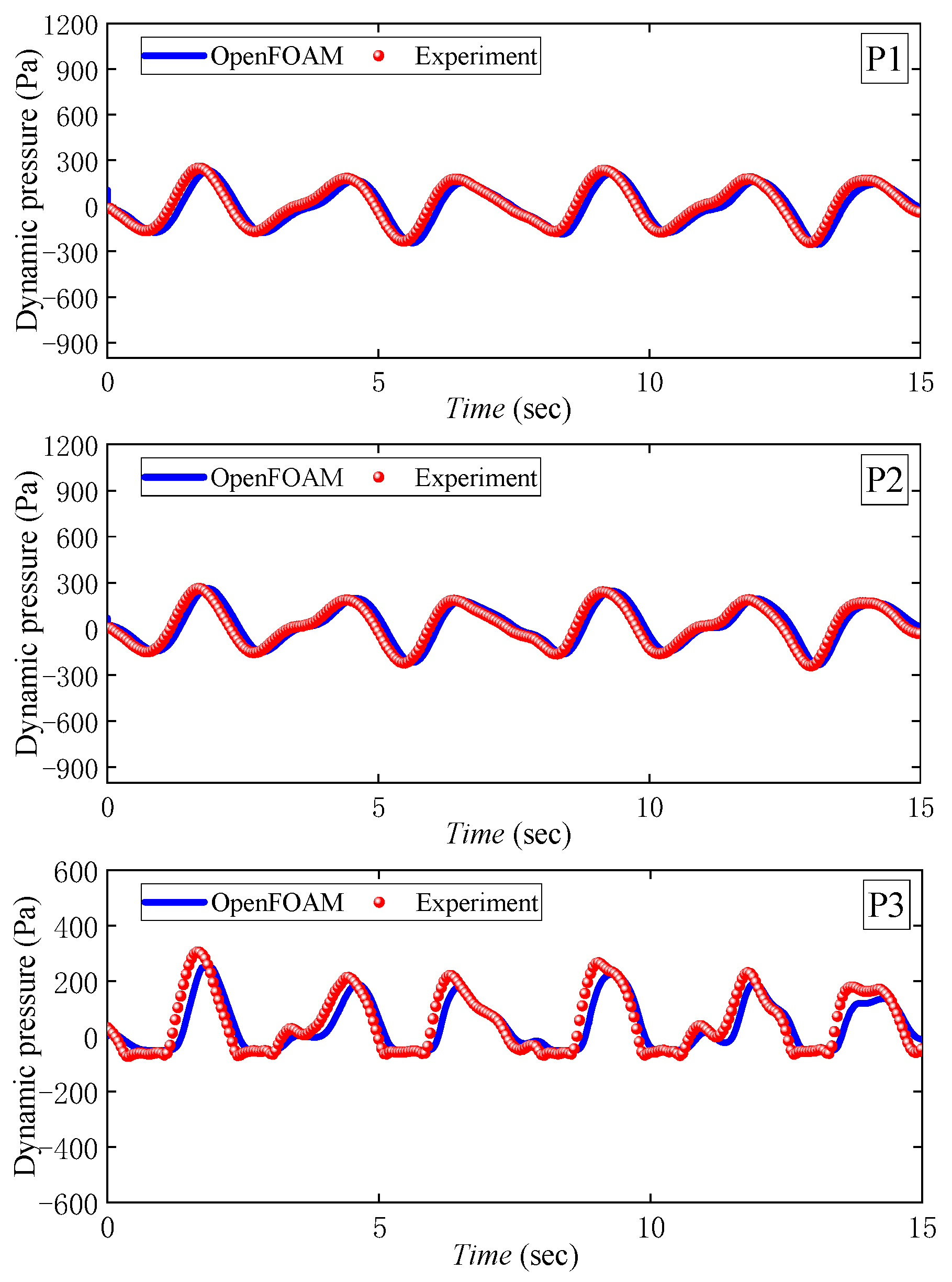
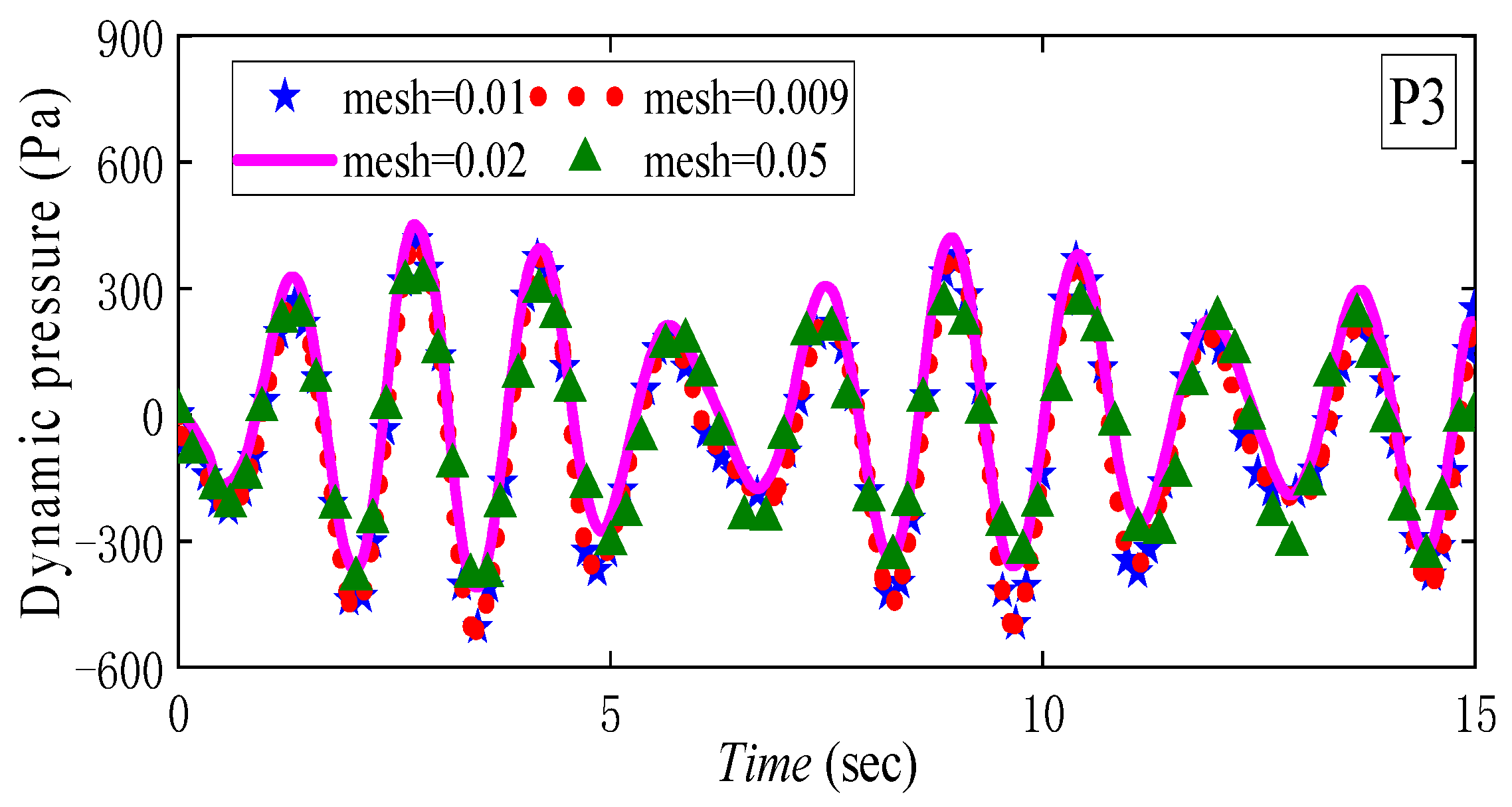
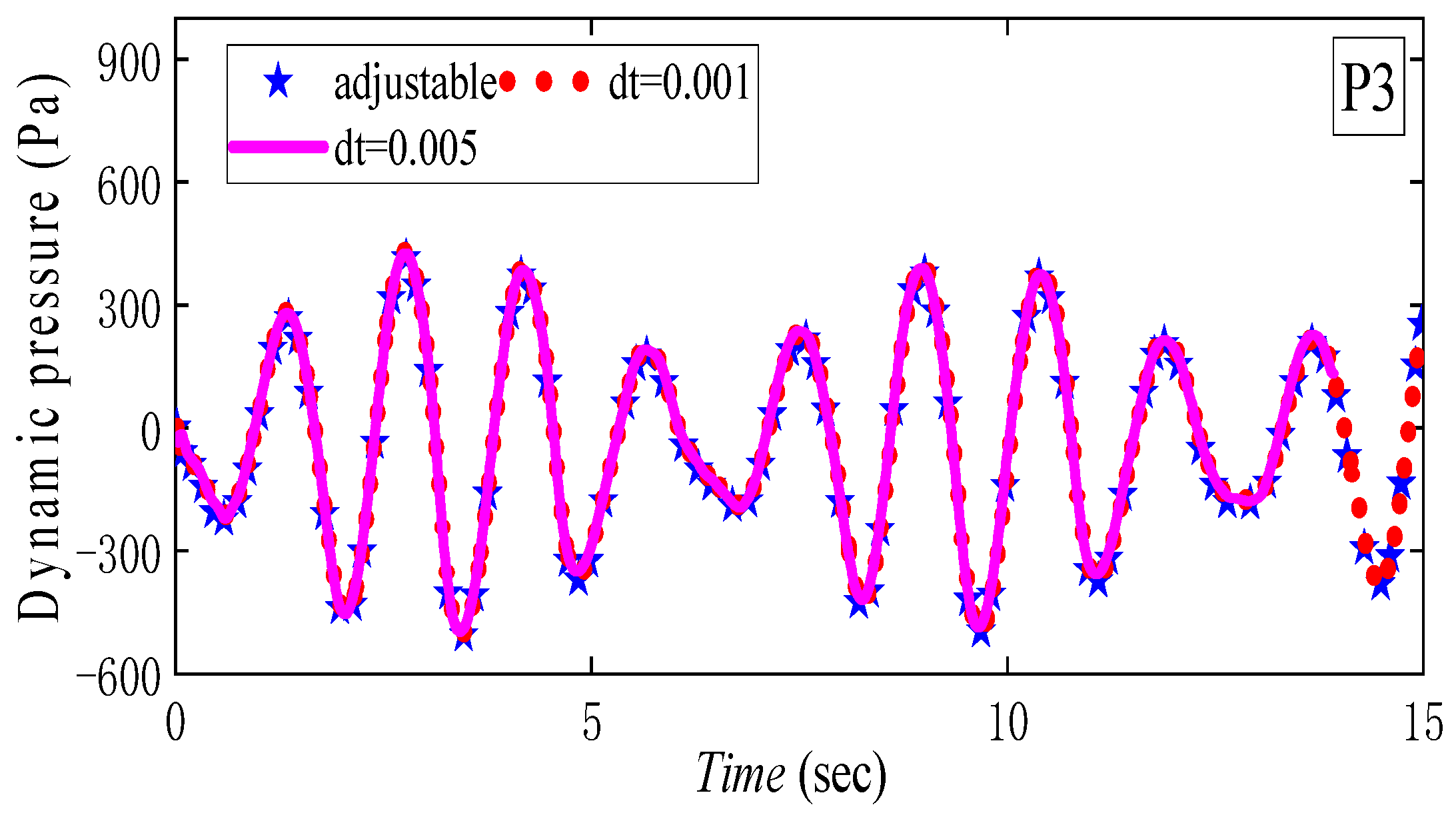
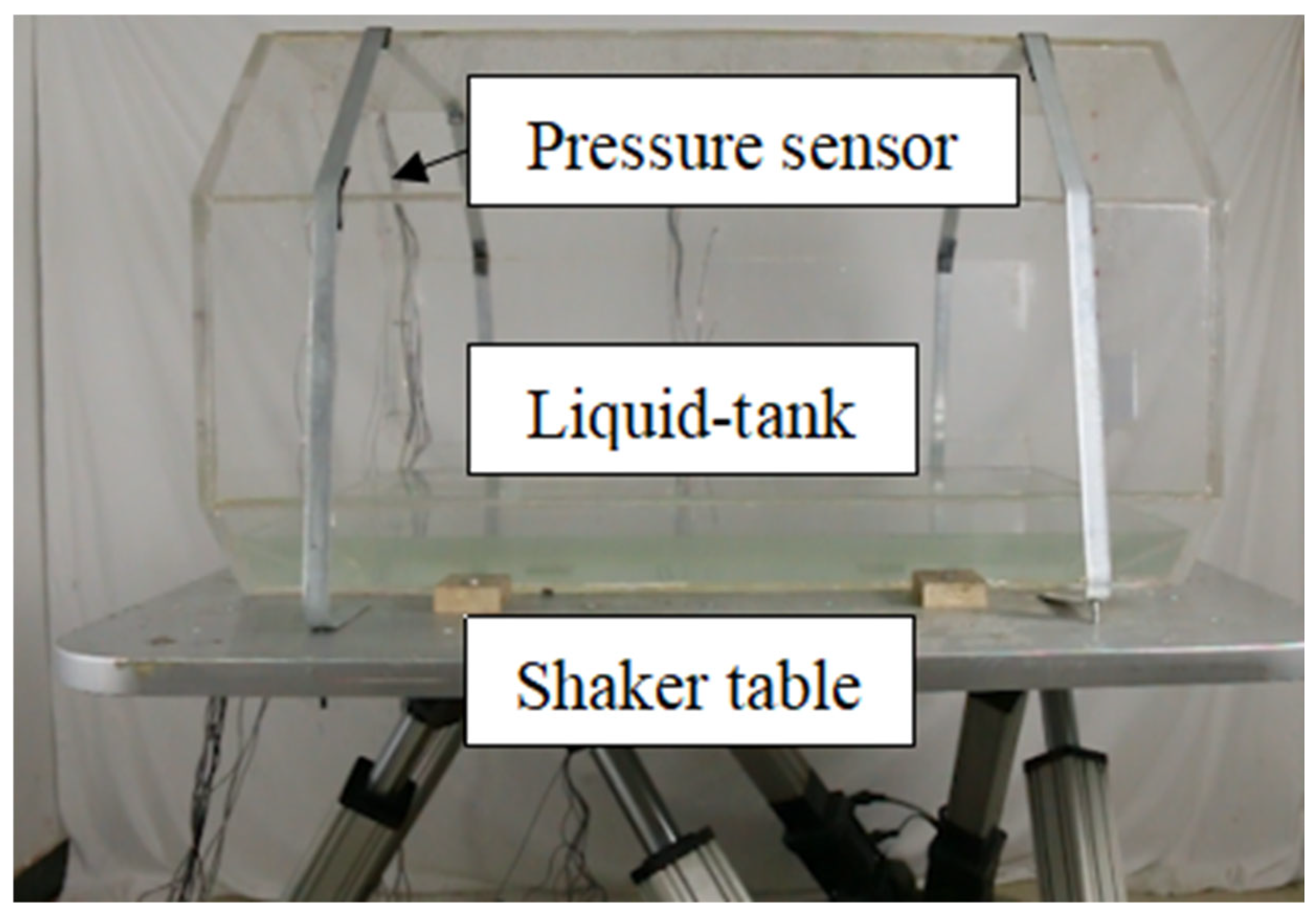
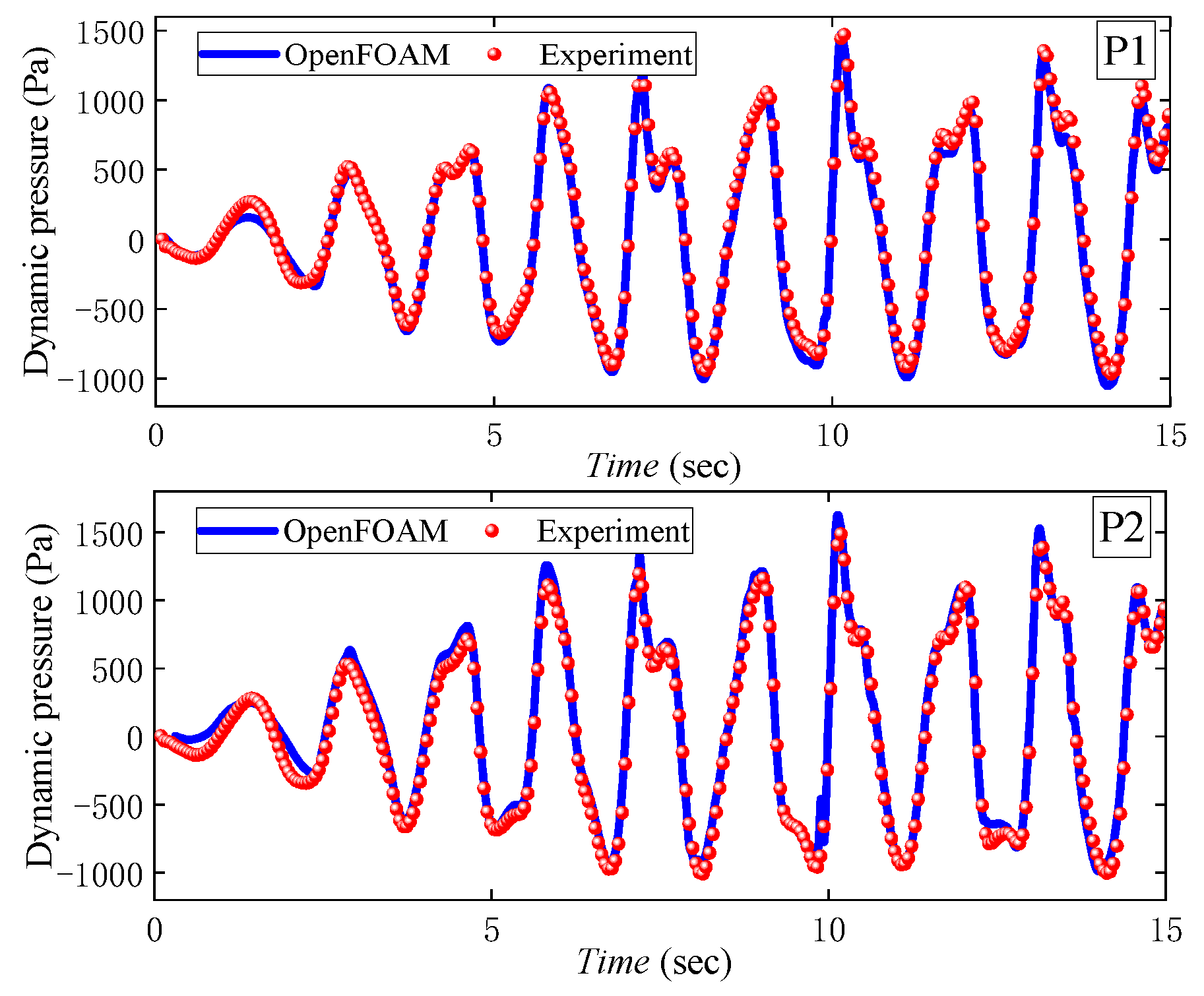
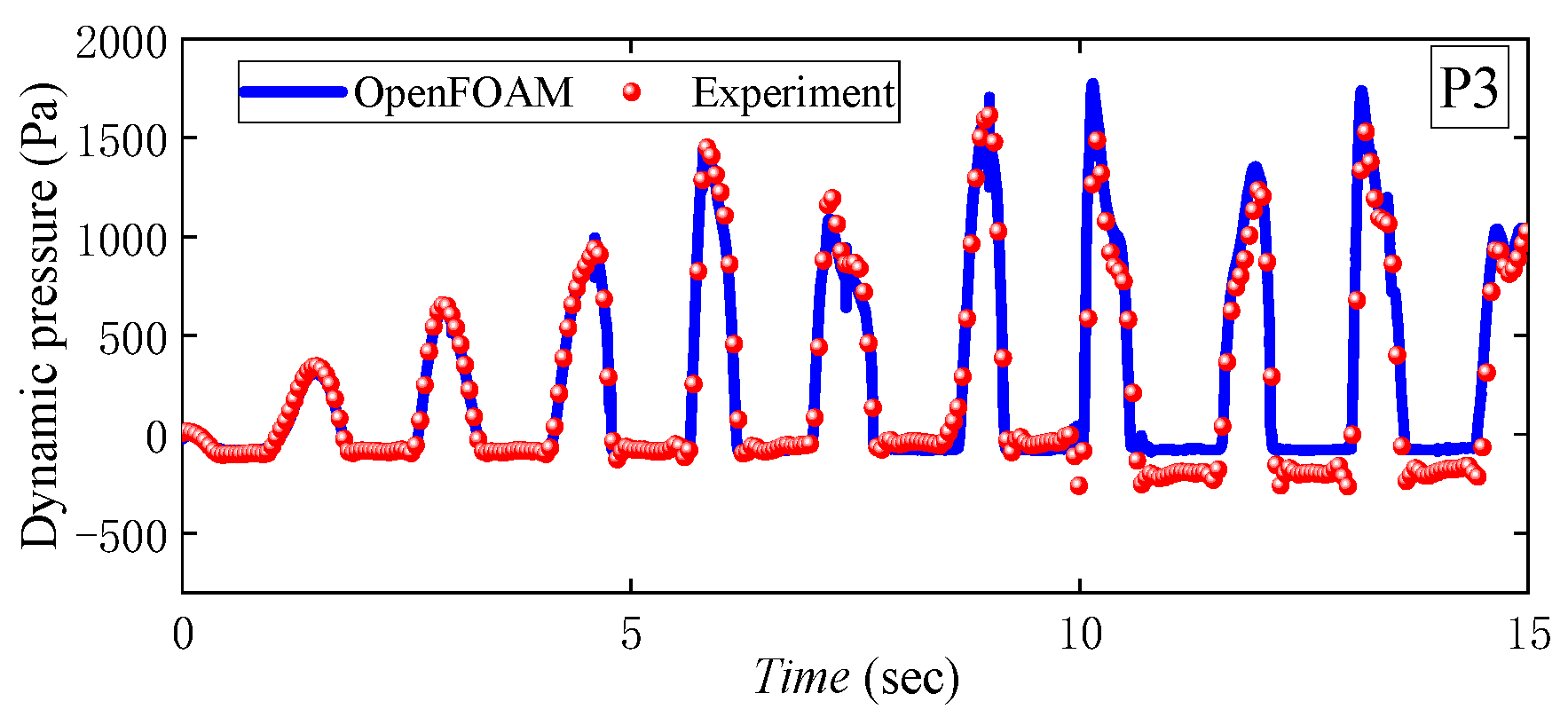
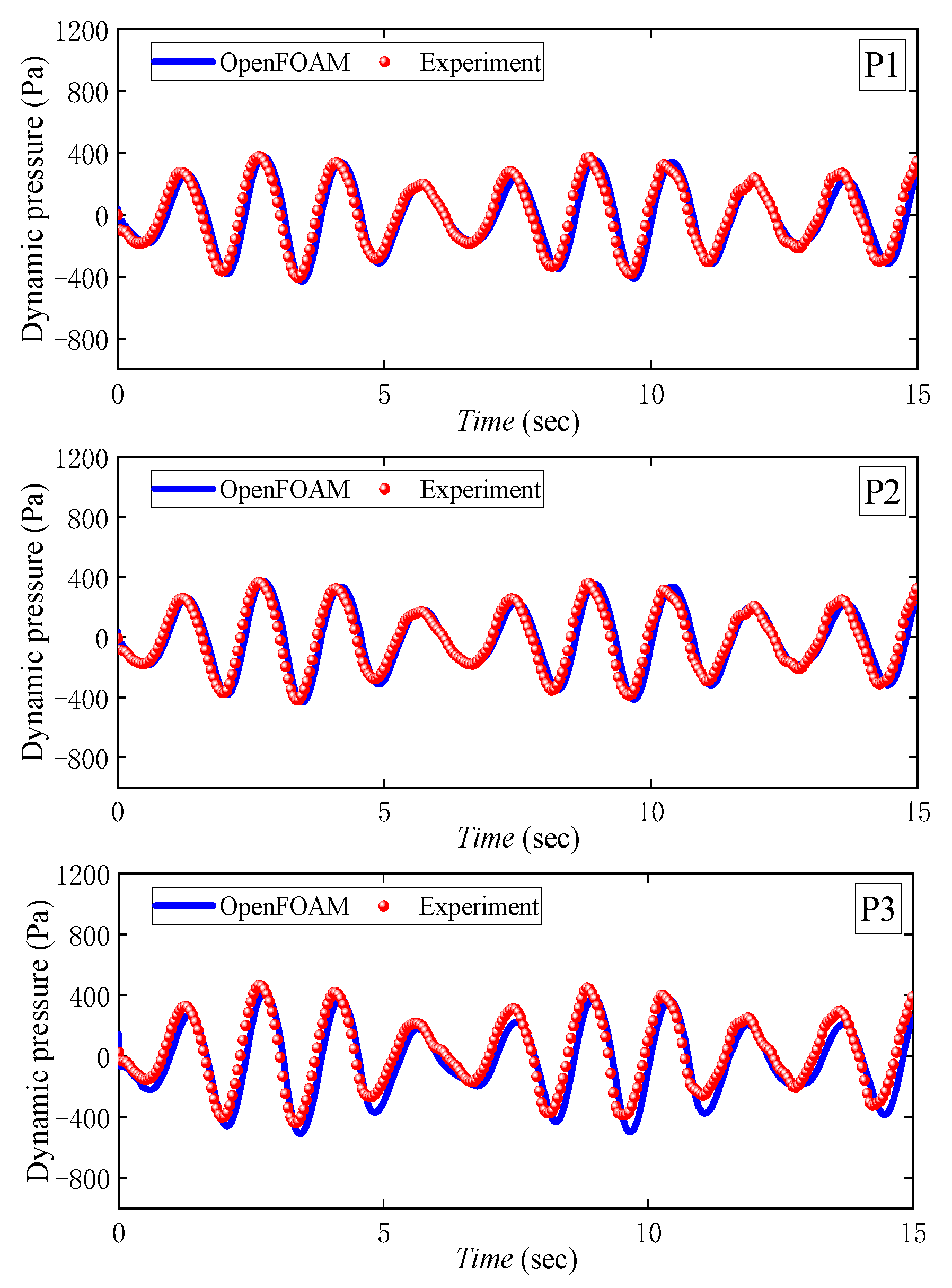
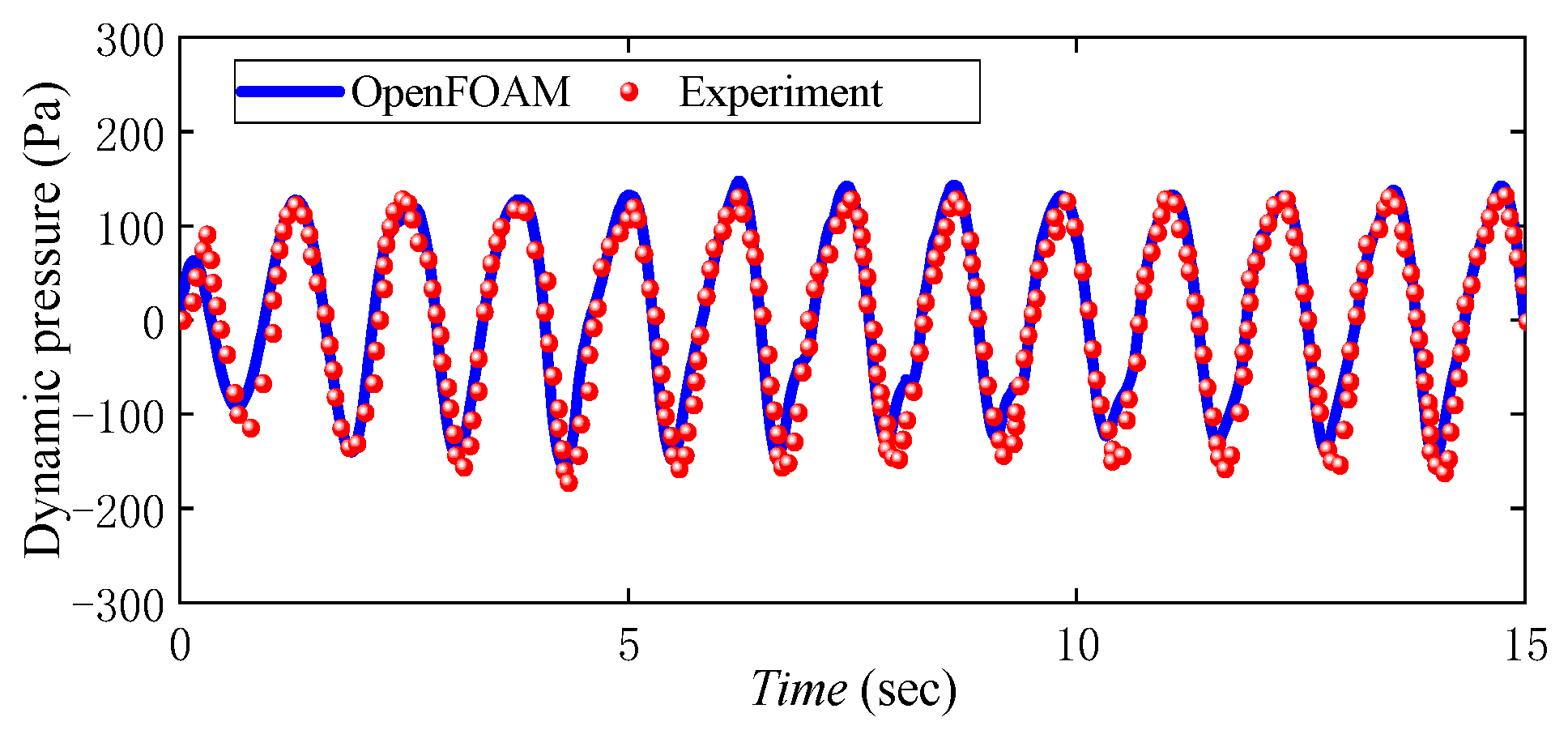
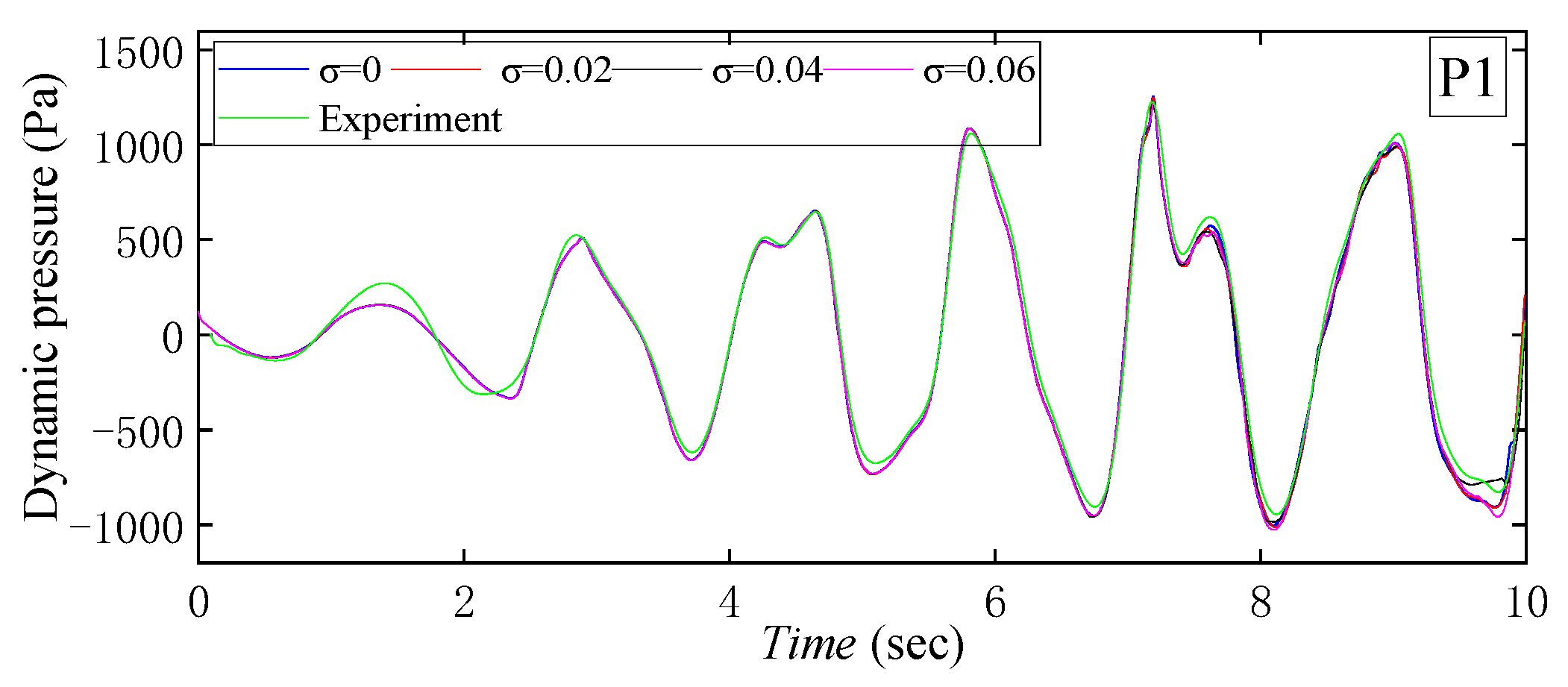
This investigation systematically examines the sloshing suppression mechanisms of different baffle configurations under multi-degree-of-freedom coupled resonance excitation using an olaDyMFlow solver based on OpenFOAM. A rigorous grid independence study and temporal convergence analysis are first conducted to establish a numerical model with verified accuracy. The mesh element size is determined through a comparison of distinct grid schemes, while time step selection is also optimized. Experimental validations subsequently confirm the numerical model’s predictive reliability across low (the liquid filling level of 10%), medium (the liquid filling level of 50%), and high liquid level (the liquid filling level of 80%) conditions under various excitation frequencies. Based on this validated framework, a comprehensive performance comparison is performed for four suppression configurations: vertical baffles, porous media, T-shaped baffles, and composite T-shaped baffles with porous media. Moreover, this study reveals two novel physical mechanisms (nonlinear sloshing suppression of vertical baffles and dominant frequency control of tank wall pressure) under multi-degree-of-freedom coupled resonance conditions. We also propose an innovative macro-micro synergistic composite baffle and elucidate its new synergistic sloshing suppression mechanism of “macroscopic obstruction and microscopic dissipation “, which leads to the following principal conclusions:
(1). The present study focuses on the sloshing suppression effect under resonant conditions, where the sloshing amplitude is the largest and the mitigation performance of baffles/porous structures is most significant.
(2). The vertical baffle height exhibits a nonlinear influence on sloshing suppression, with 0.4/h ≈ 0.694 identified as the optimal height. This configuration effectively mitigates free-surface fluctuations and roof impacts while avoiding vortex amplification caused by excessive compartmentalization.
(3). The T-shaped baffle with integrated porous media emerges as the most effective solution, combining macroscopic flow obstruction (via horizontal extension) with microscopic energy dissipation (through porous layers). This dual-phase mechanism achieves synergistic suppression, reducing both primary wave impact and secondary turbulence formation.
(4). All suppression structures eventually drive the system toward dynamic equilibrium, but with varying transient behaviors. The composite baffle accelerates stabilization by simultaneously addressing kinetic energy transfer (through geometric constraints) and viscous dissipation (via porous media).
(5). This study is limited to numerical simulation of sloshing suppression by baffles and perforated plates, and experimental verification of the suppression mechanisms has not been carried out yet. Future research will focus on physical model experiments to validate the above numerical results, and further extend to the sloshing characteristics and suppression optimization of multi-layer viscous liquids in LNG tanks, as well as the fluid–structure interaction effect between flexible tank walls and liquid sloshing.
(6). This study is based on small-scale LNG tank models, and engineering scaling needs correction via similarity criteria. Moreover, the adopted laminar model captures the core sloshing mechanism at low Reynolds numbers but cannot depict local strong turbulence under extreme coupled resonance in detail. The proposed composite T-shaped porous baffle may face practical limitations such as low-temperature frosting, blockage, and cargo space occupation. Future research will focus on large-scale model studies, turbulence model optimization, and structural and material design of the composite baffle for LNG low-temperature environments to break through application constraints.