1. Introduction
Loose or soft protection methods have long been used to protect coastal inlands and harbour areas. Loose methods include sand, rubble and concrete armour units, which are distinguished from hard or solid methods, e.g., concrete revetments, or pile structures [
1]. Loose methods allow a small amount of damage, i.e., movement of armour units within a certain distance of their original place, so that the whole structure maintains its basic function of protecting the inner zones from external waves and can be relatively easily repaired.
Rocks have been used as armour material for breakwaters and coastline since the prehistoric age, before concrete was even developed. It is very hard to prepare rocks of similar size and shape for the construction of a breakwater or a revetment. If rocks of mixed sizes are placed, the stability of the structure is not guaranteed. Following the development of concrete, the ability to manufacture CAUs with predefined weight and shape enabled their replacement of natural rock in armouring structures. Since the 1950s, this has led to the development of numerous CAU designs aimed at reducing construction costs while achieving an optimal balance between concrete consumption, hydraulic performance and structural strength [
2].
Since the development of concrete, various types of concrete armour units have been proposed and applied in the field of coastal protection as alternatives to conventional armour rocks, characterized by irregular shapes and sizes. Conventional armour rocks have been widely applied in coastal engineering to control changes in beach topography and prevent coastal erosion and flooding caused by wave overtopping. However, ensuring consistent quality of rock barriers remains a challenge [
3]. Cubes and tetrapods have been frequently used at many sites around the world [
4]. Recently, Hexacone was introduced as a commercial product in 2016 and has since been applied in the field in Korea [
5]. Hexacones placed at 50 field sites have demonstrated satisfactory safety and structural stability, with no observed fractures in legs or columns nor any slope failures to date.
Selection of an armour unit type for a specific site with given design conditions is a challenge to scientists and engineers [
6]. CAUs installed on a specific site are designed to withstand site-specific environmental conditions, such as waves, water depth and structural shape. Therefore, selecting the weight and type of CAU plays an important role in the performance and durability of coastal protection structures. While various types of CAUs have been developed and implemented, general, quantitative guidelines for selecting the appropriate type of CAU for a specific site are still lacking. Comparison between different types of CAUs should be considered from various points of view. Starting with weight, there are many physical and geometrical properties that should be considered, e.g., the slenderness of the whole shape, slenderness of inner legs or columns [
6], void ratio [
7,
8], interlocking level [
9,
10], angle of repose [
11], friction with the slope surface or between armour units, manufacturing difficulties, cost, and reliability level based on experience. In current engineering practice, CAUs are often qualitatively classified into solid, bulky and slim types based on visual appearance and empirical evidence. However, this classification fails to provide a deep understanding of the fundamental mechanical behaviour of barriers. When analyzing the stability of CAU armour structures, researchers have focused on defining breakwater cross-sections that incorporate both concrete units and geometric configurations at the prototype scale [
12,
13,
14]. However, this approach is primarily concerned with overall structural arrangements and has limitations in explaining the movement mechanisms of individual CAU structure.
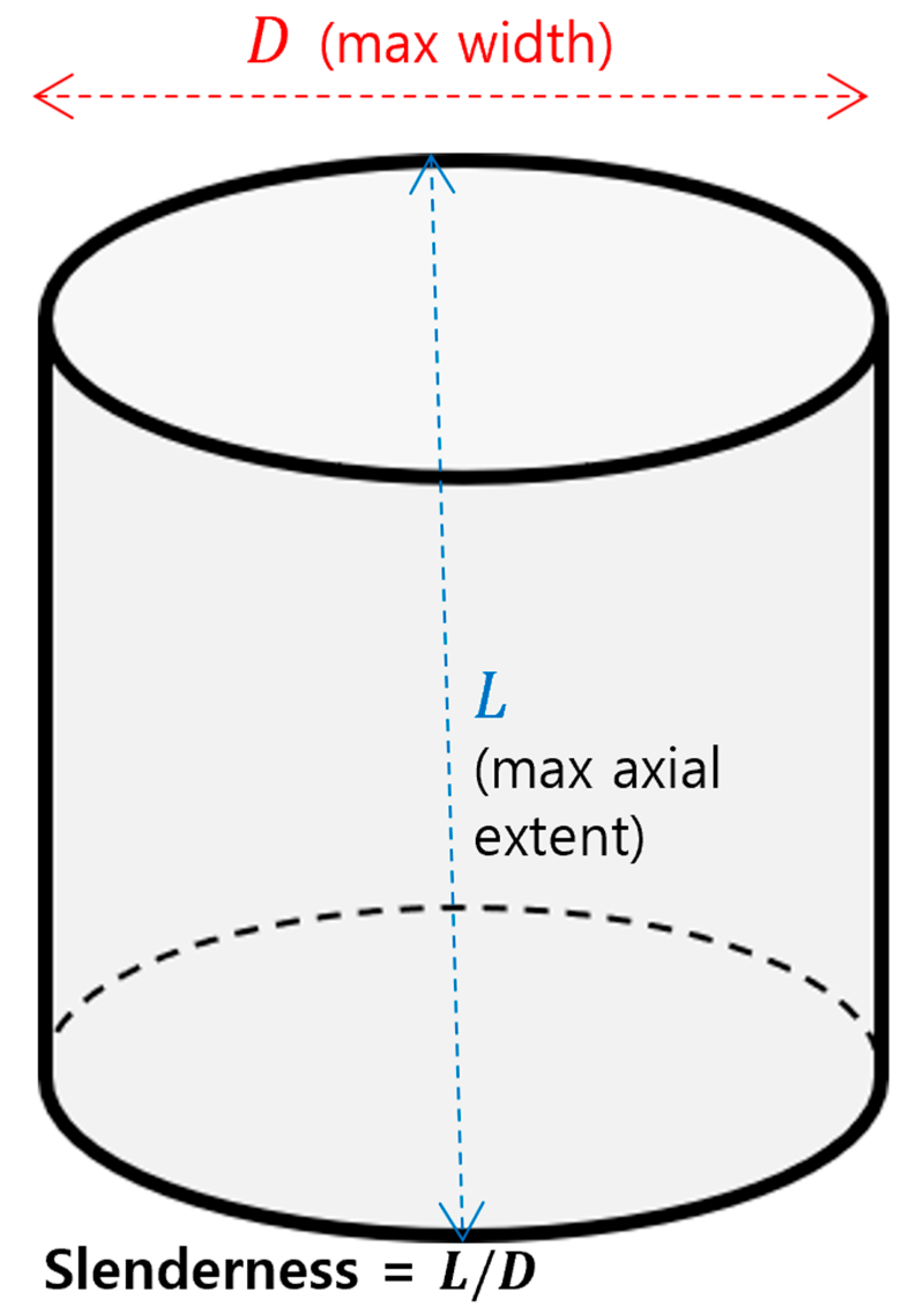
We can define the overall slenderness as the length over the diameter of the wrapping cylinder, which is related to the stability of the unit. On the other hand, the slenderness of legs or columns of a unit is related to internal stress and the consequent durability of the parts. The overall or gross slenderness often enhances the interlocking level [
15].
Void ratio is an indicator of the mass spreading level, and depends on placing method, number of layers, placing scheme for regular placement, and boundary space, such as the width and length of the breakwater or revetment. It affects the overall stability of the structure and the construction cost and is therefore an important parameter.
Interlocking level is related to both the legs’ durability and the stability of the whole layer. Even if units are very well-interlocked, the whole layer could collapse in sliding mode. The interlocking degree depends on various factors, e.g., the individual armour unit shape and placement methods. The interlocking property is closely related to the angle of repose of a specific armour unit with a given placement method.
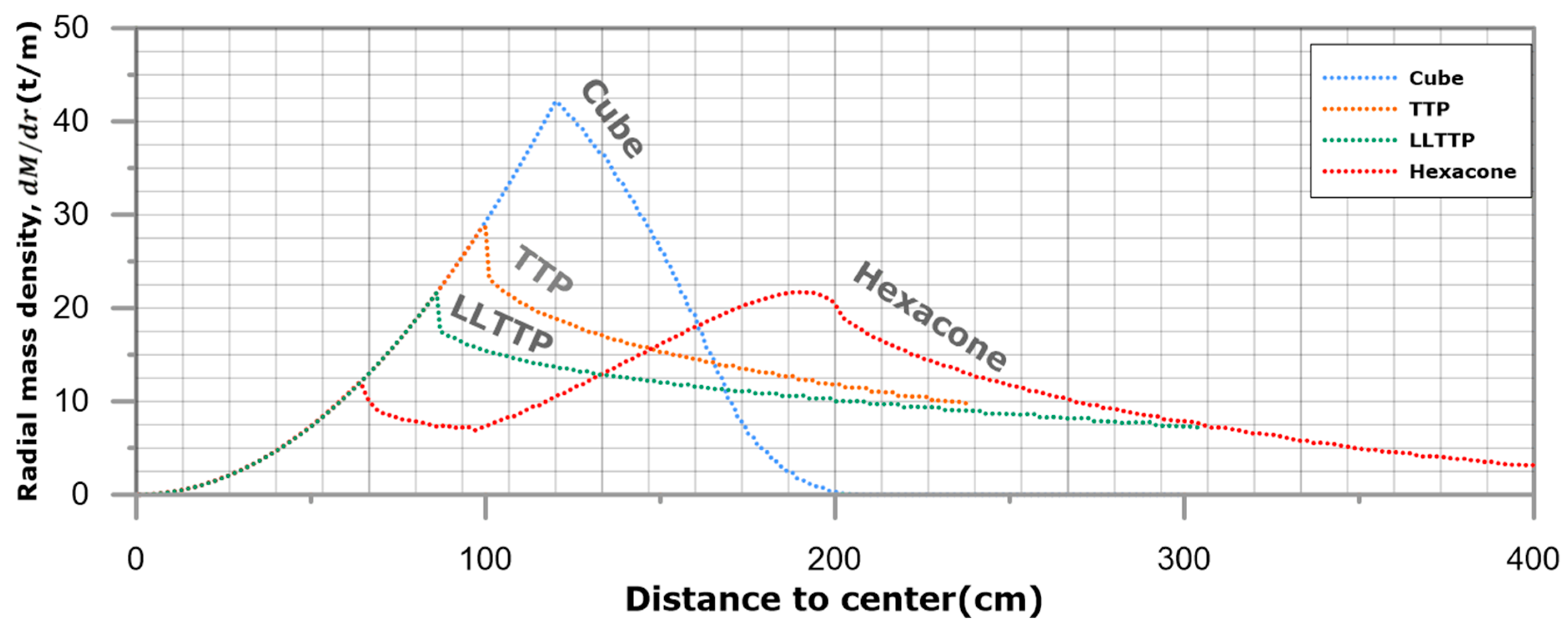
Mass distribution with distance from the gravity centre of a unit can give an indication of whether the unit is massive, bulky or slender.
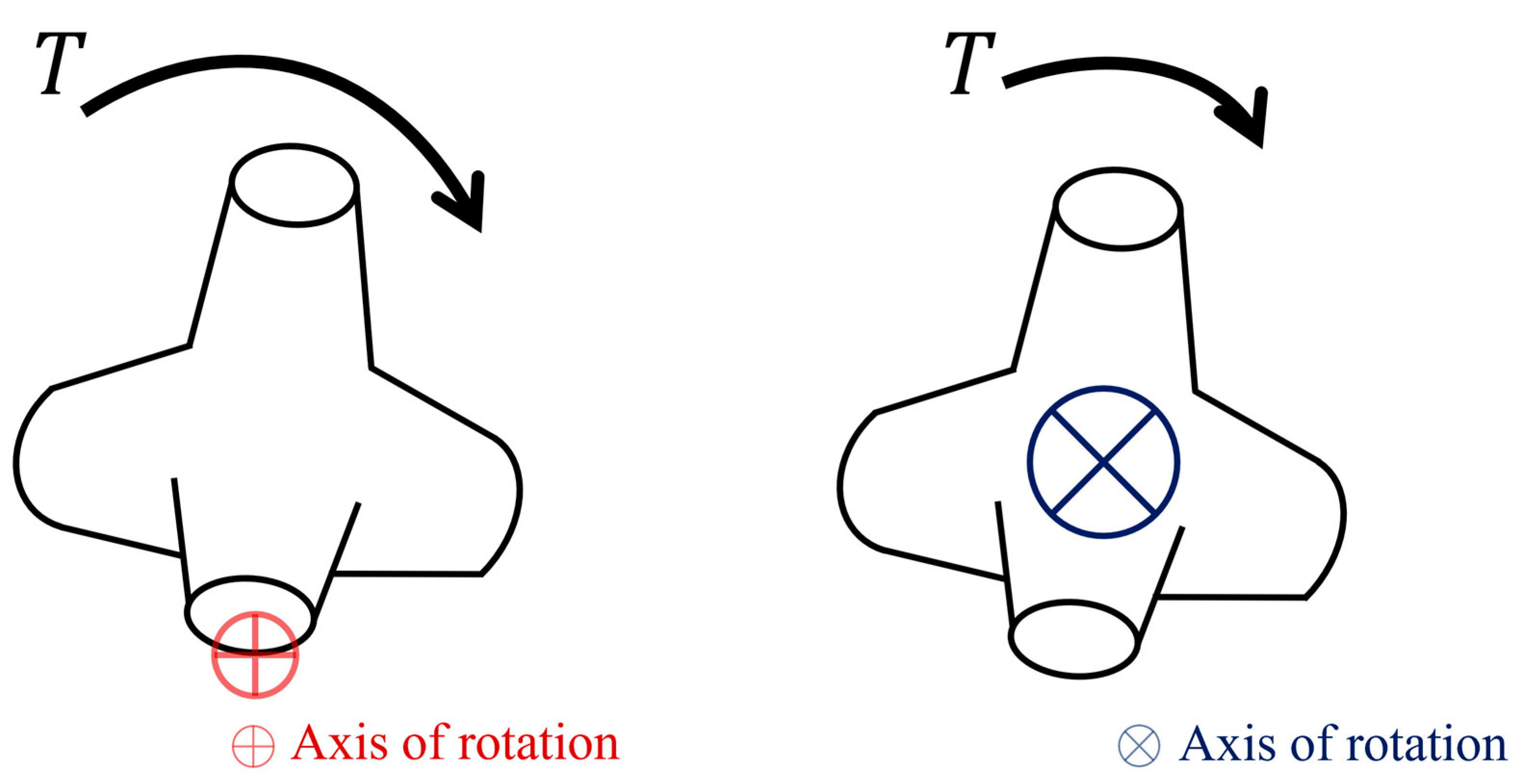
Moment of inertia is related to the rotational motion of a unit. The safety of a breakwater slope or a revetment can be determined by the initiation of damage, which is determined by counting the number of units with minor movement from their initial positions. Moment of inertia is a property of a solid body with a given pivot point or axis. When a unit starts to move, it starts to rotate in most cases and the pivot axis is near the bottom line. Waves approach the unit and torques act on the unit. Parallel lifting driven by the lift force acting on a unit is another mode of motion. When a unit is once lifted into the water, further rotation is affected by the moment of inertia with respect to the axis crossing the centre of gravity of the unit.
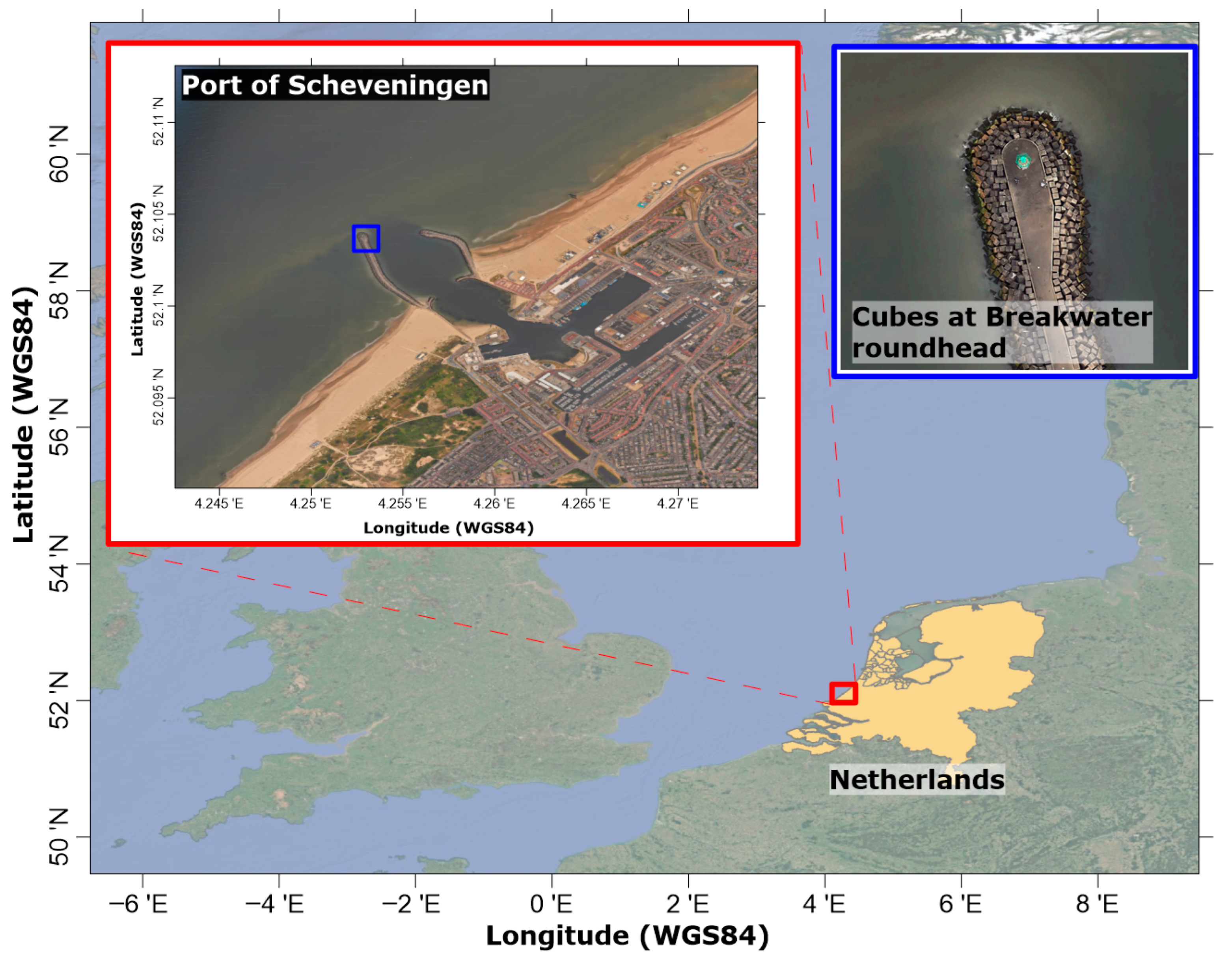
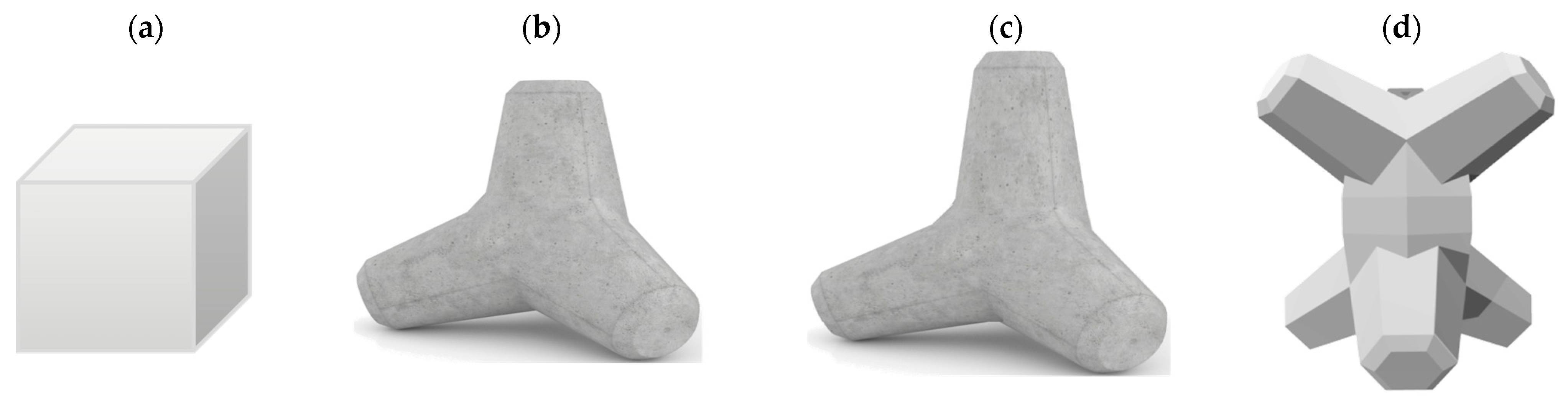
Cube-shaped armour units are easy to make and have been used for breakwater roundheads for harbour protection; see
Figure 1. However, because of their high mass density near their gravity centre and poor interlocking property, they have not been widely adopted for field application. Instead, many more sophisticated types have been proposed to date [
16,
17,
18].
Tetrapot (TTP) was proposed in 1950, and has been adopted at many sites and projects all over the world. TTP has a distinct merit of symmetry with respect to four axes [
19]. However, its interlocking level has not been proven to be relatively high. There are also some reports on the fracture of its legs in fields. TTP may be easily overturned by external wave-generated torques.
It would be a feasible approach to modify TTP to elongate the legs. It would enhance the interlocking property and improve the resistance against the external torque. However, enforcing the internal strength of the legs may be needed due to the slenderness of the legs. We need to examine the geometric properties of the long leg TTP regardless of the member enforcement.
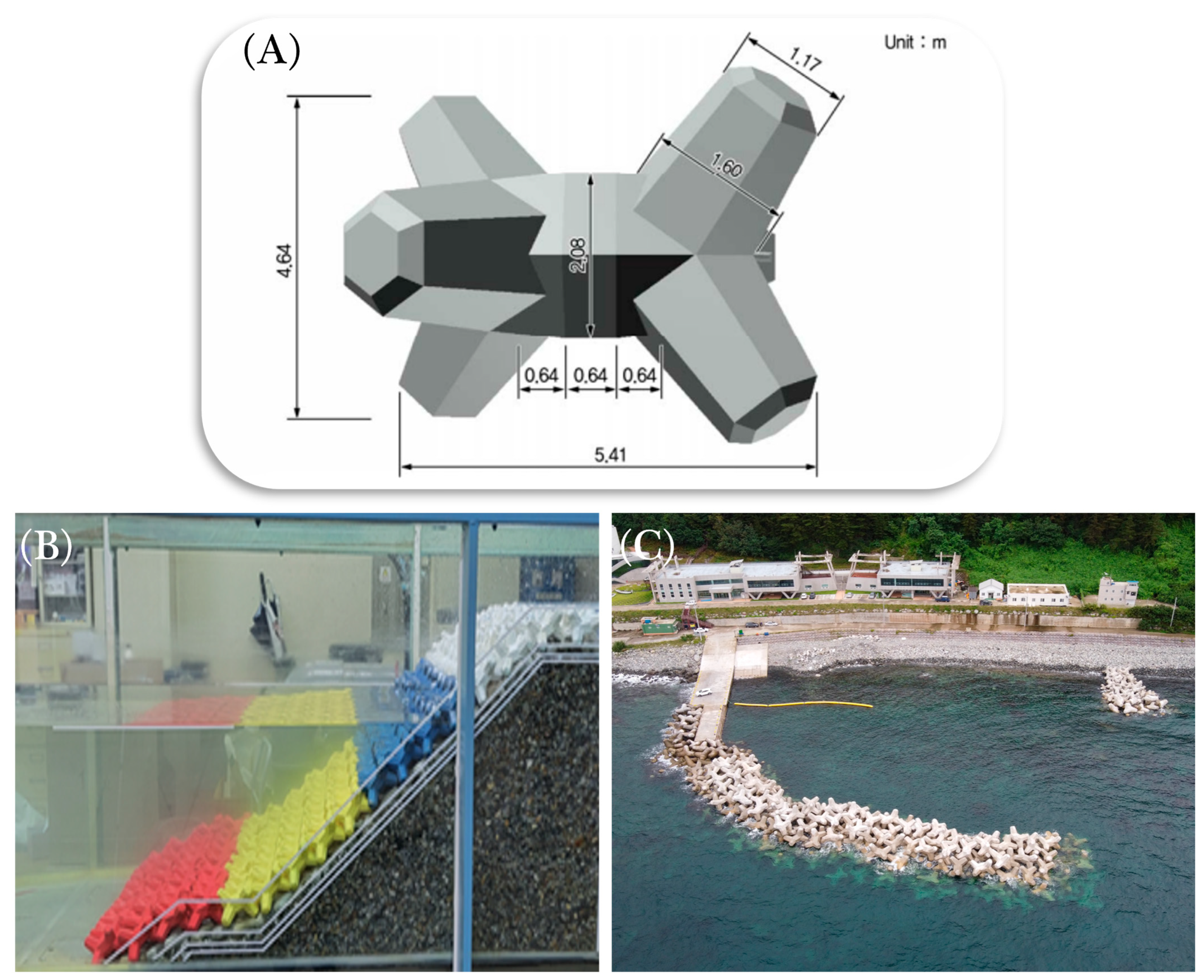
If two TTPs are attached in opposite directions, the resulting unit is referred to as a Hexacone. A specific Hexacone product with angular edges was introduced in 2016. Lee (2023) conducted laboratory experiments to investigate the hydraulic characteristics of various placement methods of the Hexacone and demonstrated its usefulness in several respects [
20]. Hexacones have since been widely used at numerous sites in South Korea. Field-placed Hexacones have demonstrated sound overall structural stability and no fractures in legs or columns have been observed to date. It is therefore necessary to examine the geometric properties of the Hexacone (see
Figure 2).
A more rational basis for CAU selection can be achieved through quantitative evaluation of geometric and physical properties. Parameters such as void ratio, slenderness, mass distribution about the centre of gravity, and moment of inertia can be objectively defined and directly linked to key performance aspects, including stability, interlocking behaviour, rotational resistance and damage susceptibility. Ongoing research on armour units concerns not only geometric characteristics, but also design processes [
21] and the use of mixed armour units [
22]. Void ratio, overall slenderness, member slenderness, mass distribution with distance from the gravity centre, and moment of inertia with respect to the gravity centre or pivot line are measurable, and we focus on the geometric properties of several CAU structures.
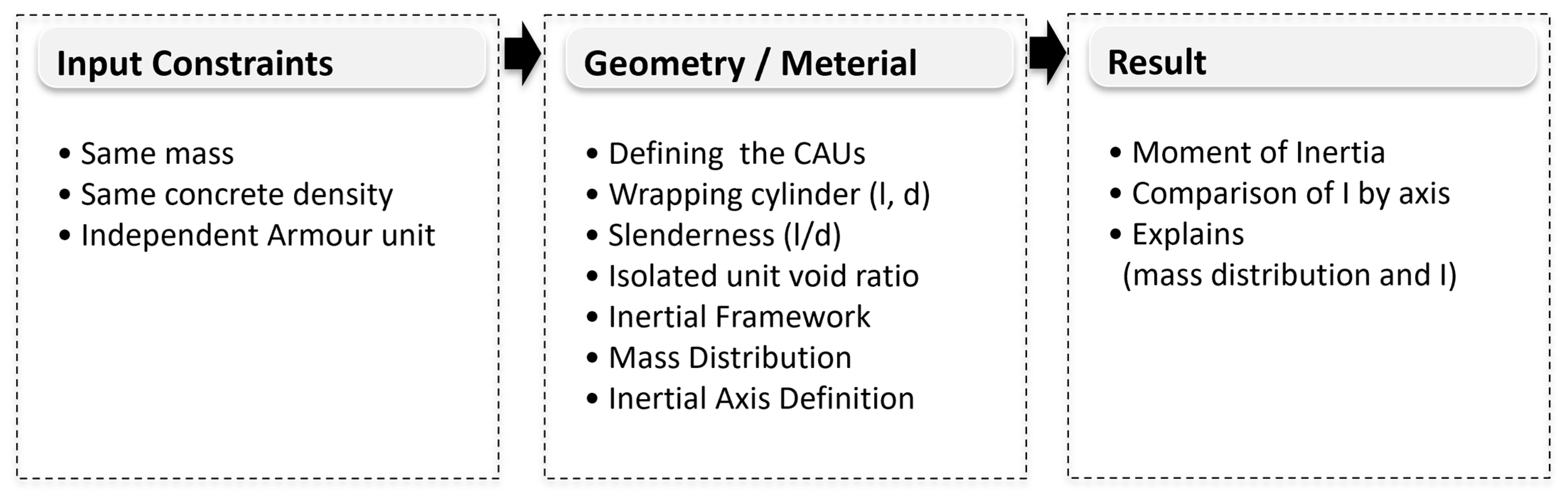
Section 2 introduces the selection of armour units and the Geometric Properties of CAUs. Here, a new method of calculating structural stability using several geometric properties is proposed.
Section 3 presents the results, including a comparative analysis of the calculation results for each CAU. The final chapter
Section 4, presents the conclusions.
3. Result
To examine the geometric properties of CAUs, four structures were used to analyze void ratio, slenderness, mass distribution with respect to distance from the centre of gravity, and moment of inertia. Each structure was examined using the same method, assuming the same mass.
A large void ratio may contribute to sparse mass density but reduce member strength and induce fracture. Therefore, the void ratio of a structure must be considered in both single-structure and multi-structure installations. While the cube has the lowest void ratio, the Hexacone also has a two-headed, single-column shape, resulting in a smaller void ratio than the widely used TTP and LLTTP; see
Table 1. When many LLTTPs are placed in a layer or two, randomly or regularly, they are interlocked and the overall void ratios of the standard TTP and the LLTTP are much smaller than those of the isolated cases. These require further computations.
The slenderness could be considered during the placement step: options include upright placement, flat placement, or mixed placement. Hexacone slenderness is 1.12(−) and slightly larger than 1(−); see
Table 2. The LLTTP has slender legs and is most vulnerable to fracture. Another slenderness concept involves whether a part of an armour unit is slender or not. It is not simple to divide the whole unit into parts. However, if any part of a unit is not thick enough, the unit becomes fragile, which means the internal stress exceeds the allowable amount limit. The calculation for each armour unit should be performed in future research.
Mass distribution with distance from centre of gravity was analyzed. Even for armour units of identical total mass and material density, differences in internal mass distribution can lead to markedly different responses to external forces, especially in terms of motion initiation, rotational stability and energy dissipation. According to our analysis results, the LLTTP has the widest mass distribution over the radius, while the cube has the narrowest mass distribution over the radius. The Hexacone has relatively dense mass near the leg tips compared to the standard TTP or the LLTTP; see
Figure 6.
If the mass is concentrated near the centre of an armour unit, it behaves as a mass-dominated body, while if the mass is concentrated far from the centre, the armour unit will be rotation-resistant. When a large proportion of an armour unit’s mass is concentrated near its centre of mass, the unit exhibits what may be described as mass-dominated or massive behaviour. In such cases, the characteristic radius of mass distribution is small, meaning that most of the material lies close to the pivot point about which rotation would occur. Although the total mass is large, the resistance to rotational motion is limited because the radius of the mass elements is small. In contrast, when a significant fraction of an armour unit’s mass is distributed at large distances from the centre of mass, the unit exhibits rotation-resistant behaviour. This mass arrangement offers several important advantages under wave action. It provides strong resistance to the initiation of motion, particularly rotational motion, which is often the precursor to displacement or armour layer damage. Also, the extended mass distribution increases the rotational energy storage capacity, allowing the unit to absorb and redistribute energy over a larger volume before motion develops. Considering the same total mass of 32 t, the LLTTP has the widest mass distribution over the radius, while the cube has the narrowest mass distribution over the radius. The Hexacone has relatively dense mass near the leg tips compared to the standard TTP or the LLTTP.
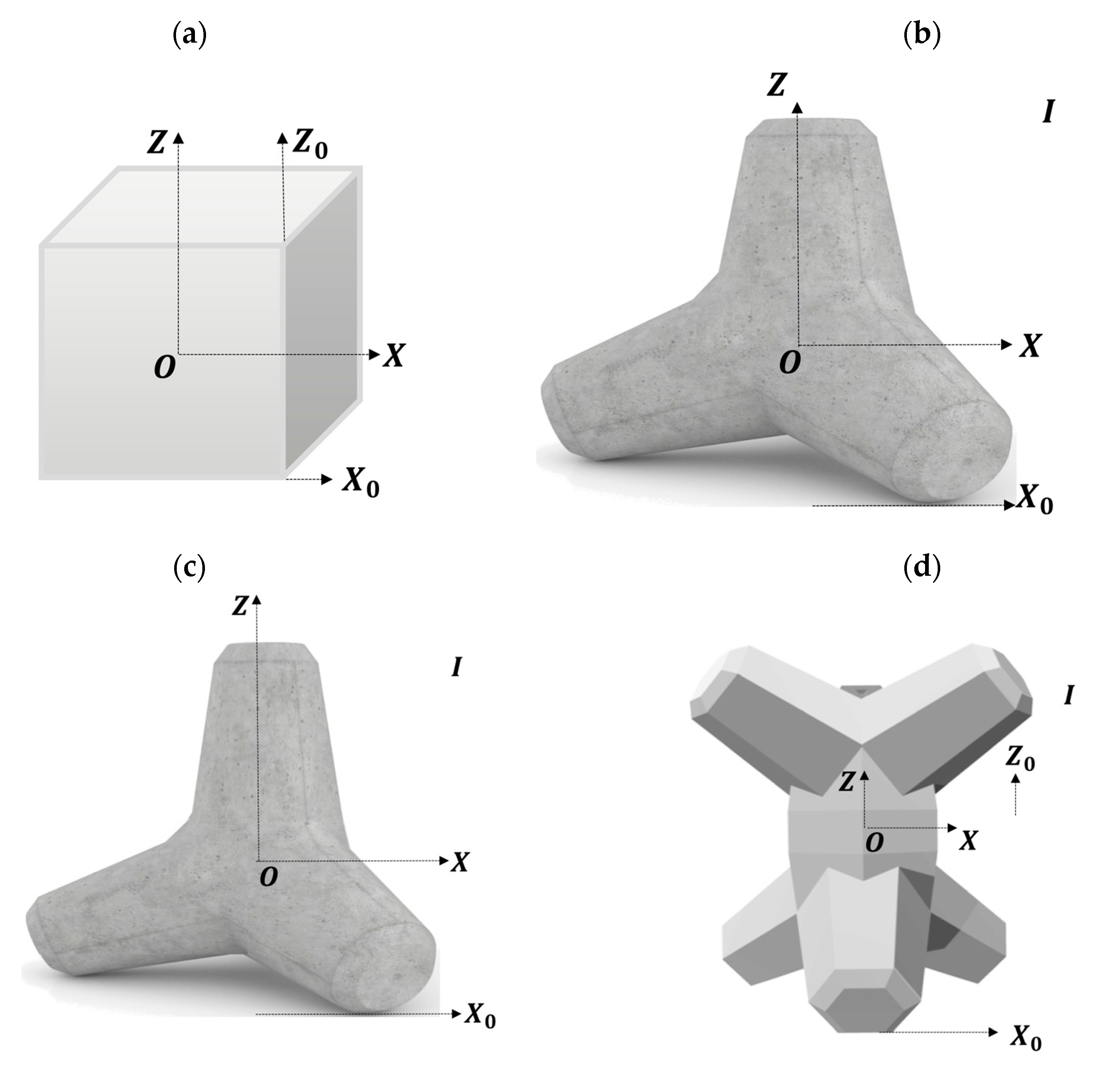
of the Hexacone is larger than those of the TTP or the LLTTP and therefore it is the most resistant to external torques with respect to a bottom horizontal axis. A quantitative comparison based on
Table 4 further demonstrates the structural advantage of the Hexacone. The moment of inertia about the seabed pivot axis,
, of the Hexacone (241.39 tm
2) is approximately 172% higher than that of the TTP(88.77 tm
2) and about 90% higher than that of the LLTTP (127.22 tm
2). Under idealized conditions of the same applied torque and ignoring differences in hydrodynamic force distribution, this increase in rotational inertia corresponds to a reduction in angular acceleration of approximately 63% relative to the TTP and about 47% compared to the LLTTP. Although the actual wave-induced torque may vary depending on the geometry, these results indicate that the mass distribution of the Hexacone provides a significant inertial control resistance to rotation.
When armour units lift off the seabed and are surrounded by water, the motion of the armour unit is influenced by the external torque with respect to the axis passing through the centre of gravity of the unit. The angular acceleration is inversely proportional to the moment of inertia when the same torque is applied. of the Hexacone is larger than those of the other three types of armour units and is therefore more rotation-resistant with respect to the pivoted axis at centre of gravity.
of the Hexacone with respect to the pivot axis is smaller than , which implies that the Hexacone may rotate with respect to the central column axis more easily than with respect to the axis perpendicular to the column. However, is larger than of the cube, TTP and LLTTP. Therefore, the Hexacone with respect to the bottom line parallel to the column is more rotation-resistant, or more resistant to initiation of motion than the other three armour units. In short, the Hexacone is relatively more resistant to initiation of motion than the other three armour units with respect to column parallel or column cross axes. However, the present comparisons are all about isolated armour units. The interlocking property will also become important as well as the individual moment of inertia of each armour unit. The interlocking property of armour units requires future study.
4. Conclusions and Future Work
This study systematically analyzes these geometric and inertial characteristics for various geometries of concrete barriers using an integrated analysis framework. All barriers are analyzed under the assumption of identical total mass and material density, allowing the influence of geometry itself to be isolated and compared. By linking measurable geometric characteristics to underlying physical behaviour, this study aims to provide a more transparent and physically sound basis for comparing and selecting suitable concrete barrier types for specific field applications.
The cube represents a mass-intensive armour unit with a strong concentration of material near its centre of gravity. Owing to this compact mass distribution, the cube exhibits the smallest moment of inertia among the considered armour units, both with respect to axes passing through the centre of gravity and with respect to potential pivot axes formed at the base when the unit is in contact with the seabed. This characteristic implies that, while the cube benefits from a large effective weight and strong resistance to simple sliding, it offers limited resistance to rotational motion once a torque is applied. As a result, the cube behaves as a heavy but rotationally compliant unit, which may be disadvantageous under conditions where rotation is a dominant mode of instability.
Among the four armour unit types examined, the LLTTP exhibits the largest independent void ratio. This large void ratio arises from its elongated and slender legs, which create substantial open space when the unit is considered in isolation. A high void ratio may contribute to reduced mass density within an armour layer and potentially enhance energy dissipation when multiple units are placed together. However, the slenderness of the individual legs introduces significant structural drawbacks. The reduced cross-sectional area of the legs increases the likelihood of high internal stresses under impact, self-weight, or wave-induced loading, thereby reducing allowable stress capacity and increasing susceptibility to fracture. Consequently, while the LLTTP may offer favourable geometric openness, its mechanical robustness at the member level is comparatively limited.
Hexacone exhibits a moderately large overall slenderness, which distinguishes it from more compact units such as the cube while avoiding the extreme member slenderness observed in the LLTTP. This intermediate geometric character can be regarded as a structural advantage. When Hexacones are placed either randomly or in regular arrangements with appropriate orientation combinations, their geometry allows for effective engagement between neighbouring units, which can lead to enhanced stability of the armour layer. The presence of both a central column and multiple outward-extending members enables the unit to interact with its surroundings in multiple directions, promoting mechanical restraint against displacement.
From an inertial perspective, the Hexacone demonstrates superior performance compared to the other armour units considered. It possesses the largest moment of inertia with respect to pivot axes defined at the base of the unit, both in directions perpendicular to the column axis and in directions parallel to the column axis. When the unit stands upright, rotation about a bottom edge or line perpendicular to the column is strongly resisted due to the distribution of mass at relatively large distances from the pivot axis. Similarly, when the unit lies flat, rotation about a bottom line parallel to the column is also resisted effectively, as significant mass remains distributed away from the pivot. These characteristics indicate that the Hexacone is inherently resistant to the initiation of rotational motion under a wide range of orientations, which is a critical factor in the early stages of armour layer damage.
Despite these favourable inertial and geometric properties, the overall performance of any armour unit cannot be fully assessed without considering interlocking behaviour. The degree of interlocking between units influences the load transfer, motion restraint and collective stability of the armour layer. Parameters such as the angle of repose for randomly placed units are closely related to interlocking potential and provide indirect measures of the mechanical interaction between neighbouring units. At present, the interlocking levels of different armour unit types, including the Hexacone, require further investigation through experimental studies or theoretical modelling.
This study is limited to the geometric and inertial analysis of isolated armour units under identical mass conditions. Interlocking behaviour within multi-unit assemblies and coupling with dynamic wave loading were not explicitly considered. LLTTP is a hypothetical model without supporting engineering measured data or experimental validation. These limitations should be addressed in future studies to provide a more comprehensive evaluation of armour layer performance.
Future research should focus on laboratory and field experiments to quantify the interlocking behaviour, angle of repose and overall stability of Hexacone armour layers under realistic hydraulic loading conditions. Such investigations would complement the geometric and inertial analyses presented here and provide a more comprehensive basis for evaluating armour unit performance in practical applications. Future development of armour units should aim to enhance moment of inertia, improve interlocking capacity and strengthen member durability, with interlocking levels potentially assessed through angle of repose measurements and controlled experiments on multi-class armour configurations.